
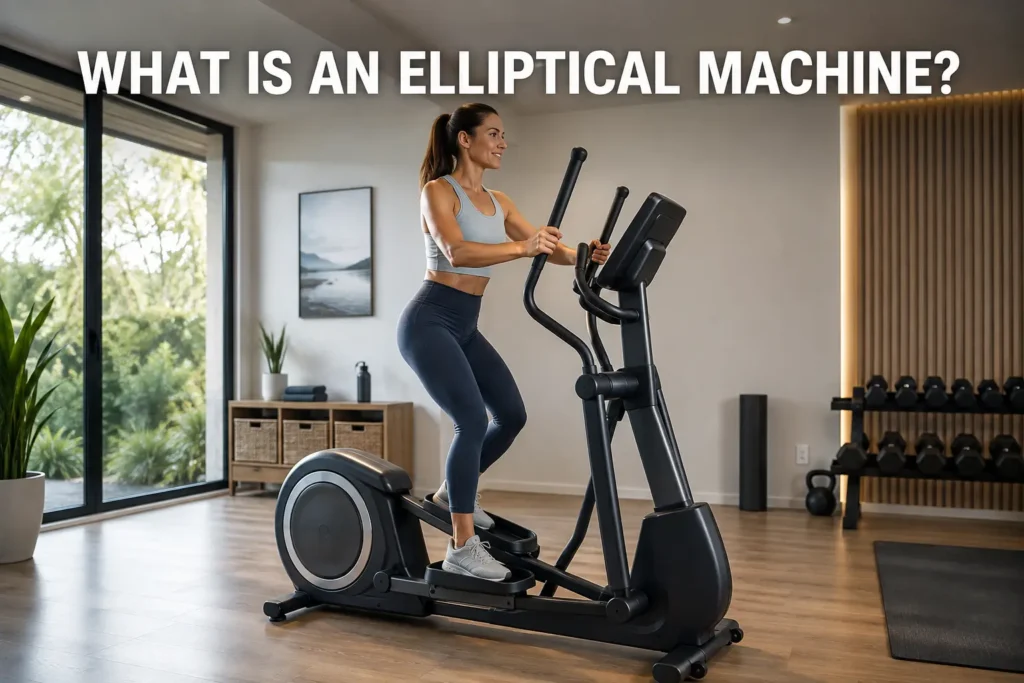
If you've ever been to a gym and spotted people gliding with smooth, oval-shaped strides on a large upright cardio machine, you've already seen what an elliptical machine in action is. Unlike a treadmill, your feet never leave the pedals. Unlike a stationary bike, you're standing upright. The result is a full-body, low-impact workout that suits a wider range of fitness levels than almost any other piece of equipment. In this guide, we break down exactly how elliptical machines work, what they do for your body, how to use one correctly, and how to pick the right model for your home.

What Is an Elliptical Machine - and How Does It Work?
An elliptical trainer (also called an elliptical machine or cross-trainer) is a stationary exercise machine that mimics the natural stride pattern of walking, running, and stair-climbing - all without the impact forces that hit your joints with each step. As you push and pull on the foot pedals, they trace an oval (elliptical) path, which is exactly how the machine gets its name.
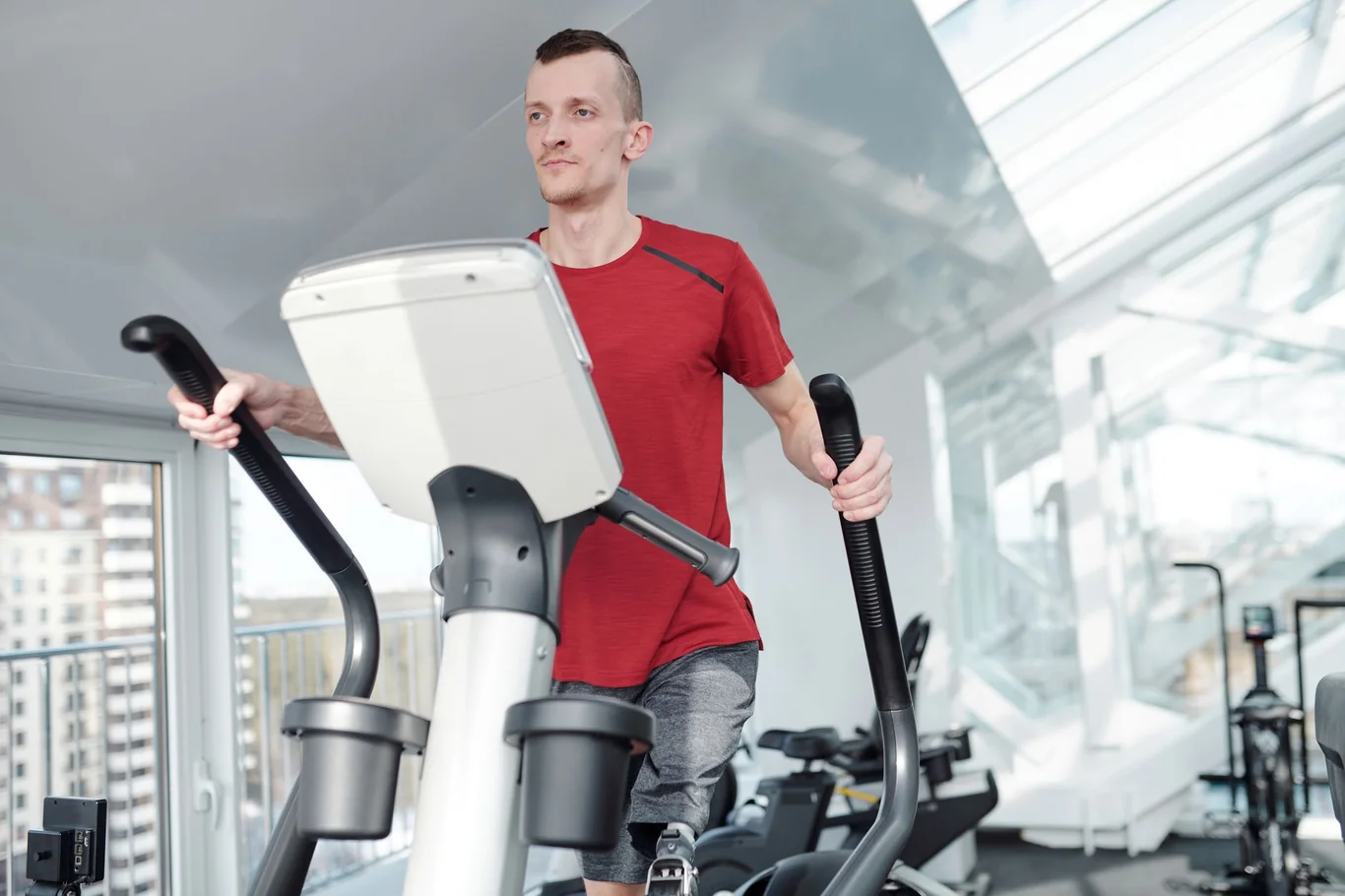
The main components of a standard elliptical include:
- Foot pedals that move in that signature elliptical arc and keep your feet in contact at all times
- Moving handlebars (or static grips on simpler models) that engage your arms and upper body
- A flywheel - a weighted wheel at the front or rear that drives the smooth, continuous motion
- A resistance system - typically magnetic or electromagnetic, adjusted via the console
- A digital console displaying speed, resistance, time, calories burned, and heart rate
One key difference from a treadmill or running outdoors: your feet stay in contact with the pedals throughout the entire stride cycle. This closed-chain motion dramatically reduces the peak impact forces that travel through your ankles, knees, and hips with every footstrike.
Our current elliptical lineup breaks down these components by resistance type and stride length.
Elliptical Machine Benefits - What the Science Shows
The elliptical machine benefits go well beyond simple calorie burn. Research and real-world use point to several consistent advantages that explain why this machine has become a staple in both commercial gyms and home setups.
My full overview of elliptical machine benefits covers each of these in more clinical depth.
Full-Body Engagement
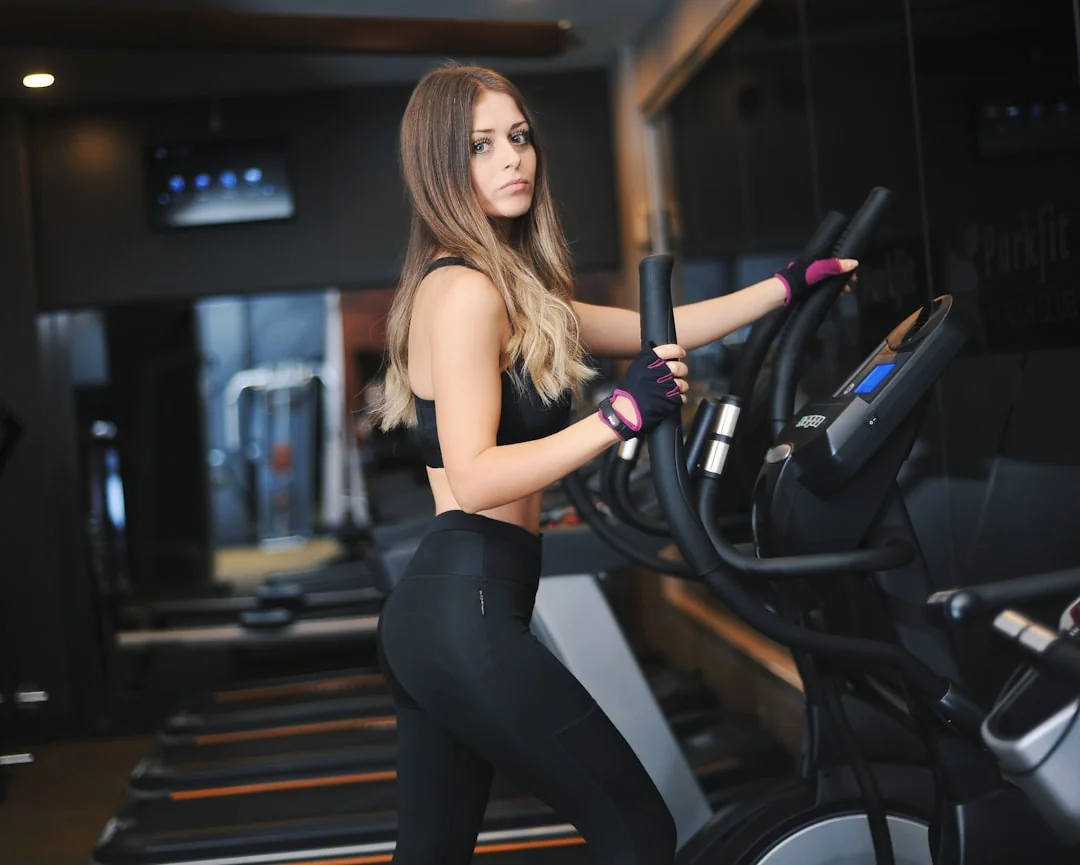
Full-body engagement is the first standout advantage. Most cardio machines isolate the lower body. An elliptical, used with active arm engagement on the moving handlebars, recruits muscles from your legs, glutes, core, and upper body simultaneously. That makes it an efficient choice for people who have limited training time but want meaningful cardio output.
Cardiovascular Conditioning
Cardiovascular conditioning is well-documented. Studies show that elliptical exercise produces similar peak oxygen consumption (VO2peak) to treadmill running at matched intensity levels (1). That means your heart and lungs work just as hard - you just get there with less mechanical stress on your joints. Most users notice improvements in resting heart rate and exercise tolerance within four to six weeks of consistent training.
My guide on is the elliptical good cardio covers the peer-reviewed evidence behind these cardiovascular adaptations in more detail.
Mood and Mental Health Benefits
The machine also supports improved mood and mental health. Regular aerobic exercise on equipment like ellipticals is associated with reduced stress markers and improved psychological well-being, which is one reason consistent users describe their sessions as a reliable daily reset. For a look at how other aerobic machines deliver similar benefits, see our overview of rowing machine benefits.
Cardiovascular Fitness and Calorie Burn - the Numbers
Calorie burn on an elliptical machine is roughly comparable to treadmill running at similar perceived effort. A controlled study comparing fat oxidation across elliptical, treadmill, and rowing exercises found that the elliptical produced measurable fat oxidation rates of approximately 0.41 grams per minute at moderate intensity, confirming it as a legitimate fat-burning modality rather than a glorified walking substitute (2).
My guide on the elliptical for weight loss breaks down how session intensity and duration affect actual fat loss outcomes.
Resistance and Stride Rate
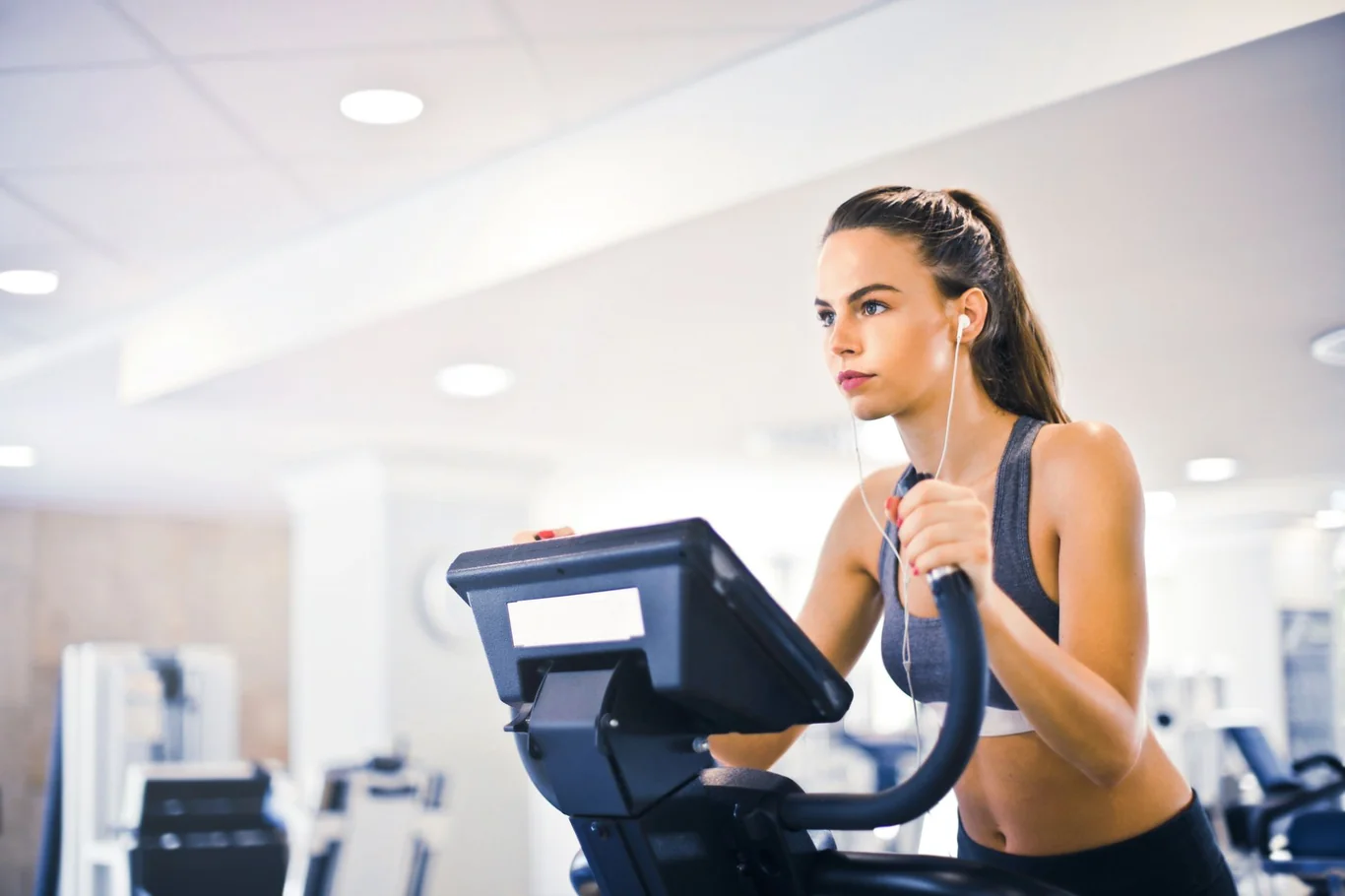
The key variables are resistance level and stride rate. Higher resistance demands more muscular output from your legs and glutes, which increases caloric expenditure per minute. Longer strides at moderate resistance keep your heart rate in an aerobic zone for sustained fat oxidation. Interval training on an elliptical - alternating between high and low resistance every 60-90 seconds - can significantly elevate post-exercise calorie burn compared to flat steady-state sessions.
Long-stride designs, such as the Sunny Health & Fitness Silent Long Stride Elliptical, extend the stride path that this section ties to resistance and calorie burn.
Effort Level | Resistance Setting | Approximate Duration Benefit |
Light (recovery) | 1-4 | Active recovery, joint mobility |
Moderate (aerobic) | 5-9 | Cardio base building, fat oxidation |
High (threshold) | 10-16 | VO2max improvement, calorie spike |
To track how your elliptical workouts contribute to your overall energy balance across the day, pairing the machine with a quality calorie tracker gives you accurate data beyond what the onboard console estimates.
Low-Impact Joint Protection - the Core Advantage
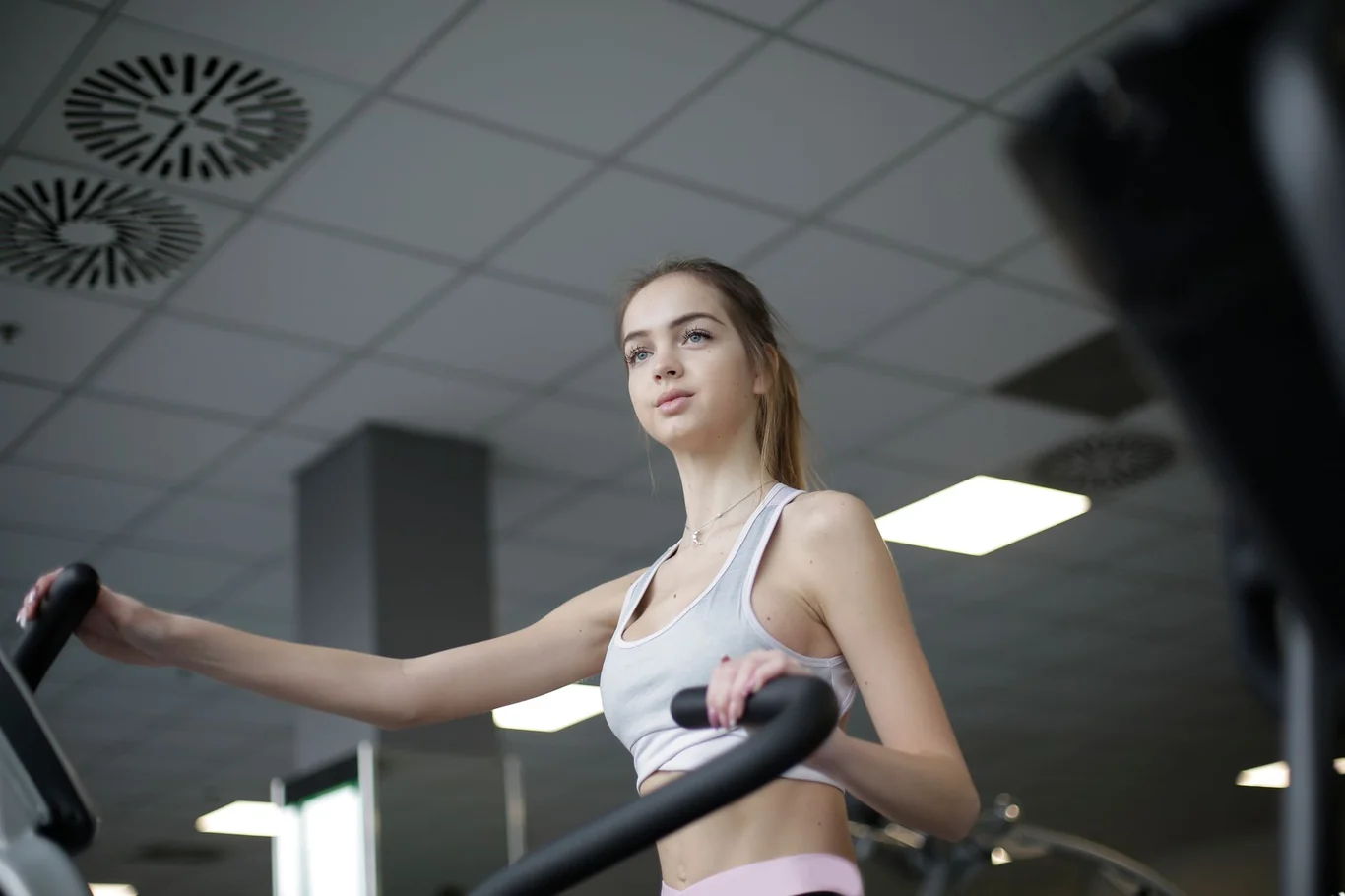
This is where the elliptical machine genuinely earns its reputation. The absence of a landing phase - the moment in running when your full body weight crashes through your heel and travels up through your knee and hip - is the defining joint protection advantage.
Chronic Low Back Pain
A six-week progressive elliptical training program was shown to significantly reduce chronic low back pain in participants completing three sessions per week, with pain improvements measurable by week four (3). That is a meaningful outcome for a population that often avoids cardio entirely out of fear of aggravating existing pain.
Knee Osteoarthritis
For people with knee osteoarthritis, low-intensity exercise consistently demonstrates reductions in pain intensity, improved functional performance, and maintained muscle strength without joint aggravation (4). The elliptical's smooth, guided pedal path keeps the knee joint tracking in a controlled arc rather than the variable angles seen in free walking or jogging on uneven terrain.
Research also shows that low-intensity exercise has protective effects on joint inflammation at a mechanistic level, with reduced inflammatory signaling in joints exposed to consistent low-impact movement protocols (5). The elliptical fits squarely within this category of joint-friendly movement. Our guide to the best foldable rowing machine covers another low-impact option worth pairing with elliptical training for upper-body variety.
What Muscles Does an Elliptical Machine Work?
The elliptical machine's muscle engagement depends heavily on how you use it - but done correctly, it delivers a genuinely comprehensive workout. Research confirms substantially higher lower-limb muscle activation on an elliptical compared to cycling and treadmill walking, which makes it more than just a cardio tool.
Lower Body Muscles
Lower body (primary movers):
- Quadriceps - the front thigh muscles that extend the knee through the stride
- Glutes (gluteus maximus and medius) - engaged through hip extension during the push phase
- Hamstrings - active during the pull phase of each stride cycle
- Calves (gastrocnemius and soleus) - stabilize the ankle and contribute to push-off
Upper Body Muscles
Upper body (when handlebars are actively used):
- Biceps and chest - engaged during the pulling phase
- Triceps and shoulders - engaged during the pushing phase
- Upper back (rhomboids, trapezius) - act as stabilizers throughout the movement
A controlled study comparing muscle activation across stationary equipment found that elliptical training produced greater quadriceps and hamstrings coactivation duration compared to treadmill walking, stationary cycling, and overground walking (6). A separate study confirmed that elliptical-type exercise elicited significantly higher rectus femoris activation (46% of maximum voluntary contraction) than cycling and treadmill devices (7). That muscle activation profile delivers a genuine strength stimulus for the lower body on top of the cardiovascular benefit.
For comparison, if upper-body conditioning is a priority alongside lower-body cardio, our guide on the best rowing machine for conditioning covers an alternative that shifts the balance strongly toward pulling strength.
How to Use an Elliptical Machine - Proper Form and Technique
Knowing how to use an elliptical machine correctly determines whether you're getting a full-body workout or just going through the motions. The technique is simple to learn but easy to let slip once fatigue sets in.
For a structured approach to intensity and progression, my elliptical workout guide covers beginner to advanced plans.
- Step onto the pedals and grip the moving handlebars - not the static heart rate grips - if you want active upper-body involvement
- Stand tall with a slight natural forward lean at the hips; avoid hunching your shoulders or looking down at your feet
- Push through your heel and midfoot on the downstroke, not just your toes - this keeps glute activation high and reduces knee strain
- Match your pushing and pulling on the handlebars rhythmically to your stride - push the right handle as you step forward with your right foot
- Start with low resistance for the first 5 minutes as a warm-up, then progress to a working effort level where you can speak in short phrases but not full sentences
- Use the backward pedaling direction periodically to shift emphasis toward the hamstrings and glutes while reducing quad dominance patterns
Handlebar Engagement Tips
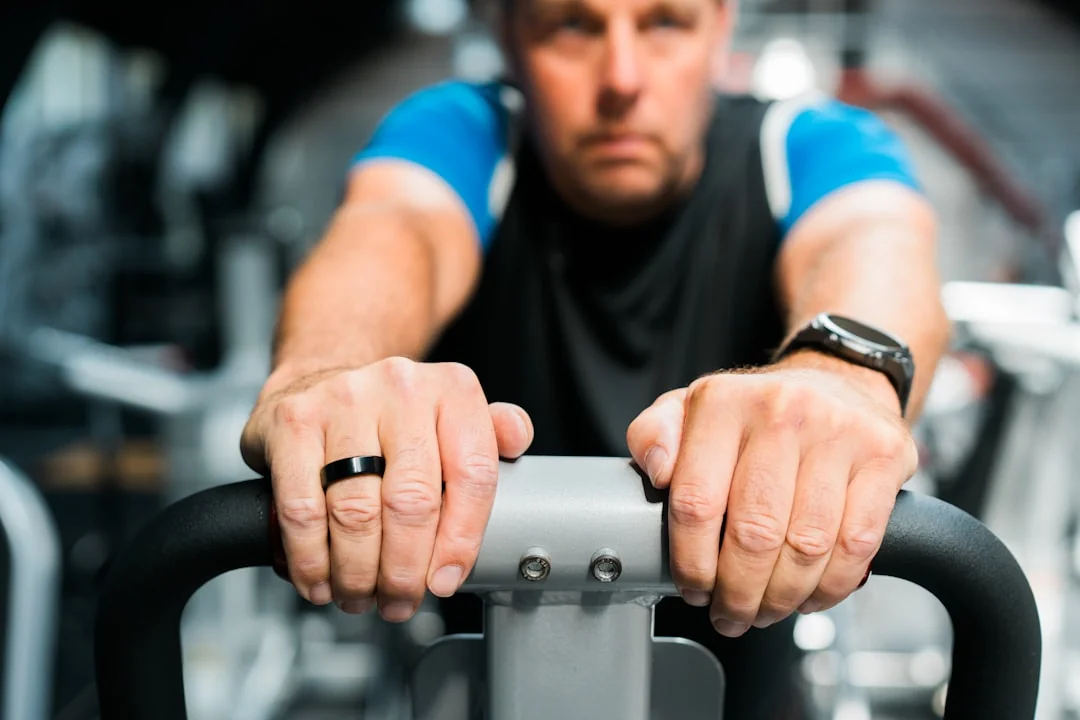
Common beginner mistake: holding the handlebars rigidly and letting the machine carry your arms. The upper-body benefit disappears the moment you stop actively pushing and pulling. Let the handles assist, not replace, your own effort. For structured cardio programming principles that transfer well across machines, our treadmill workout guide covers interval and steady-state programming you can adapt directly to the elliptical.
Elliptical Machine vs. Treadmill - Which Should You Choose?
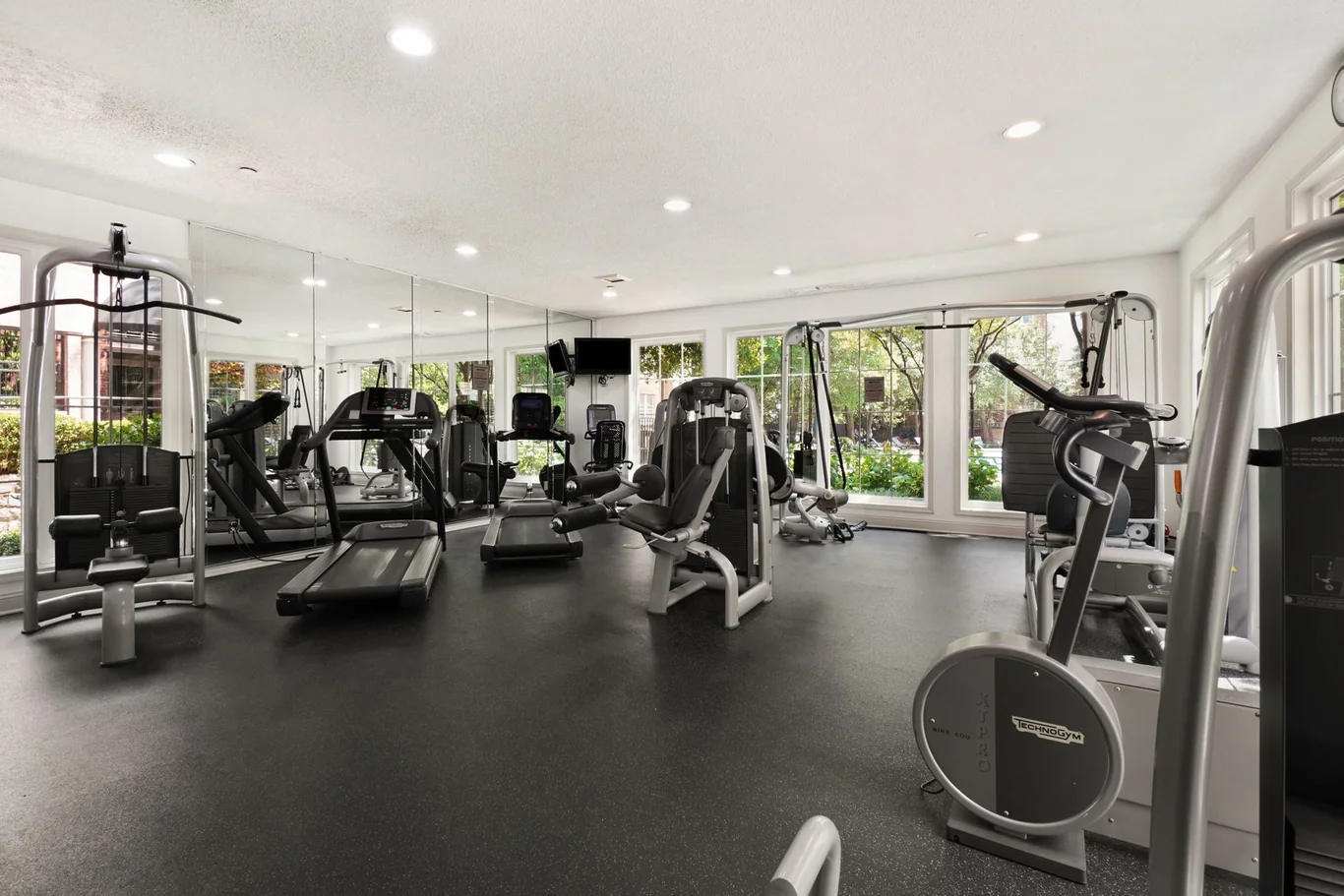
Comparing an elliptical machine to a treadmill comes down to your joint health, primary fitness goals, and the kind of workout experience you prefer. Both deliver strong cardiovascular conditioning - the difference lies in how they get you there.
My full comparison of the elliptical vs treadmill walks through calorie burn, joint load, and muscle recruitment differences.
Factor | Elliptical | Treadmill |
Joint Impact | Very low - no landing phase | Moderate to high at running speeds |
Calorie Burn (matched effort) | Comparable to treadmill | Slightly higher at maximum effort |
Muscle Activation | Full body including upper | Primarily lower body |
Learning Curve | Minimal - guided motion | Very low |
Transferable Fitness | Cardio endurance, glute strength | Running performance |
Bone Density Benefit | Low - not weight-bearing | Moderate - weight-bearing |
Best For | Joint issues, cross-training, beginners | Running goals, bone health, sport-specific prep |
Research confirms comparable cardiovascular stimulus between the two at matched intensities - Mays et al. (2010) showed similar VO2peak between elliptical and treadmill exercise at equivalent effort. The treadmill wins for runners training for performance and for people prioritizing bone density stimulus. The elliptical wins for joint protection, full-body engagement, and long-term consistency - people who find running uncomfortable often use an elliptical year-round without interruption. Our overview of treadmill benefits covers the science on the other side of this comparison.
Types of Elliptical Machines
Not all ellipticals are the same. The drive system determines the stride feel, space requirements, and often the price point.
If you are weighing a more specialized option, my guide on the arc trainer vs elliptical covers how stride mechanics and resistance differ between the two machines.
Drive Type | Stride Feel | Footprint | Best For |
Front-drive | Steeper incline | More compact | Budget home use |
Rear-drive | Flat, more natural | Larger frame | Premium home use |
Center-drive | Neutral stride | Most compact | Small spaces |
Cross-Trainers and Recumbent Models
Beyond the drive system, there are also cross-trainers that combine elliptical motion with a stair-stepper action, and recumbent ellipticals where you are seated - making them extremely gentle on the lower back. For people drawn to space-saving cardio designs, our guide on the best folding treadmill shows what to look for in compact home gym equipment.
Under Desk Elliptical Machine - Compact Options for Home Use
The under-desk elliptical machine is a distinct category worth understanding. These are pedal-only devices (no handlebars, no upright frame) that fit beneath a standing desk or chair, allowing you to keep your legs moving during otherwise sedentary work hours.
My best under desk elliptical guide reviews the top options across different desk heights and resistance ranges.
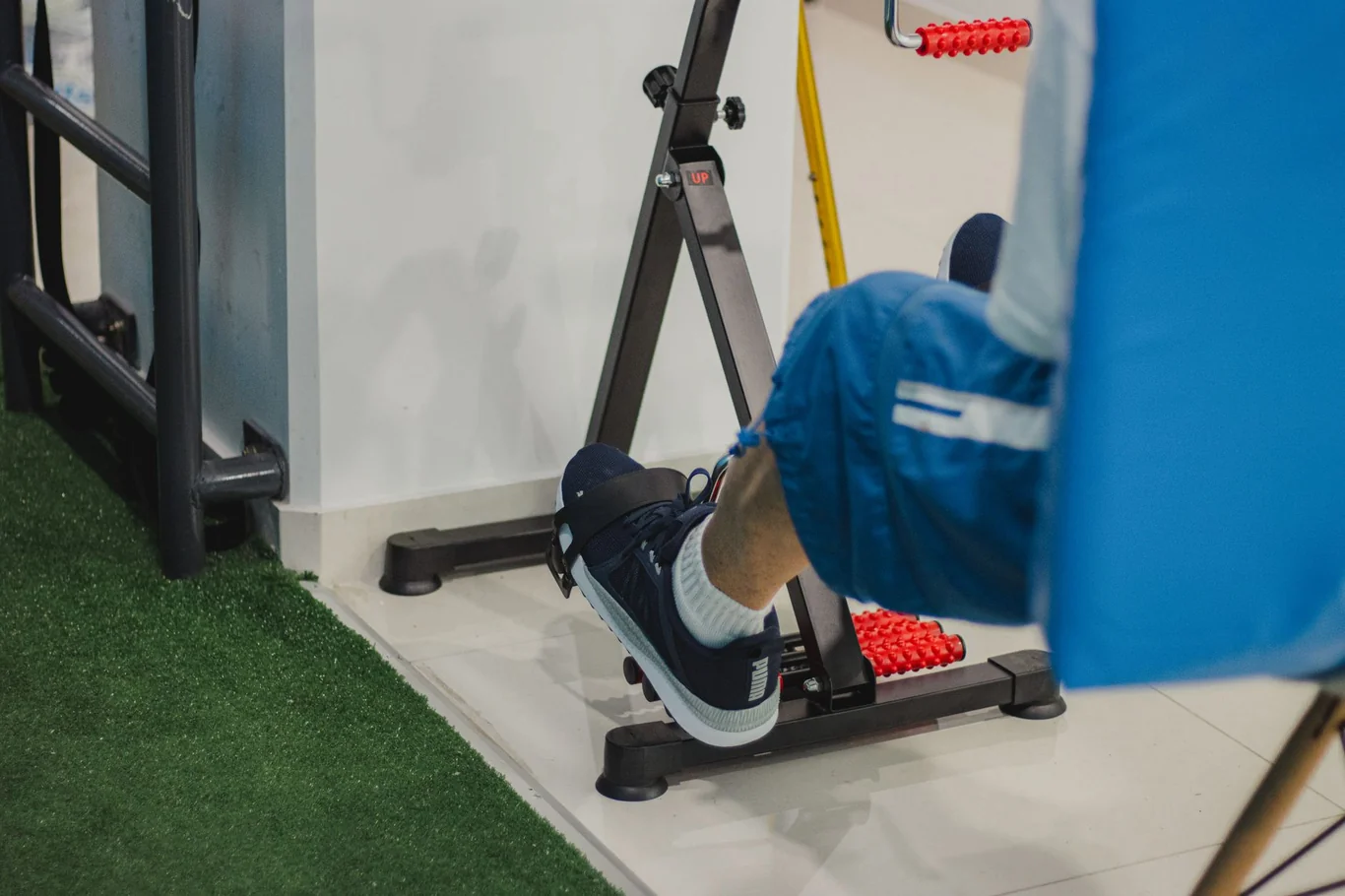
They are not a replacement for a full elliptical workout because the resistance is limited, the stride arc is much smaller, and upper-body engagement is zero. But for accumulating low-level daily movement and breaking up prolonged sitting, they serve a genuinely useful purpose. A person who pedals lightly for 60 minutes at their desk adds meaningful movement volume on top of their regular training sessions. Active movement during sedentary hours consistently shows up in research as a meaningful addition to overall health outcomes beyond structured workouts.
If the under-desk concept appeals for alternative seated cardio, our guide on the best under-desk treadmill covers a parallel category with a different motion pattern suited to desk use.
Elliptical Machine for Beginners - Building Consistency Early
The elliptical machine for beginners is one of the most forgiving entry points in all of cardio training.
Three specific features make it work well for people new to exercise:
- No technique cliff - the guided pedal path means you cannot land wrong the way you can when jogging on pavement or an uneven trail
- Adjustable resistance - you start at resistance level 1-2 and work up incrementally over weeks as your fitness builds
- Low injury risk - the joint-friendly motion allows beginners to build training consistency before their connective tissues have fully adapted to exercise stress
Weekly Training Plan
A practical beginner protocol: three sessions per week, 20-30 minutes each, at a pace where you can hold a conversation but would not want to hold a long one. Progress by adding 2-3 minutes per session every two weeks, or nudging resistance up by one level every 7-10 days. Consistency over the first six weeks matters far more than intensity. Beginners who want cross-training options to complement elliptical sessions can also explore our research-backed overview of the benefits of walking backwards on a treadmill, a knee-friendly variation that builds coordination and balance.
Elliptical Machine for Seniors - Why It Works So Well
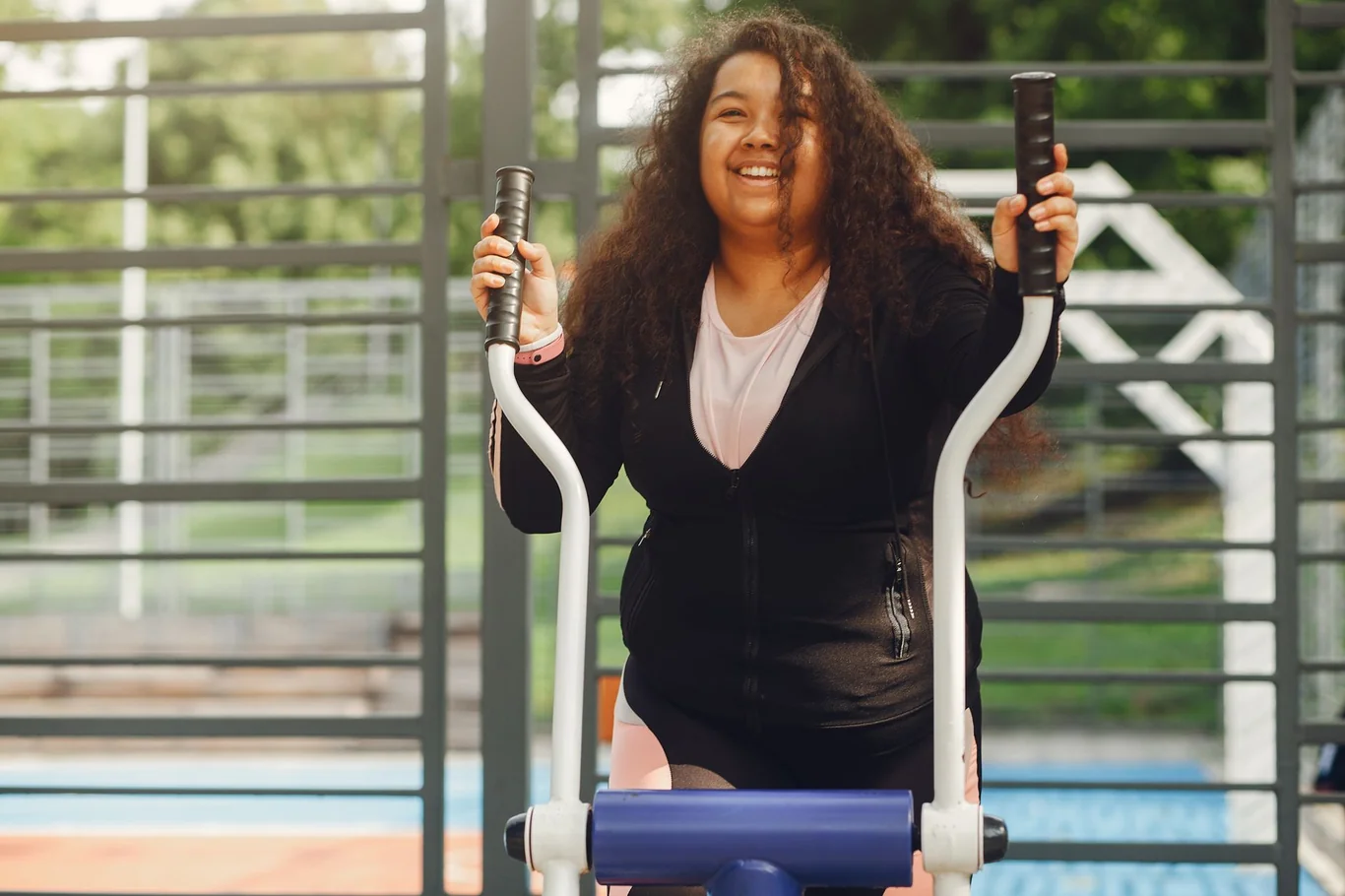
The elliptical machine for seniors is among the strongest equipment-to-population matches in fitness. A systematic review of low-intensity exercise across older adults aged 65-85 found consistent improvements in lower-limb strength, balance, gait velocity, pain reduction, and cognitive function - with notably lower injury risk than higher-impact alternatives (8).
The practical advantages stack up clearly for older users:
- No stepping up and over like a stair machine - you mount directly from floor level
- Handrail support provides stability for users with balance concerns or residual weakness
- Continuous guided motion avoids the repeated impact that aggravates arthritic joints
- Console resistance programs allow automatic variation without manual mid-session adjustments
I notice in our research that the most common mistake for seniors is starting with too high a resistance level and abandoning the machine after a few uncomfortable sessions. Start at the lowest setting and prioritize duration over intensity for the first four to six weeks. The aerobic adaptation happens with consistent time under moderate load - not from pushing resistance levels prematurely. If you are researching specific models for this demographic, our dedicated guide on the best elliptical for seniors covers the top-rated options with appropriate stride length, handlebar height, and step-on ease.
Elliptical Machine for Home - How to Choose the Right One
The best elliptical machine for home use depends on your available space, budget, and the features you will genuinely use. Here is what matters most when comparing models:
My picks for the best elliptical machine test each of these criteria so you can compare options side by side.
Stride Length
Stride length is the most important specification for taller users. A stride length under 16 inches feels cramped for anyone over 5'7". Most quality home models offer 18-20 inches. This is a physical dimension set by the frame geometry - it cannot be adjusted electronically.
The Niceday elliptical premium trim offers a 20 inch stride within that comfortable range.
For a complete guide covering stride length alongside the other key specifications that affect fit, my post on picking the right elliptical walks through the five factors that most directly affect long-term comfort and training quality.
Flywheel Weight
Flywheel weight determines ride smoothness. Lighter flywheels (under 15 pounds) feel choppy at low resistance levels. A 20+ pound flywheel produces the smooth, continuous arc that makes sessions comfortable for extended durations.
The THERUN electric elliptical lists an 18 pound flywheel and a 20 inch stride, worth checking against these numbers.
Resistance Range
Resistance range - look for at least 16 resistance levels for enough variation to challenge you as your fitness improves over months.
The HARISON compact elliptical offers 16 magnetic resistance levels in that range.
Footprint and Storage
Footprint and storage - full-size rear-drive ellipticals typically occupy 60-70 inches of floor length. Front-drive and center-drive models are significantly more compact. Some fold vertically for storage.
The ANCHEER foldable elliptical folds with transport wheels for easier storage.
Connectivity Options
Connectivity - basic models offer manual programs; mid-range models add Bluetooth heart rate monitoring; premium models include interactive touchscreens with streaming class libraries. For most home users, a solid console with manual programs and Bluetooth heart rate sync is sufficient. Live streaming is a nice-to-have, not a must-have for consistent results.
Consider complementing your elliptical with a rowing machine for upper-body pulling variety - a well-designed home cardio setup often pairs both. Our guide on the best rowing machine covers the top-rated options in that category.
Start Using an Elliptical Machine With Confidence
The elliptical machine earns its place as one of the most beginner-accessible, joint-friendly, and consistently effective pieces of cardio equipment available. For people returning from an injury, managing joint pain, or simply seeking a sustainable cardio option that will not grind them down over time, this machine consistently delivers.
For a more specific breakdown of what the machine delivers across different training goals, my post on what an elliptical machine is good for covers the cardiovascular, metabolic, and joint-protection benefits with the research behind each.
My main recommendation: start easier than you think you need to and focus on frequency before intensity. Three 25-minute sessions per week at moderate resistance will build a genuine aerobic base within six weeks. From there, the machine has enough resistance range and programming variation to keep challenging you for years. The elliptical's combination of full-body engagement and low injury risk is why so many people who try it consistently come back to it as their primary cardio tool.
For anyone whose primary goal is weight management, our guide on cardio treadmill workouts for weight loss covers how to structure calorie-burning sessions across multiple machine types, including elliptical training protocols that support a consistent caloric deficit.
FAQs
Which is better, a treadmill or an elliptical?
The better choice between a treadmill and an elliptical depends on your goals and joint health. If your joints are pain-free and you are training for running performance or weight-bearing bone density, the treadmill has clear advantages; if you want a low-impact full-body workout with less injury risk and better long-term consistency, the elliptical is often the stronger choice.
What are the disadvantages of elliptical?
The main disadvantages of an elliptical machine are that it is not weight-bearing (so it does not stimulate bone density the way running does) and that its fixed pedal path offers less motion variability than free-form movement like outdoor walking or trail running. Some users also find the stride pattern feels unnatural at first, which takes a few sessions to get used to.
What will 30 minutes a day on the elliptical do?
Thirty minutes a day on the elliptical, performed consistently at moderate intensity, will improve cardiovascular endurance, support calorie burn for weight management, strengthen the muscles of the legs and glutes, and progressively reduce resting heart rate over time. Most people notice measurable fitness gains within four to six weeks of consistent daily sessions.
Are ellipticals good for losing belly fat?
Ellipticals are effective tools for losing body fat in general, including belly fat, as part of a calorie-controlled nutrition plan because they enable consistent high-calorie-burn sessions with low injury risk. No exercise equipment targets belly fat specifically, but the elliptical's ability to sustain moderate-to-high effort for extended durations makes it one of the better options for accumulating the caloric deficit needed for overall fat loss.
What muscles does the elliptical work?
The elliptical machine works the quadriceps, hamstrings, glutes, and calves in the lower body, and when the moving handlebars are actively used, it also engages the biceps, triceps, chest, shoulders, and upper back. The exact muscle emphasis shifts depending on resistance level, stride direction (forward or backward), and how actively you push and pull on the handlebars throughout each session.
References:
- Mays RJ, Boér NF, Mealey LM, Kim KH, Goss FL. A comparison of practical assessment methods to determine treadmill, cycle and elliptical ergometer VO2peak. J Strength Cond Res. 2010;24(5):1325-1331. doi:10.1519/JSC.0b013e3181c7c677
- Filipovic M, Munten S, Herzig KH, Gagnon DD. Maximal Fat Oxidation: Comparison between Treadmill, Elliptical and Rowing Exercises. J Sports Sci Med. 2021;20(1):170-178. doi:10.52082/jssm.2021.170
- Dillingham TR, Kenia J, Popescu A, et al. Pain Outcomes with an Elliptical Regimen (POWER) Study: Identifying the Proper Dosage of Exercise for Therapeutic Effect in Persons with Chronic Back Pain. J Phys Med Rehabil. 2020;2(2):23-28.
- Kim KH, Kang SH, Kim N, Choi J, Kang S. Short-Term Impact of Low-Intensity Exercise with Blood Flow Restriction on Mild Knee Osteoarthritis in Older Adults: A Pilot Study. Healthcare (Basel). 2024;12(3):308. doi:10.3390/healthcare12030308
- González-Chávez SA, López-Loeza SM, Acosta-Jiménez S, et al. Low-Intensity Physical Exercise Decreases Inflammation and Joint Damage in the Preclinical Phase of a Rheumatoid Arthritis Murine Model. Biomolecules. 2023;13(3):488. doi:10.3390/biom13030488
- Prosser LA, Stanley CJ, Norman TL, Park HS, Damiano DL. Comparison of elliptical training, stationary cycling, treadmill walking and overground walking. Gait Posture. 2011;33(2):244-250. doi:10.1016/j.gaitpost.2010.11.013
- Bouillon L, Baker R, Gibson C, Kearney A, Busemeyer T. Comparison of Trunk and Lower Extremity Muscle Activity Among Four Stationary Equipment Devices: Upright Bike, Recumbent Bike, Treadmill, and ElliptiGO. Int J Sports Phys Ther. 2016;11(2):190-200.
- Tse ACY, Wong TWL, Lee PH. Effect of Low-intensity Exercise on Physical and Cognitive Health in Older Adults: a Systematic Review. Sports Med Open. 2015;1:37. doi:10.1186/s40798-015-0034-8