
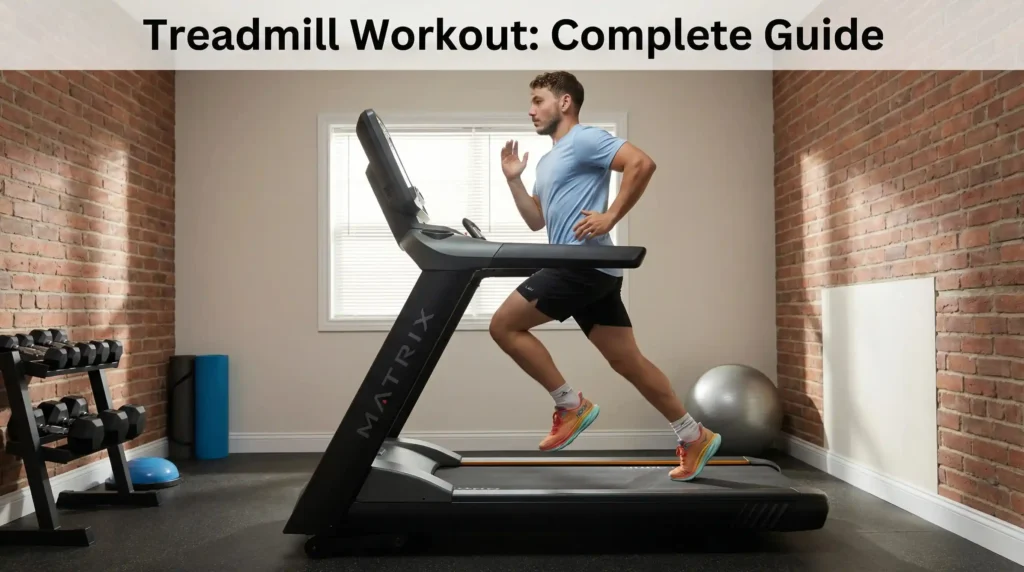
A good treadmill workout mixes easy to moderate walking or jogging on most days with one or two interval or incline sessions a week, and totals about 150 minutes of moderate effort. Start by walking at a pace where you can talk but not sing, then add grade or intervals in small steps.
A treadmill workout gives you exact control of speed, incline and time, and a plan that uses all three beats random sessions. The sections below cover walking, incline, interval, stamina and strength sessions, what the research supports for each, and the mistakes that cost the most results.
The guide runs from beginner walking plans to interval sessions. Each section says what the evidence covers and who it was measured on.
Treadmill Workout Fundamentals: What Makes Them Effective
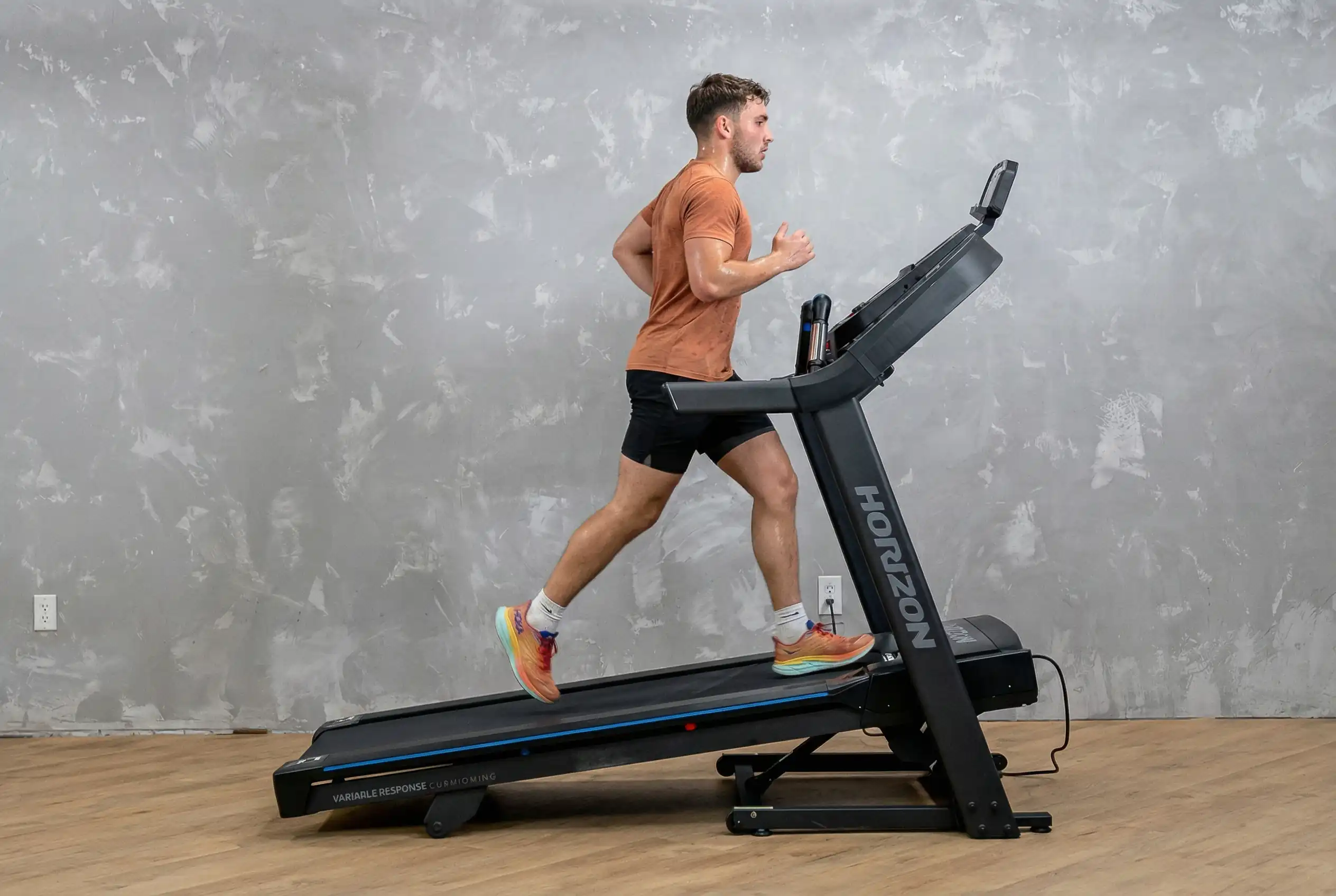
Walking or running on a treadmill offers controlled conditions that outdoor training can't match. You dictate exact speed, precise incline percentages, and consistent pacing regardless of weather or terrain challenges.
If you want to compare speed and incline specs before choosing equipment, our current treadmill lineup sets them side by side.
Regular interval training changes the cardiovascular system in measurable ways.
In a review of 39 studies, high-intensity interval training lowered systolic and diastolic blood pressure and improved flow-mediated dilation, a measure of how well arteries widen (1). Cardiac output and heart rate variability improved as well.
Key advantages of treadmill exercise include:
Precise control over workout variables (speed, incline, duration)
A flat, even belt with no traffic, curbs or weather
A steady pace that stops you from starting too fast
Real-time performance data for tracking progress
Weather-independent training availability
A safety key that stops the belt if you lose balance
Walking is the gentlest way to load the legs on a treadmill. In 23 recreational athletes moving over a force platform, peak vertical ground reaction force was about 1.2 times body weight in walking and rose to about 2.5 times body weight at a 6 m/s run, and slow jogging produced more than 50% higher peak force than walking (2). In my view that is the reason to start anyone with sore knees or ankles on walking sessions.
If you are still choosing a machine, the top rated treadmill for home workouts guide compares models on motor, cushioning and durability. Intensity sets the energy cost: the 2024 Adult Compendium rates treadmill walking at 3.0 to 3.4 mph at 3.8 METs, at 3.5 to 3.9 mph at 4.8 METs and at 4.0 to 4.4 mph at 5.8 METs, with values measured in adults aged 19 to 59 (3).
Types of Treadmill Workouts for Different Goals
Each session type below trains a different quality, so pick the one that matches your goal.
HIIT on treadmill workout: maximum results in minimum time
High-intensity interval training alternates near-maximal effort with recovery periods, and the treadmill HIIT workout plans guide holds the full session library.
Across 97 randomised trials with 3,399 adults in the general population, interval training improved 14 cardiometabolic measures, including peak aerobic capacity, which rose by a weighted mean of 3.895 ml/min/kg (4). Body mass index fell by 0.565 kg/m2, waist circumference by 2.843 cm and body fat by 0.972 percentage points, and fasting insulin dropped as well. These are averages across many interval formats, not treadmill-only results.
Sample HIIT treadmill workout:
I build the session below for people who already jog comfortably. Scale the sprint speed to your own fast pace, because the numbers are a starting point from coaching practice and not a protocol from a trial.
| Phase | Duration | Speed | Incline | Intensity |
|---|---|---|---|---|
| Warm-up | 5 min | 3-4 mph | 0% | Easy |
| Sprint | 30 sec | Your fast pace | 0-1% | Hard |
| Recovery | 90 sec | 3-4 mph | 0% | Light |
| Repeat | 8-10 rounds | - | - | - |
| Cool-down | 5 min | 2-3 mph | 0% | Easy |
The afterburn effect, excess post-exercise oxygen consumption or EPOC, adds some energy use after the session. In a review of 22 studies, short-duration measurements that subtracted baseline energy use averaged about 136 kJ after high-intensity interval exercise against about 101 kJ after moderate-intensity continuous exercise (5). That gap is about 8 kilocalories, so the afterburn is a small bonus and not a reason to pick intervals over steady sessions.
If you are new to intervals, start with four or five rounds and add one round a week, so the work stays repeatable.
Treadmill workout with incline: amplifying calorie burn
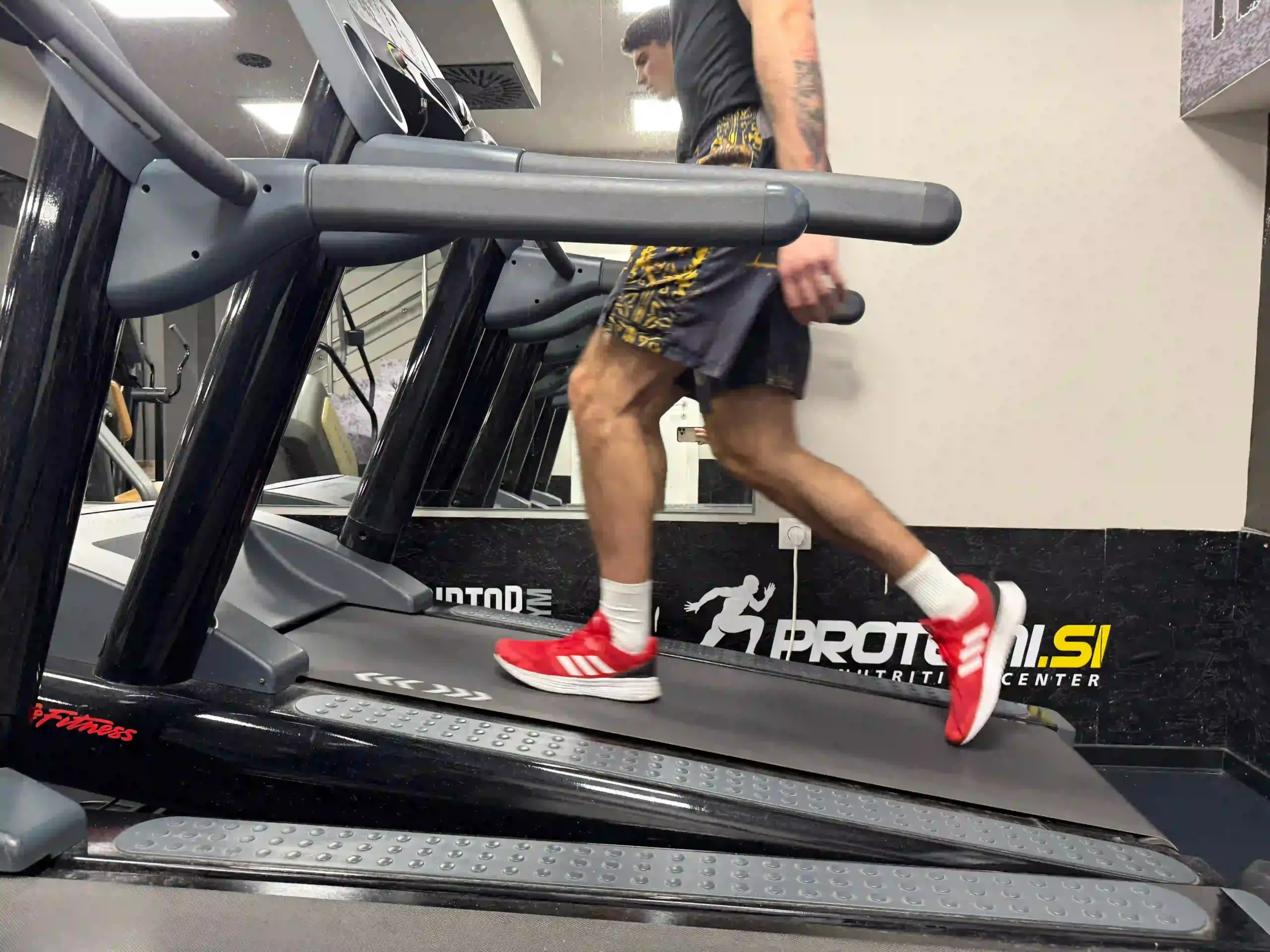
Grade shifts work toward the thighs. In six adults walking at 0, 12 and 24% grade, average activity rose significantly in the vastus medialis oblique, vastus lateralis and biceps femoris, and heart rate rose even though self-selected speed fell (6).
How incline compares with flat running for heart rate and calorie output is covered in the incline treadmill vs running guide.
The 12-3-30 session, 30 minutes at 12% grade and 3 mph, was compared with self-paced running in a study that enrolled 16 adults and analyzed the 14 who finished, with both sessions matched for total energy expenditure. The walk took longer, used energy at a lower rate and drew a higher share of its energy from fat (7). That measures fuel use during one session, not fat lost over weeks.
Treadmill workout incline strategies:
Hill Repeats: Alternate 2-minute climbs at 6-8% incline with 2-minute flat recoveries
Progressive Incline: Start at 1% and increase 1% every 3 minutes up to 10%
12-3-30 Protocol: Walk 30 minutes at 12% incline and 3 mph
Incline HIIT: Keep the grade fixed at a level you can walk briskly, then alternate 30 seconds of fast uphill walking with 60 seconds of easy walking at the same grade
Grade also changes joint loading. In 15 healthy men walking at about 3 mph, the peak internal knee-abduction moment fell from level walking at every grade tested except 5% (8). The authors suggest this could reduce knee cartilage loading over time, but the study did not follow anyone long term.
Steep grade makes the motor and frame work harder, so check the maker's rated maximum incline and motor before you plan regular climbing sessions. The incline treadmill review guide covers models built for incline training.
Treadmill workout for weight loss: creating a caloric deficit
Weight management requires consistent caloric expenditure paired with proper nutrition. Treadmill training makes that energy use repeatable from week to week.
Pairing treadmill sessions with strength training also covers the second half of the CDC guideline for adults: at least 2 days a week of muscle-strengthening activity, alongside 150 minutes of moderate-intensity activity or 75 minutes of vigorous activity (9).
Effective treadmill workout plan for weight loss:
Monday: 30-minute steady walk or jog at moderate effort, where you can talk but not sing (10)
Tuesday: 26 to 30-minute HIIT session (described above), with fewer rounds while you are new to it
Thursday: 40-minute incline intervals
Saturday: 45-minute longer duration moderate-intensity session
I rate consistency above intensity for a treadmill workout to lose weight: a plan you repeat beats a harder plan you drop.
Progressive 8-week treadmill workout plan:
| Week | Frequency | Duration | Intensity | Focus |
|---|---|---|---|---|
| 1-2 | 3x/week | 20-25 min | Low-Moderate | Building base |
| 3-4 | 4x/week | 25-30 min | Moderate | Adding volume |
| 5-6 | 4x/week | 30-35 min | Moderate, 1 interval day | Introducing intervals |
| 7-8 | 5x/week | 35-40 min | Moderate, 2 interval days | Holding the routine |
The best treadmill workout for fat loss combines several session types across the week instead of repeating one. The plan above climbs from 60 to 75 minutes a week in weeks 1 and 2 to 175 to 200 minutes in weeks 7 and 8, and passes the CDC's 150 moderate minutes only in the last block.
Treadmill Workout for Beginners: Building Your Foundation
Starting your fitness journey requires patience and structured progression. The treadmill provides an ideal environment for beginners because it controls pacing automatically.
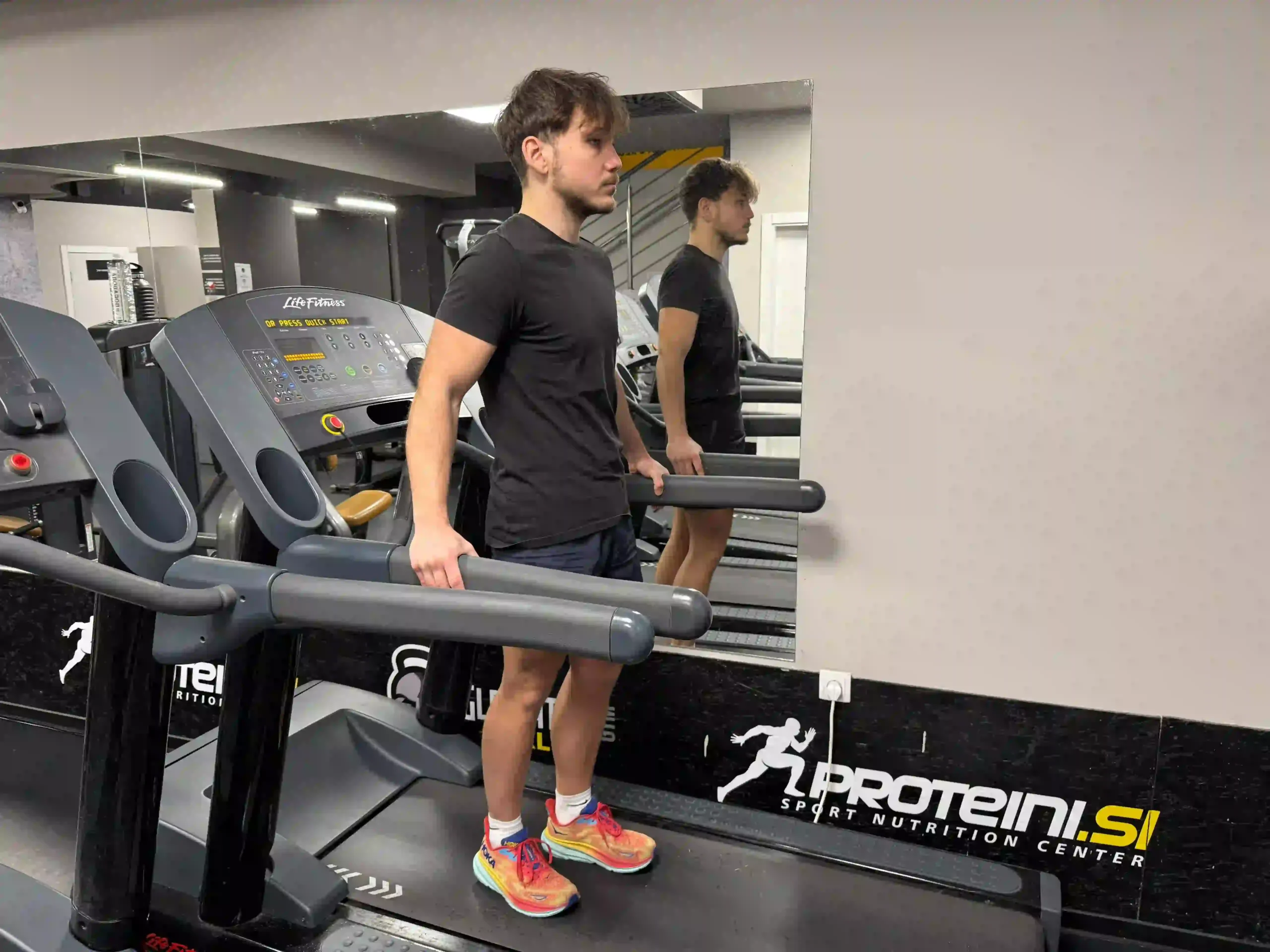
Stand tall, let your arms swing and look at the horizon. If you need the rails to stay upright, slow the belt instead.
The guide to running on a treadmill adds form cues and a progression for new runners.
Beginner treadmill workouts for weight loss:
Week 1: 15 minutes walking at 3 mph, 0% incline, 3 days
Week 2: 20 minutes walking at 3.5 mph, 0% incline, 3 days
Week 3: 25 minutes alternating 2 min at 4 mph, 3 min at 3 mph
Week 4: 30 minutes with progressive incline (start 0%, add 1% every 5 min)
At this stage consistency matters more than intensity.
Essential form cues for gym treadmill use:
Maintain upright posture with shoulders back and down
Engage your core as if bracing for a gentle punch
Let arms swing naturally without crossing your body's midline
Land softly with your foot under your hips, not far out in front of you
Avoid gripping the handrails except during brief balance checks
Keep your gaze forward, not down at your feet
Gripping the handrails lowers heart rate and oxygen use at the same speed and grade. In 10 healthy adults aged 38 to 60 walking at three steady intensities set from their ventilatory threshold, gripping lowered heart rate and oxygen uptake at every intensity compared with free arm swing, so the console reading overstates the work (11). If you need the handrails for balance, slow down.
A warm-up and a cool-down belong in every session. Five easy minutes at each end is enough for most people, and the cool-down gives you a moment to check how you feel before stepping off.
Advanced Treadmill Workout Techniques
Speed and hill sessions are the harder end of treadmill training and suit people who already have a steady walking or jogging base.
Speed treadmill workout: developing explosive power
Sprint interval training uses all-out efforts and is classed separately from aerobic high-intensity interval training, with different effects, target groups and risks (12). I schedule sprint sessions once a week at most, always after a thorough warm-up and with full recovery between efforts.
Sprint protocol:
- Warm up 10 minutes progressively from walk to easy jog
- Sprint 20 seconds at a hard pace you can hold with good form (adjust to your safe top speed)
- Walk/jog 2 minutes for complete recovery
- Repeat 6-8 times
- Cool down for 10 minutes with easy pace
Treadmill hill workout: building leg strength
Hill sessions add climbing to a treadmill workout and shift the work toward the quadriceps and hamstrings (6).
Hill workout structure:
5-minute warm-up walk/jog at 0%
3 minutes at 4% incline, moderate pace
2 minutes at 2% incline, easy pace
3 minutes at 6% incline, moderate pace
2 minutes at 2% incline, easy pace
3 minutes at 8% incline, moderate pace
2 minutes at 2% incline, easy pace
Repeat cycle 2-3 times
5-minute cool-down
The 12-3-30 incline workout guide explains that protocol in full.
Treadmill Cardio Workout: Heart Health Benefits
Regular cardio training raises aerobic capacity, and a treadmill makes the effort easy to repeat because speed and grade stay where you set them.
A separate guide on what the treadmill is good for covers the wider range of outcomes from regular treadmill use.
Maximum heart rate is often estimated as 220 minus your age. A meta-analysis of 351 studies covering 18,712 healthy adults gave 208 minus 0.7 times age instead, a lab check in 514 healthy adults matched it, and the older rule underestimates maximum heart rate in older adults (13). Both are estimates, so pair any heart rate number with the talk test.
Effort levels for treadmill training (10):
Easy: warm-up, cool-down and recovery, where talking is easy
Moderate (5 to 6 out of 10): you can talk but not sing; the base of most training weeks
Vigorous (7 to 8 out of 10): you can say only a few words before pausing for breath; interval work
In my view most of a training week belongs at easy to moderate effort, with vigorous work as the smaller share.
A heart rate number is one signal and the talk test is another, so use both and trust the harder of the two readings.
Walking on Treadmill Workout: Low-Impact Benefits
Walking loads the body least and still counts: the CDC puts moderate intensity at 3 to 5.9 METs (10), a range that includes treadmill walking at 3.0 to 3.4 mph (3.8 METs) (3).
Backward walking carries a fall risk on a moving belt, so it stays out of the plans on this page. The main benefits of walking backwards on treadmill guide goes into what is known about it.
Structured walking workout:
| Interval | Duration | Speed | Incline | Notes |
|---|---|---|---|---|
| Warm-up | 5 min | 2.5-3 mph | 0% | Easy pace |
| Main Set | 3 min | 4 mph | 3% | Brisk walk |
| Recovery | 2 min | 3 mph | 1% | Comfortable |
| Repeat | 6 rounds | - | - | Total 30 min main work |
| Cool-down | 5 min | 2.5 mph | 0% | Easy pace |
Steady aerobic exercise still earns its place for blood pressure. Across 36 studies, high-intensity intervals lowered ambulatory blood pressure about as well as lower-to-moderate-intensity aerobic exercise in hypertensive and normotensive adults, and raised VO2max more, in less time (14).
Treadmill or Exercise Bike: Making the Right Choice
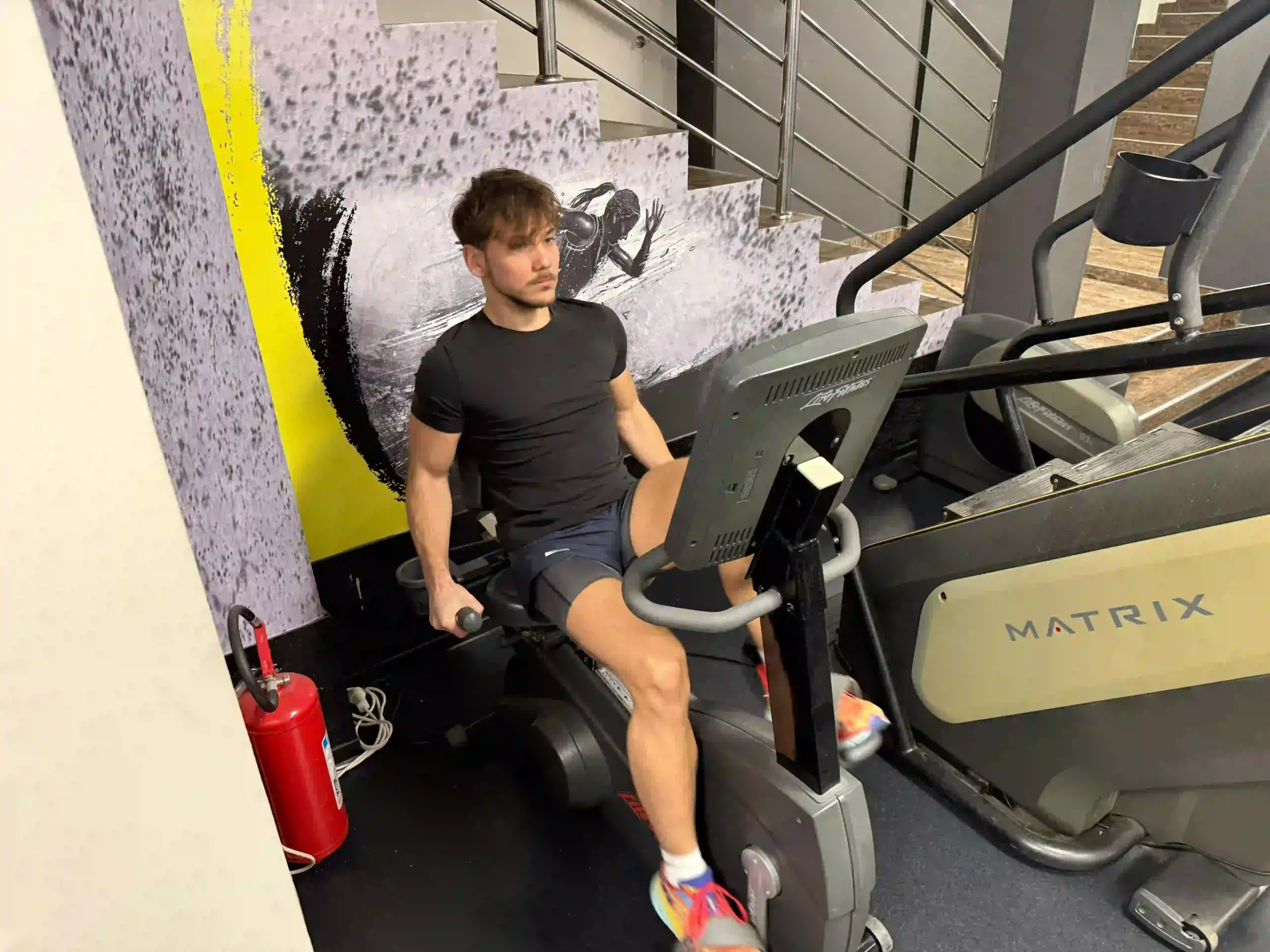
Weight-bearing exercise means moving against gravity while upright. Jogging and running count as high-impact weight-bearing exercise, while biking and swimming are not weight-bearing, so they help bones less (15). The bike is the gentler option for sore joints.
For fat loss either machine works when weekly energy use stays above intake, so pick the one you will use. A bike suits people whose knees or balance limit treadmill work.
In my view the treadmill is the better pick when bone health matters, and the bike is the better pick when joints or balance limit you.
For remote workers or those with limited time who want to accumulate daily movement without dedicated workout sessions, our under desk treadmill setup guide covers compact walking pad models that fit neatly under a standing desk and serve a completely different purpose from both the treadmill and exercise bike options discussed above.
Treadmill Workout Equipment and Accessories
A few features separate a machine that suits structured training from one that does not:
The what to look for in a treadmill guide ranks the specifications by how much they change a workout.
Essential treadmill specifications:
Motor power: a continuous-duty rating, higher for running than for walking
Belt size: long enough for your stride, and longer again if you run
Incline range: enough grade for the hill and incline sessions you plan
Speed range: a top speed above your fastest interval
Shock absorption: a cushioned deck that stays comfortable at your usual pace
Console features: Easy-to-read display, quick controls, and programs
Durability: a frame and warranty that match how often and how hard you train
Check the warranty terms for the frame, motor and deck, since they show how the maker rates durability.
If floor space is limited, the folding treadmill lineup covers compact models. Compare folded size, motor rating, belt length and incline range against the sessions in this guide.
Treadmill Workout Benefits: The Complete Picture
Regular treadmill training improves several health markers.
The main treadmill benefits guide goes through the research by outcome.
Advantages of treadmill workouts include:
Cardiovascular health: lower blood pressure and better arterial function in interval trials
Weight management: Consistent caloric expenditure supporting fat loss goals
Mental health: fewer anxiety and depressive symptoms in interval trials
Bone health: treadmill walking and running are weight-bearing
Metabolic health: lower fasting insulin across pooled interval trials
Convenience: Train regardless of weather, time constraints, or safety concerns
Measurability: exact distance, speed and incline, with calorie counts that are estimates
Resting heart rate fell by about 3.9 beats per minute on average across the pooled interval trials, which makes it a useful number to track (4).
Is treadmill cardio exercise? Yes: walking, jogging and running on a treadmill are aerobic exercise, and the effort level sets how much each session counts.
Treadmill Workout with Dumbbells: Adding Resistance
Adding resistance changes the task, and it is optional. The weights belong on the floor beside the machine, never on the moving belt.
Safe dumbbell treadmill protocols:
Walking lunges: do these on the floor beside the treadmill, never on the moving belt
Overhead press sets: stop the belt, step off, press on the floor, then step back on and restart the belt
Bicep curl sets: curl on the floor between walking blocks, never while the belt moves
Farmer's carry: carry the dumbbells across the floor, not on the belt
Never hold dumbbells on a moving belt. The fall risk outweighs any benefit, and a floor circuit between walking blocks gives the same strength work.
Stop the belt and step off before you pick up a weight, and clip the safety key back on before you restart.
Treadmill Workout for Stamina: Building Endurance
Endurance needs progressively longer sessions at a pace you can sustain. A treadmill workout for stamina is built on time at a steady pace, not on speed.
8-week stamina-building protocol:
Weeks 1-2: 20 minutes at comfortable conversation pace, 3x/week
Weeks 3-4: 30 minutes at the same intensity, 4x/week
Weeks 5-6: 40 minutes with one weekly long session of 50 minutes
Weeks 7-8: 45 minutes regularly with one 60-minute session weekly
Keep each weekly jump small so the load stays manageable. Aerobic capacity (VO2peak) is an independent predictor of all-cause mortality and cardiovascular outcomes, including in people with coronary risk factors and cardiovascular disease (12).
Long indoor sessions keep a stamina block on schedule when weather rules out the road, and the fixed belt speed makes pacing errors easy to see.
In nine trained male runners on 6-minute runs at about 6.5 to 11.2 mph, a 1% treadmill grade matched the oxygen cost of running on a level road (16). The evidence on the 1% grade is mixed, so treat it as a starting point. The treadmill running versus outdoor running guide covers the difference in more detail.
Programming Treadmill Workout Intervals for Maximum Results
Interval structure sets what a session trains.
Interval programming variables:
Work duration: 10 seconds to 5 minutes, depending on intensity
Rest duration: Equal to, half of, or double work time
Work intensity: vigorous effort or harder
Rest intensity: easy walking or a full stop
Total rounds: 4-12 based on work duration and intensity
Total session time: 20-45 minutes, including warm-up/cool-down
Short all-out efforts are sprint interval training and longer hard efforts are aerobic high-intensity intervals, two classes with different effects and risks (12). A comprehensive treadmill workout guide uses both across the week. The four-minute Tabata workout guide gives sample sessions.
For a treadmill workout routine for weight loss I favor intervals of one to three minutes, because the effort stays hard but repeatable.
Common Treadmill Workout Mistakes to Avoid
These errors cost the most results or comfort:
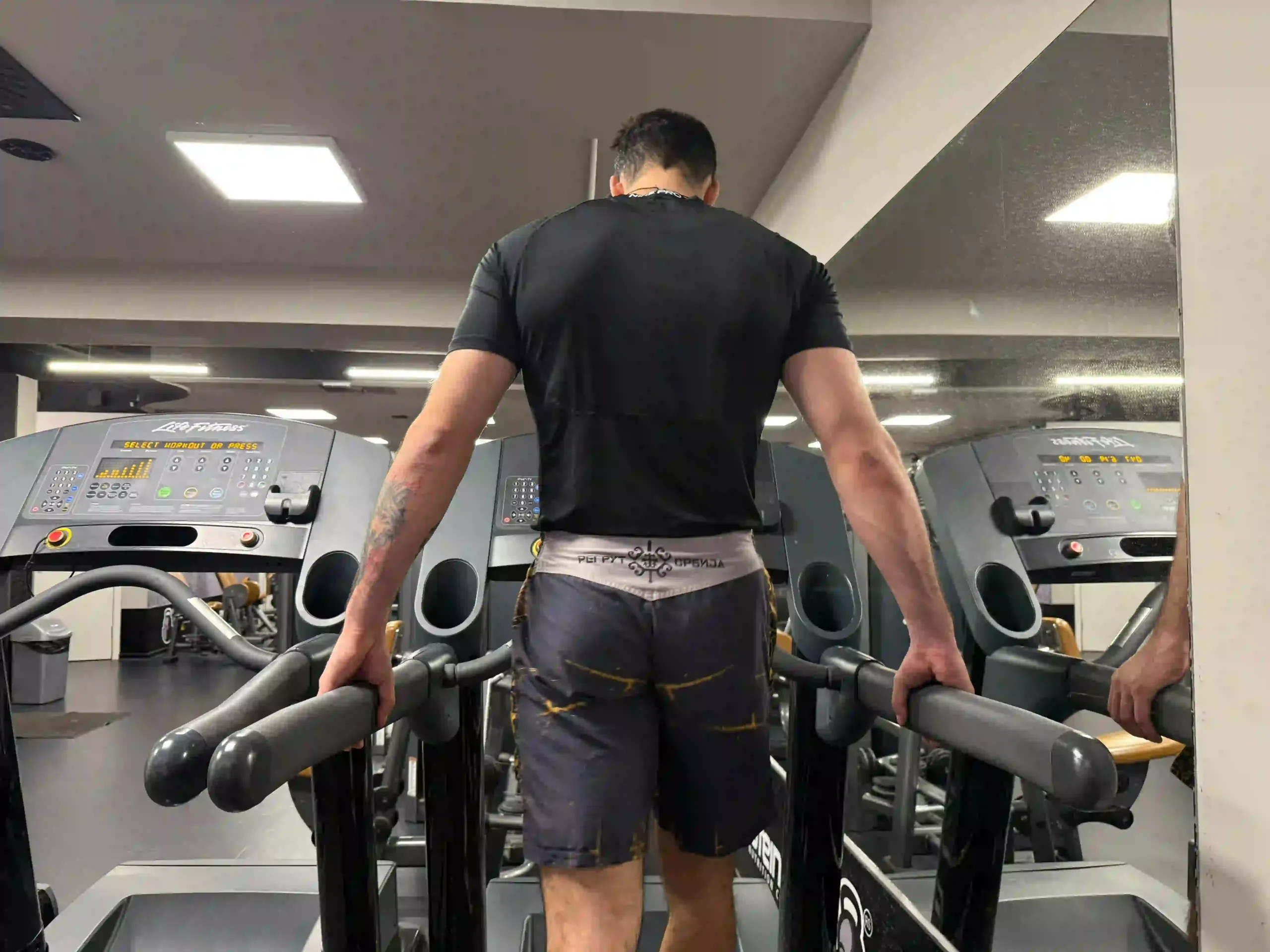
Gripping the handrails. It lowers heart rate and oxygen use at the same speed and grade, so the console numbers overstate your work. Use the rails only for brief balance checks.
Frequent treadmill training errors:
Gripping the handrails (lowers oxygen use and heart rate at the same speed, so the console overstates your work)
Starting too fast without a warm-up (keep the first minutes easy)
Repeating identical workouts week after week (progress stalls without a change in load)
Setting the incline higher than your form holds (watch for a hunched posture or a shortened stride)
Watching feet instead of the horizon (disrupts balance and posture)
Skipping the cool-down period
Training in worn-out shoes (compromises cushioning and support)
Always attach the safety clip to your clothing. If you stumble or lose balance, the clip pulls free and stops the belt.
Treadmill Maintenance: Protecting Your Investment
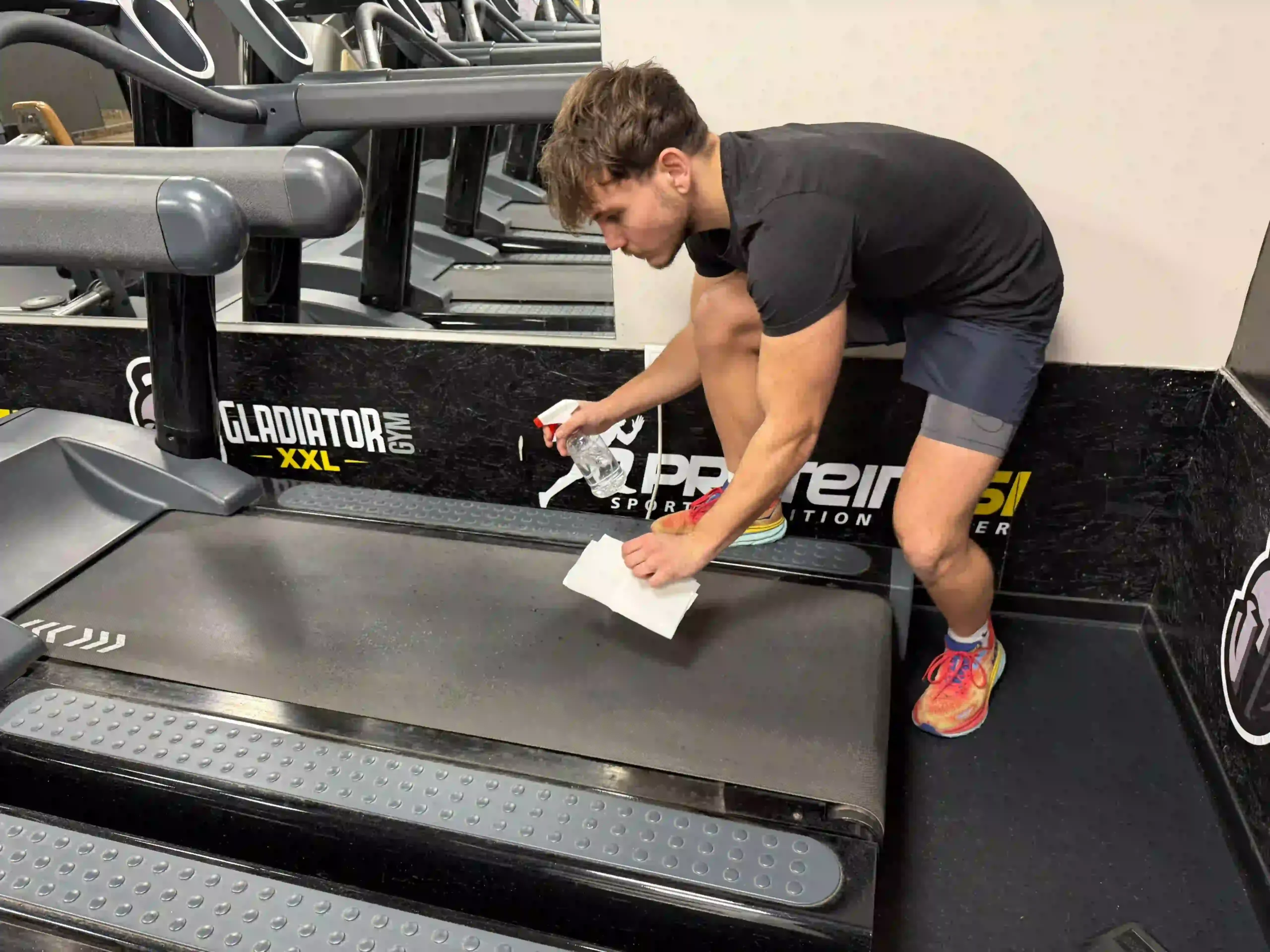
Regular treadmill maintenance protects the machine and keeps the belt feel consistent.
If you have just bought a machine and have not set it up yet, the treadmill assembly explained in detail guide covers the assembly steps.
Essential maintenance tasks:
Keep dust out from around the motor housing
Lubricate the belt only if your manual calls for it. Some models need regular silicone, while the UK edition of the NordicTrack T Series 5 (model NTL17624-INT.0) has a factory-lubricated belt that must get no silicone or other substance unless an authorized service representative says so
Check bolts and fasteners at the interval in your manual
Clean the belt surface regularly with a cleaner your manual allows
Inspect the power cord for damage regularly
Check belt alignment and adjust if needed
Follow the owner's manual for your model number: its schedule overrides any general rule in this guide.
Tracking Progress and Adjusting Your Program
Measurable progress sustains long-term motivation. Track these key metrics:
Important tracking variables:
Resting heart rate (measures cardiovascular adaptation)
Average speed/pace at conversational intensity (tracks fitness improvement)
Maximum incline sustainable for 5 minutes (strength progression indicator)
Body composition changes (more meaningful than scale weight)
Recovery heart rate (how quickly HR drops post-exercise)
Subjective difficulty ratings for standard workouts
Reassess the plan every four to six weeks. If a workout that felt challenging becomes comfortable, your body has adapted, so increase speed, incline, duration or interval intensity to keep the load progressive.
A fitness watch review guide covers devices that track heart rate zones automatically during intervals, so you can act on that data in real time rather than referencing the console.
If weight loss is your primary goal, the treadmill weight loss explained guide covers speed, incline, session frequency and nutrition timing. Scale weight moves up and down from day to day, so watch the trend over weeks.
Nutrition Considerations for Treadmill Training

Nutrition affects both performance and recovery. A joint position paper of the Academy of Nutrition and Dietetics, Dietitians of Canada and the American College of Sports Medicine says well-chosen nutrition strategies enhance performance and recovery, and that athletes should see a registered dietitian nutritionist for a personal plan (17).
Pre-workout nutrition guidelines:
Light meal ahead of a session: carbohydrate with some protein
Small carbohydrate snack close to the session: useful when you train early or hungry
Hydration: drink regularly through the day and before you start
Avoid heavy high-fat or high-fiber meals right before training
Post-workout recovery:
Eat protein and carbohydrate after longer or harder sessions
Include carbohydrate to refill glycogen stores
Rehydrate in proportion to what you sweat out
During sessions longer than an hour, plan some carbohydrate intake
Integrating Treadmill Workouts into Comprehensive Training
The treadmill shouldn't exist in isolation within your fitness program. Balanced training includes strength work, flexibility training, and active recovery.
If you ever need to move your machine between rooms or properties, the how to disassemble a treadmill explained guide covers the process.
Weekly training template:
Monday: Treadmill HIIT workout (20-30 min) + upper body strength
Tuesday: Lower body strength training
Wednesday: Moderate treadmill cardio workout (30-40 min)
Thursday: Active recovery (yoga, walking, swimming)
Friday: Treadmill intervals or incline workout (25-35 min) + core work
Saturday: Strength training full body
Sunday: Treadmill long slow distance (45-60 min) or complete rest
The treadmill sessions in this template add up to 120 to 165 minutes a week, and the three strength days clear the CDC's two-day muscle-strengthening guideline (9). The best treadmill workout depends on your goals, current fitness and time.
Smart Treadmills: Technology Enhancing Performance
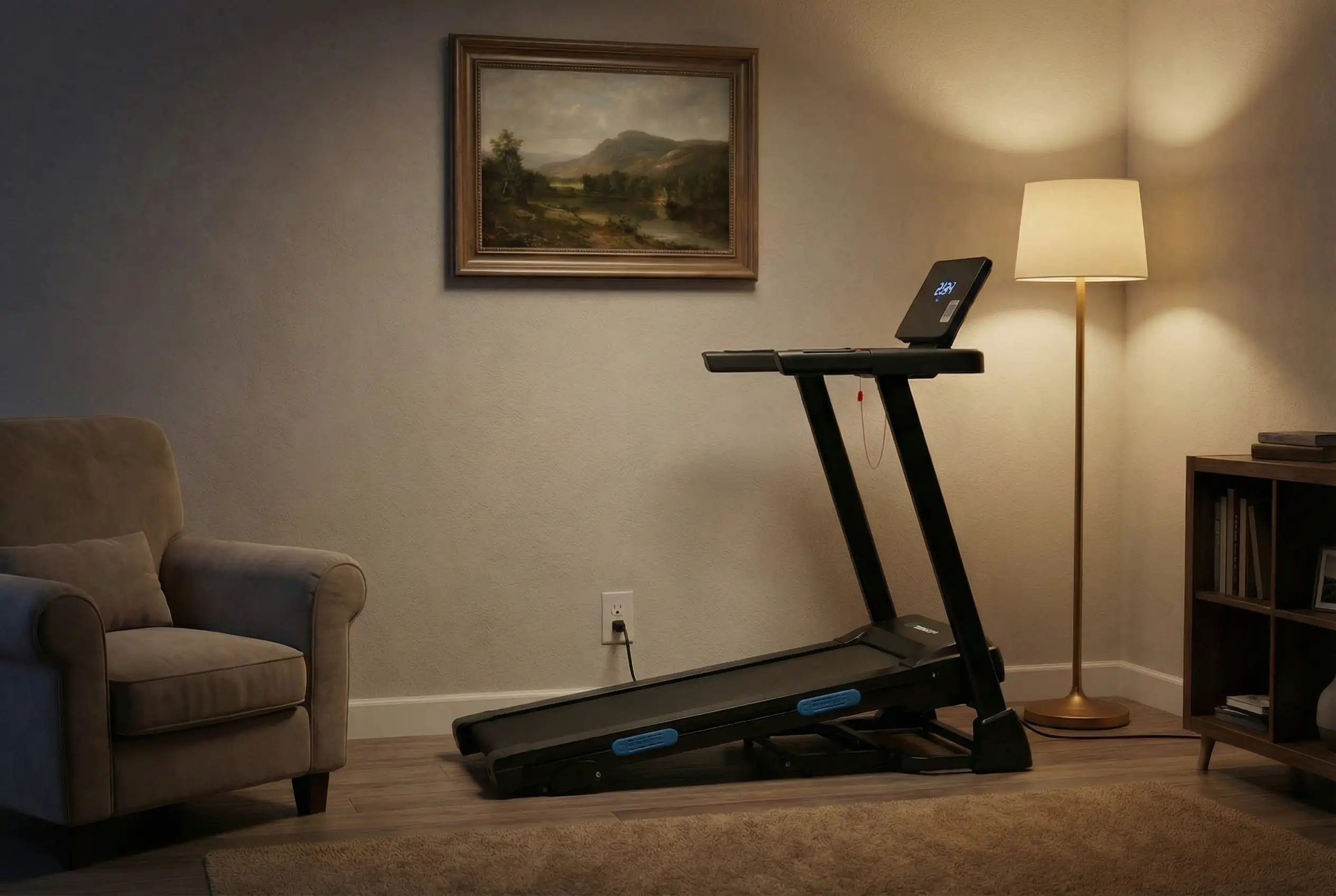
Smart treadmills add interactive programs, automatic speed and incline changes and app connectivity. The smart treadmill upgrade comparison weighs if the upgrade is worth it.
Automatic adjustments hold you to the programmed protocol. A separate guide explains what iFIT is, what it adds and which machines work with it.
Valuable smart treadmill features:
Interactive training programs with virtual courses and coaching
Automatic workout adjustments based on heart rate feedback
Performance tracking and progress visualization over time
Entertainment integration (streaming services, apps)
Social features for virtual group training
Customizable programs saved to user profiles
A programmed workout holds the speed and incline you set, so you cannot quietly slow down as you tire. That helps in interval sessions and is a drawback on days you need to back off.
In my view a smart treadmill earns its place only if you will follow the programs. Otherwise a machine in manual mode with a fixed plan does the same job.
The NordicTrack T Series 10 Treadmill (iFIT) is one example of a model built around programmed workouts. Check current terms before you buy, because subscription plans and what works without one can change.
Choosing the Right Equipment for Your Training
Treadmill workouts support cardiovascular health, weight management and measurable fitness gains when you plan them. Treadmill results depend on following the plan.
The research supports intervals for time-efficient gains in fitness markers, incline work for raising the energy cost of walking and shifting joint loading, and steady moderate sessions for building an aerobic base.
If you want a machine for the sessions in this guide, our smart treadmill reviews compare features and value.
Frequently Asked Questions
How long should I spend on the treadmill?
The CDC guideline is 150 minutes of moderate-intensity activity a week, for example 30 minutes a day on 5 days, and it can be split into smaller chunks. Beginners can start with shorter sessions, even 15 minutes, and build toward that total.
Is 30 minutes of treadmill enough to lose weight?
It can contribute when you repeat it most days and eat so that you stay in an energy deficit, because weight change depends on energy in against energy out. A harder 30 minutes uses more energy than an easy 30 minutes, but a plan you keep up beats a harder one you drop.
What does treadmill workout do?
A treadmill workout raises heart rate and energy use in proportion to speed and grade, and regular training improves aerobic capacity. In pooled trials, interval training also lowered blood pressure, resting heart rate and waist circumference.
What is the 12-3-30 treadmill workout?
The 12-3-30 workout is 30 minutes of walking at 3 miles per hour on a 12% incline. In a lab study of 14 adults it lasted longer than a self-paced run matched for energy use and drew more of its energy from fat, but it used energy at a lower rate.
What is a good speed on a treadmill to lose belly fat?
No single speed targets belly fat, because fat loss comes from a sustained energy deficit across the whole body. Choose a pace you can repeat, such as brisk walking or intervals, and pair it with eating that keeps you in a modest deficit.
 Tech Fitness Lab
Author
Vanja Vukas
I founded Tech Fitness Lab and hold a master's degree from the Faculty of Sport and Physical Education in Novi Sad. I have competed in sport and coached clients, and my writing has appeared on Fitness Volt and BOXROX. I research products from their manuals, spec sheets and warranty terms, and I flag thin evidence.
References
- Ko JM, So WY, Park SE. Narrative Review of High-Intensity Interval Training: Positive Impacts on Cardiovascular Health and Disease Prevention. J Cardiovasc Dev Dis. 2025;12(4):158. Published 2025 Apr 17. doi:10.3390/jcdd12040158
- Keller TS, Weisberger AM, Ray JL, Hasan SS, Shiavi RG, Spengler DM. Relationship between vertical ground reaction force and speed during walking, slow jogging, and running. Clin Biomech (Bristol). 1996;11(5):253-259. doi:10.1016/0268-0033(95)00068-2
- Herrmann SD, Willis EA, Ainsworth BE, et al. 2024 Adult Compendium of Physical Activities: a third update of the energy costs of human activities. J Sport Health Sci. 2024;13(1):6-12. doi:10.1016/j.jshs.2023.10.010
- Edwards JJ, Griffiths M, Deenmamode AHP, O'Driscoll JM. High-Intensity Interval Training and Cardiometabolic Health in the General Population: A Systematic Review and Meta-Analysis of Randomised Controlled Trials. Sports Med. 2023;53(9):1753-1763. doi:10.1007/s40279-023-01863-8
- Panissa VLG, Fukuda DH, Staibano V, Marques M, Franchini E. Magnitude and duration of excess of post-exercise oxygen consumption between high-intensity interval and moderate-intensity continuous exercise: A systematic review. Obes Rev. 2021;22(1):e13099. doi:10.1111/obr.13099
- Lange GW, Hintermeister RA, Schlegel T, Dillman CJ, Steadman JR. Electromyographic and kinematic analysis of graded treadmill walking and the implications for knee rehabilitation. J Orthop Sports Phys Ther. 1996;23(5):294-301. doi:10.2519/jospt.1996.23.5.294
- Wong MWH, Davis DW, Perez OR, et al. An Exploratory Study Comparing the Metabolic Responses between the 12-3-30 Treadmill Workout and Self-Paced Treadmill Running. Int J Exerc Sci. 2025;18(6):56-64. Published 2025 Jan 1. doi:10.70252/UBIX5911
- Haggerty M, Dickin DC, Popp J, Wang H. The influence of incline walking on joint mechanics. Gait Posture. 2014;39(4):1017-1021. doi:10.1016/j.gaitpost.2013.12.027
- Centers for Disease Control and Prevention. Adult activity: an overview. Accessed November 17, 2026.
- Centers for Disease Control and Prevention. How to measure physical activity intensity. Accessed November 17, 2026.
- Berling J, Foster C, Gibson M, Doberstein S, Porcari J. The effect of handrail support on oxygen uptake during steady-state treadmill exercise. J Cardiopulm Rehabil. 2006;26(6):391-394. doi:10.1097/00008483-200611000-00009
- Ito S. High-intensity interval training for health benefits and care of cardiac diseases - The key to an efficient exercise protocol. World J Cardiol. 2019;11(7):171-188. doi:10.4330/wjc.v11.i7.171
- Tanaka H, Monahan KD, Seals DR. Age-predicted maximal heart rate revisited. J Am Coll Cardiol. 2001;37(1):153-156. doi:10.1016/s0735-1097(00)01054-8
- Tamayo Acosta J, Sosa Gomez AE, Samuel S, Pelenyi S, Acosta RE, Acosta M. Effects of Aerobic Exercise Versus High-Intensity Interval Training on V̇O2max and Blood Pressure. Cureus. 2022;14(10):e30322. Published 2022 Oct 15. doi:10.7759/cureus.30322
- Bone Health and Osteoporosis Foundation. Exercise for your bone health. Bone Health and Osteoporosis Foundation; 2022. Accessed November 17, 2026.
- Jones AM, Doust JH. A 1% treadmill grade most accurately reflects the energetic cost of outdoor running. J Sports Sci. 1996;14(4):321-327. doi:10.1080/02640419608727717
- Thomas DT, Erdman KA, Burke LM. Position of the Academy of Nutrition and Dietetics, Dietitians of Canada, and the American College of Sports Medicine: Nutrition and Athletic Performance. J Acad Nutr Diet. 2016;116(3):501-528. doi:10.1016/j.jand.2015.12.006