
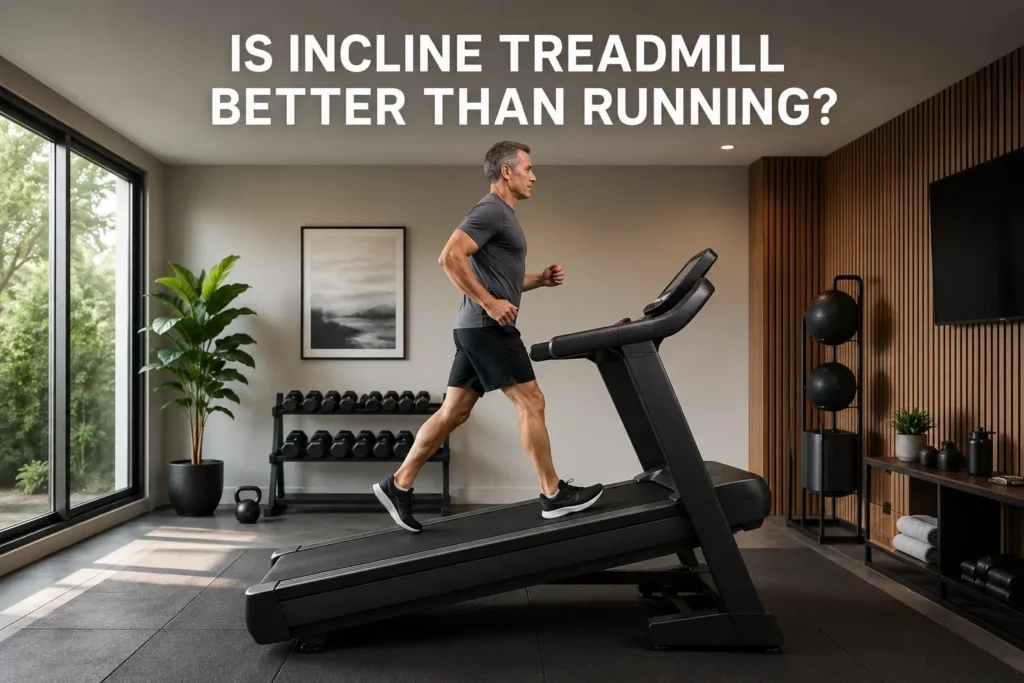
Neither is better for everyone. I'd pick incline walking if impact is what limits you or you want long, steady sessions, because in lab tests a 20% walk matched a slow jog's energy cost and gave lower impact readings at the foot and lower back than a jog, and running if you want the most energy per minute or train for a running event.
The sections below give the energy cost, muscle activity and impact figures as they were measured, with the speeds, grades and sample sizes behind them. A steep grade works the quadriceps harder and bends the knee more, so joint pain is a question for a clinician first. None of this is a promise of weight loss: no measurement here compares the two for fat loss.
Is Incline Treadmill Better Than Running - The Direct Answer
The cleanest comparison sets both to the same energy cost. In a lab test of 22 adults aged 19 to 31, with a mean body mass of 71 kg, walking at a 20% grade and jogging on the flat were matched on oxygen use. The walkers averaged 1.8 mph and the joggers 3.9 mph. Over 20 minutes both burned about 170 kcal, at about 24 mL of oxygen per kg of body mass per minute (1). The jog was a slow one, easy enough to hold for 40 minutes.
Treadmill models with a steep grade are listed in our full treadmill lineup.
Impact is where the two part ways. On a flat indoor platform, 23 recreational athletes pressed into the ground with a peak vertical force of about 1.2 times body weight when walking, rising to about 2.5 times at 6 m/s, or 13 mph, when running; slow jogging produced more than 50% higher peak force and loading rate than walking (2). That platform was level, not a treadmill and not an incline. On treadmills, 22 adults who did less than 150 minutes of aerobic exercise a week walked at 20% grade and jogged at 1% grade, each at a self-chosen speed. Impact acceleration at the foot and the lower back was lower during the 20% walk than during the jog, on both treadmills tested (3). Acceleration is a stand-in for impact, not a measure of the forces inside the joint.
If you do run, form and pacing are covered in our guide on how to run on a treadmill correctly.
Matched effort did not mean matched enjoyment. In the same 22 adults, the jog scored higher than the 20% walk on the enjoyment scale (about 97 against 85) and on a 0 to 100 likelihood-of-repeating scale (about 76 against 65) (1). Those are young adults in a 20-minute lab session, so treat the preference as a hint, not a rule.
Machines built for steep grades are covered in our guide to the best incline treadmill.
Does Running or Incline Walking Burn More Calories
Running spends more energy per minute. Sixteen active adults enrolled in an exploratory comparison (mean age 25, mean body mass about 75 kg), and 14 of them completed both sessions. Each did the 12-3-30 workout, which is 30 minutes of walking at a 12% grade and 3 mph, and on another day a self-paced run on the flat that stopped once they had burned the same energy. In those 14 the walk averaged about 10 kcal per minute and the run about 13, so the run finished in about 24 minutes against 30 for the walk (4). The fuel mix differed as well: during the session, about 41% of the walk's energy came from fat against about 33% for the run.
That is one small, young sample, and the run speed was self-chosen and not reported. The fuel mix was measured during the session only, so it does not show how much body fat anyone lost.
| Activity | About kcal per 30 minutes | Basis of the figure |
|---|---|---|
| Flat treadmill walking, 0% grade, 3.5 to 3.9 mph | About 180 kcal | Estimate for a 75 kg adult from a Compendium entry of 4.8 METs, not measured |
| Walking at 12% grade, 3 mph | About 310 kcal | Measured mean of 14 adults over 30 minutes (enrolled group about 75 kg on average) |
| Self-paced running, 0% grade, speed not reported | About 390 kcal | Measured rate of the same 14 adults, multiplied to 30 minutes; their runs lasted about 24 minutes |
The table mixes one estimate with two measured group means, all rounded to the nearest 10 kcal. The flat-walking row is an estimate from the 2024 Compendium, which lists 4.8 METs for treadmill walking at 3.5 to 3.9 mph, converted for a 75 kg adult as MET x kg x hours (5). The Compendium's hill-walking entries describe outdoor hills, so they are not used for the incline row. The incline row is the measured mean of 14 adults (16 enrolled) over a 30-minute session, about 10.23 kcal per minute. The running row is their measured 13.08 kcal per minute times 30, since the real runs stopped at about 24 minutes.
Is Incline Walking Better for Fat Loss and Belly Fat
I would not rank the two on fat loss, because the measurements stop at the end of the session. They do not show weight or fat change over weeks, which depends on total energy balance.
Repeated walking does change body measures. In a 12-week randomized trial, 28 overweight or obese women walked at a moderate intensity, a target heart rate matching 50 to 70% of their VO2max, in two groups of 14: one on a supervised treadmill and one paced by a pedometer. Ultrasound visceral fat thickness, waist circumference and body weight fell (6). The trial had no incline group and no running group, so it shows that regular moderate walking can reduce these measures, not that it beats running.
Belly fat does not come off from one exercise or one machine setting. I would not expect either method to target it: the better method is the one you can repeat.
What the measurements support for incline walking, and what they do not:
- Fuel mix: about 41% of the energy during the session came from fat, against about 33% for a run matched on total energy (14 adults)
- Pace: the same energy cost as a jog at about half the speed, 1.8 mph at 20% grade against 3.9 mph on the flat (22 adults)
- Not shown: any fat-loss advantage over running, or any effect on hormones
Backward walking is a separate movement, covered in benefits of walking backwards on a treadmill.
Is Walking Better Than Running for Cardio Health
Heart rate climbs with grade even when speed falls. Six adults (mean age 28.5, mean body mass 75 kg) walked at self-chosen speeds at 0, 12 and 24% grade. They chose slower speeds on the steeper grades, yet heart rate rose significantly across the grades (7). Six people is a very small sample, so it shows a direction, not a size of effect.
For long-term protection, the evidence is for walking in general, not for incline walking. A systematic review of 21 observational studies linked more walking time, distance, energy spent and a faster pace with a lower risk of cardiovascular disease, with the clearest link for ischaemic stroke. The authors flag a possible bias: illness that is already present can reduce how much people walk (8).
A steep walk can raise heart rate as much as a slow jog. In the matched lab test, heart rate averaged about 144 beats per minute walking at 20% grade and about 146 jogging (1). No measurement here shows that either method builds aerobic fitness faster.
If you are weighing treadmill running against running outdoors, see whether treadmill running is easier.
A wider view of what treadmill training offers is in our guide on the benefits of treadmill training.
Is Incline Walking Better Than Regular Walking
For energy cost and muscle work, yes: a grade raises both, and the rise grows with the grade.
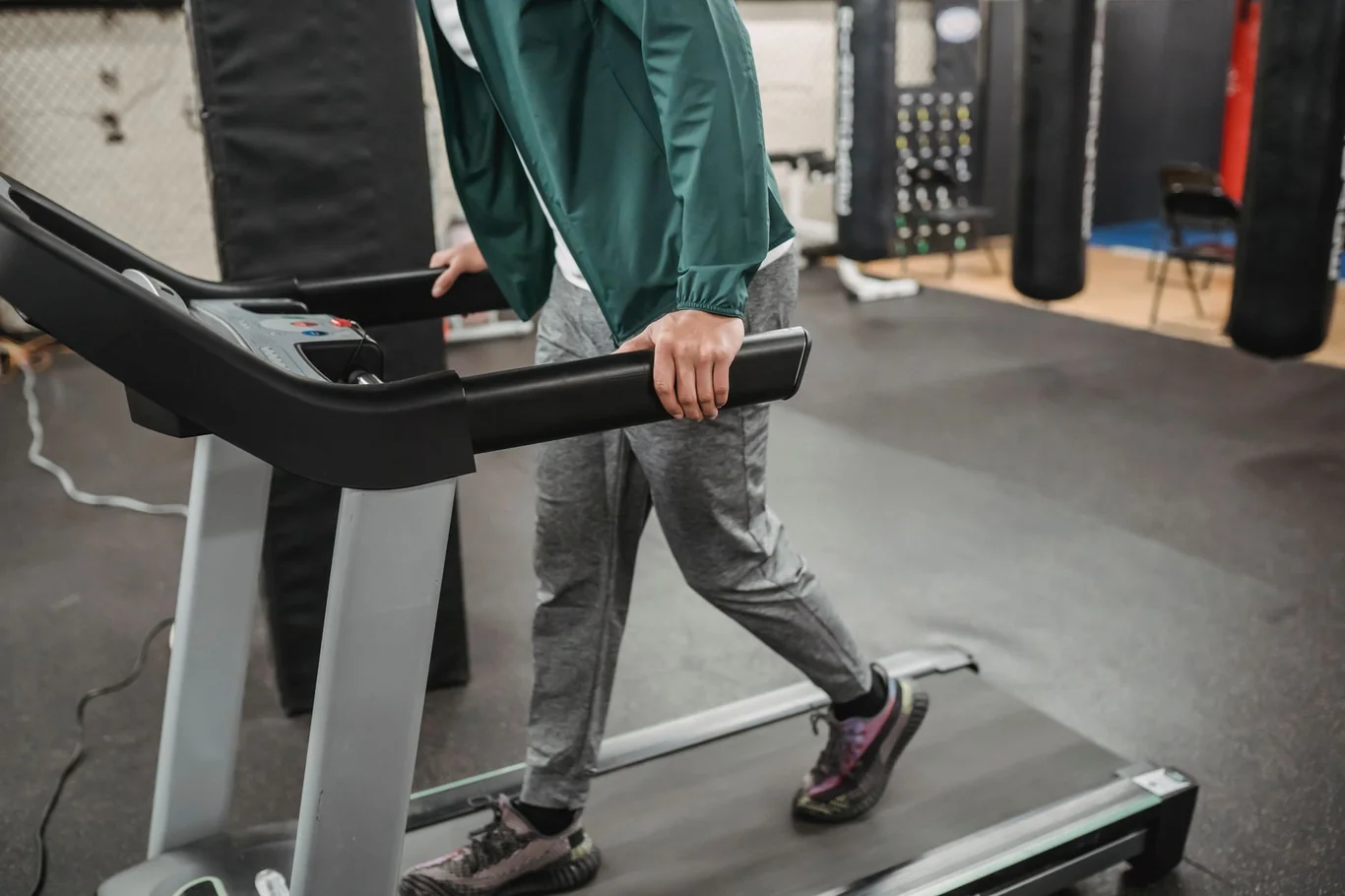
In 24 healthy adults aged 65 to 84 (mean 75), who walked five minutes at each grade at a self-chosen speed of about 1.4 mph and wore a safety harness, 10% grade raised net energy cost by 22.9% over flat walking, and 16% grade raised it by 44.2% (9). In the stance phase, activity rose with the slope in the rectus abdominis, rectus femoris, vastus medialis, biceps femoris, medial gastrocnemius and soleus. The soleus change tracked the rise in energy cost most closely.
The same direction showed in young adults. Six adults walked at 0, 12 and 24% grade, each at a self-chosen speed. Average and peak activity rose significantly with grade in the vastus medialis oblique (up 125% and 154%), the vastus lateralis (109% and 139%) and the biceps femoris (53% and 46%), while the medial hamstrings stayed similar (7).
Against a jog at 1% grade, a 20% walk raised integrated muscle activity in the soleus, lateral gastrocnemius, vastus lateralis, gluteus maximus, erector spinae and anterior deltoid, on both treadmills, in the same 22 less active adults over five-minute sessions (3).
| Measure | Flat Walking | Incline Walking |
|---|---|---|
| Net energy cost (24 adults, mean age 75) | Reference level at 0% grade | 22.9% higher at 10%, 44.2% higher at 16% |
| Leg and trunk muscle activity (same adults) | Lower at 0% grade | Higher in six muscles during the stance phase |
| Heart rate (6 adults, mean age 28.5) | Lowest at 0% grade | Rose across the grades, though speed fell |
| Quadriceps activity (same 6 adults) | Lowest at 0% grade | Rose significantly with grade |
| Knee bend at heel strike (same 6 adults) | Smallest at 0% grade | Increased with grade |
A grade raises the cost without raising the speed, but that is not evidence that incline walking is free of joint load. Knee bend at heel strike rose with grade in the six adults, and the authors proposed a grade just above 12% for knee rehabilitation. That is a question for a physical therapist, not a setting I can recommend for a sore knee.
Space-saving models are covered in our guide to the best folding treadmill.
Is Incline Walking Better Than Running for Weight Loss - Who It's Right For
No measurement here settles which is better for weight loss, so this section is my judgement.
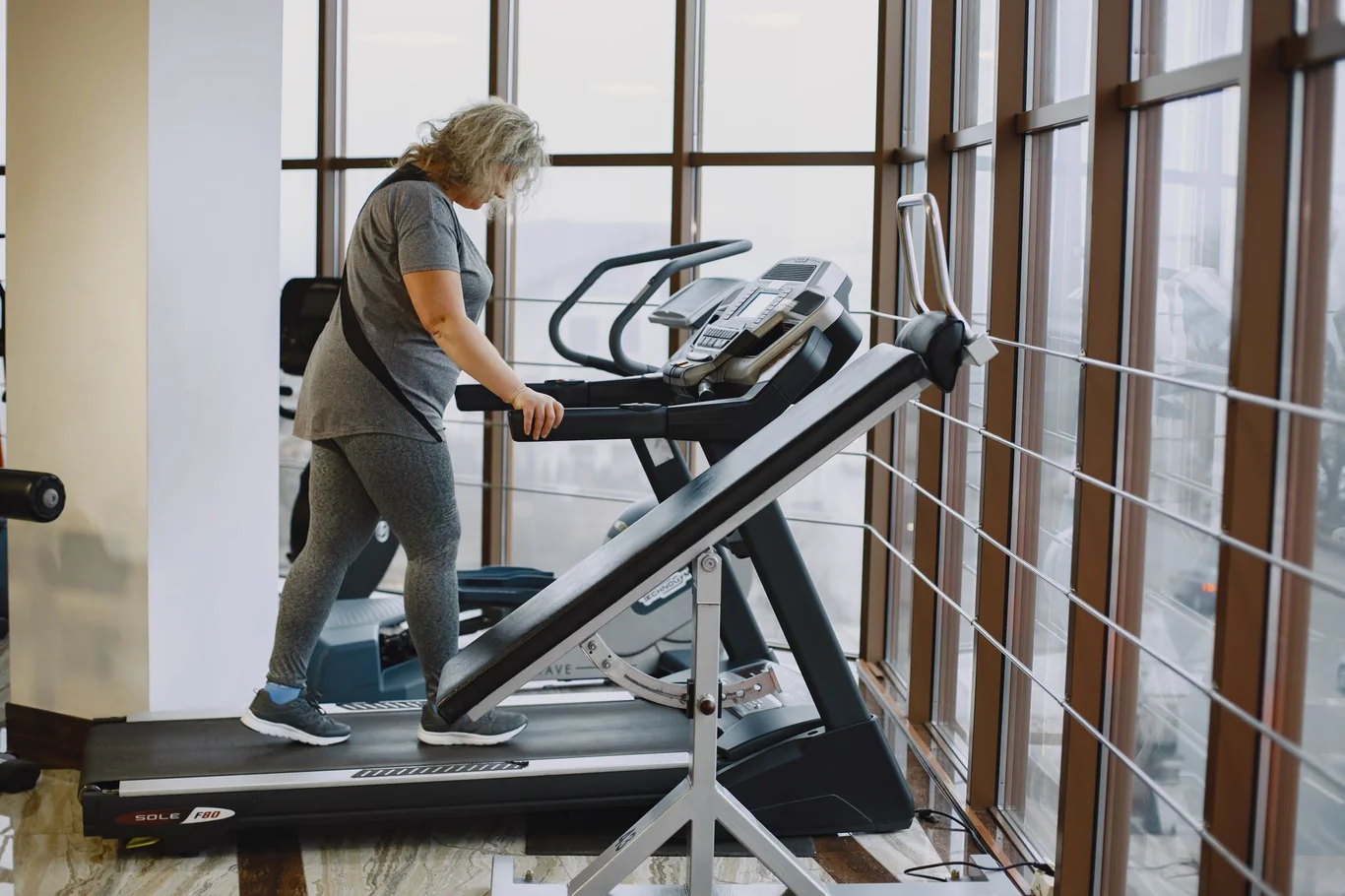
I'd lean toward incline walking if you:
- Feel knee, hip or ankle pain that worsens with impact, and have had it checked by a clinician
- Are starting out and want a first routine that feels easy to begin
- Prefer a slow, steady effort to short hard ones
- Are returning after a break or an injury and a clinician has cleared you
- Want a lower pace for the same effort: about 1.8 mph at 20% grade matched a 3.9 mph jog (1)
I'd lean toward running if you:
- Have no pain with impact and enjoy running
- Are training for a running event and need the running movement itself
- Have limited time: the run reached the same energy total in about 24 minutes against 30 for the walk (4)
- Want the option that scored higher for enjoyment in the matched test (1)
Over a longer span, observational data favour running for change in body mass. In a survey of 15,237 walkers and 32,216 runners followed for 6.2 years, BMI change was linked more strongly to the energy a person ran than to the same energy walked, in men and in the heaviest women. In the heaviest quarter of both sexes, each MET-hour a day of running was linked to about 90% more weight loss than the same dose of walking (10). It is an observational survey of BMI, not fat, so it cannot say what would happen if a walker switched to running.
Runners' exercise dose fell more over the years than walkers', by about 1.3 MET-hours a day against 0.2 to 0.3, and the survey does not say why. My case for incline walking is practical, and it is a judgement, not a finding: I rate the method you can repeat across months above the one with the higher cost per minute.
For light daily steps at a desk, see our best under-desk treadmill guide.
How to Structure Your Incline Treadmill Workout for Best Results
Treat these steps as a start for a healthy adult, not a prescription. Stop if you feel pain, dizziness or chest discomfort.
Raising the grade and the pace in the same session. Change one at a time, so you know which change caused the strain.

A cautious way to start:
- Warm up on the flat at an easy walking pace
- Raise the grade in small steps at the same easy pace, and keep the steepest grade only while you can still talk in short sentences
- Cool down on the flat, and lower the grade before you stop the belt
Building up, one change at a time:
- Add grade or time only after your last sessions felt comfortable throughout
Signs you are ready to add jogging:
- You finish your usual walking session feeling you could do more
- No joint pain appears during or after sessions
- You want to practise running itself, not only raise the effort
See a doctor before you start if you have a heart, lung or joint condition, take medicine that affects heart rate, or feel chest pain or dizziness with effort. For weight-loss planning beyond one session, see our treadmill weight loss guide.
In my view the protocol matters more than the machine: write down grade, speed and time for every session. Ready-made sessions are in 30 minute treadmill workouts.
Session-by-session plans are in our structured treadmill workout guide.
Moving or storing the machine is covered in our guide to disassembling a treadmill; follow the maker's manual for your model.
Incline Walking Is a Real Training Method
The matched test needed 1.8 mph at 20% grade to equal a 3.9 mph jog, so a grade is a real way to raise effort without raising speed (1). For harder sessions, see our treadmill interval workouts guide.
A wider list of uses is in our guide on what a treadmill is good for.
Running spends more energy per minute and reaches the same total sooner, about 13 kcal per minute against 10 in 14 adults (4). Incline walking matched a slow jog's energy cost at about half the speed (1) and showed lower impact acceleration at the foot and lower back than a jog (3). Is incline treadmill better than running? For anyone limited by impact, I'd say yes. For anyone short on time or training to run, I'd say no.
To check a machine's grade range, motor and belt before you buy, see our guide on what to look for in a treadmill.
Both methods work, and a mix suits many people: incline walking on lower-impact days and running on days you feel fresh.
Ranked models for both uses are in our top treadmill for home use guide.
Frequently Asked Questions
Is it better to run or walk on an incline on a treadmill?
It depends on what limits you. Incline walking suits people who want low impact and a steady effort, and running suits people who want the most energy per minute or need to train for running.
Is it better to run for 30 minutes or walk for 60 minutes?
In a 14-adult comparison, running burned about 13 kcal per minute and walking at 12% grade and 3 mph about 10, so 30 minutes of running comes to about 390 kcal and 60 minutes of that walk to about 610 kcal if the rates held. Both totals extend shorter measured sessions, so choose by what your joints and your schedule allow.
Is 20 minutes of walking on an incline on the treadmill good enough?
Twenty minutes is long enough to do real work: adults in a 20-minute lab session at 20% grade and 1.8 mph averaged about 170 kcal and a heart rate near 144 beats per minute. If you are new, start well below that grade and pace and build up gradually.
Can I lose belly fat by incline walking?
Not by walking alone and not from one spot, because abdominal fat falls as total body fat falls. In a 12-week trial with no incline group and no running group, 28 overweight or obese women who walked at moderate intensity reduced ultrasound visceral fat thickness and waist circumference.
Is incline walking better than running for fat loss?
No measurement on this page compares the two for fat loss. A 12% incline walk took about 41% of its energy from fat against about 33% for a run matched on total energy in 14 adults, but a higher share during a session does not show more fat lost over weeks.
 Tech Fitness Lab
Author
Filip Marić
I am a strength and conditioning coach and I work with professional tennis players. I hold three ISSA certifications and worked as a fitness coach at the Tipsarevic Academy. I also write for Fitness Volt. I judge equipment as a coach: what it trains, how far it lets you progress and what its numbers mean.
References
- Sato M, Krieger T, Gidley AD, Weaver B, Johnson CA, Lankford DE. Physiological and Psychological Differences Between 20% Grade Incline Walking and Level-Grade Jogging at Isocaloric Intensity. Int J Exerc Sci. 2024;17(6):1318-1336. Published 2024 Dec 1. doi:10.70252/CWWL1447
- Keller TS, Weisberger AM, Ray JL, Hasan SS, Shiavi RG, Spengler DM. Relationship between vertical ground reaction force and speed during walking, slow jogging, and running. Clin Biomech (Bristol). 1996;11(5):253-259. doi:10.1016/0268-0033(95)00068-2
- Kundu R, Krieger T, Sanchez R, Lankford DE. The Interaction of Treadmill Type and Incline Slope on Biomechanics and Muscle Activation During Human Locomotion. Int J Exerc Sci. 2024;17(1):1478-1492. Published 2024 Dec 1. doi:10.70252/GMWV8349
- Wong MWH, Davis DW, Perez OR, et al. An Exploratory Study Comparing the Metabolic Responses between the 12-3-30 Treadmill Workout and Self-Paced Treadmill Running. Int J Exerc Sci. 2025;18(6):56-64. Published 2025 Jan 1. doi:10.70252/UBIX5911
- Herrmann SD, Willis EA, Ainsworth BE, et al. 2024 Adult Compendium of Physical Activities: a third update of the energy costs of human activities. J Sport Health Sci. 2024;13(1):6-12. doi:10.1016/j.jshs.2023.10.010
- Göçer E, Ardıç F, Akkaya N, Herek D. Efficacy of moderate-intensity walking provided feedback by ECE PEDO on abdominal fat in overweight and obese women: A randomized, exercise study. Turk J Phys Med Rehabil. 2017;63(4):340-347. Published 2017 Nov 29. doi:10.5606/tftrd.2017.1956
- Lange GW, Hintermeister RA, Schlegel T, Dillman CJ, Steadman JR. Electromyographic and kinematic analysis of graded treadmill walking and the implications for knee rehabilitation. J Orthop Sports Phys Ther. 1996;23(5):294-301. doi:10.2519/jospt.1996.23.5.294
- Boone-Heinonen J, Evenson KR, Taber DR, Gordon-Larsen P. Walking for prevention of cardiovascular disease in men and women: a systematic review of observational studies. Obes Rev. 2009;10(2):204-217. doi:10.1111/j.1467-789X.2008.00533.x
- Kim J, Lee HJ, Lee SH, et al. Correlation between cardiopulmonary metabolic energy cost and lower-limb muscle activity during inclined treadmill gait in older adults. BMC Geriatr. 2021;21(1):469. Published 2021 Aug 23. doi:10.1186/s12877-021-02401-9
- Williams PT. Greater weight loss from running than walking during a 6.2-yr prospective follow-up. Med Sci Sports Exerc. 2013;45(4):706-713. doi:10.1249/MSS.0b013e31827b0d0a