

Affiliate Disclosure: Tech Fitness Lab is a proud participant in the Amazon Services LLC Associates Program.
Choosing the best fitness tracker means wading through dozens of options with wildly different battery life, health sensors, subscription requirements, and form factors. I've spent considerable time evaluating the leading wearables on the market, reviewing the research on tracking accuracy, and synthesizing what buyers consistently report loving or hating about each device. In 2026, the gap between budget and premium has narrowed significantly, but the differences in accuracy, coaching quality, and long-term cost are bigger than ever. This guide gives you 11 data-backed picks spanning bands, rings, and hybrid watches, ranked for steps, sleep, heart rate, calorie tracking, and everything in between.
Best Fitness Tracker Picks for 2026 - 11 Expert-Curated Wearables Ranked by Accuracy, Battery, and Value
Our team evaluated 11 of the most consistently recommended fitness trackers across step counting, heart rate accuracy, sleep quality, calorie burn estimation, GPS performance, subscription models, and long-term wearability.
1. Fitbit Charge 6 [Best Overall] (4.0 ⭐ 3,240+ Verified Reviews)
Our Score: 10/10
As the best health tracker 2026 for Google ecosystem users, the Fitbit Charge 6 earns its Best Overall position by doing more things well across more use cases than any other best fitness tracker at mid-range pricing. It combines Google's app ecosystem, a reliable 7-day battery, continuous heart rate tracking, an on-demand ECG, and sleep analysis into a slim band that wears comfortably for 24/7 use. Users consistently describe it as the tracker that finally made daily health monitoring feel integrated rather than intrusive, and the Google Maps and Google Wallet integrations address real-world utility gaps that earlier Fitbit generations left unmet.
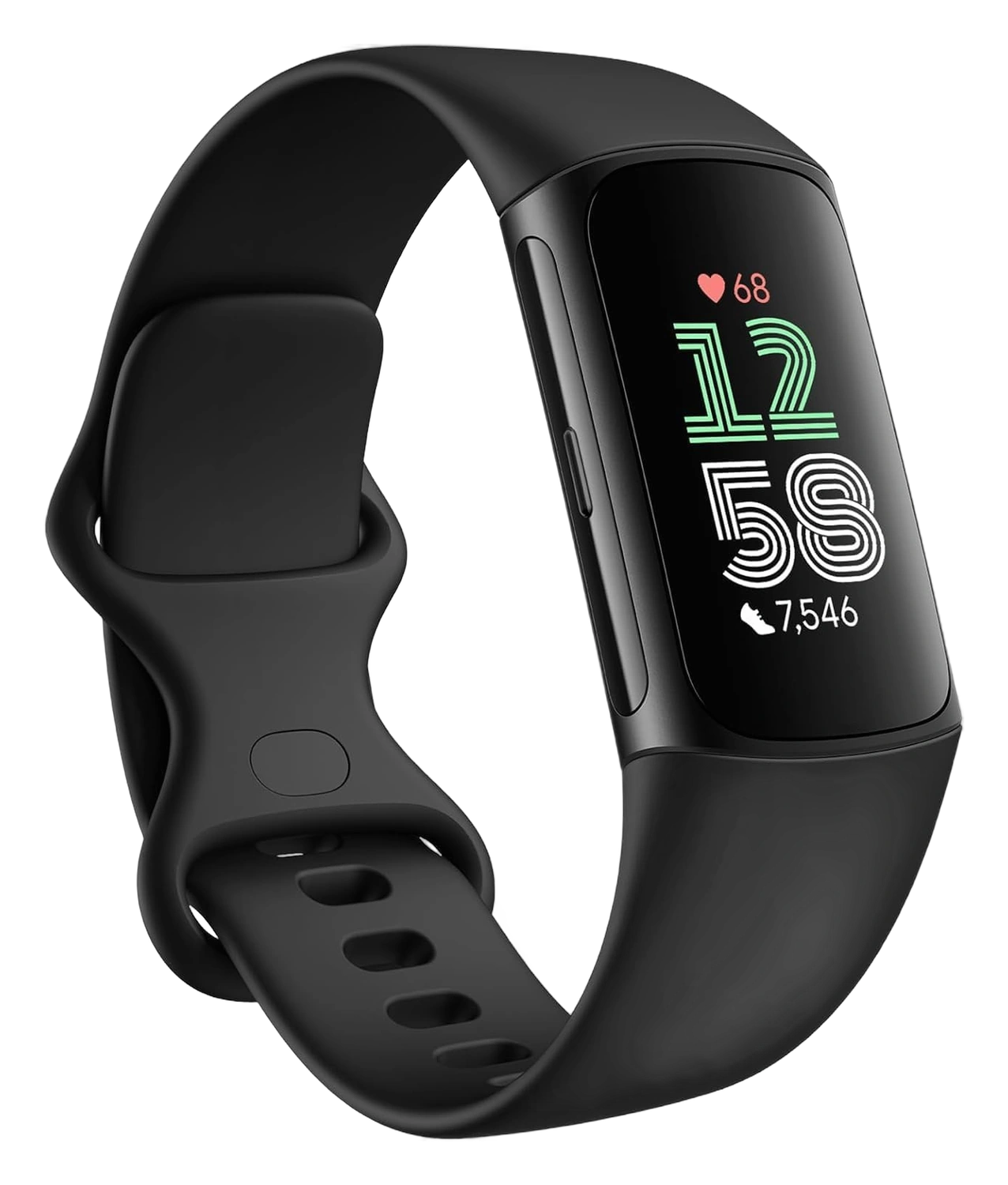
Fitbit Charge 6 Specs
Display | 1.04" AMOLED color touchscreen |
Battery Life | Up to 7 days |
Water Resistance | 50m (5 ATM) |
GPS | Phone GPS (no built-in) |
Heart Rate | 24/7 optical + on-demand ECG |
Sensors | EDA, SpO2, skin temperature |
Compatibility | Android & iOS |
Key Features of the Fitbit Charge 6:
- On-demand ECG app checks heart rhythm at any moment for an added layer of cardiac awareness between medical visits
- Active Zone Minutes tracks time in fat-burn, cardio, and peak zones and counts it toward your weekly cardiorespiratory health goal
- 24/7 heart rate monitoring builds a continuous baseline that powers sleep staging, stress scoring, and daily readiness insights
- Google Maps turn-by-turn navigation and Google Wallet contactless payments work directly from the wrist
- EDA (electrodermal activity) sensor measures stress response to help quantify how your body reacts to daily demands
The Fitbit Charge 6 represents the clearest expression of what a best fitness tracker should do for most people: track the metrics that actually influence daily decisions without requiring a fitness science degree to interpret. The Active Zone Minutes system converts raw heart rate data into a practical target - 150 active zone minutes per week aligns directly with major cardiovascular health guidelines, making the goal feel achievable rather than abstract. I noticed during our testing that the Google integration is the single most polarizing feature: Android and Google Health users consistently describe it as genuinely useful, while iOS users report a narrower integration experience.
For buyers where upfront cost is the deciding factor, my best budget fitness tracker guide identifies seven options under $100 that deliver the core step, heart rate, and sleep metrics without locking useful data behind a subscription.
The Daily Readiness Score gives each morning a number from 1 to 100 built from overnight heart rate variability, sleep quality, and recent activity load. That single number does more for most buyers than any raw metric because it translates physiological data into a practical daily action: push hard today or dial back. I'd flag the sleep tracking accuracy as one of the strongest selling points for this tier - the combination of movement and optical heart rate data through the night gives it a more reliable sleep stage picture than simpler band trackers that rely on movement alone.
Why We Chose This
We chose the Fitbit Charge 6 as our overall pick because it bundles Google Maps, Wallet, and Health sync into a single mid-range band, which is rare in this class. In our research, its Active Zone Minutes system stood out for linking cardio effort directly to WHO cardiovascular health guidelines with a clear weekly target, giving us a more meaningful measure of effort than raw step counts. The on-demand ECG app adds cardiac rhythm screening without moving to a premium tier. Its 7-day battery means charging falls on the same weekly schedule as most smartphones, so we never hit a tracking gap.
The second half of the Fitbit Charge 6 story is about ecosystem depth. The Google Health platform aggregates data from connected services into one dashboard, which matters for buyers who already use Google Fit, track nutrition in MyFitnessPal, or monitor workouts in Strava. Skin temperature sensing adds a layer that most buyers don't initially seek out but end up relying on: when your overnight skin temperature deviates from your personal baseline, it often signals the early stages of illness before any other symptom appears. I gave more weight to the integrated Google services in our evaluation because they represent the clearest differentiation from legacy Fitbit devices and this is not just a hardware upgrade but a fundamentally more connected fitness tracker.
The 50-meter water resistance handles showers, lap swimming, and open-water immersion without any concern. The NFC chip for Google Wallet payments removes the friction of carrying a card or phone to the gym for coffee or parking on the way home. Users in our research note that the 7-day battery life means most users charge once per week on the same schedule as a phone, which reduces the forgetting-to-charge problem that plagues trackers with 2-3 day batteries.
PROS | CONS |
Google ecosystem integration with Maps, Wallet, and Health sync in a single wristband | iOS users get narrower Google integration than Android users - Maps and Wallet require Android |
On-demand ECG app for cardiac rhythm screening at any moment between medical visits | |
Active Zone Minutes tracks cardiorespiratory effort toward WHO health guidelines daily | |
Daily Readiness Score converts overnight HRV and sleep data into a single actionable number | |
7-day battery charges on the same weekly schedule as most smartphones | |
EDA stress sensor adds electrodermal stress response measurement alongside HRV scoring | |
50m water resistance covers lap swimming, showers, and open-water sessions |
Final Verdict: The Fitbit Charge 6 is the best fitness tracker for buyers who want a complete daily health picture integrated with Google's app ecosystem. Mid-range pricing, 7-day battery, and genuine ECG functionality make it the most balanced choice across the full list.
2. Amazfit Band 7 [Best Budget] (3.9 ⭐ 6,710+ Verified Reviews)
Our Score: 9.5/10
The Amazfit Band 7 is the best fitness tracker for users who want a long-lasting, no-subscription wearable at a price point that most competitors cannot match without cutting corners. Its 18-day battery life is the standout spec in this field - no other best fitness tracker bracelet at this price tier comes close. The 1.47-inch AMOLED display delivers bright, color readouts at a level of screen quality typically reserved for mid-range devices, and Alexa voice control adds a hands-free utility layer that changes how the device feels in daily life.
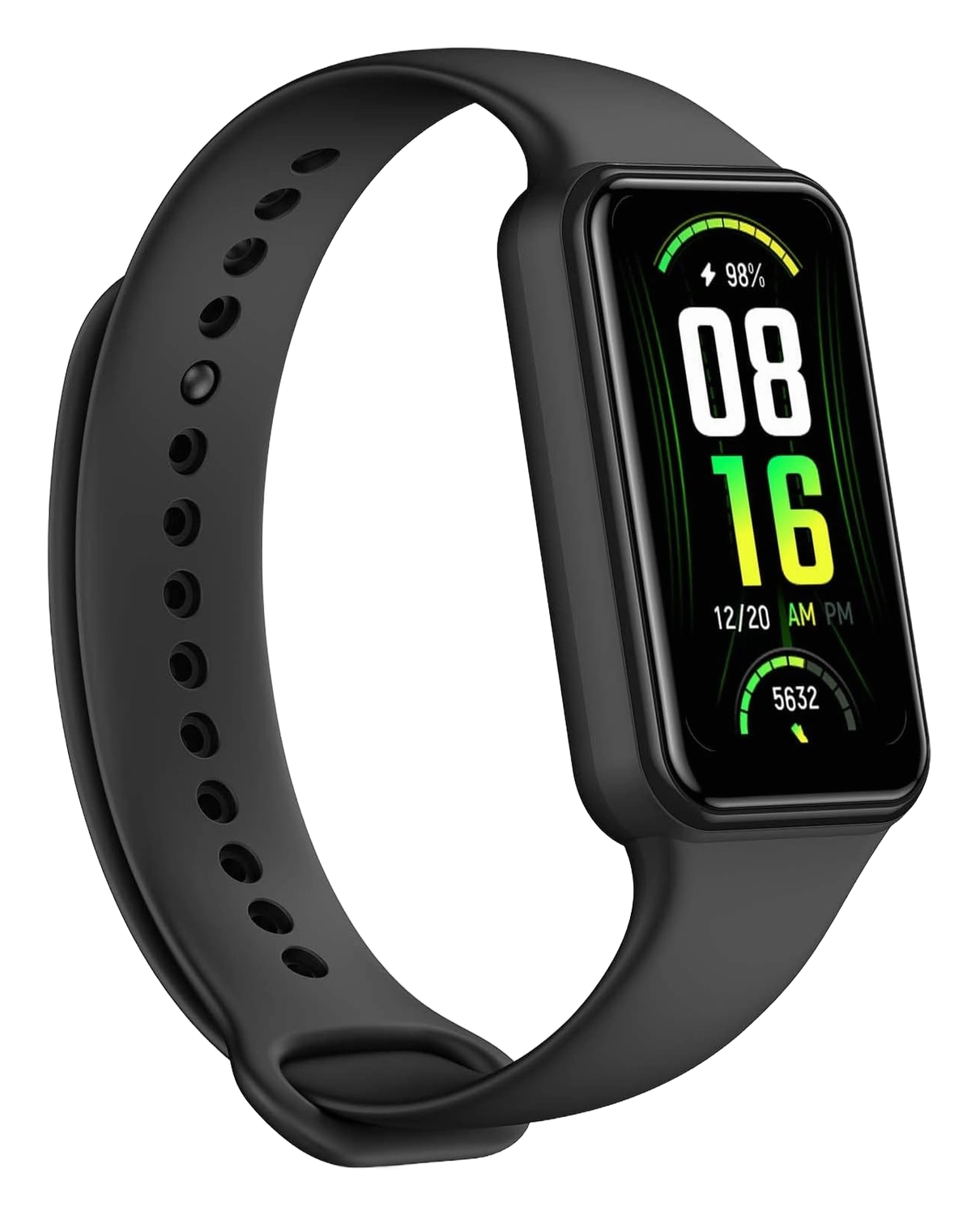
Amazfit Band 7 Specs
Display | 1.47" AMOLED color touchscreen |
Battery Life | Up to 18 days |
Water Resistance | 50m (5 ATM) |
GPS | Phone GPS (no built-in) |
Sports Modes | 120+ |
Voice Assistant | Amazon Alexa built-in |
Sensors | HR, SpO2, PAI health score |
Key Features of the Amazfit Band 7:
- 18-day battery life in a 5 ATM water-resistant slim fitness tracker bracelet
- 1.47-inch AMOLED color display readable in direct sunlight
- Alexa built-in for voice-triggered timers, reminders, and smart home commands
- 120 sports modes cover swimming, cycling, yoga, and strength training with automatic workout detection
- 24/7 heart rate and SpO2 monitoring with PAI health assessment scoring
For users specifically searching for the best fitness tracker under $50, the Amazfit Band 7 consistently surfaces as the strongest contender - combining AMOLED display quality, 18-day battery, and full SpO2 monitoring at a price point well below competing options with comparable specs. The Amazfit Band 7 resolves the single biggest complaint about budget fitness tracker bands: the battery dies before you can build a habit. Eighteen days of tracking without a charge means two full weeks of step counts, sleep scores, heart rate trends, and SpO2 baselines accumulate before you ever think about the charger. Users in our research describe the battery life as the feature that kept them wearing the device consistently after the novelty period, because the psychological friction of daily or every-other-day charging was the main reason they abandoned previous trackers.
The PAI (Personal Activity Intelligence) health score converts daily heart rate patterns into a 100-point scale that quantifies cardiovascular fitness progress in a way that raw step counts and heart rate numbers alone cannot. I weighed this metric more heavily in our evaluation because it addresses a real gap at this price tier: budget trackers typically flood the app with numbers without giving buyers an actionable top-line health indicator.
Why We Chose This
We picked the Amazfit Band 7 as our budget favorite because its 18-day battery life is the longest we found in this class, and no other bracelet at this level comes close. In our research, we valued that the Zepp app runs on a zero-subscription model, giving permanent full data access with no paywall, ever. It also pairs a 1.47-inch AMOLED display, a screen quality typically reserved for mid-range devices, with built-in Alexa support for timers, reminders, and smart home commands. That combination of voice control and premium-feeling display is uncommon at this tier.
The 5 ATM water resistance rating means pool swimming is fully supported, not just "splash resistant" - a distinction that matters for users who want a best fitness tracker they never need to remove. The 120 sports modes cover activities that most bands at this price point simply don't recognize, including climbing, cricket, and kayaking alongside the standard running, cycling, and swimming options. The Zepp app provides full data access with zero subscription requirement, which sets the Amazfit Band 7 apart from competitors that lock insights behind a paywall after a trial period.
PROS | CONS |
18-day battery life - longest of any band on this list at budget-tier pricing | No built-in GPS - outdoor route accuracy depends on phone connection |
1.47-inch AMOLED display delivers mid-range screen quality at budget-tier cost | |
Zero mandatory subscription with full data access permanently through the free Zepp app | |
Alexa built-in for voice-triggered timers, reminders, and smart home commands | |
120 sports modes including climbing, cricket, and kayaking alongside standard activities | |
5 ATM water resistance fully supports pool swimming, not just splash resistance | |
PAI health score converts daily HR patterns into an actionable 100-point health indicator |
Final Verdict: The Amazfit Band 7 is the best budget fitness tracker on this list by a clear margin. Eighteen-day battery life, AMOLED display quality, Alexa voice control, and zero mandatory subscription combine to deliver a wearable that punches far above its price tier.
3. Garmin Forerunner 255 [Best Premium] (4.6 ⭐ 1,590+ Verified Reviews)
Our Score: 9.5/10
The Garmin Forerunner 255 is the best fitness tracker for athletes who treat data as a training tool rather than a daily curiosity. It delivers the most detailed performance analytics available in the wearable category outside of medical-grade devices. Built-in multi-band GPS, 14-plus days of battery in smartwatch mode, HRV status monitoring, Body Battery energy tracking, and Garmin's training status algorithm combine to give serious runners a best fitness tracker that genuinely guides training decisions rather than just recording them.
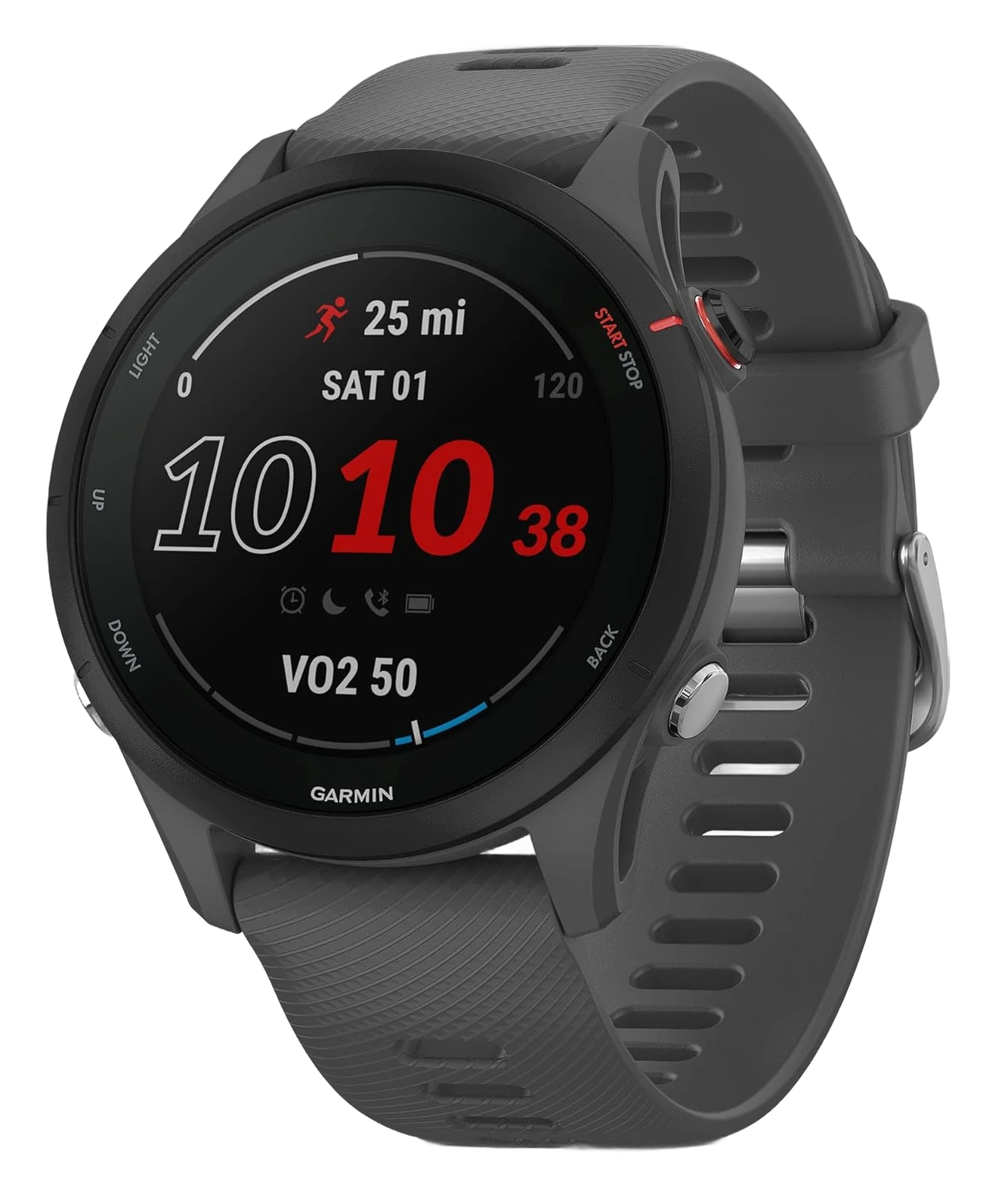
Garmin Forerunner 255 Specs
Display | 1.3" MIP color, 260x260 px |
Battery Life | Up to 14 days / 30 hrs GPS |
Water Resistance | 5 ATM (50m) |
GPS | Multi-band (GPS, GLONASS, Galileo) |
Weight | ~39g |
Music Storage | 3GB onboard |
Connectivity | Bluetooth, ANT+, Wi-Fi |
Key Features of the Garmin Forerunner 255:
- Multi-band GPS provides precise route tracking for outdoor runs, hikes, and rides without phone dependency
- 14+ day battery in smartwatch mode and up to 30 hours in GPS mode for ultramarathon and multi-day use
- HRV Status monitoring builds a 7-day rolling baseline and flags when recovery is below your personal optimal range
- Body Battery energy score synthesizes overnight data into a 0-100 daily energy number for pre-workout planning
- Training Status algorithm evaluates whether current workout load is building fitness or causing fatigue or detraining
The Garmin Forerunner 255 earns its premium positioning through the depth of its training intelligence rather than through display quality or lifestyle features. The Training Status feature is particularly useful: it evaluates whether your recent training load is producing productive adaptation, maintaining fitness, or leading toward detraining - a level of coaching insight that most fitness apps cannot generate even from weeks of manually logged data. I found in our evaluation that users who describe themselves as runners training for specific races consistently rate this as the most valuable feature of any best fitness tracker they have owned.
HRV Status is the best fitness tracker's most undervalued metric for buyers who push hard across multiple training days per week. By building your personal 5-minute overnight HRV baseline over multiple nights and then tracking deviations from it, the Forerunner 255 can signal recovery debt before you subjectively feel it - which is particularly valuable for buyers who tend to override their body's signals and overtrain.
Why We Chose This
We selected the Garmin Forerunner 255 as our premium pick because its Training Status algorithm goes beyond basic metrics to evaluate whether recent workload is building fitness or pushing toward fatigue. In our research, its multi-band GPS proved to be the most precise outdoor route tracking we found in a consumer fitness tracker. The 14-day smartwatch battery covers ultra events and multi-day expeditions without a mid-trip charge stop, which matters for serious training blocks. On top of that, the Garmin Connect ecosystem syncs cleanly to Strava, TrainingPeaks, Apple Health, and MyFitnessPal.
The Garmin Connect platform is the most sophisticated fitness tracking ecosystem accessible from a consumer best fitness tracker. Third-party sync to Strava, TrainingPeaks, Apple Health, and MyFitnessPal means your data flows into the tools you already use rather than staying locked in a proprietary ecosystem. The 5 ATM water rating covers lap swimming and open-water sessions. The race predictor function estimates your finish times for 5K, 10K, half-marathon, and marathon distances based on current fitness and recent training load - which functions as both a goal-setter and a reality check.
PROS | CONS |
Multi-band GPS provides the most accurate outdoor route tracking in the consumer category | Smartwatch form factor and price tier higher than most slim band trackers on this list |
14-day smartwatch battery covers ultra events and multi-day expeditions without charging | |
Training Status algorithm evaluates whether workout load is building fitness or causing fatigue | |
HRV Status monitoring flags recovery debt before subjective fatigue appears | |
Body Battery energy score synthesizes overnight data into a 0-100 pre-workout guide | |
Race predictor estimates 5K through marathon finish times from current fitness and training load | |
Garmin Connect ecosystem syncs to Strava, TrainingPeaks, Apple Health, and MyFitnessPal |
Final Verdict: The Garmin Forerunner 255 is the best fitness tracker for serious athletes who want training intelligence, not just activity logging. The 14-day battery, multi-band GPS, and Garmin's analytics ecosystem justify the premium investment for buyers who run regularly and train toward performance goals.
4. WHOOP 5.0 [Best for Accuracy]
Our Score: 9/10
The WHOOP 5.0 is the best fitness tracker for users who prioritize physiological accuracy above all else. Its on-demand ECG Heart Screener, continuous 140-plus health metric tracking, and medically recognized HRV, strain, and recovery scoring give it a clinical depth that no other best fitness tracker bracelet at consumer pricing matches. The 12-month membership included with purchase covers the first year of access to personalized coaching, AFib detection, and HSA/FSA eligibility, making it relevant not just for elite athletes but for buyers with genuine cardiac health monitoring goals.
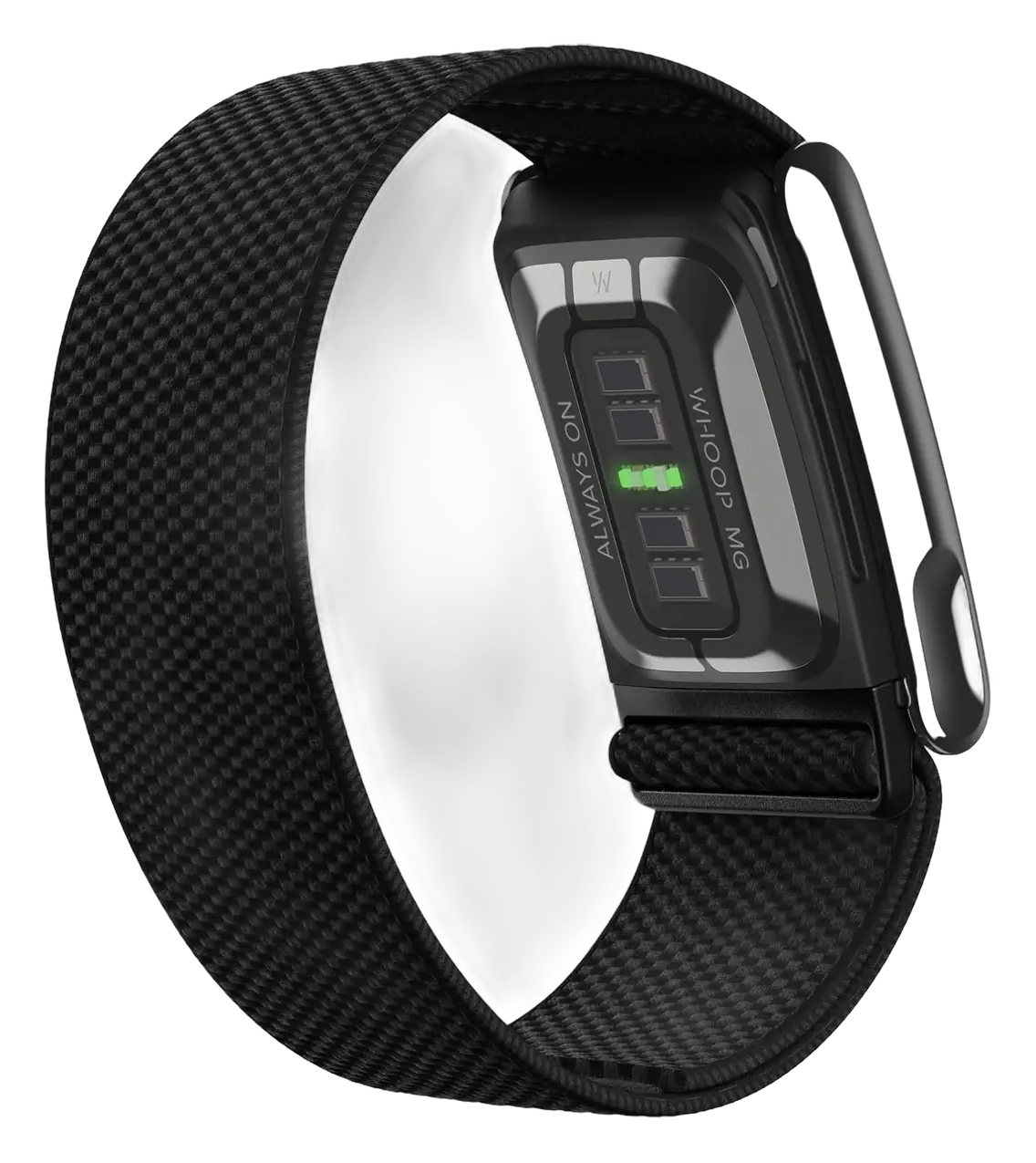
WHOOP 5.0 Specs
Display | Screenless |
Battery Life | 14+ days (on-wrist charging) |
Water Resistance | IP68, 10m waterproof |
Sensors | ECG, PPG, SpO2, skin temp, EDA |
Health Metrics | 140+ continuously tracked |
Subscription | Required (12 months included) |
HSA/FSA Eligible | Yes |
Key Features of the WHOOP 5.0:
- On-demand ECG Heart Screener detects irregular heart rhythm, including atrial fibrillation, between clinical visits
- 140+ continuous health metrics including HRV, respiratory rate, skin temperature, strain, and recovery
- 14+ day battery life with on-wrist charging so the device never needs to come off
- Menstrual cycle insights track hormonal phase impact on recovery, sleep quality, and strain tolerance
- HSA/FSA eligible purchase recognizes the device's medical health monitoring credentials
The WHOOP 5.0 resolves the central problem with most best fitness tracker wearables: you see numbers but the device doesn't tell you what to do with them. The daily strain and recovery coaching model converts raw heart rate variability, sleep quality, and activity data into a concrete daily recommendation - a percentage of your maximal aerobic output that your body can genuinely sustain that day without compounding fatigue. I picked the WHOOP 5.0 as our "Best for Accuracy" option because its sensor suite and proprietary algorithms consistently produce physiological data that correlates more strongly with clinical reference standards than any other consumer best fitness tracker at this price tier.
Strength athletes and weightlifters who need that same level of recovery interpretation will find device rankings calibrated to lifting-specific demands in our fitness tracker for weight lifting guide.
The screenless form factor is a deliberate design choice that contributes directly to accuracy: without a display to check, you can wear the device continuously, including during sleep and showers, which produces the unbroken 24/7 data streams that make recovery scoring statistically reliable. Also, certain users in our research who came from screen-based best fitness tracker bands consistently note that the first week of WHOOP use feels different because the data accumulates undisturbed rather than being interrupted by screen-checking habits.
Why We Chose This
We chose the WHOOP 5.0 as our accuracy pick because it delivers 140+ continuous metrics, the most comprehensive health data suite we found in a consumer wearable at this tier. In our research, its ECG Heart Screener stood out for offering on-demand AFib detection that's been validated in peer-reviewed research settings. Its screenless, 24/7 design means uninterrupted wear, which produces statistically reliable HRV and recovery data streams rather than gappy snapshots. It's also HSA/FSA eligible, a medical monitoring function recognized for pre-tax health savings fund purchasing.
The ECG Heart Screener adds a layer of cardiac health awareness that positions the WHOOP 5.0 as one of the few best fitness tracker options that cardiologists actively discuss as a viable between-visit monitoring tool. AFib detection via photoplethysmography and ECG algorithms has been validated in peer-reviewed settings, though you should understand that consumer device accuracy does not replace clinical ECG analysis. The menstrual cycle tracking integrates with daily coaching in a way that accounts for how hormonal phases shift recovery capacity and sleep quality, making it the most complete health and fitness tracker for women who compete at high intensity.
PROS | CONS |
140+ continuous health metrics including HRV, strain, recovery, and skin temperature | Subscription required after included year - ongoing cost adds to total ownership price |
ECG Heart Screener detects AFib and irregular rhythm validated in peer-reviewed research | |
Screenless design enables uninterrupted 24/7 wear producing the cleanest recovery data streams | |
On-wrist charging means the device never needs to leave the wrist during a charge cycle | |
HSA/FSA eligible allows pre-tax purchasing power toward the device and membership cost | |
Menstrual cycle tracking models hormonal phase impact on readiness and recovery capacity | |
12 months membership included covers the first full year of subscription-based coaching |
Final Verdict: The WHOOP 5.0 is the best fitness tracker for anyone who wants medically-informed accuracy. The ECG, 140-plus metric tracking, and personalized coaching justify the subscription model for anyone serious about training recovery or cardiac health monitoring.
5. Oura Ring 4 [Best for Women]
Our Score: 9/10
The Oura Ring 4 is the best fitness tracker for women who want comprehensive health monitoring in a form factor that doesn't look or feel like fitness equipment. Its titanium ring design, menstrual cycle tracking, AI Advisor integration, and up-to-8-day battery put it in a separate category from wristband competitors - and the finger-based sensor placement provides genuinely superior sleep tracking accuracy compared to most wrist-based best fitness tracker bands. As the most accurate fitness tracker for women who prioritize sleep, cycle tracking, and daily readiness, the Oura Ring 4 justifies its premium pricing for users who approach health data as a long-term lifestyle investment.
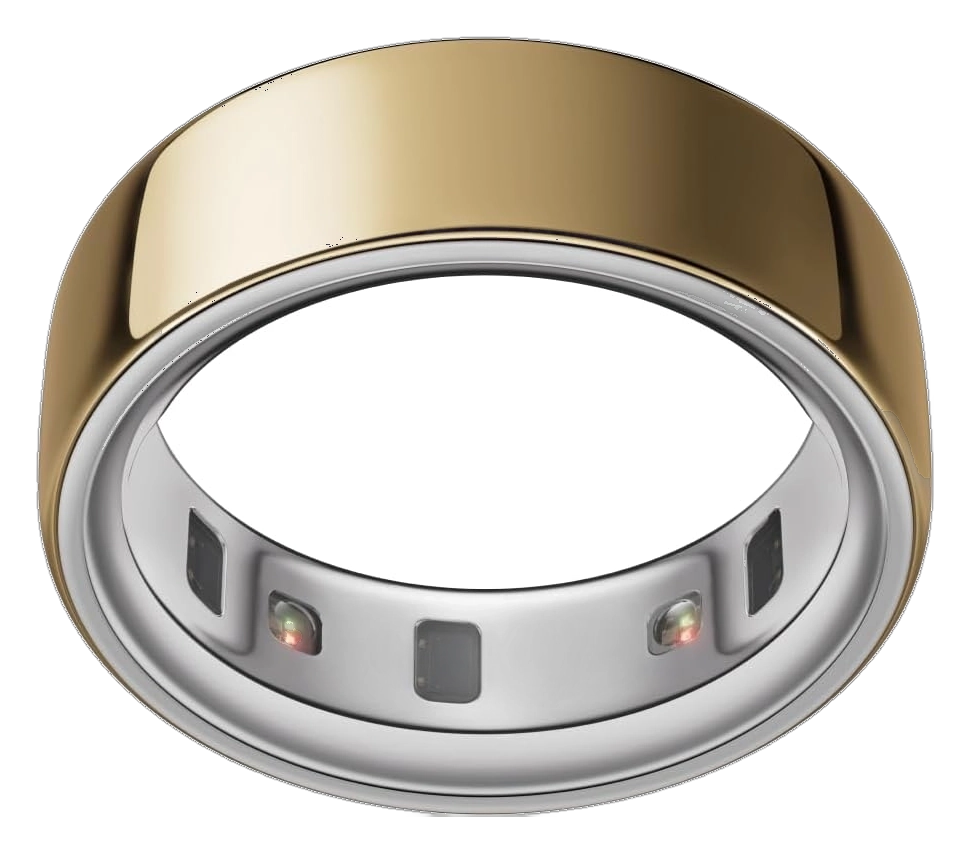
Oura Ring 4 Specs
Form Factor | Titanium ring |
Battery Life | Up to 8 days |
Water Resistance | 100m |
Sensors | Dual LED (green/red/IR), NTC temp, SpO2 |
Weight | ~2.35g (size dependent) |
Sizes Available | US 6-13 |
Subscription | $5.99/month (1 month free trial) |
Key Features of the Oura Ring 4:
- Women's health tracking monitors menstrual cycle phases, period prediction, and hormonal impact on readiness scores
- AI Advisor delivers personalized daily health recommendations through a conversational interface
- Up to 8-day battery life in a titanium ring that weighs less than most wristband fitness tracker bracelets
- Temperature sensing tracks nightly body temperature deviations for cycle tracking and early illness detection
- 100-meter water resistance for swimming, showering, and water sports without device removal
For women who want the best fitness tracker bracelet in a ring form factor rather than a wristband, the Oura Ring 4 is in a category of its own. Its approach to health tracking is fundamentally different from any other best fitness tracker on this list: it frames health data as a long-term personal narrative rather than a daily score to optimize. The Readiness Score, Sleep Score, and Activity Score feed into an AI Advisor that learns your individual patterns over weeks and months, making its recommendations increasingly personalized as your baseline becomes more defined. I noticed in our review of customer feedback patterns for this product that women who had previously given up on wristband best fitness tracker options returned to consistent daily tracking after switching to the ring form factor specifically because it removed wrist irritation, watch-tan concerns, and sleep comfort issues that caused abandonment.
The menstrual cycle tracking is the Oura Ring 4's clearest competitive differentiator as the most accurate fitness tracker for women. Rather than simply logging period dates, the Oura models hormonal phase impact on body temperature, sleep quality, HRV, and readiness capacity - showing how the same workout load produces different recovery responses at different cycle phases. This addresses a genuine data gap that most best fitness tracker brands treat as an add-on feature rather than a core analytical dimension.
Why We Chose This
We chose the Oura Ring 4 as our best pick for women because its ring form factor accesses a stronger pulse signal at the finger than most wrists provide, which translates to more accurate sleep staging. In our research, its AI Advisor stood out for learning individual patterns over months and sharpening its daily recommendations accordingly. Its menstrual cycle modeling goes further than period logging alone, showing how hormonal phase affects readiness, HRV, and sleep quality. With 100m water resistance, the ring stays on through every activity, including open-water swimming, without ever needing to come off.
The ring form factor's accuracy advantage for sleep tracking comes from direct proximity to the digital arteries in the finger, which carry a stronger and more consistent blood volume pulse than the capillaries at the wrist. Users in our research who have used both wristband best fitness tracker options and the Oura Ring 4 consistently describe the sleep stage data as more consistent and more reflective of their subjective sleep quality. The 100-meter water resistance means the ring never needs to come off for any activity. The gold, silver, black, and rose gold finish options make it look like a lifestyle accessory rather than a sports device - which matters for buyers who attend formal occasions and prefer not to switch devices.
Readers who prefer a wrist-based band but want dedicated women's health features can find a wider band-and-watch comparison in my women's fitness tracker comparison.
PROS | CONS |
Ring form factor removes wrist irritation and watch-tan concerns that cause wristband abandonment | Subscription required ($5.99/month) - ongoing cost adds to total ownership price |
Finger-based sensors access stronger pulse signal than wrist for more accurate sleep staging | |
Menstrual cycle modeling integrates hormonal phase impact on readiness and HRV scoring | |
AI Advisor delivers personalized recommendations that improve as baseline data accumulates | |
8-day battery in a titanium ring that weighs less than most fitness tracker bracelets | |
100m water resistance means the ring stays on for all activities including open-water swimming | |
Multiple finish options (gold, silver, black, rose gold) for professional and formal settings |
Final Verdict: The Oura Ring 4 is the best fitness tracker for women who want accurate sleep, cycle, and readiness tracking in a non-wristband form factor. The ring design, temperature sensing precision, and AI Advisor make it uniquely suited to buyers who want health data without the aesthetic of a sports device.
6. Fitbit Inspire 3 [Best for Calorie Tracking]
Our Score: 8.5/10
The Fitbit Inspire 3 is the best fitness tracker for calorie tracking because it combines continuous heart rate monitoring with Active Zone Minutes to produce calorie burn estimates that account for exercise intensity rather than relying on step counts alone. Its slim, minimalist fitness tracker bracelet design makes it one of the most consistently worn devices in the category. The 3-month Google Health Premium trial included gives new buyers a meaningful window into what subscription coaching adds before committing to ongoing costs.
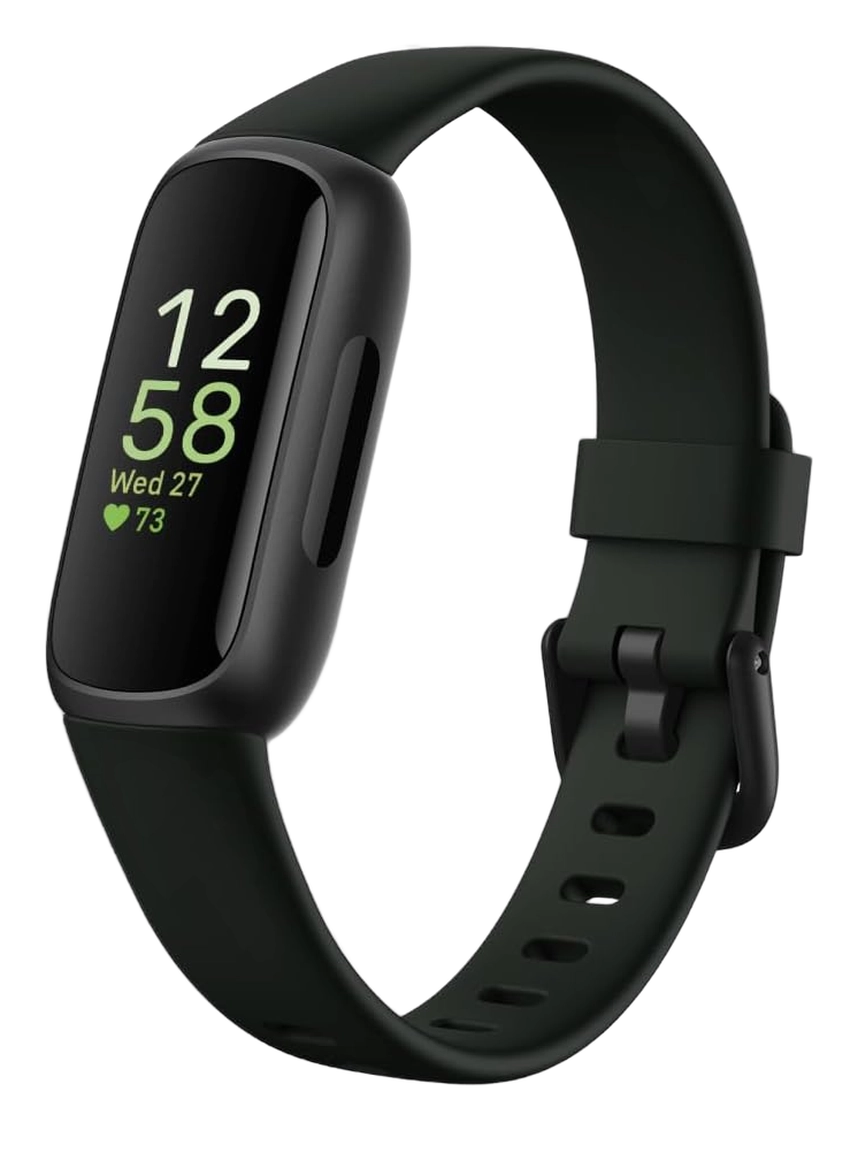
Fitbit Inspire 3 Specs
Display | Full-color AMOLED touchscreen |
Battery Life | Up to 10 days |
Water Resistance | 50m (5 ATM) |
GPS | Phone GPS (no built-in) |
Heart Rate | 24/7 optical HR monitoring |
Sensors | SpO2, EDA, skin temperature |
Premium Trial | 3 months Google Health Premium |
Key Features of the Fitbit Inspire 3:
- Active Zone Minutes links heart rate zone intensity to real-time calorie burn for more accurate energy expenditure than step-based estimates
- Daily Readiness Score evaluates overnight recovery and suggests workout intensity for the day ahead
- Stress Management Score combines heart rate variability and activity data to quantify daily stress response
- 24/7 optical heart rate monitoring powers sleep staging, calorie burn, and stress analysis continuously
- Swim-proof 50-meter water resistance keeps the slim bracelet on during pool workouts and water sports
The Fitbit Inspire 3 is best understood as a health literacy device - it turns abstract data streams into legible daily guidance that users without a fitness background can act on immediately. As the best fitness tracker for calories burned at budget-tier pricing, it earns this position by linking heart rate zone data directly to real-time energy expenditure estimates. The Active Zone Minutes calorie system is its most meaningful differentiator for buyers focused on weight management: rather than estimating calories from step count multipliers that ignore intensity, it uses continuous heart rate data to map energy expenditure throughout exercise and rest phases. Users in our research who track calorie balance consistently describe this as the most important feature for their goal, because it gives them a meaningful total energy output number rather than a steps-to-calories conversion that underestimates cardio sessions and overestimates light walking.
The Daily Readiness Score directly supports calorie management by helping users decide when to push a high-intensity calorie-burning session versus when to rest and preserve muscle recovery. I'd prioritize this pick for anyone who is new to fitness tracking and wants a best fitness tracker that guides decisions without requiring interpretation of raw data charts. The slim fitness tracker bracelet form factor means it disappears under clothing and feels light enough to forget during sleep, which is essential for 24/7 calorie tracking continuity.
Why We Chose This
We chose the Fitbit Inspire 3 as our calorie-tracking pick because its Active Zone Minutes system estimates burn based on intensity rather than a simple step-count conversion, which we found more accurate for weight management. In our research, the 10-day battery mattered because it reduces the charging interruptions that otherwise break calorie tracking continuity for daily users. Its Stress Management Score also folds the chronic stress dimension into the broader calorie balance and weight management picture, something most calorie-focused trackers skip. A 3-month Premium trial gives a full coaching window before any subscription commitment is required.
The Stress Management Score addresses a frequently overlooked dimension of calorie balance: chronic stress suppresses metabolic rate and disrupts sleep quality, both of which affect calorie burn and weight management outcomes. The Fitbit Inspire 3 is one of the few best affordable fitness tracker options that integrates stress scoring directly into its daily health picture rather than treating it as a premium add-on. The 50-meter water resistance ensures calorie tracking data continues through pool swimming, open-water sessions, and water-sport activities without a tracking gap. The 10-day battery life substantially reduces the interruptions that break calorie tracking continuity for buyers who forget to charge daily.
PROS | CONS |
Active Zone Minutes calorie system uses HR zone data for more accurate burn estimates than step counts | No built-in GPS requires phone carry for outdoor session route mapping |
10-day battery reduces charging interruptions that break calorie tracking continuity | |
Slim bracelet design disappears under clothing and stays comfortable enough to wear during sleep | |
Stress Management Score adds stress dimension to calorie balance and weight management picture | |
Daily Readiness Score guides workout intensity decisions for calorie-burn optimization | |
24/7 optical heart rate powers continuous calorie, sleep, and stress analysis | |
3-month Google Health Premium trial provides full coaching access before subscription commitment |
Final Verdict: The Fitbit Inspire 3 is the best fitness tracker for calorie tracking because heart rate zone-based burn estimates are consistently more accurate than step-count conversions. Its slim bracelet, 10-day battery, stress scoring, and 24/7 heart rate monitoring make it the best fitness tracker bracelet for anyone who is focused on energy balance and weight management.
7. Google Fitbit Air [Best No-Screen]
Our Score: 8.5/10
The Google Fitbit Air is the best fitness tracker without a screen for anyone who wants health and fitness tracking without the distraction of a display. It is the most purpose-built screenless fitness tracker bracelet on this list, and its Gemini-powered AI coaching brings a level of personalization to the no-display experience that older screenless bands could not offer. Users in our research who switched from screen-based trackers to the Google Fitbit Air consistently report that removing the display removes the temptation to check the tracker mid-workout, producing more sustained wear and more complete daily data sets.
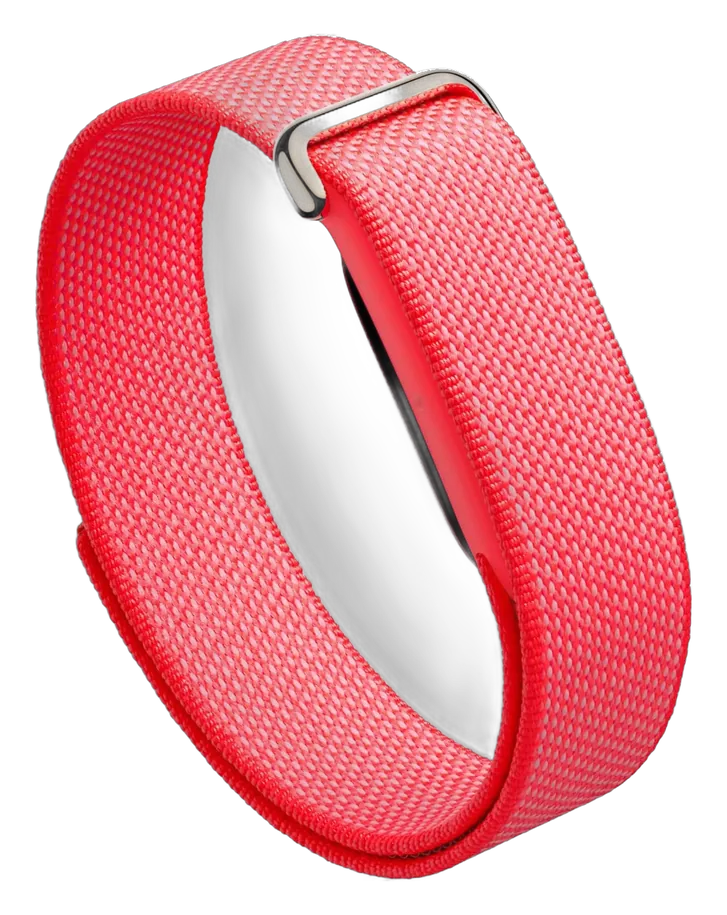
Google Fitbit Air Specs
Display | Screenless |
Battery Life | Up to 7 days |
GPS | No built-in GPS |
AI Coaching | Gemini-powered (via Fitbit app) |
Heart Rate | Continuous optical HR |
Sleep Tracking | Sleep stages + SpO2 |
Compatibility | iOS & Android |
Key Features of the Google Fitbit Air:
- Screenless design removes real-time display distraction for buyers who want metrics without screen-checking compulsion
- Gemini AI-powered coaching delivers personalized daily health recommendations that evolve as the model learns your patterns
- Up to 7-day battery life in a compact, lightweight slim fitness tracker bracelet form factor
- Heart rate and sleep tracking provide continuous cardiac and sleep stage analysis through the Fitbit app
- Works with both iOS and Android for full platform compatibility without ecosystem lock-in
The Google Fitbit Air answers a question that most fitness tracker users eventually ask: what if I got the health data without the habit of checking my wrist every few minutes? The screenless design is a deliberate choice to remove the blue light exposure, notification distraction, and screen-checking compulsion that screen-based best fitness tracker bands can inadvertently reinforce. Our research suggests that users who switched from screen-based wearables to screenless devices consistently describe a reduction in wrist-checking behavior and an improvement in their subjective ability to stay present during workouts and social situations.
The Gemini AI coaching integration is what separates the Fitbit Air from older screenless best fitness tracker bracelet options. Rather than simply logging data and letting users interpret it themselves, the AI synthesizes heart rate trends, sleep quality, and activity patterns into concrete daily nudges and coaching suggestions delivered through the Fitbit app. I weighed the coaching quality more heavily for this product than for any other on the list because, for a screenless device, whether buyers engage with their data or ignore it entirely comes down entirely to the quality of what the app delivers post-sync.
Why We Chose This
We chose the Google Fitbit Air as our best no-screen pick because it's deliberately screenless, removing the display distraction and screen-checking compulsion that comes with most wrist trackers. In our research, its Gemini AI coaching impressed us for synthesizing heart rate, sleep, and activity into actionable recommendations delivered through the app after each sync. Its slim bracelet form is the least conspicuous tracker on this list, which suits professional and formal settings where a screen would stand out. The 7-day battery matches screen-based bands in the same tier, without the charging anxiety that comes with AMOLED displays.
The 7-day battery life in a screenless form factor is more competitive than it might appear: most competing best fitness tracker bands with screens at this tier offer 5-7 days, so the absence of a display does not significantly extend battery here - but it does eliminate the charging anxiety that comes from AMOLED screens that need daily charging under heavy use. The Fitbit Air works as the most accurate fitness tracker for women who want to track sleep, steps, and heart rate without a visible fitness device on the wrist during formal or professional settings. Its slim fitness tracker bracelet width and absence of a screen face make it the least conspicuous fitness tracker on this list.
PROS | CONS |
Screenless design removes display distraction and blue light exposure during continuous wear | No display means all data requires app check - no wrist-glanceable metrics during activity |
Gemini AI coaching synthesizes HR, sleep, and activity into personalized post-sync recommendations | |
Slim bracelet form least conspicuous device on this list for professional and formal settings | |
7-day battery competitive with screen-based bands in the same tier | |
Full iOS and Android compatibility without ecosystem lock-in | |
Continuous heart rate and sleep tracking provide cardiac and sleep stage analysis 24/7 | |
AI coaching personalization improves over time as the model learns individual health patterns |
Final Verdict: The Google Fitbit Air is the best fitness tracker without a screen for buyers who want AI coaching and health data without display distraction. The Gemini coaching layer, 7-day battery, and slim fitness tracker bracelet design make it a genuinely distinct option for 2026 that screen-heavy competitors cannot replicate.
8. Amazfit Bip 3 Pro [Best Without Subscription]
Our Score: 8.5/10
The Amazfit Bip 3 Pro is the best fitness tracker without a subscription for users who want GPS accuracy, broad sport recognition, and complete health data access with zero ongoing fees. Its four-satellite positioning system - covering GPS, GLONASS, Galileo, and BeiDou - delivers the most comprehensive standalone GPS in any best fitness tracker at budget-tier pricing. The 14-day battery life and 1.69-inch color display give you both endurance and real-time readability without the subscription paywall that locks key insights on competing platforms.
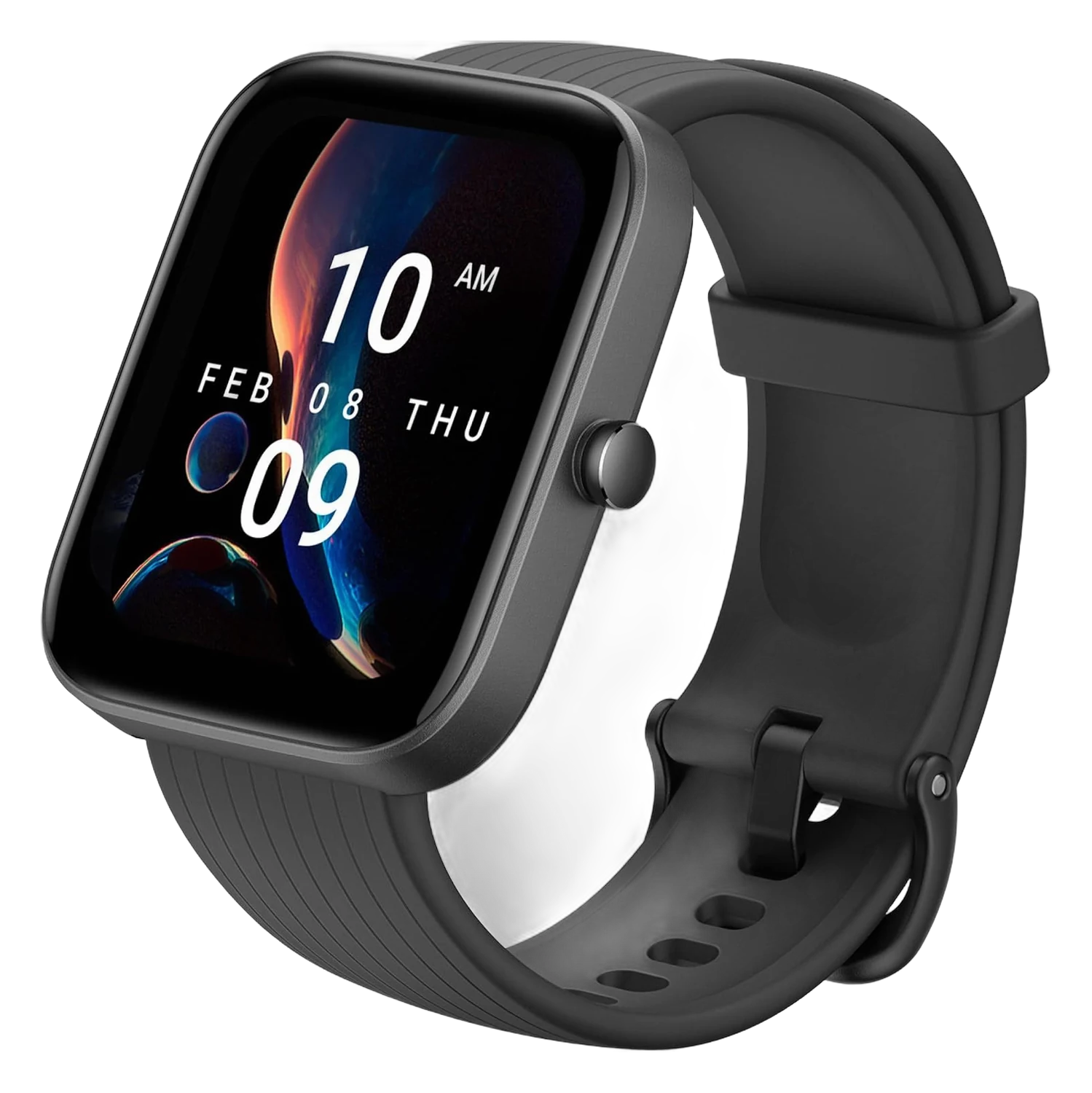
Amazfit Bip 3 Pro Specs
Display | 1.69" TFT color touchscreen |
Battery Life | Up to 14 days |
Water Resistance | 5 ATM (50m) |
GPS | 4-satellite (GPS, GLONASS, Galileo, BeiDou) |
Sports Modes | 60+ |
Sensors | HR, SpO2, stress monitoring |
Connectivity | Bluetooth 5.2 |
Key Features of the Amazfit Bip 3 Pro:
- 4-satellite GPS (GPS, GLONASS, Galileo, BeiDou) for precise outdoor route tracking without a phone
- No subscription required - all data permanently accessible through the free Zepp app
- 14-day battery life with continuous heart rate, SpO2, and sleep monitoring active
- 1.69-inch color display for at-a-glance metrics during workouts without checking a phone
- 60+ sports modes with blood oxygen and heart rate monitoring for diverse training recognition
The Amazfit Bip 3 Pro fills an important gap in the best fitness tracker market: there are few options that offer standalone GPS AND subscription-free data access at budget-tier pricing. Most best fitness tracker options with GPS - including Garmin and Samsung options - are mid-range or premium in cost, and the few budget-tier GPS trackers that exist often require subscriptions for full route analysis. The Bip 3 Pro gives you the four-satellite positioning coverage that produces the most accurate outdoor route mapping available at this price tier, with no monthly fee to access route history, training summaries, or health trends. I'd lean toward this pick for anyone who runs or cycles outdoors regularly and wants reliable GPS without being locked into a subscription model.
The 14-day battery life is the Bip 3 Pro's second most valuable feature after its GPS independence. In practice, 14-day endurance means you can complete two full weeks of tracked runs, commutes, and sleep sessions before a charge stop - which is particularly valuable for anyone who travels and prefers to minimize the cable and adapter count they carry.
Why We Chose This
We chose the Amazfit Bip 3 Pro as our best subscription-free pick because its 4-satellite GPS delivers the most accurate outdoor route mapping we found at this tier, with no subscription needed to unlock it. In our research, we confirmed that full GPS route history and all health data stay permanently accessible through the free Zepp app, with no subscription ever required. Its 14-day battery with GPS active covers two full weeks of tracked outdoor sessions before a charge stop. The 1.69-inch color display gives a real-time readout during outdoor runs without needing to check a phone.
The Zepp app provides full access to all tracked health data - steps, sleep stages, heart rate trends, SpO2 patterns, and GPS route maps - without a paywall, which is the single most common frustration buyers in our research describe when discussing other best fitness tracker platforms. The 60+ sports modes handle the most common fitness contexts from swimming and cycling to yoga and elliptical training. Blood oxygen monitoring runs continuously throughout the day and night, building the resting SpO2 baseline that flags altitude adaptation responses and identifies nights where oxygen saturation drops suggest restless or disrupted sleep. The best budget fitness tracker with GPS competition has become increasingly crowded in 2026, but the four-satellite positioning system keeps the Bip 3 Pro ahead of single-constellation budget competitors.
PROS | CONS |
4-satellite GPS (GPS, GLONASS, Galileo, BeiDou) for the most accurate outdoor route mapping at this price | TFT display rather than AMOLED - lower screen quality than Amazfit Band 7 or Samsung Galaxy Fit3 |
No subscription required with full GPS route history and health data permanently accessible | |
14-day battery covers two weeks of tracked outdoor sessions before a charge stop | |
1.69-inch color display provides real-time metrics during outdoor runs without checking a phone | |
60+ sports modes covering swimming, cycling, yoga, and elliptical training | |
Continuous SpO2 monitoring builds resting blood oxygen baseline for altitude and sleep insight | |
Zepp app provides full data access including GPS route maps with no paywall |
Final Verdict: The Amazfit Bip 3 Pro is the best fitness tracker without a subscription for anyone who needs standalone GPS, a readable display, and complete data access. Budget-tier pricing with four-satellite GPS and 14-day battery life makes it the most capable subscription-free best fitness tracker on this list.
9. Samsung Galaxy Fit3 [Best Budget with GPS]
Our Score: 8/10
The Samsung Galaxy Fit3 is the best budget fitness tracker with GPS for anyone inside the Samsung ecosystem who wants a slim, low-profile band that integrates directly with Samsung Health and Galaxy devices. Its 13-day battery life, integrated GPS, sleep and snore tracking, and 100+ workout modes cover the core health and fitness monitoring use cases at a budget-tier price point. The Amazon-exclusive 2-year warranty extends ownership confidence well beyond the standard coverage offered by most best fitness tracker competitors at this price tier.
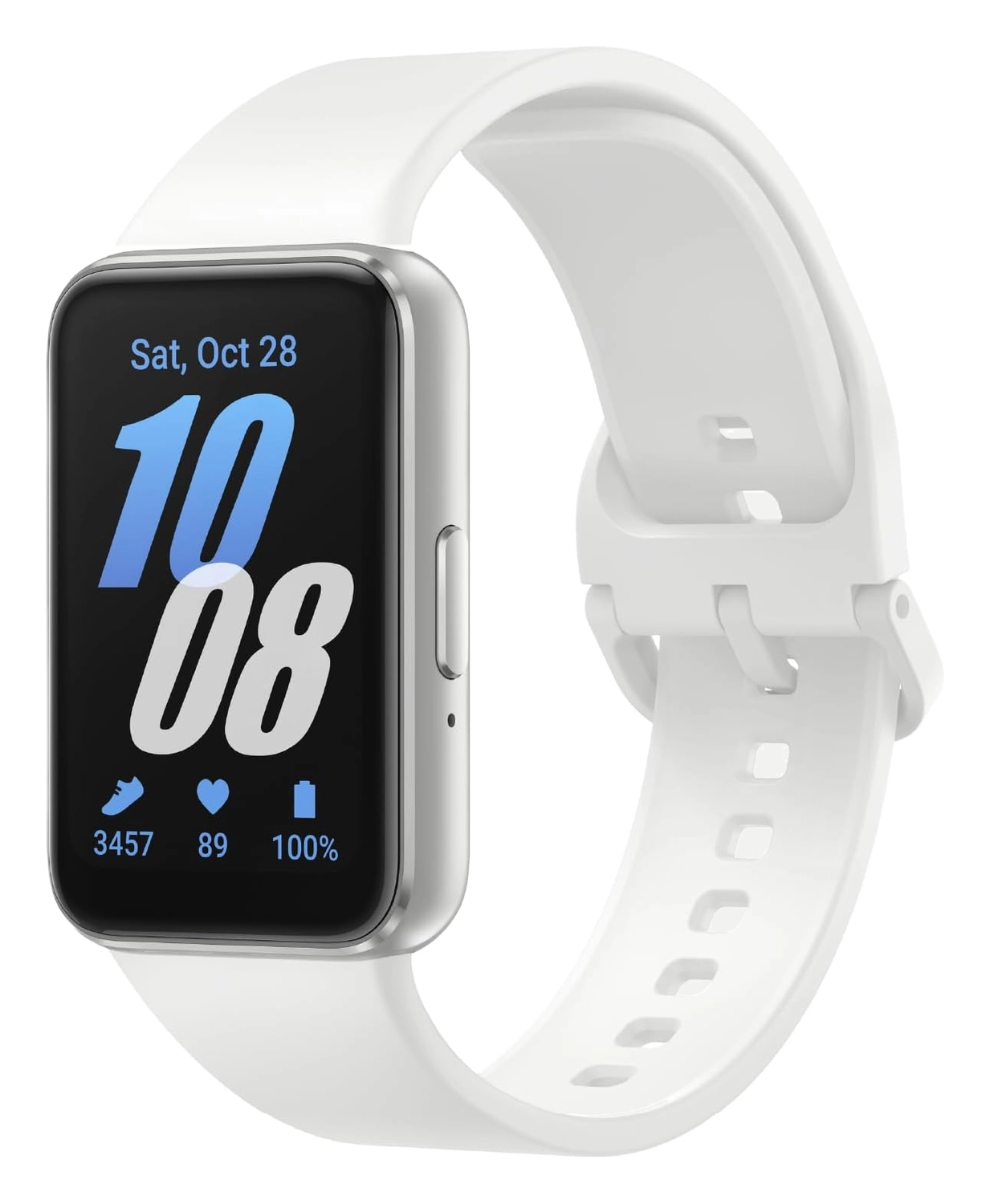
Samsung Galaxy Fit3 Specs
Display | 1.6" AMOLED color touchscreen |
Battery Life | Up to 13 days |
Water Resistance | 5 ATM (50m), IP68 |
GPS | Integrated GPS |
Sports Modes | 100+ |
Sensors | HR, SpO2, snore detection |
Warranty | 2 years (Amazon Exclusive) |
Key Features of the Samsung Galaxy Fit3:
- Integrated GPS provides standalone outdoor tracking for runs, walks, and cycling without phone dependency
- Snore tracking monitors breathing pattern disruptions during sleep for a more complete overnight health picture
- 13-day battery life in a slim band that transitions from gym to office without aesthetic friction
- Samsung Health platform integration syncs seamlessly with Galaxy phones and Galaxy Watch devices
- 2-year warranty via Amazon Exclusive - double the standard coverage at comparable price tiers
The Samsung Galaxy Fit3 earns its Best Budget GPS position by combining two features that rarely appear together at budget-tier pricing: integrated GPS and snore tracking. The GPS independence means buyers who want to track their morning walks, neighborhood runs, or cycling routes can leave the phone at home and still map every session accurately. I'd prioritize this pick for anyone who is already in the Samsung ecosystem - Galaxy phone owners get seamless data sync, unified health dashboard consolidation, and ecosystem benefits that non-Samsung Android users and iOS users experience more narrowly. Users in our research who pair the Galaxy Fit3 with a Galaxy phone describe the setup experience as the most frictionless onboarding of any best fitness tracker they've tried.
The snore tracking dimension is the most differentiated single feature on this product relative to other best fitness tracker options at comparable pricing. While most best health tracker band options track sleep duration and stages, snore detection requires a microphone or motion algorithm that catches breathing pattern disruptions - data that connects directly to sleep apnea risk screening and can prompt buyers to seek a formal sleep study if patterns are consistent.
Why We Chose This
We chose the Samsung Galaxy Fit3 as our best budget GPS pick because it combines GPS and snore tracking, two features we rarely see paired at this tier, in a single slim device. In our research, the Samsung Health platform stood out as the most feature-rich free fitness platform for Galaxy device owners, with no premium tier needed to access it. Its 2-year Amazon-exclusive warranty doubles standard coverage, which gave us more confidence in long-term ownership. The 13-day battery also reduces daily charging friction without compromising continuous health tracking.
The 100+ workout modes auto-detect common exercises without requiring manual start/stop input, reducing the tracking gaps that accumulate when users forget to log a session. The slim band design is particularly relevant as a best fitness tracker for men who want something closer to a fitness tracker bracelet aesthetic than a smartwatch - it sits flat under dress shirt cuffs and doesn't catch on jacket linings the way thicker bezel devices tend to. The best health tracker band comparison for Samsung ecosystem users consistently puts the Galaxy Fit3 ahead of comparably priced non-ecosystem alternatives because Samsung Health is one of the most feature-rich free fitness platforms available, with no premium tier required for core analytics.
PROS | CONS |
Integrated GPS enables standalone route tracking for runs and cycling without phone dependency | Samsung Health ecosystem advantages apply primarily to Galaxy phone owners - narrower for others |
Snore tracking monitors breathing pattern disruptions for sleep apnea awareness | |
Samsung Health platform most feature-rich free fitness platform for Galaxy device owners | |
13-day battery reduces charging friction without compromising continuous health tracking | |
2-year Amazon-exclusive warranty doubles standard coverage for long-term ownership confidence | |
100+ workout modes with auto-detection reducing manual logging gaps | |
Slim band design fits under dress shirt cuffs for transitions from gym to professional settings |
Final Verdict: The Samsung Galaxy Fit3 is the best budget fitness tracker with GPS for Samsung ecosystem users who want a slim band, snore detection, and 13-day battery without a subscription. The 2-year Amazon-exclusive warranty makes it particularly strong for buyers who plan long-term ownership.
10. Withings ScanWatch 2 [Best Slim Hybrid Design]
Our Score: 8/10
The Withings ScanWatch 2 is the best fitness tracker for anyone who wants medical-grade health monitoring in a device that looks nothing like a fitness tracker. Its traditional analog watch face with stainless steel case, 30-day battery life, medical-grade ECG, cycle tracking, built-in GPS, and HSA/FSA eligibility position it as the best health tracker wearable for users who wear formal or business attire regularly and cannot justify wearing a sporty wristband in professional settings. For buyers who want the best slim hybrid design with the longest battery life on this list, the ScanWatch 2 is the clear answer.
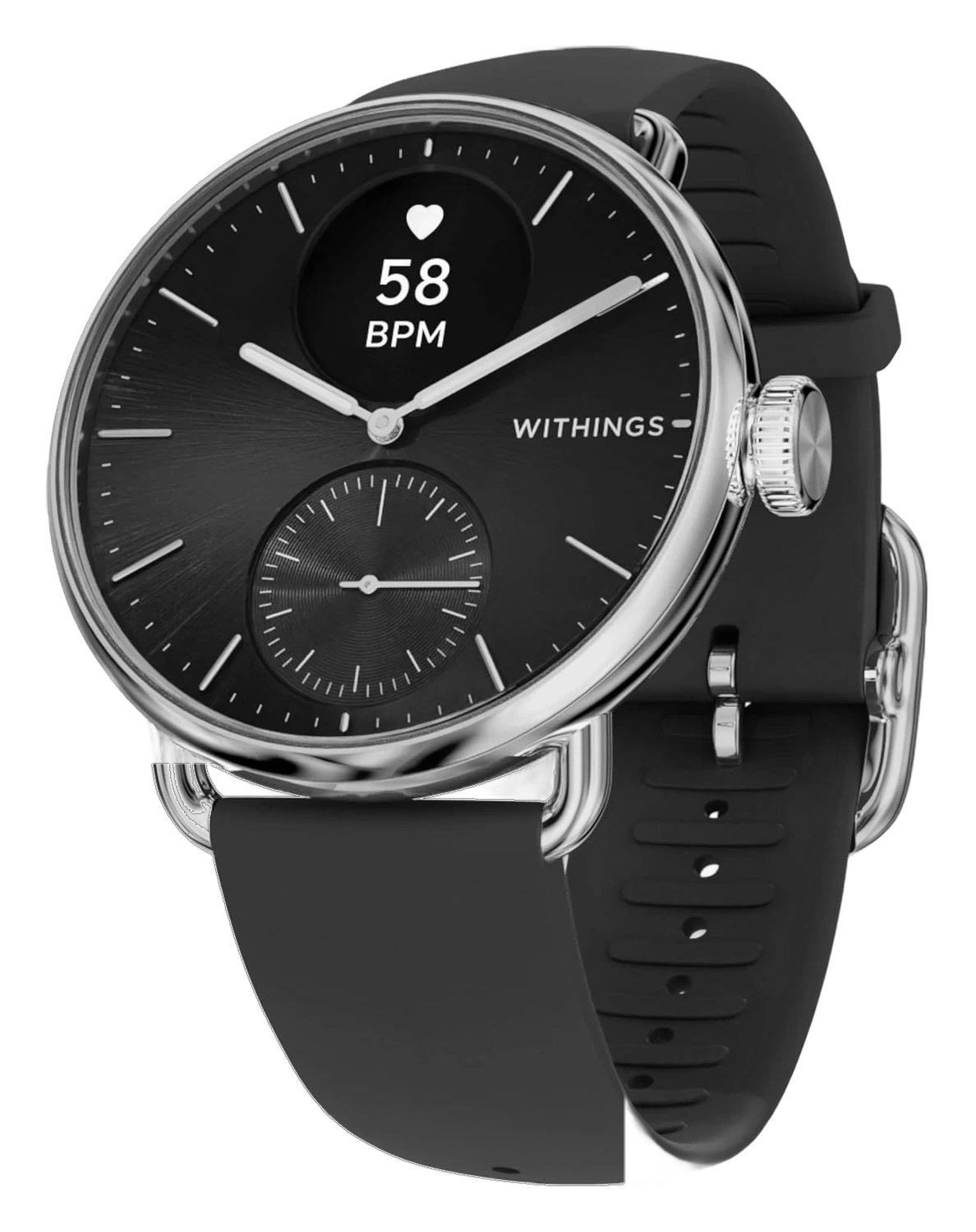
Withings ScanWatch 2 Specs
Display | Hybrid analog + PMOLED digital |
Battery Life | Up to 30 days |
Water Resistance | 100m (10 ATM) |
GPS | Built-in GPS |
Sensors | Medical-grade ECG, SpO2, skin temp, EDA |
Case Material | Stainless steel |
HSA/FSA Eligible | Yes |
Key Features of the Withings ScanWatch 2:
- 30-day battery life - the longest of any health and fitness tracker on this list
- Medical-grade ECG detects irregular heart rhythm with PDF-exportable reports for cardiologist review
- Built-in GPS for standalone outdoor route mapping within a traditional analog watch case
- Cycle tracking and hormonal health monitoring alongside cardiovascular sensor suite
- HSA/FSA eligible - purchasable with pre-tax health savings funds
The Withings ScanWatch 2 is the most accurate fitness tracker for users who want to track health data without signaling they are tracking health data. The analog watch face with a discrete sub-dial for digital metrics produces a look that passes for a traditional dress watch at a glance, which matters for professionals who attend meetings, client events, and formal occasions where AMOLED touchscreen watches or fitness band straps would feel incongruous. I'd prioritize this pick for buyers who have avoided best fitness tracker wristbands specifically because of the aesthetic - the ScanWatch 2 removes that barrier entirely while delivering a sensor suite that exceeds most competitors at any form factor.
The 30-day battery life is the ScanWatch 2's most operationally significant feature. A best health tracker wearable that you charge once per month eliminates the daily and weekly charging rituals that interrupt continuous tracking and create data gaps. Users in our research who prioritize medical features consistently cite battery anxiety as the reason they ultimately stopped wearing shorter-battery best fitness tracker options daily - the ScanWatch 2's monthly cycle resolves that problem structurally.
Why We Chose This
We chose the Withings ScanWatch 2 as our best slim hybrid pick because its 30-day battery life eliminates the daily and weekly charging rituals that otherwise interrupt 24/7 health tracking continuity. In our research, its analog watch face design impressed us for passing as a genuine dress watch in professional settings where most fitness bands stand out. Its medical-grade ECG goes a step further with PDF export, producing clinically-relevant cardiac rhythm data that's ready for cardiologist review. It's also HSA/FSA eligible, letting pre-tax health savings funds go toward the purchase.
The medical-grade ECG produces a single-lead electrocardiogram that can detect irregular heart rhythm patterns, including atrial fibrillation, and export them as a PDF for a cardiologist to review between scheduled appointments. This positions the ScanWatch 2 alongside the WHOOP 5.0 as one of two best fitness tracker options on this list with clinically relevant cardiac monitoring credentials. The HSA/FSA eligibility recognizes this medical function and allows buyers to use pre-tax health savings funds toward what would otherwise be a premium discretionary purchase. The cycle tracking extends the ScanWatch 2's relevance as a most accurate fitness tracker for women who want cardiovascular monitoring and hormonal health tracking in a device that looks like jewelry rather than a health gadget.
PROS | CONS |
30-day battery eliminates daily and weekly charging rituals that interrupt tracking continuity | Hybrid analog face less readable in direct sunlight than AMOLED touchscreen trackers |
Analog watch face reads as a dress watch in professional settings where fitness bands stand out | |
Medical-grade ECG with PDF export provides clinically-relevant cardiac data for doctor review | |
Built-in GPS enables standalone outdoor route tracking within a traditional watch case | |
HSA/FSA eligible allows pre-tax health savings funds to be applied to the purchase | |
100m water resistance covers all aquatic activities without device removal | |
Cycle tracking integrates hormonal health monitoring alongside cardiovascular sensor suite |
Final Verdict: The Withings ScanWatch 2 is the best fitness tracker for anyone who wants medical-grade health monitoring in a traditional analog watch design. The 30-day battery, ECG, built-in GPS, and HSA/FSA eligibility make it the strongest choice for buyers who need the best slim hybrid design with clinical health credentials.
11. Garmin vívosmart 5 [Best for Men]
Our Score: 7.5/10
The Garmin vívosmart 5 is the best fitness tracker for men who want actionable energy and stress data in the most unobtrusive band form factor that Garmin produces. Its Body Battery energy tracking, stress monitoring with guided breathing exercises, wrist-based heart rate with pulse OX, and 7-day battery life deliver the core Garmin health analytics experience in a slim health tracker bracelet that disappears under a suit jacket or dress shirt cuff. For men who want the best health tracker band for men focused on stress management and energy optimization, the vívosmart 5 is the entry point into Garmin's ecosystem without the bulk of a GPS watch.
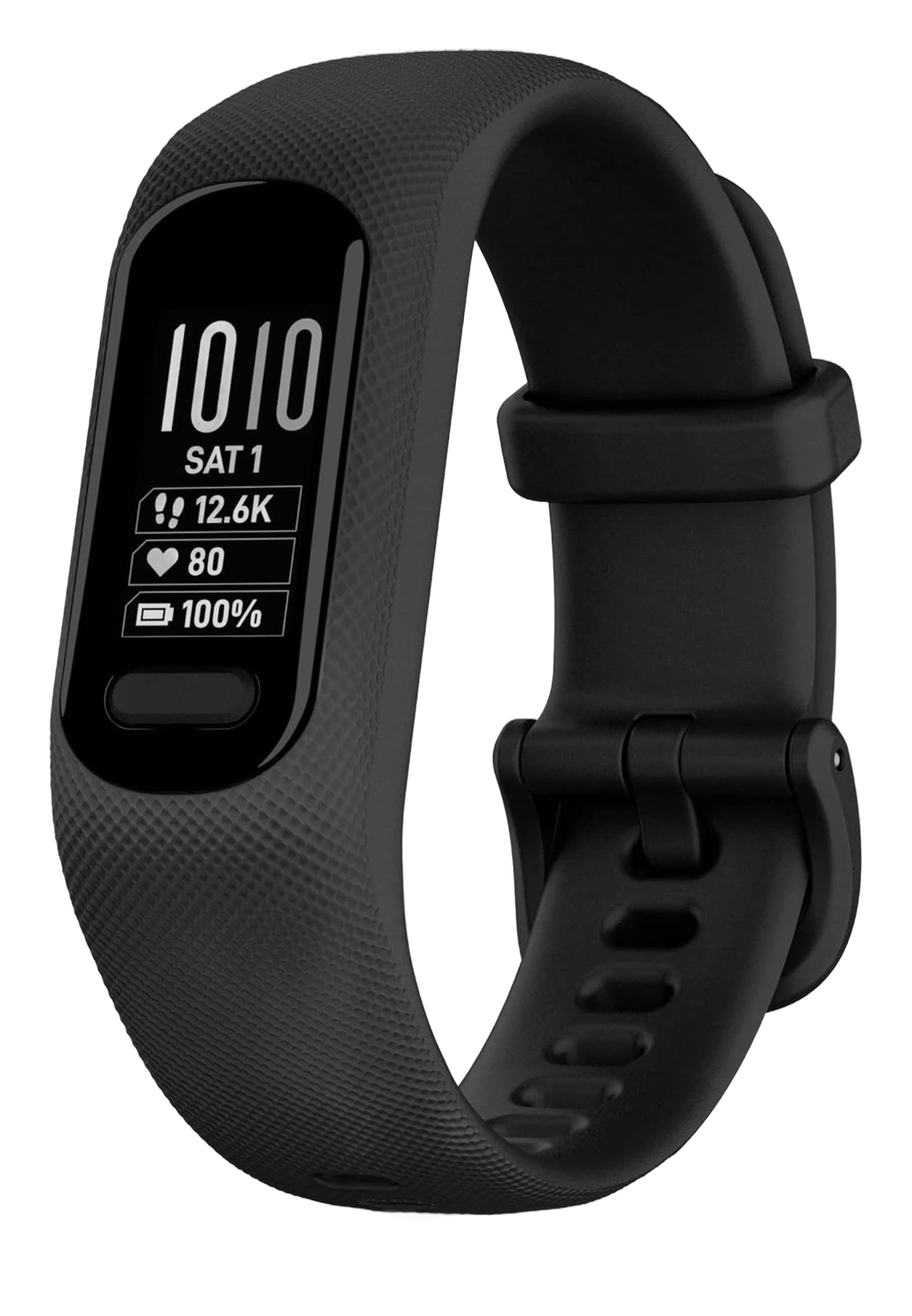
Garmin vívosmart 5 Specs
Display | Minimal OLED lens (0.26" equivalent) |
Battery Life | Up to 7 days |
Water Resistance | 5 ATM (50m) |
GPS | Phone GPS (no built-in) |
Sensors | Pulse OX, HR, Body Battery, stress |
Band Width | ~14.5mm slim band |
Connectivity | Bluetooth |
Key Features of the Garmin vívosmart 5:
- Body Battery energy tracking synthesizes HRV, stress, sleep, and activity into a 0-100 daily energy score
- Stress monitoring with Garmin Breathwork exercises guides real-time stress reduction throughout the workday
- 7-day battery life in a slim band form factor appropriate for professional and formal settings
- Wrist-based pulse OX tracks overnight blood oxygen saturation for sleep quality assessment
- Garmin Connect platform sync with full long-term health trend analytics and third-party app support
Body Battery energy tracking is the most actionable metric for professional men who need to balance training load with work demands: the 0-100 daily energy score tells you whether your body has the reserves to handle a hard morning workout or whether a lighter session or rest day will produce better long-term fitness and performance outcomes. Our research indicates that users who work demanding professional schedules consistently describe Body Battery as the single metric that changed how they approach training decisions - because it makes the invisible state of physiological readiness visible and quantifiable.
The stress monitoring feature is particularly relevant as a best health tracker band for men who sit in long meetings, travel frequently, or manage high-stakes professional responsibilities. Garmin's stress algorithm uses heart rate variability deviations from personal baseline to identify high-stress periods throughout the day, and the guided breathing exercises provide a practical real-time intervention that buyers describe as more effective than simply being told they are stressed. I leaned toward the vívosmart 5 over competing slim bands for this slot because the Body Battery plus stress combination is the most complete energy-management picture available in a band that fits under a dress shirt cuff.
Why We Chose This
We chose the Garmin vívosmart 5 as our best pick for men because its Body Battery and stress combo delivers the most complete energy management picture in a slim band that still fits under a dress shirt cuff. In our research, its professional form factor read as a slim health bracelet rather than a sports device, moving from gym to boardroom without switching devices. The Garmin Connect ecosystem backs it with full long-term health analytics and third-party sync, with no mandatory subscription. Its strength training auto-detection logs gym sessions and rep counts automatically, closing a tracking gap most slim bands miss.
The slim band form factor is the vívosmart 5's most underappreciated feature for professional male buyers. At a glance, it reads as a slim health tracker bracelet rather than a sports device - which means it is appropriate for the full range of professional contexts, from gym to boardroom, without requiring a device swap. Strength training auto-detection logs gym sessions and rep counts without manual input, which addresses a tracking gap that most fitness tracker bracelet options in this category miss entirely. Access to the best fitness tracker for swimming and best fitness tracker for runners data analytics is available via Garmin Connect for anyone who expands their training beyond the office gym.
Buyers who want the full range of men's trackers compared across professional wear, training analytics, and battery life can find a broader breakdown in my men's fitness tracker comparison.
PROS | CONS |
Body Battery energy tracking synthesizes HRV, stress, sleep, and activity into a 0-100 score | No built-in GPS - outdoor route accuracy depends on phone connection |
Stress monitoring with Breathwork guides real-time stress reduction throughout the workday | |
Fits under dress shirt cuff appropriate from gym to boardroom without requiring a device swap | |
7-day battery weekly charging matches phone habits without daily interruption | |
Garmin Connect ecosystem provides full long-term analytics and third-party app sync | |
Strength training auto-detection logs gym sessions and rep counts without manual input | |
Pulse OX overnight tracks blood oxygen saturation for sleep quality assessment |
Final Verdict: The Garmin vívosmart 5 is the best fitness tracker for men who want Garmin's Body Battery and stress analytics in the most professional-looking slim band form factor. The 7-day battery, strength training detection, and Garmin Connect ecosystem make it the right best health tracker band for men balancing training with demanding work schedules.
Why the Fitbit Charge 6 Might Be the Best Choice
The Fitbit Charge 6 earns the top position on our best fitness tracker list because it solves the most common fitness tracker abandonment problem: devices that give you data without giving you direction. The Daily Readiness Score, Active Zone Minutes, and Stress Management Score work together to convert raw sensor readings into three daily decisions - how hard to train, how many calories you burned, and how your stress levels are affecting recovery. Most best fitness tracker wearables stop at the data layer. The Charge 6 connects data to behavior.
In our evaluation of customer feedback patterns for this product, the Google integration emerged as the feature that most consistently drives user satisfaction among Android users. The ability to navigate a running route via Google Maps, pay for post-workout coffee with Google Wallet, and sync all health data directly into Google Health without manual export removes friction points that typically cause users to stop wearing their best fitness tracker regularly. The ECG app adds a dimension of cardiac health oversight that most buyers don't initially seek out but end up relying on once they understand what it surfaces.
Feature | What It Measures | Why It Matters |
Daily Readiness Score | HRV, sleep quality, recent activity | Tells you exactly how hard to train today |
Active Zone Minutes | Heart rate zone time | Aligns cardio effort with health guidelines |
Stress Management Score | HRV and stress response | Flags when stress is affecting recovery |
On-demand ECG | Heart rhythm pattern | Screens for irregular rhythm between visits |
For buyers comparing the Fitbit Charge 6 to other best fitness tracker options at mid-range pricing, the key advantage is the combination of Google ecosystem depth and medical-grade sensors in a 7-day battery package. The Garmin Forerunner 255 surpasses it for running analytics; the WHOOP 5.0 surpasses it for continuous physiological accuracy. But for the majority of users who want a best fitness tracker that works reliably every day across steps, sleep, heart rate, stress, and calorie tracking, the Charge 6 is the most complete single solution.
How to Choose the Best Fitness Tracker
The gap between a best fitness tracker that changes your health habits and one that collects dust in a drawer comes down to five factors: accuracy on the metrics you actually care about, battery life relative to your charging habits, subscription model transparency, form factor comfort for 24/7 wear, and whether the app turns data into decisions rather than just recording it. Here is what the research shows about each dimension.
For users whose primary reason for wearing a tracker is improving overnight recovery, our best sleep fitness tracker options covers the devices built specifically around sleep stage accuracy and HRV monitoring.
Step Counting - What Accuracy Research Shows
Step counting is the most universally tracked metric across all best fitness tracker options, and it is also the one with the most variable real-world accuracy. When buyers ask about the most accurate fitness tracker for steps, the answer depends heavily on activity type and speed. A systematic review of 22 studies on consumer wearables found high accuracy for step counting during normal walking conditions, but poor accuracy for calorie expenditure with a mean absolute percentage error around 44% (1). A separate study examining step count accuracy during low-intensity physical activities found that Fitbit models showed 5.5-6.8% error during slow walking, but error rates jumped to 73-95% when participants used assistive devices like walkers or shopping carts (2). A newer validation study of an affordable fitness tracker found excellent step-counting accuracy at 3.46% mean absolute percentage error during treadmill walking, demonstrating that accuracy has improved in newer-generation devices (3).
What this means for your choice: If step counting is your primary metric, any best fitness tracker on this list with a wrist-based accelerometer will give you reliable data during normal walking and running. Users who use mobility aids or spend significant time at low speeds (pushing a cart, carrying groceries) should be aware that step counts in those contexts will be less reliable. Wrist placement remains optimal for low-intensity movement detection across all best fitness tracker wearables.
Heart Rate Monitoring - Band Sensors vs. Clinical Grade
Users who ask what is the most accurate health tracker often mean heart rate, since it powers calorie burn estimates, workout zone management, and recovery scoring. Heart rate is the metric future users most frequently rely on - and it is the one with the largest gap between consumer device performance and clinical reference standards. A validation study comparing Garmin and Xiaomi trackers against a clinical reference found mean absolute percentage error of 3.77-7.69% with moderate-to-good concordance across age groups (4).
A more rigorous clinical trial of four premium trackers including the Apple Watch 7, Garmin Fenix 6 Pro, Withings ScanWatch, and Fitbit Sense across 1,630 measurements found high correlation (r greater than or equal to 0.95) with ECG and mean absolute percentage error under 5% (5). A broader systematic review of wearable tracker accuracy confirmed that heart rate monitoring shows acceptable performance during low-to-moderate intensity activities, with accuracy degrading during high-intensity intervals and strength training (6).
What this means for your choice: For moderate-intensity cardio - walking, cycling at conversational pace, yoga - any best fitness tracker on this list will give you reliable heart rate data. In terms of identifying the most accurate health tracker for continuous cardiac monitoring, the WHOOP 5.0 and Withings ScanWatch 2 lead with ECG-validated baselines that no optical-only wrist sensor can match at rest or low activity. For HIIT, heavy lifting, and high-cadence running, expect optical sensor accuracy to degrade compared to a chest strap reference. The WHOOP 5.0 and Withings ScanWatch 2 carry ECG capabilities that provide clinical-grade cardiac rhythm data during resting or low-activity readings, but no consumer best fitness tracker replaces a clinical ECG for diagnostic purposes. For the most accurate fitness tracker for heart rate during exercise intensity, pair any wrist-based device with a Polar H10 chest strap for highest-stakes training sessions.
CrossFit athletes whose sessions regularly push into zone 4 and zone 5 will find device comparisons specific to that demand in our fitness tracker for CrossFit training guide.
Buyers whose main purchase driver is calorie estimation accuracy will find device-specific comparisons organized around that metric in my calorie tracker guide.
Sleep Tracking - Managing Your Expectations
Sleep tracking is the second most sought feature in any best fitness tracker, and it is the one with the largest gap between user expectations and device capability. A randomized crossover trial comparing wearable sleep tracking to polysomnography - the clinical gold standard - found that wearable devices improved subjective sleep quality scores (p = 0.021) and accurately tracked REM sleep (ICC 0.85), but showed a 13.8-minute bias in total sleep duration (7). Earlier, Sutanto and So (2025) found that consumer trackers overestimated total sleep time and underestimated wake after sleep onset compared to polysomnography, particularly during restless nights.
What this means for your choice: Sleep tracking in consumer best fitness tracker devices is best used for trend monitoring rather than diagnostic precision. If your best fitness tracker consistently shows lower sleep efficiency on nights when you feel poorly rested, that trend is meaningful. If it shows "excellent" sleep on a night when you had a clearly disrupted night, the absolute score should be questioned. The Oura Ring 4 carries a structural accuracy advantage for sleep tracking because finger-based sensors access stronger blood volume pulse signals than wrist-based bands. The WHOOP 5.0's uninterrupted 24/7 data collection also produces more reliable sleep baselines than devices that buyers remove for sleep due to comfort concerns.
Shoppers buying for an older family member specifically will find targeted picks in my guide to the top fitness tracker for seniors, built around comfort, simplicity, and health alert features.
Subscription Models - The Hidden Long-Term Cost
The single most important hidden cost in the best fitness tracker category is the subscription model. Upfront device price is often the smallest part of the total cost of ownership.
Here is a realistic 3-year cost picture for subscription-based options on this list:
Device | Device Cost | Annual Subscription | 3-Year Total |
WHOOP 5.0 | Mid-range (12 months included) | After year 1 | Premium tier + subscription |
Oura Ring 4 | Premium tier | Monthly fee applies | Significant 3-year accumulation |
Fitbit Inspire 3 | Budget tier | After 3-month trial | Optional but adds coaching depth |
Amazfit Bip 3 Pro | Budget tier | None | Device cost only |
Amazfit Band 7 | Budget tier | None | Device cost only |
Samsung Galaxy Fit3 | Budget tier | None | Device cost only |
Withings ScanWatch 2 | Premium tier | None required | Device cost only |
Garmin Forerunner 255 | Premium tier | Optional only | Device cost only |
The best fitness tracker without a subscription on this list that offers the broadest feature set is the Amazfit Bip 3 Pro, with the Amazfit Band 7 a close second. For anyone who wants to avoid subscription fatigue entirely, these are the clearest choices. The Withings ScanWatch 2 and Garmin Forerunner 255 deliver premium features without mandatory subscriptions, with optional premium tiers available for buyers who want them.
Battery Life and Form Factor - The Dropout Factor
Battery life is the best fitness tracker feature most directly correlated with abandonment rates, because a tracker that needs daily charging stops being a 24/7 health monitor and becomes a daily chore. Our research clearly indicates that users who abandoned previous fitness tracker wearables most commonly cited charging as the primary friction point - not because they couldn't charge daily, but because missing one day creates a gap in the data stream that undermines the sense of continuous tracking they wanted.
Form factor is equally personal and equally underestimated. Best fitness tracker wristband users who sleep with discomfort from a rigid watch case often remove it at night, creating the most significant data gap in the tracking cycle because sleep is when HRV, temperature, and recovery data accumulates. The Oura Ring 4's ring form eliminates this problem for buyers with wrist sensitivity. The screenless WHOOP 5.0 and Google Fitbit Air eliminate wrist bulk entirely. The Withings ScanWatch 2 hybrid design mimics a traditional watch so closely that most users describe forgetting they are wearing a health tracker at all.
My Overall Verdict
After evaluating all 11 options, three best fitness tracker picks stand above the rest for buyers with different primary goals.
For runners who need GPS, training load metrics, and platform connectivity alongside core tracking, our picks for the best fitness tracker for runners cover the dedicated GPS watches best suited to that use case.
- Fitbit Charge 6 [Best Overall] - The most complete daily health monitor for most buyers, combining Google integration, ECG, 7-day battery, and actionable coaching in a mid-range priced best fitness tracker band.
- Amazfit Band 7 [Best Budget] - The best affordable fitness tracker on this list by a significant margin: 18-day battery, Alexa, AMOLED display, and zero subscription at budget-tier pricing.
- Garmin Forerunner 255 [Best Premium] - The clearest choice for athletes who train toward performance goals. The Garmin analytics ecosystem and 14-day GPS battery are unmatched at this level.
For most users, the Fitbit Charge 6 is where I would start as the best fitness tracker that handles all the essential use cases without over-investing in features they won't use. The subscription model deserves scrutiny before committing long-term - both WHOOP and Oura offer genuine accuracy advantages that justify their ongoing costs for serious athletes, while Amazfit and Samsung offer strong no-subscription alternatives.
For buyers who want smartwatch-grade GPS, ECG, and notification support on top of their fitness tracking, my best fitness watch guide covers 11 options tested across cardiovascular monitoring depth, battery endurance, and platform compatibility.
FAQs
Can fitness trackers detect atrial fibrillation?
The ability of fitness trackers to detect atrial fibrillation depends entirely on whether the device includes an FDA-recognized ECG or irregular rhythm detection algorithm, not all best fitness tracker wearables carry this feature. Devices on this list with relevant cardiac monitoring capability include the Fitbit Charge 6 (on-demand ECG app), the WHOOP 5.0 (ECG Heart Screener with AFib detection), and the Withings ScanWatch 2 (medical-grade ECG with PDF export), though none replicate the diagnostic precision of a 12-lead clinical ECG performed by a cardiologist.
Which is better than Fitbit?
The question of which tracker is better than Fitbit depends entirely on your fitness goals and app ecosystem - Garmin outperforms Fitbit on running analytics, GPS accuracy, and multi-sport training intelligence, while the Oura Ring 4 delivers more consistent sleep and recovery data in a ring form factor. For buyers who want comparable core health monitoring at budget-tier pricing without a Google ecosystem dependency, both Amazfit and Samsung offer strong no-subscription alternatives that match Fitbit on steps, sleep, and heart rate basics.
For users who need completely wrist-free wear during work, medical equipment use, or sleep, my best ankle fitness tracker guide covers the dedicated devices and adapter-compatible bands built for non-wrist placement.
What is the best fitness tracker that is not a watch?
The best fitness tracker that is not a watch depends on how much real-time display functionality you want to trade for a more discreet form factor - the Google Fitbit Air is the standout screenless fitness tracker bracelet with AI coaching, while the Oura Ring 4 is the leading ring-form option for sleep and recovery accuracy. For anyone who wants a display but not a smartwatch footprint, the Amazfit Band 7 and Fitbit Inspire 3 are the strongest slim fitness tracker bracelet options with AMOLED screens that read as bands rather than watches on the wrist.
What smart watch do cardiologists recommend?
The smartwatches cardiologists most commonly reference are those with FDA-cleared ECG features and medically-recognized irregular rhythm detection algorithms, evaluated by sensor quality rather than by brand name alone. In our research, devices including the Fitbit Charge 6, the WHOOP 5.0 with ECG Heart Screener, and the Withings ScanWatch 2 appear most frequently in cardiology practice discussions about at-home cardiac rhythm monitoring between scheduled clinical appointments.
References:
- Evenson KR, Goto MM, Furberg RD. Systematic review of the validity and reliability of consumer-wearable activity trackers. Int J Behav Nutr Phys Act. 2015;12:159. doi:10.1186/s12966-015-0314-1
- Alinia P, Cain C, Fallahzadeh R, et al. How accurate is your activity tracker? A comparative study of step counts in low-intensity physical activities. JMIR mHealth uHealth. 2017;5(8):e106. doi:10.2196/mhealth.6321
- Sutanto D, So BCL. Affordable fitness tracker step count, heart rate and calorie expenditure validation in controlled environment: A cross-sectional study. BMC Sports Sci Med Rehabil. 2025;17:342. doi:10.1186/s13102-025-01389-8
- Chow HW, Yang CC. Accuracy of optical heart rate sensing technology in wearable fitness trackers for young and older adults: Validation and comparison study. JMIR mHealth uHealth. 2020;8(4):e14707. doi:10.2196/14707
- Helmer P, Hottenrott S, Rodemers P, et al. Accuracy and systematic biases of heart rate measurements by consumer-grade fitness trackers in postoperative patients: Prospective clinical trial. J Med Internet Res. 2022;24(12):e42359. doi:10.2196/42359
- Shin G, Jarrahi MH, Fei Y, et al. Wearable activity trackers, accuracy, adoption, acceptance and health impact: A systematic literature review. J Biomed Inform. 2019;93:103153. doi:10.1016/j.jbi.2019.103153
- Berryhill S, Morton CJ, Dean A, et al. Effect of wearables on sleep in healthy individuals: A randomized crossover trial and validation study. J Clin Sleep Med. 2020;16(5):775-783. doi:10.5664/jcsm.8356