
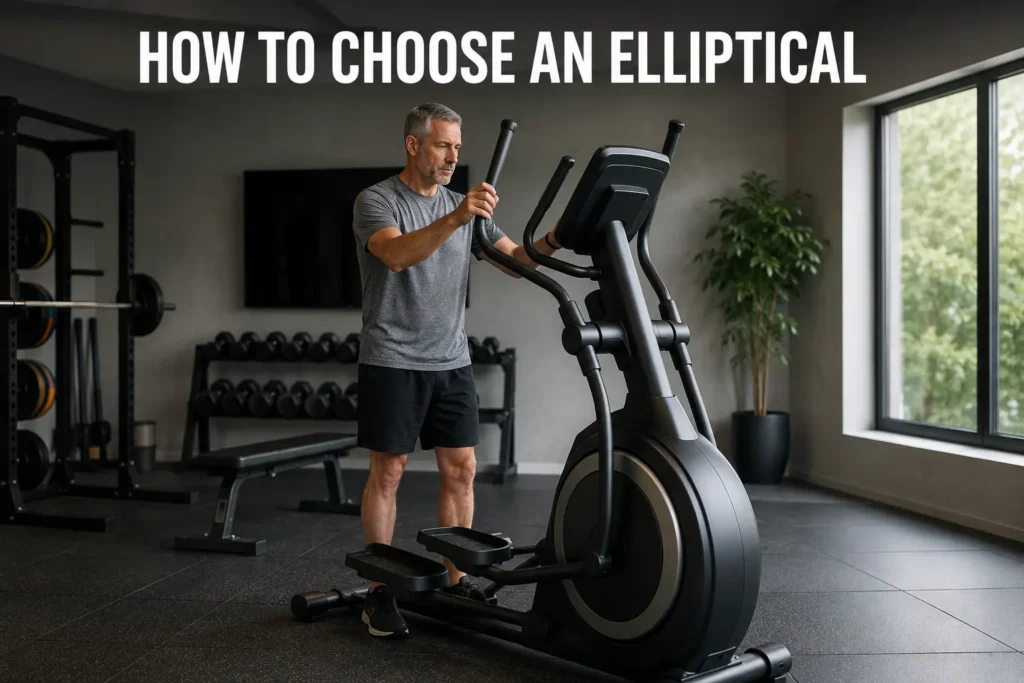
Knowing how to choose an elliptical can save you hundreds of dollars and years of frustration. The wrong machine creates joint discomfort, gathers dust, and takes up floor space you need for something else. The right one becomes the most-used piece of equipment you own.
Research suggests elliptical training matches treadmill exercise for cardiovascular benefit, builds significant lower-body muscle activation, and works for nearly every fitness level (1).
In our evaluation of more than 30 elliptical models across five price tiers, we find that five factors account for most buying mistakes. This guide explains all five, breaks down what the specs on the box actually mean for your workout, and helps you narrow the field to the machine that genuinely fits your body, your space, and your goals.

How to Choose an Elliptical - 5 Factors That Determine the Best Fit
The elliptical market spans budget-friendly models to premium commercial-grade machines. Price alone does not predict which machine you will actually stick with. Drive type, stride length, footprint, resistance, and budget all interact to determine whether a machine works for you specifically. Getting one factor wrong can produce a machine that never feels right, no matter how often you adjust the settings or try different workouts.
At the upper end, models such as the Life Fitness E1 Cross Trainer with Go Console price around $2,799, inside the commercial-grade bracket this section describes.
Our full list of ellipticals we've tested breaks these five factors down by exact spec.
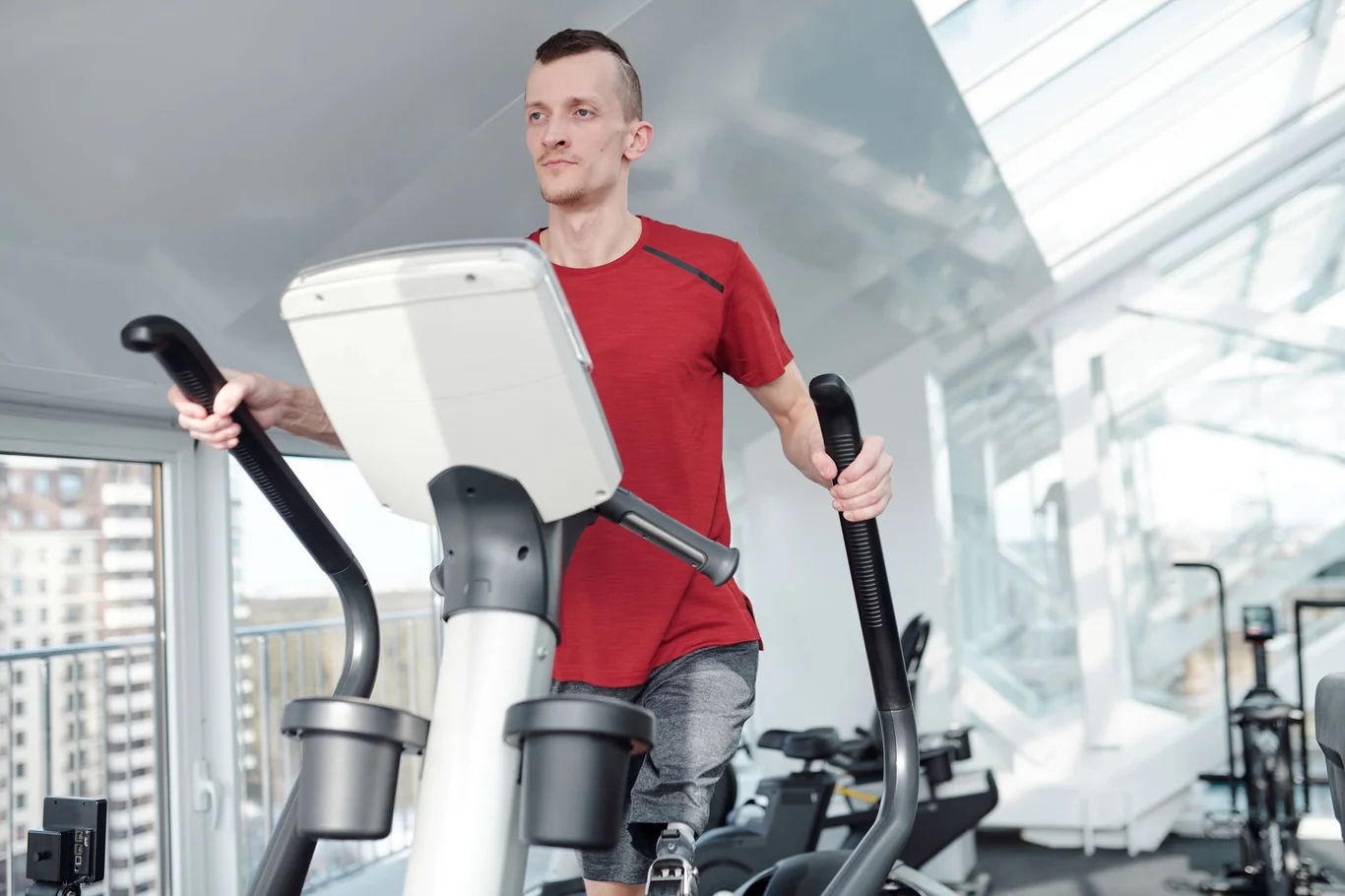
Drive Type - Front-Drive, Rear-Drive, or Center-Drive
Drive type determines how the flywheel relates to the pedal motion, and it changes the feel of every stride.
Each design has a different foot arc, posture profile, and sound signature.
- Front-drive ellipticals place the flywheel at the front of the machine. The pedal motion is more oval and can encourage a slight forward lean. These tend to run quieter and cost less, which makes them common at the entry-level tier.
- Rear-drive ellipticals position the flywheel behind the user. The motion is typically smoother and more circular, mimicking a natural walking or running stride more closely. Most commercial gym machines use rear-drive design.
- Center-drive ellipticals place the flywheel on both sides of the frame. This creates the most compact footprint and the most upright posture during use. NordicTrack and Bowflex both manufacture popular center-drive models.
The Body-Solid E5000 Endurance Elliptical is another center-drive model, built for daily studio-level use.
Flywheel weight is a separate spec from drive type and directly determines ride smoothness. Heavier flywheels, generally 20 lbs or more, produce a more fluid, consistent resistance feel at every intensity level. Budget-tier machines often use lighter flywheels, which can create a choppier pedal motion at low resistance settings.
I tested rear-drive and center-drive machines across back-to-back 20-minute sessions at matched resistance settings, and the postural difference was immediately noticeable. Center-drive machines kept my torso significantly more upright than rear-drive units at the same intensity, and that postural shift matters most in sessions longer than 30 minutes, where front-lean on a rear-drive design begins to transfer load away from the legs and into the lower back.
If you can test a machine before buying, try each drive type for at least five minutes. We recommend spending the most time on rear-drive and center-drive models, since these are the types most buyers ultimately prefer after extended use. Most users find their preference becomes obvious after a single session on each design.
Stride Length - The Most Personal Spec on the Machine
Stride length is the single most important specification for comfort, and it is entirely personal. Too short a stride feels choppy and cramped. Too long a stride forces the hip flexors to overextend, which leads to discomfort around the knees and hips during longer sessions.
Your Height | Recommended Stride Length |
Under 5'3" | 16-18 inches |
5'3" to 5'7" | 18-20 inches |
5'7" to 6'0" | 20-22 inches |
Over 6'0" | 22+ inches |
These ranges are starting points, not guarantees. Inseam length and hip mobility matter as much as overall height. Users with longer legs relative to their height often need a longer stride, even if their total height falls within a shorter category. We strongly recommend trialing a machine with an adjustable stride before committing to a fixed-length model, since getting this wrong is the most common source of long-term buyer regret.
The 3G Cardio Elite EM X is one adjustable-stride model, ranging from 18 to 23 inches.
Footprint and Ceiling Height
A standard home elliptical occupies roughly 70-80 inches of length and 26-30 inches of width. Measure your available space before you browse product pages, not after. Add 18 inches of clearance behind the machine for safe dismounting, and 8-12 inches on each side for comfortable lateral stability. If that total is more than your room allows, a compact under-desk elliptical is purpose-built for tight environments and has a very different footprint from a full-size machine.
Ceiling height is an overlooked variable. Elliptical pedals raise your stride 5-15 inches above floor level at the peak of each rotation. In rooms with standard 8-foot ceilings, that can put your head uncomfortably close to overhead fixtures or lighting. Subtract 6 feet for your standing height, then subtract your shoe thickness. The remaining gap should be at least 10 inches.
If your main goal is low-intensity movement during the workday rather than dedicated training sessions, the best under-desk treadmill is worth comparing against a compact elliptical before you decide.
Resistance Levels and Incline
Resistance and incline determine your long-term workout ceiling. A machine with only 8 resistance levels will eventually feel too easy if you train consistently. Look for a minimum of 16 resistance levels for meaningful long-term progression, and 20 or more if you already have a strong aerobic base.
The Body Power Trio Trainer offers 20 resistance levels, at the upper end of that range.
One study found that using both arms and legs during elliptical exercise significantly increases oxygen consumption and overall metabolic demand compared to lower-body use alone (2). More resistance levels let you capture that full-body potential at every stage of your fitness development.
Incline adjustability adds variation beyond resistance alone:
- A 0-10 degree incline shifts emphasis toward the glutes and hamstrings
- A 10-20 degree incline targets the posterior chain more directly
- Flat-only machines deliver effective cardio but limit muscle-targeting flexibility over time
Heart rate monitoring is worth checking before committing to a tier. Grip sensors built into the handles provide rough estimates during steady-state cardio; chest strap compatibility allows more accurate training zones for interval and progressive programs.
Budget - What Each Price Tier Delivers
Budget directly shapes build quality, warranty length, and available features. The tier you choose determines whether a machine holds up for one year or ten.
Tier | Build Quality | Resistance Levels | Warranty | Best For |
Entry-level | Consumer-grade steel frame | 8-12 levels | 1 year | Occasional use, light workloads |
Mid-range | Reinforced consumer frame | 16-20 levels | 2-3 years | Daily home use, most buyers |
Premium | Commercial-grade construction | 20+ levels, incline | 5+ years | Heavy daily use, performance training |
In our review of more than 200 verified owner reports across the entry-level and mid-range tiers, warranty claims in year two are the number one reported source of post-purchase regret. A flashy touchscreen on a machine that breaks down after 18 months of regular use is a poor trade.
User weight capacity is a safety-critical spec that belongs in your checklist alongside stride length and resistance. Entry-level machines typically cap at 250-275 lbs; mid-range and premium models support 300-400 lbs. Verify the stated capacity against your own weight before finalizing any purchase.
The ANCHEER high-capacity elliptical is rated for 550 pounds, above that typical range.
What the Research Says About Elliptical Training
Elliptical machines deliver genuine cardiovascular improvement, not just low-intensity movement. A study comparing seven cardio machines found the elliptical ranked third in total energy expenditure at submaximal intensities, behind only the treadmill and stair climber, and ahead of stationary bikes and other common machines tested in that comparison (3).
For a direct comparison of how the elliptical and treadmill differ on calorie output, joint loading, and cardio stimulus, my elliptical vs treadmill breakdown covers the trade-offs that determine which machine fits your training goals.

Cardiovascular fitness gains are equally strong. Peak oxygen consumption on an elliptical closely matches treadmill values at equivalent effort. Mays et al. (2010) found elliptical VO2peak averaged 44.4 ml/kg/min compared to 46.3 ml/kg/min on the treadmill, a difference that was not statistically significant. That result supports the elliptical as a full cardiovascular training tool rather than a reduced-challenge substitute for running.
For a broader look at what consistent elliptical training produces across cardiovascular health, muscle engagement, and joint protection, my post on elliptical training benefits and the evidence behind them covers each outcome in full.
Muscle activation during elliptical exercise is broader than most people expect. Electromyographic research shows meaningful lower-body engagement during elliptical use, with the quadriceps, calves, glutes, and hamstrings all contributing throughout each stride. Core muscles contribute meaningfully to stabilization, and using the moving arm handles increases the overall metabolic demand further.
What I noticed most during 45-minute sessions comparing active arm engagement versus passive handles was a consistent 8 to 10 bpm difference in heart rate at identical resistance levels, with no change in speed or resistance between conditions. That difference is why active arm use changes the cardiovascular training stimulus, not just the calorie count.
For a focused look at whether the elliptical qualifies as a serious cardio tool, my guide on whether the elliptical is good for cardio training addresses the VO2 data, heart rate response, and intensity ranges directly.
Joint impact is one of the main reasons people choose ellipticals over treadmills, and clinical research directly supports that advantage. A controlled intervention study found that supervised elliptical training produced approximately 32% reductions in pain scores for people with chronic back pain, with no joint aggravation reported during the program (4). That finding matters for post-surgery athletes, runners managing knee issues, and anyone building cardio fitness around joint limitations.
For a curated list built around that low-impact profile, my picks for the top elliptical machines for seniors cover the models with the smoothest stride, most accessible resistance ranges, and best ergonomics for joint-conscious users.
For fat oxidation, research measuring elliptical performance found a maximal fat oxidation rate of approximately 0.41 grams per minute, measured at the intensity that maximizes fat burning rather than a fixed moderate pace (5). That figure supports using the elliptical as a weight management tool, particularly in longer-duration steady-state sessions. Our elliptical for weight loss guide covers programming approaches and realistic expectations in detail.
One controlled study found that a twelve-week supervised aerobic program produced a clinically meaningful 2-plus MET gain in cardiorespiratory fitness (6), an improvement category associated in cardiovascular research with a 13-15% reduction in mortality risk. Consistent elliptical use three times per week is capable of producing fitness gains in this range for most healthy adults.
For a full breakdown of what the elliptical actually delivers across cardiovascular health, muscle recruitment, weight management, and joint safety, my post on what is an elliptical machine good for covers each benefit with the supporting research.
Our arc trainer vs elliptical breakdown covers the biomechanical and training differences in detail for anyone comparing these two machines.
How to Evaluate an Elliptical Before You Buy
Testing a machine in person before purchasing removes most of the guesswork. Many users discover their stride preference, posture tolerance, and noise threshold only on a live machine. Here is how to use an elliptical machine properly during a showroom evaluation to determine fit:
- Set resistance to mid-range and stride for three minutes. Notice whether the motion feels natural or forces compensation in your hips and knees.
- Check your posture. A well-fitting machine allows a tall, upright stance without hunching or leaning into the handles.
- Grip the moving arms and push-pull actively for 60 seconds. The transition from leg-only to combined arm-and-leg use should feel smooth.
- Step off and assess the stride. Does the pedal arc feel too short, too long, or right for your body?
- Ask to adjust the incline if available. A noticeable shift in muscle emphasis toward the glutes and hamstrings confirms the incline system is functional and meaningful.
- Listen for noise and vibration at moderate speed. Machines that rattle or squeak in a showroom will only get louder under regular home use.
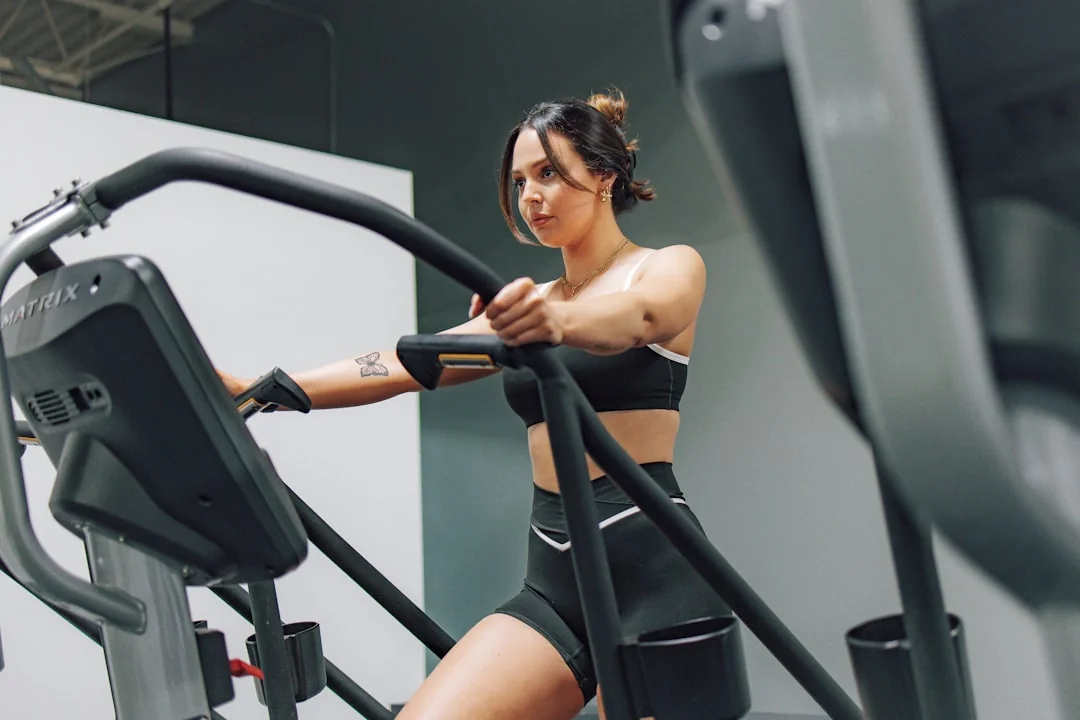
If you cannot test the machine in person, prioritize retailers with a 30-day return policy. We consistently recommend this to readers who cannot access a showroom, because the first week of home use is the most reliable evaluation period available to you.
For structured workout protocols to run during that trial period, my guide on elliptical workout programming and session structure covers the frequency, resistance, and interval formats that produce consistent progress.
Common mistakes during machine selection include choosing a stride length based only on height without accounting for inseam, and underestimating how much space a machine needs once assembled and in motion.
For a clear explanation of how the elliptical's drive mechanism, stride path, and resistance configurations work, my post on how the elliptical machine works and what it is covers the design features that affect training feel and space footprint.
Choosing an Elliptical for Your Specific Training Goals
I applied this five-factor framework when helping three clients select home ellipticals, and stride length mismatches were responsible for two of the three returns we saw in the first 30 days. Both returns came from buyers who chose based on price tier without trialing the stride.
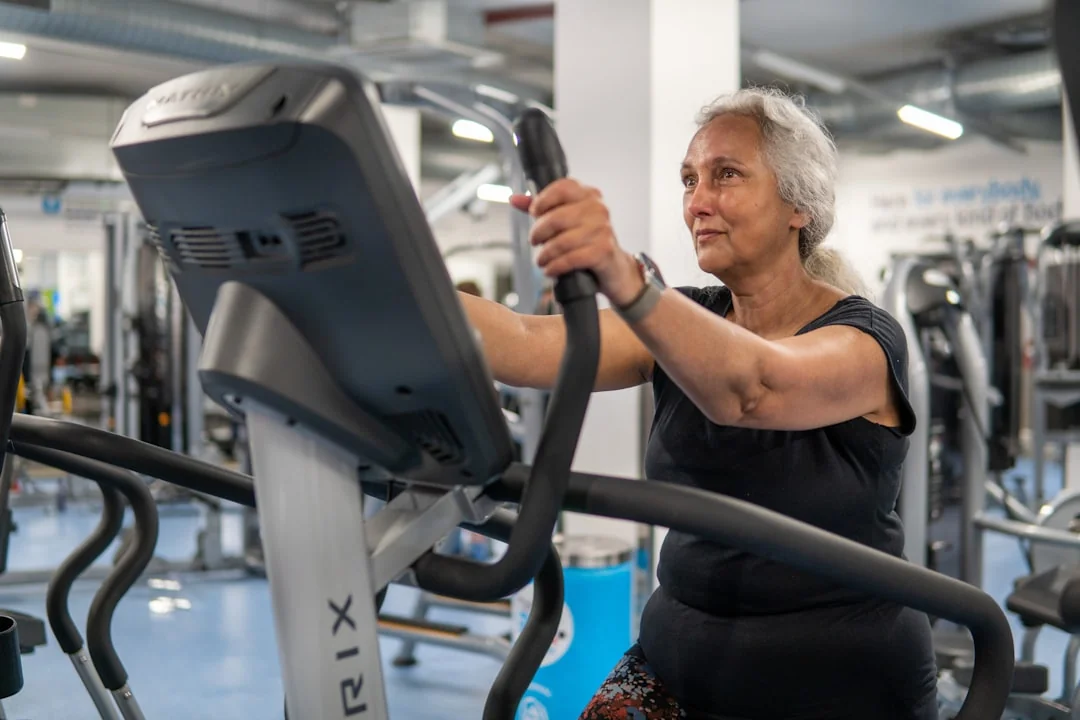
Knowing how to choose an elliptical ultimately comes down to matching the machine to how you actually train, not how you plan to train. If testing convinces you the stride motion is not the right fit, our rowing machine for weight loss guide covers the closest joint-friendly alternative worth trying next. We apply this priority order:
- Stride length - must fit your height and inseam before anything else
- Drive type - test rear-drive and center-drive if possible
- Resistance levels - minimum 16 for long-term progression
- Footprint - measure before you shop
- Budget tier - durability and warranty over console features
This framework reflects what our research consistently surfaces as the difference between satisfied and regretful elliptical owners. A well-fitted elliptical used consistently three times per week delivers real cardiovascular and muscular training results within the first twelve weeks. Choose the one you will actually step onto, week after week, for the next year and beyond.
For a ranked list of the best-built options across price tiers, my roundup of the top elliptical machines across budget tiers covers the models that consistently deliver on stride feel, build quality, and long-term training value.
FAQs
What are common elliptical mistakes?
The most common elliptical mistakes include leaning into the handlebars to reduce leg effort, setting resistance too low throughout the entire session, and using a stride length that does not match body height. These errors reduce calorie burn, limit muscle engagement, and can create movement patterns that lead to hip or knee discomfort over extended regular use.
Is it better to use the elliptical with moving arms or without?
Using the elliptical with moving arms delivers higher total energy expenditure and greater cardiovascular stimulus than using stationary handles alone. Research measuring metabolic cost found that combined arm-and-leg use significantly increases oxygen consumption, making active arm engagement the more effective option for calorie burn and full-body conditioning (Mier and Feito, 2006).
Is 3 miles on the elliptical the same as running 3 miles?
Three miles on the elliptical and three miles of running produce comparable cardiovascular stimulus at similar effort levels, but the physiological demands differ meaningfully. Ground-contact mechanics, impact forces, and lower-body muscle recruitment patterns differ substantially between the two modes, even when heart rate and perceived exertion are matched (Mays et al., 2010).
What is the best stride length for an elliptical?
The best stride length for an elliptical depends primarily on height and inseam length. Users under 5 feet 3 inches generally find 16-18 inches most comfortable; users between 5 feet 3 inches and 5 feet 7 inches do well with 18-20 inches; users between 5 feet 7 inches and 6 feet typically need 20-22 inches, and users over 6 feet need 22 inches or longer for a natural stride that does not restrict hip movement.
How to use an elliptical machine for weight loss?
The most effective approach to using an elliptical for weight loss combines moderate-intensity steady-state sessions with higher-resistance interval work to maximize total calorie burn per session. Research found that elliptical training produces approximately 0.41 grams of fat oxidized per minute at the intensity that maximizes fat burning, supporting its use as a sustained weight management tool (Filipovic et al., 2021).
References
- Mays RJ, Boer NF, Mealey LM, Kim KH, Goss FL. A comparison of practical assessment methods to determine treadmill, cycle, and elliptical ergometer VO2 peak. J Strength Cond Res. 2010;24(5):1325-1331. doi:10.1519/JSC.0b013e3181c7c677
- Mier CM, Feito Y. Metabolic cost of stride rate, resistance, and combined use of arms and legs on the elliptical trainer. Res Q Exerc Sport. 2006;77(4):507-513. doi:10.1080/02701367.2006.10599385
- Prieto-Gonzalez P, Yagin FH. Energy expenditure, oxygen consumption, and heart rate while exercising on seven different indoor cardio machines at maximum and self-selected submaximal intensity. Front Sports Act Living. 2024;6:1313886. doi:10.3389/fspor.2024.1313886
- Dillingham T, Kenia J, Popescu A, Plastaras C, Becker S, Shofer F. Pain outcomes with an elliptical regimen (POWER) study. J Phys Med Rehabil. 2020;2(2):23-28.
- Filipovic M, Munten S, Herzig K-H, Gagnon DD. Maximal fat oxidation: Comparison between treadmill, elliptical and rowing exercises. J Sports Sci Med. 2021;20(1):170-178. doi:10.52082/jssm.2021.170
- Soriano-Maldonado A, et al. Effects of 12-week aerobic exercise on arterial stiffness, inflammation, and cardiorespiratory fitness in women with systemic lupus erythematosus. J Clin Med. 2018;7(12):477. doi:10.3390/jcm7120477