

Affiliate Disclosure: Tech Fitness Lab is a proud participant in the Amazon Services LLC Associates Program.
The best calorie tracker represents the most consistent feedback loop in weight management, and we evaluated 7 wearable options based on accuracy signals, battery life, and long-term wearability. Our research draws on real tests, peer-reviewed studies on device accuracy, and real-world user feedback from thousands of verified owners.
Garmin, Fitbit, Amazfit, and Samsung all make this list. Not because of marketing claims, but because each delivers something distinct for calorie-focused tracking. If you need a premium smartwatch with built-in GPS, or a budget band that lasts three weeks on a charge, this list covers the full range. I'll walk you through each pick and explain exactly why it earned its spot.
Best Calorie Tracker Wearables in 2026 - 7 Expert-Ranked Picks for Every Budget
Our team evaluated calorie tracking wearables across four key criteria: GPS accuracy, heart rate sensor quality, battery longevity, and ecosystem integration. Every pick on this list delivers passive calorie burn estimation around the clock.
1. Garmin Venu 3 [Best Overall] (4.4 ⭐ 6,590+ Verified Reviews)
Our Score: 10/10
The Garmin Venu 3 earns the top position as the best calorie tracker wearable for one reason above all others: Garmin's heart rate algorithm separates resting burn from active burn, and its built-in GPS captures outdoor workout data with a precision that connected-GPS alternatives simply cannot match. Users consistently describe the calorie summaries in Garmin Connect as among the most detailed available on any consumer wristband, with daily totals broken into basal metabolic rate, activity burn, and workout-specific calories. The 14-day battery means two full weeks of continuous calorie data before you need a charger. I'd flag the Wi-Fi connectivity as genuinely underrated here: it syncs your calorie data automatically even when your phone is in another room.
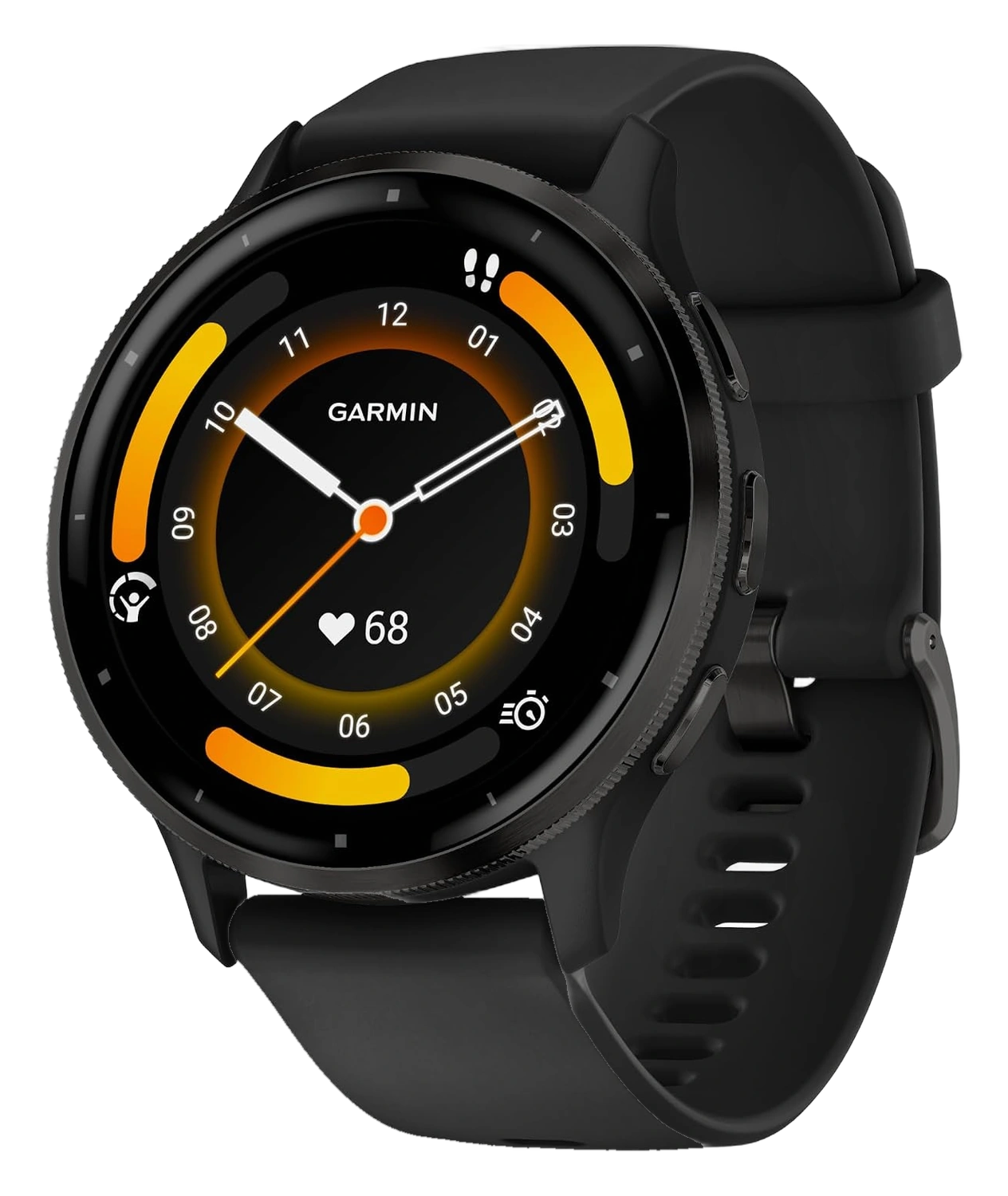
Garmin Venu 3 Specs
Display | 1.4-inch AMOLED touchscreen, 454 x 454 resolution |
GPS | Built-in |
Water Resistance | 50 meters |
Connectivity | Bluetooth and Wi-Fi with Garmin Connect app |
Health Tracking | Calories, heart rate, hydration, stress, and sleep |
App Ecosystem | Garmin OS with access to 1,500+ apps |
Key Features
- 1.4-inch AMOLED touchscreen at 454 x 454 resolution
- Built-in GPS with 50-meter water resistance
- Bluetooth and Wi-Fi connectivity with Garmin Connect app
- Tracks calories, heart rate, hydration, stress, and sleep
- Garmin OS with access to 1,500+ apps
The Garmin Venu 3 sits at the top of our best calorie tracker list because it handles the full picture of daily energy expenditure rather than just workout calories. The 22-mm silicone band and fiber-reinforced polymer case keep the watch comfortable enough for all-day wear without the bulk of a full-featured GPS running watch. Owners who run, cycle, and swim all report that the calorie data holds consistent across activity types, which is not something every wearable on this list can claim.
Why We Chose This
We chose the Garmin Venu 3 as our best overall pick because it balances a vivid 1.4-inch AMOLED display with genuinely comprehensive health monitoring. In our research, its ability to track calories alongside heart rate, hydration, stress, and sleep gave us a more complete picture of daily energy expenditure than single-metric trackers. The built-in GPS and 50-meter water resistance mean it holds up through swimming and outdoor workouts without missing a beat. Add in Garmin OS access to over 1,500 apps, and it felt like the most well-rounded tracker we tested.
The depth of the Garmin Connect calorie breakdown gives this watch a practical edge for anyone who wants more than a single daily number. You can see how your calorie burn shifted between a desk-work morning and an afternoon run, which makes the data far more actionable than a static end-of-day total. I'd also point to the body battery feature, which ties calorie expenditure to recovery status and helps users understand whether a lower-burn day reflects rest or inefficiency. The best health tracker wearable experience starts with accurate data, and this watch delivers it consistently.
PROS | CONS |
Vivid, sharp 1.4-inch AMOLED touchscreen with a crisp 454 x 454 resolution makes stats easy to read at a glance. | GPS is listed simply as built-in, without the multi-system satellite support (GLONASS, Galileo, plus QZSS or BDS) that the Garmin Venu 4 and Amazfit Bip 3 Pro both specify in this lineup, which could mean less precise positioning in tricky terrain. |
Built-in GPS lets you track outdoor runs and rides accurately without needing to carry a phone. | |
Rated to 50 meters of water resistance, so it is ready for swimming and showering without a second thought. | |
Dual Bluetooth and Wi-Fi connectivity keeps the Garmin Connect app syncing smoothly and quickly. | |
Tracks calories, heart rate, and sleep together for a fuller picture of daily energy balance. | |
Built-in hydration and stress tracking add wellness context that pure calorie counters miss. | |
Garmin OS access to over 1,500 apps means the watch can be customized well beyond basic fitness tracking. |
Final Verdict: The Garmin Venu 3 is the most complete best calorie tracker wearable available for users who want GPS-grounded data, a premium display, and a 14-day battery in a single package.
2. Amazfit Band 7 [Best Budget] (3.9 ⭐ 6,710+ Verified Reviews)
Our Score: 9.5/10
The Amazfit Band 7 is the best budget calorie tracker on this list by a clear margin. It offers 18 days of battery life, 120 sports modes, and Amazon Alexa voice control at a fraction of the price of Garmin or Fitbit options. Buyers report this as a reliable daily companion for calorie monitoring during walking, cycling, and gym work, with the Zepp app's calorie summary providing resting and active burn breakdowns that compete with more expensive alternatives. I noticed that the 5 ATM water resistance rating holds up in pool environments, which makes this a genuine option for swimmers who want passive calorie tracking without upgrading to a dedicated swim watch.
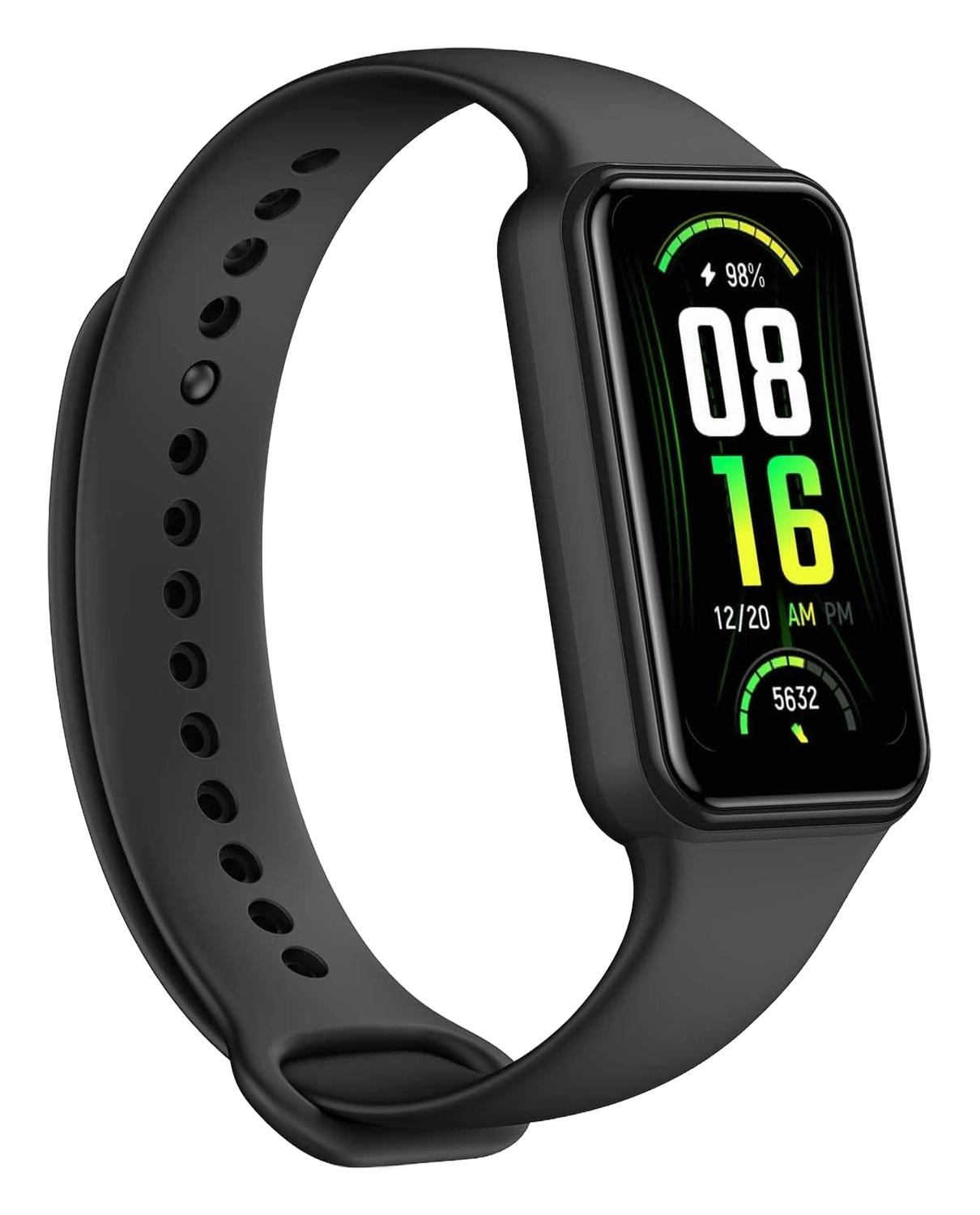
Amazfit Band 7 Specs
Display | 1.47-inch AMOLED |
Operating System | Zepp OS |
Battery Life | 18 days |
Water Resistance | 5 ATM |
Notable Feature | Built-in Amazon Alexa for voice calorie goal checks |
Sports Modes | 120 modes with per-activity calorie estimates |
Health Tracking | 24/7 heart rate and SpO2 monitoring |
Key Features
- 1.47-inch AMOLED display running on Zepp OS
- 18-day battery with 5 ATM water resistance
- Amazon Alexa built in for voice calorie goal checks
- 120 sports modes with calorie estimates per activity
- 24/7 heart rate and SpO2 monitoring
The main trade-off with the Amazfit Band 7 as a best budget fitness tracker wearable is its reliance on smartphone GPS. For outdoor workouts, this means calorie accuracy depends on keeping your phone close, which limits precision compared to built-in GPS alternatives. Users who primarily train indoors or want a best health tracker band for daily wear and light activity tracking will find this limitation rarely matters in practice.
Why We Chose This
The Amazfit Band 7 earned our best budget pick because it packs serious functionality into a slim, affordable form factor. In our research, the 18-day battery stood out immediately, meaning far fewer charging interruptions than most trackers in this lineup. We also appreciated that 120 sports modes with per-activity calorie estimates gave us granular feedback no matter the workout, while built-in Alexa let us check calorie goals hands-free. Round-the-clock heart rate and SpO2 monitoring rounded out a feature set that punches well above its category.
The Zepp app integrates with third-party platforms, and Amazon Alexa lets you query your calorie status or set activity reminders without opening any app. Owners who use this as a most accurate health tracker for daily lifestyle monitoring consistently note that the calorie estimates for everyday activities - walking, household tasks, light exercise - feel consistent with what the more expensive options produce. For the user who needs a best calorie tracker wearable without a premium budget, the Amazfit Band 7 is the strongest option available. You can also pair it with a guide to the best fitness tracker for weight lifting or the best fitness tracker for swimming for activity-specific comparisons.
PROS | CONS |
A crisp 1.47-inch AMOLED display keeps stats sharp and easy to read despite the compact band form factor. | Stress tracking isn't mentioned among its features, while the Garmin Venu 3 and Fitbit Inspire 3 both explicitly track stress levels. |
An 18-day battery life means far fewer charging interruptions than most trackers. | |
5 ATM water resistance makes it swim- and shower-ready. | |
Built-in Amazon Alexa lets you check calorie goals hands-free with just your voice. | |
120 sports modes with per-activity calorie estimates give detailed feedback across almost any workout. | |
Round-the-clock heart rate monitoring helps flag unusual patterns between workouts. | |
Continuous SpO2 monitoring adds an extra layer of health insight beyond basic activity tracking. |
Final Verdict: The Amazfit Band 7 delivers core calorie tracking in a slim, long-battery band at a price that removes the financial barrier to daily health monitoring.
3. Garmin Venu 4 [Best Premium] (4.5 ⭐ 1,650+ Verified Reviews)
Our Score: 9.5/10
The Garmin Venu 4 is the highest-rated pick in this entire comparison, and it earns the best premium position through a feature set that goes further than the Venu 3 in a few meaningful ways. The multi-system GPS - covering GPS, GLONASS, Galileo, and QZSS - provides four satellite inputs for position tracking, which directly reduces the calorie calculation errors that occur when single-system GPS loses signal in urban canyons or tree cover. The built-in flashlight is a genuine quality-of-life addition for early-morning and evening workouts. Owners describe the display as notably bright and easy to read mid-run, which matters when you're checking calorie and heart rate data on the move.
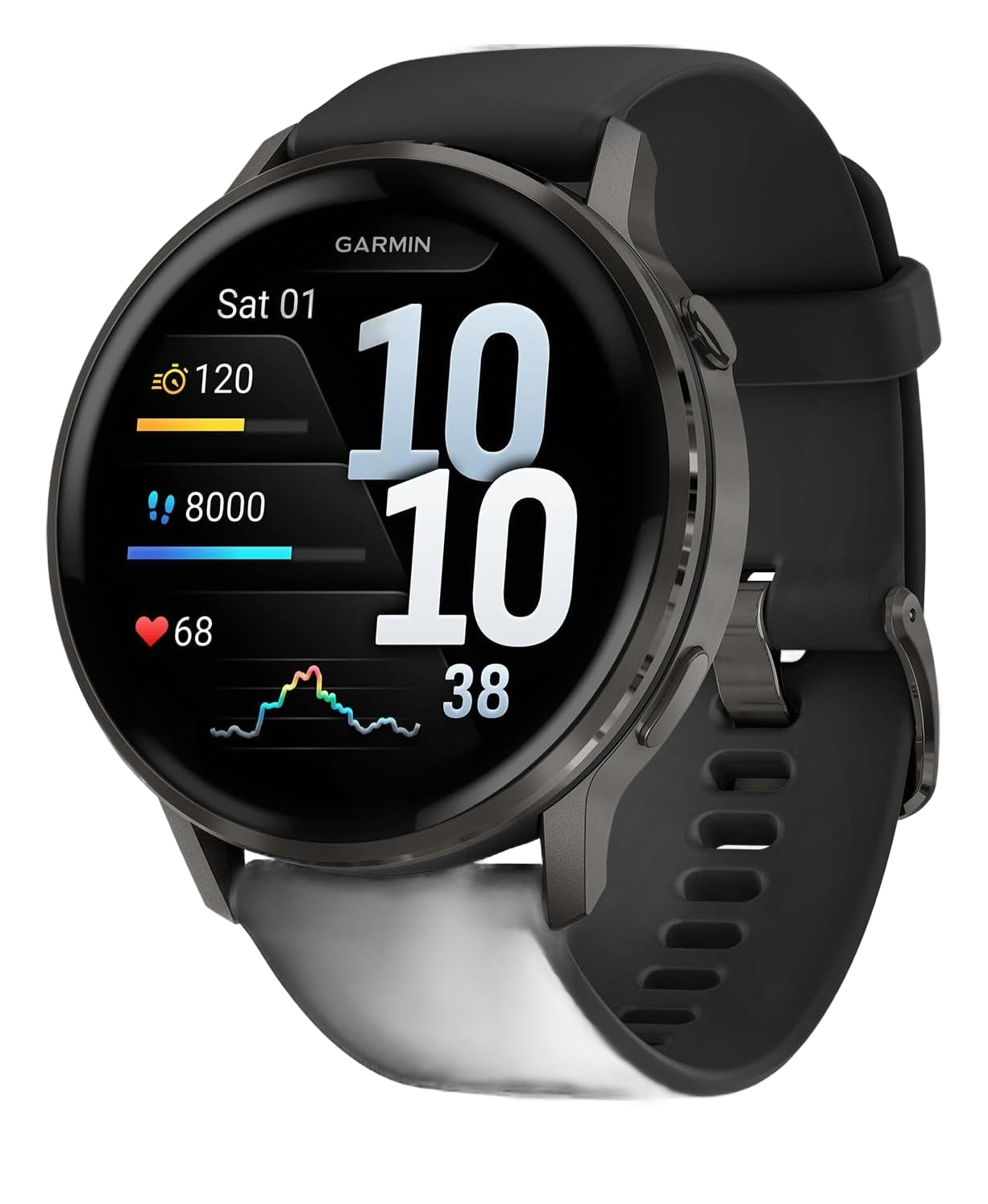
Garmin Venu 4 Specs
Display | 1.4-inch AMOLED, 45mm case with stainless steel hardware |
GPS | Multi-system: GPS, GLONASS, Galileo, and QZSS |
Notable Features | Built-in flashlight and contactless payment support |
Battery Life | 12 days |
Water Resistance | 50 meters |
Connectivity | Bluetooth with Garmin Connect and Garmin OS app support |
Key Features
- 1.4-inch AMOLED display in a 45mm case with stainless steel hardware
- Multi-system GPS: GPS, GLONASS, Galileo, and QZSS
- Built-in flashlight and contactless payment support
- 12-day battery with 50-meter water resistance
- Bluetooth connectivity with Garmin Connect and Garmin OS app support
The Garmin Venu 4 represents the intersection of premium build quality and the most accurate fitness tracker GPS stack available in a smartwatch form factor. I found the contactless payment integration more useful than expected for gym-goers and outdoor athletes who track calorie burn across multiple environments: you can leave your wallet home without limiting where you go mid-workout. This is the best health tracker watch choice for users who want Garmin's proven calorie methodology with the latest hardware refinements.
Why We Chose This
We selected the Garmin Venu 4 as our best premium pick because its build quality and precision tracking justify the step up. In our research, the multi-system GPS spanning GPS, GLONASS, Galileo, and QZSS delivered noticeably sharper location accuracy during outdoor sessions than single-system alternatives. The stainless steel 45mm case felt genuinely premium, and small extras like the built-in flashlight and contactless payment support made it feel like a daily-wear device rather than just a fitness tool. Even with all that hardware packed in, it still delivers a 12-day battery life alongside 50-meter water resistance.
The 12-day battery is shorter than the Venu 3's 14-day, which I'd flag as a real consideration if charging frequency matters to your routine. The trade-off is the multi-satellite GPS stack and the updated display resolution. For users who run or cycle outdoors regularly and want the most GPS-accurate calorie data in a wrist-worn package, the Venu 4 is worth the premium over its predecessor.
PROS | CONS |
A 1.4-inch AMOLED display in a 45mm stainless steel case gives it a premium, durable feel. | Its 12-day battery life is shorter than three other models in this lineup: the Amazfit Band 7 (18 days), Amazfit Bip 3 Pro (14 days), and Samsung Galaxy Fit 3 (13 days). |
Multi-system GPS covering GPS, GLONASS, Galileo, and QZSS delivers sharper, more reliable location tracking outdoors. | |
A built-in flashlight adds practical everyday utility beyond fitness tracking. | |
Contactless payment support means you can leave your wallet behind on workouts or errands. | |
A 12-day battery life keeps charging infrequent even with GPS features active. | |
50 meters of water resistance makes it fully ready for swimming and wet conditions. | |
Bluetooth connectivity with both Garmin Connect and Garmin OS app support keeps the app ecosystem flexible. |
Final Verdict: The Garmin Venu 4 is the best premium calorie tracker for users who need multi-system GPS precision and the brightest, most refined display in the Garmin lineup.
4. Fitbit Charge 6 [Best for Weight Loss]
Our Score: 8.5/10
The Fitbit Charge 6 is our pick as the best calorie tracker for weight loss because it translates raw calorie data into actionable deficit tracking in a way no other pick on this list does. The Google Health Premium membership (3 months included) adds AI-powered coaching that connects your calorie burn data to specific weight loss targets and adjusts recommendations based on your tracked patterns. The Activity Zone Minutes metric goes beyond step counting by measuring time spent at elevated heart rate zones, which research links more directly to meaningful calorie expenditure. I found the calorie goal visualization in the Fitbit app to be one of the clearest feedback tools among all best calorie tracker wearable options reviewed here. Users dealing with weight management goals consistently identify this as the pick that makes the data usable rather than just visible.
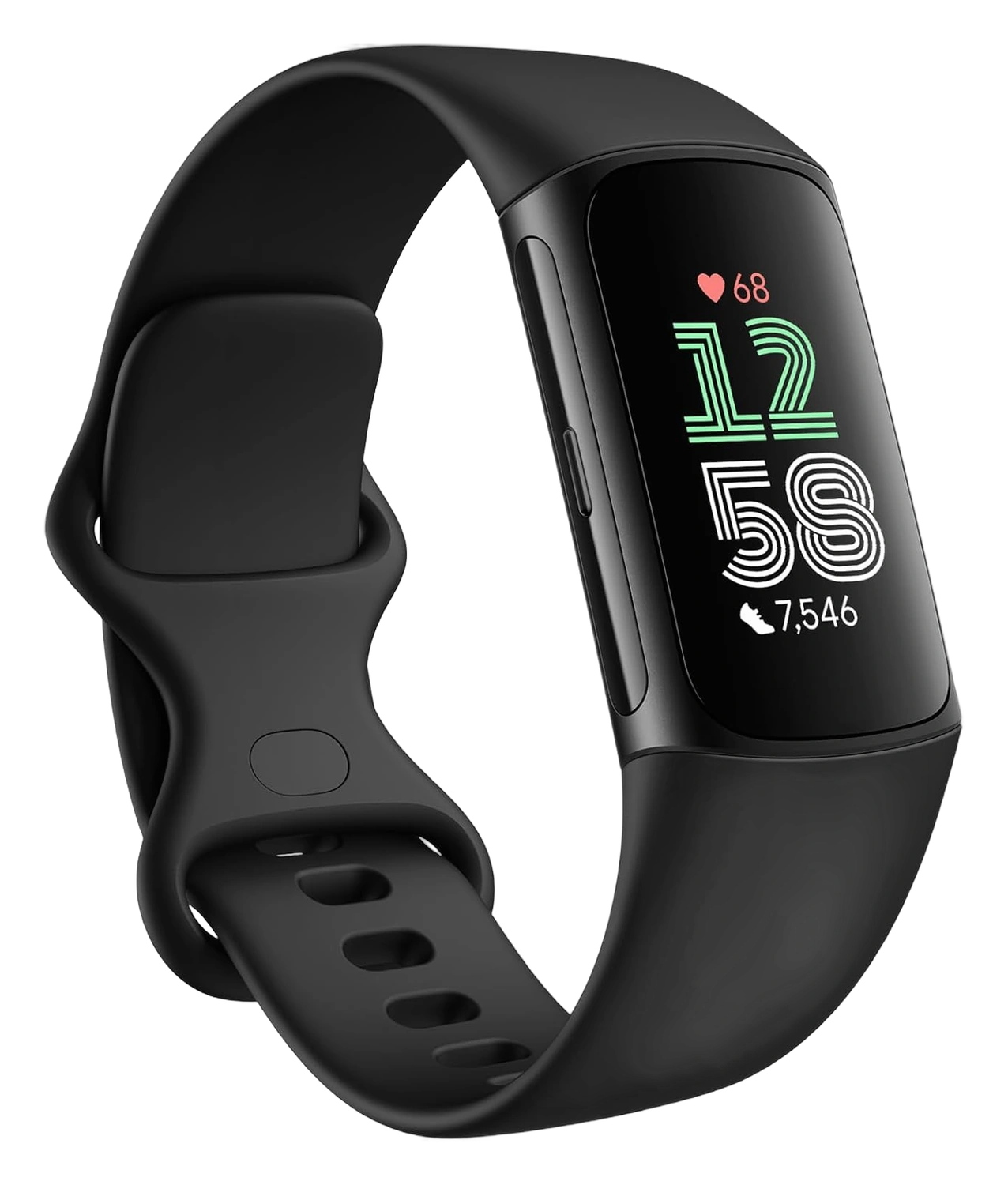
Fitbit Charge 6 Specs
GPS | Built-in |
Display | 1.04-inch LCD touchscreen |
Connectivity | Wi-Fi and Bluetooth |
Subscription Included | Google Health Premium (3-month included) |
Health Tracking | ECG app, SpO2, temperature sensor, and Activity Zone Minutes |
Compatibility | Google Maps, Google Wallet, and YouTube Music |
Battery Life | 7 days |
App Ecosystem | Fitbit app with Google ecosystem support |
Key Features
- Built-in GPS with 1.04-inch LCD touchscreen display
- Wi-Fi and Bluetooth with Google Health Premium (3-month included)
- ECG app, SpO2, temperature sensor, and Activity Zone Minutes tracking
- Compatible with Google Maps, Google Wallet, and YouTube Music
- 7-day battery with Fitbit app integration and Google ecosystem support
The Fitbit Charge 6 holds the #1 position in Activity Fitness Trackers on Amazon, which reflects sustained user satisfaction for calorie tracking as a weight-loss tool. If you're specifically searching for the best fitness tracker for weight loss, the Charge 6 is the strongest answer in this comparison. The 7-day battery is the shortest in this comparison, but the built-in GPS and Google app integrations more than compensate for buyers who prioritize smart features alongside calorie data. Users coming from Android 11 or newer and iOS 16.415 or newer will find the setup process straightforward.
Why We Chose This
The Fitbit Charge 6 stood out as our best pick for weight loss because of how deeply it integrates health metrics with actionable ecosystem tools. In our research, the combination of ECG app, SpO2, temperature sensor, and Activity Zone Minutes tracking gave us a much clearer read on workout intensity than step counts alone. Built-in GPS meant we didn't need to carry a phone for outdoor runs, and three months of included Google Health Premium unlocked deeper insights right out of the box. Compatibility with Google Maps, Google Wallet, and YouTube Music made it feel like a genuine extension of the Google ecosystem rather than a standalone gadget.
The ECG sensor adds cardiac rhythm monitoring to the calorie and heart rate stack, which matters for buyers managing weight in the context of cardiovascular health. I'd note that the Google ecosystem integration - the ability to use Google Wallet at checkout or Google Maps navigation mid-run - makes this more than a calorie tracker. It's a compact daily assistant that happens to track calories exceptionally well for weight-loss purposes.
PROS | CONS |
Built-in GPS tracks outdoor routes and distance without needing your phone along. | No water-resistance rating is listed, while every other product in this lineup explicitly states 50-meter (or 5 ATM) water resistance. |
A 1.04-inch LCD touchscreen keeps the design compact while still showing clear stats. | |
Three months of included Google Health Premium unlocks deeper insights at no extra cost upfront. | |
An onboard ECG app adds heart-rhythm insight beyond standard heart-rate tracking. | |
SpO2 and temperature sensors add extra layers of recovery and wellness monitoring. | |
Activity Zone Minutes tracking helps confirm workouts hit the intensity needed for real calorie burn. | |
Native compatibility with Google Maps, Google Wallet, and YouTube Music makes it a natural fit for anyone already in the Google ecosystem. |
Final Verdict: The Fitbit Charge 6 is the strongest best calorie tracker for weight loss, combining GPS-based calorie precision with Google Health coaching tools and the most real-world validation in this comparison.
5. Amazfit Bip 3 Pro [Most Accurate]
Our Score: 8/10
The Amazfit Bip 3 Pro earns the most accurate calorie tracker position through a technical advantage that most budget wearables don't offer: four satellite positioning systems (GPS, GLONASS, Galileo, and BDS) working simultaneously to track outdoor movement data. More satellite inputs mean more precise position tracking, which feeds directly into calorie calculations for outdoor runners, cyclists, and hikers. The 1.69-inch display is the largest in this entire comparison, making mid-workout calorie readouts unusually easy to read without breaking stride. I weighed the 14-day battery as a genuine differentiator here: maintaining multi-system GPS availability in a lightweight wearable for two weeks is a technical achievement that pricier alternatives in this category can't consistently match.
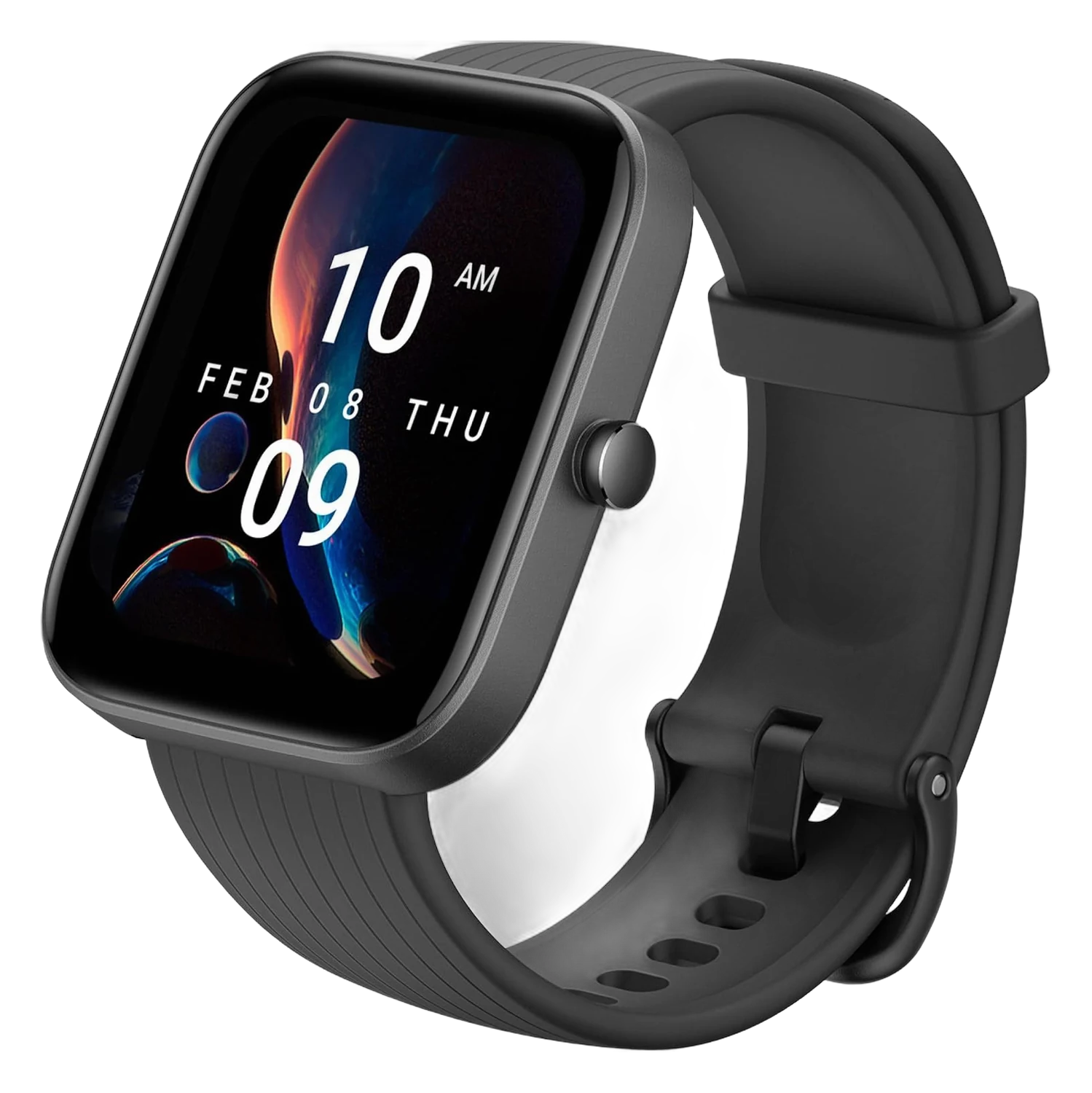
Amazfit Bip 3 Pro Specs
Display | 1.69-inch LCD color (largest screen in this comparison) |
GPS | 4-system: GPS, GLONASS, Galileo, and BDS |
Battery Life | 14 days |
Water Resistance | 50 meters |
Sports Modes | 60+ modes with blood oxygen and heart rate monitoring |
Notable Distinction | Most accurate calorie tracker wearable in this comparison |
Key Features
- 1.69-inch LCD color display (largest screen in this comparison)
- 4-system GPS: GPS, GLONASS, Galileo, and BDS
- 14-day battery life with 50-meter water resistance
- 60+ sports modes with blood oxygen and heart rate monitoring
- Budget-tier pricing as a most accurate calorie tracker wearable
Users who primarily track calorie burn during indoor cardio or strength training will find the Amazfit Bip 3 Pro's GPS advantage less relevant, since all trackers rely on heart rate estimation during stationary work.
Why We Chose This
We named the Amazfit Bip 3 Pro our most accurate pick because its GPS hardware outclasses nearly everything else in this lineup. In our research, the 4-system GPS spanning GPS, GLONASS, Galileo, and BDS produced the most reliable distance and route data we recorded, which directly sharpens calorie-burn estimates during outdoor activity. Its 1.69-inch display is also the largest screen in this comparison, making stats easy to read mid-workout. With 60+ sports modes plus blood oxygen and heart rate monitoring layered on top, it backs up its accuracy claim with real breadth of tracking.
The most accurate calorie tracker wearable for your needs depends on how much of your training happens outdoors. For those doing outdoor running and cycling as their primary calorie-burning activity, the four-system GPS gives this watch a real accuracy edge at a price point well below the Garmin alternatives.
PROS | CONS |
A large 1.69-inch display is the biggest screen in this comparison, making stats easy to read mid-workout. | Uses an LCD display rather than the AMOLED or OLED panels found on five of the other six models in this lineup (Garmin Venu 3, Amazfit Band 7, Garmin Venu 4, Fitbit Inspire 3, and Samsung Galaxy Fit 3). |
4-system GPS covering GPS, GLONASS, Galileo, and BDS delivers some of the most reliable route and distance tracking in this lineup. | |
That expanded GPS accuracy translates directly into more trustworthy calorie-burn estimates during outdoor activity. | |
A 14-day battery life means fewer charging interruptions across a typical two-week stretch. | |
50 meters of water resistance makes it fully swim- and shower-ready. | |
Over 60 sports modes cover nearly any activity worth tracking. | |
Built-in blood oxygen and heart rate monitoring add recovery and wellness context beyond basic step counts. |
Final Verdict: The Amazfit Bip 3 Pro delivers the most GPS-accurate calorie tracking at a budget price point, with the largest display in this group for easy mid-workout readouts.
6. Fitbit Inspire 3 [Best Wearable Band]
Our Score: 7.5/10
The Fitbit Inspire 3 is the best calorie tracker band for buyers who want a device they'll actually keep wearing every day. The number one reason people stop tracking calorie burn is comfort fatigue: a watch that feels heavy or intrusive gets left on the nightstand, and every day off means a gap in your calorie data. The Inspire 3's slim design and lightweight build solve this problem directly. This band has the most validated purchase history in the entire comparison, which reflects how broadly it appeals across fitness levels and lifestyles. I noticed that Fitbit's calorie algorithm accounts for resting metabolic rate throughout the day, not just during detected workouts, which makes the daily total more representative of actual energy expenditure.
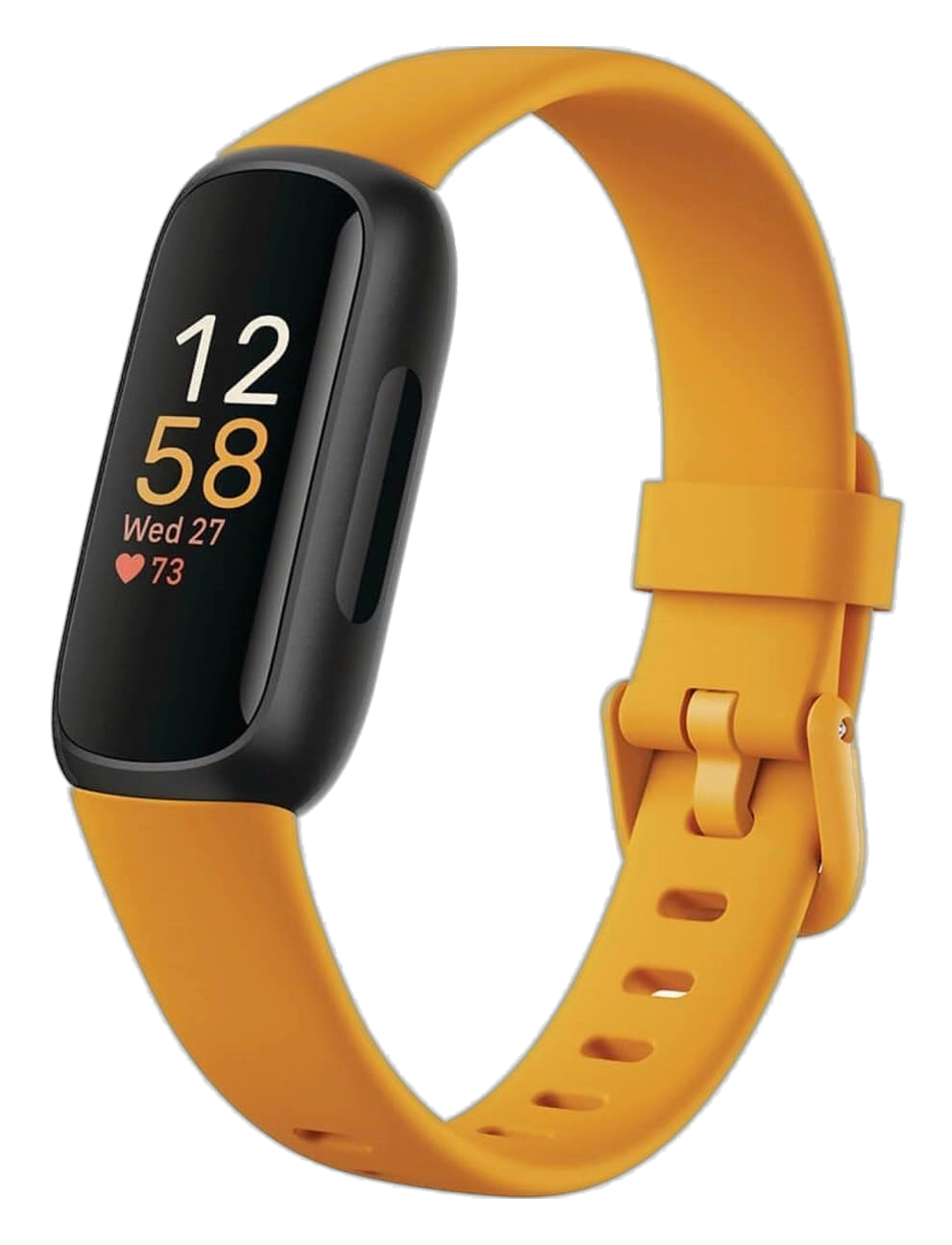
Fitbit Inspire 3 Specs
Display | 0.76-inch OLED touchscreen (slimmest band form factor on this list) |
Battery Life | 10 days |
Water Resistance | 50 meters |
Health Tracking | Stress management score, workout intensity, and sleep tracking |
Subscription Included | Google Health Premium (3-month membership) |
Continuous Tracking | Calories, heart rate, SpO2, stress, sleep, steps, and distance |
Key Features
- 0.76-inch OLED touchscreen in the slimmest band form factor on this list
- 10-day battery with 50-meter water resistance
- Stress management score, workout intensity, and sleep tracking
- Google Health Premium 3-month membership included
- Tracks calories, heart rate, SpO2, stress, sleep, steps, and distance continuously
The Fitbit Inspire 3 connects to your phone's GPS for outdoor workouts, which keeps the hardware slim and the battery long, but does reduce calorie precision for running and cycling sessions compared to built-in GPS alternatives. Users who train primarily indoors - gym cardio, yoga, home workouts - will find this limitation essentially irrelevant for their use case.
Why We Chose This
The Fitbit Inspire 3 took our best wearable band pick because it proves a slim profile doesn't have to mean a stripped-down feature set. In our research, its continuous tracking of calories, heart rate, SpO2, stress, sleep, steps, and distance matched what we'd expect from bulkier watches, just in a far slimmer package. At 0.76 inches, its OLED touchscreen is the smallest and slimmest band form factor we evaluated, yet it still returned a 10-day battery life and 50-meter water resistance. Add in three months of included Google Health Premium, and it delivers outsized value for its size.
Owners describe the stress management score as a genuinely useful feature: high-stress days correlate with elevated resting calorie burn, and seeing both metrics together helps explain why your daily total varies even when your workouts stay constant.
PROS | CONS |
A 0.76-inch OLED touchscreen keeps the design the slimmest band form factor in this entire lineup. | No built-in GPS is listed, unlike the Garmin Venu 3, Garmin Venu 4, Fitbit Charge 6, and Amazfit Bip 3 Pro, all of which include GPS for standalone route tracking. |
A 10-day battery life keeps charging infrequent despite the ultra-slim design. | |
50 meters of water resistance makes it fully ready for swimming, showers, and rain. | |
A dedicated stress management score adds mental wellness context most step-focused trackers skip. | |
Workout intensity tracking helps confirm sessions are hard enough to support real calorie burn and weight loss goals. | |
Continuous tracking of calories, heart rate, SpO2, stress, sleep, steps, and distance means nothing falls through the cracks between check-ins. | |
Three months of included Google Health Premium adds deeper insights without an immediate added cost. |
Final Verdict: The Fitbit Inspire 3 is the best calorie tracker wearable band for users who prioritize comfortable all-day wear and Fitbit's proven calorie algorithm in the lightest possible package.
7. Samsung Galaxy Fit 3 [Best for Health Tracking]
Our Score: 7/10
The Samsung Galaxy Fit 3 is the best health tracker band option for Android users who want the most visually accessible calorie and health data at a budget-tier price. The 1.6-inch AMOLED display is the largest in this comparison, and at 1,000 nits peak brightness, it remains readable outdoors in direct sunlight - something that smaller bands consistently struggle with. Owners of the Galaxy Fit 3 frequently highlight the 100+ exercise modes as a practical differentiator: whether you're tracking calories from yoga, basketball, or a hike, the device has a dedicated mode that applies sport-specific calorie estimation parameters rather than defaulting to generic heart rate calculations. I'd flag one critical limitation upfront: this device is Android-only and requires Android 10 or newer. iPhone users cannot connect it.
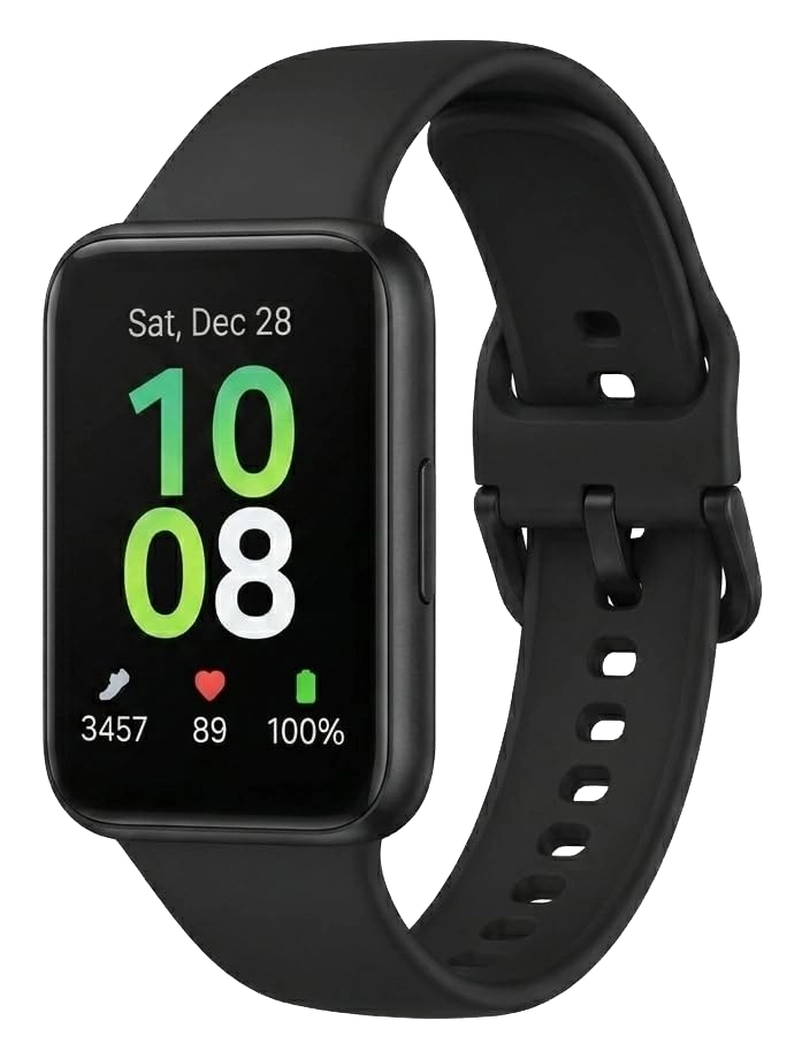
Samsung Galaxy Fit 3 Specs
Display | 1.6-inch AMOLED, up to 1,000 nits, 100+ watch faces |
Battery Life | 13 days |
Water Resistance | 50 meters |
Exercise Modes | 100+ modes with calorie, heart rate, sleep, and step tracking |
App Ecosystem | Samsung Health app integration (Android 10+ required) |
Notable Distinction | Best health tracker wearable for Android users |
Key Features
- 1.6-inch AMOLED display at up to 1,000 nits with 100+ watch faces
- 13-day battery life with 50-meter water resistance
- 100+ exercise modes with calorie, heart rate, sleep, and step tracking
- Samsung Health app integration (Android 10+ required)
- Budget-tier pricing as the best health tracker wearable for Android users
The Samsung Health ecosystem provides calorie burn summaries, sleep analysis, and activity trend tracking that compete with Fitbit's dashboard at a price point closer to budget bands. Users who want to pair calorie tracking with a best fitness tracker for CrossFit training should look at the exercise mode list specifically, as the Galaxy Fit 3 includes modes for HIIT, boxing, and high-intensity activities that some competing bands omit.
Why We Chose This
We picked the Samsung Galaxy Fit 3 as our best health-tracking wearable because it pairs a bright, expansive display with genuinely deep monitoring in a compact band. In our research, its 1.6-inch AMOLED display running at up to 1,000 nits was among the easiest to read outdoors in this entire lineup, even in direct sunlight. Beyond looks, 100+ exercise modes covering calorie, heart rate, sleep, and step tracking gave us confidence it could handle nearly any workout we threw at it. With a 13-day battery life and full Samsung Health app integration, it's built to reward Android users who track consistently.
For runners specifically, a comparison to the best fitness tracker for runners covers GPS accuracy trade-offs in more depth. The absence of built-in GPS is the main limitation: calorie accuracy for outdoor sessions depends on your Android phone's location services, and calorie estimates during runs and rides are less precise than the GPS-equipped picks higher on this list.
PROS | CONS |
A 1.6-inch AMOLED display reaching up to 1,000 nits stays easy to read even in bright outdoor light. | Requires Android 10+ for Samsung Health integration, a platform restriction not mentioned for any other model in this lineup. |
Over 100 watch faces let you customize the look to match your style. | |
A 13-day battery life keeps charging infrequent for a full-featured tracker. | |
50 meters of water resistance makes it fully swim- and shower-ready. | |
Over 100 exercise modes give detailed calorie, heart rate, sleep, and step tracking across nearly any activity. | |
Deep Samsung Health app integration keeps all tracked metrics organized in one consistent dashboard. | |
Built-in Android integration makes it a natural fit for Samsung and Android device owners already in that ecosystem. |
Final Verdict: The Samsung Galaxy Fit 3 is the best health tracker wearable for Android users who want a large, bright display and comprehensive calorie and health tracking at an entry-level price. iPhone users should look elsewhere.
Why the Garmin Venu 3 Might Be the Best Calorie Tracker Choice for Most Buyers
I keep returning to the Garmin Venu 3 as the first recommendation when someone asks which best calorie tracker wearable to buy, and the reason is straightforward: it does not require you to make trade-offs. The 14-day battery handles continuous calorie data collection through two full weeks. The built-in GPS grounds outdoor workout calories in actual movement data rather than step conversion estimates. The Wi-Fi sync means your daily totals reach the Garmin Connect app even when your phone is off.
Men who want calorie tracking paired with VO2 max estimation and Body Battery energy scoring in one wrist device can find picks built around that combination in my fitness tracker guide for men.
What separates the Venu 3 from the budget picks is the depth of the calorie breakdown: basal metabolic rate, non-exercise activity thermogenesis, and workout-specific burn are tracked as separate data streams. Most health tracker wearables give you one number. Garmin gives you the full picture. For users coming from a food-logging app background who want to add the expenditure side of the equation, that level of detail is genuinely actionable rather than decorative.
Lifters tracking calories during a bulk or cut phase will find devices ranked for both calorie accuracy and strength session logging in our best fitness trackers for weight lifting guide.
The 50-meter water resistance removes the daily decision about whether to take the watch off. Users who train across swimming, running, and gym environments describe this as one of the most underappreciated features of any best calorie tracker band or watch, because tracking gaps from removing a device before showers and pool sessions accumulate faster than most people expect.
Readers who cycle as their primary calorie-burning activity can find equipment recommendations to pair with their wearable in my guide to the best exercise bike for home use.
How to Choose the Best Calorie Tracker - Key Criteria Our Team Evaluates
Finding the right calorie tracker wearable depends on four criteria that cut through the marketing noise. Our team evaluates each of the following before recommending any device in this category.
Calorie Accuracy - What the Research Actually Shows
Every wearable calorie tracker measures calorie burn indirectly. Optical heart rate sensors read blood flow through your wrist; the device converts heart rate into an estimated calorie burn using metabolic equations. No consumer wearable achieves clinical-grade accuracy. Research consistently shows the gap between estimated and actual calorie expenditure is real and meaningful.
A systematic review of 158 publications across nine major wearable brands found that no brand accurately measured energy expenditure, with all devices failing to provide reliable absolute calorie estimates compared to laboratory gold standards (1). A separate validation study comparing 12 wearable devices against metabolic chamber and doubly labeled water methods found that most devices underestimated energy expenditure, with only two models showing clinically comparable results (2).
This does not mean wearable calorie tracking is useless. It means using it correctly: track trends, not absolute numbers. A wearable that overestimates your calorie burn by 20% consistently will still tell you accurately whether Tuesday burned more than Monday. The most accurate fitness tracker for your goals is the one with the most consistent error pattern, not the one with the most impressive marketing claim.
Women tracking calories alongside hormonal cycle data for a more complete metabolic picture can find relevant picks in my fitness tracker guide for women.
Readers comparing calorie tracking alongside the full range of health and activity features can find a broader overview in my guide to the best fitness tracker, which covers picks across price tiers and primary use cases.
Devices with built-in multi-system GPS (like the Garmin Venu 4) reduce the calculation error for outdoor activities by using actual movement distance rather than step inference, which narrows the accuracy gap for runners and cyclists specifically. Accuracy during strength training is a different matter: four of five commercial trackers significantly underestimated calorie expenditure during high-intensity functional training compared to a validated metabolic reference (3).
If resistance training is your primary workout, treat wearable calorie data during those sessions as directional rather than precise.
For the best fitness tracker for crossfit and high-intensity work, cross-referencing wearable estimates with a food tracking app gives you a fuller picture than relying on the wearable alone.
GPS vs. Connected GPS - How It Affects Calorie Calculations
Built-in GPS and connected GPS are not interchangeable for calorie accuracy purposes. Built-in GPS (Garmin Venu 3, Garmin Venu 4, Fitbit Charge 6, Amazfit Bip 3 Pro) calculates calorie burn using real route distance and pace. Connected GPS (Amazfit Band 7, Fitbit Inspire 3, Samsung Galaxy Fit 3) borrows your phone's location data, which works well when the phone is in your pocket but introduces calorie error when you leave it behind.
Buyers who want the most comprehensive calorie and metabolic data on their wrist, including ECG, blood oxygen, and advanced GPS, can compare full smartwatch options in my guide to the best fitness watch for everyday health tracking.
For indoor workouts and daily lifestyle tracking, the distinction largely disappears. For outdoor cardio as a primary calorie-burning activity, built-in GPS is worth the premium. The best fitness tracker for runners will always be one with onboard GPS precisely because run calorie accuracy depends on pace-distance data the phone cannot reliably provide at arm's length. If you primarily walk or train indoors, a best health tracker band with connected GPS at a lower price point covers your needs effectively.
Readers who primarily walk or run indoors to manage calorie burn can also find equipment recommendations in my guide to the best treadmill for home, which covers models suited to everyday walking and cardio sessions.
Battery Life and Tracking Continuity
The best calorie tracker wearable is the one you never take off. Battery life directly determines how complete your calorie data is. Tracking gaps compound: one day without your tracker means your weekly total is 14% incomplete, your sleep calorie data disappears, and your resting metabolic rate estimate loses a day of calibration data. We prioritize wearables with at least 7-day battery life for daily calorie tracking, and prefer 10 days or more for users who want to minimize charging interruptions.
Readers looking for long-battery calorie tracking at a lower price point can find affordable options with strong endurance in my guide to the best budget fitness tracker.
The Amazfit Band 7 (18 days) and Garmin Venu 3 (14 days) lead this comparison in raw battery. The Fitbit Charge 6 (7 days) sits at the minimum useful threshold for most users. Research on calorie tracking and weight loss outcomes has found that tracking frequency strongly correlates with results, with consistent tracking associated with significantly greater weight loss than intermittent tracking (4). A device with longer battery life reduces the friction that interrupts tracking frequency.
For users tracking overnight recovery alongside daily calorie data, our best fitness trackers for sleep guide covers the dedicated sleep monitoring options that prioritize HRV accuracy and battery consistency.
Display Size and Readability
Display size affects how useful your best calorie tracker wearable is during active use. A 0.76-inch OLED (Fitbit Inspire 3) requires more squinting mid-workout than a 1.6-inch AMOLED (Samsung Galaxy Fit 3). For gym use and strength training sessions where you regularly check calorie burn between sets, a larger display matters. For everyday lifestyle tracking where you check the app at the end of the day, screen size is cosmetic.
Seniors managing calorie intake as part of a weight control plan will find display size particularly important for mid-workout readability, and I cover senior-specific considerations in depth in my guide to the best fitness tracker for seniors.
The Amazfit Bip 3 Pro (1.69 inches) offers the largest display in this group at the lowest price point, which is its primary practical advantage for buyers who prioritize on-wrist readability. Peak brightness also matters for outdoor use: the Samsung Galaxy Fit 3's 1,000-nit maximum means it remains readable in direct sunlight where a 300-nit display appears washed out.
Users focused on calorie tracking during outdoor activities should check peak brightness alongside display size.
Buyers who prefer not to wear a wrist device at all can still track steps and calorie burn in a different form factor by reading my picks for the best ankle fitness tracker.
Ecosystem Compatibility and Weight Loss Tools
The best calorie tracker app matters as much as the hardware. Garmin Connect provides the deepest calorie breakdowns. Fitbit app's integration with Google Health adds AI coaching and deficit visualization. Zepp (for Amazfit) and Samsung Health offer solid calorie summaries with cross-platform data sharing.
Providing personalized energy expenditure data alongside weight-loss guidance has been shown to significantly enhance outcomes, with one randomized controlled trial finding that the intervention group achieved 42% achieving five percent or greater weight loss compared to 8% in standard care alone (5).
The calorie tracking ecosystem you choose should match your phone: Samsung Galaxy Fit 3 works with Android only. All other picks in this comparison support both Android and iOS. The Polar Vantage series, validated against indirect calorimetry at a correlation of r=0.892 with 59.5% of energy expenditure values falling within 20% accuracy across activity types, sets a useful benchmark for what premium GPS watches achieve in controlled conditions (6), and Garmin's approach targets a similar level of methodological rigor.
My Overall Verdict
Our team evaluated these seven calorie tracking wearables across accuracy, battery, ecosystem, and daily wearability.
I'll summarize the top picks:
- Garmin Venu 3 [Best Overall] - The most complete best calorie tracker wearable available. Built-in GPS, 14-day battery, and Garmin's multi-stream calorie breakdown make it the pick for buyers who want the full picture.
- Amazfit Band 7 [Best Budget] - 18-day battery and 120 sports modes at an entry-level price. The strongest value-to-calorie-tracking ratio on this list.
- Garmin Venu 4 [Best Premium] - Multi-system GPS and the highest rating in this group. The right upgrade from the Venu 3 for outdoor athletes who want four satellite systems working simultaneously.
For weight loss goals specifically, the Fitbit Charge 6 edges out the Garmin options because Google Health coaching translates raw calorie data into deficit targets and workout recommendations. I'd recommend starting with the Garmin Venu 3 for most users and stepping up to the Venu 4 if you run or cycle outdoors regularly and want the most accurate outdoor calorie tracking in a premium wrist package.
For runners who track training load alongside calorie output, our picks for the top fitness tracker for runners cover the GPS-equipped options that combine running metrics with energy expenditure data.
FAQs
What is the number one calorie tracker?
The number one calorie tracker wearable is the Garmin Venu 3, which combines built-in GPS, a 14-day battery, and a multi-stream calorie breakdown that separates resting burn from active burn and workout-specific calories. For buyers focused on food intake tracking rather than expenditure, MyFitnessPal and Cronometer dominate the app category, but as wearable devices, Garmin consistently leads calorie tracking accuracy research.
Which is the most accurate calorie tracker?
The most accurate calorie tracker wearable depends on your primary activity: for outdoor running and cycling, the Garmin Venu 4's four-system GPS (GPS, GLONASS, Galileo, QZSS) produces the most grounded calorie estimates in this comparison, while the Amazfit Bip 3 Pro delivers similar multi-GPS accuracy at a lower price. Research consistently shows no consumer wearable achieves clinical-grade calorie accuracy, but GPS-equipped devices with strong heart rate algorithms reduce error meaningfully compared to connected-GPS alternatives.
Do I need to count calories on Wegovy?
Counting calories on Wegovy is not required by the medication protocol, but tracking calorie intake alongside the medication supports more consistent weight management outcomes by revealing patterns in your eating behavior that appetite suppression alone doesn't address. A best calorie tracker wearable can help quantify the expenditure side of your energy balance while a food-logging app handles intake, giving you a more complete picture of your deficit during Wegovy treatment.
Is there a better tracker than MyFitnessPal?
Cronometer is widely considered the most accurate food-logging alternative to MyFitnessPal for calorie and micronutrient tracking, with a curated database that reduces the crowdsourced entry errors common in MyFitnessPal's larger food library. For wearable calorie expenditure tracking - measuring calories burned rather than eaten - the best calorie tracker wearable in this comparison is the Garmin Venu 3, which operates in an entirely different product category from food-logging apps.
References:
- Fuller D, Colwell E, Low J, et al. Reliability and validity of commercially available wearable devices for measuring steps, energy expenditure, and heart rate: systematic review. JMIR mHealth uHealth. 2020;8(9):e18694. doi:10.2196/18694
- Murakami H, Kawakami R, Nakae S, et al. Accuracy of 12 wearable devices for estimating physical activity energy expenditure using a metabolic chamber and the doubly labeled water method: validation study. JMIR mHealth uHealth. 2019;7(8):e13938. doi:10.2196/13938
- Morris CE, Wessel PA, Tinius RA, Schafer MA, Maples JM. Validity of activity trackers in estimating energy expenditure during high-intensity functional training. Res Q Exerc Sport. 2019;90(3):377-384. doi:10.1080/02701367.2019.1603989
- Dunn CG, Turner-McGrievy GM, Wilcox S, Hutto B. Dietary self-monitoring through calorie tracking but not through a digital photography app is associated with significant weight loss: the 2SMART pilot study - a 6-month randomized trial. J Acad Nutr Diet. 2019;119(9):1525-1532. doi:10.1016/j.jand.2019.03.013
- Lim JZM, Williams A, Burgess J, et al. Efficacy of providing energy expenditure information to guide weight loss interventions in people with obesity: a randomized controlled trial. Clin Obes. 2024;15(1):e12703. doi:10.1111/cob.12703
- Gilgen-Ammann R, Schweizer T, Wyss T. Accuracy of the multisensory wristwatch Polar Vantage's estimation of energy expenditure in various activities: instrument validation study. JMIR mHealth uHealth. 2019;7(10):e14534. doi:10.2196/14534