
Fitness Mirrors
Showing the single result
What's on this page
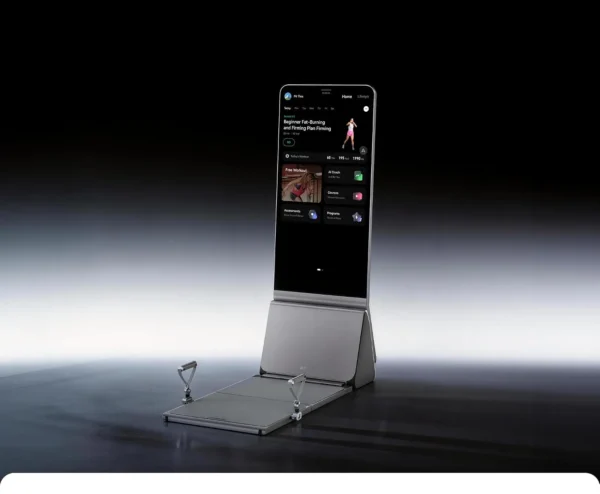
A fitness mirror looks like a normal mirror until you turn it on, then it becomes a touchscreen that shows a trainer, a live class, or your own form corrections while you work out in front of it. You will also see it called a workout mirror or an exercise mirror. Right now this category has one machine, the AEKE K1, a smart fitness mirror that works as a mirror and a cable strength machine in one frame. The K1 specs below come from its Amazon listing and the AEKE product page.
Smart fitness mirrors come in two types. A connected fitness mirror with built-in resistance hardware is the first, and the K1 is one. A streaming-only mirror, which is a screen and camera for classes with no load of its own, is the second. Choosing between them is the most common place people go wrong, and it is a frequent reason people return a smart fitness mirror or cancel the subscription a few months in.
Choosing the best smart fitness mirror comes down to two decisions
Built-in resistance versus class streaming only
The AEKE K1 is a cable machine built into a mirror frame. It carries digital resistance up to 220 lbs (110 lbs per side) in 1 lb increments, so pulling on the handles gives you real load, not a video of someone else pulling on handles. It has five resistance modes: concentric, eccentric, constant, elastic, and rowing. The 43-inch 4K touchscreen doubles as a full-length mirror when it is off, and a camera with 17-point skeletal tracking gives real-time form correction. It is built for strength training in front of the mirror, not only cardio classes.
If you are comparing it to a mirror cable machine or a regular cable stack, one limit matters: the K1's cable exit is fixed at the base. There are no overhead or multi-height pulley points, so some exercises that need a high pulley are off the table.
A streaming-only mirror, such as the Echelon Reflect, is a different kind of product wearing a similar shape. It is a reflective mirror with a touchscreen and camera that plays live and on-demand classes. It carries no resistance hardware of its own, so strength work comes from your own dumbbells, bands, or a bike. I do not list one in the shop right now.
Subscription-free versus membership-locked
The AEKE K1 needs no subscription. The touchscreen, the AI coaching, the resistance system and the workout library, with future updates, all work on the hardware you bought. If you are shopping for a fitness mirror without subscription fees, that is the K1's main selling point. The roundup of fitness mirrors without a subscription covers more options. The Echelon Reflect works on the opposite model: the mirror and touchscreen are the hardware, but the classes that make it useful day to day need an active Echelon membership. Budget for that ongoing cost, or you own an expensive screen with nothing to watch on it.
| Type | Built-in resistance | Subscription | Best for |
|---|---|---|---|
| AEKE K1 (smart mirror with cable resistance) | Yes, digital resistance to 220 lbs | Not required | Strength training with AI form coaching |
| Streaming-only mirror (for example the Echelon Reflect) | None, screen and camera only | Required for class content on the Echelon Reflect | Class-based cardio and streaming workouts |
Who each type suits
The AEKE K1 suits someone who wants strength training with form coaching and does not want another monthly bill attached to hardware they already paid for. It also works as a fitness mirror for small spaces: it folds to about 3.2 sq ft (0.3 sq m) and is about 0.9 m wide unfolded, so it does not have to stay a permanent fixture. Measure the wall and floor clearance before you order either way.
A streaming-only mirror suits someone who already likes instructor-led classes and is comfortable paying monthly for that library. It works better as a cardio and class hub than as a strength trainer, since it brings no resistance of its own. If heavy barbell work is what you are after, a power rack or a Smith machine is built for that directly, rather than asking a mirror to do a rack's job.
Names you'll see elsewhere in this category, and why they are not here
Searching for a fitness mirror turns up more brands than this page carries, and it helps to know where they fit before you go looking.
- Tonal is a screen mounted on a wall with two retractable resistance arms rather than a mirror surface, so I treat it as a smart home gym rather than an interactive fitness mirror. The Tonal versus mirror comparison goes through the differences.
- A handful of budget mirrors running open Android software, including LumaVue and HARZHI, show up in marketplace listings at a much lower price than the K1. I have not added one to the catalog, and I do not describe specs I have not verified.
- Tempo Move is sold directly through Tempo's own site rather than through the retail channels the catalog is sourced from, so it will not show up here even though it comes up often in comparison searches.
A few once-popular fitness mirrors are no longer sold at all. The Lululemon Studio Mirror was discontinued in 2023, and the Lululemon mirror discontinuation page explains what that means for owners. The ProForm Vue is discontinued, and so is the NordicTrack Vault; both were iFIT-connected mirrors from the same parent company. Fiture exited the US market in 2023 as well. If you already own one of these, check replacement parts and support directly with the manufacturer.
What to check before you buy
- Decide first whether you need built-in resistance or just a screen, since that decision alone splits the category in two.
- Add up the real cost of ownership, including any required membership, before comparing what looks like a lower up-front cost.
- Measure the wall or floor space you have, since a full-length fitness mirror needs more clearance than a small screen mounted at eye level.
- Confirm the camera and AI coaching features actually work for the exercises you plan to do, not only for the demo routines shown in marketing video.
- If dedicated strength equipment already covers your goals, a mirror may be solving a problem you do not have.