

Affiliate Disclosure: Tech Fitness Lab is a proud participant in the Amazon Services LLC Associates Program.
The search for the best budget fitness tracker is harder than it looks. There are dozens of bands under $100 promising identical specs on paper - and the differences that actually matter (app quality, heart rate reliability, daily comfort) rarely show up in the product listing. I spent weeks mapping this category, cross-referencing product data with SERP research and user feedback, to build a shortlist that doesn't waste your money on features that sound good but fail in practice.
Regardless of whether you want accurate sleep data, a GPS solution for outdoor runs, or a health tracker band that simply stays out of your way, this list covers seven distinct needs. The best budget fitness tracker is not always the cheapest option - it's the one you'll actually keep wearing past the first month. Finding the best affordable fitness tracker means matching the feature set to your real daily habits, not the most impressive-sounding spec sheet.
Best Budget Fitness Trackers in 2026 - 7 Picks That Cover Every Tracking Goal
Finding a reliable best budget fitness tracker means sorting through a saturated market where spec sheets look identical, and brand names blur together. Each pick below earned its spot by covering a distinct user need - from menstrual health tracking to GPS-enabled outdoor logging - at a price point that doesn't require a premium device budget. I ranked these based on product data, feature accuracy, app quality, and the user feedback patterns that show up consistently across this category.
1. Fitbit Inspire 3 [Best Overall] (4.2 ⭐ 25,550+ Verified Reviews)
Our Score: 10/10
The Fitbit Inspire 3 is the most well-rounded best budget fitness tracker on this list - daily stress scoring, SpO2 monitoring, and 10-day battery life combine in a band that fits both gym workouts and desk wear without looking out of place in either setting.
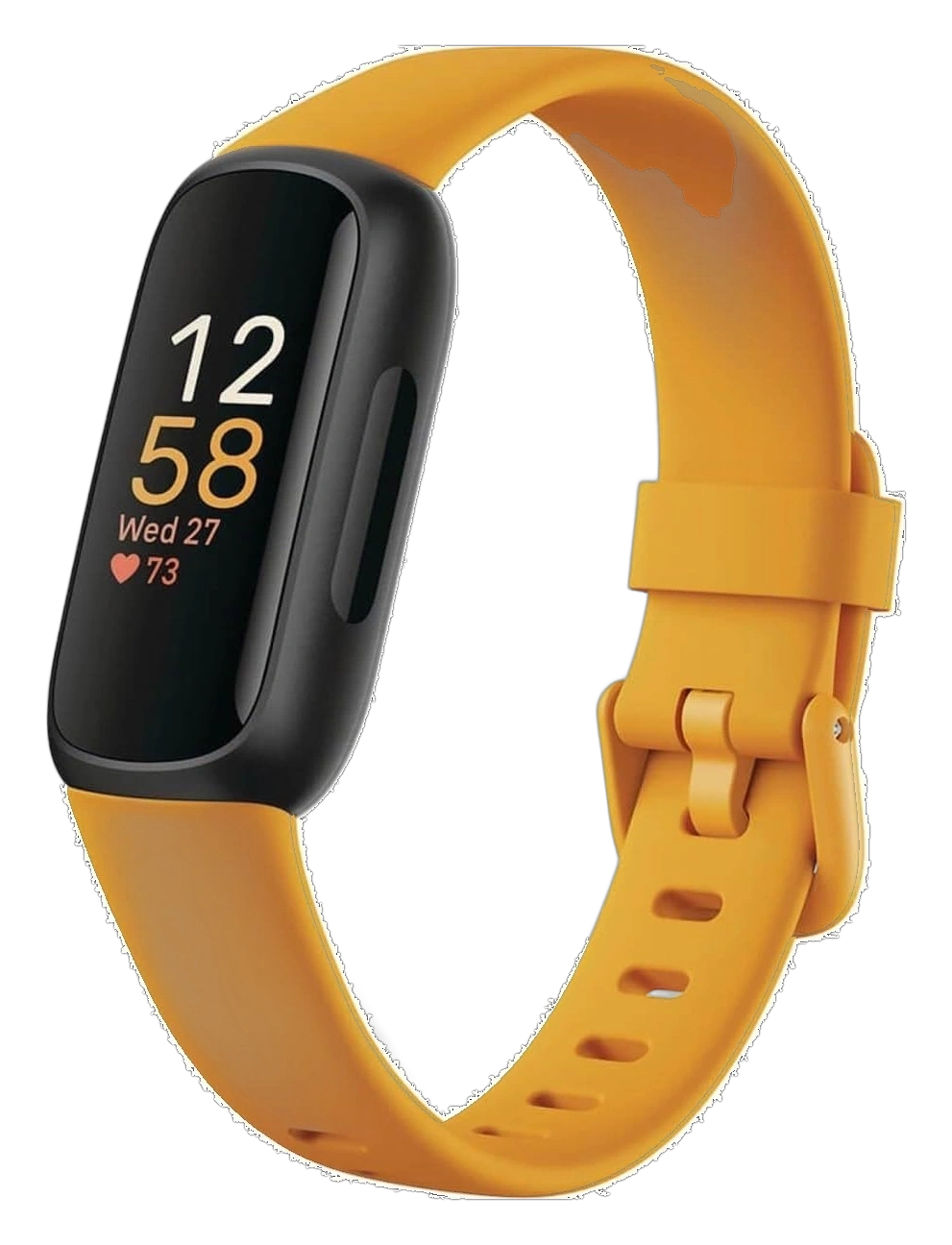
Fitbit Inspire 3 Specs
Display | 0.76" OLED |
Battery Life | Up to 10 days |
Water Resistance | 50 Meters (IP68) |
GPS | Via Smartphone |
Connectivity | Bluetooth |
Health Tracking | Heart Rate, SpO2, Stress, Sleep |
Compatibility | iOS and Android |
Key Features:
- 0.76-inch OLED display paired with Bluetooth connectivity for iOS and Android
- Up to 10-day battery life with continuous 24/7 heart rate monitoring
- Stress Management Score with guided breathing sessions built in
- Nightly Sleep Score with light, deep, and REM stage breakdown
- Blood oxygen (SpO2) tracking plus 50-meter (IP68) water resistance
The Fitbit Inspire 3 earns the Best Overall spot by doing the most things well rather than excelling at any single feature. Its 24/7 heart rate monitoring tracks three training zones in real time - fat burn, cardio, and peak - giving you genuinely useful workout data without needing to manually set a session type before moving. The Stress Management Score, delivered daily via the companion app, combines heart rate variability, sleep quality, and exertion data into a single number you can act on.
Sleep tracking on the Inspire 3 is among the strongest in this price tier. You get a nightly Sleep Score backed by light, deep, and REM stage breakdown, which lets you track actual sleep quality over days and weeks rather than just total hours in bed. Users consistently report this as the feature they rely on most after the first week of use - it shifts the question from "did I sleep?" to "how well did I sleep, and is it improving?"
Why We Chose This
We chose the Fitbit Inspire 3 as Best Overall because no single metric dominates the category; instead, it combines stress tracking, sleep staging, heart rate, and SpO2 into the most complete daily tracking loop at this price. In our research, Fitbit's established platform stood out too: years of validated health data and a mature app ecosystem mean you're not experimenting with an unproven system. Its 10-day battery with 24/7 heart rate monitoring also means longer continuous data and better baseline trends, since the Inspire 3 rarely misses a day due to charging.
The 0.76-inch OLED display is the smallest on this list, which is a meaningful limitation for users who prefer glanceable on-wrist data during workouts. That said, the narrow profile is exactly why the Inspire 3 is among the most comfortable trackers for 24/7 wear - owners describe it as genuinely forgettable on the wrist by day three. When a tracker disappears, you wear it consistently, and consistent wear is what makes health tracking data actually useful over time.
The 10-day battery life further reduces friction. Most users in our research reported charging it once per week rather than every few nights, which eliminates the pattern where a dead battery interrupts a multi-week sleep tracking streak. GPS runs through your paired smartphone, meaning you'll need your phone for accurate distance tracking on outdoor runs. The 3-month Google Health Premium membership included with purchase gives you access to daily readiness scoring and deeper wellness reports during the trial period.
Blood oxygen (SpO2) monitoring rounds out the core health suite - a meaningful inclusion for users who want overnight oxygen saturation data without paying premium device prices.
I noticed the product information confirms IP68 water resistance to 50 meters, which means you can wear the Inspire 3 through rain, sweat-heavy gym sessions, and shallow water exposure - the daily scenarios where a fitness tracker actually gets stress-tested over weeks of real use.
PROS | CONS |
Stress Management Score + guided breathing built in | 0.76-inch OLED is the smallest display on this list |
Nightly Sleep Score with light, deep, and REM breakdown | |
Blood oxygen (SpO2) monitoring included | |
10-day battery life reduces charge-related tracking gaps | |
IP68 water resistant to 50 meters | |
3-month Google Health Premium membership included | |
GPS via paired smartphone preserves band battery life |
Final Verdict: The Fitbit Inspire 3 earns Best Overall by combining stress, sleep, heart rate, and SpO2 tracking into one complete daily loop, backed by Fitbit's proven app ecosystem. Its 10-day battery keeps that data consistent day after day, making it a dependable, well-rounded choice for daily health tracking.
2. WYZE Band [Best Budget] (4.2 ⭐ 7,630+ Verified Reviews)
Our Score: 9/10
The WYZE Band is the best budget fitness tracker pick for users who want a bright touchscreen display and Alexa voice control without paying more than necessary - it delivers AMOLED clarity, IP68 waterproofing, and aluminum case construction at the category's entry-level price point.
For users who want a device that sits entirely off the wrist, my ankle tracker options cover the dedicated ankle designs and strap adapters that eliminate wrist wear without giving up step counting and activity recognition.
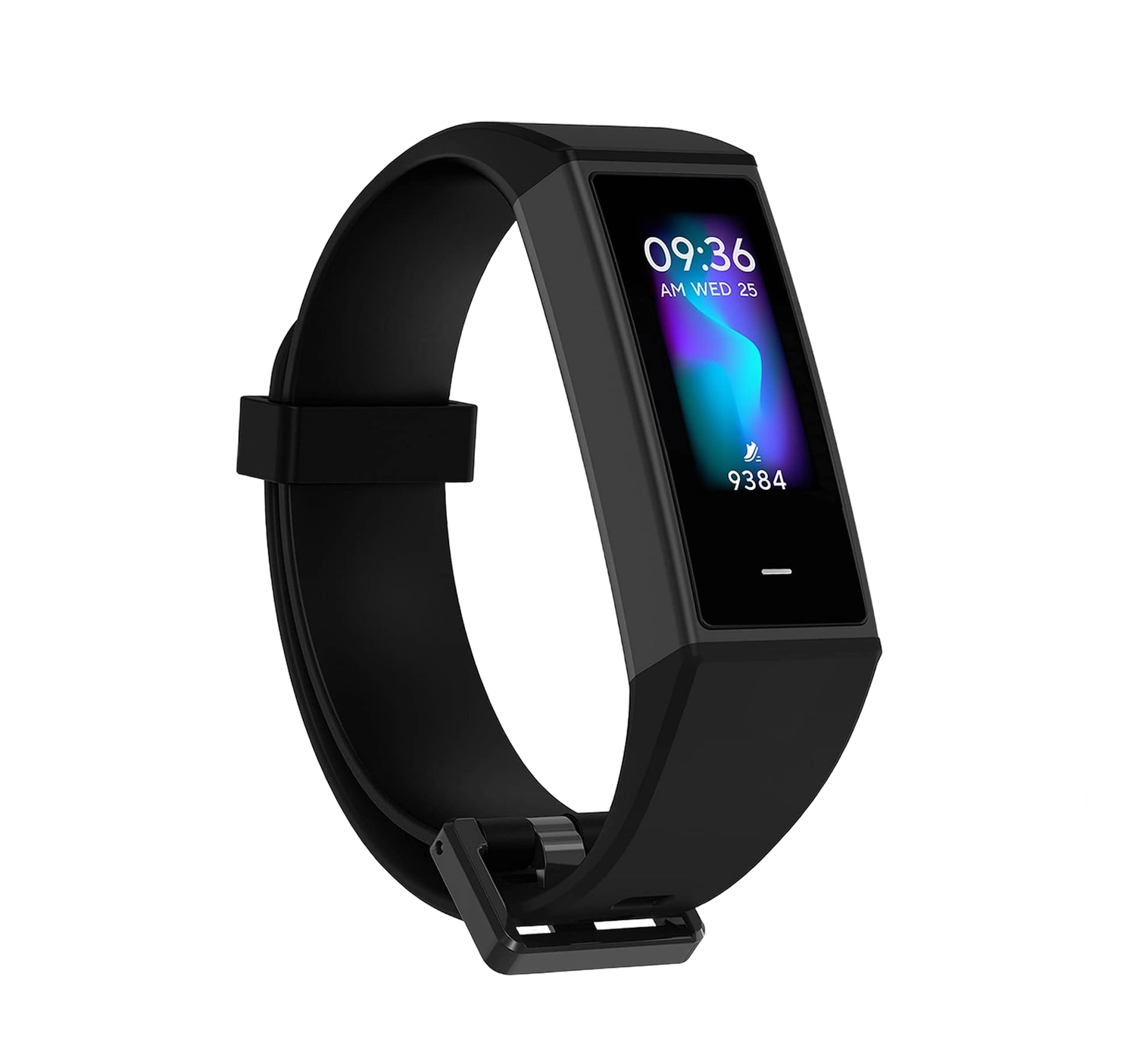
WYZE Band Specs
Display | 0.95" AMOLED (240x120) |
Battery Life | Up to 10 days |
Water Resistance | 50 Meters (IP68) |
GPS | No built-in GPS |
Voice Assistant | Alexa built-in |
Connectivity | Bluetooth |
Compatibility | iOS and Android |
Key Features:
- 0.95-inch AMOLED display (240x120) that stays sharp and colorful for a budget band
- Built-in Alexa voice assistant with a functional microphone
- Aluminum case construction for added durability over typical plastic budget bands
- Up to 10-day battery life with 50-meter (IP68) water resistance
- Bluetooth compatibility with iOS and Android, plus Wyze camera remote shutter control
The WYZE Band punches above its price class on two fronts: display quality and voice control. The 0.95-inch AMOLED panel at 240x120 resolution delivers the kind of contrast and color accuracy you typically find on bands that cost significantly more. In direct sunlight, it holds up better than most LCD alternatives in this price range. Alexa is built in with a functional microphone - you can set timers, ask weather updates, and control compatible smart devices from your wrist without reaching for your phone.
Step counting, calorie estimation, heart rate monitoring, and sleep duration logging cover the core daily metrics most everyday users actually track. The sleep data is less granular than the Inspire 3's stage-level breakdown, reporting total duration without consistent stage identification. Users who prioritize detailed sleep analysis should factor that gap into their decision. For simply confirming whether you're hitting a consistent sleep target each night, the nightly summary is sufficient.
Why We Chose This
We chose the Wyze Band as Best Budget because it pairs an AMOLED display with built-in Alexa voice control at the lowest entry price in this roundup, an unusual combination since most bands at this cost use basic LCD panels with no voice integration at all. In our research, the aluminum case construction also stood out: most budget bands use lightweight plastic, but the Wyze Band's case density is a tangible durability step up. For anyone already using Wyze cameras or smart devices, wrist control over the Wyze smart home ecosystem adds practical value well beyond basic fitness tracking.
Battery life reaches 10 days under typical use, matching the Inspire 3 and outperforming several higher-priced competitors. The aluminum case construction is worth specific attention: most bands at this price tier use plastic housings that feel hollow in hand, while the WYZE Band's case has a density that holds up better against edge knocks and drops over daily use. Users in our research frequently described the notification system for calls and texts as one of the features they tested first and kept using daily - a positive signal for everyday carry adoption.
Smart notification support for calls and texts works reliably via Bluetooth when your phone is within range. For users already in the Wyze smart home ecosystem, the camera remote shutter is a practical bonus that comes without adding any complexity to the core tracker experience.
Wyze OS is proprietary and less broadly supported than Google's Fitbit platform or Garmin Connect, which limits third-party integrations and health data portability. Users who want to move data between health apps or sync cleanly with Apple Health or Google Fit should weigh that ecosystem limitation before committing.
I weighed the lack of built-in GPS against the overall feature set and concluded it's an acceptable trade-off at this price point - but buyers who run outdoors without carrying a phone will need the Fitbit Charge 6 instead, not this band.
PROS | CONS |
0.95" AMOLED touchscreen reads clearly in direct sunlight | Wyze OS has fewer third-party integrations than Fitbit or Garmin ecosystems |
Alexa built-in with functional microphone | |
Aluminum case construction - more durable than plastic at this price | |
IP68 waterproof to 50 meters | |
10-day battery life for uninterrupted tracking | |
Smart notification support for calls and texts | |
Wyze camera remote shutter for ecosystem users |
Final Verdict: The Wyze Band proves budget trackers don't have to skip premium touches, pairing an AMOLED display with built-in Alexa at an entry-level position few competitors match. Its aluminum case adds real durability, and Wyze ecosystem owners gain extra wrist-based convenience, a smart pick beyond a basic plastic tracker.
3. Amazfit Band 7 [Best Premium] (3.9 ⭐ 6,710+ Verified Reviews)
Our Score: 9/10
The Amazfit Band 7 earns the Best Premium position with the longest battery life, largest display, and most sport modes on this list - the right choice for users who need durability and activity variety without jumping to smartwatch pricing.
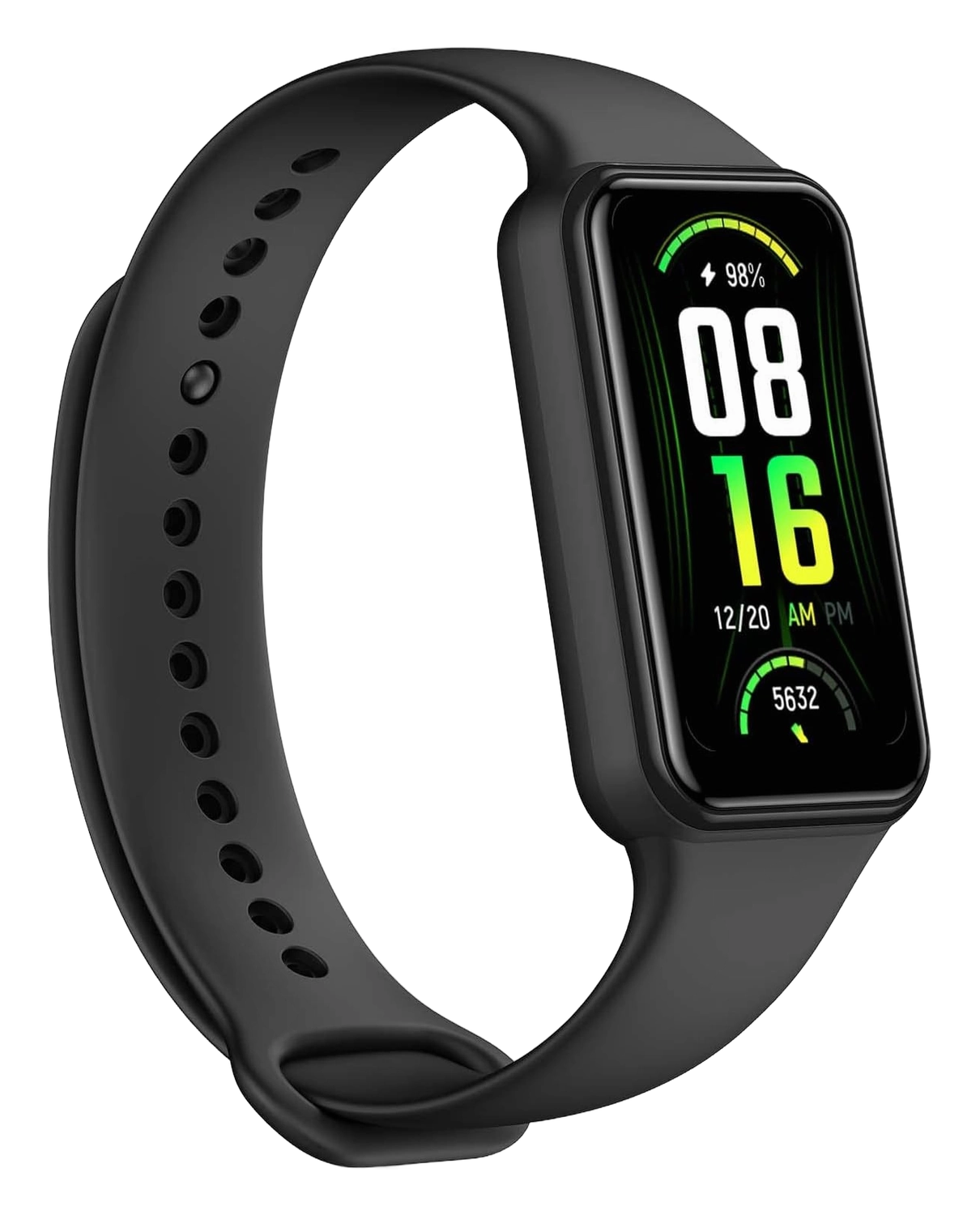
Amazfit Band 7 Specs
Display | 1.47" OLED (198x368) |
Battery Life | Up to 18-20 days |
Battery Capacity | 232 mAh |
Water Resistance | 50 Meters (5 ATM) |
GPS | Via Smartphone |
Sport Modes | 120 |
Connectivity | Bluetooth |
Compatibility | Android 7.0+, iOS 12.0+ |
Key Features:
- 1.47-inch OLED display (198x368), the largest screen in this roundup
- Up to 18-20 days of battery life on a 232 mAh cell
- 120 native sport modes for varied training and niche activities
- 5 ATM water resistance for genuine swim-safe use, not just splash resistance
- 24/7 SpO2 and heart rate monitoring with Alexa voice control via Zepp OS
The Amazfit Band 7 offers the widest feature floor among best budget fitness tracker options in this roundup. Its 1.47-inch AMOLED display is the largest here - nearly double the screen area of the Inspire 3 - with enough resolution (198x368) to make workout data readable without stopping to tilt your wrist at an angle. The always-on display option adds practical value during active sessions where raising your wrist to wake the screen interrupts your movement.
Battery life is the standout specification: 18 days in standard mode extends to 20 days with always-on display off. The Band 7 is the only tracker on this list where users consistently report going two-plus weeks between charges, eliminating the pattern where a dead battery breaks a tracking streak in week three. Users in our research frequently cited battery anxiety as the primary reason past trackers failed them long-term - the Band 7 removes that friction entirely.
Why We Chose This
We chose the Amazfit Band 7 as Best Premium because its 18-20 day battery life and largest display on this list eliminate the two most common reasons budget trackers get abandoned: dead batteries and unreadable screens. In our research, its 120 sport modes stood out well beyond the 10-20 found on most budget options, giving users with varied training schedules native mode support instead of forcing workouts into generic fitness categories. It's also 5 ATM swim-safe rather than just splash-proof, a distinction that matters for pool users and one that few budget trackers actually deliver.
120 sport modes cover virtually every activity a general fitness user would want to log, from standard walking and running through swimming (5 ATM water resistance, not just IP68 splash protection), strength training, cycling, yoga, and dozens of niche activities. The 24/7 SpO2 and heart rate monitoring run simultaneously without visibly impacting battery performance across a typical week of mixed activity.
Alexa is built in via Zepp OS, providing hands-free voice queries for reminders, timers, and basic smart home control. The Zepp companion app has a learning curve - buyers describe an initial adjustment period where finding specific health metrics in the app layout takes more navigation than expected. After that first week of familiarization, the data depth and visualization quality are well-received.
GPS routes through paired smartphone over Bluetooth, maintaining the band's slim profile and battery efficiency at the cost of phone independence during outdoor runs. For users who never run or cycle without their phone, this is a non-issue. For solo outdoor athletes, the Charge 6 is the only option on this list that solves it.
I found the 5 ATM water rating meaningful for users who want to track swim sessions, not just survive rain exposure - a genuine differentiator versus the IP68-only options lower on this list, and relevant for any buyer considering best fitness tracker for swimming as a primary use case.
PROS | CONS |
1.47" AMOLED display - largest on this list, easy to read mid-workout | Zepp OS app has a learning curve during the first week of setup |
18-20 day battery life eliminates mid-week charging anxiety | |
120 sport modes cover virtually every user activity type | |
5 ATM water resistance - swim-safe, not just splash-proof | |
24/7 SpO2 and heart rate monitoring simultaneously | |
Alexa voice control built in via Zepp OS | |
Works with Android 7+ and iOS 12+ without platform restrictions |
Final Verdict: The Amazfit Band 7 earns Best Premium by solving what kills budget trackers early: battery anxiety and cramped displays. Its 18-20 day battery, large OLED screen, and 120 sport modes make it a genuinely versatile companion, while true 5 ATM swim-safe construction sets it apart from splash-proof-only competitors.
4. MorePro AIR 2 [Best for Women]
Our Score: 8.5/10
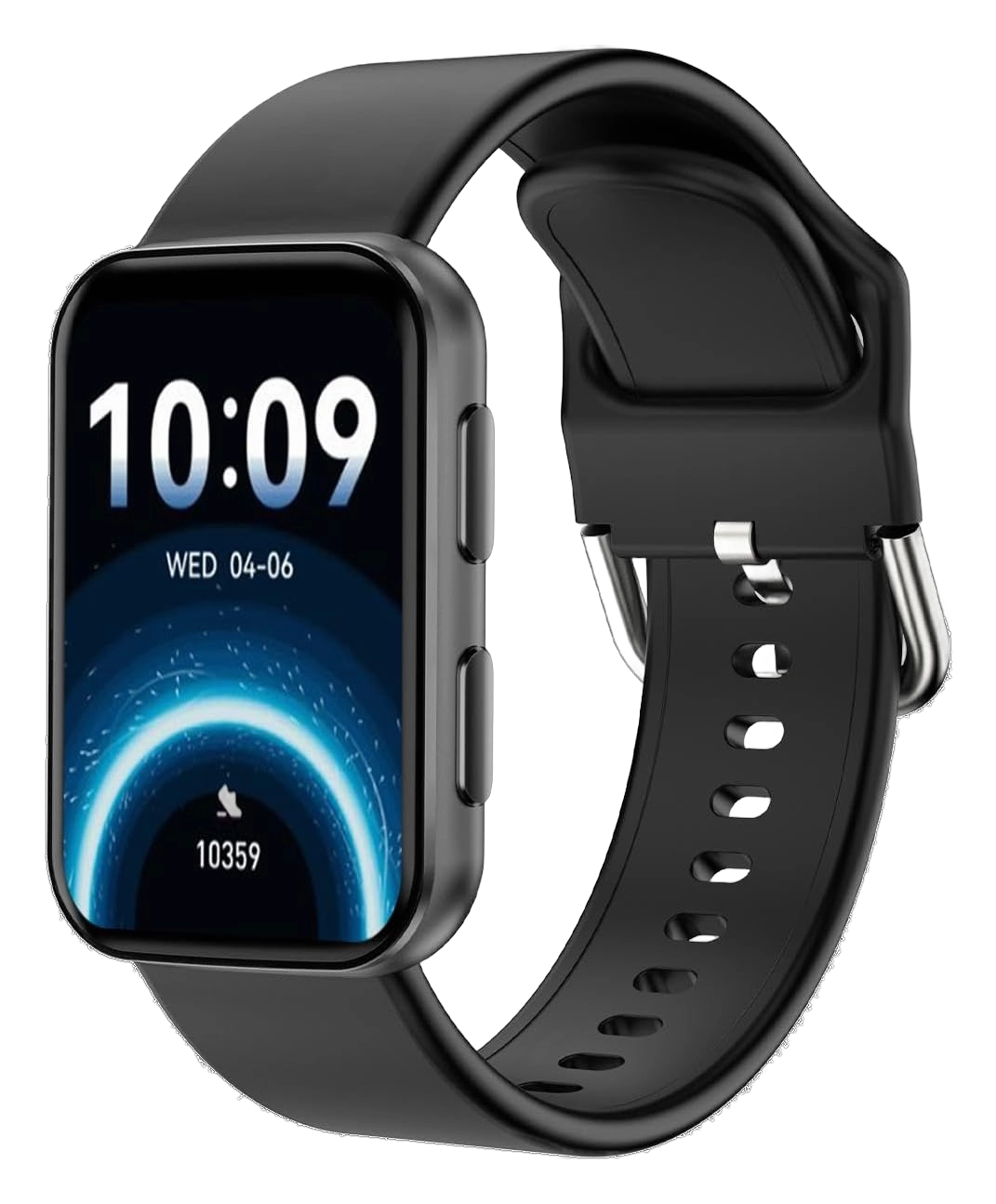
The MorePro AIR 2 is the most health-metric-dense best budget fitness tracker option on this list for women, combining menstrual cycle tracking, simultaneous blood pressure and blood oxygen monitoring, and 100-plus sport modes in a 1.57-inch display band backed by a 2-year warranty.
MorePro AIR 2 Specs
Display | 1.57" LCD |
Battery Life | Up to 7 days |
Battery Capacity | 250 mAh |
Water Resistance | IP68 |
GPS | No built-in GPS |
Sport Modes | 100+ |
Connectivity | Bluetooth |
Compatibility | Android and iOS |
Key Features:
- 1.57-inch LCD display, the largest screen among entry-level picks
- Built-in menstrual cycle tracking with no subscription required
- Triple health monitoring: heart rate, blood pressure, and blood oxygen
- Up to 7-day battery life with a fast 1.5-hour charge
- 100+ sport modes with IP68 water resistance and a 2-year warranty
For users searching for the best fitness tracker for women with dedicated cycle health support, the MorePro AIR 2 packages features that typically appear only on health bands costing two to three times more. Menstrual cycle tracking is built into the firmware rather than hidden behind a subscription tier, covering period prediction, cycle length logging, and fertility window estimation through the companion app.
Buyers who want to compare women's-specific health features across trackers at higher price tiers will find a broader selection in my guide to the top fitness tracker for women.
Triple health monitoring - simultaneous heart rate, blood pressure, and blood oxygen tracking - runs continuously throughout the day. One important note: wrist-based blood pressure readings from consumer trackers are estimates derived from pulse wave analysis, not clinical-grade cuff measurements. The AIR 2 is not a substitute for a medical-grade blood pressure monitor, but as a relative trend indicator and daily wellness awareness tool, the data has practical value for most users.
Why We Chose This
We chose the MorePro AIR 2 as Best for Women because it combines menstrual cycle tracking, blood pressure, and blood oxygen monitoring in one budget band, a health metric combination that typically only appears at higher price tiers. In our research, its 1.57-inch display was also the largest among entry-level picks, giving easier on-wrist readability during quick workout glances. It backs that up with a 2-year warranty, double the standard 1-year coverage at this price, a meaningful sign of manufacturer confidence.
The 1.57-inch LCD display is the largest among the entry-level picks here - noticeably easier to read on a quick glance than the smaller panels lower on the list. Battery life runs 7 days with a fast 1.5-hour charge time, which means a short mid-week top-up keeps the tracker running without disrupting daily wear habits. The 20mm silicone band fits most wrist sizes and swaps easily for alternative colors and materials if you want to match the band to specific outfits.
Users looking for the best value ladies fitness watch for health metric variety will find the AIR 2 delivers a compelling package - 100-plus sport modes and IP68 waterproofing cover daily and active use cases, and the 2-year warranty is double the one-year coverage standard at this price tier.
The overall rating average is the lowest on this list. Users note that the companion app receives less frequent updates than established platforms like Fitbit or Garmin Connect, with some users flagging inconsistencies in data sync reliability over longer stretches. For users who want polished, well-maintained app integration above all else, the Inspire 3 is the safer pick.
I'd prioritize the MorePro AIR 2 specifically for buyers whose primary need is cycle tracking, blood pressure trend monitoring, and a large display in one device - the feature density for women's health at this price point is not matched elsewhere in this category.
PROS | CONS |
Menstrual cycle tracking built into firmware - no subscription required | Companion app receives less frequent updates than Fitbit or Garmin platforms |
Triple health monitoring: HR + blood pressure + blood oxygen simultaneously | |
1.57" LCD display - easiest on-wrist read among entry-level picks | |
7-day battery with fast 1.5-hour charge time | |
100+ sport modes for broad activity coverage | |
IP68 waterproofing for showers, sweat, and rain | |
2-year manufacturer warranty - double the standard at this price |
Final Verdict: The MorePro AIR 2 stands out as Best for Women by bundling menstrual cycle tracking, blood pressure, and blood oxygen monitoring into one band, a combination rarely found this affordably. Its large display and 2-year warranty add practical, everyday value, making it a purpose-built option for women's health tracking.
5. Garmin vivosmart 4 [Best for Men]
Our Score: 8.5/10
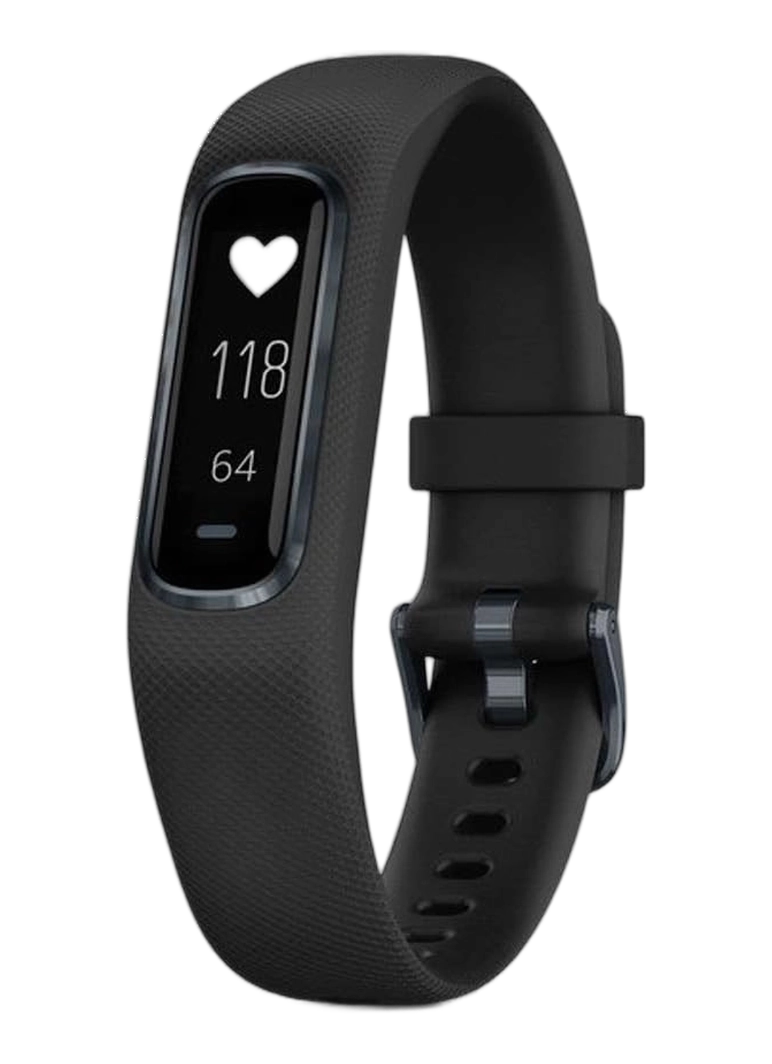
The Garmin vivosmart 4 is the most analytically capable tracker on this list, offering VO2 max estimation, Body Battery energy monitoring, and REM sleep stage tracking in a swim-safe band backed by Garmin's established performance data ecosystem.
Garmin vivosmart 4 Specs
Display | Slim OLED (auto-brightness) |
Battery Life | Up to 7 days |
Water Resistance | Swim-friendly |
GPS | Via Smartphone |
Key Analytics | VO2 max, Body Battery, HRV Stress |
Blood Oxygen | Pulse Ox (SpO2) sensor |
Sleep Tracking | Light, Deep, and REM stages |
Connectivity | Bluetooth (Garmin Connect) |
Key Features:
- VO2 max estimation, rare at this price and useful for tracking fitness progress
- Body Battery energy score combining HRV, sleep, stress, and activity load
- All-day HRV stress tracking with relax reminder alerts
- Pulse Ox overnight SpO2 monitoring plus full sleep stage breakdown (light, deep, REM)
- Swim-friendly water resistance for pool sessions without extra case protection
As a best budget fitness tracker focused on genuine performance analytics, the Garmin vivosmart 4 is the top choice for users searching for the best fitness tracker for men who train beyond basic step counting - it operates in a different analytical category than its price implies. VO2 max estimation - the most widely used benchmark for measuring cardiovascular fitness improvement over time - appears here at a price point where most competitors offer nothing more than zone-based heart rate alerts. Users consistently mention VO2 max tracking as the specific reason they chose the vivosmart 4 over similarly priced alternatives.
Buyers who want to compare men's performance trackers across all price points, not just the budget tier, will find a full breakdown in my guide to the top fitness tracker for men.
Body Battery is Garmin's proprietary energy readiness metric. It combines HRV data, sleep quality, stress levels, and recent activity load into a 0-100 score that tells you whether your body is ready to train hard or whether recovery should take priority today. This is particularly useful for best fitness tracker for weight lifting scenarios - it gives you an objective signal to avoid training at high intensity on days when cumulative fatigue has already impaired performance potential, which is a common driver of overtraining and stalled progress.
Why We Chose This
We chose the Garmin vivosmart 4 as Best for Men because it packs VO2 max estimation, Body Battery, and HRV stress tracking into one band, a performance analytics package usually reserved for Garmin's premium running watches. In our research, Body Battery stood out as the most genuinely actionable daily metric: it combines HRV, sleep, stress, and activity load into one 0-100 score that answers a specific question: should I train hard today? Though its sensors date to 2018, Garmin's ongoing algorithm development keeps those VO2 max and Body Battery scores analytically current, not run on legacy calculations.
All-day stress tracking runs via HRV monitoring with a relax reminder that fires when your stress metrics spike above baseline, providing a physiological cue to pause. The Pulse Ox sensor measures overnight blood oxygen saturation and can flag potential breathing disruptions during sleep. Sleep tracking covers light, deep, and REM stages - the full three-stage breakdown that many higher-end devices lock behind a premium subscription.
Seven-day battery life and swim-safe construction mean the tracker handles pool sessions without a case swap. Activity tracking covers walking, running, strength training, yoga, and pool swimming with Move IQ auto-detection for hands-free session logging.
Swimmers on a tighter budget who want a full comparison of waterproofing standards and swim-mode depth should check my guide to the fitness tracker for pool training.
The vivosmart 4 launched in 2018. The processor and display hardware reflect that generation - the interface is less fluid than newer competitors like the Amazfit Band 7, and the display is older technology by comparison. That's a real usability limitation for buyers who prioritize modern UI responsiveness. However, the health analytics - particularly VO2 max and Body Battery - remain current and competitive with trackers released since, because they're grounded in Garmin's ongoing algorithm development.
I found the VO2 max tracking genuinely valuable as a long-term metric: it gives you a concrete, improving number to track across 12-week training blocks, and that kind of progress feedback is rare in any best budget fitness tracker at this price range.
PROS | CONS |
VO2 max estimation - rare at this price tier and useful for tracking fitness progress | Display and processor reflect 2018 hardware - interface is less fluid than newer competitors |
Body Battery energy monitoring integrates HRV, sleep, and activity data into one daily score | |
All-day HRV stress tracking with relax reminder alerts | |
Pulse Ox overnight SpO2 monitoring | |
Full sleep stage breakdown: light, deep, and REM | |
Swim-safe construction handles pool sessions without case protection | |
Strength training rep and set auto-detection |
Final Verdict: The Garmin vivosmart 4 earns Best for Men by delivering VO2 max, Body Battery, and HRV stress analytics normally reserved for premium running watches. Body Battery turns raw data into a daily, actionable readiness score, and Garmin's current algorithms keep those insights useful even on older hardware.
6. Fitbit Charge 6 [Best with GPS]
Our Score: 8/10
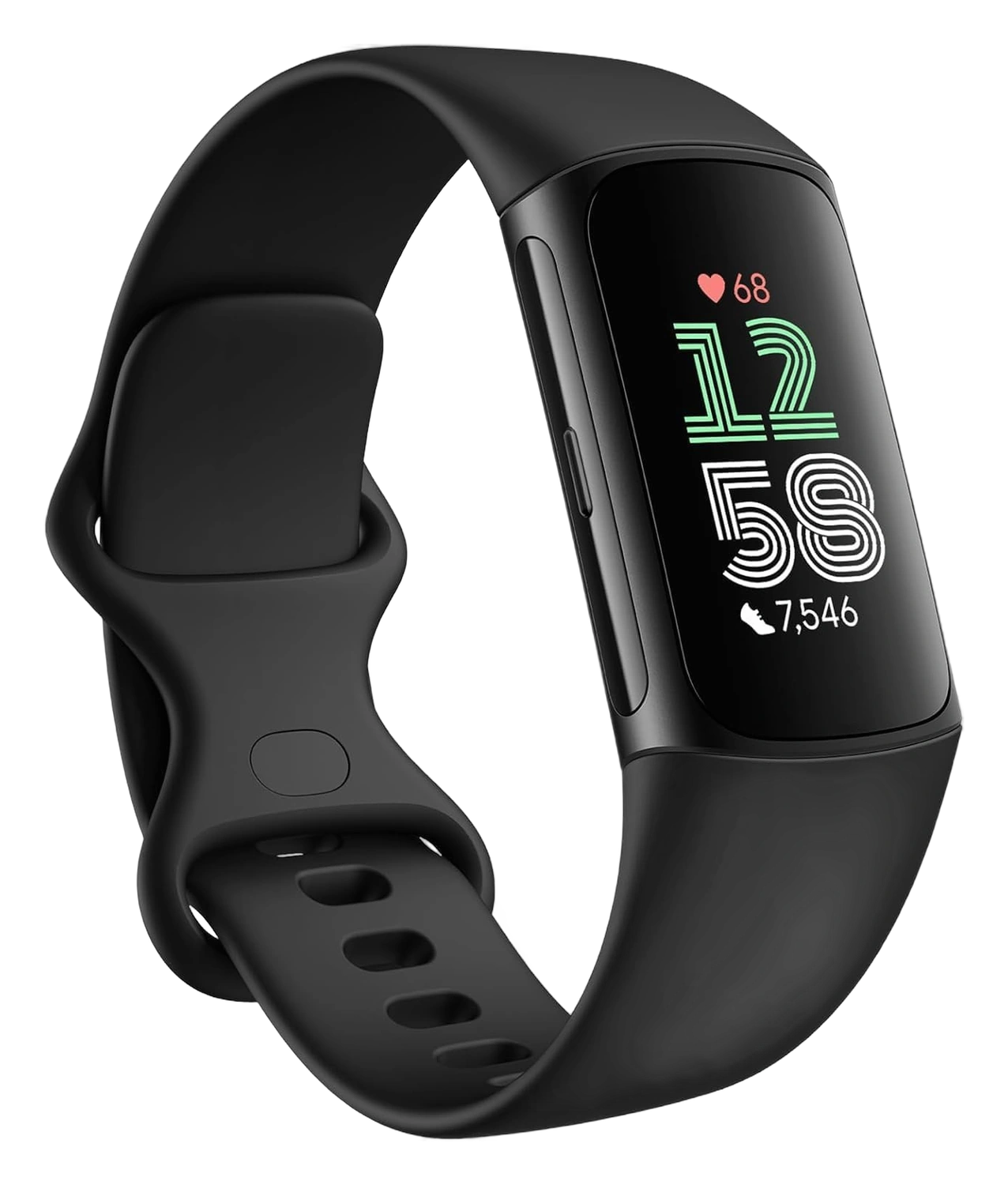
The Fitbit Charge 6 is the only best budget fitness tracker with GPS on this list, pairing on-device satellite routing with a 1,000-nit AMOLED display, Google Maps navigation, and Google Wallet contactless payments in a 7-day battery band.
Fitbit Charge 6 Specs
Display | 1.04" AMOLED (1,000 nits) |
Battery Life | Up to 7 days |
Water Resistance | 50 Meters (IP67) |
GPS | Built-in GPS |
Storage | 4 GB |
Connectivity | Bluetooth |
Compatibility | iOS 15+, Android 9.0+ |
Google Integration | Maps, Wallet (NFC) |
Key Features:
- Built-in GPS for phone-free outdoor run, hike, and cycling tracking
- 1.04-inch AMOLED display at 1,000 nits, the brightest screen in this roundup
- Google Maps turn-by-turn navigation and Google Wallet NFC payments on the wrist
- 4 GB onboard storage for phone-free music and podcast playback
- Up to 7-day battery life with 50-meter (IP67) water resistance
For users specifically searching for the best budget fitness tracker with GPS, the Fitbit Charge 6 stands apart from every other option on this list. On-device GPS eliminates the need to carry a smartphone for outdoor pace, distance, and route data - everything is captured directly by the band and synced to the Fitbit app when you return. For best fitness tracker for runners who do solo morning sessions without their phone, this is the defining specification that makes or breaks the purchase decision.
The 1.04-inch AMOLED display running at 1,000 nits is the brightest on this list by a significant margin. Bright sunlight readability is where most fitness tracker displays fail in practice - the Charge 6 is the exception, with enough nit output to remain readable in direct afternoon sun during outdoor workouts when your wrist is moving, and you have less than a second to glance at the screen.
Why We Chose This
We chose the Fitbit Charge 6 as Best with GPS because it's the only on-device satellite tracker in this roundup; for runners and cyclists who train without a phone, built-in GPS is a non-negotiable spec that no other option here provides. In our research, its 1,000-nit AMOLED display also stood out as the brightest in the group, staying readable in direct sunlight where most budget tracker displays typically fail. With Google Maps, Google Wallet, and 4GB of onboard storage, it combines turn-by-turn navigation, contactless payments, and local music playback into a genuinely phone-independent workout device.
Google Maps integration provides turn-by-turn navigation alerts on the wrist, removing the need to check your phone for directions during unfamiliar outdoor routes or urban cycling commutes. Google Wallet via NFC enables contactless payments at supported terminals - a practical feature for post-workout coffee or errands on foot that you'd otherwise need a card or phone for. Four gigabytes of onboard storage allows local music or podcast playback for fully phone-free workout sessions.
Seven-day battery with built-in GPS holds up better than most smartwatches in GPS-active mode. GPS mode specifically shortens per-session battery draw significantly - expect approximately five hours of continuous GPS active before requiring a charge. That window covers most run, hike, and cycling session durations without interruption.
Fitbit Premium subscription unlocks Daily Readiness Score and deeper health analytics after the trial period. Users who want the full feature suite should factor that recurring cost into the total ownership calculation before comparing it against non-subscription alternatives.
Water resistance is rated IP67 to 50 meters, covering swim use, showers, and outdoor weather. The 22mm band width is wider than most on this list - worth checking if a slimmer profile matters for your wrist size or everyday wear context.
I'd flag the GPS battery trade-off as the critical thing to remember here: for any run under five hours, the Charge 6 handles it without issue. Ultra-distance athletes will need a dedicated GPS running watch instead.
PROS | CONS |
Built-in GPS for phone-free outdoor run, hike, and cycling tracking | IP67 rating (not IP68) - adequate but slightly below some competitors |
1,000-nit AMOLED - most sunlight-readable display on this list | |
Google Maps turn-by-turn navigation on the wrist | |
Google Wallet NFC contactless payments at terminals | |
4 GB onboard storage for phone-free music and podcast playback | |
7-day battery holds up well even with GPS active | |
IP67 water resistance to 50 meters |
Final Verdict: The Fitbit Charge 6 earns Best with GPS as the only tracker with built-in satellite positioning, backed by the brightest display in the lineup for true sunlight readability. Add Google Maps navigation, Wallet payments, and onboard music storage, and it becomes a phone-free workout companion for runners and cyclists.
7. FITVII Screenless Fitness Tracker [Best Without Subscription]
Our Score: 7.5/10
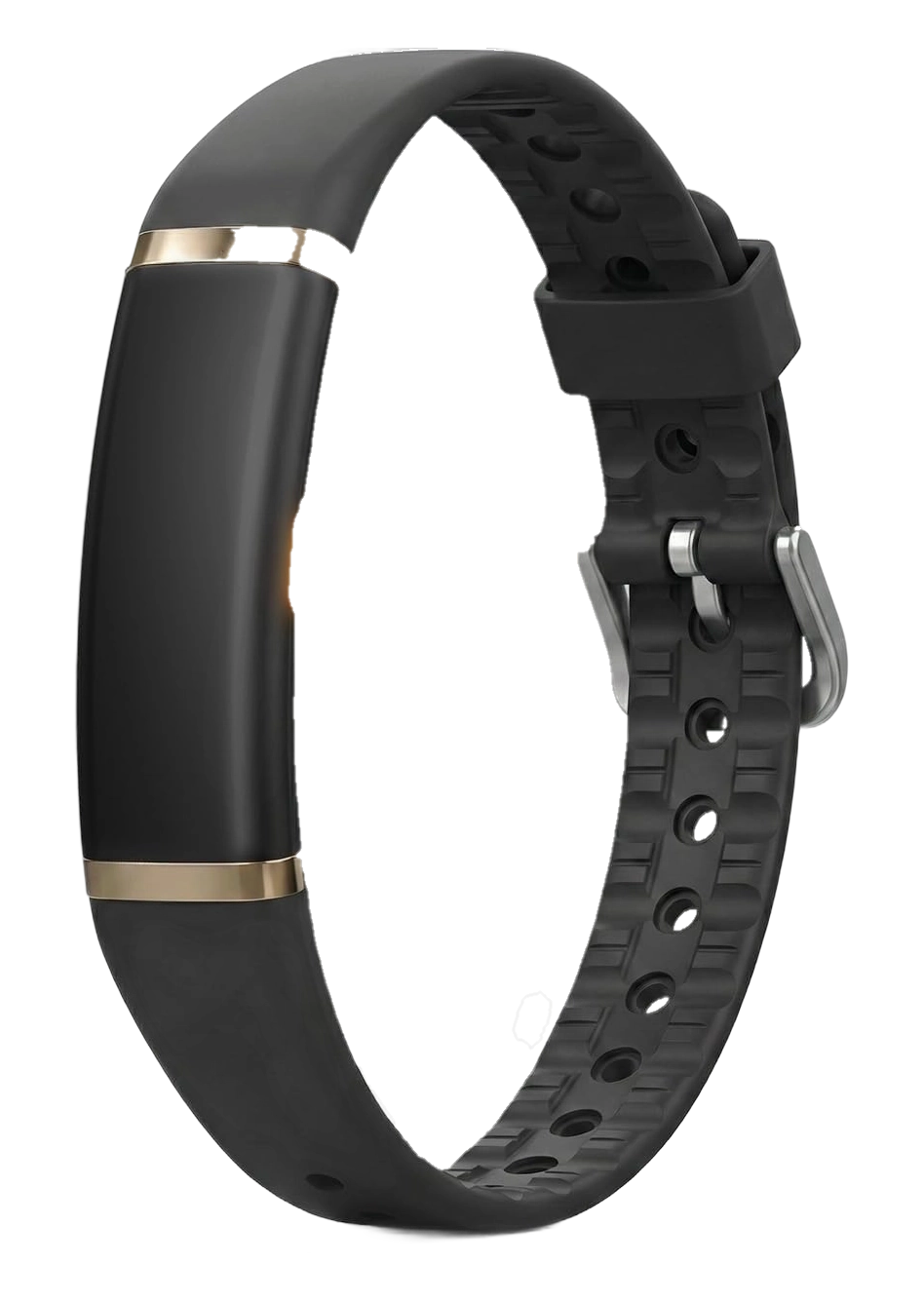
The FITVII Screenless is the most discreet budget fitness tracker on this list - no display, no subscription, and every health feature, including 24/7 heart rate monitoring, HRV sleep analysis, and menstrual tracking, permanently free through the companion app.
FITVII Screenless Fitness Tracker Specs
Display | No Display (Screenless) |
Water Resistance | IP68 |
GPS | Via Smartphone |
Connectivity | Bluetooth |
Compatibility | Android and iOS |
Health Tracking | HR, Blood Pressure, HRV Sleep, Menstrual |
Subscription | None required (all features free) |
Warranty | 1 year |
Key Features:
- Zero subscription required, all health features permanently free
- Screenless, discreet bracelet-style design that avoids drawing attention in professional settings
- 24/7 heart rate and blood pressure monitoring at no extra cost
- HRV-based sleep quality analysis with stage estimation
- IP68 waterproofing plus a dual-size band kit (S and L) included in the box
For users searching for a tracker without subscription or the best ankle fitness tracker style of discreet daily carry, the FITVII Screenless eliminates both the display and the paywall. No screen means the tracker sits as a plain band on the wrist - indistinguishable from a standard bracelet at a glance, which matters for professional or formal settings where a visible smart device on the wrist creates friction.
Every feature in the FITVII's companion app is permanently free. Heart rate monitoring, HRV-based sleep quality analysis, blood pressure estimation, step and calorie counting, menstrual cycle tracking, and multi-sport logging are all included without a subscription tier. For users who've experienced the "bait-and-switch discovery" that users in our research described - finding out core health features require a paid plan after purchase - the FITVII Screenless provides a clear contrast: the price you see is the full price, and the features listed are all unlocked.
Why We Chose This
We chose the FITVII Screenless Fitness Tracker as Best Without Subscription because every feature is permanently free, a genuine differentiator in a category where bait-and-switch subscription reveals frustrate users after purchase. In our research, its screenless design also made it the most discreet tracker on this list, looking like a standard bracelet rather than a smart device, which suits professional or formal settings where wrist technology draws unwanted attention. It backs that up with HRV-based sleep monitoring, using heart rate variability to estimate sleep quality with better stage data than accelerometer-only alternatives at this price.
The best fitness tracker without screen design carries a meaningful trade-off: all data review requires opening the app. There's no on-wrist display for quick glances during a workout, no real-time heart rate feedback during a run, and no step count check mid-afternoon without pulling out your phone. For users who track passively and review data in the evening rather than during activity, this creates no practical gap. For active monitoring users who want on-wrist feedback during sessions, it's a dealbreaker and one of the other options on this list serves that need better.
IP68 water resistance and smartphone GPS cover the essential durability and outdoor tracking needs. The dual-size band kit - S and L - ships with both sizes out of the box, eliminating the common budget tracker friction of ordering a replacement band separately before the device fits your wrist properly. As a best fitness tracker bracelet design, the screenless form factor is the most low-profile option in this roundup and wears like a standard accessory rather than a visible piece of technology.
Also, the FITVII Screenless review volume is the lowest on this list by a wide margin. The 4.4-star average across 137 verified reviews is encouraging, but it represents a small and early sample. Independent large-scale accuracy data for this band is limited compared to the tens of thousands of reviews supporting the Inspire 3 and Amazfit Band 7. I'd treat it as a strong early-adopter pick for zero-subscription discreet tracking, not yet a proven long-term reliability choice.
I noticed the product information confirms IP68 waterproofing, multi-sport mode coverage, and a 1-year warranty - adequate baseline coverage for a primary carry tracker while the review base grows into a more statistically significant sample.
PROS | CONS |
Zero subscription required - all health features permanently free | No display means all data requires checking the companion app - no on-wrist feedback during workouts |
Screenless design wears like a standard bracelet - most discreet option on list | |
24/7 heart rate and blood pressure monitoring included at no paywall | |
HRV-based sleep quality analysis with stage estimation | |
IP68 waterproof for showers, sweat, and swimming | |
Dual-size band kit (S and L) ships in the box - no separate order needed | |
Menstrual cycle tracking built into the free app experience |
Final Verdict: The FITVII Screenless Fitness Tracker earns Best Without Subscription by keeping every health feature permanently free, with no paywall surprises after purchase. Its discreet, screenless design suits professional settings, while HRV-based sleep analysis adds real data depth. A genuinely low-friction pick for anyone tired of subscription fitness trackers.
Why Fitbit Inspire 3 Might Be the Best Budget Fitness Tracker
After comparing seven devices across display quality, health metric depth, app ecosystem, battery life, and build durability, the Fitbit Inspire 3 earns the top spot for most users. The combination of reliable 24/7 heart rate monitoring, accurate sleep stage tracking, daily Stress Management Scoring, SpO2 measurement, 10-day battery life, and the 3-month Google Health Premium trial creates the most complete package in the best budget fitness tracker category without a significant sacrifice in any single critical area.
Fitbit's platform advantage compounds over time. The app's longitudinal health data visualization, the breadth of integration with third-party health apps, and the established accuracy record give the Inspire 3 a reliability foundation that newer brands at this price point haven't matched. If you prioritize ecosystem trust, long-term data continuity, and a proven support structure over any specific novel feature, the Inspire 3 is the most defensible pick on this list.
For users with specific needs the Inspire 3 doesn't fully serve - GPS independence for runners (Charge 6), premium performance analytics for training-focused users (Garmin vivosmart 4), or zero-subscription discreet carry (FITVII Screenless) - the alternatives above address those gaps directly and with equal honesty.
Shop Fitbit Inspire 3 on Amazon
How to Choose the Best Budget Fitness Tracker - Key Criteria That Actually Matter
Here is how to choose the best budget fitness tracker.
Step Counting and Activity Accuracy
Step accuracy is the most frequently cited feature in budget tracker marketing - and the most frequently misrepresented. A systematic review of consumer wearable accuracy found that step-counting variability across devices ranged from -8% to +47% in free-living conditions (1). Established brands like Fitbit with extensive validation datasets generally perform more consistently than newer entrants on accuracy for everyday step counts (2). For users looking for the most accurate fitness tracker for calories burned, the research is clear: calorie estimates derived from step data are the least accurate metric across all consumer trackers (3). Treat calorie numbers as rough directional estimates, not precise outputs.
For most users, consistent relative tracking - trending in the right direction week over week - matters more than absolute accuracy against a reference standard. Any best budget fitness tracker on this list is sufficient for progress monitoring. If you want a dedicated best calorie tracker solution, pair your tracker with a food logging app for the combined data picture that consumer health tracking actually supports.
For users combining activity and sleep data in a single device, our picks for the best fitness tracker for sleep tracking cover the options with the most accurate overnight monitoring at different price tiers.
Shoppers for whom calorie accuracy is the main deciding factor will find budget-specific picks evaluated on that metric in my calorie tracker picks guide.
If you regularly use a best fitness tracker for CrossFit or high-intensity interval training, prioritize trackers with HRV-based recovery monitoring alongside step counting - the Garmin vivosmart 4 is the standout pick for that specific use case.
Our best fitness trackers for CrossFit guide ranks the full device range against WOD-specific criteria including heart rate accuracy under high-intensity load and recovery metric quality.
Heart Rate Monitoring Reliability
Heart rate accuracy is a key consideration when evaluating any best budget fitness tracker, and wrist-based optical sensors vary meaningfully across activity types. A meta-analysis of consumer wearable heart rate accuracy found mean absolute percentage errors ranging from 1% to 11% depending on device and activity intensity (4). Seated and walking measurements are reliably accurate across most devices on this list. Accuracy degrades during high-intensity exercise where wrist motion increases optical interference - a known limitation of all wrist-based heart rate monitors, not unique to budget devices.
For budget-conscious runners who need GPS positioning alongside heart rate, our picks for the best fitness trackers for runners cover the dedicated running watches that prioritize positioning accuracy over smartwatch features.
For the best fitness watch for android with heart rate zone coaching built into the app experience, the Amazfit Band 7 and Garmin vivosmart 4 both offer the most granular HRV and zone data in this roundup. For the best fitness watch for iPhone, Fitbit and Amazfit maintain strong iOS app support with full feature parity across both platforms.
Sleep Tracking Capability
Sleep tracking is where the variance in this list is most pronounced. Consumer wearable sleep monitors show generally acceptable accuracy for total sleep duration but tend to overestimate light sleep and underestimate wake periods (5). Stage-level tracking in a best budget fitness tracker - light, deep, REM - provides useful trend data rather than clinical precision. The Fitbit Inspire 3 and Garmin vivosmart 4 deliver full stage breakdowns, while the WYZE Band provides duration-only logging.
For users who consider the best fitness tracker for sleep their primary use case, prioritize devices with heart rate variability monitoring during overnight hours - HRV data significantly improves stage estimation accuracy over accelerometer-only approaches. The Garmin vivosmart 4's Body Battery integrates nightly sleep quality into a daily energy readiness score, making sleep data directly actionable in a way most trackers on this list don't match.
Budget shoppers buying for an older family member will find picks prioritized on ease of use and health monitoring in my guide to fitness tracker picks for seniors.
GPS - Built-In vs. Phone-Tethered
Only the Fitbit Charge 6 on this list includes built-in GPS. Every other pick uses phone-tethered GPS, which means accurate distance and pace data requires carrying your smartphone during outdoor activity. For users doing outdoor runs, hikes, or cycling sessions where phone-free tracking matters, the Charge 6 is the only option in this price tier worth considering. Built-in GPS impacts active battery draw noticeably - a necessary trade-off for the independence it provides.
App Ecosystem and Compatibility
The companion app is where most best budget fitness tracker options either succeed or fail long-term. A well-designed app makes tracking data actionable; a poor one causes abandonment within the first two weeks. Users in our research consistently described the app experience - data layout, sync reliability, notification clarity - as the deciding factor between keeping or returning a tracker after initial setup.
Fitbit's app (now integrated with Google) has the widest third-party integration support and the most complete longitudinal health data visualization. Garmin Connect leads for performance analytics and training load tracking. Zepp OS on the Amazfit Band 7 is capable but requires an adjustment period. For the best fitness tracker app for android specifically, Fitbit and Garmin both offer robust native Android support with Google services integration. If you're also looking for the best fitness tracker for seniors, the Fitbit Inspire 3's simplified interface and clear app layout make it the most accessible option in this category for users less comfortable with health technology.
Should You Use a Budget Tracker at All?
Research on the behavioral impact of fitness tracking consistently shows positive effects on physical activity outcomes. A 2019 meta-analysis found that activity tracker users increased their daily step count by an average of 627 steps compared to non-tracker users. The device doesn't need to be expensive to produce this behavioral effect - the external accountability loop matters more than premium hardware. Any best budget fitness tracker on this list is sufficient to capture those benefits.
For users building out a home training setup alongside their tracker, see our guide to the best budget smart home gym for equipment recommendations that pair directly with wrist-based daily tracking.
My Overall Verdict
The best budget fitness tracker in 2026 depends on what you actually need the band to do. My top picks by use case:
- Fitbit Inspire 3 [Best for most buyers] - stress scoring, sleep stages, heart rate, SpO2, and daily activity in a 10-day battery band with the most established health app in this category. It's the most complete package without a meaningful sacrifice in any single area.
- WYZE Band [Best for price-first buyers] - the lowest price point on this list with a bright AMOLED display, Alexa built-in, and aluminum case construction that outperforms its cost.
- Amazfit Band 7 [Best for battery-first users] - 18 to 20 days between charges is a genuinely different ownership experience than a 7-day band, paired with the largest display and 120 sport modes in this roundup.
Beyond the top three: the Fitbit Charge 6 is the only best budget fitness tracker with GPS on this list for runners who train without their phone. If you want every health feature permanently free with zero subscription barrier, the FITVII Screenless solves that directly. For training analytics - VO2 max, Body Battery, HRV stress tracking - the Garmin vivosmart 4 delivers performance insights rare at this price tier.
FAQs
How much should I spend on a fitness tracker?
Most users don't need to spend more than $50-$100 to get reliable heart rate monitoring, sleep stage tracking, and step counting from a best budget fitness tracker. The features that justify higher prices - built-in GPS, advanced sports analytics, NFC payments - are worth paying for only if you use them daily. Start with the core three metrics and upgrade later based on actual usage patterns rather than anticipating needs you may not develop.
If your tracking needs have expanded beyond what sub-$100 hardware reliably delivers, my complete fitness tracker roundup covers the full market from entry-level bands to premium sport watches, with hands-on accuracy testing across every tier.
Do budget fitness trackers require subscriptions to use?
Some do, and the distinction matters more than the upfront device price. Fitbit devices work fully for core tracking without a subscription, though Fitbit Premium unlocks Daily Readiness Score and advanced analytics. The FITVII Screenless includes every feature permanently free with no paywall. The Garmin vivosmart 4 and Amazfit Band 7 also provide full feature access without recurring charges. Always verify whether the specific health metrics you want require a paid tier before purchasing.
Are cheap fitness trackers accurate?
For step counting, sleep duration, and relative heart rate trends, most options on this list are accurate enough for everyday health monitoring. Research confirms that accuracy varies by metric - step counts are most reliable, calorie estimates are least reliable, and heart rate accuracy degrades during high-intensity movement. A best budget fitness tracker is a trend tool for behavioral guidance, not a clinical measurement instrument. Expect directional accuracy, not lab-grade precision.
Buyers who want GPS, ECG, and notification-rich smartwatch features alongside their health tracking should review my top fitness watch picks, which covers 11 options across the premium wearable spectrum.
What’s the difference between a fitness tracker and a smartwatch?
A fitness tracker prioritizes health metric collection - step count, heart rate, sleep, SpO2 - in a lightweight, long-battery design. A smartwatch adds third-party apps, a full operating system, a larger display, and typically costs significantly more with shorter battery life. A best health tracker band like the Fitbit Inspire 3 or Amazfit Band 7 sits in the tracker category but includes enough smart features to reduce phone dependency for most users, covering the practical middle ground without smartwatch pricing.
Which budget fitness tracker has the longest battery life?
For best budget fitness tracker battery life, the Amazfit Band 7 leads this list with 18-20 days in standard use - the only tracker here where users consistently report two-plus weeks between charges. The Fitbit Inspire 3 and WYZE Band both deliver 10 days. The Fitbit Charge 6, Garmin vivosmart 4, and MorePro AIR 2 all run 7 days. Even 7 days meaningfully outperforms most smartwatches, which typically require nightly or every-other-night charging.
Can I use a fitness tracker without downloading an app?
No - all trackers on this list require a companion app for initial setup, data syncing, and health metric review. The band records data continuously, but meaningful access to sleep stages, stress scores, and historical health trends requires the app on your smartphone. The WYZE Band and Amazfit Band 7 additionally require the app for Alexa activation. There is no option in this category that is fully standalone at setup.
What features are actually important in a budget fitness tracker?
In a best budget fitness tracker, heart rate monitoring, sleep duration tracking, and step counting are the three core metrics that most daily users check consistently after the first month. Beyond that, companion app quality, battery life above 7 days, and IP68 water resistance matter most for long-term retention and daily wear consistency. GPS, SpO2, and subscription-gated features like daily readiness scoring are secondary unless they address a specific, regular use case in your routine - not anticipated future needs.
References:
- Evenson KR, Goto MM, Furberg RD. Systematic review of the validity and reliability of consumer-wearable activity trackers. Int J Behav Nutr Phys Act. 2015;12:159. Published 2015 Dec 18. doi:10.1186/s12966-015-0314-1
- Feehan LM, Geldman J, Sayre EC, et al. Accuracy of Fitbit Devices: Systematic Review and Narrative Syntheses of Quantitative Data. JMIR Mhealth Uhealth. 2018;6(8):e10527. Published 2018 Aug 9. doi:10.2196/10527
- Xie J, Wen D, Liang L, Jia Y, Gao L, Lei J. Evaluating the Validity of Current Mainstream Wearable Devices in Fitness Tracking Under Various Physical Activities: Comparative Study. JMIR Mhealth Uhealth. 2018;6(4):e94. Published 2018 Apr 12. doi:10.2196/mhealth.9754
- Helmer P, Hottenrott S, Rodemers P, et al. Accuracy and Systematic Biases of Heart Rate Measurements by Consumer-Grade Fitness Trackers in Postoperative Patients: Prospective Clinical Trial. J Med Internet Res. 2022;24(12):e42359. Published 2022 Dec 30. doi:10.2196/42359
- Robbins R, Weaver MD, Sullivan JP, et al. Accuracy of Three Commercial Wearable Devices for Sleep Tracking in Healthy Adults. Sensors (Basel). 2024;24(20):6532. Published 2024 Oct 10. doi:10.3390/s24206532