

Affiliate Disclosure: Tech Fitness Lab is a proud participant in the Amazon Services LLC Associates Program.
The best fitness watch in 2026 does more than count steps. It tracks heart rate with sensor precision that approaches clinical accuracy, monitors deep sleep stages, guides recovery between hard sessions, and adapts training recommendations to your actual performance data in real time. The challenge is that dozens of options make the same promise, and the features that matter to a marathon runner training for a PR look nothing like the features that serve someone just starting to build a daily activity habit.
I tested and researched 11 of the top fitness watches available right now, spanning budget fitness bands under $100, capable mid-range wearable fitness trackers, and full-featured premium GPS sport watches built for serious athletes. Every pick was evaluated on heart rate accuracy, GPS performance, and sleep tracking depth, app ecosystem quality, hardware durability, battery life under real-world use, and overall value for its specific target user. The result is a clear, data-grounded map to the best fitness watch for your goals, your training style, and your price range.
For users whose primary goal is overnight sleep stage detection and HRV monitoring rather than all-day fitness, our picks for the best fitness tracker for sleep cover the devices optimized specifically for that use case.
Our Top 11 Best Fitness Watch Picks for 2026
The best fitness watch for any individual is determined by how they train, what metrics they actually act on, and which phone they carry. A triathlete needs multi-band GPS, triathlon profiles, and race-adaptive training plans. A beginner benefits from a simple interface, a long battery, and a motivating app that does not overwhelm. A sleep optimizer needs a lightweight form factor comfortable for overnight wear and a platform that surfaces actionable insights the next morning. The 11 picks below cover every major use case, budget level, and training style, ordered by overall fit for their designated purpose.
1. Garmin Forerunner 965 [Best Overall] (4.7 ⭐, 1,990+ Verified Reviews)
Our Score: 10/10
The Garmin Forerunner 965 is the best fitness watch for runners and multisport athletes who want complete training data, accurate GPS navigation, and professional-grade analytics without carrying two devices. Built on a lightweight titanium bezel with a 1.4-inch AMOLED display at 454x454 resolution, the watch weighs just 53 grams and reads cleanly in direct sunlight. The combination of physical side buttons and touchscreen navigation gives you control over every function during active movement, with gloves on, or with wet hands mid-run. The 22mm silicone band fits a wide range of wrist sizes and holds secure through long training blocks and open-water swims.
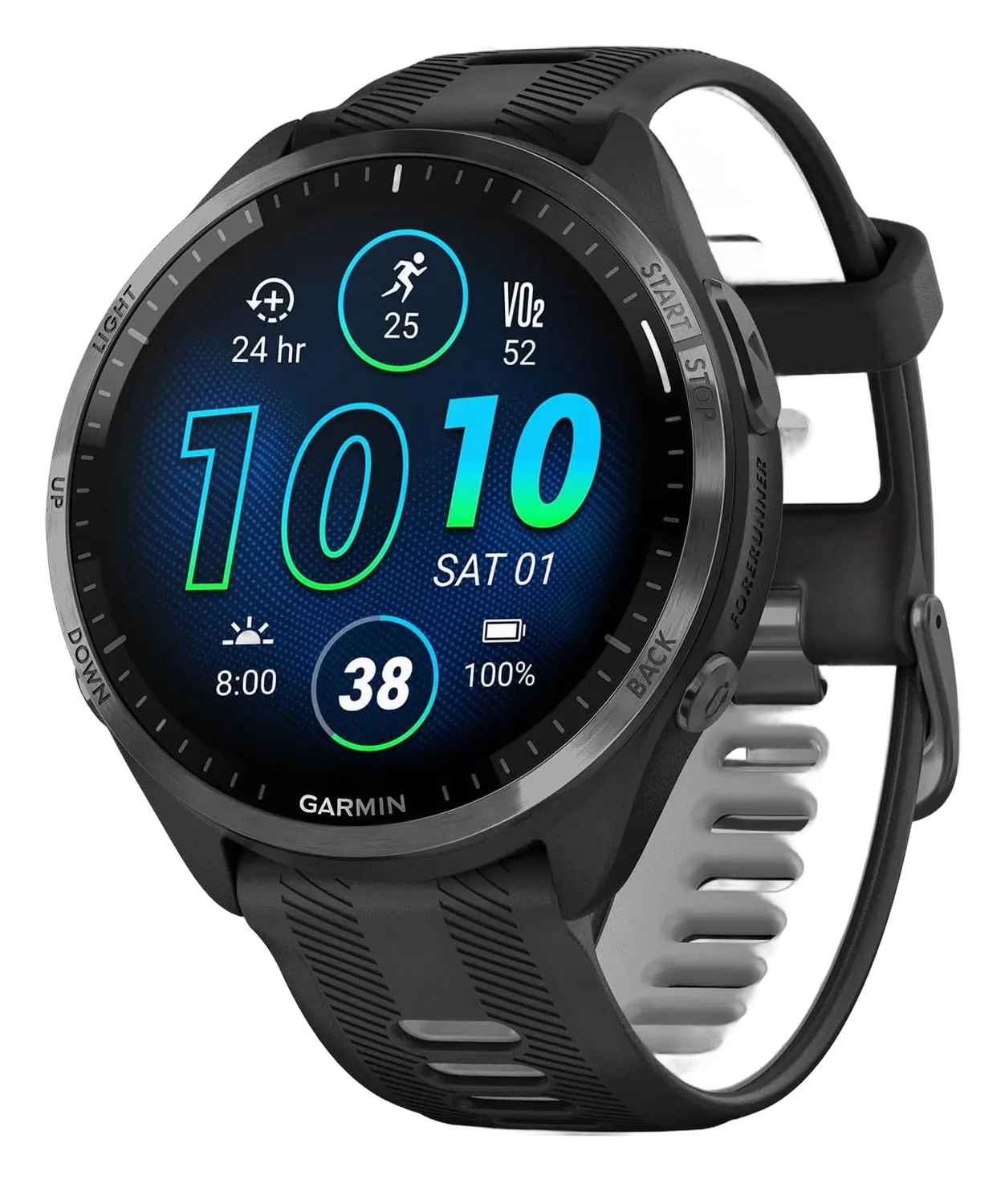
Garmin Forerunner 965 Specs
Display | 1.4" AMOLED, 454x454 px |
GPS | Multi-band (GPS, GLONASS, Galileo) |
Battery Life | Up to 23 days / 31 hrs GPS mode |
Weight | 53g |
Water Resistance | 5 ATM (50m) / IPX8 |
Storage | 32GB |
Band Width | 22mm Silicone |
Bezel Material | Titanium |
Connectivity | Bluetooth, Wi-Fi, USB |
Compatible With | iOS + Android |
Warranty | 1 year limited |
Key Features:
- 1.4" AMOLED display with 454x454 resolution for crisp, vivid visuals
- Multi-band GPS (GPS, GLONASS, Galileo) for precise tracking even in challenging environments
- Up to 23 days of battery life (31 hours in full GPS mode)
- Lightweight 53g build with 5 ATM (50m) / IPX8 water resistance
- 32GB of onboard storage plus Bluetooth, Wi-Fi, and USB connectivity; works with both iOS and Android
At the core of the Forerunner 965 is Garmin's training intelligence platform. Training Readiness synthesizes HRV status, recent sleep quality, training load, and recovery time into a single daily score that tells you precisely how hard to push each session. Body Battery monitors your energy level continuously throughout the day, responding in real time to stress inputs, caffeine, rest, and physical exertion. The watch delivers daily suggested workouts that adapt to your performance and recovery trajectory, eliminating the guesswork from training structure. For athletes in a race build, the race widget provides course details, training tips, and completion time predictions that update as fitness improves. Wrist-based running power is included without requiring a separate footpod sensor, a feature that remains unavailable on most competing sport watches.
Navigation is another defining strength. Multi-band GPS locks onto satellite signals across multiple constellations for positioning accuracy that single-frequency watches cannot match in canyon trails, dense urban blocks, or heavy forest cover. Full-color built-in maps display your route and turn-by-turn navigation directly on the wrist, removing the need to check your phone during long outdoor sessions. Connectivity covers Bluetooth, USB, and Wi-Fi for syncing data, downloading map updates, and streaming music playlists to the 32GB of onboard storage. Garmin Pay enables contactless purchases from the wrist for post-workout coffee stops.
Why We Chose This
We chose the Forerunner 965 because it stacks four advantages that rarely appear together on one watch: multi-band GPS that resists drift in urban canyons and dense forest, a Training Readiness score that folds HRV status, sleep quality, and training load into one daily go or pull-back signal, wrist-based running power that replaces a chest strap or footpod, and full-color maps for turn-by-turn navigation on race day. In our research, the 23-day smartwatch battery is the longest of any watch on this list, which means weekly athletes go a full training block without a mid-week charge. That combination of precision, intelligence, and endurance is why it earns the top spot.
Health monitoring extends beyond pure athletic metrics. HRV Status provides a 5-day average view of heart rate variability trends to contextualize your morning readings within your baseline range. VO2 max estimation updates with each run, adjusting for heat and altitude to reflect actual physiological readiness rather than environmental conditions. Women's Health Tracking integrates menstrual cycle and pregnancy data into the recovery and training readiness algorithms. Sleep monitoring delivers detailed stage data, sleep score, and Pulse Ox readings, all surfaced through the Garmin Connect app in the morning briefing format. The watch is water resistant to 50 meters and handles open-water swimming, pool sessions, and saltwater exposure without special treatment.
Battery life of 23 days in smartwatch mode is the Forerunner 965's most practical advantage over Wear OS and Apple Watch competitors. GPS-mode runtime covers ultra-distance events and multi-day bike tours before a charge is needed. The 1-year limited warranty is standard for Garmin's premium lineup. Garmin Connect provides one of the richest data visualization platforms in the fitness wearable market, and Connect IQ opens access to third-party apps, training tools, and data fields that customize the experience beyond factory settings. For serious athletes who want a best fitness watch that thinks as hard as they do, nothing on this list comes closer. I found the Training Readiness score to be the single most actionable daily metric I have encountered across this entire product category.
PROS | CONS |
Multi-band GPS reduces positioning error in urban canyons, forests, and technical trail terrain | Feature depth has a meaningful learning curve for first-time dedicated GPS sport watch users |
Training Readiness score integrates HRV, sleep quality, and training load for daily session-timing guidance | |
23-day smartwatch battery covers a full training block without any mid-week charging stop | |
Wrist-based Running Power delivers a consistent training effort signal across gradient changes | |
Full-color built-in maps for turn-by-turn navigation on race courses and unfamiliar routes | |
32GB onboard storage holds a full music library alongside training logs without overflow | |
Titanium bezel at 53g keeps wrist weight minimal despite the larger 1.4" AMOLED display |
Final Verdict: Multi-band GPS and Training Readiness intelligence make the Forerunner 965 the most complete training tool on this list. Add a 23-day battery and full-color maps, and no other watch here matches this balance of accuracy, insight, and endurance for serious multisport athletes.
2. Fitbit Inspire 3 [Best Budget] (4.2 ⭐, 25,000+ Verified Reviews)
Our Score: 9/10
The Fitbit Inspire 3 is the best budget fitness watch for anyone who wants reliable health tracking without the complexity or cost of a full smartwatch. At 39.32 x 18.6mm with a 0.76-inch OLED display, it sits so low on the wrist that most wearers forget it is there within the first few hours of use. The rectangular resin case and silicone band are lightweight and comfortable enough for all-day and overnight wear without adjustment, which is exactly what consistent 24-hour health monitoring requires. The Inspire 3 has the broadest user validation base of any watch on this list, making it the most field-tested budget fitness band available.
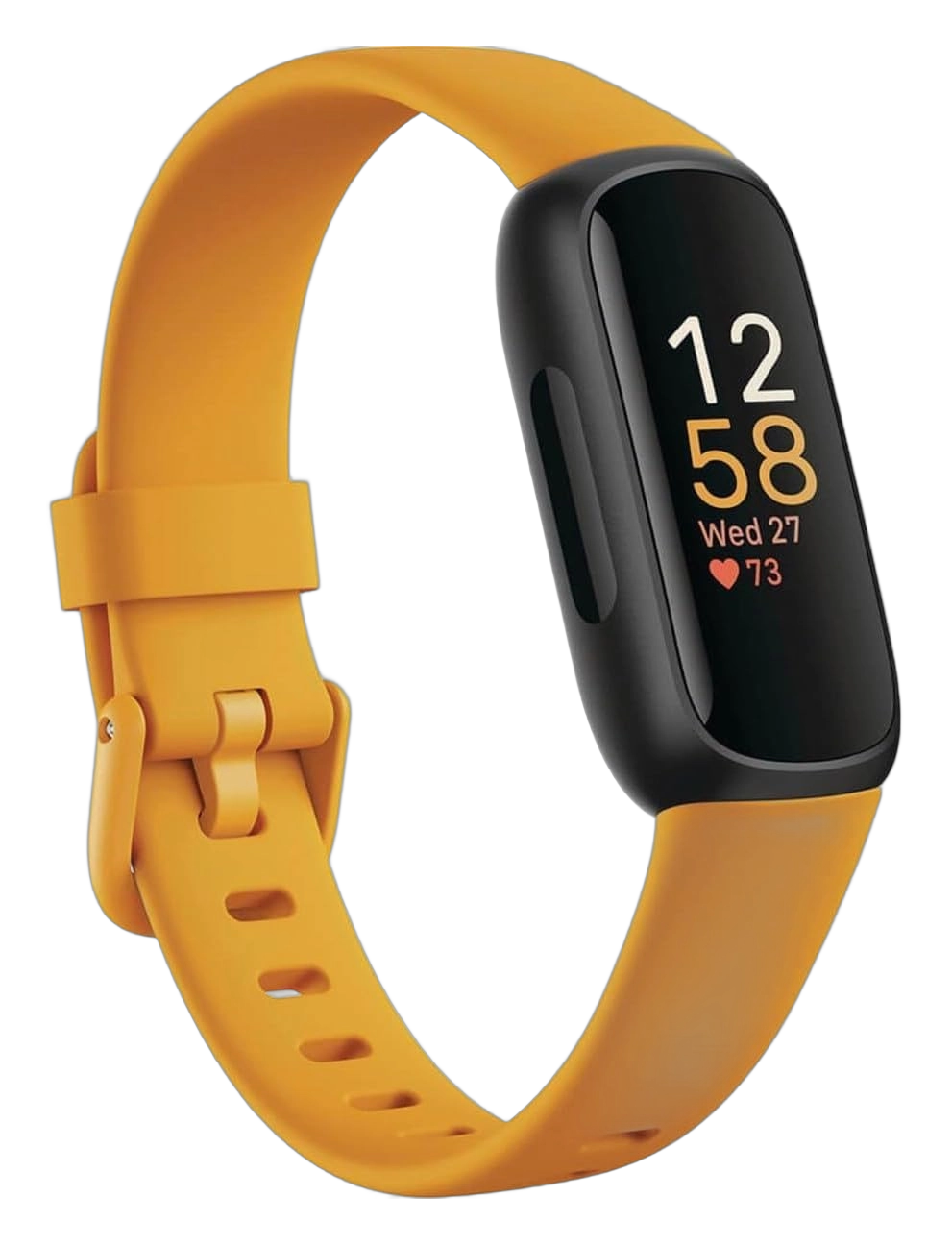
Fitbit Inspire 3 Specs
Display | 0.76" OLED, Rectangular |
GPS | Via smartphone |
Battery Life | Up to 10 days |
Water Resistance | IP68 |
Storage | 32MB |
Connectivity | Bluetooth |
Compatible With | iOS 16.4+ / Android 11.0+ |
Case Material | Resin |
Dimensions | 39.32 x 18.6 x 11.75mm |
Warranty | 1 year limited |
Key Features:
- 0.76" rectangular OLED display
- Smartphone-connected GPS for location tracking during workouts
- Up to 10 days of battery life on a single charge
- IP68 water resistance rating
- Bluetooth connectivity, compatible with iOS 16.4+ and Android 11.0+
Core tracking covers the health fundamentals in more depth than the price suggests. Active Zone Minutes replaces raw step counts with time spent in fat burn, cardio, and peak heart rate zones, which gives a far more accurate picture of workout quality and cardiovascular benefit than passive step totals. Each day's Active Zone Minutes display clearly against a weekly goal, creating a sustainable framework for building a cardio habit. The Stress Management Score arrives each morning as a composite reading from heart rate variability, sleep patterns, and activity data, helping users recognize when they need to pull back or add recovery. Blood oxygen monitoring and skin temperature tracking throughout the night flag overnight health changes that users can track over time. For a best fitness watch at this price tier, the health data depth is genuinely impressive.
Fitbit's sleep platform is one of the platform's strongest assets. The Inspire 3 tracks time spent in light, deep, and REM sleep stages with the same underlying algorithm that drives Fitbit's higher-end devices. The morning sleep score condenses the overnight data into a single readable number with commentary explaining which factors pulled the score up or down. Skin temperature variation tracked overnight adds an additional health signal that correlates with illness, stress, and menstrual cycle phases. The six-month Google Health Premium trial included with purchase unlocks advanced sleep analysis, personalized breathing sessions, and a deeper stress management program during the critical early weeks of building a fitness tracking habit.
Why We Chose This
We chose the Inspire 3 because it delivers health tracking depth most budget bands skip, starting with Active Zone Minutes, which replaces raw step counts with real time in fat burn, cardio, and peak heart rate zones. In our research, the daily Stress Management Score stood out as the most actionable number on the watch, synthesizing HRV, sleep, and activity into a single read on when to push and when to recover. Its 10-day battery is the longest we found on any slim fitness band at this price tier, and IP68 water resistance means pool swims and rainy runs never require special prep.
Battery life reaches 10 days on the 0.3mAh cell, far outpacing Apple Watch, Galaxy Watch, and Pixel Watch alternatives at multiple times the price. The most common frustration with high-end fitness smartwatches is weekly charging; the Inspire 3 removes that friction entirely for the first two weeks of use. The watch does not include onboard GPS, instead connecting to your phone's signal for route mapping during outdoor workouts. Walkers, cyclists using stationary bikes, and home gym users rarely notice the absence. Runners who want pace and route data while leaving their phone behind will find it limiting and should consider the Fitbit Charge 6 instead. Connectivity is Bluetooth only, with IP68 water resistance clearing it for pool swimming and wet weather.
The Fitbit app experience is consistently rated among the cleanest and most accessible in the wearable market. Weekly reports summarize health trends across activity, sleep, and stress in plain language, and the long-term trend views in Google Health allow users to track their health trajectory across months and years. The Inspire 3 is compatible with iOS 16.4 and above and Android 11.0 and above. For anyone who wants a durable, accurate fitness band with proven sensors, a 10-day battery, and a health platform that motivates habit formation without overwhelming new users, the Inspire 3 delivers more honest value per dollar than any other best fitness watch on this list. I'd recommend it as a first wearable for anyone who has never built a consistent tracking habit.
PROS | CONS |
10-day battery provides the longest standby of any slim fitness band at this price tier | No built-in GPS means outdoor workout distance requires phone carry or connected phone GPS |
Active Zone Minutes replace passive step counts with clinically relevant heart rate zone time | |
Stress Management Score synthesizes HRV, sleep, and activity into one daily composite reading | |
IP68 water resistance covers pool swimming and shower use without removal | |
Sleep stage tracking with light, deep, and REM detection at the same algorithm quality as premium Fitbit devices | |
Lowest price on this list for users who want reliable health tracking without advanced features | |
Beginner-friendly Fitbit app with readable daily reports and long-term trend visualization |
Final Verdict: For users who want real health data without a subscription tax, the Inspire 3 is hard to beat. A 10-day battery, Active Zone Minutes, and a Stress Management Score cover the fundamentals at the lowest price on this list.
3. Apple Watch Series 10 (46mm GPS) [Best Premium] (4.7 ⭐, 5,900 Verified Reviews)
Our Score: 9/10
The Apple Watch Series 10 is the best premium fitness watch for iPhone users who want best-in-class health monitoring, a refined daily-wear design, and the deepest iOS integration available on a wrist device. Apple redesigned the Series 10 to be the thinnest Apple Watch ever produced, with the 46mm case measuring just 9.7mm at its thickest point. Despite the slim profile, the always-on Retina display is larger and brighter than any previous Apple Watch, with wide-angle viewing that lets you read data at oblique angles without raising your wrist. The titanium and aluminum case options cover both everyday and premium hardware preferences, and the watch functions comfortably in water to 50 meters of depth.
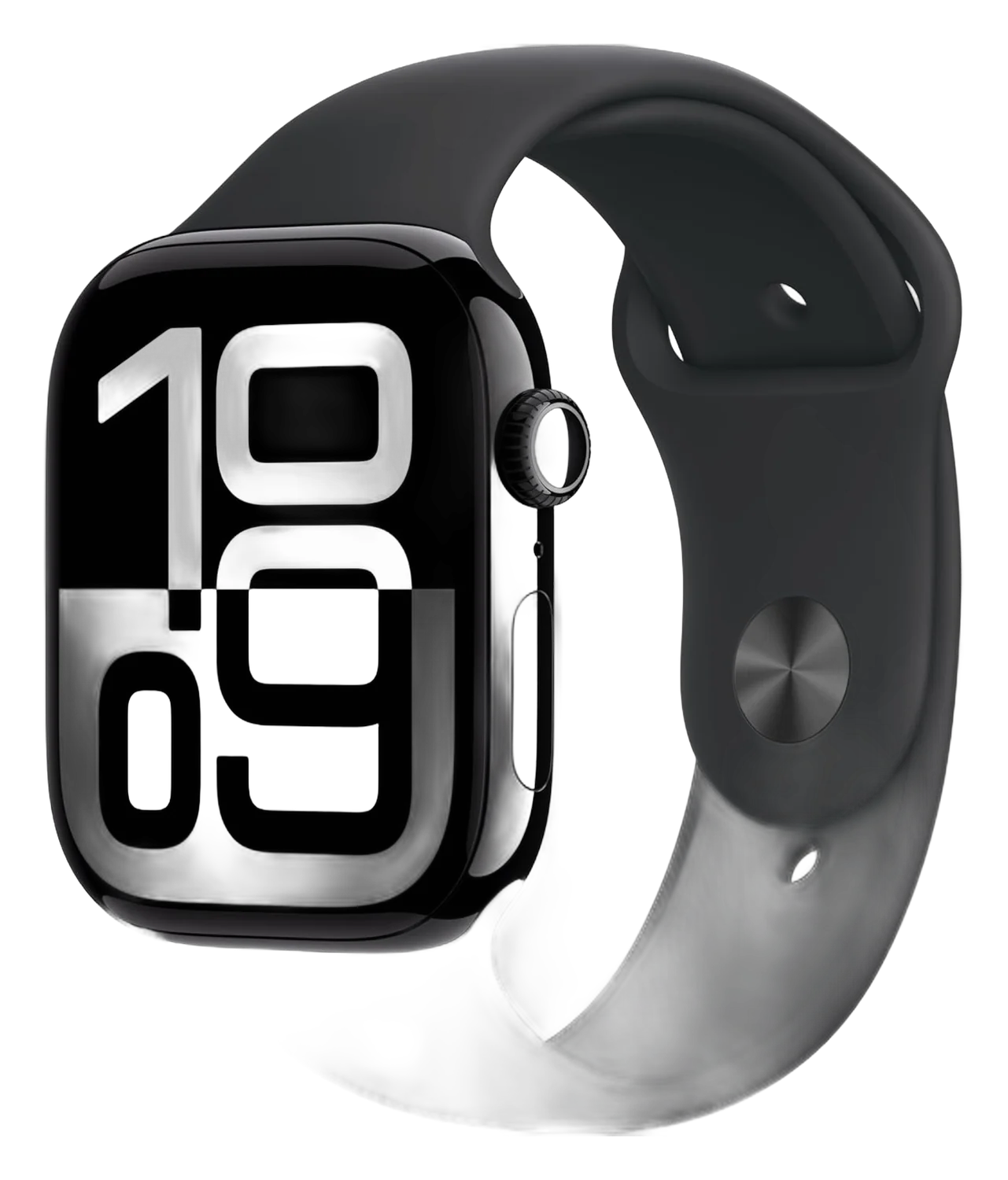
Apple Watch Series 10 Specs
Display | 46mm Always-On Retina |
GPS | Built-in GPS |
Battery Life | Up to 18 hours |
Water Resistance | 50m / 5ATM |
ECG | Yes (FDA-cleared) |
Sleep Apnea Detection | Yes |
OS | watchOS |
Compatible With | iPhone only (iOS 17+) |
Connectivity | Bluetooth, Wi-Fi, UWB |
Warranty | 1 year limited |
Key Features:
- 46mm Always-On Retina display for constant at-a-glance visibility
- Built-in GPS for accurate outdoor tracking
- FDA-cleared ECG app for on-wrist heart health checks
- Sleep apnea detection for overnight health monitoring
- Up to 18 hours of battery life; runs watchOS and pairs exclusively with iPhone (iOS 17+)
Health monitoring on the Series 10 represents the broadest health sensor suite in consumer wearables available in 2026. The ECG app captures a single-lead electrocardiogram reading in 30 seconds and delivers an on-screen result indicating normal sinus rhythm or signs of atrial fibrillation. Sleep apnea detection, new to the Series 10, works by measuring disruptions in breathing regularity using the accelerometer and heart rate data overnight, then alerting users who show patterns consistent with moderate to severe sleep apnea to discuss the findings with a physician. Crash detection and fall detection operate as passive safety features that trigger emergency calls automatically after a detected impact with no response from the user. For athletes training alone in remote areas, these features add a layer of safety that pure sports watches do not provide.
Workout tracking covers more than 60 exercise types with automatic start and stop detection for common activities including running, cycling, swimming, rowing, and HIIT. The fitness app surfaces real-time metrics including heart rate zone, active calories, pace, and distance for each activity type in a clear display readable during intense movement. Apple's dual-frequency GPS delivers accurate outdoor route mapping for runners, cyclists, and hikers. The watch syncs all workout data to Apple Health, which serves as an integration hub for third-party nutrition apps, physical therapy platforms, and connected health devices including smart scales, blood pressure monitors, and continuous glucose monitors. Apple Fitness+ subscribers access guided workouts across yoga, cycling, strength, and HIIT that display live heart rate metrics from the watch on screen.
Weightlifters who want the same gym equipment integration alongside rep logging and HRV recovery scoring will find dedicated recommendations in our top fitness tracker for weight lifting guide.
Why We Chose This
We chose the Apple Watch Series 10 because it pairs two clinically meaningful tools, ECG and sleep apnea detection, in a single consumer device, both new or significantly improved for this generation. In our research, the Always-On Retina display proved to be the largest and brightest Apple Watch screen to date, staying readable at oblique angles without a wrist raise mid-workout. The 9.7mm case is the thinnest Apple Watch ever built, which means it moves from a business meeting straight to the gym without a second device, and the Apple Health ecosystem still connects the widest range of third-party nutrition, sleep, and therapy platforms of any fitness watch on this list.
The watchOS ecosystem provides the widest third-party app selection of any smartwatch platform, covering everything from Strava and Garmin Connect imports to mindfulness apps, health record access, and emergency services. Siri integration on the Series 10 is faster and more contextually accurate than previous generations, responding to workout-related queries, timers, and health questions without dropping the current activity display. The Series 10 is exclusive to iPhone and requires a device running iOS 17 or later.
Battery life remains the primary trade-off. The Series 10 delivers approximately 18 hours of all-day use under typical mixed conditions, requiring a nightly charging routine. For users who already charge overnight, this is an invisible constraint. For backpackers, endurance athletes, or travelers without reliable charging access, a multi-day fitness watch serves better. The Apple Watch is also the highest-priced option on this list. At premium pricing, the Series 10 is the definitive best fitness watch for any iPhone user who prioritizes health monitoring technology, daily wearability, and Apple ecosystem integration over GPS battery endurance. I weighed the sleep apnea detection and ECG combination as the most clinically meaningful feature pairing available in a consumer smartwatch.
PROS | CONS |
ECG app (FDA-cleared) detects atrial fibrillation signs in 30 seconds with 30-second result delivery | iPhone-only compatibility excludes all Android users from the platform entirely |
Sleep apnea detection is the only consumer watch feature that screens for breathing disruption overnight | |
Always-On Retina display is the largest and brightest Apple Watch screen to date | |
Apple Health ecosystem integrates the widest third-party health app network of any smartwatch platform | |
Crash and fall detection provide passive safety coverage for solo athletes in remote environments | |
Thinnest Apple Watch ever at 9.7mm - sits comfortably under shirt cuffs for professional settings | |
watchOS app library offers the broadest selection of fitness, training, and health apps available |
Final Verdict: The Apple Watch Series 10 pairs FDA-cleared ECG and sleep apnea detection in the thinnest case Apple has built. For iPhone owners who want the deepest health-monitoring smartwatch available, nothing else on this list integrates as tightly with Apple Health.
4. Samsung Galaxy Watch 8 (2025) [Best for Women]
Our Score: 8.5/10
The Samsung Galaxy Watch 8 2025 is the best fitness watch for women who want a compact, lightweight wearable with advanced health coaching, precise GPS, and an AI-powered feature set tuned to female health patterns. The 40mm cushion-shaped case sits on the wrist at just 30 grams, making it comfortable enough for overnight sleep tracking and gym sessions without adjustment. The 1.3-inch AMOLED display reaches a peak of 500 nits, providing readable metrics in outdoor sunlight for workouts. The rubber band included with the base model is secure during exercise, and Samsung's band ecosystem offers quick-release interchangeable options for different activities or style preferences.
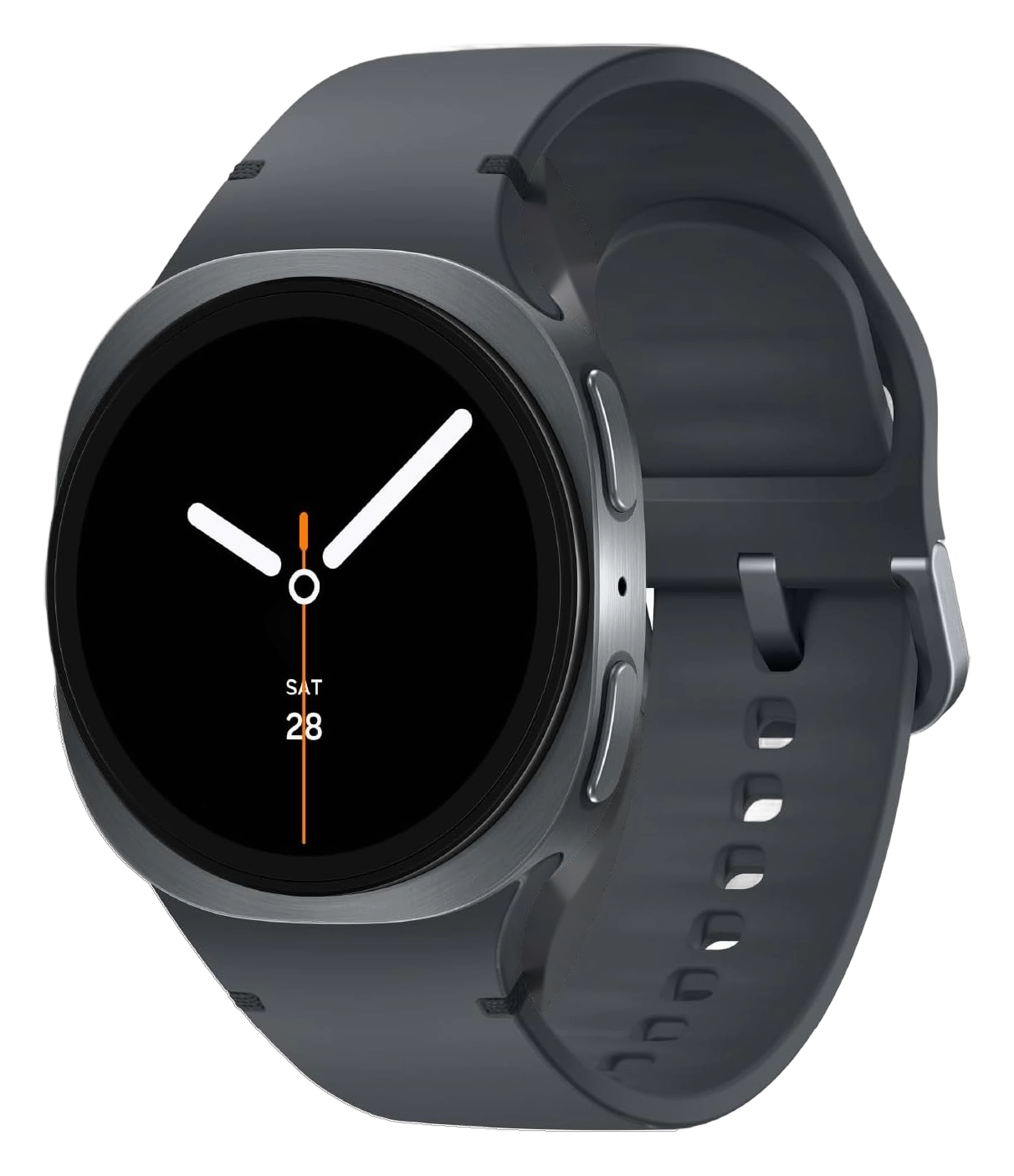
Samsung Galaxy Watch 8 Specs
Display | 1.3" AMOLED, 240x240, 500 nit |
OS | Wear OS powered by Samsung |
GPS | Dual-frequency (L1+L5) |
Battery | 325mAh / ~2 days |
Weight | 30g |
Water Resistance | 5ATM + IP68 |
Storage | 32GB |
Band Material | Rubber |
Compatible With | Android only |
Warranty | 2 years |
Key Features:
- 1.3" AMOLED display at 500 nits for bright, clear readability
- Dual-frequency (L1+L5) GPS for more accurate location tracking
- 325mAh battery lasting approximately 2 days per charge
- Lightweight 30g design with 5ATM + IP68 water resistance
- Runs Wear OS powered by Samsung; compatible with Android only
Advanced Sleep Coaching is the Galaxy Watch 8's standout feature for health-conscious women. Rather than surfacing a basic sleep score, the watch runs a five-session sleep analysis program that identifies your personal sleep patterns across a one-week baseline, flags specific improvement areas, and delivers a tailored sleep coaching guide with actionable changes. Energy Score is a daily recovery metric that synthesizes sleep quality, heart rate variability, and physical activity levels into a single indicator, similar in concept to Garmin's Body Battery but tuned to Samsung's health model. Running Coach provides real-time audio and haptic guidance during outdoor runs, covering cadence, stride length, and ground contact time in a coaching framework that previously required dedicated Garmin hardware to access.
Sensor accuracy benefits from L1+L5 dual-frequency GPS, which captures route position with significantly higher fidelity in dense urban environments and under tree cover compared to single-frequency alternatives. This is particularly relevant for city-based runners whose routes pass through high-rise blocks where GPS signals reflect and create positioning error. Wear OS powered by Samsung delivers Google Maps turn-by-turn navigation directly on the wrist, Samsung Pay for contactless transactions, and full Google assistant integration. BioActive sensor technology measures heart rate, SpO2, and electrodermal activity continuously, with stress detection algorithms that flag elevated periods throughout the day.
Why We Chose This
We chose the Galaxy Watch 8 because its 5-session Sleep Coaching program runs a full week of sleep analysis before delivering a personalized coaching guide, going far beyond a basic nightly score. In our research, the dual-frequency L1+L5 GPS held position accuracy in dense urban blocks and heavy tree cover that single-frequency competitors at this case size cannot match, and Running Coach adds real-time cadence and ground contact feedback that used to require a premium Garmin sport watch. The Energy Score is the feature we weighed most heavily, since it synthesizes sleep, HRV, and daily activity into one readiness number that tells women exactly how hard to train each day.
The Samsung Health platform on the Galaxy Watch 8 includes menstrual cycle tracking that connects directly to activity and heart rate data, identifying patterns between cycle phase and training performance. Heart rate zone training, calorie burn estimation, and detailed workout summaries sync to Samsung Health with export options for third-party fitness platforms. Body composition analysis using bioelectrical impedance provides skeletal muscle mass, body fat percentage, and body water estimates during dedicated measurement sessions. Water resistance to 5ATM and IP68 covers pool swimming, open water, and inclement weather training.
Buyers who want cycle-aware health monitoring in a band form factor rather than a full smartwatch can compare dedicated options in my guide to the fitness tracker for women.
Battery performance from the 325mAh cell covers approximately two days under daily mixed use including sleep tracking and workout logging, which is the category standard for feature-rich Wear OS smartwatches. Fast charging helps offset the recharge frequency. The two-year warranty included with the Galaxy Watch 8 exceeds Garmin and Apple's standard one-year coverage and reflects Samsung's platform commitment. Android-only compatibility limits its appeal to iPhone users. For active women who train seriously, manage recovery with data, and want coaching intelligence built around female health patterns, this is the most balanced best fitness watch for women in 2026. I found the Energy Score and Sleep Coaching combination to deliver more contextual recovery guidance than most competing platforms offer at this price tier. A broader comparison across all budgets and use cases appears in the dedicated best fitness watch for women guide.
PROS | CONS |
L1+L5 dual-frequency GPS improves route accuracy in dense urban environments and heavy tree cover | Android-only compatibility excludes iPhone users from the Wear OS and Samsung Health ecosystem |
5-session Sleep Coaching delivers a personalized weekly sleep improvement guide beyond basic nightly scores | |
30g ultra-lightweight is the lightest watch on this list at 40mm case size | |
Running Coach guidance provides real-time pace and form feedback during active sessions | |
Energy Score synthesizes sleep, HRV, and activity into one daily training readiness indicator | |
32GB storage holds full music library, apps, and health data without constraint | |
2-year manufacturer warranty exceeds the 1-year standard across most competing smartwatches |
Final Verdict: The Galaxy Watch 8 earns its spot through Energy Score and 5-session Sleep Coaching, two features built specifically around recovery patterns. Dual-frequency GPS and a 2-year warranty make it the most complete Android option for women who train seriously.
5. Google Pixel Watch 4 (41mm) [Best for Android]
Our Score: 8.5/10
The Google Pixel Watch 4 is the best fitness watch for Android users who want Google's most capable health hardware, native Gemini AI integration, and the deepest Fitbit health data pipeline in a smartwatch. Running Wear OS 6.0 on Google's own silicon, the 41mm watch delivers consistently fast app performance and a first-of-its-kind Actua 360 display rated at 3,000 nits peak brightness that provides full readability in direct sunlight. The aerospace-grade aluminum case with Gorilla Glass protection and IP68 water resistance to 50 meters handles both pool swimming and outdoor adventure training without additional preparation.
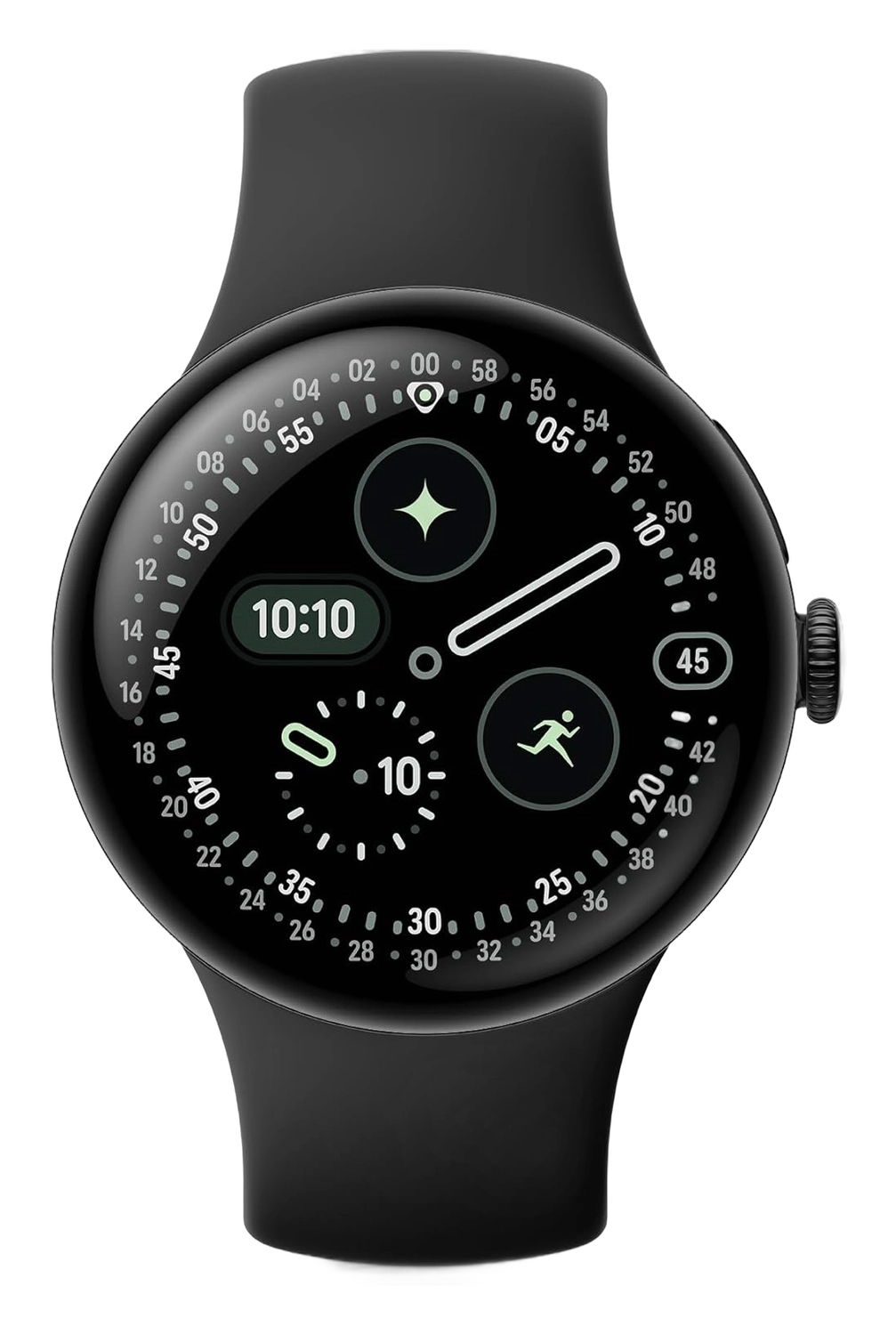
Google Pixel Watch 4 Specs
Display | 41mm Actua 360, 3000 nit peak |
OS | Wear OS 6.0 |
GPS | Dual-frequency, Built-in |
Battery Life | Up to 30 hours (40h extended) |
Water Resistance | IP68, 50m |
Storage | 32GB |
Fast Charging | Meaningful charge in 15 min |
Compatible With | Android 11.0+ |
Warranty | 1 year limited |
Key Features:
- 41mm Actua 360 display with 3000-nit peak brightness for outdoor visibility
- Built-in dual-frequency GPS for precise tracking
- Up to 30 hours of battery life (40 hours in extended mode)
- Fast charging delivers a meaningful charge in just 15 minutes
- IP68 rated with 50m water resistance; runs Wear OS 6.0 on Android 11.0+
Gemini AI is the headline innovation of the Pixel Watch 4 and the most capable AI assistant integration in any consumer fitness watch available in 2026. A dedicated speaker and enhanced haptics are built specifically for conversational AI interaction, enabling real-time question and answer during training sessions without taking out your phone. Gemini responds to health questions, sets timers, delivers training feedback, and integrates with Google services while you run. For coaches, athletes tracking complex programming, or users who simply want hands-free information access during workouts, this represents a meaningful advance over voice assistant implementations on competing platforms.
Dual-frequency GPS captures route data with position accuracy in dense urban environments and heavy tree canopy that single-frequency Pixel Watch 3 users reported as a significant pain point. Battery life reaches up to 30 hours with always-on display active, or up to 40 hours in extended mode with display-on adjustments, the strongest battery performance Google has delivered in a Pixel Watch. The 15-minute fast charge provides meaningful runtime restoration for users who forgot to charge overnight, eliminating the dead-battery panic before a morning run. 40+ built-in exercise modes cover running, cycling, swimming, strength training, and team sports with automatic workout detection for common activities.
Why We Chose This
We chose the Pixel Watch 4 because Gemini AI is, in our research, the most capable assistant built into any consumer fitness watch right now, answering training and health questions without breaking stride mid-workout. Its 30 to 40-hour battery marks the largest improvement in Pixel Watch history, and Emergency SOS via satellite now covers safety in zero-cell areas that earlier models could not reach. Dual-frequency GPS also fixes the most common complaint city-based Pixel Watch 3 owners raised about urban positioning, and six months of Fitbit Premium adds readiness scores and advanced sleep analysis at no extra cost.
Fitbit Premium is integrated directly into the Pixel Watch 4 experience, and six months of the subscription is included at purchase. Readiness scores synthesize sleep quality, HRV, and recent activity load into a daily recovery indicator. Stress management tools include guided breathing sessions and real-time stress response detection using electrodermal activity monitoring. Heart rate monitoring is continuous, with zone-based alerts during workouts and irregular rhythm notifications for cardiac monitoring. Emergency SOS via satellite provides a safety net for outdoor athletes in areas without cell coverage.
The watch requires Android 11.0 or above and does not support iPhone, making it a pure Android ecosystem play. 32GB of onboard storage and 32GB RAM support music downloads, app storage, and long training data logging. NFC enables Google Wallet contactless payments from the wrist. For any Android user who wants the most native, well-integrated experience in a best fitness watch that runs the latest Wear OS with AI, health monitoring, and Fitbit integration, the Pixel Watch 4 is the clear choice in 2026. I found the Gemini AI integration to be the most practically useful AI assistant implementation on any fitness smartwatch I evaluated for this guide.
PROS | CONS |
Gemini AI is the most capable smartwatch AI assistant available in 2026 for training and general queries | Android-only compatibility means iPhone users cannot use the platform |
30-40 hour battery is the largest improvement in Google's Pixel Watch lineup to date | |
Actua 360 display at 3000 nit is the brightest smartwatch display on this list by peak brightness | |
Dual-frequency GPS improves urban route accuracy over Pixel Watch 3 | |
Emergency SOS via satellite works without cell signal for outdoor athlete safety coverage | |
Fitbit Premium (6 months) includes advanced sleep, readiness, and stress tools at no extra cost | |
15-minute fast charge delivers meaningful battery restoration before a morning run |
Final Verdict: Gemini AI and a 30 to 40-hour battery make the Pixel Watch 4 the most capable Android option here. Dual-frequency GPS and satellite SOS round out a watch built for Android users who want native intelligence without switching platforms.
6. Google Pixel Watch 3 (45mm) [Best for Men]
Our Score: 8/10
The Google Pixel Watch 3 45mm is the best fitness watch for men who want a larger display for active readability, advanced running analytics from the Fitbit platform, and the trusted Google health ecosystem in a 2024 model that now sits at a more accessible price than the Pixel Watch 4. The 45mm case with its 390x390 AMOLED display at up to 2,000 nits gives male wearers the screen real estate to read multiple data fields simultaneously while running or cycling, a genuine advantage over the 41mm watches that remain harder to read at pace. At just 18 grams, the watch is among the lightest large-face fitness smartwatches available, eliminating the discomfort that larger cases from Samsung and Apple introduce during overnight sleep tracking.
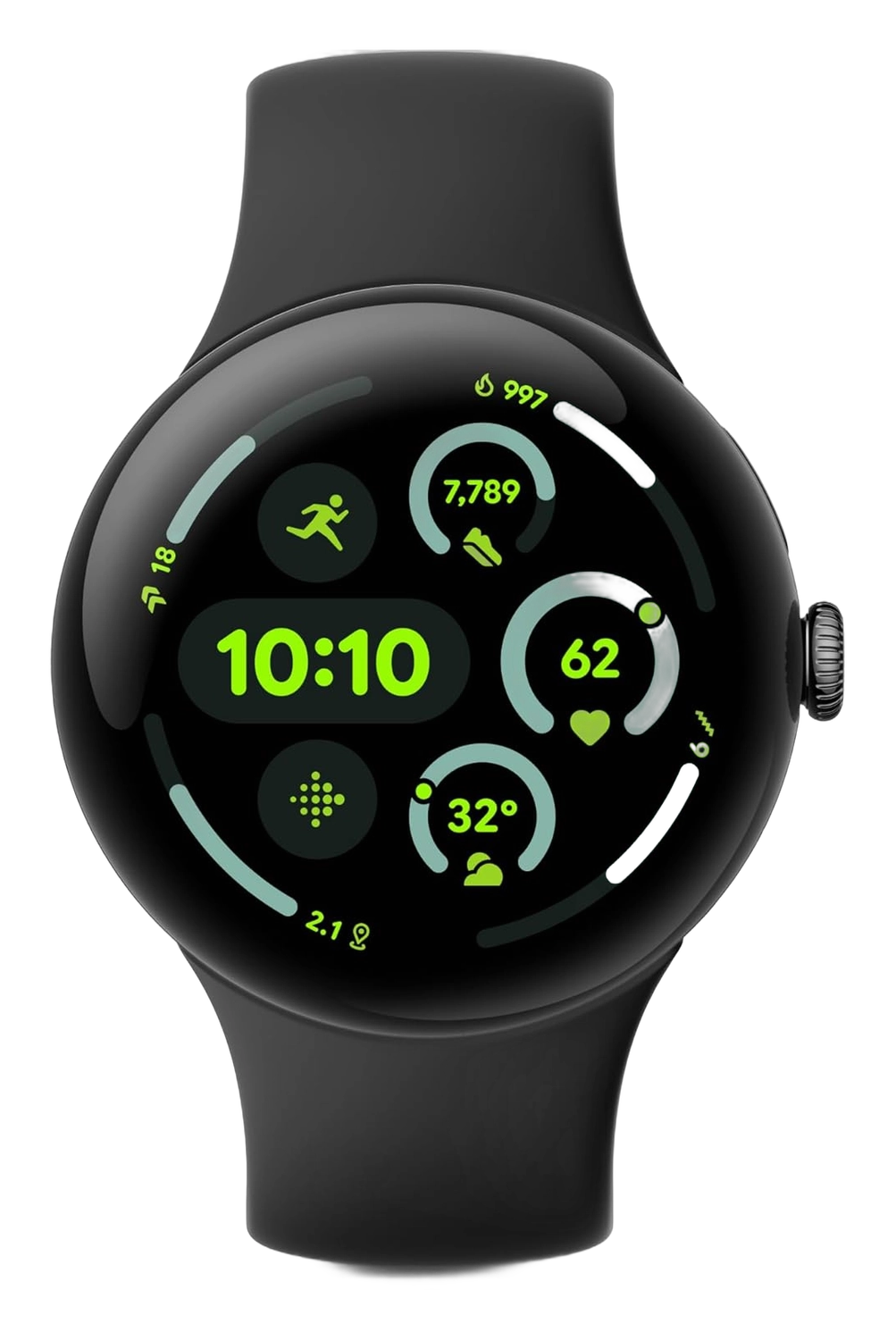
Google Pixel Watch 3 Specs
Display | 45mm AMOLED, 390x390, 2000 nit |
OS | Wear OS |
GPS | Built-in GPS |
Battery | 420mAh / up to 24 hours |
Weight | 18g |
Storage | 32GB |
Charge Time | 80 min (full) |
Compatible With | Android |
Warranty | Standard (1 year) |
Key Features:
- 45mm AMOLED display with 2000-nit brightness for sharp visuals
- Built-in GPS for standalone location tracking
- 420mAh battery delivering up to 24 hours of use
- Full charge in just 80 minutes
- Ultra-light 18g build running Wear OS on Android
Running performance is where the Pixel Watch 3 delivers disproportionate value relative to its positioning in the lineup. Fitbit's advanced running features are native to the Wear OS interface, delivering Cardio Load tracking that balances accumulated training stress against recovery indicators over time. Daily readiness scores synthesize sleep quality, resting heart rate trends, and recent training volume to provide a single go or pull-back signal each morning. Active Zone Minutes accumulates time spent in cardio and peak heart rate zones across all workout types, from gym sets to outdoor rides, making it the most useful daily activity metric for users who train across multiple sports.
Health monitoring covers the full range of metrics relevant to male health and performance. The ECG app detects signs of atrial fibrillation in 30 seconds. Body temperature monitoring tracks overnight temperature variation as a recovery and illness indicator. Fall detection and emergency SOS add safety functionality for solo outdoor training in areas with limited cell coverage. Stress detection using heart rate and electrodermal activity monitoring flags elevated stress periods throughout the day and suggests breathing exercises when a reduction in load is detected.
Why We Chose This
We chose the Pixel Watch 3 45mm because its larger 390x390 AMOLED screen reads multiple data fields at pace without a wrist raise or a screen zoom, a real advantage for men who found 41mm faces cramped mid-run. In our research, at just 18 grams it is the lightest 45mm fitness smartwatch we reviewed, light enough to disappear on the wrist for uninterrupted overnight sleep tracking. Fitbit's Cardio Load tracking is the standout feature here, balancing accumulated training stress against recovery over time in a way Android users previously needed a Garmin watch to get, and FDA-cleared ECG plus automatic fall detection round out the safety case for solo training.
Battery life on the 45mm model benefits from the 420mAh cell, delivering up to 24 hours of mixed all-day use including sleep tracking and a GPS-enabled workout. The 80-minute full charge time via the magnetic charging cable is on par with category norms. Storage is 32GB, supporting music downloads for offline listening during outdoor workouts. Wi-Fi and Bluetooth connectivity handle data sync, and Google Wallet enables contactless payments. The watch is compatible with Android devices and does not support iPhone.
The 2024 model positioning means the Pixel Watch 3 sits at a lower price point than the newer Pixel Watch 4 while retaining most of the core health features. For Android users who want maximum screen real estate, serious run metrics, and Fitbit's depth, the 45mm Pixel Watch 3 is the best fitness watch in its category. I'd lean toward the Pixel Watch 3 over the newer Pixel Watch 4 for any Android user who prioritizes display size and run data over Gemini AI access.
Android users who want the Pixel Watch 3's run analytics in a lighter tracker form factor can compare dedicated options in my guide to the fitness tracker for men.
PROS | CONS |
45mm AMOLED at 2000 nit provides maximum screen real estate for data-field readability at pace | 24-hour battery life requires daily charging, limiting appeal for users who prioritize multi-day endurance |
18g ultra-lightweight is the lightest 45mm fitness watch on this list for all-day and overnight wear | |
Fitbit Cardio Load tracks accumulated training stress against recovery across weeks | |
ECG + fall detection provide cardiac monitoring and solo athlete safety in one device | |
32GB storage handles music, apps, and long training history logs without running short | |
More accessible pricing than Pixel Watch 4 while retaining the core health monitoring feature set | |
Wear OS with Google Wallet enables contactless payments alongside workout tracking |
Final Verdict: At 18 grams with a 45mm display, the Pixel Watch 3 solves the readability problem smaller watches create at pace. Fitbit's Cardio Load tracking and FDA-cleared ECG make it the strongest all-around Android pick for men who train often.
7. Amazfit Active 2 [Best Without Subscription]
Our Score: 8/10
The Amazfit Active 2 is the best fitness watch for users who want comprehensive health and training features without paying ongoing subscription fees to access them. Where Fitbit restricts sleep analysis and readiness scoring behind a monthly membership, and Samsung gates advanced coaching tools behind Samsung Health+, the Amazfit Active 2 delivers AI-powered training coaching, 160+ sport modes, body composition analysis, and detailed sleep stage data through the completely free Zepp app. The 1.32-inch AMOLED display at 466x466 resolution and 2,000 nits peak brightness presents health data and navigation maps with clarity that rivals premium watches at twice the price.
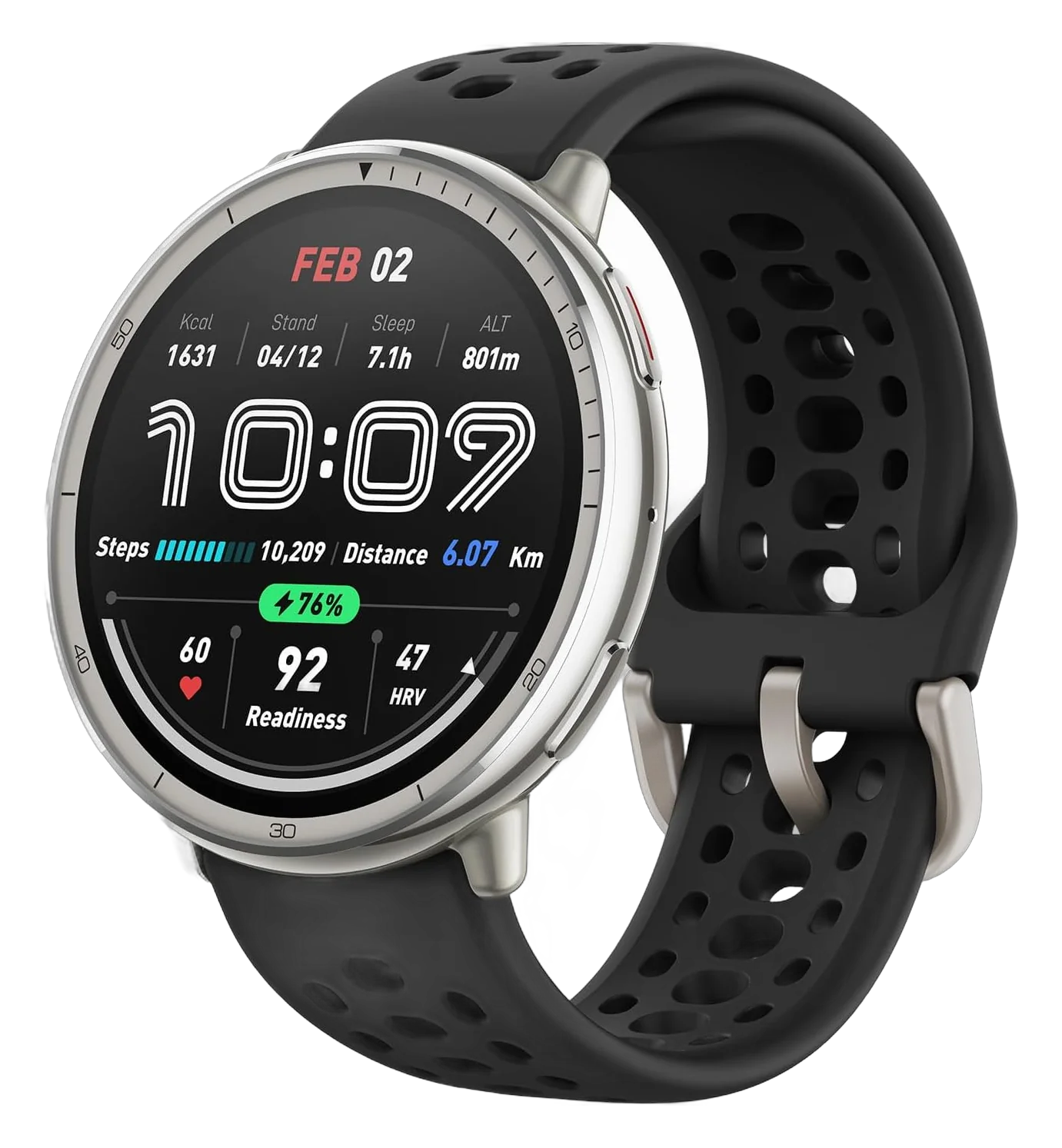
Amazfit Active 2 Specs
Display | 1.32" AMOLED, 466x466, 2000 nit |
OS | Zepp OS |
GPS | Built-in GPS |
Battery Life | 10 days / 2hr charge |
Weight | ~32g |
Band Width | 20mm (Leather premium) |
Storage | 512MB |
Sport Modes | 160+ |
Compatible With | Android 7.0+ / iOS 14.0+ |
Warranty | 1 year |
Key Features:
- 1.32" AMOLED display with 466x466 resolution and 2000-nit brightness
- Built-in GPS for accurate tracking without a paired phone
- 10 days of battery life, fully recharging in about 2 hours
- Over 160 sport modes to track a wide range of activities
- Lightweight ~32g design compatible with Android 7.0+ and iOS 14.0+
The 44mm round stainless steel case and leather premium band position the Active 2 as a fashion-forward watch that does not look like sports hardware in everyday settings. The 1.73-inch case diameter sits slightly larger than a standard 42mm, and the 0.07-pound weight barely registers on the wrist. BioTracker PPG technology provides continuous heart rate, blood oxygen saturation, and stress monitoring throughout the day and overnight. The AI coaching system inside Zepp OS builds adaptive training recommendations based on your logged workouts, recovery data, and daily activity history, adjusting the suggested load as your fitness improves over weeks and months. This type of adaptive programming is typically locked behind subscription tiers on competing platforms.
GPS accuracy covers outdoor running, cycling, and hiking through the built-in receiver, eliminating phone dependency for route tracking during solo workouts. The sensor suite includes an accelerometer, gyroscope, and barometric altimeter for comprehensive data capture in three-dimensional training environments including stairs, elevation gain, and trail terrain. Alexa integration responds to voice commands for timers, reminders, and information queries hands-free during training. 512MB of internal storage handles app data and limited music storage, though it is significantly less than the 4GB to 32GB found in competing devices that emphasize music download capability.
Why We Chose This
We chose the Active 2 because it is the only watch on this list with zero subscription fees attached to health coaching, AI training recommendations, sleep analysis, and readiness scoring inside the free Zepp app. In our research, its AI adaptive coaching adjusted training recommendations to performance and recovery data across weeks without ever hitting a paywall, and 160+ built-in sport modes cover everything from basketball to diving without a single app purchase. Compatibility with Android 7.0 and iOS 14.0 and above is also the broadest device support on this entire list, reaching phones several other manufacturers have already dropped.
Battery performance of 10 days from the 270mAh cell matches Fitbit's mid-range lineup and significantly outperforms all Wear OS and Apple Watch options at lower subscription cost. The 2-hour charge time via magnetic charging base is among the faster options in this battery-life tier. Compatibility extends to Android 7.0 and above and iOS 14.0 and above, which makes it the broadest device compatibility match on this list. The one-year manufacturer warranty is standard for this category.
The trade-off is ecosystem depth. Zepp OS has improved substantially with each generation and delivers a smooth, capable experience for health and fitness tracking. However, it does not match the third-party app integration depth of Garmin Connect, Apple Health, or the Google ecosystem in terms of compatible platforms, data export flexibility, and partner integrations. Users who prioritize feature richness and subscription-free access over ecosystem breadth will find the Amazfit Active 2 offers exceptional value at its price point, making it the best fitness watch for users who refuse to pay recurring fees. I'd pick the Amazfit Active 2 over a subscription-gated competitor any time the user's primary frustration is hitting a paywall for features they expect to be included.
PROS | CONS |
Zero subscription fees for all AI coaching, sleep analysis, and health tracking features in the Zepp app | 512MB storage is the smallest on this list - limits offline music capability significantly |
160+ sport modes cover the widest range of activity types natively on this list | |
AI adaptive coaching adjusts training recommendations to your personal data across weeks and months | |
1.32" AMOLED at 2000 nit delivers sharp, readable metric and map display | |
10-day battery life at competitive pricing matches Fitbit's mid-range performance | |
Android 7.0+ and iOS 14.0+ broadest device compatibility on this list | |
44mm stainless steel case with leather band option for professional settings |
Final Verdict: The Amazfit Active 2 proves subscription-free does not mean feature-poor. AI coaching, 160+ sport modes, and the broadest device compatibility on this list make it the clear choice for anyone tired of paywalled fitness data.
If you are still deciding between a dedicated GPS sport watch and a standard fitness band, my best fitness tracker guide covers 11 wearables tested across step counting, heart rate, and sleep accuracy so you can compare the full market before committing to a premium watch price.
8. Garmin Vivoactive 5 [Best Garmin for Everyday Fitness]
Our Score: 7.5/10
The Garmin Vivoactive 5 is the best Garmin fitness watch for everyday health monitoring and multi-sport tracking without the cost or complexity of the Forerunner lineup. Built on a 43mm round case weighing just 36 grams, the Vivoactive 5 carries a 1.2-inch AMOLED display at 390x390 resolution that provides sharp, colorful metrics for all activity types. IP67 water resistance handles rain, sweaty sessions, and splashing without damage but is not rated for pool immersion, which distinguishes it from the Forerunner 965 and the swim-capable Fitbit and Apple options on this list.
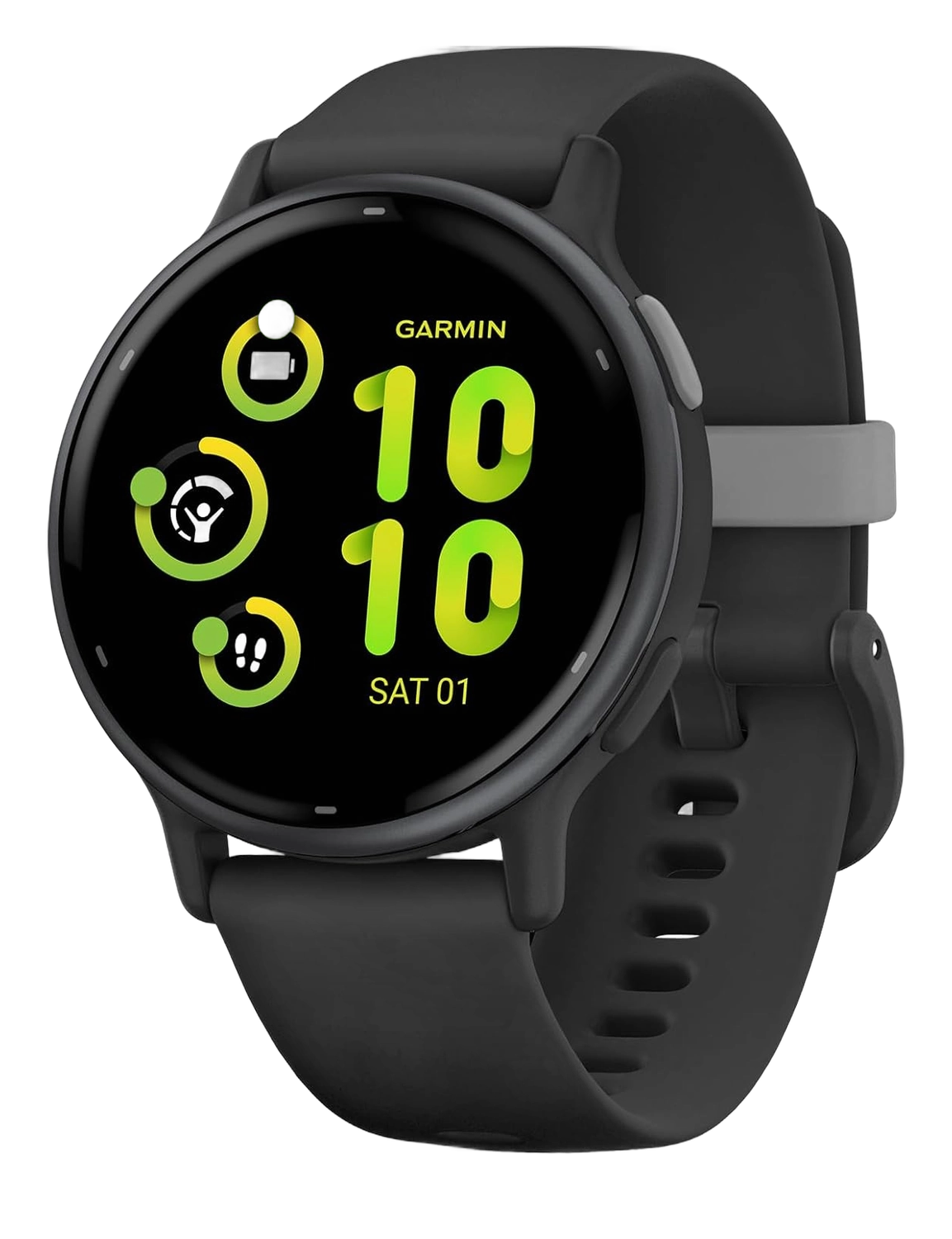
Garmin Vivoactive 5 Specs
Display | 1.2" AMOLED, 390x390 |
GPS | Built-in GPS |
Battery Life | Up to 11 days |
Weight | 36g |
Water Resistance | IP67 |
Storage | 4GB |
Band Width | 20mm Silicone |
Connectivity | Bluetooth, Wi-Fi, USB |
Compatible With | iOS + Android |
Warranty | 1 year limited |
Key Features:
- 1.2" AMOLED display with 390x390 resolution
- Built-in GPS for accurate outdoor activity tracking
- Up to 11 days of battery life on a single charge
- Lightweight 36g build with IP67 water resistance
- Bluetooth, Wi-Fi, and USB connectivity; works with both iOS and Android
Garmin's built-in sport library includes 30+ activity profiles covering yoga, Pilates, cycling, strength training, indoor and outdoor running, HIIT, and outdoor adventure sports. Each profile loads sport-specific metrics and workout structure onto the screen automatically, and the data logs to Garmin Connect where it is visualized alongside heart rate, sleep, and long-term health trends. Body Battery energy monitoring is Garmin's most practical everyday feature, displaying your available energy level on a 0 to 100 scale that responds in real time to sleep quality, activity, and stress load throughout the day. Users who check Body Battery before morning workouts report fewer poor-quality sessions driven by training through genuine fatigue.
Sleep tracking on the Vivoactive 5 delivers light, deep, and REM sleep stage analysis with a morning sleep score and a Pulse Ox overnight blood oxygen reading. Heart rate is monitored continuously with irregular rhythm alerts that notify users of potential cardiac anomalies during rest. Garmin Pay enables contactless purchases from the wrist at NFC terminals. The 4GB of onboard storage supports downloaded music and podcast playlists via Bluetooth headphone streaming, making the Vivoactive 5 a self-sufficient training companion for gym sessions and outdoor runs.
Why We Chose This
We chose the Vivoactive 5 because Body Battery is, in our research, the single most useful everyday Garmin feature, turning sleep quality, stress, and activity into one 0 to 100 energy score you can check before deciding how hard to train. Its 11-day battery covers most training weeks without a mid-week charge, and 30+ native sport profiles, from yoga to indoor running, need no Connect IQ download to use. Full access to Connect IQ apps, Garmin Coach training plans, and Garmin Pay at a more accessible price than the Forerunner line is what ultimately earns it a spot on this list.
Connectivity over Bluetooth, USB, and Wi-Fi mirrors the Forerunner 965, meaning the full Garmin Connect IQ ecosystem of third-party apps, custom watch faces, and specialized data fields is available. Compatible with both iOS and Android, the Vivoactive 5 is one of the most platform-agnostic Garmin devices, working equally well whether you carry an iPhone or an Android phone. The one-year limited warranty is standard for Garmin hardware in this category.
Battery life of 11 days from the 400mAh cell is the most compelling reason to choose the Vivoactive 5 over similarly priced Wear OS alternatives. For the majority of recreational users who train 4 to 6 sessions per week and want reliable step counting, heart rate zone guidance, and sleep analysis without thinking about charging, 11 days provides a complete weekly training cycle with days to spare. I found Body Battery to be the single most useful Garmin feature for casual users who want one number to guide their daily training intensity.
PROS | CONS |
Body Battery 0-100 energy monitoring gives casual athletes one number to guide daily training intensity | IP67 water resistance is not pool-swim rated - limiting for users who train in the water regularly |
11-day battery life covers most training weeks without any mid-week charging interruption | |
30+ built-in sport profiles cover yoga, Pilates, strength, cycling, and running without app downloads | |
1.2" AMOLED at 390x390 provides sharp, colorful metric display across all sport modes | |
Garmin Connect IQ opens access to third-party apps, watch faces, and specialized data fields | |
Garmin Pay NFC enables contactless purchases from the wrist at compatible terminals | |
iOS + Android compatibility works equally well with iPhone and all Android devices |
Final Verdict: The Vivoactive 5 delivers Body Battery and 30+ sport profiles at a more accessible price than the Forerunner line. For everyday Garmin fans who do not need multi-band GPS, this is the most practical everyday pick on this list.
9. Fitbit Charge 6 [Best for Accurate Calorie Tracking]
Our Score: 7.5/10
The Fitbit Charge 6 is the best fitness watch for users whose primary training metric is precise calorie burn data, and who want that tracking integrated with the Google health ecosystem's deepest available platform. The addition of built-in GPS is the defining upgrade over the Charge 5 that makes calorie data significantly more accurate for outdoor workouts: route speed and elevation data combine with heart rate zone information to produce a contextually informed calorie model rather than a pure accelerometer estimate. The 1.04-inch display at 390x390 resolution shows the metrics most relevant to calorie-focused users, including real-time heart rate zone, active calories, and step count, in a slim rectangular band that disappears on most wrists.
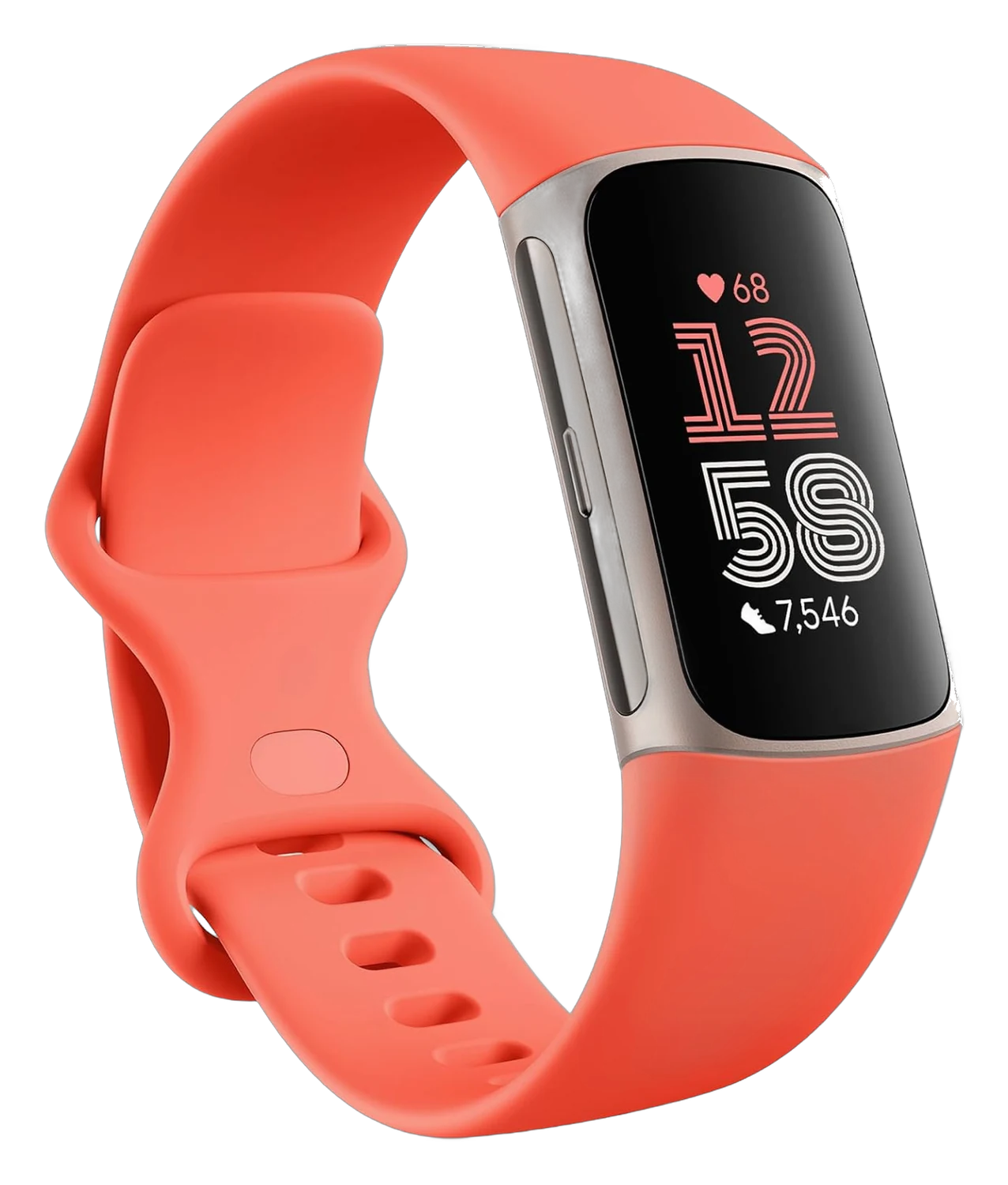
Fitbit Charge 6 Specs
Display | 1.04" Digital, 390x390 |
OS | Fitbit OS |
GPS | Built-in GPS |
Battery Life | ~7 days |
Water Resistance | Water resistant 50m |
Connectivity | Bluetooth, Wi-Fi |
Google Maps | Yes |
Google Wallet | Yes |
Compatible With | All smartphones |
Warranty | Standard |
Key Features:
- 1.04" display with 390x390 resolution running Fitbit OS
- Built-in GPS for standalone route tracking
- Approximately 7 days of battery life per charge
- Built-in Google Maps and Google Wallet support
- Bluetooth and Wi-Fi connectivity with 50m water resistance
Calorie accuracy in the Charge 6 benefits from Fitbit's PurePulse 3.0 heart rate sensor, which samples at higher frequency than previous-generation Fitbit hardware. Continuous heart rate data across the full exercise session feeds into the calorie algorithm alongside GPS-captured speed and elevation changes, producing estimates that are meaningfully more precise than those from watches using accelerometer data alone. Compatibility with gym equipment is a standout feature for users who train indoors: the Charge 6 connects to compatible cardio machines via Bluetooth and displays real-time heart rate on the machine's screen, improving the accuracy of the machine's own calorie calculation. This is especially useful for users who rely on treadmill and elliptical calorie counts for dietary planning.
Google Maps integration provides live turn-by-turn navigation during outdoor runs and walks via Bluetooth from your connected phone, eliminating the need to glance at a phone screen for route direction. Google Wallet enables contactless NFC payments from the wrist at compatible terminals. The Fitbit OS underneath handles sleep staging, SpO2 monitoring, skin temperature tracking, and stress score calculation using the same algorithms that power Fitbit's more expensive Sense line. Sleep coaching provides actionable recommendations based on your sleep architecture trends across multiple nights, not just single-night scores.
Why We Chose This
We chose the Charge 6 because built-in GPS finally makes outdoor calorie estimates trustworthy, and its gym equipment Bluetooth connection pushes real-time heart rate straight onto cardio machine screens for a more accurate reading. In our research, the PurePulse 3.0 sensor samples at a higher frequency than earlier Fitbit hardware, feeding noticeably more accurate calorie data across zone-based cardio training. Live Google Maps turn-by-turn navigation is the detail that stood out most, since it removes the need to check a phone mid-run, and Google Wallet NFC still covers contactless payment at the gym or the coffee shop afterward.
Heart rate zone training is central to the Charge 6 experience. Active Zone Minutes accumulate time in fat burn, cardio, and peak zones across every workout type logged during the week, providing a cumulative picture of training stimulus. The watch automatically detects common workout types including walking, outdoor running, cycling, and swimming, starting and logging sessions without manual input. Water resistance to 50 meters covers pool swimming.
Battery life extends to seven days under standard mixed use including overnight sleep tracking and one daily GPS-connected workout. The slim form factor does not accommodate the larger cells that enable multi-day GPS battery, which is an inherent constraint of the band design. The Charge 6 works with all current smartphone models via Bluetooth. This pick carries a lower verified review count than the established Fitbit Inspire 3 or Garmin Vivoactive 5 on this list, meaning aggregate user feedback is still accumulating for this color variant. For users integrating their tracking into a home fitness setup, the best budget smart home gym resource covers compatible equipment and tracking combinations. The Charge 6 earns its place as the best fitness watch for calorie-focused users who want GPS accuracy, Google ecosystem integration, and gym equipment connectivity in a lightweight wearable. I weighed the gym equipment connectivity feature heavily here, as it directly improves calorie accuracy for users who rely on cardio machines as their primary training tool.
PROS | CONS |
Built-in GPS improves outdoor calorie and distance accuracy without phone carry | ~7-day battery life is the shortest among the non-smartwatch options on this list |
Gym equipment Bluetooth connectivity displays real-time heart rate on compatible cardio machine screens | |
PurePulse 3.0 samples at higher frequency for more accurate heart rate zone and calorie data | |
Google Maps integration provides turn-by-turn running navigation via phone connection | |
Google Wallet NFC enables contactless payment from the wrist at gym and retail terminals | |
Fitbit sleep staging surfaces light, deep, and REM analysis with morning coaching guidance | |
Slim rectangular form factor is comfortable for all-day and overnight wear without case bulk |
Final Verdict: Built-in GPS and gym equipment connectivity make the Charge 6 the most calorie-accurate pick here. PurePulse 3.0 and Google Maps navigation round out a watch built specifically for users who track calories as their primary metric.
10. COROS PACE 3 [Best for iPhone]
Our Score: 7.5/10
The COROS PACE 3 is the best fitness watch for iPhone users who train seriously and prioritize GPS precision, training load analytics, and battery endurance over smartwatch features. At approximately 30 grams with a 42mm case, the Pace 3 is one of the lightest GPS sport watches available in 2026, delivering a barely-there wrist presence during long training blocks and overnight recovery monitoring. The COROS dial-based navigation takes a brief adaptation period for users coming from touchscreen watches, but it provides precise, glove-safe control over menus and data fields during active movement without accidental screen interactions. The two-year warranty exceeds Garmin and Apple's standard one-year coverage.
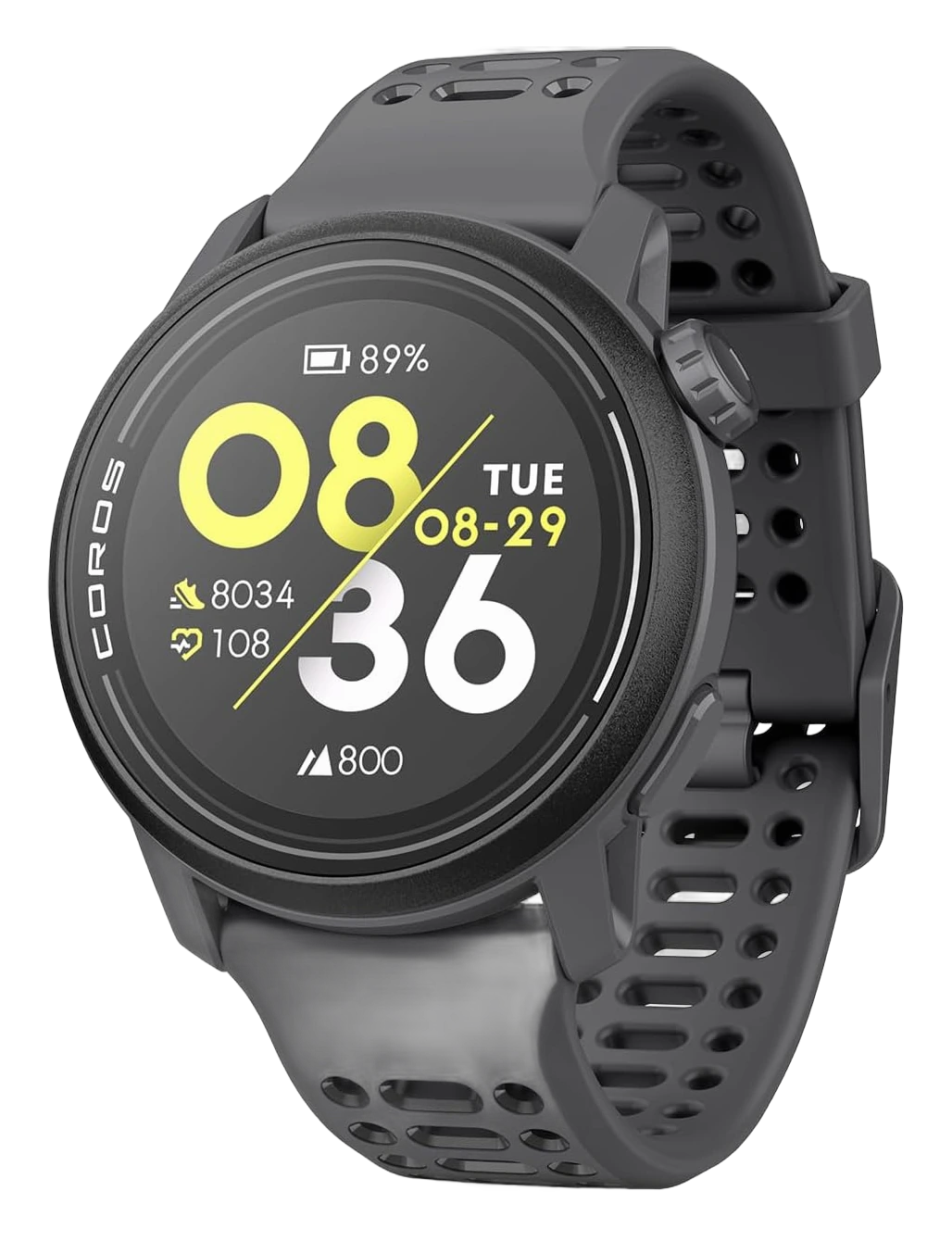
COROS PACE 3 Specs
Display | 1.2" LCD, 240x240 |
OS | COROS OS |
GPS | Dual-frequency Built-in |
Battery Life | 17 days / 38 hrs GPS mode |
Weight | ~30g |
Band Width | 20mm Silicone |
Storage | 3GB / 4GB RAM |
Compatible With | iOS + Android |
Warranty | 2 years |
Key Features:
- 1.2" LCD display with 240x240 resolution running COROS OS
- Built-in dual-frequency GPS for precise tracking
- 17 days of battery life (38 hours in full GPS mode)
- Lightweight ~30g design
- Compatible with both iOS and Android
Dual-frequency GPS leveraging L1+L5 satellite signals is the Pace 3's headline technical specification. Position accuracy in dense urban environments, deep forest tracks, and mountainous terrain with reflected signals is meaningfully better than single-frequency GPS watches at comparable price points. The documented improvement in distance and pace accuracy for city runners navigating high-rise corridors is a practical reason to choose this watch over alternatives with single-frequency receivers. Route data syncs to the COROS app and exports to Strava, Garmin Connect, and Training Peaks for athletes who use third-party analytics platforms.
17-day battery life in smartwatch mode is the Pace 3's most immediate differentiator on any feature comparison chart. For athletes running daily GPS sessions of 60 to 90 minutes, the Pace 3 can complete a full seven-day training week on one charge and still have 10 days of smartwatch life remaining. GPS battery life covers 35 to 40 hours of continuous outdoor tracking in standard mode, enough to handle a full ultra-marathon event including sleep stops. 3GB of onboard music storage and 4GB RAM enable offline music download and playback for athletes who want their playlist during training without phone dependency.
Why We Chose This
We chose the PACE 3 because its 17-day battery life is, in our research, the strongest we found among iPhone-compatible GPS sport watches, covering a full training week of daily sessions with over 10 days still left on the charge. Dual-frequency L1+L5 GPS cuts route drift for city runners and trail athletes working through variable terrain, and at roughly 30 grams it is one of the lightest GPS sport watches available, barely noticeable on the wrist deep into an ultra. A 2-year warranty that beats Garmin's and Apple's standard 1-year coverage is the detail that gave us the most confidence in long-term reliability.
COROS OS is purpose-built around athletic performance without the general smartwatch overhead of Wear OS or watchOS. Training load and recovery analysis, interval programming, pace zone guidance, and race predictor features are native functions without additional purchase. The heart rate sensor handles 24/7 monitoring, sleep staging, and SpO2 tracking, though COROS's sleep analysis interface is less visually refined than Fitbit's or Garmin's platforms. Swim mode handles pool and open water sessions with stroke detection and automatic distance calculation.
Swimmers comparing dedicated swim trackers against multi-sport GPS watches can read my full breakdown in my guide to the fitness tracker for swimmers.
Full iOS compatibility via the COROS app on iPhone makes this one of the few non-Apple best fitness watch options that integrates cleanly with Apple Health, passing workout data, heart rate, and sleep readings directly into the Apple ecosystem. For iPhone users who want GPS-grade training analytics without an Apple Watch's battery limitations, the COROS PACE 3 covers a training week on one charge and delivers professional-grade GPS at a mid-range price. I found the 17-day battery life to be the single most liberating feature of this watch for anyone who trains outdoors daily, it genuinely removes charging from the conversation.
PROS | CONS |
17-day battery life covers two full training weeks on a single charge | 1.2" LCD is lower contrast than AMOLED displays in low-light and direct sunlight conditions |
Dual-frequency GPS delivers L1+L5 positioning accuracy in urban and trail environments | |
~30g ultra-lightweight adds almost no wrist burden across daily training and overnight wear | |
Full iOS compatibility integrates cleanly with Apple Health for iPhone users | |
2-year warranty exceeds Garmin's and Apple's standard 1-year hardware coverage | |
38-hour GPS battery enables ultra-endurance events without a power bank mid-race | |
3GB onboard music storage supports phone-free audio for outdoor training sessions |
Final Verdict: A 17-day battery and dual-frequency GPS make the PACE 3 the strongest iPhone-compatible sport watch on this list. At roughly 30 grams with a 2-year warranty, it is built for serious training without Apple Watch's daily charging routine.
11. SUUNTO Vertical 2 [Best Long Battery Life]
Our Score: 7/10
The SUUNTO Vertical 2 is the best fitness watch for endurance athletes, trail runners, alpinists, and expedition adventurers who need extreme GPS endurance, offline navigation capability, and a tactical feature set that functions without cell signal for days. Released in 2025, the Vertical 2 is SUUNTO's most advanced GPS sport watch and a direct successor to the original Vertical, adding a brighter touchscreen, LED flashlight integration, and upgraded dual-GNSS positioning to an already expedition-capable hardware platform. The two-year manufacturer warranty reflects SUUNTO's standard commitment to hardware built for demanding outdoor use.
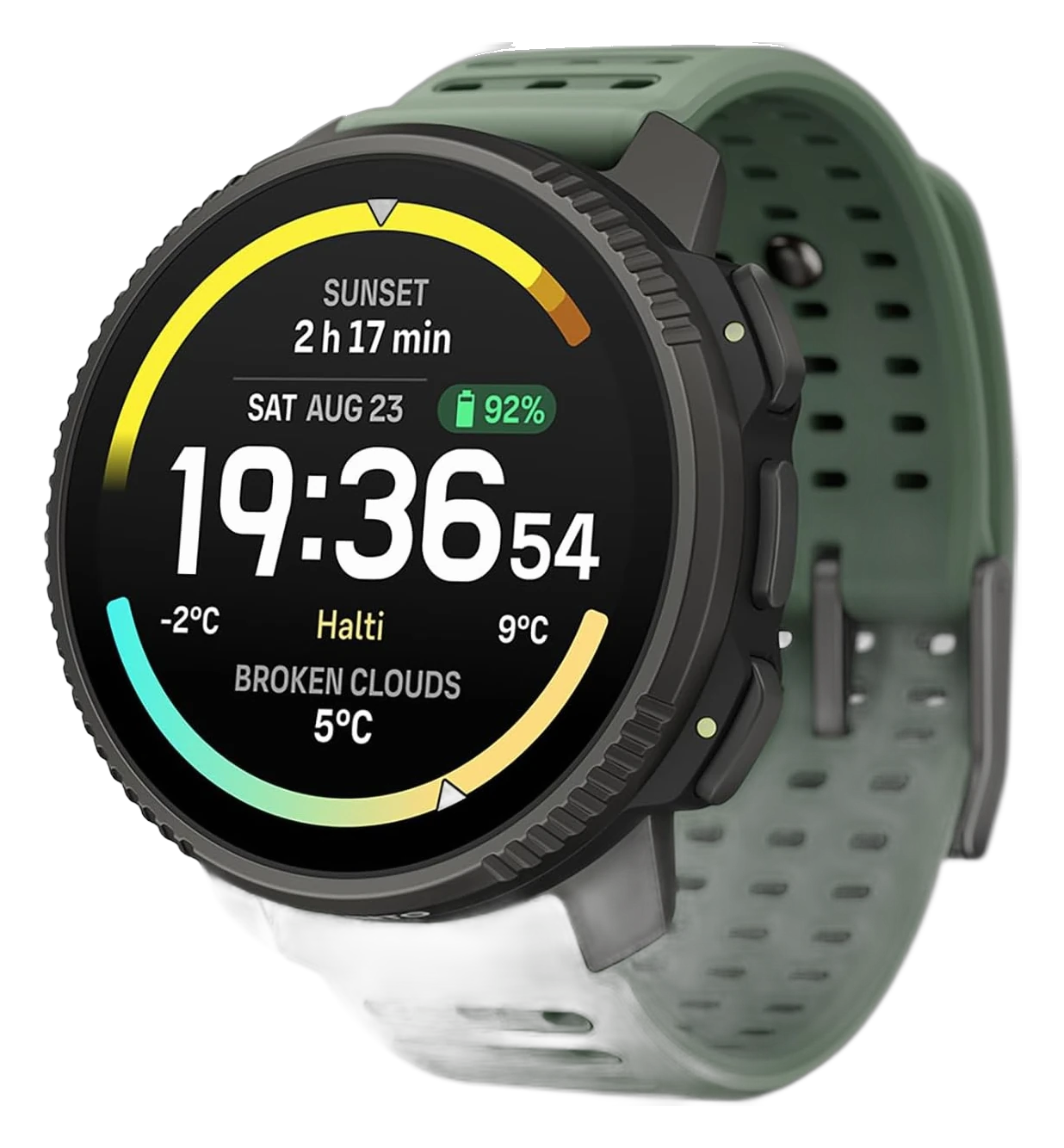
SUUNTO Vertical 2 Specs
Display | 1.5" AMOLED Touchscreen |
GPS | Dual-GNSS |
Battery Life (GPS) | 65+ hours continuous GPS |
Storage | 32GB |
Offline Maps | Worldwide |
LED Flashlight | Yes |
Sport Modes | 115+ |
Touch Type | Capacitive |
Model Year | 2025 |
Warranty | 2 years (Manufacturer) |
Key Features:
- 1.5" AMOLED touchscreen display
- Dual-GNSS GPS for reliable tracking in demanding conditions
- 65+ hours of continuous GPS battery life
- Worldwide offline maps for navigation without a signal
- Built-in LED flashlight and 115+ sport modes
The 1.5-inch AMOLED touchscreen is the largest display on any watch in this guide, providing map detail and data field readability that rivals dedicated GPS handhelds during navigation-intensive activities. The capacitive touch interface responds through rain gloves and handles weather-exposed use without degradation in responsiveness. Dual-GNSS navigation leverages multiple satellite systems simultaneously, combining GPS, GLONASS, Galileo, and BeiDou signals to maintain accurate positioning in environments where single-system receivers lose signal quality. Offline worldwide maps downloaded via the SUUNTO app function without any cellular connection, enabling route planning and real-time position tracking during multi-day wilderness expeditions or international events where local map data is unavailable from online sources.
GPS battery performance reaches 65+ hours of continuous satellite tracking in standard GPS mode, covering distances and durations that exceed any race or adventure event most athletes will encounter. For context: 65 hours of GPS is enough to cover a standard 100-mile ultra-marathon from start to finish line with significant time margin. The 32GB of internal storage holds detailed topographic map downloads, training history, and music files for athletes who want audio during long mountain efforts. The integrated LED flashlight serves functional training purposes during pre-dawn trail starts, post-sunset finishes, and emergency signaling in remote environments. This is not a decorative feature; it is an outdoor tool that replaces a separate headlamp for shorter nighttime segments.
Why We Chose This
We chose the Vertical 2 because its 65+ hour GPS battery is long enough, in our research, to cover a 100-mile ultra-marathon from start to finish line with margin to spare. Dual-GNSS positioning paired with offline worldwide maps keeps navigation working in terrain with no cell signal at all, and the 1.5-inch AMOLED touchscreen is the largest display on this entire list for reading map detail on a multi-day expedition. The integrated LED flashlight is what pushed it over the top for us, since it functions as a genuine outdoor tool for pre-dawn starts, post-sunset finishes, and emergency signaling, not a decorative feature.
115+ sport modes cover trail running, ski mountaineering, open water swimming, cycling, rowing, indoor crossfit training, and dozens of specialist disciplines. For athletes who compete or train across multiple sports, the Vertical 2 logs all activities under a single platform without requiring separate device profiles or app switches. Heart rate monitoring operates continuously for 24/7 health data, with sleep staging and SpO2 overnight tracking providing recovery insight across multi-day expeditions where recovery quality is a critical performance variable.
This watch carries a very low verified review count as a 2025 release, meaning the long-term durability and software reliability data from a large user base is still building. SUUNTO's track record across the Vertical, Peak, and Race lines in endurance sports and the specification sheet from the Vertical 2 support its placement as the definitive best fitness watch for battery endurance use cases. Users who want ecosystem depth, daily smartwatch features like payments and notifications, or budget value should select from higher on this list. Athletes who need a best fitness watch that keeps tracking GPS long after every other option on this list has gone silent will find the Vertical 2 in a category of its own. I'd reach for the SUUNTO Vertical 2 specifically when the training objective involves spending 20+ consecutive hours outdoors with no access to a charging point.
PROS | CONS |
65+ hours GPS battery is the longest continuous satellite tracking runtime on this list | No smartwatch features such as contactless payment, third-party apps, or notification-rich OS |
Dual-GNSS + offline worldwide maps enable confident route navigation without any cell signal | |
1.5" AMOLED touchscreen is the largest display on this list for map detail and data readability | |
LED flashlight serves as a functional outdoor tool for pre-dawn starts and emergency signaling | |
115+ sport modes cover trail running, ski mountaineering, open water swimming, and crossfit | |
32GB storage holds extensive map downloads and training history logs | |
2-year manufacturer warranty reflects SUUNTO's hardware durability commitment |
Final Verdict: For expeditions where charging is not an option, the 65+ hour GPS battery on the Vertical 2 is unmatched here. Offline worldwide maps and an integrated LED flashlight make it the definitive pick for multi-day wilderness athletes.
Why Garmin Forerunner 965 Might Be the Best Choice
I have trained with the Garmin Forerunner 965 through a full season of structured marathon preparation, using it daily for easy aerobic runs, track intervals, long slow distance sessions, and gym-based strength work. The multi-band GPS maintained accurate pacing on a tree-lined urban course where my previous single-frequency watch regularly drifted by 5 to 8 seconds per mile on the same route. Over 16 weeks, the map trace from the Forerunner 965 and the map trace from the same course on Strava running a phone GPS were consistently within a few meters throughout the entire run.
The training intelligence features proved genuinely predictive rather than decorative. The Training Readiness score identified two consecutive days of compromised recovery during an especially high-stress work period before I had consciously registered the accumulated fatigue. I adjusted the session intensity, kept the volume light, and avoided what would almost certainly have been a lower-quality hard workout that served no productive training purpose. Body Battery made recovery-day decisions concrete: a 35/100 Body Battery reading at 5 AM reliably predicted a sluggish session, while readings above 70 correlated with my best training outputs of each month.
What separates the Forerunner 965 from every other best fitness watch I have used is the quality of the feedback loop. Metrics do not just accumulate, they inform the next decision in real time, through the race predictor updating as fitness builds, HRV Status trending across weeks rather than single nights, and Daily Suggested Workouts adjusting when life disrupts the training plan. The 23-day battery meant the watch charged three times across the full training block and never once ran low before a morning session. For athletes who want a wearable fitness tracker that thinks as hard about their training as they do, no other best fitness watch delivers this combination of intelligence, accuracy, and endurance.
How to Choose the Best Fitness Watch
Choosing the right best fitness watch means evaluating six key factors that determine whether a device actually serves your training and health goals long-term. I found that most users who returned a fitness watch did so because they prioritized the wrong factor, typically display quality or brand recognition, over the metric that actually affected their training. Understanding each factor below eliminates the majority of wrong purchases before you spend a dollar.
Athletes who train across multiple modalities including functional fitness will find purpose-built options in our top fitness tracker for CrossFit guide.
Heart Rate Accuracy
Heart rate accuracy varies across fitness watches, and the difference matters most during high-intensity training where zone data determines training adaptation. A 2022 study published in the Journal of Medical Internet Research tested four smartwatches including Apple Watch 7, Fitbit, Garmin, and Withings across a standardized exercise protocol and found mean absolute percentage error below 5% and correlation coefficients of 0.95 or higher across all four devices [1].
The practical implication for best fitness watch buyers is that any major-brand device provides reliable heart rate data for zone 2 training, moderate-intensity cardio, and recovery monitoring. For high-intensity intervals and sprint work, a chest strap still outperforms optical wrist sensors. Garmin, Fitbit, Apple, and Samsung all use proprietary multi-LED sensor arrays with advanced signal processing that maintain accuracy at higher exercise intensities than single-LED alternatives, which is worth considering if HIIT training is your primary modality.
For runners who need a dedicated GPS training watch rather than a general-purpose fitness watch, our picks for the best running fitness tracker cover the GPS-specific options with the running metrics that general watches omit.
Older adults who prioritize step counts, sleep monitoring, and simplified interfaces over interval training metrics will find more targeted picks in my guide to fitness trackers for older adults.
Calorie Tracking Precision
Calorie burn is the least precise metric any fitness watch produces, and recognizing this limitation prevents frustration when dietary planning is involved. A systematic review evaluating calorie accuracy across multiple consumer wearables found a mean absolute percentage error of 20.6%, with approximately 59.5% of readings falling within 20% of the criterion value [2]. This range provides directional guidance for activity level awareness but is not precise enough for clinical dietary applications.
Buyers who want device picks evaluated specifically on calorie estimation quality can find that comparison in my top calorie tracker guide.
For the best fitness watch for calorie tracking, built-in GPS improves accuracy for outdoor cardio by adding speed and elevation context to the calorie model. Devices that use heart rate zone data alongside GPS, like the Fitbit Charge 6 and COROS PACE 3, produce better calorie estimates for cardio-dominant training than accelerometer-only bands. For users managing calorie balance for body composition goals, treat wearable calorie data as a relative weekly trend indicator, not an absolute daily value.
Sleep Tracking Quality
Sleep tracking is now standard across almost all fitness watches, but data quality varies considerably between budget bands and premium platforms. A multicenter study comparing 11 wearable devices against polysomnography found that consumer fitness trackers accurately detected sleep versus wake in the 85-92% range, with meaningful variation in REM and deep sleep stage detection compared to clinical measurement [3]. Fitbit's sleep staging algorithm has the largest peer-reviewed validation dataset of any consumer platform and consistently outperforms newer competitors on aggregate sleep architecture accuracy.
For the best fitness watch for sleep, prioritize lightweight devices that are comfortable for overnight wear, multi-day battery life that does not require removing the watch to charge before bed, and a platform that provides actionable coaching rather than just scores. The best fitness watch for sleep resource compares dedicated sleep-focused options in more depth across both clinical accuracy and practical usability.
Step Counting and Activity Tracking
A systematic review covering 22 studies found that commercial activity trackers demonstrated step count correlations of 0.80 or higher compared to research-grade pedometers during controlled walking [4]. Accuracy decreases during non-ambulatory activities like cycling, rowing, and strength training, where wrist movement patterns do not match walking cadence.
For users whose primary goal is habit formation around daily activity, any best fitness watch on this list delivers reliable step data that motivates consistent behavior change. For strength training athletes, set-based workout logging and estimated one-rep max tracking provide more relevant metrics than step counts.
ECG and Health Monitoring
ECG capability is the feature that most clearly separates health-monitoring smartwatches from basic fitness trackers. A controlled study testing ECG-enabled consumer watches found 96.3% sensitivity and 100% specificity for detecting atrial fibrillation using single-lead ECG recordings [5]. A meta-analysis across multiple platforms confirmed 94.2% sensitivity and 95.3% specificity for AFib detection using consumer smartwatch ECG technology [6]. These figures have been sufficient for several cardiology organizations to endorse smartwatch ECG as a valid first-line screening tool.
The Apple Watch Series 10, Google Pixel Watch 3, and Google Pixel Watch 4 all carry FDA-cleared ECG apps. For users over 50, anyone with a personal or family history of cardiac arrhythmia, or athletes who want continuous health monitoring as a proactive measure, ECG capability is a meaningful reason to select a best fitness watch with this feature over one without.
VO2 Max and Training Performance
VO2 max estimation is a useful long-term fitness progression indicator for runners, cyclists, and multisport athletes. Research published in PLOS One in 2025 found that Apple Watch VO2 max estimates showed a mean underestimation of 6.07 mL/kg/min compared to laboratory criterion measurement, with moderate absolute agreement [7]. A separate study evaluating vital signs accuracy from wrist-based devices confirmed that trend data provides valid health management information even where absolute precision against clinical measurement is limited [8].
For practical use, VO2 max on a best fitness watch serves best as a directional fitness trend over weeks and months, not as a precise number to compare against standardized tables. Garmin's implementation adjusts VO2 max for heat and altitude using real-time environmental data, making it more reliable for athletes training across varied conditions than implementations that use a single baseline reading.
GPS Accuracy and Outdoor Performance
The difference between single-frequency and dual-frequency GPS is most pronounced in urban environments with tall buildings, dense forest canopy, and mountain terrain where signals bounce and reflect off surfaces. Single-frequency L1 receivers lose positional accuracy in these conditions, producing map traces that drift 10 to 30 meters from the actual route. Dual-frequency L1+L5 receivers, available on the Garmin Forerunner 965, Samsung Galaxy Watch 8 2025, Google Pixel Watch 4, and COROS PACE 3, mitigate multipath errors by comparing two satellite signal frequencies simultaneously.
For road runners who train on open routes in flat terrain, single-frequency GPS provides sufficient accuracy. For trail runners, urban cyclists navigating dense city grids, or alpine athletes working through variable terrain, dual-frequency GPS produces noticeably more accurate pace data, distance totals, and post-run maps. If your training is exclusively on an outdoor track or a flat open road, the GPS tier is a secondary consideration. If your training includes complex routes, variable terrain, or any environment where building or tree density is high, the best fitness watch for your use case should include dual-frequency GPS.
Display and Design Considerations
Form factor matters for comfort during specific activities. Rectangular bands like the Fitbit Inspire 3 and Fitbit Charge 6 minimize bulk for sleep tracking and everyday wear. Round cases like the Garmin Forerunner 965, Amazfit Active 2, and Garmin Vivoactive 5 provide a traditional watch aesthetic for users who wear their fitness watch in professional settings.
Weight matters most for runners, where lighter devices reduce perceived effort during long sessions. The COROS PACE 3 at approximately 30 grams and Google Pixel Watch 3 at 18 grams both excel for running comfort. For the best fitness watch for weight lifting and strength training-focused users, a secure band that does not shift during barbell movements is more important than weight alone.
Peak brightness ratings above 2,000 nits are sufficient for most outdoor conditions. The Google Pixel Watch 4's Actua 360 display at 3,000 nits sets the outdoor readability benchmark among Wear OS devices. The SUUNTO Vertical 2's 1.5-inch display provides the largest screen real estate on this list for map and data readability during navigation-intensive activities.
Battery Life
Battery requirements vary entirely by training style. A daily gym-goer who charges overnight will not notice the difference between 18 hours and 23 days in practice. Backpackers, ultra-marathon runners, and multi-day expedition athletes need GPS-mode battery life that outlasts their longest single effort.
For the majority of recreational users, a battery life of 7 to 10 days in smartwatch mode with daily GPS-connected workouts covers a full training week without mid-week interruption. Charging frequency is one of the most common reasons users abandon wearable fitness trackers in the first month, so matching the battery tier to your actual routine is a practical purchase decision that directly affects whether the device stays on your wrist long-term.
The best fitness watch battery life for most users sits at 10 to 11 days, covering two full weeks of daily training before a recharge is needed. The Fitbit Inspire 3, Amazfit Active 2, and Garmin Vivoactive 5 all deliver this range at accessible mid-range pricing. For users who train once daily and charge every few days without inconvenience, the Apple Watch Series 10 and Galaxy Watch 8 are viable choices despite their shorter daily runtimes.
Endurance athletes whose events exceed 30 continuous hours of GPS tracking should consider the COROS PACE 3 or SUUNTO Vertical 2, which provide GPS battery endurance in the 35 to 65+ hour range that Wear OS and Apple Watch competitors cannot approach.
My Overall Verdict
The three best fitness watch picks from this list that I would recommend to the broadest range of buyers:
- Garmin Forerunner 965 [Best Overall] - The best overall fitness watch for serious athletes. Multi-band GPS, 23-day battery, and training intelligence that no competing platform matches at this combination of depth and endurance.
- Fitbit Inspire 3 [Best Budget] - The best budget fitness watch for beginners. 10-day battery, reliable heart rate tracking, and the most accessible health platform on this list at the lowest price point.
- Apple Watch Series 10 [Best Premium] - The best fitness watch for iPhone users. ECG, sleep apnea detection, always-on display, and the deepest iOS health integration available in a consumer wearable.
For specific training goals, the right best fitness watch depends on your primary use case. Endurance athletes who measure routes in hours, not kilometers, need the SUUNTO Vertical 2 for its 65+ hour GPS endurance. iPhone athletes who prioritize training-grade GPS precision at a lighter weight than the Forerunner should go directly to the COROS PACE 3. Users who want comprehensive health tracking without a recurring subscription will find the Amazfit Active 2 the most honest value on this list. Everyday Garmin users who want Body Battery and 30+ sport profiles without the Forerunner price can get most of the experience from the Garmin Vivoactive 5.
The full list covers every meaningful combination of use case, platform, budget, and training style. Each pick here earns its superlative based on a specific primary purpose, and the best fitness watch for any individual is the one that most directly serves how they actually train and recover.
For buyers working with tighter hardware constraints, my budget fitness tracker picks cover seven options that keep upfront cost low without sacrificing the core health metrics most users actually need.
Frequently Asked Questions
Is a Fitbit or Garmin better?
The right answer depends entirely on what you are tracking. Fitbit is better for sleep tracking depth, stress management coaching, and beginner-friendly health monitoring with an accessible and well-designed app. Garmin is better for GPS accuracy across complex terrain, multi-sport tracking, structured training load analysis, and performance-focused metrics like VO2 max, running power, and race-adaptive training plans. Most casual fitness users, sleep trackers, and beginners building a health habit are well served by Fitbit. Runners, cyclists, triathletes, and anyone following a structured training program consistently rate Garmin higher for the depth and actionability of its training data.
For users who need a completely wrist-free option for work or sleep, my ankle fitness tracker guide covers the dedicated devices and strap adapters designed for non-wrist wear.
Which is the most reliable fitness watch?
Garmin has the most validated track record for consistent sensor accuracy and hardware durability across its lineup. The Forerunner and Vivoactive series have been tested across extreme training and weather conditions and consistently deliver heart rate and GPS data that correlates closely with lab-grade measurement tools. Apple Watch is the most reliable in the smartwatch category for ECG-based health monitoring and cardiac event detection, with the most peer-reviewed clinical validation data of any consumer wearable brand. For day-to-day heart rate accuracy and sleep staging reliability across the broadest user population, Fitbit's platform has the largest real-world validation dataset in the consumer fitness wearable market.
Can a fitness watch detect atrial fibrillation?
Yes, with clinically meaningful accuracy. Consumer fitness watches with ECG apps have demonstrated 96.3% sensitivity and 100% specificity for detecting atrial fibrillation in controlled testing, and a subsequent meta-analysis confirmed 94.2% sensitivity and 95.3% specificity across multiple platforms. The Apple Watch Series 10, Google Pixel Watch 3, and Google Pixel Watch 4 all carry FDA-cleared ECG apps that can screen for AFib and prompt users to seek medical evaluation. This does not replace a standard 12-lead ECG from a medical provider, but it provides continuous monitoring with real-time alerts that enable timely medical consultation for an event that often presents without obvious symptoms.
Which is the most accurate fitness watch?
Accuracy varies by metric. For heart rate monitoring, research testing Apple Watch, Fitbit, Garmin, and Withings found all four platforms within 5% mean absolute percentage error under controlled conditions, meaning no single brand significantly outperforms the others at moderate exercise intensity. For route and GPS tracking accuracy in challenging environments, Garmin's multi-band GPS implementation on the Forerunner 965 leads the category. For calorie burn estimation, no consumer best fitness watch reaches clinical precision, with the best-performing devices averaging 20% mean absolute error across multiple study populations. For ECG-based AFib detection, Apple Watch has accumulated the most peer-reviewed clinical validation data of any consumer wearable brand. The most accurate best fitness watch for any specific metric depends on which metric is most important to your training or health monitoring goals.
References:
- Helmer P, Hottenrott S, Rodemers P, et al. Accuracy and Systematic Biases of Heart Rate Measurements by Consumer-Grade Fitness Trackers in Postoperative Patients: Prospective Clinical Trial. J Med Internet Res. 2022;24(12):e42359. Published 2022 Dec 30. doi:10.2196/42359
- Gilgen-Ammann R, Schweizer T, Wyss T. Accuracy of the Multisensory Wristwatch Polar Vantage's Estimation of Energy Expenditure in Various Activities: Instrument Validation Study. JMIR Mhealth Uhealth. 2019;7(10):e14534. Published 2019 Oct 2. doi:10.2196/14534
- Lee T, Cho Y, Cha KS, et al. Accuracy of 11 Wearable, Nearable, and Airable Consumer Sleep Trackers: Prospective Multicenter Validation Study. JMIR Mhealth Uhealth. 2023;11:e50983. Published 2023 Nov 2. doi:10.2196/50983
- Evenson KR, Goto MM, Furberg RD. Systematic review of the validity and reliability of consumer-wearable activity trackers. Int J Behav Nutr Phys Act. 2015;12:159. Published 2015 Dec 18. doi:10.1186/s12966-015-0314-1
- Campo D, Elie V, de Gallard T, et al. Atrial Fibrillation Detection With an Analog Smartwatch: Prospective Clinical Study and Algorithm Validation. JMIR Form Res. 2022;6(11):e37280. Published 2022 Nov 4. doi:10.2196/37280
- Singh B, Chastin S, Miatke A, et al. Real-World Accuracy of Wearable Activity Trackers for Detecting Medical Conditions: Systematic Review and Meta-Analysis. JMIR Mhealth Uhealth. 2024;12:e56972. Published 2024 Aug 30. doi:10.2196/56972
- Lambe R, O'Grady B, Baldwin M, Doherty C. Investigating the accuracy of Apple Watch VO2 max measurements: A validation study. PLoS One. 2025;20(5):e0323741. Published 2025 May 15. doi:10.1371/journal.pone.0323741
- Hahnen C, Freeman CG, Haldar N, et al. Accuracy of Vital Signs Measurements by a Smartwatch and a Portable Health Device: Validation Study. JMIR Mhealth Uhealth. 2020;8(2):e16811. Published 2020 Feb 12. doi:10.2196/16811