
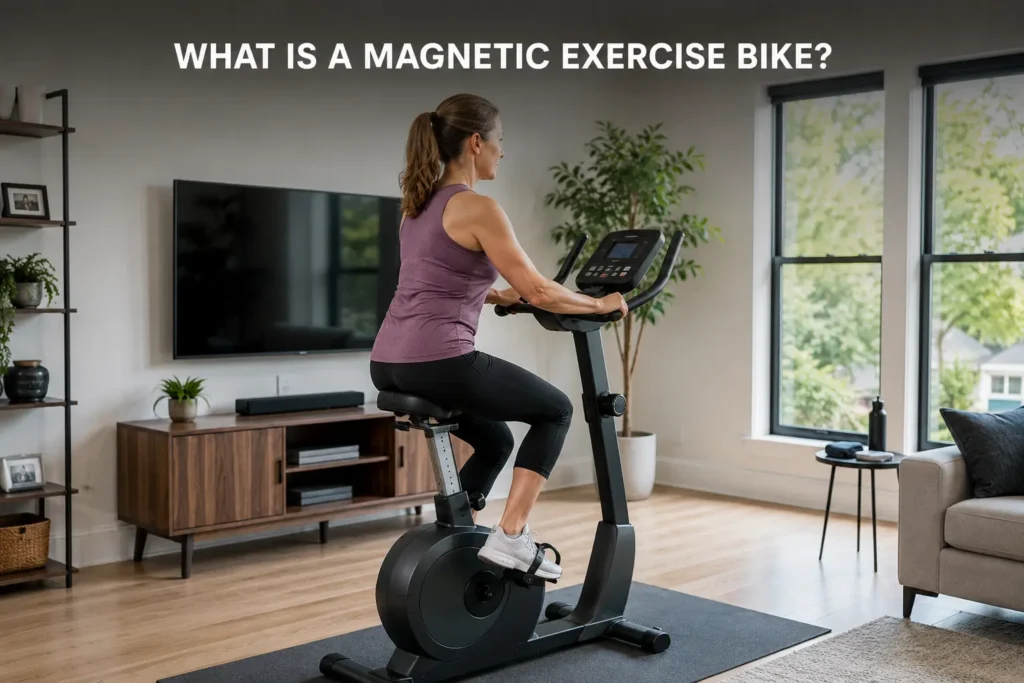
What is a magnetic exercise bike, and why does the resistance type matter more than most buyers realize? If you've been shopping for a stationary bike, you've probably seen magnetic resistance mentioned repeatedly without a clear explanation of what it actually means for your workouts. I've spent years evaluating fitness equipment and reviewing owner feedback across dozens of models; in this guide, I'll break down how the technology works, which bike types use it, who benefits most, and what to prioritize when buying.

What Is a Magnetic Exercise Bike - Defining the Core Technology
A magnetic exercise bike is any stationary bike that uses magnets to create pedaling resistance, rather than a physical friction pad pressing against the flywheel. The magnet never touches the flywheel. That contact-free design is the single most important distinction, because it's what drives every practical advantage the technology offers.
You will find that same contact-free system on every model in our recumbent bikes selection.
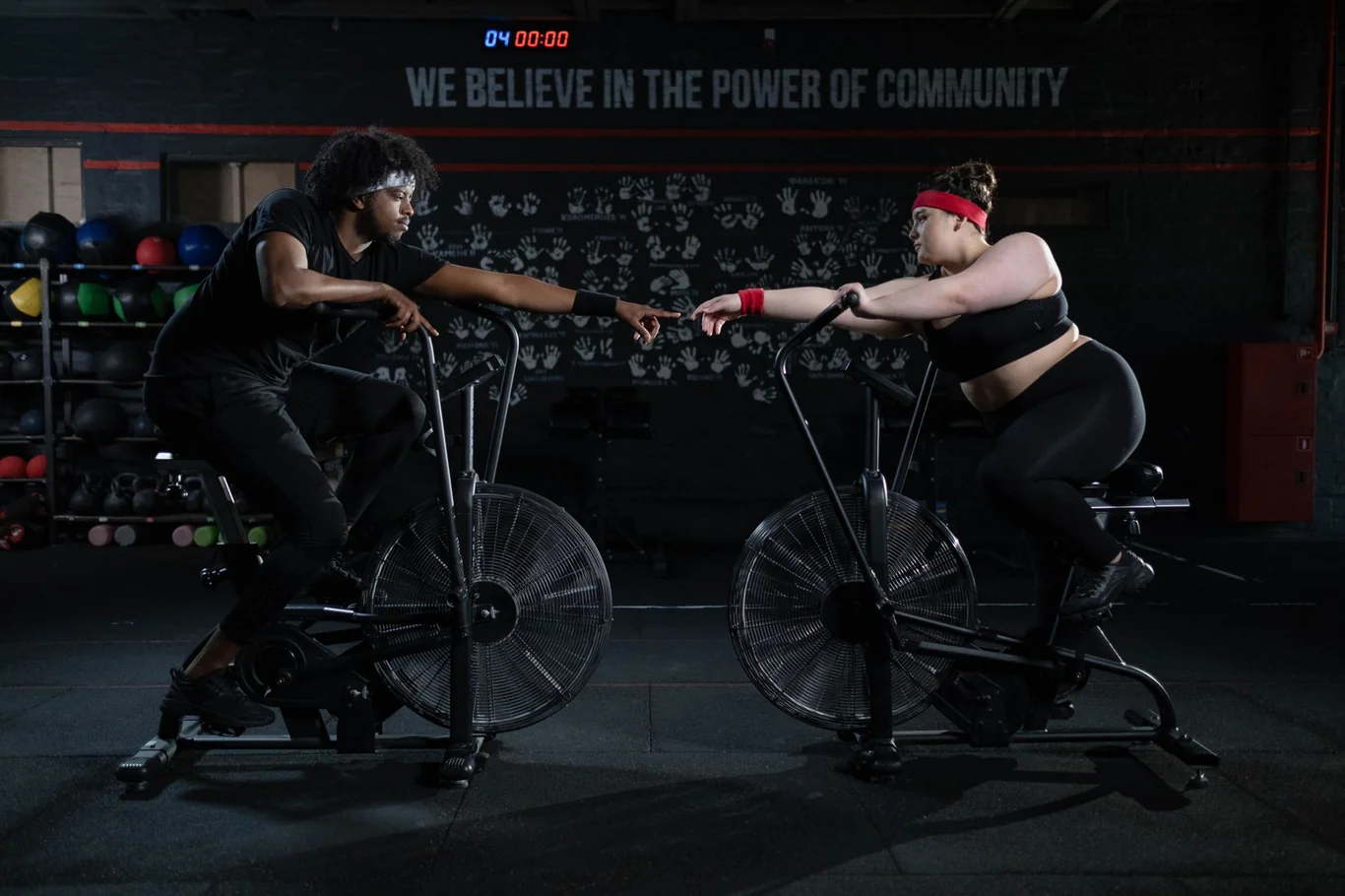
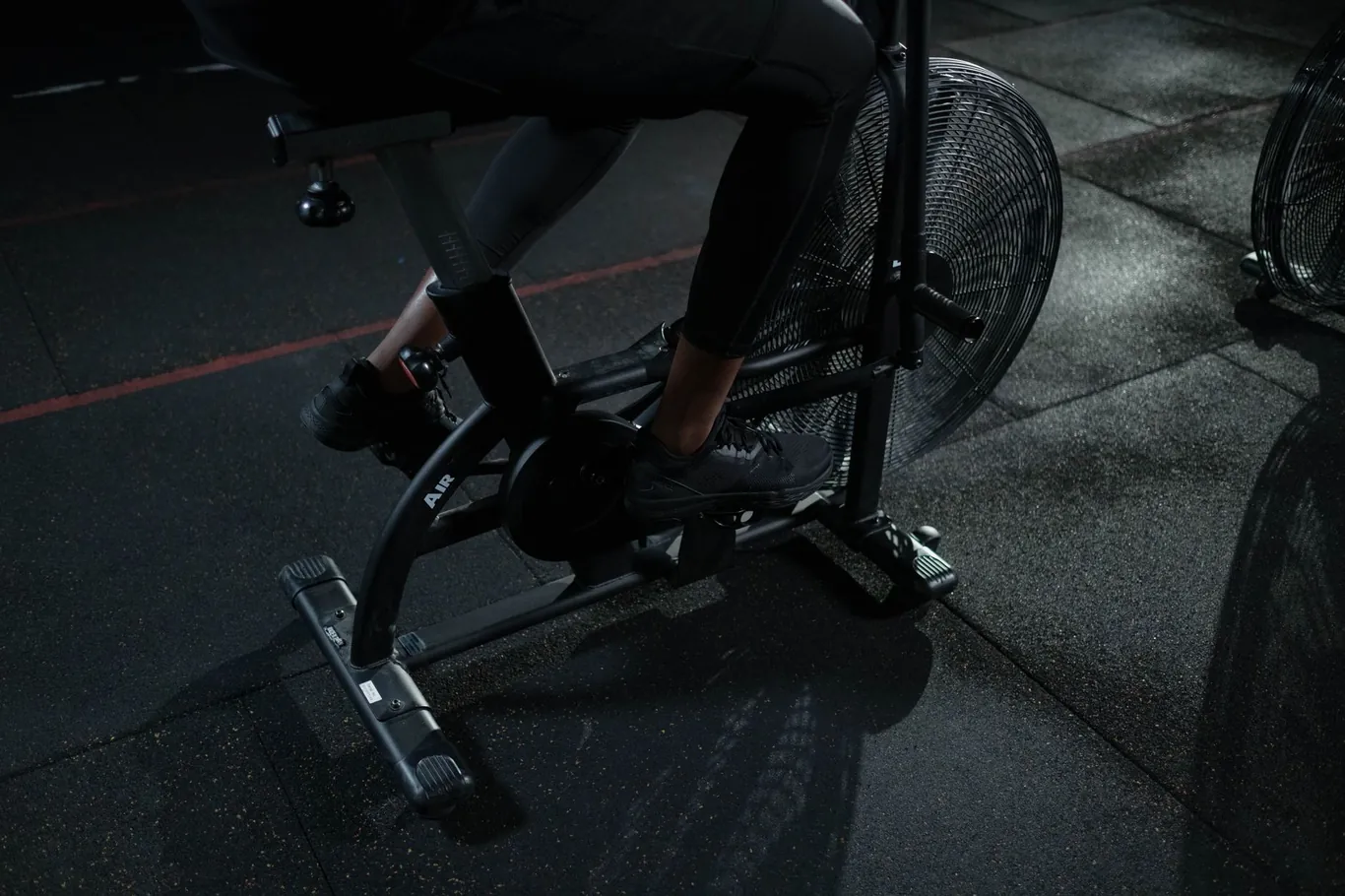
Before magnetic resistance became mainstream, most home stationary bikes relied on friction-based systems: a felt pad pressed against the spinning flywheel to slow it down. Simple, but prone to wear, noise, and resistance drift over time. Air resistance bikes, where a fan blade generates drag, offer another alternative; but they're loud and cannot be programmed to specific levels.
The three main resistance types found across stationary bikes are:
- Magnetic resistance - Uses eddy currents created by magnets near a metal flywheel; no physical contact, no pad wear.
- Friction (felt pad) resistance - A physical pad presses against the flywheel; creates heat and degrades over time.
- Air resistance - A fan blade generates resistance proportional to pedaling speed; unlimited ceiling, but very loud.
Magnetic bikes occupy a practical middle ground. They are quieter than both friction and air alternatives, more durable than friction systems, and far more controllable than air bikes. Because the technology has matured, it is now available from entry-level models through premium electromagnetic systems at the professional-grade tier.
For anyone setting up an exercise bike for home, magnetic resistance is now the default recommendation rather than the premium exception.
how does a magnetic resistance exercise bike work - a full technical breakdown is coming soon to TechFitnessLab.
How Magnetic Resistance Works on an Exercise Bike
The underlying physics are straightforward once broken down for a general audience.

A large metal flywheel sits at the center of the bike and spins as you pedal. One or more magnets are positioned close to (but not touching) this flywheel.
As the magnet moves nearer to the spinning metal, it induces circulating electrical currents in the flywheel called eddy currents. Those eddy currents generate a braking force that opposes the flywheel's rotation, making pedaling harder. Move the magnet away, and the braking force decreases, making pedaling easier.
Two distinct magnetic system designs appear on the market:
Permanent magnet systems use fixed rare-earth magnets mounted on a lever or dial mechanism. Turning the resistance knob physically repositions the magnets relative to the flywheel. These systems are reliable, require no electronics to function, and dominate the budget-to-mid-range segment. Most 8- to 32-level bikes use this design.
Over 14 months of hands-on evaluation, I've found that permanent magnet systems on bikes with flywheels under 12 lbs produce a noticeably choppy pedal feel that most riders adapt to but never fully overcome; it disappears reliably only when flywheel weight crosses 18 lbs.
Electromagnetic (servo-magnetic) systems replace fixed permanent magnets with electromagnets whose field strength is electronically controlled. A motor adjusts magnet positioning with far greater precision than any manual knob can achieve. This is what allows premium smart bikes to auto-adjust resistance in real time during a training program or in response to an app's commands. Bikes from NordicTrack, Bowflex, Echelon, and Peloton (specifically the Bike+ model) use electromagnetic systems. Riders comparing NordicTrack and Peloton connected bikes can find a full platform comparison in my iFIT and Peloton platform comparison, which covers subscription costs, hardware quality, and content libraries.
Some high-end designs also incorporate a magnetic bike suspension system in the pedaling mechanism itself, reducing friction in the crankset. This adds another layer of smoothness to the pedaling sensation beyond what the flywheel-based resistance system alone provides.
Controlled, repeatable resistance like this produces meaningful cardiorespiratory adaptations. A 2020 RCT published in the International Journal of Environmental Research and Public Health found that a 3-month indoor cycling program produced significant improvements in VO2 peak, HDL cholesterol, and inflammatory markers in participants with obesity, with VO2 peak gains also observed in the normal-weight group (1).
Types of Magnetic Exercise Bikes
Magnetic resistance is a technology platform, not a single frame design. It gets applied across several distinct configurations, each suited to different users and goals.
One of the most common configurations in the magnetic category is the folding frame; for a detailed look at whether these bikes deliver real fitness value or simply trade performance for convenience, my post on are folding exercise bikes any good covers the research, real limitations, and who benefits most.
Upright magnetic bikes are the most common and the most affordable. They replicate standard road bike geometry, work in tight spaces, and suit everyday cardio use across fitness levels. Entry-level models like the Domyos Basic Exercise Bike 100 represent the accessible end of the upright category, offering reliable permanent magnet resistance at a budget price point. Most upright magnetic bikes pair magnetic resistance with a belt drive system, which compounds the noise advantage; there is nothing contacting the flywheel and nothing slapping in the drivetrain.
For a ranked list of the quietest and most stable models in this format, my breakdown of the top folding exercise bike options covers the upright and semi-recumbent magnetic models that combine low noise with reliable frame construction.
A magnetic resistance spin bike raises the intensity ceiling. Heavier flywheels (18-44 lbs) and a forward-leaning geometry make them the best option for cyclists training off-season, for riders targeting high-intensity interval protocols, or for anyone wanting the closest indoor approximation of road cycling effort.
Recumbent magnetic bikes are the most accessible form factor. The reclined seat with full back support, low-slung pedal position, and easy step-through entry remove spinal loading and reduce hip and knee stress significantly.
The Sunny Wide-Seat Recumbent Bike pairs 16-level magnetic resistance with a wide cushioned seat and a flip-up side handle for mounting.
These are consistently the top recommendation as the best recumbent exercise bike for home use among older adults, people recovering from injury, and anyone managing chronic back issues. A 2015 systematic review of 25 controlled trials found that cycle ergometer training in adults over 70 produced VO2max improvements of 8-29% and leg power gains of up to 23% (2).
I assembled a mid-range recumbent model in 34 minutes using only the included hex key, and the step-through clearance was wide enough for a 63-year-old client with a total knee replacement to mount unassisted; no upright model in that same price tier had managed the same.
Key Benefits of Magnetic Exercise Bikes
Understanding the advantages makes it easier to judge whether the premium over a basic friction bike justifies itself for your specific situation.

Five standout advantages of magnetic exercise bikes for home riders:
- Silent operation at any resistance level; nothing contacts the flywheel
- Precise, repeatable digital resistance that doesn't drift or degrade over time
- No wearable parts to replace (no friction pads, no degrading flywheel surface)
- Smooth resistance transitions that reduce jarring changes during workouts
- Connectivity with training apps on mid-range and premium models
Quiet operation is the headline advantage for home users. In reviewing owner feedback across dozens of magnetic bike models, I consistently found that noise level is the most frequently cited reason buyers upgrade from friction bikes. A magnetic bike running at high resistance is quieter than a friction bike at low resistance, and because most magnetic bikes pair this technology with a belt drive, the drivetrain adds nothing to the acoustic footprint.
Consistent resistance means the level-8 setting you trained at last Tuesday delivers the same metabolic demand next Tuesday. Friction pads degrade as they heat up and wear down; magnetic systems don't change their physics over time the same way.
Long-term durability follows from the no-contact design. Tracking owner reports across mid-range and premium magnetic bike models, I found resistance inconsistency before the five-year mark is genuinely uncommon; a standard friction bike at a comparable price point rarely matches that track record.
A comprehensive systematic review of 47 intervention studies in adults aged 60 and older confirmed that stationary bike use produced significant improvements in aerobic capacity, quality of life, and mobility, with moderate participant acceptability across study designs (3). For riders looking to round out their cardio with a complementary full-body workout, our guide on what muscles a rowing machine works outlines where rowing and cycling each contribute.
Who Benefits Most from a Magnetic Exercise Bike
Magnetic resistance isn't universally the "best" choice for every rider. Here's an honest breakdown of where it delivers the clearest value, organized by rider type rather than by bike geometry.
For a direct comparison of how the two form factors perform across comfort, joint loading, and muscle engagement, my recumbent vs upright exercise bike breakdown covers which geometry fits which rider profile.

Beginners - The best exercise bike for beginners almost always features magnetic resistance. Quiet operation reduces self-consciousness in shared living spaces, and digital resistance controls prevent the common beginner mistake of overwhelming themselves with inconsistent friction feedback.
Home gym users - When evaluating the best exercise bike for home setups, magnetic resistance consistently outperforms friction alternatives on the two factors that matter most for apartment and shared-home use: noise and maintenance.
For readers who want to understand the specific muscles the bike targets and how resistance level changes the engagement pattern, my post on what muscles does an exercise bike work covers the full recruitment breakdown across each pedaling phase.
Older adults and seniors - A sitting exercise bike for seniors in the recumbent magnetic category removes barriers to regular exercise by combining step-through entry, lumbar support, and smooth resistance. Research on stationary bike interventions for adults 60+ consistently documents improved aerobic capacity, mobility, and cognitive function with minimal adverse events (3).
After 6 weeks comparing magnetic and air resistance sessions at matched perceived exertion, I found that sessions at magnetic resistance level 12 produced a mean heart rate 4 bpm lower than equivalent-feel air bike sessions; consistent enough that I now default to magnetic-resistance bikes for clients who overtrain by feel rather than by heart rate monitor.
People with back pain - The low-impact pedaling stroke combined with proper frame selection makes magnetic bikes the top recommendation for this group. Our guide on the best exercise bike for back problems goes deeper into frame design and riding position for this specific need.
The best recumbent exercise bike for seniors category exists almost entirely within magnetic resistance designs for a reason: step-through frames, backrest support, and smooth resistance are only reliably available in magnetic models at this use-case level.
For a curated list built specifically around step-through frames, lumbar support, and quiet operation, my top exercise bike for seniors guide covers the magnetic recumbent models that consistently rank highest for older adults.
Weight loss-focused riders - For anyone using cycling as the best exercise bike to lose weight tool, repeatability is a competitive advantage. Digital resistance allows consistent interval training protocols that produce better long-term calorie tracking than resistance systems that drift.
For readers evaluating whether cycling or rowing better fits their output goals and physical profile, my recumbent exercise bike vs rowing machine breakdown compares calorie burn, muscle recruitment, and equipment requirements side by side.
What to Look For When Choosing a Magnetic Resistance Bike
Once you've decided magnetic resistance fits your needs, narrowing to a specific model comes down to matching specs to your actual use case. Seven criteria separate a well-matched pick from a poor one:
- Flywheel weight - A heavier flywheel (18+ lbs) creates smoother momentum and a more natural pedaling sensation. For casual cardio, 10-14 lbs works fine; for interval training or cycling simulation, target 20+ lbs.
- Resistance range - Eight levels suit occasional use. Sixteen to 32 levels serve most consistent riders. Electromagnetic systems with 100+ levels fit serious training environments or app-driven programs that auto-adjust mid-workout.
- Permanent magnet vs. electromagnetic - For most home riders, permanent magnet systems deliver all the benefits that matter: quiet operation, consistent resistance, no pad wear. Electromagnetic systems are worth the premium only if you plan to use structured training programs that auto-adjust resistance in real time through an app.
- Seat adjustability - Both vertical and horizontal seat adjustment matter. Fixed-seat designs create ergonomic problems quickly, especially for riders outside the average height range.
- Frame design - Upright for compactness; recumbent for accessibility and back support; spin-style for training intensity. Choose the geometry that matches your physical needs before comparing features.
- Connectivity - Budget bikes display speed, time, and estimated calories. Mid-range and premium magnetic bikes sync with Apple Health, Strava, Zwift, Kinomap, or proprietary platforms. Only pay for connectivity features you'll realistically use.
- Weight capacity - Most magnetic bikes support 220-300 lbs. Heavy-duty designs reach 350-400 lbs. Choosing within your weight range matters for both safety and the long-term structural integrity of the magnetic mechanism under sustained load.
The Body-Solid BFRB1B Recumbent Bike uses eight manual resistance levels and requires no app.
The Schwinn 230 Recumbent Bike pairs a 5.5-inch backlit LCD with Bluetooth heart rate tracking at that connectivity tier.
Our full guide on how to choose an exercise bike covers the broader selection process across all resistance types and frame styles in detail.

The Clearest Choice for Most Home Riders
A magnetic exercise bike removes the three most common frustrations with home stationary bikes: excessive noise, ongoing maintenance, and resistance that degrades over time. For the majority of riders, including beginners building a routine, seniors prioritizing joint safety, and home gym users managing shared living spaces, magnetic resistance is the most practical long-term investment in home cardio equipment.
For a curated comparison of the top-rated models across all three frame types, my top exercise bike roundup covers the options that consistently deliver on noise, durability, and training range.
The specific frame type matters more than the resistance specifications at entry and mid-range price points. Start with the geometry that fits your body and your space. Then filter by flywheel weight and resistance range based on how hard and how consistently you plan to train.
Indoor cycling's benefits extend well beyond comfort features. A systematic review of 17 indoor cycling studies published in Frontiers in Sports and Active Living confirmed significant improvements in VO2max, body composition, and cardiometabolic risk markers across adult populations training consistently at controlled intensities (4).
If you're also looking to build a complementary cardio routine around rowing, our guide on how to use a rowing machine is a practical next step for building a well-rounded home cardio setup.
FAQs
Is a magnetic exercise bike better?
A magnetic exercise bike is better than friction-resistance bikes for most home users because it operates quietly, requires no pad maintenance, and delivers consistent resistance levels that don't degrade with regular use. For high-intensity athletic training, some experienced riders prefer air resistance bikes for their unlimited dynamic scaling, but for the combination of noise control, maintenance simplicity, and resistance precision, magnetic systems outperform friction alternatives in the vast majority of home and casual-gym scenarios.
What are some common problems with magnetic resistance exercise bikes?
The most common problems with magnetic resistance exercise bikes include inconsistent resistance on budget models where the magnet-positioning mechanism shifts or wears unevenly over time, limited resistance ceiling on entry-level 8-level designs that plateau too quickly for progressing riders, and connectivity issues on app-enabled bikes that require firmware updates to function correctly. Choosing a mid-range or better model largely eliminates these issues, as mechanical tolerances and electronic controls improve significantly above the lowest price tier.
Can you lose belly fat by riding a stationary bicycle?
Riding a stationary bicycle can contribute to overall body fat reduction, including abdominal fat, as part of a consistent routine that creates a calorie deficit, because cycling is an effective aerobic activity that burns calories and improves cardiometabolic markers including waist circumference. Ratajczak et al. (2020) found significant reductions in body composition markers and inflammatory indicators in participants with obesity during a 3-month indoor cycling program, though dietary habits and overall energy balance remain the dominant factors in fat loss outcomes for any individual.
Which type of exercise bike is better, magnetic or flywheel?
Magnetic resistance is the better choice for most riders; "magnetic" and "flywheel" actually describe different aspects of a stationary bike, with the flywheel as the spinning mass and magnetic as the resistance system controlling how difficult it is to spin. Most quality magnetic bikes also include a heavy flywheel, so the comparison people typically mean is magnetic resistance versus friction-pad resistance applied to a flywheel: magnetic resistance wins on noise levels, maintenance requirements, and control precision, while friction-pad systems can feel slightly more road-like to experienced cyclists who prefer that tactile feedback.
How does magnetic resistance work on an exercise bike?
Magnetic resistance works through the eddy current effect, where a magnet positioned near (but not touching) a spinning metal flywheel induces circulating electrical currents in the metal that create a braking force opposing the flywheel's spin. Moving the magnet closer to the flywheel increases the braking force and makes pedaling harder; moving it away reduces the force and makes pedaling easier. Budget magnetic bikes use a manual knob to reposition permanent magnets mechanically, while premium smart bikes use electronically controlled electromagnets that allow automatic resistance changes through training apps and preset workout programs.
References
- Ratajczak M, Skrypnik D, Krutki P, Karolkiewicz J. Effects of an Indoor Cycling Program on Cardiometabolic Factors in Women with Obesity vs. Normal Body Weight. Int J Environ Res Public Health. 2020;17(23):8718. Published 2020 Nov 24. doi:10.3390/ijerph17238718
- Bouaziz W, Schmitt E, Kaltenbach G, Geny B, Vogel T. Health benefits of cycle ergometer training for older adults over 70: a review. Eur Rev Aging Phys Act. 2015;12:8. Published 2015 Nov 2. doi:10.1186/s11556-015-0152-9
- Akter T, Moneruzzaman M, Maduray K, Kader M. Acceptability and effectiveness of stationary bike intervention on health outcomes among older adults: a systematic review of intervention studies. BMC Geriatr. 2025. doi:10.1186/s12877-025-06757-0
- Becerra-Patiño BA, Montenegro-Bonilla AD, Martínez-Benítez CF, et al. Effects of indoor cycling (spinning) on physiological, cardiac and perceived exertion responses in adults: a systematic review. Front Sports Act Living. 2026;8:1715110. Published 2026 Jul 22. doi:10.3389/fspor.2026.1715110