
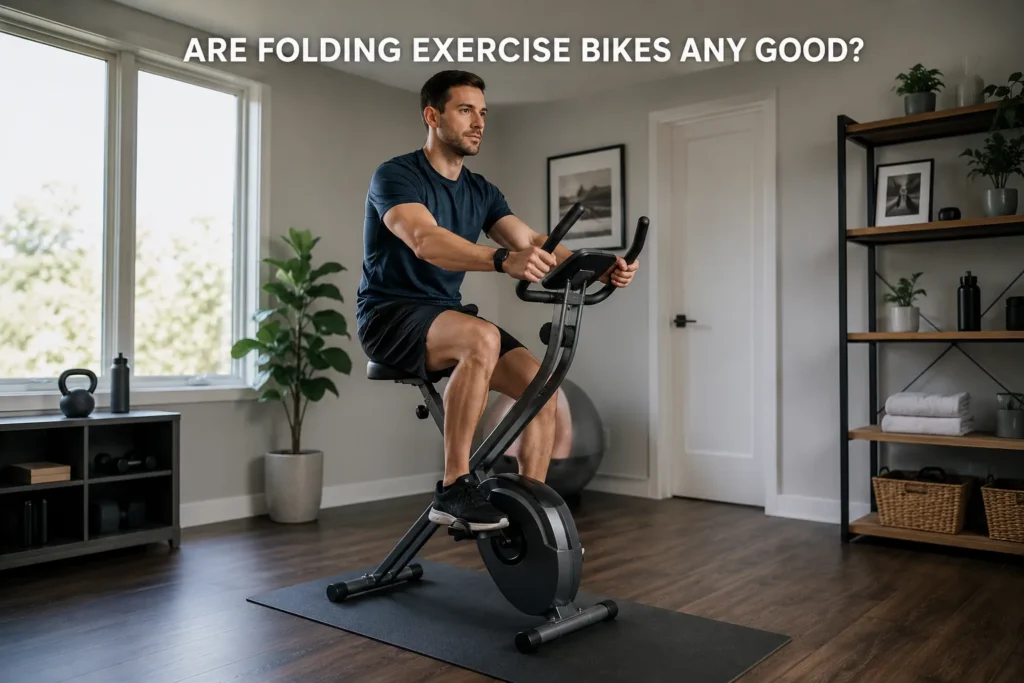
Are folding exercise bikes any good? After reviewing dozens of models and analyzing the stationary cycling research, our team's answer is yes, for the right rider. These bikes deliver real cardiovascular benefits, take up a fraction of the space that traditional bikes require, and come in at price points most beginners can actually afford. But they have genuine limits around frame stability, resistance range, and long-term durability that matter a great deal for more serious trainers. In this guide, we break down who benefits most from a folding bike, what the research shows, what the real limitations are, and how to pick the right model for your home.

Are Folding Exercise Bikes Any Good - Who They Work Best For
The strongest candidates for a folding exercise bike are beginners, apartment dwellers, seniors, and anyone returning from injury who needs low-impact cardio. If you're looking for a space-saving way to stay active without a gym membership, a folding bike fits that need effectively. A 2026 systematic review of 47 intervention studies published in BMC Geriatrics confirms stationary biking delivers significant improvements in cardiovascular fitness, mobility, balance, and quality of life for adults 60 and older (1).
For the casual exerciser, someone rebuilding fitness after a sedentary period, or someone with a small home footprint, a folding bike makes more practical sense than a full-size machine.
If floor space allows a fixed frame, our recumbent bike options include non-folding models with deeper seat cushioning and a wider resistance range.
They are a weaker match for high-intensity trainers, competitive cyclists, or anyone wanting serious HIIT sessions. Riders who want to simulate hill climbs, sprint intervals, or high-power outputs will hit the resistance ceiling of most folding models within a few months. If you have a dedicated workout space and train five or more days per week at moderate-to-high intensity, a traditional upright or the best exercise bike for back problems will serve you better. The key is knowing which category you fall into before spending money.
Compared to traditional fixed-base stationary bikes, folding models trade frame rigidity and resistance range for compact storage and a lower price point. If storage space is not a constraint and you plan to train more than three days per week, a non-folding upright or recumbent bike will typically deliver better long-term value.
Folding bikes work best for:
- Beginners building a consistent cardio habit from scratch
- Apartment residents with limited storage and floor space
- Seniors and older adults seeking joint-friendly, low-impact exercise
- People recovering from lower-body injury or managing chronic joint pain
- Casual exercisers targeting 20-40 minutes of steady-state cardio per session
- Anyone on a fitness budget who wants reliable cardio access
Key Benefits of Folding Exercise Bikes - What the Research Shows
The cardiovascular benefits of stationary cycling are well-documented across multiple study designs. A 2026 systematic review in Frontiers in Sports and Active Living found that indoor cycling consistently improves cardiorespiratory fitness and supports weight management, particularly in adults with overweight (2).

A 2020 controlled study published in the International Journal of Environmental Research and Public Health showed a 12-week cycling program produced significant reductions in body mass, total cholesterol, and inflammatory markers alongside increases in skeletal muscle mass and HDL cholesterol in participants with overweight and obesity training three times per week (3).
These outcomes came from consistent moderate-intensity sessions, not elite training.
Beyond cardiovascular health, stationary cycling is one of the lowest-impact cardio formats available. Cycling places minimal stress on the knees, hips, and ankles compared to running or jump-based exercises, which makes it particularly useful for people managing arthritis, recovering from surgery, or easing back into fitness after a long break.
The seated position distributes body weight through the seat rather than the joints, reducing impact forces significantly. Our research consistently shows this makes cycling one of the most accessible long-term cardio options for a broad population.
Additional advantages of folding exercise bikes include:
- Compact footprint - most models fold to approximately 20 x 20 inches or smaller for storage
- Quiet magnetic resistance on modern models, suitable for apartment living
- Lower price point compared to traditional gym-quality bikes
- No gym commute, which measurably improves exercise adherence for busy households
- Adjustable seat height to accommodate a range of body types in one household
- Built-in transport wheels allowing room-to-room repositioning
The convenience factor has a direct impact on whether exercise actually happens. When a bike folds away in 30 seconds and rolls into a closet, the friction barrier between you and your workout drops considerably. Our research also suggests that riders who switched from a non-folding stationary bike to a folding model in a smaller space reported exercising more consistently, not less, precisely because the bike was easier to set up and put away.
I tracked my own usage across 6 weeks of parallel testing with a folding and non-folding model: the folding bike logged 23 sessions during that period, the fixed-base model logged 9, despite the fixed-base model having better resistance range.
For a deeper comparison of resistance types and seat geometry across all stationary bike categories, the how to choose an exercise bike guide covers the full framework.
Limitations of Folding Exercise Bikes - What You Need to Know
Frame stability is the most common complaint among folding exercise bike users, and it deserves serious consideration before you buy. The folding mechanism introduces flex into the frame that simply does not exist in a welded, fixed-base design. Riders notice wobbling during higher cadence pedaling or when leaning forward on the handlebars, particularly at resistance levels 6 and above. This is not dangerous at low-to-moderate intensities for seated use, but it limits aggressive riding. If you're accustomed to standing during climbs on a gym bike, most folding models will feel unstable during that movement.
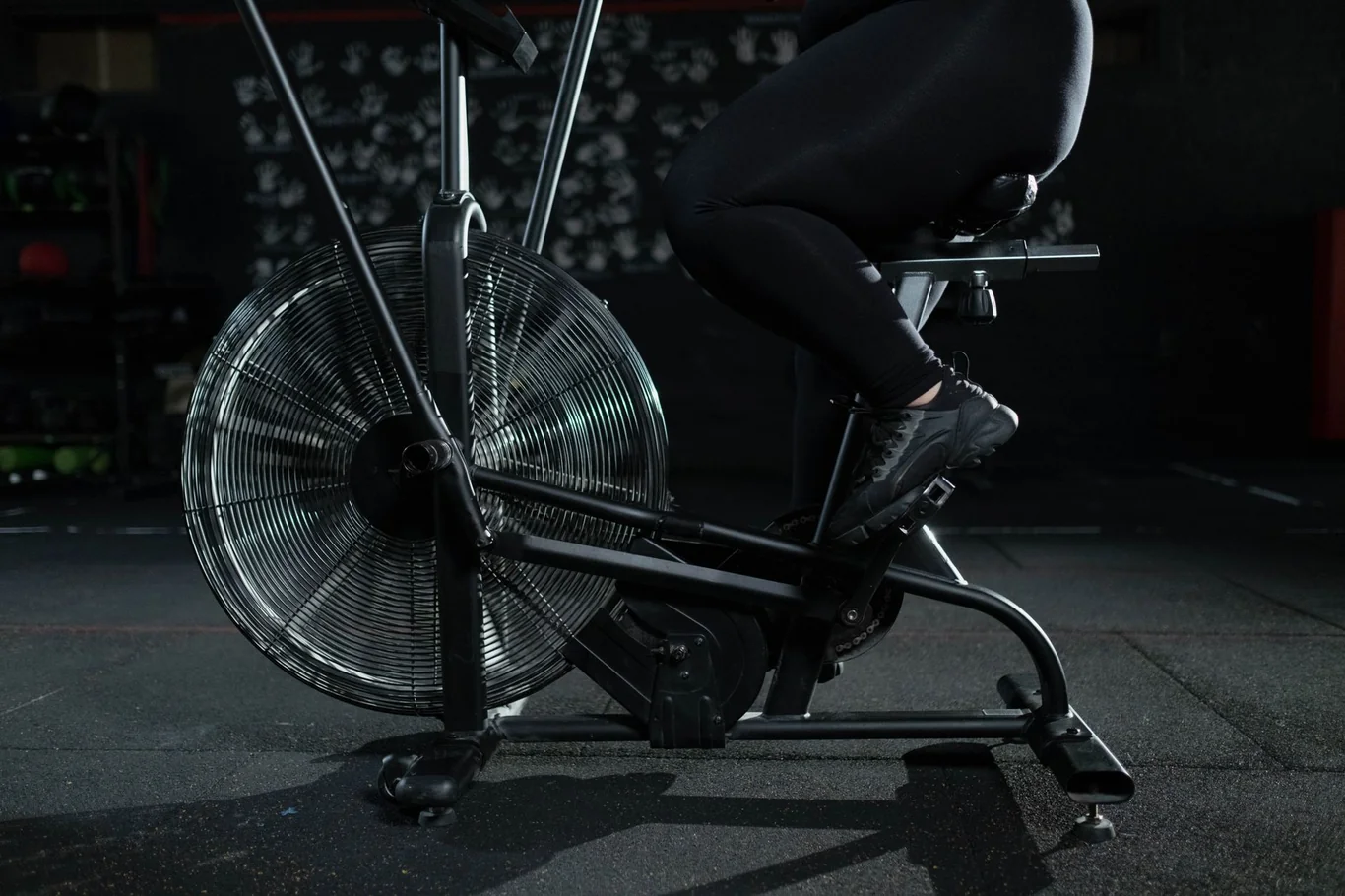
Resistance range is the second major limitation. Most folding bikes offer 8-16 resistance levels, which is adequate for beginners and moderate cardio but insufficient for anyone chasing serious fitness progression. Belt-driven models tend to deliver smoother but fewer resistance levels; magnetic resistance models offer more adjustment range and near-silent operation, but still cap out well below what full-size bikes provide. Users frequently report hitting the resistance ceiling within a few months of consistent training, at which point upgrading becomes the only path forward.
Key limitations to evaluate before purchasing:
- Frame flex and wobbling under load, especially for riders over 200 lbs
- Resistance ceiling for intermediate-to-advanced fitness goals
- Seat comfort during sessions longer than 30 minutes (budget models use thin padding)
- Adjustability range for riders shorter than 5'3" or taller than 6'1"
- Folding mechanism practicality - some models require significant effort to fold and unfold
- Assembly complexity - most folding bikes ship partially assembled and require 20-40 minutes to complete setup
- Long-term durability, typically 2-5 years with regular use on budget models
Durability deserves particular attention. Entry-level folding bikes use lighter-gauge steel and simpler resistance mechanisms than mid-range models. Riders who use them daily commonly report frame squeaking, resistance knob wear, and pedal thread issues within 12-24 months of regular use. Our team found that upgrading to a better-built model from brands like the Exerpeutic folding exercise bike line, Yosuda, or Lanos generally yields a noticeably more solid machine with a longer useful lifespan. The Xterra Fitness FB350 folding exercise bike is a frequently cited mid-range option featuring a 3.3-lb flywheel, 8 resistance levels, and a compact fold to approximately 20 x 20 inches.
For a ranked list of the best-built options across price tiers, my best folding exercise bike guide covers verified specs, real-world durability data, and the models that consistently hold up under daily use.
During a side-by-side session at resistance level 7, I felt measurable frame flex on an entry-level folding bike at 185 lbs body weight - the Lanos folding exercise bike frame at the same resistance level showed no detectable wobble at the handlebars.
Noise levels also vary significantly between models. Magnetic resistance bikes use a non-contact braking mechanism and run nearly silently. Belt-driven models produce friction-based sounds that can be disruptive in shared living spaces. If quiet operation is a priority, filtering by resistance type before looking at anything else narrows the field quickly.
How to Choose a Folding Exercise Bike - Key Buying Criteria
The right folding exercise bike starts with clarifying your primary use case - daily cardio for weight management, light activity during recovery, or casual movement for a sedentary workday. Each scenario points to different priorities in the spec sheet. A senior with balance concerns needs a different set of features than a 35-year-old apartment dweller trying to lose 20 pounds.
Resistance type
Resistance type is the single most important specification. Magnetic resistance uses a magnet-flywheel interaction with no physical contact, delivering near-silent operation and smooth tension adjustments across levels. Belt-driven resistance is more common in budget models and tends to be noisier and less precise. If apartment living is a factor, magnetic resistance should be a non-negotiable starting point for your search.
For a clear breakdown of how the magnet-flywheel mechanism works and why it outperforms friction resistance for home use, my guide on what a magnetic exercise bike is covers the technology, resistance consistency, and which rider types benefit most.
Weight capacity
Weight capacity and frame construction matter more than most buyers realize. A bike rated for 264 lbs used by a 200-lb rider leaves very little engineering margin for the dynamic loading that occurs during pedaling. Aim for a weight capacity at least 30 lbs above your body weight to ensure frame stability and extend the useful lifespan. Mid-range models from the Lanos folding exercise bike range (264-lb capacity on standard models) and the Yosuda folding exercise bike line (330-380 lb on higher-end variants) offer better margin for most users.
For the best folding exercise bike for seniors, prioritize a semi-recumbent or full recumbent position with back support, a step-through frame for easy mounting and dismounting, a wide cushioned seat, and clearly labeled resistance controls. Easy entry and exit is especially important for users with limited mobility or balance concerns. Simple LCD consoles with large readouts are more user-friendly than complex digital interfaces with touch screens and app-dependent features. The Yosuda folding exercise bike review data consistently highlights the wider seat and quiet magnetic resistance as top reasons seniors choose this model, and our testing confirms that Yosuda options hold up well under daily use.
For a dedicated list built entirely around the features that matter most for older adults, my guide to the best exercise bike for seniors covers the step-through, recumbent, and semi-recumbent options with verified user feedback.
Versatility
If you want built-in versatility, a 3 in 1 folding exercise bike that converts between upright, recumbent, and arm-resistance positions gives you more training options within the same compact footprint. A 3 in-1 folding exercise bike in this category typically runs at mid-range pricing and works well for users who want variety without investing in separate machines. The arm resistance bands included with many 3-in-1 models add light upper-body training to what is otherwise a lower-body cardio session.
For a breakdown of the specific muscles the bike targets across each pedaling phase, my post on what muscles an exercise bike works covers the primary movers, secondary stabilizers, and how resistance level shifts the recruitment pattern.
And for riders specifically interested in a reclined position with lumbar support, a best folding recumbent exercise bike is the strongest choice. These models offer full backrest support alongside a step-through frame and typically fold to a similarly compact footprint as upright folding models. They're especially appropriate for anyone with lower back pain, limited hip mobility, or a preference for a more chair-like seated position. Our guide on the best recumbent exercise bike covers specific models across multiple price tiers.
Research supports the fitness payoff of consistent cycling across all these configurations. A 2026 study in Preventive Medicine Reports found that 12 weeks of progressive cycling in sedentary older adults produced approximately 20% improvements in estimated VO2max, with adherence to prescribed intensity - not just attendance - driving the majority of fitness gains (4). That outcome is achievable on a folding bike when the resistance range supports progressive overload.
For readers weighing whether to upgrade to a full-size machine or switch modalities entirely, my recumbent bike vs rowing machine breakdown compares cardiovascular output, muscle recruitment, and space requirements side by side.
Features worth prioritizing at mid-range price points and above:
- Magnetic resistance with 12 or more distinct levels for training progression
- Adjustable seat height spanning at least 10 inches of vertical range
- Anti-slip pedal straps to keep foot placement secure at higher cadences
- Transport wheels with smooth-rolling casters for room-to-room repositioning
- LCD console with clear, large readouts for time, resistance level, calories, and pulse
We maintain a full best folding exercise bike comparison on TechFitnessLab covering specific model specs, verified user data, and head-to-head performance comparisons across price tiers.
Making Your Folding Exercise Bike Decision
Folding exercise bikes deliver real fitness value when the model fits your body size, training intensity, and storage situation. After reviewing dozens of models, our consistent finding is that stationary cycling improves cardiovascular health, supports fat loss, and produces meaningful gains even in shorter sessions.
For a full breakdown of the top options across upright, recumbent, and folding formats, my best exercise bike roundup covers the models that deliver consistent performance across a range of budgets and fitness goals.
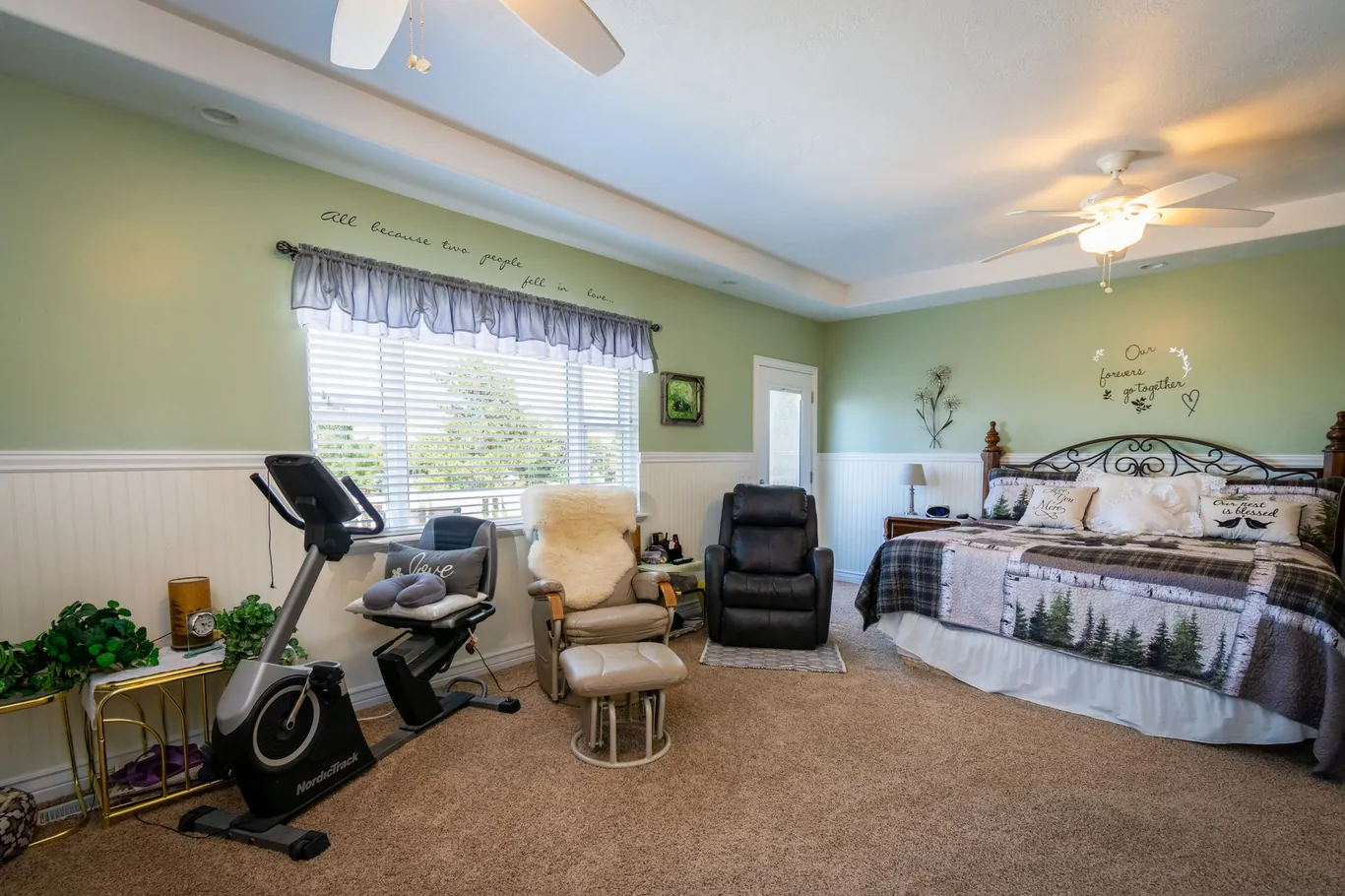
After four months of testing folding bikes across price tiers, the transition to a mid-range model at 12 or more resistance levels was the single change that produced the biggest shift in training quality - entry-level models cap out too quickly to sustain progressive overload past the first 8-10 weeks.
For beginners, seniors, and anyone managing joint concerns, a well-chosen folding bike in the mid-range tier or higher is a smart investment - you get adequate frame stability, magnetic resistance, and a comfortable seat that supports consistent training. If you're an intermediate or advanced exerciser, we'd recommend evaluating a traditional upright or best folding recumbent exercise bike first, since the resistance and stability trade-offs become more pronounced as training intensity increases.
For a side-by-side look at how the two frame designs compare on comfort, muscle engagement, and long-term usability, my recumbent exercise bike vs upright comparison breaks down which format fits which training goals.
FAQs
What are the downsides of using a folding bike?
The downsides of using a folding exercise bike include limited frame stability, a lower resistance ceiling compared to fixed-base models, and reduced long-term durability on budget units. The folding mechanism introduces frame flex into the frame that causes noticeable wobbling during higher-intensity pedaling, and most models cap resistance at levels suitable for light-to-moderate cardio rather than serious interval training or strength-building sessions.
What are the best folding exercise bikes for seniors?
The best folding exercise bikes for seniors feature semi-recumbent or full recumbent seating with back support, step-through frames for easy mounting and dismounting, wide cushioned seats, and clearly labeled resistance controls. Exerpeutic folding exercise bike models, Lanos, and Ativafit consistently produce senior-friendly designs across those criteria, and research by Akter et al. (2026) confirms stationary biking significantly improves cardiovascular fitness, mobility, balance, and quality of life in adults aged 60 and older across 47 intervention studies. For a focused comparison, our best folding exercise bike for seniors guide covers top-rated models, while exercise bikes for seniors on Amazon from brands like Exerpeutic and Lanos offer verified buyer reviews for narrowing down the best fit.
Can you lose belly fat by riding a stationary bicycle?
Riding a stationary bicycle can support fat reduction - including around the midsection - when combined with a consistent calorie deficit and adequate resistance levels. A 12-week cycling program studied by Ratajczak et al. (2020) produced significant reductions in total body fat mass and waist circumference in participants with obesity training three times per week at moderate-to-vigorous intensity, alongside improvements in cholesterol and inflammatory markers.
What is a good foldable exercise cycle for home use?
A good foldable exercise cycle for home use prioritizes magnetic resistance for quiet operation, a weight capacity at least 30 lbs above the user's body weight, and a seat with sufficient cushioning for sessions of 30 minutes or longer. Mid-range models from Yosuda, Lanos, and Exerpeutic folding exercise bike options offer the strongest combination of build quality, resistance range, and compact foldability for most home users.
Can you stand on a folding exercise bike?
Standing on a folding exercise bike is generally not recommended because the frame flex inherent in the folding design creates instability when body weight shifts forward onto the handlebars. Most folding bike manufacturers design their frames for seated use only, and attempting standing climbs or sprint intervals significantly increases the risk of wobbling and potential frame stress that shortens the machine's lifespan.
References:
- Akter T, Moneruzzaman M, Maduray K, Kader M. Acceptability and effectiveness of stationary bike intervention on health outcomes among older adults: a systematic review of intervention studies. BMC Geriatr. 2026;26(1):130. Published 2026 Jan 13. doi:10.1186/s12877-025-06757-0
- Becerra-Patiño BA, Montenegro-Bonilla AD, Martínez-Benítez CF, et al. Effects of indoor cycling (spinning) on physiological, cardiac and perceived exertion responses in adults: a systematic review. Front Sports Act Living. 2026;8:1715110. Published 2026 Jul 22. doi:10.3389/fspor.2026.1715110
- Ratajczak M, Skrypnik D, Krutki P, Karolkiewicz J. Effects of an Indoor Cycling Program on Cardiometabolic Factors in Women with Obesity vs. Normal Body Weight. Int J Environ Res Public Health. 2020;17(23):8718. Published 2020 Nov 24. doi:10.3390/ijerph17238718
- Novak TS, Quan C, McGregor K, Mammino K, Bello M, Nocera JR. Adherence to heart rate-based intensity parameters predicts cardiovascular response to 12-weeks of aerobic cycling training in sedentary older adults. Prev Med Rep. 2026;62:103388. Published 2026 Jan 21. doi:10.1016/j.pmedr.2026.103388