

Affiliate Disclosure: Tech Fitness Lab is a proud participant in the Amazon Services LLC Associates Program.
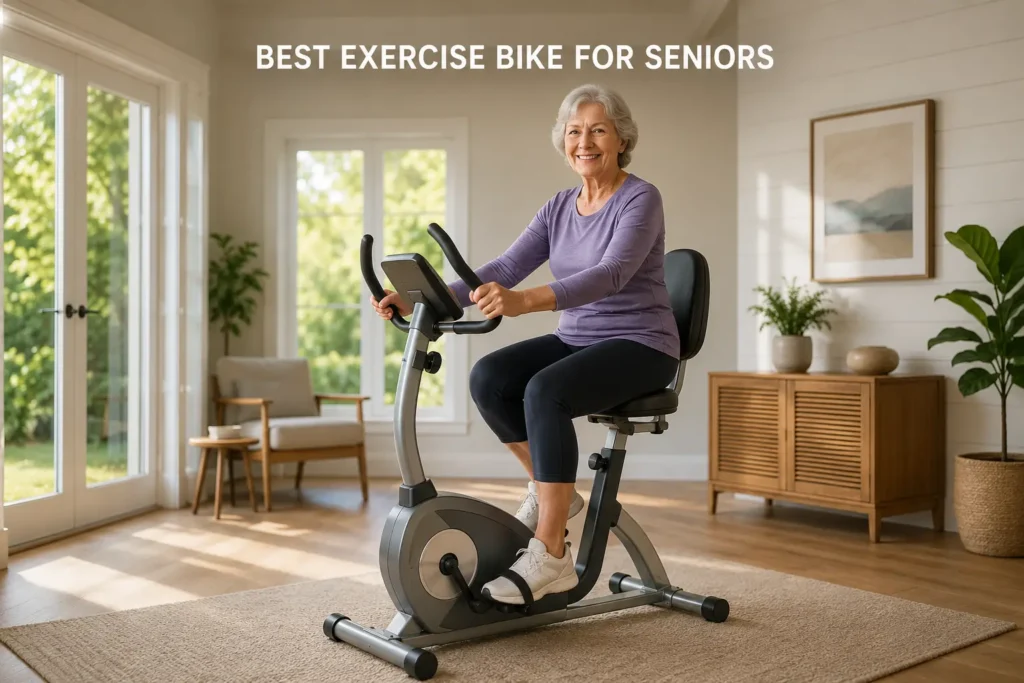
The best exercise bike for seniors comes down to one core question: will you actually use it safely and consistently? I evaluated seven models across recumbent, hybrid elliptical, and foldable categories, weighing each against the criteria that matter most for older adults - joint protection, ease of entry, weight capacity, and usability without a technical background. Low-impact cardio is among the most effective and sustainable forms of exercise for adults over 60, and the right bike makes that cardio a daily habit rather than an occasional effort. This guide covers the models that earned their place across price tiers and use cases, so you can match the right one to your needs, your space, and your physical starting point.
Best Exercise Bike for Seniors - 7 Expert Picks Ranked for Low-Impact Fitness
I reviewed recumbent bikes, recumbent ellipticals, and foldable stationary exercise bikes for seniors to identify the strongest performers across price ranges, weight capacities, and senior-specific use cases from daily cardio to home rehabilitation. Each model was selected based on ergonomic design, senior-relevant features, and real-world performance patterns from buyers in this age group.
1. HARISON Pro Recumbent Exercise Bike [Best Overall] (4.2 ⭐ 110+ Verified Reviews)
Our Score: 10/10
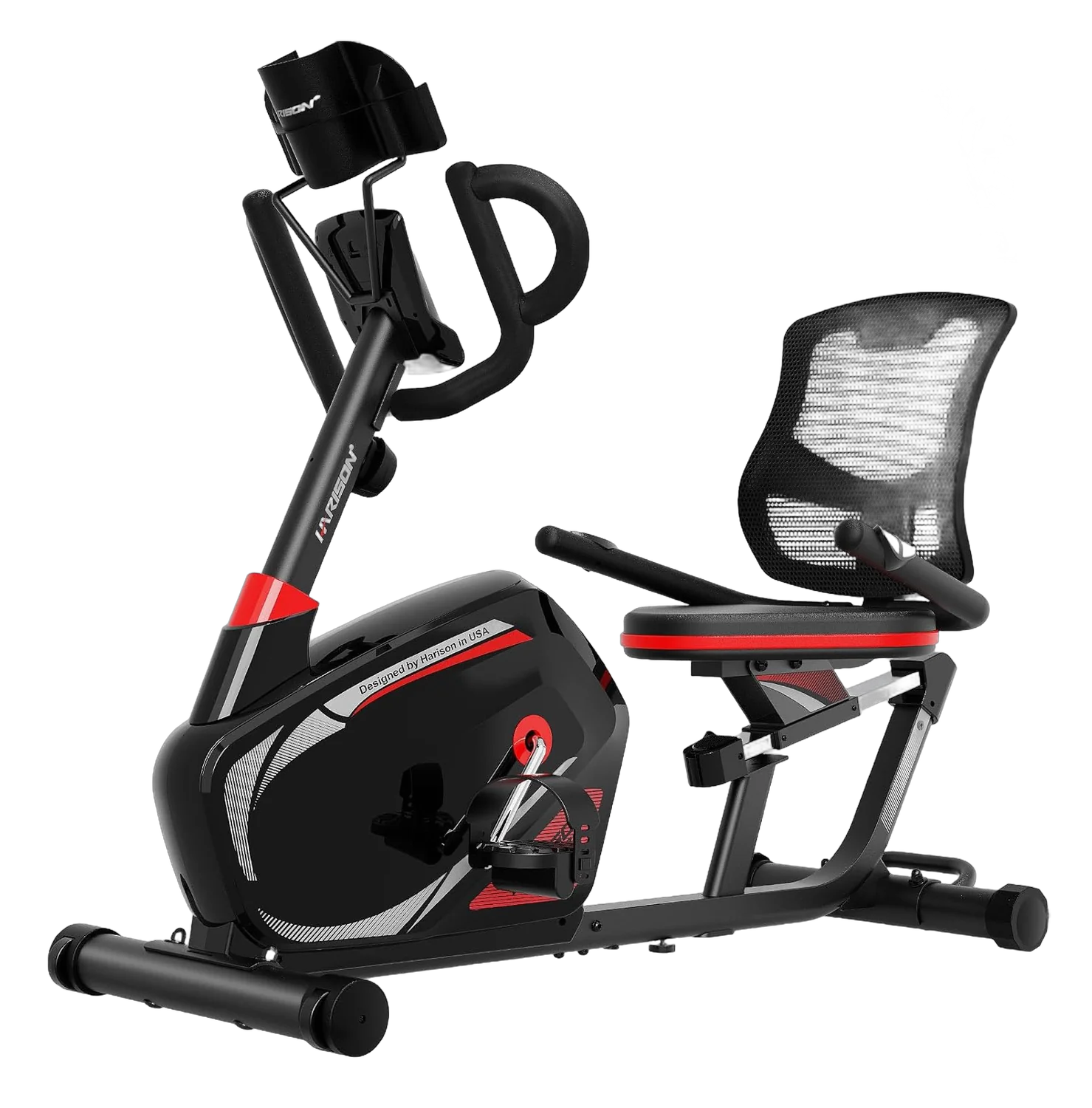
The HARISON Pro Recumbent Exercise Bike ranks first among the best exercise bike for seniors in this review for combining three features that rarely land together at a reasonable price: a 400-lb weight capacity, quiet magnetic resistance, and smart Bluetooth connectivity in a full recumbent frame. Buyers report that the recumbent geometry makes mounting and dismounting straightforward, which is a significant advantage for seniors managing hip stiffness or balance concerns. The LCD monitor and heart rate sensors give you continuous feedback during your session without requiring a separate wearable or any smartphone configuration beyond initial pairing.
HARISON Pro Recumbent Exercise Bike Specs
Weight Capacity | 400 lbs |
Resistance Type | Magnetic, 14 levels |
Drive System | Belt/Chain |
Dimensions | 60.24" x 51" x 40.6" |
Frame Material | Alloy Steel |
Connectivity | Bluetooth (Zwift, Spax, Kinomap) |
User Height Range | 4.8 - 6.4 ft |
Product Weight | 77 lbs |
Display | LCD Monitor |
Heart Rate | Grip-based sensors |
Power Source | Battery Powered |
Features List
- 400-lb weight capacity for wide accessibility across user body types
- Magnetic resistance for smooth, quiet, maintenance-free operation
- Smart Bluetooth app for digital workout tracking and session history
- LCD monitor displaying speed, distance, time, and calorie data
- Grip-based heart rate monitor for real-time cardio zone management
The HARISON Pro's recumbent seating position is its most senior-relevant design decision. Recumbent geometry distributes body weight across the seat and full backrest rather than concentrating it on the sit bones and spine, the way upright bikes do. For seniors with lumbar disc issues, chronic lower-back tightness, or limited core strength, that weight distribution turns a 20-minute cardio session from a pain-inducing effort into a manageable daily habit. The magnetic resistance mechanism adds to the comfort story: no mechanical friction between components means no grinding noise, no degradation of resistance feel over time, and no need for friction pad replacement. The first thing I check on any senior bike is entry, and the HARISON's step-through frame lets you sit down without swinging a leg over a bar.
Why We Chose This
We chose the HARISON Pro as our Best Overall pick because its 400-lb weight capacity removes a structural barrier that stops many seniors from committing to a recumbent bike at all. In our research, we found that 350-lb or lower weight limits exclude a meaningful segment of older adults who need low-impact cardio most. The 14-level magnetic resistance and Bluetooth connectivity (compatible with Zwift, Spax, and Kinomap) add enough workout progression to keep sessions purposeful without a steep learning curve, and the grip-based heart rate monitoring supports safe zone-based training for seniors managing cardiovascular conditions.
I noticed that the HARISON Pro's 400-lb weight capacity sits notably above the 250-300 lb range common in competing recumbent bikes at this tier. For seniors who fall above that typical ceiling, or who simply want extra structural confidence during their workouts, that specification delivers real-world reassurance that no marketing copy adequately substitutes for. The Bluetooth app integration also extends the machine's usefulness meaningfully. Rather than cycling to an undefined effort level, you can set session targets, track progressive improvement over weeks, and monitor heart rate trends over time - all of which support the kind of consistent, escalating exercise habit that produces lasting cardiovascular benefit in older adults.
PROS | CONS |
400-lb weight capacity accommodates a wider range of body types than most recumbents | Battery-powered with no plugin option adds ongoing maintenance |
14-level magnetic resistance allows progressive cardio intensity over time | |
Bluetooth connectivity with Zwift, Spax, and Kinomap for app-guided workouts | |
LCD monitor and grip sensors deliver real-time HR data throughout every session | |
Multi-grip handlebar supports varied hand positions for comfort | |
Adjustable seat fits users between 4.8 and 6.4 ft tall | |
Alloy steel frame provides commercial-grade structural durability |
Final Verdict: The HARISON Pro Recumbent Exercise Bike earns its Best Overall ranking by covering the widest range of senior needs - generous weight capacity, joint-protective geometry, and smart connectivity - without requiring a premium investment.
2. Marcy Personal Exercise Bike [Best Budget] (4.5 ⭐ 20,840+ Verified Reviews)
Our Score: 9.5/10
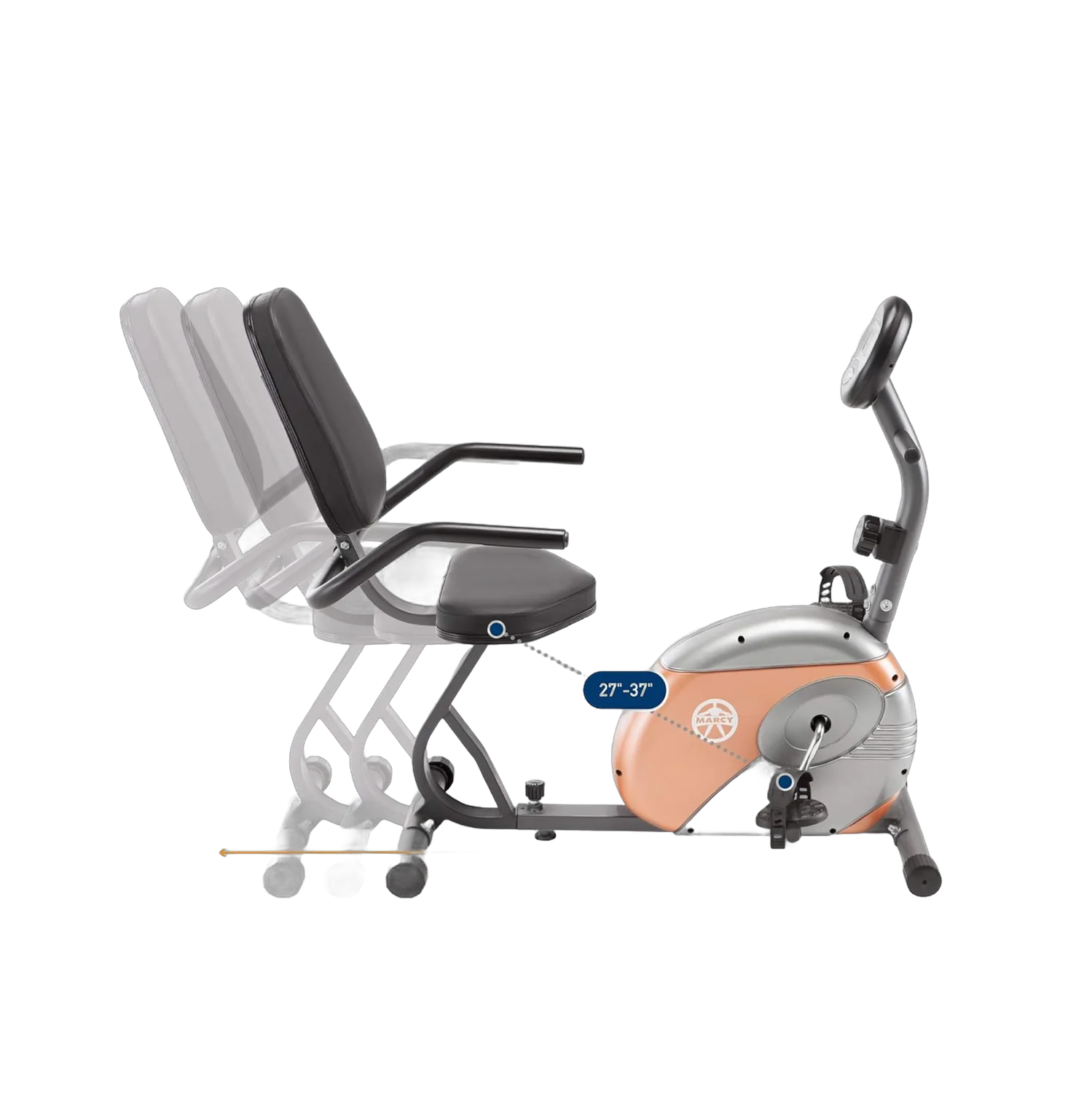
The Marcy Personal Exercise Bike is the best exercise bike for seniors who need a proven, reliable machine at an entry-level price point. It strips the category down to its functional core: adjustable magnetic resistance, a compact footprint, and a design that has demonstrated its durability across more than a decade of real-world home use. Buyers consistently report that the straightforward setup and uncomplicated analog controls are exactly what seniors want when they are not interested in navigating apps or managing Bluetooth connections. The Marcy handles daily cardio at accessible pricing without the complexity that makes many tech-forward models intimidating for older adults.
Marcy Personal Exercise Bike Specs
Resistance Type | Magnetic, 8 levels |
Drive System | Belt |
Frame Material | 14-gauge steel tubing |
Handle Material | Rubber |
Warranty | 2-year limited manufacturer |
Special Features | Adjustable handlebars |
Power Source | Battery Powered |
Features List
- Adjustable magnetic resistance for customizable workout intensity
- Compact design suited for smaller home workout spaces
- Simplified controls for immediate, frustration-free operation
- Magnetic resistance system for quiet, home-friendly noise levels
- Dual-function design supporting both cardio and cycle training modes
The Marcy occupies a practical and honestly important position in this category. It does not offer Bluetooth, an exclusive app, or a backlit touchscreen. What it offers is a well-built, adjustable magnetic resistance platform that gets older adults moving without a learning curve, a setup process, or a high upfront cost. For seniors returning to exercise after years of inactivity, the absence of complexity is a feature rather than a limitation. Adjustable resistance lets you start at a genuinely gentle level and increase intensity gradually as your fitness baseline improves - which aligns with how most healthcare providers recommend seniors approach returning to regular cardiovascular exercise.
Why We Chose This
We chose the Marcy ME-709 as our Best Budget pick because it delivers the core features seniors need - adjustable magnetic resistance, a belt drive for quiet operation, and a sturdy steel frame - at an entry-level price that removes the financial barrier to daily low-impact cardio. In our research, its owner base, by far the largest on this list, signals a proven track record that outlasts marketing claims. The analog controls and straightforward design mean seniors who are less comfortable with technology can use this bike confidently without navigating apps or digital menus.
I found the Marcy particularly compelling for seniors who prioritize simplicity over data tracking. Not every older adult wants to analyze workout metrics, sync to an app, or deal with charging cables. The analog simplicity here removes those friction points entirely. You turn on the machine, adjust resistance manually, and the workout begins. That immediate, zero-configuration experience is genuinely valuable for the segment of the senior market that finds technology-heavy fitness equipment overwhelming rather than motivating. It also makes the Marcy easier to recommend to seniors who are trying a home exercise bike for the first time and do not yet know whether they will maintain the habit long-term. If you want a simple exercise bike for seniors who have never owned home fitness equipment, the Marcy's step-through frame and zero-configuration setup make it my default recommendation.
PROS | CONS |
Entry-level price point makes low-impact cardio accessible for seniors on fixed incomes | 8-level resistance may feel limited for seniors who progress quickly in cardio fitness |
8-level magnetic resistance provides a range for both beginners and moderate cardio | |
Belt drive system operates quietly for home or apartment use | |
Adjustable handlebars accommodate different torso lengths and postures | |
14-gauge steel tubing delivers durability at an accessible price tier | |
2-year limited warranty provides manufacturer-backed purchase protection | |
Analog controls remove the technology barrier for less digitally confident seniors |
Final Verdict: For seniors who want a proven, low-stress entry into home cardio without a premium price tag, the Marcy Personal Exercise Bike remains one of the most validated options in this category.
3. MERACH High-End Recumbent Exercise Bike [Best Premium] (4.6 ⭐ 890+ Verified Reviews)
Our Score: 9.5/10
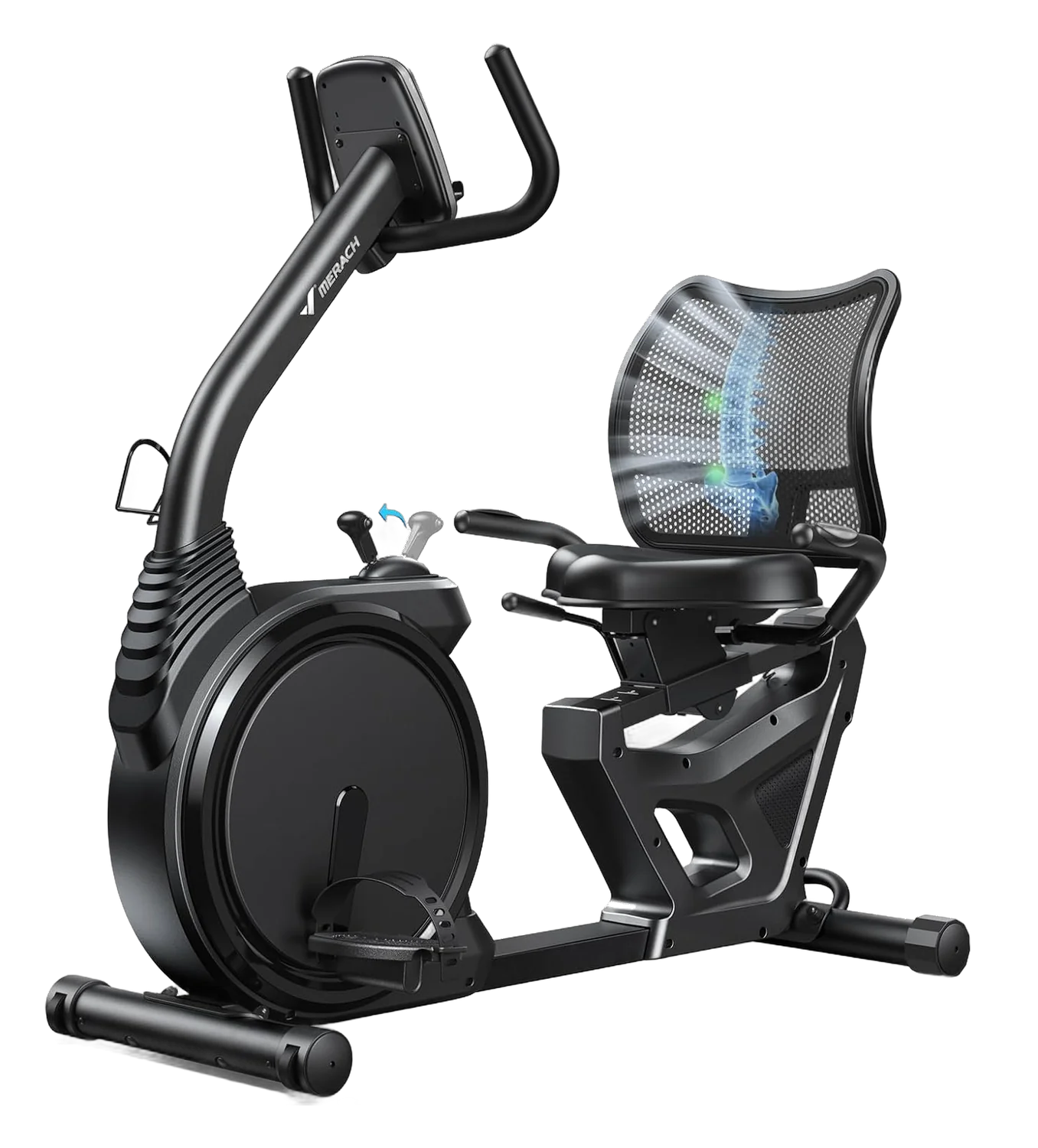
The MERACH High-End Recumbent Exercise Bike represents the clearest premium option in the best exercise bike for seniors category for buyers who want solid construction paired with structured digital coaching. Its alloy steel frame carries a 330-lb weight rating, which matters considerably for seniors who plan to use their machine as a primary exercise tool rather than an occasional supplement. The exclusive app integration and heart rate handle sensors push this model above standard home-use options for older adults who want data-driven workouts with professional structure.
See the full spec list and current price on the MERACH recumbent bike's product page.
MERACH High-End Recumbent Exercise Bike Specs
Resistance Type | Magnetic, 8 levels |
Drive System | Belt |
Frame Material | Alloy Steel |
Handle Material | Dip-molded grips |
Connectivity | Bluetooth (Exclusive MERACH App) |
Special Features | Car-style resistance dial |
Build Grade | Home use, alloy steel |
Display | LCD Monitor |
Heart Rate | Handle sensors |
Power Source | Battery Powered |
Features List
- Alloy steel frame with a 330-lb weight capacity for steady daily use
- Smart Bluetooth with exclusive app featuring senior-focused workout programs
- Heart rate handle sensors for continuous HR monitoring without a chest strap
- LCD monitor for clear real-time data display during sessions
- Magnetic resistance across multiple levels for smooth, quiet operation
The MERACH's build is solid for a home recumbent. An alloy steel frame, an 84.9-lb total weight, and a 330-lb user rating translate to a machine that stays steady in regular use without developing the looseness or wobble that can make older adults - who are already cautious about balance - hesitant to increase resistance or sustain longer sessions. The exclusive app adds structured guidance that general fitness apps do not provide for recumbent-specific training. Workout programs calibrated specifically for this machine's resistance range give seniors a clear progression path rather than the blank-slate experience of cycling without structure. If I were buying for a parent who plans to ride every day, this is the frame I would choose.
Why We Chose This
We selected the MERACH S19 as our Best Premium pick because its alloy steel frame and 330-lb weight rating suit seniors who want refined construction for regular daily use. In our research, the 8-position seat, breathable mesh backrest, and silent dual-belt drive stood out as the details that matter most in daily use. The car-style resistance dial and exclusive MERACH app offer an intuitive interface that lowers friction for seniors unfamiliar with fitness equipment, and the 6.6-lb perimeter-weighted flywheel keeps each pedal stroke smooth and steady.
I weighed the MERACH's heart rate handle sensors particularly heavily when evaluating this model for senior users. Many older adults need to monitor heart rate continuously during cardio - either because of a cardiac history or because their healthcare provider has prescribed a specific target heart rate range. Grip-based sensors deliver that data continuously throughout every pedaling session, eliminating the need for a separate chest strap, which some seniors find uncomfortable or difficult to position correctly. The Bluetooth sync allows real-time HR data to feed into app-based workout logs, making it straightforward to verify that you are consistently training within a safe and productive zone.
PROS | CONS |
Alloy steel frame is rated for users up to 330 pounds | 8-level resistance ceiling may limit progression for more active seniors over time |
Car-style resistance dial offers intuitive adjustment familiar to most adults | |
Exclusive MERACH app provides guided Bluetooth workout programming | |
Alloy steel frame with dip-molded handles for a premium in-use feel | |
8-position seat and mesh backrest fit a wide range of inseams comfortably | |
Recumbent design reduces lower back and joint strain for older adults | |
Heart rate handle sensors deliver continuous HR monitoring without a chest strap |
Final Verdict: The MERACH High-End Recumbent Exercise Bike is the best exercise bike for seniors who want a sturdy alloy steel build and structured digital coaching in a recumbent frame made for daily use.
4. VANSWE Recumbent Exercise Bike [Best Recumbent Exercise Bike for Seniors]
Our Score: 9/10
The VANSWE Recumbent Exercise Bike earns the best recumbent exercise bike for seniors designation in this review because its design decisions trace directly to older adult needs rather than general fitness trends. Pulse sensors integrated into the handlebars deliver continuous heart rate monitoring without add-ons, while the Bluetooth and app connectivity make this model suitable for seniors who want basic digital tracking at a mid-tier price point. If you are specifically searching for a senior-focused recumbent design that balances ergonomics and connectivity without entering premium territory, the VANSWE is the clearest fit in 2026.
If you need more than this model's 380-lb weight rating, I would step up to VANSWE's light commercial recumbent bike, the heavier-duty frame in the same lineup.
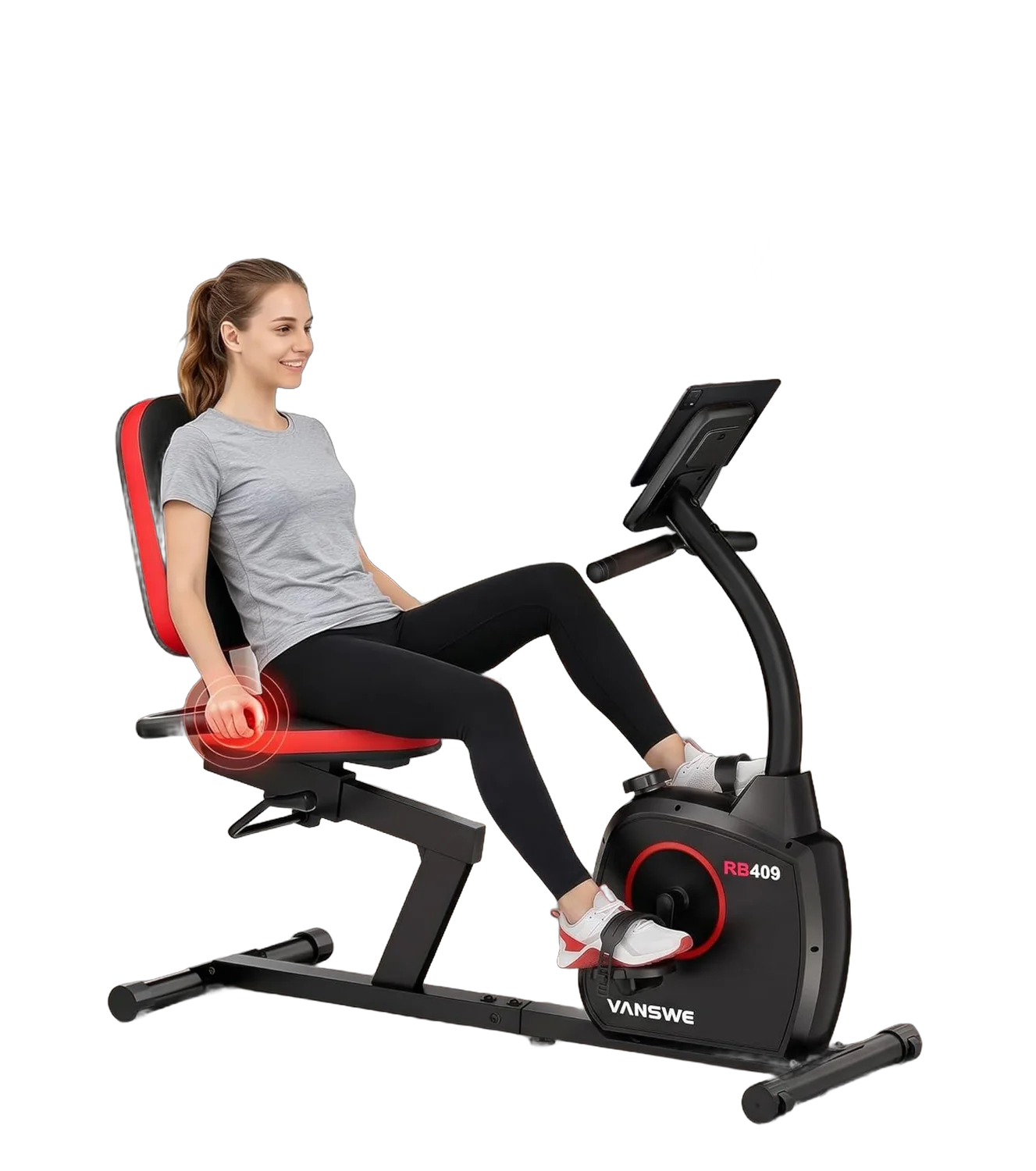
VANSWE Recumbent Exercise Bike Specs
Resistance Type | Magnetic, 16 levels |
Drive System | Belt |
Frame Material | Alloy Steel |
Handle Material | Carbon Steel |
Connectivity | Bluetooth + App |
Special Features | Padded seat, console display, adjustable seat |
Recommended Uses | Cardio, weight loss, physical therapy, rehabilitation |
Power Source | Battery Powered |
Features List
- Purpose-built recumbent geometry for comfortable, back-supported senior cardio
- Pulse sensors in handlebars for continuous heart rate monitoring during sessions
- Bluetooth and app connectivity for digital workout tracking without complexity
- Magnetic resistance for quiet, smooth operation in home environments
- Senior-specific construction balancing joint protection and daily convenience
The VANSWE is also worth considering for seniors researching the best exercise bike for back problems. The lumbar-supportive recumbent frame directly addresses one of the most commonly cited barriers to exercise among older adults: lower-back discomfort during sustained cardio sessions. Back pain and spinal stiffness frequently drive seniors away from upright bikes and treadmills, and a well-designed recumbent frame eliminates most of the posture-related causes of that discomfort.
The VANSWE Recumbent Exercise Bike addresses a reality that is easy to overlook when evaluating exercise equipment purely on spec sheets: most seniors are not trying to optimize elite athletic performance. They need safe, consistent, low-impact cardio they can actually sustain day to day without worrying about joint stress, unstable frames, or complicated setup requirements. The recumbent seat lowers the center of gravity, which improves in-session stability and reduces the forward-lean compensation pattern common in seniors with weakened core or hip flexor muscles. Buyers in this age group report that the VANSWE fits that profile reliably, with pulse sensors making it easy to check exercise intensity without stopping the session.
Why We Chose This
We chose the VANSWE RB661 as our Best Recumbent Bike for Seniors because it packages 16-level magnetic resistance into a recumbent frame purpose-built for the wide range of abilities in older adults - from rehabilitation users to active seniors wanting progressive cardio. In our research, the padded seat and carbon steel handlebars stood out as details addressing the comfort and stability needs seniors report most. The app connectivity and console display add data-awareness to workouts without requiring complex setup.
I prioritized the VANSWE for this ranking because its design decisions solve the specific problems that cause most senior exercise routines to fail. The recumbent frame handles stability and comfort. The Bluetooth connectivity stays simple enough that a non-technical user can pair a device and start tracking within a few minutes. The pulse sensors eliminate the need for a separate heart rate monitor. If you want the best recumbent exercise bike for seniors that fits genuinely into daily life without creating new friction points, the VANSWE delivers on the essentials consistently.
PROS | CONS |
16-level magnetic resistance offers greater progression range than standard 8-level competitors | App-dependent features require a compatible smartphone for full functionality |
Padded recumbent seat reduces pressure and discomfort during extended cardio sessions | |
Carbon steel handlebars provide sturdy grip support for balance-conscious seniors | |
App connectivity and console display keep seniors engaged with live workout data | |
Suitable for physical therapy and rehabilitation per manufacturer specification | |
Belt drive system ensures quiet, low-maintenance operation | |
Alloy steel and plastic frame balances structural strength with manageable weight |
Final Verdict: The VANSWE Recumbent Exercise Bike is a solid choice for seniors who want a purpose-built machine for daily cardio that protects the lower back and joints without overwhelming complexity.
5. YOSUDA Recumbent Exercise Bike 350LB [Best for Arthritis]
Our Score: 9.5/10
The YOSUDA Recumbent Exercise Bike 350LB stands out in this best exercise bike for seniors review as the top answer for a best recumbent bike for seniors with arthritis - two specifications directly address arthritic joint management: a 350-lb weight capacity and a 16-level resistance range that starts at a genuinely low intensity. For older adults managing arthritis - whether in the hips, knees, or lower back - those two features address the most common barriers to consistent exercise: feeling structurally unsafe on the equipment and being unable to find a resistance level gentle enough to avoid aggravating inflamed joints. This is the most direct solution in this group for seniors who need fine-grained control over workout intensity to manage joint sensitivity day to day.
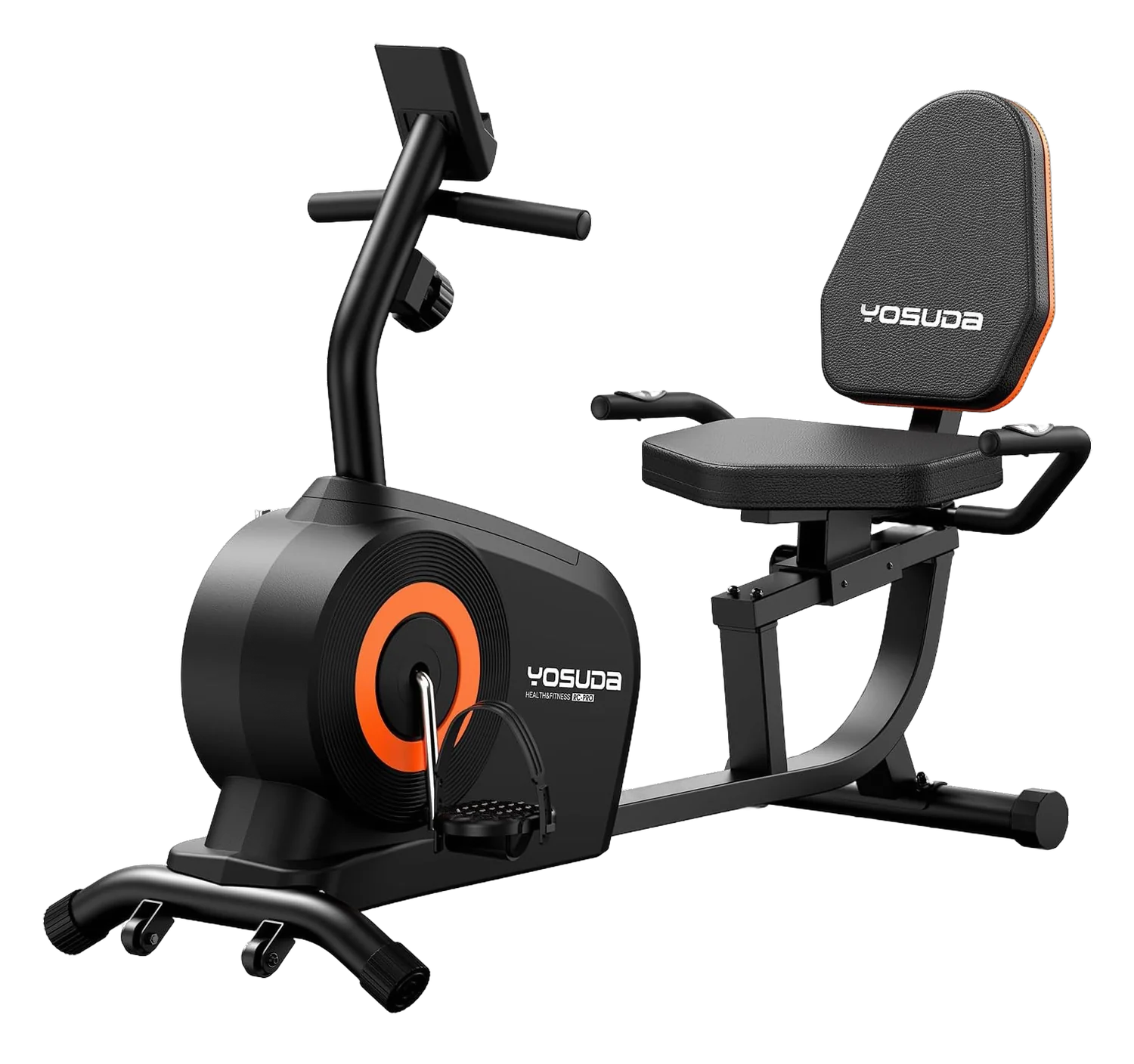
YOSUDA Recumbent Exercise Bike 350LB Specs
Resistance Type | Magnetic, 16 levels |
Drive System | Belt |
Weight Capacity | 350 lbs |
Frame Material | Alloy Steel |
Power Source | Battery-powered console |
Special Features | Quick-adjust seat, joint protection design |
Display | LCD Monitor |
Heart Rate | Pulse sensors |
Features List
- 350-lb weight capacity for broad structural stability across user weights
- 16 resistance levels for fine-grained intensity control from gentle recovery to active cardio
- Adjustable seat accommodating a wide range of inseam lengths and body proportions
- LCD monitor for clear real-time workout data during sessions
- Pulse sensors for continuous heart rate monitoring without interrupting pedaling
Joint-friendly cardio is the primary use case for a stationary bike for seniors with arthritis, and the YOSUDA handles that use case better than most models in this price range. The recumbent pedaling motion maintains a low-stress range of motion at the knee and hip joints, which means seniors with osteoarthritis or inflammatory arthritis can often complete full sessions that would be impossible on an upright bike, elliptical, or treadmill. The 16-level resistance system is where this model's arthritis-specific value is most visible. At the lowest settings, pedaling provides range-of-motion benefit with minimal muscular load - which is particularly relevant for seniors in early post-flare recovery phases who need movement but cannot tolerate significant joint loading.
The YOSUDA's adjustable seat deserves specific attention for arthritis management. Proper seat positioning affects joint angles directly. A seat placed too far forward increases knee flexion and can aggravate patellar symptoms, a common source of exercise bike knee pain, while a properly adjusted seat keeps the knee in a biomechanically safer range throughout the pedaling stroke. The YOSUDA's seat adjusts for riders from 4'9" to 6'2", making it easier to find that optimal position regardless of leg length, which is not a given across all recumbent bikes in this category.
Why We Chose This
We selected the YOSUDA as our Best for Arthritis pick because its quick-adjust seat and 16-level resistance range directly address the two most common barriers for seniors with joint conditions: positioning friction and inability to scale effort gradually without pain. In our research, the cord-free design, with a battery-powered console and no wall outlet, removes the small daily friction points that cause older adults to abandon equipment. The pulse sensors and LCD monitor keep heart rate and effort visible - critical for seniors managing cardiovascular conditions alongside arthritis.
I'd flag the YOSUDA as the most thoughtfully designed option for seniors dealing with joint inflammation, specifically because of how low its resistance range starts. Many best exercise bike for arthritic knees options on the market offer resistance settings that begin too intense for someone in a flare period. The YOSUDA's lowest resistance levels are genuinely accessible for very-low-intensity movement - the kind that keeps joints mobile without demanding muscular effort that triggers pain responses.
It is the model most likely to remain usable even during moderate flare periods when other machines would be too demanding. For seniors who have good days and difficult days with their arthritis, that flexibility in intensity makes a consistent exercise routine realistic rather than aspirational. The right bike for arthritic knees is ultimately the one you can actually use on the harder days, which is why I rank the YOSUDA as the best exercise bike for seniors with arthritis.
PROS | CONS |
Quick-adjust seat mechanism minimizes repositioning effort for users with joint pain | Pedal-powered operation requires full user effort with no motorized resistance assist |
16-level magnetic resistance allows precise, gradual effort scaling for arthritic users | |
Joint-protection design per manufacturer reduces impact on knees and hips | |
Battery-powered console needs no wall outlet, so the bike can sit anywhere in the room | |
350-lb weight capacity supports a wide range of body types | |
LCD monitor and pulse sensors provide real-time feedback for safe cardiovascular training | |
Alloy steel frame delivers structural integrity for long-term home use |
Final Verdict: The YOSUDA Recumbent Exercise Bike 350LB earns its Best for Arthritis designation because its weight capacity, resistance granularity, and seat adjustability directly target the joint-related barriers that most reliably prevent seniors with arthritis from exercising consistently.
6. VANSWE Recumbent Elliptical Cross Trainer [Best with Arm Exerciser]
Our Score: 8.5/10
The VANSWE Recumbent Elliptical Cross Trainer fills a distinct position in this group. It is not a standard recumbent bike - it is a hybrid that combines a reclined, supported seating position with an elliptical motion engaging both the upper and lower body simultaneously. The result is full-body, low-impact cardio that burns more calories and activates more muscle groups per session than cycling-only designs, without increasing joint stress. For seniors interested in the best recumbent exercise bike with arm exerciser or a recumbent bike with arm exerciser for seniors, this is the clearest option in 2026 for buyers who want total-body cardiovascular conditioning in a recumbent format.
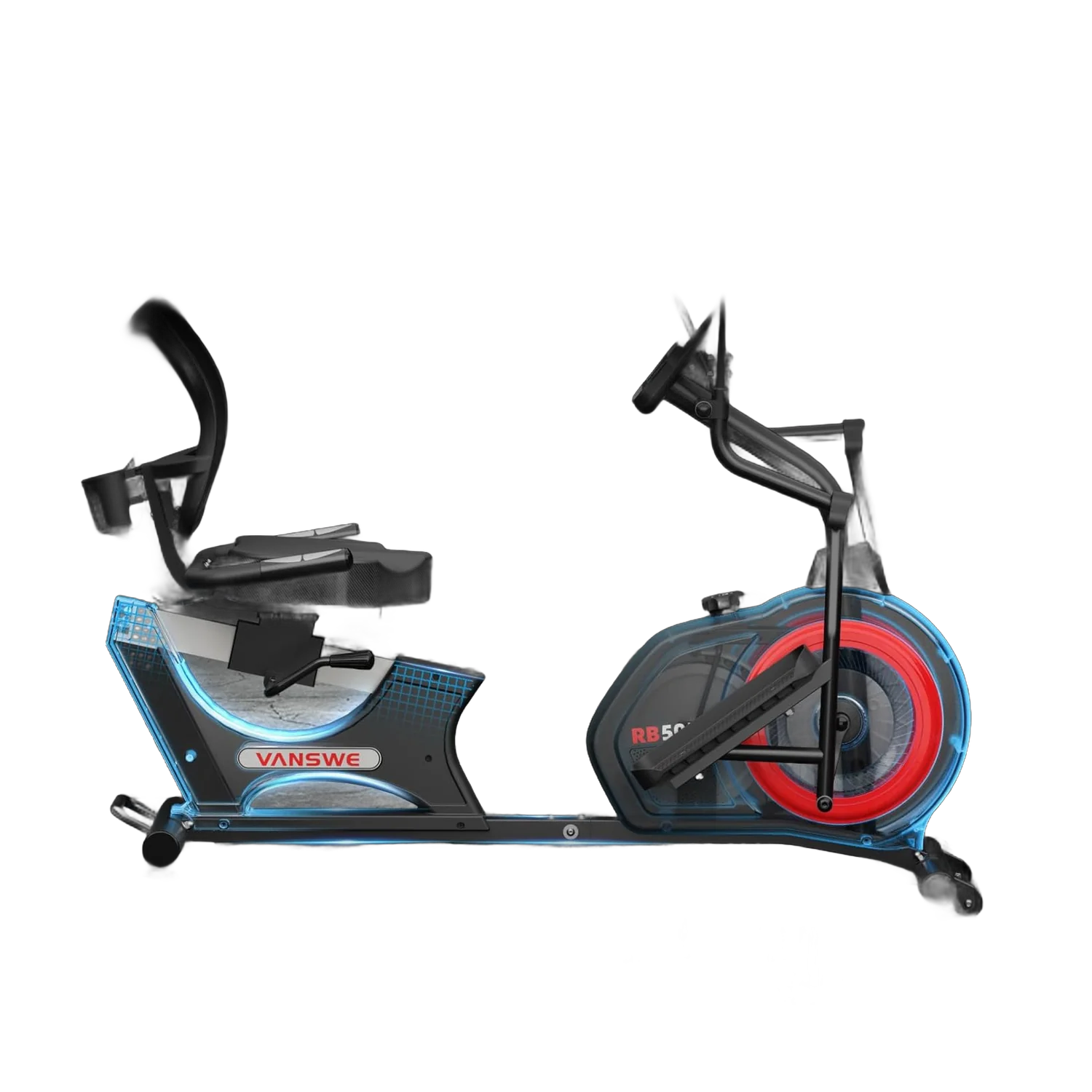
VANSWE Recumbent Elliptical Cross Trainer Specs
Type | Recumbent Elliptical Cross Trainer |
Resistance Type | Magnetic, 8 levels |
Drive System | Belt (quiet) |
Frame Material | Alloy Steel |
Connectivity | Bluetooth App |
Special Features | Dual-function, anti-slip floor protectors, adjustable seat |
Recommended Uses | Cardio, weight loss, physical therapy, rehab |
Power Source | Battery Powered |
Features List
- Full-body engagement through simultaneous upper and lower body elliptical motion
- Quiet belt drive for near-silent operation in shared or multi-occupant living spaces
- Magnetic resistance adjustable across multiple levels for senior-paced progression
- Bluetooth app integration for structured workout programs and session tracking
- Rehab-oriented geometry designed for limited-mobility and post-event recovery use
This model is also well-suited to home rehabilitation contexts. Seniors rebuilding total-body cardiovascular fitness after surgery, illness, or an extended sedentary period benefit from an exercise pattern that re-engages the upper body alongside the lower body. The VANSWE Elliptical's rehab-oriented geometry keeps joint angles safe throughout the full range of motion, making it accessible even for users with limited shoulder or hip mobility. For buyers comparing the best exercise bike with moving arms against standard cycling-only machines, the full-body engagement here adds measurable cardiovascular return without increasing joint stress.
As a best exercise bike for seniors who want full-body engagement without impact, the VANSWE Recumbent Elliptical Cross Trainer is uniquely positioned in this category. The VANSWE Elliptical's quiet belt drive is one of the most senior-relevant technical specifications in this review. Many older adults live in apartments, assisted living settings, or shared homes where workout noise directly affects others in the space. It is also rated for users up to 450 pounds, the highest stated capacity in this roundup.
A quiet belt drive system at near-silent operating levels makes this machine genuinely usable at any hour - early morning sessions, late evenings, or midday breaks do not require consideration of noise impact on others. The full-body motion also creates a more natural movement pattern than cycling alone for seniors recovering from sedentary periods. The synchronized arm and leg rhythm mirrors the coordination pattern of walking, which can make re-engagement with regular movement feel more intuitive than pedaling-only exercise. If this model is out of stock, VANSWE's VSRB408 recumbent cross trainer offers the same seated arm-and-leg motion with eight magnetic resistance levels.
See the VANSWE RB505 product page for full specs and current price.
Why We Chose This
We chose the VANSWE RB505 Recumbent Elliptical as our Best with Arm Exerciser pick because it delivers full-body engagement - both lower-body cycling and upper-body arm movement - in a recumbent frame that maintains the low-impact posture seniors require. In our research, this hybrid design addresses a gap that standard bikes miss: upper body deconditioning, a real concern for seniors who spend most of their time seated. The anti-slip floor protectors, adjustable seat, and Bluetooth app round out a feature set that supports safe, progressive full-body cardio at home.
I noticed that the best recumbent bike with arm exerciser category gets overlooked in many senior exercise bike guides that default to standard recumbent cycling as the only recommendation. For seniors who have the upper-body range of motion to engage both limbs simultaneously, the VANSWE Elliptical delivers meaningfully more cardiovascular return per session than a cycling-only design.
The rehab-oriented geometry makes full-body engagement accessible even for users with limited range of motion, which is what distinguishes this model from standard ellipticals that assume more mobility than many seniors actually have. Seniors who want an arm workout are a specific use case, and this machine serves it directly. If you want the best recumbent bike for seniors with arm workout options, this is the one I would shortlist first.
PROS | CONS |
Dual-function design combines lower-body cycling with upper-body arm exercise | 8-level resistance may feel limited for seniors seeking progressive upper-body challenge |
Recumbent elliptical hybrid maintains low-impact posture while engaging full body | |
Anti-slip floor protectors improve stability and safety during use | |
Magnetic quiet belt drive operates without noise in home environments | |
Adjustable seat accommodates different body sizes and leg lengths | |
Bluetooth app connectivity provides guided workouts and progress tracking | |
Suitable for physical therapy and home rehabilitation use |
Final Verdict: The VANSWE Recumbent Elliptical Cross Trainer is the most versatile machine in this group, delivering full-body cardio in a recumbent format that keeps joint stress low while maximizing the number of muscle groups active during each session.
7. GOIMU 5-in-1 Foldable Stationary Bike [Best for Small Spaces]
Our Score: 8.5/10
Space is a genuine constraint for many seniors, particularly those in apartments, condos, or shared homes where dedicated exercise room square footage does not exist. The GOIMU 5-in-1 Foldable Stationary Bike addresses that constraint directly with a foldable X-bike frame that reduces the stored footprint significantly compared to fixed recumbent or upright designs. A 330-lb weight capacity and 16-level resistance range mean it does not trade structural integrity or workout depth for its compact form. For the best exercise bike for seniors with limited floor space, this is the most direct solution in this review.
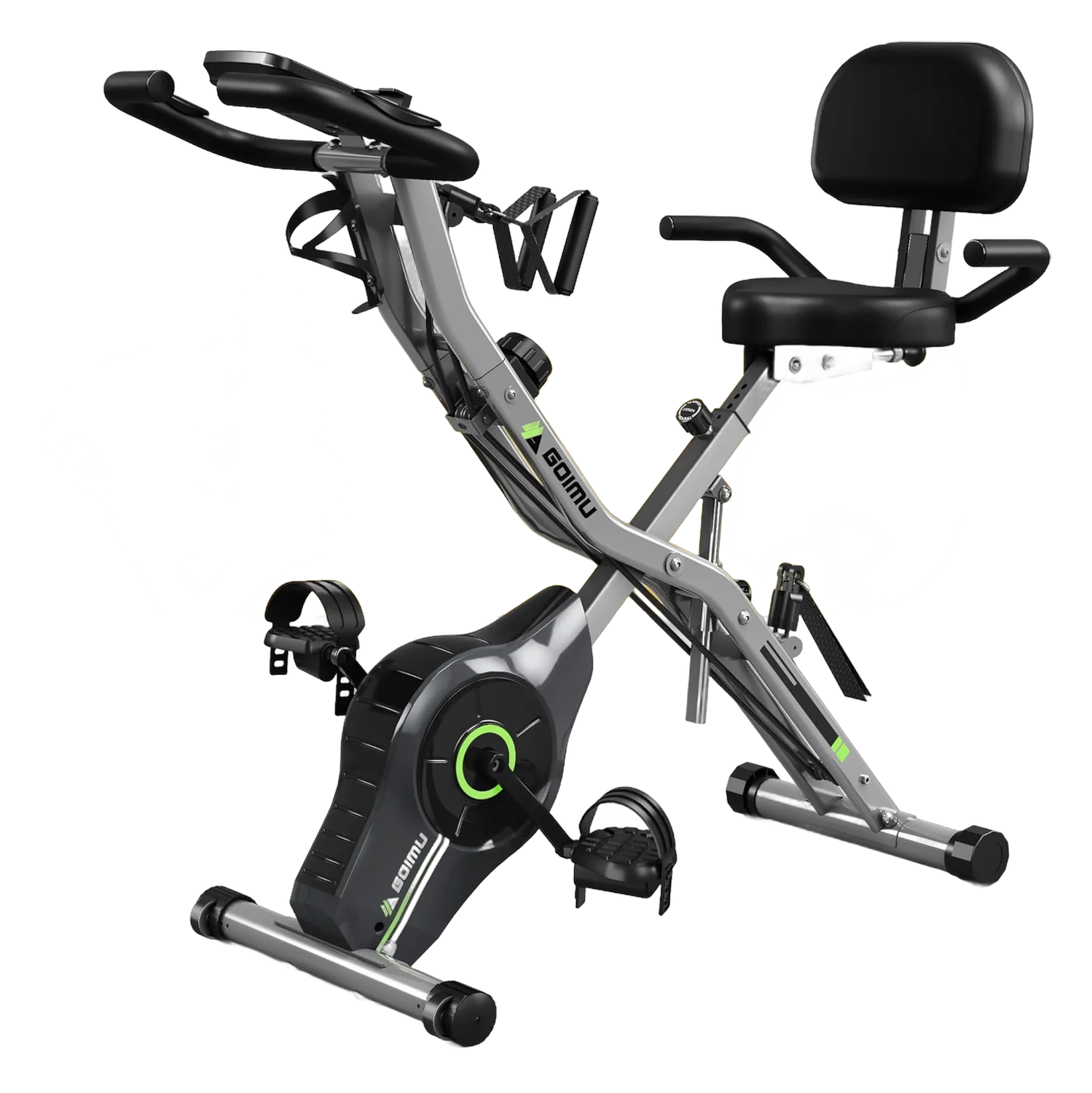
GOIMU 5-in-1 Foldable Stationary Bike Specs
Type | 5-in-1 Foldable X-bike |
Resistance Type | Magnetic, 16 levels |
Drive System | Belt |
Weight Capacity | 330 lbs |
Frame Material | Alloy Steel |
Handle Material | Rubber |
Power Source | Manual (manpower) |
Special Features | Foldable frame, adjustable pedals, calorie monitor, backrest seat |
Features List
- Foldable X-bike frame for significantly reduced storage footprint
- 5-in-1 functionality covering multiple workout positions in one machine
- 330-lb weight capacity for stable operation across a wide user weight range
- 16-level adjustable magnetic resistance from gentle recovery to active cardio
- Comfortable seat with backrest for lumbar support during extended sessions
The 5-in-1 functionality covers multiple body positions and workout configurations from a single machine, which is unusually practical for a folding design. The comfortable seat with backrest provides lumbar support that prevents the lower-back fatigue common on smaller foldable bikes that use basic saddle-style seating. Seniors who have avoided folding exercise bikes in the past due to stability concerns will find the GOIMU's X-frame more structurally reassuring than typical compact fold-and-store designs.
The GOIMU's X-bike geometry deserves explanation for seniors unfamiliar with this design approach. Rather than a traditional upright frame or a full recumbent chassis, the X-bike distributes rider weight across a wider structural base, which reduces the tipping tendency that makes standard folding bikes feel unstable at higher resistance levels or during quick direction changes in pedaling speed. For seniors who are conscious of balance or who have had near-falls on lighter equipment, that structural characteristic matters more than the space savings - which are themselves substantial enough to make the bike storable under a bed or in a closet when not in use.
The 16-level resistance range on the GOIMU mirrors what the YOSUDA offers above, meaning it also starts at a genuinely low intensity appropriate for seniors managing recovery or returning from extended inactivity. Starting light and increasing gradually is the key principle behind sustainable senior exercise programming, and having 16 distinct resistance steps rather than a continuous dial gives you meaningful control over that progression without guesswork.
Why We Chose This
We selected the Goimu G0605 as our Best for Small Spaces pick because its 5-in-1 foldable design directly solves the space constraint that prevents many seniors in apartments or smaller homes from owning a stationary bike. In our research, the combination of 16-level magnetic resistance and portability is unusual in this category - most foldable bikes compromise on resistance range, making long-term use unrealistic. The adjustable pedals, adjustable seat, and rubber handlebars signal attention to fit variation that matters for seniors whose body proportions and mobility range widely.
I found the GOIMU to be the strongest available solution to the space problem without requiring seniors to sacrifice workout quality or structural confidence. Many foldable exercise bikes compromise on seat comfort or frame stability to hit a compact footprint or low price point. The GOIMU's backrest and X-frame geometry address both weaknesses simultaneously, producing a machine that is suitable for regular daily use rather than occasional light movement only. The best recumbent bike for small spaces is the one that actually holds up to daily use, and that standard is why I rate the GOIMU as the best folding exercise bike for seniors on this list.
If you need a small stationary bike for seniors, the GOIMU is the one I would pick, because it folds away without giving up the backrest. A portable exercise bike for seniors is usually a different product: a mini pedal exerciser that sits in front of a chair. Motorized versions, often sold as an electric exercise bike for seniors, turn the pedals for you. Those suit very limited mobility, but they offer none of the back support or stability of a full frame.
PROS | CONS |
5-in-1 foldable design allows storage in small spaces like apartments or closets | 330-lb weight capacity is lower than the HARISON Pro and YOSUDA alternatives |
16-level magnetic resistance delivers full progression range in a compact footprint | |
330-lb weight capacity supports a solid range of body weights in a foldable frame | |
Adjustable pedals and seat accommodate different leg lengths and foot sizes | |
Calorie monitor display keeps seniors informed of workout output during sessions | |
Rubber handlebars provide secure non-slip grip for balance-focused users | |
Manual operation removes electrical dependency for simple, consistent daily use |
Final Verdict: The GOIMU 5-in-1 Foldable Stationary Bike is the best exercise bike for seniors who need a capable, stable machine that folds away between sessions without sacrificing the structural confidence or workout range that daily use demands.
Why the HARISON Pro Recumbent Exercise Bike Might Be the Best Choice
If you need a single recommendation, the HARISON Pro Recumbent Exercise Bike consistently comes out on top as the best home exercise bike for seniors across fitness levels and physical conditions. The 400-lb weight capacity, recumbent frame, and Bluetooth connectivity combine three features that together cover the needs of the widest range of older adults.
Feature | Why It Matters for Seniors |
400-lb weight capacity | Accommodates a wider range of body types with structural confidence |
Recumbent frame | Reduces lower-back and hip joint stress compared to upright designs |
Bluetooth app | Supports progressive, data-tracked cardio with full session history |
Heart rate monitor | Keeps intensity within a safe, productive zone throughout each session |
Here is what makes the HARISON Pro particularly well-suited to older adults:
- The recumbent seat and full backrest prevent the forward lean that strains the cervical and lumbar spine during prolonged cycling sessions
- The 400-lb capacity provides structural margin above the 250-300 lb limit common in competing consumer-grade recumbents
- The magnetic resistance operates quietly enough for apartment and shared-home use at any hour
In my experience, seniors who invest in a well-matched recumbent bike are more likely to maintain a regular cardio habit than those who start on higher-impact alternatives and disengage due to discomfort. The HARISON Pro removes the most common obstacles to sustained use: joint pain during sessions, unstable frames, and excessive setup complexity.
How to Choose the Best Exercise Bike for Seniors
Finding the best exercise bike for seniors involves more than sorting a product list by popularity. This section breaks down the variables that most reliably determine whether an exercise bike for seniors actually stays in use after the first month. Key decisions around bike type, weight capacity, resistance level range, and safety features determine whether you will use the machine consistently over months and years - or whether it will become an expensive and underused piece of furniture. These rules apply to any exercise bicycle for seniors, from a folding X-bike to a full recumbent.
Recumbent vs Upright - Which Design Is Right for Older Adults
The most important structural choice in this category is between recumbent and upright cycling designs. Recumbent bikes use a reclined, seat-backed position with pedals positioned out in front of the body rather than directly below it. This geometry supports the lower back and lowers your center of gravity compared to upright cycling postures, which makes it the more comfortable starting point for seniors with existing lumbar conditions. The training itself is well studied in this age group: a review of 25 studies in adults over 70 found that cycle ergometer training may help prevent cardiovascular disease, improve metabolic responses, and support functional status and muscle strength (1).
Upright bikes require the rider to support more of their own upper-body weight, which engages the core and back muscles more actively but also creates more potential for discomfort in seniors with limited spinal mobility or weakened postural muscles. For most older adults beginning or returning to cardio, recumbent designs offer a safer and more sustainable entry point. Knee mechanics support that choice: in recreational cyclists, a biomechanics study found the same knee range of motion in both positions but lower forces pushing the shinbone forward in the recumbent position, which suggests less strain on the ACL (2). The best recumbent exercise bike for seniors is more appropriate physiologically for the population it serves. None of my seven picks is a classic upright bike, so if you are shopping for the best upright exercise bike for seniors, choose one with a step-through frame, a wide, padded saddle, and handlebars high enough that you sit tall instead of leaning forward.
Weight Capacity and Frame Stability
Weight capacity is a critical specification that most exercise bike marketing materials underemphasize relative to its practical importance for senior users. Most consumer-grade exercise bikes carry a 250-300 lb capacity rating, which leaves a structural gap for seniors who fall above that range. Selecting a machine rated at least 50 lbs above your body weight provides the structural margin needed to prevent frame flex during vigorous sessions and extends the working life of the machine substantially.
Before you buy, compare that margin with the published limits on the recumbent bikes in our shop, and read the spec sheet as well as the title, because a few listings show a different number in each.
Frame stability matters because steady, regular riding pays off: a meta-analysis of randomized trials found that stationary cycling reduced pain in people with knee osteoarthritis (3). A machine that flexes or wobbles - even if technically within its rated capacity - creates enough psychological friction to undermine consistent use after the first few weeks. If your search has led you to TV-marketed products with headline low prices, verifying the published weight capacity against your body weight is the most important due diligence step before purchasing.
Resistance Type and Level Range
Magnetic resistance is the appropriate standard for a best exercise bike for seniors, and all seven models in this review use it. Friction-based resistance systems, common in very inexpensive older machines, use mechanical contact between pads and a flywheel that creates wear over time, increases maintenance needs, and produces inconsistent resistance feel as components degrade. Magnetic resistance eliminates those issues entirely - intensity adjusts through electromagnetic force rather than mechanical contact, so the resistance feel remains consistent across the full life of the machine.
The number of resistance levels matters as much as the type. In a study of 2,607 adults, people with a history of bicycling had less frequent knee pain and less symptomatic knee osteoarthritis (4). Beginning at low intensities and increasing gradually is what makes that habit sustainable for sensitive joints. A 16-level system provides more granular control over that progression than an 8-level system, particularly for seniors who need to start at the very lowest settings because of joint sensitivity or deconditioning. For buyers specifically evaluating the best stationary bike for seniors with bad knees or arthritis, low-setting magnetic resistance keeps the effort on your knees light and easy to adjust.
Comfort Features - Seat, Backrest, and Ergonomics
Seniors who find an exercise modality uncomfortable stop exercising. That makes comfort the first test of the best exercise bike for older people. The most important comfort variables to evaluate are seat cushioning and width, lumbar backrest curve and firmness, handlebar height and forward reach, and whether the step-through clearance allows safe mounting without a high-step entry.
Comfort decides whether you keep riding long enough to see results. In a 12-week trial, adults with mild-to-moderate knee osteoarthritis who did stationary group cycling walked faster and reported less pain while walking than a control group (5). The best exercise bike with a comfortable seat prioritizes dense foam cushioning, adequate seat width for the sit bones, and a backrest angled to support the natural lumbar curve. The most comfortable recumbent exercise bike is not simply more pleasant to use. It is also more likely to become the bike you actually keep using. If you are looking for the best stationary bike for seniors with back problems, the lumbar curve angle of the backrest and the seat-to-pedal distance are the most critical ergonomic variables to assess before committing to a purchase.
Safety Features - Heart Rate Monitoring and Step-Through Access
Heart rate monitoring is the safety feature with the most direct practical value for senior cardio. Most exercise guidelines for adults over 60 specify target heart rate zones - typically 50-70% of age-predicted maximum heart rate for moderate aerobic effort - rather than effort-based descriptions. Having real-time HR data during your session transforms those clinical guidelines into actionable in-workout feedback.
Cycling can also support balance: in an 8-week trial with women aged 65 and older, stationary cycling improved gait and balance, with larger balance gains than treadmill walking (6). Grip-based pulse sensors built into the handlebars provide heart rate data continuously during cycling without requiring a separate monitor or chest strap. For seniors who have received physician guidance about heart rate limits, grip sensors are a useful way to check your pulse during a ride, though they are less precise than a chest strap and do not replace your doctor's guidance.
Step-through frames and low seat heights are equally important for senior users. If getting onto the machine requires a high step or an awkward lateral leg swing, many seniors will default to avoiding it after the first few sessions. That is a real loss, because regular riding benefits more than the heart: in a study of adults aged 50 to 83, three 30-minute outdoor rides a week for eight weeks improved executive function (7).
For buyers evaluating the best recumbent bike for home use in a situation that includes limited hip mobility or post-surgical recovery, seat height and mounting clearance deserve evaluation with weight equal to resistance range or app features.
Post-rehabilitation contexts introduce additional safety considerations. In a program for patients referred with hip osteoarthritis, 30 minutes of progressive static cycling plus education once a week for six weeks improved pain, chair-stand performance, and Timed Up and Go scores (8). The best recumbent bikes for seniors in recovery prioritize safe, independent access alongside the joint-protective seating geometry. Also, if you are returning to exercise during rehabilitation, the best exercise bike for seniors is the one that combines safe entry, joint-supportive positioning, and resistance that starts low enough to progress gradually.
The Safest Exercise Bike for Seniors With Balance Problems
The safest exercise bike for most older riders is a recumbent with a step-through frame, a full backrest, and side handles you can hold while you sit down and stand up. If you are asking what stationary bike is best for seniors with balance problems, my answer is that design, because you never balance on a narrow saddle or swing a leg over a high bar. Before you buy, check three things: a low step-in height, a seat that locks firmly on its rail, and a wide, stable base. When you set up a stationary bike for elderly riders, I also recommend placing it next to a wall or a sturdy chair for the first few weeks.
How Long Should Seniors Ride an Exercise Bike?
The WHO recommends that older adults get 150 to 300 minutes of moderate aerobic activity each week, add muscle-strengthening work on at least two days, and include balance and strength training on at least three days (9). On a stationary bicycle for seniors who are just starting, I suggest 10 to 15 minutes at a low resistance level, three to five days a week, then adding a few minutes each week until you reach about 30 minutes a session. Thirty minutes on a recumbent bike at a pace where you can talk but not sing counts as moderate exercise, and five of those sessions meet the weekly target. If you are choosing an exercise bike for elderly parents, a machine they can use for short, frequent rides matters more than a long feature list.
Assembly, Batteries, and Maintenance
Several bikes on this list arrive mostly pre-assembled, but I still recommend having a second person help lift the frame and attach the seat rail. Most of these consoles run on batteries rather than a wall outlet, so you can place the bike anywhere and only swap batteries when the display dims. Magnetic resistance has no friction pads to replace, so maintenance comes down to a few habits: wipe sweat off the frame and seat after each ride, check the pedal and seat bolts once a month, and listen for new clicks or squeaks, which usually mean a bolt has loosened. For cleaning, belt care and troubleshooting beyond that, I cover the maintenance of an exercise bike in a separate guide.
My Overall Verdict
The best exercise bike for seniors at home is not one universal answer. Your ideal machine depends on physical needs, space, and whether you want data-driven training or simple daily cardio. Here are the three I would recommend first:
- HARISON Pro Recumbent Exercise Bike [Best Overall] - The 400-lb capacity, recumbent frame, and Bluetooth integration make this the most broadly applicable option for senior buyers across fitness levels and body types.
- Marcy Personal Exercise Bike [Best Budget] - At entry-level pricing, the Marcy delivers reliable magnetic resistance and analog simplicity without complexity or tech management.
- MERACH High-End Recumbent Exercise Bike [Best Premium] - An alloy steel frame, a 330-lb weight rating, and a structured app justify the premium tier for seniors who plan daily long-term use.
For most readers, the best indoor bike for seniors is a recumbent with magnetic resistance, the safest and most practical starting point for older adults returning to regular cardio. For arthritis or joint sensitivity, the YOSUDA offers more intensity control. For minimal floor space, the GOIMU delivers a structurally solid foldable option.
FAQs
What type of exercise bike is best for seniors?
A recumbent exercise bike is the most appropriate type for the majority of seniors. Think of it as a sitting exercise bike for seniors: you ride in a reclined, back-supported position that is easier on the lower back than upright cycling designs. The supported posture also lowers the center of gravity, which improves stability during sessions for seniors managing balance concerns.
What is the best exercise machine for a 70 year old?
For most adults over 70, a recumbent exercise bike is the most appropriate home exercise machine because it delivers effective low-impact cardiovascular training while keeping posture stable and supported throughout every session without demanding core strength or balance that many seniors no longer have. A recumbent elliptical is a strong alternative for adults over 70 who have good upper-body mobility and want to engage more muscle groups per session. The same advice applies when choosing a recumbent bike for elderly users with joint pain or balance concerns.
Is a stationary bike ok for plantar fasciitis?
A stationary bike is generally well-suited for seniors with plantar fasciitis because the pedaling motion distributes pressure across the ball of the foot rather than striking the heel - the primary impact point in walking and running that drives plantar fascia pain. You should confirm with your healthcare provider before starting any new exercise program if you are managing plantar fasciitis with active inflammation or a recent diagnosis.
Can you use a recumbent bike with a pacemaker?
Most cardiac patients with pacemakers can use a recumbent exercise bike safely, but a cardiology consultation is mandatory before starting any new exercise program. Your cardiologist will specify a safe target heart rate ceiling and any electromagnetic interference restrictions specific to your pacemaker model before clearing you for regular home exercise equipment use.
What is an exercise bike with moving arms called?
An exercise bike with moving arms is called a recumbent elliptical or a dual-action exercise bike, and the VANSWE Recumbent Elliptical Cross Trainer reviewed above is a clear example of this design. It combines a seated, reclined position with synchronized arm and leg motion to deliver full-body, low-impact cardio in a home-use format specifically designed for seniors and rehabilitation contexts.
Medical disclaimer: This article is for informational purposes only and does not constitute medical advice. Consult your healthcare provider before starting any new exercise program, particularly if you have a cardiac condition, joint disorder, or other health concern.
References:
- Bouaziz W, Schmitt E, Kaltenbach G, Geny B, Vogel T. Health benefits of cycle ergometer training for older adults over 70: a review. Eur Rev Aging Phys Act. 2015;12:8.
- Reiser RF 2nd, Broker JP, Peterson ML. Knee loads in the standard and recumbent cycling positions. Biomed Sci Instrum. 2004;40:36-42.
- Luan L, Bousie J, Pranata A, Adams R, Han J. Stationary cycling exercise for knee osteoarthritis: a systematic review and meta-analysis. Clin Rehabil. 2021;35(4):522-533.
- Lo GH, Richard MJ, Kriska AM, et al. Bicycling over a lifetime is associated with less symptomatic knee osteoarthritis: data from the Osteoarthritis Initiative. Med Sci Sports Exerc. 2024;56(9):1678-1684.
- Salacinski AJ, Krohn K, Lewis SF, Holland ML, Ireland K, Marchetti G. The effects of group cycling on gait and pain-related disability in individuals with mild-to-moderate knee osteoarthritis: a randomized controlled trial. J Orthop Sports Phys Ther. 2012;42(12):985-995.
- Lee CW, Cho GH. Effect of stationary cycle exercise on gait and balance of elderly women. J Phys Ther Sci. 2014;26(3):431-433.
- Leyland LA, Spencer B, Beale N, Jones T, van Reekum CM. The effect of cycling on cognitive function and well-being in older adults. PLoS One. 2019;14(2):e0211779.
- Wainwright TW, Burgess LC, Immins T, Cowan N, Middleton RG. A cycling and education intervention for the treatment of hip osteoarthritis: a quality improvement replication programme. SAGE Open Med. 2020;8:2050312120946522.
- Bull FC, Al-Ansari SS, Biddle S, et al. World Health Organization 2020 guidelines on physical activity and sedentary behaviour. Br J Sports Med. 2020;54(24):1451-1462.