
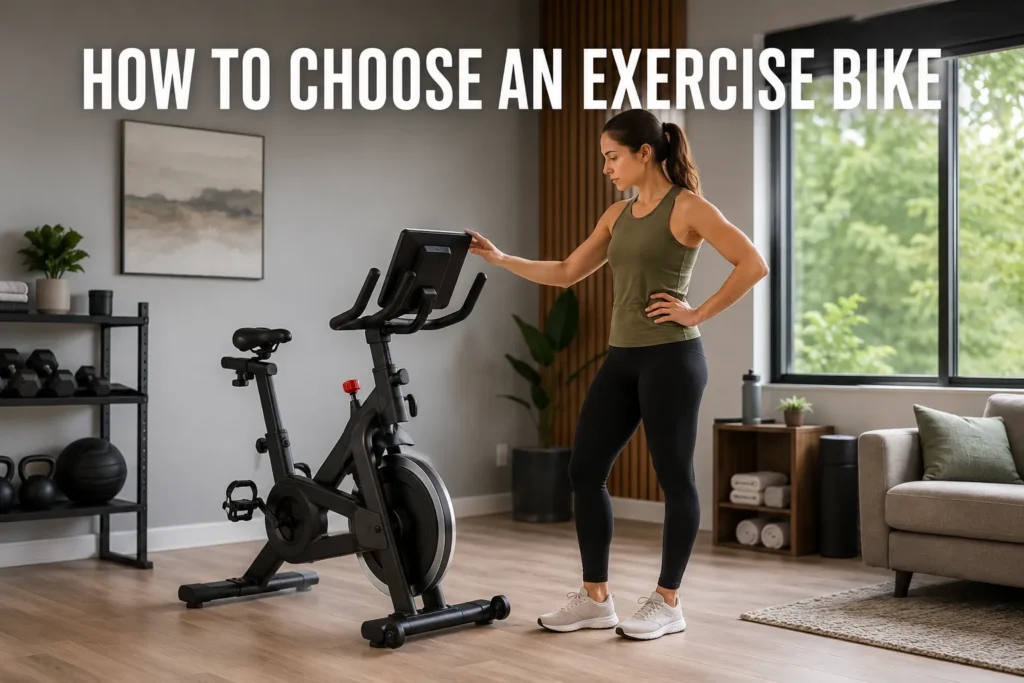
Knowing how to choose an exercise bike is what separates a piece of cardio equipment you actually use from one that collects dust within 60 days. Dozens of options exist across radically different designs and price points, and most product listings focus on specs that tell you little about whether a bike will fit your body or your goals. Indoor cycling is one of the most research-supported forms of cardiovascular training available - systematic reviews confirm measurable improvements in aerobic capacity, blood pressure, and lipid profiles (1). Our guide covers bike types, resistance systems, key specs, budget tiers, and what makes a solid exercise bike for home use versus one that disappoints after six months.

How to Choose an Exercise Bike - Start with Your Fitness Goal
Your fitness goal is the most important filter in this decision. Before you compare specs, resolve what you actually want from daily use. This one question eliminates most bikes from serious consideration before you look at a single price tag.

Three most common goals and what they demand:
- Cardiovascular fitness and endurance - Upright bikes and spin bikes provide the widest intensity range. You can sustain Zone 2 aerobic work, push close to maximum effort, or anything between.
- Weight loss and calorie burn - Bike type has a measurable impact on energy expenditure. Direct comparison research across indoor cardio machines found spin bikes produce the highest calorie output at peak effort, followed by upright bikes, with recumbent bikes slightly lower (2). If calorie burn is your primary metric, a spin or upright bike gives you an advantage.
- Low-impact recovery or joint protection - A recumbent exercise bike positions the rider in a reclined bucket seat with pedals in front, removing load from the lower spine and reducing shear force at the knee joint. For riders with a history of knee pain, hip tightness, or lower back problems, this is almost always the right choice.
Our recumbent bikes shop is the place to start once low-impact recovery is the priority.
Knowing your goal also determines which features matter most. High-intensity riders need a heavy flywheel and a wide resistance range. Recovery-focused users prioritize seat comfort and step-through frame access. Pairing your bike with accurate heart rate monitoring helps you train in the right zone for each goal, and the truth is that the best budget fitness tracker gives you reliable zone data without adding significant cost to your setup.
Exercise Bike Types - Upright, Recumbent, and Spin Bikes Compared
Understanding the core categories is the foundation of a smart purchase. Each type serves a distinct use case, and buying the wrong category is the most common source of user regret in this product space. In our review of user feedback patterns, the type mismatch is responsible for more abandoned bikes than any feature or price complaint.
My stationary bike types breakdown covers each major category, including spin bikes, air bikes, and hybrid designs that often get overlooked in standard comparison guides.
Recumbent models, such as the Life Fitness RS1 Recumbent Bike with Go Console, list around $2,299, toward the upper end of this category's price range.
If you are specifically weighing a folding model, my post on what folding exercise bikes actually deliver covers the most common regrets with the format, including stability under load, resistance range limitations, and frame durability over time.
My what is a recumbent exercise bike guide walks through the design, seating geometry, and the fitness goals where the recumbent layout has a clear edge over an upright.
Bike Type | Best For | Intensity Ceiling | Joint Impact | Noise Level |
Upright | General fitness, weight loss | High | Low-Moderate | Low (magnetic) |
Recumbent | Seniors, rehab, back/knee issues | Moderate | Very Low | Low |
Spin/Studio | Performance, calorie burn | Very High | Moderate | Low-Moderate |
Air Bike | HIIT, full-body conditioning | Very High | Moderate | High |
Upright Exercise Bikes
Upright bikes mimic road cycling posture, with pedals directly below the body and the rider supporting their own weight on the seat and handlebars. The position engages the core more actively than recumbent alternatives and allows for standing pedal strokes that dramatically increase intensity. Upright bikes are the most versatile category because they work across the widest range of fitness levels and goals. Weight capacity on most models runs from 250 to 330 lbs.
Key features to evaluate on any upright bike:
- Seat height and fore/aft adjustability (both independently, not just height)
- Handlebar height and reach adjustment
- Flywheel weight (aim for 20+ lbs at a minimum)
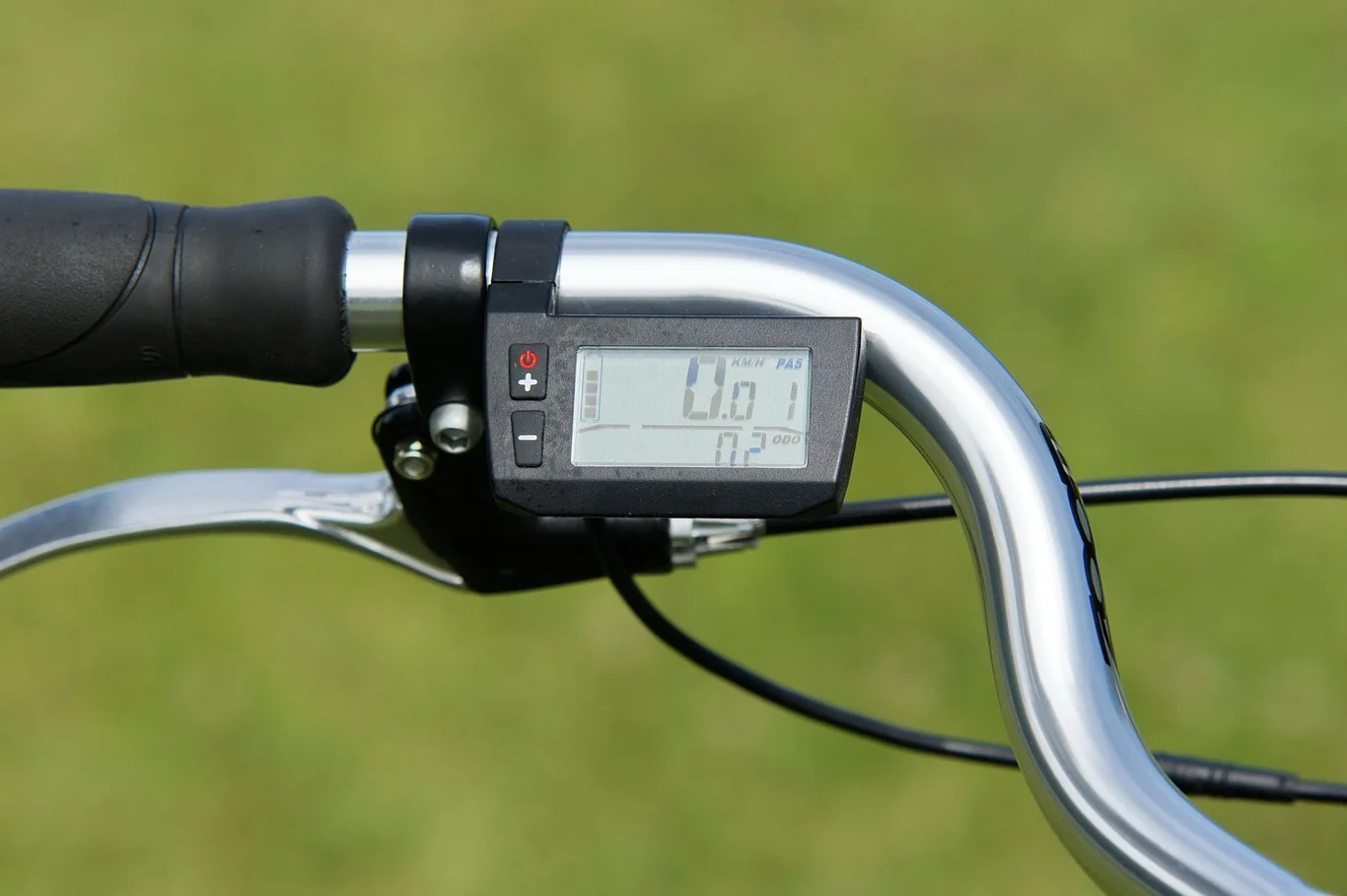
- Console readability at training intensity
- Weight capacity relative to rider body weight plus gear
Recumbent Exercise Bikes
A recumbent exercise bike places the rider in a bucket seat with lumbar support, pedals positioned forward. The reclined geometry distributes body weight across the lower back and buttocks, removing pressure from a narrow saddle and reducing spinal compression. Research on recumbent cycling in joint-compromised populations demonstrates improvements in muscle performance and ambulation capacity, supporting its role as a low-impact training option for rehabilitation users (3).
The best recumbent exercise bike for home use combines a step-through frame for easy mounting with multiple seat positions and smooth magnetic resistance. When comparing a recumbent exercise bike vs stationary bikes of the upright design, the core trade-off is comfort versus intensity ceiling. Recumbent bikes win on joint comfort and sustained session length, and upright bikes win on peak calorie output and performance range.
For riders who choose an upright or spin bike specifically for intensity, my guide on high-intensity training on a stationary bike covers HIIT protocols, sample plans, and safe progression guidelines for every fitness level.
Budget models like the Niceday RC88 pack 16 magnetic resistance levels and a 400-pound frame rating into that same step-through layout.
My best recumbent exercise bike guide covers the top home models, with a focus on seat comfort and mounting ease.
For men looking to add tracking data to their riding sessions, a best fitness tracker for men with cadence estimation and real-time heart rate zones pairs well with either bike type.
Spin and Studio Bikes
Spin bikes are built around a heavy flywheel - typically 30 to 50 lbs - and are engineered for high-intensity training. The flywheel weight creates the smooth, road-like pedaling momentum experienced cyclists prefer. Friction-based resistance on cheaper models degrades as pads wear; look for direct-contact adjustable systems or, ideally, magnetic resistance. Premium connected studio bikes from brands like Peloton, Echelon, and NordicTrack add interactive screens and content subscriptions, but the total 3-year ownership cost is two to three times the sticker price once monthly subscription fees are included. Riders choosing between iFIT and Peloton specifically can find a head-to-head hardware, software, and cost comparison in my iFIT vs Peloton analysis.
If you are still weighing whether cycling fits your goals at all, my guide on are exercise bikes good covers what the research shows across different intensity levels and training frequencies.
Key Features to Look For in an Exercise Bike for Home
The specifications that matter most in daily use are not always the ones manufacturers lead with. Our team weighs these specific features heavily when evaluating any new model in this category.
For a detailed look at what each of those features costs across the market, my stationary bike price guide covers pricing by bike type and budget tier.
Resistance System
Resistance Type | How It Works | Pros | Cons |
Magnetic | Magnets create eddy current resistance without contact | Silent, consistent, low maintenance | Higher starting cost |
Friction (belt/pad) | Pad presses against flywheel | Lower cost | Degrades over time, requires adjustment |
Air | Fan resistance increases automatically with speed | Scales with effort | Very loud |
Electromagnetic | Motor-controlled magnets | Precise digital control | Most expensive |
Magnetic resistance is the clear winner for home use. It operates near-silently, requires no calibration, and maintains consistent resistance that does not drift over months of use. Friction systems perform well initially but become inconsistent as pads wear. Air bikes are effective training tools but impractical in apartments or homes with shared walls.
For a full explanation of how the magnetic system achieves that quiet, calibration-free operation and which resistance configurations matter most for home use, my guide on the magnetic exercise bike explained covers the flywheel mechanism, maintenance profile, and best-suited rider types.
My guide on how does a magnetic resistance exercise bike work explains the mechanics behind the quieter, more consistent resistance system that makes magnetic bikes the standard choice for home use.
Seat and Handlebar Fit
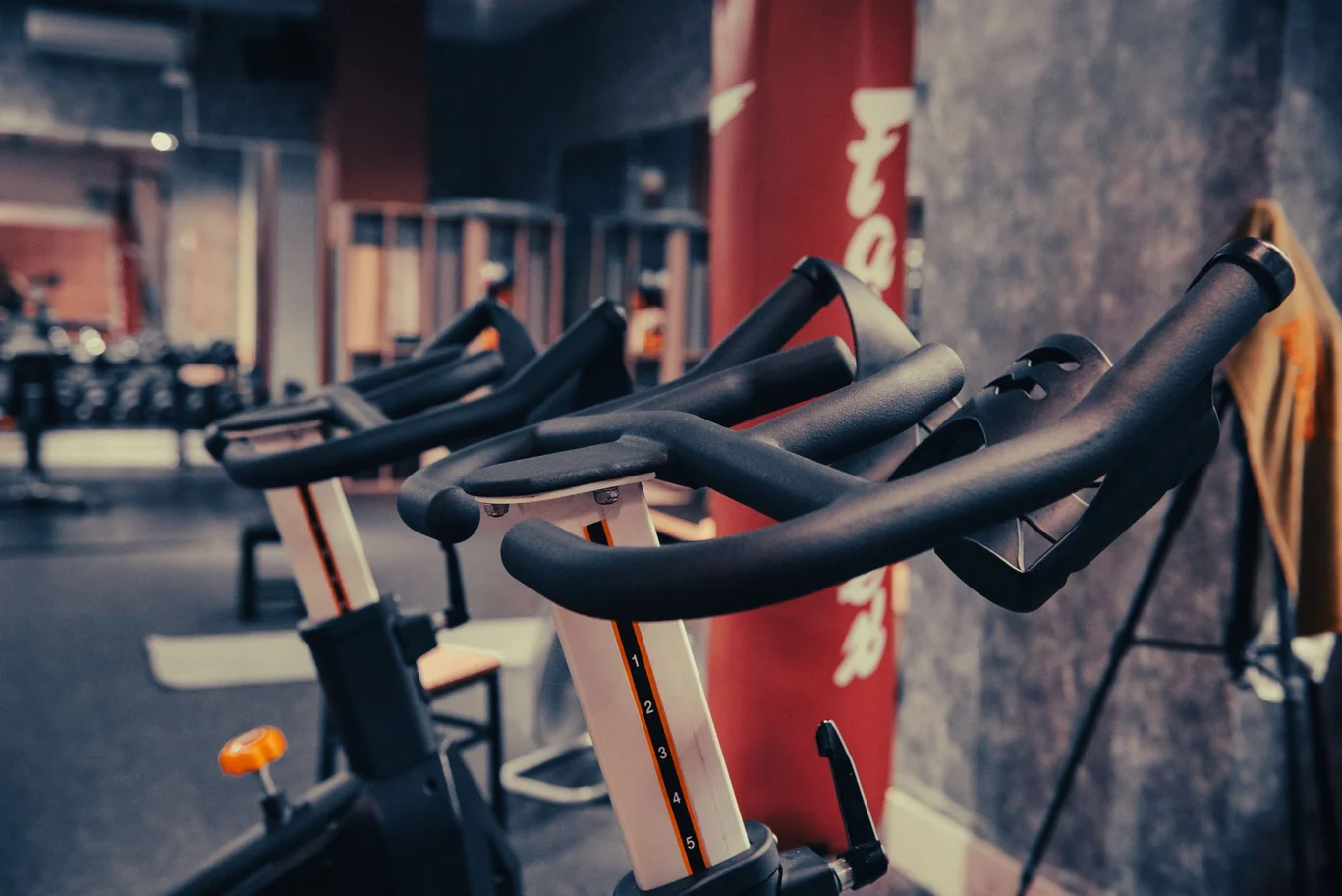
Poor bike fit causes knee pain, hip flexor strain, and form breakdown that leads to abandonment. Both seat height and fore/aft position must be independently adjustable. A bike with only seat height adjustment is a red flag. At the correct height, a slight bend remains in the knee at the bottom of the pedal stroke - roughly 5 to 10 degrees of remaining flexion.
Riders managing chronic back pain have additional seat and handlebar fit requirements, covered in my best exercise bike for back problems guide.
Biomechanical research confirms that seat positioning on stationary bikes meaningfully affects the distribution of joint forces during pedaling (4). We flag this as a key consideration because most users spend more time reading display features than testing the seat adjustment range in-store or comparing specs. The fit issue surfaces after the first 30-minute session, not the first 5 minutes.
Three fit checks to perform before buying:
- Confirm seat adjusts both vertically and horizontally (fore/aft), not just height
- Sit on the bike and extend one pedal to the bottom - knee should have a slight bend remaining
- Handlebars should allow a straight or slightly bent back without forcing a forward hunch
Is Cycling Safe for the Knees?
Cycling does not wear down the knee at correct fit and appropriate intensity, and it actually actively supports cartilage health. This is one of the most common questions we receive from users with joint concerns. The evidence is reassuring. A 12-week randomized controlled trial measuring the effect of aerobic exercise intensity on knee cartilage found that cycling at moderate to high intensity produced a 4.2% increase in cartilage thickness and a 3.8% increase in cartilage volume, alongside measurable reductions in degradation biomarkers (5).
For heart rate accuracy during cycling sessions, the question of how accurate smartwatches are for heart rate is relevant if you rely on wrist-based wearables. Chest straps remain more accurate at high intensity. A fitness tracker vs smartwatch comparison is a useful next read if wearable accuracy is a priority before you commit to a platform. Buyers who have narrowed down to a full smartwatch and are deciding between the two dominant platforms can compare them in my Galaxy Watch vs Apple Watch analysis, which covers sensor accuracy, ecosystem fit, and total ownership cost.
Best Exercise Bike for Seniors - What to Prioritize
For older adults, the exercise bike for seniors decision demands a different lens than general fitness purchasing. Safety, mounting ease, joint protection, and workout sustainability weigh more heavily than raw performance specs.
My best exercise bike for seniors guide applies this lens to identify the options with the safest step-through designs and the most forgiving resistance ranges.
The evidence base for stationary biking in older adults is robust. A systematic review of 47 intervention studies - including 28 randomized controlled trials - confirmed that stationary biking produces measurable improvements in aerobic capacity, balance, cognitive function, and mobility in older adults (6). A six-week randomized controlled trial found that cycling at moderate intensity improved rapid force development in older adults by 34% and reduced Timed Up and Go test performance by 2 seconds - a concrete functional mobility gain linked to reduced fall risk (7).
What to look for in the best exercise bike for seniors:
- Step-through frame - Eliminates the need to swing a leg over a high seat. Recumbent designs almost universally include this; some upright models do as well.
- Wide, padded seat with back support - A 45-minute low-resistance session is only sustainable when the seat does not cause discomfort within the first 10 minutes.
- High-contrast display with large text - Small fonts at moderate screen contrast become unreadable during a sweaty session.
- Genuine low-resistance start - Look for 8 or more resistance levels with a truly gentle Level 1. Many cheaper models have a Level 1 that is still too demanding for deconditioned older users.
- Frame stability and weight capacity - Wobble at low intensity undermines confidence and safety. Older riders who use the handlebars for partial body support need a stable base.
The HARISON Recumbent Bike for Seniors has a 400-lb capacity and a belt-driven, chain-free drivetrain.
The MERACH Recumbent Bike for Seniors includes heart rate handles and arrives 80 percent pre-assembled.
For older adults training at home alone, a best fitness tracker for seniors with heart rate monitoring and optional fall detection adds a meaningful layer of safety to solo sessions. If you also walk or run on rest days, pairing a best fitness tracker for runners with your cycling routine gives you a unified view of your cardiovascular load across all activity types.
Exercise Bike Budget Breakdown - What Each Price Tier Delivers
Price and quality do not scale evenly in this market. Mid-range bikes are disproportionately good value compared to either end of the spectrum, which is where we consistently direct most users after reviewing the full range.
Choosing the right resistance range also depends on which muscle groups you are targeting, a question my guide on what muscles does an exercise bike work answers with breakdowns by exercise type and intensity.
Price Tier | What You Get |
Under $300 | Basic magnetic or friction resistance, limited adjustability, small display, shorter warranty. Acceptable for light, infrequent use. |
$300-$700 | Solid magnetic resistance, 8-16 levels, fully adjustable seat and handlebars, heart rate sensors, larger display, heavier flywheel. Best value zone for most home users. |
$700-$1,500 | Heavy flywheels (30+ lbs), electromagnetic resistance, Bluetooth connectivity, tablet holders, extended warranties. Worth considering for serious daily training. |
$1,500 and above | Connected studio bikes with interactive screens and live or on-demand class subscriptions. Total 3-year ownership cost is two to three times sticker price once monthly fees are included. Riders deciding between NordicTrack and Peloton connected bikes specifically can find a head-to-head platform comparison in my NordicTrack vs Peloton analysis. |
The subscription cost trap is the most common buying regret we hear from riders who chose connected bikes. A $600 bike with reliable heart rate tracking and free cycling content delivers the same physical training stimulus as a $2,500 studio bike - at a fraction of the total cost.
Buyers who also need to save floor space can find solid options in the same price range in my best folding exercise bike guide.
For budget-conscious users who still want detailed workout data, a best ankle fitness tracker captures lower-body movement patterns during cycling that wrist-based trackers can partially miss.
Research confirms that cardiometabolic benefits - including improvements in lipid profile, insulin resistance, and cardiovascular fitness - are achievable on mid-range equipment with a structured cycling program (8). You do not need premium hardware to see real physiological results. A best calorie tracker paired with your bike's console gives you a complete picture of energy balance - the data most useful for weight loss riders who want to close the loop between output and intake.
Pairing calorie data with a structured ride plan is exactly what exercise bike training for weight loss is designed around.
Making the Final Call on Your Exercise Bike
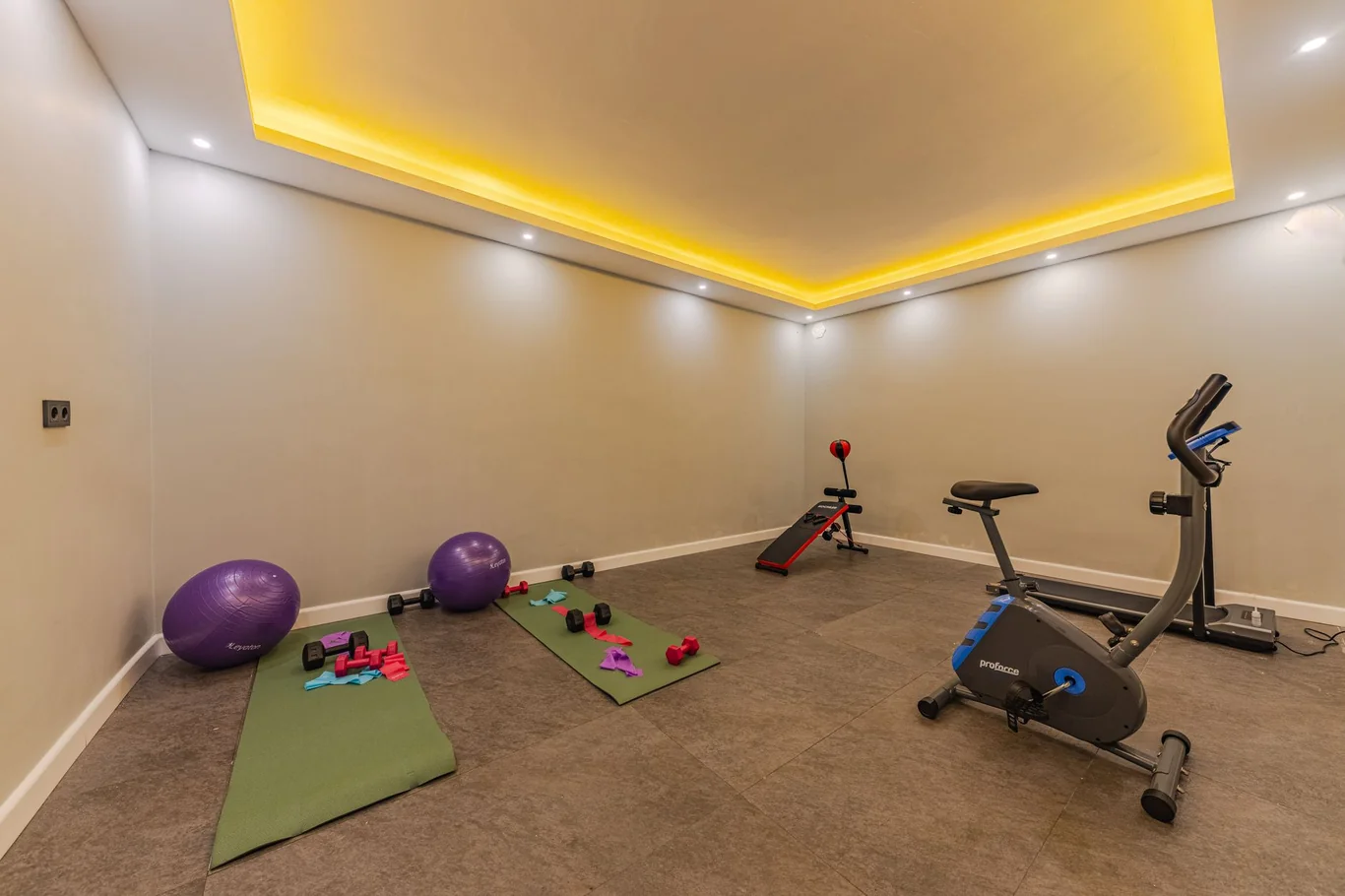
The best exercise bike for home use is the one that fits your body, your actual training goal, and your available space - in that order.
My best exercise bike guide ranks the top options against all three criteria, with picks for every budget and training style.
Upright bikes are the best all-purpose choice for most users. Recumbent exercise bikes are the right call for seniors, rehabilitation users, and anyone managing joint limitations. Spin bikes belong with riders who train hard consistently and will actually reach the performance ceiling they are paying for. Our research into user outcome patterns consistently shows that a well-chosen $500 upright or $600 recumbent delivers better long-term adherence than a $2,500 connected studio bike for most home gym users.
If rowing is part of your consideration, my breakdown of stationary bike vs rowing machine covers which machine fits which fitness goal.
My recumbent exercise bike vs upright breakdown covers the exact trade-offs that inform this decision across different fitness goals and physical profiles.
Buy the bike that matches the intensity level you will sustain for years, not the one that looks impressive in setup photos. For workout tracking technology that pairs with any bike type, the best fitness tracker for women roundup is also a useful starting point.
FAQs
What’s the difference between a stationary bike and an exercise bike?
A stationary bike and an exercise bike refer to the same category of indoor cycling equipment - the two terms are interchangeable in both consumer and clinical contexts. Both cover upright, recumbent, and spin bike subtypes, with "stationary bike" appearing more often in older research literature and "exercise bike" more common in current retail and fitness marketing.
Is 30 minutes of stationary bike the same as 30 minutes of walking?
Thirty minutes on a stationary bike is not equivalent to 30 minutes of walking when measured by calorie burn - cycling at moderate intensity typically burns 200 to 350 calories in 30 minutes, while moderate walking burns closer to 80 to 150 calories in the same time. The stationary bike generally provides a more efficient cardiovascular workout per unit of time when intensity is matched to the individual's capacity.
What is the best exercise bike for older adults?
The best exercise bike for older adults is typically a recumbent model with a step-through frame, lumbar-supported seat, low-entry magnetic resistance, and a high-contrast display with large text. Research consistently shows stationary biking improves balance, mobility, aerobic capacity, and cognitive function in older adults, and recumbent designs achieve these outcomes with the least joint loading and safest entry mechanics.
How much does a decent exercise bike cost?
A decent exercise bike for home use typically costs between $300 and $700, a range that covers solid magnetic resistance, full seat and handlebar adjustability, heart rate monitoring, and a flywheel heavy enough for smooth pedaling. Budget options under $300 work for occasional light use, while bikes above $700 add features that most home riders do not require for consistent, effective training.
How long to ride stationary bike for weight loss?
Riding a stationary bike for 30 to 60 minutes per session, most days of the week, is a well-supported target for weight loss when combined with a caloric deficit from diet. A 30-minute session at moderate intensity burns roughly 200 to 350 calories depending on body weight and effort level, contributing meaningfully to a weekly energy deficit when dietary habits are also addressed.
References:
- Chavarrias M, Carlos-Vivas J, Collado-Mateo D, Perez-Gomez J. Health benefits of indoor cycling: A systematic review. Medicina (Kaunas). 2019;55(8):452. doi:10.3390/medicina55080452
- Prieto-Gonzalez P, Yagin FH. Energy expenditure, oxygen consumption, and heart rate while exercising on seven different indoor cardio machines at maximum and self-selected submaximal intensity. Frontiers in Sports and Active Living. 2024;6:1313886. doi:10.3389/fspor.2024.1313886
- Said CM, Delahunt M, Hardidge A, et al. Recumbent cycling to improve outcomes in people with hip fracture: a feasibility randomized trial. BMC Geriatrics. 2021;21:394. doi:10.1186/s12877-021-02321-8
- He M-Y, Lo H-P, Chen W-H. Effects of stationary bikes and elliptical machines on knee joint kinematics during exercise. Medicina (Kaunas). 2024;60(3):498. doi:10.3390/medicina60030498
- Song L, Meng Y. Effect of aerobic exercise of different intensity on articular cartilage metabolism in patients with knee osteoarthritis: A randomized controlled trial. Medicine (Baltimore). 2026;105(22):e48913. doi:10.1097/MD.0000000000048913
- Akter T, Moneruzzaman M, Maduray K, Kader M. Acceptability and effectiveness of stationary bike intervention on health outcomes among older adults: a systematic review of intervention studies. BMC Geriatrics. 2026;26:130. doi:10.1186/s12877-025-06757-0
- Bellumori M, Uygur M, Knight CA. High-speed cycling intervention improves rate-dependent mobility in older adults. Medicine and Science in Sports and Exercise. 2017;49(1):106-114. doi:10.1249/MSS.0000000000001069
- Ratajczak M, Skrypnik D, Krutki P, Karolkiewicz J. Effects of an indoor cycling program on cardiometabolic factors in women with obesity vs. normal body weight. International Journal of Environmental Research and Public Health. 2020;17(23):8718. doi:10.3390/ijerph17238718