
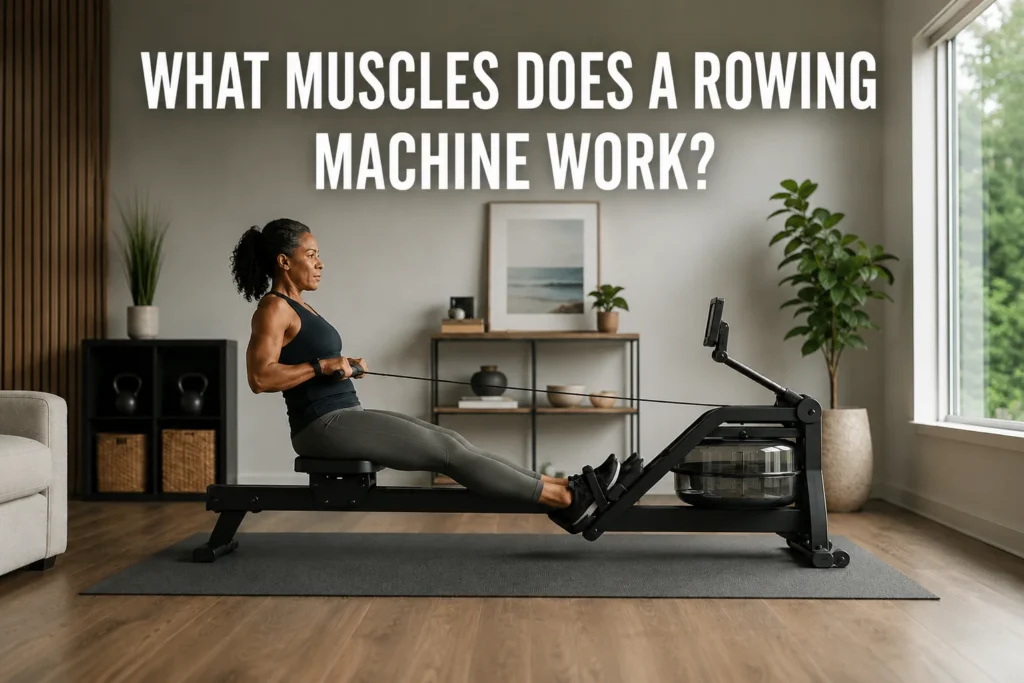
What muscles does a rowing machine work? The short answer is almost all of them. Research consistently demonstrates that a single rowing stroke recruits approximately 86% of your body's muscles, distributing effort across your legs, back, core, and arms in a coordinated sequence that few other machines can match.
I've reviewed rowing machine data and analyzed customer feedback patterns from hundreds of users at every fitness level, and the full-body engagement picture rowing creates is genuinely unique. In this guide, I break down each muscle group activated, show you exactly when in the stroke it fires, and explain what that means for your actual training results - whether you're comparing equipment or just getting started.

What Muscles Does a Rowing Machine Work - The Phase-by-Phase Breakdown
The rowing machine doesn't train muscles in isolation. Every stroke cycles through four phases: catch, drive, finish, and recovery. Each phase loads different muscle groups in a specific sequence, and understanding that sequence is the foundation of both effective training and injury prevention.
Our rowing machines collection lists current models if you want to see which machines train this stroke sequence.
Stroke Phase | Primary Muscles Activated |
Catch (start position) | Core stabilizers, tibialis anterior, hip flexors |
Drive (legs extending) | Quadriceps, glutes, hamstrings, calves, erector spinae |
Finish (upper body pull) | Latissimus dorsi, rhomboids, trapezius, biceps, forearms |
Recovery (return to start) | Tibialis anterior, hip flexors, triceps, core |
Research published in Sensors confirmed this phase-specific pattern using multi-channel surface EMG in 20 elite rowers, identifying distinct timing and amplitude windows for each lower limb muscle group across the full stroke cycle (1). The rectus femoris (a quadriceps component) was active during 51% of the total stroke cycle; the biceps femoris (hamstrings) was active for only 22%. That gap is why rowing is fundamentally a lower body exercise despite looking like an arm and back movement from the outside.
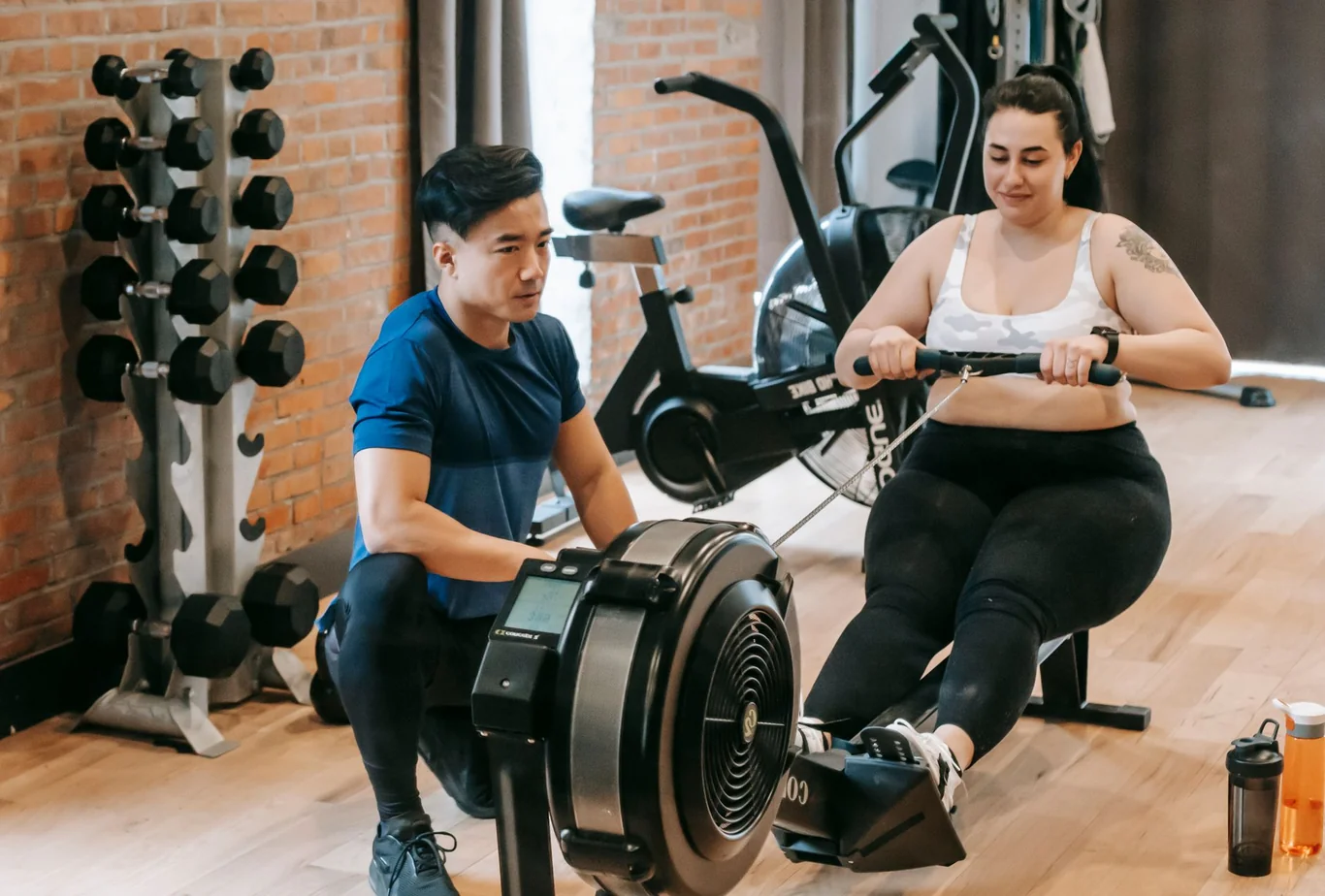
The single most important mechanical fact: legs generate 65-75% of your rowing power. Upper body contributes the finishing pull. If you're feeling most of the effort in your arms and shoulders, your leg drive is being underutilized - and you're limiting results while increasing injury risk simultaneously.
The Major Muscle Groups a Rowing Machine Targets
Here are all the major muscle groups a rowing machine targets.
Leg Muscles - Quadriceps, Hamstrings, Glutes, and Calves
Your legs are the engine of every stroke. The quadriceps extend the knee explosively at drive phase onset. The glutes and hamstrings fire together to extend the hip, transferring force from foot contact through the entire body to the handle. EMG research on thigh muscle activity in elite rowers showed that quadriceps activity remains consistently high regardless of rowing intensity, while hamstring contribution decreases at near-maximal effort - meaning the quads carry the primary power load during the hardest efforts (2). I've found that beginners consistently underestimate how leg-dominant rowing really is, often reverting to arm-pulling patterns within the first few minutes of a session.
The calves - gastrocnemius and soleus - activate alongside knee extension during the drive. The tibialis anterior fires during recovery when the knee flexes back toward the catch position.
A 12-week randomized controlled trial of 38 older adults demonstrated measurable hip strength gains from consistent rowing alone, without any supplementary resistance training (3):
- Hip abductors: +2.36 kg
- Hip adductors: +3.04 kg
- Hip flexors: +4.01 kg
- Hip extensors: +2.88 kg
- Knee flexors and extensors: +1.80-2.03 kg
Rowing builds meaningful lower body strength, not just cardiovascular fitness.
Back and Core Muscles - Latissimus Dorsi, Rhomboids, and Erector Spinae
Your back handles the most identifiable upper body work during the stroke. The key muscles involved are:
- Latissimus dorsi - the broad mid-back muscle that drives the horizontal pull
- Rhomboids - retract the shoulder blades and anchor the pull
- Middle and lower trapezius - stabilize and depress the shoulder girdle throughout the finish
- Erector spinae - maintain lumbar extension throughout the drive phase
- Rectus abdominis and obliques - transfer power between lower and upper body as core stabilizers
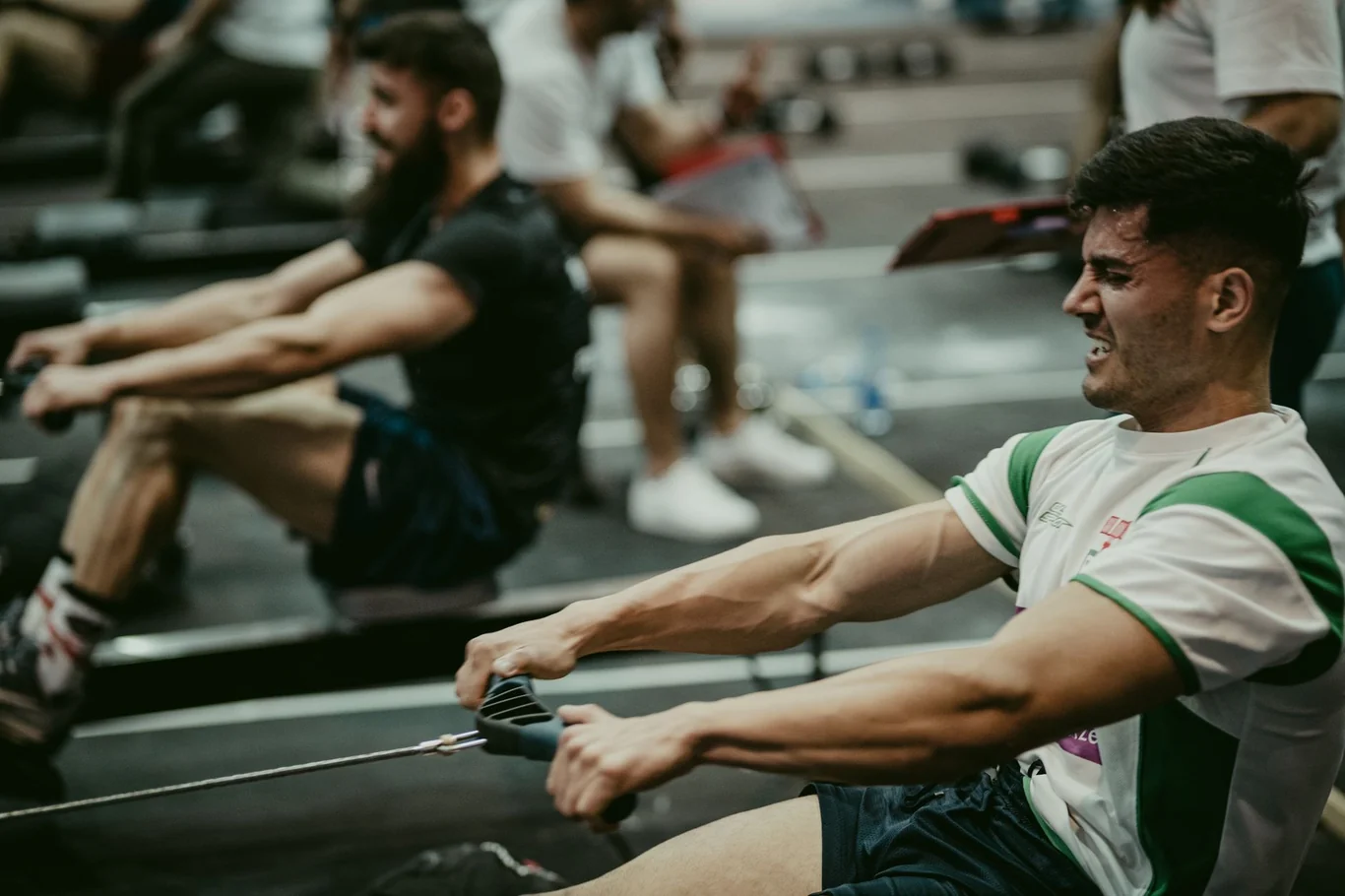
A notable finding from a comparative EMG study: rowers with poor form recruit the thoracic and lumbar erector spinae significantly more than those with correct technique, with elevated activity during the first 30% of the stroke cycle (4). This is the biomechanical signature of early back opening - the mistake where the torso swings backward before the legs have fully extended. In our review of customer feedback patterns, lower back soreness in the first two weeks of rowing is almost always a form indicator, not a muscle-building signal.
Proper stroke sequencing - legs extend fully, then back opens, then arms pull - protects the erector spinae from absorbing load it shouldn't be handling. Your core doesn't generate stroke force directly; it transmits power from the leg drive upward to the handle. A disengaged core breaks that chain and reduces both efficiency and safety.
Rowing machine benefits before and after extended training consistently include back posture improvements and core definition - structural changes that take six to ten weeks to become aesthetically visible but begin adapting within days.
Upper Body Muscles - Biceps, Shoulders, Forearms, and Triceps
The finish phase activates a specific set of upper body muscles in sequence:
- Biceps brachii - completes elbow flexion as the handle reaches the lower chest
- Posterior deltoids and rotator cuff - stabilize the shoulder joint under load throughout the pull
- Forearm flexors - maintain handle grip and resist fatigue during longer sessions
- Triceps - fire during the recovery phase to extend the arms back toward the catch
The upper body muscles contribute roughly 25-35% of the total work per stroke. The triceps fire during recovery when the arms extend back toward the catch - contributing to the return movement without generating stroke power.
A comprehensive physiology review confirmed that virtually all major muscle groups engage during a complete rowing stroke, with long-term adaptations including muscular hypertrophy, significant cardiac chamber enlargement, and pulmonary adaptations in trained rowers (5). The cardiovascular adaptations reflect rowing's unique demand: it loads the musculature and the cardiovascular system simultaneously, sustaining both under significant effort throughout the stroke.
How Rowing Machine Type Affects Muscle Engagement
Not all rowing machines create identical muscle stimulus. The resistance mechanism changes how load feels across the stroke, and that changes which muscles fatigue first.
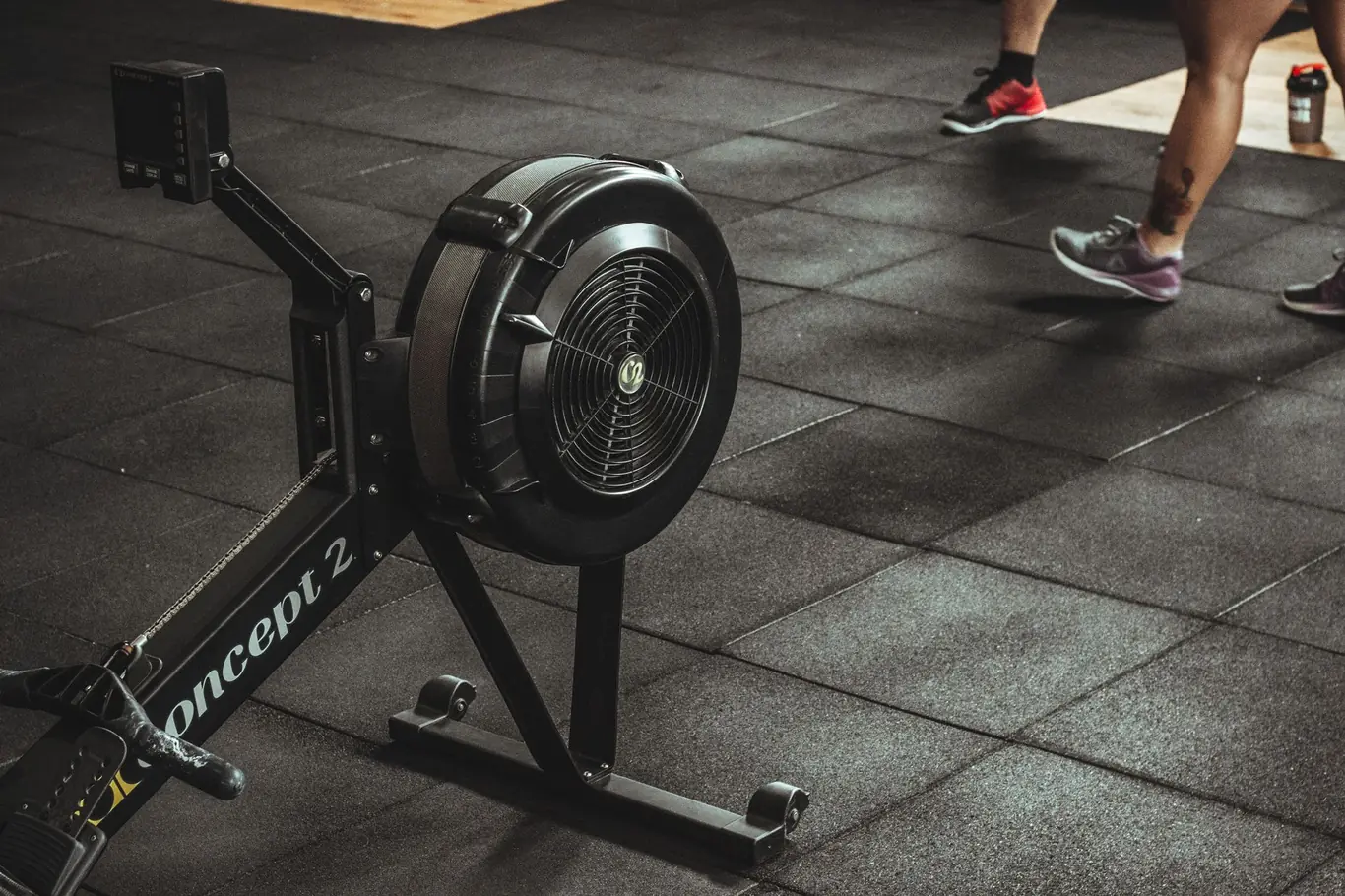
Air resistance rowing machines - including the Concept 2 rowing machine, the global benchmark in performance rowing - provide dynamic resistance that scales automatically with effort. Pull harder and resistance increases instantly. This mirrors on-water rowing and demands consistent full-body engagement throughout the drive without any ceiling effect.
Our Concept2 air rower page covers the flywheel design and PM5 monitor behind that scaling resistance.
The Aviron rowing machine uses combined air and magnetic resistance, setting a base resistance level while retaining the air ramp. This hybrid approach gives beginners a more predictable stroke feel while preserving the full-body engagement pattern.
Our Aviron Strong Series 22in Touchscreen page has full specs for this dual air and magnetic setup.
Research comparing different ergometer types shows that fixed-resistance machines (similar to standard magnetic designs) tend to recruit back and upper limb muscles more cumulatively, while dynamic designs better emphasize bi-articular leg muscles for greater power output (6). In practical terms: air rowers develop leg power more expressively; magnetic rowers offer consistent interval training control but may underload the legs at lower settings.
Machine Type | Leg Power Emphasis | Back Emphasis | Noise Level | Resistance Character |
Air (e.g., Concept 2) | High | Moderate | Significant | Scales with effort |
Magnetic | Moderate | Slightly higher | Quiet | Fixed per setting |
Hybrid Air/Magnetic (e.g., Aviron) | High | Moderate | Moderate | Adjustable and dynamic |
Water | High | Moderate | Low | Natural catch feel |
I weighed the air vs. magnetic distinction across many machine comparisons and found that the difference matters more to advanced users than beginners - both types engage the same fundamental muscle groups. Our guide to the best rowing machine for home covers the top machines across all resistance types if you're still choosing.
For a full breakdown of how air, magnetic, water, and hydraulic resistance differ on stroke feel, noise, and long-term suitability, my post on which type of rowing machine is best covers the decision across all four categories with honest trade-offs.
What Muscles Do Seated Rows Work vs. a Full Rowing Machine
A recurring confusion in training discussions: is a seated cable row or seated row machine equivalent to a rowing machine session? The movements look similar, but the muscle profiles differ substantially.
For a closer look at how a performance rowing ergometer differs from a seated cable row machine in terms of resistance, tracking, and training use, my post on understanding the erg machine covers the mechanism, monitor, and drag factor that define the category.
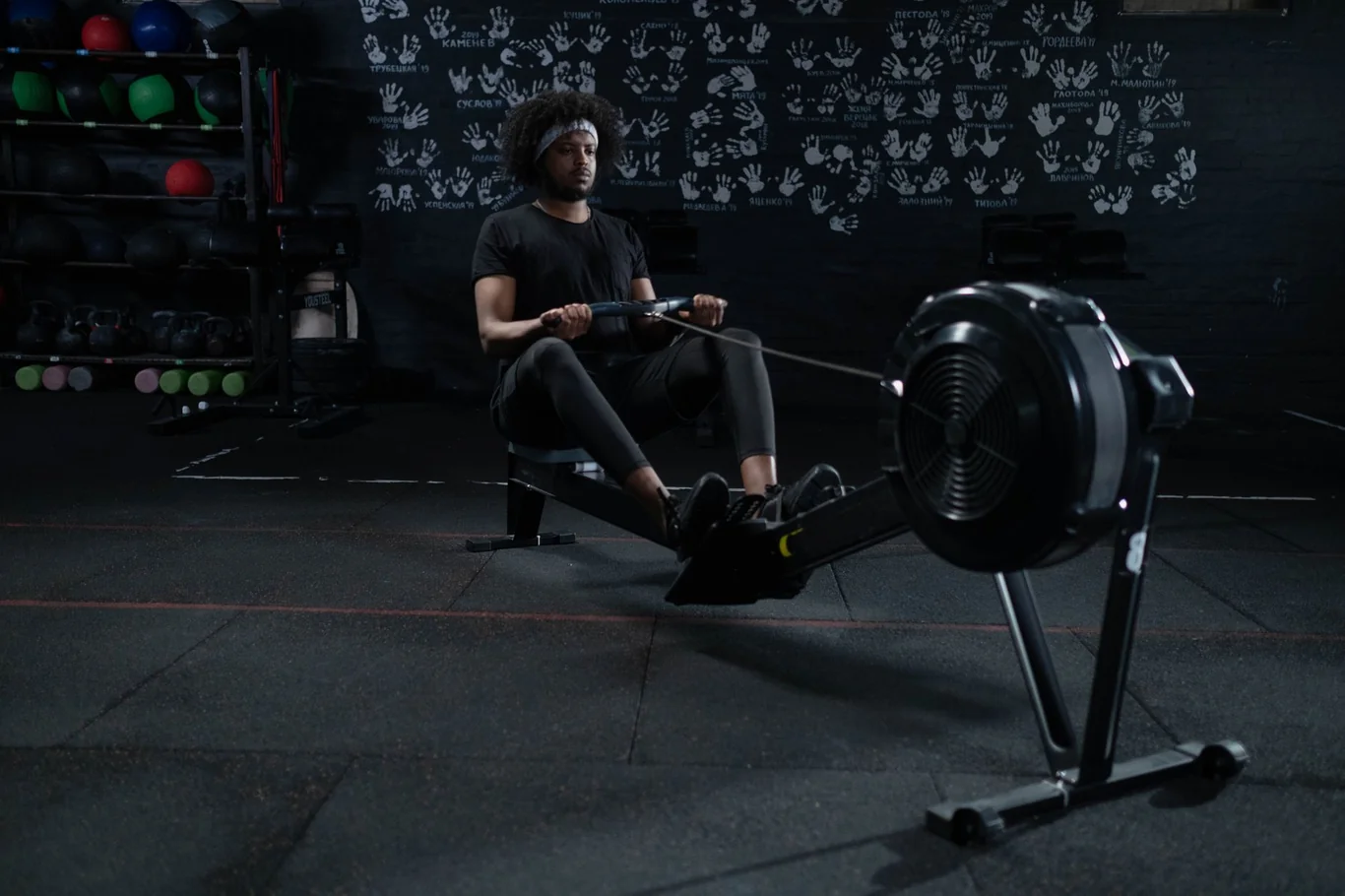
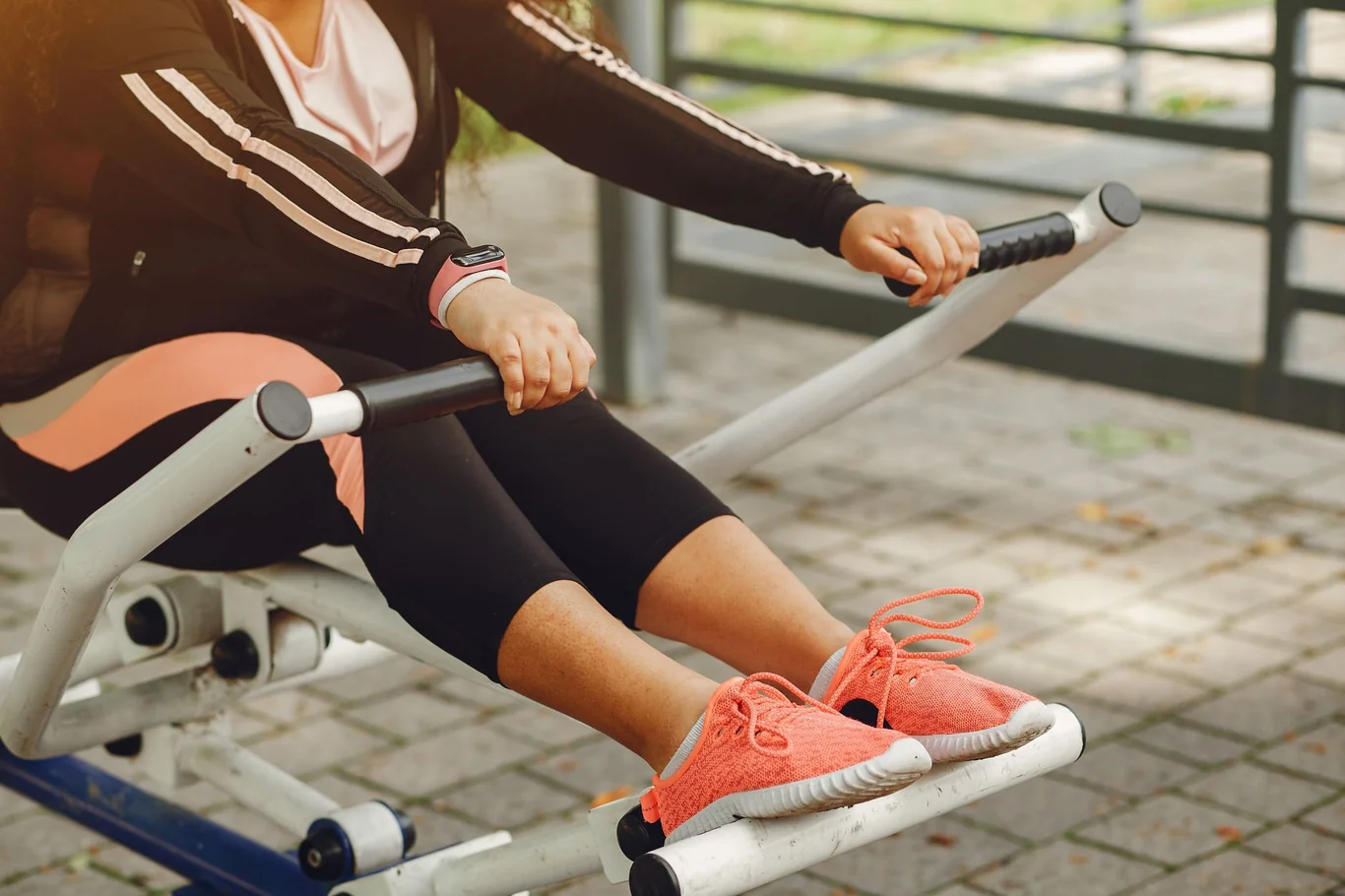
Seated cable rows primarily target the latissimus dorsi, rhomboids, middle trapezius, biceps brachii, and rear deltoids. Because the hips are stationary and the feet brace against a fixed pad, the legs contribute almost nothing. The seated row machine is a back isolation exercise with significant biceps involvement - not a full-body movement.
The muscles worked by the seated row machine represent the finish-phase upper body segment of a rowing machine stroke. The missing components include:
- Quadriceps, glutes, and hamstrings from the drive phase
- Hip extensors and hip flexors
- Calves and tibialis anterior
- The full spinal stabilizer chain under dynamic load
The comparison matters for training design. For targeted lat and rhomboid development, the cable row isolates those muscles more effectively because the legs don't absorb any of the load or introduce technical variability. For total body conditioning, cardiovascular output, and caloric expenditure, the rowing machine is significantly more comprehensive. Both have a place in a well-structured program - they are not substitutes for each other. For households where the machine will be shared by users at different fitness levels and body sizes, my guide to the best rowing machine for households covers the models with the capacity and adjustability range to accommodate the full mix.
If you're looking for something the best rowing machine for conditioning can deliver that seated rows cannot, it's the metabolic demand: full-body muscular load combined with cardiovascular output sustained over 20-45 minutes.
For a practical checklist before purchasing a machine that can deliver this output, my rowing machine selection guide covers resistance type, monitor accuracy, footrest design, and the frame specs that affect long-term durability.
For tracking heart rate zones across that sustained output, my top fitness watch recommendations covers wrist-worn devices that monitor cardiac effort continuously without interrupting stroke rhythm.
For home users where noise is a consideration, our guide to the best magnetic rowing machine covers the quietest options suited to apartment-friendly training.
Rowing Machine Results - What to Expect Before and After
Knowing which muscles a rowing machine works is useful. However, understanding what changes over weeks and months is what most people actually want to know:
- Weeks 1-2: The body adapts to the coordination demands of the stroke. Most beginners experience soreness predominantly in the quads, glutes, and lats - the three regions doing the most work when technique is reasonable. Lower back soreness during this period almost always signals form breakdown, not productive muscle activation.
- Weeks 3-6: Leg drive efficiency improves as the movement becomes more automatic. Early improvements in posterior chain conditioning - hamstrings, glutes, lower back - become noticeable. Cardiovascular adaptation begins: sessions that felt exhausting at week two become manageable at week five.
- Weeks 7-12: Research shows that eight weeks of regular rowing produces significant joint torque improvements across elbow, shoulder, lumbar, and knee joints, with strength and endurance gains exceeding 30% above baseline in some machine comparisons (7). Muscle definition changes become visible in the back, glutes, and shoulders first.
The 30 day rowing machine before and after content you see on social media - featuring 20+ lb weight losses - typically combines aggressive caloric restriction with multiple daily sessions. That's an outlier baseline. In our research, realistic rowing machine benefits before and after 30 days include 4-10 lbs of weight loss with a calorie deficit, measurable improvements in aerobic capacity, and early visible toning in the posterior chain. Cardiovascular benefits compound faster than muscular ones: improved heart rate efficiency and lower resting heart rate are measurable within two to three weeks. For those starting out on a tighter budget, our best budget rowing machine guide identifies machines that deliver these results without the high upfront cost.
For people looking for whether a rowing machine is good for weight loss alongside muscle development, the short answer is yes - rowing ranks among the highest calorie-burning cardio options per unit of time. For complementary low-impact cardio that engages some of the same hamstring and calf recruitment patterns, walking backwards on a treadmill is a recovery-friendly alternative on rest days.
How to Maximize Muscle Activation on a Rowing Machine
Most people who struggle to feel rowing in the right places are making one of five form errors. Correcting them changes which muscles activate and how strongly - directly affecting both results and injury risk. Our guide on how to use a rowing machine covers each of these errors with the corrective cues that address them most reliably.
- Lead with your legs, not your back - The correct sequence is: legs extend fully, then back swings open, then arms pull. Breaking this order shifts load onto the lower back and reduces leg-generated power. Think "push the footboard away" before you pull.
- Maintain a neutral spine at the catch - Slumping at the catch position (rounding the lower back when compressed toward the monitor) loads the lumbar spine with shear stress. A proud chest and neutral lower back at the catch activates core stabilizers properly.
- Relax your grip - Tight gripping causes forearm fatigue and shoulder tension without contributing to drive power. Hold firmly enough for control; grip strength builds naturally over weeks of training.
- Drive through your full foot - Power comes from pressing through the entire foot with heel contact maintained. Rising onto the toes too early disconnects the glutes and hamstrings from the drive chain.
- Breathe with the stroke - Inhale during recovery (returning to catch); exhale during the drive and finish. Syncing breath to stroke becomes automatic but requires deliberate practice early on.
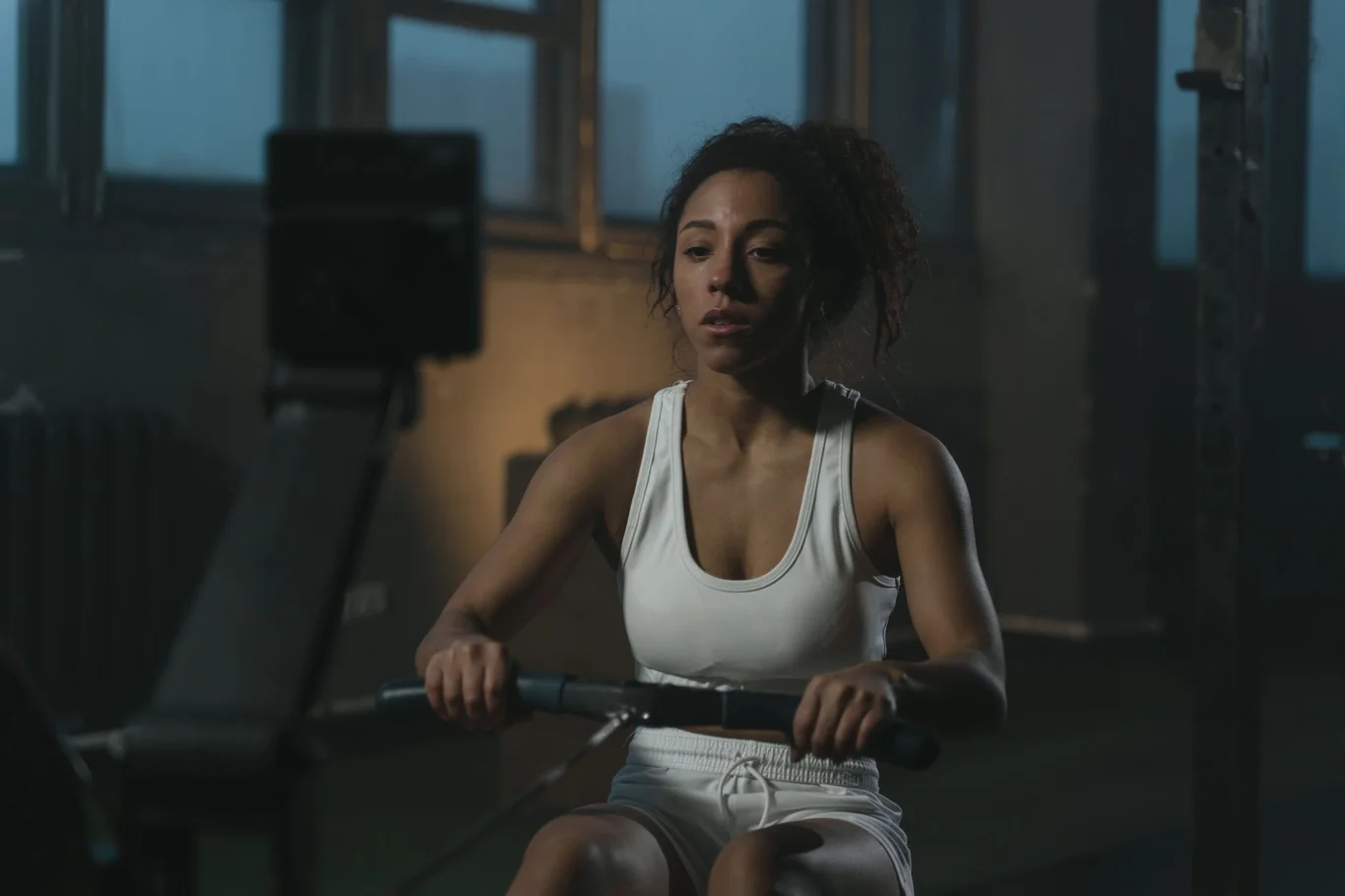
I've consistently found that the most common breakdown in new rowers is loading the back before the legs have extended - it feels powerful, but shifts work away from the largest muscles in the body. Fixing leg sequencing alone typically produces a noticeable improvement in posterior chain engagement within one or two sessions. Our guide to the best rowing machine for beginners covers machines with features that make learning the correct stroke sequence easier from the first session.
These corrections are particularly relevant for people managing back conditions. If you're dealing with back pain and need lower-impact alternatives during flare periods, our guide to exercise bikes for back problems covers machines that unload the spine while maintaining aerobic conditioning.
Is a Rowing Machine Worth Adding to Your Training?
What muscles does a rowing machine work? Nearly every significant one - quads, glutes, hamstrings, calves, lats, rhomboids, erector spinae, core, biceps, triceps, posterior deltoids, and forearms - across a coordinated, low-impact stroke that simultaneously functions as cardiovascular training. That combination is rare in fitness equipment, and it's why rowing earns consistently high marks across both physiology research and practical user experience at every fitness level. Buyers evaluating which machine to start with will find my guide to best compact rowing machine options useful for identifying models that deliver this full-body activation without requiring a dedicated training room.
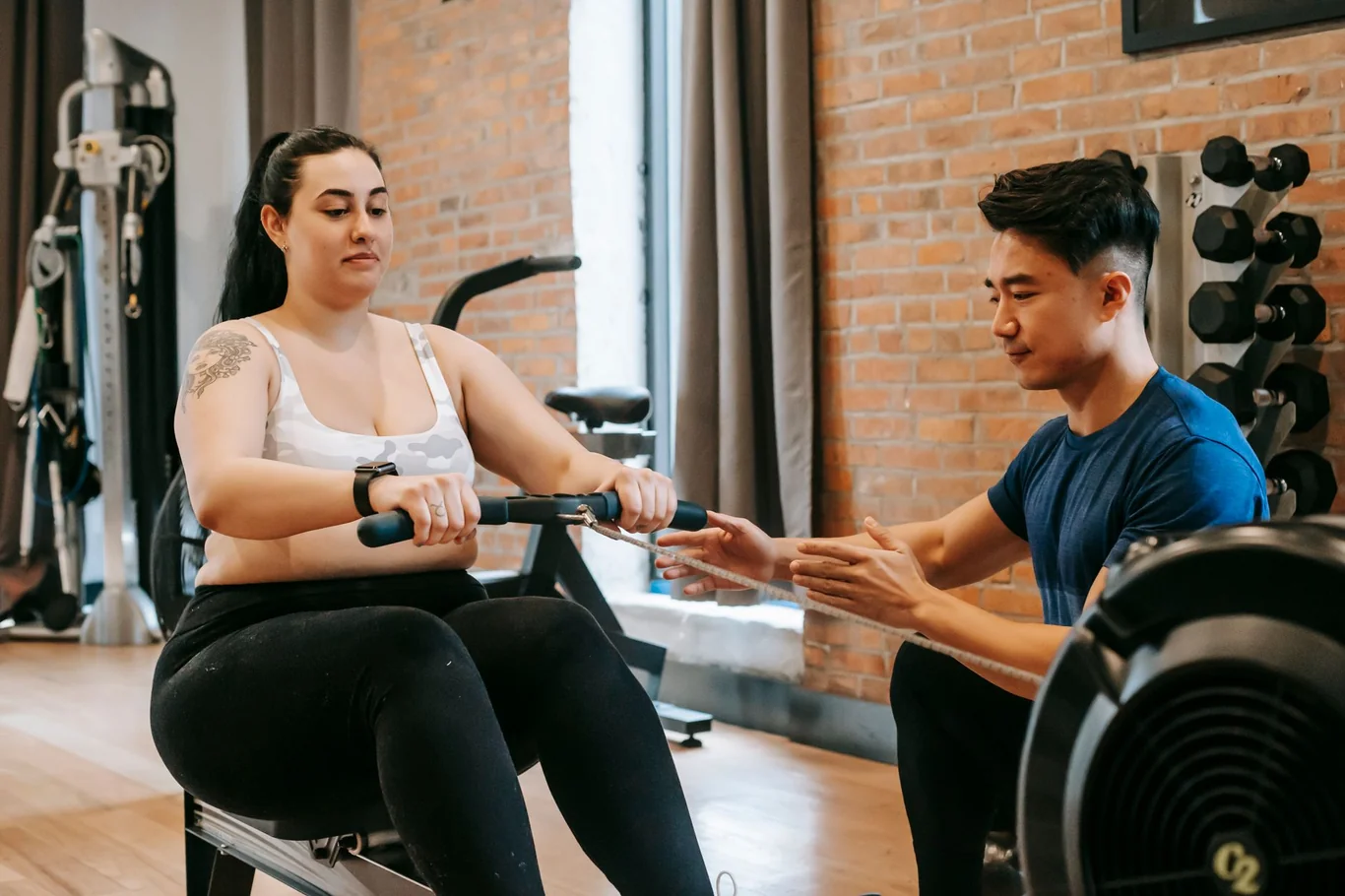
The biggest return comes from consistency paired with sound form. The muscle activation sequence is elegant when technique is correct; it becomes injury-prone when compressed into an arms-first movement pattern. Invest time in the catch position and leg drive early, and rowing rewards you with full-body conditioning that few other single machines can replicate. For the full picture of what that conditioning delivers over weeks of consistent training, our guide to rowing machine benefits covers the documented cardiovascular, metabolic, and strength changes.
For people choosing between rowing and treadmill training as a cardiovascular foundation, our treadmill benefits guide covers the cardiovascular adaptations from walking and running that differ from rowing - useful if you're designing a mixed-modality program. My recommendation for most fitness goals is to treat rowing as a primary conditioning tool and complement it with whatever cardiovascular modality keeps you consistent.
FAQs
Is 20 minutes of rowing enough?
Twenty minutes of rowing is enough for cardiovascular health maintenance and calorie burn when performed at moderate-to-high intensity. For significant muscle conditioning and endurance development, most research and practical guidance points to 30-45 minute sessions performed three to four times per week as the more effective standard, particularly when building toward measurable physique changes.
Does a rowing machine burn belly fat?
A rowing machine burns belly fat indirectly by creating a calorie deficit through high-output training rather than targeting abdominal fat specifically. Fat loss location is determined primarily by genetics and hormones - rowing burns approximately 300-400 calories per 30-minute session, which accelerates overall fat reduction when combined with a calorie-controlled diet, and belly fat decreases proportionally as total body fat drops.
How much rowing is equal to 10,000 steps?
The rowing equivalent of 10,000 steps is approximately 30-45 minutes of moderate-intensity rowing, based on comparable calorie expenditure and cardiovascular output. Rowing is more metabolically demanding than walking per minute, so the step-count equivalent is reached faster in absolute time, though the two activities complement each other well in a mixed training week rather than serving as identical substitutes.
What are the disadvantages of a rowing machine?
The main disadvantages of a rowing machine include a significant technique learning curve that increases injury risk when skipped, space and noise requirements (particularly for air resistance models), and the potential for repetitive strain in the lower back and wrists if form breaks down over extended training periods. People with pre-existing knee injuries may also find the compressed catch position uncomfortable without appropriate modifications to foot plate position and stroke length.
What muscles does rowing work?
Rowing works the quadriceps, hamstrings, glutes, calves, latissimus dorsi, rhomboids, trapezius, erector spinae, rectus abdominis, obliques, biceps brachii, triceps, posterior deltoids, and forearm flexors - approximately 86% of the body's skeletal muscle mass across a complete stroke cycle. The lower body (legs and glutes) drives 65-75% of the power per stroke, with the back and arms completing the pull in the finish phase.
References:
- Vieira TM, Cerone GL, Stocchi C, Lalli M, Andrews B, Gazzoni M. Timing and Modulation of Activity in the Lower Limb Muscles During Indoor Rowing: What Are the Key Muscles to Target in FES-Rowing Protocols? Sensors (Basel). 2020;20(6):1666. doi:10.3390/s20061666
- Guevel A, Boyas S, Guihard V, Cornu C, Hug F, Nordez A. Thigh muscle activities in elite rowers during on-water rowing. Int J Sports Med. 2011;32(2):109-116. doi:10.1055/s-0030-1268412
- Lin PL, Yu LF, Kuo SF, Wang XM, Lu LH, Lin CH. Effects of computer-aided rowing exercise systems on improving muscle strength and function in older adults with mild knee osteoarthritis: a randomized controlled clinical trial. BMC Geriatr. 2022;22(1):809. doi:10.1186/s12877-022-03498-2
- Yamashita M, Ishida T, Osuka S, Watanabe K, Samukawa M, Kasahara S, Kondo E, Tohyama H. Trunk Muscle Activities during Ergometer Rowing in Rowers with and without Low Back Pain. J Sports Sci Med. 2023;22(2):338-344. doi:10.52082/jssm.2023.338
- Volianitis S, Yoshiga CC, Secher NH. The physiology of rowing with perspective on training and health. Eur J Appl Physiol. 2020;120(9):1943-1963. doi:10.1007/s00421-020-04429-y
- Shaharudin S, Zanotto D, Agrawal S. Muscle Synergies of Untrained Subjects during 6 min Maximal Rowing on Slides and Fixed Ergometer. J Sports Sci Med. 2014;13(4):793-800.
- Kang SR, Yu CH, Han KS, Kwon TK. Comparative analysis of basal physical fitness and muscle function in relation to muscle balance pattern using rowing machines. Biomed Mater Eng. 2014;24(6):2425-35. doi:10.3233/BME-141056