
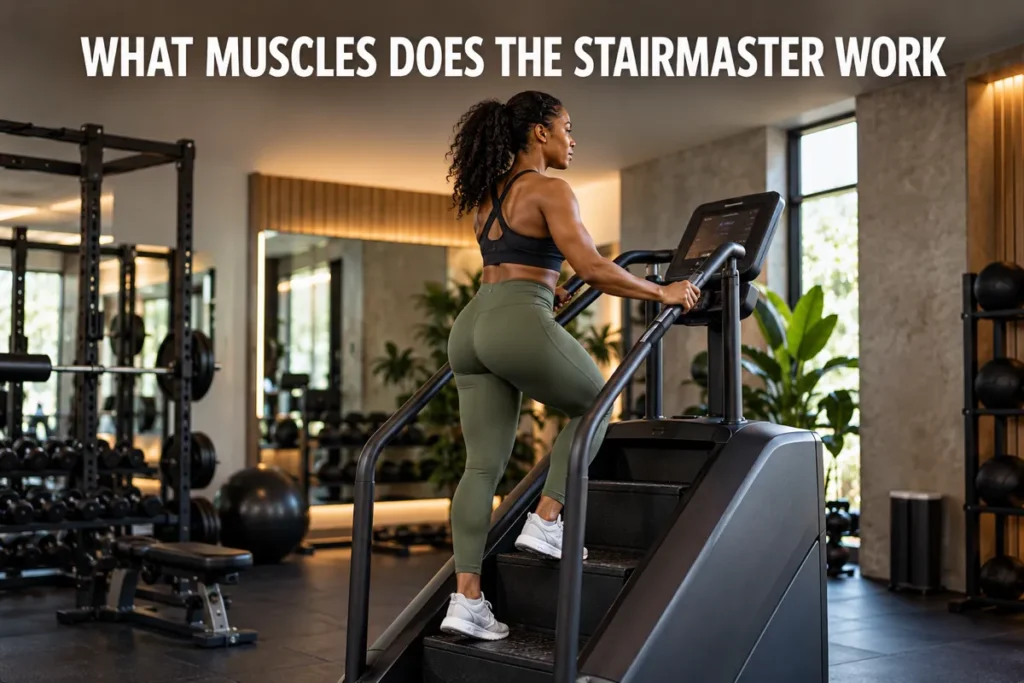
The deep leg burn you feel on the StairMaster reflects real, targeted muscle engagement, and it is the first thing I hear from clients who step off a revolving staircase machine and wonder whether their cardio sessions are doing more than simply elevating heart rate. As a ISSA Elite Trainer and strength and conditioning coach, I've programmed StairMaster sessions into conditioning plans for competitive tennis players, recreational athletes, and general fitness clients alike. In this guide, I break down every muscle the StairMaster engages - from the primary movers powering each step to the stabilizers working quietly in the background to keep every rep safe and efficient.

What Muscles Does the StairMaster Work - A Complete List
The StairMaster stepmill - specifically the revolving staircase model, not the two-pedal stepper machine - activates multiple major lower body muscle groups simultaneously with every step cycle. It helps to understand the machine distinction upfront: the stepmill rotates a continuous staircase that requires your body to propel upward against gravity with each step, which is fundamentally different from a stepper's independent pedal motion or a vertical climber's full-body pull pattern. Understanding the stairmaster machine muscles worked across the full step cycle starts with recognizing which four groups handle the primary load and which secondary groups handle stability and load transfer. You can explore stair climber machine types and comparisons in detail separately.
My stair climber machine guide breaks down every major type and which settings challenge different muscle groups most.
The four primary muscles the stairmaster muscles worked analysis consistently highlights across EMG research are:
- Gluteus maximus - the dominant hip extensor and the largest muscle in the human body
- Quadriceps (rectus femoris, vastus lateralis, vastus medialis, vastus intermedius) - the four-muscle front-of-thigh group responsible for knee extension
- Hamstrings (biceps femoris long and short head, semimembranosus, semitendinosus) - the posterior thigh group controlling the swing and descent phases
- Gastrocnemius and soleus - the two primary muscles of the calf providing push-off and ankle stability
Glutes - Your Primary Driver on Every Step
The gluteus maximus is the dominant muscle during the push-off phase of each stair. Hip extension - the movement of driving the hip from flexed to extended as you press down through the standing leg - is the core mechanical demand of stair climbing, and the glutes are the primary engine behind it. EMG research measuring ten lower extremity muscles across three climbing speeds found that gluteal and hamstring muscles showed speed-dependent activation increases, with statistically significant gluteal increases confirmed during the descent phase and an upward trend during ascent (1). The harder and faster you climb, the more the glutes are demanded.
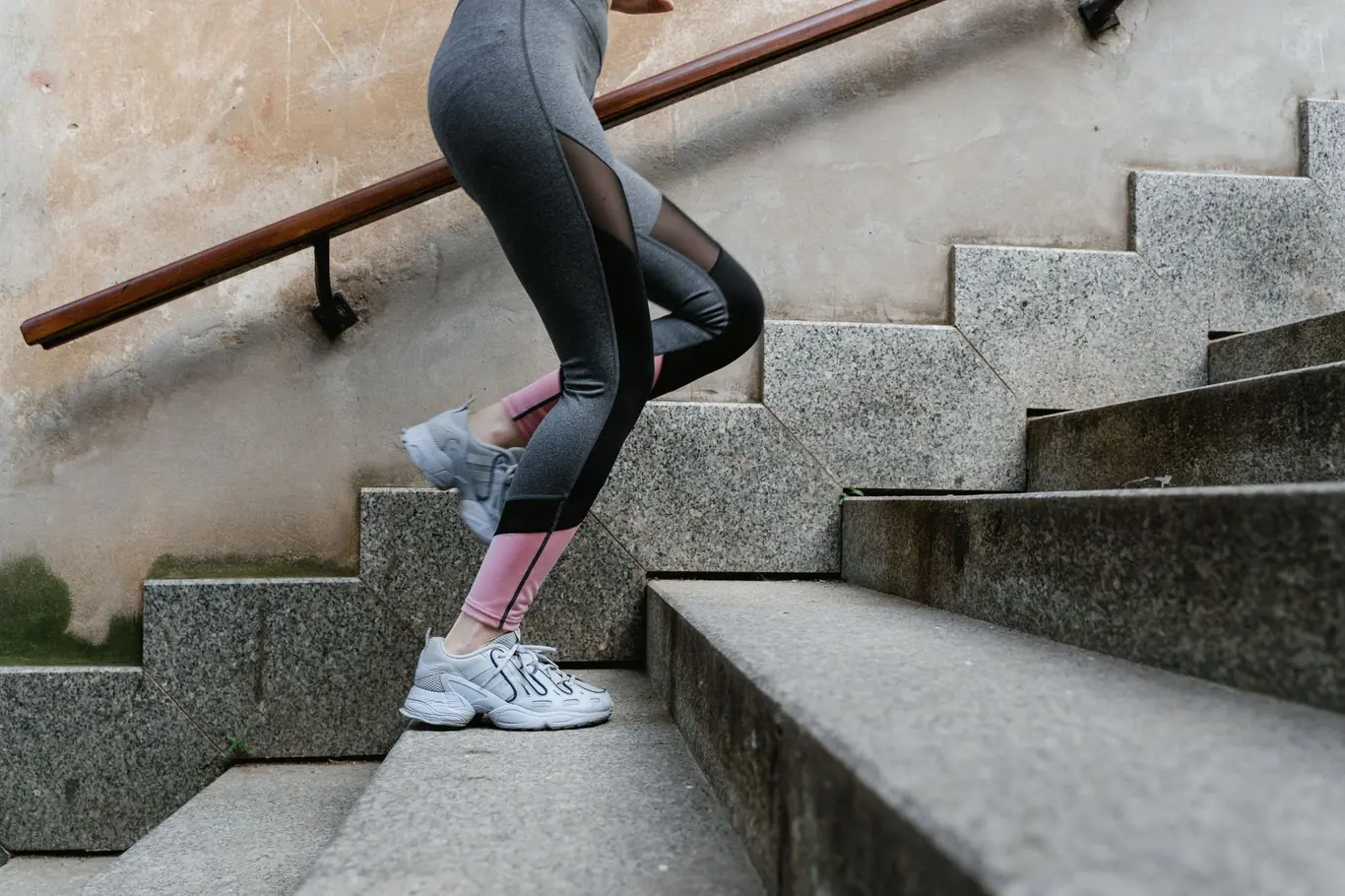
The gluteus medius and gluteus minimus also contribute throughout each step by stabilizing the pelvis laterally. If you've ever noticed fatigue along the outer hip after a long StairMaster session, those are your hip abductors working to prevent pelvic drop as weight shifts from one leg to the other. I often see this stabilizing role overlooked when clients focus exclusively on front-of-thigh burn - the lateral glute work happening simultaneously is one reason the StairMaster earns its reputation as a posterior-chain cardio tool.
Glute Muscle | Primary Role | When Most Active |
Gluteus maximus | Hip extension and stepping power | Push-off phase of each step |
Gluteus medius | Lateral pelvic stabilization | Weight transfer between steps |
Gluteus minimus | Lateral hip stabilization | Weight transfer between steps |
Quadriceps - The Primary Knee Extension Force
Your quadriceps handle the knee extension portion of each step. As your foot lowers onto each new stair, they absorb load eccentrically, and as you drive upward through the step, they generate force concentrically. The rectus femoris and vastus lateralis are among the most consistently active muscles during stair climbing across multiple speeds (2). Quad dominance is a common pattern among new StairMaster users - when the glutes aren't firing optimally, the quads compensate and absorb more load than they should. Pressing through the full foot rather than just the toes - covered in the form section below - shifts emphasis toward the hip extensors and distributes load more evenly across the entire lower limb chain.
Buyers wanting a machine with similar posterior chain emphasis at home will find ranked options in my best incline treadmill guide.
Hamstrings - The Underrated Contributor
The hamstrings are most active during the swing phase - when the stepping leg moves forward and upward before making contact with the next stair. They also work eccentrically to control knee flexion as the foot lowers. Research on speed-dependent muscle activation confirmed that all three hamstring muscles showed increased peak activation with increasing climbing speed during both ascent and descent (1). At lower resistance settings, the hamstrings stay in a supporting role; pushing the intensity meaningfully shifts more demand onto them.
This speed-dependent relationship is why high-intensity intervals on the StairMaster recruit the hamstrings more comprehensively than a slow, steady grind at level 3 - a useful detail when designing programming around posterior chain development.
Calves - Constant Stabilizers Throughout Each Step
The gastrocnemius and soleus are among the most consistently active muscles across the full stair cycle. They provide ankle plantar flexion during each push-off and stabilize the ankle joint throughout the loading phase. Cross-sectional EMG research identified high gastrocnemius medialis activation during stair climbing, with correlation coefficients above 0.84 when comparing activation patterns across similar repetitive stepping tasks (2). Calf fatigue often arrives before quad or glute fatigue in beginners - particularly those with limited ankle mobility who compensate by loading the rear of the foot.
Secondary Muscles the StairMaster Works on Your Body
Beyond the four primary movers, what the StairMaster workout does on your body extends to several secondary muscle groups that handle stability, coordination, and load transfer with every step. These muscles don't generate the stepping force directly, but they determine how safely and efficiently that force gets applied - and they explain why a well-executed StairMaster session leaves more than just the legs fatigued.
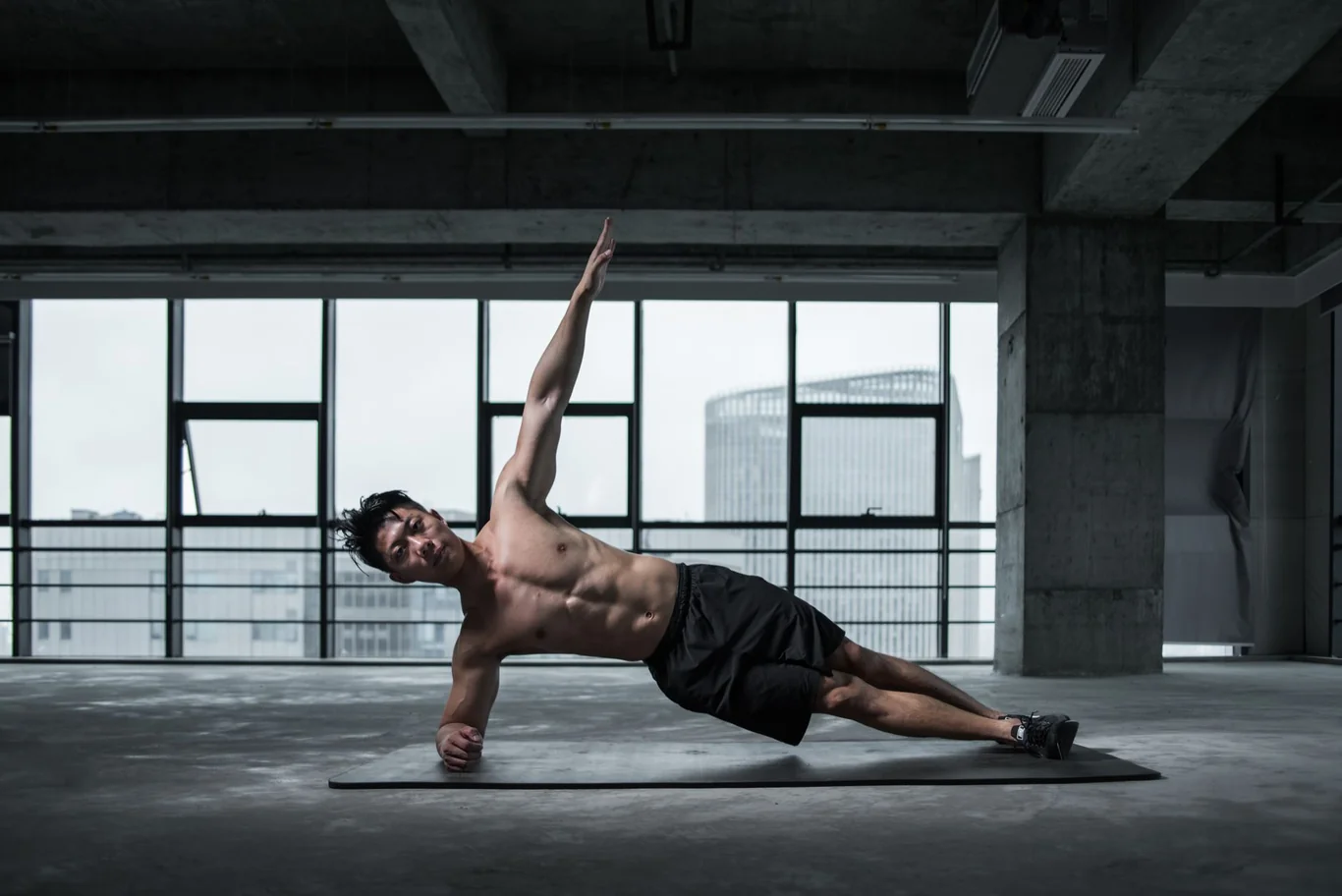
The four main secondary muscle groups engaged are:
- Hip flexors (primarily the iliopsoas and rectus femoris) - responsible for lifting and advancing each stepping leg on every revolution
- Core stabilizers (rectus abdominis, external oblique, transverse abdominis, erector spinae) - maintain upright posture and prevent lateral trunk sway throughout the session
- Hip adductors and abductors (inner and outer thigh muscles) - control lateral leg tracking and knee alignment on each step
- Tibialis anterior - the shin muscle that dorsiflexes the ankle and stabilizes the foot during the loading phase of each step
For a full cross-machine comparison of which cardio modalities engage the widest range of muscles simultaneously, see our guide to the best cardio machine.
Hip Flexors - Resetting Every Step
The iliopsoas and rectus femoris activate to lift the stepping leg and bring it forward before each new stair contact. Note that the rectus femoris is biarticular - it crosses both the knee and hip joint - which is why it functions as both a knee extensor within the quadriceps group and a hip flexor in this secondary role. On the StairMaster stepmill, this hip flexion cycle happens continuously - every revolution demands a fresh repetition.
Long sessions can accumulate significant hip flexor stress, especially in clients who also spend extended hours seated during the day. Incorporating hip flexor stretches post-session is something I consistently recommend to any client adding the StairMaster to their weekly routine.
Core and Trunk Stabilizers
Your core isn't passive on the StairMaster - it actively works to maintain upright posture and resist lateral trunk sway with every step. Surface EMG research measuring eight muscles during stair climbing identified significant activation in the rectus abdominis, external oblique, transverse abdominis, and erector spinae throughout the climbing task (3). The same research found that intentional abdominal bracing during climbing further increased activation in both core stabilizers and the vastus medialis. Leaning heavily on the handrails eliminates much of this core demand - one of several reasons I discourage rail dependence in my clients.
Inner and Outer Thighs - Knee Tracking Controllers
The hip adductors on the inner thigh and hip abductors on the outer hip both engage to keep each step tracking straight and prevent the knee from caving inward under load. They don't generate stepping power, but they're critical for knee health over repeated sessions. Adductor and abductor weakness is a common contributing factor in anterior knee pain from high-frequency stair climbing - something I actively monitor in clients who train on the StairMaster multiple days per week.
What Does the StairMaster Do for Your Glutes - Building vs. Toning Explained
What does the stairmaster do for your glutes is one of the most common questions I encounter from clients who want more than just a cardiovascular workout from their machine time. The honest answer requires separating two distinct outcomes: toning and building.
Anyone asking the same question about rowing will find a direct answer in my will a rowing machine build muscle guide.
What Science Says About Glute Building
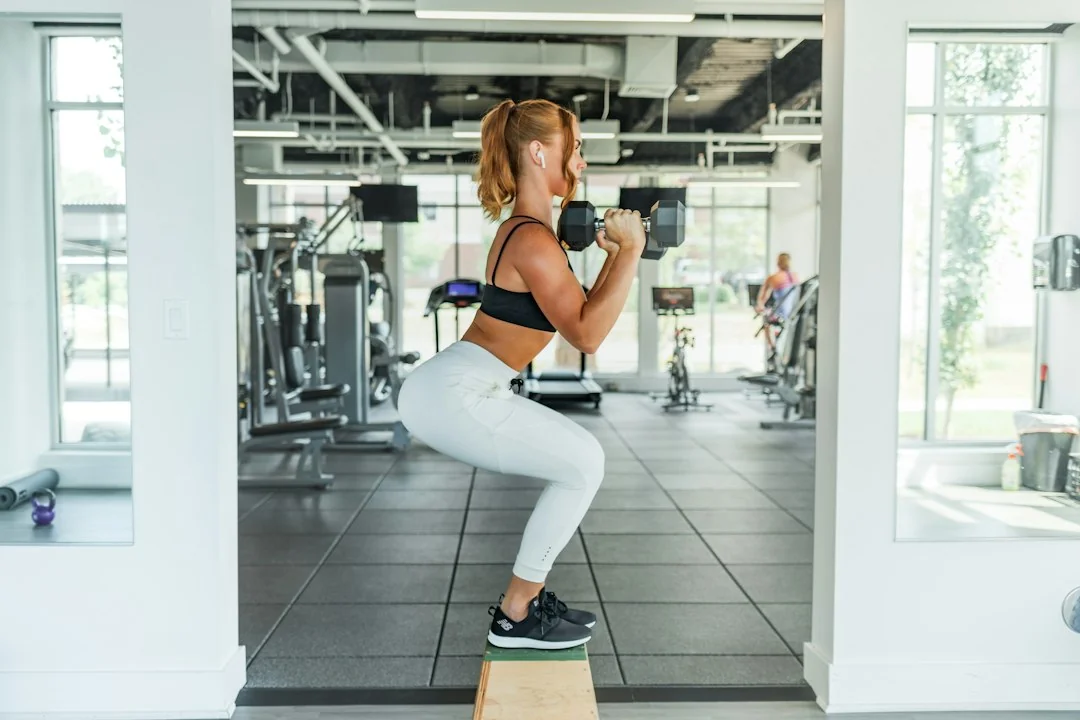
Muscle hypertrophy requires progressive mechanical tension - the kind that challenges your muscles with loads heavy enough to force structural adaptation. The StairMaster provides consistent tension through body weight against gravity with every step, which is a genuine and meaningful stimulus. For deconditioned individuals or those returning to exercise after a break, this level of resistance can drive direct glute development. For someone who already trains the posterior chain with compound lifts like squats, Romanian deadlifts, or hip thrusts, the StairMaster offers a complementary - but different - type of stress: sustained metabolic fatigue rather than peak mechanical load.
The elliptical produces a similar sustained effort with less lower-body muscle specificity, which I cover in my elliptical machine benefits guide.
In practical terms, the stairmaster builds glute endurance, increases blood flow to the posterior chain, and reinforces the hip extension motor pattern that transfers to strength training movements. Research synthesizing multiple stair climbing interventions found measurable body composition improvements after just 4-8 weeks of consistent training (4). The caloric expenditure and cardiovascular adaptation from regular sessions contributes to fat reduction, which over time improves glute definition and appearance even when hypertrophy is modest.
Training Level | Expected Glute Adaptation | Mechanism |
Beginner or deconditioned | Direct glute development possible | Body weight against gravity is a genuine stimulus |
Intermediate to advanced | Metabolic endurance and blood flow | Sustained metabolic fatigue rather than peak mechanical load |
All levels | Hip extension motor pattern | Transfers to squats, Romanian deadlifts, and hip thrusts |
Tips to Maximize Glute Activation
To maximize glute activation on the StairMaster specifically:
- Keep your torso upright with a slight forward hip hinge, not a rounded lower back or forward lean at the waist
- Press through the full foot including heel and midfoot, rather than only the ball of the foot
- Take slightly larger steps to increase the range of hip extension demanded with each push-off
- Release the handrails whenever balance allows - handrail dependency reduces lower body loading
I direct clients who want the full picture of long-term StairMaster adaptations to our stairmaster benefits guide, which covers cardiovascular, metabolic, and musculoskeletal outcomes in more detail.
Stair Climber Muscles Worked Compared to Other Cardio Machines
Biomechanical comparison research confirms that stairmill climbing produces significantly higher joint angle variability and more complex neuromuscular demand than treadmill walking - indicating distinct movement patterns and greater coordination requirements from the lower extremity musculature (5).
The StairMaster distinguishes itself most clearly through its combination of high glute and calf activation - a pairing that few cardio modalities replicate at the same intensity. Our detailed StairMaster vs. treadmill comparison covers how these muscle engagement differences translate to programming decisions for different training goals.
The elliptical vs treadmill comparison applies that same muscle engagement lens to two of the most common home cardio machines.
For a direct look at the muscle recruitment pattern on a rowing machine - a cardio modality with a very different emphasis on the upper body, lats, and core - see our rowing machine muscles worked breakdown. The contrast between these two machines is instructive for anyone trying to build a balanced cardio plan.
Buyers building that plan around an elliptical will find ranked options in my best elliptical machine guide.
The most notable comparison is between the StairMaster and an exercise bike. On a bike, the hip remains in constant flexion throughout the pedal cycle, which limits gluteus maximus activation significantly. On the stepmill, each step drives a full hip extension, which is why the glutes fire far more powerfully than they do during cycling. Our exercise bike muscles worked guide breaks down the bike's specific activation profile in detail.
Machine | Hip Extension | Glute Activation | Key Characteristic |
StairMaster | Full extension per step | High | High glute and calf activation pairing |
Treadmill | Walking gait | Lower than StairMaster | Less joint variability and neuromuscular demand |
Exercise Bike | Constant hip flexion | Significantly limited | Constant flexion limits gluteus maximus |
Rowing Machine | Seated pull pattern | Minimal | Upper body, lats, and core focus |
How to Maximize Muscle Engagement on the StairMaster
Understanding what the StairMaster workout does to muscle engagement is only half the equation. How you move on the machine determines whether those muscles are genuinely challenged or simply going through the motions with minimal load.
Key Form Principles for Maximum Activation
The single biggest form mistake I see is gripping the handrails and leaning into them to offload body weight. This directly reduces glute, quad, calf, and core activation - effectively converting a legitimate lower body conditioning session into a light walk with arm support. The rails are there for safety when balance is genuinely needed, not as a permanent crutch.
Here are five form adjustments that meaningfully increase stairmaster muscle recruitment:
- Stand tall with a slight forward hip hinge - the torso tips slightly forward from the hips as a rigid unit, not rounded at the lumbar spine. This positions the gluteus maximus at a better mechanical angle for hip extension.
- Place the full foot flat on each step - toes, midfoot, and heel all make contact. Staying on the ball of the foot shifts excessive demand onto the calves and reduces glute and hamstring involvement.
- Adjust step size based on your training goal - shorter steps bias the quadriceps; longer, deeper steps drive more gluteus maximus and hamstring activation.
- Drive through the heel on push-off - this cue consistently shifts emphasis toward the hip extensors and reduces anterior knee stress for clients with patellar sensitivity.
- Engage the core actively throughout - gently draw the navel toward the spine to maintain trunk stiffness, reduce lateral sway, and keep the full stabilizer chain working.
StairMaster and Knee Health
StairMaster and Knee Health
Used with proper form, the StairMaster is considerably lower-impact than running - the step surface moves with your foot, reducing joint impact compared to ground-strike activities. Full foot contact lowers anterior knee loading, and releasing the handrails keeps body weight distributed evenly through the leg rather than forward through the arms. Clients with patellar sensitivity do best starting at lower step heights and shorter sessions, building range of motion progressively before increasing speed or resistance. For common error patterns and progressions across fitness levels, our how to use a StairMaster guide covers each point in practical detail.
Viral StairMaster Cardio Protocols
Viral StairMaster Protocols - 25-7-2 and 45:7:6 Explained
Two protocols dominate StairMaster discussions online. The 25-7-2 challenge - 25 minutes at level 7, performed 2 days per week - gained traction as a glute-focused fat loss method. The 45:7:6 protocol (45 minutes, level 7, approximately 6 steps per second) is a longer-duration variant with similar origins. Neither is derived from controlled research, and level 7 is an arbitrary starting point rather than one calibrated to individual fitness.
What the research does confirm: moderate-to-high continuous effort sustained for 20-45 minutes produces measurable body composition improvements (4). If level 7 feels manageable without form breakdown, it likely falls in the appropriate moderate-intensity range - if it produces excessive fatigue, drop to level 5 or 6 and build from there.
Recommended StairMaster Training Frequency
Training Frequency
Three to five StairMaster sessions per week is the range most consistently associated with cardiovascular and body composition improvements in the research (4). For those combining the StairMaster with resistance training, 2-3 sessions per week maintains aerobic adaptation without compromising recovery. Increase resistance or duration when your current level feels consistently easy - add frequency last.
StairMaster Calorie Burn and Cardiovascular Benefits
Working these muscle groups hard also burns a measurable amount of fuel per minute, and that effort carries cardiovascular benefits well past the session itself. The numbers below cover energy expenditure alongside blood pressure, cholesterol, and bone density changes.
Calorie Burn During a StairMaster Session
The muscles the stairmaster works don't just respond structurally - they consume significant fuel in the process. Controlled research measuring heart rate-estimated energy expenditure during stair climbing found rates of 8.5 to 9.2 kcal per minute depending on step pattern, with single-step climbing producing 8.5 kcal/min and double-step producing 9.2 kcal/min for participants averaging approximately 64 kg (6). These figures reflect moderate-intensity active climbing without handrail support and will vary with body weight, step rate, and effort level.
Step Pattern | Kcal/min | 20 min | 30 min | 45 min |
Single-step | 8.5 | 170 | 255 | 383 |
Double-step | 9.2 | 184 | 276 | 414 |
Based on Halsey et al. 2012 (6) - active climbing without handrail use, participants averaging 64 kg. Values scale proportionally with body weight and effort intensity.
Cardiovascular Benefits of Regular Stair Climbing
The cardiovascular adaptations from consistent stair climbing extend well beyond calorie burn. A scoping review synthesizing stair climbing interventions across multiple populations found blood pressure reductions of approximately 8%, improvements in LDL cholesterol and insulin sensitivity, and significant body composition changes after 4-8 weeks of regular training (4). An earlier eight-week study using progressive stair climbing in sedentary women documented a 17.1% VO2max increase alongside a 7.7% LDL cholesterol reduction (7). For those with limited time, research comparing brief vigorous stair climbing bouts to traditional moderate-intensity exercise found comparable VO2peak gains - approximately 3.5 mL/kg/min - in sessions that were five times shorter in total duration (8).
Three of the most well-documented cardiovascular outcomes from regular stair climbing programs include:
- Aerobic capacity - VO2max gains of 17.1% in previously sedentary populations after 8 weeks of progressive training (7), and approximately 3.5 mL/kg/min VO2peak improvements documented in vigorous interval protocols (8)
- Blood pressure - approximately 8% systolic reduction alongside improvements in diastolic pressure in adults with borderline elevated readings (4)
- Lipid profile - LDL cholesterol reductions of 7-15% and improvements in insulin sensitivity compared to walking-based interventions of equivalent duration (4) (7)
Cardiovascular Outcome | Measured Improvement | Research Timeframe |
VO2max (aerobic capacity) | 17.1% increase in previously sedentary adults | 8 weeks of progressive training |
Blood pressure | Approximately 8% systolic reduction | 4 to 8 weeks |
LDL cholesterol | 7 to 15% reduction | 4 to 8 weeks |
As a weight-bearing activity, stair climbing also loads the bones of the lower limb with each step - an advantage over non-weight-bearing cardio like cycling or swimming for those managing long-term bone density.
Buyers whose joints require that lower-impact loading will find the top options in my best rowing machine guide.
For a detailed breakdown of how session duration, intensity, and body weight interact to determine calorie expenditure, see our guide on how many calories the StairMaster burns. If you're deciding between steady-state and interval-based approaches, our HIIT vs. steady-state cardio guide covers the programming tradeoffs in detail.
Making Every Step Count
The StairMaster works more of your body than it gets credit for. The glutes, quadriceps, hamstrings, and calves handle the primary load with every step, while the hip flexors, core stabilizers, adductors, abductors, and tibialis anterior work continuously to keep each repetition controlled and biomechanically sound.

The results come from the mechanics. Full foot contact, released handrails, and an engaged core shift the StairMaster from a passive cardio session into a genuine lower body conditioning tool. I've found that clients who apply these principles consistently see measurably better progress in both lower body definition and aerobic endurance compared to those who grip the rails at low intensity for the same time investment.
If you're weighing the StairMaster against other machines for your training plan, our StairMaster vs. elliptical and StairMaster vs. rowing machine comparisons break down the tradeoffs based on specific training goals. Our stairmaster workout guide offers structured session formats to apply these principles in practice.
FAQs
What is the 3-3-3 rule gym?
The 3-3-3 rule in the gym refers to a training framework structured around three workout days per week, three exercises per target muscle group, and three sets per exercise. It serves as a practical entry point for beginners who want progressive overload without the complexity of more advanced programming splits, providing enough frequency and volume to drive consistent adaptation.
Readers wanting the full case for treadmill training as a complement to stair work will find it in my treadmill benefits guide.
What is the StairMaster 45:7:6 rule?
The StairMaster 45:7:6 rule is a viral cardio protocol involving 45 minutes of continuous climbing at level 7 with approximately 6 steps per second. It gained widespread attention as a lower body conditioning and fat loss method, though its specific parameters are not derived from controlled research and individual results depend heavily on starting fitness level, body weight, and caloric intake.
Is 10 minutes of StairMaster enough?
Ten minutes on the StairMaster is a meaningful cardiovascular stimulus, particularly when performed at moderate to high intensity with proper form. Research on vigorous stair climbing protocols shows that brief, high-effort sessions can produce measurable improvements in cardiorespiratory fitness when repeated consistently over several weeks, making 10-minute bouts a legitimate option for time-constrained training schedules.
Will the StairMaster burn belly fat?
The StairMaster burns calories and supports total body fat loss through increased energy expenditure, but it does not target belly fat specifically through spot reduction, which is not physiologically possible. Consistent StairMaster use as part of a sustained caloric deficit - driven by training volume, intensity, and nutrition - contributes to overall fat reduction including abdominal fat over time.
Readers prioritizing fat loss over muscle specificity will find the elliptical's case in my elliptical for weight loss guide.
What does the StairMaster do for your body?
The StairMaster improves cardiovascular fitness, strengthens and tones the lower body (primarily the glutes, quadriceps, hamstrings, and calves), increases metabolic rate during sessions, and supports fat loss when paired with appropriate nutrition. Research documents VO2max improvements, blood pressure reductions, and lipid profile improvements after consistent stair climbing programs lasting 4-8 weeks.
Readers building a home cardio setup around these cardiovascular outcomes will find ranked treadmills in my best treadmill for home guide.
References
- Lewis J, Freisinger G, Pan X, Siston R, Schmitt L, Chaudhari A. Changes in lower extremity peak angles, moments and muscle activations during stair climbing at different speeds. J Electromyogr Kinesiol. 2015;25(6):982-989. doi:10.1016/j.jelekin.2015.07.011.
- Geiger DE, Behrendt F, Schuster-Amft C. EMG muscle activation pattern of four lower extremity muscles during stair climbing, motor imagery, and robot-assisted stepping: a cross-sectional study in healthy individuals. BioMed Res Int. 2019;2019:9351689. doi:10.1155/2019/9351689.
- Lee SK. The effects of abdominal drawing-in maneuver during stair climbing on muscle activities of the trunk and legs. J Exerc Rehabil. 2019;15(2):224-228. doi:10.12965/jer.1938956.478.
- Ghosal AM, Chandrasekaran B. Stair-climbing interventions on cardio-metabolic outcomes in adults: a scoping review. J Taibah Univ Med Sci. 2023;19(1):136-150. doi:10.1016/j.jtumed.2023.10.003.
- Raffalt PC, Vallabhajosula S, Renz JJ, Mukherjee M, Stergiou N. Lower limb joint angle variability and dimensionality are different in stairmill climbing and treadmill walking. R Soc Open Sci. 2018;5(12):180996. doi:10.1098/rsos.180996.
- Halsey LG, Watkins DAR, Duggan BM. The energy expenditure of stair climbing one step and two steps at a time: estimations from measures of heart rate. PLoS ONE. 2012;7(12):e51213. doi:10.1371/journal.pone.0051213.
- Boreham C, Kennedy R, Murphy M, Tully M, Wallace W, Young I. Training effects of short bouts of stair climbing on cardiorespiratory fitness, blood lipids, and homocysteine in sedentary young women. Br J Sports Med. 2005;39(9):590-593. doi:10.1136/bjsm.2004.016212.
- Dunford EC, Valentino SE, Dubberley J, et al. Brief vigorous stair climbing effectively improves cardiorespiratory fitness in patients with coronary artery disease: a randomized trial. Front Sports Act Living. 2021;3:630912. doi:10.3389/fspor.2021.630912.
9. This content is for informational and educational purposes only. It is not a substitute for professional medical advice, diagnosis, or treatment. Always consult with your healthcare provider before starting any new fitness program or using fitness technology for health monitoring.