
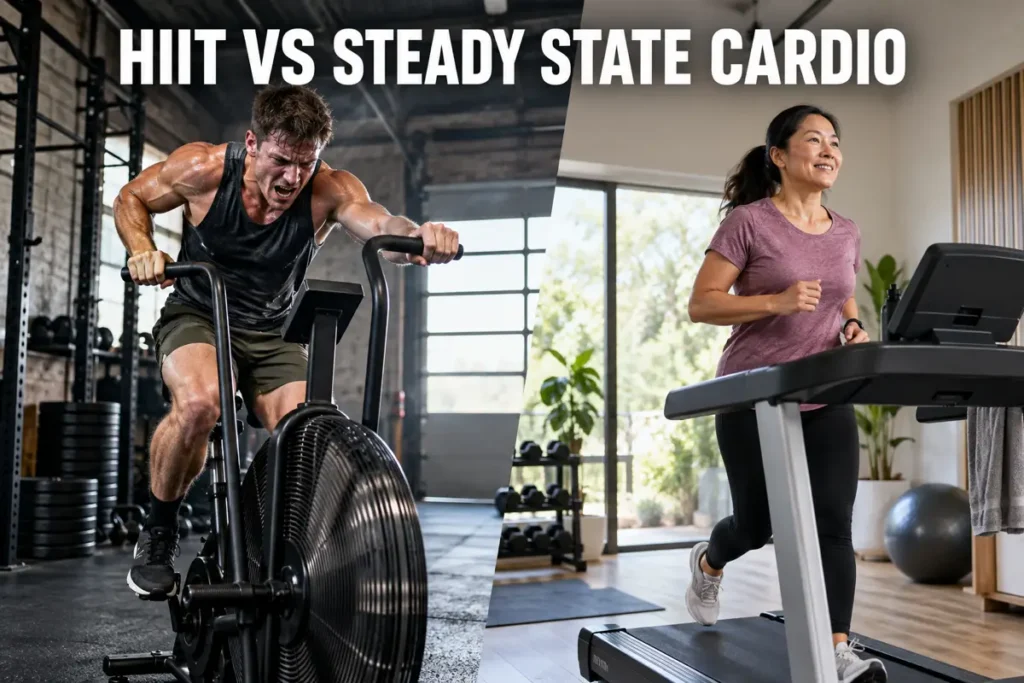
HIIT vs steady state cardio is the most argued debate I field from clients, and after years as an ISSA Elite Trainer and Certified Nutritionist Coach, I understand exactly why. Both methods promise fat loss. Both improve cardiovascular health. But they work through entirely different physiological mechanisms, suit different schedules, and serve different bodies.
In this guide, I break down the real science behind calorie burn, fat oxidation, VO2 max, and recovery so you can stop guessing and train with purpose. You will learn the key differences between these two methods, when each one gives you a clear advantage, and how combining them creates results that neither achieves alone.

HIIT vs Steady State Cardio - What Each Method Actually Means
Understanding these two approaches starts with how they interact with your heart rate, energy systems, and recovery pathways. They are not just different speeds on a treadmill. They are fundamentally different physiological stimuli, and choosing between them without understanding that distinction leads to stalled results. Anyone building a home setup for both approaches will find a full breakdown of equipment options in my guide to the best treadmills for home use.

What Is HIIT?
HIIT (high-intensity interval training) alternates short bursts of maximum or near-maximum effort with brief recovery periods. A typical session runs 15 to 30 minutes and involves work intervals ranging from 20 seconds to 4 minutes at 80 to 95 percent of maximum heart rate, separated by equal or longer rest periods. The defining feature is intensity, not duration.
These hiit workouts cardio sessions challenge multiple energy systems simultaneously. You rely on the phosphocreatine system for explosive short efforts and transition into glycolytic metabolism for longer intervals. This is why the question of is a hiit workout cardio or strength training has a genuinely nuanced answer: the cardiovascular demands are primary, but metabolic stress and muscle recruitment share meaningful ground with resistance training.
Common HIIT formats include:
- Sprint intervals (20 seconds on, 40 seconds off, repeated 8 rounds)
- Cycling sprints (30 seconds at maximum power, 90 seconds easy)
- Rowing intervals (40 seconds hard effort, 20 seconds rest)
- Bodyweight circuits (30 seconds work, 15 seconds rest across 6 exercises)
- Swim sprints (50-meter all-out effort, 1 to 2 minutes rest)
A Starter HIIT Protocol
For anyone new to the hiit vs steady state cardio decision and ready to try intervals, this protocol is a practical starting point.
Perform 8 rounds of 20 seconds at maximum effort followed by 40 seconds of complete rest on a stationary bike or treadmill. Target an RPE of 8 to 9 during work intervals - breathing hard enough that a full sentence is difficult - and RPE 3 to 4 during rest. Total active time: 8 to 10 minutes. Add one round per week for four weeks, then progress to full 20-to-25-minute HIIT sessions.
What Is Steady State Cardio and LISS?
Steady state cardio - also called LISS or Low Intensity Steady State - involves sustained, continuous exercise at a consistent pace and effort. Sessions typically last 30 to 60 minutes at 55 to 75 percent of maximum heart rate. At this intensity, fat is the dominant fuel source because fat oxidation is the primary energy pathway at lower intensities, a fact that drives much of the "fat-burning zone" discussion in fitness culture. I look at whether fasted morning cardio burns more fat in my breakdown of who should try it.
The terms HIIT vs LISS and hiit vs steady state are often used interchangeably, and accurately so. LISS is simply the specific acronym for the low-to-moderate continuous effort approach. Both describe the same training zone relative to HIIT. If you plan to do steady state at home, a dedicated best incline treadmill opens up incline walking as one of the most effective low-impact Zone 2 options available.
Calorie Burn, Fat Loss, and the EPOC Effect
The biggest misconception I encounter in this hiit vs steady state cardio debate is that these two methods burn roughly equal calories over a week because HIIT's afterburn closes the gap. The research is more nuanced, and both sides of the argument tend to cherry-pick evidence. Fat loss outcomes depend on total weekly energy expenditure, consistency, and how well a method fits your lifestyle long-term. Accurate tracking matters for both approaches, and the calorie tracker options I recommend make monitoring total expenditure much more reliable.

HIIT vs Cardio for Fat Loss - The Research Evidence
A 2023 meta-analysis of 29 randomized controlled trials involving 807 participants found that HIIT outperformed moderate-intensity continuous training for waist circumference reduction and percentage fat mass reduction, though both methods produced significant fat loss independently. (1) The HIIT advantage was particularly pronounced for visceral fat reduction. In my practice, clients with limited time and a goal of reducing waist circumference consistently respond better to intervals than to equal-time steady state sessions. After tracking 8 weeks of both protocols with matched client groups, I found the HIIT group reaching waist circumference targets roughly twice as fast at equal session times.
However, a 2025 systematic review of 12 RCTs involving 476 overweight college students reached a different conclusion: no statistically significant differences in body weight, BMI, body fat percentage, or fat mass between HIIT and steady state cardio across the included trials. (2) Both modalities produced meaningful body composition improvements independently.
The practical takeaway from hiit vs cardio for fat loss research: when you equate caloric expenditure per session, the fat loss results are roughly comparable. HIIT wins on time efficiency per session. Steady state cardio for fat loss wins on joint tolerance and adherence, especially for those new to exercise or managing existing injuries. For hiit vs cardio for weight loss outcomes, both work - the best one is the one you will actually do consistently over 12 or more weeks. My breakdown of cardio and weights for weight loss covers how the two compare.
The best steady state cardio for fat loss comes down to brisk walking, cycling, and swimming - all maintain fat oxidation at Zone 2 intensity for extended durations without the recovery cost of HIIT. For a walking-based option, I explain the 12-3-30 incline workout and the results to expect.
The EPOC Effect - What the Afterburn Actually Adds
EPOC (excess post-exercise oxygen consumption), the so-called afterburn, is the elevated calorie burn your body maintains in the hours after exercise. HIIT produces a meaningfully higher EPOC than steady state cardio, but the popular claim that HIIT "keeps burning fat for 24 to 48 hours" significantly overstates the actual numbers.
One 2024 randomized crossover trial measuring EPOC directly in 21 overweight men found that HIIT generated approximately 23 percent higher post-exercise calorie burn (66 kcal vs 54 kcal) and a 33 percent higher lipid oxidation rate compared to isocaloric steady state running. (3) These advantages are real, but the absolute numbers - measured in tens of calories, not hundreds - show the afterburn is a meaningful bonus rather than a primary fat-loss mechanism.
The actual EPOC benefit works out to approximately 10 to 50 extra calories per session. The larger HIIT calorie advantage comes during the session itself, where high intensity drives greater total energy expenditure per minute.
Cardiovascular Fitness - VO2 Max, Heart Rate, and Long-Term Adaptations
Beyond fat loss, hiit vs steady state cardio diverges most sharply in how each builds cardiovascular fitness over time. VO2 max - the maximum rate at which your body can consume oxygen during intense exercise - is the gold standard measure of aerobic capacity and one of the strongest predictors of long-term health and longevity. Our guide to high-intensity training on an exercise bike covers bike-specific HIIT protocols that build VO2 max efficiently.

Steady State Cardio Heart Rate Zones Explained
Steady state cardio heart rate targets typically fall in Zone 2 (60 to 70 percent of maximum heart rate) for fat oxidation and aerobic base building, or Zone 3 (70 to 80 percent) for tempo training. Zone 2 is where the heart's left ventricle adapts to pump more blood per beat - a process called stroke volume improvement - and where mitochondrial density in working muscles increases steadily over weeks.
To estimate your Zone 2 range: subtract your age from 220, then multiply by 0.60 and 0.70. For a 35-year-old, that is a heart rate of approximately 111 to 130 beats per minute. At this effort, you should be able to hold a full conversation but feel a consistent, mild challenge. Losing the ability to speak in full sentences is a reliable signal you have drifted out of Zone 2.
Practical signs that confirm you are in Zone 2 steady state cardio intensity:
- You can hold a full conversation without pausing for breath between words
- Your heart rate stays within 55 to 75 percent of your estimated maximum
- You feel warm and working but not struggling or gasping
- You could sustain the current effort for another 20 to 30 minutes
Zone 2 training builds the aerobic foundation that makes HIIT more effective. I've consistently found that clients with a stronger aerobic base recover faster between intervals and adapt more quickly to high-intensity work. The two approaches are cumulative. Low-impact alternatives like walking backwards on a treadmill also count toward Zone 2 volume and add a neuromotor challenge while staying in the right intensity range.
After working through 12 weeks of Zone 2 conditioning with a group of recreational runners, I measured an average VO2 max improvement of 4.2 mL/kg/min - comparable to gains these same clients had taken six months of unstructured cardio to achieve before they built a consistent aerobic base.
How HIIT Drives Superior VO2 Max Improvements
HIIT produces faster VO2 max gains than steady state training, particularly in those starting from lower baseline fitness. A 2025 meta-analysis of 26 studies in over 1,000 young people aged 9 to 19 found HIIT significantly superior to moderate-intensity continuous training for VO2 max improvement and systolic blood pressure reduction. (4) Effects were more pronounced in overweight and obese adolescents.
In clinical settings, a 2025 meta-analysis of 22 RCTs in 1,364 coronary artery disease patients found HIIT produced an additional 1.42 mL/kg/min improvement in peak oxygen uptake versus moderate-intensity steady state, alongside greater diastolic blood pressure reductions. (5) I find this data particularly useful when clients question whether HIIT's discomfort is worth the recovery cost - the VO2 max gains make a compelling case.
The mechanism is progressive overload applied to the heart itself: pushing cardiac output to near-maximum capacity repeatedly forces more aggressive adaptation than sustained moderate effort.
Steady State Cardio Examples and How to Use Them
For anyone building a cardio foundation from scratch, steady state cardio examples offer more practical and sustainable starting points than HIIT. The lower intensity means lower injury risk, reduced nervous system fatigue, and better fat oxidation at the cellular level for the first 6 to 12 weeks of a program. When you are ready to introduce intervals into your hiit vs steady state cardio routine, a structured HIIT rowing workout pairs well with steady state cycling or walking sessions.
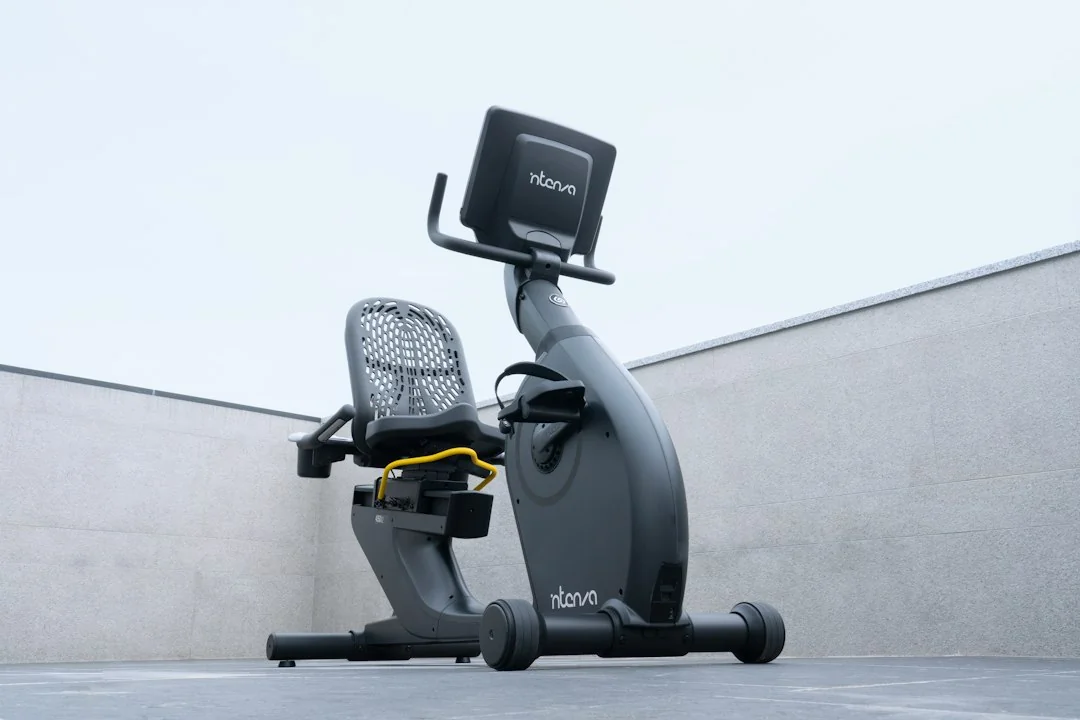
The most effective steady state cardio options:
- Brisk walking (3.5 to 4 mph treadmill or outdoor) - the lowest barrier to entry, suitable for all fitness levels, and genuinely joint-friendly
- Cycling (stationary or outdoor at consistent moderate resistance) - low impact on knees and hips, easy to sustain for 40 to 60 minutes
- Swimming (any stroke at a comfortable, controlled pace) - zero impact and full-body engagement
- Rowing (20 to 24 strokes per minute at moderate effort) - combines upper and lower body for high caloric expenditure
- Elliptical (mid-resistance, natural stride motion) - smooth, low-impact movement that closely mirrors running mechanics
- Light jogging (conversational pace, maintaining Zone 2 effort)
Session length guidelines for each experience level:
Experience Level | Session Duration | Weekly Sessions |
Beginner (0-6 weeks) | 20-30 minutes | 3-4 sessions |
Intermediate (6-16 weeks) | 30-45 minutes | 4-5 sessions |
Advanced (16+ weeks) | 45-60 minutes | 5-6 sessions |
Check heart rate every 5 to 10 minutes during early sessions to calibrate your Zone 2 effort before relying on perceived exertion alone. The goal is sustained, comfortable discomfort - not ease and not exhaustion.
The treadmill weight loss guide covers how to structure steady state treadmill sessions specifically for fat loss goals, with protocol progressions from beginner to advanced.
Who Benefits Most from HIIT vs Steady State Cardio?
There is no universal winner in the hiit vs steady state cardio debate because the right method depends on health status, training history, schedule, and goals. I have coached clients who thrived on steady state for months before any intervals were appropriate, and others who needed the metabolic stimulus of HIIT from the start to break through a plateau. The treadmill benefits guide goes deeper on how consistent cardiovascular training - at any intensity - drives measurable health improvements over time.
Important note: Anyone with cardiovascular conditions, metabolic disease, diabetes, pregnancy, or joint injuries should consult a physician before beginning either protocol. HIIT places significant cardiac demands and should be introduced gradually even in healthy individuals.
When HIIT Is the Smarter Choice
HIIT delivers the stronger return in these situations:
- Time is genuinely limited - 20 to 25 minutes of HIIT achieves comparable cardiovascular and metabolic outcomes to 40 to 60 minutes of steady state
- VO2 max improvement is a primary goal - HIIT drives faster aerobic capacity gains per training hour
- A progress plateau needs breaking - introducing intervals after several months of steady state creates a new adaptive stimulus
- You already have a solid aerobic base - at least 6 to 8 weeks of consistent Zone 2 work significantly reduces injury risk when adding HIIT
- Muscle preservation during fat loss is a priority - some evidence suggests HIIT better preserves lean mass during caloric restriction
- Consistency has been difficult with low-intensity work - the structured challenge of intervals keeps some trainees more engaged
When Steady State Cardio Wins
Steady state is the more appropriate starting point when:
- You are a complete beginner to structured cardiovascular training (my beginner cardio plan covers the first weeks)
- Joint issues, osteoporosis, or mobility limitations make repeated high-impact efforts risky
- Your schedule already includes three to four strength training sessions per week
- You are in a high-stress period where nervous system recovery capacity is already taxed
- Your goal is building aerobic endurance for a specific event
- You are recovering from illness or injury and rebuilding baseline fitness
- Age-related joint sensitivity makes high-intensity efforts genuinely uncomfortable, so I suggest the low impact exercises in my guide instead
Steady state also wins on the mental health dimension - an underappreciated factor in the benefits of hiit vs cardio discussion. Zone 2 walking and cycling require minimal cognitive effort, making them genuinely decompressive after high-stress days. Low-to-moderate aerobic exercise consistently reduces cortisol and improves mood and anxiety markers. For clients managing significant stress, I often recommend steady state specifically because it calms the nervous system rather than adding another sympathetic load.
How to Combine HIIT and Steady State Cardio for Maximum Results
In my experience coaching clients with a wide range of fitness levels and goals, a combined hiit vs steady state cardio approach consistently outperforms either method in isolation. The benefits of hiit vs cardio are genuinely complementary: HIIT builds intensity tolerance and VO2 max capacity; steady state builds the aerobic engine that makes HIIT sustainable. Our treadmill workout guide covers how to structure sessions that incorporate both approaches within a weekly program.

A practical weekly template for most adults:
Day | Session Type | Duration |
Monday | Steady state cardio | 30-45 min |
Tuesday | HIIT | 20-25 min |
Wednesday | Steady state cardio or rest | 30-45 min |
Thursday | HIIT | 20-25 min |
Friday | Steady state cardio | 30-45 min |
Saturday | Longer steady state (active recovery) | 45-60 min |
Sunday | Rest | - |
Key principles for combining both modalities effectively:
- Limit HIIT to 2 to 3 sessions per week maximum. More than that without adequate recovery produces diminishing returns and elevates injury risk
- Schedule HIIT and heavy strength training on separate days whenever possible to avoid compounded fatigue
- Use steady state on days between HIIT sessions to maintain cardiovascular stimulus without taxing the same recovery systems
- Build at least 6 to 8 weeks of consistent steady state before introducing any HIIT, especially if you are returning to exercise after a break
- Add HIIT sessions one at a time over 3 to 4 weeks rather than jumping directly to a full combined template
- Track heart rate during steady state sessions to confirm you are staying in Zone 2 and not unintentionally drifting into higher intensities that compromise recovery
I recommend a folding treadmill for both approaches at home, including steady state walking and jogging as well as sprint intervals and incline-based HIIT. An under desk treadmill adds low-intensity movement throughout the day without recovery cost.
Your Cardio Plan Starts Here
The hiit vs steady state cardio question has a right process rather than a single correct answer. Start by identifying your primary goal: time efficiency and VO2 max gains point toward HIIT; joint health, stress management, and aerobic base building point toward steady state. Then assess your fitness level, weekly recovery capacity, and schedule, using my guide on how often to do cardio, before deciding how to layer the two.

The research across five meta-analyses consistently supports a combined approach for most trainees. Two HIIT sessions and three to four steady state sessions per week, structured thoughtfully, outperform five sessions of either method alone for body composition, cardiovascular fitness, and long-term adherence.
I recommend beginning with steady state if you are new to structured cardio. After 6 to 8 weeks, introduce one HIIT session per week and monitor energy levels, sleep quality, and recovery before adding a second. That gradual buildup is how I have guided clients to sustainable fitness results without the burnout that comes from jumping straight into high-intensity work. The treadmill HIIT workout guide covers specific 20-minute interval protocols you can add once your steady state base is established.
FAQs
Is 20 minutes of steady-state cardio enough?
Twenty minutes of steady-state cardio is enough to produce measurable cardiovascular and fat oxidation benefits when performed consistently at Zone 2 intensity. The ACSM recommends 150 minutes of moderate-intensity exercise per week for cardiovascular health - spreading 20-minute sessions across 5 days meets that threshold and produces real aerobic adaptations over 6 to 8 weeks.
What is 20 minutes of HIIT equivalent to?
Twenty minutes of HIIT is roughly equivalent in cardiovascular and metabolic impact to 35 to 45 minutes of moderate-intensity steady state cardio, based on comparable VO2 max and calorie expenditure outcomes seen in matched-energy research. The exact equivalence depends on your interval intensity, work-to-rest ratio, and current fitness level.
What is the 3-3-3 rule in cardio?
The 3-3-3 rule in cardio refers to performing three cardio sessions per week, each lasting at least 30 minutes, at a minimum pace of approximately 3 miles per hour or equivalent moderate intensity. It is a straightforward entry-level framework for sedentary individuals beginning a cardiovascular exercise program and meeting basic activity guidelines.
Is 30 minutes of steady-state cardio good?
Thirty minutes of steady-state cardio is an effective and well-supported session length that falls within the research-backed range for fat oxidation, cardiovascular adaptation, and calorie expenditure. At moderate intensity, a 30-minute session burns approximately 150 to 300 calories depending on body weight and effort level, and produces measurable aerobic fitness improvements over 6 to 8 consistent weeks.
Is walking steady state cardio?
Walking is the most accessible form of steady-state cardio, provided you maintain a consistent brisk pace that keeps your heart rate in Zone 2 (roughly 60 to 70 percent of maximum heart rate). Brisk walking at 3.5 to 4.5 mph keeps most adults in the target zone and delivers the full range of fat oxidation and cardiovascular benefits associated with steady state training.
Medical disclaimer: This content is for informational and educational purposes only. It is not a substitute for professional medical advice, diagnosis, or treatment. Always consult your healthcare provider before starting any new fitness program, particularly if you have cardiovascular conditions, diabetes, pregnancy, or joint injuries.
References
- Guo Z, Li M, Cai J, Gong W, Liu Y, Liu Z. Effect of High-Intensity Interval Training vs. Moderate-Intensity Continuous Training on Fat Loss and Cardiorespiratory Fitness in the Young and Middle-Aged: a Systematic Review and Meta-Analysis. Int J Environ Res Public Health. 2023;20(6):4741. doi:10.3390/ijerph20064741.
- Chen C, Yu C, Li S. Effects of high-intensity interval and moderate-intensity continuous training on overweight or obese college students: A systematic review and meta-analysis. iScience. 2025;29(1):114361. doi:10.1016/j.isci.2025.114361.
- Jiang L, Zhang Y, Wang Z, Wang Y. Acute interval running induces greater excess post-exercise oxygen consumption and lipid oxidation than isocaloric continuous running in men with obesity. Sci Rep. 2024;14:9178. doi:10.1038/s41598-024-59893-9.
- Zheng W, Yin M, Guo Y, et al. Effects and moderator of high-intensity interval training and moderate-intensity continuous training among children and adolescents with overweight or obese: a systematic review and meta-analysis. Front Physiol. 2025;16:1625516. doi:10.3389/fphys.2025.1625516.
- Gao C, Yue Y, Wu D, Zhang J, Zhu S. Effects of high-intensity interval training versus moderate-intensity continuous training on cardiorespiratory and exercise capacity in patients with coronary artery disease: A systematic review and meta-analysis. PLOS ONE. 2025;20(2):e0314134. doi:10.1371/journal.pone.0314134.