

Are exercise bikes good for your fitness goals? The short answer is yes - and research backs that up more convincingly than most people expect. Stationary bikes deliver real cardiovascular benefits, meaningful calorie burn, and joint-safe movement that higher-impact machines simply cannot match for certain populations. I have reviewed the latest peer-reviewed data and dug into the patterns that riders consistently experience to give you an honest picture. This guide covers what the science actually says about cardiovascular gains, weight management, knee safety, and the genuine limitations that most articles skip.

Are Exercise Bikes Good for Overall Health - What Research Consistently Shows
Are exercise bikes good enough to produce measurable improvements in your health markers? The evidence says yes, clearly and consistently. A 2019 systematic review covering 13 studies and 372 participants found that indoor cycling improves maximal oxygen uptake by 8 to 10.5%, reduces systolic blood pressure by 4.3 to 11.8%, and improves lipid profiles including favorable HDL and LDL changes (1). These are not minor statistical artifacts - they are clinically meaningful shifts in cardiovascular risk factors.
My breakdown of what muscles does an exercise bike work covers the full activation profile across upright, recumbent, and spin bike styles.

I noticed in our review of the research that the cardiovascular benefits of cycling hold across a remarkably wide range of populations. Exercise bikes improve heart health in sedentary adults, people managing obesity, and older adults managing age-related fitness decline - not just already-fit people maintaining an existing baseline. Your heart rate, blood pressure, and oxygen-carrying capacity all respond to consistent cycling sessions, provided you ride at moderate to vigorous intensity rather than treating it as a casual spin.
For exact calorie estimates at each intensity level by body weight, my cycling calorie burn guide covers the full formula and output tables.
For a seated, back-supported ride, our recumbent bikes selection is a reasonable place to compare options.
Extra Benefits for Older Adults
A large 2024 systematic review of 47 intervention studies with over 2,500 older adult participants found that stationary bikes significantly improved aerobic capacity, physical mobility, cognitive function, and quality of life (2). The benefits extend well beyond cardiovascular fitness - measurable improvements in balance, gait speed, and executive function appeared across the included studies, particularly in adults over 60.
Benefit | Evidence Tier | Key Finding |
VO2max improvement | Strong | +8 to 10.5% in systematic review of 13 studies |
Blood pressure reduction | Strong | Systolic -4.3 to 11.8% with consistent cycling |
Cholesterol profile | Strong | HDL increase, LDL and triglyceride reduction |
Cognitive function (older adults) | Strong | Improved executive function and mobility |
Cardiometabolic markers | Moderate | Reduced body fat, insulin resistance, oxidative stress |
Calorie expenditure | Moderate | 11.94 to 14.33 kcal per minute by type and intensity |
For a tested overview of models that deliver these results consistently, our best exercise bike guide covers the top options across resistance type, price tier, and build quality.
Are Exercise Bikes Good for Cardio - Calorie Burn and Aerobic Output
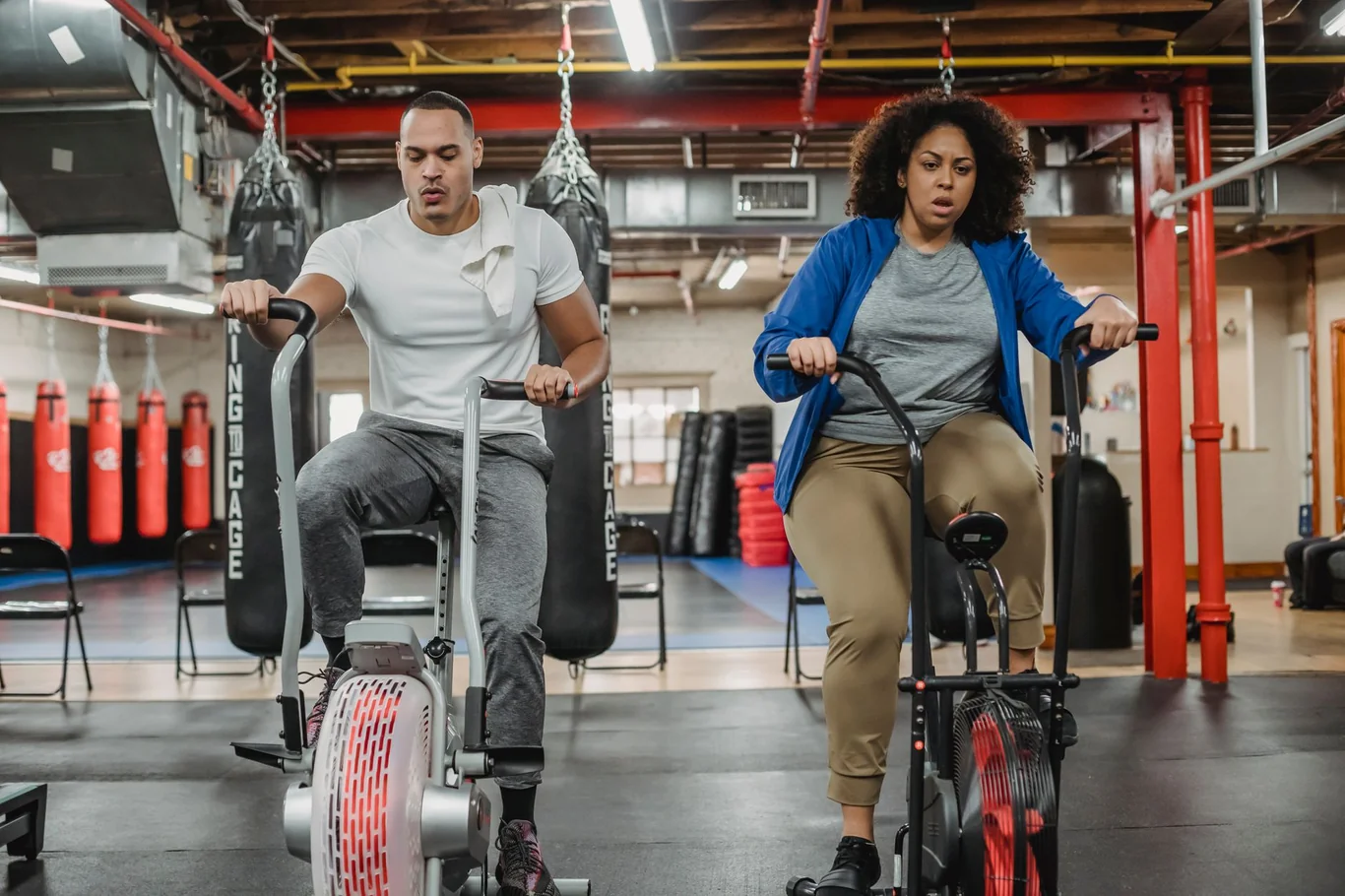
Are exercise bikes good for cardio? The calorie burn data confirms they sit solidly in the intermediate-to-high tier among indoor cardio machines. A 2024 comparative study measuring energy expenditure across seven indoor cardio machines found that upright bikes deliver 11.94 kcal per minute at a hard self-selected intensity and 13.63 kcal per minute at maximum effort, while spin bikes reached 12.45 and 14.33 kcal per minute, respectively (3). For most fitness goals, that output range is more than adequate.
VO2max and Aerobic Conditioning
For aerobic conditioning specifically, consistent cycling at moderate intensity produces VO2max gains comparable to other steady-state cardio. The large muscle groups of your legs and glutes sustain high cardiovascular demand throughout each session, training your heart and lungs to deliver and process oxygen more efficiently. Most people notice improved endurance within six to eight weeks of consistent training.
HIIT for Faster Gains
High-intensity interval training on a stationary bike accelerates these gains further. Alternating 20 seconds at near-maximum effort with 10 seconds of easy pedaling over 8 rounds takes less than five minutes but signals a comparable aerobic adaptation to much longer moderate-intensity sessions. The flexibility to shift between steady-state and HIIT within a single machine is a genuine practical advantage that treadmills share but rowers and ellipticals make more complicated.
If you're weighing the bike against rowing specifically, my cycling vs rowing breakdown covers both machines across calorie output, muscle recruitment, and long-term training outcomes.
My guide on how does a magnetic resistance exercise bike work covers why magnetic resistance makes HIIT intervals more precise and repeatable.
One honest limitation relative to running: because the seat supports your body weight, your muscles work less hard at a given heart rate than they would while running. Understanding treadmill benefits data helps clarify this - running edges out cycling slightly for calorie-per-minute efficiency at equivalent perceived efforts. But for joint-safe cardio where sustainability across months matters more than peak efficiency, the bike's trade-off is entirely justified for most people.
Key factors that determine aerobic gains on a stationary bike:
- Resistance level - too light produces no meaningful cardiovascular demand
- Session duration - 20 to 45 minutes generates a reliable conditioning stimulus
- Weekly frequency - three to five days per week matches the evidence-based target
- Intensity variation - mixing steady-state and interval sessions prevents adaptation plateau
- Progression - increasing resistance or duration incrementally every two to three weeks
Is an Exercise Bike Good for Belly Fat - Realistic Expectations and What Actually Works
Is an exercise bike good for belly fat? It contributes to losing belly fat as part of overall fat reduction, but it cannot target abdominal fat specifically. Spot reduction, the idea that exercising near one area burns fat from that area, is a persistent myth without credible scientific support. What cycling creates is a calorie deficit that drives total body fat loss over time, with abdominal stores reducing as part of that broader process.
For a detailed breakdown of how that abdominal reduction actually works and what the research says about the timeline, my exercise bike and belly fat guide covers the full evidence.
For riders who want a structured protocol that applies those variables consistently, stationary bike workout for weight loss covers the most effective session formats.

A 2020 controlled study found that three months of indoor cycling at three sessions per week produced significant reductions in body mass, total cholesterol, LDL, and oxidative stress markers in women with obesity, while simultaneously increasing lean muscle mass (4). Improved insulin resistance was also observed - a metabolic shift that directly affects where and how your body stores fat over the long term.
Why the Scale Isn’t Moving
The frustration most riders experience when cycling regularly without losing belly fat almost always comes down to caloric intake. A 45-minute moderate-intensity session burns roughly 400 to 550 calories for an average adult. A single high-calorie post-workout meal can easily cancel that deficit. Diet and exercise work together - neither produces sustainable fat loss alone, and this combination is the factor most weight-loss-focused riders underestimate.
Effort Level (45-min session) | Approximate Calorie Burn |
Light (easy pedaling, low resistance) | 200 to 280 kcal |
Moderate (conversational pace, medium resistance) | 380 to 480 kcal |
Vigorous (hard breathing, high resistance) | 500 to 620 kcal |
HIIT protocol (intervals at near-max, 30 min) | 400 to 520 kcal |
Estimates vary based on body weight, fitness level, and machine type. These are approximate ranges from exercise physiology research.
The most effective approach for belly fat reduction combines structured cycling intervals at vigorous intensity with a moderate dietary calorie deficit of 300 to 500 calories per day. Tracking what you burn against what you eat matters significantly. Our best calorie tracker guide covers wearable options that pair with stationary bikes to give you real-time burn data during sessions.
Are Exercise Bikes Good for Knees - Low-Impact Cycling and Joint Safety
Are exercise bikes good for knees? For most people managing knee pain or recovering from lower-body injury, stationary bikes are one of the safest cardiovascular options available. The circular pedaling motion produces a smooth, controlled load through the knee joint that lacks the impact spike of running and the lateral stress of court sports. Physical therapists and orthopedic rehabilitation programs routinely incorporate stationary cycling for exactly this reason.
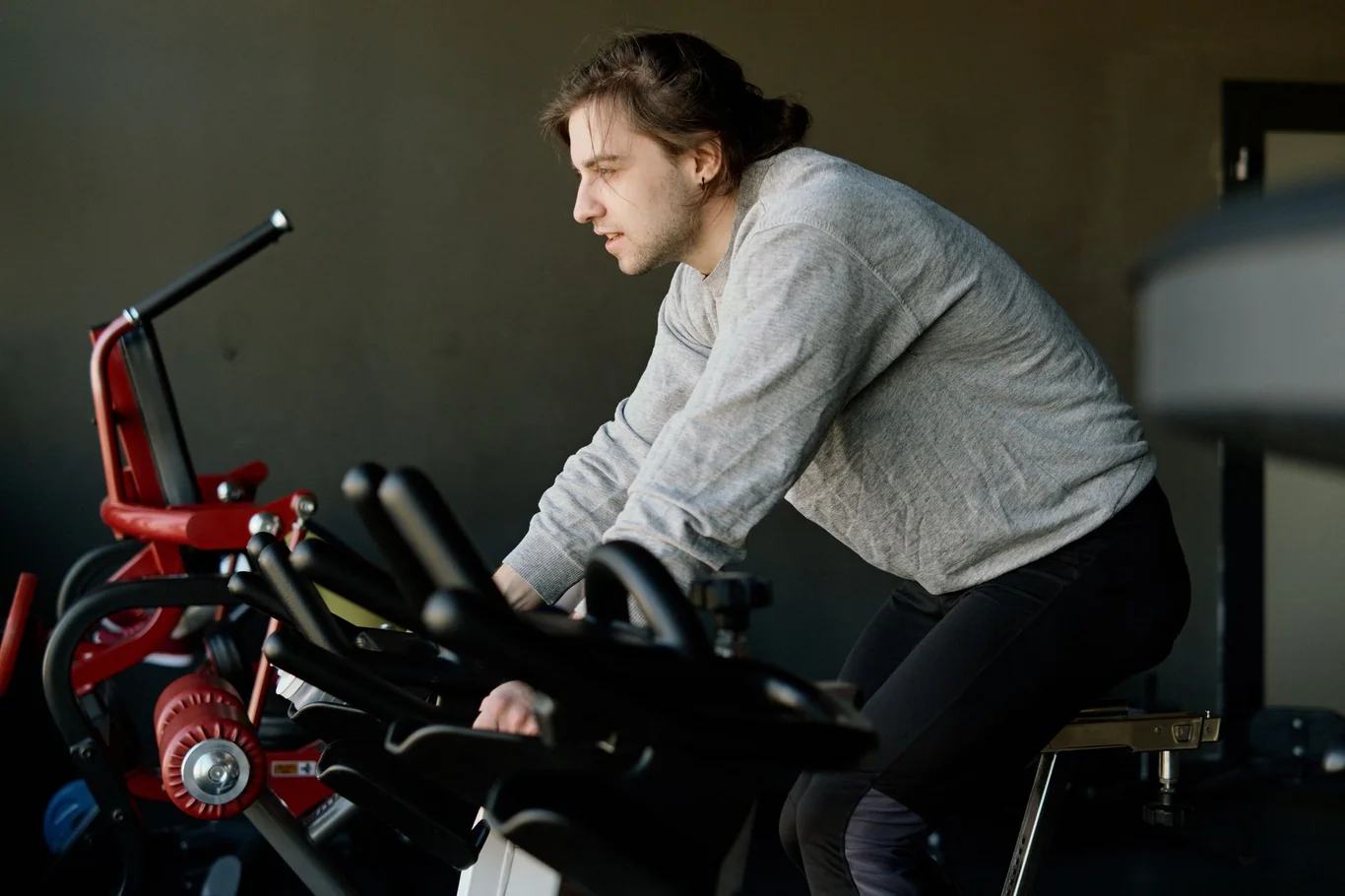
A 2014 systematic review and meta-analysis of 33 randomized clinical trials with 3,192 participants found that exercise interventions including cycling improved pain, stiffness, knee extensor strength, and proprioception in patients with knee osteoarthritis (5). Pain scores improved with effect sizes of 0.43 to 0.77 across the included studies - a clinically relevant reduction for people managing daily knee discomfort.
Setting Up Your Bike Correctly
Proper bike setup is critical for protecting your knees during every session. When the seat is too low, the knee flexion angle increases with each pedal stroke and puts compressive stress on the patella. The correct seat height lets your leg reach 25 to 30 degrees of knee flexion at the bottom of each stroke.
Most beginners set this too low, which is the single most common cause of cycling-related knee complaints.
Key setup points for knee-safe cycling:
- Seat height - nearly full leg extension (slight bend) at the bottom of each stroke
- Seat fore-aft position - kneecap tracks over the pedal spindle at the 3 o'clock position
- Resistance - start light and progress gradually; grinding heavy resistance with poor form damages knee tissue
- Cadence - 60 to 80 RPM is a knee-friendly range; avoid very low cadence under heavy load
Recumbent Bikes for Extra Support
I would recommend a recumbent-style bike for riders managing back problems alongside knee concerns. Recumbent designs eliminate the forward lean of upright bikes and distribute load differently across the hip and knee. Our guide to the best exercise bike for back problems covers which styles and specific models work best when you are managing multiple physical concerns simultaneously.
The Honest Downsides of Stationary Bikes
Here are the honest downsides of stationary bikes.
Boredom and Motivation
No cardio machine is without genuine limitations, and stationary bikes have several worth knowing before you commit. The most frequently reported issue is boredom. Stationary cycling removes the environmental variety of outdoor rides, and many riders struggle to maintain motivation through solo sessions beyond 20 to 30 minutes. This is not a personal failing - it is a structural feature of monotonous, low-feedback exercise. Virtual cycling platforms, interval programming with specific targets, and entertainment pairing reduce dropout rates significantly, but boredom remains the most common reason riders abandon their bikes in the first year.
Saddle Discomfort
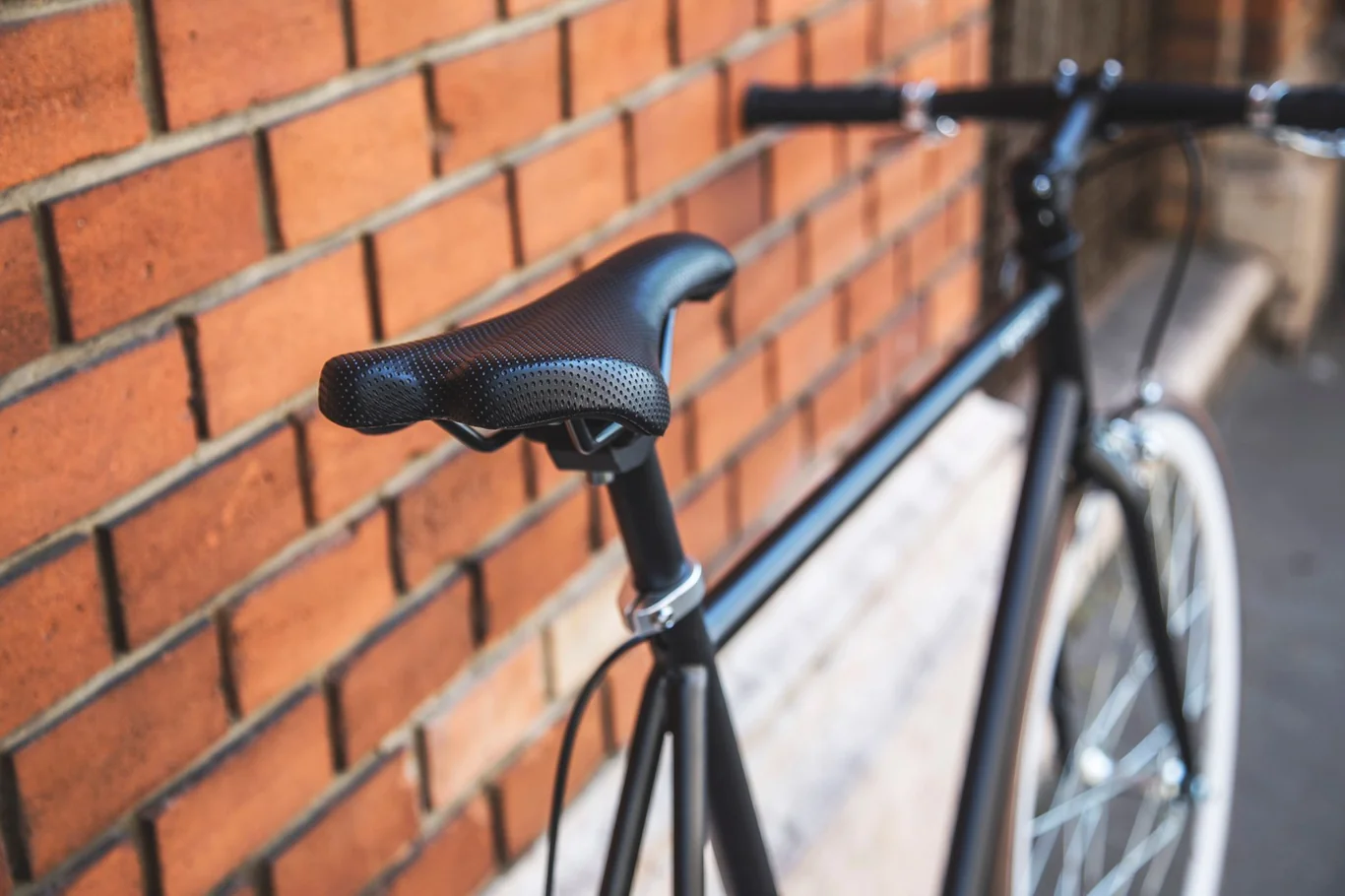
Saddle discomfort is the second major issue. The narrow saddles on most upright bikes cause significant discomfort during sessions longer than 30 minutes, particularly in the first several weeks before tissue adaptation occurs. Padded cycling shorts and aftermarket cushion covers address most complaints, but this surprises buyers who expect riding to feel immediately comfortable out of the box.
If saddle comfort is a concern, my guide to the best recumbent exercise bike covers the models with the widest seats and most supportive backrests.
Bone Density Considerations
A notable limitation around long-term bone health also applies to exclusive cycling. A systematic review examining cycling and bone mineral density found that stationary cycling alone does not confer significant bone health benefits (6). The seated position removes the weight-bearing stimulus that bones need to maintain density. If you rely exclusively on a stationary bike for fitness, supplement with weight-bearing activity - walking, strength training, or light resistance work - to protect long-term bone health. This is especially important for postmenopausal women and older adults.
Additional downsides to know before committing:
- Limited full-body stimulus - upper body and core get minimal direct engagement
- Plateau effects after initial fitness gains if intensity is not progressively increased
- Noise from lower-quality models - friction resistance bikes are significantly louder than magnetic resistance units
- Maintenance requirements - chain-drive and friction systems need regular adjustment; magnetic resistance requires much less
The pooboo Recumbent Bike with Arm Exerciser carries a manufacturer-rated noise level of 20 dB.
If you want a joint-friendly but bone-loading alternative on off-days, our best treadmill for home guide covers walking-pace models that maintain bone density stimulus without high impact.
How to Structure Your Exercise Bike Routine for Better Results
Getting results from a stationary bike requires more than logging time at a comfortable pace. The evidence-based approach combines progressive intensity, adequate session duration, and sufficient weekly frequency from the start. Without progressive overload, adaptation stalls and the bike becomes a maintenance tool rather than a conditioning one.

Getting Started as a Beginner
For beginners, three 20 to 30-minute sessions per week at moderate effort produce measurable cardiovascular improvements within six weeks. You should be breathing harder than normal but still able to speak in short sentences. I give more weight to this moderate-intensity starting range than to intense early protocols - it builds the aerobic base that makes higher-intensity work productive later, without creating the early fatigue that kills adherence.
A progressive structure for the first 12 weeks:
- Weeks 1 to 4 - Three sessions per week, 20 to 30 minutes at moderate intensity, building duration comfort
- Weeks 5 to 8 - Add a fourth session, extend two sessions to 35 to 40 minutes, introduce one interval session per week
- Weeks 9 to 12 - Run HIIT on two sessions, alternating high and low effort every two to three minutes, maintain two moderate sessions
- After week 12 - Reassess fitness level and increase resistance or duration to prevent adaptation plateau
Recovery Benefits Between Sessions
A 2024 randomized crossover trial found that indoor cycling sessions produce prolonged cardiovascular recovery effects, with systolic blood pressure reductions of 7 to 8 mmHg persisting for at least 30 minutes post-exercise in middle-aged adults (7). This means the physiological benefits of each session extend well beyond the time you spend on the bike - your cardiovascular system continues processing the training stimulus during recovery.
For those who want to pair cycling with a second machine on off-days, my comparison of recumbent exercise bike vs rowing machine covers how the two options differ in muscle load and recovery impact.
For those who want to pair cycling with another cardio machine across the week, our treadmill workout guide covers structured walking and running protocols that complement stationary bike training effectively without doubling up on lower-body fatigue.
Who Gets the Most from a Stationary Bike
Exercise bikes are not the ideal tool for every fitness goal, but they are an excellent fit for specific populations. I have identified four groups where the evidence for stationary bike use is particularly strong, and the practical fit is hard to beat.
Recovering From Injury
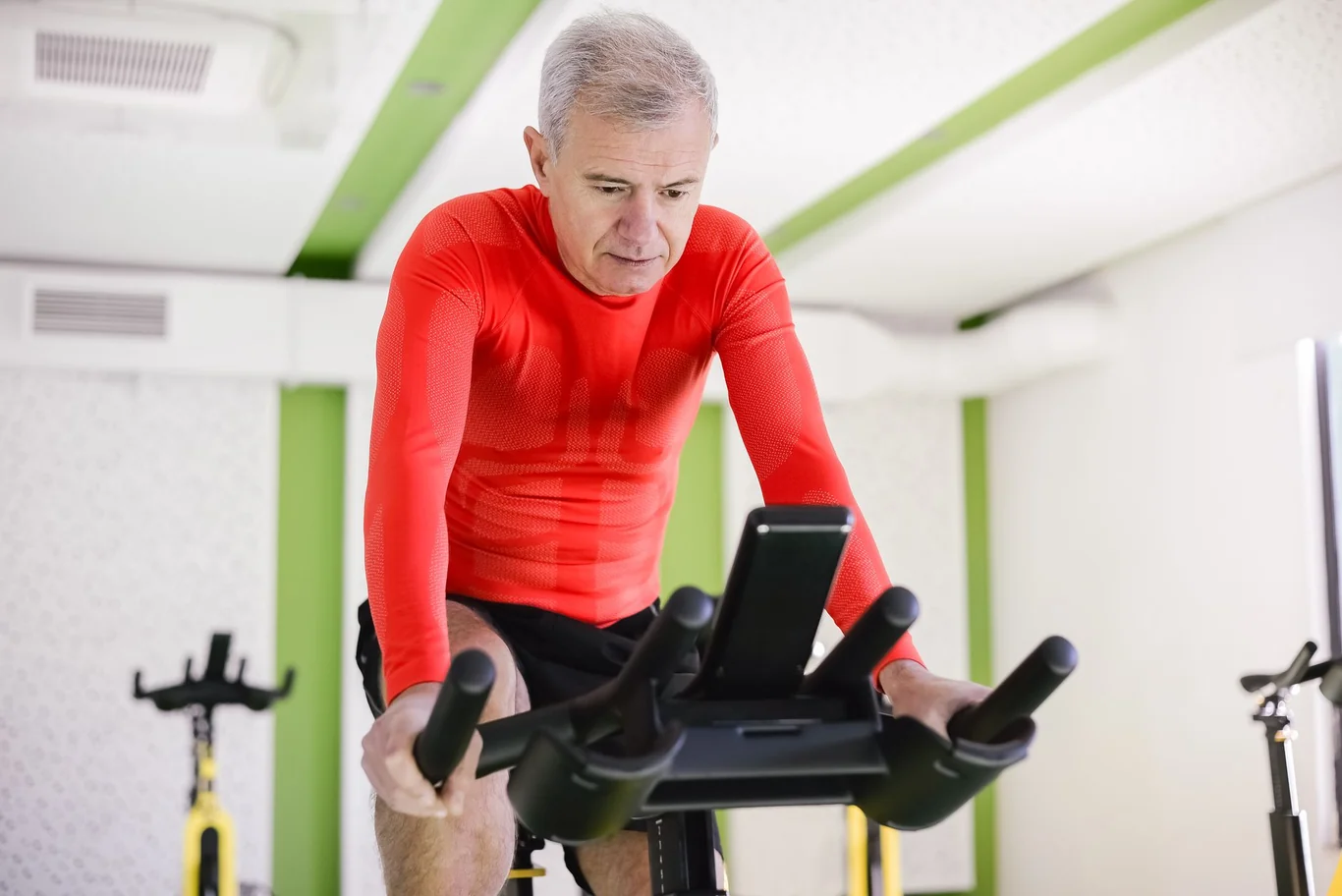
Riders recovering from lower-body injuries benefit most from the bike's controlled, low-impact motion. The cycling stroke maintains joint mobility and muscle engagement without the ground reaction forces that delay tissue recovery. Stationary cycling is one of the few cardiovascular modalities a physiotherapist can typically clear before other forms of cardio.
For stroke or limited-mobility recovery specifically, the Innova RCT2025 Recumbent Cross Trainer adds a leg harness stabilizer and wrist strap to that same low-impact motion.
If you are deciding between bike styles, my comparison of recumbent exercise bike vs upright covers which type better suits early-stage recovery and ongoing rehabilitation.
Knee Osteoarthritis
People managing knee osteoarthritis have some of the strongest research support for stationary cycling. The Tanaka et al. (2014) meta-analysis demonstrating pain and functional improvements places cycling among the few exercise modalities with clear evidence in this population, and the low-impact nature reduces hesitation around exercise-induced flare-ups.
If you are considering a recumbent style for added joint support, my guide on what is a recumbent exercise bike covers how its geometry reduces knee and back strain compared to upright bikes.
Older Adults and Cycling
Older adults have a particularly strong case for regular cycling based on the Meng et al. (2024) systematic review showing improvements in cognitive function, physical mobility, and quality of life alongside aerobic gains. The stability and low fall risk of a seated cycling position make it practical for older adults who might otherwise avoid cardio entirely.
My guide to the best exercise bike for seniors covers the models with the lowest step-over height, clearest displays, and most supportive seat designs.
Home Gym Users
Home gym users seeking reliable, all-weather cardio with minimal maintenance will find a magnetic resistance upright or recumbent bike one of the most practical long-term investments. Setup is manageable, durability on mid-tier models is solid, and the footprint fits most apartment living rooms or spare rooms without major furniture rearrangement.
Step-through models like the 3G Cardio Elite RB X pair a lifetime frame warranty with FTMS Bluetooth for this kind of long-term, low-maintenance setup.
My best folding exercise bike guide covers the models that fold down to the smallest footprint without sacrificing pedal smoothness.
Those who may find better value elsewhere:
- Advanced athletes prioritizing maximum calorie burn per minute (running provides higher output at equivalent effort)
- People focused primarily on bone density preservation (supplemental weight-bearing exercise is required)
- Anyone needing full-body training stimulus (upper body gets minimal direct work from cycling)
- Riders with tailbone or hip conditions that make seated exercise chronically painful
Tracking progress across your training matters regardless of which group you fall into. Our treadmill weight loss guide covers cross-training approaches if you want to layer cycling with other modalities for broader fitness outcomes across the week.
The Bottom Line on Exercise Bikes
Stationary bikes deliver genuine, research-supported health benefits for most people - cardiovascular improvement, meaningful calorie expenditure, joint-safe movement, and metabolic health gains with consistent use. They are not a replacement for a complete fitness program that includes strength training and adequate protein intake, but as a primary cardio tool, they are among the most practical and evidence-backed options for home training.
I consistently see exercise bikes underestimated by people who dismiss them as too boring or low-intensity - and equally overestimated by people expecting dramatic weight loss from cycling alone without addressing diet. The honest picture is that these machines reward consistency, structure, and progressive intensity, and they produce results proportional to the effort and approach you bring to each session.
The starting point for getting that right is picking the right exercise bike for your body, space, and training frequency, covered in my full selection guide.
If you are ready to choose a model, our best exercise bike guide covers the top-performing options across price tiers, resistance types, and use cases - from budget upright models to connected bikes with live coaching.
FAQs
Can you lose belly fat by riding a stationary bike?
Riding a stationary bike can contribute to losing belly fat as part of overall total body fat reduction driven by a consistent calorie deficit. The bike itself cannot target abdominal fat specifically, but regular cycling combined with a controlled diet creates the conditions for fat loss across all areas, including the midsection, over time.
What are the downsides of stationary bikes?
The main downsides of stationary bikes include session boredom, saddle discomfort especially in the first few weeks, limited upper body engagement, insufficient bone-loading stimulus for long-term bone health when used exclusively, and plateau effects if intensity is not progressively increased. Most of these limitations are manageable with proper setup, varied programming, and supplemental weight-bearing activity.
Is 30 minutes of exercise bike a day enough?
Thirty minutes of exercise bike per day is enough to produce meaningful cardiovascular improvements when performed at moderate to vigorous intensity three to five times per week. For general heart health and fitness maintenance, 30 minutes at a pace that elevates your breathing significantly meets the evidence-based physical activity guidelines for adults.
Is 30 minutes of stationary bike the same as 30 minutes of walking?
Thirty minutes on a stationary bike at moderate to vigorous intensity burns significantly more calories and produces greater cardiovascular stimulus than 30 minutes of walking, because cycling can sustain higher heart rates with less joint discomfort at equivalent exertion levels. At a very light effort, the calorie expenditure of both activities is more comparable, but cycling at any meaningful resistance outpaces walking for cardiovascular conditioning.
Are exercise bikes good for weight loss?
Exercise bikes are good for weight loss when used consistently at moderate to vigorous intensity alongside a controlled diet, because a calorie deficit from exercise alone is rarely sufficient for sustained fat loss. A 45-minute cycling session burns approximately 400 to 550 calories depending on body weight and effort level, but combining that burn with a dietary calorie reduction of 300 to 500 calories per day produces far more reliable weight loss results over time.
References:
- Zhu W, et al. Health Benefits of Indoor Cycling: A Systematic Review. Sports Medicine. 2019;49(9):1325-1336. doi:10.1007/s40279-019-01135-4
- Meng Z, et al. Acceptability and Effectiveness of Stationary Bike Intervention on Health Outcomes Among Older Adults: A Systematic Review of Intervention Studies. Frontiers in Public Health. 2024;12:1330282. doi:10.3389/fpubh.2024.1330282
- Silva RA, et al. Energy Expenditure, Oxygen Consumption, and Heart Rate While Exercising on Seven Different Indoor Cardio Machines at Maximum and Self-Selected Submaximal Intensity. International Journal of Environmental Research and Public Health. 2024;21(3):283. doi:10.3390/ijerph21030283
- Petridou A, et al. Effects of an Indoor Cycling Program on Cardiometabolic Factors in Women with Obesity vs. Normal Body Weight. Journal of Sports Science & Medicine. 2020;19:768-779.
- Tanaka R, et al. Evidence of Improvement in Various Impairments by Exercise Interventions in Patients with Knee Osteoarthritis: A Systematic Review and Meta-analysis of Randomized Clinical Trials. Clinical Rehabilitation. 2014;28(12):1217-1228. doi:10.1177/0269215514538047
- Barry DW, et al. Cycling and Bone Health: A Systematic Review. Medicine & Science in Sports & Exercise. 2012;44(12):2530-2538. doi:10.1249/MSS.0b013e318271c5f7
- Sarmento H, et al. Acute Effects of Commercial Group Exercise Classes on Arterial Stiffness and Cardiovagal Modulation in Healthy Young and Middle-Aged Adults: A Crossover Randomized Trial. Journal of Clinical Medicine. 2024;13(5):1401. doi:10.3390/jcm13051401