

An exercise bike mainly works the leg muscles: the quadriceps, hamstrings, glutes and calf. In two small EMG studies of healthy adults at a moderate effort, leg-muscle activity was similar on upright and recumbent bikes, the outer calf was more active on the upright, and trunk activity was low to moderate on both.
The exercise bike muscles worked are mainly in the legs: the quadriceps at the front of the thigh, the hamstrings at the back, the glutes and the calf. That is the short answer to what muscles does an exercise bike work, and the detail changes with bike type, load, cadence and seat setup. This guide sets out what electromyography (EMG) studies measured for each muscle, how upright, recumbent and indoor cycling bikes compare, and what the evidence does and does not say about building muscle. EMG records a muscle's electrical activity through skin sensors. It shows how active a muscle was, not how strong it is or how much it will grow, and every muscle claim here is kept to what a study measured.
What Muscles Does an Exercise Bike Work - The Primary Lower Body Muscles
The quadriceps, hamstrings, glutes and calf muscles are the lower-body groups that the studies behind this page measured on exercise bikes. How the work divides among them depends on power output, pedaling rate, body position, the shoe-pedal interface, training status and fatigue 1. No study cited here gives a percentage split between the muscles, so this page gives none.
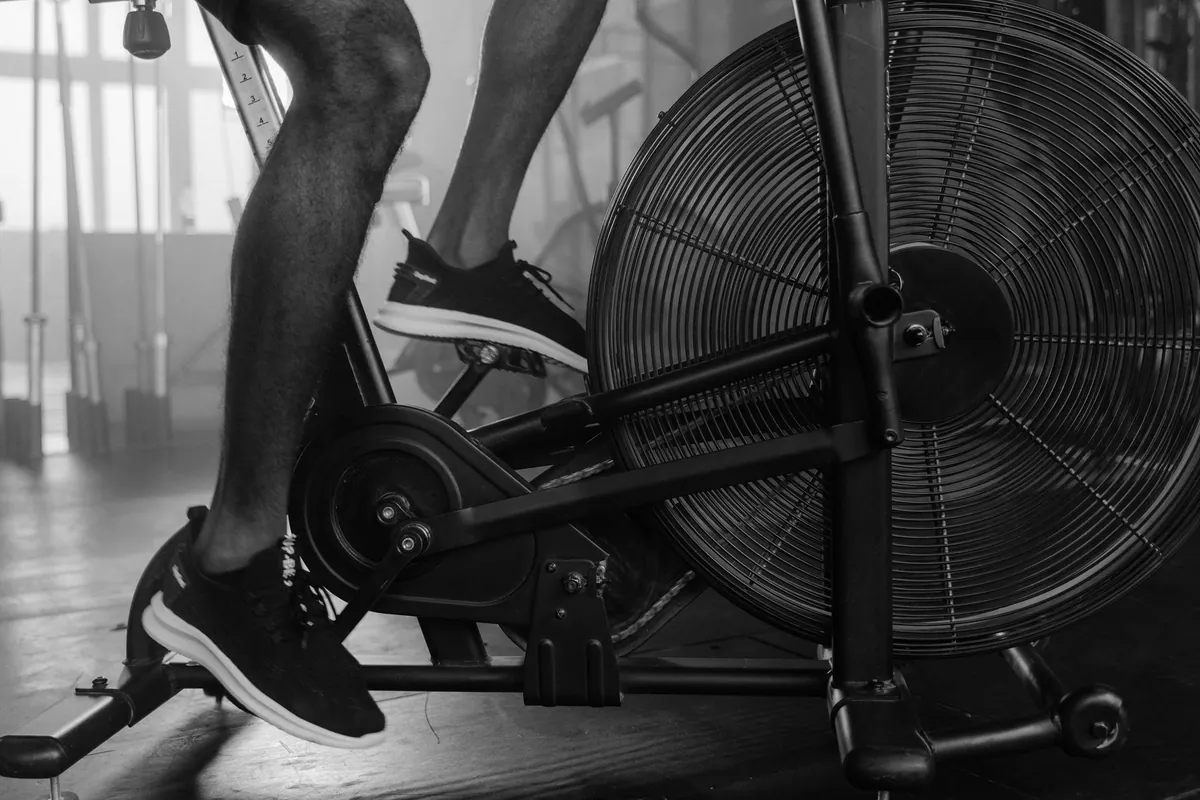
The table lists what the EMG studies on this page found for each group. Each finding is explained, with its population, in the paragraphs below it:
| Muscle | Location | What the EMG studies found |
|---|---|---|
| Quadriceps | Front of thigh | Activity rose with cadence, and the rise was larger at higher resistance |
| Hamstrings | Back of thigh | Activity rose faster than the quadriceps as cadence rose |
| Gluteus maximus | Buttocks | Low to moderate activity, similar on upright and recumbent bikes |
| Gastrocnemius (calf) | Back of lower leg | Outer calf muscle most active on the upright bike |
Quadriceps (front of the thigh) were measured in the cadence study and in the upright versus recumbent comparisons. In able-bodied people on a stationary bike, quadriceps EMG amplitude rose with pedaling cadence, and the rise was larger when crank resistance was higher 2. It shows a direction, not a cadence or resistance prescription. The rectus femoris, one of the four quadriceps muscles, was also measured on recumbent and upright ergometers; the comparison is in the upright versus recumbent section below.
Set the seat first. Start near a 25 to 35 degree knee bend with the pedal at the bottom, ride a few easy minutes, adjust, and stop if a setting brings on knee pain.
Hamstrings (back of the thigh) respond to cadence too. In the same cadence study, when people pedaled faster, hamstring activity generally rose at a higher rate than quadriceps activity 2. The other studies here measured one hamstring muscle each, the biceps femoris in one and the semitendinosus in two, so each is named where it appears instead of being reported as "the hamstrings".
Glutes were measured in one study of 12 recreationally active adults riding for 2 minutes at 40 to 50% of heart-rate reserve. The gluteus maximus and gluteus medius worked at low to moderate levels, similar across the four devices tested, which included upright and recumbent bikes 3. That study did not vary seat height, resistance or cadence, so it does not show what raises glute activity.
A machine built around climbing is covered in the stairmaster advantages guide.
Calves. In the same 12-adult study the outer calf muscle (lateral gastrocnemius) was most active during upright cycling, while the glutes, a hamstring (biceps femoris) and the trunk muscles did not differ across the devices 3. The soleus, the deeper calf muscle, was not measured in any study cited here, so the table names the gastrocnemius only.
Bike models that suit lower-body training are listed in the guide to the best exercise bike.
Four setup variables matter, and the evidence behind each one is different:
- Seat height - a knee bend of about 25 to 35 degrees with the pedal at the bottom is the commonly recommended starting point for seat height 4. No study cited here measured how seat height changes glute or hamstring activity, so treat the range as a fit starting point, not a muscle-recruitment setting.
- Resistance level - in the cadence study, the rise in quadriceps and hamstring activity between slow and fast pedaling was larger at higher crank resistance 2. Resistance changed how large the cadence effect was.
- Pedaling cadence - faster pedaling raised hamstring activity at a higher rate than quadriceps activity 2. No rpm target follows from it, so none is given here.
- Knee-to-foot position - in a bike-fit study of 6 amateur cyclists, moving the knee further forward of or behind the foot changed the activity of the vastus lateralis, vastus medialis and semitendinosus during a short ride test 5. During a graded exercise test, the way muscle use shifted did not differ between positions, and six riders are too few to set a rule for a home bike.
Secondary Muscles - Core, Hip Flexors, and What Upright Biking Adds
Beyond the legs, three further areas come up when people ask what muscles does a stationary bike work: the trunk, the shin and the arms. The evidence is thin, so each point below states what was measured and where the data stop.
Reading muscle activity as muscle growth. EMG shows how active a muscle was while riding; it does not show that the muscle will get bigger or stronger.
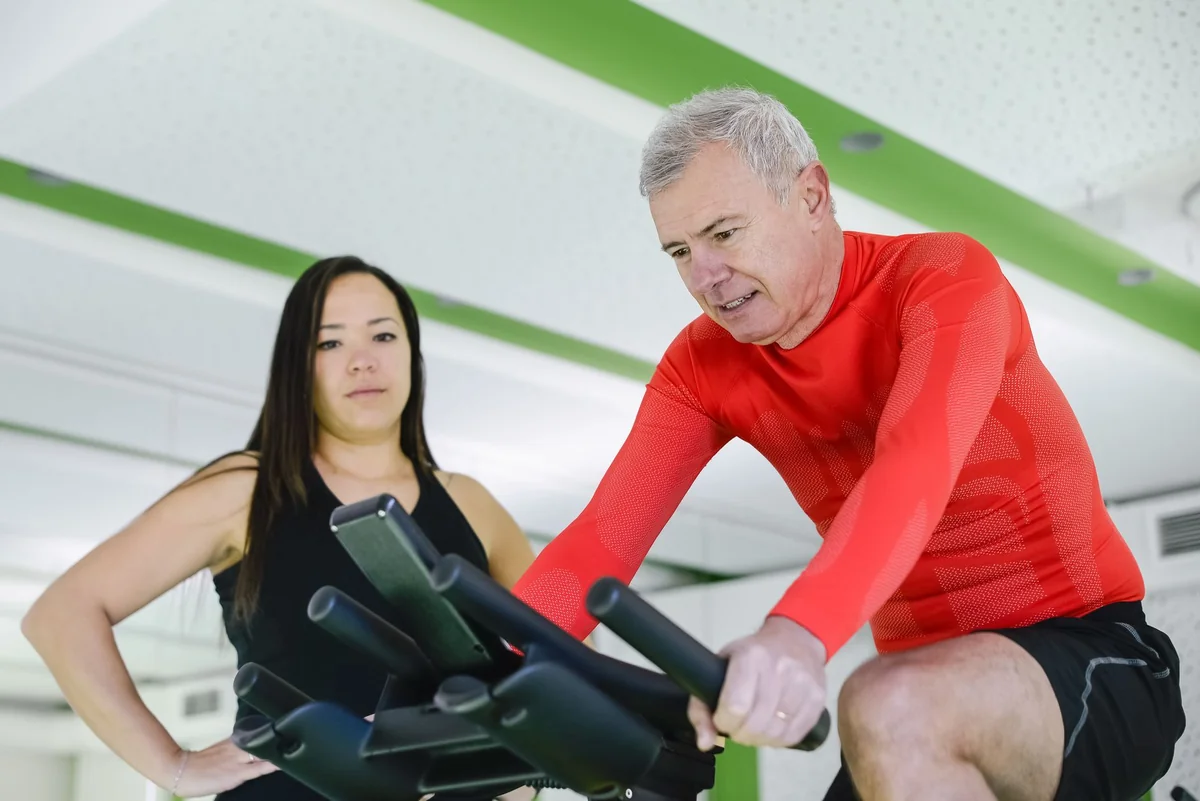
- Core (trunk) muscles. In 12 recreationally active adults, the lumbar erector spinae and the rectus abdominis, the outer abdominal muscle, worked at low to moderate levels that were similar across the upright bike, recumbent bike, treadmill and ElliptiGO 3. Those levels describe riding at a moderate effort for 2 minutes, not hard or long efforts.
- Shin (tibialis anterior). Its activity did not differ between a recumbent and an upright ergometer in 10 men who were not cyclists 6. In the 12-adult study it was higher in walking than on the recumbent bike or the ElliptiGO 3.
- Hip flexors and arms. No study cited here measured the hip flexors, chest, shoulder or arm muscles during bike riding, so this page makes no claim about them, including for fan bikes, also called air bikes, with moving handlebars.
Core activity did not separate the two designs in the data: the lumbar erector spinae and rectus abdominis were similar on the upright and recumbent bikes in the 12-adult study 3. A backrest changes how supported you feel; the study did not show that it changes trunk muscle activity. If you have back pain, ask your doctor or physical therapist which bike position suits you.
Rowing loads the back differently, and the guide to rowing and back pain covers that machine.
For the mechanism behind magnetic resistance, read the explainer on magnetic resistance exercise bike works.
Pedal Stroke Phases and Muscle Groups - What Is Known
Pedaling is a circular movement, but it is not a simple one: muscles switch on and off around the circle, and pedaling EMG research records both how active a muscle is and when it is active 1. The studies cited on this page report average or peak activity over whole pedal strokes, so this page assigns no muscles to clock positions. That would go beyond what they measured.
No study cited here gives a share of pedaling power by stroke phase, so this page gives none. What the cadence study did show is narrower: faster pedaling raised hamstring activity at a higher rate than quadriceps activity 2.
For a comparison with another low-impact cardio machine, read recumbent exercise bike vs rowing machine.
Rowing machine options are listed in the rowing machine comparison guide.
Upright vs. Recumbent Bike - How Muscle Activation Differs
The question of what muscles does a recumbent bike work has a short answer from the two studies that compared the designs with EMG: the same leg muscles, at similar levels. In 10 men who were not cyclists, pedaling at a moderate load, peak activity of the front thigh (rectus femoris), a hamstring (semitendinosus), the shin (tibialis anterior) and the inner calf (medial gastrocnemius) did not differ significantly between a recumbent and an upright ergometer 6. In 12 recreationally active adults riding for 2 minutes at 40 to 50% of heart-rate reserve, the outer calf (lateral gastrocnemius) was most active on the upright bike, while the glutes, a hamstring (biceps femoris), the lower back and the abdominals worked at similar, low to moderate levels on upright and recumbent bikes 3.
Bike formats and what each is built for are laid out in the guide to stationary bike designs and differences.
The Sunny Health & Fitness Smart Magnetic Recumbent Bike is one recumbent model in the shop; check the maker's current listing for its resistance range and user weight limit.
| Muscle Group | Upright Bike | Recumbent Bike |
|---|---|---|
| Quadriceps | Rectus femoris: no significant difference from recumbent | No significant difference from upright (rectus femoris) |
| Hamstrings | Semitendinosus and biceps femoris: no significant difference | No significant difference (semitendinosus and biceps femoris) |
| Glutes | Low to moderate, similar on both bikes | Similar to the upright: low to moderate |
| Core and abs | Lower back and abdominals: low to moderate, similar on both bikes | Same as the upright: low to moderate |
| Calves | Outer calf (lateral gastrocnemius) higher than on the recumbent; inner calf no different | Outer calf lower than on the upright; inner calf no different |
| Hip flexors | Not measured in these studies | No data in these studies |
These were small studies at light to moderate loads. They show activity at those loads, not strength or muscle growth, and they say nothing about hard efforts. The recumbent design adds a backrest and a reclined hip angle; no study cited here compared spinal or knee load on a recumbent and an upright bike, so I do not rank the two for joints or for the back.
For the quadriceps, glutes and a hamstring, the two designs did not differ measurably at these loads. Only the outer calf separated them, and it was higher on the upright bike. Neither study included an indoor cycling bike or standing efforts, so neither shows that an indoor cycling bike works the glutes or core harder.
Setup advice for sore knees is in the guide to cycling with knee pain.
The Schwinn 280 in the shop is an older Schwinn model no longer in Schwinn's current lineup; compare Schwinn's current recumbents on the maker's page if you want a new one.
A side-by-side look at the two designs is in recumbent exercise bike vs upright.
Exercise Bike vs. Treadmill - Leg Muscles, Fat Loss, and Knee Health
The treadmill comparison depends on what is being compared, and for muscle activity the data come from one small study with a walking condition.
Two other machines are compared in the stairmaster vs rowing machine guide.
In the 12-adult study, walking on a treadmill at 40 to 50% of heart-rate reserve was one of the four conditions. The glutes, a hamstring, the lower back and the abdominals worked at levels similar to the bikes; the shin muscle was more active in walking than on the recumbent bike, and the outer calf was most active on the upright bike 3. That is walking, not running, in 12 people, so it says nothing about running. None of the studies cited here measured muscle definition or "toning".
A climbing machine is a third option, covered in the stair climber cardio guide.
No exercise burns fat from the area that does the work. In 24 sedentary adults aged 18 to 40, six weeks of abdominal exercises on an isocaloric diet had no significant effect on abdominal fat measures 7. In 11 young adults who trained one leg for 12 weeks, body fat fell in the arms and trunk but not in the trained leg 8. Neither machine targets belly fat.
The belly fat question has its own page: cycling and belly fat.
Fat loss workouts on a stationary bike are the topic of the stationary bike workout for fat loss guide.
This page makes no calorie comparison between a treadmill and a bike. The numbers depend on body weight, effort and the machine, and no study cited here compared the two.
Knee osteoarthritis is the clearest health case for stationary cycling. A 2021 meta-analysis (11 trials, 724 people with knee osteoarthritis; 8 trials pooled) found that stationary cycling reduced pain and improved sport function compared with no exercise. Changes in stiffness, daily function and daily living were significant but smaller than the minimum change patients notice, and symptoms and quality of life did not change significantly 9. Other joint-friendly options are listed in the guide to low impact exercises.
A cross-sectional analysis of 2,607 adults in a US osteoarthritis cohort (mean age 64.3) found that people who reported any bicycling earlier in life were less likely to have frequent knee pain, with an adjusted risk ratio of 0.83 (95% confidence interval 0.73 to 0.92) 10. The questionnaire asked about bicycling in general, not stationary bikes, and the result is an association, not proof that cycling protects the knee.
Is a treadmill or an exercise bike better for your knees? No study cited here compared the two for knee load or pain, so I do not rank them. Other machines for sore knees are listed in the guide to the best machines for bad knees.
For the recumbent exercise bike vs elliptical question, the only comparison here used an ElliptiGO, a standing elliptical-style bicycle, not a gym elliptical trainer. Its rectus femoris activity was higher than on the recumbent bike 3. That result does not describe gym ellipticals.
Compact treadmills for small spaces are listed in the guide to the best folding treadmills.
Taking a treadmill apart to free floor space is covered in how to disassemble a treadmill.
How Resistance Level Changes Muscle Activity
Resistance changes how active the same muscles are. The only study cited here that varied it measured the quadriceps and hamstrings, so those are the two muscles this section can speak about.
How magnetic systems create resistance is covered in the guide to magnetic exercise bike technology and resistance mechanics.
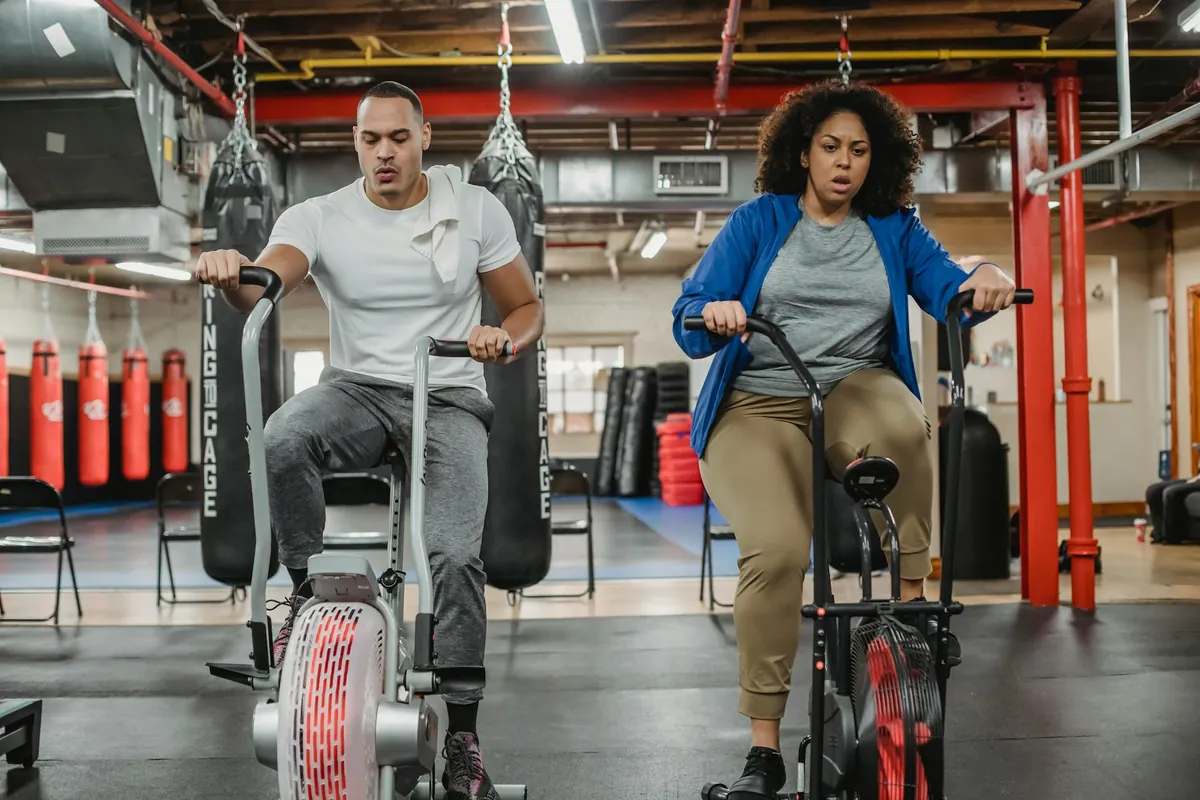
- Lower resistance: quadriceps and hamstring activity still rose with cadence, but the rise between slow and fast pedaling was smaller than at higher resistance 2.
- Higher resistance: the rise in quadriceps and hamstring activity between slow and fast pedaling was larger 2. No resistance zones follow from it, so none are given here.
- Glutes and calves: no study cited here varied resistance while measuring them, so no resistance rule is given for those muscles.
Changing resistance and cadence within a week is a reasonable habit because the two interact in the cadence study. No trial cited here tested a variation schedule against steady riding, so it is not claimed to prevent plateaus.
Before-and-after results are covered in the exercise bike body transformation guide.
Recumbent models with adjustable resistance are listed in the guide to the best recumbent exercise bikes.
What to Expect From Consistent Exercise Bike Riding
No trial cited here measured muscle definition or size after one month of exercise bike riding, so this section states what the nearest trials measured, and for whom.
Beginner sessions are laid out in the exercise bike workout plan for beginners.
Week 1 to 2
No study cited here measured muscle changes in the first two weeks of riding. If your legs feel sore after a first ride, an easier next session is a sensible response. Seek care if you notice dark, red or cola-colored urine with severe muscle pain or weakness after exercise, which can be signs of rhabdomyolysis, a breakdown of muscle tissue that can damage the kidneys 11.
Week 3 to 4
In 34 healthy adults aged 18 to 35 (17 on a recumbent bike, 17 on an upright), six weeks of light riding at 60 watts for 20 minutes, three days a week, did not change knee cartilage thickness on ultrasound, and back-of-thigh muscle thickness fell in the upright group only 12. It was a non-randomized study of young, healthy people at a light load, so I would not choose a bike on that basis. In that group, six weeks of light riding did not thicken thigh muscle.
Interval formats are covered in the high-intensity exercise bike workout guide.
Months 2 to 3
In a 12-week study of 18 women aged 40 to 60 with obesity and no non-exercising control group, three 55-minute indoor-cycling classes a week on Schwinn Evolution bikes, with 4-minute intervals above 80% of maximum heart rate, went with a rise in estimated skeletal muscle mass from 21.71 to 22.27 kg 13. The estimate was calculated from DXA lean tissue with a prediction model, not measured directly. These were averages for one group of women, not a result to expect for every rider.
Long-term fitness is better documented than muscle size. A systematic review of 16 cycling studies, mostly commuting, rated the evidence for fitness benefits as strong; that is outdoor and general cycling, not stationary bikes 14.
The reclined design is described in the recumbent exercise bike overview.
Choosing the Right Exercise Bike for Your Muscle Goals
Match the bike to the goal and the body. The muscle data separate the bike types less than riders often expect, so the list below leans on fit and comfort where the studies are silent:
- General fitness: I would look for an upright or semi-recumbent bike with a seat that reaches the 25 to 35 degree knee bend for your leg length and resistance that rises in small steps.
- Seniors or riders with joint or balance concerns: a recumbent bike is a reasonable place to start because the backrest supports the back and the seat is low to step through; ask your doctor or physical therapist first. Models are listed in the guide to the best exercise bike for seniors.
- Small spaces: Folding exercise bike designs are an option; compare the folded and riding footprints on the maker's page before you buy.
- Glute and hamstring strength: no bike type was shown to raise glute or hamstring activity above another in the studies cited here. For strength in those muscles I would add strength training, which US guidelines call for at least 2 days a week 15.
- Back pain: ask your doctor or physical therapist before choosing a bike position; models are listed in the roundup of exercise bikes for back pain.
- Balance or coordination problems: one small trial is worth knowing. In 14 people with Parkinson's disease (Hoehn and Yahr stage 3.0 or less, no control group), 12 sessions over six weeks of low-resistance interval pedaling on a stationary recumbent bike were followed by better motor scores and better results on walking and balance tests. The authors chose a recumbent bike to lower fall risk, and the trial did not compare bike types 16. Check with your neurologist or physical therapist before starting.
When comparing models, these four criteria matter most for training quality:
- Resistance range - small steps let you raise the load gradually. A level is the maker's own scale, not a watt figure, so level 8 on one bike does not match level 8 on another.
- Seat adjustability - the 25 to 35 degree knee bend only works if the seat range fits your leg length, so check the height range, and on a recumbent the fore-aft range, against your height.
- Maximum user weight - choose a bike whose stated limit is above your body weight; the limit differs from model to model, so read the maker's number.
- Floor space - compare the maker's listed dimensions, and the clear space it asks for around the frame, with your room.
Training Goal | Recommended Bike Type |
General fitness | Upright or semi-recumbent bike, moderate resistance |
Joint comfort (ask your doctor or physical therapist) | Recumbent bike or step-through upright |
Glute and hamstring strength | Any bike, plus strength training |
Core work | Trunk strength exercises: bike type did not separate trunk activity in the studies |
Beginner-friendly, comfort-first | Semi-recumbent or step-through upright |
Building Stronger Legs and Better Cardiovascular Health With the Exercise Bike
The evidence for stronger legs from an exercise bike is limited. Light riding did not thicken thigh muscle in young adults, and the one 12-week study that found a small rise in estimated muscle mass was in women with obesity and had no control group, as the earlier section describes. In my view an exercise bike is a good way to train the heart and lungs and to use the legs without impact, and a poor stand-in for strength training.
Climbing technique is covered in the stairmaster how-to guide.
Stair-based training and the elliptical are compared in the stairmaster vs elliptical comparison.
Muscle activity on a climbing machine is the topic of what muscles does the stairmaster work.
A meta-analysis of 21 studies and 1,069,034 people from the general population found that cycling, total or for transport, was associated with lower cardiovascular disease incidence (relative risk 0.84, 95% confidence interval 0.80 to 0.88) and lower mortality (0.83, 0.76 to 0.90) 17. These are associations, mostly from general and transport cycling, not stationary bikes, and the authors found no dose-response relationship.
The limits of folding bikes are discussed in the post on folding exercise bike performance and real-world limitations.
Matching bike type to body and space is the subject of the exercise bike buying guide.
The cost side is covered in the page on stationary bike price ranges.
Wider evidence on whether bikes work is in the guide titled are exercise bikes good.
Five principles follow from what the studies measured:
- Read activity as activity. EMG shows how active a muscle was during riding, not strength or growth.
- Set the seat first. Start near a 25 to 35 degree knee bend at the bottom of the stroke 4, ride a few easy minutes and adjust.
- Add strength training. No bike study cited here measured the arms, and trunk activity was low to moderate; adults need muscle-strengthening activity at least 2 days a week 15.
- Count the minutes. Adults need at least 150 to 300 minutes of moderate-intensity aerobic activity each week 15, and riding any of these bikes at a moderate effort counts toward it.
Cycling and rowing are compared in the cycling vs rowing machine comparison.
Stair climber workouts are laid out in the stairmaster workout progression guide.
Stair climber calories are covered in the stairmaster calories guide.
Wrist-worn heart-rate trackers are covered in the fitness watch buyer's guide.
Frequently Asked Questions
Can you lose belly fat by riding a stationary bike?
No exercise burns fat from the area that does the work, so a stationary bike cannot target belly fat. When 11 young adults trained one leg for 12 weeks, fat fell in the arms and trunk but not in the trained leg, which is why belly fat changes only as part of overall fat loss.
Is 30 minutes a day on a stationary bike enough?
Thirty minutes on five days a week reaches the low end of the 150 to 300 minutes of moderate-intensity aerobic activity that US guidelines say adults need each week, if the effort feels moderate. Adults also need muscle-strengthening activity at least 2 days a week, which riding a bike does not provide.
Does using an exercise bike tone your bum?
No study cited here measured glute size or shape on an exercise bike, so nothing here says a bike tones the glutes. In 12 active adults the glutes worked at low to moderate levels on both upright and recumbent bikes.
What kind of exercise bike is better for Parkinson’s?
In one 14-person trial, six weeks of low-resistance interval pedaling on a recumbent bike was followed by better motor scores in people with Parkinson's disease, and the authors chose a recumbent design to lower fall risk. That trial did not compare bike types, so ask your neurologist or physical therapist which bike and effort suit you.
What muscles does a recumbent bike work?
In 10 men who were not cyclists, leg-muscle activity did not differ significantly between a recumbent and an upright ergometer, and in 12 active adults the glutes, a hamstring, the lower back and the abdominals worked at similar, low to moderate levels on both. The outer calf muscle (lateral gastrocnemius) was the one that was more active on the upright bike.
 Tech Fitness Lab
Author
Vanja Vukas
I founded Tech Fitness Lab and hold a master's degree from the Faculty of Sport and Physical Education in Novi Sad. I have competed in sport and coached clients, and my writing has appeared on Fitness Volt and BOXROX. I research products from their manuals, spec sheets and warranty terms, and I flag thin evidence.
References
- Hug F, Dorel S. Electromyographic analysis of pedaling: a review. J Electromyogr Kinesiol. 2009;19(2):182-198. doi:10.1016/j.jelekin.2007.10.010
- Katona P, Pilissy T, Tihanyi A, Laczkó J. The combined effect of cycling cadence and crank resistance on hamstrings and quadriceps muscle activities during cycling. Acta Physiol Hung. 2014;101(4):505-516. doi:10.1556/APhysiol.101.2014.4.12
- Bouillon L, Baker R, Gibson C, Kearney A, Busemeyer T. Comparison of trunk and lower extremity muscle activity among four stationary equipment devices: upright bike, recumbent bike, treadmill, and ElliptiGO®. Int J Sports Phys Ther. 2016;11(2):190-200. PMID:27104052
- Peveler WW, Green JM. Effects of saddle height on economy and anaerobic power in well-trained cyclists. J Strength Cond Res. 2011;25(3):629-633. doi:10.1519/JSC.0b013e3181d09e60
- Tang CK, Huang C, Liang KC, Cheng YJ, Hsieh YL, Shih YF, Lin HC. Effects of different pedaling positions on muscle usage and energy expenditure in amateur cyclists. Int J Environ Res Public Health. 2022;19(19):12046. doi:10.3390/ijerph191912046
- Lopes AD, Alouche SR, Hakansson N, Cohen M. Electromyography during pedaling on upright and recumbent ergometer. Int J Sports Phys Ther. 2014;9(1):76-81.
- Vispute SS, Smith JD, LeCheminant JD, Hurley KS. The effect of abdominal exercise on abdominal fat. J Strength Cond Res. 2011;25(9):2559-2564. doi:10.1519/JSC.0b013e3181fb4a46
- Ramírez-Campillo R, Andrade DC, Campos-Jara C, et al. Regional fat changes induced by localized muscle endurance resistance training. J Strength Cond Res. 2013;27(8):2219-2224.
- Luan L, Bousie J, Pranata A, Adams R, Han J. Stationary cycling exercise for knee osteoarthritis: A systematic review and meta-analysis. Clin Rehabil. 2021;35(4):522-533. doi:10.1177/0269215520971795
- Lo GH, Richard MJ, Kriska AM, McAlindon TE, Harkey M, Rockette-Wagner B, et al. Bicycling over a lifetime is associated with less symptomatic knee osteoarthritis: Data from the Osteoarthritis Initiative. Med Sci Sports Exerc. 2024;56(9):1678-1684. doi:10.1249/MSS.0000000000003449
- MedlinePlus. Rhabdomyolysis. US National Library of Medicine. Reviewed September 2, 2025. Accessed November 20, 2026.
- Güvener O, Dağ F, Şahin G, Özçakar L. Effects of recumbent and upright bicycle exercises on knee joint cartilage and lower extremity muscles. Eur J Appl Physiol. 2026;126(1):541-548. doi:10.1007/s00421-025-05916-w
- Ratajczak M, Skrypnik D, Krutki P, Karolkiewicz J. Effects of an indoor cycling program on cardiometabolic factors in women with obesity vs. normal body weight. Int J Environ Res Public Health. 2020;17(23):8718. doi:10.3390/ijerph17238718
- Oja P, Titze S, Bauman A, de Geus B, Krenn P, Reger-Nash B, Kohlberger T. Health benefits of cycling: a systematic review. Scand J Med Sci Sports. 2011;21(4):496-509. doi:10.1111/j.1600-0838.2011.01299.x
- Office of Disease Prevention and Health Promotion. Top 10 things to know about the second edition of the Physical Activity Guidelines for Americans. US Department of Health and Human Services. Accessed November 20, 2026.
- Uygur M, Bellumori M, Knight CA. Effects of a low-resistance, interval bicycling intervention in Parkinson's disease. Physiother Theory Pract. 2017;33(12):897-904. doi:10.1080/09593985.2017.1359868
- Nordengen S, Andersen LB, Solbraa AK, Riiser A. Cycling is associated with a lower incidence of cardiovascular diseases and death: Part 1 - systematic review of cohort studies with meta-analysis. Br J Sports Med. 2019;53(14):870-878. doi:10.1136/bjsports-2018-099099