
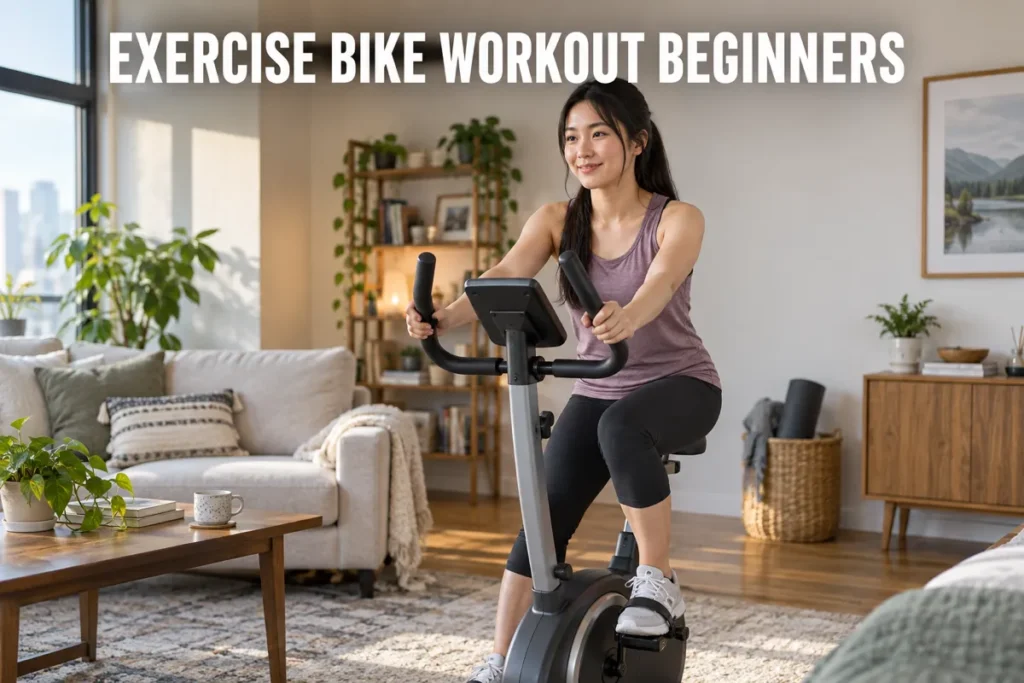
Starting a new cardio routine can feel overwhelming when there is no clear roadmap - and a beginner exercise bike workout often comes with zero structured guidance. In this guide, I walk you through proper bike setup, four follow-along beginner routines ranging from 15 to 30 minutes, a 4-week progressive plan, and honest answers to the questions new riders ask most. You will leave knowing exactly what to do, how hard to push, and what results to expect in your first month.

Why Exercise Bike Workouts Work for Beginners
Before the setup and the routines, here is why stationary cycling works for beginners over other cardio options. Four reasons stand out. First, cycling is low-impact - your feet stay in contact with the pedals throughout, eliminating the ground reaction forces that make running hard on joints. Second, the resistance dial is fully in your control, so any fitness level can get a meaningful workout. Third, it is weather-independent and convenient for home use. Fourth, a 30-minute moderate session burns 250-335 calories depending on body weight, and research suggests that two to three sessions per week produce measurable improvements in cardiovascular fitness over eight to twelve weeks (2).

The primary muscles trained are the quadriceps, hamstrings, glutes, and calves - with the core stabilizing throughout every pedal stroke. Regular sessions at moderate intensity are also associated with reduced perceived stress and improved mood - a benefit many beginners notice within the first two weeks of consistent training.
Exercise Bike Workout Beginners - Your Bike Setup and Posture Foundation
Getting your bike adjusted correctly before your first pedal stroke is the step most guides skip entirely. A poorly set seat height causes knee pain, reduced pedaling efficiency, and early fatigue - three things that make beginners quit before seeing results. Spend five minutes dialing in your setup once, and every session becomes more comfortable and more effective.
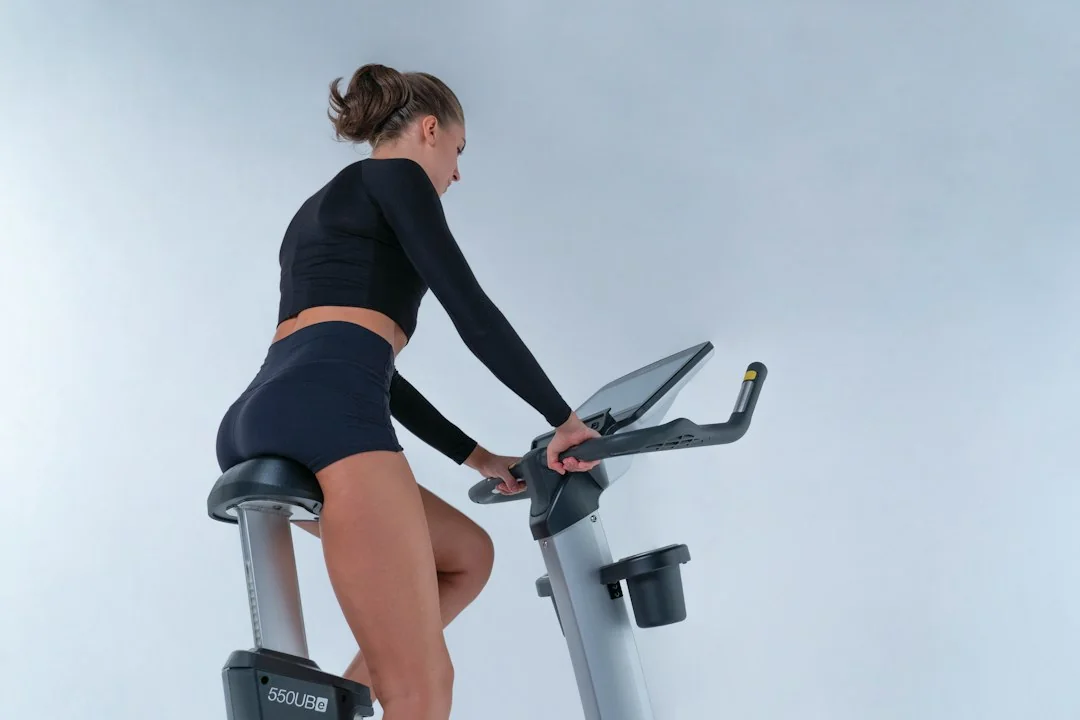
A quick setup checklist before each ride:
- Seat height at hip bone when standing beside the bike
- Slight bend in the knee (25-30 degrees) at the bottom of each pedal stroke
- Ball of foot centered over the pedal axle - not the heel, not the toes
- Handlebars at or slightly above seat height
- Elbows slightly bent, never locked
- Core engaged, spine neutral throughout the session
Setting Seat Height for Knee Comfort
Seat height is the single variable that most directly determines whether your knees stay pain-free. Stand next to the bike and set the seat level with your hip bone. When you sit and place your foot at the bottom of the pedal stroke, your knee should have a slight bend - not fully extended, not deeply bent. Biomechanics research indicates that power output is the primary driver of knee joint loading during cycling (1) - which means keeping resistance manageable is the most effective lever for reducing knee stress in early training weeks.
If you feel pain below the kneecap, your seat is too low. If you feel pulling behind the knee, it is too high. Adjust by one centimeter at a time, then ride for five minutes before adjusting again. Most beginners need only one or two small corrections.
Handlebar Position and Upper Body Posture
Handlebars set at or slightly above seat height prevent forward hunching, which compresses the lower back over longer sessions. Keep your elbows softly bent at all times - locked elbows transfer vibration into the shoulders and neck. Engage your core throughout the ride rather than bracing against the handlebars for balance. Think "proud chest" as your cue rather than craning toward the console.
For a full guide on how to choose a bike that fits your body and goals before you start, how to choose an exercise bike covers every key decision.
Your Exercise Bike Workouts for Beginners - 4 Follow-Along Routines
The best stationary bike workout for beginners matches your current fitness level and provides a clear minute-by-minute structure. The four routines below cover the core patterns you will cycle through in your first month - each with a warm-up and cool-down built into the total time. Every beginner exercise bike workout in this guide is designed around perceived effort rather than fixed speed, so the same routine works whether you are on a basic upright or a more advanced magnetic bike.

Starting volume: 15 to 20 minutes three times per week is the well-supported starting point for building sustainable aerobic capacity without exhausting yourself in week one. Use RPE (Rate of Perceived Exertion) on a 1-10 scale: RPE 5-6 means full conversation; RPE 7 means short sentences; RPE 8-9 means one or two words before you need to breathe.
15-Minute Stationary Bike Workout for Beginners
This 15 minute stationary bike workout for beginners is ideal for days one through fourteen. It builds the habit of consistent exercise bike workouts for beginners without overloading you. Keep resistance light throughout - level 2-3 on most bikes. Cadence target: 70-80 RPM. I find that most beginners naturally settle near 75 RPM when resistance is set correctly.
Minute | Phase | RPE | Resistance |
0-3 | Warm-up | 4-5 | Level 1-2 |
3-12 | Steady ride | 5-6 | Level 2-3 |
12-15 | Cool-down | 3-4 | Level 1 |
20-Minute Exercise Bike Workout for Steady Cardio
This 20 minute exercise bike workout introduces a simple interval block in the middle of a steady cardio session. You will alternate between moderate effort and slightly harder effort - your first taste of intensity variation without the shock of full intervals. I have noticed that the three short effort-and-recover cycles in this format work better for beginners than longer steady sessions because they break up monotony and teach your cardiovascular system to recover faster - an adaptation that typically shows up within two to four weeks of consistent training.
Minute | Phase | RPE | Resistance |
0-3 | Warm-up | 4-5 | Level 1-2 |
3-8 | Steady effort | 6 | Level 3 |
8-10 | Interval 1 - effort | 7 | Level 4 |
10-12 | Recovery | 5 | Level 2 |
12-14 | Interval 2 - effort | 7 | Level 4 |
14-16 | Recovery | 5 | Level 2 |
16-18 | Interval 3 - effort | 7 | Level 4 |
18-20 | Cool-down | 3-4 | Level 1 |
30-Minute Exercise Bike Workout for Fat Burning
The 30 minute exercise bike workout is the goal for weeks three and four. At this duration, your body draws more heavily on fat stores - though the exact proportion depends on intensity, body weight, and how recently you ate.
A stationary bike workout for weight loss for beginners at this duration, done three to four times per week alongside a modest calorie deficit, creates the conditions for gradual fat loss. Individual metabolic rate, fitness level, and actual effort all shift the calorie number - see the estimates section below for figures by body weight.
Minute | Phase | RPE | Resistance |
0-5 | Warm-up | 4-5 | Level 1-2 |
5-25 | Steady fat-burn zone | 6-7 | Level 3-4 |
25-30 | Cool-down | 3-4 | Level 1-2 |
30-Minute HIIT Bike Workout for Beginners
A 30-minute HIIT bike workout alternates short all-out efforts with active recovery periods. This style of training improves cardiovascular efficiency faster than steady-state work alone for many beginners - but it is more demanding, so save it for weeks three or four, not week one. A systematic review of indoor cycling programs found significant improvements in VO2max across multiple studied populations (Chavarrias et al., 2019). A feasibility RCT found that HIIT cycling produced superior functional improvements compared to moderate-intensity continuous training in participants with knee concerns, without increasing adverse events (3).
Keep resistance high enough during the hard intervals that you cannot simply pedal faster to make it feel easy. You need genuine resistance against your legs during each effort. If the intervals feel light, add one to two resistance levels.
Segment | Duration | Phase | RPE | Resistance |
1 | 0-5 min | Warm-up | 4-5 | Level 2 |
2 | 5-7 min | Build-up effort | 6 | Level 3 |
3 | 7-25 min | HIIT: 20 sec sprint / 40 sec recovery × 18 | 8-9 / 5 | Level 5-6 / Level 2 |
4 | 25-30 min | Cool-down | 3-4 | Level 1 |
Your 4-Week Beginner Exercise Bike Routine - Progressive Plan
A structured beginner exercise bike routine builds on itself week by week rather than repeating the same session indefinitely. This stationary bike routine for beginners uses the four routines above as your toolkit, rotating them so your body adapts without identical repetition. Training on a stationary bike this way mirrors how coaches use periodization - planned load increases followed by a relative recovery week. Do not skip rest days to accelerate results; rest is when your cardiovascular system and muscles actually adapt to the training stimulus.
This stationary bike workout plan is intentionally modest in week one. Beginners who start with three 15-minute sessions rather than three 45-minute sessions show higher adherence at the four-week mark because they have not burned out from novelty intensity.
Week | Session 1 | Session 2 | Session 3 | Rest Days |
1 | 15-min steady | 15-min steady | 15-min steady | 4 |
2 | 20-min steady cardio | 20-min steady cardio | 20-min steady cardio | 4 |
3 | 20-min steady cardio | 30-min fat burn | 20-min steady cardio | 4 |
4 | 30-min fat burn | 30-min HIIT | 30-min fat burn | 4 |
For before-and-after progress tracking across your first month, exercise bike before and after provides a useful reference for what changes to measure and document.
Common Mistakes That Sabotage Exercise Bike Workouts for Beginners
Even with the best stationary bike workout routine, beginners run into predictable errors. The exercise bike workouts beginners most often abandon are usually the right workout done with the wrong setup or the wrong expectations. Knowing these mistakes in advance means you fix them before they become habits.

Seven setup and training mistakes beginners make most often:
- Seat set too low - causes anterior knee pain and reduces pedaling efficiency; fix by checking that your knee has a slight bend at the bottom of the stroke
- No resistance at all - without resistance you lose control of cadence and miss the muscle activation that drives cardiovascular adaptation; always use at least one to two levels
- Hunching forward with locked elbows - overloads the wrists and lower back; relax your grip, soften your elbows, engage your core
- Skipping the warm-up - jumping into moderate effort without a three to five minute easy spin increases injury risk and makes the session feel harder than it should
- Pushing through joint pain - muscle soreness one to two days after a session is normal; sharp joint pain or pain that worsens during the ride is a signal to stop, check your setup, or consult a clinician
- Riding every day in week one - beginners who attempt seven days per week often quit by week two; three to four days with rest days produces better long-term results
- Not keeping water at the bike - dehydration accelerates fatigue and raises perceived effort; have a bottle within reach before every session starts
I find that most beginners who drop off between weeks two and four share a common pattern: they start easily, hit unexpected fatigue by day five, and interpret it as failure. That fatigue is the normal load-adaptation lag. The fix is simply continuing, not restarting. Saddle discomfort in the first two to three weeks is expected and typically normalizes with consistent riding; padded cycling shorts accelerate the process.
For information on how exercise bikes compare to other low-impact cardio tools, understanding which muscles a rowing machine works is useful context if you are considering adding a second machine to your routine.
Exercise Bike and Knee Pain - What Beginners Need to Know
The low-impact nature of cycling makes it one of the most recommended activities for people with knee concerns. Unlike running, which generates ground reaction forces two to three times your body weight, cycling offloads the joint while still requiring sustained muscular effort. Research on recreational cyclists with knee osteoarthritis showed that cycling did not produce adverse joint events even at moderate to high intensities - and that reducing resistance is the most effective strategy for lowering knee joint load when discomfort arises (Ebbecke et al., 2026).
The three most common causes of bike-related knee pain in beginners:
- Seat set too low (see setup section above) - the most common cause of patellofemoral pain in new riders; re-check the hip-bone reference point before your next session
- Resistance too high for current fitness - increases knee load beyond what the soft tissues can handle during early training weeks
- Foot position misaligned on the pedal - causes rotational stress through the knee; ensure the ball of your foot sits over the center of the pedal
If knee pain appears during a ride, reduce resistance first. If pain does not resolve within the session, stop and recheck seat height. If pain persists across multiple sessions after correcting setup, consult a physical therapist or sports medicine clinician before continuing. This is general guidance for otherwise healthy beginners, not medical advice for existing joint conditions.
A stationary bike is commonly included in post-knee-surgery rehabilitation protocols, but only under medical clearance following a procedure or injury. For more on this specific topic, exercise bike and knee pain covers the relationship between cycling and knee health in detail.
Calorie Burn and Results - What to Expect From a Stationary Bike Workout Routine
Beginners understandably want to know what a consistent stationary bike workout routine will produce and when. The honest answer is that results depend on frequency, intensity, duration, diet, and starting fitness level - so ranges with stated conditions are more useful than flat promises.
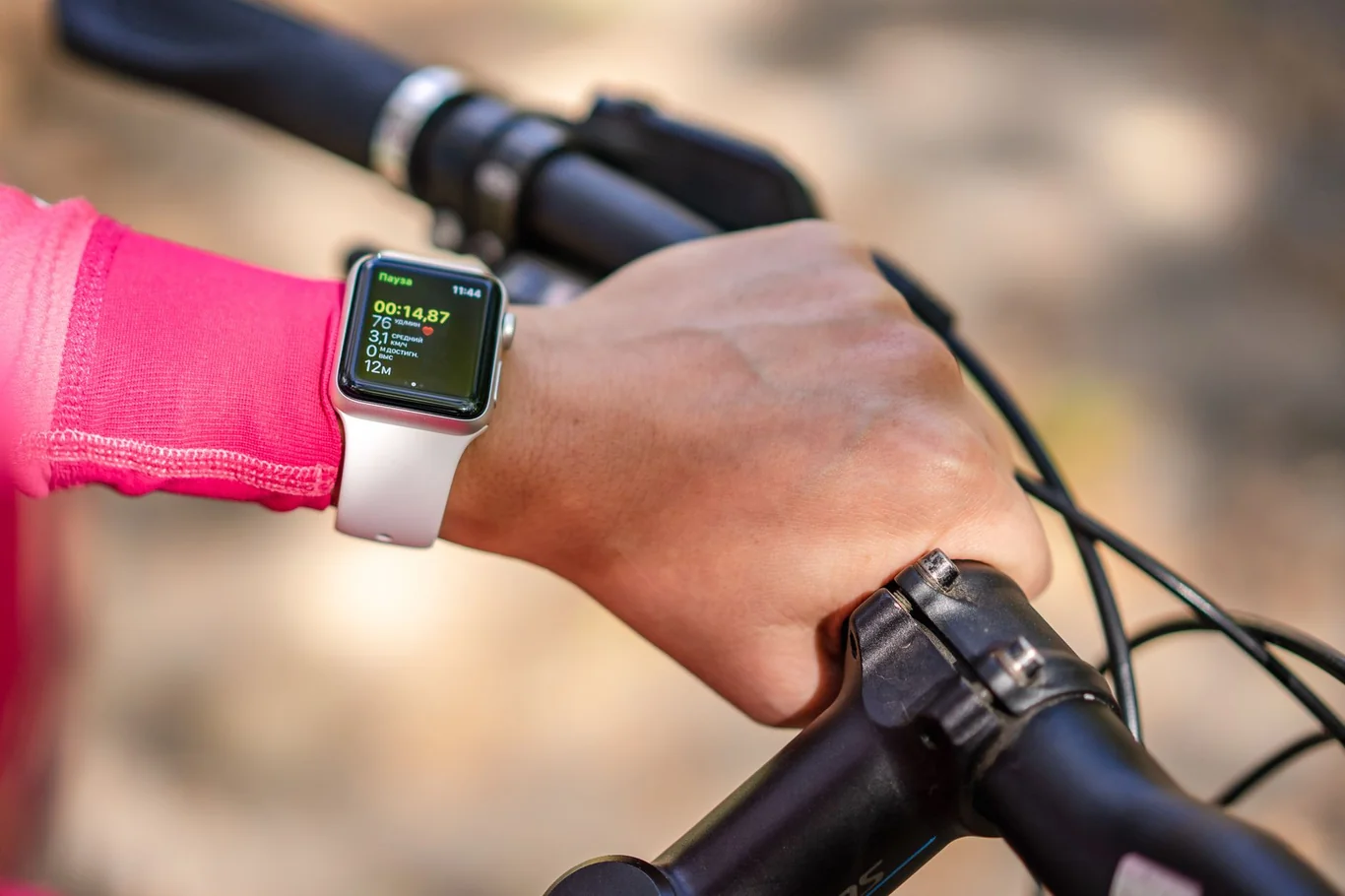
Calorie burn estimates by body weight (moderate-intensity 30-minute ride):
Body Weight | Calories / 30 min |
125 lb (57 kg) | ~210 |
155 lb (70 kg) | ~250 |
185 lb (84 kg) | ~290 |
205 lb (93 kg) | ~335 |
Estimates based on standard MET calculations for moderate stationary cycling. Actual values vary with resistance level, cadence, and individual metabolic rate.
If body fat reduction is the primary goal, the best stationary bike workout for weight loss combines steady-state riding at RPE 6-7 three to four days per week with one weekly interval session - our dedicated exercise bike workout for weight loss guide covers the full protocol, and exercise bike and belly fat addresses the fat-loss localization question directly. Fat loss is systemic - your body determines where it pulls stored fat from during a calorie deficit, and you cannot direct it to any specific area.
An indoor cycling study found that three 55-minute sessions per week produced significant reductions in body fat in previously sedentary women - with the largest changes in participants who combined cycling with a calorie-conscious diet (4). For beginners doing 20 to 30 minute sessions three times per week, changes are more gradual but measurable by six to eight weeks. Cardiovascular changes most beginners notice first:
- Slower heart rate recovery after intervals (you bounce back to a resting pace faster)
- Lower perceived effort at the same resistance setting after two to three weeks
- Ability to hold a full conversation at RPE 6 without gasping
- Noticeably reduced breathlessness during everyday activities like climbing stairs
- Improved sleep quality, particularly during the first two weeks of consistent riding
Stationary Bike Workout for Seniors - Modifications That Make It Safer
Older adults have specific considerations that most beginner guides skip. A 2026 systematic review of 47 intervention studies found that stationary biking consistently improved aerobic capacity, mobility, and quality of life in adults over 60 (5). This makes a stationary bike workout for seniors one of the most evidence-supported cardio options for older beginners.
For a free stationary bike workout for seniors, the 15-minute routine in this guide is the ideal starting point - three sessions per week for two to three weeks before progressing. For equipment guidance specific to older riders, best exercise bike for seniors covers step-through frames and padded seating options.
If a recumbent setup appeals, best recumbent exercise bike walks through the top options.
Key modifications:
- Use a recumbent bike if upright balance or hip flexibility is a concern
- Progress more slowly - add five minutes every two weeks rather than every week
- Keep resistance lower and focus on consistent cadence (60-70 RPM)
- If you take beta-blockers or other medications that affect heart rate, use RPE rather than heart rate zones
- Always get medical clearance before starting if you have cardiovascular disease, diabetes, or joint replacements
Staying Consistent and Knowing When You Are Ready for More
The biggest predictor of whether a beginner exercise bike workout will deliver long-term results is consistent attendance, not peak intensity. Consistency at moderate effort beats intensity spikes followed by week-long gaps. The most common point where beginners reduce frequency is weeks two through four, right when novelty has worn off but visible results have not yet arrived.
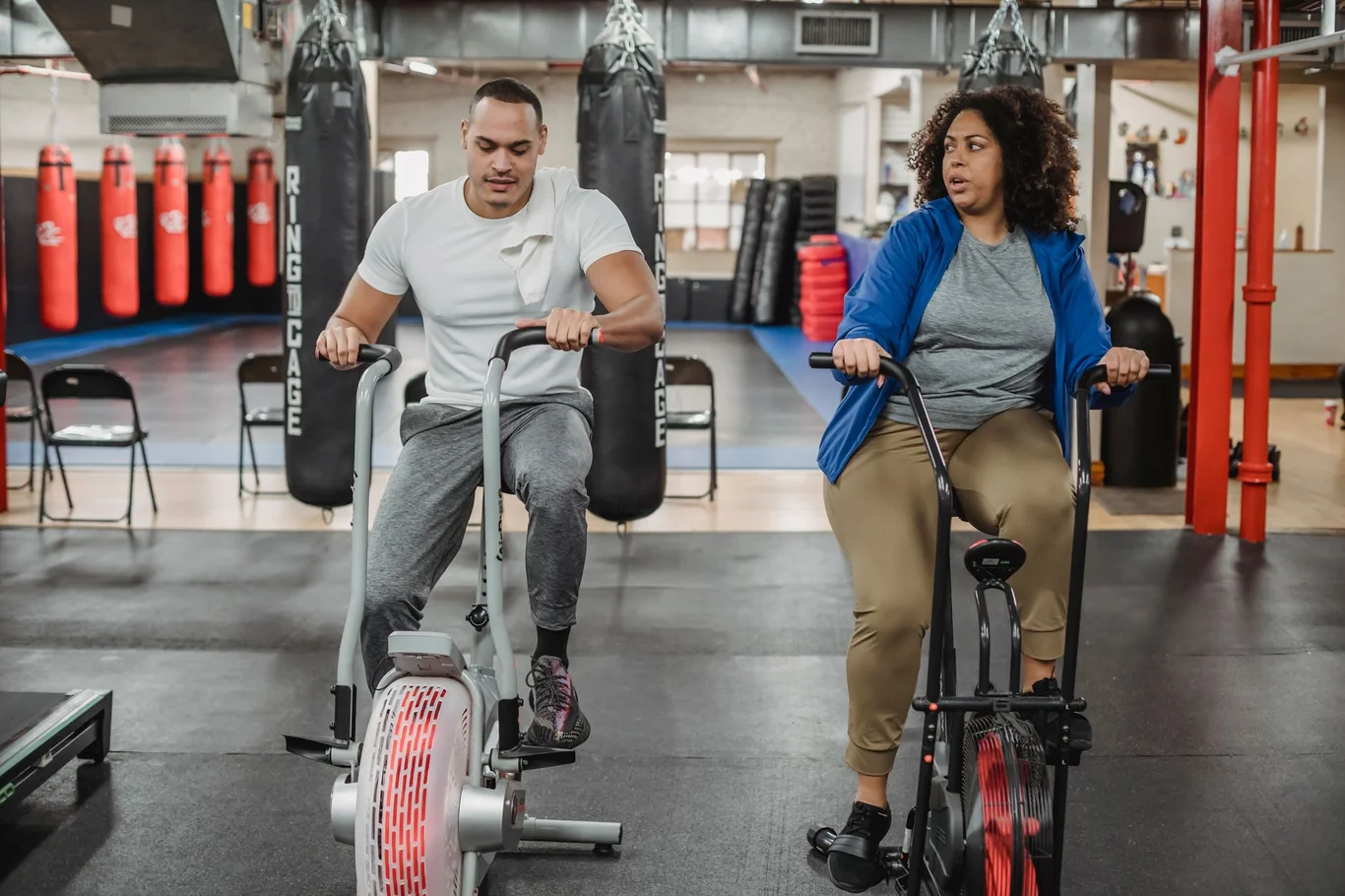
Three adherence strategies that consistently work:
- Pair your ride with something you only do on the bike - a show, a podcast series, or a playlist built specifically for rides; the anticipation of the content becomes part of the reason to show up
- Track effort, not perfection - missing one session is not a reason to restart the plan; simply resume on your next scheduled day
- Use your wearable to confirm you are in the right zone - learn how accurate smartwatches are for heart rate tracking before relying heavily on those readings
I have found in reviewing the research on beginner adherence that the riders who report the best outcomes at 12 weeks are rarely the ones who started hardest - they are the ones who started easily and added load week by week. That is exactly what this plan is designed to do.
Once you complete the 4-week plan, you are ready to extend sessions toward 40 to 45 minutes, add a dedicated HIIT day, or explore more structured programming. For progressive programming beyond the beginner phase, high intensity training on exercise bike provides the next layer of challenge. I also reviewed what a smartwatch does in depth, which is worth reading if you want to understand whether your wearable is giving you accurate enough data to guide your training zones.
Signs you have completed the beginner phase and are ready for more:
- You can complete a 30-minute session at RPE 7 without stopping
- Your perceived effort at the same resistance level has dropped by 1 to 2 points since week one
- Resting heart rate has decreased measurably from your starting point
- Saddle discomfort has normalized completely and no longer limits session length
- You find yourself adding resistance voluntarily because the original levels feel too easy
Set up your bike correctly before your first session. Start with the 15-minute routine this week. Add five minutes the week after. By week four, you will be completing 30-minute sessions with genuine effort - and looking ahead at what comes next. For equipment deep-dives, best exercise bike covers every major category with spec comparisons, while best exercise bike for back problems addresses pain concerns specifically, and the benefits of walking backwards on a treadmill covers a complementary low-impact option that pairs well with cycling because the two machines train different dominant muscle groups.
FAQs
How long should a beginner ride a stationary bike?
For beginners starting an exercise bike workout from scratch, the recommended duration is 15 to 20 minutes per session, three times per week. As cardiovascular fitness improves over two to four weeks, you can gradually extend sessions toward 25 to 30 minutes while maintaining the same frequency before adding extra riding days.
Can you lose belly fat by riding a stationary bike?
A stationary bike workout for weight loss works by burning calories and contributing to overall body fat reduction over time when combined with a calorie-conscious diet, but fat loss is systemic rather than localized to the belly or any specific area. Your body determines where it pulls stored fat from during a calorie deficit, so consistent cycling combined with dietary awareness is the evidence-based approach to reducing body fat across the body, including the abdominal area.
Is riding a stationary bike for 30 minutes the same as walking for 30 minutes?
A stationary bike workout 30 minutes long at moderate intensity burns more calories and produces greater cardiovascular demand than walking at a standard pace for most body weights. Walking remains a lower-barrier activity with no equipment required, while cycling at matched effort levels typically delivers a higher metabolic rate per unit of time, making it a more time-efficient option for cardiovascular improvement.
Is 20 minutes a day on a stationary bike enough?
A 20-minute daily stationary bike session is effective for beginners, particularly when ridden at a moderate intensity of 6 to 7 on the RPE scale. Research consistently shows that frequency and consistency matter more than duration in early training phases, meaning 20 minutes four to five days per week outperforms 45-minute sessions twice a week for building aerobic capacity and sustaining the exercise habit over time.
Medical Disclaimer: This content is for informational and educational purposes only. It is not a substitute for professional medical advice, diagnosis, or treatment. Always consult with your healthcare provider before starting any new fitness program or using fitness technology for health monitoring.
References
- Ebbecke J, Hansen L, Viellehner J, et al. Instantaneous and cumulative knee joint loading in cycling with and without medial knee osteoarthritis. Scand J Med Sci Sports. 2026;36(3):e70259. doi:10.1111/sms.70259.
- Chavarrias M, Carlos-Vivas J, Collado-Mateo D, Perez-Gomez J. Health benefits of indoor cycling: a systematic review. Medicina (Kaunas). 2019;55(8):452. doi:10.3390/medicina55080452.
- Keogh JW, Grigg J, Vertullo CJ. Is high-intensity interval cycling feasible and more beneficial than continuous cycling for knee osteoarthritic patients? Results of a randomised control feasibility trial. PeerJ. 2018;6:e4738. doi:10.7717/peerj.4738.
- Ratajczak M, Skrypnik D, Krutki P, Karolkiewicz J. Effects of an indoor cycling program on cardiometabolic factors in women with obesity vs. normal body weight. Int J Environ Res Public Health. 2020;17(23):8718. doi:10.3390/ijerph17238718.
- Akter T, Moneruzzaman M, Maduray K, Kader M. Acceptability and effectiveness of stationary bike intervention on health outcomes among older adults: a systematic review of intervention studies. BMC Geriatrics. 2026;26(1):130. doi:10.1186/s12877-025-06757-0.