
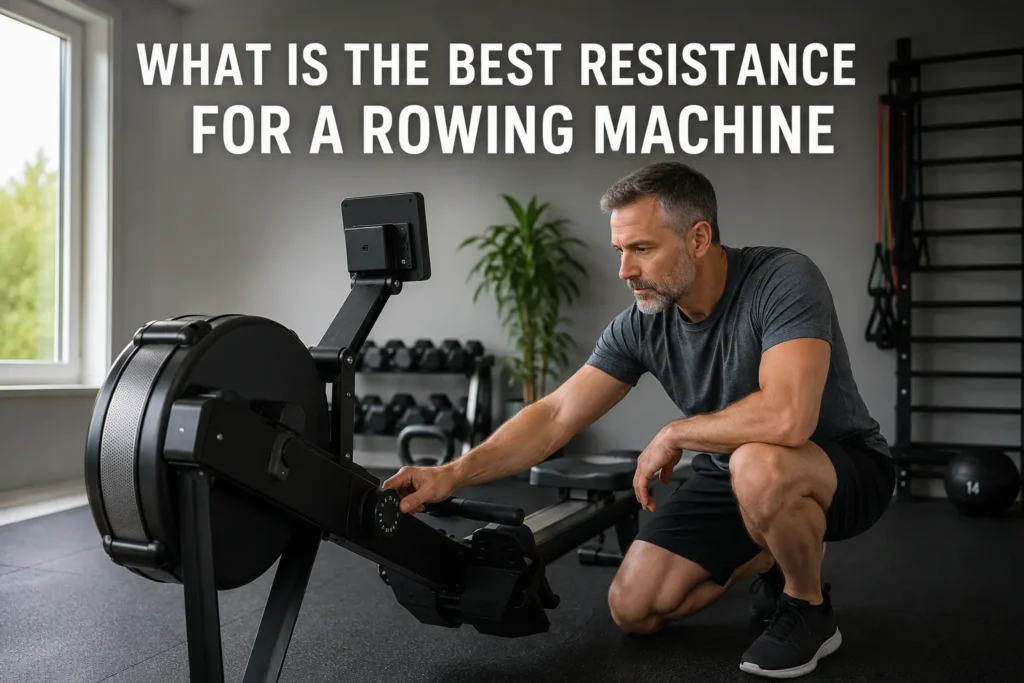
The question of what is the best resistance for a rowing machine is the most common point of confusion for new rowers. Set resistance too low and sessions feel effortless and unproductive; push it too high and form collapses before you finish the first five minutes. In our research across multiple rowing machine types and fitness levels, the answer shifts based on your experience, your goals, and how your specific machine creates resistance. This guide explains what resistance settings actually mean, gives you concrete damper recommendations by fitness level and goal, and maps out a clear progression path.

What Is the Best Resistance for a Rowing Machine
The best resistance for a rowing machine depends on your fitness level and what you are training for. On most air-resistance rowers, damper settings of 3 to 5 work best for beginners, 5 to 7 for intermediate rowers, and 7 to 10 for advanced athletes and competitive rowers. These ranges are starting points, not rigid rules, because the damper is only one part of the intensity equation.
Our current rowing machine lineup lists models across every resistance type covered in this guide.
Key factors that affect your ideal damper setting:
- Your current fitness level and how long you have been rowing
- The stroke rate in strokes per minute you plan to maintain
- Machine type - air, magnetic, and water rowers all behave differently
- Session length and whether you are doing steady-state cardio or interval work
Use this table as your baseline reference before adjusting based on feel:
Fitness Level | Recommended Damper | Stroke Rate (SPM) | Primary Goal |
Beginner | 3-5 | 18-22 | Form, endurance base |
Intermediate | 5-7 | 22-26 | Cardiovascular fitness, fat loss |
Advanced | 7-10 | 24-30+ | Power, HIIT, competition prep |
Monitoring your heart rate during rowing gives you objective feedback on whether your resistance choice is appropriate for your goals. If you row with a wearable, our guide to the best fitness tracker for men covers options with accurate heart rate tracking built for high-intensity workouts.
Understanding Damper Settings vs. True Resistance on a Rowing Machine
This is the concept that most rowing confusion traces back to. On air-resistance rowing machines like the Concept2 RowErg, the damper setting controls airflow into the flywheel - it does not directly control your workout intensity. Think of the damper like bicycle gears: a high gear makes each stroke feel heavier and slower; a low gear feels lighter and faster. Your actual intensity - cardiovascular load, calorie burn, power output - comes from how hard and how fast you pull, not from where you set the damper.
The same holds on other air-resistance machines, including the Stamina X Air Rower, which lists around $459.99 and uses the same fan-flywheel design to set airflow rather than workout intensity directly.
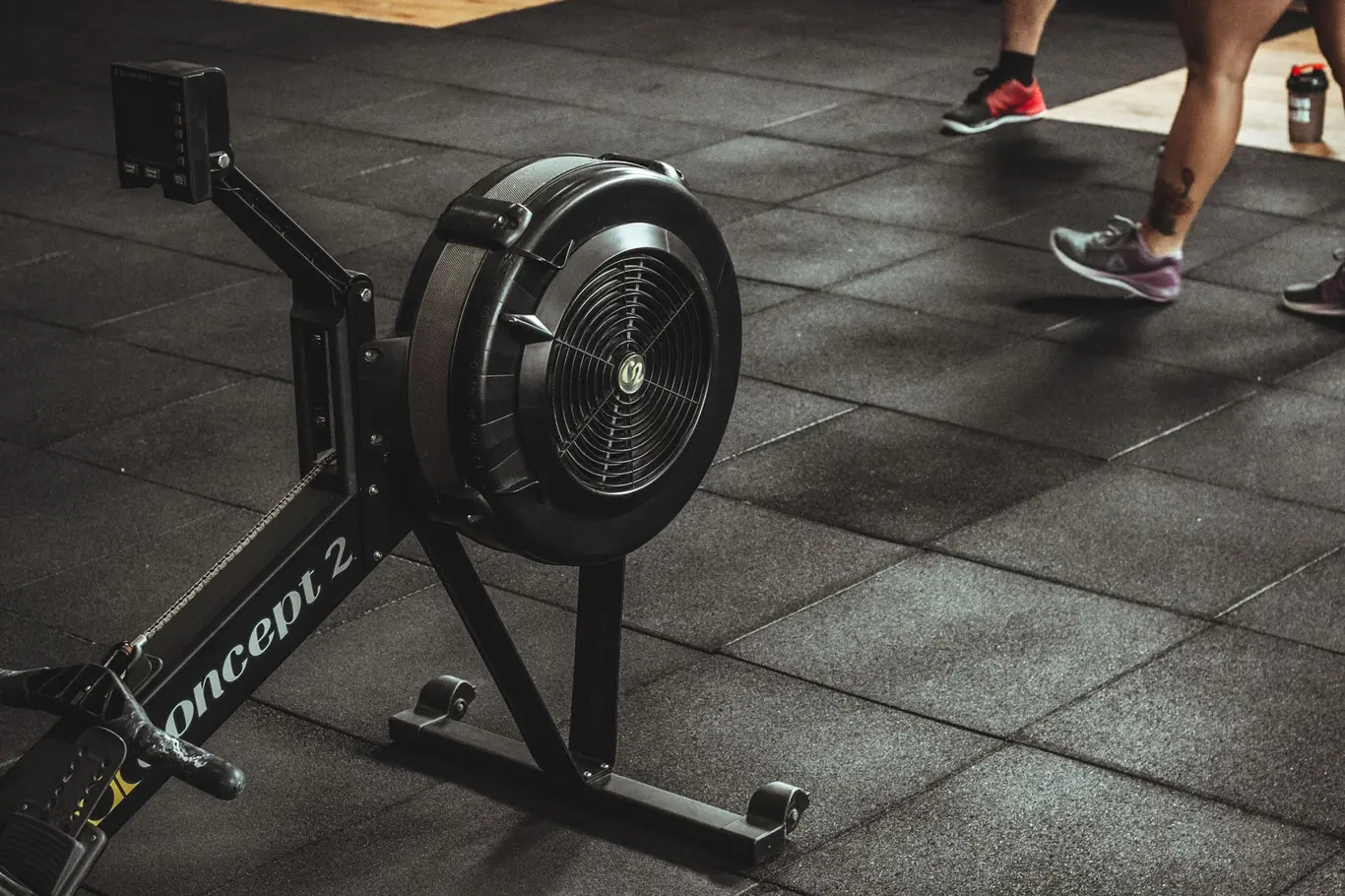
Research confirms this directly. A 2025 experimental study of 24 trained rowers found that physiological demands, including oxygen uptake, blood lactate, and energy expenditure, scaled with exercise intensity domains rather than with any machine-side setting (1). Two rowers using the same damper but pulling at different effort levels will have entirely different cardiovascular responses.
For a broader look at whether a rowing machine fits your space, budget, and training goals, my post on should I get a rowing machine covers the decision factors that go beyond resistance type.
Three main types of rowing machine resistance:
- Air resistance (Concept2 RowErg, LifeFitness Row): Flywheel with damper settings 1 to 10; resistance naturally increases as you pull harder, and the damper shapes only the feel of each stroke
- Magnetic resistance (NordicTrack RW, Hydrow): Adjustable magnetic braking where the resistance level directly controls how hard each stroke is throughout the pull
- Water resistance (WaterRower, Ergatta): Water tank that self-regulates resistance to match your stroke force, which most closely mimics open-water rowing feel
Our Concept2 air rower listing covers damper settings and flywheel specs for this air-resistance option.
Our WaterRower Original Oak page has full specs for this self-regulating water-resistance design.
Our NordicTrack RW700 Rower page has specs for one of these adjustable magnetic-resistance consoles.
For air rowers, the drag factor offers more precision than the damper number alone. Drag factor measures actual airflow resistance and typically falls between 114 and 160. Competitive rowers target a drag factor of 125 to 135 because dust buildup in the flywheel cage causes the same damper number to feel harder on machines that have not been maintained. Cleaning the flywheel every 50 hours of use restores consistent resistance response and prevents misleading training data.
For a complete checklist of the specs and features that separate a good purchase from a disappointing one, my rowing machine buying checklist covers resistance type alongside footrest quality, monitor accuracy, and frame stability.
We have found in practice that beginners who learn about drag factor early avoid the confusion of comparing notes with other rowers who use different machines or different maintenance schedules. If you are comparing rowing with other cardio options, our guide on recumbent exercise bike vs rowing machine breaks down the resistance differences to make the comparison easier.
Best Resistance Settings for Different Fitness Goals
Resistance choice and intensity goals are not the same thing. Here is how to dial in your settings based on what you are actually training for.
Cardio Fitness and Fat Loss
For cardiovascular improvement and fat loss, lower damper settings combined with a higher stroke rate produce better results than maxing out the dial. Target a damper of 3 to 5 with a stroke rate of 24 to 28 strokes per minute. This approach keeps you in the aerobic zone longer, where fat oxidation is highest and cardiovascular adaptation occurs most efficiently.
Research on elite rowing quantified energy expenditure across training intensity zones and found that rowing burns between 15.6 and 49.8 kilocalories per minute depending on effort level, with carbohydrate dominating substrate use at higher intensities (2). For fat loss, sustained moderate-intensity sessions of 20 to 30 minutes at lower damper settings maximize fat as a fuel source, while short all-out sessions at maximum damper shift toward glycogen burning and end sooner.
Our guide on whether a rowing machine is good for weight loss explains how calorie expenditure shifts at each resistance level, making it easier to match training to fat-loss targets. Many rowers also want to know what muscles a rowing machine works to understand how it integrates with their overall weekly training volume.
And choosing the best rowing machine also matters if you are combining cardio and strength sessions in the same training week.
Power and Strength Development
For strength and power, use a damper of 7 to 10 with a lower stroke rate of 18 to 22 strokes per minute. Each stroke becomes heavier and demands more force output from your legs, back, and core throughout the drive phase. We weigh technical demands heavily at high damper settings - poor form causes lower back strain significantly faster than at lower settings, so advanced technique must come before advanced resistance.
Our Merach R60N Dual Resistance Rower page covers an air-and-magnetic design built for this kind of high-effort, HIIT-style interval training.
A 2020 randomized controlled trial in elite female rowers found that strength endurance protocols at 50 to 60% of one-rep maximum produced superior rowing ergometer performance improvements compared to heavy-resistance protocols at 75 to 95% of one-rep maximum (3). You do not need to set the damper to 10 to build rowing-specific strength. Controlled, sustained effort at damper 7 to 8 with clean technical execution builds more transferable power than grinding slow strokes at maximum resistance.
For context on how performance ergometers handle resistance differently from recreational rowing machines, my breakdown of how the erg machine handles resistance covers the drag factor system and the monitor precision that makes the erg a training standard.
Endurance Training
Endurance rowing works best at a damper of 5 to 7 and a stroke rate of 20 to 24 strokes per minute, sustained for 30 to 60 or more minutes. This is the classic steady-state approach used by competitive rowers for base conditioning. In our review of real-world rowing training patterns, we found that recreational rowers who build endurance at moderate damper settings showed the most consistent progress over 12-week training blocks compared to those who pushed maximum resistance from the start.
A systematic review of 34 studies established that VO2max and peak power output are the strongest predictors of rowing ergometer performance, with correlations between r=0.76 and r=0.99 (4). Building VO2max through sustained aerobic work at moderate resistance is one of the most evidence-supported long-term development paths for rowers at any level.
For high-intensity interval training, a 2021 randomized controlled trial found that both HIIT at 95% of 2,000m power and sprint interval training improved 2,000m performance by 1.5 to 2.0% within just 8 sessions (5). During interval work, use a moderate damper of 5 to 7 with maximum pulling effort during work periods rather than maxing out the damper and rowing at a slower pace - effort drives adaptation, not the dial position.
The table below summarizes resistance recommendations by goal:
Training Goal | Damper Setting | Stroke Rate (SPM) | Session Duration |
Fat loss and cardio | 3-5 | 24-28 | 20-30 min |
Power and strength | 7-10 | 18-22 | 10-20 min |
Endurance base | 5-7 | 20-24 | 30-60+ min |
HIIT and intervals | 5-7 | 28-32 (work intervals) | 20-30 min total |
How to Progress Your Resistance Over Time
Progression on the rowing machine is about performance output, not just the damper number. The most reliable indicators are a falling 500m split time, the ability to hold stroke rate throughout the full session without form breakdown, and a lower average heart rate at the same effort level across multiple weeks.
A network meta-analysis synthesizing 71 studies on rowing performance found that combining aerobic training volume with targeted intensity work produced the most consistent long-term performance gains across both short-term and extended training blocks (6). This research supports a periodized approach: spend 3 to 4 consistent weeks at one damper level building endurance and stroke quality before moving up.
Signs you are ready to increase your damper setting:
- Sessions at your current setting feel consistently easy at the same target stroke rate
- Your 500m split time has dropped by more than 5 seconds over the past two weeks
- You can hold your target stroke rate for the entire session without losing form in the final third
- Your average heart rate during sessions has decreased by 5 to 10 beats per minute
- You have maintained 3 to 4 weeks of consistent training at the current setting
When you do increase, raise the damper by one level only (for example, from damper 4 to 5) and reduce your stroke rate by 2 to 3 strokes per minute to compensate for the added load. Give yourself two full weeks at the new setting before evaluating again.
For a curated list built around ease of setup and forgiving stroke mechanics, my guide on the best rowing machine for beginners covers the options that match accessible resistance settings to machines with reliable monitors and comfortable seats.
Choosing the best rowing machine for conditioning and logging your heart rate trends across sessions makes progression tracking objective rather than based on perceived effort. Our guide to the best magnetic rowing machine covers the key resistance specifications that matter for this kind of precise workout monitoring.
For readers who want to take that analysis further and compare all four resistance categories side by side, my guide on how to choose a rowing machine type covers the practical trade-offs across air, magnetic, water, and hydraulic resistance in the context of real home training scenarios.
If you want to make sure your stroke technique stays consistent as you log more sessions, our guide on how to use a rowing machine covers the fundamentals worth revisiting periodically.
Common Resistance Mistakes to Avoid
The three most common mistakes account for the majority of plateaus and injury risk on the rowing machine:
- Starting at damper 10 as a beginner - Maximum damper makes each stroke feel like pulling through concrete, breaks down form at the catch and finish positions, and concentrates strain on the lower back and knees before the movement pattern is established. Starting at damper 3 to 5 builds the correct mechanics first.
- Confusing damper with effort - A rower doing slow, casual strokes at damper 10 burns fewer calories and builds less fitness than a rower giving maximum effort at damper 5. The quality and force of your pull determines the workout, not the dial position.
- Skipping flywheel maintenance on air rowers - Dust and debris accumulate in the flywheel cage over time, which reduces airflow and makes the machine feel harder than the damper setting indicates. Cleaning the flywheel restores consistent resistance response and keeps your training data accurate.
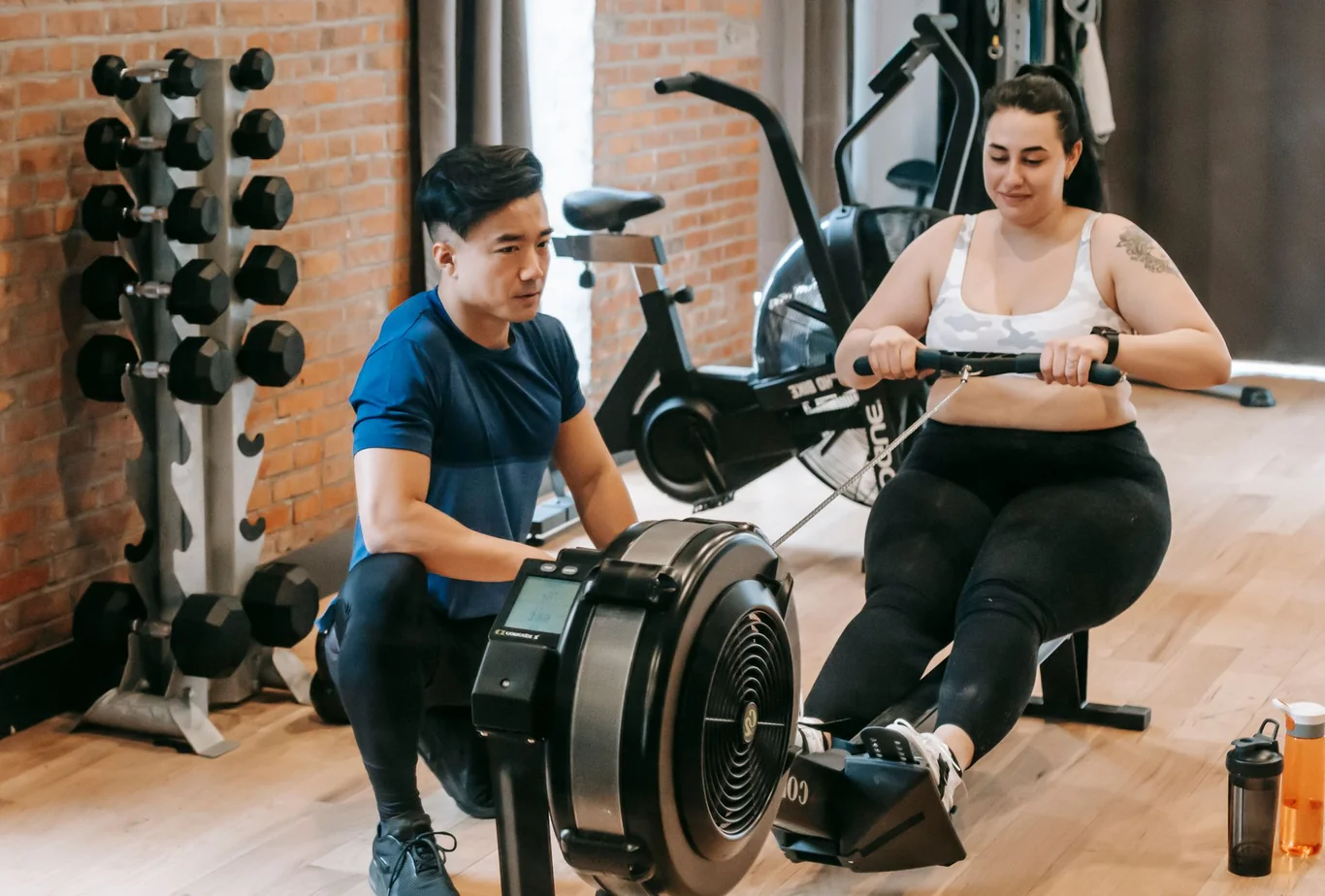
A study monitoring cardiorespiratory changes during a 2,000m rowing effort found that heart rate and oxygen uptake shifted significantly across 500m segments of the same session even at a fixed pace (7). This highlights how resistance perception changes throughout a session regardless of damper position - pacing strategy and stroke technique matter as much as the setting itself.
For the models that deliver a consistent resistance feel at a lower price point, my guide to budget rowing machine options covers the air and magnetic machines that hold up under regular use without climbing into premium pricing.
If you are a senior rower or returning from injury, starting at damper 2 to 3 is the right call. Our guide on whether a rowing machine is good for osteoporosis covers how to stay in a safe training zone and protect bone health during early sessions.
Rowers who monitor session load closely should also check our guide on whether a rowing machine is bad for your back, since leg drive dominates the stroke at higher damper settings and poor form is where most strain shows up.
Best practices for consistent resistance results on any rowing machine:
- Note your damper setting before every session and record it alongside your split time and stroke rate
- Clean the flywheel cage on air rowers at least monthly if you train three or more times per week
- Use heart rate data rather than perceived effort to confirm your resistance is appropriate for your goal
- Reset the damper to your baseline after experimenting with a higher setting so you do not default to too-high resistance the next session
Every Row Counts When the Resistance Is Right
The right resistance setting comes down to one principle that beginners often overlook: the damper sets the feel, but your effort sets the intensity. For beginners, damper 3 to 5 builds the movement pattern without overwhelming the joints. Intermediate rowers use the 5 to 7 range to develop cardiovascular efficiency and fat-burning capacity. Advanced rowers and athletes targeting power work at 7 to 10, but with the technical foundation that makes high resistance productive rather than risky.
For machines that maintain resistance consistency in a shorter footprint, my guide on the best compact rowing machines covers the options that preserve stroke quality while fitting tighter rooms.

In our research review across rowing science and real-world training patterns, we consistently found that rowers who prioritize stroke quality over damper number progress faster and stay injury-free longer. A clean, powerful stroke at damper 5 outperforms a sloppy grind at damper 10 in every training metric that matters over a full training block.
For machines that offer storage flexibility without trading away resistance quality, my foldable rowing machine guide covers the options that fold or stand upright without compromising the drive feel.
Pair your training with performance data from day one. Tracking heart rate across sessions reveals how your cardiovascular system adapts to each resistance level over time - and gives you the objective signal you need to know when you are genuinely ready to progress. Our guide to rowing machine benefits covers why consistent training matters for rowers who want real progress without the complexity of tracking every metric.
FAQs
What resistance should I set my rowing machine to?
The resistance you should set your rowing machine to depends on your fitness level and the type of machine you are using. For most beginners on air rowers, a damper setting between 3 and 5 is the right starting point, letting you focus on building the correct stroke pattern and endurance base before adding resistance load.
Is it better to sit at 5 or 10 resistance on a rower?
A resistance level of 5 is better than 10 for most rowers because it supports a faster, more natural stroke pattern and keeps the cardiovascular system as the primary driver of the workout. A damper at 10 is only appropriate for advanced athletes in short power-focused intervals, and even competitive rowers rarely use maximum damper for endurance or fat-loss sessions.
Is 500m in 2 minutes good on the rowing machine?
A 500m split of 2 minutes is a solid benchmark for recreational rowers and is considered an average performance pace for untrained adults. Intermediate rowers typically progress to sub-1:50 splits over months of consistent training, while competitive rowers aim for 1:30 to 1:40 depending on weight category and training level.
Is 20 minutes of rowing enough?
Twenty minutes of rowing is enough to deliver meaningful cardiovascular benefits when performed at moderate to vigorous intensity. Research consistently shows that sustained moderate-intensity rowing produces significant cardiovascular and metabolic adaptations, which makes a well-paced 20-minute session at the right resistance level a genuinely effective and time-efficient workout.
References:
- Rios M, Cardoso R, Monteiro AS, Vilas-Boas JP, Fernandes RJ. Physiological demands across exercise intensity domains in rowing: Implications of weight category and sex differences. Sports (Basel). 2025;13(8):245. doi:10.3390/sports13080245
- Winkert K, Steinacker JM, Koehler K, Treff G. High energetic demand of elite rowing - implications for training and nutrition. Front Physiol. 2022;13:829757. doi:10.3389/fphys.2022.829757
- Thiele D, Prieske O, Lesinski M, Granacher U. Effects of equal volume heavy-resistance strength training versus strength endurance training on physical fitness and sport-specific performance in young elite female rowers. Front Physiol. 2020;11:888. doi:10.3389/fphys.2020.00888
- Borges I, Veiga S, Gonzalez-Frutos P. The evaluation of physical performance in rowing ergometer: A systematic review. J Funct Morphol Kinesiol. 2025;10(4):437. doi:10.3390/jfmk10040437
- Turner KJ, Pyne DB, Periard JD, Rice AJ. High-intensity interval training and sprint-interval training in national-level rowers. Front Physiol. 2021;12:803430. doi:10.3389/fphys.2021.803430
- Held S, Rappelt L, Donath L. Acute and chronic performance enhancement in rowing: A network meta-analytical approach on the effects of nutrition and training. Sports Med. 2023;53(7):1363-1391. doi:10.1007/s40279-023-01827-y
- Das A, Mandal M, Syamal AK, Majumdar P. Monitoring changes of cardio-respiratory parameters during 2000m rowing performance. Int J Exerc Sci. 2019;12(4):1241-1252. doi:10.70252/YJSX4918