
Is a rowing machine good for weight loss? Yes, and the science consistently backs it up. Rowing engages roughly 86% of your muscles in a single stroke, which makes it one of the most efficient cardio tools for burning calories and building lean mass at the same time. I reviewed peer-reviewed studies and real-world data to give you a clear, evidence-based answer. In this guide, you'll learn exactly how effective rowing is for fat loss, how long you need to row to see results, and how it compares to the elliptical and treadmill. You'll also find practical guidance on getting started and avoiding the most common mistakes that stall progress.

Is a Rowing Machine Good for Weight Loss? The Short Answer
A rowing machine is one of the most effective cardio tools for weight loss because it combines cardiovascular demand with full-body resistance work in every stroke. Unlike the treadmill or elliptical, rowing forces your legs, core, and upper body to work together, which increases calorie burn per minute without adding joint stress.
Our rowing machines page lists current models if you want to start building this kind of full-body routine at home.
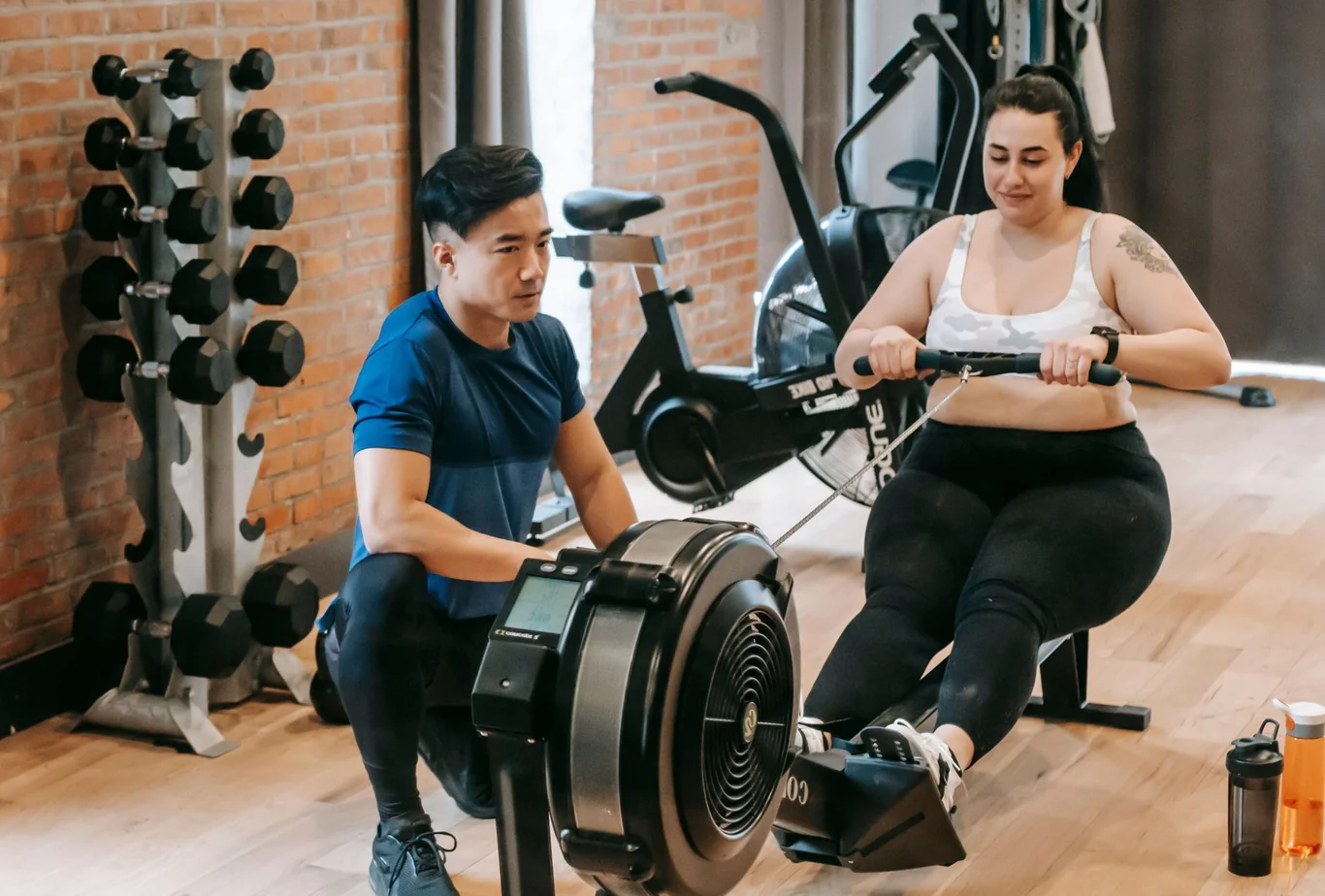
Research published in the International Journal of Environmental Research and Public Health followed 28 women through a 12-week rowing program and found a 2.63% reduction in body fat percentage, a 2.18 kg increase in lean mass, and a 12.63 bpm drop in resting heart rate (1). These results came from moderate rowing sessions without extreme calorie restriction, which suggests the activity itself drives meaningful body composition changes.
In our review of the available research, the muscle engagement picture is equally compelling. Electromyography studies confirm that rowing activates the quadriceps, gastrocnemius, back muscles, and upper body pulling muscles within each stroke (2). More muscle tissue working simultaneously means more calories burned per session and a higher resting metabolic rate between sessions.
For a full picture of what rowing delivers beyond weight loss, our rowing machine benefits guide covers the complete evidence base across cardiovascular, muscular, and metabolic outcomes.
For a look at the best options on the market, our guide to the best rowing machine breaks down what to look for at every budget level.
How Many Calories Does a Rowing Machine Burn?
Rowing burns between 11.45 and 13.46 calories per minute depending on body weight and intensity, according to a 2024 controlled study that compared seven popular cardio machines (3). At that rate, a 30-minute moderate session burns roughly 340 to 400 calories, which is comparable to jogging on a treadmill.
For a comparison of how cycling calorie output stacks up, my cycling calorie burn breakdown covers the same metrics for stationary and outdoor riding.
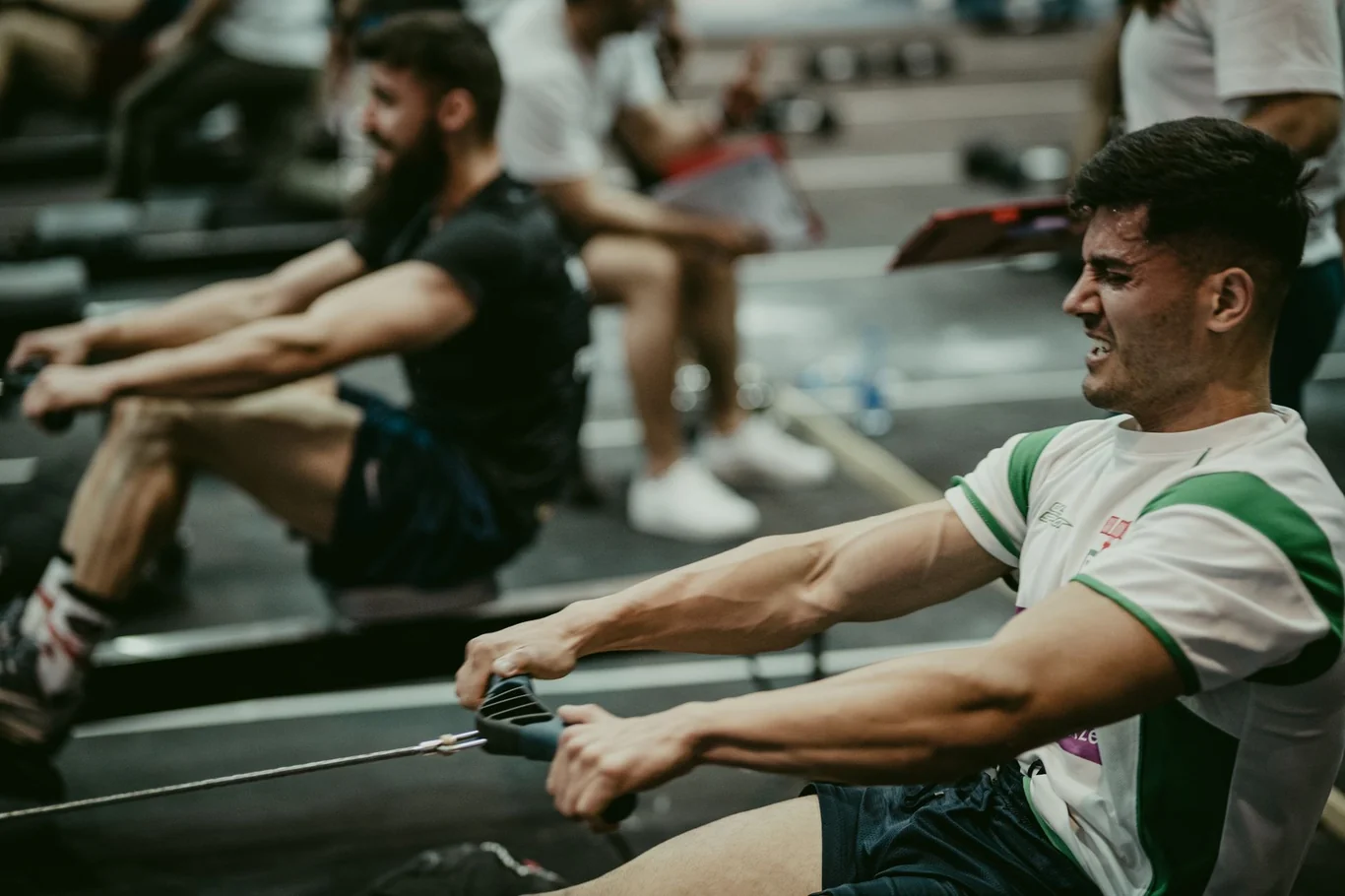
At maximal effort, a 6-minute rowing session can expend over 221 calories (4). That figure climbs significantly during longer, high-intensity sessions. Intensity matters more than duration for calorie burn: a 20-minute high-effort row consistently outperforms a 40-minute casual one at the same body weight.
Session Type | Duration | Estimated Calories (155 lb person) |
Light pace | 30 min | 180-240 |
Moderate steady-state | 30 min | 270-340 |
Vigorous or intervals | 30 min | 360-450 |
Vigorous or intervals | 60 min | 600-800 |
Estimates vary by body weight, stroke rate, and resistance setting.
Prieto-Gonzalez and Yagin (2024) noted that the rowing machine ranked fifth out of seven cardio machines by energy expenditure at moderate intensity, slightly behind the treadmill and stair climber. The reason is straightforward: rowing is a seated, non-weight-bearing activity, which reduces the metabolic demand compared to carrying your body weight upright. That said, the full-body muscle recruitment compensates considerably for this gap.
How Long on a Rowing Machine to Lose Weight
You need at least 3 to 5 rowing sessions per week to support meaningful weight loss, with each session lasting 20 to 45 minutes depending on your fitness level. This aligns with general guidelines of 150 to 300 minutes of moderate cardio weekly for fat loss.
If smooth, controllable resistance is important for your training style or for protecting a sensitive lower back, our best magnetic rowing machine guide covers the top options in this category.
For a complete comparison of all four resistance categories and which suits different training goals and home setups, my guide on the best type of rowing machine covers the key differences in noise, feel, and long-term usability.
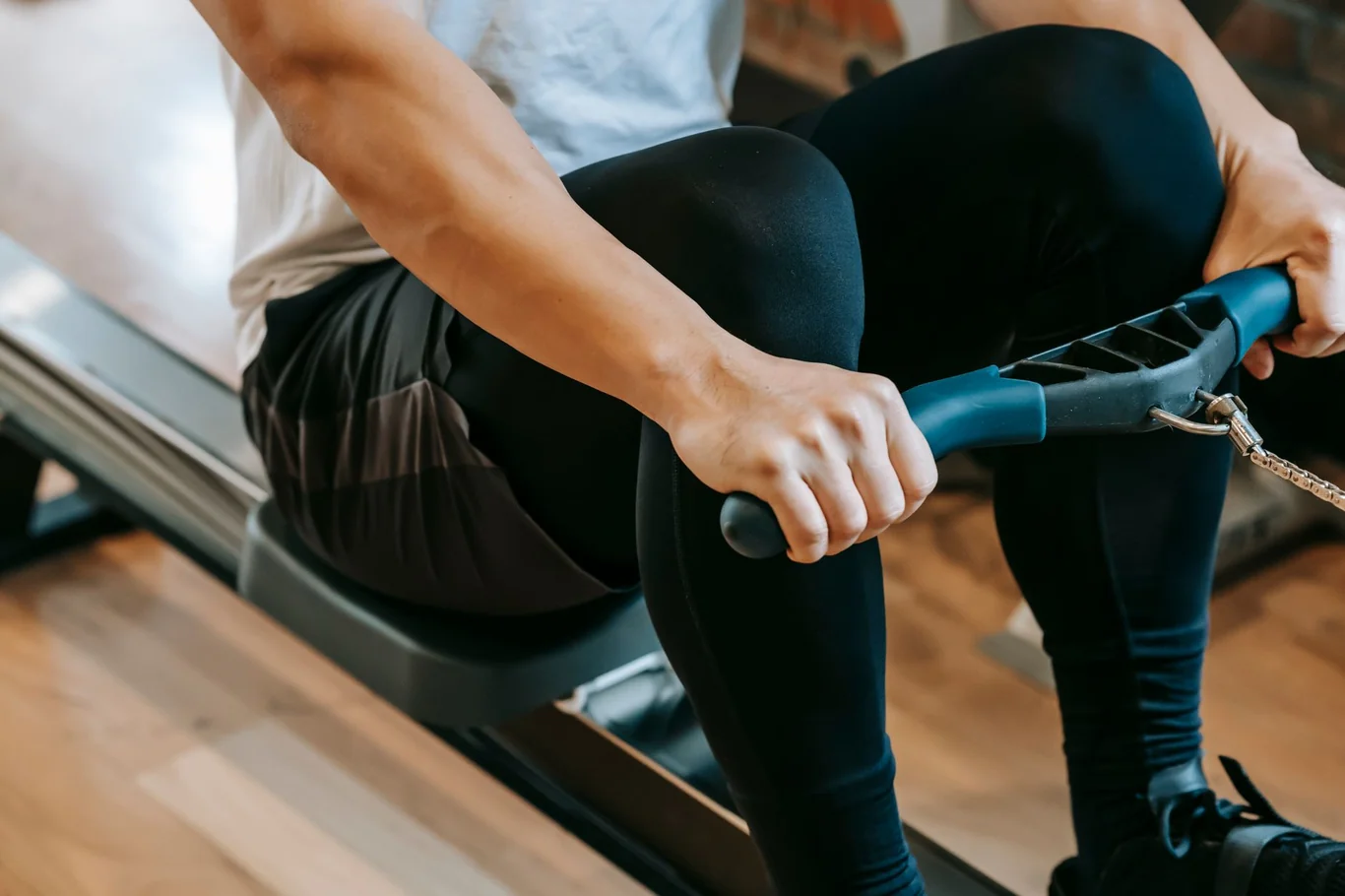
For beginners, 15 to 20 minutes at a comfortable pace is a reasonable starting point. Add 5 minutes every week or two as your stamina builds. Once you've established good technique, interval training (alternating hard bursts with easier recovery strokes) is far more time-efficient than steady-state work alone for maximizing calorie burn.
For those building a home rowing setup on a budget, our best budget rowing machine guide covers capable machines that support this kind of structured progression without overspending.
Here is a sample weekly rowing plan I'd recommend for weight loss:
- Monday: 20 minutes steady-state rowing at moderate effort
- Wednesday: 25 minutes with 6 x 2-minute hard intervals, 1-minute easy recovery between each
- Friday: 30 minutes steady-state rowing
- Saturday: 20 minutes light recovery row or active cross-training
Start with 3 sessions per week for the first 4 weeks before adding a fourth. Rest days reduce the lower-back strain and overuse fatigue that most commonly stop beginners from sticking with rowing.
Our guide to the best rowing machine for beginners covers which machines include built-in stroke monitors and beginner programming to make this easier to manage.
What Results to Realistically Expect From Rowing
The first 2 to 4 weeks of consistent rowing produce cardiovascular improvements before visible fat loss begins. Your resting heart rate drops, endurance improves, and stroke efficiency increases. Scale weight may not move much yet, and for some people it temporarily increases slightly from fluid retention during initial muscle adaptation. That's a normal response, not a sign the program isn't working.
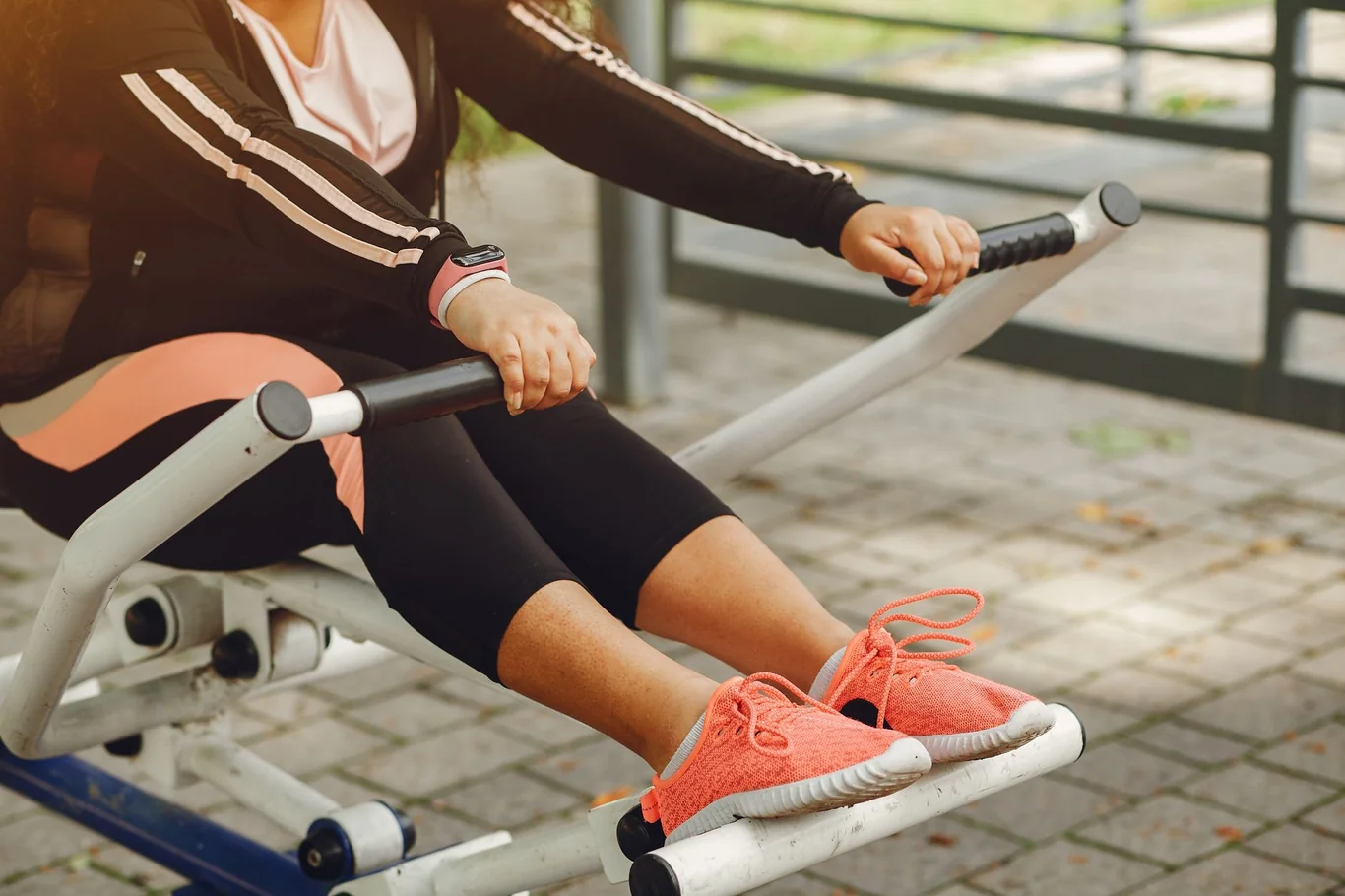
A 10-week indoor rowing study in post-menopausal women showed significant improvements in peak oxygen uptake, stroke volume, and cardiac output by week 6 (5). Heart rate recovery after exercise also improved markedly, meaning the cardiovascular system was adapting well before major body composition changes appeared.
The study followed post-menopausal women, a group for whom bone density is an equally important concern, and our guide on whether a rowing machine is good for osteoporosis covers how rowing's spinal loading addresses both outcomes.
Body composition shifts typically become measurable between weeks 6 and 12 with consistent training and a moderate calorie deficit. The 12-week study above showed a 2.63% drop in body fat alongside lean mass gains. A separate 6-week rowing program produced a 3.5% reduction in body fat percentage (6).
Timeline | What to Expect |
Week 1-2 | Muscle adaptation, possible mild weight increase from fluid retention |
Week 2-4 | Improved energy and endurance; cardiovascular fitness gains begin |
Week 4-8 | Muscle tone starts to appear; mild body fat reduction begins |
Week 8-12 | Measurable fat loss (2-3% body fat); lean mass increase; clear fitness change |
Week 12+ | Sustained fat loss with calorie deficit; intensity progression needed to avoid plateau |
Diet is the controlling variable. Rowing burns 300 to 500 calories per session at moderate intensity, an amount that's easy to offset without dietary awareness. A deficit of 300 to 500 calories per day, combined with 3 to 5 rowing sessions per week, produces a reliable 0.5 to 1 pound of weight loss per week. Rowing accelerates that rate, but diet is what sets the ceiling.
If you're comparing the pace of results to other cardio methods, our guide to treadmill benefits provides context on what consistent treadmill training produces over the same timeframe.
Rowing Machine vs. Elliptical and Treadmill for Weight Loss
When comparing a rowing machine vs. elliptical or treadmill, all three are effective for weight loss but differ meaningfully in muscle recruitment, calorie burn efficiency, and ease of use for new exercisers.
If stationary cycling is your preferred format, exercise bike workout for weight loss covers the protocols that produce the most consistent calorie output per session.
For a focused look at how the elliptical performs specifically for fat loss, our elliptical for weight loss guide covers the comparison in more detail.
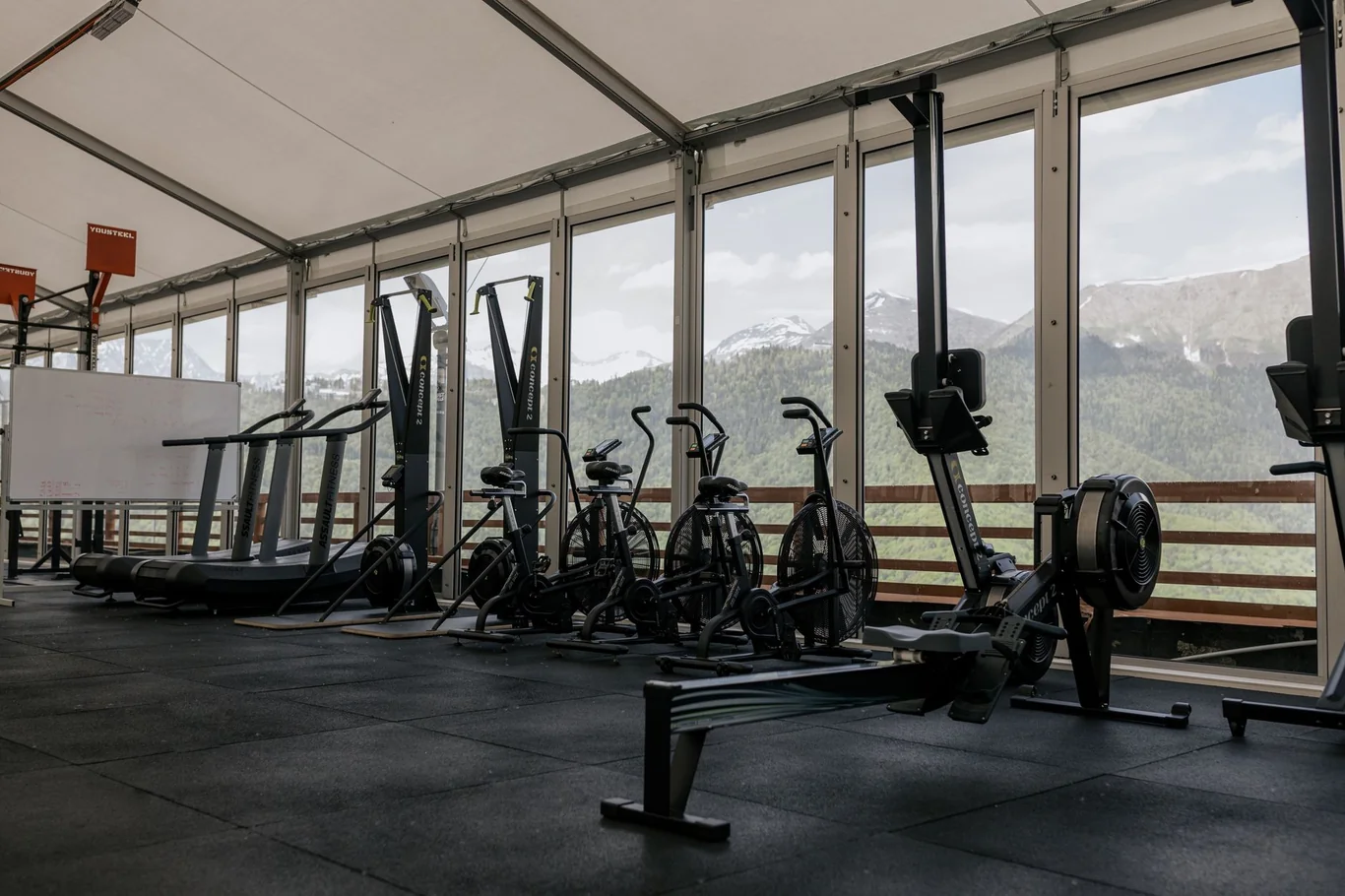
The 2024 multi-machine energy expenditure study placed rowing at 11.45 to 13.46 kcal/min at moderate intensity, behind the treadmill and stair climber but ahead of the cycle ergometer. The treadmill burns slightly more calories because it's weight-bearing: your legs support your body weight throughout, which increases metabolic demand.
Rowing is seated, which reduces that load.
Machine | Calories/Min (Moderate) | Primary Muscle Focus | Impact Level | Learning Curve |
Rowing machine | 11.5-13.5 | Full body (legs, core, back, arms) | Low | Moderate - technique required |
Treadmill | 12-15 | Lower body dominant | Moderate-High | Low - intuitive |
Elliptical | 9-11 | Lower body with light upper | Low | Low - intuitive |
Rowing's advantage is muscle diversity. Treadmills and ellipticals primarily target the lower body. Rowing also engages the back, shoulders, biceps, and core in each stroke, which is why it produces lean mass gains alongside cardiovascular benefit and makes it uniquely valuable for overall body composition.
On the belly fat question: neither a rowing machine nor a treadmill can target abdominal fat specifically. Spot reduction is a persistent myth with no research support. Fat loss is systemic and driven by total calorie deficit, with genetics determining where it comes off first. Both machines contribute to the calorie burn that drives systemic fat reduction.
If you're switching from a treadmill setup to focus on rowing, our guide to how to disassemble a treadmill covers the process step by step.
Rowing Machine Benefits and Disadvantages for Weight Loss
Understanding the real advantages and limitations of rowing helps you set accurate expectations and build a sustainable program.
Our Sunny Health & Fitness Smart Magnetic Rower Extra Long Rail page covers one of the more affordable magnetic options built with taller riders in mind.
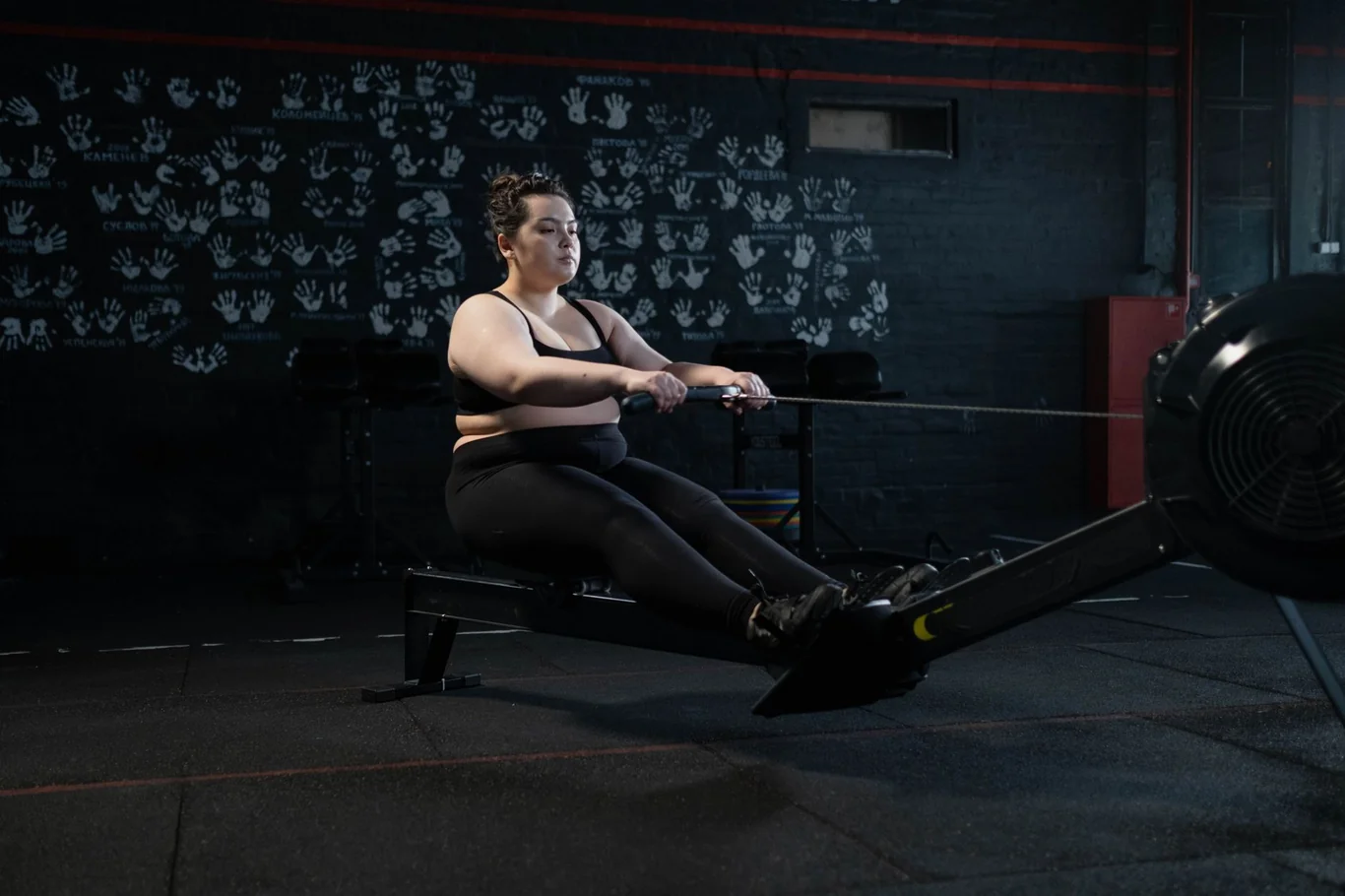
Rowing machine benefits for weight loss:
- Full-body muscle engagement across roughly 86% of your musculature per stroke, giving you cardiovascular and light resistance benefits simultaneously
- Low-impact design that protects the knees, hips, and ankles compared to running or high-impact aerobics
- Improved cardiovascular fitness - studies show significant VO2max, stroke volume, and cardiac output gains from 10 to 12 weeks of consistent rowing (5)
- Lean muscle preservation during a calorie deficit, which prevents the metabolic slowdown that makes long-term fat loss harder
- Resting heart rate reduction of over 12 bpm in 12 weeks, indicating meaningful heart health improvement, according to Gavala-Gonzalez et al. (2020)
- Adaptable intensity - rowing can be used for gentle recovery sessions or near-maximum intervals within the same piece of equipment
Rowing machine disadvantages:
- Technique barrier: 30 to 51% of rowers experience lower-back pain, almost always from poor form rather than from the exercise itself. The learning curve is steeper than the elliptical or treadmill.
- Seated position slightly reduces calorie burn compared to weight-bearing cardio at the same perceived effort level
- Cost: entry-level magnetic resistance models sit at budget-tier pricing, while premium flywheel units carry a significantly higher price point
- Monotony: rowing can feel repetitive without structured programming or varied intervals
For people dealing with joint pain who want a lower-risk alternative for bad days, our guide to the best exercise bike for back problems offers options that complement a rowing program.
Does Rowing Build Muscle While You Lose Weight?
Yes, rowing builds lean muscle alongside fat loss, which is one of its most valuable attributes compared to purely cardiovascular machines. Kim et al. (2014) found a 2.9 kg lean mass gain over just 6 weeks of rowing (6). The 12-week study cited earlier showed a 2.18 kg lean mass increase alongside a 2.63% drop in body fat.
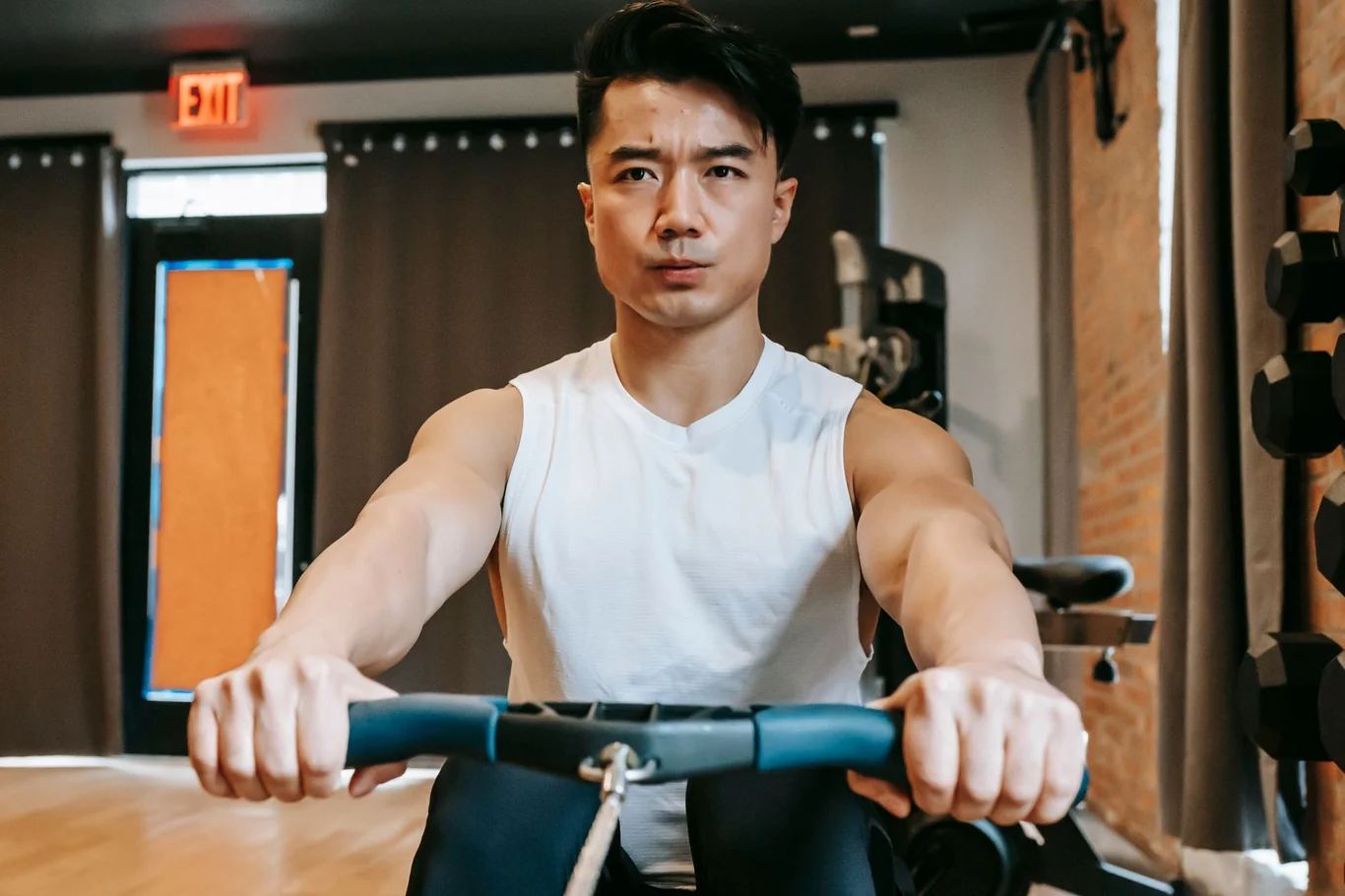
How long on a rowing machine to build muscle depends on resistance and stroke intensity. At moderate to high stroke rates with a firm resistance setting, rowing provides enough mechanical load to stimulate the posterior chain (glutes, hamstrings, lower back) and upper body pulling muscles (lats, rhomboids, and biceps). This is not a replacement for dedicated strength training, but it's meaningfully more muscle-building than cycling or running.
For a direct look at how rowing and cycling compare across key fitness metrics, my guide on cycling versus rowing covers the differences in output, muscle recruitment, and weight loss results.
For those ready to push past the baseline into structured intervals, our best rowing machine for conditioning guide covers machines built for the higher-intensity formats that maximize both calorie burn and lean mass gain.
Building lean mass while losing fat creates a metabolic advantage. Muscle tissue burns more calories at rest than fat tissue. Over 12 weeks of consistent rowing, this produces a compounding effect: your calorie burn during sessions stays high and your resting metabolic rate increases between sessions.
For home rowers who need a machine that stores between sessions without taking up permanent floor space, our best foldable rowing machine guide covers space-efficient options built for consistent use.
How to Use a Rowing Machine for Weight Loss as a Beginner
If you're new to rowing, correct technique is the single most important factor for both results and injury prevention. Our research consistently shows that beginners who row with poor posture tire faster, burn fewer calories, and are far more likely to experience lower-back discomfort after their first few weeks.
The YOSUDA PRO Magnetic Rower has 16 magnetic resistance levels and a 400-pound capacity.

The rowing stroke breaks down into four phases:
- The Catch: sit tall with arms extended, shins vertical, and core engaged. This is the starting position.
- The Drive: push through the legs first (60% of total power comes from here), then lean the torso back, then pull the handle to your lower chest.
- The Finish: legs fully extended, slight backward lean, handle drawn to the lower ribs with shoulders relaxed.
- The Recovery: return in reverse order - arms extend first, torso swings forward, then legs bend as you slide toward the flywheel.
The most common beginner mistake is pulling with the arms before finishing the leg drive. This converts a full-body exercise into an upper-body isolation movement, reduces calorie burn significantly, and increases lower-back strain.
For a detailed look at the back injury risks that matter most and how to avoid them, our guide on whether a rowing machine is bad for your back breaks down the evidence by condition and form error.
Common beginner mistakes to avoid:
- Rounding the lower back at the catch position - keep the spine neutral
- Bending the knees before the handle clears them on the recovery
- Gripping the handle too tightly, which causes forearm fatigue within minutes
- Rowing at too high a stroke rate before form is established
- Skipping rest days in the first four weeks, especially when form is still being learned
Understanding exactly what your muscles are doing during each phase helps you row more efficiently.
If you're also setting up a broader home gym for the first time, our best smart home gym for beginners guide covers the most practical starting configurations.
The Bottom Line on Rowing and Weight Loss
Rowing is genuinely one of the most complete tools for weight loss available in home and commercial fitness settings. It burns a meaningful number of calories per session, builds lean muscle simultaneously, and produces cardiovascular improvements that extend well beyond the rowing machine.
For those ready to evaluate specific models, my guide on how to evaluate a rowing machine covers resistance type, monitor capability, footrest quality, and the build specs that determine whether a machine holds up over months of regular use.
Tracking those cardiovascular improvements between sessions is where my affordable fitness tracker guide helps, covering the sub-$100 wearables that log resting heart rate trends reliably over time.
If floor space is a constraint, our best compact rowing machine guide covers efficient options that support all the training formats covered in this article.
The most reliable results come from three things together: consistent sessions at the right frequency (3 to 5 per week), technically correct strokes that put the work in the right muscles, and a diet that supports a moderate calorie deficit. Rowing alone will not override poor nutrition. Paired with controlled eating, the research shows 2 to 3% body fat reduction in 12 weeks - a result most casual gym-goers don't match with treadmill or elliptical use alone.
For readers evaluating whether the machine fits their setup, my post on whether a rowing machine is right for you covers the space, time, and fitness-goal factors that determine whether the investment holds.
For those building a complete home training environment around a rowing-centered program, our best smart home gym guide covers connected setups that support the programming discipline that makes 12-week results stick.
FAQs
Is rowing machine good for losing tummy fat?
A rowing machine helps reduce overall body fat, which includes abdominal fat over time, but no machine targets belly fat specifically. Fat loss is driven by your total calorie deficit and genetics determines where it comes off first, so consistent rowing combined with a moderate calorie deficit is the most reliable path to reducing tummy fat.
How much rowing equals 10,000 steps?
Approximately 20 to 25 minutes of moderate rowing at 20 to 24 strokes per minute is roughly equivalent to 10,000 steps in terms of calorie burn and cardiovascular demand. The exact equivalence varies by body weight and rowing intensity, but a 30-minute rowing session typically exceeds the cardiovascular benefit of 10,000 steps for most active adults.
Is 20 minutes of rowing enough?
Twenty minutes of rowing is sufficient to produce cardiovascular and fat-burning benefits, especially at moderate to high intensity. Research shows meaningful body composition changes from programs built on 20 to 25-minute sessions, provided you row with enough effort and frequency (ideally 4 to 5 sessions per week) and maintain a controlled diet alongside training.
What are the downsides of rowing?
The main downsides of rowing are its technique barrier and the lower-back pain risk that comes with poor form. Between 30 and 51% of rowers report some lower-back discomfort, typically linked to hunched posture or arm-dominant rowing. Rowing also burns slightly fewer calories per minute than weight-bearing cardio like running because it is a seated, non-impact activity.
Is rowing machine good for weight loss?
A rowing machine is one of the most effective tools for weight loss because it engages roughly 86% of your muscles per stroke while keeping impact on the joints low. Studies show 2 to 3% body fat reduction in 6 to 12 weeks with consistent training, and rowing simultaneously builds lean mass that raises your resting metabolic rate for ongoing fat-burning benefit.
References:
- Gavala-Gonzalez J, Galvez-Fernandez I, Mercade-Mele P, Fernandez-Garcia JC. Rowing training in breast cancer survivors: A longitudinal study of physical fitness. Int J Environ Res Public Health. 2020;17(14):4938. doi:10.3390/ijerph17144938
- Czajkowska U, Swiatek-Najwer E, Jankowski L. Analysis of muscle activity during rowing stroke phases. Acta Bioeng Biomech. 2023;25(1):117-126. PMID:38314566
- Prieto-Gonzalez P, Yagin FH. Energy expenditure, oxygen consumption, and heart rate while exercising on seven different indoor cardio machines at maximum and self-selected submaximal intensity. Front Sports Act Living. 2024;6:1313886. doi:10.3389/fspor.2024.1313886
- Hagerman FC, Connors MC, Gault JA, Hagerman GR, Polinski WJ. Energy expenditure during simulated rowing. J Appl Physiol Respir Environ Exerc Physiol. 1978;45(1):87-93. doi:10.1152/jappl.1978.45.1.87
- Araujo RC, Rodrigues GD, Ferreira LF, Soares PPDS. The time course of cardiorespiratory adaptations to rowing indoor training in post-menopausal women. Int J Environ Res Public Health. 2023;20(4):3238. doi:10.3390/ijerph20043238
- Kim D-I, Park D-S, Lee BS, Jeon JY. A six-week motor-driven functional electronic stimulation rowing program improves muscle strength and body composition in people with spinal cord injury: a pilot study. Spinal Cord. 2014;52(8):621-624. doi:10.1038/sc.2014.76