
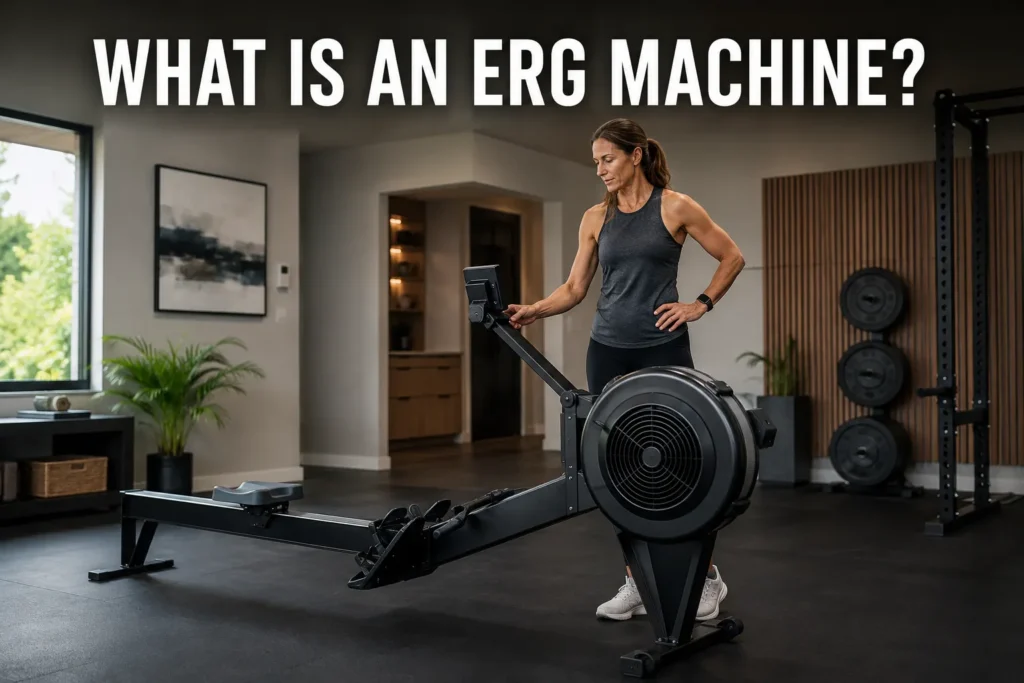
An erg machine is an indoor rowing device that measures and records the work output of every stroke you take. If you have spotted one at the gym and wondered what it does, or heard competitive rowers mention "hitting the erg," you are in the right place. This guide covers exactly what an erg machine is, where the name comes from, which muscles it targets, what kinds of workouts you can do on one, and how to choose the right model. We reviewed the peer-reviewed research and built this guide around what actually holds up.

What Is an Erg Machine - Definition, History, and How It Works
An erg machine, short for rowing ergometer, is an indoor fitness device designed to simulate the motion of on-water rowing while measuring your power output, pace, and calorie burn in real time. The word "erg" comes from "ergometer," which is a scientific instrument that measures the work a person performs during exercise.
Our rowing machines shop lists current models from several of the manufacturers named above.
For a structured checklist of the specs and features that separate a reliable ergometer from an average rowing machine, my guide on how to choose a rowing machine covers resistance type, monitor capability, frame build, and footrest design.
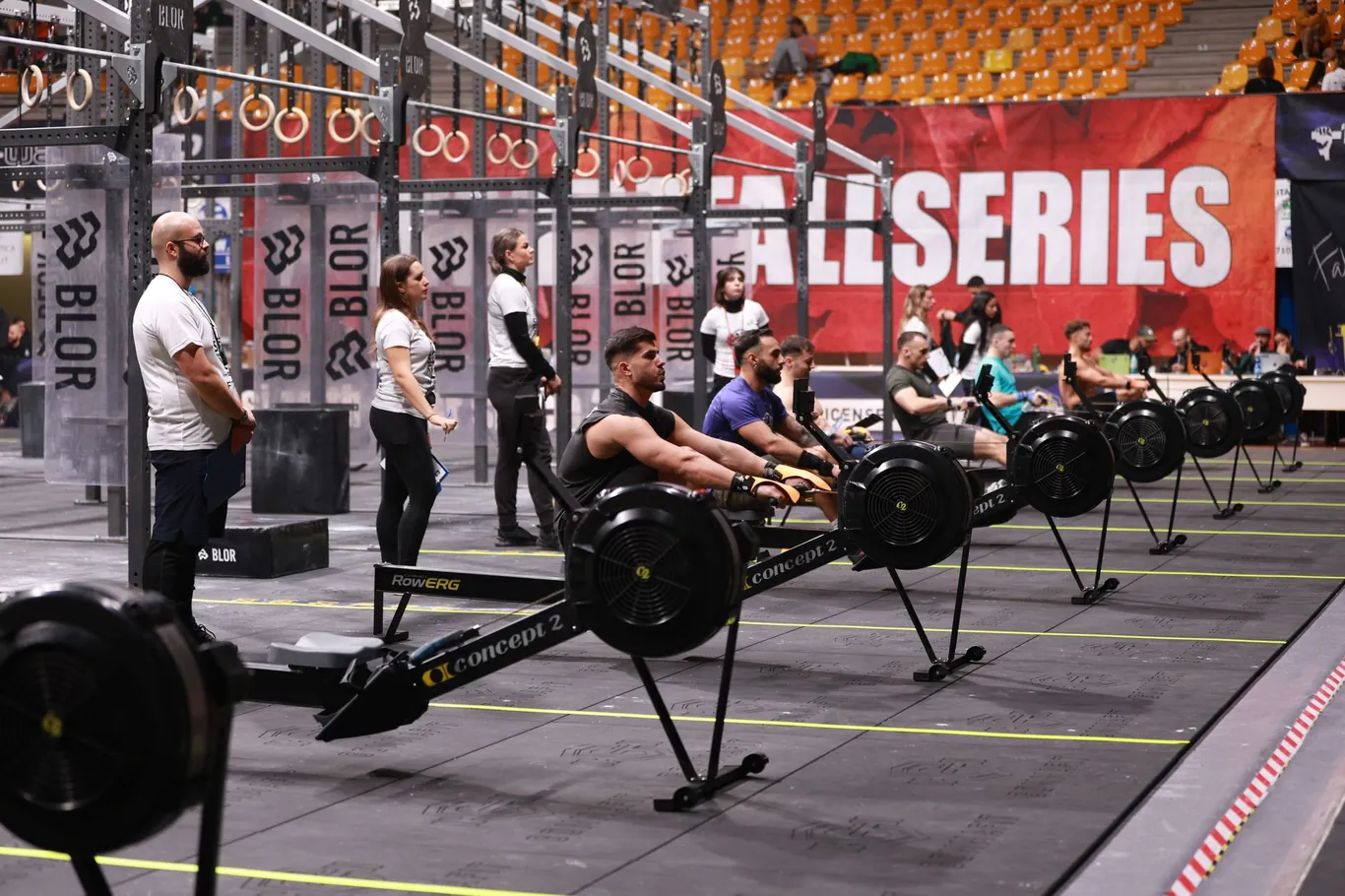
The history of the modern erg machine traces back to 1981, when Concept2 co-founders Dick and Peter Dreissigacker converted a bicycle ergometer into the first practical indoor rowing machine. Originally built to help competitive rowers train year-round, the machine quickly found its way into gyms, rehabilitation centers, and home fitness setups. Today, Concept2 remains the benchmark brand in competitive rowing, though a growing number of manufacturers, including Hydrow, WaterRower, and Ergatta, have introduced distinctive designs for recreational users.
Our Hydrow Wave page has specs for one of these newer connected rowing designs built for recreational use.
For a framework that weighs the practical benefits against space requirements, cost, and learning curve, my post on whether a rowing machine is worth buying covers whether the erg or a recreational home rower fits your goals better.
How an Erg Machine Works
At the core of most erg machines is a spinning flywheel connected to a handle and pull chain. When you pull the handle, you spin the flywheel against air, water, or magnetic resistance. A connected performance monitor captures how hard and how efficiently you are pulling, displaying real-time metrics including:
- Split pace (time per 500 meters)
- Power output (measured in watts)
- Stroke rate (strokes per minute)
- Calories burned
- Distance covered (in meters)
One reason competitive rowers rely on the erg so heavily is consistency: every machine using the same resistance model delivers nearly identical measurements, which makes it possible to compare performance across sessions and between athletes worldwide. Research confirms that metrics like VO2max and peak power output are the strongest predictors of competitive rowing performance, which is why coaches treat the erg as a primary assessment tool. (1)
Component | Function |
Flywheel | Generates resistance and converts your pull into measurable work |
Chain and handle | Transfers power from your pull to the flywheel |
Damper setting | Controls airflow to the flywheel, adjusting the feel of each stroke |
Performance monitor | Tracks pace, watts, stroke rate, distance, and calories in real time |
Seat and slide rails | Support your leg drive through each full stroke cycle |
We'd highlight the damper setting as the most misunderstood feature for beginners: it does not control resistance directly but adjusts how much air flows into the flywheel, which changes the stroke feel without necessarily making the workout harder or easier. Most beginners do best starting at a damper setting of 3 to 5.
Tracking your erg splits over time gives a more complete fitness picture. Our guide to the best rowing machine covers models with the most accurate data tracking for measuring that progress.
Why Is It Called an Erg? The Physics and Etymology Behind the Name
The short answer: "erg" is a unit of energy. In physics and chemistry, one erg equals 10^-7 joules in the CGS (centimeter-gram-second) measurement system. The term comes from the Greek word ergon, meaning "work." So at its most fundamental level, what does the erg unit refer to? It is a precise measure of mechanical energy. When people ask what an erg is in physics specifically, the answer is: a fundamental unit of energy in the CGS system, equal to the work done by a force of one dyne acting through a distance of one centimeter.
The word ergometer breaks down as ergon (work) and metron (measure). A rowing ergometer is, by definition, a machine that measures the work you produce. What makes this meaningful for fitness is the precision: unlike a treadmill or stationary bike, which infer your effort from speed or RPM, an erg captures the actual mechanical energy your body generates on every pull.
This is the same scientific principle behind erg in physics and the related use of the erg concept in chemistry: energy is energy, and the erg machine quantifies yours with a level of accuracy most gym equipment cannot match.
In practical training terms, this precision is what makes the erg irreplaceable for competitive rowers and increasingly popular with serious recreational athletes. Your output is your output and no two sessions can hide from the monitor.
Budget does not have to mean sacrificing performance-focused training. Our reviews of the best budget rowing machine options highlight models that hold up well for beginners.
What Muscles Does an Erg Machine Work - A Full-Body Breakdown
One of the most persistent misconceptions about erg rowing is that it primarily works your back and arms. Rowing engages approximately 86% of your body's major muscle groups, which makes it one of the most complete full-body exercises available. The way those muscles engage changes across each phase of the stroke.
The Muscle Activation Pattern
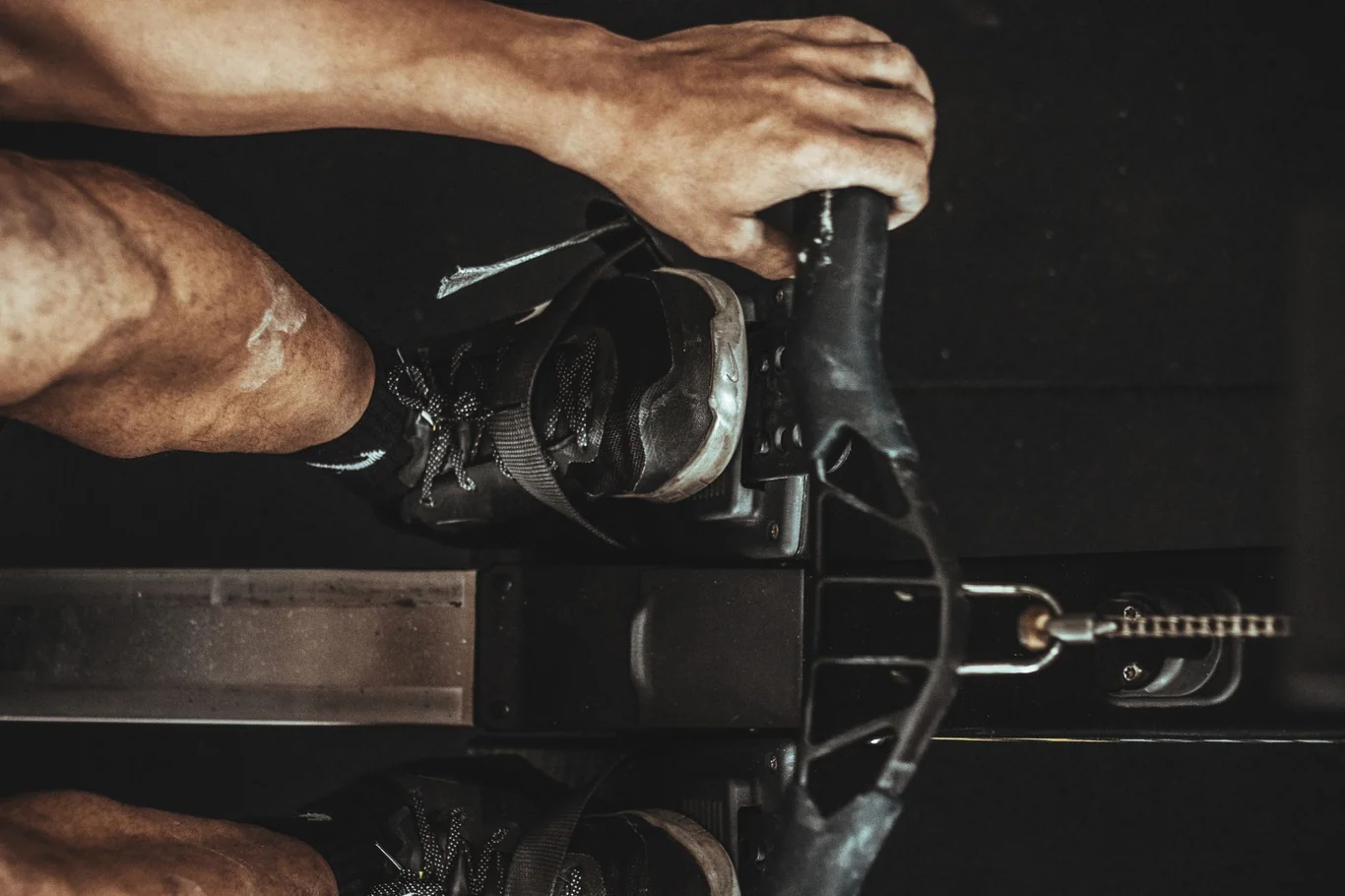
Research using surface electromyography (sEMG) analysis demonstrates that skilled rowers show a precisely coordinated sequential activation of the quadriceps and biceps femoris during the rowing stroke. In untrained individuals, this recruitment pattern is less efficient and more erratic, which explains why rowing feels awkward for beginners and why proper technique matters so much early on. (2)
A separate study measuring acute muscle changes after a 2,000-meter erg effort found significant increases in tone and stiffness in the posterior deltoids, latissimus dorsi, and rectus femoris, which identifies these as the primary propulsive muscles during high-intensity rowing. (3)
Muscle Group | Primary Role | Stroke Phase |
Quadriceps | Drive the initial leg push at the catch | Drive phase |
Hamstrings and glutes | Support hip extension through the middle of the stroke | Mid-drive |
Core (erectors, abdominals) | Stabilize the spine and transfer leg power to the handle | Full stroke |
Latissimus dorsi | Pull the handle toward the body in the finish | Finish phase |
Biceps | Complete the arm draw at the end of the pull | Finish phase |
Posterior deltoids | Stabilize and assist the shoulder pull | Finish phase |
Gastrocnemius (calves) | Foot stabilizers throughout each stroke cycle | Full stroke |
In our review of the muscle research, the clearest finding is that the leg-dominant power distribution surprises nearly every beginner who comes to rowing from upper-body-focused training. When beginners ask what muscles the rowing machine works the most, the consistent answer across coaching and research is the quadriceps and glutes, which generate the large majority of power during the drive phase. A widely used coaching principle is the 65-75-10-15 rule: roughly 65-75% of your rowing power comes from your legs, about 15% from your hips, and 10-15% from your arms. This is the opposite of what most beginners assume, which is why rushing to "pull harder" with the arms is a common mistake that limits both power and efficiency.
For those logging serious erg volume, understanding exactly which muscles are under load between sessions becomes important. Our breakdown of what muscles a rowing machine works covers the full activation pattern in more detail.
What Is an Erg Workout - Types, Formats, and a Beginner Plan
At its simplest, an erg workout is any structured training session performed on a rowing ergometer. Erg workouts span a wide spectrum from easy aerobic rows to near-maximal interval efforts, and each format produces a different training stimulus.
Common Erg Workout Types
- Steady-state rows: Long, moderate-intensity efforts (20 to 60 minutes) at a pace you can sustain without stopping. These build aerobic base and reinforce stroke mechanics.
- Interval training: Short, high-intensity bursts (for example, 8 sets of 500 meters) separated by timed rest periods. Develops power output and cardiovascular capacity.
- The 2,000-meter test: The standard competitive benchmark in rowing. A maximal effort piece that taxes both aerobic and anaerobic systems and produces a clear measure of your current fitness.
- Technical rows: Low-resistance sessions focused on drilling a single aspect of stroke mechanics. Essential for beginners before they increase intensity.
- Cross-training rows: Used by runners, cyclists, and team sport athletes to add cardiovascular training without overloading the joints and movement patterns of their primary sport.
Research validating ergometer-based fitness testing confirms that the erg is an accurate tool for predicting VO2max and establishing ventilatory training zones in recreational rowers, which makes it as useful for fitness assessment as it is for pure conditioning. (4)
A Beginner Erg Plan for Week 1
- Day 1: 10-minute easy row at a damper setting of 3 to 4, focusing on stroke rhythm and technique
- Day 2: Rest or light walking
- Day 3: 15-minute steady-state row at a pace you can hold for the full duration without stopping
- Day 4: Rest
- Day 5: 4 sets of 2-minute efforts with 1 minute of rest between sets, at a slightly harder effort than your steady-state pace
We suggest prioritizing feel over pace in the first two weeks: rowing at a moderate effort where you can hold a conversation is more productive than chasing a fast split before your mechanics are solid. Keep your stroke rate between 18 and 24 strokes per minute during early sessions. A lower stroke rate with a powerful leg drive is far more effective than a fast, shallow stroke. Most beginners rush the rate to cover more distance, which actually reduces power output per stroke.
For a detailed look at how damper setting and resistance type affect stroke feel and training output, my post on the right resistance setting for a rowing machine covers the differences between air, magnetic, and water resistance in practical terms.
Wrist-based heart rate data from a fitness tracker pairs naturally with erg pace data during interval sessions. Our review of the best ankle fitness tracker options covers models that capture heart rate during cardio-focused workouts.
The Real Benefits of Rowing on an Erg Machine
Our analysis of the available evidence points to the same conclusion most coaches and exercise scientists reach: the erg rewards consistent, technically sound training over sporadic high-intensity efforts. It delivers cardiovascular and muscular benefits at the same time, something few single machines can match.
For buyers who need both performance and storage flexibility, my guide to the top foldable rowing machines covers the options that fold or stand upright without reducing stroke length or frame rigidity.
Cardiovascular and Body Composition Gains
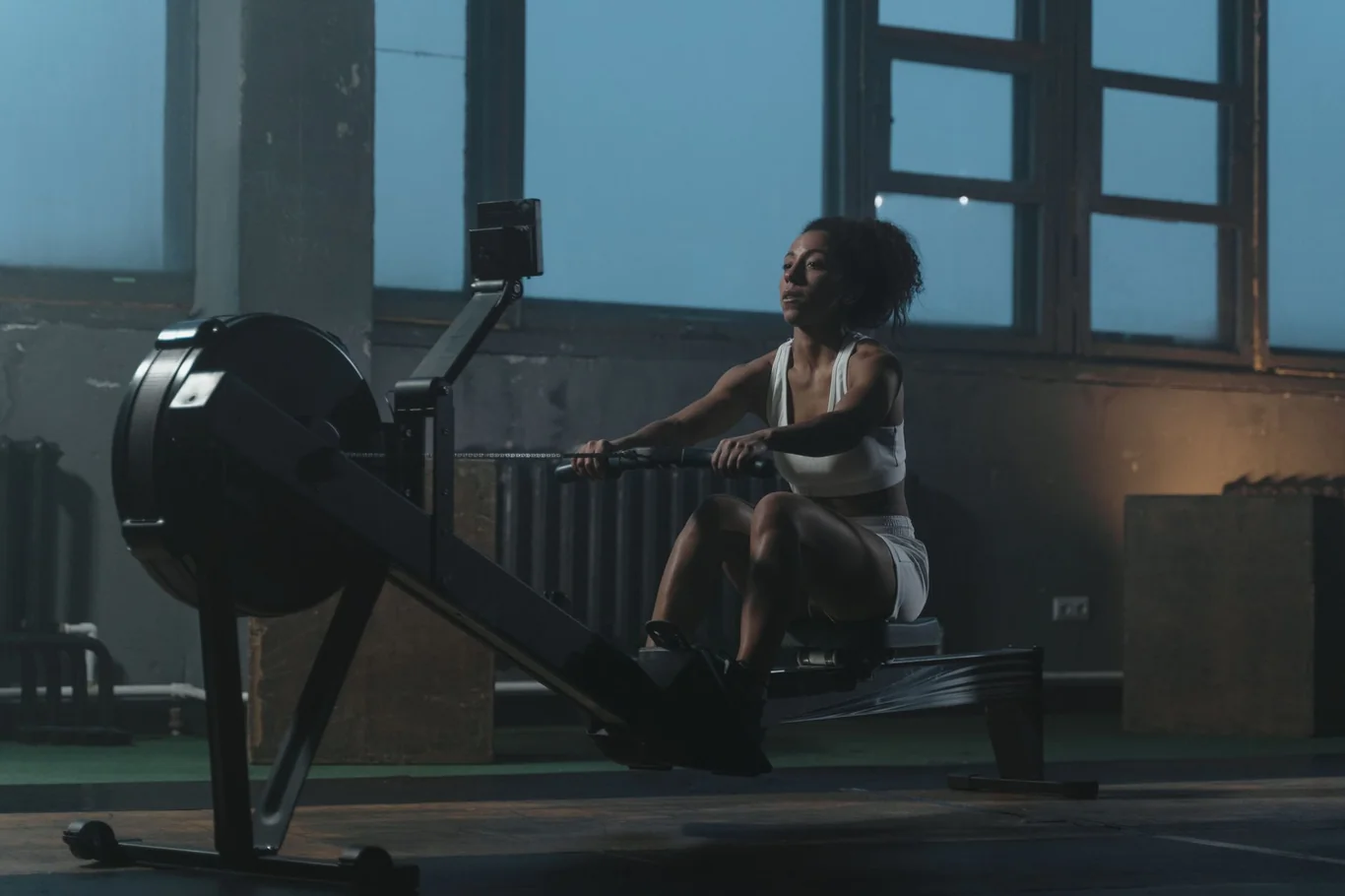
A 12-week rowing training intervention demonstrated significant improvements in cardiovascular fitness in study participants, including a 51.56-meter improvement in 6-minute walk distance alongside increases in muscular strength, flexibility, and favorable changes in body composition as measured by DXA. (5) Critically, the study used standard indoor rowing sessions rather than elite training protocols, which suggests these results are accessible to recreational rowers.
For a look at the research on calorie burn and fat loss specific to rowing, my post on is a rowing machine good for weight loss covers what the evidence shows for recreational users training at moderate to high intensity.
Research examining physiological demands across rowing intensity levels confirms that caloric expenditure increases proportionally with rowing effort, which means you can modulate your sessions to match your current goal, whether that is fat loss, cardiovascular conditioning, or cross-training recovery. (6) At moderate intensity, a 30-minute erg session burns approximately 200 to 300 calories depending on body weight and stroke output.
For buyers focused on interval training and high-output sessions, my conditioning rowing machine guide covers the machines built for consistent high-frequency use without mechanical degradation.
What Regular Erg Training Delivers
- Full-body calorie burn: Engaging nearly the entire body in each stroke makes rowing highly efficient at burning calories relative to time invested
- Low-impact joint loading: Unlike running, rowing places minimal force on the knees, hips, and ankles, making it a strong option for people managing joint sensitivity
- Scalable intensity: You can row at 60% effort for recovery or push to near-maximum for interval training, all on the same machine with no setup changes
- Objective performance tracking: Splits, watts, and distance give you concrete data to measure progress over months and years
- Cross-training value: Runners, cyclists, and team sport athletes use erg rowing to build cardiovascular fitness without adding load to their primary sport's movement patterns
- Cognitive engagement: The combination of technique, pacing, and effort demands sustained attention, which many users find more mentally engaging than solo treadmill sessions
Older adults looking to build cardiovascular fitness with low-impact cardio will find erg rowing particularly well-suited. Our guide to whether a rowing machine is good for osteoporosis covers the bone density research behind why low-impact cardio matters for this age group.
How to Choose the Best Erg Rowing Machine - Key Factors and Resistance Types
The best erg rowing machine for you depends on budget, training goals, available space, and how much noise you can accommodate. The market now covers four distinct resistance types, each with a different feel and price point. Before searching "erg rowing machine for sale," knowing which resistance type fits your situation will narrow the field considerably.
For a curated list of the quietest, most consistent home options, my guide to top magnetic rowing machines covers the models that deliver a smooth, adjustable resistance curve suitable for home use at any time of day.
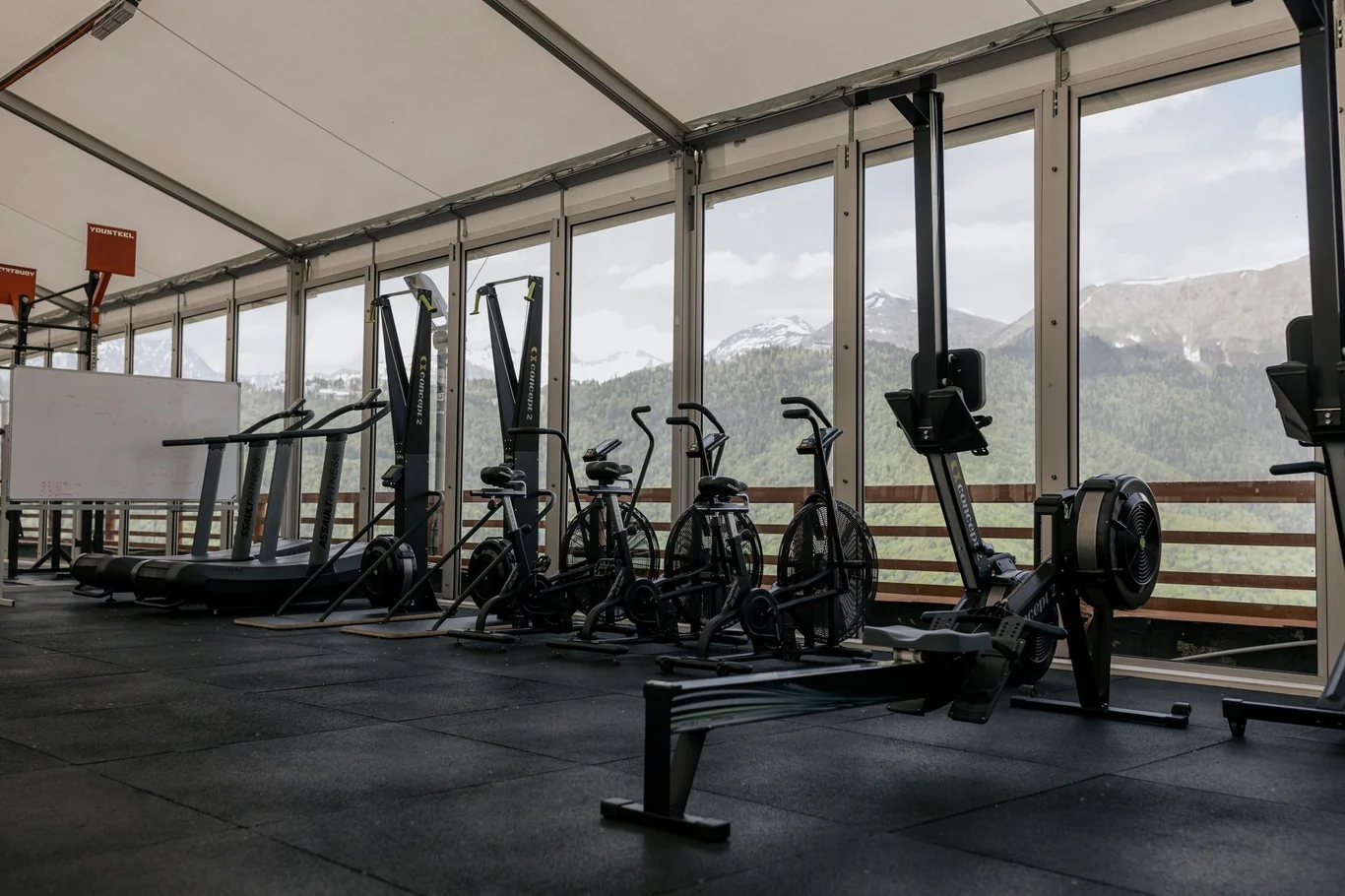
Reviewing what to look for when buying a rowing machine starts with resistance type because it determines both the training experience and long-term cost of ownership. We'd point beginners toward air or water resistance if the budget allows: the dynamic feel of these machines teaches proper power generation far more naturally than fixed-resistance magnetic models.
For a direct comparison of full-body rowing against seated cycling, my post on the recumbent bike and rowing machine comparison covers output differences, joint loading, and which machine fits different mobility profiles.
Resistance Type Comparison
- Air resistance: The competitive standard. Concept2 RowErg is the benchmark model used in gyms, university rowing programs, and CrossFit boxes worldwide. Resistance increases naturally as you pull harder, rewarding power rather than cadence. Produces noticeable noise from the flywheel.
- Water resistance: Smooth, realistic feel that most closely mimics on-water rowing. WaterRower and Ergatta lead this category. Produces a pleasant water sound. Requires occasional water maintenance and tank cleaning.
- Magnetic resistance: Near-silent operation, often at a lower price point. Resistance is set via a dial rather than dynamically responding to pull strength. Well-suited for apartment use where noise is a concern.
- Hydraulic resistance: The most compact and budget-friendly option. Limited in feel and data accuracy compared to other types. Best for users with very limited space and entry-level needs.
Our Merach Q1S Magnetic Rower Dual Slide Rail page covers specs for one of these dial-adjustable magnetic options.
Our WaterRower Original Oak page has full specs for this style of water-resistance design.
Price ranges in this category span from around $300 for entry-level magnetic models to $1,500 and above for premium air or water rowers. The used market for Concept2 machines is active and worth exploring: a used machine in good condition performs identically to new and holds its value well.
For a full walkthrough of stroke mechanics, damper setup, and monitor use, my rowing machine technique guide covers the form cues that make the erg's performance data meaningful rather than misleading.
Key specs to evaluate beyond resistance type include maximum weight capacity, footprint dimensions, monitor data accuracy, manufacturer warranty, and folding capability if storage space is limited. If footprint is a dealbreaker, our guide to the best compact rowing machine covers the models that fold down smallest without sacrificing monitor accuracy.
What the Evidence Tells You About Getting Started
An erg machine is one of the most effective, data-driven fitness tools available for home and gym use in 2026. Its ability to simultaneously train cardiovascular fitness and nearly all major muscle groups makes it uniquely time-efficient for anyone who wants measurable results without a large equipment footprint.
For a breakdown of the back loading research and the form adjustments that matter most, my post on rowing machines and lower back strain covers the risk factors and the seat and damper settings that reduce lumbar stress.
We recommend starting with shorter, lower-resistance sessions to develop stroke mechanics before increasing intensity. The learning curve is steeper than a treadmill or stationary bike, but the payoff in full-body conditioning and objective performance tracking is significant. That payoff builds session over session, which is why our guide to rowing machine benefits breaks down exactly what consistent training delivers.
For deeper guidance on choosing your first machine, our review of the best rowing machine for beginners covers the models that make the learning curve easiest to manage.
FAQs
Can you lose belly fat with a rowing machine?
You can use a rowing machine to support overall fat loss, which includes a reduction in belly fat over time when combined with a caloric deficit. Because targeted fat reduction from a single body area is not physiologically possible, consistent erg sessions produce whole-body fat loss rather than spot reduction in the abdominal area.
How much does an erg cost?
An erg machine ranges from approximately $300 for entry-level magnetic resistance models to $1,500 and above for premium air or water rowers like the Concept2 RowErg or WaterRower. Connected rowing machines with interactive screens and streaming classes typically sit at the higher end of the price spectrum.
Why do they call it an erg?
The erg gets its name from "ergometer," a scientific instrument that measures the work output of the person using it. The root word "erg" is a unit of energy derived from the Greek ergon, meaning "work," and because the rowing machine precisely measures the mechanical work you produce during each stroke, the name became the standard shorthand in the rowing community.
Is rowing on an erg harder than running?
Rowing on an erg engages a higher percentage of your body's muscle mass than running does, which can make it feel more demanding even at comparable heart rate levels. Both activities challenge cardiovascular fitness effectively, but rowing distributes the workload across nearly the entire body rather than concentrating effort in the lower limbs.
What is an erg in rowing?
In rowing, an erg refers to the indoor rowing ergometer used for year-round training, performance testing, and conditioning when on-water rowing is not possible. Rowers "do an erg piece" the same way runners do track intervals: it is a core training tool for competitive and recreational rowers at every level of the sport.
References:
- Borges I, Veiga S, González-Frutos P. The Evaluation of Physical Performance in Rowing Ergometer: A Systematic Review. J Funct Morphol Kinesiol. 2025;10(4):437. doi:10.3390/jfmk10040437
- Grzejszczak T, Roksela A, Poświata A, Siemiaszko A, Kiełboń A, Mikulski M. Surface Electromyography Data Analysis for Evaluation of Physical Exercise Habits between Athletes and Non-Athletes during Indoor Rowing. Sensors (Basel). 2024;24(6):1964. doi:10.3390/s24061964
- Chang CH, Ho CS, Li F, Chen CY, Yeh HC, Ho CA. Acute effects of muscle mechanical properties after 2000-m rowing in young male rowers. PeerJ. 2024;12:e16737. doi:10.7717/peerj.16737
- Huerta Ojeda Á, Riquelme Guerra M. Six-minute rowing test: a practical tool for training prescription, from ventilatory thresholds and power outputs, in amateur male rowers. PeerJ. 2023;11:e16160. doi:10.7717/peerj.16160
- Gavala-González J, Gálvez-Fernández I, Mercadé-Melé P, Fernández-García JC. Rowing Training in Breast Cancer Survivors: A Longitudinal Study of Physical Fitness. Int J Environ Res Public Health. 2020;17(14):4938. doi:10.3390/ijerph17144938
- Rios M, Cardoso R, Monteiro AS, Vilas-Boas JP, Fernandes RJ. Physiological Demands Across Exercise Intensity Domains in Rowing: Implications of Weight Category and Sex Differences. Sports (Basel). 2025;13(8):245. doi:10.3390/sports13080245