
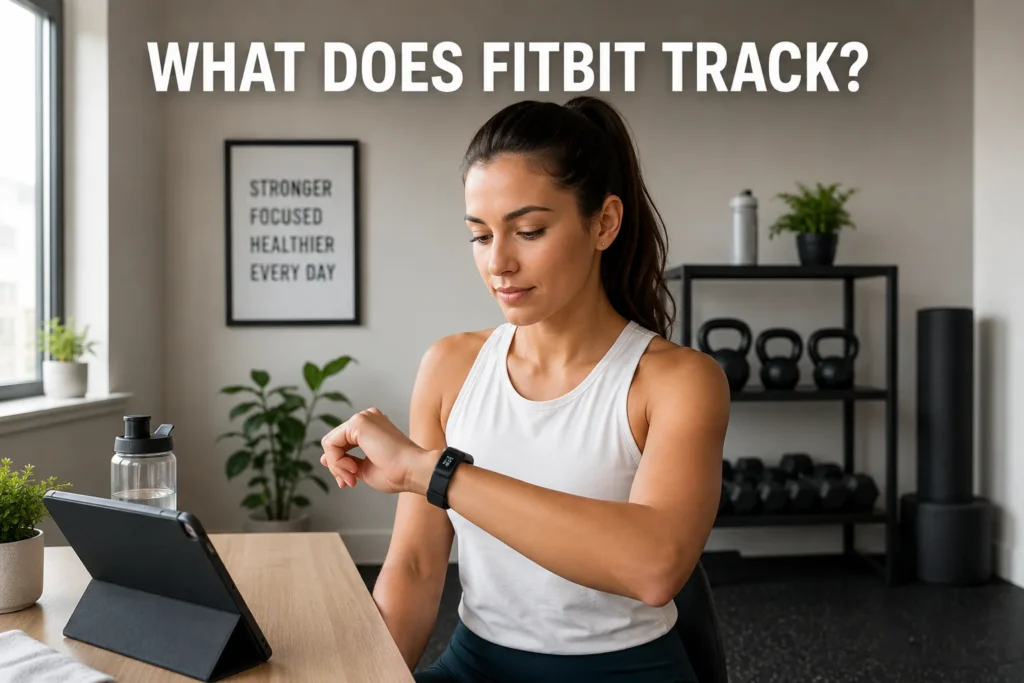
What does Fitbit track - and more importantly, what does all that data actually mean for your health? Most people buy a Fitbit expecting a step counter and end up with a wrist-worn platform that monitors heart rate continuously, classifies sleep into stages, estimates blood oxygen saturation, and can flag a potential irregular heart rhythm with striking accuracy. The gap between expectation and reality is where confusion sets in. This guide breaks down every metric a Fitbit monitors, which devices include which sensors, how accurate each reading actually is based on peer-reviewed research, and how to make the data work for you.

What Does Fitbit Track for Daily Activity - Steps, Calories, and Movement
What does Fitbit track at its most fundamental level? Daily activity. Every Fitbit device uses a three-axis accelerometer to detect motion patterns and translate them into a picture of how physically active you have been throughout the day. This happens automatically, without any manual input required.
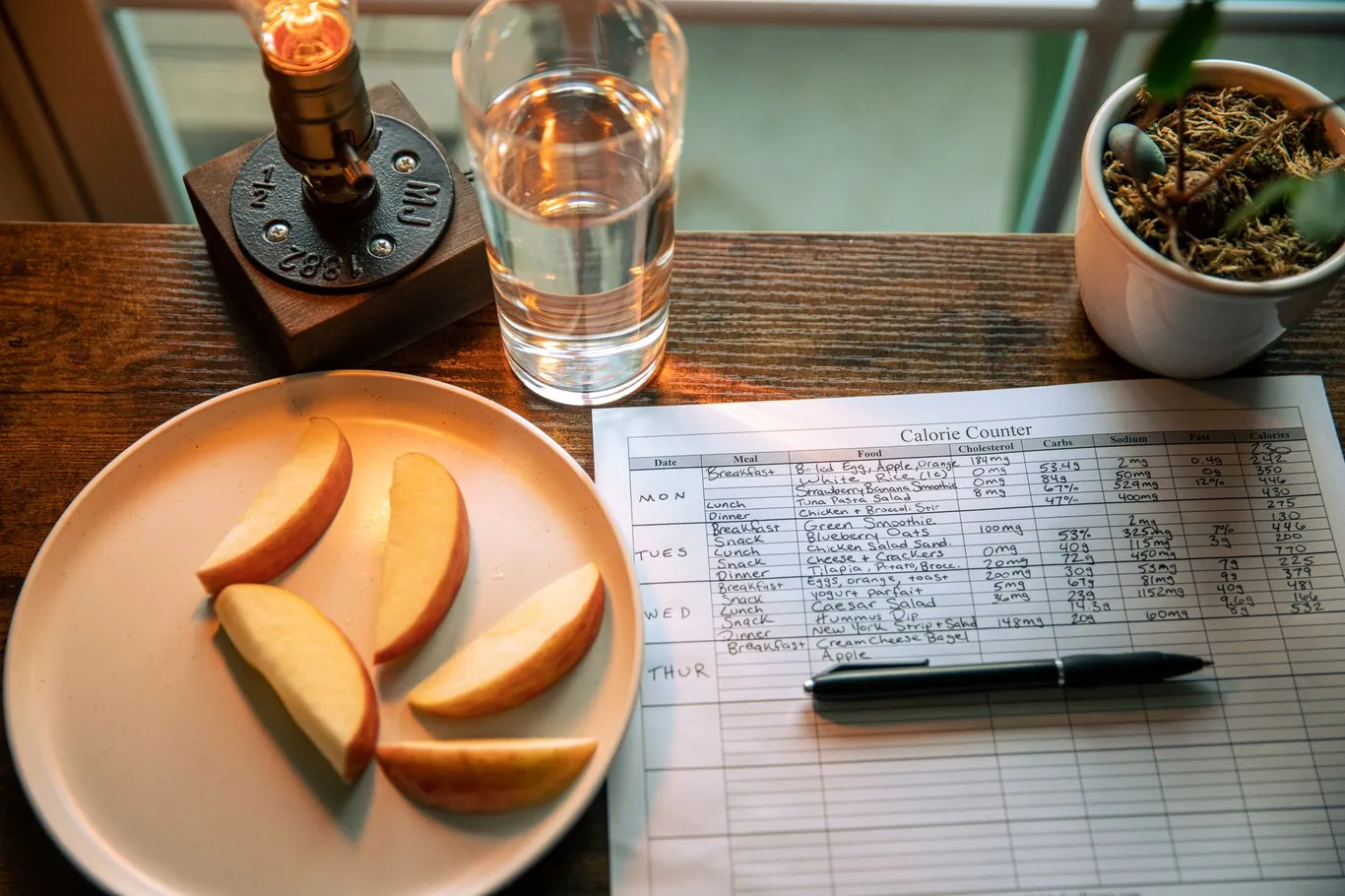
Here is what every current Fitbit tracks around the clock:
- Steps taken - a running tally updated in real time, visible on the watch face
- Distance traveled - calculated from step count combined with your profile's stride length setting
- Calories burned - a combination of your basal metabolic rate and activity-based expenditure
- Active Zone Minutes (AZM) - time spent in fat-burn, cardio, or peak heart rate zones, aligned with WHO weekly activity guidelines
- Floors climbed - detected via altimeter on most models; the Inspire 3 lacks this sensor
- Hourly activity reminders - an alert if you have not taken at least 250 steps in the preceding hour
Active Zone Minutes replaced the older "active minutes" metric with a more nuanced approach. Each minute in the cardio zone (70-84% of max heart rate) counts as 2 AZM, effectively doubling your progress toward the recommended 150 weekly minutes of moderate exercise. This alignment with World Health Organization physical activity guidelines gives higher-intensity sessions proportionally greater credit than low-intensity walking alone.
Step and Calorie Accuracy
A systematic review of 67 studies examining Fitbit accuracy found step counting meets acceptable accuracy thresholds approximately 50% of the time (1). The error is greatest at low intensities - slow shuffling, occupational walking on uneven surfaces, or activity while pushing a stroller. For typical daily walking and jogging on predictable surfaces, accuracy is considerably better. Calorie estimates carry wider margins. One validation study found Fitbit Flex overestimated activity energy expenditure by approximately 47-54% in free-living conditions compared to a research-grade reference device (2).
If you want to pair your Fitbit burn estimates with food tracking, our comparison of the best calorie trackers covers options that integrate with Fitbit's ecosystem and give you a fuller picture of your energy balance.
How Fitbit Monitors Your Heart Rate - Zones, Variability, and Rhythm Detection
Continuous heart rate monitoring is among the most clinically meaningful capabilities in Fitbit's feature set. Every current Fitbit device tracks heart rate 24 hours a day using photoplethysmography (PPG) - green LED lights flash against the underside of your wrist, and optical sensors detect the rate of light absorption that corresponds to each heartbeat and blood flow pulse.
Here is every heart-related metric a Fitbit logs:
- Real-time heart rate - continuously updated and displayed during workouts and available on the watch face as a shortcut
- Resting heart rate (RHR) - calculated from overnight periods and periods of stillness; a well-established cardiovascular health marker that typically improves with aerobic fitness
- Heart rate zones - fat-burn (50-69% of max HR), cardio (70-84%), and peak (85%+)
- Heart Rate Variability (HRV) - the millisecond variation between heartbeats, used as a recovery and autonomic nervous system indicator
- Breathing rate - estimated from HRV signal patterns; a normal resting range is 12-20 breaths per minute
- Irregular rhythm notification - on select models including Charge 6, Sense 3, and Pixel Watch, an alert when the device detects a rhythm pattern consistent with atrial fibrillation
Heart Rate Accuracy
Heart rate accuracy at rest is strong. A validation study comparing Fitbit ChargeHR to concurrent polysomnography in 25 healthy adults found an overall Pearson correlation of r=0.93, with markedly better performance during sleep (r=0.97-0.99 across stages) than during wakefulness (3). Accuracy declines noticeably at heart rates above 100 BPM, particularly during dynamic movements like HIIT circuits and rapid direction changes.
AFib Detection Accuracy
The irregular rhythm detection result stands out in the research literature. The Fitbit Heart Study enrolled 455,699 Fitbit users in a remote clinical trial and found the device's irregular rhythm notification algorithm achieved a 98.2% positive predictive value for atrial fibrillation detection, confirmed by concurrent ECG patch monitor data (4). Sensitivity was 67.6% - meaning the device does not catch every case. It is a screening signal, not a diagnostic tool.
For athletes and recreational runners, pairing your Fitbit's zone data with a quality home treadmill gives you richer training feedback - Fitbit handles the physiological layer, the machine handles mechanical output data.
Sleep Tracking - What Fitbit Records Each Night
Fitbit remains one of the most thoroughly researched consumer sleep trackers available. Every current Fitbit automatically detects when you have fallen asleep and continuously monitors until you wake up, without requiring any manual start or stop.
Here is what Fitbit records across a typical night:
- Total sleep time - from confirmed sleep onset to final awakening
- Sleep stages - light sleep, deep sleep, and REM sleep, estimated from heart rate patterns and movement data
- Sleep efficiency - the proportion of time in bed actually spent asleep
- Wake after sleep onset - periods of wakefulness detected during the night
- Breathing rate - estimated from heart rate data; a sustained deviation above 20 or below 12 breaths per minute may warrant medical follow-up
- Nightly sleep score - a 0-100 composite weighting duration, restoration (deep + REM), and continuity
On Versa 4 and Sense 3 models, skin temperature variation and blood oxygen (SpO2) are tracked overnight as well. Sense 3 adds snore detection via its built-in microphone.
Sleep Tracking Accuracy
Research on Fitbit sleep accuracy is mixed but improving with each device generation. A meta-analysis of 22 studies found earlier Fitbit models consistently overestimated total sleep time while underestimating wake-after-sleep-onset compared to polysomnography - the clinical gold standard (5). A more recent systematic review of Fitbit Charge 4 specifically found markedly improved performance: minimal total sleep time overestimation of just 5.7 minutes, with 91.2% sleep detection sensitivity and strong stage accuracy for deep sleep and REM (6).
The practical framing: Fitbit sleep data is most reliable when interpreted across 7-30 day trends rather than trusted as exact night-by-night measurements. Regular cardio training has a well-documented connection to improved sleep quality - our guide to the health benefits of treadmill training covers that relationship in depth.
Advanced Health Metrics on Premium Fitbit Models
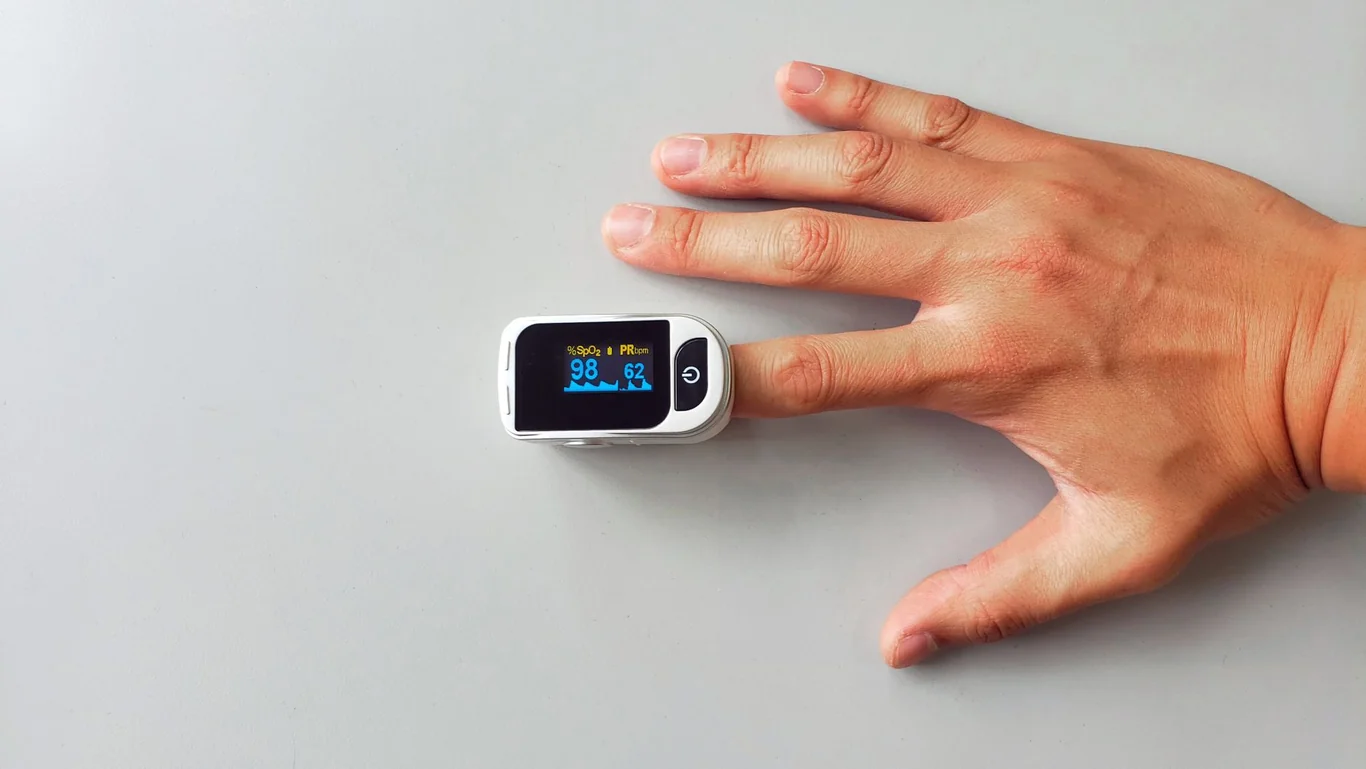
Not every Fitbit tracks the same data. The flagship Sense 3 and high-tier Charge 6 include hardware sensors that lower-tier devices either lack or offer only in limited form. The table below shows what each sensor measures and which devices carry it.
Sensor | What It Measures | Present On All Models? |
3-axis accelerometer | Steps, distance, activity intensity, sleep movement | Yes |
Optical PPG (green LED) | Heart rate, HRV, breathing rate | Yes |
Red and infrared LEDs | Blood oxygen saturation (SpO2) | Most models |
Altimeter | Floors climbed, elevation | Most (not Inspire 3) |
Skin temperature sensor | Nightly temperature variation from personal baseline | Versa 4, Sense 3 |
Electrodermal activity (EDA) | Stress via skin conductance changes | Sense 3 only |
ECG electrodes | Heart rhythm classification (sinus/AFib/unclassified) | Sense 3, Pixel Watch |
GPS chip | Route, pace, distance outdoors | Charge 6, Versa 4, Sense 3 |
Microphone | Snore and noise detection during sleep | Select Sense and Versa models |
What the Advanced Metrics Measure
The advanced metrics unlocked by premium sensors extend Fitbit well beyond activity tracking:
- Blood oxygen saturation (SpO2) - estimates the percentage of hemoglobin carrying oxygen; normal range is 95-100%. Fitbit measures SpO2 primarily during sleep using its red/infrared LED pair.
- Skin temperature variation - Fitbit shows deviation from your personal baseline rather than an absolute reading. A sustained deviation of 1.5+ degrees Celsius can signal early illness, hormonal shifts, or significant training stress.
- Electrodermal activity (EDA) scan - available on Sense 3; detects micro-changes in skin conductance as a proxy for sympathetic nervous system activation.
- Stress management score - a 1-100 composite drawing from heart rate, HRV, EDA, and breathing rate. Lower scores indicate higher physiological stress.
- ECG app - Sense 3 and Pixel Watch series generate a single-lead ECG trace during a 30-second reading; the algorithm classifies rhythm as sinus, atrial fibrillation, or unclassified.
- Daily Readiness Score (Fitbit Premium) - a 1-100 score combining recent activity load, HRV trends, and sleep quality to guide training intensity decisions day by day.
These sensors make Fitbit a meaningful component of a broader smart home gym setup, particularly for recovery-focused athletes who need to balance training load against physiological readiness.
SpO2 Accuracy and Skin Tone
One important caveat: optical SpO2 sensors using red and infrared light can produce less accurate readings for users with higher melanin concentrations in the skin. Fitbit and Google have worked to incorporate multi-wavelength sensors and diverse validation populations in newer devices - but this limitation remains an active area of concern in the broader wearable technology research community.
GPS and Exercise-Specific Tracking
Fitbit handles workout tracking through a combination of its heart rate sensor, accelerometer, and - on select models - a built-in GPS chip.
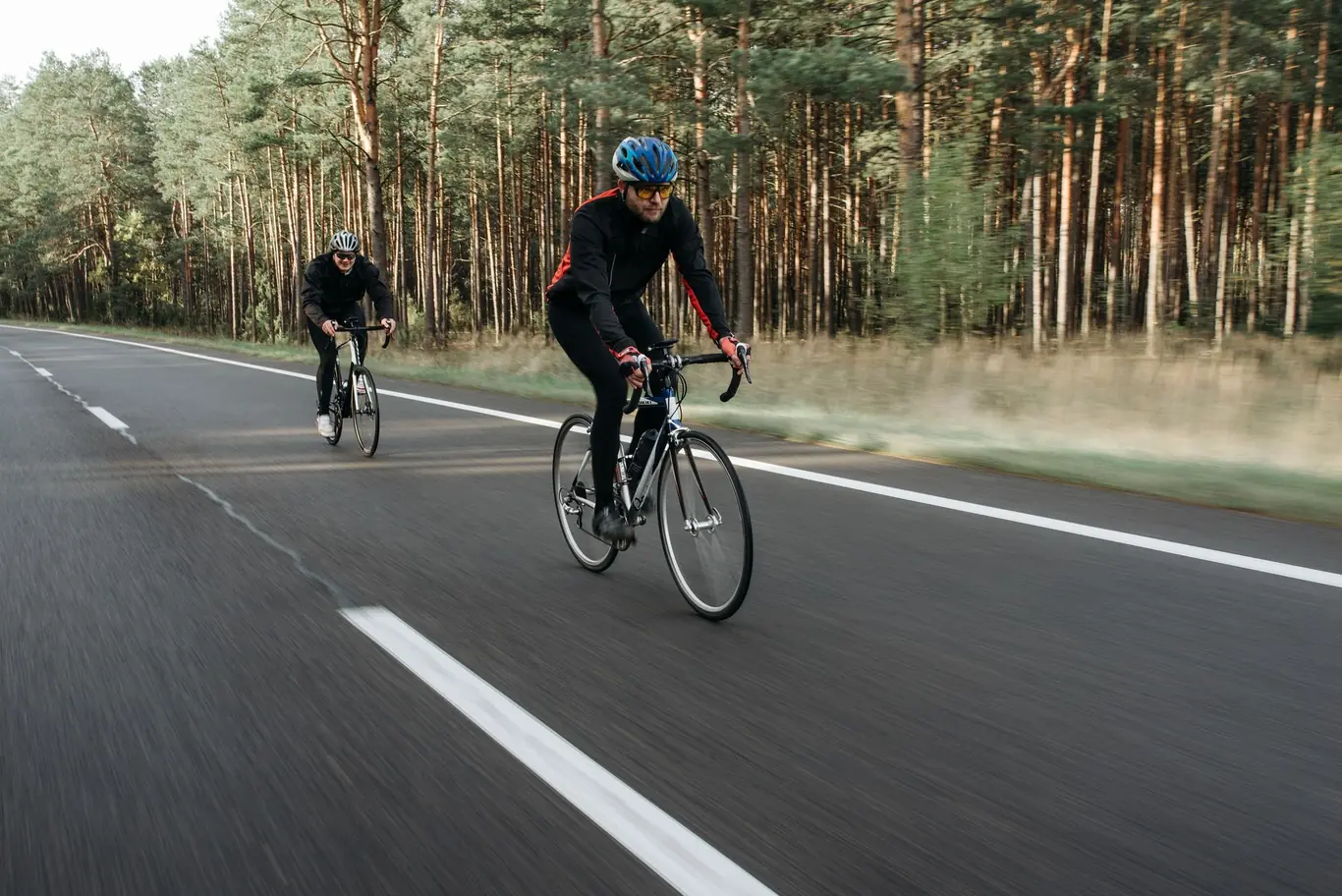
Built-in GPS is available on Fitbit Charge 6, Versa 4, Sense 3, and Pixel Watch series. With it active during a workout, Fitbit logs your real-world route, current pace, total distance, and elevation without your phone present.
Connected GPS is the fallback on non-GPS models like Inspire 3: your paired smartphone provides the location data while Fitbit handles the heart rate, step, and zone information.
Exercise Tracking Features
Beyond GPS, the Fitbit exercise tracking suite includes:
- 40+ sport modes - running, cycling, swimming (water-resistant to 50 meters on most models), yoga, weight training, HIIT, Pilates, and more
- SmartTrack - automatic exercise detection that kicks in after 15 continuous minutes of activity meeting a minimum movement threshold, logging the session without manual input
- Lap tracking - available in swimming and track running modes
- Cardio Fitness Score - Fitbit's estimate of your VO2 max, derived from resting heart rate and age-adjusted activity history; a validated predictor of long-term cardiovascular health
- Interval training mode - structured work and rest period tracking with on-device audio and vibration alerts
Fitbit's Cardio Fitness Score is a genuinely useful long-term fitness indicator. An upward trend of 3-5 points over 8-12 weeks of consistent training reflects real cardiovascular adaptation. Pairing that metric with an incline treadmill workout routine - where elevation adds cardiovascular challenge at controlled speeds - is an efficient way to drive VO2 max improvements the device can measure over time.
GPS accuracy holds up well in open environments. In dense urban corridors with tall buildings or under heavy tree cover, route drift is more common - a limitation shared by most consumer wrist-worn GPS devices.
How Accurate Is Fitbit Tracking - What the Research Shows
Accuracy varies significantly by metric, model generation, and the activity being performed. Here is what the peer-reviewed literature shows across the major tracking domains:
Metric | Research Finding | Evidence Quality | Source |
Step count - walking | -21% to +6% error depending on speed and surface | Moderate | Feehan et al. (2018) |
Step count - jogging | +6.4% over-count | Moderate | Sushames et al. (2016) |
Heart rate at rest / sleep | Pearson r=0.93-0.99 vs. ECG | Moderate-Strong | Benedetti et al. (2021) |
Heart rate during HIIT | MAE 15.7 BPM vs. Holter ECG | Moderate | (7) |
Total sleep time - newer models | 5.7 min overestimation vs. PSG | Strong | 2024 systematic review |
Calorie expenditure (free living) | 47-54% overestimation | Moderate | Sushames et al. (2016) |
AFib detection | 98.2% positive predictive value | Strong | Lubitz et al. (2022) |
Charge 4 ECG Comparison
A Fitbit Charge 4 evaluation against a medically certified Holter ECG found a mean absolute percentage error of 9.74% overall - with notably better performance during seated rest (MAE 6.0-8.1 BPM) and significant degradation during dynamic movements like squats (MAE 15.7 BPM) (7). Use Fitbit heart rate data as a training guide, not a precise clinical measurement, especially during high-intensity intervals.
Why Imperfect Data Still Helps
One randomized controlled trial found that wearable fitness trackers with step-count feedback measurably improved anxiety, depression, fatigue, blood pressure, dietary behavior, and physical activity levels among participants - even when individual readings carried measurement error (8). The behavioral impact of consistently seeing your data appears to outweigh imperfect individual precision.
For context on how Fitbit fits into the broader category, my guide on what is a fitness tracker covers how the technology works and what separates reliable trackers from unreliable ones.
For treadmill-based workouts specifically, the machine's native speed and distance data are more accurate than Fitbit's accelerometer-derived estimates for indoor running. Our guide to structured treadmill workouts explains how to combine machine output data with Fitbit's heart rate zones for more effective training sessions.
Fitbit Tracking Features by Model - Quick Comparison
Feature availability differs meaningfully across the Fitbit lineup. Knowing which sensors your specific device carries is essential before interpreting your data.
For readers deciding between a dedicated tracker and a smartwatch, my fitness tracker and smartwatch comparison covers how the two categories differ in sensor accuracy, battery life, and daily use.
For a direct look at what the research shows about wrist-based optical sensors, my breakdown of the accuracy of smartwatch heart rate sensors covers performance by device category and activity type.
Feature | Inspire 3 | Charge 6 | Versa 4 | Sense 3 |
Steps, calories, AZM | Yes | Yes | Yes | Yes |
24/7 heart rate and HRV | Yes | Yes | Yes | Yes |
Sleep staging and score | Yes | Yes | Yes | Yes |
SpO2 blood oxygen | Yes | Yes | Yes | Yes |
Skin temperature | No | No | Yes | Yes |
Built-in GPS | No | Yes | Yes | Yes |
Floors climbed | No | Yes | Yes | Yes |
ECG app | No | No | No | Yes |
EDA stress sensor | No | No | No | Yes |
Snore detection | No | No | Yes | Yes |
The Inspire 3 covers the core health and fitness monitoring suite at the lowest price point in the current Fitbit lineup, but sacrifices the sensors that define Fitbit's premium tier. The Sense 3 delivers the most comprehensive profile available, adding ECG, EDA, skin temperature, and snore detection on top of everything else.
For runners specifically, my guide to the best fitness tracker for runners covers which models combine GPS accuracy, heart rate precision, and pace tracking in a way that holds up under training loads.
Desk workers and office-based users who spend most of the day seated can benefit significantly from even the Inspire 3's hourly step reminders and AZM tracking. Pairing that with an under-desk treadmill turns passive work time into trackable low-intensity activity that accumulates meaningfully across a full workday.
What Fitbit Does Not Track
Understanding the boundaries of Fitbit's data is as important as knowing what it captures. Current Fitbit devices do not measure the following:
- Blood pressure - no current Fitbit device can measure blood pressure; this capability remains hardware-limited across all Fitbit products as of 2026
- Blood glucose - continuous glucose monitoring is not available on any Fitbit device; this is an emerging space in wearables more broadly
- Accurate body composition - the Fitbit Aria scale estimates body fat percentage via bioelectrical impedance, but this method carries high individual variability and is not clinical-grade
- Hydration levels - no current Fitbit wrist sensor detects hydration status
- Lactate threshold or power output - elite-level training metrics outside Fitbit's sensor scope
- Nutrition intake - food logging in the Fitbit app requires manual entry; the device detects no dietary data automatically
These gaps are not unique to Fitbit - the majority of consumer wrist-worn wearables share them. The relevant takeaway is that what your Fitbit tracks depends on which model you own. Check the feature comparison table above before assuming a specific metric is available on your device.
If you are shopping for a tracker and unsure what to compare, my guide on what to look for in a fitness tracker covers the sensor, accuracy, and battery criteria that matter most.
For users focused on weight and body composition, pairing Fitbit's calorie-burn estimates with a structured treadmill-based training approach creates a more complete activity picture than either provides alone - though neither replaces tracking actual food intake.
Tips for Getting More Accurate Readings From Your Fitbit
A few practical adjustments make a measurable difference in the reliability of every metric your Fitbit tracks:
- Wear it on your non-dominant wrist - less movement interference during most daily tasks reduces false positives in step counting and motion detection
- Position it 1-2 finger-widths above the wrist bone - wearing it directly on the joint restricts optical sensor contact during wrist flexion and degrades heart rate readings
- Keep the fit snug but not tight - you should be able to slide one finger under the band; too loose causes heart rate and SpO2 errors, while too tight restricts blood flow and produces the same result
- Update firmware regularly - Fitbit's algorithm improvements are delivered via firmware updates; newer versions directly affect metric accuracy across all tracked data
- Enter your height and weight accurately in the app - calorie burn calculations and the Cardio Fitness Score both rely on these profile inputs
- Set your stride length manually - measure your walking stride across 10 steps and enter it in the Fitbit app; the default height-based estimate introduces consistent distance errors
- Keep heart rate monitoring enabled for sleep tracking - Fitbit requires active HR data to classify sleep into stages; disabling it to extend battery life simultaneously disables sleep staging
Accounting for Skin Tone
Skin tone and sensor calibration: Fitbit's newer multi-wavelength sensors (PPG green plus red and infrared) in Charge 6 and Sense 3 were specifically developed to reduce accuracy disparities across skin tones. If you have darker skin and experienced inconsistent readings on older devices, the newer sensor hardware is a meaningful hardware improvement. Keeping the sensor window clean of sweat, lotion, and debris is also essential - similar maintenance discipline applies to any precision fitness equipment, as outlined in our treadmill maintenance guide.
Making the Most of Your Fitbit Data Over Time
The full value of what Fitbit tracks comes not from any single reading but from patterns observed across weeks and months. Here is how to translate raw data into decisions that actually change your health outcomes.
If you are still deciding whether a Fitbit justifies the cost, my guide on is a smart watch worth it covers the value case by use type, including who consistently gets a return on wearable investment.
Reading Your Resting Heart Rate Trend
Your resting heart rate trend is one of the most reliable long-term cardiovascular markers the device provides. A downward trend of 5-8 BPM over 6-8 weeks of consistent aerobic training reflects genuine cardiovascular adaptation. A sudden spike of 5+ BPM above your recent baseline - especially combined with disrupted sleep and low HRV - is an early-warning signal of illness or overtraining worth acting on before your next hard session.
For guidance on building consistent check-in habits, my guide on how to use a fitness tracker covers how to read trends, set goals, and act on the data rather than just collect it.
Interpreting Your Sleep Score
Your 30-day average sleep score tells a more honest story than any single night's reading. A score consistently below 70 warrants investigating the three highest-impact levers: sleep schedule consistency (same bedtime and wake time within 30 minutes, daily), alcohol consumed within 3 hours of sleep, and late-evening exercise timing (sessions ending within 90 minutes of bed often suppress REM sleep).
For readers prioritizing sleep monitoring above other metrics, my guide to the best fitness tracker for sleep covers the models with the most accurate sleep stage detection and the clearest morning insights.
One tracking nuance worth knowing: Fitbit's step algorithms are calibrated for forward bipedal motion. Activities like walking backwards on a treadmill or lateral shuffling may generate lower step counts than the actual movement effort warrants - a useful thing to know if you incorporate non-standard movement patterns into your training.
The Complete Picture - Understanding Your Fitbit Data
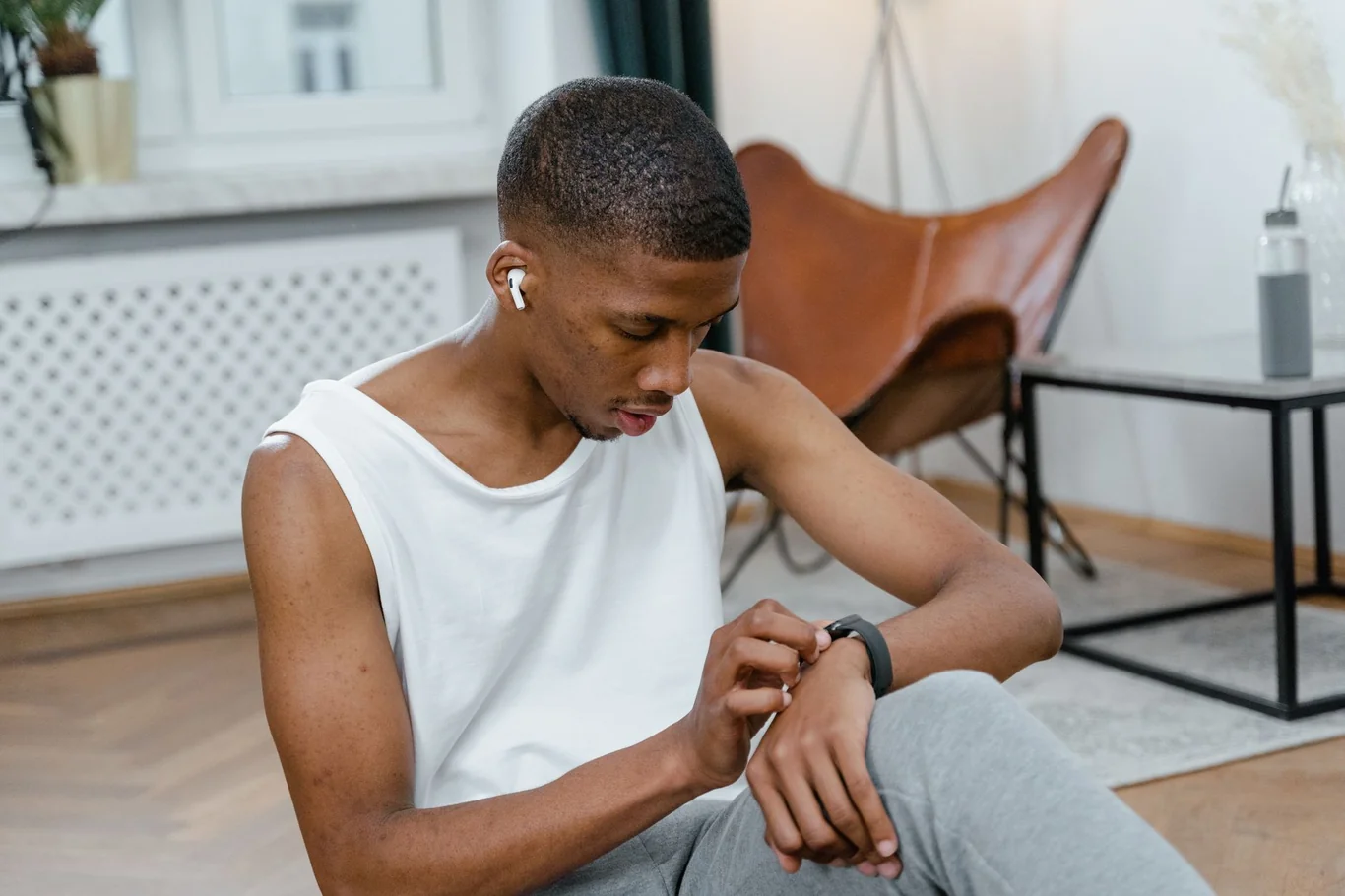
Understanding what does Fitbit track is the first step; knowing what to do with that data is the second. Fitbit's most reliable metrics - resting heart rate, sleep score trends, and Active Zone Minutes - give you a consistent, low-friction window into cardiovascular health and daily activity patterns that improves with each week of wear. Its most advanced capability - AFib detection on Charge 6 and Sense 3 - carries clinical-grade accuracy that genuinely earns attention from anyone monitoring heart health.
My guide to tracking your workouts covers the methods, logging habits, and data points that build the most useful training record alongside your wearable data.
For a broader overview of the device itself, my guide on what is a Fitbit covers the hardware lineup, sensor stack, and how the app ecosystem fits together.
Treat calorie estimates as directional, not precise. Trust sleep stage data as a weekly trend rather than a nightly verdict. And use AZM as your primary fitness progress indicator - it translates what you are doing into real health guideline benchmarks that matter.
If you are comparing Fitbit to other options on the market, my best fitness tracker guide ranks the top models by tracking accuracy, battery life, and long-term reliability.
For those building a broader connected home fitness setup around their Fitbit data, our review of the best folding treadmills covers space-efficient machines that pair cleanly with Fitbit's heart rate zone data to create a complete cardio monitoring system without requiring a dedicated gym space.
FAQs
What are the disadvantages of using a Fitbit?
The main disadvantages of using a Fitbit include calorie estimation errors that run 47-54% above actual expenditure in free-living conditions, and a subscription paywall (Fitbit Premium) that locks advanced metrics like Daily Readiness Score and extended trend history behind a monthly fee. Hardware durability has also been a reported concern, with premature failure in band attachment points and screen responsiveness noted by some users within the first year of regular wear.
How does Fitbit track everything?
Fitbit tracks activity and health data using a layered sensor stack built into each device, primarily a three-axis accelerometer for steps and movement, an optical photoplethysmography (PPG) sensor with green LED lights for heart rate and HRV, and red/infrared LEDs for blood oxygen estimation. Premium devices like Sense 3 extend this with an electrodermal activity (EDA) sensor, ECG electrodes, a skin temperature sensor, and built-in GPS - each adding a distinct layer of physiological monitoring on top of the core activity tracking foundation.
Is Fitbit still worth buying?
The value of a Fitbit in 2026 depends primarily on which metrics matter most to you and whether the free-tier data - steps, heart rate, sleep staging, and SpO2 - covers your needs or you require Fitbit Premium features like Daily Readiness Score and extended trend analysis. The Charge 6 and Sense 3 offer the strongest combination of data depth and sensor reliability in the current lineup, particularly for users focused on cardiovascular monitoring, sleep quality improvement, or early irregular rhythm detection.
Why would I need a Fitbit?
A Fitbit is most useful when you want passive, automatic monitoring of the health behaviors that most directly affect long-term wellbeing - daily activity levels, sleep quality, and resting heart rate trends - without needing to actively log or record anything each day. The irregular rhythm detection on select Fitbit models adds a clinically meaningful screening capability that makes the device genuinely valuable for anyone with cardiovascular health concerns or a family history of atrial fibrillation.
References:
- Feehan LM, Geldman J, Vigil DB, et al. Accuracy of Fitbit Devices: Systematic Review and Narrative Syntheses of Quantitative Data. JMIR Mhealth Uhealth. 2018;6(8):e10527. doi:10.2196/10527
- Sushames A, Edwards A, Thompson F, McDermott R, Gebel K. Validity and Reliability of Fitbit Flex for Step Count, Moderate to Vigorous Physical Activity and Activity Energy Expenditure. PLOS ONE. 2016;11(9):e0161224. doi:10.1371/journal.pone.0161224
- Benedetti D, Olcese U, Frumento P, et al. Heart rate detection by Fitbit ChargeHR: A validation study versus portable polysomnography. J Sleep Res. 2021;30(6):e13432. doi:10.1111/jsr.13432
- Lubitz SA, Faranesh AZ, Selvaggi C, et al. Detection of Atrial Fibrillation in a Large Population Using Wearable Devices: The Fitbit Heart Study. Circulation. 2022;146(19):1415-1424. doi:10.1161/CIRCULATIONAHA.122.060291
- Haghayegh S, Khoshnevis S, Smolensky MH, Diller KR, Castriotta RJ. Accuracy of Wristband Fitbit Models in Assessing Sleep: Systematic Review and Meta-Analysis. J Med Internet Res. 2019;21(11):e16273. doi:10.2196/16273
- 2024 Systematic Review. Accuracy of Fitbit Charge 4 sleep staging versus polysomnography. https://www.ncbi.nlm.nih.gov/pmc/articles/PMC11004611/
- Xintaralos A, Basilakos A, Mandralis G, et al. Heart Rate Measurement Accuracy of Fitbit Charge 4 and Samsung Galaxy Watch Active2: Device Evaluation Study. JMIR Form Res. 2022;6(3):e33635. doi:10.2196/33635
- Zahrt OH, Evans K, Murnane E, et al. Effects of Wearable Fitness Trackers and Activity Adequacy Mindsets on Affect, Behavior, and Health: Longitudinal Randomized Controlled Trial. J Med Internet Res. 2023;25:e40529. doi:10.2196/40529