
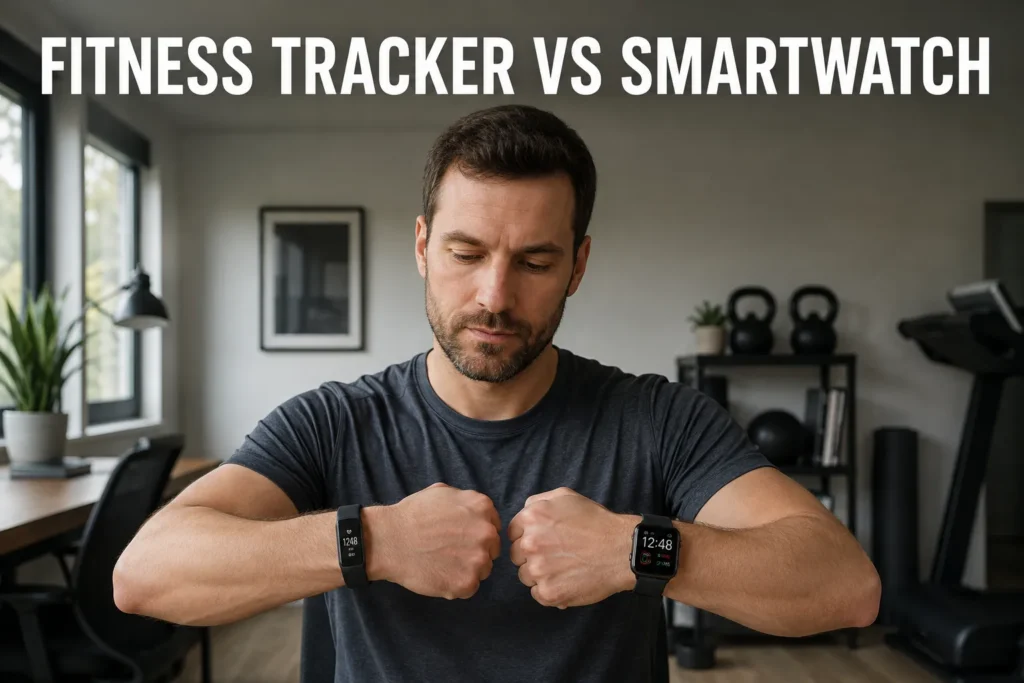
The fitness tracker vs smartwatch decision is one of the most common questions we get from people entering wearable fitness tech. Both devices count steps and track heart rate, but fitness trackers and smartwatches are built around very different priorities. Picking the wrong one means paying for features you'll never use - or missing the data that actually matters for your goals. In this guide, I cover battery life, accuracy, health features, and price so you can walk away with a clear answer. I have analyzed the research, reviewed user feedback patterns, and mapped the key trade-offs across both device types.

Fitness Tracker vs Smartwatch - What the Research Actually Shows
Before getting into brands and specific recommendations, it helps to understand what fitness trackers and smartwatches are each built to do. The distinction is sharper than most comparison articles suggest.
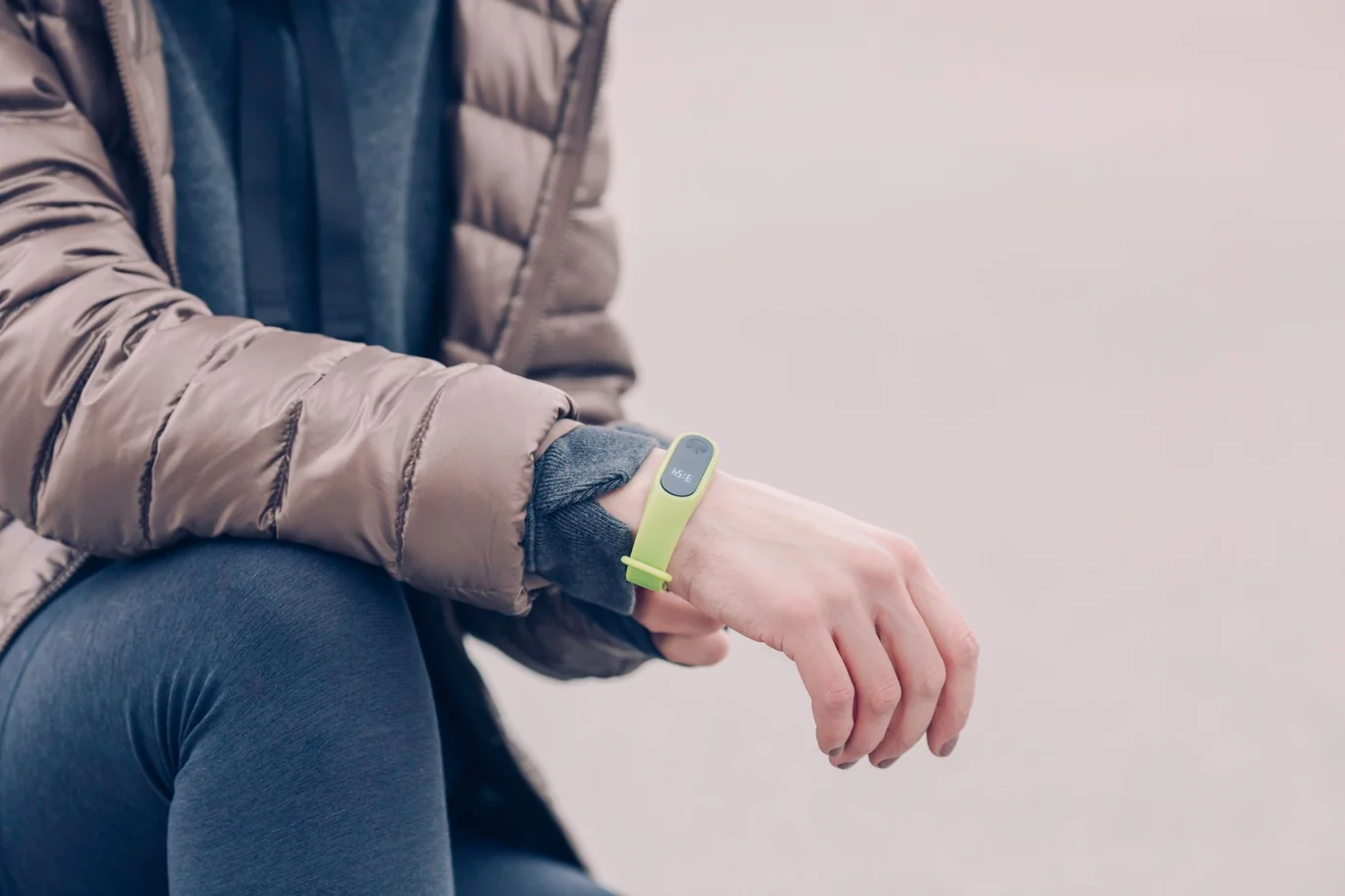
A fitness tracker is a device designed around one core goal: capturing health and fitness data as accurately and passively as possible. It typically has a slim profile, minimal display, and a battery that lasts days or weeks between charges. The fitness tracker bracelet form factor is optimized for continuous wear, sleep tracking, and activity measurement without interrupting your day.
A smartwatch is a wrist-worn computer that happens to include fitness sensors. It runs an operating system, supports third-party apps, receives notifications from your phone, and often has a full-color touchscreen. Some hybrid models blur the line - a fitness tracker watch that resembles an analog timepiece but records HRV, steps, and sleep stages. The tradeoff in full smartwatches is added complexity, a bulkier case, and daily charging.
Here is how the two device types compare across the categories that matter most:
Category | Fitness Tracker | Smartwatch |
Battery life | 5-30 days | 1-3 days (most models) |
Primary purpose | Health and fitness data | Connected mini-computer |
Price range | Budget to mid-range | Mid-range to premium |
Display | Minimal or none | Full color touchscreen |
App ecosystem | Limited or companion-app only | Full third-party app store |
Notification support | Basic alerts | Full notification mirroring |
Form factor | Slim band or bracelet | Watch-style case |
Best for | Dedicated health tracking | Productivity plus fitness |
When I reviewed the research behind this question, the biggest misunderstanding I encountered was the assumption that a best fitness smartwatch would automatically deliver better health data than a dedicated tracker. The evidence does not support that assumption. For what to look for in a fitness tracker, the underlying sensor quality matters more than which device category you are in.
Battery Life and Form Factor - Why Fitness Trackers Still Lead for Daily Wear
For most health-conscious wearers, battery life is the single biggest practical differentiator between a fitness tracker and a smartwatch. A dedicated fitness tracker bracelet typically lasts between 7 and 21 days on a single charge. Some models push past 30 days under normal use conditions. Most smartwatches, even premium ones, need to be charged every night.
The most common casualty of daily charging is sleep tracking data. If your smartwatch runs out of power by 11 PM and you leave it on the nightstand, you lose an entire night of recovery data. Fitness trackers sidestep this problem entirely by design.
There is also a wrist-comfort dimension that most reviews overlook. The slim band profile of a fitness tracker puts less weight and pressure on the wrist, which makes it easier to wear 24 hours a day.
Once you have made your device decision, my fitness tracker setup and usage guide walks through first-time pairing, wrist placement, profile configuration, and the weekly review habits that separate users who get results from those who abandon their device within a month.
For users who track:
- Resting heart rate trends across weeks and months
- Overnight heart rate variability (HRV) for recovery scoring
- Sleep stages and wake-after-sleep patterns
- Blood oxygen saturation during sleep
...continuous, uninterrupted wear is essential.
This is where dedicated trackers consistently outperform smartwatches in real-world use. A device that comes off at night is not a sleep tracker.
For a full picture of how smart fitness devices fit into a connected training setup, our smart home gym guide explains how wearables interact with the broader ecosystem of connected equipment.
Smart Features and Connectivity - Where Smartwatches Justify Their Premium
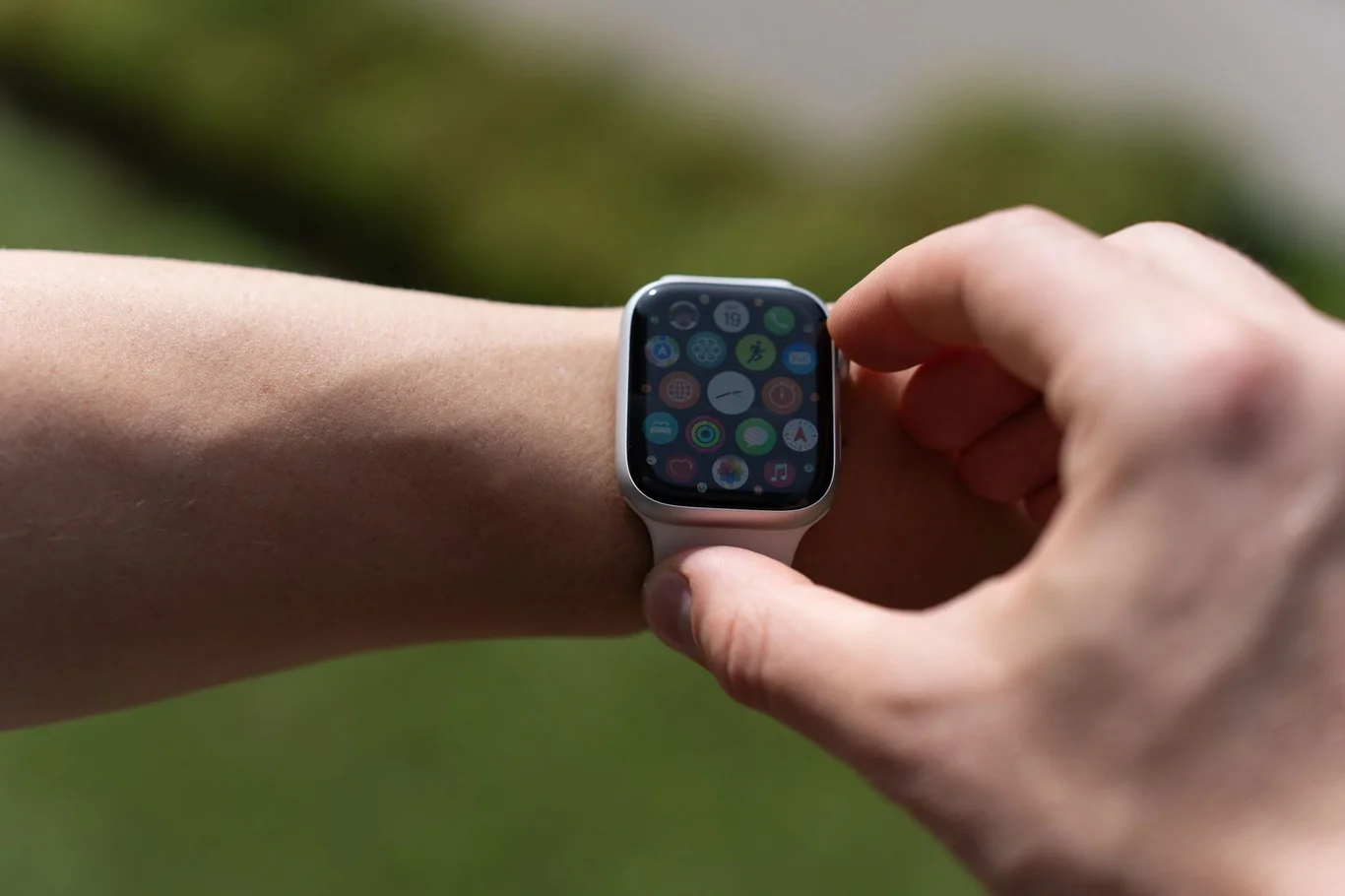
If battery life is the fitness tracker's strongest advantage, app integration is the smartwatch's clearest win. A smartwatch running Apple watchOS, Google Wear OS, or Samsung One UI Watch gives you access to hundreds of third-party applications directly from your wrist. The best fitness tracker app still requires you to pull out your phone to access deeper data; a smartwatch surfaces the same information right on the display.
For users who want to:
- Answer calls or reply to messages without reaching for their phone
- Stream music directly from the wrist during workouts
- Use contactless payments at checkout
- Control smart home devices or navigation without touching a phone
- Access coaching apps, guided meditations, or interval training programs from the wrist
...a smartwatch handles all of this in one device.
This is the primary value of the best fitness smartwatch, and it is genuinely compelling for users who want a wrist-based productivity tool alongside fitness tracking.
The practical tradeoff is notification overload. Many users who buy smartwatches for the health tracking end up muting notifications within the first two weeks because constant alerts disrupt focus during workouts and throughout the day. This is one of the most consistently reported friction points from users who eventually switch back to fitness trackers - they wanted the health data without the cognitive interruption.
If you are building out a full smart fitness setup that connects your wearable to other equipment, our guide to setting up a smart home gym covers how wearable data integrates with connected training systems.
What Peer-Reviewed Research Shows About Accuracy
The fitness tracker vs smartwatch accuracy debate has enough peer-reviewed evidence behind it to move past speculation.
Here is what the studies actually demonstrate.
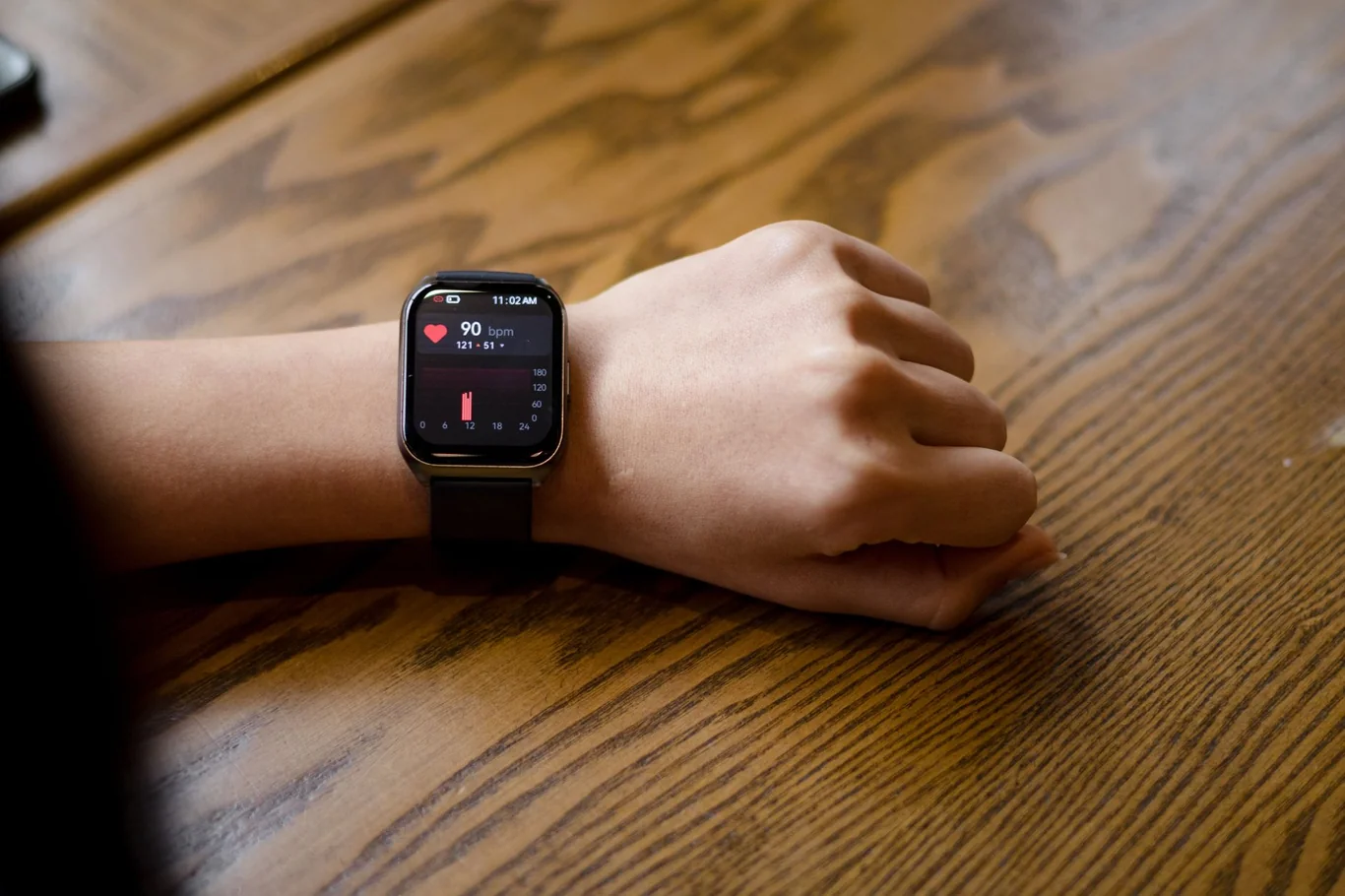
Heart rate monitoring is the most studied metric across both device categories. A 2020 systematic review published in JMIR mHealth and uHealth found that Apple Watch and Garmin devices were most accurate for heart rate, while Fitbit tended toward underestimation (1). Crucially, laboratory accuracy consistently outperformed real-world conditions across all brands - meaning the accuracy figure cited in fitness tracker reviews may not reflect everyday performance during varied activities.
Buyers choosing primarily on calorie tracking accuracy across real-world activities will find a comparison built around that criterion in my best calorie tracker guide.
A prospective clinical trial testing four devices against a medical ECG in 112 patients found that Apple Watch 7, Garmin Fenix 6 Pro, Withings ScanWatch, and Fitbit Sense all achieved mean absolute percentage error below 5%, with correlation coefficients at or above 0.95 (2). This level of accuracy is clinically meaningful for general heart rate monitoring, though the same trial noted that arrhythmias and higher body mass index increased measurement error across all four devices.
Before settling on a brand, it is worth reviewing what to look for in a fitness tracker, which covers the core criteria including heart rate accuracy, sleep tracking quality, battery life, and subscription cost structure that determine long-term satisfaction across every brand in this comparison.
Step counting accuracy is generally strong across both categories. A comprehensive systematic review found step-counting correlation coefficients of 0.80 or higher in laboratory conditions for most major wearables, though energy expenditure estimates were consistently unreliable (3). A separate comparative study testing 8 devices across walking, running, and cycling confirmed that heart rate and step counts showed high accuracy (mean absolute percentage error approximately 0.10), while calorie estimates showed error rates as high as 44% (4).
That last point carries a practical implication: do not use your wearable's calorie output as a precise number. Use it as a directional trend only. Both fitness trackers and smartwatches consistently underperform on energy expenditure estimation, regardless of price tier.
For a full breakdown of the leading options in this category, my fitness watch roundup covers 11 picks tested across GPS accuracy, ECG reliability, notification management, and battery endurance.
Here is a summary of accuracy across the main metrics based on available evidence:
Metric | Accuracy Level | Notes |
Heart rate (rest) | High | Within 5% error for leading brands |
Heart rate (exercise) | Moderate | Decreases at high intensities and during cycling |
Step counting | High | 0.80+ correlation in controlled settings |
Sleep tracking | Moderate | Overestimates total sleep; underestimates wake periods |
Energy expenditure | Low | Error rates up to 40-44% across brands |
AFib detection | High (ECG models) | 83-100% sensitivity in research |
AFib detection deserves particular attention. A 2025 systematic review found that wearables with ECG capability achieved 83-100% sensitivity for atrial fibrillation detection, with specificity in the 79-100% range (5). A second 2025 study comparing four detection devices found all achieved 100% sensitivity, with specificity ranging from 96.4% to 98.9% (6). A broader meta-analysis of 28 studies involving over 1.2 million participants found real-world AFib detection sensitivity of 94.22% and specificity of 95.28% (7). These numbers make a strong case for using a fitness tracker that monitors health vitals - particularly one with rhythm detection - for anyone with a cardiac history.
For age-specific accuracy, a validation study comparing Garmin Vivosmart HR+ and Xiaomi Mi Band 2 in younger and older adults found that concordance dropped in older participants (0.73-0.80) compared to younger ones (0.76-0.92), and both devices underestimated heart rate during cycling and elliptical workouts (8). This is worth factoring in for anyone selecting a device for an older adult's health monitoring.
The most accurate fitness tracker for heart rate monitoring is not determined by device category - Garmin and Apple sensors perform comparably whether deployed in a slim band or a full smartwatch case. Brand and sensor quality matter more than whether you call the device a fitness tracker or a smartwatch.
Here are the most important research takeaways for practical device selection:
- Heart rate at rest is tracked reliably by both device categories from leading brands
- Heart rate during high-intensity exercise degrades in accuracy for all wearables - use a chest strap for precision during intervals
- Calorie estimates are not reliable on any consumer wearable; treat them as directional only
- AFib detection requires ECG hardware specifically - not all fitness trackers or smartwatches include it
- Sleep tracking overestimates total sleep across both categories; the trends matter more than the absolute numbers
Choosing Between a Fitness Tracker and Smartwatch - A Profile-Based Guide
The fitness tracker vs smartwatch decision is not the same for every person. Rather than declaring one category universally better, I find it more useful to frame the choice around specific user priorities.
Readers who fall outside both categories entirely and prefer no wrist device at all will find my guide on step tracking without a device covers the most accurate phone-free and phone-based alternatives.
Older adults weighing this choice around fall detection, large displays, and medication reminders will find a focused comparison in my guide to top fitness trackers for seniors.
- For dedicated fitness logging - A fitness tracker is the stronger choice. The most accurate fitness tracker models from Garmin and Fitbit are purpose-built for heart rate, sleep, steps, and recovery metrics with minimal distraction.
- For productivity and connectivity - A smartwatch justifies its battery tradeoff when you rely on wrist-based notifications, calls, and apps throughout the day.
- For sleep tracking - Fitness trackers win on battery alone. A device that needs daily charging will miss sleep data regularly, undermining the core tracking goal.
- For budget buyers - Dedicated fitness trackers typically deliver more health features per dollar than smartwatches at equivalent price points.
- For seniors and health monitoring - Either a dedicated tracker or an ECG-capable smartwatch works. The key is selecting a device with rhythm monitoring if AFib detection is relevant..
- For women-specific tracking - Several trackers include menstrual cycle tracking and hormonal health monitoring.
- For men seeking performance metrics - Look for recommendations tailored to strength, cardiovascular, and recovery goals.
- For runners - Garmin builds a strong case here with GPS precision and running dynamics.
- For weightlifters - Resistance training recognition varies significantly across devices.
- For swimmers - Waterproof ratings and swim stroke recognition differ considerably.
- For CrossFit athletes - Logging varied high-intensity intervals is a known weak spot for general trackers.
For budget-focused buyers also building out their home training environment, best budget smart home gym roundup covers connected fitness equipment at accessible price points.
Major Brands in the Fitness Tracker vs Smartwatch Space
A few names come up consistently when people research the fitness tracker vs smartwatch question, and understanding what each brand prioritizes helps narrow the decision faster.
Garmin
Garmin is the most versatile option across both device categories. The garmin fitness tracker lineup - the Vivosmart and Venu series - competes directly with Fitbit in the dedicated tracker market, while their Fenix and Forerunner lines function as serious best fitness smartwatch options with GPS and multi-sport tracking. Garmin is the rare brand that builds credibly in both spaces, which makes them a safe choice for users who may want to upgrade from tracker to smartwatch later without switching ecosystems.
If you want to know which of the two is actually more precise in real-world use, my head-to-head on is Garmin or Apple Watch more accurate covers heart rate, GPS, and step counting in detail.
WHOOP
WHOOP takes a fundamentally different approach. The whoop fitness tracker has no display and does not count steps in the traditional sense. It focuses entirely on strain, recovery, and HRV trends, delivered through a companion app. WHOOP requires a monthly subscription to access your own data, which is worth factoring into total cost of ownership - the device may appear cheaper upfront, but the subscription adds up over time.
Fitbit
Fitbit (now under Google) remains the most approachable entry point for new users. Their fitness tracker bracelet form factor is among the most comfortable for continuous wear, and their app is consistently rated as one of the most user-friendly in fitness tracker reviews across all major platforms.
For readers evaluating Fitbit specifically, my complete Fitbit overview covers the full hardware lineup, app features, and how the platform has evolved since Google acquired the brand.
Apple Watch
Apple Watch dominates the smartwatch category in the US market. It provides strong heart rate accuracy, ECG capability on current models, and the deepest integration with iPhone. The tradeoff is daily charging and a premium price tier.
For a closer look at what a smartwatch does beyond fitness tracking, including communication, app support, and health alerts, my full breakdown covers where the premium investment goes.
For users for whom neither wrist form factor works, my ankle fitness tracker picks cover the dedicated ankle devices and strap adapters designed for completely wrist-free activity tracking.
Samsung and Withings
Samsung and Withings round out the major players for users on Android who want either a full smartwatch experience (Galaxy Watch) or a health-focused hybrid with weeks of battery life (Withings ScanWatch).
One practical note I would add: companion app quality is as important as hardware quality in the fitness tracker vs smartwatch comparison. The best fitness tracker app experience depends on whether the app receives regular updates, integrates with your phone's operating system, and surfaces data in a way that is actually useful for behavior change.
For buyers narrowing in on Fitbit specifically, my breakdown of what Fitbit actually tracks covers every metric the platform records, including which data points drive meaningful behavior change and which to treat as directional only.
Before buying any wearable, check these four things:
- App store rating and update recency (an app last updated 18 months ago is a warning sign)
- Whether the companion app works on your specific phone operating system version
- Whether key health features require a paid subscription beyond the device cost
- Return policy and warranty terms, since sensor accuracy issues can surface after several months of use
Picking the Right Wearable for Your Long-Term Goals
There is no universally correct answer in the fitness tracker vs smartwatch comparison. If maximizing health data accuracy, battery life, and comfort for continuous wear are your priorities, a dedicated fitness tracker is the stronger choice. If you want a connected device that handles notifications, apps, and productivity alongside fitness tracking, a smartwatch earns its higher price.
My dedicated guide on whether a smartwatch is worth it walks through the specific costs, subscription fees, and everyday use scenarios that determine whether the premium is justified for your lifestyle.
What I consistently observe in the research is that users who identify a single primary goal - whether that is sleep quality, cardiovascular health, or daily activity accountability - end up more satisfied with their wearable than users who buy based on feature counts. A device you actually wear every day delivers more value than a technically superior one that ends up in a drawer by week three.
For readers who want to understand the full spectrum of options before committing to either category, my wearable technology overview covers every device type from basic step counters to clinical-grade monitors.
Buyers who want solid battery life and core tracking without smartwatch complexity should also review my budget fitness tracker roundup, which covers seven sub-$100 options that prioritize endurance and simplicity over feature depth.
FAQs
Why are people ditching smart watches?
The main reason people stop wearing smartwatches is the daily charging requirement, which creates a wear gap that disrupts sleep tracking and recovery monitoring. Many users also report that constant notification mirroring becomes a distraction rather than a benefit during workouts and focused work, leading them to return to dedicated fitness trackers or no wearable device at all.
Men who want a low-maintenance tracker evaluated specifically on male training load, recovery monitoring, and long-wear battery can find performance-focused picks in my guide to men's fitness tracker options.
Do cardiologists recommend smart watches?
Cardiologists increasingly recommend smartwatches with ECG capability for patients who have a history of arrhythmia or unexplained palpitations. Devices with rhythm monitoring can detect irregular heart patterns between clinic visits, giving clinicians a longer view of a patient's cardiac behavior than an in-office ECG typically provides.
What smart watch is best for pacemaker?
The safest smartwatch approach for pacemaker patients is choosing a device that uses optical photoplethysmography for heart rate monitoring rather than activating the ECG recording mode, since electrical-based ECG features on some devices can theoretically interfere with pacemaker function. Patients should consult their cardiologist before using any wearable with ECG or bioelectrical impedance features.
Can fitness trackers detect AFib?
Fitness trackers with optical heart rate sensors can flag irregular heart rhythms that may indicate atrial fibrillation, and models with ECG capability can record a single-lead rhythm trace suitable for clinical review. Research found real-world AFib detection sensitivity of 94.22% across consumer wearables in a meta-analysis of over 1.2 million participants, though wearables are designed to support detection and not replace clinical diagnosis.
For readers new to wearables who want a full technical overview of how these devices measure each metric, my guide to fitness tracker explained covers the sensor technology behind steps, heart rate, sleep, and SpO2 readings before you commit to a purchase.
Why I stopped wearing a fitness tracker?
The most commonly reported reasons for abandoning a fitness tracker include strap discomfort during extended wear, loss of trust in metric accuracy after noticing discrepancies, and a sense that the data does not translate into actionable changes in behavior. Choosing a device with a comfort-focused band design, a reliable companion app, and clear data visualizations reduces abandonment rates significantly.
Women looking for picks where comfort, cycle health monitoring, and app quality are the primary evaluation criteria can find dedicated options in my guide to women's fitness tracker options.
For a hands-on breakdown of the top bands and hybrid watches currently available, my fitness tracker comparison guide ranks 11 options across step accuracy, heart rate reliability, sleep staging, and subscription cost.
References:
- Fuller D, Colwell E, Low J, et al. Reliability and Validity of Commercially Available Wearable Devices for Measuring Steps, Energy Expenditure, and Heart Rate: Systematic Review. JMIR Mhealth Uhealth. 2020;8(9):e18694. doi:10.2196/18694
- Helmer P, Hottenrott S, Rodemers P, et al. Accuracy and Systematic Biases of Heart Rate Measurements by Consumer-Grade Fitness Trackers in Postoperative Patients: Prospective Clinical Trial. J Med Internet Res. 2022;24(12):e42359. doi:10.2196/42359
- Evenson KR, Goto MM, Furberg RD. Systematic review of the validity and reliability of consumer-wearable activity trackers. Int J Behav Nutr Phys Act. 2015;12:159. doi:10.1186/s12966-015-0314-1
- Xie J, Wen D, Liang L, Jia Y, Gao L, Lei J. Evaluating the Validity of Current Mainstream Wearable Devices in Fitness Tracking Under Various Physical Activities: Comparative Study. JMIR Mhealth Uhealth. 2018;6(4):e94. doi:10.2196/mhealth.9754
- Singeap MS, Corneanu LE, Prodaniuc A, et al. Diagnostic Accuracy of Wearable ECG Devices for Atrial Fibrillation and ST-Segment Changes: A Systematic Review. Diagnostics (Basel). 2025;15(24):3162. doi:10.3390/diagnostics15243162
- Wouters F, Gruwez H, Smeets C, et al. Comparative Evaluation of Consumer Wearable Devices for Atrial Fibrillation Detection: Validation Study. JMIR Form Res. 2025;9:e65139. doi:10.2196/65139
- Singh B, Chastin S, Miatke A, et al. Real-World Accuracy of Wearable Activity Trackers for Detecting Medical Conditions: Systematic Review and Meta-Analysis. JMIR Mhealth Uhealth. 2024;12:e56972. doi:10.2196/56972
- Chow HW, Yang CC. Accuracy of Optical Heart Rate Sensing Technology in Wearable Fitness Trackers for Young and Older Adults: Validation and Comparison Study. JMIR Mhealth Uhealth. 2020;8(4):e14707. doi:10.2196/14707