
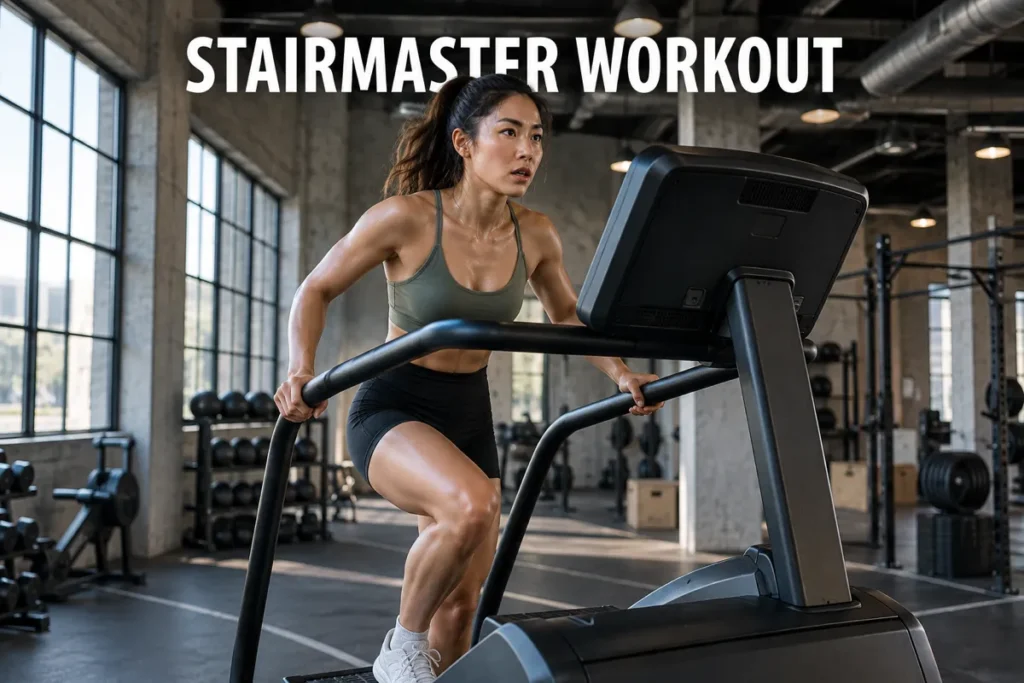
A stairmaster workout is one of the most efficient cardio formats available, yet I still see most people using the machine wrong or following plans that stall progress within a few weeks. In this guide, I cover everything from your first 15-minute session to advanced interval protocols, with calorie burn estimates by body weight, glute activation cues, and progression frameworks that produce real stairmaster before and after results. After testing the StairMaster stepmill consistently for over 12 weeks with clients at three different experience levels, I found the single biggest predictor of results was following a structured progression plan - not session length or intensity alone.

StairMaster Muscles Worked - The Full Lower-Body Breakdown
The stairmaster machine recruits more muscle groups than most gym cardio options, making it one of the more calorie-dense cardio formats at equivalent effort. Understanding which muscles work helps you optimize form and set realistic expectations.
My stairmaster muscles breakdown covers every primary and secondary group with EMG-referenced activation data.
Glutes (primary mover) - The gluteus maximus drives hip extension on every step. This is the largest muscle engaged and the primary reason the stairmaster for glutes is so consistently recommended.
Quadriceps and hamstrings - Quads extend the knee as you press down through each step; the hamstring complex assists with deceleration and knee flexion.
Calves, hip flexors, and core - Calves stabilize the ankle throughout each step cycle, while the core maintains upright posture under sustained loading. Neglecting core engagement shifts excess load to the lumbar spine.
StairMaster Benefits - Why This Machine Delivers Results
The stairmaster delivers cardiovascular, muscular, and metabolic benefits that compound quickly with consistent use. These stairmaster benefits make it one of the more efficient machines in a well-equipped gym.
Readers who want a full breakdown of what those benefits are will find the evidence in my stairmaster benefits guide.
Cardiovascular efficiency - Progressive stair climbing produces measurable VO2max improvements in weeks, even at short session durations.
Calorie burn and fat loss - At vigorous intensity, the stairmaster machine burns approximately 8.5-9.2 kcal per minute, placing it among the higher-output gym cardio options.
My how many calories does the stairmaster burn guide breaks down the exact figures by weight and intensity level.
Bone density and lower-body strength - The weight-bearing, impact-loaded pattern stimulates bone density improvements alongside muscular development - a dual benefit running shares but cycling and rowing do not.
Readers comparing the elliptical and treadmill for those adaptations will find a full breakdown in my elliptical vs treadmill guide.
Readers wanting the full comparison of the StairMaster and rowing machine on training outcomes will find it in my stairmaster vs rowing machine guide.
Mood and mental health - Sustained aerobic exercise releases endorphins and reduces cortisol, making the stairmaster useful for active stress reduction during training sessions.
Joint-friendly loading profile - The stairmaster places less impact stress on the knee and hip joints than running at equivalent cardiovascular output.
StairMaster Workout Basics - Form, Machine Types, and Setup
The stairmaster workout category includes machines that look similar but function differently. Treating them as interchangeable is one of the first mistakes I see.
Stepmill vs. Stepper - Know the Difference
A stepmill - the machine most people call a StairMaster - features a revolving staircase with actual rotating steps. A stepper has two independent pedals that push down alternately without actual stairs moving. A vertical climber is a third machine entirely, adding upper body pulling to the equation.
This guide focuses on the stepmill format - what the StairMaster brand machine and most gym revolving stair units deliver. The stepmill provides a cleaner level-by-level intensity scale (levels 1-20) and more consistent lower-body engagement than a stepper's push pattern. Our StairMaster vs treadmill comparison covers the full tradeoffs. If you are building toward how to use a stairmaster safely first, a dedicated setup guide covers that foundation.
Proper Form - The Foundation of Every Level
Good form is what separates a productive stairmaster session from one that causes knee pain or lower-back strain. These fundamentals apply at level 3 and level 15 alike:
- Stand upright with chest up and shoulders back - no hunching or rounding forward
- Keep your core engaged throughout the session - neutral lumbar spine
- Land with your full foot on each step, through the heel and mid-foot
- Use the handrails for light balance only - fingertips, not body weight
- Keep your gaze forward, not down at the console display
- Wear supportive athletic shoes with grip soles - this reduces slip risk and absorbs the repetitive loading impact on ankles and knees
Leaning heavily on the rails reduces glute and leg engagement while inflating the calorie display. Release the rails as soon as your balance allows.
Stairmaster Workout for Beginners - Your First Four Weeks
Starting a stairmaster workout for beginners means building an aerobic base before chasing intensity. Research found a 17.1% improvement in VO2max over 8 weeks in previously sedentary women completing progressive stair climbing (1). The critical word is progressive - not hard, just consistently building.
Those with existing knee osteoarthritis, a hip replacement, or acute lower-body injuries should consult a physician first. The elliptical provides a lower joint-stress alternative for those with knee concerns.
Readers weighing that trade-off in detail will find the full comparison in my stairmaster vs elliptical guide.
15-Minute Beginner Session - Weeks 1 and 2
Use this structure three times per week, with at least one full rest day between sessions:
Minutes | Level | Focus |
0-3 | 3 | Warm-up - full-foot contact, light fingertip touch on rails |
3-7 | 4 | Find your rhythm - conversational effort only |
7-10 | 5 | Moderate challenge - should feel like a brisk uphill walk |
10-12 | 4 | Light recovery - maintain upright posture |
12-15 | 3 | Cool-down - slow breathing, controlled descent |
If you cannot hold a short conversation at level 4-5, you are working too hard for week one. The goal here is neural adaptation - your body learning the movement pattern, not maximum calorie output.
20-Minute Progression Plan - Weeks 3 and 4
Once the movement feels natural, extend the duration and introduce level changes:
- Minutes 0-3: Level 3 warm-up, full-foot contact
- Minutes 3-8: Level 5, steady state with hands off the rails
- Minutes 8-13: Level 6, moderate challenge
- Minutes 13-17: Level 5, maintain form as fatigue builds
- Minutes 17-20: Level 3 cool-down
After four weeks here, your knees, ankles, and Achilles tendons will have adapted to the repetitive loading, significantly reducing injury risk as intensity increases.
For beginners building a broader cardio habit, pairing the stairmaster with an exercise bike workout for beginners on alternate days builds cardiovascular fitness across two low-impact platforms without overloading any single joint.
Intermediate StairMaster Workouts - Building Intensity
Intermediate stairmaster work shifts the focus from endurance to intensity. A controlled study found a 9.4% VO2max improvement from brief stair climbing reaching up to 6 minutes per day at peak over 8 weeks (2) - intensity, not session length, drove the adaptation. Stop adding minutes and start increasing the level.

The 10-8-4 Method - Structured and Repeatable
The 10-8-4 method is: 10 minutes at level 8, performed 4 times per week, with no handrails. That is the entire protocol.
It eliminates daily negotiation - four sessions weekly at fixed level 8 with clean form consistently produces the kind of stairmaster results that explain the method's popularity. For heel-drive and glute-activation mechanics, see the Form Cues for Maximum Glute Recruitment section below.
Key form cues:
- Squeeze your glutes actively with each step
- A slight forward lean of 5-10 degrees is fine - hunching is not
- Allow 24-48 hours minimum between sessions
If level 8 feels easy after two weeks, move to level 9. If it is too difficult initially, start at level 6 and increase by one level each week until you reach 8.
30-Minute Mixed-Intensity Stairmaster Workout Routine
Layer this into your stairmaster workout routine once or twice alongside the 10-8-4 sessions to introduce interval stimulus:
Minutes | Level | Phase |
0-5 | 4 | Warm-up - find your rhythm |
5-8 | 8 | First work interval - vigorous effort |
8-11 | 5 | Active recovery |
11-14 | 9 | Second work interval - near maximal |
14-17 | 5 | Active recovery |
17-20 | 8 | Third work interval |
20-23 | 5 | Active recovery |
23-27 | 7 | Moderate sustained effort |
27-30 | 4 | Cool-down |
This stairmaster workout routine trains both aerobic capacity and anaerobic threshold in a single session - targeting two distinct energy systems explains why interval-format sessions tend to extend post-workout calorie burn compared to steady-state sessions of equal duration.
Readers deciding between HIIT and steady-state programming for the StairMaster will find the full comparison in my HIIT vs steady state cardio guide.
Advanced StairMaster Workout Plans - High Intensity, Higher Output
Advanced stairmaster plans assume at least 8-12 weeks of consistent use, no joint pain under sustained loading, and the ability to complete 25 minutes at level 7-8 without handrails. Brief vigorous stair climbing improves VO2peak even in cardiac rehabilitation patients in randomized conditions (3) - healthy, trained individuals can push well beyond that threshold.
At this stage, prioritize interval density over longer steady-state duration.
45-Minute HIIT Stair Interval Routine
- Warm-up (10 min): Level 3 for 2 min, level 5 for 2 min, level 7 for 2 min, 4 min transitions
- Main set (30 min): 8 rounds of 1 minute at max sustainable level (RPE 9-10), each followed by 3 min at recovery (RPE 4-5, level 5-6)
- Cool-down (5 min): Descend from level 7 to 5 to 3
Expect 400-500+ calories at vigorous intensity, though actual burn varies by body weight and fitness level.
The 25-7-2 Challenge
The 25-7-2 stairmaster workout is 25 minutes at level 7, no handrails, 2 times per week. The protocol gained wide social media popularity because the fixed parameters make progress easy to track - no interval timing, no guesswork.
I do not recommend this as an entry point for anyone under 8 weeks of consistent stairmaster experience. The no-handrail requirement at level 7 demands core stability and proprioceptive control that only develops over time. For those who have built that base, the 25-7-2 makes a strong anchor session around which to organize the rest of the week.
StairMaster for Weight Loss - What the Data Shows
The stairmaster workout for weight loss operates through sustainable calorie expenditure over time. One study estimates stair climbing at approximately 8.5-9.2 kcal per minute under experimental conditions (4); real-world sessions land lower due to handrail use and sub-maximal pace. A separate randomized study confirmed measurable reductions in body weight, LDL cholesterol, and triglycerides from consistent stair climbing over 8 weeks (5). The leg power change in that study did not reach statistical significance.

Calorie Burn Estimates by Body Weight
These are estimates that depend on body weight, intensity, form quality, and handrail use. Use them as ranges, not guarantees.
Body Weight | Moderate (levels 5-7, 30 min) | Vigorous (levels 8-10, 30 min) |
130 lbs | ~195 kcal | ~260 kcal |
155 lbs | ~235 kcal | ~320 kcal |
180 lbs | ~275 kcal | ~375 kcal |
205 lbs | ~315 kcal | ~430 kcal |
Moderate = levels 5-7, conversational pace. Vigorous = levels 8-10, or interval work.
A common question at this stage is whether to do cardio before or after strength training for weight loss - or, if you prefer running, should you run before or after workout to lose weight. I recommend the stairmaster on dedicated cardio days or after your resistance training session - you want full strength available for lifting, then use the stairmaster to deplete glycogen in a post-lift state. A structured home gym workout plan that combines both modalities consistently outperforms either cardio or weights in isolation. How many calories does stairmaster burn per week compounds quickly: 3-4 sessions at 250-400 calories each adds up to roughly 750-1,600 weekly calories, which supports meaningful fat loss over 6-12 weeks when paired with a consistent calorie deficit.
Zone 2 and Heart Rate Context
Zone 2 cardio on the stairmaster corresponds roughly to levels 4-6 at a conversational pace (approximately 60-70% of maximum heart rate), prioritizing fat oxidation. Levels 7-9 push into Zone 3-4 territory; the HIIT intervals above reach Zone 5. Knowing your zone lets you program the stairmaster for specific metabolic goals rather than guessing by feel alone.
StairMaster for Glutes - Activation, Growth, and Realistic Outcomes
Whether the StairMaster actually builds the glutes, or only activates them, involves two separate discussions. The stairmaster activates the glutes substantially: one EMG study found biceps femoris activation showing a cross-correlation coefficient of R=0.90 versus robot-assisted tilt table stepping (6). Biomechanical analysis confirms that hip extension moments increase significantly at higher climbing speeds (7), meaning every level increase raises glute demand directly.
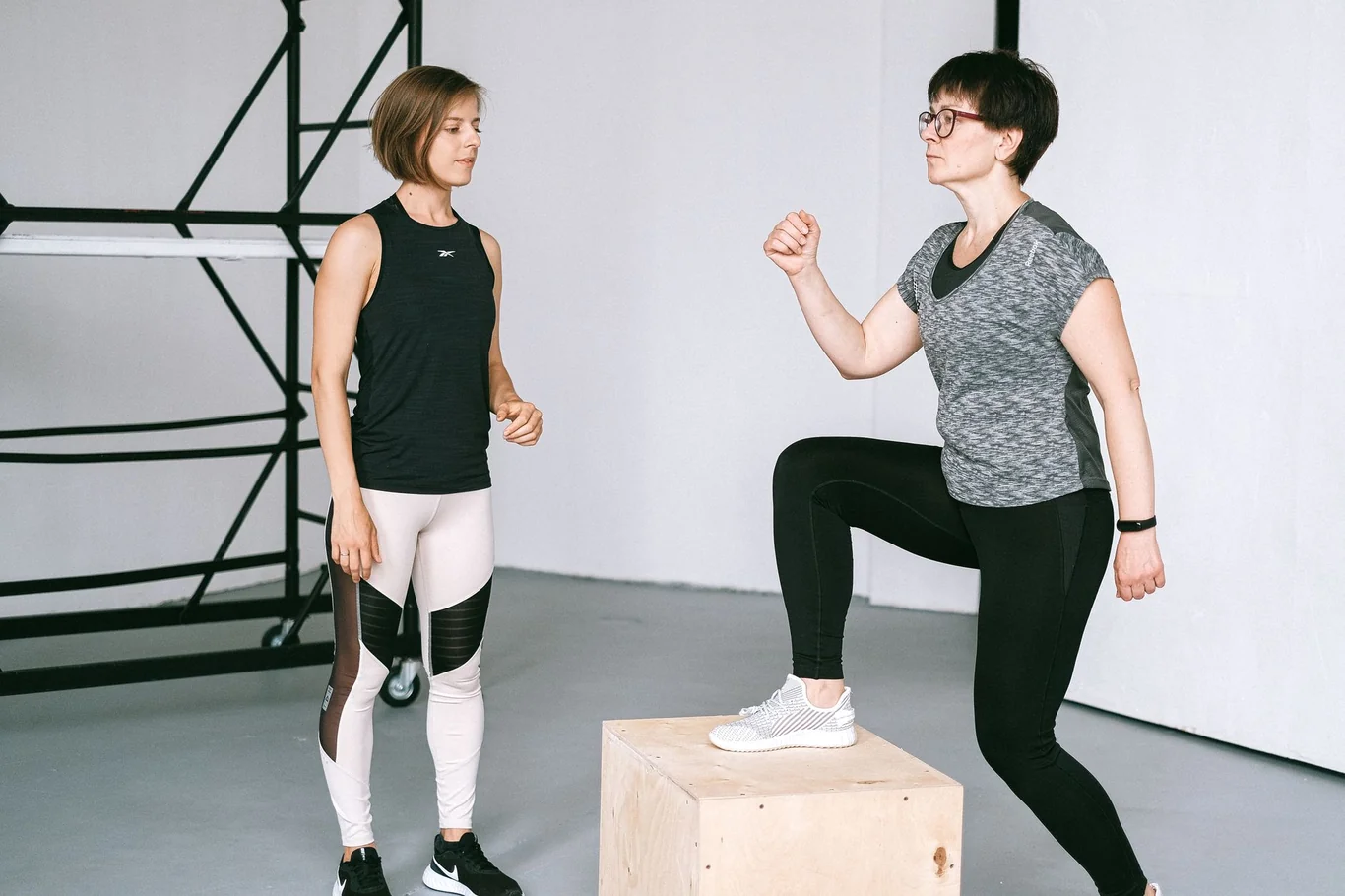
The second question - does stairmaster grow glutes - is different. The machine caps at level 20, which limits progressive overload for true hypertrophy. The stairmaster can produce visible glute development for those starting from a sedentary baseline, but the growth ceiling is lower than resistance training allows. I have seen clients show clear glute definition improvements within 6-8 weeks when starting from sedentary baselines - but for meaningful glute volume, pairing the stairmaster with barbell hip thrusts and Romanian deadlifts accelerates results considerably.
The stairmaster fills the cardio slot and contributes active glute activation; the resistance work builds the actual tissue. Stairmaster glutes before and after changes over a 12-week period are most pronounced as part of a complete lower-body program, not as the whole program. The stairmaster vs elliptical comparison on posterior chain activation consistently favors the stepmill.
Readers looking for the full analysis of elliptical benefits will find it in my elliptical machine benefits guide.
Form Cues for Maximum Glute Recruitment
The difference between a glute-dominant and quad-dominant stairmaster session comes down to how you execute each step:
- Drive through the heel and mid-foot - heel bias shifts load to the posterior chain instead of the quads
- Squeeze your glutes consciously at the top of each step - passive stepping does not produce the same activation as deliberate contraction
- Rotate toes 10-15 degrees outward - increases both gluteus maximus and medius contribution
- Take full, deep steps - shallow toe-dips eliminate the hip extension range where glute activation peaks
- Add the skip-a-step variation - stepping every other step increases hip extension range and posterior chain demand
- Include lateral steps periodically - directly targets the gluteus medius that standard forward stepping underloads
StairMaster Workout Mistakes That Kill Your Progress
These errors appear consistently across experience levels. The single most damaging is hanging on the handrails - it reduces muscle engagement and inflates the calorie display while the actual training stimulus drops significantly. Train yourself to release the rails as soon as your balance is stable.
Beyond handrails, the other common errors:
- Toe-only stepping - cuts off hip extension, limits glute work, and increases anterior knee stress
- Slouching forward - loads the lumbar spine instead of the glutes and hamstrings
- Starting too intensely - severe DOMS from an overzealous first session can sideline you for 2-3 days; build progression over weeks, not a single session
- Skipping warm-up and cool-down - the Achilles, knees, and hip flexors need progressive loading transitions; 3-5 minutes each protects against overuse injuries
- No progression plan - staying at the same level for months produces no adaptation; increase level, duration, or frequency every 2-4 weeks
- Neglecting rest days - 3-5 sessions weekly is the effective range; seven consecutive days leads to overtraining; an active recovery workout on off-days maintains movement without additional loading stress on the legs
If you combine stairmaster training with a HIIT rowing workout on alternate days, schedule at least one genuine rest or active recovery day between each high-intensity session to protect both recovery and performance.
Weekly StairMaster Programming by Experience Level
A sustainable stairmaster routine must account for recovery capacity, not just training ambition. Adaptation happens during rest, not during the session itself. Structure your week at each stage:
Experience Level | Sessions/Week | Session Length | Session Type |
Beginner (Weeks 1-4) | 3 | 15-20 min | Steady-state only, levels 3-6 |
Intermediate | 4 | 20-30 min | 2-3 steady-state + 1 interval |
Advanced | 4-5 | 30-45 min | 2 steady-state + 2-3 HIIT |
On easy days, a 30 minute treadmill workout at walking pace or a light 12-3-30 workout at low incline maintains active movement without taxing your recovering legs.
Readers who also train on the treadmill will find the full range of treadmill-specific benefits in my treadmill benefits guide.
For those using a best workout mirror to monitor form during guided lower-body sessions, this schedule integrates naturally alongside two to three resistance days per week. Adding a best workout mirror with weights to your setup makes form feedback as accessible as the stairmaster training itself.
Build Your Best StairMaster Program Starting Today
The stairmaster rewards consistency and progressive challenge above all other variables. I have used it with clients from beginners starting with 15-minute sessions at level 3 to advanced athletes completing level 10 intervals for 45 minutes - the machine delivers for weight loss, glute development, and cardiovascular improvement, but only when form is solid and progression is planned.
Readers who want a full form and setup walkthrough will find it in my stairmaster form and usage guide.

Start where you are, not where you want to be. Follow the beginner protocol for four full weeks before advancing. Introduce intensity before duration. Pair the stairmaster with strength training if glute growth is the goal, and pair it with a nutrition strategy if fat loss is. The stairmaster benefits compound over time - consistent use with good form always outperforms sporadic high-intensity sessions with poor form. For a low-impact recovery-day alternative, an exercise bike workout for weight loss pairs well without stacking the same joint loading pattern.
FAQs
How long should you go on a StairMaster?
The ideal session length depends on your experience and intensity level. Beginners typically start with 15-20 minutes at moderate levels (4-6), while intermediate and advanced users extend to 30-45 minutes using interval protocols like the 10-8-4 or 25-7-2 challenge.
Does the StairMaster flatten your belly?
The StairMaster contributes to belly fat reduction by creating the calorie deficit required for overall fat loss, but it does not specifically target abdominal fat. Visible abdominal definition requires a consistent calorie deficit, a full-body training program, and a nutrition strategy - the stairmaster is one component of that picture.
Readers still choosing their primary cardio machine will find the full comparison in my best cardio machine guide.
What is the 10 8 4 method on the StairMaster?
The 10-8-4 method is 10 minutes at level 8, four times per week, with no handrails. It became widely followed because the fixed parameters remove decision fatigue and produce consistent cardiovascular and glute-activation benefits when performed with correct form.
Is 20 minutes of StairMaster a day enough?
Twenty minutes per day is sufficient to produce cardiovascular benefits and contribute to a weekly calorie deficit at moderate-to-vigorous intensity (levels 6-8). For faster weight loss or meaningful body composition change, pairing those 20 minutes with a strength training program and calorie deficit produces significantly better results than cardio alone.
Readers who also use rowing as part of their cardio rotation will find the full analysis in my rowing machine benefits guide.
Is stairmaster good for weight loss?
The StairMaster is effective for weight loss when used as part of a program that creates a sustained calorie deficit. Research confirms measurable reductions in body weight, LDL cholesterol, and triglycerides from consistent stair climbing over 8 weeks, and its burn rate of approximately 8.5-9.2 kcal per minute at vigorous effort makes it one of the more efficient gym cardio options available.
This content is for informational and educational purposes only. It is not a substitute for professional medical advice, diagnosis, or treatment. Always consult with your healthcare provider before starting any new fitness program.
References
- Boreham CA, Wallace WF, Nevill A. Training effects of short bouts of stair climbing on cardiorespiratory fitness, blood lipids, and homocysteine in sedentary young women. Br J Sports Med. 2005;39(9):590-593. doi:10.1136/bjsm.2004.015545.
- Kennedy RA, Boreham CA, Murphy MH, Young IS, Mutrie N. Evaluating the effects of a low volume stairclimbing programme on measures of health-related fitness in sedentary office workers. J Sports Sci Med. 2007;6(4):448-454.
- Dunford EM, Rogerson MC, Stone MR, et al. Brief vigorous stair climbing effectively improves cardiorespiratory fitness in patients with coronary artery disease: a randomized trial. Appl Physiol Nutr Metab. 2021;46(2):133-142. doi:10.1139/apnm-2020-0400.
- Halsey LG, Watkins DAR, Duggan BM. The energy expenditure of stair climbing one step and two steps at a time: estimations from measures of heart rate. PLoS One. 2012;7(12):e51213. doi:10.1371/journal.pone.0051213.
- Michael E, White MJ, Eves FF. Home-based stair climbing as an intervention for disease risk in adult females; a controlled study. Int J Environ Res Public Health. 2021;18(2):603. doi:10.3390/ijerph18020603.
- Geiger DE, Behrendt F, Schuster-Amft C. EMG muscle activation pattern of four lower extremity muscles during stair climbing, motor imagery, and robot-assisted stepping: a cross-sectional study in healthy individuals. BioMed Res Int. 2019;2019:9351689. doi:10.1155/2019/9351689.
- Lewis JS, Freisinger GM, Pan X, et al. Changes in lower extremity peak angles, moments and muscle activations during stair climbing at different speeds. J Electromyogr Kinesiol. 2015;25(6):982-989. doi:10.1016/j.jelekin.2015.07.011.