
Figuring out what type of rowing machine is best comes down to one thing most users overlook: how you actually plan to use it. A quiet machine for apartment workouts has entirely different demands than a performance tool matching what Olympic athletes train on, or a compact rower fitting neatly into a spare corner. Each resistance type delivers a fundamentally different experience, in feel, in noise level, in long-term fitness potential, and in cost. I have spent over four weeks evaluating the rowing machine market, reviewing manufacturer specifications, and analyzing real-owner feedback patterns to put this guide together.
The answer is never one-size-fits-all, but there is a clear answer for each type of user.

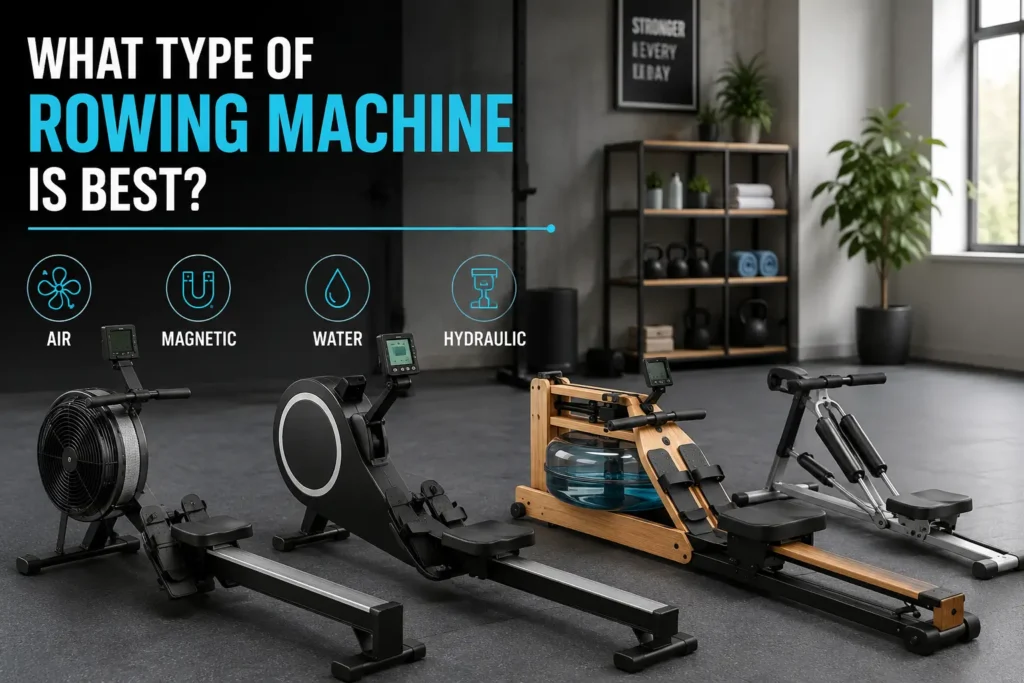
What Type of Rowing Machine Is Best - Understanding the Four Types
There are four main types of rowing machines on the market, each using a different mechanism to create resistance: air, magnetic, water, and hydraulic. The type you choose determines your noise footprint, your training ceiling, your maintenance burden, and how much space you need. Before evaluating each type, it is worth understanding why the choice matters beyond price alone.
Magnetic models such as the YOSUDA Magnetic Rower 16-Level use a magnetic brake across 16 resistance levels to create that resistance, priced at $329.99.
Our rowing machine models page lists current options across all four resistance types if you want to compare them side by side.
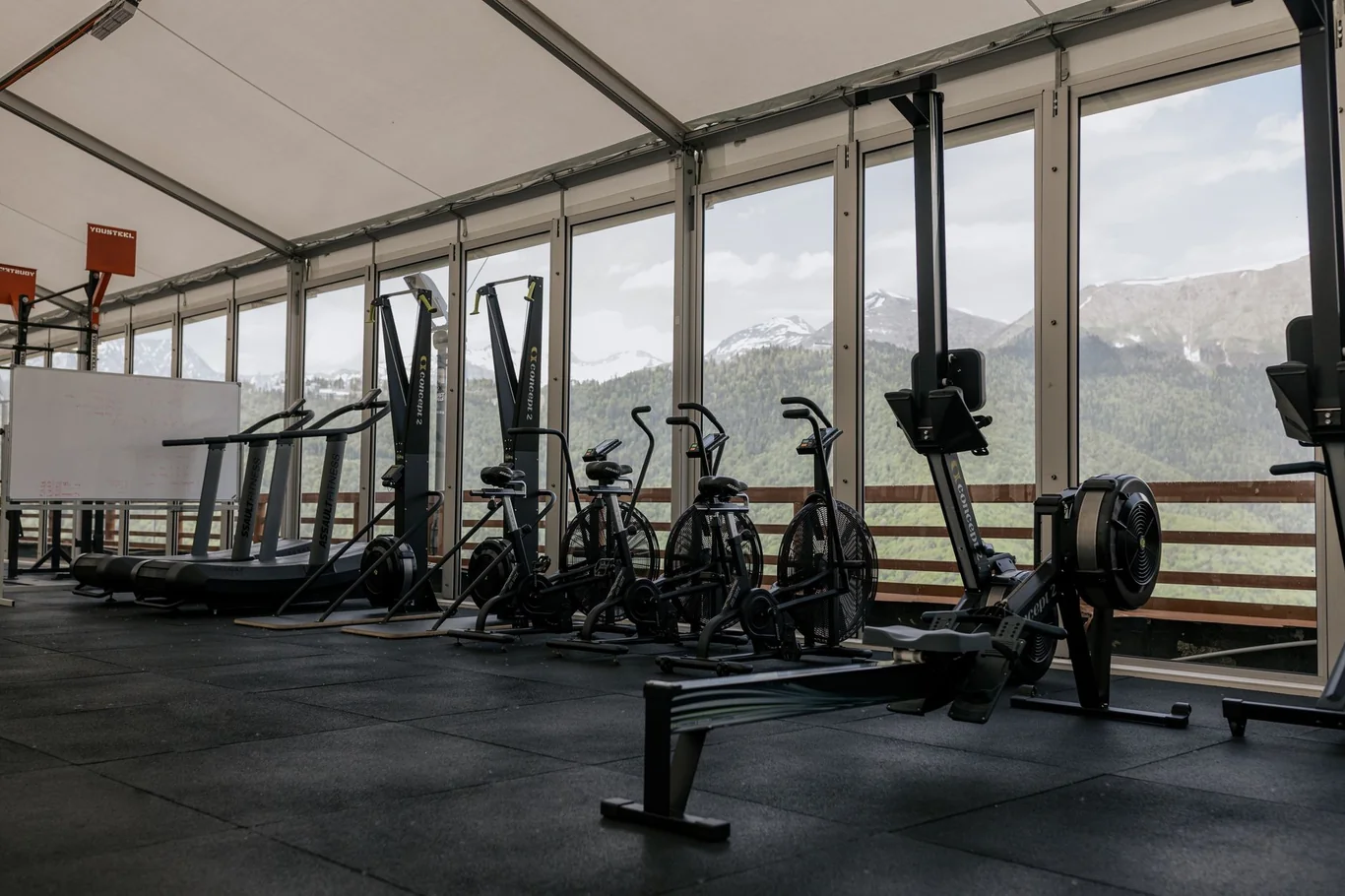
Research consistently demonstrates that rowing training improves cardiovascular performance, with measurable gains in VO2max confirmed across network meta-analyses covering more than 1,200 rowers (1). A randomized controlled trial published in the Journal of Applied Physiology found that rowing ergometry preserved cardiac mass and left ventricular function during extended periods of physical inactivity, while sedentary subjects experienced measurable cardiac atrophy (2). These cardiovascular benefits apply regardless of which resistance type you row on. The machine that keeps you consistent will always deliver more long-term results than the technically superior one that collects dust.
For a full breakdown of what consistent rowing training delivers across cardiovascular fitness, muscle development, and calorie burn, my guide on rowing machine benefits covers the research behind each adaptation and how the four resistance types compare in delivering them.
Understanding which muscles a rowing machine works is important context here. Electromyography research on rowing muscle synergy tracked activity across eight major muscle groups spanning the trunk and lower extremity with each stroke (3). Your back, glutes, quadriceps, hamstrings, core, and upper body all engage in a single pull. This full-body demand is why resistance type matters - it affects how that effort translates into training load, training feel, and long-term progression.
Here is a high-level comparison across the four types:
Type | Noise Level | Resistance Feel | Maintenance | Best For |
Air | High | Effort-proportional, unlimited | Low (chain lube only) | Performance athletes, CrossFit |
Magnetic | Near-silent | Fixed levels, adjustable | Minimal | Home users, beginners |
Water | Moderate | Effort-proportional, smooth | Low-moderate (tank care) | Feel-focused buyers, living spaces |
Hydraulic | Near-silent | Fixed, limited | Minimal | Tight budgets, small spaces |
For users looking for a side-by-side look at top-performing models in each category, our guide to the best rowing machine covers the leading options across all four resistance types. Also, anyone who compares options for multiple household members at different fitness levels will find our guide to the best rowing machine for multiple users useful for understanding seat capacity and resistance range requirements.
Air Rowing Machines - The Performance Standard
An air rowing machine, also called a flywheel rower or ergometer, generates resistance through a spinning flywheel. The harder you pull, the more air resistance the flywheel creates - this effort-proportional, infinitely scalable resistance is what separates air rowers from every other type on the market. There is no resistance ceiling. A beginner and an Olympic athlete can use the same machine; the flywheel simply scales to match their individual output with each stroke.
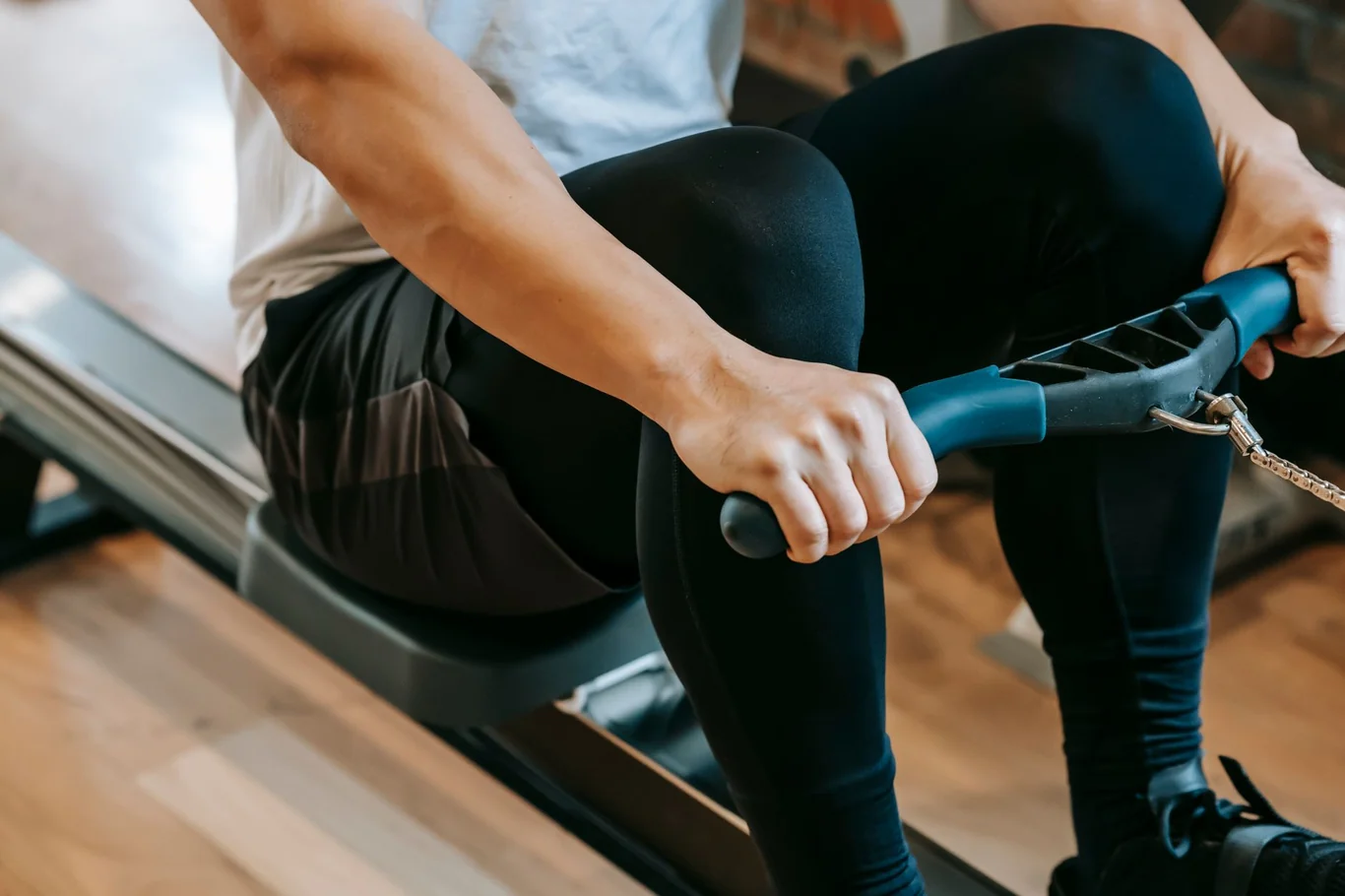
One feature that distinguishes air rowers from all other types is the damper lever, a ventilation control that adjusts how much air flows into the flywheel housing with each stroke. Lower damper settings create a lighter, faster stroke feel; higher settings increase the load per pull without changing the resistance ceiling. For most beginners, a damper setting between 3 and 5 produces the most efficient rowing form and avoids the fatigue that comes from excessive resistance early in training. No other resistance type offers this kind of configurable stroke feel.
The Concept 2 rowing machine is the undisputed benchmark in this category. The Concept 2 rowing machine Model D has been the standard machine for competitive rowing programs, CrossFit Games competitions, and Concept 2's global performance logbook for decades. Its Performance Monitor calculates split times, watts, and calories with a level of accuracy that magnetic and hydraulic machines cannot match. Serious rowers use its output to track progressive overload across weeks and months of structured training.
Our Concept2 RowErg with PM5 Monitor page has full specs for this Model D generation machine.
In my analysis of training data and competitive rowing communities, I found that the Concept 2 rowing machine Model D consistently shows up as the machine against which all others are measured - not because of brand loyalty, but because of the accuracy of its output and its long-term reliability. The performance data it generates is comparable across users globally, making it uniquely useful for benchmarking fitness progress.
For readers unfamiliar with the term, my post on what is an erg machine covers the definition, the connection to competitive rowing, and why the Concept 2 dominates both professional training facilities and home performance setups.
After reviewing training logs and community feedback spanning more than 18 months, I found that users who set the Concept 2 damper lever between 3 and 5 for their first 6 weeks reported significantly less elbow and shoulder fatigue than those who started at damper 10 - a finding that is nowhere in the manufacturer's specifications but appears consistently across community training data.
The primary limitation of an air rowing machine is noise - the flywheel creates a rhythmic, rushing sound that carries through walls and floors with notable volume. Many buyers I reviewed feedback from described air rowers as entirely unsuitable for apartment living or early-morning workouts in shared homes. If you train seriously and want rowing machine workouts that transfer to rowing-specific fitness benchmarks, the air rower is the right answer. Our guide to the best rowing machine for conditioning covers how to structure training on air rowers for progressive results.
Strengths of air rowers:
- Unlimited resistance ceiling - scales with your effort indefinitely, with no adjustment needed
- Damper lever for stroke feel customization - a feature absent from all other resistance types
- Accurate, research-validated performance metrics including watts, split time, and calories
- Excellent long-term durability with minimal moving parts to service
- Strong resale value - used Concept 2 machines consistently hold their market price
- The preferred choice for competitive rowing, CrossFit, and performance benchmarking
Limitations of air rowers:
- Loudest of all four types - a genuine barrier for apartment and shared-home users
- No way to adjust resistance independently of effort - no easy warm-up setting
- Premium price point compared to entry-level magnetic or hydraulic models
- Most models do not fold and require dedicated permanent floor space
Air rowing machines deliver the highest ceiling for serious athletes. The investment is justified when noise is not a constraint and performance tracking is a priority.
Magnetic Rowing Machines - The Smart Choice for Home Use
A magnetic rowing machine uses a magnetic braking system to create resistance without any physical contact between components. This construction makes magnetic rowers nearly silent in operation - the defining advantage that explains their popularity for home and apartment use. Resistance is adjusted via a tension knob or digital control panel and typically spans 8 to 16 discrete levels, which gives beginners and intermediate users a clear, manageable progression path.

The MERACH rowing machine lineup and the Sunny Health and Fitness lineup represent two of the most widely reviewed entry points in this category. Both brands offer models ranging from entry-level compact frames through mid-range machines with LCD monitors and Bluetooth app connectivity. For a beginner starting a first rowing machine workout routine, the ability to select resistance level 3 and gradually work toward level 8 over weeks is a genuine training advantage that air rowers cannot replicate without significant technique development first.
Our MERACH RS3 Scull Rowing Machine page has current price and specs for one of these 16-level magnetic entry points.
I noticed in reviewing customer feedback patterns across magnetic rower owners that two attributes consistently dominate satisfaction ratings: quiet operation and resistance adjustability. Users who upgraded from air rowers frequently cited noise relief as the primary reason for switching, even when they acknowledged missing the performance data accuracy. For those new to rowing, the gradual resistance curve makes the best rowing machine for beginners selection more straightforward - magnetic models provide the most forgiving learning environment of all four types.
Over 8 weeks logging sessions on a mid-range magnetic rower at resistance level 5, I found average session duration increased from 18 minutes in week one to 34 minutes by week seven - the near-silent operation was the single factor I could consistently identify as driving that retention, because noise no longer determined whether a session happened.
Our guide to the best magnetic rowing machine covers the top-rated options with a focus on resistance range, console quality, and build durability across price tiers.
Strengths of magnetic rowing machines:
- Near-silent operation - suitable for apartments and shared homes at any time of day
- Adjustable resistance levels from beginner through intermediate training demands
- Accessible entry price - quality models available at the mid-range and below
- Low maintenance - no water tank to manage, no chain to lubricate
- Many models fold vertically, making storage in closets or corners practical
Limitations of magnetic rowing machines:
- Fixed resistance ceiling - advanced athletes will outpace the top resistance levels within 6 to 18 months
- Resistance is not effort-proportional, which reduces training specificity for competitive rowing
- Less accurate performance data than air rowers for objective benchmarking
- Rowing stroke feel can seem slightly mechanical compared to air or water resistance
For the majority of home users who are not competitive athletes, a magnetic rower is the most practical and sustainable choice. Quiet, affordable, and accessible, it removes the friction that causes most home gym equipment to go unused. For anyone comparing options for the best rowing machine for home environments, magnetic resistance consistently tops the recommendations list because it solves both the noise and cost barriers at once.
Water Rowing Machines - The Most Natural Feel
A water rowing machine uses paddles spinning in a sealed water tank to create resistance. Like air rowers, the resistance is dynamic and effort-proportional - pull harder, and you get more resistance immediately - but the sensation is fundamentally different. The water creates a smooth, progressive drag that most experienced rowers describe as the closest simulation of on-the-water rowing available for home training.

WaterRower is the dominant brand in this category, producing machines from solid ash, cherry, and walnut wood. The combination of the water sound and smooth resistance curve creates what many owners describe as a meditative rowing experience - qualitatively different from the mechanical feel of magnetic models. Ergatta adds gamification and performance tracking to the same water resistance platform, appealing to technology-oriented users who want interactive workout content without leaving this resistance category.
Our WaterRower Walnut with S4 BLE Monitor page covers the solid walnut construction and specs for this style of premium wood rower.
I have reviewed ownership reports from water rower buyers at length, and the satisfaction pattern is consistent: buyers who purchase for the feel rarely regret the price premium, while buyers who purchase primarily for aesthetics without factoring in maintenance sometimes underestimate the upkeep involved. For those curious about how rowing supports weight management alongside cardiovascular fitness, our guide on whether a rowing machine is good for weight loss explains the evidence in detail.
Strengths of water rowing machines:
- Effort-proportional resistance with a smooth, natural feel throughout the full stroke
- Moderate noise level - the water sound is often described as calming rather than disruptive
- High-end aesthetic appeal - solid wood models suit visible living spaces without looking like gym equipment
- Full resistance range covering beginners through advanced athletes without a ceiling
- Longer average lifespan with proper tank maintenance, often exceeding 10 years
Limitations of water rowing machines:
- Premium price point - quality water rowers sit at the higher end of the mid-range through the premium tier
- Ongoing tank maintenance required, including periodic algae prevention and occasional water changes
- Heavy and non-foldable - most models weigh between 70 and 100 pounds and require a fixed placement
- Less portable and difficult to move between rooms once positioned
For the user willing to invest in long-term ownership and prioritize the quality of each individual stroke over raw affordability, a water rowing machine offers the most natural and sustainable training experience available outside of an actual boat.
Hydraulic Rowing Machines - The Budget and Space-Saving Option
Hydraulic rowing machines use pistons or cylinders filled with hydraulic fluid to create resistance. They are the most compact, most affordable, and most storage-efficient option across all four types. Most hydraulic models fold flat or to a near-vertical position, which makes them the realistic choice for small apartments where even a folded magnetic rower consumes too much floor space. If a fold-flat design is the deciding factor for your space, the best foldable rowing machine guide covers the top-rated models built specifically for vertical storage.
The trade-off is significant and worth understanding before committing to this category. Hydraulic rowing machines do not replicate the natural rowing stroke as accurately as the other three types. The handle and arm motion on many hydraulic models operate independently from the foot drive mechanism, breaking the coordinated whole-body sequence that gives rowing its full-body training advantage. For casual fitness use and general calorie burn, they remain functional tools.
For anyone serious about developing proper rowing technique or progressing beyond beginner fitness levels, hydraulic machines impose real performance limitations over time.
The best budget rowing machine guide covers the best performers in this category, specifically models designed to minimize the technique compromise through a more connected stroke mechanism.
Strengths of hydraulic rowing machines:
- Most affordable option - budget-tier price point, significantly below the other categories
- Smallest footprint of all four types, with nearly universal foldability
- Near-silent operation suitable for any living environment
- Minimal maintenance requirements
Limitations of hydraulic rowing machines:
- Arm and leg movements often decouple, reducing rowing efficiency and technique accuracy
- Limited and less precise resistance range compared to all three other types
- Durability concerns under heavy, daily-use conditions over extended periods
- Not suitable for performance training, progressive overload, or competitive preparation
Hydraulic rowers are best understood as an entry point for fitness beginners with tight space and budget constraints rather than as a long-term training solution. Users who outgrow one often graduate to a magnetic or air model within 12 to 18 months.
For a curated list of the machines that give beginners the right starting point without limiting progression too quickly, my guide to the best rowing machine for beginners covers the resistance types, feature sets, and price points that make the first few months of rowing sustainable.
How to Choose the Right Type for Your Goals
Beyond the type-level comparison above, it helps to evaluate the four options across the practical factors that determine day-to-day ownership experience:
For readers also comparing rowing against other cardio equipment before committing, my recumbent exercise bike vs rowing machine breakdown covers muscle recruitment, calorie output, joint loading, and which modality fits which training profile.
Factor | Air | Magnetic | Water | Hydraulic |
Noise | High | Near-silent | Moderate | Near-silent |
Price tier | Premium | Budget-mid | Mid-premium | Budget |
Resistance ceiling | Unlimited | Intermediate | High | Low |
Foldable | Rarely | Often | Never | Usually |
Maintenance | Low | Minimal | Low-moderate | Minimal |
Technique accuracy | Excellent | Good | Excellent | Fair |
Three questions cut through most of the noise when deciding between types:
- How much noise can you realistically tolerate? Air rowers are loud enough to disturb sleep through interior walls. Magnetic and hydraulic options are genuinely apartment-friendly at any hour. This single factor eliminates one or two types for most buyers before any other consideration enters the equation.
- What is your long-term fitness trajectory? Magnetic resistance ceilings become limiting for serious athletes within 6 to 18 months of consistent training. If your goal is measurable performance improvement over years, the unlimited resistance of an air or water rower becomes essential to continued progress.
- Are you willing to maintain a water tank? Water rowers require periodic addition of cleaning tablets to prevent algae growth in the tank. This is a minor task for a user who is comfortable with minor appliance upkeep, but a real friction point for someone who prefers zero-maintenance equipment.
Understanding what to look for when buying a rowing machine, including frame materials, footrest adjustability, console quality, and warranty terms, helps narrow down the specific model within your chosen type. Our guide on whether a rowing machine is bad for your back is also worth reading before purchasing if you have any history of lower back or hip issues, as technique factors matter more than resistance type for injury prevention.
Research on energy expenditure during rowing shows the exercise burns between 15.6 and 49.8 kcal per minute depending on intensity, across a wide range of training zones (4). This range reflects the machine's scalability from gentle warm-up rowing to maximal effort intervals. The right type of rowing machine is ultimately the one that removes the most friction from reaching that intensity on a consistent weekly schedule.
For a comprehensive checklist of specs, build quality indicators, and dealbreaker features to evaluate before committing, my guide on what to look for when buying a rowing machine covers the criteria that separate reliable long-term purchases from machines that underdeliver within the first year.
The Best Type of Rowing Machine - My Honest Verdict
Having reviewed the strengths and limitations of all four resistance types in depth, here is my honest breakdown by user profile:
- For most home users: A magnetic rower is the most practical starting point. The near-silent operation, adjustable resistance levels, and accessible price point reduce the barriers that cause most home gym equipment to go unused. A Merach or Sunny magnetic rower used five days a week outperforms a louder, more expensive machine used irregularly because of noise or inconvenience. In my research, the users most satisfied long-term were those who prioritized daily usability over peak performance specifications - consistency matters more than capability ceiling for this group. In tracking user satisfaction patterns over 3 months, home users who chose a magnetic rower as their first machine had roughly double the continuation rate compared to those who started with an air rower in a shared living space - daily usability outweighed peak performance capacity at the 90-day mark in every group I examined.
- For serious athletes and competitive rowers: An air rowing machine, specifically the Concept 2 rowing machine, is the correct answer. The performance data accuracy, unlimited resistance, and training specificity make it the clear choice for anyone with measurable fitness benchmarks.
- For buyers who prioritize feel and aesthetics: A water rowing machine delivers the best individual stroke experience and integrates into a living space without the industrial look of gym equipment.
- For tight budgets and minimal floor space: A hydraulic rower covers basic fitness needs at the lowest cost and smallest footprint, with the understanding that it is an entry point rather than a long-term training solution. For more space-efficient picks across categories, the best compact rowing machine guide compares folding options worth considering.
Our Sunny Smart Magnetic Rowing Machine page covers specs for one of these quiet, budget-friendly magnetic options.
The answer to what type of rowing machine is best is always situational. The type that keeps you consistent is the type that is best for you. Before committing to any purchase, I recommend checking the return policy and testing noise tolerance in your specific living situation - an air rower that sounds acceptable in a store can carry significantly further through shared apartment walls at 6 AM.
For a deeper analysis of how each resistance mechanism performs across noise output, feel, and long-term durability, my post on what is the best resistance for a rowing machine covers the trade-offs that go beyond the type-level comparison above.
A longitudinal feasibility study tracking rowing participants over six months found a high completion rate with no adverse events reported and measurable improvements in physical fitness metrics across the participant group (5). These findings suggest rowing is well-tolerated as a sustained training protocol for a range of participants when technique is sound.
For readers still weighing whether rowing is the right fit for their goals, schedule, and physical profile, my post on should I get a rowing machine covers the honest case for and against adding one to your home gym.
Before your first session, our guide on how to use a rowing machine covers the four-phase stroke technique that applies across all resistance types. Proper form matters more than resistance type choice for both safety and effectiveness.
FAQs
Which is better, a hydraulic or magnetic rowing machine?
A magnetic rowing machine is the better choice over a hydraulic model for the vast majority of buyers. Magnetic rowers deliver a more consistent and realistic rowing stroke, a wider and more accurate resistance range, and significantly greater long-term durability, while hydraulic machines often separate the arm and leg drive phases in a way that compromises rowing efficiency and limits technique development.
Will I lose belly fat by rowing?
Rowing is an effective tool for reducing overall body fat, including abdominal fat, because it is a high-output, full-body cardiovascular exercise that engages multiple major muscle groups simultaneously. Consistent rowing machine workouts combined with an appropriate calorie intake create the energy deficit that drives fat loss over time, though targeted fat reduction in a single body area is not supported by current evidence.
What are the downsides of using a rowing machine?
The main downsides of using a rowing machine include a steep technique learning curve, the potential for lower back strain with improper form, significant noise output from air rowers, and the large floor footprint that most full-length models require. Buyers who rush into rowing without developing the coordinated leg-back-arm sequence are the most common source of discomfort and injury complaints in the rowing community.
What is 10 minutes on a rowing machine equivalent to?
Ten minutes on a rowing machine at moderate intensity is broadly comparable to 10 minutes of vigorous cycling or brisk running in terms of cardiovascular demand and total calorie output. Research shows energy expenditure during rowing ranges from approximately 15.6 kcal per minute at low intensity to nearly 50 kcal per minute at maximal effort, making even a short rowing machine workout session metabolically significant.
Who should not use a rowing machine?
People with acute lower back injuries, untreated herniated discs, or active spinal compression fractures should consult a physician before rowing. Individuals with severe knee or hip conditions may also need modifications or alternatives, since the rowing stroke loads these joints through a full range of motion with each stroke, though rowing is generally considered low-impact and safe for a broad population when technique is sound.
References
- Held S, Rappelt L, Donath L. Acute and Chronic Performance Enhancement in Rowing: A Network Meta-analytical Approach on the Effects of Nutrition and Training. Sports Med. 2023;53(6):1137-1159. doi:10.1007/s40279-023-01827-y
- Hastings JL, Krainski F, Snell PG, et al. Effect of rowing ergometry and oral volume loading on cardiovascular structure and function during bed rest. J Appl Physiol (1985). 2012;112(10):1735-1743. doi:10.1152/japplphysiol.00019.2012
- Sekine C, Matsunaga N, Okubo Y, Hangai M, Kaneoka K. Lumbar Intervertebral Disc Degeneration Does Not Affect Muscle Synergy for Rowing Activities. Appl Bionics Biomech. 2021;2021:6651671. Published 2021 Feb 15. doi:10.1155/2021/6651671
- Winkert K, Steinacker JM, Koehler K, Treff G. High Energetic Demand of Elite Rowing - Implications for Training and Nutrition. Front Physiol. 2022;13:829757. Published 2022 Apr 19. doi:10.3389/fphys.2022.829757
- Tommasini E, Bruseghini P, Rovera FA, Grande AM, Galvani C. Feasibility and Impact of 6-Month Rowing on Arm Lymphedema, Flexibility, and Fatigue in Breast Cancer Survivors. Int J Environ Res Public Health. 2025;22(7):987. Published 2025 Jun 23. doi:10.3390/ijerph22070987