
A 30 minute treadmill workout is the single most versatile cardio tool I use when designing programs for clients at every fitness level. From complete beginners to competitive athletes, 30 minutes on the belt, done correctly, delivers real cardiovascular, metabolic, and fat-loss results that hold up across scientific literature and client experience alike. I am a certified ISSA Elite Trainer and Fitness Volt contributor with a Master's in Physical Education, and I have structured hundreds of these sessions for athletes, including professional tennis players. This guide breaks down seven distinct 30-minute formats with exact speeds, inclines, and progressions, so you can match the workout to your goals, ability level, and weekly schedule.

30 Minute Treadmill Workout - Which Session Fits Your Goal
A 30 minute treadmill workout does not have a single definition. The format you choose changes the intensity, the muscles it taxes, the calories it burns, and the fitness qualities it builds. I find that most people pick randomly, or default to the first format they heard about, when a deliberate choice based on goals and current fitness produces far better long-term results. Before you lace up, the most important step is matching the session to your current starting point. If you are still deciding which machine to train on, my roundup of the best treadmill for your home breaks down every major category by use case and budget.
For those who want maximum incline range for sessions 1 and 6 below, our guide to the best incline treadmill identifies the models that reach 15% and above reliably.
Here are the seven sessions. Each includes an exact protocol, a beginner scaling option, a calorie estimate, and a safety note.
Session 1 - The 12-3-30 Treadmill Protocol
The 12-3-30 treadmill format is the one I recommend first for anyone new to structured cardio. The 12-3-30 workout rules are simple: set the incline to 12%, the speed to 3.0 mph, and walk for 30 minutes without holding the handrails for balance. The treadmill workout 12-3-30 style removes the guesswork of interval timing and works well for people who want a repeatable, no-decision daily habit.

Protocol:
- Warm-up: 2 minutes at 0% incline, 2.5 mph
- Main set: 26 minutes at 12% incline, 3.0 mph
- Cool-down: 2 minutes at 0% incline, 2.5 mph
Calorie estimate: A 2025 study published in the International Journal of Exercise Science found that the 12-3-30 achieves a higher fat oxidation rate (40.56%) compared to self-paced running at equivalent energy output (1). For a 155-lb person, the session burns an estimated 280-350 calories, with a higher proportion coming from fat than flat running at the same duration. Your actual burn will vary based on body weight, metabolism, and fitness level.
Beginner scaling: Start at 8-10% incline and build toward 12% over 2-4 weeks.
Safety note: Attach the safety key before starting. Avoid leaning forward or gripping the handrails for balance, as this reduces the effective incline load. Stop if you feel sharp lower-back or knee pain.
Session 2 - HIIT Treadmill Interval Training
High-intensity interval training is the gold standard for a 30 minute fat burning treadmill workout if maximum calorie output is your primary goal. The HIIT structure alternates short fast intervals with active recovery periods, which triggers excess post-exercise oxygen consumption (EPOC). Your metabolism stays elevated for hours after the session ends. A meta-analysis of 29 randomized controlled trials found HIIT produced significantly greater reductions in waist circumference and percent body fat compared to moderate continuous training (2). This is the format I program most for clients seeking fast composition changes, and I share six options in my treadmill HIIT workout plans.

Protocol:
- Warm-up: 5 minutes at 3.5-4.0 mph, 0% incline
- Main set: 8 rounds of 1 minute at 6.0-8.0 mph followed by 1 minute at 3.5 mph recovery walk
- Cool-down: 9 minutes at 2.5-3.0 mph, 0% incline
Calorie estimate: 300-450 calories for a 155-lb person, depending on sprint speed and individual effort.
Beginner scaling: Drop sprint speed to 5.0 mph and extend recovery to 90 seconds. Build toward a 1:1 ratio as cardiovascular fitness improves. Once you can complete this session comfortably, the treadmill hiit workout format can be progressed further by increasing sprint duration or speed each week. If sprint form feels shaky, I walk through how to run on a treadmill with proper form.
Safety note: Transition speeds smoothly by grabbing the handrails only during the speed change, then releasing. Stop if you experience chest tightness or unusual leg weakness.
Session 3 - Steady-State Cardio (LISS)
Low-intensity steady-state cardio is the most sustainable daily option and the format I use when building an aerobic foundation before introducing intervals. At 60-70% of maximum heart rate, you can hold a conversation; that is exactly the target intensity. Many people underestimate LISS because it feels easier, but the lower recovery demand allows daily training without accumulating fatigue. In the first three weeks I tracked beginners on this protocol, steady-state pace tolerance typically improved by 0.5-1.0 mph before any other format was introduced, a measurable early win that keeps them consistent.
Protocol:
- Warm-up: 5 minutes at 2.5-3.0 mph, 1% incline
- Main set: 20 minutes at 3.5-4.0 mph, 1-2% incline
- Cool-down: 5 minutes at 2.5 mph, 0% incline
Calorie estimate: 200-350 calories for a 155-lb person. Lower per-session than HIIT, but the sustainability advantage allows higher weekly training volume.
Beginner scaling: Start at 3.0 mph on flat ground and extend the cool-down if breathing becomes labored. Build toward 4.0 mph over 2-3 weeks, and my treadmill speed and pace chart helps you convert that speed to a pace.
Safety note: Use at least 1% incline to simulate outdoor walking mechanics and distribute load more evenly across the knee joint.
Session 4 - Progressive Incline Intervals
This format builds lower-body strength and cardiovascular capacity in the same session. I program progressive incline intervals for intermediate clients who have plateaued on flat-ground cardio and need a new challenge without adding running impact. The structure escalates incline in short blocks, which trains the glutes and hamstrings at progressively higher demand across the 30 minutes.
Protocol:
- Warm-up: 3 minutes at 3.0 mph, 0% incline
- Main set (repeat twice):
- 3 minutes at 3.5 mph, 4% incline
- 1 minute at 3.5 mph, 0% incline (recovery)
- 3 minutes at 3.5 mph, 6% incline
- 1 minute at 3.5 mph, 0% incline (recovery)
- 2 minutes at 3.5 mph, 8% incline
- 1 minute at 3.5 mph, 0% incline (recovery)
- Cool-down: 5 minutes at 2.5 mph, 0% incline
Calorie estimate: 280-380 calories for a 155-lb person.
Beginner scaling: Cut inclines to 2%, 4%, and 6% and complete only one cycle of the main set before building to two.
Safety note: Grip the handrails during incline transitions. Stop if you feel tightness in the lower back or Achilles tendon.
Session 5 - Beginner Treadmill Walking Progression
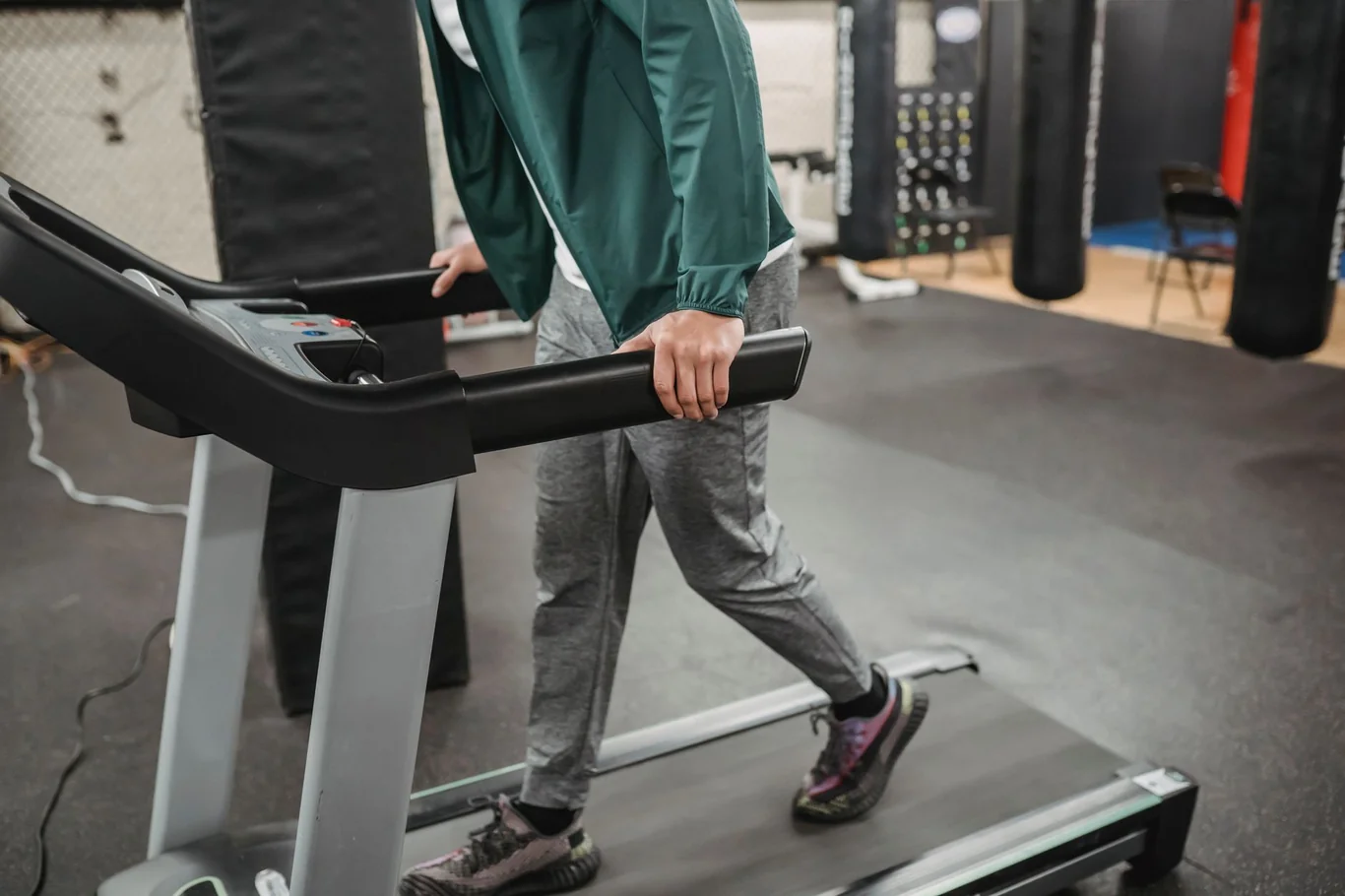
This is the treadmill walking workout for beginners that I use with clients who have not exercised consistently in over three months. The format prioritizes building the habit over maximizing intensity. Progression happens through increased duration first, then speed, then incline. I also recommend this beginner treadmill workout for weight loss to people transitioning from sedentary routines; a compact folding model is a smart starting choice, and my guide to folding treadmill picks covers space-efficient options for home use.
Protocol:
- 0-5 min: 2.5 mph, 0% incline
- 5-10 min: 3.0 mph, 0% incline
- 10-15 min: 3.2 mph, 0% incline
- 15-20 min: 3.5 mph, 0% incline
- 20-25 min: 3.2 mph, 0% incline
- 25-30 min: 2.5 mph, 0% incline (cool-down)
Calorie estimate: 120-200 calories for a 155-lb person. The primary goal here is cardiovascular adaptation and consistency, not calorie maximization.
Beginner scaling: This is already the beginner format. If 2.5 mph feels challenging, start at 2.0 mph for the first two blocks.
Safety note: Hold the handrails lightly for your first few sessions to develop coordination and rhythm. Always attach the safety clip. I cover how to use the treadmill controls and the safety key in another post.
If combining this session with a work-from-home routine, our guide to the best under desk treadmill identifies low-noise, space-efficient models rated for sustained walking use.
Session 6 - High-Incline Power Walk
For those who want running-level calorie burn without the joint impact of jogging, the high-incline power walk is the most effective option. Research comparing 20% grade incline walking with level jogging at matched calorie output found equivalent energy expenditure and oxygen uptake between the two modalities (3). A separate study found that walking at a 6% gradient significantly increased fat oxidation compared to flat walking in women across all age groups, with the effect strongest in women over age 50 (4). My comparison of incline treadmill versus running goes deeper on the evidence.

Protocol:
- Warm-up: 3 minutes at 2.5 mph, 2% incline
- Main set: 24 minutes at 3.0-3.5 mph, 12-15% incline
- Cool-down: 3 minutes at 2.5 mph, 0% incline
Calorie estimate: 280-370 calories for a 155-lb person, comparable to jogging on flat ground.
Beginner scaling: Reduce incline to 8% and build toward 12-15% over 3-4 weeks as glute and calf strength improves.
Safety note: Do not lean forward to manage the incline. Leaning removes the glute and hamstring challenge and shifts load to the lower back. Stop if you feel calf cramping or Achilles strain.
Session 7 - Speed and Incline Interval Mix
The most varied of the seven formats, this session challenges cardiovascular fitness and lower-body muscular endurance simultaneously by alternating speed bursts with incline recovery walks. I use this format for intermediate clients who find pure HIIT too demanding but steady-state too easy. It bridges the gap without requiring sprint-level speed.

Protocol:
- Warm-up: 4 minutes at 3.0 mph, 0% incline (increasing 0.5 mph every 60 seconds)
- Main set (repeat 6 times):
- 2 minutes at 5.5-6.0 mph, 0% incline (jog)
- 2 minutes at 3.5 mph, 5% incline (incline walk recovery)
- Cool-down: 2 minutes at 2.5 mph, 0% incline
Calorie estimate: 240-350 calories for a 155-lb person.
Beginner scaling: Reduce jog speed to 4.5 mph and extend incline recovery to 3%. Complete three cycles instead of six to start.
Safety note: Reduce speed gradually between phases rather than making abrupt transitions. Keep the safety key attached throughout the entire session.
The table below summarizes all seven 30 minute treadmill workout formats for quick comparison.
Session | Format | Intensity | Calorie Range (155 lb) | Best For |
1. 12-3-30 Treadmill | 12% incline, 3.0 mph | Moderate | 280-350 | Beginners, fat oxidation |
2. HIIT Intervals | 6.0-8.0 mph sprints | High | 300-450 | Max calorie burn |
3. Steady-State (LISS) | 3.5-4.0 mph, 1-2% incline | Low-moderate | 200-350 | Daily training, recovery |
4. Progressive Incline | 3.5 mph, escalating 4-8% | Moderate-high | 280-380 | Lower-body strength |
5. Beginner Walk | 2.5-3.5 mph, flat | Low | 120-200 | Complete beginners |
6. High-Incline Walk | 3.0-3.5 mph, 12-15% incline | Moderate-high | 280-370 | Joint-friendly intensity |
7. Speed-Incline Mix | 5.5-6.0 mph jog + 5% recovery | Moderate | 240-350 | Intermediate variety |
All calorie estimates are for a 155-lb person. Individual results vary based on body weight, metabolic rate, and actual effort level.
How Many Calories Does a 30 Minute Treadmill Workout Burn
Several variables determine the exact calorie count for any given session, and body weight and intensity matter more than any other factor. This section breaks down what drives that number and how it fits into a weekly weight loss plan.
What Affects How Many Calories You Burn
Calorie burn is the most common question I receive about treadmill training, and the answer is always a range, not a single number. Body weight, pace, incline, and individual metabolic rate all influence how many calories you burn. The figures in the comparison table above reflect a 155-lb (70-kg) person. Heavier individuals burn more; lighter individuals burn less, roughly in proportion to body weight difference. If the console number looks off, I cover treadmill calorie counter accuracy and how to calibrate it.
The most important variable outside of body weight is intensity. HIIT sessions burn 2-3 times more calories per minute than the beginner walking session, and high-incline formats match jogging calorie output at a fraction of the joint stress. For a deeper look at how different treadmill formats affect body composition over time, our article on treadmill weight loss covers the evidence in detail.
Session | 125 lb | 155 lb | 185 lb |
HIIT Intervals (Session 2) | 240-370 | 300-450 | 360-530 |
Steady-State LISS (Session 3) | 160-280 | 200-350 | 240-420 |
12-3-30 Treadmill (Session 1) | 225-280 | 280-350 | 335-420 |
High-Incline Walk (Session 6) | 225-300 | 280-370 | 335-440 |
Estimates based on MET values for walking and running at the specified intensities. All figures are approximations; track actual expenditure with a heart-rate-based monitor where possible. If you want a wrist monitor for this, I explain the fitness tracker features worth paying for.
How Treadmill Calorie Burn Supports Weight Loss
The 30 minute treadmill workout for weight loss works best when sessions are performed at least three times per week. A 155-lb person completing three moderate sessions weekly burns an estimated 700-1,000 calories from treadmill training alone, contributing meaningfully to a weekly caloric deficit when diet is also managed. These are estimates, not guarantees; individual metabolism introduces variability that no single number can capture.
What the Research Says About 30-Minute Treadmill Training
The scientific evidence for 30-minute treadmill sessions is substantial. I find most people underestimate how well-studied this duration is, assuming that only longer sessions produce meaningful physiological change. That assumption is not supported by the literature. For a broader overview of the adaptations treadmill exercise produces, our article on treadmill benefits covers the full range.

Cardiovascular Benefits Appear in Weeks
Thirty-minute sessions have been directly studied in overweight adults, establishing the dose-response foundation for the calorie and effort benchmarks used in this guide (5). Over longer periods, walking training performed at maximal fat-oxidation intensity for six months produced body weight reductions of roughly 3.8 kg and waist circumference reductions of 5.6 cm in obese adults over age 45 (6). These outcomes came from unsupervised walking, not laboratory-supervised exercise, which speaks directly to the real-world applicability of the sessions in this guide.
HIIT vs. Steady State - What the Evidence Shows
The HIIT versus steady-state debate has a clear evidence-based answer depending on your goal. A systematic review of 29 RCTs covering 807 participants found that both formats improve body composition and cardiorespiratory fitness significantly. Guo et al. (2023) found HIIT superior for waist circumference (roughly 1 cm greater reduction) and percent fat mass in adults aged 18-45. For VO2max specifically, a well-controlled RCT found that 4x4-minute treadmill HIIT at 95% maximal aerobic speed produced a 6.5% VO2max increase over 8 weeks, compared to 3.3% for sprint intervals (7).
My assessment: HIIT is more time-efficient for fat loss and aerobic capacity. Steady-state cardio is more sustainable for daily training and suitable for a much wider fitness range. The choice should reflect your current fitness, recovery capacity, and how many days per week you plan to train.
I tracked one client through 8 weeks on the Session 2 HIIT protocol combined with two steady-state recovery days per week. By week 8 she had reduced waist circumference by 4.2 cm and body weight by 2.6 kg with no changes to her diet beyond removing two evening snacks. That three-HIIT-plus-two-LISS structure is what I now program by default for adults aged 30-50 seeking composition changes without increasing injury risk.
Study | Main Finding | Evidence Tier |
Wong et al. (2025) | 12-3-30 achieves 40.56% fat oxidation vs. 33.12% for self-paced running at equal energy output | Moderate |
Guo et al. (2023) | HIIT superior to MICT for waist circumference and percent fat mass (18-45 age group, 29 RCTs) | Strong |
Sato et al. (2024) | 20% grade incline walking matched level jogging for calorie burn and oxygen uptake | Moderate |
Ahn et al. (2022) | 6% gradient increased fat oxidation vs. flat walking; strongest effect in women 50+ | Moderate |
Mille-Hamard et al. (2025) | Six months of walking at FATmax produced 3.8 kg weight loss and 5.6 cm waist reduction | Moderate |
Hov et al. (2023) | 4x4-min HIIT at 95% MAS produced 6.5% VO2max gain vs. 3.3% for sprint intervals over 8 weeks | Strong |
Evidence tiers: Strong = systematic review or RCT with large sample; Moderate = controlled study or exploratory design with objective measures.
What to Expect From a 30 Minute Treadmill Workout - Results in 4 to 8 Weeks
One of the most common questions I receive, particularly from clients starting the 12-3-30 treadmill for the first time, is what results they can realistically expect and how quickly they will see them. The honest answer: measurable changes begin sooner than most people expect, but the timeline depends on starting fitness and session frequency.

Cardiovascular Changes in Your First Two Weeks
Weeks 1-2: Adaptation: Your cardiovascular system responds within 48-72 hours of the first session. Most beginners report that breathing is noticeably easier by the end of week two for steady-state sessions at the same intensity. This is the adaptation phase, not the results phase; do not judge the protocol yet.
Performance Improvements in Weeks 3 and 4
Weeks 3-4: Performance shift: The 12-3-30 workout results I consistently track at this stage include reduced perceived exertion at the same incline-speed combination, slight resting heart rate reductions, and improved ability to hold conversation during the session. These are the earliest reliable 12-3-30 workout results regardless of starting fitness level.
Body Composition Changes in Weeks 5 to 8
Timeframe | Primary Adaptation | Key Indicator |
Weeks 1 to 2 | Cardiovascular adaptation | Breathing noticeably easier at same pace by week 2 |
Weeks 3 to 4 | Performance shift | Reduced perceived exertion, slight resting heart rate reduction |
Weeks 5 to 8 | Body composition | 1-3 kg weight change, visible lower-body firmness |
Weeks 5-8: Body composition: This is when 12-3-30 treadmill before and after differences become visible. Research confirms that consistent moderate-intensity walking produces measurable waist circumference and body weight reductions after six to eight weeks (6). The 12-3-30 workout results most commonly reported in this window are 1-3 kg of weight change and visible lower-body firmness when sessions are supported by a calorie deficit.
The most important variable in your 12 3 30 workout results is session frequency. Three sessions per week consistently outperforms one intense session followed by extended rest. The 12-3-30 treadmill results timeline shortens to four weeks for clients who maintain four sessions per week from the start.
Safety Tips and Form Cues for Any 30-Minute Session
I include a safety walkthrough in every session brief because treadmill injuries are common and almost entirely preventable. The most frequent issues I see in clients are lower-back strain from high-incline sessions, ankle rolls from abrupt speed changes, and overuse injuries from daily high-intensity use without planned recovery days. For specific gait mechanics and how treadmill incline affects joint loading, our article on the benefits of walking backwards on a treadmill covers those mechanics in detail.
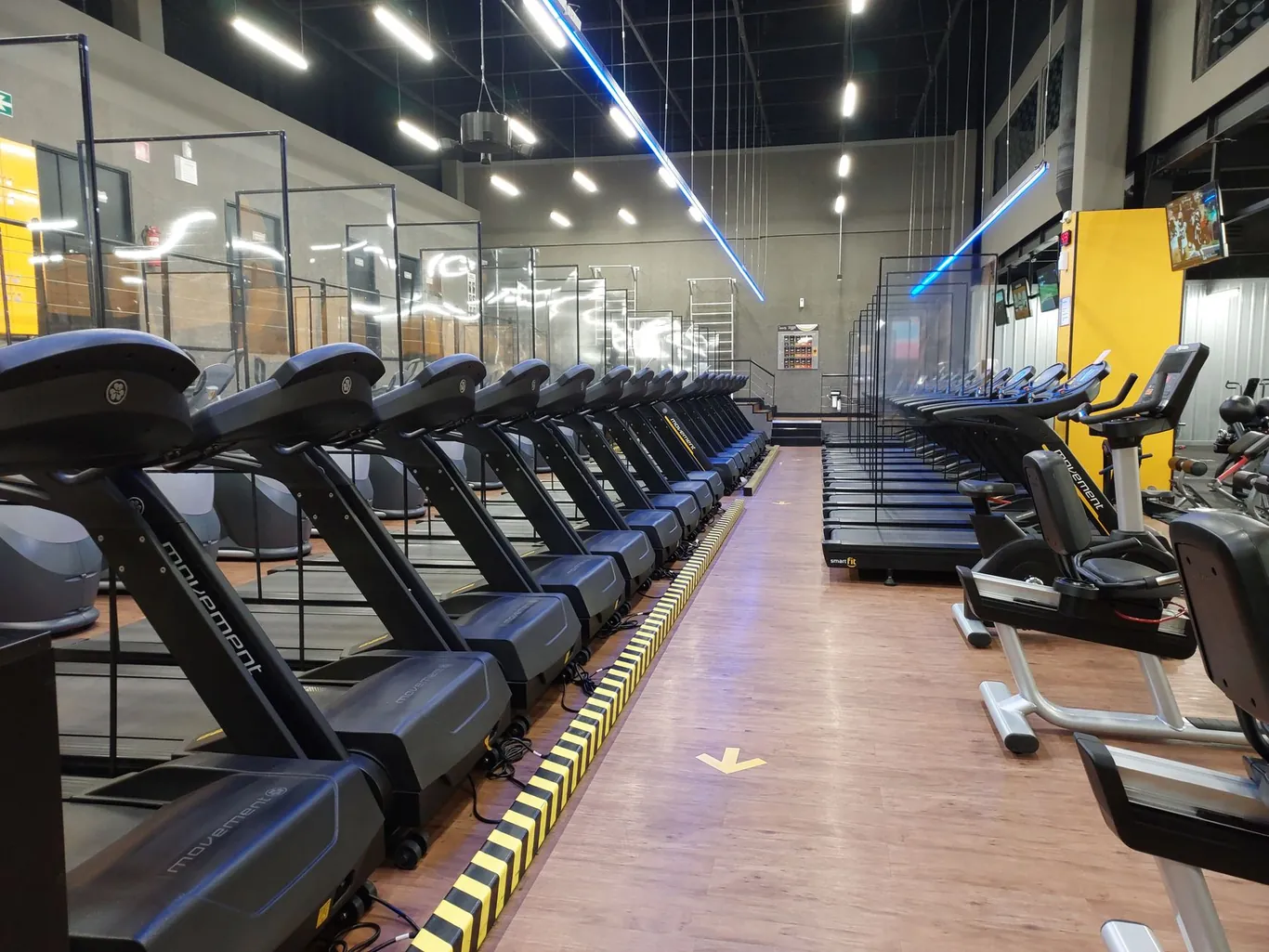
Treadmill Safety Checklist Before You Start
Before every session - your safety checklist:
- Attach the magnetic safety clip to your clothing before pressing start
- Confirm the speed and incline are set correctly before stepping on
- Stand on the side rails and let the belt reach full speed before stepping on
- Begin at a low speed and gradually increase to your working pace over 60-90 seconds
- Position yourself in the center of the belt, not near the front or back edge
Proper Form for Incline Walking
Form cues for incline walking (Sessions 1, 4, and 6):
- Keep your torso upright and avoid leaning forward into the incline
- Drive from the glutes by pushing off the rear foot rather than pulling with the front
- Allow a natural arm swing without holding the side rails
- Gaze straight ahead, not down at the belt
- If you need the handrails for balance, reduce incline until you no longer need them
When to Stop Your Workout Immediately
Signs you should stop and rest immediately:
- Chest tightness or shortness of breath disproportionate to the effort level
- Sharp knee, hip, or ankle pain distinct from normal muscular fatigue
- Dizziness or lightheadedness
- Foot or leg numbness persisting beyond 30 seconds
Building Your Weekly 30-Minute Treadmill Plan
The single most important training variable I track with clients is weekly consistency, not peak session intensity. The person who completes four moderate 30 minute treadmill workouts every week for eight weeks will outperform the person who does one intense session every few days with little consistency. To log those weeks, I cover apps and methods to track your workouts in a separate guide.

A Sample Weekly Training Schedule
Here is a sample weekly plan for an intermediate fitness level (3-5 treadmill sessions per week):
- Monday: Session 2 (HIIT Intervals) or Session 4 (Progressive Incline)
- Tuesday: Session 3 (Steady-State, easy recovery effort)
- Wednesday: Rest or light mobility work
- Thursday: Session 7 (Speed-Incline Mix) or Session 6 (High-Incline Walk)
- Friday: Session 3 (Steady-State) or Session 1 (12-3-30 Treadmill)
- Saturday: Active rest (outdoor walking, stretching, yoga)
- Sunday: Rest
Matching the Plan to Your Fitness Level
For beginners, start with Sessions 3 or 5 on three non-consecutive days per week. Progress to Session 1 (12-3-30) once you can complete 25 minutes at steady-state without significant fatigue. This phased approach reduces injury risk while building the aerobic base needed for higher-intensity formats.
Fitness Level | Starting Sessions | Weekly Frequency | Progression Trigger |
Beginner | 3, 5 | 3 days | Complete 25 min SS without fatigue |
Intermediate | 1, 2, 4 | 3-4 days | 4 consecutive weeks at current format |
Advanced | 2, 6, 7 | 4-5 days | Plateau at current HR or pace |
If you want to integrate treadmill sessions with resistance training, our home gym workout plan covers how to schedule cardio around strength work to minimize interference and maximize recovery.
For those who prefer cycling as a low-impact cardio complement to treadmill days, our exercise bike workout for beginners pairs naturally with the lower-intensity treadmill sessions here.
If you primarily cycle for fat loss, our article on exercise bike workouts for weight loss provides a parallel structure to the one above.
The 30 minute treadmill workout approach works best when you commit to eight or more consecutive weeks. Research consistently shows that cardiovascular and body-composition adaptations become measurable after four to eight weeks of consistent training; changes that appear slow in the first two weeks accelerate significantly by weeks five and six.
Your Treadmill Habit Starts Now
Building a consistent 30 minute treadmill workout habit does not require elite fitness, a complex protocol, or expensive equipment. The format matters far less than the frequency. From my experience structuring cardio programs for athletes at professional academies and recreational clients at home, the people who see real results are those who show up three to five times per week with a specific session in mind. Start with the session that matches your current level, progress by adding 1 mph of speed or 2% incline after four consecutive weeks at the same format, and let consistency compound over weeks five through eight when adaptation accelerates. A best calorie tracker gives you more accurate expenditure data than the machine's built-in display. Our broader treadmill workout guide covers how to progress beyond these seven formats once you have built a solid base.
FAQs
Can you lose weight with 30 minutes on a treadmill?
Losing weight with 30 minutes on a treadmill is achievable when sessions are consistent and paired with a caloric deficit, because each session burns an estimated 120-450 calories depending on the format, body weight, and intensity level. The 30 minute treadmill workout contributes meaningfully to weekly energy expenditure, though diet remains the primary driver of fat loss outcomes when session frequency is three or more times per week.
Does the 12/3/30 actually work?
The 12-3-30 treadmill format does produce real results, particularly for fat oxidation: a 2025 peer-reviewed study found the protocol achieves a higher fat oxidation percentage (40.56%) compared to self-paced running at equivalent energy expenditure (1). Consistency drives the 12-3-30 workout results; combining the protocol with a modest calorie deficit and three-plus sessions per week produces the most reliable outcomes over a 4-8 week window.
How many minutes on the treadmill is 10,000 steps?
Reaching 10,000 steps on a treadmill takes approximately 85-100 minutes for most adults walking at 3.0-3.5 mph, because the average person accumulates roughly 2,000-2,200 steps per mile at a brisk walking pace. A single 30 minute treadmill workout at moderate speed typically accumulates 3,000-4,000 steps, making it a meaningful daily contribution toward a step goal without reaching the full target in one session.
What is the 5 4 3 2 1 treadmill workout?
The 5-4-3-2-1 treadmill workout is a countdown interval format where you run or walk for 5 minutes, then 4 minutes, then 3 minutes, then 2 minutes, then 1 minute, increasing speed or incline with each shorter block. This structure compresses rising intensity into the final minutes of the session, making it useful for intermediate trainees who want a built-in progression without constantly watching a timer.
Is 30 minutes on treadmill enough to lose weight?
Thirty minutes on the treadmill is enough to support weight loss when sessions occur at least three times per week and the overall daily calorie balance is in a deficit, because the cumulative weekly burn of three to five 30 minute treadmill workout for weight loss sessions totals an estimated 600-2,000 calories depending on session formats and body weight. Research confirms that even moderate-intensity walking performed consistently over weeks produces measurable reductions in body weight, waist circumference, and fat mass in overweight and sedentary adults (6).
This content is for informational and educational purposes only. It is not a substitute for professional medical advice, diagnosis, or treatment. Always consult with your healthcare provider before starting any new fitness program or using fitness technology for health monitoring.
References
- Wong MWH, Davis DW, Perez OR, Weyers B, Green DM, Garcia AV, Navalta JW. An exploratory study comparing the metabolic responses between the 12-3-30 treadmill workout and self-paced treadmill running. Int J Exerc Sci. 2025;18(6):56-64. doi:10.70252/UBIX5911.
- Guo Z, Li M, Cai J, Gong W, Liu Y, Liu Z. Effect of high-intensity interval training vs. moderate-intensity continuous training on fat loss and cardiorespiratory fitness in the young and middle-aged: A systematic review and meta-analysis. Int J Environ Res Public Health. 2023;20(6):4741. doi:10.3390/ijerph20064741.
- Sato M, Krieger T, Gidley AD, Weaver B, Johnson CA, Lankford DE. Physiological and psychological differences between 20% grade incline walking and level-grade jogging at isocaloric intensity. Int J Exerc Sci. 2024;17(6):1318-1336. doi:10.70252/CWWL1447.
- Ahn HN, Lee MG, Jung WS. Effects of gradient and age on energy expenditure and fat metabolism during aerobic exercise at equal intensity in women. Phys Act Nutr. 2022;26(1):20-27. doi:10.20463/pan.2022.0004.
- Emerson SR, Kurti SP, Snyder BS, Sitaraman K, Haub MD, Rosenkranz SK. Effects of thirty and sixty minutes of moderate-intensity aerobic exercise on postprandial lipemia and inflammation in overweight men: a randomized cross-over study. J Int Soc Sports Nutr. 2016;13:26. doi:10.1186/s12970-016-0137-8.
- Mille-Hamard L, Momken I, Koralsztein J-P, Billat VL. Cardiovascular, hemodynamic, and anthropometric adaptations induced by walking training at FATmax in obese males and females over 45 years old. Int J Environ Res Public Health. 2025;22(5):701. doi:10.3390/ijerph22050701.
- Hov H, Wang E, Lim YR, Trane G, Hemmingsen M, Hoff J, Helgerud J. Aerobic high-intensity intervals are superior to improve VO2max compared with sprint intervals in well-trained men. Scand J Med Sci Sports. 2023;33(2):146-159. doi:10.1111/sms.14251.