
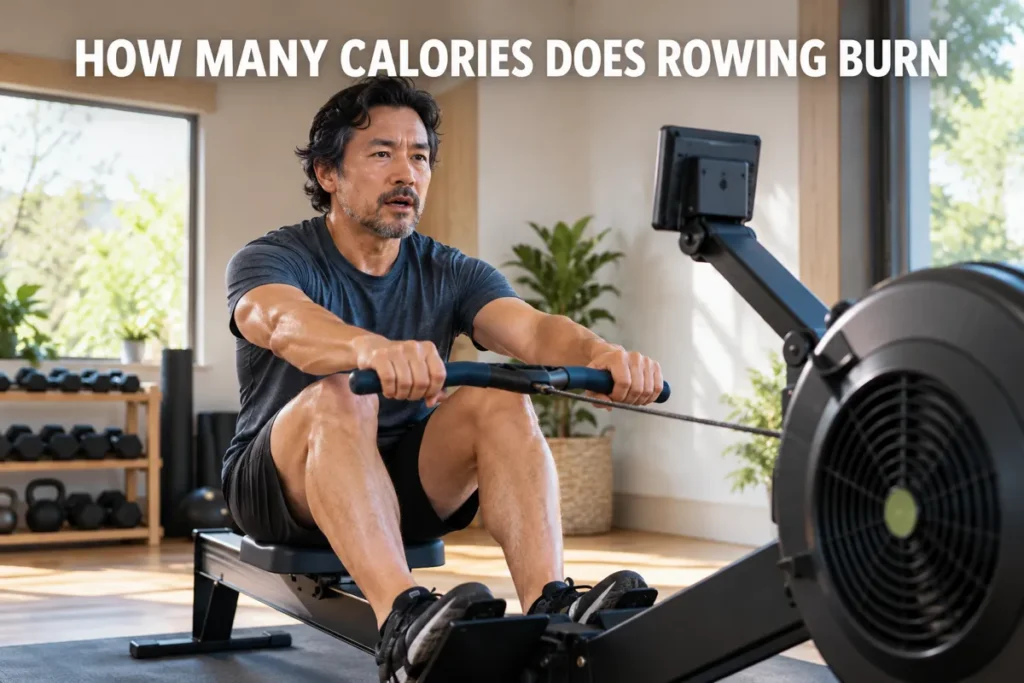
If you want to know how many calories rowing burns, the answer depends on your body weight, effort level, session length, and technique - but I can give you concrete, research-grounded estimates instead of vague ranges. After more than 15 years in fitness and a coaching career rooted in sport science at the Faculty of Sport and Physical Education in Novi Sad, I have put hundreds of clients on rowing ergometers and tracked their caloric output across intensities. What I found consistently: rowing burns a significant number of calories because it recruits both upper-body pulling muscles and lower-body drive simultaneously. This guide covers calorie estimates by weight and intensity, distance benchmarks, factors that shift your burn, and why rowing holds up as a legitimate fat-burning cardio tool.

How Many Calories Does Rowing Burn - Weight-Based Estimates You Can Use
Calorie estimates for rowing are typically presented for a single benchmark bodyweight, which makes them nearly useless if you are significantly lighter or heavier. Body weight is the dominant variable in caloric expenditure, because heavier bodies require more muscular force and metabolic work to complete the same stroke cycle. A 2024 study published in Frontiers in Sports and Active Living measured energy expenditure across seven cardio machines at vigorous effort (RPE 17) and found that rowing burns approximately 11.45 calories per minute for middle-aged adults (1). Lighter or heavier individuals will see proportionally lower or higher figures.
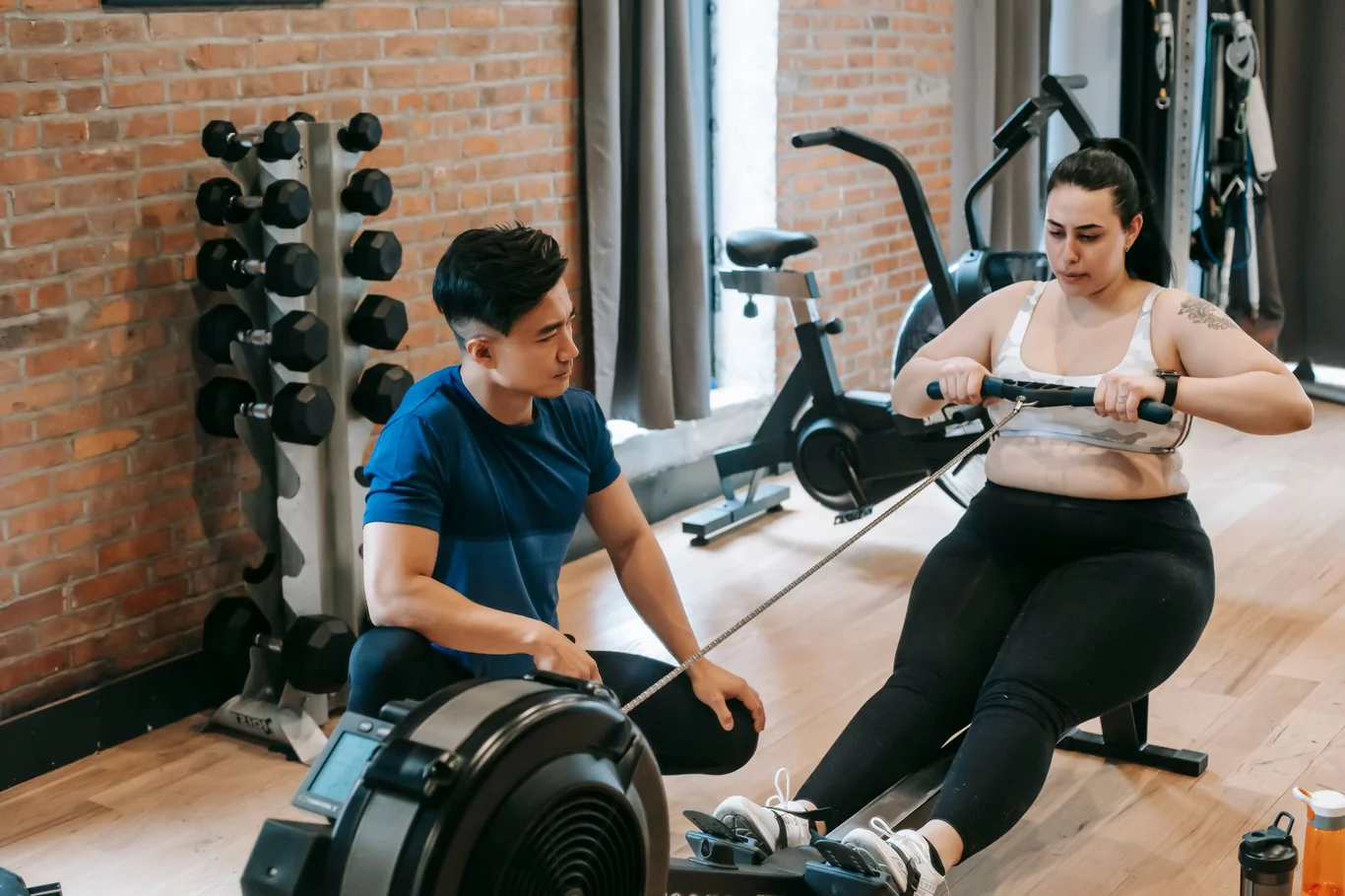
30-Minute Calorie Burn Estimates by Body Weight and Intensity
The table below shows estimated calories burned during a 30-minute rowing session grouped by body weight and three intensity levels. These estimates use established MET values for rowing - light rowing at 3.5 METs, moderate rowing at 7.0 METs, and vigorous rowing at 8.5 METs. Every figure is a range, because machine type, rowing efficiency, and individual metabolism introduce meaningful variance.
Body Weight | Light Effort | Moderate Effort | Vigorous Effort |
130 lb (59 kg) | 105-115 cal | 215-225 cal | 260-270 cal |
155 lb (70 kg) | 120-135 cal | 245-265 cal | 300-325 cal |
180 lb (82 kg) | 145-160 cal | 295-310 cal | 360-375 cal |
205 lb (93 kg) | 165-180 cal | 335-350 cal | 410-425 cal |
230 lb (104 kg) | 185-200 cal | 375-390 cal | 460-475 cal |
Estimates use the MET formula: cal/min = (MET x body weight in kg x 3.5) / 200. Results are individual and will vary by technique, machine resistance, and metabolic rate.
Calorie Burn by Session Duration
Duration scales caloric expenditure in a roughly linear fashion at steady-state intensities. A 155-pound rower at moderate effort burns approximately 8.5-9 calories per minute. The figures below apply to that benchmark weight; scale up by roughly 15-18% per additional 25 pounds of body weight. Calories burned rowing machine 10 minutes at moderate effort total approximately 85-90 calories for a 155-pound person, making even short sessions worth logging.
Duration | Moderate Effort | Vigorous Effort |
10 min | 85-90 cal | 103-107 cal |
20 min | 170-175 cal | 206-215 cal |
30 min | 245-265 cal | 300-325 cal |
45 min | 385-395 cal | 450-465 cal |
60 min | 510-520 cal | 600-625 cal |
For a 155-pound individual. Vigorous effort corresponds to 26-30 strokes per minute at high power output.
What Determines How Many Calories Rowing Burns
The calorie tables above give useful baselines, but I have watched the same client vary by 20-30% in caloric output across sessions at nominally the same duration and resistance setting. Intensity depends on the force you generate per stroke, not resistance alone. Several interdependent factors determine your actual calorie burn. I explain how to set the resistance on a rowing machine for your level in a separate guide.
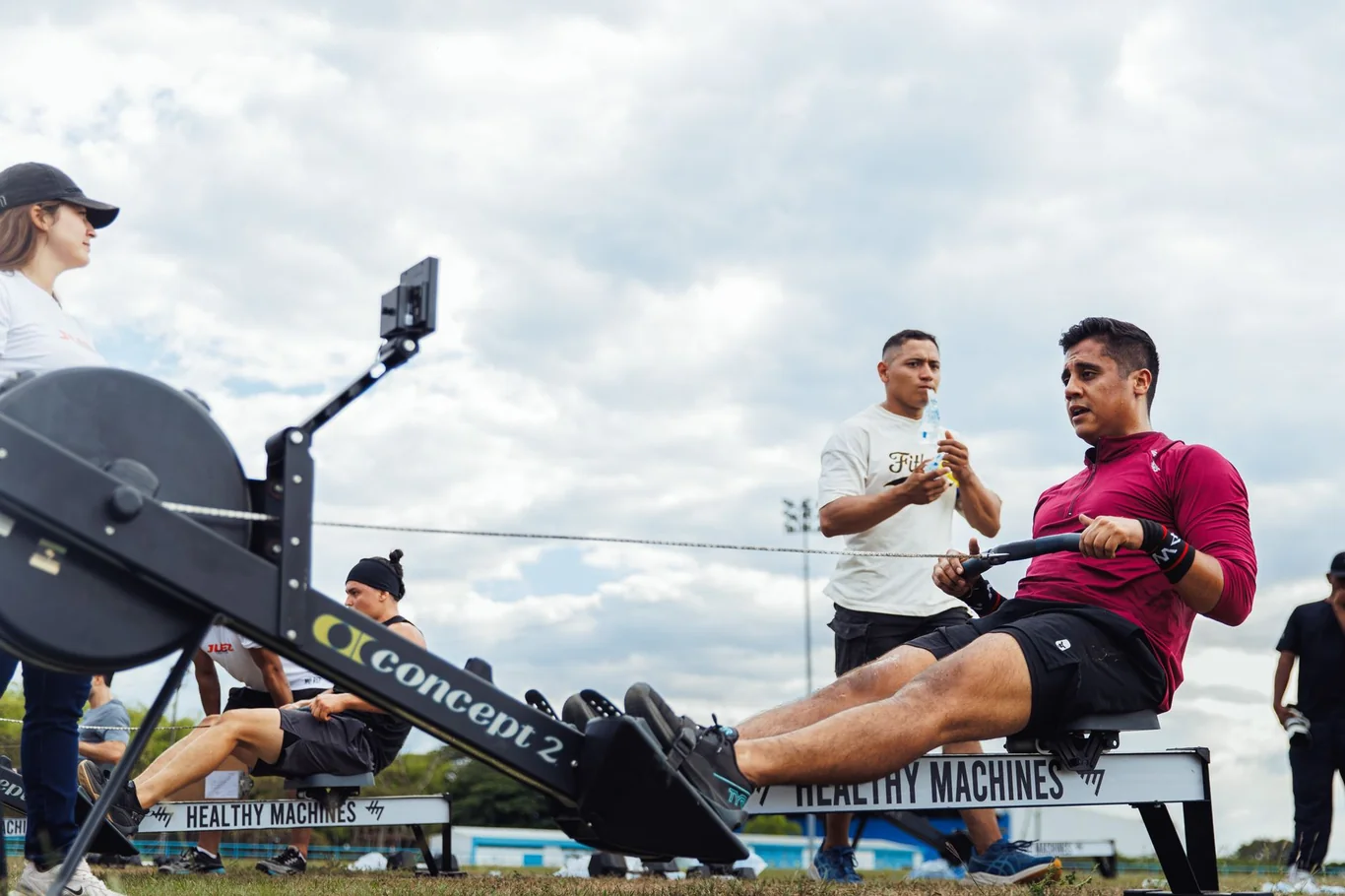
Stroke Rate, Strokes per Minute, and Power Output
Strokes per minute (SPM) is the most visible intensity indicator on the monitor, but it tells an incomplete story. A rower pulling 20 SPM with explosive leg drive and full arm reach burns more calories than someone pulling 26 SPM with a choppy, shortened stroke. What actually drives caloric expenditure is power output, measured in watts on most modern ergometers. A practical reference at steady state:
- 100 watts: approximately 420-500 calories per hour
- 150 watts: approximately 630-720 calories per hour
- 200 watts: approximately 840-950 calories per hour
- 250 watts: approximately 1,050-1,200 calories per hour
These figures are derived from mechanical efficiency calculations and will differ meaningfully from on-machine displays, particularly at moderate power outputs where the ergometer's resting-offset calculation adds a significant base value to the displayed figure.
Rowing Technique - Catch, Drive, Finish, and Recovery
Technique directly determines how much total muscle mass contributes to each stroke, which in turn drives rowing calories burned. Research comparing body positions during the finish phase found that greater lean-back at the finish produces approximately 15% higher energy expenditure and elevated oxygen uptake at the same effort level (2). I always guide clients through correct rowing form before chasing intensity, because it is the single highest-return investment in calorie output.
The most calorie-suppressing technical errors I consistently see are:
- Shooting the hips early at the catch instead of initiating leg drive first
- Pulling with the arms before the legs complete their drive phase
- A rushed recovery that cuts short the deceleration back to the catch position
- Incomplete arm pull that stops the handle short of the lower chest at the finish
- Spine rounding at the catch that limits posterior chain recruitment
Each error reduces total muscle involvement per stroke, which is why I list the muscles a rowing machine works one by one. When I corrected form in clients, their perceived exertion at the same pace often increased - because more muscles were finally doing the work.
Damper Setting and Drag Factor
Many people assume that turning the damper to its highest setting makes rowing harder and therefore burns more calories. In reality, the damper controls airflow into the flywheel housing, which affects drag factor - the resistance the flywheel provides per revolution. A higher damper is not automatically a more intense workout. Follow these steps to use it correctly:
- Set the damper to a position that allows proper form at your target SPM
- Check the drag factor reading in the Performance Monitor (PM) menu on a Concept2 ergometer
- Recreational rowers typically perform best at drag factor 110-130; competitive rowers often use 120-135
- A drag factor set too high forces a slower recovery phase, reducing total calories burned per minute over a longer session
Age, Fitness Level, and Metabolic Rate
Age affects caloric expenditure in rowing through two mechanisms: declining muscle mass and reduced VO2 max. A 50-year-old rower at the same body weight and effort as a 30-year-old will typically burn fewer calories per session, primarily because of lower maximal oxygen uptake - the exact difference varies by individual fitness history and muscle mass retention. Fitness level also matters in a counterintuitive way: research on collegiate female rowers showed that more trained individuals demonstrated superior cardiorespiratory coordination, meaning they convert oxygen to mechanical output more efficiently (3). More efficient rowers may actually burn fewer calories at a given pace - the paradox of fitness that keeps cardio from ever becoming fully routine.
How Many Calories Does Rowing Burn in 30 Minutes - A Closer Look
How many calories does rowing burn in 30 minutes? For a 155-pound person, a 30-minute session produces the following estimates:
- Light effort (20-22 SPM, RPE below 12): 120-135 calories
- Moderate effort (22-24 SPM, RPE 12-14): 245-265 calories
- Vigorous effort (26-30 SPM, RPE 14-17): 300-325 calories
- High-intensity intervals (alternating max effort with rest): 330-400 calories including EPOC effect
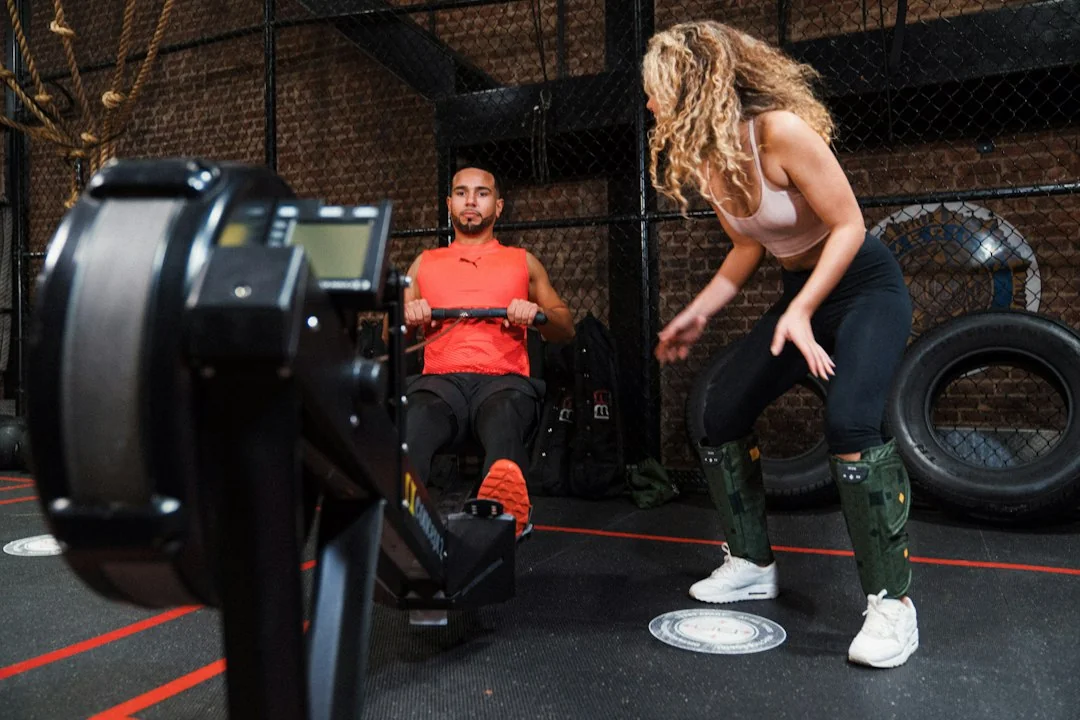
The EPOC (excess post-exercise oxygen consumption) effect is worth understanding for anyone targeting calorie output. Research indicates that vigorous sessions and interval rowing workouts raise your metabolic rate for a period after the workout ends, contributing additional calories to the total caloric cost beyond what the monitor displays. This is why a 30-minute vigorous row consistently produces more total caloric expenditure than the on-machine display suggests.
I recommend tracking average watts alongside session duration rather than relying solely on the machine's calorie counter. Rowing ergometer displays use calibrated algorithms that provide a useful estimate but tend to underestimate output for heavier rowers and overestimate for lighter ones - the formula's resting-offset component does not scale proportionally with body weight. Tracking average watts gives you a more consistent and independent measure of true effort across sessions.
Rowing also builds significant lean muscle alongside calorie burn. If building muscle while burning calories is a priority for you, understanding what rowing does to muscle mass will put the two goals in context.
Rowing Calories Burned by Distance - Benchmarks for 1,000m to 5,000m
I use distance-based workouts, a standard part of rowing workout plans, because knowing your calorie output for a set distance helps you structure training and manage daily energy balance. The estimates below draw on energy cost research published in Frontiers in Physiology (4) alongside MET-based calculations, assuming a 155-pound rower. All figures are estimates with meaningful individual variance based on pace, form quality, and physiological efficiency.

Calories Burned Rowing 1,000 Meters
Calories burned rowing 1000m reflect a short but demanding effort for most recreational rowers. A 1,000-meter piece at moderate intensity typically takes recreational rowers 4-6 minutes, burning approximately 50-75 calories for a 155-pound person. At vigorous intensity (sub-4-minute pace), output rises to 75-95 calories, but the effort is considerably harder to sustain for any length of time.
Calories Burned on a Rowing Machine Over 2,000 Meters
The 2,000-meter test is the gold standard benchmark in indoor rowing. Calories burned rowing machine 2000m vary significantly by fitness level and completion time:
- Beginner (10-12 minutes): approximately 100-130 calories for a 155-pound rower
- Intermediate (8-10 minutes): approximately 90-120 calories for a 155-pound rower
- Competitive (sub-7 minutes): approximately 120-160 calories (higher intensity offsets shorter duration)
For a worked example on how many calories burned rowing machine 2000m at intermediate pace: a 180-pound rower completing 2,000 meters in 9 minutes burns approximately 90 calories, based on MET 7.0 and 82 kg body weight (7.0 x 82 x 3.5 / 200 = 10.0 kcal/min x 9 min = 90 cal). Adjust upward for greater effort or heavier body weight. My benchmarks for rowing times at 500m and 2k by age and level show where a 2,000 meter piece should land.
Calories Burned Rowing 5,000 Meters
Calories burned rowing 5000 meters place this workout in the moderate-to-vigorous intensity range for most recreational rowers, with completion times typically running 22-28 minutes. Estimated calories for a 155-pound rower:
- At moderate pace (22-24 SPM): approximately 200-250 calories
- At vigorous pace (25-28 SPM): approximately 260-320 calories
A worked example: a 180-pound rower completing 5,000 meters in 25 minutes at moderate effort burns approximately 250 calories (MET 7.0 x 82 kg x 3.5 / 200 = 10.0 kcal/min x 25 min = 250 cal). Research by Blervaque et al. (2022) found that energy cost per meter increases linearly with velocity up to around 5.23 m/s in elite rowers, confirming that rowing harder does not produce proportional caloric gains at the highest intensities (4).
Is Rowing Effective for Fat Loss and Reducing Belly Fat
Rowing machine workouts are genuinely effective for fat loss, and I want to be precise about the mechanism. Fat oxidation during rowing peaks at lower relative intensities - roughly 30-35% of VO2 peak, which corresponds to a light-to-moderate effort on the ergometer. A study comparing fat oxidation rates across rowing, treadmill, and elliptical exercise found a maximum fat oxidation rate of 0.40 grams of fat per minute during rowing at that intensity (5). At vigorous intensities, the body shifts toward carbohydrate as the primary fuel source.
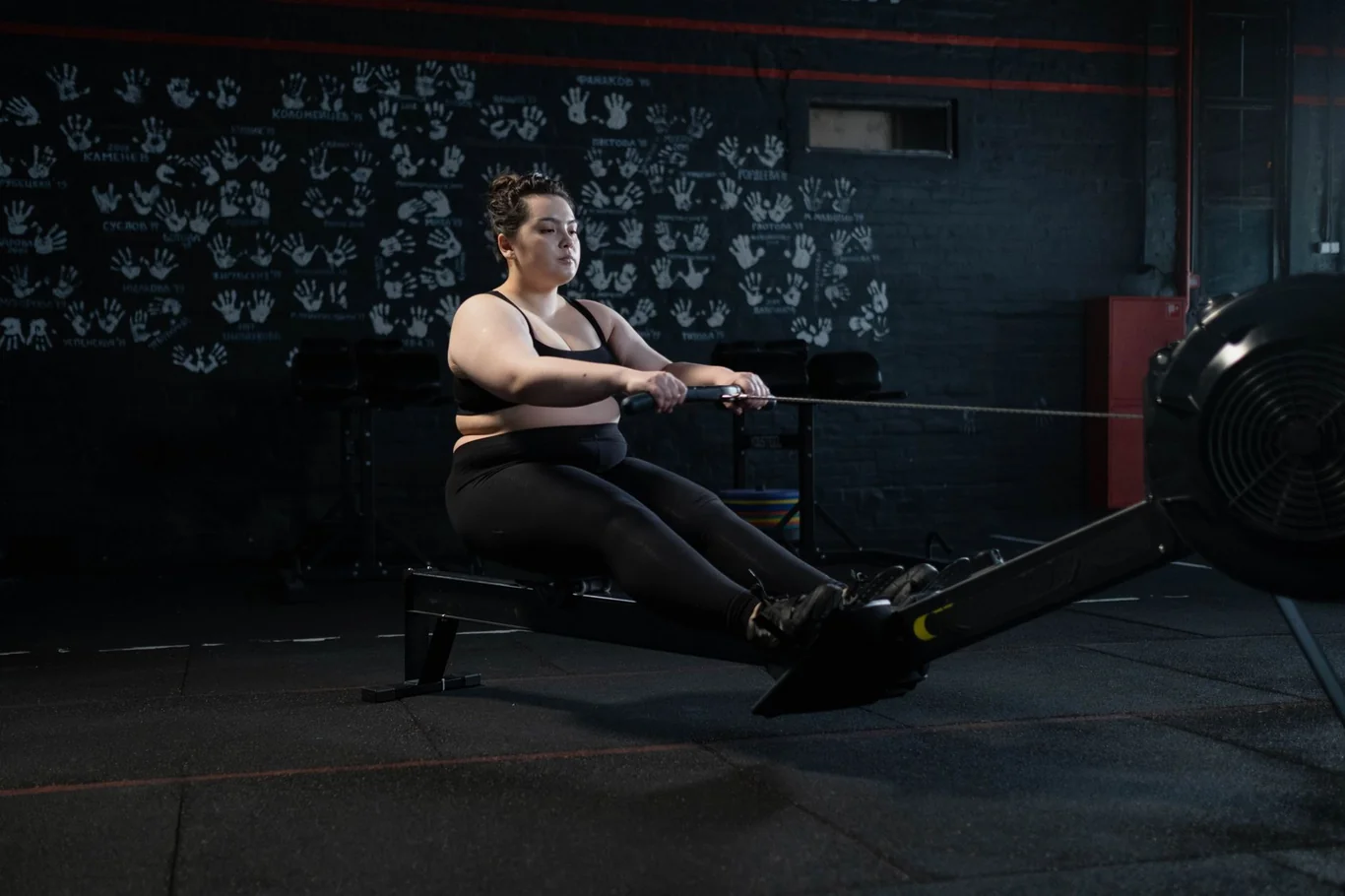
For belly fat specifically, no form of cardio directly targets regional fat storage. What rowing does is contribute to total caloric deficit, which drives systemic fat loss over time, including from abdominal tissue. Preliminary research on a 6-week indoor rowing program showed significant reductions in total body fat percentage and fat mass, alongside a non-significant trend toward improvement in lean body mass (6). If building muscle alongside fat loss is a goal, understanding what rowing does to muscle mass covers the full picture.
The main ways rowing supports fat loss include:
- Caloric deficit contribution - sessions burn 250-650+ calories depending on intensity and body weight
- Muscle mass maintenance - the full-body resistance component supports lean tissue and resting metabolic rate
- Post-exercise metabolism elevation - vigorous sessions produce an EPOC effect that extends caloric burn after the session ends
- Cardiovascular conditioning improvement - aerobic capacity gains increase the percentage of fat oxidized at sub-maximal intensities over time
- Low injury risk - the joint-friendly movement pattern allows consistent training without the recovery demands of high-impact cardio
I have personally seen clients reduce body fat percentage measurably after 6-8 weeks of consistent moderate-intensity rowing three times per week, even without dramatic dietary changes; I also examine whether a rowing machine is good for weight loss. The key variable is regularity, not peak intensity on every session.
Rowing Machine Calories Compared to Other Cardio Machines
One of the most common questions I get from clients considering a rowing machine investment is whether rowing burns more calories than their current machine. The honest answer is: it depends on intensity and the individual. Prieto-González and Yagin (2024) found that rowing ranked sixth out of seven cardio machines for calorie expenditure at vigorous effort - behind treadmill, stair climber, elliptical, spin bike, and upright bike (1). This reflects that rowing is a non-weight-bearing exercise, removing the metabolic cost of supporting body mass that elevates calorie burn on weight-bearing machines.
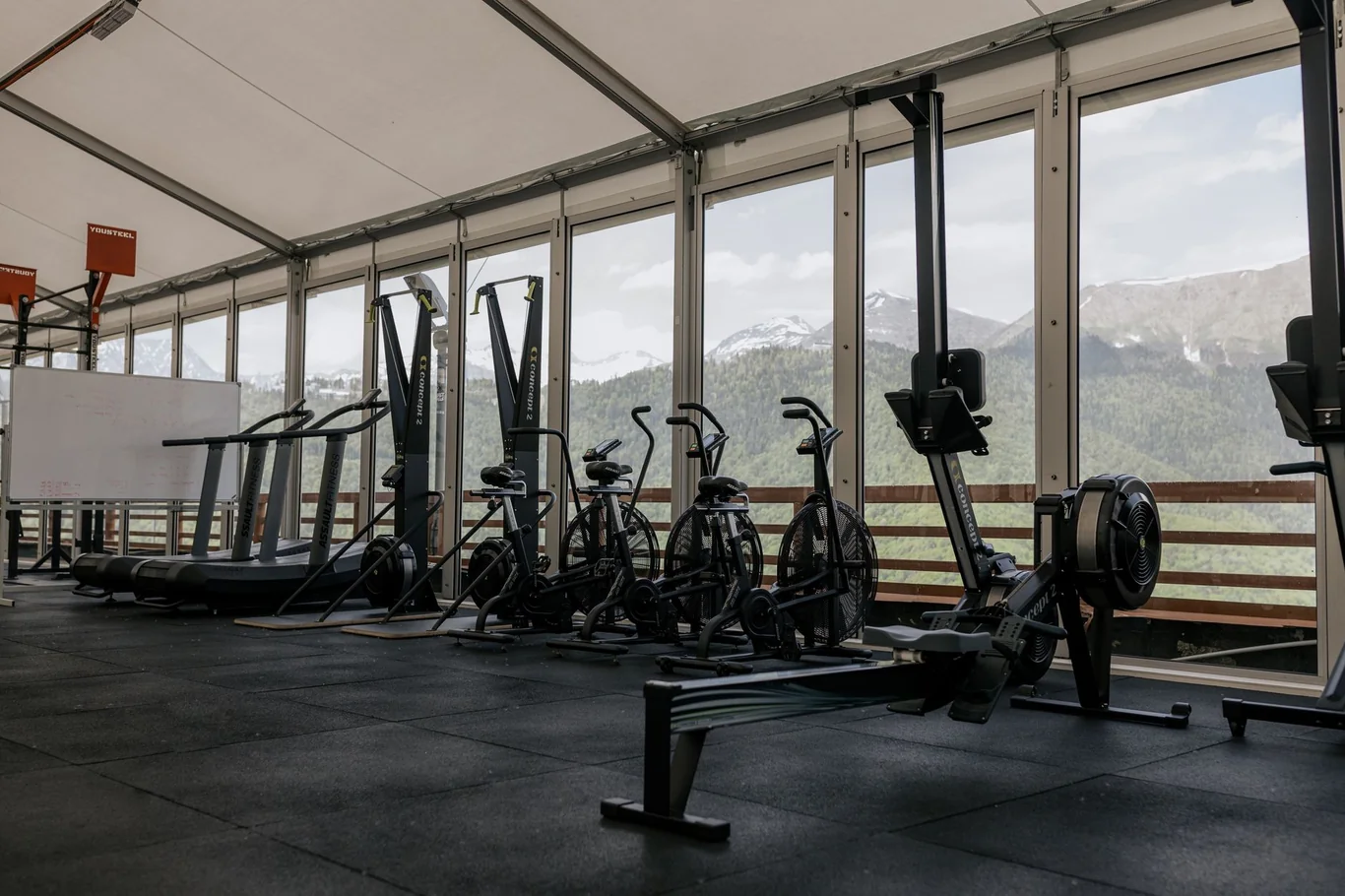
A practical comparison for a 155-pound person at moderate effort over 30 minutes:
Machine | Calories (30 min) | Notes |
Treadmill | 290-350 cal | Weight-bearing; higher burn from body weight support |
Stair climber | 270-310 cal | Weight-bearing; intense lower-body demand |
Rowing | 245-265 cal | Non-weight-bearing; full upper/lower combined |
Spin bike | 240-260 cal | Non-weight-bearing; primarily lower body |
Upright bike | 220-250 cal | Non-weight-bearing; primarily lower body |
Elliptical | 180-210 cal | Non-weight-bearing; upper/lower split |
The advantage rowing offers is the combination of cardiovascular conditioning and upper-body muscular engagement in a single joint-friendly movement. Elite rowing physiology research indicates that rowers develop extraordinarily high aerobic capacity, with oxygen consumption patterns that reflect total-body muscular recruitment during each stroke cycle (7). For heavier individuals, the caloric gap between rowing and weight-bearing machines narrows considerably, because body weight drives expenditure on non-bearing machines too. My comparison of rowing and running covers impact, calorie burn, and muscle use.
Tips for Maximizing Calories Burned on a Rowing Machine
Getting the most caloric value from your rowing sessions comes down to four practical priorities:
- Prioritize technique before intensity - a correctly executed stroke engages more total muscle mass per repetition, raising metabolic cost even at the same SPM
- Use interval training strategically - alternating 1-2 minute hard efforts at 28-30 SPM with equal or slightly longer active recovery intervals maximizes both caloric burn and the EPOC effect
- Target 20-30 minute sessions for fat oxidation - staying at 22-24 SPM keeps you near your Fatmax intensity, where the fat oxidation rate peaks relative to total energy expenditure
- Track watts, not just calories - average wattage is a more accurate and consistent measure of true effort than on-machine calorie estimates

A 20-minute moderate row at 155 pounds burns approximately 170 calories - roughly equivalent to 5,000-6,000 steps at a brisk pace, though the comparison is imperfect because step-based formulas use walking mechanics rather than ergometer rowing. I also recommend noting your average split time (displayed as time per 500 meters on most monitors) alongside wattage. Split time is the clearest real-time signal of whether you are genuinely hitting your intensity target.
What These Numbers Mean for Your Rowing Goals
Rowing burns between 120 and 480 calories per 30 minutes at steady-state intensities, with high-intensity interval sessions reaching 400+ calories including post-exercise metabolic effects. The most reliable figure for a 155-pound person at moderate effort is 245-265 calories per 30 minutes; at vigorous effort, the range climbs to 300-325 calories. The peer-reviewed evidence aligns closely with these estimates (1, 7). If you are still picking a machine, I list my tested rowing machine picks for every home gym setup.
What matters more than the exact number is consistency. I coach every client the same way: aim for 20-30 minute sessions at moderate-to-vigorous intensity three to four times per week, use correct form at the catch and throughout the drive, and track average watts rather than relying on the machine's display. The calorie numbers will reflect genuine effort.
For cross-referencing, see how many calories you burn walking 10,000 steps and how treadmill step counts translate to distance to frame rowing against walking-based cardio. If you are weighing rowing against stair climbing, knowing how many calories does stairmaster burn will help you decide which tool better suits your goals and joint tolerance.
FAQs
Is rowing good to lose belly fat?
Rowing is an effective tool for reducing total body fat, including belly fat, because it contributes to the sustained caloric deficit that drives fat loss across the body. No form of cardio eliminates fat from a specific region, but consistent rowing at moderate to vigorous intensity three or more times per week creates the energy deficit that reduces fat systemically, including from the abdominal area, over time.
Is 20 minutes of rowing enough?
Twenty minutes of rowing at moderate-to-vigorous effort produces meaningful cardiovascular and caloric benefits for most people. A 155-pound person burns approximately 165-220 calories in 20 minutes at moderate to vigorous intensity, and research supports that sessions of this duration improve VO2 max, fat oxidation, and body composition when performed consistently over several weeks.
How many minutes of rowing equal 10,000 steps?
Approximately 40-50 minutes of rowing at moderate effort produces a similar calorie output to 10,000 steps at a brisk pace for a 155-pound person - roughly 350-450 calories. At vigorous effort, you can match that output in about 30-35 minutes. Rowing is not designed to replicate walking mechanics, so this comparison works best as a rough energy-expenditure reference rather than a direct substitute.
How many calories do 30 minutes on a rower burn?
A 30-minute rowing session burns between 120 and 480 calories depending on body weight and intensity level. For a 155-pound person at moderate effort, the most reliable estimate is 245-265 calories; at vigorous effort, the range is 300-325 calories. Heavier individuals and those working at higher power outputs will see figures toward the upper end of these ranges.
How many calories does rowing burn calculator?
Rowing calorie calculators use MET values and the standard formula (MET x body weight in kg x 3.5 / 200 = kcal/min) to generate estimates. These are estimates, not precise measurements - most calculators carry a margin of error of 10-20% depending on individual metabolic rate, rowing technique efficiency, and machine type. For a more accurate figure, use a heart-rate monitor in conjunction with your rowing session data and compare average watts to established wattage-to-calorie conversion tables.
This content is for informational and educational purposes only. It is not a substitute for professional medical advice, diagnosis, or treatment. Always consult with your healthcare provider before starting any new fitness program or using fitness technology for health monitoring.
References
- Prieto-González P, Yagin FH. Energy expenditure, oxygen consumption, and heart rate while exercising on seven different indoor cardio machines at maximum and self-selected submaximal intensity. Front Sports Act Living. 2024;6:1313886. doi:10.3389/fspor.2024.1313886.
- Bell G, Bennett J, Reynolds W, Syrotuik D, Gervais P. A physiological and kinematic comparison of two different lean back positions during stationary rowing on a Concept II machine. J Hum Kinet. 2013;37:99-108. doi:10.2478/hukin-2013-0030.
- Papadakis Z, Etchebaster M, Garcia-Retortillo S. Cardiorespiratory coordination in collegiate rowing: A principal component analysis approach. Int J Environ Res Public Health. 2022;19(20):13250. doi:10.3390/ijerph192013250.
- Blervaque L, Bowen M, Chatel B, Corbex E, Dalmais E, Messonnier LA. Is the energy cost of rowing a determinant factor of performance in elite oarsmen? Front Physiol. 2022;13:827932. doi:10.3389/fphys.2022.827932.
- Filipovic M, Munten S, Herzig KH, Gagnon DD. Maximal fat oxidation: Comparison between treadmill, elliptical and rowing exercises. J Sports Sci Med. 2021;20(1):170-178. doi:10.52082/jssm.2021.170.
- Shin KY, Choi EH, Lim JY, Cho AR, Lim YH. Effects of indoor rowing exercise on the body composition and the scoliosis of visually impaired people: A preliminary study. Ann Rehabil Med. 2015;39(4):592-598. doi:10.5535/arm.2015.39.4.592.
- Volianitis S, Koutedakis Y, Secher NH. Advances in rowing physiology. Front Physiol. 2022;13:939229. doi:10.3389/fphys.2022.939229.