
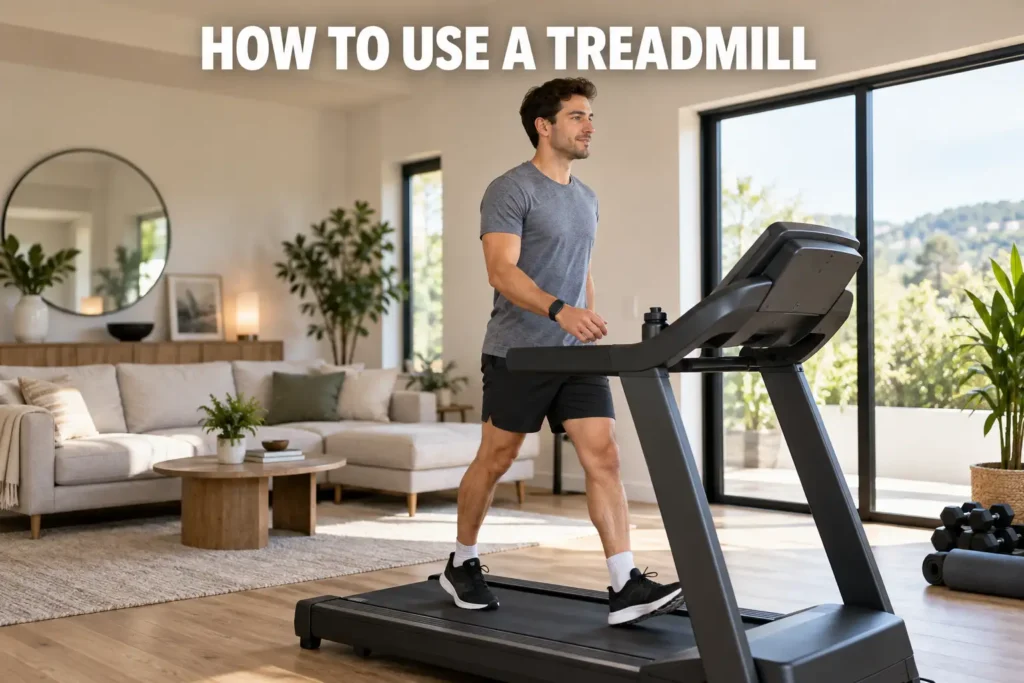
How to use treadmill equipment safely and effectively is one of the first questions anyone asks when stepping on a belt for the first time. Getting this right from the start separates productive sessions from frustrating ones. In this guide, you will learn how to attach the safety key, read the control panel, choose the right program, and build a beginner-friendly routine that delivers results. We cover calorie-burning strategies, incline techniques, proper form, and the common mistakes most new users make. Our breakdown is designed for gym members and home machine owners alike, step by step, from first use to confident cardio.

How to Use Treadmill Step-by-Step for Beginners
Learning how to use treadmill equipment correctly begins before you ever press start. The three things that matter most at the outset are the safety key, the control panel, and your starting speed. Getting each right protects your joints, your confidence, and your results over the long run.
Treadmills offer a practical training advantage that outdoor running cannot match: a controlled, cushioned environment available in any weather. Core benefits include improved cardiovascular health, lower joint impact compared to road running, precise speed and incline control for progressive overload, built-in calorie and heart rate monitoring, and the ability to replicate outdoor terrain using incline programs. These factors make treadmills equally useful for rehabilitation, weight management, and performance training.
For users weighing the treadmill against alternative cardio machines before committing, my stairmaster and treadmill breakdown covers how the two machines compare on calorie burn, muscle engagement, and joint stress.
If rehabilitation or a documented health condition is your primary training context, a physician may support your case for treadmill FSA eligibility, which can reduce the equipment cost by 20 to 35 percent through pre-tax spending accounts.
If you are currently deciding which machine to bring home, our guide to the best treadmill for home breaks down top-rated options at every price tier.
Attaching the Safety Key
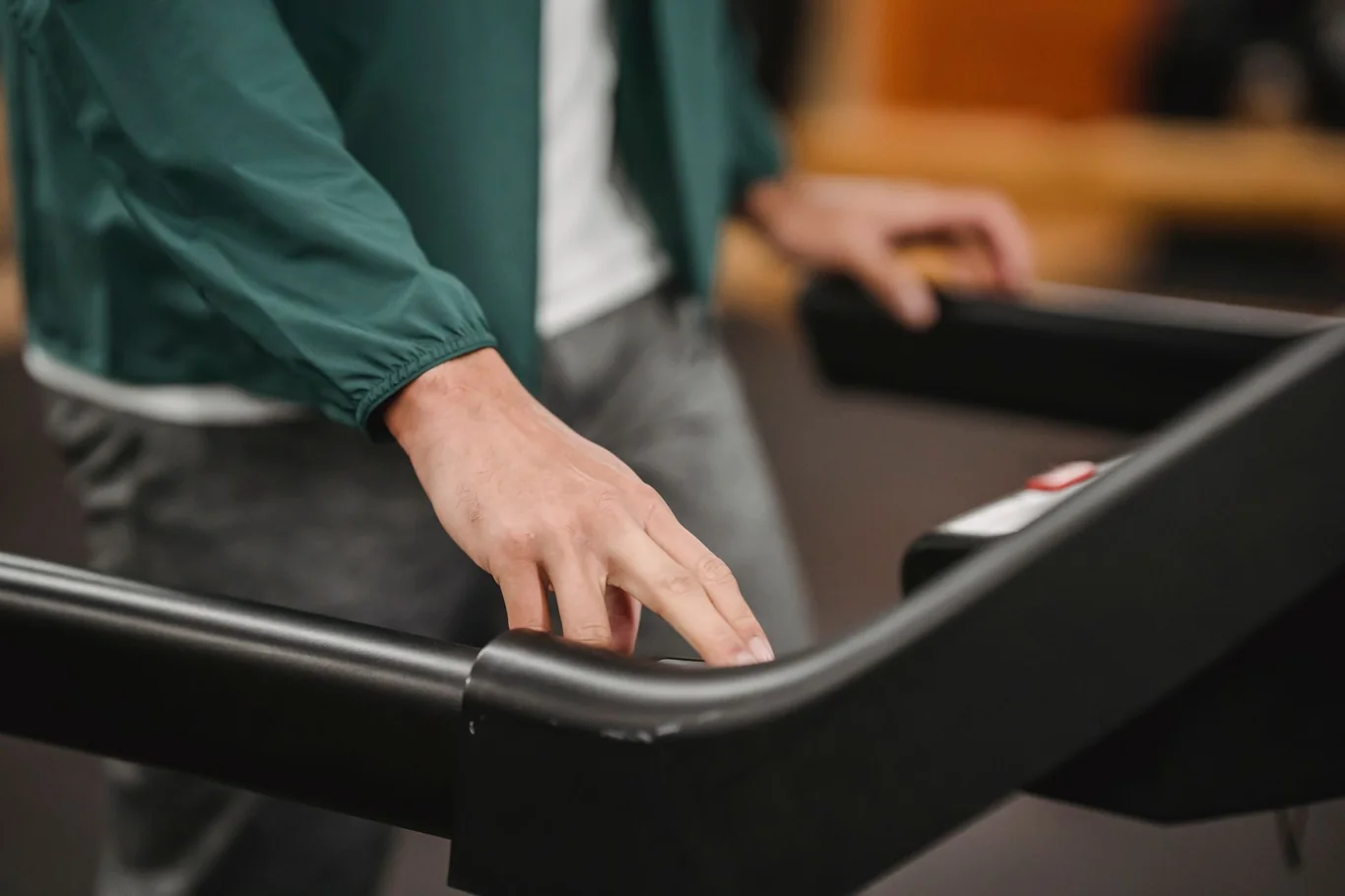
The safety key (also called the emergency stop clip) is the single most important feature on any treadmill, and it takes ten seconds to use correctly. Clip one end to the machine's emergency stop port and attach the other end to your waistband or clothing. If you stumble or fall, the key pulls free and the belt stops immediately, preventing a dangerous runaway-belt situation. This step is non-negotiable on every session, beginner or experienced. When I first started training on a treadmill seriously, I skipped the safety key for months - a near-fall at 4.2 mph was all it took to make clipping it on an automatic reflex before every session.
Confirm yours works before relying on it:
- Clip the key to your clothing and the treadmill port.
- Set the belt to a slow speed (1.5-2.0 mph).
- Gently pull the clip free and confirm the belt stops within one second.
- Re-attach the key before continuing your session.
If you stumble or fall during a session, step to the side rails rather than grabbing the moving belt surface - friction burns from belt contact are a more common treadmill injury than most people expect. The belt stops once the safety key pulls free, so take a moment to collect yourself on the side rails before restarting.
Understanding the Treadmill Control Panel
The treadmill control panel varies by model, but every machine shares a core set of buttons and displays. Knowing what each control does is central to how to use treadmill control panel features without confusion. Here is what the standard layout includes:
Control | Function |
Start | Begins belt movement at the minimum speed or the setting from your previous session |
Stop | Halts the belt; most machines pause the session timer rather than resetting it |
Speed + / Speed - | Adjusts belt speed in 0.1-0.5 mph increments depending on model |
Incline + / Incline - | Raises or lowers the deck angle in 0.5-1.0% grade increments |
Quick Start | Bypasses program setup and launches the belt at a low default speed immediately |
Program | Opens the preset workout mode library; use arrow keys or number keys to select |
Emergency Stop | Red button that halts the belt instantly; the safety key magnetic clip connects here |
Display Panel | Shows current speed (mph or km/h), incline percentage, time elapsed, distance, estimated calories, and heart rate when grip sensors are active |
More advanced models add heart rate monitors on the handrails, Bluetooth syncing, and touchscreen interfaces. The core control functions above apply to virtually every treadmill on the market regardless of price tier.
If connected features are not a training priority, my guide on the best treadmill without subscription covers machines that offer full console access, including incline and speed control, without any recurring fee.
Proper Form and Posture on a Treadmill
Before increasing speed or adding incline, establishing correct form prevents the habits that cause joint strain and reduce session efficiency. Keep your posture upright with shoulders back and relaxed - avoid the forward lean that develops from gripping the handrails for support. Your gaze should stay level, fixed on a point at eye height on the wall or display rather than looking down at your feet. Arms should swing naturally at your sides in a bent-elbow position, not locked onto the side rails. Land with a midfoot strike under your center of gravity rather than a heavy heel strike extended in front of you. A shorter, lighter stride generates less impact force per step than overstriding and is more energy-efficient across longer sessions.
Starting Your First Walk or Run
How to use treadmill for beginners comes down to one principle: start slower than you think you need to. Most first-time users set the belt too fast immediately and spend the session white-knuckling the handrails, which reduces calorie burn and reinforces poor posture at the same time. Follow this sequence for your first session:
- Stand on the side rails with both feet before starting.
- Confirm your safety key is attached.
- Press Start and let the belt begin at a low speed (1.0-1.5 mph).
- Step onto the moving belt one foot at a time once it is running steadily.
- Walk at 2.5-3.0 mph for 3-5 minutes to warm up once you are balanced and comfortable.
- Increase speed gradually by 0.5 mph every 2-3 minutes toward your target pace.
- Maintain upright posture: shoulders back, core lightly engaged, gaze forward.
- At session end, slow to 2.0-2.5 mph for a 3-5 minute cool-down before stepping off.
A structured warm-up makes a measurable difference in how your body responds to exercise. Research comparing two warm-up protocols found no significant difference in peak oxygen uptake between a dynamic bodyweight routine and a treadmill walking warm-up in young exercisers, confirming that performing any structured warm-up consistently matters more than which type you choose (1). Spending those first five minutes at a comfortable pace is time well spent, not wasted.
If you are unsure what speed corresponds to an easy, moderate, or fast pace for your fitness level, my treadmill pace and speed guide maps every mph setting to its min/mile equivalent and training zone.
How to Use Treadmill Programs and Built-In Workout Modes
Understanding the available workout modes is a core part of how to use treadmill effectively, because the right program automates effort variation without requiring you to monitor buttons every two minutes. Most modern machines offer three main modes.
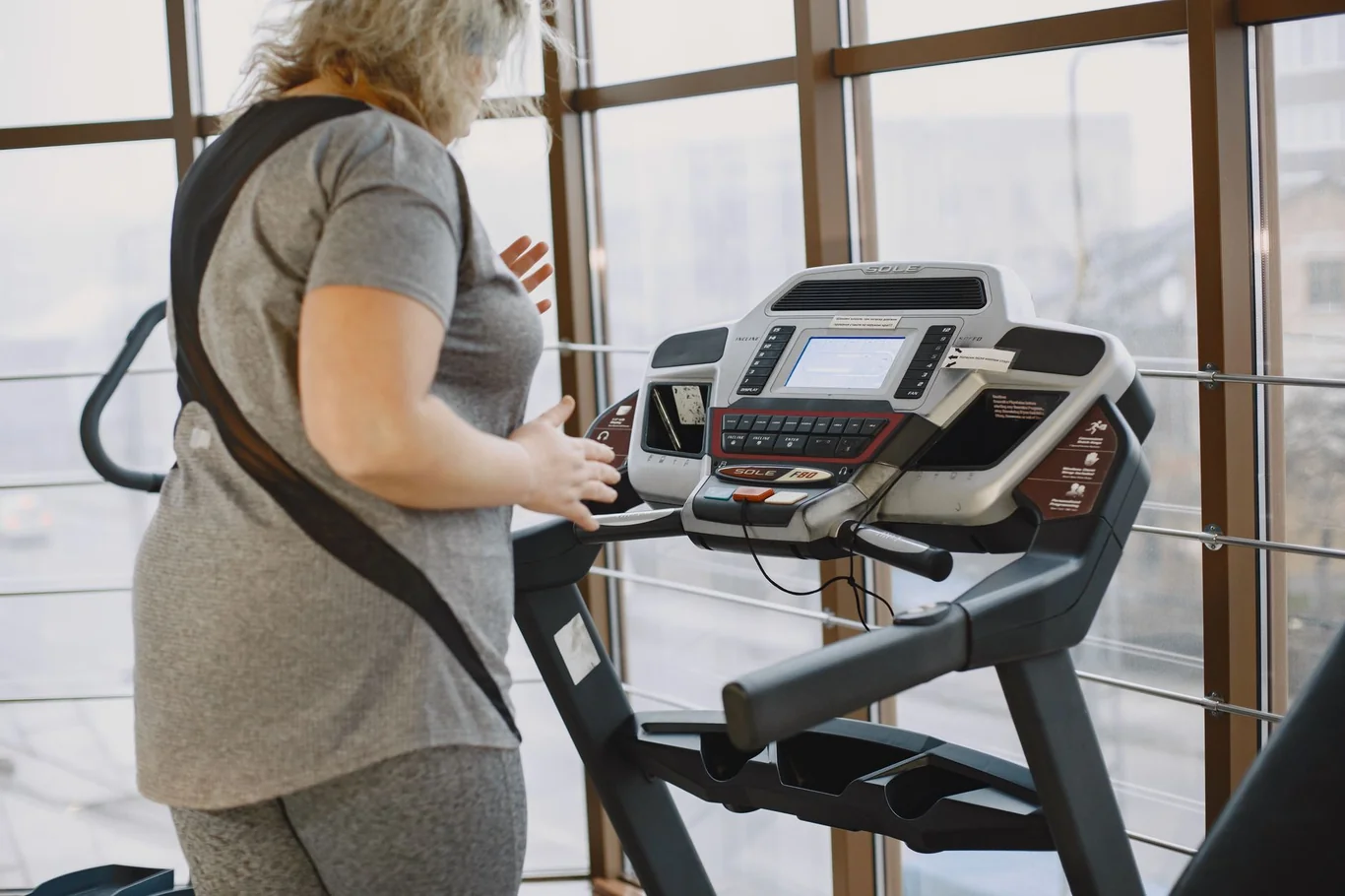
Manual Mode is the default on every treadmill. You control speed and incline yourself throughout the session. This works well for steady-state cardio and allows full control over pacing. It suits beginners who are still getting comfortable with how the belt responds to speed changes.
Preset Programs are pre-built sessions stored in the machine. Common options include:
- Fat Burn: Maintains moderate intensity (60-70% max heart rate) for extended durations
- Cardio / Aerobic: Alternates speeds to keep heart rate in the 70-80% zone
- Intervals: Cycles between high effort and recovery periods automatically
- Hills / Incline: Gradually increases and decreases incline to simulate outdoor terrain
- Custom Programs: Many newer machines let you save your own speed and incline pattern
To access programs on most treadmills: press the Program button, scroll with the arrow or number keys, select your session, then press Start. The machine will prompt you for any required inputs like fitness level or goal time. Reading your model's quick-start card takes two minutes and removes all guesswork from program selection.
Heart Rate Control Mode locks belt speed to a target heart rate zone. The machine speeds up when your heart rate drops below the target and slows down when you exceed it. This mode requires handgrip sensors or a chest strap for accurate tracking. Pairing this mode with a smartwatch and understanding what does a smartwatch do in real time makes heart rate data far more actionable during sessions.
For users who want a machine with stronger built-in programs and automated incline control, our best incline treadmill guide covers the top options that make program use genuinely seamless.
How to Use Treadmill to Lose Weight - Calorie Burn and Incline Tips
How to use treadmill to lose weight effectively depends on two variables: session intensity and incline. Steady-state walking at flat grade burns calories, but adding incline dramatically increases the energy cost of every step. Interval training pushes the burn further still by elevating post-exercise oxygen consumption.
For a closer look at how speed and incline adjustments translate into actual energy expenditure, my treadmill calorie tracking guide covers the formulas and practical methods for getting a more reliable estimate.
Incline Walking for Fat Burn
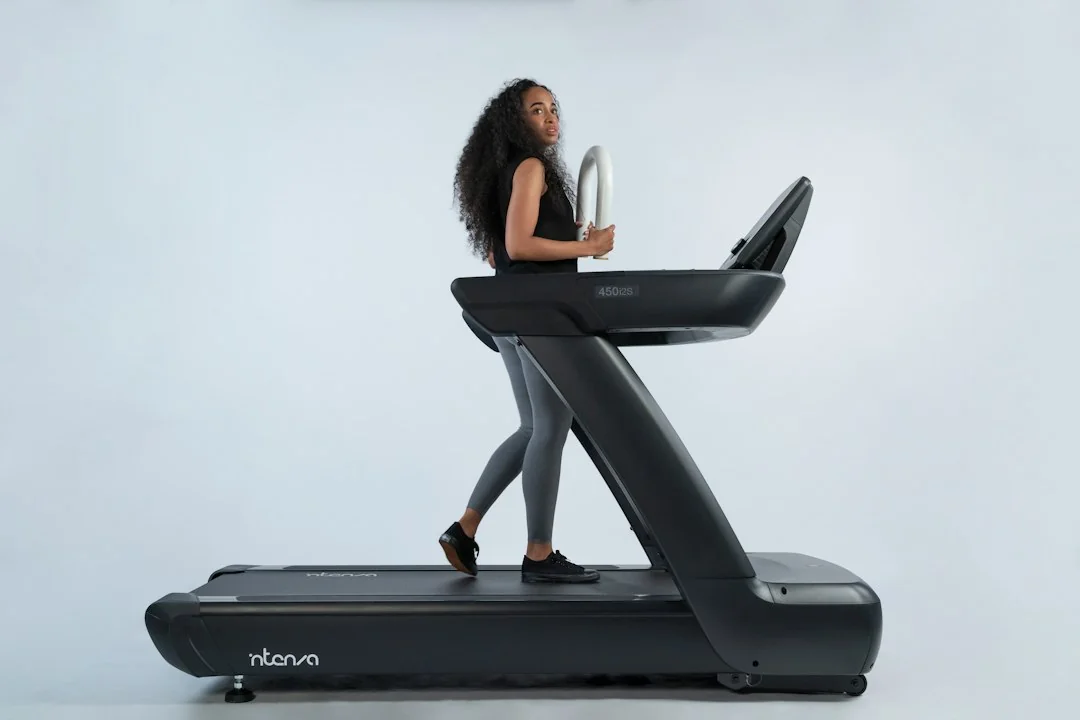
Walking on an incline recruits more lower-body muscle mass per step, which is why it burns significantly more calories than flat walking at the same speed. Research measuring metabolic energy cost in older adults during inclined treadmill gait found that a 10% incline increases energy expenditure by approximately 22.9%, and a 16% incline by 44.2% compared to level walking (2). A separate biomechanics study found that incline walking meaningfully increases soleus and gastrocnemius activation, turning a casual walk into an effective lower-leg strength stimulus (3).
Those asking how to use treadmill to lose weight fast will get the strongest results from incline intervals - these maximize calorie expenditure within a fixed session length. How to use treadmill to lose belly fat specifically requires consistent effort within a calorie deficit: no form of exercise selectively removes fat from a specific area, but consistent treadmill training in a deficit reduces total body fat over time, including abdominal fat. Incline walking at 3.5-4.0 mph with a 6-12% grade for 30-45 minutes, four to five times per week, is a solid and sustainable starting approach. In my own training, switching from flat 3.5 mph walks to 8% incline at the same speed produced noticeably higher calorie burn per session and significantly more lower-leg fatigue - consistent with the metabolic cost data the research above describes.
The table below shows estimated calorie expenditure for a 30-minute treadmill session across common speed and incline combinations. Values are based on standard MET calculations; actual burn varies with individual fitness level, gait mechanics, and treadmill accuracy.
Speed | Incline | 130 lbs / 59 kg | 155 lbs / 70 kg | 185 lbs / 84 kg |
3.0 mph | 0% | ~100 kcal | ~120 kcal | ~145 kcal |
3.5 mph | 0% | ~122 kcal | ~146 kcal | ~175 kcal |
3.5 mph | 5% | ~148 kcal | ~177 kcal | ~212 kcal |
4.0 mph | 8% | ~190 kcal | ~226 kcal | ~270 kcal |
4.0 mph | 10% | ~210 kcal | ~250 kcal | ~300 kcal |
Calorie estimates vary based on body weight, fitness level, and treadmill calibration accuracy. Use these as directional benchmarks only. If space is a priority for your home setup, our best folding treadmill guide covers compact options with solid incline capabilities.
Interval Training on a Treadmill
Intervals are one of the most time-efficient strategies for burning calories and building cardiovascular fitness. A basic interval protocol alternates between a work phase (higher speed or incline) and a recovery phase (lower speed or flat grade). For those new to interval training on a treadmill:
- Walk at 2.5-3.0 mph for 2 minutes (recovery)
- Increase to 4.0-5.0 mph for 1 minute (effort)
- Repeat 6-8 times for a 20-24 minute session
- Cool down for 5 minutes at walking pace
How to lose weight on a treadmill in 2 weeks requires consistency and a calorie deficit above all else - not intensity alone. Sustainable fat loss averages 0.5 to 1 lb per week for most people in a moderate deficit. Over a full month of consistent training, combining interval sessions, incline walking, and moderate dietary changes creates measurable results from treadmill use in a month and beyond.
If you are building toward a specific race goal, my guide on training for a marathon on a treadmill covers how to structure long runs, tempo sessions, and pace progression indoors.
Treadmill Workout Routines for Every Fitness Level
How to use treadmill in gym settings or at home follows the same basic progression: start manageable, build gradually, vary the stimulus every 2-3 weeks. These sample routines give you a structured starting point with clear benchmarks to hit before advancing.
The right routine also depends on your machine — my guide to the types of treadmills breaks down how motorized, manual, and curved designs affect what workouts are possible and appropriate.
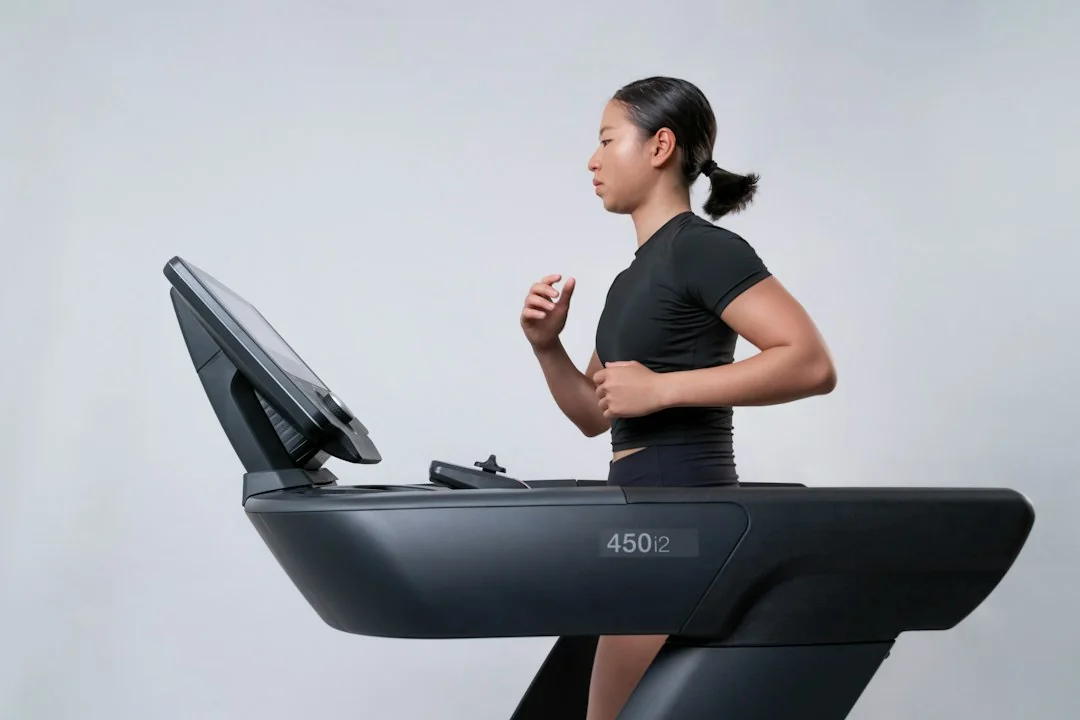
Beginner Treadmill Routine - 3 Days per Week
The four-week plan below assumes no prior treadmill experience. Incline is kept at 0-3% to allow joints to adapt to the belt surface and the cardiovascular system to adjust to consistent aerobic work before adding elevation stress.
Week | Day | Duration | Speed | Incline | Session Goal |
1 | Mon / Wed / Fri | 20 min | 2.5-3.0 mph | 0% | Establish belt comfort and pacing |
2 | Mon / Wed / Fri | 25 min | 2.5-3.0 mph | 0-1% | Add 5 minutes; introduce minimal incline |
3 | Mon / Wed / Fri | 30 min | 3.0-3.5 mph | 1-2% | Increase speed by 0.5 mph |
4 | Mon / Wed / Fri | 30 min | 3.0-3.5 mph | 2-3% | Use incline as the primary progression variable |
Follow this template for weeks 1-4, then add 5 minutes or 0.5 mph per week. A useful self-check: if you can hold a full conversation without gasping, you are at an appropriate intensity for a base-building session.
Treadmill training carries measurable benefits beyond calorie burn. A randomized controlled trial in older adults found that 12 supervised treadmill sessions significantly improved balance scale scores and walking gait speed in participants who trained consistently (4). Progressive treadmill use over weeks is where the real adaptation occurs.
Intermediate Treadmill Routine - 4 Days per Week
Once you can walk at 3.5-4.0 mph for 30 minutes comfortably, you are ready to incorporate jogging intervals and structured incline work. Try this plan:
- Monday: 30-minute incline walk (4.0% grade, 3.5-4.0 mph)
- Wednesday: 25-minute intervals (1 min at 5.5-6.0 mph / 2 min at 3.0 mph, repeat 8x)
- Friday: 35-minute easy jog (5.0-5.5 mph, flat grade)
- Saturday: 40-minute brisk walk (3-5% grade, 3.5 mph)
Common Mistakes on the Treadmill and How to Fix Them
Even experienced gym users develop habits that reduce the efficiency and safety of their treadmill sessions. Identifying and correcting these early prevents wasted effort and unnecessary wear on your joints.
If knee discomfort is a concern during treadmill training, my guide on whether treadmills are bad for your knees covers the research and what form adjustments actually reduce impact.
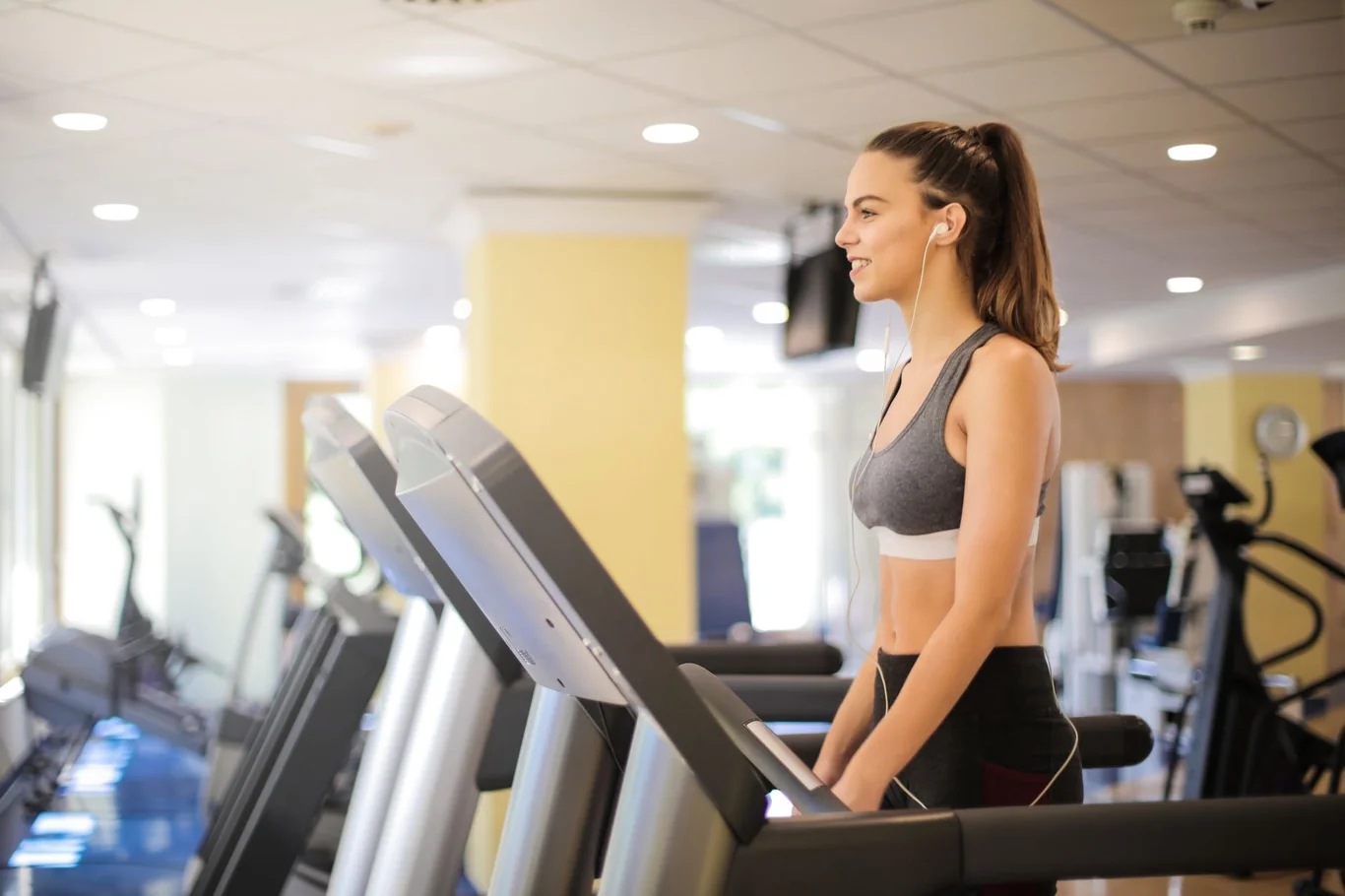
Gripping the handrails too tightly reduces calorie burn by offloading your body weight onto the machine. Use the rails for balance when stepping on or off, then release them. Walk or run with arms swinging naturally at your sides.
Setting incline too high too fast shifts the workload to connective tissue that is not yet conditioned for it. Start at 1-2% grade and increase by 1% per session until you reach your target.
Looking down at your feet during a session promotes forward head posture and neck strain. Keep your gaze forward at a fixed point on the wall or display.
Skipping the cool-down leaves your heart rate elevated and can cause dizziness when stepping off. Slow to 2.0-2.5 mph for 3-5 minutes and let your cardiovascular system recover before pressing Stop.
Landing too heavily with each step creates unnecessary joint impact. A lighter, midfoot landing with a shorter stride is more efficient and gentler on the knees and hips. A clinical framework for running rehabilitation suggests that load management efficiency is a key consideration in long-term injury avoidance - modifications that reduce impact without disrupting your natural gait pattern produce the best outcomes over time (5).
For an interesting variation, our breakdown of the benefits of walking backwards on treadmill covers the mechanics and evidence behind reverse-belt training.
We also have dedicated guides on how to lubricate a treadmill, how to replace treadmill belt when it wears, and how to disassemble a treadmill for moving or storage. Knowing how much does a treadmill cost and how much does a treadmill weigh before you buy also prevents surprises on delivery day.
Getting the Most from Every Treadmill Session
How to use treadmill equipment effectively is ultimately about consistent execution, not complexity. The safety key, the control panel, the built-in programs, and the incline settings are tools. Start with the basics, add incline as your fitness builds, incorporate programs to keep sessions varied, and measure progress over weeks rather than individual sessions. After tracking my own treadmill sessions consistently for six months, the clearest finding was that three to four moderate-effort sessions per week - not occasional hard pushes - drove nearly all the measurable cardiovascular progress.
If boredom becomes a barrier, adding how to use a fitness tracker to your treadmill routine gives concrete metrics to chase. If you want variety beyond the treadmill altogether, learning how to use a rowing machine offers a complementary full-body cardiovascular challenge.
Tracking how many steps in a mile on a treadmill you accumulate week over week matters more than the intensity of any single session. Build from a weekly step target and let the machine help you progress from there. If you want to keep moving during a desk-based workday without dedicated workout time, our best under-desk treadmill guide covers walking pads designed for low-speed use at a standing desk.
FAQs
How should a beginner use a treadmill?
A beginner should start by attaching the safety key, setting the belt speed to 2.5-3.0 mph once on the machine, and walking for 20-25 minutes at a pace comfortable enough to hold a conversation. Increasing session time by 5 minutes or speed by 0.5 mph per week builds cardiovascular fitness safely without overloading the joints in the early stages.
How to operate a treadmill machine step by step?
The step-by-step process for operating a treadmill begins with stepping onto the side rails, attaching the safety key to your clothing, and pressing Start to begin belt movement at low speed. From there, step onto the moving belt once it is running steadily, use the Speed and Incline buttons to adjust intensity as needed, and always slow to a walking pace for a 3-5 minute cool-down before pressing Stop at the end of your session.
Is 30 minutes on a treadmill enough exercise?
30 minutes on a treadmill is sufficient for meaningful cardiovascular benefits when performed at appropriate intensity, with research showing structured moderate-intensity treadmill training improves walking endurance and physical performance in consistent practitioners (4). To maximize results within that 30-minute window, incorporating incline intervals rather than flat steady-state walking increases calorie burn and muscle recruitment significantly.
How to use a treadmill for best results?
Using a treadmill for best results means combining consistent frequency (three to five sessions per week), progressive overload (gradually increasing speed, incline, or duration), and variety across session types including steady-state, intervals, and incline walks. Tracking metrics like heart rate, pace, and weekly step count ensures you are progressing rather than maintaining the same effort level week after week.
How to use treadmill to lose weight?
Using a treadmill to lose weight requires pairing consistent training with a calorie deficit, and the machine supports this by burning approximately 100-300+ calories per 30-minute session depending on body weight, speed, and incline as shown in the calorie table above. Adding 5-12% incline, using interval protocols alternating 1-minute effort with 2-minute recovery, and training four to five times per week creates measurable fat loss over four to eight weeks alongside appropriate dietary adjustments.
This content is for informational and educational purposes only. It is not a substitute for professional medical advice, diagnosis, or treatment. Always consult with your healthcare provider before starting any new fitness program.
References
- Faigenbaum AD, Kang J, Ingui J, et al. Effects of different warm-up protocols on the cardiopulmonary responses to exercise testing in youth. International Journal of Exercise Science. 2024;17(4):1530-1539. doi:10.70252/XQRC2496
- Kim J, Lee H-J, Lee S-H, et al. Correlation between cardiopulmonary metabolic energy cost and lower-limb muscle activity during inclined treadmill gait in older adults. BMC Geriatrics. 2021;21:469. doi:10.1186/s12877-021-02401-9
- Kundu R, Krieger T, Sanchez R, Lankford DE. The interaction of treadmill type and incline slope on biomechanics and muscle activation during human locomotion. International Journal of Exercise Science. 2024;17(1):1478-1492. doi:10.70252/GMWV8349
- Pirouzi S, Motealleh AR, Fallahzadeh F, Fallahzadeh MA. Effectiveness of treadmill training on balance control in elderly people: A randomized controlled clinical trial. Iranian Journal of Medical Sciences. 2014;39(6):565-570. doi:10.18001/ijms.2014.39.6.565
- Gindre C, Breine B, Patoz A, et al. PIMP your stride: Preferred running form to guide individualized injury rehabilitation. Frontiers in Rehabilitation Sciences. 2022;3:880483. doi:10.3389/fresc.2022.880483