
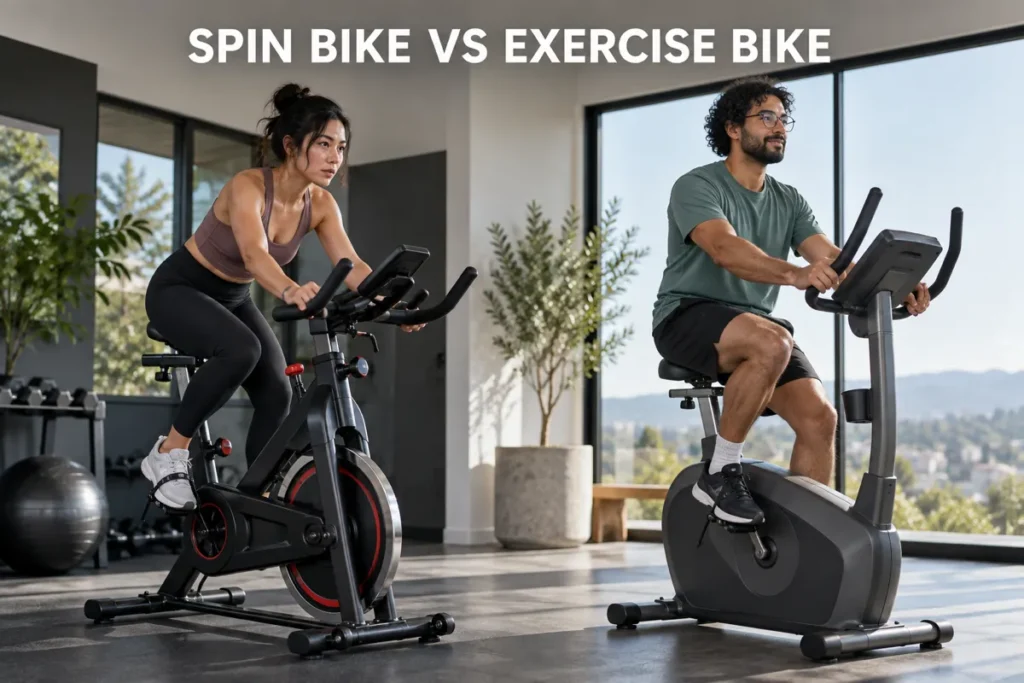
When clients ask me about the spin bike vs exercise bike decision for their home gym, I run into the same confusion every time. Both machines have pedals, a seat, and wheels, but they train your body in fundamentally different ways. I've spent more than 15 years in fitness - coaching clients from beginners to competitive athletes as part of my work at the Faculty of Sport and Physical Education in Novi Sad - and I can tell you that choosing the wrong bike leads to either stalled progress or avoidable discomfort. This guide breaks down exactly what separates these two bike types, how each one affects calorie burn and cardiovascular fitness, and which one fits your specific goals.

Spin Bike vs Exercise Bike - The Core Differences You Need to Know
The fastest way to understand the spin bike vs exercise bike comparison is to look at who each machine was designed for. A spin bike targets performance-focused riders who want high-intensity, varied-effort sessions that replicate outdoor road cycling. An exercise bike - whether upright, recumbent, or air-powered - prioritizes sustained, comfortable cardio for a broader range of fitness levels and goals. A deeper overview of the full category is in my breakdown of different types of stationary bikes.
Here is a quick-reference comparison of the three main bike types:
Feature | Spin Bike | Upright Exercise Bike | Recumbent Bike |
Riding Position | Forward-leaning | Upright | Reclined |
Flywheel Weight | 30-50 lbs | 10-20 lbs | 10-20 lbs |
Resistance Type | Friction or magnetic | Magnetic | Magnetic |
Standing Possible | Yes | No | No |
Back Support | No | No | Full back support |
Calorie Burn (30 min, 155 lbs, moderate) | 300-500 kcal | 200-350 kcal | 150-250 kcal |
Best Fit | HIIT, cycling enthusiasts | General cardio, fat loss | Seniors, rehabilitation |
Calorie estimates assume a 155-pound person at moderate effort. Actual burn depends on body weight, resistance level, cadence, and whether standing intervals are included.
What Is a Spin Bike?
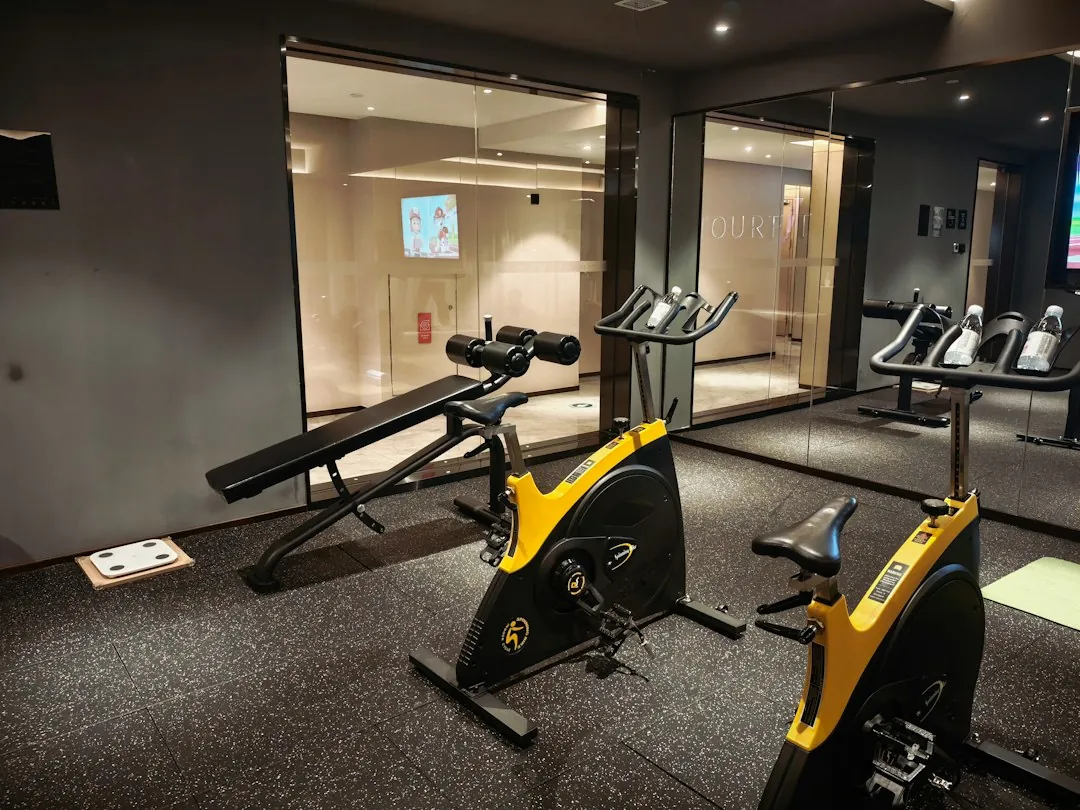
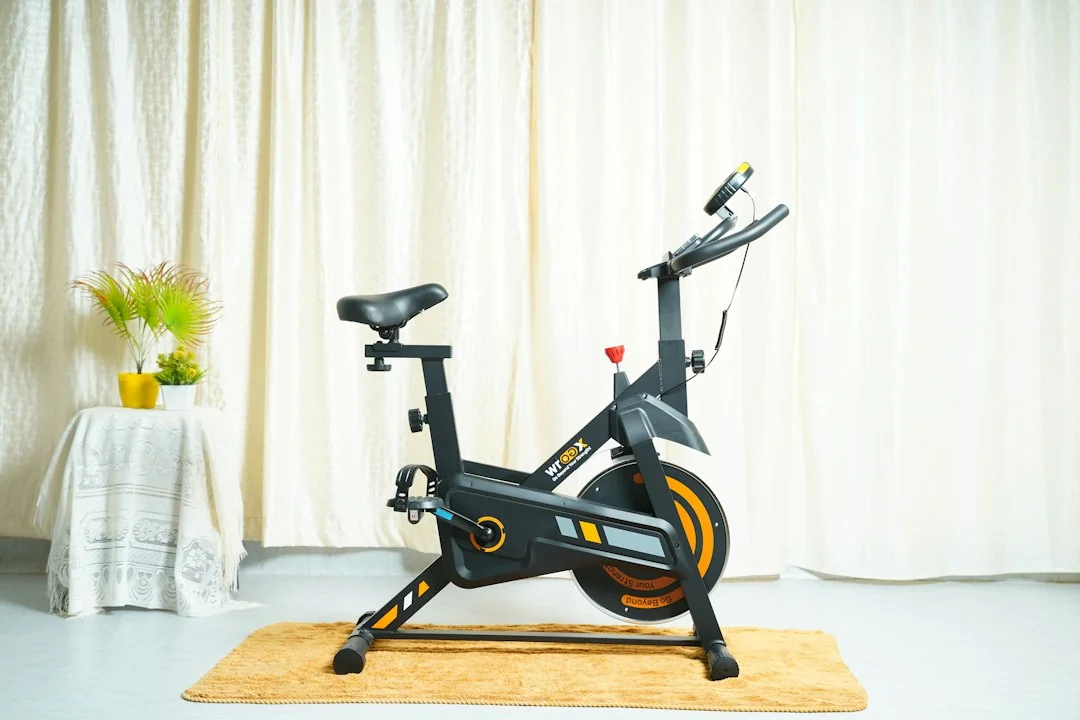
A spin bike - also called an indoor cycling bike - is built around one defining feature: a heavy flywheel that creates momentum as you pedal. Unlike other stationary bikes, the flywheel continues rotating when you stop pedaling, requiring constant leg engagement throughout the session.
I find that clients with experience in group cycling classes adapt to home spin bikes quickly. Those with no cycling background often underestimate the learning curve. The fitness demand, body position, and resistance management each take time to master. Building aerobic base on a standard exercise bike first is a smarter path, and a beginner exercise bike workout plan can establish that foundation before you move to spin training.
Flywheel Design and Resistance
The flywheel on a spin bike typically weighs 30 to 50 pounds - roughly three to five times heavier than on a standard upright bike. This mass creates smooth, consistent pedaling momentum that closely mimics riding on a road. Resistance changes happen in real time: a center knob or tension lever brings you from a fast flat sprint to a grinding simulated climb.
Three resistance configurations exist in home spin bikes:
- Magnetic resistance - magnets create drag without physical contact, making the ride quiet and essentially maintenance-free
- Friction resistance - brake pads press against the flywheel rim for a more tactile road-like feel, though the pads wear down over years of use
- Belt-drive vs chain-drive - belt-drive runs quieter and requires almost no maintenance, while chain-drive delivers a slightly more mechanical outdoor-bike feel
Most current home spin bikes pair magnetic resistance with belt-drive for the quietest possible setup - a meaningful consideration if you live in an apartment or train early in the morning. I explain how magnetic resistance works on an exercise bike.
Research with competitive cyclists found that a lower cadence of 80 RPM preserved significantly more energy for subsequent maximal efforts compared to 100 RPM, while higher cadence elevated overall cardiovascular output (1). Spin bike training gives you genuine control over both intensity and energy system emphasis in a way that most standard exercise bikes do not.
Riding Position and Standing Capability
The geometry of a spin bike places you in a forward-leaning posture that distributes weight across the saddle, handlebars, and pedals - similar to a road cycling position. The saddle is narrow and firm. The handlebars are low. This posture recruits your core, hip flexors, and lower back far more than an upright exercise bike does.
The most significant advantage of this setup is standing capability. You can come up off the saddle to simulate a hill climb, sprint, or recovery transition. Standing intervals spike calorie expenditure meaningfully and transform a seated cardio session into a full-body effort. Research confirms that regular indoor cycling sessions at 80-90% maximum heart rate produce significant reductions in resting heart rate across diverse adult populations (2).
Spin bikes use toe cages or clip-in pedal systems that secure your foot to the pedal. This allows you to pull up through the pedal stroke as well as push down, which engages the hamstrings and hip flexors more completely than platform pedals.
What Muscles Do Spin Bikes and Exercise Bikes Work?
I explain how both bike types primarily target the same muscles an exercise bike works, including the quadriceps, hamstrings, glutes, and calves, with effort distribution shifting based on resistance and riding position.
On a spin bike, the forward-leaning position and clip-in pedals that allow pulling through the upstroke engage the hamstrings and hip flexors more actively than an upright exercise bike. Standing intervals recruit the glutes and core significantly. Upright and recumbent exercise bikes deliver more quadriceps-dominant pedaling because the stroke is seated and platform-based throughout.
The core difference: spin bikes activate more of the posterior chain and mid-body when standing intervals are included, while recumbent bikes minimally engage the core because the backrest removes the stabilization requirement.
How Much Do Spin Bikes and Exercise Bikes Cost?
Spin bikes carry a higher price than upright or recumbent exercise bikes because of the heavier flywheel construction and the build quality needed to support standing intervals safely.
Entry-level spin bikes start around $300-400, with quality home models ranging from $500-1,200. Premium connected options run $1,500 and up. The best exercise bike for home use at a general cardio level falls in the $400-600 range - upright models in this tier offer strong adjustability and durability for most households. Recumbent exercise bikes typically start around $300 and scale to $600-1,000 for well-built home units.
Budget guidance: a spin bike below $400 will rarely deliver the flywheel weight needed for quality resistance. For an exercise bike, $400-600 puts you in range of a durable, adjustable machine that will serve most general cardio goals. My price breakdown shows what a stationary bike costs by type and brand.
Types of Exercise Bikes - Upright, Recumbent, and Air Bikes
The term "exercise bike" covers a wider range of machines than most people realize. Upright bikes, recumbent bikes, and air bikes all function differently enough that the spin bike vs exercise bike comparison shifts depending on which type you are comparing. Riders dealing with knee discomfort should read this breakdown of exercise bike and knee pain management before deciding on a bike type.
Upright Exercise Bikes
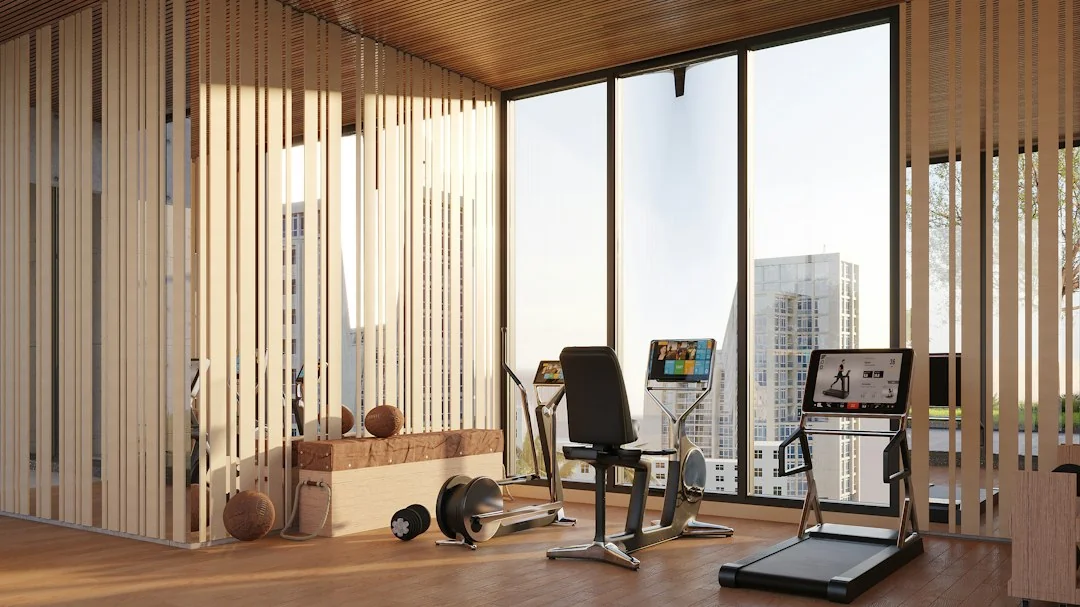
The upright exercise bike is the most common home cardio machine. You sit directly above the pedals in a near-vertical position, similar to riding a hybrid bicycle. The seat is wider and more padded than a spin bike saddle. The flywheel is lighter. The resistance is typically magnetic and controlled through a preset console.
Upright bikes are excellent for sustained, moderate-intensity cardio that builds aerobic base. They are beginner-friendly, forgiving on the lower back, and do not require any technique learning curve. The trade-off is a lower intensity ceiling - no standing, a narrower resistance range, and minimal carryover to outdoor cycling performance.
Recumbent Exercise Bikes
The recumbent exercise bike puts you in a reclined chair position with your legs extending forward rather than downward. Full back support is the defining feature - the seat has a proper backrest, which removes virtually all spinal load during the session. This makes recumbent bikes the most accessible option for older adults, people in rehabilitation, or anyone with chronic lower back pain. For models with the reclined seating described here, I point readers to the recumbent bikes in the shop.
I routinely recommend the recumbent exercise bike to clients over 60 or recovering from lumbar injuries because it lets them accumulate significant cardio volume without placing any compressive load on the spine. Research with sedentary older adults found that 12 weeks of aerobic cycling improved estimated VO2max by approximately 20%, from 21.5 to 25.8 mL/kg/min. The same study found that heart rate adherence to prescribed intensity was the single strongest predictor of cardiovascular outcome - more predictive than attendance alone (3). This is a practical lesson I apply when structuring programs for older clients: riding at the right intensity matters more than simply showing up.
For seniors specifically, I almost always look for the same features in a recumbent exercise bike for seniors: full back support, wide, stable pedals, and an easy-access step-through frame.
The limitations are real: no standing, the lowest calorie burn of all bike types, and a bulkier footprint than either an upright or spin bike.
Air Bikes
Air bikes use a large fan wheel instead of a flywheel. Resistance is self-regulating - the harder you pedal, the more the fan resists. Air bikes also have moving handlebars that engage the arms and upper body simultaneously, making them well-suited for high-intensity interval work. The trade-off is noise: the large fan creates significant air resistance sound that rules them out for many home environments.
Calorie Burn and Cardiovascular Benefits - Spin Bike vs Exercise Bike
Calorie burn comparisons between bike types are only meaningful when intensity and duration are matched - the effort you apply matters more than the machine itself.
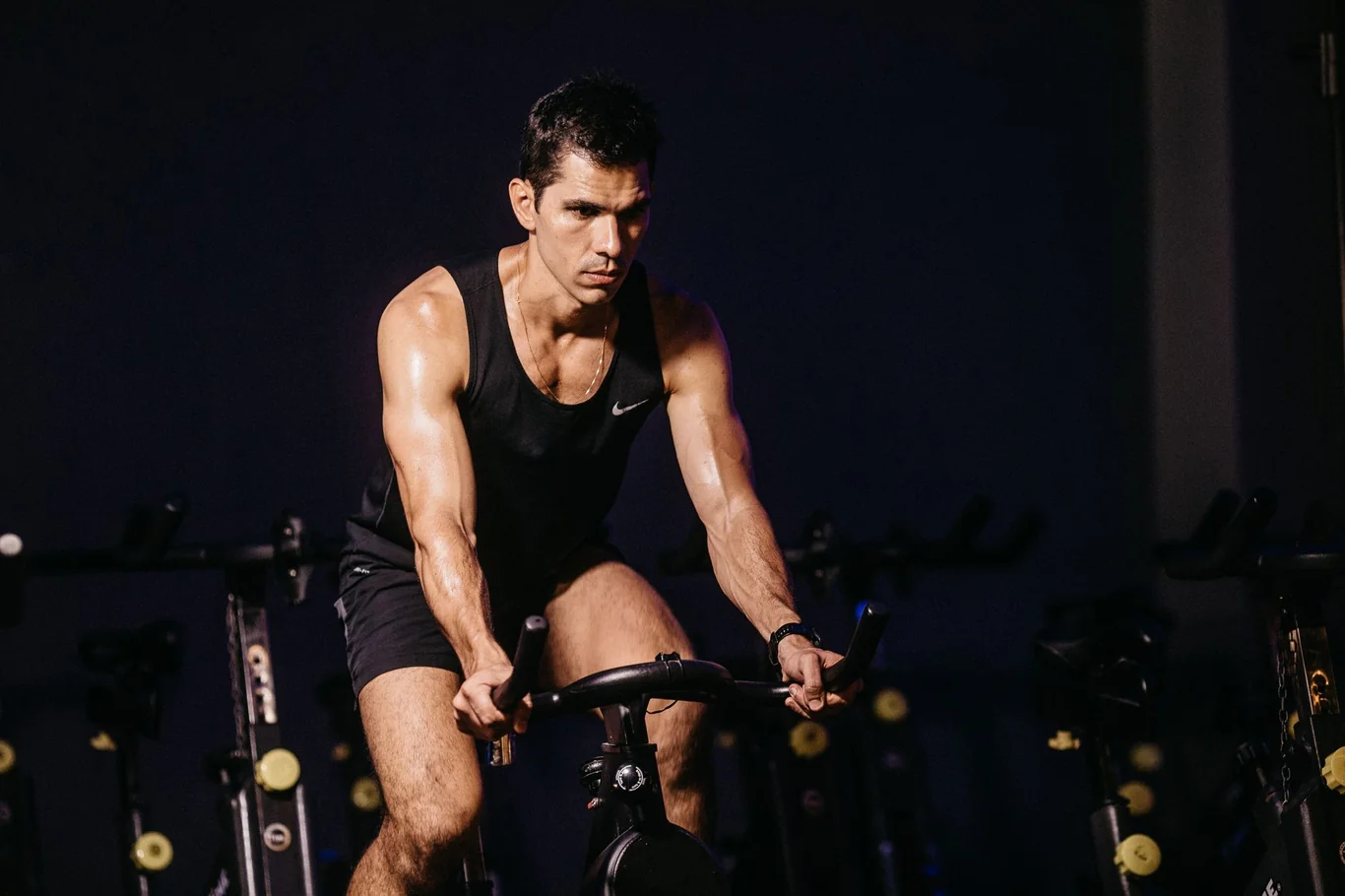
That said, spin bikes make it structurally easier to sustain high intensity because of the heavy flywheel and standing capability. A well-structured spin session that alternates seated climbs, standing sprints, and recovery flats challenges your cardiovascular system more completely than a steady-state upright session of the same duration. I cover high intensity bike training in a separate guide if you want to build sessions like this.
A systematic review of indoor cycling studies found significant improvements in aerobic capacity (VO2max gains of 8-10.5%), reductions in systolic blood pressure by up to 11.8% after six months of training, improvements in lipid profiles, and reductions in body fat percentage (4).
What the Research Shows About Indoor Cycling
A 12-week indoor cycling intervention with women who had obesity found significant decreases in total cholesterol, oxidative stress markers, and inflammatory markers, alongside meaningful increases in skeletal muscle mass (5). Three sessions per week at moderate to vigorous intensity produced clinically significant metabolic changes, not just fitness improvements.
An exercise bike delivers comparable cardiovascular benefit to treadmill training when intensity is matched - the primary advantage of both bike types is lower joint impact across all intensity levels. For a fuller look at the two machines, I wrote a treadmill and bike comparison for home cardio.
Calorie burn estimates for a 155-pound person:
Intensity Level | Spin Bike (30 min) | Upright Exercise Bike (30 min) | Recumbent Bike (30 min) |
Light (50-60% max HR) | 180-220 kcal | 140-190 kcal | 110-150 kcal |
Moderate (60-75% max HR) | 300-380 kcal | 210-290 kcal | 160-220 kcal |
Vigorous (75-85% max HR) | 400-500 kcal | 300-350 kcal | 220-280 kcal |
HIIT (alternating efforts) | 450-600 kcal | 300-400 kcal | n/a (not suited) |
These are estimates. Body weight, fitness level, and actual effort all shift the real number.
Spin Bike vs Exercise Bike for Weight Loss
Both bike types support weight loss when used consistently with appropriate effort. The spin bike has the edge for creating a larger calorie deficit per session because the standing capability and heavy flywheel naturally push you toward higher output. The exercise bike wins for long-term adherence in riders who find the spin bike uncomfortable - a consistent moderate workout beats an intense workout you skip.
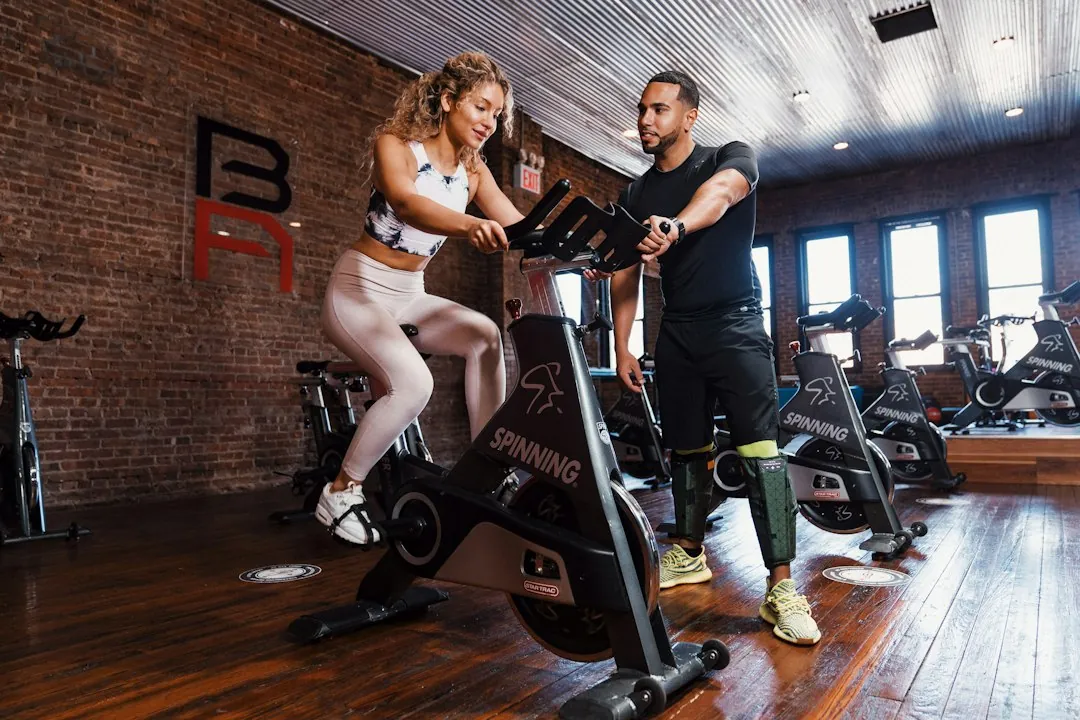
I've seen this pattern repeatedly: someone starts with high ambitions, buys a spin bike, and rides it hard for two weeks before saddle soreness and fatigue force a break. An exercise bike used four or five days per week at moderate intensity, sustained over three months, produces far better real-world results than a spin bike used twice a week.
Visceral fat reduction from consistent cycling is well-documented. A review of the exercise bike's effect on belly fat covers the specific mechanisms and protocols in depth.
The key variables for weight loss on any bike:
- Session duration (30+ minutes for fat oxidation to dominate)
- Intensity distribution (mix of moderate and vigorous efforts)
- Weekly frequency (3-5 sessions for meaningful weekly calorie deficit)
- Consistency over months (not days or weeks)
Joint Impact - Which Is Easier on Your Body?
Both the spin bike and exercise bike are classified as low-impact cardio equipment. Neither involves the foot-strike impact that makes running hard on knees, hips, and lower back over time. This shared advantage over treadmill-based cardio means both bikes protect your joints throughout the session. If knee pain is your concern, my guide to exercise machines for bad knees compares bikes with other low-impact options.
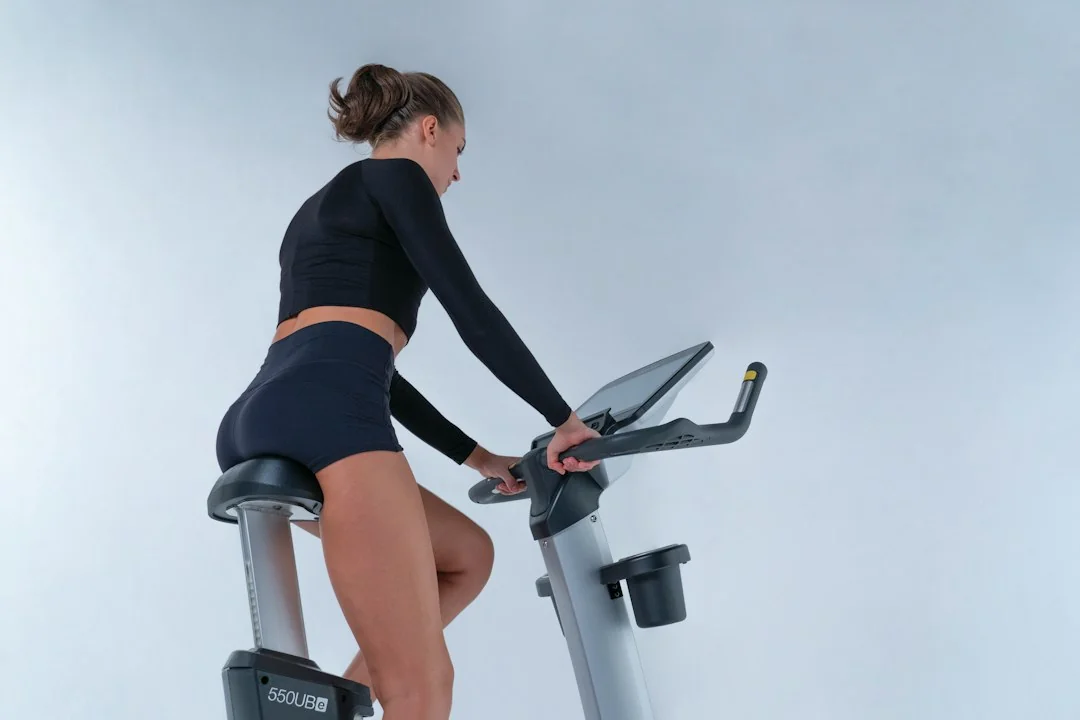
The differences within bike types come down to body position. On a recumbent bike, zero spinal load and minimal knee stress make it the joint-friendliest option. On a spin bike, poor setup - especially a saddle that is too low or too forward - can create significant knee pain, particularly at the patellofemoral joint. If joint comfort is your priority, I compare recumbent and upright bikes to help you weigh the two designs.
I always advise clients to set spin bike saddle height so the knee has a slight bend (20-30 degrees) at the bottom of the pedal stroke. A fully extended leg at the bottom and a cramped knee at the top are both setup errors that accumulate into overuse injury.
Joint suitability by bike type and common condition:
Condition | Spin Bike | Upright Exercise Bike | Recumbent Bike |
Healthy, no issues | Excellent | Excellent | Excellent |
Knee osteoarthritis | Use with caution (setup critical) | Good | Best choice |
Lower back pain | Avoid (flexed posture) | Moderate (upright) | Best choice |
Hip replacement recovery | Avoid | Moderate | Recommended |
Cardiac rehabilitation | Cleared patients only | Good | Excellent |
General obesity | Moderate (narrow saddle) | Good | Best choice |
Indoor cycling has demonstrated clinical safety even in cardiac rehabilitation settings. A comparative study of 64 post-myocardial infarction patients found that indoor cycling produced comparable improvements in exercise tolerance to standard endurance training, with similar trends in cardiac parameters and lipid markers, leading researchers to conclude it is "a safe form of therapy" in structured rehabilitation contexts (6).
Who Should Choose a Spin Bike?
A spin bike fits you if your primary goal is high-intensity performance training, if you have experience in group or road cycling, or if you specifically want short workouts that deliver maximum cardiovascular output in 20-30 minutes.
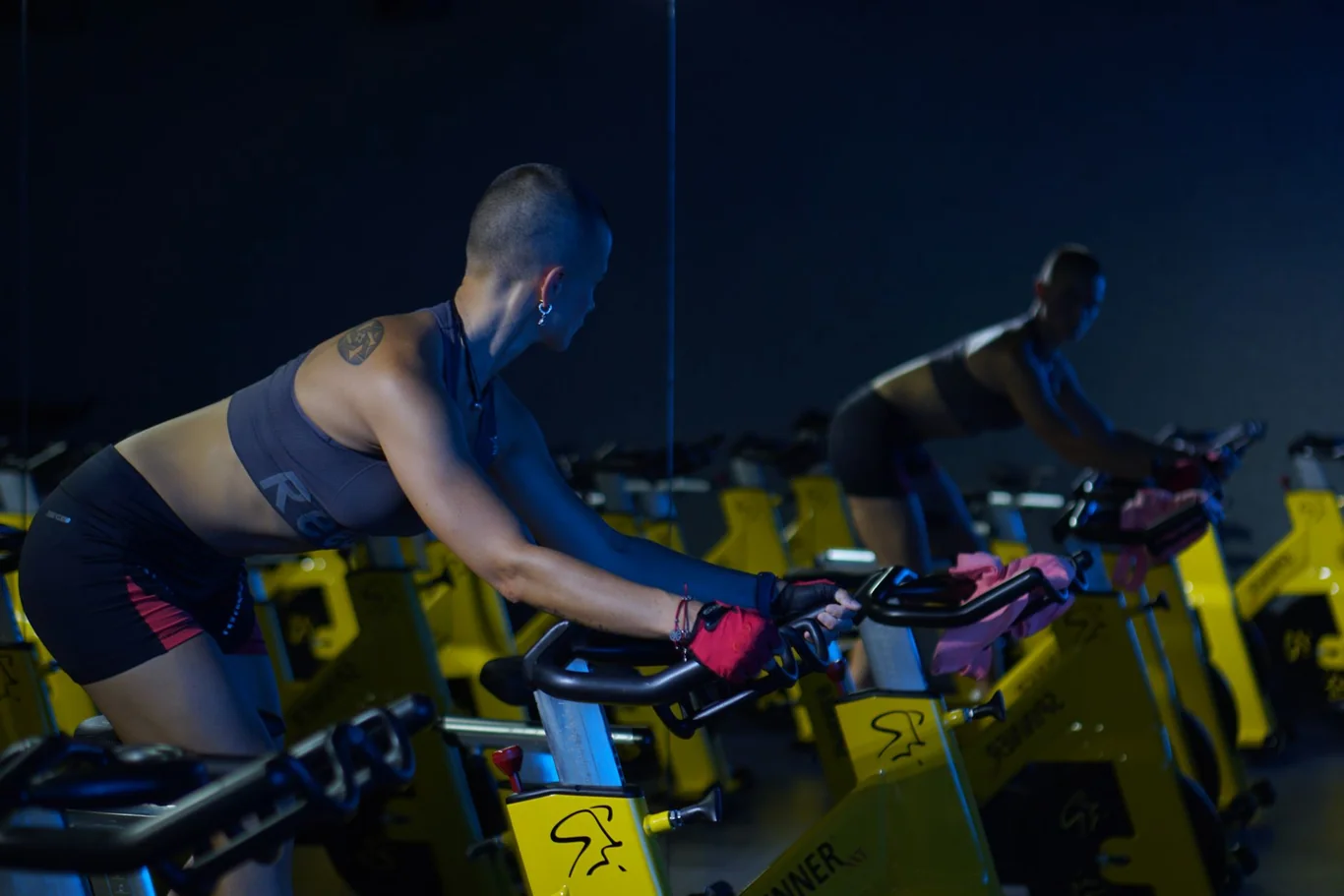
You are the right fit for a spin bike if:
- You have at least a baseline cardiorespiratory fitness level (you can sustain moderate effort for 20+ minutes)
- You are comfortable with forward-leaning posture and a narrow saddle
- You want to do HIIT and standing intervals, not just steady-state cardio
- You have no lower back conditions that worsen with forward-flexed posture
- You can invest in proper cycling shoes if the bike uses clip-in pedals
Spinning is also the stronger choice when the goal is the kind of before and after body composition changes that require sustained high-output effort over several months.
Who Should Choose an Exercise Bike?
I recommend an exercise bike for home use for most people who want reliable, low-barrier cardio they can sustain long-term. The lower intensity ceiling makes it easier to build consistent cardio habits long-term.
You are the right fit for an exercise bike if:
- You are new to cardiovascular training or returning after a long break
- You have lower back pain, hip problems, or knee issues that make forward-leaning posture uncomfortable
- You are looking for the best exercise bike for home use that can accommodate multiple family members at different fitness levels
- You are a senior or recovering from surgery and need full back support from one of my recumbent exercise bike picks
Compared to a treadmill, an exercise bike wins on joint protection at all intensity levels. The treadmill weight loss guide covers when running-based cardio makes more sense than cycling.
Sample Workouts for Each Bike
Different bike types reward different workout structures, so I've put together one interval session and one steady state session that fit each format well. Both are ready to follow as written. I explain another interval structure in my guide to the 4-minute Tabata workout, including the protocol and sample sessions.
Spin Bike HIIT Interval Workout
This 25-minute workout is structured for intermediate riders. I typically introduce this protocol to clients in their third or fourth week of spin training - it delivers genuine cardiovascular adaptation without burning out riders still building their spin tolerance. Adjust resistance levels to your own effort threshold. I cover cycling cadence and RPM ranges for each goal separately.
- Warm-up (5 minutes) - light resistance, 75-85 RPM, seated
- Seated flat sprint (30 seconds) - high cadence (95-105 RPM), low-medium resistance
- Recovery (30 seconds) - easy pace, 70 RPM
- Repeat sprint/recovery six times
- Standing climb (2 minutes) - low cadence (60-70 RPM), heavy resistance, standing
- Recovery (1 minute) - seated, light resistance
- Repeat standing climb and recovery twice
- Cool-down (5 minutes) - light resistance, seated, gradually reduce cadence
Exercise Bike Steady-State Cardio Workout
This 35-minute protocol works on any upright or recumbent exercise bike and targets the fat-burning heart rate zone (60-70% of maximum heart rate):
- Warm-up (5 minutes) - resistance level 3-4, comfortable pace
- Aerobic base block (20 minutes) - resistance level 5-6, cadence 70-80 RPM, conversational pace
- Moderate push block (8 minutes) - resistance level 7, cadence 80-85 RPM
- Cool-down (5 minutes) - resistance level 3, 65-70 RPM
For a structured 12-week program, the exercise bike workout for weight loss provides a full session-by-session framework.
Finding the Right Bike for Your Fitness Goals
The right choice depends on three factors: your current fitness level, the type of workout you will actually do consistently, and whether the machine's physical demands match your body's current state. My guide on choosing an exercise bike walks through types, features, and budget.
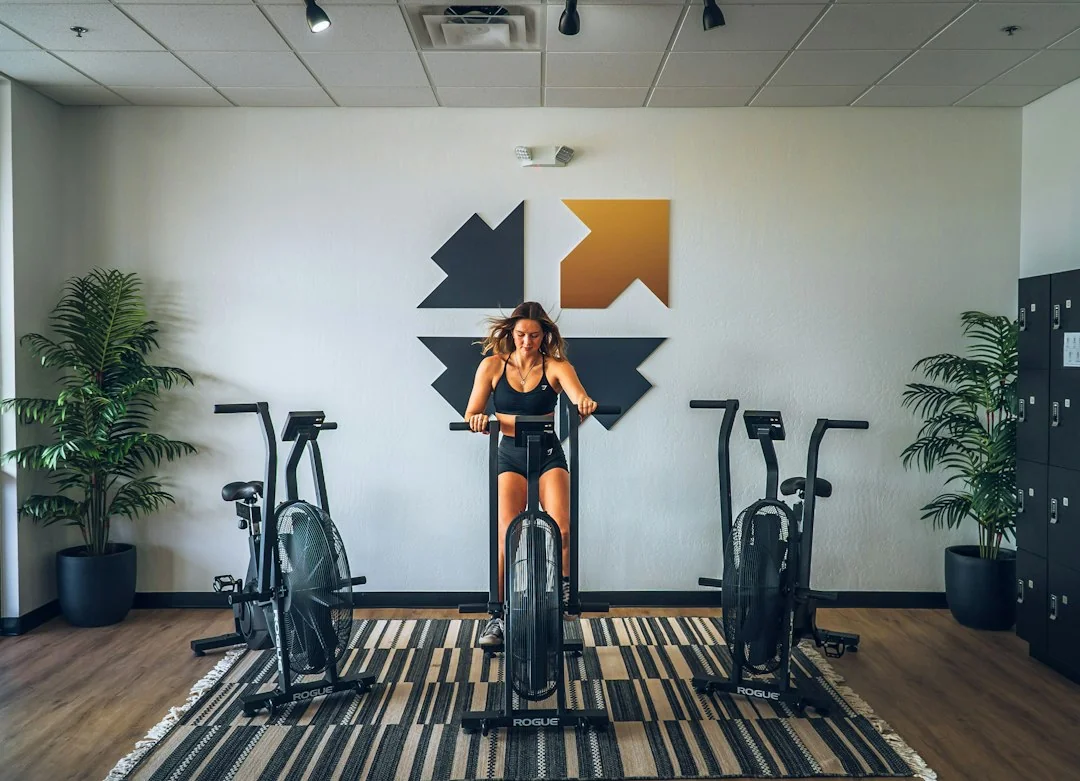
Five questions that simplify the decision:
- If you have at least 6-8 weeks of regular cardio training, consider a spin bike. If not, start with an exercise bike.
- If you have lower back pain, hip problems, or knee issues, I recommend a recumbent or upright model when choosing an exercise bike for back problems.
- For workouts shorter than 25 minutes with maximum calorie output, a spin bike is the better tool.
- For households with multiple family members at different fitness levels, an exercise bike suits mixed-fitness use far better.
- If noise is a hard constraint (apartment, early mornings, or shared walls), magnetic upright or recumbent exercise bikes are quieter than even the quietest spin bikes.
Start with an exercise bike for home use for 6-8 weeks, build a habit of 4+ sessions per week, and then reassess. I always tell clients: a spin bike is a tool for someone who is ready for it, not a shortcut to becoming ready. I also consider regular maintenance for an exercise bike simpler than spin bike upkeep, which matters for long-term ownership.
FAQs
Which is better for me, an exercise bike or a spin bike?
The better choice between an exercise bike and a spin bike depends on your current fitness level and comfort with intense, forward-leaning training. A spin bike is the stronger choice for already-fit riders who want high-intensity interval sessions, while an exercise bike suits beginners, those with back or joint issues, and anyone who prioritizes long-term consistency over maximum intensity.
Is 30 minutes of stationary bike the same as 30 minutes of walking?
Thirty minutes on a stationary bike is not the same as 30 minutes of walking - the calorie burn and cardiovascular demand vary significantly based on the bike type and effort level. A moderate-intensity upright exercise bike session typically burns 210-290 calories for a 155-pound person, while brisk walking burns approximately 133-186 calories in the same window, though both contribute meaningfully to weekly cardiovascular health targets.
What are the disadvantages of using a spin bike?
The main disadvantages of a spin bike are the narrow, uncomfortable saddle that takes weeks to adapt to, the risk of knee pain if setup is incorrect, the steep learning curve for beginners, and the significantly higher price compared to standard exercise bikes. Spin bikes also require more physical adaptation time and are less forgiving of poor form than any other stationary bike type.
Can you lose belly fat on a spin bike?
You can lose belly fat on a spin bike, as consistent high-intensity cycling creates the calorie deficit that drives overall fat loss, including from the abdominal region. No single exercise targets belly fat specifically, but regular spin bike sessions at vigorous effort - combined with appropriate nutrition - contribute to the whole-body fat reduction that reduces visceral fat over time.
Is a spin bike good exercise?
A spin bike is excellent exercise for cardiovascular fitness, calorie burn, and lower-body muscular endurance, provided the rider has adequate fitness to sustain the intensity and uses proper setup to protect the knees and lower back. Systematic reviews consistently show that indoor cycling improves VO2max, reduces blood pressure, improves lipid profiles, and supports body composition changes across a wide range of adult populations.
This article is for informational purposes only and is not a substitute for professional medical advice. Consult a qualified healthcare provider before starting any exercise program, particularly if you have a heart condition, joint issues, or are recovering from surgery or injury.
References
- Stebbins CL, Moore JL, Casazza GA. Effects of Cadence on Aerobic Capacity Following a Prolonged, Varied Intensity Cycling Trial. J Sports Sci Med. 2014;13(1):114-119.
- Becerra-Patino BA, Montenegro-Bonilla AD, Martinez-Benitez CF, et al. Effects of indoor cycling (spinning) on physiological, cardiac and perceived exertion responses in adults: a systematic review. Front Sports Act Living. 2026;8:1715110. doi:10.3389/fspor.2026.1715110.
- Novak TS, Quan C, McGregor K, Mammino K, Bello M, Nocera JR. Adherence to heart rate-based intensity parameters predicts cardiovascular response to 12-weeks of aerobic cycling training in sedentary older adults. Prev Med Rep. 2026;62:103388. doi:10.1016/j.pmedr.2026.103388.
- Chavarrias M, Carlos-Vivas J, Collado-Mateo D, Perez-Gomez J. Health Benefits of Indoor Cycling: A Systematic Review. Medicina (Kaunas). 2019;55(8):452. doi:10.3390/medicina55080452.
- Ratajczak M, Skrypnik D, Krutki P, Karolkiewicz J. Effects of an Indoor Cycling Program on Cardiometabolic Factors in Women with Obesity vs. Normal Body Weight. Int J Environ Res Public Health. 2020;17(23):8718. doi:10.3390/ijerph17238718.
- Gloc D, Nowak Z, Nowak-Lis A, Gabrys T, Szmatlan-Gabrys U, Valach P, Pilus A. Indoor cycling training in rehabilitation of patients after myocardial infarction. BMC Sports Sci Med Rehabil. 2021;13:151. doi:10.1186/s13102-021-00379-w.