
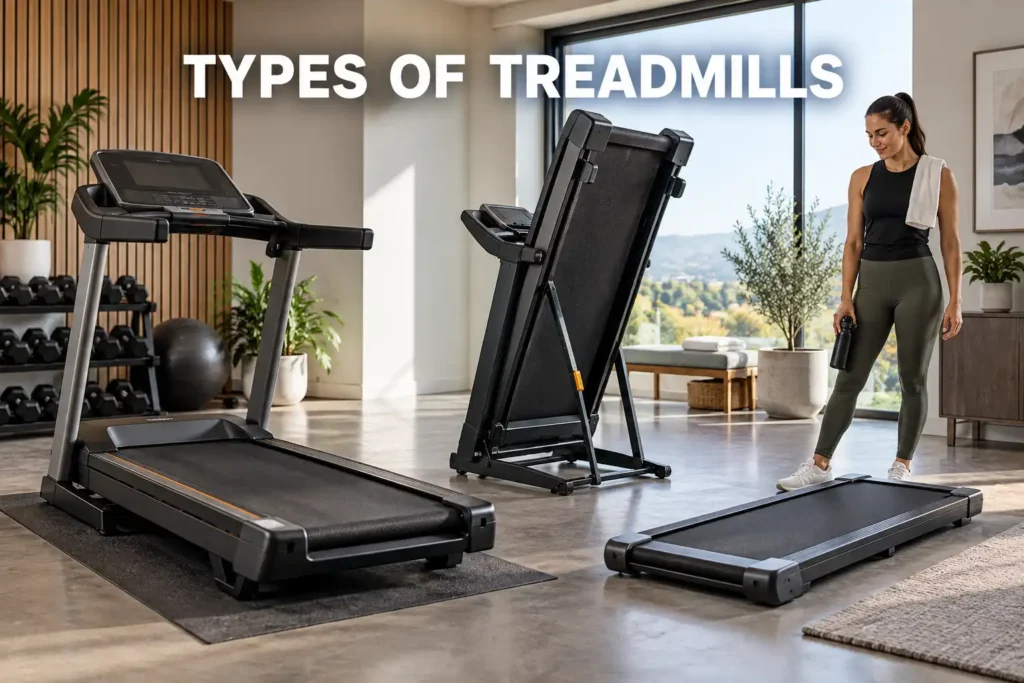
The types of treadmills available today range far beyond the standard motorized deck found at most gyms. From self-powered curved runners to compact walking pads designed for office desks, each category serves a distinct training goal and living situation.
I have spent years evaluating fitness equipment, and treadmill category confusion comes up consistently. Most buyers search for "a treadmill" without realizing that a manual curved model and a motorized folding machine share almost nothing - from how muscles engage to what the machine costs to maintain. The six main types of treadmills each solve a different problem, and matching the right design to your goal is the most important purchase decision you can make.
If connected features and subscription content are not a training priority, my guide on non-subscription treadmill options covers which types deliver full functionality without an ongoing fee.
This guide covers each type and helps you identify which fits your goals, space, and budget.

Types of Treadmills - Your Complete Guide to Every Category
Understanding the different types of treadmills starts with recognizing that the major split is not simply motorized vs. manual. Belt design, frame construction, intended frequency of use, and whether the machine is built for home or commercial settings all define what each category can and cannot do.
Once you know which type you have, my walkthrough on treadmill operation and technique covers the startup sequence, control panel functions, and workout structure for any category.
Motorized (Flat-Belt) Treadmills
Motorized treadmills are the most common type, built around an electric motor that drives the belt at a consistent speed. You adjust your pace using the console and the belt carries you, which makes sustained running at a fixed intensity more manageable than on a manual design.
That belt system also requires periodic tension checks to run safely — my guide on motorized treadmill belt tension covers the symptoms of incorrect tension and the quarter-turn adjustment process.
How Motor Power and Specifications Define Performance
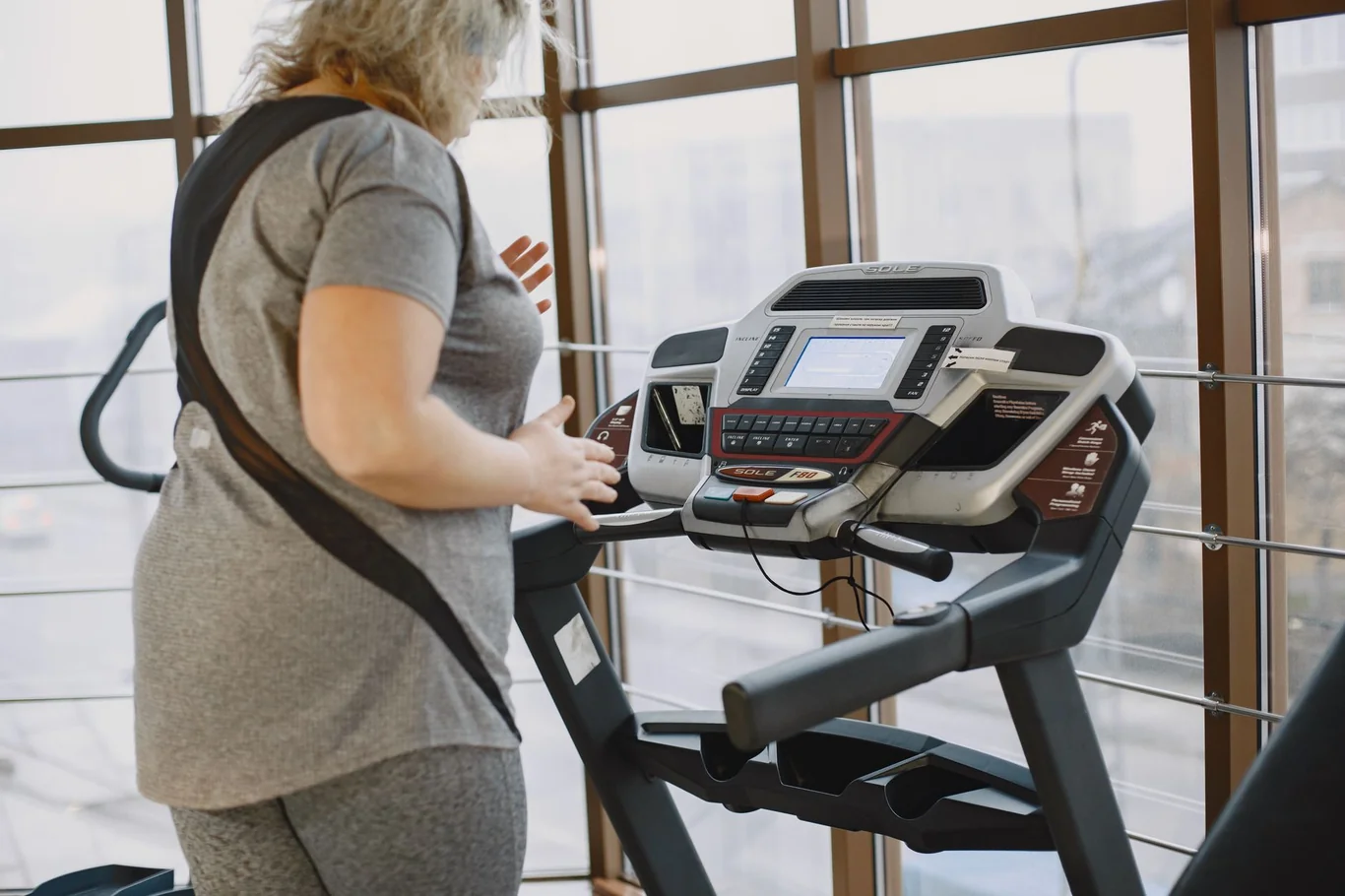
Motor quality is the defining variable in this category. Continuous horsepower (CHP) is the reliable metric; peak HP figures printed on packaging reflect what the motor briefly reaches under ideal conditions, not what it sustains during a 45-minute run. Always compare CHP, not peak HP.
Owners who experience motor performance issues on their motorized model will find a systematic diagnostic guide in my resource on fixing a treadmill motor, covering brushes, control boards, and thermal shutdown causes.
Key specs for motorized flat-belt models:
- Motor: 2.0-3.5 CHP (home), 3.0-7.0 CHP (commercial)
- Speed range: 0.5-12 MPH (home), 0.5-15+ MPH (commercial)
- Weight capacity: 200-400 lbs depending on frame
- Incline range: 0-15% standard; some premium models include powered decline
- Belt lifespan: 2-3 years under regular use before replacement
A meta-analysis of 33 studies with 494 participants published in Sports Medicine found that most biomechanical outcomes between motorized treadmill running and overground running are comparable, though motorized treadmill running produces slightly different foot-ground angles at footstrike and smaller knee flexion range during stance (1).
Manual Treadmills - What They Are and Who They Work For
A manual treadmill has no motor. The belt only moves when you push it backward with your feet, making you entirely responsible for generating and sustaining pace. In practical terms, manual treadmills split into two sub-types with almost nothing in common: flat-belt designs for walking and light cardio, and curved-belt designs for high-intensity training.
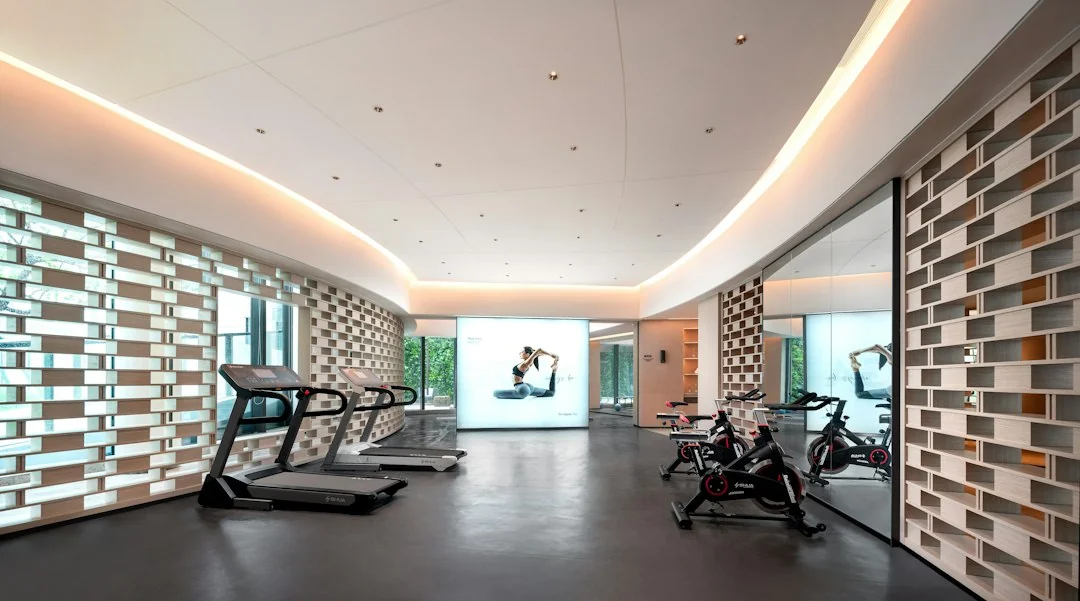
Flat-belt manual treadmills are the entry-level option, budget-priced well below mid-range motorized models. They require significant hip-flexor effort to keep the belt moving and are generally better suited to brisk walking than running. Sustained jogging above 3 MPH is difficult on this design for most users. Unlike motorized models, the belt stops the moment you stop walking - a practical safety advantage for households with children or elderly users.
To understand how prices vary across manual, motorized, and other categories before deciding which type fits your budget, my treadmill cost by tier guide breaks down the realistic price ranges and what each tier actually delivers.
What Users Experience on Flat Belt Manual Treadmills
What users consistently report about flat-belt manuals:
- The forward lean required to keep the belt moving feels unnatural
- Sustaining a jogging pace for 20+ minutes places disproportionate strain on the hip flexors
- Speed consistency is harder to control than on a motorized belt
- They work well for occasional light cardio but are not a serious running substitute
A manual treadmill makes sense only if your primary use is casual walking, your budget is tight, or you are specifically interested in the curved-belt evolution of the design. For a deeper evaluation of what to check before any treadmill purchase, read our guide on what to look for when buying a treadmill.
Curved Treadmills - Biomechanics, Benefits, and Trade-offs
Curved treadmills use a self-powered concave belt that forces you to generate every stride without motor assistance. This section covers how that design changes biomechanics, where it outperforms motorized alternatives, and where it falls short.
Why Are Some Treadmills Curved
The curved running surface solves a specific biomechanical limitation of flat treadmills. On a flat motorized belt, the motor does part of your work by carrying the surface forward beneath your feet, which reduces the posterior chain demand. A concave surface removes the motor entirely. You generate all momentum by driving backward from a mid-foot or forefoot strike position, which loads the glutes and hamstrings the way outdoor sprint mechanics do.
The self-correcting element is what makes the design distinctive. Overstriding or excessive forward trunk lean makes the curved belt harder to drive. Natural mechanics - foot strike beneath the center of mass, upright posture, forefoot engagement - reward you with smoother propulsion. This feedback loop is why curved treadmills have a reputation for improving running form over time.
When I spent three weeks training primarily on an Assault AirRunner, the most immediate change was how quickly fatigue accumulated. Threshold workouts I was completing in 30 minutes on a motorized treadmill became harder to sustain past 20 minutes on the curved surface at equivalent heart rate output - which is precisely what the research confirms.
A study published in the International Journal of Environmental Research and Public Health found that curved non-motorized treadmills produced significantly lower tibial peak acceleration (effect size 0.45) and head acceleration rates (effect size 0.86) compared to conventional motorized treadmills at matched running speeds, suggesting less skeletal impact per stride (2). This impact difference is a key consideration for anyone researching are treadmills bad for your knees, since tibial acceleration per stride is a primary driver of long-term joint load.
Curved Treadmill vs Flat Treadmill - Performance Comparison
The curved treadmill vs flat treadmill decision comes down to training priority rather than a simple better-or-worse verdict.
The same logic applies when choosing between a treadmill and a stair climber. My stairmaster vs treadmill comparison covers calorie burn, muscle engagement, and joint impact to help you make that call.
Research from Frontiers in Physiology found that curved non-motorized treadmill running required significantly higher VO2 consumption and elevated heart rate compared to motorized running at the same speed (3). A separate pilot study (n=4) in the International Journal of Exercise Science confirmed an average VO2 increase of 8.2 mL/kg/min and a heart rate elevation of 18 bpm on a non-motorized curved runner versus a traditional motorized treadmill at equivalent running speeds (4). The practical result: curved treadmills typically burn 10-30% more calories per session at equivalent running speeds.
If you're focused on HIIT, sprint intervals, and sessions under 40 minutes, curved treadmills are the better choice. For long-distance endurance training and marathon prep, they are not - the inability to lock a pace and the higher metabolic cost per minute make curved designs exhausting for sustained aerobic work. The learning curve also lasts 2-4 weeks before pace control feels natural.
A treadmill pace and speed chart is a useful reference during that adjustment period, showing exactly what each mph setting means in min/mile terms.
Key trade-offs for curved treadmills:
- Higher calorie burn at equivalent running speeds vs. motorized
- No speed buttons - pace is entirely self-regulated by foot placement
- Near-silent operation (40-50 dB vs. 60-75 dB for motorized models)
- Premium pricing - quality curved models from established manufacturers start well above entry-level motorized machines and reach commercial-grade investment levels
- Steep adaptation period - 2-4 weeks before pace control feels natural
- Not suitable for sustained aerobic work beyond 40-45 minutes at endurance pace
Woodway treadmills cost significantly more than standard motorized models because of their slat belt design, zero motor components, and the commercial-grade materials used across all their frames - more on that in the next section.
Types of Treadmill Belts - Flat Rubber vs Slat
The belt is the most underappreciated specification when comparing different types of treadmills. Two designs dominate: the continuous rubber belt and the slat belt.
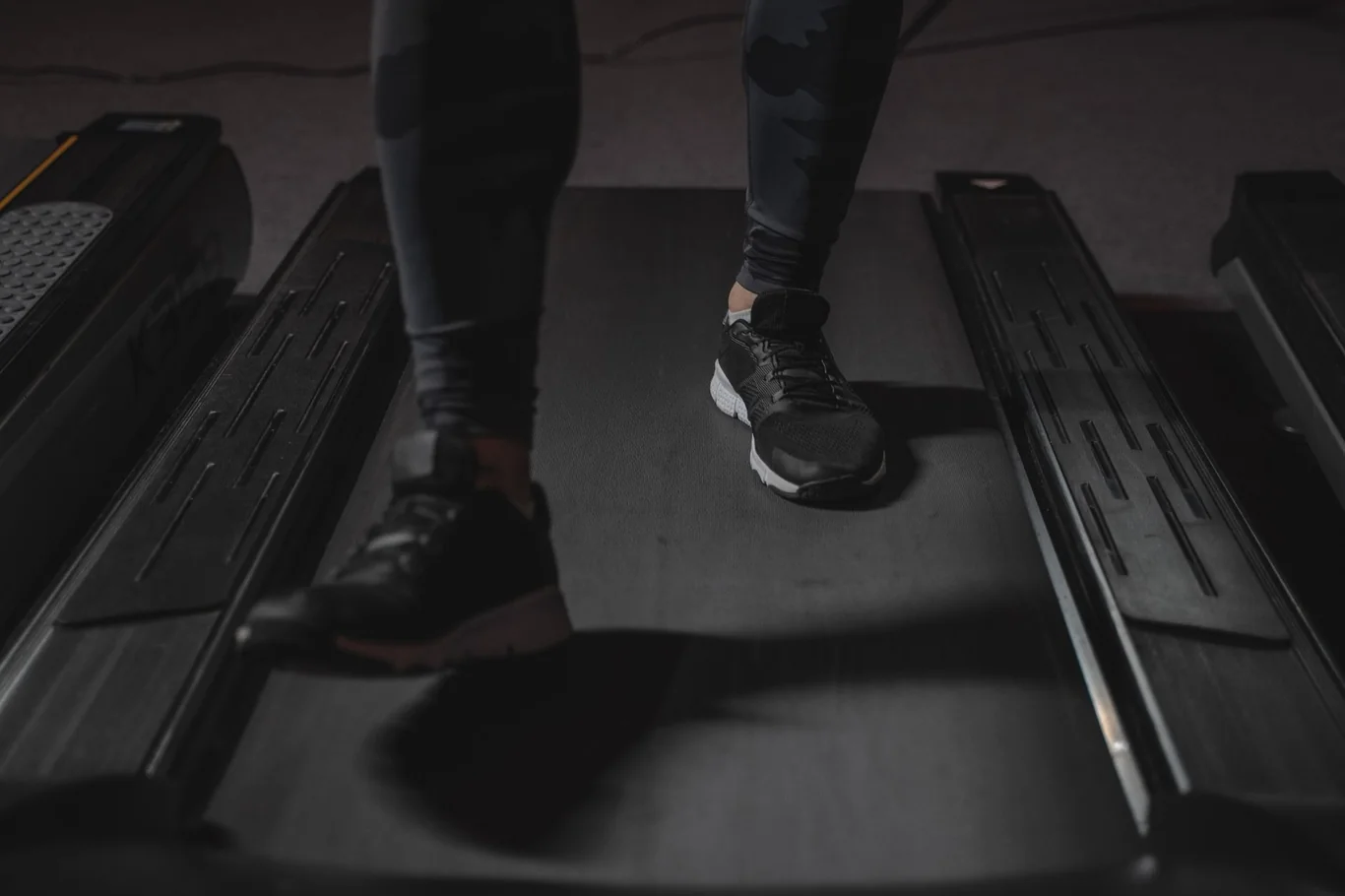
A flat rubber belt is a single loop of rubber sheeting running around the deck. It requires lubrication every 3-6 months, degrades in 2-3 years under regular use, and costs a low-to-mid amount to replace when worn or frayed.
For the lubrication steps specific to flat-belt motorized models, my guide on how to lubricate a treadmill covers frequency, lubricant type, and application method for standard and cushioned deck designs.
For a complete walkthrough of the process, my guide to replacing a treadmill belt covers belt selection, removal, and installation for common treadmill models.
A slat belt consists of individual rubber segments linked together, similar to tank treads. Each slat absorbs shock independently, requires no lubrication, and typically lasts 10+ years before replacement. The maintenance difference over a 5-year ownership period is significant.
Feature | Flat Rubber Belt | Slat Belt |
Construction | Single loop rubber sheeting | Individual linked segments |
Lubrication | Every 3-6 months | None required |
Belt lifespan | 2-3 years | 10+ years |
Shock absorption | Uniform rigid surface | Per-slat independent |
Are Slat Treadmills Better Than Flat-Belt Models
Slat treadmills outperform flat-belt models on maintenance and joint impact, but the value proposition depends on usage frequency and intensity. For athletes training 4-6 days per week at high intensity, slat belts repay the price premium through reduced maintenance costs and eliminated belt replacements over 5+ years. For users walking 20 minutes three times a week, the premium entry point for the best slat belt treadmills is difficult to justify.
After switching from a standard flat-belt treadmill to a slat belt model for my five-day-a-week training routine, belt maintenance dropped from a quarterly task to something I had not needed to perform at all after 14 months of continuous use. The difference underfoot is also immediately noticeable - slat belts have slight give per individual slat, which absorbs shock more naturally than the uniform rigid surface of a flat rubber belt.
The types of treadmill belts available also differ in how they interact with running form. Woodway pioneered this design; Assault Fitness and Rogue have since brought slat belt models into the CrossFit and high-intensity training markets at more accessible price points.
Types of Treadmills for Home - Folding and Compact Options
When space is the primary constraint, the types of treadmills worth evaluating narrow to folding motorized models and walking pads. Both solve the square-footage problem without sacrificing the core function.
For exact measurements by category, my guide on treadmill dimensions covers standard length, width, and folded depth for the most common machine types.

Folding Treadmills - The Space-Smart Choice
A folding treadmill uses a hinged deck that collapses vertically for storage. The folding mechanism does not compromise performance. Many folding models carry 3.0+ CHP motors, 300-lb weight capacities, and full incline ranges equal to non-folding alternatives at the same price point.
For a complete breakdown of what each treadmill type weighs and how that affects installation and moving logistics, my guide on treadmill weight by type covers the full spectrum from walking pads to commercial machines.
What to evaluate before buying a folding treadmill:
- Deck length: minimum 55 inches for running (48 inches for walking only)
- Hydraulic soft-drop mechanism (prevents the deck slamming when unfolded)
- Motor: 2.5+ CHP for jogging, 3.0+ CHP for sustained running
- Frame weight: heavier typically means more stable under load
- Weight capacity: 250 lbs minimum; 300+ lbs preferred
Our best folding treadmill guide covers the top-rated options across budget, mid-range, and premium tiers.
Walking Pads and Under-Desk Treadmills - Low-Profile Cardio
Walking pads are the most compact types of treadmills in production, designed for 0.5-4.0 MPH walking during desk work or light activity. They are not built for jogging or running. Our best under-desk treadmill roundup covers the top-rated models across price tiers.
A typical walking pad measures 27-32 inches wide, 40-50 inches long, and 4-6 inches tall when stored flat. Motors run between 1.5 and 2.25 HP. Noise levels stay around 40 dB, quiet enough for video calls.
If you are comparing walking pads against other compact formats and want a full breakdown of the category before deciding, my guide on what is a walking pad covers how these machines differ from standard motorized treadmills, what specs to expect, and who they suit best.
The primary use case is NEAT (non-exercise activity thermogenesis): adding structured low-intensity movement to a sedentary workday rather than replacing a dedicated workout. At 2.5 MPH for one hour, calorie burn ranges from 150-250 calories depending on body weight. Over a five-day work week, that accumulates to 750-1,250 additional calories burned without any scheduled training time.
Readers choosing between a walking pad and a stationary bike for low-intensity daily activity will find a direct bike vs treadmill breakdown covering space efficiency, calorie output, and maintenance needs for both machines.
To see how those NEAT calorie accumulations compare to structured sessions, my treadmill calorie estimator guide breaks down expected burn by speed, incline, and body weight.
Adding movement variety improves the long-term sustainability of walking pad routines. Walking backwards on a treadmill engages the quadriceps and tibialis anterior differently than forward walking, and the slower speeds walking pads support are ideal for this technique. For a full breakdown of what that movement does, visit our guide on the benefits of walking backwards on a treadmill.
Different Types of Treadmills at the Gym
Gym facilities rely on two specialized treadmill types built for usage demands that would quickly degrade a home machine. Commercial motorized models and anti-gravity units are engineered for the daily volume and user diversity that health clubs require.
Commercial Treadmills
Commercial treadmills are rated for 8-12 hours of daily operation. Motors range from 3.0 to 7.0 CHP continuously, frames use reinforced steel, and running decks reach 22 inches wide with advanced multi-ply cushioning systems.
Home treadmills used commercially fail within months from motor overheating, belt slippage, and deck warping. The different types of treadmills at the gym exist because usage demands are categorically different from home use, and the machines are engineered to match those demands.
A study in Frontiers in Human Neuroscience compared home, mid-size commercial, and large research-grade treadmills and found that mechanical properties of treadmill structure influenced lower-limb muscle activation patterns, with the most pronounced differences emerging between treadmill conditions and overground running (5).
Lifespan comparison under regular use:
- Home motorized treadmill: 3-7 years
- Commercial motorized treadmill: 10-15 years
What Is an Anti-Gravity Treadmill
An anti-gravity treadmill (most commonly the AlterG) uses differential air pressure to reduce effective body weight during exercise. A sealed chamber at waist height inflates to provide upward support, allowing a user to exercise at 20% to 100% of their actual body weight.
The technology was originally developed by a NASA researcher and received FDA clearance for medical use in 2008. AlterG units are now standard in sports medicine clinics, physical therapy centers, and elite rehabilitation programs.
The clinical evidence supporting this design is strong. A randomized controlled trial found that 4 weeks of anti-gravity treadmill training produced significantly greater hip extensor strength and gluteus medius muscle activation compared to conventional rehabilitation alone in patients recovering from femoral fracture (6). Research published in 2026 demonstrated that progressive body weight unloading produced dose-dependent reductions in tibial impact acceleration, with 80% body weight support identified as the optimal balance between joint protection and natural movement mechanics in healthy runners (7).
Anti-gravity treadmills are clinical equipment, not consumer products. Units require clinical-grade investment and professional supervision. Access is through physical therapy clinics, sports medicine programs, and university rehabilitation facilities.
Populations that benefit most from anti-gravity treadmill therapy:
- Athletes recovering from ACL reconstruction or hip and knee surgery
- Patients rebuilding natural gait patterns after stroke
- Individuals managing Parkinson's disease mobility decline
- Runners treating stress fractures or chronic lower-limb loading conditions
Which Type of Treadmill Fits Your Training Goals
The right treadmill type matches three factors: primary training goal, available floor space, and tolerance for ongoing maintenance. Use the comparison below to narrow down your options.
If your treadmill will be placed on carpet rather than hard flooring, my guide on treadmill on carpet covers what that means for heat management, debris accumulation, and mat selection across different machine types.
Type | Best For | Space Needed | Maintenance | Relative Cost |
Motorized flat-belt | General training, endurance, beginners | Medium-large | Moderate (lubrication, belt replacement) | Budget to premium |
Manual flat-belt | Casual walking, minimal budget | Small | Low | Budget |
Curved slat-belt | HIIT, sprint intervals, form work | Medium-large | Low (no lubrication) | Premium |
Folding motorized | Home gym with space constraints | Small when folded | Moderate | Budget to premium |
Walking pad | NEAT, desk movement, light activity | Minimal | Low | Budget to mid |
Commercial motorized | High-volume gym use, multi-hour daily sessions | Large | Higher (professional service) | Commercial grade |
Anti-gravity | Clinical rehabilitation, injury recovery | Large | Professional only | Clinical grade |
Maintenance tolerance matters more than most buyers realize. A motorized flat-belt treadmill requires belt lubrication every 3-6 months and motor service at 3-5 years. A curved slat belt requires almost nothing over the same period. How long do treadmills last varies significantly by type: quality home motorized treadmills last 3-7 years, while commercial slat belt designs routinely exceed 10 years under heavy use. If you track performance metrics during treadmill sessions using a wearable, our guide on what a smartwatch does covers which device features are most useful for cardio-focused training.
Incline and Decline Treadmills - Training on a Grade
Incline is a standard feature on most motorized treadmills (0-15%), while decline capability is less common, appearing primarily on commercial and premium home models at -3% to -6%.
Incline meaningfully increases training demand even at modest grades. Research shows heart rate rises approximately 5% at 2% grade and approximately 15% at 7% grade at the same running speed, with posterior chain activation increasing substantially as grade rises. Calorie burn follows the same pattern - higher grade produces more output without requiring a faster pace. Our best incline treadmill guide covers the top-rated options with the widest grade ranges currently available.
Choosing the Right Type for Your Situation
The six major types of treadmills each solve a distinct problem, and the best choice comes from matching the design to the actual problem. Motorized flat-belt models solve the broadest set of problems at the widest range of price points. Curved treadmills solve the engagement and calorie-burn problem for performance-focused athletes. Folding treadmills solve the space problem without sacrificing performance. Walking pads solve the sedentary desk-worker problem. Slat belt models solve the maintenance and joint-impact problem. Anti-gravity treadmills solve the rehabilitation problem.
Once you know which type fits, the treadmill models we've profiled make it easy to compare options within that category.
Across every category I have tested, the most consistent purchase mistake is defaulting to the motorized flat-belt standard without asking whether a different design actually matches the primary training goal. I recommend starting with the primary use case - walking vs. jogging vs. sprinting vs. injury recovery - choosing the type that optimizes for that use, then comparing specific models on specs and price within that category.
The types of treadmills that suit most home users - motorized flat-belt, folding motorized, and walking pads - are also the most accessible and competitively priced. Start there and move toward specialized options (curved, slat belt, anti-gravity) only when your goals and budget make the investment logical.
FAQs
What are the different types of folding treadmills?
The different types of folding treadmills include motorized flat-belt models (the most common), motorized incline-only models, and motorized incline-and-decline models with powered decline capability. All three share a hinged deck that collapses vertically for storage. Motor size, incline range, and deck length are the primary differentiators, with incline-and-decline configurations typically costing meaningfully more than flat-only folding designs.
Is a flat or curved treadmill better?
The flat vs. curved treadmill question depends entirely on training goal rather than a universal hierarchy. Flat motorized treadmills excel at endurance training, pace consistency, and entertainment integration, while curved treadmills produce higher calorie burn, stronger posterior chain activation, and lower tibial impact per stride - making them superior specifically for HIIT and sprint work. For most home users, the motorized flat design is more versatile; for performance-focused athletes prioritizing intensity and joint longevity, the curved design offers a distinct physiological advantage.
For athletes who favor the flat motorized design for long-distance goals, my complete resource on preparing for a marathon on a treadmill covers belt length requirements and week-by-week mileage periodization.
What are the five best treadmills?
The five best treadmills depend on the use category rather than a single universal ranking. The most consistently top-rated types across categories include commercial-grade motorized models for gym-level durability, curved slat-belt treadmills for performance training, folding motorized treadmills for space-constrained home gyms, walking pads for sedentary desk workers adding daily movement, and anti-gravity treadmills for clinical rehabilitation. Each category has different leaders, and the best choice within any category starts with matching the type to the training goal.
Which treadmill is best for running at home?
The best treadmill for running at home is a motorized flat-belt model with a minimum 3.0 CHP motor, at least 55 inches of deck length, and a 20-inch running width for comfortable stride room. A folding motorized treadmill delivers the same performance specs in a space-saving form factor. Both types are suitable for regular running, and the choice between them comes down to whether floor space is a significant constraint in the home gym.
Are curved treadmills better for knees?
Curved treadmills are generally better for knees than standard motorized flat-belt designs because they produce lower tibial impact acceleration per stride and promote a natural mid-foot strike pattern. Research measured significantly lower tibial peak acceleration (effect size 0.45) on curved non-motorized treadmills compared to conventional motorized models at matched running speeds (2). The trade-off is that curved treadmills demand significantly more muscular output per session, which creates an adaptation period of 2-4 weeks during which some users experience temporary hip and calf fatigue before the new movement pattern becomes natural.
Medical Disclaimer: This content is for informational purposes only and does not constitute medical advice. Consult a physician or licensed physical therapist before beginning any new exercise program, particularly if you are recovering from an injury or managing a medical condition.
References
- Van Hooren B, Fuller JT, Buckley JD, et al. Is motorized treadmill running biomechanically comparable to overground running? A systematic review and meta-analysis of cross-over studies. Sports Med. 2019;50(4):785-813. doi:10.1007/s40279-019-01237-z
- Encarnacion-Martinez A, Catala-Vilaplana I, Berenguer-Vidal R, et al. Treadmill and running speed effects on acceleration impacts: curved non-motorized treadmill vs. conventional motorized treadmill. Int J Environ Res Public Health. 2021;18(10):5475. doi:10.3390/ijerph18105475
- Edwards RB, Tofari PJ, Cormack SJ, Whyte DG. Non-motorized treadmill running is associated with higher cardiometabolic demands compared with overground and motorized treadmill running. Front Physiol. 2017;8:914. doi:10.3389/fphys.2017.00914
- Morrow N, Weighart H, Alonzo D, Mitchell K, Ives SJ. Physiological responses to speed-matched running on non-motorized Assault AirRunner versus traditional treadmills in active females: a pilot study. Int J Exerc Sci. 2022;15(4):1262-1273. doi:10.70252/HCKO2954
- Kaltenbach C, Gollhofer A, Nigg BM, Asmussen MJ. Comparison of muscle activity of the lower limbs while running on different treadmill models. Front Hum Neurosci. 2024;18:1341772. doi:10.3389/fnhum.2024.1341772
- Kim P, Lee H, Choi W, Jung S. Effect of 4 weeks of anti-gravity treadmill training on isokinetic muscle strength and muscle activity in adults patients with a femoral fracture: a randomized controlled trial. Int J Environ Res Public Health. 2020;17(22):8572. doi:10.3390/ijerph17228572
- Oleksy L, Mika A, Sopa M, et al. Effects of body weight unloading and treadmill belt surface on tibial acceleration-based loading indicators during running on a microgravity treadmill. J Clin Med. 2026;15(10):3654. doi:10.3390/jcm15103654