
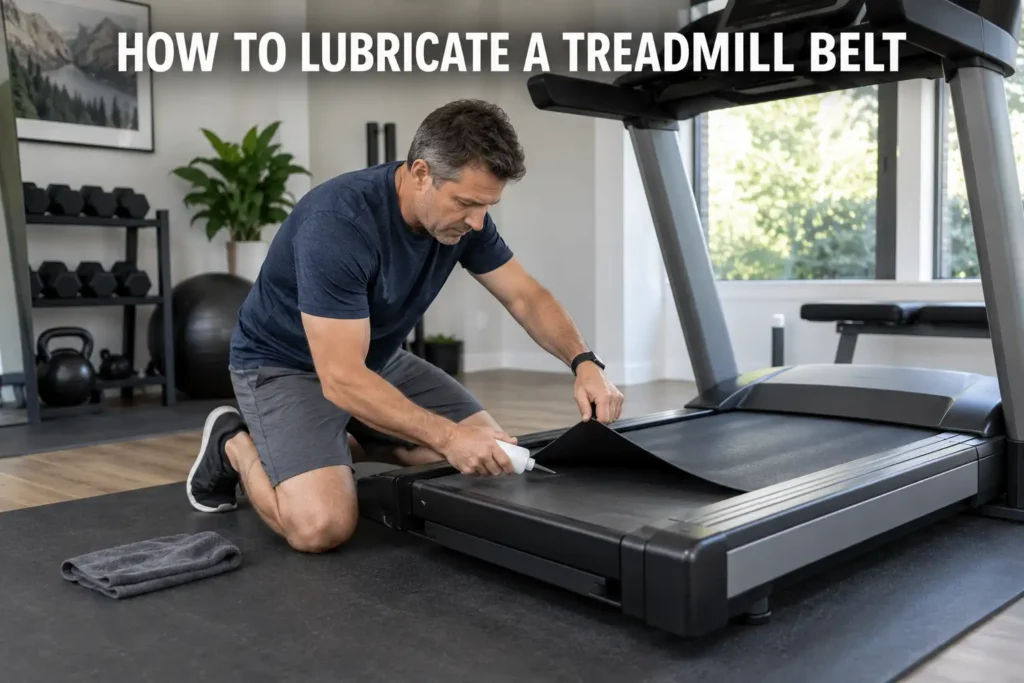
How to lubricate a treadmill belt is one of the most impactful maintenance skills any treadmill owner can develop, and the process takes under 15 minutes. Belt friction generates heat that degrades belt material and shortens motor lifespan over time - a lubrication session every few months is the most effective way to prevent this buildup (1). The process is the same for budget folding models and premium home treadmills: 100% silicone lubricant, the right technique, and a quick wipe-down afterward. In this guide, I walk you through every step, explain which lubricants are actually safe, and cover how often to oil your treadmill based on usage level and machine type.
This content is for informational and educational purposes only. It is not a substitute for professional medical advice, diagnosis, or treatment. Always consult with your healthcare provider before starting any new fitness program or using fitness technology for health monitoring.

How to Lubricate a Treadmill Belt - Step-by-Step Guide
A full treadmill maintenance schedule covers belt tension, deck inspection, roller alignment, and when to call a technician. This guide focuses on lubrication specifically, which is the single most impactful step in that schedule.
Lubricating your treadmill does not require technical knowledge or special tools. Before starting, always unplug the treadmill from the wall - this is a non-negotiable safety step. If the machine was recently used, let it cool for at least 10 minutes before touching any internal components.
What You Need Before You Start
Gather these four items before beginning:
- 100% pure silicone lubricant (squeeze bottle or spray can with extension tube)
- Clean, dry microfiber cloth
- Mild household cleaner (for pre-cleaning the belt surface)
- Latex gloves (optional, keeps hands free from residue)
Never substitute WD-40, motor oil, 3-in-1 oil, or any petroleum-based product. These alternatives degrade rubber belt material over time and will void most manufacturer warranties. If you are unsure whether your current lubricant is safe, check the label for the exact phrase "100% silicone" before applying it to any treadmill component.
How to Apply Treadmill Lubricant Correctly
Here is how to apply treadmill lubricant correctly, in seven steps:
- Unplug and cool - disconnect power and wait at least 10 minutes after your last session
- Lift the belt edge - from one side, gently pull the belt away from the deck; your flat hand should slide underneath with light pressure
- Apply lubricant in a zigzag - insert the bottle tip and apply one thin, even line from side to side across the deck; approximately 1 ounce (30 ml) total for the full session
- Repeat on the opposite side - lift the other belt edge and apply lubricant across the same area of the deck
- Lay the belt flat and reconnect power
- Run at low speed for 3 to 5 minutes - this distributes the lubricant evenly across the full contact surface between belt and deck
- Wipe excess - any lubricant that migrated to the belt edges or side rails should be cleaned off with a dry cloth
Knowing how to lube a treadmill belt correctly means understanding that more is not better. Applying more than 1 ounce per session is a common mistake - excess lubricant attracts dust and debris, which forms an abrasive mixture that accelerates deck wear. If you are new to this process, knowing how to lubricate treadmill belt surfaces correctly is simply a matter of applying the right amount in the right location - underneath only, in a zigzag, with one ounce total.
After applying lubricant and running the belt for 3 to 5 minutes, take a moment to check belt tracking and tension. A properly lubricated belt should run centered on the deck with no side drift. If the belt shifts to one side, a quarter-turn adjustment on the rear roller bolt brings it back - adjust both sides equally and re-check after another minute of running.
If you need a deeper guide on belt tension adjustments, my walkthrough on treadmill belt tension covers the full adjustment process and signs that the tension is outside the safe range.
How to Lubricate a Treadmill Without Lifting the Belt
Many treadmill-specific lubricants include a thin spray extension tube for under-belt access without loosening the rear roller. Insert the tube from the side of the treadmill, slide it underneath the belt, and spray in a sweeping motion from left to right across the full deck width.
This is a practical approach for routine touch-up applications between full maintenance sessions. For complete coverage, the hand-application method above is more reliable because you can confirm even distribution. Use the spray tube method for monthly check-ins and the full hand method every 3 to 6 months for best results.
What to Use to Lubricate a Treadmill Belt
Knowing what to use to lubricate treadmill belt surfaces correctly eliminates the most damaging mistake treadmill owners make. The answer is always 100% pure silicone lubricant - nothing else belongs inside the belt-deck interface.
Why 100% Silicone Is the Only Safe Choice
People often search for how to oil a treadmill or how to grease a treadmill, and the phrasing matters less than the product choice. Pure silicone creates a stable, low-friction film between the belt and the deck that protects both surfaces without degrading rubber or leaving a sticky residue (2). Research on silicone-based lubricants applied to polymer and rubber materials demonstrates meaningful wear reduction compared to unlubricated conditions (3). This protection works through a transfer film mechanism: as the belt moves across the deck, silicone deposits a thin protective coating on both surfaces that prevents direct contact and further reduces friction (4).
Petroleum-based products, by contrast, cause rubber belts to swell, crack, and lose elasticity over time. Even products labeled "silicone spray" at hardware stores often contain carrier solvents or propellants that are harmful to treadmill components.
When buying lubricant, look for "100% silicone" on the label. A single bottle typically provides 3 to 5 applications and is one of the most affordable maintenance purchases available. When you consider the overall investment, our best treadmill for home guide covers top-rated options at every price point - the ongoing maintenance cost is minimal by comparison.
Lubricant Type | Safe for Treadmill | Effect on Belt Material | Attracts Debris |
100% Silicone | Yes | Protects surfaces, reduces friction | No |
WD-40 | No | Strips lubrication, degrades rubber | Yes |
Petroleum-based oil (motor oil, 3-in-1 oil) | No | Causes swelling and cracking | Yes |
Can You Use WD-40 to Lubricate a Treadmill?
WD-40 should never be used to lubricate a treadmill - this is the single most common and costly mistake in treadmill maintenance. WD-40 is a petroleum-based, water-displacing formula - not a lubricant. It loosens and dissolves existing lubrication from rubber surfaces, strips the embedded treatment from belt material, and leaves a petroleum residue that attracts dust and grit.
Using WD-40 on a treadmill belt accelerates wear instead of preventing it. The sticky petroleum film acts as a magnet for floor debris, which grinds between the belt and deck with every step. Most treadmill warranties are voided by the use of non-approved lubricants, and belt damage from petroleum products often requires full belt and deck replacement.
The cost difference between WD-40 and the correct silicone product is trivial compared to repair costs. Always use the right product. Tracking session hours with a smartwatch is one of the most practical ways to stay on a consistent lubrication schedule - our smartwatch guide covers the options most useful for home gym owners.
How Often to Lubricate a Treadmill Belt
The right lubrication interval depends on your usage level, machine type, and environment. The sections below break down specific intervals for home treadmills and walking pads.
Machines placed on carpet require particular attention to this schedule, since carpet debris pulled into the belt-deck interface accelerates wear; my guide on carpet setup for your treadmill explains how to minimize this risk through mat selection and placement.
Standard Lubrication Intervals for Home Treadmills
How often should you lubricate a treadmill, and how often to lubricate treadmill machines more generally - these are among the most common questions from new treadmill owners. Maintaining adequate lubrication is essential because friction-generated heat between the belt and deck compounds wear on both surfaces over time (5). For most home treadmill owners, the standard interval is every 3 to 6 months or every 40 to 150 hours of use - whichever milestone arrives first.
How Environment Affects Lubrication Frequency
Environmental conditions also affect how frequently lubrication is needed. Treadmills stored in garages or rooms with high humidity experience faster lubricant breakdown, while dry, climate-controlled environments extend the interval. If your machine occupies an unheated space that sees seasonal temperature extremes, move to a 3-month calendar interval regardless of hours logged.
How Often to Lubricate a Walking Pad
Scenario | Recommended Interval | Lubricant Volume |
Standard home treadmill | Every 3-6 months or 40-150 hours | 30 ml (1 oz) |
High-humidity or extreme temperature environment | Every 3 months regardless of hours | 30 ml (1 oz) |
Walking pad (standard single-user) | Every 6-12 months | 15-20 ml |
How often should you lubricate a walking pad is a common question from compact treadmill owners. Walking pads have smaller motors and lighter decks that generate less friction per session, extending the maintenance interval. Most walking pad manufacturers recommend the first service at 6 to 12 months for standard single-user home use. Silicone lubricant for walking pads is the same 100% silicone product used for full-size treadmills - the difference is application volume, typically 15 to 20 ml rather than 30 ml. If you are shopping for a space-efficient machine, our best folding treadmill guide covers the top-rated fold-flat models that share the same lubrication needs as any full-size home treadmill.
I track my treadmill usage with a quick note in my phone - just the date and whether the session was a walk or run. It takes 10 seconds and removes all guesswork about when to lubricate. Knowing how many steps in a mile on a treadmill helps you cross-reference pace data with usage hours for a more precise maintenance schedule. For compact setups, our best under-desk treadmill guide covers walking pads that follow the same lubrication schedule.
Signs Your Treadmill Belt Needs Lubrication
Knowing when to lubricate treadmill belt and deck is as important as knowing how. Do not rely solely on the calendar - watch for these symptoms that indicate the belt is running dry:
- Squeaking, rubbing, or grinding sounds during use, particularly at lower speed settings
- Belt slipping or hesitating underfoot when you push off for each stride
- Burning rubber smell during or shortly after a workout
- Motor running louder or hotter than its normal operating level
- Belt surface feeling rough or sticky when you touch the edges from the side
- Jerky or inconsistent belt movement at a fixed speed setting

What to Do When Symptoms Appear
If two or more of these symptoms appear together, lubricate immediately. Heat and friction compound quickly once lubrication is depleted - what begins as a minor squeak can escalate to motor damage within a few sessions. When lubrication alone no longer resolves these issues, knowing how to replace treadmill belt components is the logical next step.
If symptoms persist after a full lubrication session and distribution run, the issue likely goes beyond depleted lubricant. A belt that continues to slip despite fresh lubrication typically needs tension adjustment; persistent grinding sounds after lubrication often indicate roller or bearing wear that requires professional inspection. Knowing when to call a technician is as important as knowing how to lubricate.
A belt kept in good condition also tracks true distance, and my full breakdown of step counts per mile on a treadmill explains why an under-lubricated, slipping belt skews the step-to-distance ratios that many users rely on to hit daily goals.
If the belt continues to slip after lubrication and tension adjustment, it may need to be replaced entirely; my guide on how to replace a treadmill belt covers the full process, including tool requirements and sourcing a compatible replacement.
Do You Need to Lubricate a New Treadmill?
A new treadmill does not always need immediate lubrication - it depends entirely on the belt type. Many modern machines ship with pre-lubricated or Permalube belts, which have silicone or wax embedded directly into the belt material at the factory. Lubricating these belts immediately over-saturates the material and can reduce traction and belt performance.
Check your owner manual before applying any lubricant to a new machine. If the manual identifies the belt as pre-lubricated or self-lubricating, wait for the manufacturer's first recommended service interval - typically 150 to 200 hours of use, or 1 to 2 years at standard home use levels. If the manual does not specify, contact the brand's customer support for clarification before the first application.
How to Clean a Treadmill Belt and Deck
Cleaning and lubrication work together - one without the other reduces the benefit of both. Knowing how to clean treadmill belt surfaces before lubricating is as important as the lubrication itself. A dirty belt carries debris into the lubricant layer, where it acts as an abrasive between the belt and deck surface and accelerates wear even when lubrication intervals are properly maintained. Cleaning a treadmill belt before every lubrication session is the simplest way to extend how long that lubrication lasts.
Walking backwards on a treadmill is a low-impact technique some users incorporate into their training routine. Our guide to walking backwards on a treadmill covers the benefits and correct form in detail.
Cleaning the Treadmill Belt
Follow these steps to clean the treadmill belt before any lubrication session:
- Unplug the machine and allow it to cool completely
- Dry-wipe the belt surface with a microfiber cloth to remove loose dust and debris
- Dampen the cloth lightly with mild household cleaner - never spray cleaner directly onto the belt
- Wipe the top surface in the direction of belt travel, side to side
- Lift the belt edge and gently wipe the underside where it contacts the deck
- Let the belt dry completely before applying lubricant or reconnecting power
Avoid soaking the belt or using harsh chemical cleaners near the motor housing or electronics. A lightly damp microfiber cloth is all that is needed. Excess moisture inside the treadmill frame damages circuit boards and bearings.
Cleaning the Deck and Frame
Knowing how to clean treadmills thoroughly extends the time between full lubrication sessions and keeps early warning signs visible:
- After every session: wipe handrails, console, and side rails with a dry or lightly damp cloth
- Weekly: clean the motor cover vents and foot rails with a dry cloth to prevent dust accumulation
- Every 2-4 weeks: check the belt edges for fraying, debris buildup, or uneven tracking
- Monthly: vacuum underneath the treadmill to clear dust from the motor housing area
Knowing how to use treadmill equipment safely includes maintaining a clean running surface at all times. Debris on the belt reduces traction and creates unpredictable footing - cleaning regularly is as much a safety practice as a maintenance one.
Where to Lubricate a Treadmill - Common Mistakes to Avoid
Lubricant placement is as important as the product you choose. Applying silicone to the wrong surface - or the right surface in the wrong amount - causes damage rather than preventing it.
Where Treadmill Lubricant Actually Belongs
Knowing where to lubricate treadmill components is as important as knowing how often. Lubricant belongs only on the underside of the belt, directly on the deck surface beneath the walking area. It does not go on top of the belt, on the rollers, or inside the motor housing.
Common Mistakes That Damage Your Treadmill
These are the most common mistakes that lead to treadmill damage:
- Applying lubricant on the top belt surface - creates a slippery, dangerous walking surface; lubricant only goes underneath, never on top
- Over-lubricating - 1 ounce per session is the correct amount; excess pools at the belt edges, attracts debris, and worsens friction over time
- Using any petroleum-based product - motor oil, WD-40, and 3-in-1 oil degrade rubber belt material over time; pure silicone only
- Skipping the post-application distribution run - without 3 to 5 minutes at low speed, lubricant stays pooled at application points instead of spreading evenly
- Lubricating a dirty belt - debris mixed into fresh lubricant creates an abrasive compound that grinds both the belt and deck surface
Knowing how to lubricate a treadmill at home correctly starts with recognizing these pitfalls. Knowing how to disassemble a treadmill is not required for routine lubrication - you only need enough access to reach underneath the belt from the side. NordicTrack, LifeSpan Fitness, and budget brands like Sparnod all follow the same lubricant-placement rules regardless of deck coating or price point - if you need to know how to lubricate a Sparnod treadmill specifically, every step in this guide applies directly to your machine. If incline training is part of your routine, our best incline treadmill guide covers machines that have been vetted for long-term deck durability - where proper lubrication makes an even bigger difference under heavier motor load.
Keep Your Treadmill Running for Years
Regular belt lubrication is the highest-impact maintenance task for any treadmill. A single bottle of pure silicone lubricant applied on a consistent schedule can extend a machine's useful lifespan by years - while skipping it regularly leads to belt wear, deck degradation, and motor failure that costs significantly more to address.
A worn, under-lubricated belt also loses its cushioning effectiveness over time, and my guide on whether treadmills are bad for knees explains how deck condition directly affects joint impact during training.

Every treadmill model - from budget fold-flat designs to premium home machines - requires the same regular lubrication routine covered in this guide. Understanding how much does a treadmill weigh is also useful for planning whether to move the machine occasionally for periodic full-access lubrication sessions.
I have found that a simple maintenance log - just a date, estimated hours since last lubrication, and any notes about unusual sounds or belt feel - eliminates all guesswork and makes it easy to stay ahead of the maintenance schedule. Lubricate on time, clean before you lubricate, use only 100% silicone, and pay attention to early warning signs. A treadmill that is properly maintained runs the same in year ten as it did on day one.
For the operational side of treadmill ownership — startup procedures, session structure, and common technique errors — my guide on how to get the most from a treadmill covers each step.
If you are curious how long a well-maintained machine can realistically last, my guide on how long do treadmills last covers what separates machines that run for decades from those that fail early.
FAQs
Can I use WD-40 as treadmill oil?
WD-40 cannot be used as treadmill oil because it is a petroleum-based, water-displacing formula - not a lubricant - and it actively degrades the rubber material in treadmill belts. Using it strips away existing lubrication, leaves a debris-attracting residue, and voids most manufacturer warranties.
How often should a treadmill be oiled?
A treadmill should be oiled every 3 to 6 months for typical home use, or every 40 to 150 hours of use - whichever comes first. Higher-frequency users, those on shared machines, and anyone whose treadmill shows friction symptoms should check the manufacturer's manual for model-specific intervals.
What type of oil is used for a treadmill?
The type of oil used for a treadmill is 100% pure silicone lubricant - not WD-40, motor oil, 3-in-1 oil, grease, or petroleum-based silicone spray. Only pure silicone creates a stable low-friction film between the belt and deck without degrading rubber or attracting dust and debris.
Does a treadmill need to be oiled?
A treadmill does need to be oiled regularly unless the belt is specifically labeled as self-lubricating or Permalube. Without lubrication, friction between the belt and deck generates heat that degrades both surfaces and eventually leads to motor failure.
How to lubricate treadmill without lifting belt?
To lubricate a treadmill without lifting the belt, use a silicone spray with a thin extension tube, available with most treadmill-specific lubricant products. Insert the tube from the side of the machine, slide it under the belt, and spray in a sweeping motion across the deck from left to right, then run the treadmill at low speed for 3 to 5 minutes to distribute the lubricant evenly.
References
- Krawiec P, Rozanski L, Czarnecka-Komorowska D, Wargula L. Evaluation of the thermal stability and surface characteristics of thermoplastic polyurethane V-belt. Materials (Basel). 2020;13(7):1502. doi:10.3390/ma13071502
- Liu R, Su J, Zhang T, Ke L. Fretting wear behaviors of silicone rubber under dry friction and different lubrication conditions. Materials (Basel). 2024;17(11):2598. doi:10.3390/ma17112598
- Lee SJ, Segu DZ, Kim CL. Enhancement of tribological performance of lubricants using polydimethylsiloxane powder additives. RSC Advances. 2024. doi:10.1039/d4ra05164e
- Panin SV, Alexenko VO, Buslovich DG. High performance polymer composites: a role of transfer films in ensuring tribological properties - a review. Polymers (Basel). 2022;14(5):975. doi:10.3390/polym14050975
- Pieniak D, Jedut R, Gil L, Kupicz W, Borucka A, Selech J, Bartnik G, Przystupa K, Krzysiak Z. Comparative evaluation of the tribological properties of polymer materials with similar Shore hardness working in metal-polymer friction systems. Materials (Basel). 2023;16(2):573. doi:10.3390/ma16020573