
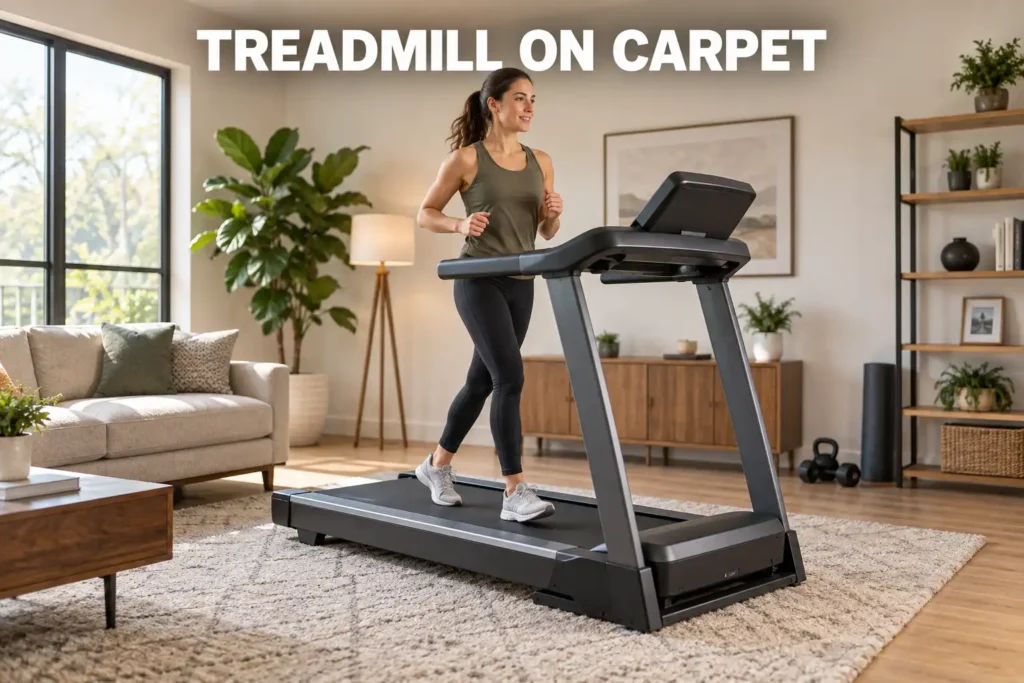
Treadmill on carpet is one of the most common home gym setup questions, and it directly affects your machine's lifespan, your floor's condition, and your workout safety. Most homes don't have a dedicated rubber-floored workout space - spare bedrooms with wall-to-wall carpet, unheated garages, and second-story bonus rooms are where real treadmills actually end up. In this guide, I break down each placement scenario, explain what to put under your machine on carpet, and clarify how thick that protective mat really needs to be. For every surface and location, there is a workable answer that protects both you and your equipment.

Treadmill on Carpet - What You Need to Know
Treadmill on carpet works, but it creates challenges that hard floors don't. The risks are predictable and preventable once you understand what is happening beneath your machine while it runs. I always recommend completing a mat assessment before the machine arrives - knowing your carpet pile depth upfront determines the exact protection level you need. Choosing the right machine matters too - models with sealed motors tolerate carpet environments far better than open-motor designs, making motor type one of the most important specifications for a carpet installation.
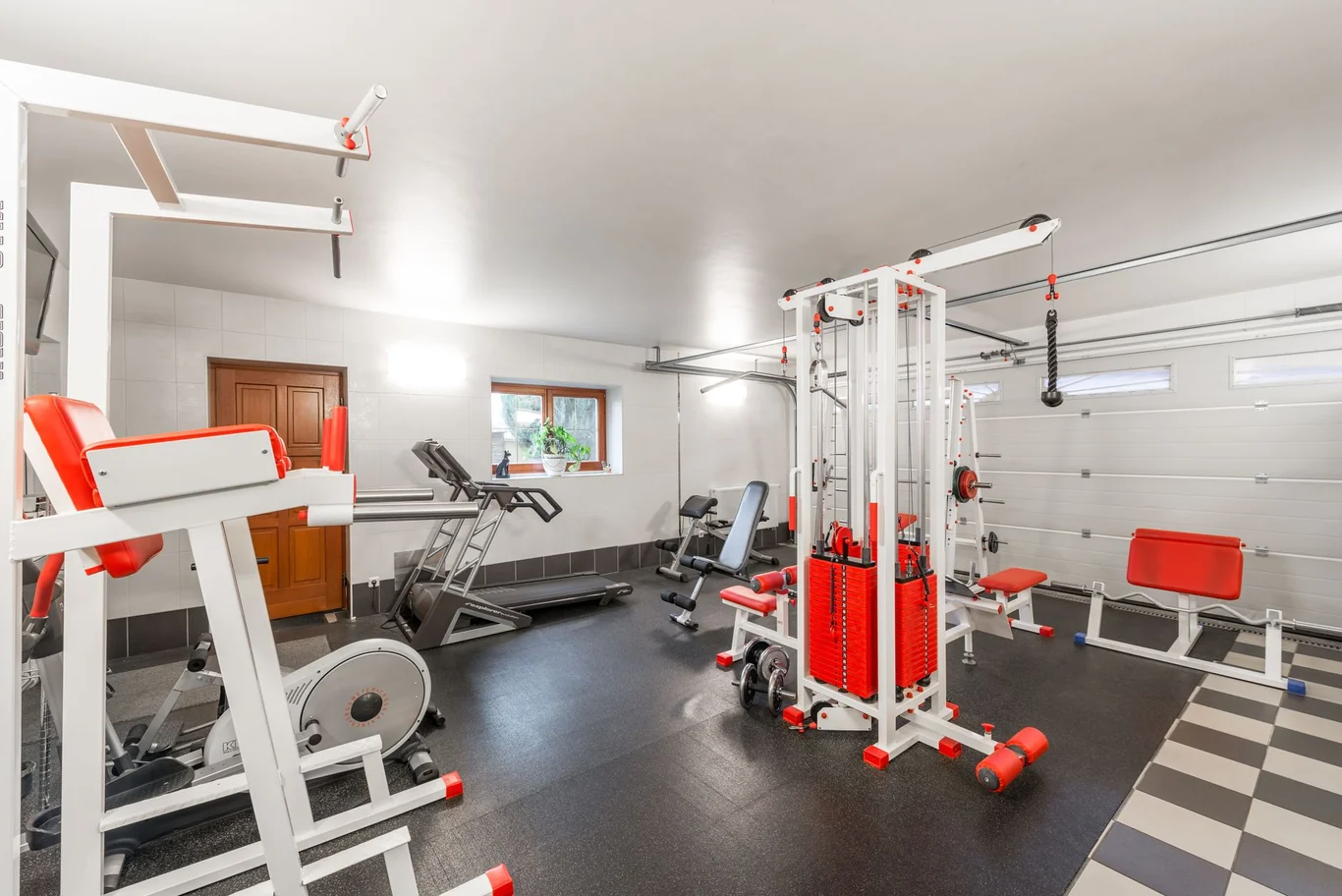
Can You Use a Treadmill on Carpet?
Can you use a treadmill on carpet? Yes - but carpet creates a debris and heat problem that hard floors do not. The treadmill belt generates a low-level suction effect as it moves, pulling lint, pet hair, and carpet fibers directly into the motor housing. Over months, accumulated debris causes the motor to overheat and wear prematurely.
If debris buildup has degraded the belt surface or caused glazing, treadmill belt replacement is usually the next step once lubrication and cleaning no longer restore normal traction.
Low-pile carpet handles placement better than high-pile. Berber and commercial-grade carpet shed less fiber than thick shag or frieze styles, which lose material constantly under the mechanical motion of a running belt. A practical check: if you vacuum under your machine after one month and find a significant lint clump, your carpet pile is too active to skip protective matting.
Research on treadmill surface mechanics suggests that surface variability beneath the machine measurably affects running performance and equipment wear patterns (1). The treadmill on carpet situation is manageable, but it requires a deliberate protective layer between the two surfaces.
Problems With Running a Treadmill on Carpet
Without a mat, carpet creates four distinct problems that compound over time:
- Motor overheating - carpet's dense pile blocks airflow from the motor housing, driving internal temperatures significantly higher than on a hard surface during long sessions.
- Belt misalignment - machine feet sink unevenly into soft pile rather than sitting on a rigid base, causing minor movement that gradually pulls the belt off-center.
- Permanent indentation - concentrated machine weight compresses carpet pile until the fibers permanently flatten and do not spring back when the machine is moved.
- Debris intake - the spinning belt creates a low-pressure zone above the carpet surface, actively drawing fibers and dust into the motor housing - the primary cause of motor failure on carpeted installations.
A solid rubber mat eliminates all four problems by creating a firm, flat surface that cuts off debris access and allows heat to dissipate. Mat installation should happen before the machine touches carpet for the first time, not after you notice problems. The treadmill assembly guide covers exactly where mat setup fits into the full installation sequence.
Treadmill Maintenance on Carpet
Carpet environments require more frequent maintenance than hard floors. Vacuum under the machine and around the motor housing monthly to prevent lint buildup, the primary source of motor fouling on carpeted installations. Lubricate the belt every three to four months rather than the standard six-month interval - increased debris load accelerates belt friction even when the mat is in place. Before each lubrication session, check the underside of the belt for fiber accumulation and clean the deck before applying lubricant to prevent sealing debris against the belt.
For the full lubrication process — correct silicone product, application technique, and carpet-specific frequency — my guide on treadmill maintenance and lubrication covers each step.
What to Put Under a Treadmill on Carpet
Most confusion about treadmill carpet protection comes from choosing the right mat type and thickness. A treadmill mat for carpet serves four functions simultaneously: stabilizing the machine, protecting the carpet from compression and fiber loss, reducing vibration transmitted to the home's structure, and blocking debris intake.
Best Treadmill Mat for Carpet
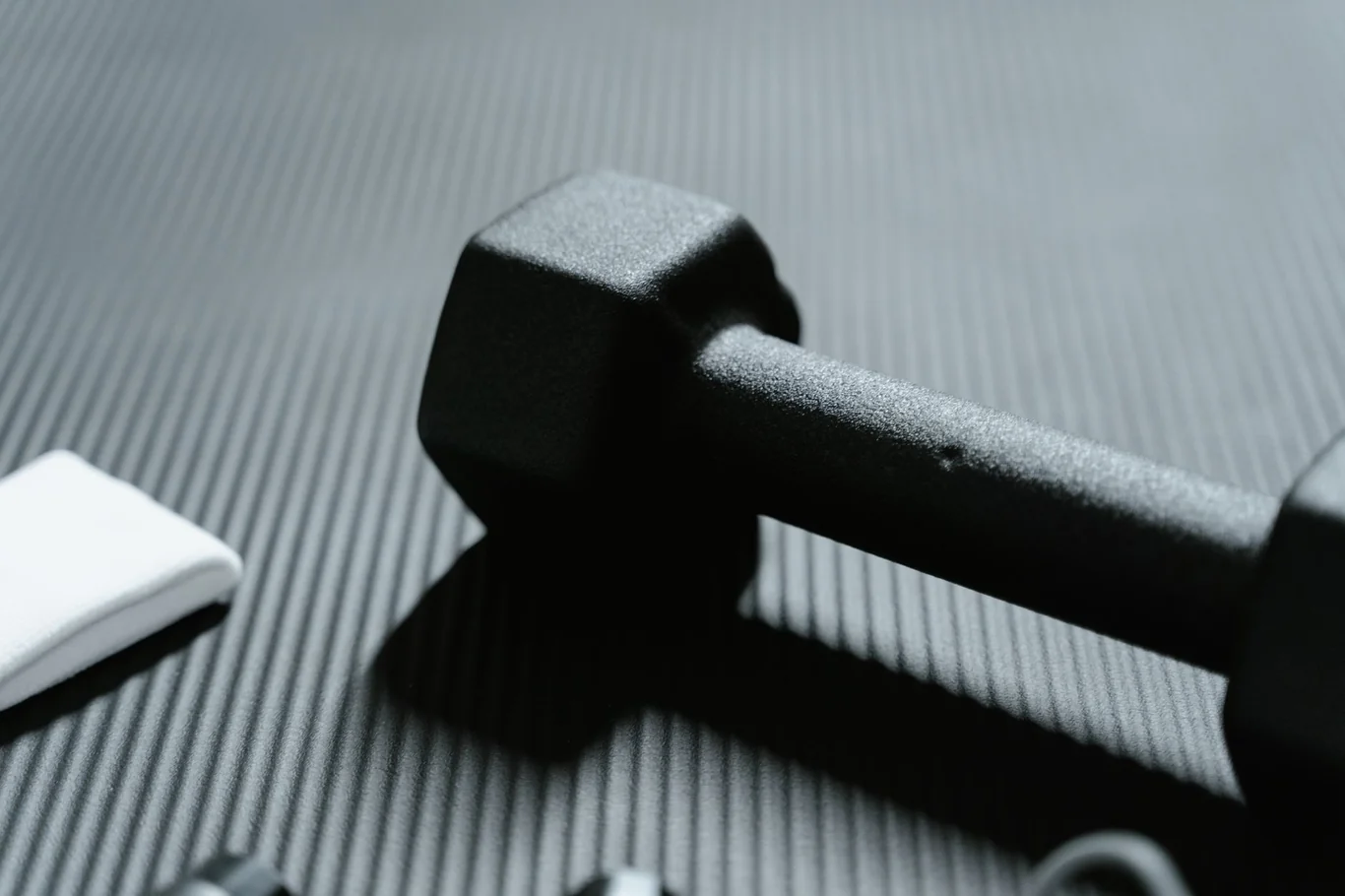
The best treadmill mat for carpet is a solid rubber mat at least 3/8 inch thick. I recommend rubber over foam for the same reason I'd recommend solid hardwood over particle board - compression resistance is what matters over the long run, not initial thickness. A foam mat that starts at 3/8 inch compresses to 1/4 inch within weeks under a 250-pound machine, defeating its protective purpose entirely.
Size the mat larger than the machine's footprint - at least 6 inches beyond each side and 12 inches beyond the rear. Brands like SuperMats and BalanceFrom offer purpose-built treadmill mats in the correct thickness range. For a heavy duty treadmill mat for carpet, look at dense vulcanized rubber in the 6mm to 10mm range - necessary for machines over 250 pounds or carpet pile over 1/2 inch deep.
If you are unsure where your machine falls in the weight spectrum, my guide on how much treadmills weigh by type gives a full reference for confirming which mat thickness and size is appropriate.
Budget alternatives include horse stall mats (typically 3/4 inch solid rubber at a fraction of the cost) and interlocking rubber tiles, which work well for large areas or irregular spaces.
When choosing the best mat for treadmill on carpet, also consider your workout tracking setup. If you use a connected treadmill paired with a wearable, the smartwatch and fitness tracker guide covers which devices sync reliably with major treadmill platforms.
Treadmill Mat Thickness - How Thick Should It Be?
Treadmill mat thickness is the most debated specification in home gym setup. The right thickness depends on carpet pile height and machine weight - not a single universal number.
Carpet Type | Treadmill Weight | Recommended Mat Thickness |
Low-pile (under 1/4 inch) | Under 200 lbs | 3/16 to 1/4 inch rubber |
Low-pile (under 1/4 inch) | 200 lbs or more | 3/8 inch rubber |
Medium-pile (1/4 to 1/2 inch) | Under 200 lbs | 3/8 inch rubber |
Medium-pile (1/4 to 1/2 inch) | 200 lbs or more | 1/2 inch rubber |
High-pile (over 1/2 inch) | Any weight | 1/2 inch rubber plus 3/4 inch plywood underneath |
Note: The 3/16 to 1/4 inch range applies primarily to compact under-desk walking pads under 100 lbs on very low-pile surfaces. Standard motorized treadmills perform best with a minimum of 3/8 inch regardless of machine weight.
Thicker mats cost more and add a small amount of height to your machine's starting position, but they protect against long-term compression. A mat that bottoms out after three months provides none of the protection you paid for.
Plywood Under the Mat - When It Helps
High-pile carpet exceeding 1/2 inch depth warrants a plywood-plus-mat approach. A 3/4-inch plywood sheet placed under the mat creates a rigid base that prevents both the mat and the machine from slowly sinking into thick pile over months of consistent use.
Cut plywood to the same dimensions as your mat, or slightly larger. The layered stack - plywood directly on carpet, mat on plywood, machine on mat - adds roughly 1 to 1.5 inches of total height, rarely a practical problem. The plywood also distributes the machine's weight across a larger area, reducing carpet indentation even if the mat eventually compresses slightly. For choosing which treadmill to buy, the best treadmill for home roundup covers models suited to demanding home environments across all budgets.
Can You Put a Treadmill in a Garage?
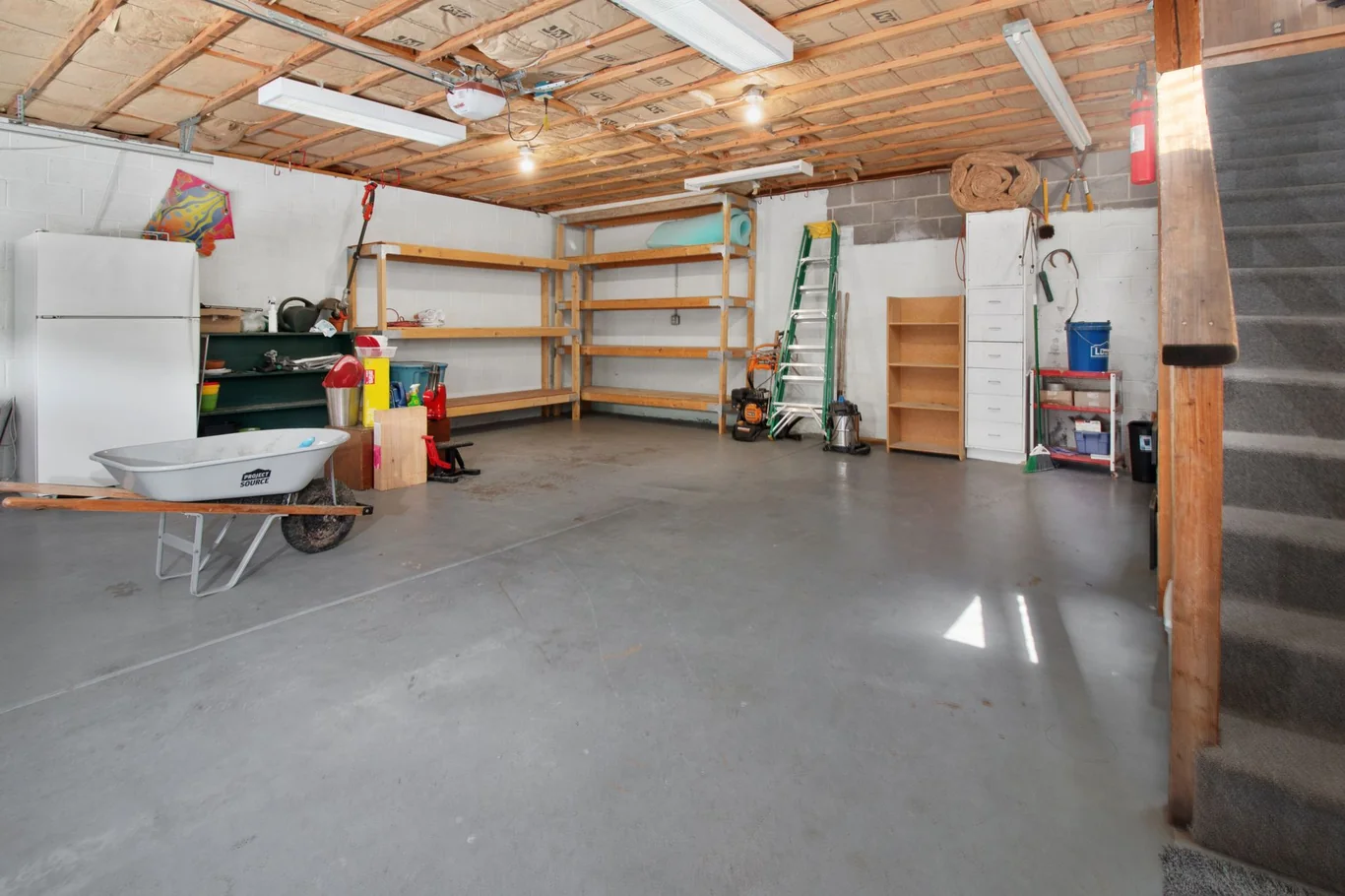
A treadmill in a garage is one of the most popular home gym choices - concrete floors are ideal for heavy exercise equipment. The environment, however, introduces risks that carpet installation never does.
Buyers still weighing a treadmill against a stationary bike for their home can compare footprint, noise, and ongoing maintenance in my treadmill vs bike decision guide.
Temperature and Humidity Risks
Most major treadmill manufacturers void warranties for machines stored in unheated or uncooled spaces. NordicTrack, ProForm, Bowflex, and LifeFitness all include warranty clauses restricting garage use to climate-controlled environments. Temperature cycling stresses belt materials, motor lubricants, and electronic components in ways that shorten machine lifespan significantly over two to three years.
Before installing in a garage, check your treadmill's warranty for language about "extreme temperatures" or "non-residential environments." If temperatures regularly drop below 40 degrees F or exceed 90 degrees F, your machine faces real mechanical risk.
I've seen garage treadmill setups fail within a year because of humidity damage, not heavy use - the environment is the primary variable, not the machine quality. A dehumidifier maintaining 40 to 60% relative humidity protects electronics and prevents belt material from absorbing moisture that causes premature cracking.
My guide on treadmill lifespan and longevity covers which environmental conditions shorten machine life most and what a realistic replacement timeline looks like under different storage and usage scenarios.
Moisture damage also accelerates belt loosening, which is why carpet installations benefit from routine tension checks — my guide on checking treadmill belt tension covers the symptoms and step-by-step adjustment process.
How to Set Up a Treadmill in a Garage
If your garage is climate-controlled, setup is practical and straightforward. Follow these steps in order:
- Choose a level, dry spot away from the garage door - door operation kicks up debris gusts that accelerate motor fouling.
- Place a rubber mat even on concrete - protects against ground moisture wicking from the slab and dampens motor vibration.
- Maintain 24 inches of clear space behind the rear of the machine as a safe emergency step-off zone - a treadmill placed against a wall eliminates your ability to recover from a stumble at speed.
- Route power through a dedicated circuit or quality surge protector - avoid extension cords longer than 6 feet to prevent voltage drop under motor load, a leading cause of motor damage on high-wattage exercise equipment.
- Cover the machine between sessions to block dust accumulation in motor vents and belt channels.
- Run the treadmill at least once monthly even in off-seasons - belts that sit idle in a cold garage can stiffen and crack at their first high-speed use.
Can You Put a Treadmill Upstairs?
Can you put a treadmill upstairs? Yes, but two concerns must be addressed before you move the machine: structural capacity and vibration transfer. Both are solvable with the right preparation. I'd put upstairs placement in the "doable but demanding" category - it works when done right, but noise mitigation requires a genuine two-layer damping approach.
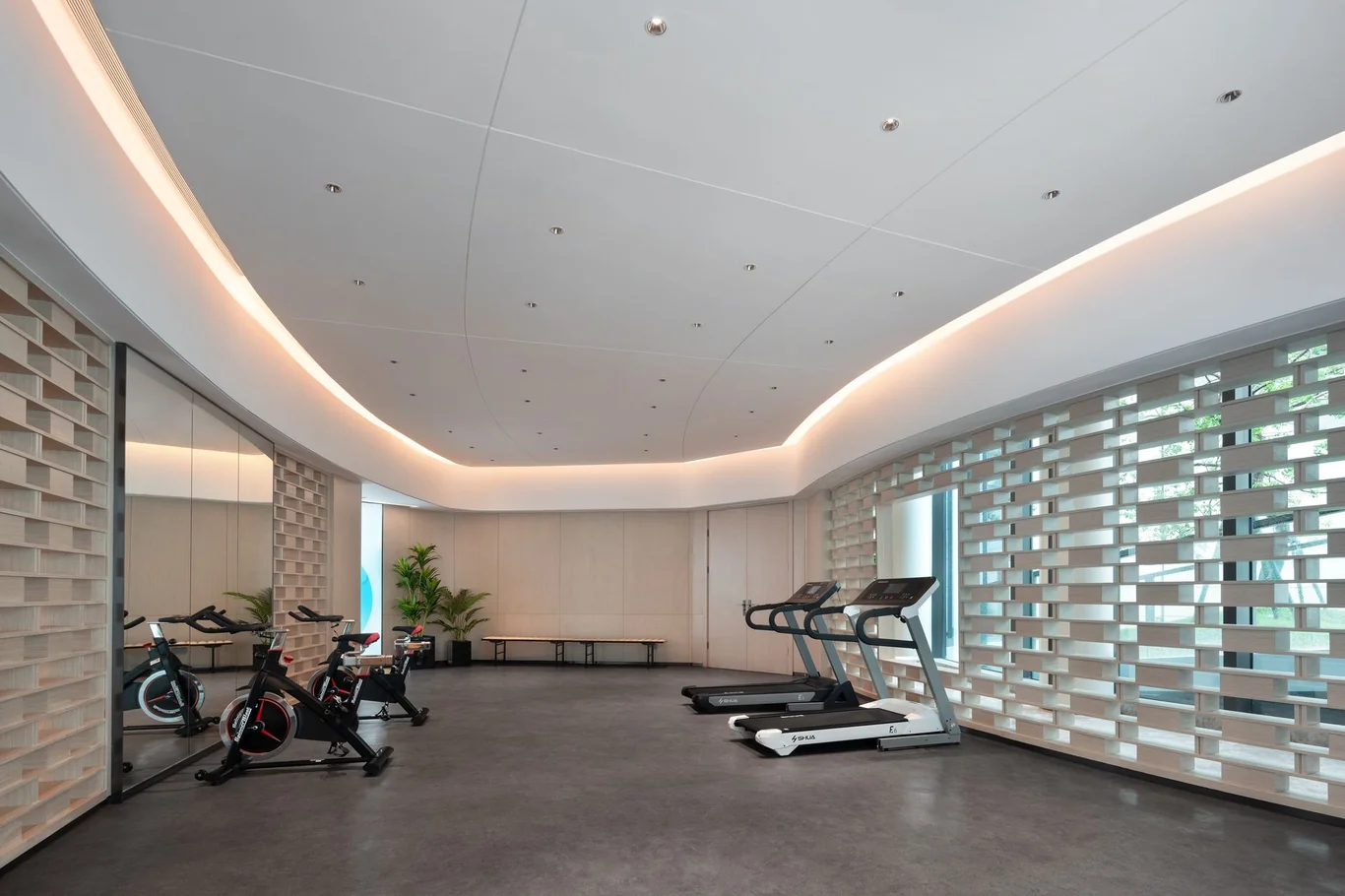
Structural Load - What Your Floor Actually Holds
Residential floor joists in the United States are engineered to minimum live load ratings that vary by room type. Under IRC Table R301.5, sleeping rooms - including spare bedrooms and bonus rooms where treadmills most commonly land - are designed for 30 pounds per square foot (psf). Other habitable rooms are rated at 40 psf. A 300-pound treadmill carrying a 200-pound user creates a combined load of roughly 500 pounds. Spread across the machine's 5 to 6 square foot base footprint, that calculates to approximately 85 to 100 psf - two to three times the minimum standard for the room types where most home treadmills end up.
Most modern residential construction exceeds minimum load ratings by a meaningful margin, and floor ratings represent averages across the span rather than hard limits at any single point. Standard consumer treadmills under 300 pounds cause no structural problems in well-built homes. Commercial-grade machines weighing 400 pounds or more warrant a structural engineer's assessment before second-floor installation. Place the machine perpendicular to the floor joists and close to a load-bearing wall for maximum support.
Before choosing a final spot, my guide on treadmill dimensions covers assembled footprints, ceiling clearance, and safety zone requirements for second-floor, garage, and basement installations.
Treadmill on the Second Floor - Managing Noise and Vibration
Treadmill on the second floor produces vibration that transmits through the floor joists and into the room below - the mechanical impact of each footfall is clearly audible to anyone below during a running session.
The same principle applies beneath your treadmill - a thick rubber mat absorbs impact energy before it can couple into the floor structure, reducing vibration and noise transmitted to the room below. A best folding treadmill option is worth considering for upstairs setups specifically, since lighter folding machines create less impact force per footstrike.
To minimize noise transmission to the floor below:
- Use a rubber mat at least 1/2 inch thick with vibration-damping properties, not just a standard floor protector.
- Place rubber isolation cups or pads under each individual machine foot in addition to the floor mat for a two-layer damping approach.
- Choose a machine with a cushioned deck - cushioned decks absorb impact at the source before it reaches the floor.
- Schedule workouts during reasonable hours if you share a home with others below.
Treadmill in Basement - Pros and Cons
Treadmill in basement placement is the best overall choice for most homes with finished basements, provided the space is properly conditioned. My assessment consistently puts basement installation at the top of the placement hierarchy - the combination of stable concrete footing, natural temperature regulation, and zero vibration transmission above is genuinely difficult to replicate elsewhere.
Runners who use their machine for extended marathon treadmill training sessions get the most from a basement setup, where consistent temperature and a hard floor surface reduce both equipment fatigue and session variability.
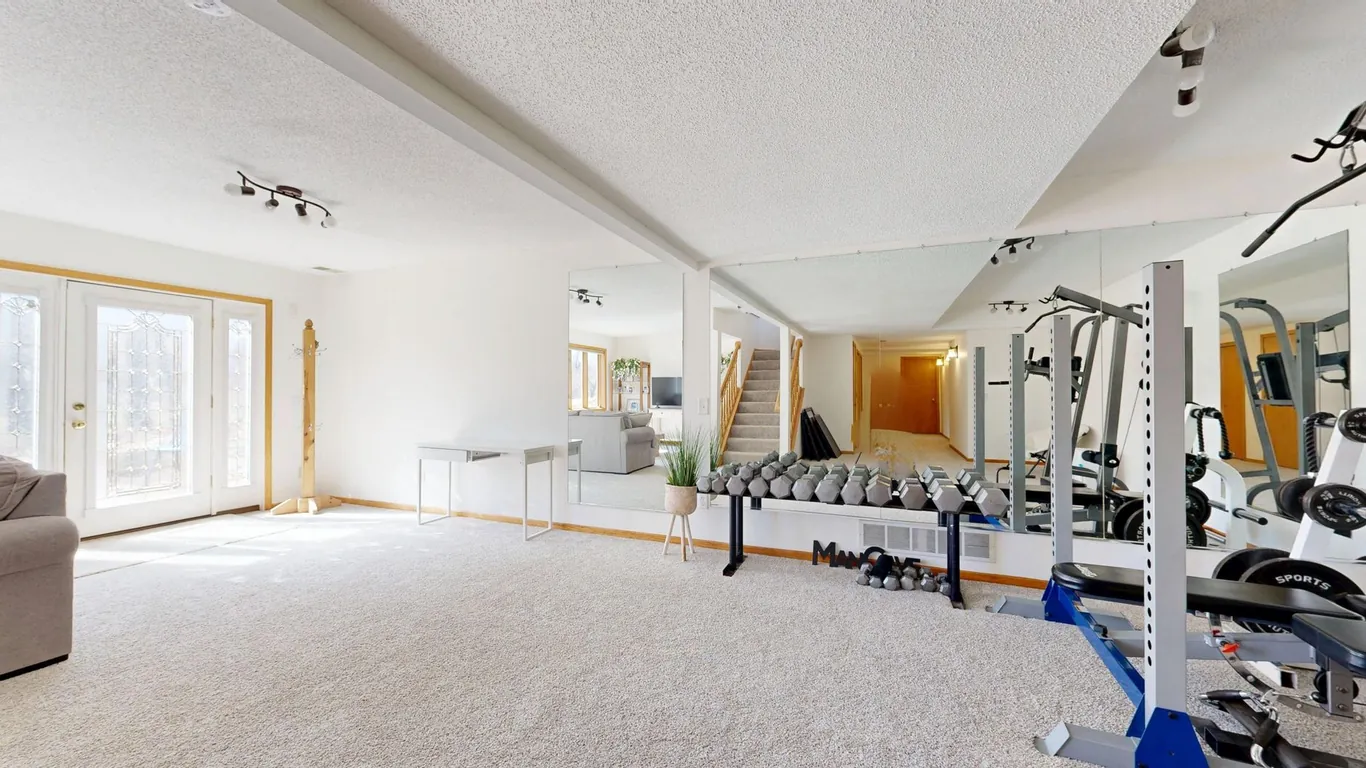
Basement Treadmill Advantages
Advantages of basement treadmill placement:
- Concrete slab distributes machine weight with zero compression risk - it sits directly on grade, not on joists rated to a load limit.
- No vibration transmission to rooms above - footfall impact goes into the slab, not into a ceiling that someone else hears.
- Cooler ambient temperature naturally extends motor life - basements typically run 5 to 10 degrees cooler in summer, reducing thermal stress during long sessions.
- No structural load concern whatsoever.
Basement Treadmill Disadvantages
Disadvantages to plan around before committing:
- Active moisture management is required - any basement with water intrusion history needs a dehumidifier before electronic equipment goes in, since moisture and electronics do not coexist safely.
- Ceiling height constrains incline treadmills - allow at least 8 feet of clear vertical space for a tall user at maximum incline.
- WiFi and Bluetooth signals weaken at sub-grade depths, affecting app-connected treadmills. A WiFi extender typically solves this.
- Moving heavy equipment downstairs is logistically demanding and often requires professional movers.
A rubber mat on concrete still makes sense in a basement to block moisture wicking from the slab and provide a non-slip contact zone.
Treadmill Placement Comparison - All Locations at a Glance
Location | Floor Quality | Debris Risk | Vibration Issue | Overall Verdict |
Carpeted room (with mat) | Moderate | Reduced by mat | Low | Acceptable - mat is mandatory |
Garage - climate controlled | Excellent | Low with machine cover | Low | Ideal if temperature is managed |
Garage - unheated or uncooled | Excellent surface | Moderate | Low | Warranty risk - avoid long-term |
Second floor (with thick mat) | Moderate | Low | High | Manageable with two-layer damping |
Basement - conditioned | Excellent | Very low | None | Best overall option |
Treadmill Safety Regardless of Placement
Where you place your treadmill shapes more than just equipment wear - it also determines how exposed you and your household are to real injury risk. This section covers the safety fundamentals that apply to every surface and every room.
For users with existing joint sensitivity, my guide on how treadmills affect knee health explains which surface and setup choices reduce impact before you commit to a location.
Child Safety and Injury Risk
Placement decisions matter for equipment longevity, but they matter even more for personal safety. I cannot overstate the child-access risk that treadmill placement creates - a running belt at hand height for a small child is among the most preventable severe injury scenarios in home fitness. Treadmills account for 66% of all home exercise equipment emergency department injuries in the United States (2). Children reaching under moving belts represent a disproportionate share of the most severe cases - friction burns and amputations that are entirely preventable with proper supervision and machine placement (2, 3). Treadmill hand injuries in children consistently require complex surgical intervention and extended rehabilitation even when the contact area appears small (4).
Placement Safety Rules for Every Surface
Follow these placement safety rules regardless of which surface your machine sits on:
- Keep at least 24 inches of clear space behind the rear of the machine - this is your emergency exit zone at any speed.
- Place the machine where children cannot access the running belt unsupervised under any circumstances.
- Attach the safety clip to your clothing before every workout - it stops the belt instantly if you step off or fall.
- Face the machine toward an open wall rather than a window - sun glare affects balance and form on long sessions.
- Use the emergency stop cord at all times during sessions above 6 mph.
Proper placement also supports varied, more productive training. Once your treadmill is safely installed, expanding your routine to include how many steps in a mile on a treadmill tracking or training for a marathon on a treadmill becomes far more practical. The benefits of walking backwards on treadmill are well documented for lower-body strength and gait correction, but that movement requires even more stability awareness than forward walking - another reason placement and mat security matter from day one.
Getting Your Treadmill Setup Right the First Time
Placing a treadmill on carpet is workable with the right mat - rubber, at least 3/8 inch thick, sized larger than the machine's base on all sides. A treadmill in a garage is excellent if you manage temperature and humidity before the machine arrives and cover it between sessions. Upstairs placement works with the right vibration-dampening setup. The basement, properly conditioned against moisture, remains the most practical choice for machines that see heavy use.
Runners tracking distance by steps in any of these setups will find my breakdown of how many steps in a mile on a treadmill useful for converting workout data to accurate mileage without relying solely on the machine's display.
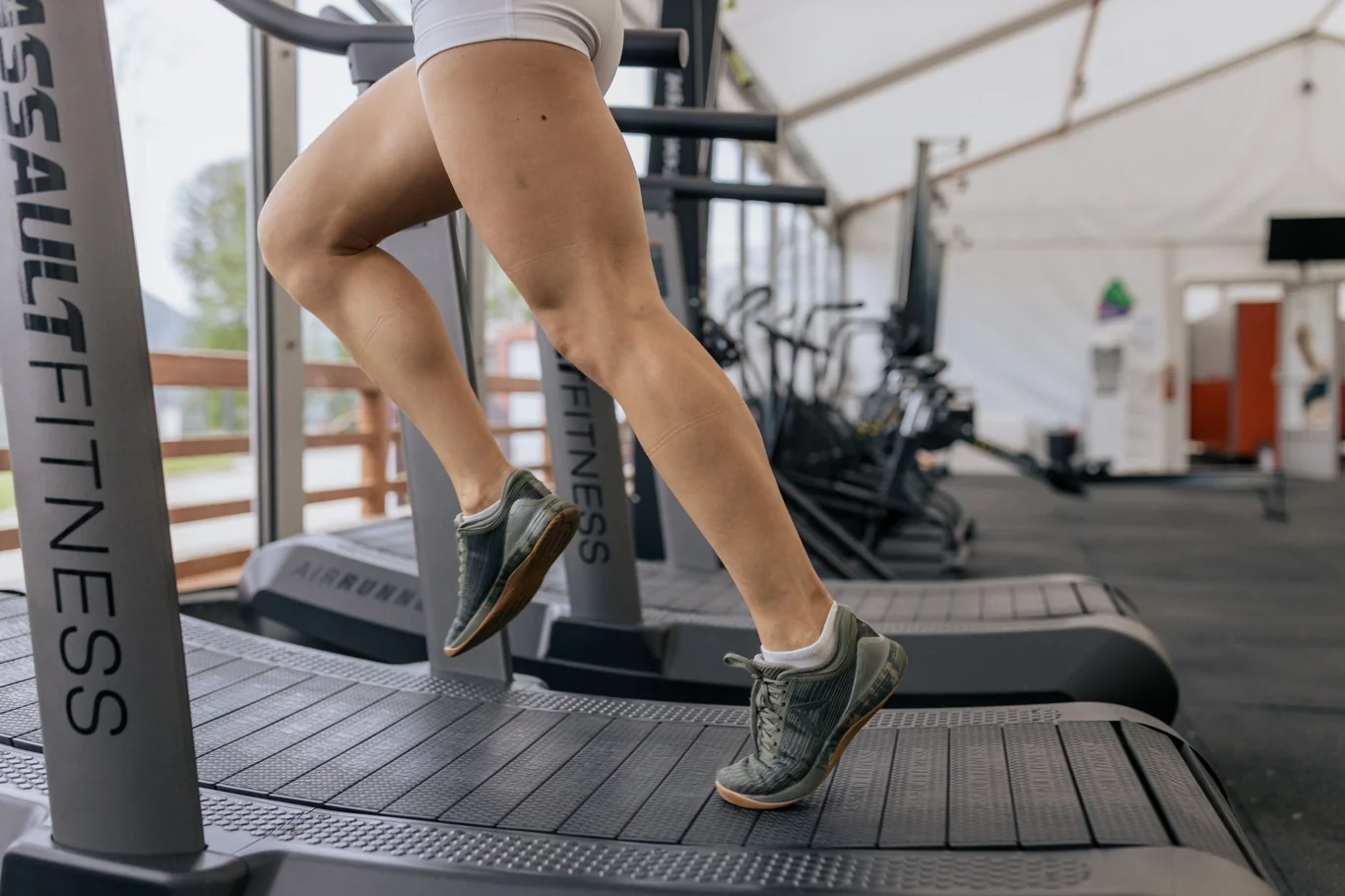
I've seen the difference between a mat-protected treadmill on carpet installation and a bare-carpet setup play out over time - the mat protects both the carpet and the motor in ways that become dramatically visible after two or three years of consistent use. What separates a treadmill that lasts a decade from one replaced in three years is mostly placement discipline: the right surface protection, a clean power supply, and regular maintenance to clear debris from motor vents. A mat is essential on soft flooring. Without it, a machine loses alignment and begins degrading from the first session. For choosing the right machine itself, the best incline treadmill guide covers models built for demanding home environments - including which ones have sealed motors that resist debris regardless of installation surface. And if you are wondering whether the treadmill experience differs from outdoor running, is running on treadmill easier addresses the biomechanics in detail.
FAQs
Is a treadmill okay on carpet?
A treadmill is okay on carpet when used with a solid rubber mat underneath the machine at all times. Without a mat, the running belt creates a suction effect that pulls carpet lint and debris into the motor housing, traps heat under the chassis, and compresses the carpet pile permanently under the machine's weight over weeks and months of use.
What to put under a treadmill on carpet?
The best thing to put under a treadmill on carpet is a solid rubber mat at least 3/8 inch thick, sized larger than the machine's full footprint on all sides. On high-pile carpet over 1/2 inch deep, add a 3/4-inch plywood sheet directly beneath the rubber mat to create a rigid base that prevents the entire setup from compressing into the carpet and losing stability over time.
What treadmills work on carpets?
Treadmills with sealed or enclosed motors work best on carpets because they resist debris intake from carpet fibers drawn upward by the belt's suction. Most standard consumer treadmills work on carpet with a proper rubber mat in place - the mat does the majority of the protective work regardless of the specific machine's motor design or brand.
Owners who discover motor issues after a carpet installation will find a full diagnostic sequence in my guide to treadmill motor repair, covering the most common debris-related failure patterns.
Do I need a mat under my treadmill on carpet?
A mat is essential under your treadmill on carpet and strongly recommended even on hard surfaces like concrete or hardwood. The mat stabilizes the machine against movement, protects the floor surface from compression and scuff damage, dampens vibration transmitted to the home's structure, and blocks debris from entering the motor housing from below during operation.
What to put under treadmill on carpet?
What you put under a treadmill on carpet depends on your carpet pile height: low to medium-pile carpet needs a 3/8 to 1/2 inch solid rubber mat, while thick carpet over 1/2 inch deep requires a 3/4-inch plywood sheet under the rubber mat. For a walking pad on carpet - which is lighter and creates less suction than a full motorized treadmill - a standard 1/4-inch rubber mat typically provides adequate protection against the main debris and compression risks.
Can you use a DeerRun treadmill on carpet?
DeerRun treadmills work on carpet when placed on a solid rubber mat at least 3/8 inch thick. Like other mid-range treadmill brands, DeerRun machines benefit from a treadmill mat for carpet that stabilizes the machine and blocks debris intake - the manufacturer's own setup guidance recommends a mat on any soft surface.
Where can I find a treadmill mat for carpet near me or nearby?
A treadmill mat for carpet near me search typically returns sporting goods chains like Dick's Sporting Goods and home improvement stores like Home Depot or Lowe's - all carry rubber exercise mats in the correct thickness range. Online retailers like Amazon deliver next-day, but buying a treadmill mat for carpet nearby at a local store lets you check rubber density before buying.
What do I put under a walking pad on carpet?
What to put under a walking pad on carpet is simpler than a full treadmill setup - a 1/4-inch rubber mat typically provides adequate protection against debris and compression on low-pile carpet. For medium-pile carpet over 1/4 inch deep, use a 3/8-inch mat. Walking pads are lighter and create less belt suction than full motorized treadmills, so thinner mat protection holds up longer.
Do I need a mat under my treadmill on concrete?
Do I need a mat under my treadmill on concrete? A rubber mat on concrete is strongly recommended even though the hard surface eliminates the debris and compression problems that make mats mandatory on carpet. On concrete, the mat provides a non-slip surface, reduces vibration transmission, and blocks moisture wicking from the slab - especially important in garage and basement installations.
References
- Colino E, Felipe JL, Van Hooren B, et al. Mechanical properties of treadmill surfaces compared to other overground sport surfaces. Sensors (Basel). 2020;20(14):3822. doi:10.3390/s20143822
- Graves JM, Iyer KR, Willis MM, Ebel BE, Rivara FP, Vavilala MS. Emergency department-reported injuries associated with mechanical home exercise equipment in the USA. Inj Prev. 2014;20(4):281-285. doi:10.1136/injuryprev-2013-040833
- Lohana P, Hemington-Gorse S, Thomas C, Potokar T, Wilson YT. Paediatric injuries due to home treadmill use: an emerging problem. Ann R Coll Surg Engl. 2012;94(2):121-123. doi:10.1308/003588412X13171221501942
- Nazerani S, Kalantar Motamedi MH, Keramati MR, Rashidian N, Nazerani T, Nazerani T. Management of treadmill hand injuries using soft tissue distraction. Trauma Mon. 2012;17(1):250-254. doi:10.5812/traumamon.4586
Medical Disclaimer: This content is for informational and educational purposes only. It is not a substitute for professional medical advice, diagnosis, or treatment. Always consult with your healthcare provider before starting any new fitness program.