
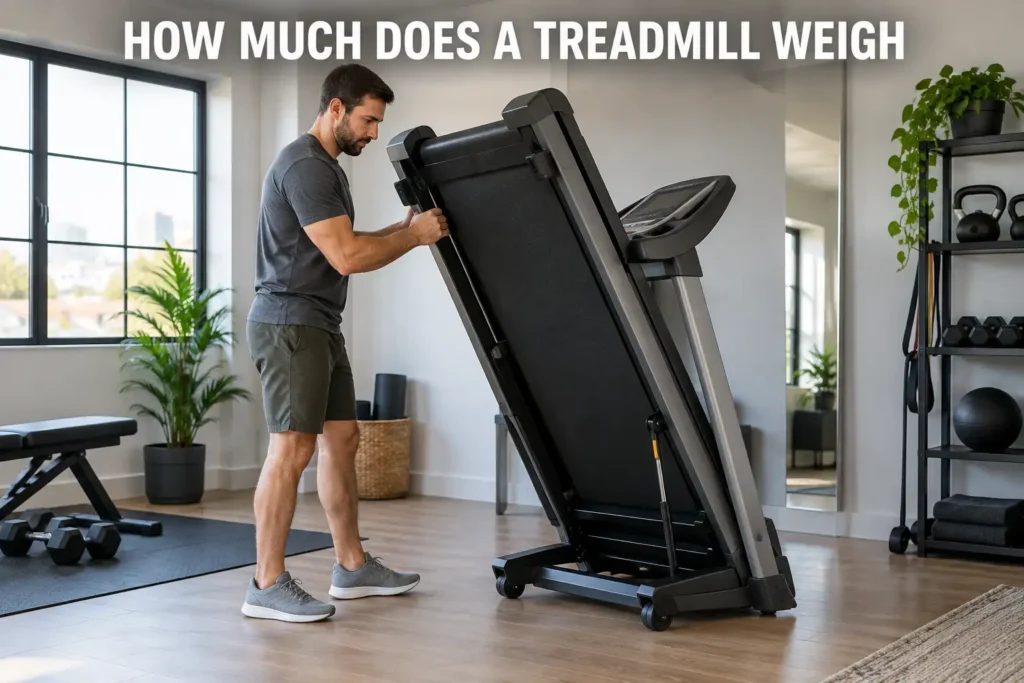
How much does a treadmill weigh is one of the first questions you should ask before buying or moving one. The answer varies far more than most buyers expect - anywhere from under 50 pounds for a compact walking pad to well over 400 pounds for a commercial gym machine. That range has real consequences for delivery, floor load, and what it actually takes to get the machine from point A to point B.
This guide breaks down treadmill weight by type and brand, covers the full ProForm lineup, and walks you through how to move a treadmill safely - whether you are relocating it across a room or carrying it up a flight of stairs.

How Much Does a Treadmill Weigh - by Type and Category
Treadmill Type | Typical Weight Range | Notes |
Manual treadmill | 45-350 lbs | Flat-deck models 45-70 lbs; curved models 250-350 lbs |
Folding/compact treadmill | 100-175 lbs | Space-saving; still requires two people |
Standard home treadmill | 175-300 lbs | Most common home category |
Heavy-duty home treadmill | 250-350 lbs | Built for heavier users or high mileage |
Incline/high-incline treadmill | 400-550 lbs | NordicTrack X22i (505 lbs), X32i; home use, near-commercial weight |
Commercial treadmill | 300-450+ lbs | Gym-grade; some exceed 500 lbs |
Walking pad (under-desk) | 30-70 lbs | Most models 40-55 lbs |
Manual Treadmills - 45 to 350 Pounds
A manual treadmill runs entirely on your leg power with no motor or electronics. Basic flat-deck models are the lightest treadmill type, weighing 45 to 70 pounds - light enough for one person with a handcart. The curved manual treadmill is a different machine entirely. Built for sprint training, curved manual treadmills weigh 250 to 350 pounds due to reinforced steel construction and a wide belt frame. If you are buying a curved model, treat it as a fixed installation, not a portable piece of equipment.
Folding and Standard Home Treadmills - 100 to 300 Pounds
Folding treadmills stand upright when not in use, reducing floor footprint. They typically weigh 100 to 175 pounds - lighter than standard home models, but still a two-person job to move. Standard fixed-frame home treadmills weigh 175 to 300 pounds. The extra mass comes from a larger motor, a longer deck, and a heavier frame that absorbs vibration during extended sessions.
Heavier home treadmills feel more stable underfoot - a 250-pound machine has noticeably less frame flex than a 120-pound compact model under hard running. I tested both weight classes back-to-back - running at 7 mph on a 134-pound folding model and a 249-pound fixed-frame machine - and the lighter frame produced enough lateral sway at that pace to alter my foot strike, something the heavier machine eliminated entirely.
Heavier, better-constructed machines also tend to outlast their lighter counterparts; my guide on how long treadmills last breaks down realistic lifespan expectations by build quality and usage pattern.
For a vetted list of compact options, see our guide to the best folding treadmill for home use.
Commercial Treadmills - 300 to 500+ Pounds
Commercial gym treadmills weigh 300 to 450 pounds on average, with premium models from Life Fitness and Precor reaching 500 to 700 pounds. This category is built for continuous multi-user operation: heavy-gauge steel frames, industrial motors rated for tens of thousands of hours, and wide decks that support heavy and fast runners throughout the day.
Commercial treadmills are not designed to be moved. If you are buying a used commercial treadmill for a home gym, budget for professional movers, a stair-climbing dolly, and a structural consultation if you are placing the machine on an upper floor.
Walking Pads - 30 to 70 Pounds
A walking pad is the most portable treadmill category by a wide margin. Most models weigh 40 to 55 pounds, and the lightest options come in under 30 pounds. That makes them the only treadmill type suited to frequent relocation - between rooms, into a storage closet, or under a standing desk between sessions.
If you are considering the category and want to understand what you are buying before committing, my walking pad guide covers how these machines work, the full spec range, and how they compare to standard motorized treadmills.
The trade-off is capability. Walking pads top out at 4 to 6 mph, have narrower belts, and carry lower user weight capacities than full-size machines. For walking and light use on a fixed route, they are a practical choice. For running workouts or users over 200 pounds, a standard motorized treadmill is the better fit. For a curated list of walking pad options, our best under-desk treadmill roundup covers top picks by weight, speed, and desk compatibility.
How Much Does a ProForm Treadmill Weigh
ProForm is one of the most widely sold home treadmill brands. Its machine weight spans from around 125 pounds for entry-level models to 250+ pounds for flagship machines. Here is the full breakdown for current models.
ProForm Model | Machine Weight | User Weight Capacity |
ProForm City L6 | 125 lbs | 250 lbs |
ProForm Carbon T7 | 222 lbs | 300 lbs |
ProForm Trainer 8.7 | 217 lbs | 300 lbs |
ProForm Carbon T10 | 221 lbs | 300 lbs |
ProForm Sport 7.5 | 220 lbs | 325 lbs |
ProForm Trainer 14.0 | 250 lbs | 300 lbs |
ProForm Pro 9000 | 250+ lbs | 300 lbs |
How much a ProForm treadmill weighs scales predictably with motor size and frame construction. The City L6 at 125 pounds is among the lightest folding motorized treadmills in the mainstream market. Mid-range models like the Trainer 8.7 and Carbon T10 land between 215 and 225 pounds. The Pro 9000 is the flagship at 250+ pounds, built for serious training volume and iFIT streaming workouts.
I find that the mid-range ProForm models in the 215-225 pound range represent the best weight-to-stability ratio for most home gym setups - heavy enough to stay planted during hard running sessions but still movable with two people and an appliance dolly.
For context, a NordicTrack Commercial 1750 weighs approximately 310 pounds, a Sole F80 comes in at 274 pounds, a Horizon T101 weighs approximately 170-180 pounds, and a Peloton Tread is around 290 pounds (the Peloton Tread+ is considerably heavier at approximately 455 pounds). ProForm's mid-range machines fall squarely in the mainstream home treadmill weight range.
Weight is also a reliable proxy for build quality at the same price point. Budget machines under $500 typically land between 100 and 150 pounds; premium home treadmills above $1,500 commonly exceed 250 pounds. ProForm's connected models pair directly with a smartwatch or tablet via iFIT for automated session tracking.
Before ordering any treadmill, confirm these three specs: Machine weight vs. shipping weight; Folded dimensions; User weight capacity.
What Makes a Treadmill Heavier
Not all treadmill weight is equal. The difference between a 120-pound folding machine and a 280-pound home trainer comes down to five main components.
Each type also falls into a distinct weight class that determines what installation and moving requirements you will face; my guide to the types of treadmills covers the full breakdown with trade-offs for each category.
Motor. The drive motor is the single biggest weight variable. A 2.0 CHP motor found in budget machines weighs substantially less than a 4.0 CHP commercial-rated motor. Higher horsepower ratings require larger copper windings, heavier housings, and more robust mounting hardware.
Incline mechanism. Manual incline machines add only a locking collar and a few pounds. Motorized incline machines add an electric actuator, lead screw, and secondary motor assembly - typically adding 15 to 25 pounds compared to a flat-only machine at the same tier.
Frame gauge. Budget frames use lighter-gauge steel tubing. Heavy-duty and commercial machines use thicker-walled steel construction. Frame gauge alone accounts for 20 to 50 pounds of difference between entry and premium machines at the same price band.
Deck and belt. Longer decks (60-inch vs. 55-inch) are heavier. Thicker cushioned decks add weight but reduce joint impact during long runs - a trade-off worth making for anyone running more than 30 minutes per session.
Console and screen. Basic LED displays weigh under a pound. Large touchscreen consoles common on iFIT-connected machines and the Peloton Tread add 5 to 15 pounds to the overall frame weight.
How Heavy Is a Treadmill - Why the Weight Number Matters Beyond Moving
I find that buyers focus almost entirely on user weight capacity and neglect machine weight until delivery day. Knowing how heavy a treadmill is affects three decisions that go well beyond just transportation.
- Floor load capacity. Most residential floors are designed to support at least 40 pounds per square foot. A 250-pound treadmill on a 6-square-foot footprint loads your floor at roughly 42 pounds per square foot - close to the residential design minimum. On older homes or upper-floor bedrooms, any machine over 300 pounds warrants a structural check before placement. A rubber treadmill mat distributes the load across a slightly larger surface area and reduces vibration transfer into the floor joists - a worthwhile addition for any machine over 200 pounds on a wood-frame floor.
- User weight capacity vs. machine weight. These are two completely separate numbers. A treadmill that weighs 200 pounds can carry a 300-pound user. Machine weight reflects how hard it is to transport; user weight capacity reflects who can safely run on it. Never confuse them when reading spec sheets.
- Shipping and delivery costs. Treadmills ship as freight, not standard parcels. A 300-pound treadmill typically costs $100 to $200 more to ship than a 150-pound folding model and almost always requires room-of-choice delivery rather than curbside drop-off - a real number to factor into your total budget alongside the question of how much does a treadmill cost. Buyers who check how much does a treadmill cost at walmart will find entry-level options in the 100 to 175 pound range - lighter machines with lower freight costs but limited durability for daily training use.
For treadmills with motorized incline, frame weight directly affects the stability of the incline mechanism under load. Our guide to the best incline treadmill covers what to look for in frame construction across major brands.
How to Move a Treadmill - Safe Techniques for Every Situation
According to research on home exercise equipment, treadmills account for 66% of emergency department-treated injuries involving mechanical home exercise equipment (1). A meaningful share of those incidents happen not during workouts but during installation, moving, and removal. Moving a 250-pound machine through a narrow hallway or down a flight of stairs carries real injury risk without proper preparation.
What to Prepare Before Moving a Treadmill
Before moving any treadmill over 100 pounds, gather the following:
- Appliance dolly with two uprights and ratchet straps rated for at least 400 pounds (not a standard furniture dolly)
- Moving blankets to protect walls, door frames, and the machine's display console
- Rubber-grip gloves for hand protection and a secure hold on the frame
- At least two people for any machine over 100 pounds; three helpers for anything over 250 pounds
Before you touch the machine: Unplug the power cable, tape the cord, fold the deck if possible, consult the owner's manual.
For complete step-by-step disassembly instructions organized by brand, see our guide on how to disassemble a treadmill.
How to Move a Treadmill on a Flat Surface
Moving a treadmill across one floor is manageable for two people with an appliance dolly. Here is the correct sequence:
- Position the dolly against the motor end (front) of the machine
- Tilt the treadmill back onto the dolly and secure it with ratchet straps
- One person steers from behind the dolly; the other guides from the front
- Take corners wide and pivot the dolly in place
- Lay moving blankets over door frames before passing through
When lifting without a dolly for very short distances, research on two-person manual lifting technique suggests that both movers facing forward in the same direction produces meaningfully lower compressive spinal forces than facing each other (2). Both people should grip near the motor end, keep knees bent, and hold the load close to the body throughout. A back support brace is a reasonable precaution for anyone with prior lower back issues who is moving a machine over 200 pounds.
How to Move a Treadmill Upstairs
Moving a treadmill upstairs is the most physically demanding and highest-risk scenario. For any machine over 200 pounds on a staircase with a tight turn or a width under 36 inches, professional movers are often the safer and more cost-effective option.
For lighter models under 200 pounds on a straight staircase:
- Fold the deck fully before attempting the stairs
- Use an appliance dolly with stair-climbing wheels if available
- Position one person at the top to pull, one person at the bottom to push and control
- Move one step at a time - do not rush the pace
- Keep your back straight throughout - do not bend at the waist to push the dolly
- If the folded width exceeds 32 inches, stop and call professional movers
Partial disassembly can open up a tight staircase before you resort to professional help. On most treadmills, removing the handrails and console takes 10 to 20 minutes, reduces the folded width significantly, and removes 8 to 15 pounds. For detailed instructions by brand and model, see how to disassemble a treadmill.
How to Get Rid of a Treadmill
Getting rid of a treadmill is harder than most people expect. Most residential trash pickup services refuse items over 75 pounds, and many donation centers have weight restrictions that disqualify standard home machines.
Method | Cost | Effort | Best Fit |
Sell locally | Free (keep proceeds) | High | Working machines under 5 years old |
Donate to gym or charity | Free | Medium | Working machines; charities accepting large items |
Junk removal service | $80-$200+ | Low | Non-working or very old machines |
Scrap metal recycling | Free to small payout | Medium | Metal-frame machines; check local centers |
Disassemble and section into trash | Free | Very high | Last resort; motor/electronics need separate disposal |
Before scheduling removal, test whether the machine still runs. A working treadmill in decent condition typically sells for $100 to $300 locally, even for older models. Belt condition is the primary thing buyers check. Our guide on how to lubricate a treadmill explains what a well-maintained belt sounds and feels like.
If the belt is the only issue, our guide on how to replace treadmill belt covers the repair process. Our guide to the best treadmill for home covers well-built options across all weight categories.
Match the Machine to the Space Before You Buy
After testing treadmills across the 125-to-310-pound weight range in home gym settings, the weight-to-stability relationship is the one specification that spec sheets cannot capture - the difference between a 145-pound folding machine and a 255-pound fixed-frame model becomes obvious within the first 60 seconds of running at pace. How much a treadmill weighs shapes every stage of ownership - from delivery to placement to eventual removal.
Across the weight classes, the treadmills we've tested make it easy to compare stability and portability side by side.
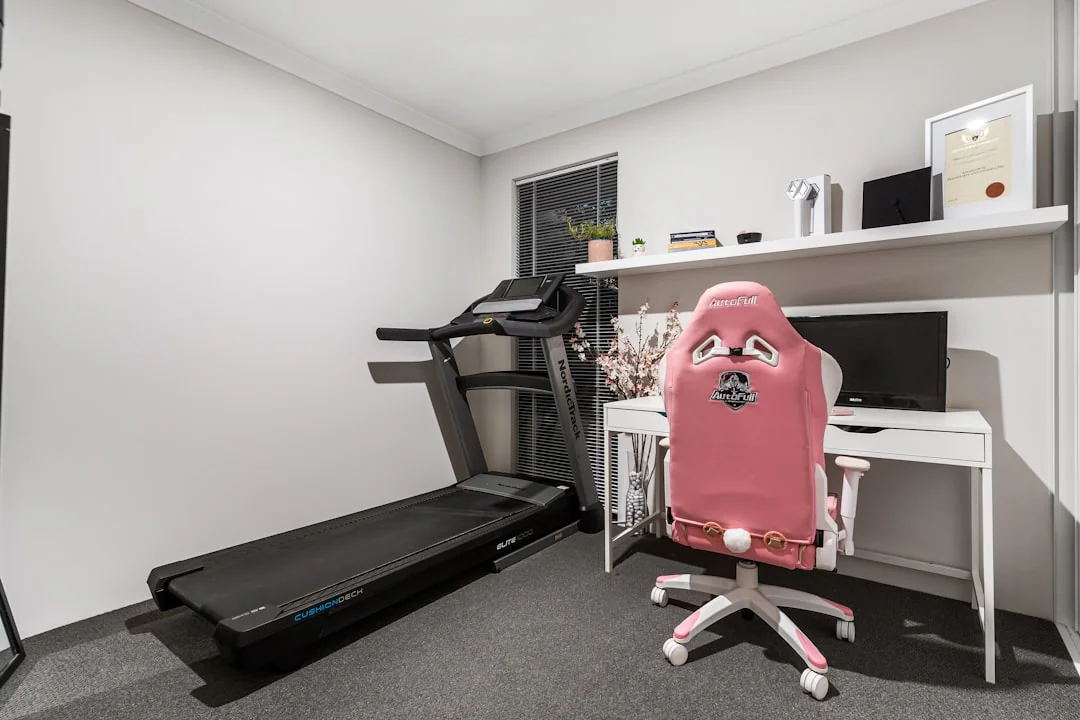
Light machines under 150 pounds give you maximum flexibility for relocation but tend to sacrifice stability and user weight capacity. Machines in the 200 to 275 pound range hit the mainstream sweet spot: stable enough for daily use, movable with two people and an appliance dolly, and built to last under normal home training conditions.
Weight is as important as motor power or deck size when you are buying for a specific space. For walking-focused users who need genuine portability, a walking pad under 55 pounds is the only category that delivers it. For everyone else, buy for the room the machine will live in - and have a clear plan for how it gets there before you confirm the order.
Before confirming a purchase, check that the machine fits not just on paper but through every doorway and hallway it needs to pass; my guide on treadmill dimensions covers standard measurements by category and what to measure before delivery.
I recommend checking how many steps in a mile on a treadmill and how to use treadmill early in your ownership - both are practical starting points that help you build consistent sessions from day one. For workout variety once you are settled in, our guide on walking backwards on a treadmill covers low-impact techniques that add meaningful training variety without extra equipment.
FAQs
Can you move a treadmill by yourself?
Moving a treadmill by yourself is only realistic if the machine weighs under 100 pounds and you are moving it on a flat surface with an appliance dolly. For machines 175 pounds and above, solo moving carries a serious injury risk - the machine can tip, slip off the dolly, or pin you against a wall. For anything heavier than 100 pounds, plan for at least a second person regardless of distance.
How long on a treadmill to lose 1 lb?
The time it takes to lose 1 pound on a treadmill depends on your pace, body weight, and total calorie deficit. As a rough benchmark, losing 1 pound of fat requires burning several thousand extra calories above your maintenance level - a figure that varies significantly by individual based on metabolism and activity. At 3.5 mph, a 160-pound person burns roughly 300 to 400 calories per hour, which puts that rough target at approximately 9 to 12 total hours of walking spread across multiple sessions.
Can you burn 500 calories in 30 minutes on a treadmill?
Burning 500 calories in 30 minutes on a treadmill is possible but reserved for conditioned athletes running at 8 to 10 mph or at a steep incline. For most users at a moderate 3.5 to 4.5 mph, 30 minutes typically burns between 200 and 350 calories depending on body weight and incline setting. Interval training - alternating higher and lower speeds - is the most efficient path to higher calorie burn within a fixed time window.
Can I use a treadmill if I’m over the weight capacity?
Using a treadmill above its rated weight capacity places additional stress on the motor, belt, and frame. Over time, this accelerates wear and can void the manufacturer warranty. If you are close to the published limit, look for machines with a higher capacity rating rather than running consistently over spec.
How much does a walking pad weigh?
A walking pad typically weighs between 30 and 70 pounds, with most models in the 40 to 55 pound range. The lightest compact options come in under 30 pounds, making walking pads the only treadmill category you can realistically carry solo or store in a closet between sessions.
This content is for informational and educational purposes only. It is not a substitute for professional medical advice, diagnosis, or treatment. Always consult with your healthcare provider before starting any new fitness program or using fitness technology for health monitoring.
References
- Graves JM, Iyer KR, Willis MM, Ebel BE, Rivara FP, Vavilala MS. Emergency department-reported injuries associated with mechanical home exercise equipment in the USA. Inj Prev. 2013;20(4):281-285. doi:10.1136/injuryprev-2013-040833
- Ji X, Gao X, Johnson PL, Wheeler I. A biomechanical analysis of two-person emergency patient lifting techniques using motion capture and ergonomic assessment. Sensors (Basel). 2026;26(9):2747. doi:10.3390/s26092747