
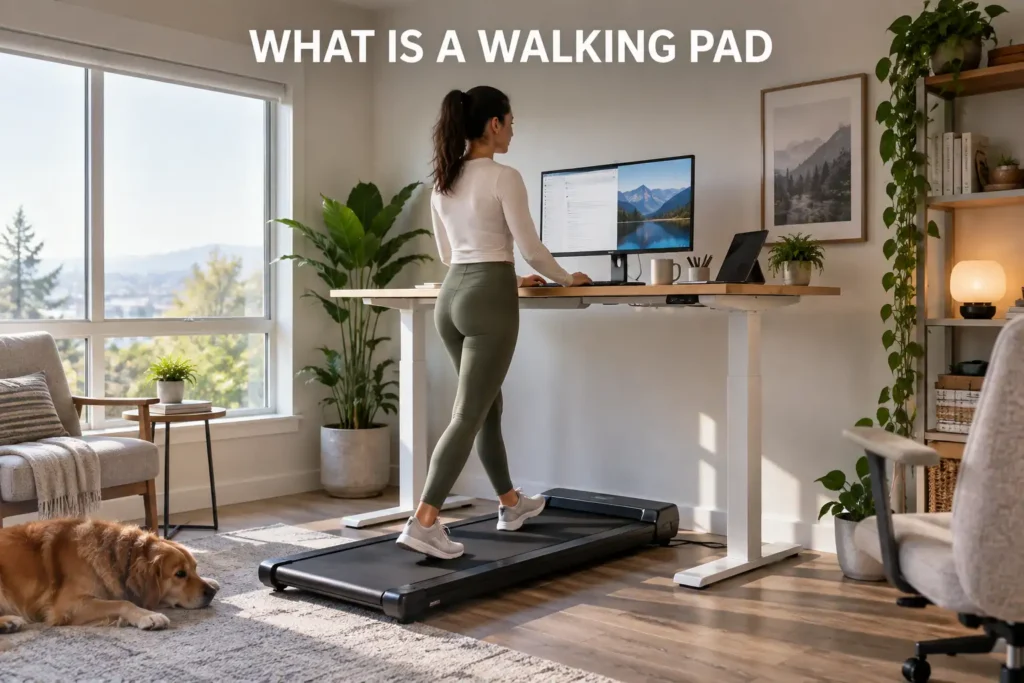
A walking pad is a compact, motorized treadmill built for low-intensity walking, with a slim profile that fits under a standing desk, slides beneath a bed, or folds flat against a wall. Millions of people use them to reduce the health effects of prolonged sitting, build consistent daily step counts, and stay active in small spaces without the footprint of a full-size treadmill. In this guide, I'll explain how walking pads work, what they cost, who benefits most, and how to choose the right model for your needs.
Walking pads fall under the same FSA and HSA eligibility rules as full treadmills; my guide on FSA eligible walking pad and treadmill purchases covers the documentation requirements that apply to any motorized walking device.

What Is a Walking Pad - Definition and Core Design
A walking pad is a stripped-down motorized treadmill engineered specifically for walking rather than running. It trades the high-speed motor, long deck, and handrail frame of a traditional treadmill for a flat, portable form factor that works in apartments, home offices, and corporate workstations. The design exists to solve one of the biggest health problems of desk-based work: extended, uninterrupted sitting.
Some manufacturers use the term "walking pad treadmill" to describe hybrid models that blend the compact profile of a standard walking pad with a slightly longer deck and more capable motor for occasional light jogging. The best walking pad treadmill models in this hybrid category sit between a basic walking pad and a full treadmill in terms of size, speed range, and price. The term is common enough that "walking pad" and "walking pad treadmill" are largely used interchangeably across the market.
For ranked picks across all price tiers, our best under-desk treadmill guide covers the leading walking pad and under-desk treadmill models in detail.
How a Walking Pad Differs from a Traditional Treadmill
The walking pad vs treadmill decision comes down to a set of core trade-offs that shape every aspect of the ownership experience:
Feature | Walking Pad | Traditional Treadmill |
Speed range | 0.5-4.5 mph (premium models to 7.5 mph) | 0.5-12+ mph |
Motor power | 1.0-3.5 CHP | 2.5-4.0+ CHP |
Deck length | 38-48 inches | 50-60 inches |
Handrails | None or minimal | Full frame with side rails |
Folded footprint | 4-6 inches tall; compact models 30-40 in., most 45-55 in. | Does not fully fold flat |
Noise level | 45-55 dB at walking speed | 60-80 dB at running speed |
Price range | $200-$1,200+ | $500-$3,000+ |
Best use case | Under-desk walking, daily step accumulation | Running, interval training, full cardio workouts |
Weight capacity | 220-300 lbs (most models) | 300-400+ lbs |
Incline options | None or 6-12 levels (mid/premium) | Up to 40% on premium models |
Walking pads are purpose-built for low-intensity daily movement. They represent a distinct product category built for a different goal.
Key Features of a Walking Pad
Most walking pads share a recognizable set of design elements that separate them from full-size machines:
- Slim folding profile - typically 4-6 inches tall when flat; compact models fold to 30-40 inches for under-bed storage, with most standard models folding to 45-55 inches
- Remote or app speed control - adjusted via wireless remote or smartphone app rather than a front console panel
- Brushless motor - quieter and more durable under sustained daily use than the brushed motors found in budget units
- Non-slip belt surface - textured PVC belt at widths of 15-18 inches
- Auto-stop safety feature - belt decelerates to a stop when the user steps off the walking surface
- Bluetooth connectivity - syncs step count, distance, and calorie data to fitness apps on mid-range and premium models
- Transport wheels - most units weigh 50-80 lbs but include integrated wheels for one-person repositioning
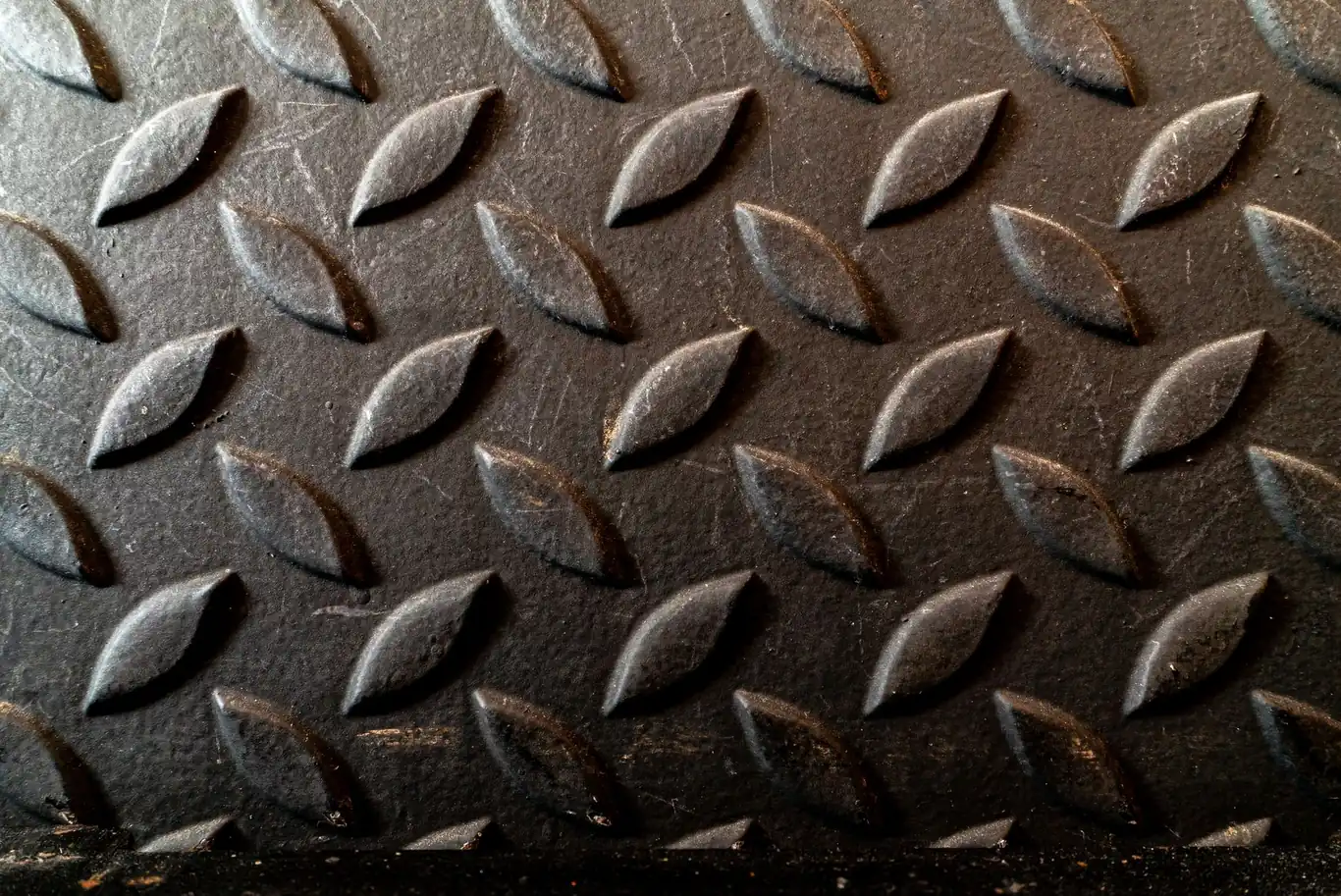
Most walking pad belts require silicone lubricant every 3-6 months (roughly every 100 hours of use) - check manufacturer specifications for your model's exact interval. Small walking pads at the compact end of the market measure as little as 38 x 22 inches, making them the only practical motorized fitness option in studio apartments with genuinely tight floor plans.
How a Walking Pad Works
Walking pads operate on the same basic mechanics as any motorized treadmill: an electric motor drives a continuous belt loop over a flat deck at a user-selected speed. The deliberate engineering trade-offs - lower motor power, thinner deck, no rigid frame - are what produce the compact, quiet machine desk workers actually want to use during a workday.
Motor, Belt, and Speed Range
Motor power is rated in CHP (continuous-duty horsepower), the meaningful measure of sustained load capacity. Budget models use 1.0-1.5 CHP motors suited for casual walking at 1-2.5 mph in sessions under one hour daily. Mid-range units step up to 2.0-2.5 CHP, handling brisk walking at 2.5-4.5 mph through 2-4 hour daily desk sessions without thermal strain. Premium walking pads at 2.5-3.5 CHP sustain speeds up to 5-7.5 mph for users who want light jogging capability built in.
I've tested units across this power range and found the practical difference between a 1.5 CHP and a 2.5 CHP motor is most apparent after the first 45 minutes of use: the lower-rated motor runs noticeably hotter and generates more deck vibration - both signs of sustained load strain that compress motor lifespan over time.
At 1.5-2.5 mph, a quality brushless motor running below 50 dB (achievable on hard flooring with a rubber mat; actual levels vary with surface and speed) is quiet enough for video calls without mic pickup. Noise increases noticeably above 3 mph, so specifications advertised at minimum-speed settings can be misleading; always evaluate noise claims at your intended working speed.
Controls and Connectivity
Modern walking pads are increasingly app-driven rather than console-driven. Most mid-range and premium models include a wireless remote, a companion smartphone app with session logs and goal tracking, and Bluetooth syncing to platforms like Apple Health or Google Fit. Some premium units pair directly with a fitness wearable to track heart rate continuously throughout a session. Pairing your walking pad with a smartwatch turns raw step counts into richer cardiovascular data that helps you gauge whether you're working at a productive intensity or simply moving through the motions.
Benefits of Using a Walking Pad
The health case for walking pads rests on two well-established facts: sedentary behavior carries real health risks, and low-intensity walking is one of the most accessible and sustainable ways to counteract it. Research published in Medicine & Science in Sports & Exercise provides strong evidence that high sedentary behavior increases all-cause and cardiovascular disease mortality risk independently of how much structured exercise a person performs (1). A walking pad directly targets this by replacing seated desk hours with slow walking hours.
Health Benefits from Regular Walking
Walking is among the most thoroughly studied forms of physical activity, with a consistent research record across study designs and populations. The key findings relevant to walking pad users include:
- Reduced cardiovascular disease risk - A meta-analysis of 160,519 participants found that the fastest walkers had a 46% lower coronary artery disease event rate than the slowest, with benefits persisting across both sexes and follow-up periods of 7-12 years (2)
- Increased daily calorie burn through NEAT - Non-exercise activity thermogenesis (NEAT) is the energy burned through all daily movement outside deliberate exercise. Research shows NEAT can vary by up to 350 kcal per day between lean and obese individuals, and walking while working is one of the highest-leverage NEAT behaviors available to desk-bound adults (3)
- Measurable energy expenditure at low speeds - A study of obese office workers found that using a treadmill desk at a self-selected pace of 1.1 mph raised energy expenditure from 72 kcal per hour to 191 kcal per hour - an increase of 119 kcal per hour above the seated baseline (4)
- Blood sugar and metabolic support - Low-intensity walking is widely considered supportive of insulin sensitivity and blood glucose management, particularly for desk workers who accumulate high uninterrupted sitting time throughout the day
- Mood and cognitive focus - Walking is broadly associated with reduced perceived stress, improved mood, and better concentration during task-heavy periods
For a complementary low-intensity option that adds lower-body challenge without increasing speed, see our guide to the benefits of walking backwards on a treadmill.
Do Walking Pads Help You Lose Weight
Walking pads can contribute meaningfully to weight loss, but they work best as part of a broader calorie-deficit strategy rather than as a standalone fat-loss tool. A meta-analysis of treadmill desk research confirmed a statistically significant increase in energy expenditure of 105.23 kcal per hour compared to seated work (5). A 24-week randomized trial of overweight adults using a structured daily step-tracking program produced average weight loss of 10.8 kg in the intervention group versus 6.3 kg in controls (6).
The realistic expectation: two hours of daily walking pad use at a moderate pace burns approximately 200-240 kcal above a seated baseline. That cumulative deficit compounds meaningfully over weeks and months - but only if overall food intake remains consistent. I'd flag that users expecting fat loss from a walking pad alone, without any dietary awareness, typically see much slower results than those who treat the pad as one component of a calorie-deficit approach.
If you want to estimate how the calorie burn from walking pad sessions compares to higher-intensity treadmill work, my treadmill calorie counter guide covers the formulas and how speed, incline, and body weight affect the numbers.
Is a Walking Pad Worth It - Who Benefits Most
Whether a walking pad is worth it depends almost entirely on whether your daily situation matches the profiles where these machines deliver their clearest results.

Ideal Users for a Walking Pad
Walking pads deliver the most measurable value for these groups:
- Remote and office desk workers - Anyone sitting 6+ hours daily who wants to reduce sedentary exposure without leaving their workstation represents the core use case, and the research base for this profile is the strongest
- Fitness beginners - A walking pad for beginners removes the barriers of weather, commute, and gym intimidation; consistent low-intensity walking is one of the most sustainable ways to start a movement habit
- People with joint sensitivity - The low-impact belt surface places significantly less stress on knees, hips, and ankles than running, making walking pads accessible for people managing arthritis, post-injury rehab needs, or chronic joint conditions
- Small-space dwellers - If a full treadmill won't fit in your living space, a walking pad's slim profile and flat-fold storage makes it the only practical motorized fitness option
- Step-count goal setters - People targeting 8,000-10,000 daily steps will find a walking pad the most reliable tool for hitting those numbers regardless of weather or schedule
When to Consider a Full Treadmill Instead
A walking pad is not the right choice for every user. Consider a full treadmill for home instead if:
- You want to jog or run regularly at speeds above 6 mph
- You weigh over 280-300 lbs, where most walking pad motors and frames are not rated for sustained daily use
- You need more incline range than 8-12 levels for progressive hill training
- You have balance issues or require full handrails for safety
- You want a large interactive console with live-streaming fitness classes and coaching screens
Can You Run on a Walking Pad
Most standard walking pads are not designed for running, and using one for sustained jogging risks motor burnout and reduces the unit's operational lifespan. The answer depends on the specific model, but budget and mid-range pads have real limits here.
If your goals include running or higher-intensity training, my guide to the types of treadmills breaks down the full-size options across motorized, curved, and commercial categories.
The factors that determine what a walking pad can handle at speed:
- Speed cap - Most budget and mid-range models top out at 3.5-4.5 mph, which covers a brisk walk; sustained light jogging typically requires 5+ mph
- Motor rating - Motors below 2.0 CHP are not rated for running loads; only units at 2.25-2.5 CHP or higher can sustain running without overheating over time
- Deck length restriction - A 40-45 inch deck limits the natural stride of runners over 5'10", compared to a running treadmill's 50-60 inch surface
- Cushioning layers - Walking pad belts use thinner shock-absorbing systems than running treadmills, increasing joint impact at running speeds
- Structural load - Running introduces vertical forces 2-3 times body weight; this exceeds the design tolerance of most walking pad frames under repeated use
If running is a primary goal, a folding treadmill provides the motor capacity, deck length, and cushioning needed for consistent run training in a space-efficient format.
How to Choose a Walking Pad - Key Buying Criteria
How to choose a walking pad comes down to matching the machine's specifications to your actual use patterns. Buying based on price alone frequently leads to a motor that is too small for daily use, a deck too short for comfortable walking, or noise levels that make apartment use impractical.
The five criteria that separate a good match from an expensive mistake:
- Motor power rating - Must match your intended speed and daily session duration
- Deck length - A minimum of 45 inches for users over 5'10"
- Weight capacity - Should be rated at least 50-75 lbs above your bodyweight for motor longevity
- Noise level in dB - Below 50 dB for apartment-safe use at your planned walking speed
- Incline options - Flat-only vs. adjustable levels, depending on your cardiovascular goals
Motor Power and Speed Range
Match motor power (in CHP) to your actual daily use pattern:
- 1.0-1.5 CHP: Light casual walking (1-2.5 mph), under one hour per day
- 2.0-2.5 CHP: Daily desk-walking sessions (2-4 mph), two to four hours per day
- 2.5-3.5 CHP: Brisk walking or occasional light jogging (up to 5-7.5 mph)
I'd always recommend buying one motor tier above your minimum expectation. Walking pad usage consistently increases after the first month of ownership, and running a motor near its peak load shortens its lifespan considerably faster than operating with headroom. Budget options such as the UREVO walking pad and Sperax typically fall in the 1.0-1.5 CHP range - suited for light daily sessions but not multi-hour desk use. Walking pads on Amazon cover all three tiers and allow direct specification comparison across brands, making it a practical starting point before buying.
Deck Size and Weight Capacity
A deck shorter than 45 inches becomes physically restrictive for users over 5'10" at brisk walking speeds. Weight capacity is a hard limit for both safety and motor longevity - operating consistently at 90%+ of the rated maximum accelerates motor wear well beyond the manufacturer's expected lifespan. Users over 250 lbs should specifically target models with 300-lb rated capacity, which largely rules out most budget-tier options.
Noise Level and Do Walking Pads Have Incline
For noise, target models rated below 50 dB for any shared-living or apartment setting. Noise increases meaningfully above 3 mph, so verify dB ratings at your planned working speed rather than the lowest setting - a unit marketed as "silent" at 1 mph may register 58 dB at 3.5 mph. Placing a dense rubber mat under the unit reduces floor vibration transmission by a practical 5-10 dB.
On incline: mid-range and premium models typically offer 6-12 levels of manual or automatic incline. The best walking pad with incline capability adds roughly 15-25% more calorie burn at a 3-5% grade compared to flat walking at the same speed. If cardiovascular challenge and calorie expenditure are important goals, incline is worth prioritizing in your budget. Mid-range models such as the TheRun walking pad include incline functionality alongside better motors, making them a meaningful step up from budget tier. For users who want more aggressive incline capability, our guide to the best incline treadmill covers options well beyond the walking pad category.
How Much Does a Walking Pad Cost
Walking pad prices break clearly across three tiers:
Tier | Price Range | Motor Power | Best For |
Budget | $200-$350 | 1.0-1.5 CHP | Casual walkers, under 1 hr/day, users under 200 lbs |
Mid-range | $350-$600 | 2.0-2.5 CHP | Daily desk workers, 2-4 hrs/day, most body types |
Premium | $600-$1,200+ | 2.5-3.5 CHP | Power users, light jogging, smart features, commercial durability |
How much is a walking pad at the premium end depends significantly on smart features such as auto-incline, interactive display panels, and live-streaming class connectivity, which push pricing substantially higher within that tier. The mid-range tier represents the best value for most desk workers using the pad two to four hours daily. Premium walking pads from brands like PaceRocker walking pad and WalkingPad (KingSmith) typically sit at the top of this range. Sperax also produces the Sperax walking vibration pad, a hybrid model that pairs a walking belt with a vibration plate for users who want dual-mode training.
Is a Walking Pad Right for You?
A walking pad fills a real gap in the fitness equipment market. If you regularly accumulate 7+ hours of daily sitting, the evidence is clear: sustained low-intensity movement reduces the metabolic and cardiovascular burden of prolonged sedentary exposure (7). I've found that users who get the most from a walking pad treat it as a daily work habit rather than a workout session, setting the speed to 1.5-2.5 mph during email review, calls, and document reading to accumulate thousands of additional daily steps without disrupting their focus.
If you want to convert that daily step volume into distance, my guide on how many steps in a mile on a treadmill covers how stride length, speed, and belt type affect the calculation.
The investment makes strongest sense for desk workers, beginners building a movement habit, people managing joint sensitivity, and anyone in a small living space who needs a motorized fitness option that stores flat. It is not a substitute for a running-capable treadmill, and it works best when paired with realistic calorie-awareness for anyone whose primary goal is fat loss.
For the casual or light-fitness user, walking pads deliver solid results provided expectations match the machine's intent. A best walking pad purchase is one where the buyer wants consistent daily walking, not occasional intense training - and that use case is exactly what these machines are built for.
FAQs
Is a walking pad as effective as walking?
A walking pad is equally effective as outdoor walking for the cardiovascular and metabolic benefits that come from low-intensity movement at a matched pace and duration. Research consistently shows that the health benefits of walking are driven by total steps, duration, and consistency rather than the surface type, so a walking pad session at a set speed delivers the same physiological stimulus as the same walk taken outside.
What are the disadvantages of a walking pad?
The main disadvantages of a walking pad include a lower weight capacity than full treadmills, a shorter deck that restricts stride length for taller users, limited incline options on budget models, and motors not rated for sustained running. Most walking pads also use thinner shock-absorbing belts than full running treadmills, which makes them less suitable for users with significant joint issues who plan extended daily sessions at the higher end of the speed range.
For a direct comparison of walking pad weight versus full treadmill weight across different categories, my treadmill weight guide covers what each machine class typically weighs and what that means for portability and installation.
How does a walking pad work?
A walking pad works by using an electric motor to drive a continuous belt loop over a flat, low-profile deck at a speed selected by the user via a wireless remote or smartphone app. Most modern units include Bluetooth connectivity to sync session data including steps, distance, and calories to fitness tracking platforms, while some premium models support direct pairing with a fitness wearable for real-time heart rate monitoring.
How long should you walk on a walking pad?
You should aim for two to four hours of walking pad use distributed across your workday in sessions of 20-60 minutes at a time, rather than a single long continuous session. Starting with 30-45 minute blocks at a comfortable pace and building gradually is the most sustainable approach, particularly in the first few weeks; this allows your legs, core, and posture to adapt to sustained low-intensity movement without accumulating fatigue.
What is a walking pad vs treadmill?
The difference between a walking pad and a treadmill comes down primarily to size, intended speed range, and structural design. Walking pads are compact, low-profile machines built for 0.5-4.5 mph walking use (with premium models reaching 7.5 mph), with minimal or no handrails and a shorter belt deck suited to apartments and home offices. Traditional treadmills are significantly larger, support speeds up to 12+ mph, include full safety handrails and cushioned running decks, and are built for the full spectrum from walking to running - at substantially higher noise levels and a much larger storage footprint.
Medical disclaimer: This article is for informational and educational purposes only and is not a substitute for professional medical advice, diagnosis, or treatment. Consult your healthcare provider before starting any new fitness program.
References:
- Katzmarzyk PT, Powell KE, Jakicic JM, et al. Sedentary behavior and health: update from the 2018 Physical Activity Guidelines Advisory Committee. Med Sci Sports Exerc. 2019;51(6):1227-1241. doi:10.1249/MSS.0000000000001935
- Nurrobi YAS, Winston K, Rahman AL, et al. Footsteps to wellness: a systematic review and meta-analysis of walking pace and coronary artery disease event. Cureus. 2024;16(3):e56926. doi:10.7759/cureus.56926
- Chung N, Park MY, Kim J, et al. Non-exercise activity thermogenesis (NEAT): a component of total daily energy expenditure. J Exercise Nutrition Biochem. 2018;22(2):23-30. doi:10.20463/jenb.2018.0013
- Levine JA, Miller JM. The energy expenditure of using a "walk-and-work" desk for office workers with obesity. Br J Sports Med. 2007;41(9):558-561. doi:10.1136/bjsm.2006.032755
- Oye-Somefun A, Azizi Z, Ardern CI, Rotondi MA. A systematic review and meta-analysis of the effect of treadmill desks on energy expenditure, sitting time and cardiometabolic health in adults. BMC Public Health. 2021;21:2082. doi:10.1186/s12889-021-12094-9
- Hernandez-Reyes A, Camara-Martos F, Molina-Luque R, Moreno-Rojas R. Effect of an mHealth intervention using a pedometer app with full in-person counseling on body composition of overweight adults. JMIR mHealth uHealth. 2020;8(5):e16999. doi:10.2196/16999
- von Loeffelholz C, Birkenfeld AL. Non-exercise activity thermogenesis in human energy homeostasis. In: Feingold KR, Adler RA, Ahmed SF, et al., eds. Endotext. MDText.com, Inc.; 2022.