
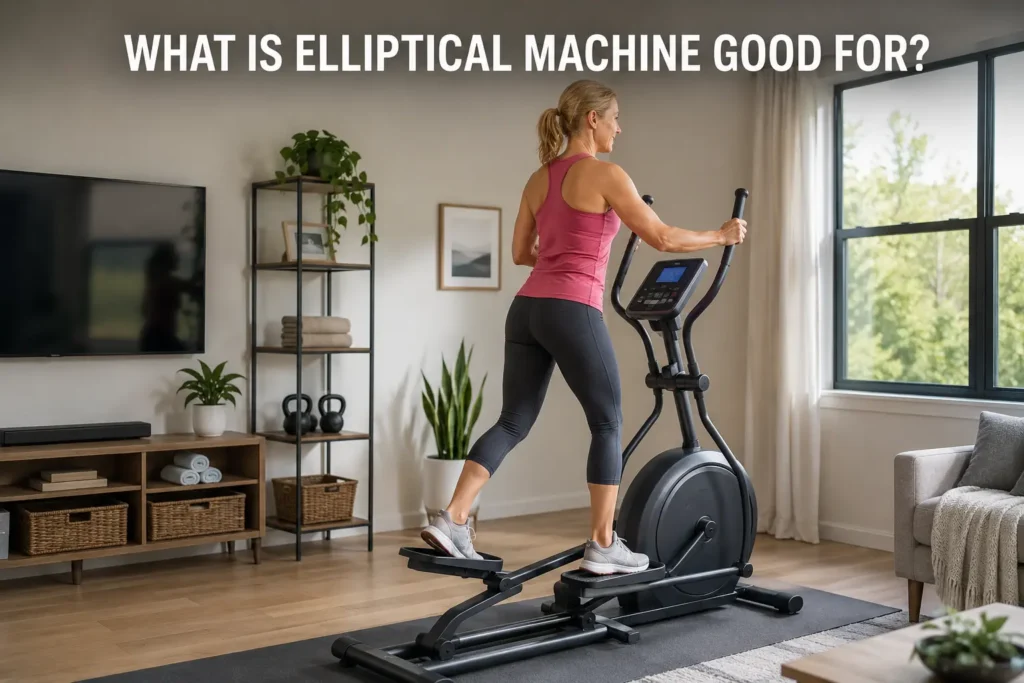
What is an elliptical machine good for and does it actually deserve a spot in your workout routine? I've trained on ellipticals consistently through injury recovery and found they're genuinely useful for maintaining cardiovascular fitness when running isn't an option. The machine sits in a unique category of cardio equipment: it delivers full-body cardiovascular training while placing far less stress on your joints than running.
For anyone recovering from an injury, managing knee or hip pain, or simply looking for a lower-impact way to train consistently, it makes a compelling case. In this guide, I cover what the elliptical actually trains, how much it burns, which muscles it targets going forward and backward, and the honest drawbacks worth knowing before you commit.

What Is Elliptical Machine Good For - The Core Benefits
The elliptical machine benefits extend to cardiovascular conditioning, full-body calorie burn, weight management, and low-impact training that protects your joints while still challenging your system.
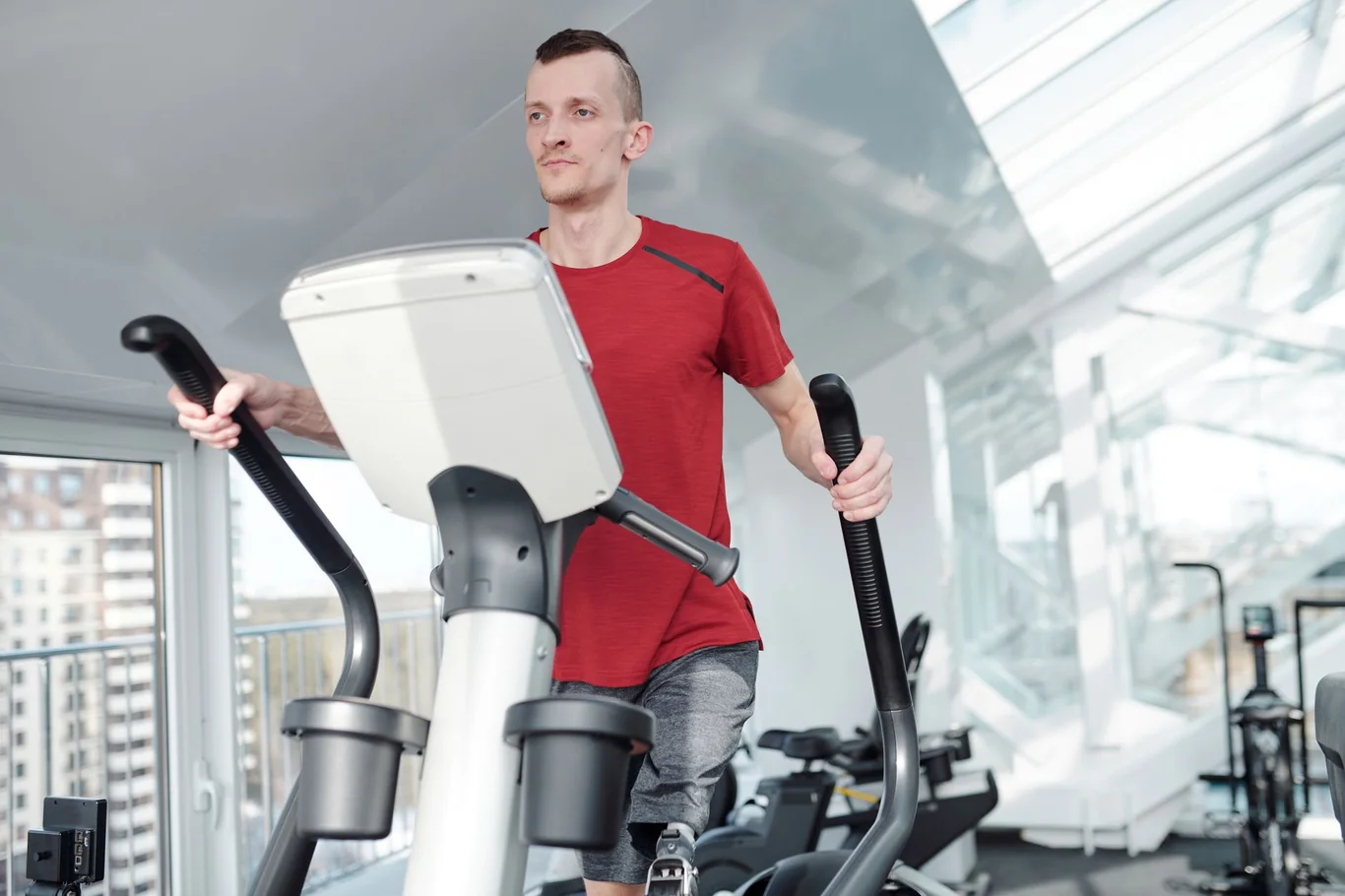
The machine works by moving your feet in a continuous oval arc while your hands push and pull the handles - eliminating the impact force of running entirely while keeping the stride motion similar.
You can browse our ellipticals to compare stride length and resistance range across models.
Research published in Frontiers in Sports and Active Living (2024) found that elliptical training achieves 12.82 kcal/min at submaximal intensity and 14.67 kcal/min at maximum effort - ranking third among seven popular cardio machines for total energy expenditure (1).
A 2021 study in the Journal of Sports Science and Medicine found that elliptical training produces peak oxygen consumption comparable to treadmill running (VO2peak of approximately 57.9 mL/kg/min), establishing it as a legitimate cardiovascular tool rather than a light alternative for people who prefer to avoid hard work (2).
The key advantage over running is joint stress reduction. The elliptical's continuous stride path eliminates the impact force that occurs with each foot strike during running - a mechanical advantage that benefits anyone with joint sensitivity. A 2024 biomechanics study published in Medicina analyzed elliptical machine knee kinematics and found it produces a distinctive movement pattern compared to stationary cycling, confirming the elliptical's unique joint loading profile (3).
A randomized controlled trial found that post-hip-surgery patients who added elliptical trainer sessions to their rehabilitation showed significantly better functional outcomes - including strength, mobility, and gait speed - compared to walking-only protocols (4).
These findings matter for a broad audience: the elliptical's joint-friendliness is scientifically supported, not just marketing language. If you're evaluating home cardio options, our guide to the best under desk elliptical covers compact models built for workstation setups.
Muscles the Elliptical Machine Works
One reason the elliptical machine earns its place in gyms worldwide is its full-body muscle engagement. The elliptical machine muscles worked during a session span both the upper and lower body, making it one of the more complete cardio tools available. Unlike a stationary bike - which primarily targets the lower body - the elliptical recruits muscle groups from your legs, glutes, core, and arms simultaneously when you actively push and pull the handles.
For a full breakdown of the drive mechanism, stride path, and resistance configurations that create that full-body engagement, my post on how the elliptical machine works covers the mechanical details behind each design type.
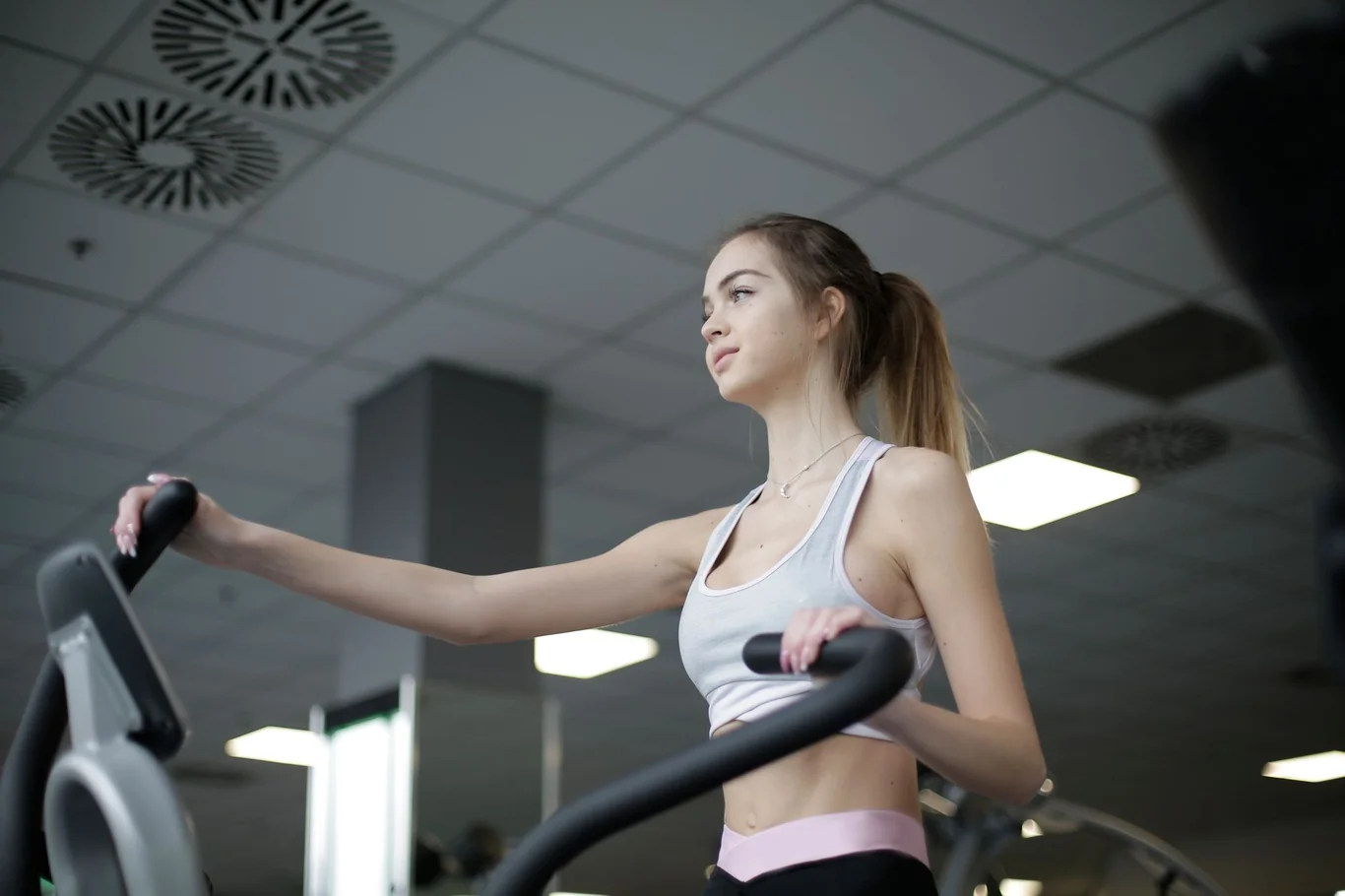
Lower body muscles worked by the elliptical machine:
- Quadriceps - the primary driver of the forward pedaling motion
- Hamstrings - engaged throughout the back portion of each stride
- Glutes - heavily activated, especially at higher incline settings
- Calves - active throughout, particularly when you drive through your toes
- Hip flexors - engaged as you drive your knee forward on each stride
A surface electromyography study published in the International Journal of Sports Physical Therapy found that elliptical-type training devices produce rectus femoris activation at approximately 46% of maximal voluntary isometric contraction - sufficient to provide meaningful neuromuscular stimulus for quadriceps strengthening as a low-impact alternative (5).
That level of activation matters if you're using the elliptical for rehabilitation or lower body maintenance during a running injury.
Upper body muscles engaged when using the handles actively:
- Chest - pushing the handles forward engages your pectorals
- Back - pulling the handles works your lats and rhomboids
- Biceps - active during the pulling phase
- Triceps - active during the pushing phase
When you release the handles and pedal without holding on, the elliptical becomes a balance and stability challenge that actively recruits your core muscles. I find this a useful finisher - two to three minutes hands-free at moderate resistance adds meaningful core work without a separate exercise.
Pedaling backwards on the elliptical is a technique worth adding to your routine.
But what muscles does the elliptical work going backwards?
Reversing the pedal direction shifts the primary load from the quadriceps to the hamstrings and glutes, while also increasing calf activation. I find that incorporating backward pedaling in the final 5-10 minutes of a session produces noticeably more posterior chain fatigue - which tells you the stimulus is genuinely different from forward-only training.
Is the Elliptical Good for Weight Loss - What the Evidence Shows
Is the elliptical good for weight loss? The evidence says yes - with one important caveat. Is elliptical good for weight loss as a standalone driver of change? Only if you consistently sustain a calorie deficit - the machine doesn't override poor nutrition. The elliptical machine is an effective calorie-burning tool, with the 12-14 kcal/min burn rate translating to roughly 360-440 calories in a 30-minute session for a moderately fit adult. That output is meaningful for weight management when applied consistently.
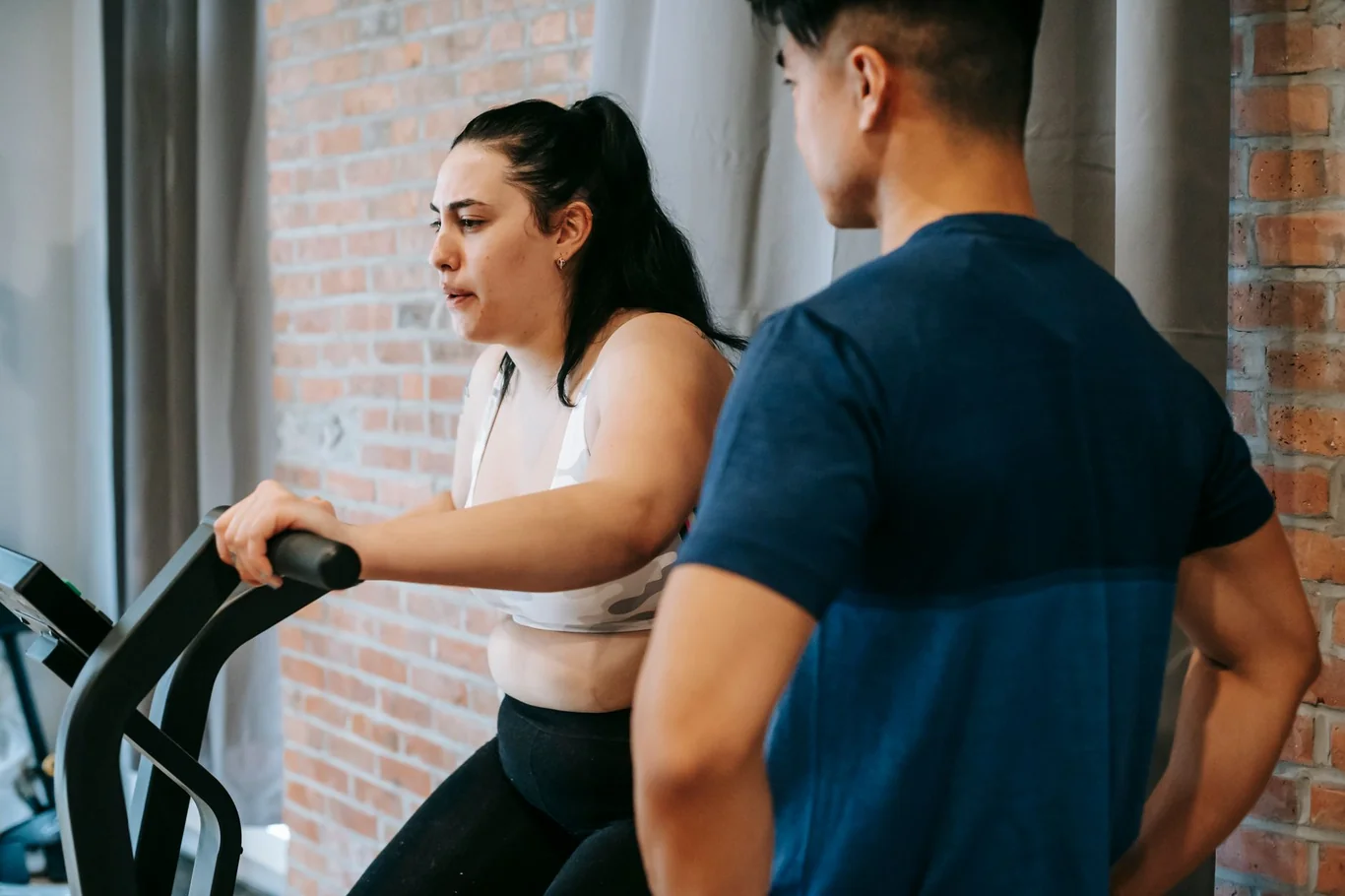
The real advantage for weight loss specifically comes from adherence. Because the elliptical is low-impact and generally more comfortable than running, people tend to stick with sessions longer and return more consistently - especially those with joint sensitivities who cannot sustain high-mileage running. A study from the Journal of Science and Medicine in Sport found that compact elliptical training during sedentary work periods expended approximately 87.9 kcal/hour above baseline - enough to prevent typical annual weight gain when integrated into an otherwise sedentary routine (6).
In my view, consistency on the elliptical over months outperforms sporadic high-intensity efforts for most recreational fitness goals.
For a detailed look at how the elliptical's cardiovascular output compares to running and cycling, my guide on whether the elliptical qualifies as good cardio covers the VO2 data, heart rate zones, and effort levels where it functions as a serious training stimulus.
To maximize the elliptical machine's weight-loss potential, these variables matter most:
- Intensity - Passive, low-resistance pedaling produces minimal caloric output; increase resistance and engage the handles actively
- Duration - Aim for at least 30 minutes at moderate-to-vigorous effort per session
- Frequency - Three to five sessions per week produces compounding cardiovascular adaptations
- Incline - Higher incline shifts more load to the glutes and hamstrings, increasing total muscle recruitment and calorie burn
- Interval training - Alternating hard and easy intervals burns more calories post-workout than continuous steady-state effort
The elliptical machine benefits stomach fat reduction through the same mechanism as all cardio: consistent calorie deficit over time. You cannot spot-reduce belly fat, but sustained sessions in a deficit pull from total body fat, including the abdomen.
For a detailed breakdown of how the elliptical compares to other modalities for fat loss, the elliptical for weight loss guide covers training variables and realistic timelines.
Elliptical Machine Benefits for Women - Bone Health, Joint Safety, and More
The elliptical machine benefits for women extend beyond standard cardio. While the cardiovascular and calorie-burn advantages apply to everyone, several aspects are particularly relevant for women across different life stages.

Bone density support: The elliptical is generally considered a weight-bearing exercise, meaning it applies some compressive load to bones - stimulating bone remodeling and potentially supporting bone mineral density. This matters especially for women approaching or past menopause, when bone density naturally declines. That said, the elliptical's lower impact compared to running means its bone-loading stimulus is more modest than running or jumping. The related question - is a rowing machine good for osteoporosis - helps clarify where each machine fits in a bone-health-focused training routine. I'd position the elliptical as a complement to resistance training for bone health, not a standalone solution - combining both gives your skeleton stimulus from multiple directions.
Joint-friendly training during hormonal transitions: Many women experience increased joint sensitivity during pregnancy, postpartum recovery, and perimenopause due to hormonal shifts that affect ligament laxity. The elliptical offers a way to maintain cardiovascular fitness during these periods without the impact loading of running. Always consult a healthcare provider before training during pregnancy or early postpartum recovery, as individual circumstances vary considerably.
Practical advantages:
- Low barrier to entry with no complex technique required
- Adjustable resistance accommodates every fitness level
- Upper body involvement improves functional fitness without heavy loading
- Low injury risk compared to impact-based cardio activities
- Flexible duration and intensity suit varying energy levels across the week
For women exploring full-body alternatives, what is a rowing machine and what muscles does a rowing machine work are common follow-up questions if you want to compare the elliptical's muscle engagement to another low-impact full-body modality.
Elliptical Machine Benefits and Disadvantages - The Honest Picture
Covering the elliptical machine benefits and disadvantages honestly means giving weight to both sides. Most content on this topic skews heavily toward benefits - this section addresses where the machine genuinely falls short.
What the elliptical falls short on:
- Bone loading - Its lower impact is also a limitation for bone density: you get less compressive stimulus than running or jumping, so the elliptical alone is not ideal for osteoporosis prevention
- Muscle-building ceiling - The elliptical does not load muscles enough to drive meaningful hypertrophy; it is a cardio tool, not a strength builder
- Plateau risk - Passive, low-resistance sessions produce minimal cardiovascular or caloric output; most users underperform on this machine without realizing it
- Monotony - The fixed movement pattern offers less variety than running outdoors or cycling, which can affect long-term adherence
A preliminary study of chronic back pain patients demonstrated that systematic elliptical machine training produced significant pain score reduction (from 4.7 to 3.2 on a pain scale by week 4), identifying approximately 30.8 kcal/kg of accumulated physiological work as the therapeutic threshold (7).
Reaching that load threshold requires intentional effort - passive pedaling simply won't get there.
What the elliptical does well: The elliptical delivers cardiovascular conditioning comparable to running, burns significant calories per session, engages both upper and lower body, and does all of this with dramatically reduced joint impact.
For a more detailed breakdown of each of those advantages with the underlying research, my post on elliptical machine benefits and the research behind them covers the cardiovascular, metabolic, and joint-protection outcomes in full.
A Cochrane systematic review of 45 randomized trials found that endurance-type exercise significantly reduces fatigue in people with chronic conditions like multiple sclerosis (standardized mean difference -0.53, 95% CI -0.73 to -0.33), which underscores how broadly applicable this training modality can be (8).
For a side-by-side look at how the elliptical compares to the treadmill on calorie output, joint loading, and cardiovascular stimulus, my elliptical vs treadmill comparison covers the data that determines which machine fits which training profile.
For an in-depth look at how another machine compares mechanically, the arc trainer vs elliptical guide covers joint mechanics and muscle recruitment differences.
Who Gets the Most from Elliptical Training
Not everyone extracts equal value from the elliptical.
These populations tend to benefit the most from regular use:
- Injury-recovering athletes who need cardiovascular conditioning without joint loading - the zero-impact stride keeps aerobic capacity intact during lower-body rehabilitation
- Beginners who want an intuitive, forgiving cardio option - no technique to learn, no fall risk, adjustable intensity from day one
- Older adults managing arthritic joints who want weight-bearing exercise without the compressive load of running - the elliptical lets them stay active longer
- People with chronic lower back pain who find running or cycling aggravates symptoms - the upright posture and smooth stride typically cause less disc compression than seated cycling
- Cross-training runners who need aerobic volume without accumulating additional running impact - elliptical sessions maintain fitness between hard run days
- Anyone with knee, hip, or ankle sensitivity who still wants effective cardio training - joint-friendly by design, not by accident
Users who are already injury-free, experienced with cardio, and targeting athletic performance will likely find the elliptical underchallenging unless they push intensity aggressively. For that group, the elliptical works better as a recovery-day tool or cross-training complement than as a primary training mode.
For older adults and those managing joint conditions, my picks for the best elliptical for senior users cover the machines that prioritize smooth stride motion, accessible resistance, and stable frame construction.
For anyone considering adding a rowing machine alongside their elliptical, what to look for when buying a rowing machine and what type of rowing machine is best are useful starting points for that decision.
How to Make Every Elliptical Session Count
Knowing what an elliptical machine is good for only helps if your sessions are structured to actually deliver those results. I've identified these as the most common technique errors that limit progress on the machine:
Common elliptical form mistakes to avoid:
- Leaning heavily on the handles - offloads the lower body and reduces calorie burn significantly
- Locking in a passive, low-resistance pace throughout the entire session
- Looking down at your feet instead of keeping your chest up and eyes forward
- Skipping backward pedaling entirely - limits hamstring and glute stimulus over the long term
- Bypassing the warm-up - reduces blood flow to working muscles and increases early joint discomfort
Sample weekly training structure:
- Monday / Wednesday / Friday: 30-40 minutes steady-state at moderate intensity (conversational pace, moderate resistance)
- Tuesday / Thursday: 20-25 minutes interval training - 1 minute hard effort, 2 minutes easy, repeat 6-8 times
- Saturday: 20-30 minutes backward pedaling focus, higher incline, 3-5 minutes hands-free mid-session for core activation
For cardiovascular improvement: target moderate-to-vigorous intensity (you should be able to say short phrases but not hold a full conversation) for at least 20-30 minutes, three to five times per week.
For weight loss: combine moderate-intensity steady-state sessions (30-45 minutes) with two shorter high-intensity interval sessions each week.
For a complete session plan covering resistance progression, interval formats, and recovery scheduling, my guide on elliptical workout protocols and programming walks through the session types that produce the most consistent long-term results.
For muscle engagement: use higher resistance settings, actively drive the handles in a push-pull motion, and alternate forward and backward pedaling within a single session.
When you're ready to shop for home cardio, our best elliptical machine guide covers top-rated options across budget and premium tiers.
The Bottom Line on What an Elliptical Machine Is Good For
The elliptical machine earns its place as one of the most accessible and joint-friendly cardio tools available. It delivers genuine cardiovascular and calorie-burn output, works both the upper and lower body, and can be used productively across a wide range of fitness levels and physical conditions.
- For weight loss, push intensity and pair consistent sessions with a calorie deficit.
- For muscle engagement, drive the handles actively, vary resistance, and incorporate backward pedaling.
- For rehabilitation or joint-sensitive populations, few machines match its combination of effectiveness and safety.
The honest caveat: passive elliptical use produces passive results. The elliptical machine benefits most when you train with intention and escalate the challenge progressively over weeks and months. I use it as a complement to resistance training - a cardio tool that maintains cardiovascular fitness without adding impact-based recovery debt.
If you are ready to invest in a machine of your own, my guide on how to choose an elliptical covers the five key factors, including stride length, drive type, resistance system, and weight capacity, that determine whether a specific model delivers on what this page describes.
FAQs
What will 30 minutes on the elliptical do?
Thirty minutes on the elliptical machine at moderate-to-vigorous intensity burns approximately 360-440 calories depending on body weight, resistance level, and effort. Over time, consistent 30-minute sessions improve cardiovascular endurance, support weight management, and build an aerobic base without the joint stress of comparable running workouts.
Do ellipticals help burn belly fat?
The elliptical machine helps reduce overall body fat, including belly fat, when used consistently as part of a calorie deficit - but it cannot target abdominal fat in isolation. Total calorie expenditure drives fat loss from all areas of the body, and the elliptical's relatively high per-session energy output makes it an effective tool for achieving and maintaining that deficit over time.
What are the downsides of using an elliptical machine?
The main downsides of the elliptical machine include its limited bone-density loading stimulus compared to running, the risk of plateauing from passive low-resistance sessions, and its inability to build significant muscle mass on its own. Users who lean on the handles and maintain low resistance throughout a session gain minimal cardiovascular or metabolic benefit from the machine.
Which is better, a treadmill or an elliptical?
The treadmill produces marginally higher calorie burn and more bone-loading stimulus, while the elliptical machine is significantly easier on the joints and carries lower injury risk overall. The better choice depends on your goals: if you are injury-free and training for running performance, the treadmill has the edge; if you have joint sensitivity or need a sustainable long-term training option, the elliptical is typically the better fit.
What muscles does the elliptical work?
The elliptical machine primarily works the quadriceps, hamstrings, glutes, calves, and hip flexors in the lower body, plus the chest, back, biceps, and triceps when you actively engage the moving handles. Pedaling backward shifts emphasis from the quadriceps to the hamstrings and glutes, making it a useful variation for adding lower body training variety within a single session.
References
- Prieto-González P, Yagin FH. Energy expenditure, oxygen consumption, and heart rate while exercising on seven different indoor cardio machines at maximum and self-selected submaximal intensity. Front Sports Act Living. 2024;6:1313886. Published 2024 Feb 8. doi:10.3389/fspor.2024.1313886
- Filipovic M, Munten S, Herzig KH, Gagnon DD. Maximal Fat Oxidation: Comparison between Treadmill, Elliptical and Rowing Exercises. J Sports Sci Med. 2021;20(1):170-178. Published 2021 Mar 1. doi:10.52082/jssm.2021.170
- He MY, Lo HP, Chen WH. Effects of Stationary Bikes and Elliptical Machines on Knee Joint Kinematics during Exercise. Medicina (Kaunas). 2024;60(3):498. Published 2024 Mar 18. doi:10.3390/medicina60030498
- Hasebe Y, Akasaka K, Otsudo T, Hall T, Yamamoto M. Effects of incorporating elliptical trainer exercise during rehabilitation on physical function and self-reported outcomes after total hip arthroplasty: a randomized controlled trial. J Phys Ther Sci. 2022;34(3):230-235. doi:10.1589/jpts.34.230
- Bouillon L, Baker R, Gibson C, Kearney A, Busemeyer T. COMPARISON OF TRUNK AND LOWER EXTREMITY MUSCLE ACTIVITY AMONG FOUR STATIONARY EQUIPMENT DEVICES: UPRIGHT BIKE, RECUMBENT BIKE, TREADMILL, AND ELLIPTIGO®. Int J Sports Phys Ther. 2016;11(2):190-200.
- Rovniak LS, Denlinger L, Duveneck E, et al. Feasibility of using a compact elliptical device to increase energy expenditure during sedentary activities. J Sci Med Sport. 2014;17(4):376-380. doi:10.1016/j.jsams.2013.07.014
- Dillingham T, Kenia J, Popescu A, Plastaras C, Becker S, Shofer F. Pain Outcomes with an Elliptical Regimen (POWER) Study: Identifying the Proper Dosage of Exercise for Therapeutic Effect in Persons with Chronic Back Pain. J Phys Med Rehabil. 2020;2(2):23-28.
- Heine M, van de Port I, Rietberg MB, van Wegen EE, Kwakkel G. Exercise therapy for fatigue in multiple sclerosis. Cochrane Database Syst Rev. 2015;2015(9):CD009956. Published 2015 Sep 11. doi:10.1002/14651858.CD009956.pub2