
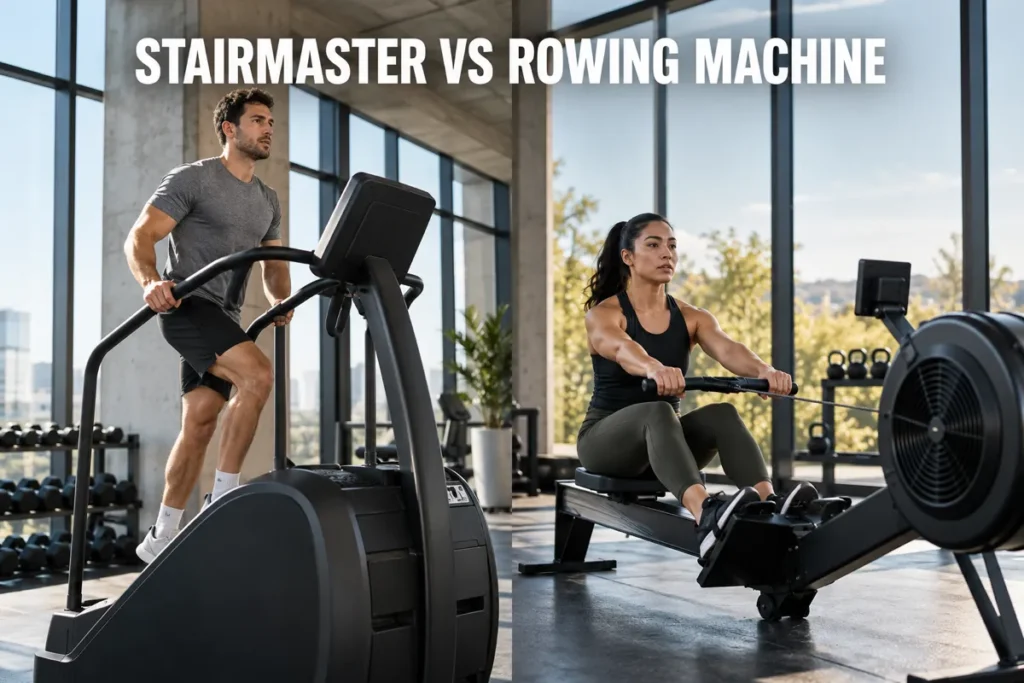
The stairmaster vs rowing machine debate is one I've navigated with hundreds of clients over the years at my gym and in private coaching. Both machines are serious cardiovascular tools, but they train your body in fundamentally different ways and serve different goals. In this guide, I compare calorie burn, muscle engagement, joint impact, and long-term fit across each machine so you can make a clear decision - not a guess based on what someone told you in the locker room.

StairMaster vs Rowing Machine - The Core Differences
Understanding the stairmaster vs rowing machine split starts with knowing what each machine actually does. A StairMaster stepmill is a revolving staircase - it forces you to climb continuously, making it primarily a lower-body cardiovascular machine. A rowing machine simulates the motion of pulling oars through water and, when used correctly, engages virtually every major muscle group in one connected movement.
These machines are not interchangeable. They train different muscles, demand different skill levels, and serve different fitness goals. Here is how they compare at a glance.
StairMaster | Rowing Machine | |
Primary muscles | Quads, glutes, hamstrings, calves | Legs, back, core, arms |
Calorie burn | High | High to very high |
Joint impact | Weight-bearing, low impact | Seated, zero ground impact |
Cost | Significant investment | Wide range - budget to premium |
Space | Large footprint, requires ceiling clearance | Longer but lower profile; foldable models available |
Learning curve | Minimal | Moderate |
Best for | Glute and quad conditioning, hill training | Full-body conditioning, HIIT, performance tracking |
One important distinction before going further: a StairMaster stepmill (a continuously revolving belt of stairs) and a standard stair stepper (two independent pedals) are different machines. Most people searching the stair climber vs rowing machine question encounter both, but the stepmill recruits more hip and glute activation and more closely replicates real stair climbing. This article primarily addresses the stepmill, since that is what most gym-goers mean when they say StairMaster.
My stair climber machine guide covers all major machine types for readers who want to understand the full stair climbing category.
Cost and space are two practical factors the comparison table does not fully capture. A gym-grade StairMaster stepmill is a significant investment - often several times the price of even a premium home rowing machine. Rowing machines also sit lower and longer than a stepmill, which requires ceiling clearance and a larger dedicated footprint. If you are building a home gym, the rowing machine is the more space-efficient and cost-accessible choice for most setups.
Buyers choosing a rower for their home will find the top models ranked in my best rowing machine guide.
Calorie Burn - Which Machine Works Your Metabolism Harder
Calorie burn is one of the most debated aspects of the stairmaster vs rowing machine comparison, and the truthful answer is that intensity and effort level matter more than the machine itself. That said, the rowing machine holds a meaningful edge at moderate-to-vigorous intensity because it recruits significantly more muscle mass across the full body.
The full range of cardiovascular and metabolic outcomes from that full-body recruitment is covered in my rowing machine benefits guide.

The estimates below are based on body weight, moderate effort, and proper form. Individual results will vary based on fitness level, resistance setting, and technique.
Readers building their StairMaster technique from scratch will find a full breakdown in my stairmaster technique guide.
Research supports the cardiovascular demand of both machines. A pilot randomized controlled trial found that short high-intensity stair climbing sessions produced roughly 10% improvement in VO2peak after just four weeks (1). A large population study of over 7,000 adults found consistent stair climbing was significantly associated with lower rates of obesity, physical inactivity, and cardiovascular disease risk factors (2). A study of trained rowers shows average VO2max values exceeding 5.6 L/min - reflecting how effectively rowing taxes the aerobic system at high intensities (3).
In my years of coaching, the single biggest calorie-burn killer on the StairMaster is leaning on the handrails. When you grip the rails and offload your weight, calorie burn can drop by roughly 20-25% below the machine's display estimate. Standing tall with light fingertip contact keeps the effort where it belongs - in your legs. This is true in any stairmaster vs rowing machine session: the harder you resist the urge to cheat the motion, the more each machine delivers.
Readers still deciding between cardio machines beyond these two will find a broader comparison in my best cardio machine guide.
Muscles Worked - Full Body vs. Targeted Lower-Body Power
The muscle engagement difference is the most significant practical distinction between the stairmaster vs rowing machine. Getting this right shapes everything from workout programming to long-term results.
Rowing Machine - A True Full-Body Workout
A rowing machine works the vast majority of your body's major muscle groups in every stroke - a scope no single-axis cardio machine matches. Understanding the rowing machine muscles worked across each stroke helps explain why this machine delivers such comprehensive conditioning. The power chain runs legs first (approximately 60% of total effort), hips open second, arms pull last. The major muscle groups involved include:
- Legs: Quadriceps, hamstrings, glutes, and calves (primary power source)
- Back: Latissimus dorsi, rhomboids, trapezius, and erector spinae
- Core: Abdominals, obliques, and lower back stabilizers (active throughout the stroke)
- Upper body: Biceps, forearms, posterior deltoids, and grip muscles
This full-body demand is why rowing machine benefits extend beyond just cardiovascular fitness - I've watched clients discover back and lat development from rowing that months of running never produced. You are building muscular endurance across the entire kinetic chain with every session. The compound nature of the stroke also explains why even moderate rowing sessions feel more tiring than an equal-duration session on a single-muscle machine.
Readers curious about the StairMaster's calorie output in that comparison will find the data in my how many calories does stairmaster burn guide.
StairMaster - Targeted Lower-Body Power and Endurance
The StairMaster concentrates nearly all work in the lower body. Here is where the effort goes:
- Primary movers: Quadriceps, gluteus maximus, gluteus medius, hamstrings
- Secondary movers: Calves (gastrocnemius and soleus), hip flexors
- Core: Stabilizes the torso but is not actively driven or loaded
- Upper body: Minimal - hands rest lightly on rails for balance only
This targeted focus is a genuine strength for specific goals. If you are building glute and quad conditioning, improving performance on hills or stairs, or recovering quad strength after injury, the StairMaster delivers more concentrated lower-body stimulus per session than rowing can. Controlled research on home-based stair climbing programs confirms significant improvements in aerobic fitness in previously sedentary adults (4).
The full range of cardiovascular and metabolic outcomes from stair climbing is covered in my stairmaster benefits guide.
The choice between machines comes down to whether you want concentrated lower-body work or the most efficient full-body cardiovascular stimulus available.
Readers choosing the StairMaster for that lower-body concentration will find the full muscle activation breakdown in my stairmaster lower-body muscle guide.
Joint Impact and Who Each Machine Suits Best
Both machines are classified as low-impact cardio, but they create very different stress patterns at the joints. Over the years, I have reviewed rowing form for dozens of clients with lower back complaints and found that rounding at the catch position - not the exercise itself - was responsible for nearly every case of rowing-related discomfort. Good mechanics eliminate the risk.
Rowing Machine - Seated and Zero Ground Impact
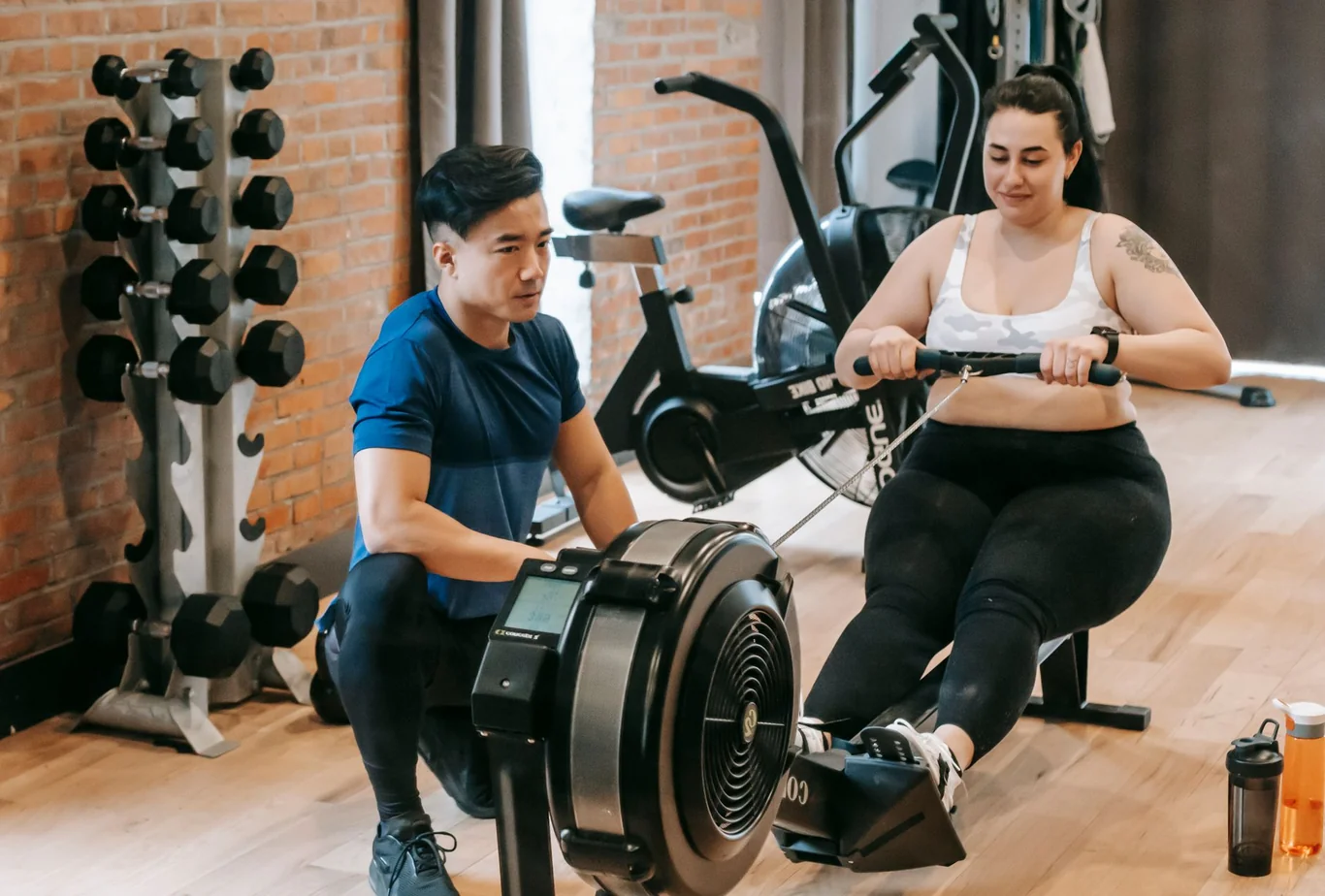
The rowing machine is fully seated with no ground contact, which eliminates vertical loading entirely. The knee and hip joints move through a controlled range of motion with resistance applied through the seat and footrests, not through body weight on a surface. For most people with joint concerns, this makes rowing the safer default.
The primary joint risk on a rowing machine is lumbar spine compression, particularly at the catch position when the knees are fully compressed and the torso leans slightly forward. Rounding the lower back at this position concentrates compressive force at L4/L5. Maintaining a neutral spine - ribcage stacked over pelvis, natural lumbar curve intact - nearly eliminates this risk. People with existing lower back conditions should approach rowing with appropriate caution and start at lower stroke rates to build form before intensity.
Readers ready to push past form basics into interval work will find structured protocols in my HIIT rowing workout guide.
StairMaster - Weight-Bearing but Still Low-Impact
The StairMaster involves continuous weight-bearing stepping, which creates repetitive stress on the knees, hips, and ankles. The impact is modest - closer to walking than running - but the repetitive knee flexion under load can aggravate pre-existing conditions like patellofemoral pain syndrome, mild osteoarthritis, or anterior knee pain.
Many stepmill machines are also designed so the foot placement sits partially off the step edge, which concentrates pressure on the ball of the foot and the front of the ankle. Wearing supportive footwear and ensuring your full foot makes contact with each step reduces this significantly.
Quick joint-based decision guide:
- Pre-existing knee or hip issues: the rowing machine is the safer choice
- Pre-existing lower back sensitivity: the StairMaster is the safer choice (avoids lumbar loading)
- Shoulder or wrist injury: the StairMaster is the safer choice (rowing requires upper-body pulling)
- No prior joint issues: either machine is appropriate based on goals
StairMaster vs Rowing Machine - Which One Fits Your Goals
The stairmaster vs rowing machine decision should be driven by your specific objectives. I've coached clients to excellent results on both machines - and I've also seen people waste months on the wrong machine for their situation.
Readers weighing the StairMaster against a treadmill will find a direct comparison in my stairmaster vs treadmill guide.
Here is a straightforward breakdown to guide your choice.
Choose the Rowing Machine If...
- You have limited time and want the maximum number of muscles conditioned per session
- You want a machine that supports both HIIT and steady-state sessions without switching equipment - the rowing machine's resistance scales instantly with effort, making it better suited to interval work than the StairMaster's step-paced rhythm
- Your priority is overall calorie burn and full-body conditioning rather than lower-body isolation
- You have knee or hip concerns and need a zero-impact, seated option
- You want a machine that also develops upper back, lat, and core strength alongside cardio fitness
- You are interested in performance metrics (split times, watts, meters rowed) for progressive tracking
Choose the StairMaster If...
- Your primary goal is glute and quad development alongside cardiovascular conditioning
- You want intuitive equipment with minimal learning curve - you can step at full effort in the first session
- You are building fitness for activities that involve stairs, hills, or incline hiking
- You have a shoulder or wrist injury that makes pulling uncomfortable or impossible
- You prefer standing upright during cardio rather than being seated for the full session
For most people focused on general fitness improvement and long-term cardiovascular health, the rowing machine is the more versatile investment. I recommend the StairMaster specifically when someone has a targeted lower-body goal, an established StairMaster routine they enjoy, or a lower back sensitivity that makes rowing uncomfortable.
Getting Started with a Rowing Machine
The technique barrier on a rowing machine is real, but in my experience most people overcome it within two or three sessions when the leg-first sequence is the focus from day one. The most common rowing machine mistakes come from pulling with the arms before the legs drive - a pattern that limits power and strains the lower back. Keep your shins nearly vertical at the catch, drive powerfully through both legs, and only bring the arms in as the legs extend. The rowing machine can build real muscle alongside cardiovascular conditioning, which shapes how you approach recovery between sessions and rowing machine workouts at different intensities.
Finding the Best Rowing Machine for Home Use
Once you decide the rowing machine is the right fit, resistance type is the main practical decision. Magnetic rowing machine models - including popular options like the Merach - run quietly, offer fixed resistance levels, and suit beginners because the consistent resistance removes the variability that makes air machines feel unpredictable in early sessions. The Concept 2 rowing machine remains the performance standard for serious athletes, with accurate data tracking and the same ergometer used in CrossFit and competitive rowing worldwide. Rowing machine maintenance on both types is minimal - chain lubrication and seat rail cleaning a few times per year is all most machines require. For specific picks by budget, the best budget rowing machine guide covers what holds up without the premium price tag.
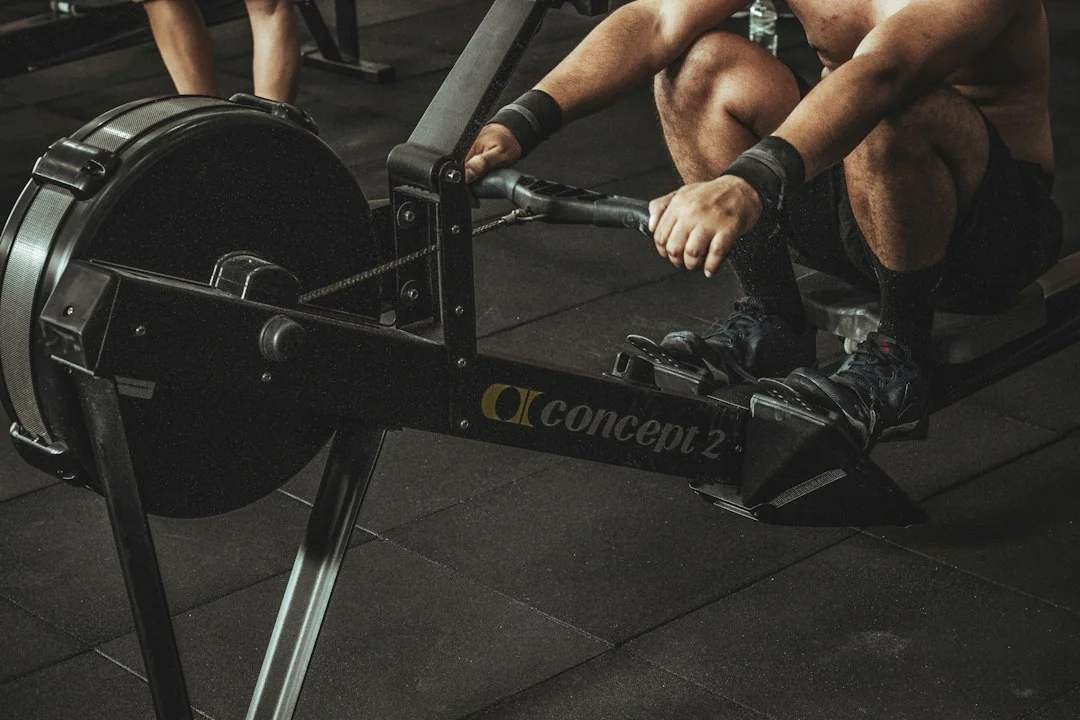
Storage space is worth factoring in before you buy. A compact rowing machine fits most small home gyms without significant floor rearrangement.
For the smallest possible footprint, a foldable rowing machine stores vertically and reclaims the floor between sessions. The best rowing machine for home use ultimately depends on your available space, budget, and whether performance data tracking matters to your training.
Your Next Step Toward Better Cardio Fitness
The stairmaster vs rowing machine comparison does not have a universal winner - but it does have a clear answer for each person based on their goals and physical situation.
Buyers prioritizing quiet home use will find the top magnetic models in my best magnetic rowing machine guide.
The StairMaster earns its place for anyone prioritizing lower-body conditioning, building for hill and stair performance, or dealing with a lower back sensitivity that makes rowing uncomfortable. The rowing machine is the more versatile long-term choice for most people because it conditions the full body simultaneously, places minimal joint stress, and scales from first-time exerciser to elite athlete. Both machines support cardiovascular health effectively when used consistently.
Readers comparing the StairMaster to an elliptical instead will find that breakdown in my stairmaster vs elliptical guide.
If you are genuinely undecided, I recommend a two-week trial on each machine - three sessions per week, 20 minutes each - before committing to one. Most people know which machine they will keep coming back to within the first week.
Buyers leaning toward the rower for performance conditioning will find the top options in my best rowing machine for conditioning guide.
For a closer look at what rowing machine results look like over consistent months of training, the rowing machine before and after guide covers the real physical changes you can expect.
FAQs
Is rowing or StairMaster better for weight loss?
The rowing machine has a meaningful edge for weight loss because it engages more muscle mass per session, driving higher calorie burn at equivalent effort levels. Both machines can support meaningful weight loss when combined with consistent training and appropriate nutrition - the one you will actually stick with long term is ultimately the more effective choice.
First-time rowers will find the best entry-level models in my best rowing machine for beginners guide.
What is the equivalent of 10,000 steps on a rowing machine?
The equivalent of 10,000 steps on a rowing machine is difficult to pin down to a single number because it depends heavily on body weight, stroke rate, and effort level. A rough calorie-based estimate for a 155-pound adult puts the range somewhere between 5,000 and 8,000 or more meters at moderate effort, with meaningful individual variation - tracking meters rowed directly is a more useful goal than trying to match a step count.
Readers building a structured StairMaster practice will find session formats in my stairmaster workout guide.
Is 20 minutes of rowing a day enough?
Twenty minutes of rowing per day is enough to produce measurable cardiovascular fitness improvements, particularly for beginners and intermediate rowers training at moderate-to-vigorous effort. Research by Yun et al. (2023) on stair climbing shows significant VO2peak improvements from similarly brief daily bouts, and comparable cardiorespiratory responses apply when rowing is performed at consistent intensities.
Readers choosing between rowing and running as their primary cardio will find that comparison in my rowing vs running guide.
Is 20 minutes of StairMaster enough cardio?
Twenty minutes on the StairMaster is sufficient for general cardiovascular health maintenance when you maintain moderate-to-vigorous effort without leaning on the handrails throughout. Population data (Arafa et al., 2024) shows that regular stair climbing is independently associated with lower rates of cardiovascular disease risk factors, suggesting consistent short sessions deliver real health benefit.
How to use rowing machine?
To use a rowing machine correctly, start at the catch position with shins nearly vertical and arms fully extended, then drive powerfully through both legs, let your hips open as the legs extend, and pull the handle to your lower ribs. On the recovery, extend your arms first, hinge forward at the hips, then slide the seat back to the start position. Keep your lower back in a neutral arch throughout each stroke - rounding at the catch is the most common source of back discomfort for new rowers.
This content is for informational and educational purposes only. It is not a substitute for professional medical advice, diagnosis, or treatment. Always consult with your healthcare provider before starting any new fitness program or using fitness technology for health monitoring.
References
- Yun JE, Wen X, Han M, Cho S, Kuk JL, Lee S. Effect of Short Bouts of Vigorous Stair Climbing on Cardiorespiratory Fitness in Women with Overweight and Obesity: A Pilot Feasibility Study. J Obes Metab Syndr. 2023;32(4):346-352. doi:10.7570/jomes23024.
- Arafa A, Yasui Y, Kato Y, Matsumoto C, Kokubo Y. The association between stair climbing and modifiable cardiovascular disease risk factors: the Suita Study. Environ Health Prev Med. 2024;29:19. doi:10.1265/ehpm.23-00323.
- Blervaque L, Bowen M, Chatel B, Corbex E, Dalmais E, Messonnier LA. Is the Energy Cost of Rowing a Determinant Factor of Performance in Elite Oarsmen? Front Physiol. 2022;13:827932. doi:10.3389/fphys.2022.827932.
- Michael E, White MJ, Eves FF. Home-Based Stair Climbing as an Intervention for Disease Risk in Adult Females; A Controlled Study. Int J Environ Res Public Health. 2021;18(2):603. doi:10.3390/ijerph18020603.