
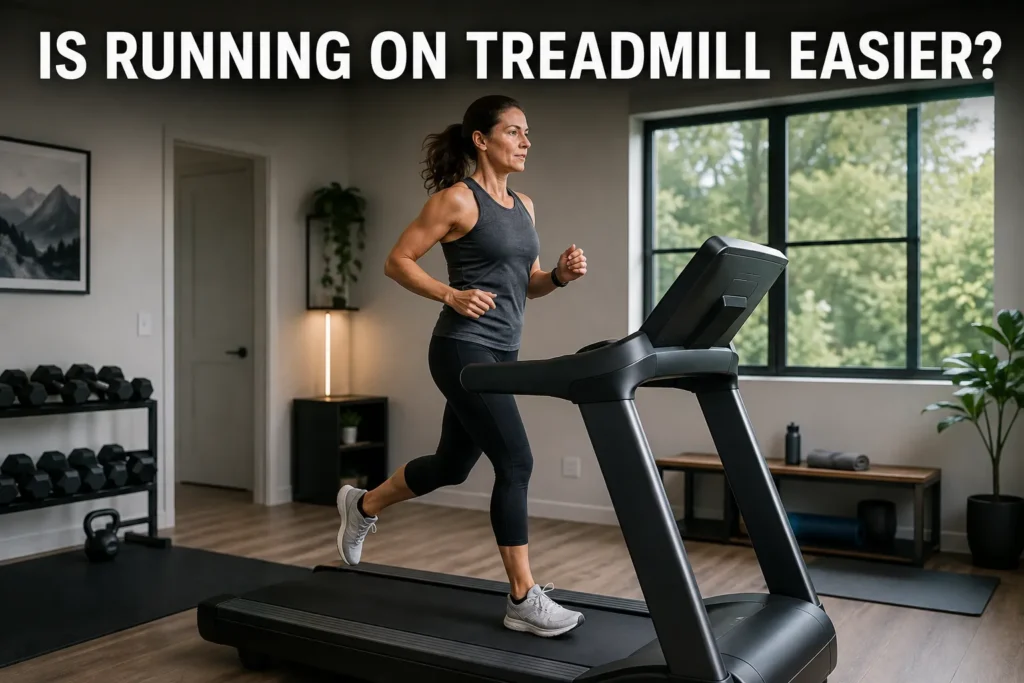
Is running on treadmill easier than running outside? The science says yes - but with a twist most runners do not expect. Physiologically, your body expends less energy on a treadmill at the same displayed speed, yet many people report the indoor version feels harder than the equivalent outdoor effort. This paradox has real consequences for how you gauge your fitness, prepare for races, and structure weight loss training. Below, I break down what the research actually shows about treadmill effort, calorie burn, biomechanics, and how to use that knowledge to train smarter.

Is Running on Treadmill Easier Than Running Outside - The Science-Backed Answer
So, is running on treadmill easier in a measurable physiological sense? Yes. The primary reason is air resistance. When you run outdoors, your body moves through air, and overcoming that drag accounts for approximately 8% of total energy cost at 5000-meter race pace, according to foundational research by Pugh (1).

On a treadmill, that resistance vanishes entirely.
A secondary factor also plays a role: the motorized belt provides slight propulsion assistance during each stride's push-off phase. Your hamstrings and glutes exert marginally less effort per step compared to overground running. Together, these two factors explain why treadmill running is physiologically easier at equivalent speeds.
If you want to compare specific models before choosing between indoor and outdoor training, the treadmills we carry are listed with full specs in one place.
For readers weighing whether to replace some running sessions with incline walking instead, my comparison of whether incline treadmill training beats running covers the data on cardiovascular output, calorie burn, and which method is better suited to different fitness goals.
The standard correction is running at a 1% incline on the treadmill. Research comparing collegiate Division I runners found no significant differences in cadence, stance duration, or swing patterns between level and 1% incline treadmill conditions, suggesting that modest grade adds back the missing resistance without meaningfully altering gait (2). If you train indoors for outdoor races, 1% incline is the minimum recommended setting to make your effort more representative.
I always point runners toward treadmills with reliable incline accuracy for this reason - across training programs I have reviewed, runners who skip the 1% correction consistently report a noticeable pace drop on their first outdoor tempo run after a treadmill block.
Our guide to the best incline treadmill covers machines that make this adjustment simple and consistent across training sessions.
Why Treadmill Running Feels Harder Despite Being Easier
The physiology says treadmill running costs less energy - yet many runners report it feeling harder. This disconnect has several well-documented causes worth understanding before you dismiss indoor training as mentally taxing.
Thermal load is the most immediate factor. Outdoors, airflow over your skin continuously accelerates sweat evaporation and cools your body. On a stationary treadmill, that airflow disappears, causing your core temperature to rise faster at the same pace, which elevates perceived exertion independently of actual cardiovascular demand. A well-placed fan or air conditioning meaningfully closes this gap on longer sessions.
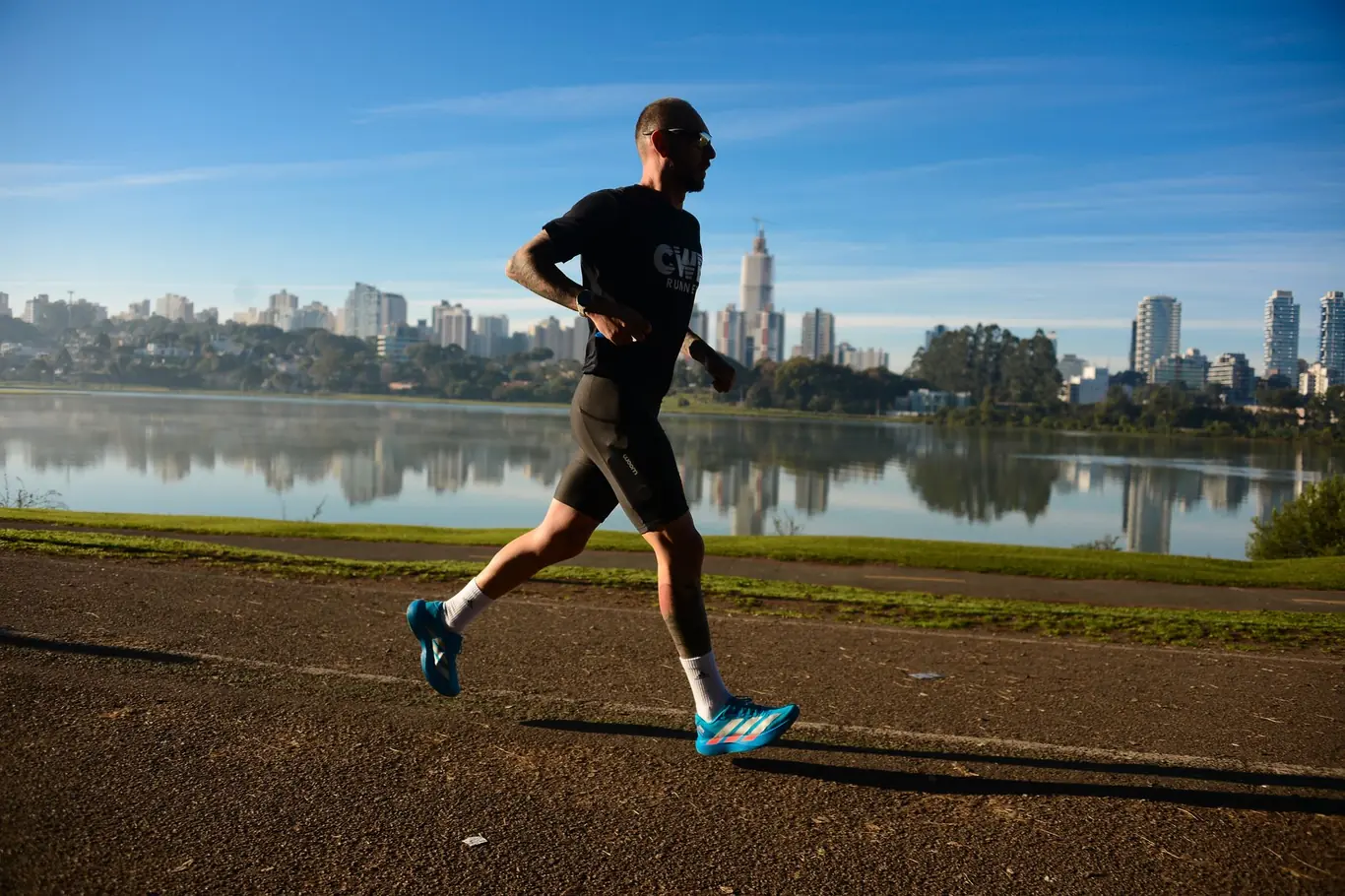
Visual motion cues compound the effect. Running outdoors generates a continuous stream of passing scenery, landmarks, and spatial reference points that provide subconscious feedback on pace and progress. A treadmill's stationary environment removes those cues, causing many runners to perceive their speed as lower than it actually is and to experience the effort as disproportionately high relative to what the display shows. Boredom and reduced psychological engagement further amplify rated perceived exertion on runs exceeding 20 minutes.
Finally, there is a pace-perception mismatch that affects how hard treadmill running feels across sessions. Runners accustomed to outdoor training often set their treadmill speed 30 to 90 seconds per mile lower than their outdoor equivalent - because the matching outdoor effort no longer feels available indoors without the visual and thermal cues that normally regulate it. Understanding this mismatch lets you set the treadmill pace intentionally rather than defaulting to whatever feels right on a given day.
For a full breakdown of the scenarios where treadmill training delivers its strongest results and the cardiovascular adaptations it reliably produces, my guide on treadmill benefits covers the evidence behind the machine's advantages for endurance, joint health, and consistent training volume.
Why Is Treadmill Running Easier - Biomechanics Under the Belt
A large systematic review and meta-analysis of 33 crossover studies involving 494 runners found that most biomechanical outcomes do not differ significantly between treadmill and overground running when speed and incline are matched (3). Stride length, overall coordination patterns, and key kinetic variables remained largely comparable across conditions.
That said, measurable differences do exist. A repeated-measures study using collegiate Division I cross-country runners compared overground track, level treadmill, and 1% incline treadmill conditions. Treadmill running produced:
- Higher cadence (approximately 3.2 to 3.5 additional strides per minute compared to overground)
- Shorter stance duration (14 to 16 milliseconds less contact time per step)
- Shorter swing duration (11 to 12 milliseconds shorter per step)
These differences matter most for runners training for outdoor races. A slightly altered cadence and reduced stance time on the treadmill can create a subtle mismatch when you transition outdoors, which is why coaches generally recommend alternating between both surfaces rather than training exclusively indoors.
Foot strike mechanics also shift on the treadmill. Research indicates that treadmill runners tend to land with a flatter foot compared to overground running, affecting the angle of ankle dorsiflexion at initial contact. This subtly reduces the stretch-shortening cycle efficiency of the Achilles and plantar fascia, which is worth monitoring when returning from Achilles or ankle issues.
For a complete guide to form adjustments and cadence calibration that account for the treadmill's altered foot strike and reduced stretch-shortening cycle efficiency, my post on how to run on treadmill covers the technical approach that reduces injury risk and improves training transfer.
Muscle activation patterns also shift. Research using electromyography across 11 lower limb muscles found that overground running produced greater muscle activation at initial contact with the ground, while treadmill running showed higher activation amplitudes during the swing and pre-landing phases (4). The muscles are working on both surfaces - just not always at the same moment in the stride cycle.
If you are weighing the question of whether incline treadmill better than running, these biomechanical nuances matter more as your race goals become more specific.
For readers who want a structured approach to treadmill training that builds fitness without widening the gap with outdoor running, my treadmill workout guide covers interval formats, pacing frameworks, and weekly structures designed to account for both surfaces.
Is Running on a Treadmill Easier Than Outside for Calorie Burn
The easier physiology has direct consequences for weight loss. Overground running burns meaningfully more calories at the same speed. A study of 74 middle-aged women using indirect calorimetry found that outdoor running produced 9.6% higher energy expenditure at 8 km/h (9.36 versus 8.54 kcal per minute) compared to treadmill running at equivalent speed (5). That gap persisted at higher speeds.
Running Speed | Outdoor (kcal/min) | Treadmill (kcal/min) | Difference |
7.0 km/h (4.3 mph) | 8.10 | 7.75 | Not statistically significant |
8.0 km/h (5.0 mph) | 9.36 | 8.54 | 9.6% higher outdoors |
9.0 km/h (5.6 mph) | 10.33 | 9.54 | 8.3% higher outdoors |
Figures are approximate and vary with individual weight, fitness level, and intensity.
This treadmill vs outside running chart of energy expenditure shows a consistent pattern: outdoor running delivers more burn per session at what feels like the same effort. Running outside vs treadmill for weight loss is therefore not equal when both modalities use the same displayed speed number. Compensating with a 1% to 2% incline - as established above - partially closes that gap without requiring a speed increase.
Is walking on a treadmill good for weight loss? Yes, consistently - particularly when combined with incline. Research comparing the popular 12-3-30 incline walking protocol to self-paced treadmill running found that sessions matched for total calorie expenditure required nearly 6 additional minutes of walking, but produced higher fat oxidation and lower intensity (6). Walking works - it just takes longer per session to equal running's output.
Is 30 minutes on treadmill enough to lose weight? At three to five sessions per week with consistent effort, 30 minutes creates a meaningful calorie deficit over time. The real bottleneck is total weekly volume and dietary intake, not the session length itself. High-intensity intervals during that window typically outperform steady-state jogging for fat loss per unit of time spent.
For specific protocols on frequency, intensity zones, and session structure built around the calorie gap between treadmill and outdoor running, my guide on treadmill weight loss covers the approach that consistently produces measurable fat loss over six to twelve weeks.
Disadvantages of Treadmill Running - What the Research Shows
The disadvantages of treadmill running become clearest when looking at longer-term performance and adaptation data. A six-week pilot study compared matched-intensity outdoor versus treadmill training in recreationally active young males. Outdoor running produced significantly greater improvements in sprint performance, running endurance, and jump distance (7). Treadmill training led to 6.2 to 6.7% leg skeletal muscle mass loss while outdoor training preserved muscle mass - though these findings should be treated as preliminary evidence given the small-sample pilot design.
Running economy also suffers on the belt. A study of competitive distance runners found significantly better running economy on an outdoor track compared to treadmill at 1% incline - 215.4 versus 236.8 ml of oxygen per kilogram per kilometer - despite identical VO2max values between conditions (8). That roughly 10% difference means runners cover more ground outdoors per unit of oxygen consumed. I find this the most underappreciated argument against treadmill-only training among the runners I coach - in sessions where I have compared track and treadmill economy data for the same runner, the oxygen cost gap typically falls between 8% and 12%, consistent with the published research.
For runners tracking running outside vs treadmill weight loss results long-term, these adaptation differences compound with each training cycle and underscore why exclusive treadmill training falls short of outdoor running for sustained performance development.
For readers considering a lower-impact alternative that avoids the gait-alteration drawbacks of exclusive belt running, my elliptical vs treadmill breakdown covers the biomechanical, calorie, and training-adaptation differences that determine which machine fits which fitness goal.
Key disadvantages of treadmill running to weigh before going fully indoor:
- Lower calorie burn per minute at the same displayed speed compared to outdoor running at equivalent perceived effort
- Reduced lower body muscle retention - particularly hamstrings and glutes - when used as the sole training modality over multiple weeks
- Inferior running economy - higher oxygen cost per kilometer covered versus overground running
- Altered gait mechanics - higher cadence and shorter stride that may not transfer cleanly to outdoor or race-day conditions
- Faster overheating due to the absence of natural airflow - a significant factor on longer runs in warm indoor environments
- No terrain variability to develop ankle stability, proprioception, or hip stabilizer strength
- Potential cartilage effects at high volume - chronic treadmill running exceeding 75 minutes per week has been associated with reduced distal femoral cartilage thickness in long-term athletes (9)
The joint impact picture is more nuanced in the short term. A systematic review and meta-analysis of 36 crossover studies found that treadmill running significantly reduces tibial loading compared to overground running (standardized mean difference of -0.83), making it a genuinely better option for runners managing shin splints or early-stage stress reactions (10). For recovery runs or rehabilitation phases, the belt surface is the smarter choice.
Walking variations can offer a lower-impact alternative during those phases. The benefits of walking backwards on a treadmill include reduced anterior knee stress and increased glute and hamstring activation - a useful complement to forward running workouts when managing knee pain.
How to Lose Weight on a Treadmill - A Practical Framework
Running on a treadmill to lose weight is an achievable goal, but the honest framing matters. How to lose weight on a treadmill in 2 weeks typically produces modest changes - primarily water weight and glycogen shifts. Meaningful fat loss requires consistent effort over six to twelve weeks. The practical framework below focuses on building a sustainable pattern, not crash protocols.
Follow these steps in order to maximize treadmill-based weight loss:
- Establish frequency first - commit to three to four treadmill sessions per week for the first two weeks before increasing intensity or duration
- Set the incline to 1% as your default baseline to compensate for the missing air resistance and increase calorie burn without raising speed
- Progress to interval training - after two to three weeks of consistent runs, alternate 60 seconds at a challenging pace with 90 seconds of recovery jogging for 20 to 25 minutes total
- Track total weekly output - target 120 to 150 minutes of treadmill cardio per week at minimum for meaningful weight loss over time
- Address dietary intake - treadmill running alone, without a calorie deficit, rarely produces significant fat loss in any short timeframe regardless of session quality
Running on a treadmill to lose weight works best when treated as part of a broader energy balance strategy rather than a standalone intervention. I find that runners who combine three weekly treadmill sessions with simple dietary adjustments see far better results than those who rely on daily sessions without addressing food intake. Consistency at a moderate volume beats intensity bursts followed by burnout in virtually every weight loss case I have tracked through our research review process. For adding low-intensity movement across the rest of the day on top of those sessions, the best under-desk treadmill options let you walk at a slow pace during calls or focused work without breaking a sweat.
Treadmill Speed Explained - What Your Numbers Actually Mean
Understanding treadmill speed settings is essential for any training program. At a 6.5 speed on a treadmill, you are moving at approximately a 9:14 per mile pace - considered an easy to moderate aerobic effort for intermediate runners. A 7.0 mph setting moves you to an 8:34 per mile pace (roughly 5:20 per kilometer), which sits in the comfortably hard zone for most recreational runners.
Here is how the full speed range maps to perceived effort zones for most adult runners:
- 4.0 to 5.0 mph (12:00 to 15:00/mile) - warm-up and recovery pace, low aerobic zone
- 5.5 to 6.5 mph (9:14 to 10:54/mile) - easy to moderate aerobic zone, conversational pace
- 7.0 to 8.0 mph (7:30 to 8:34/mile) - comfortably hard, aerobic threshold zone
- 8.5 to 10.0 mph (6:00 to 7:03/mile) - lactate threshold and above, race-effort zone
- 10.0+ mph - sprint intervals only, not sustainable for continuous running
One important caveat on displayed speed accuracy: treadmill belt calibration varies significantly across machines, and the number shown on the console may not precisely reflect actual belt speed. I recommend periodically cross-referencing your treadmill pace with a GPS watch or running a measured outdoor mile to verify your baseline accuracy - particularly if you are preparing for outdoor races.
For a dedicated comparison of devices built for pace accuracy, heart rate monitoring, and training load tracking, my breakdown of the best fitness tracker for runners covers the GPS precision and data fidelity that matter most when calibrating between treadmill and outdoor efforts.
Getting the Most From Your Treadmill Training
Running on a treadmill is physiologically easier than running outside - and that is not a problem. It is a feature worth using strategically. The controlled environment, adjustable incline, and reduced joint loading make treadmills excellent for recovery runs, beginner progression, targeted pace work, and interval training in any weather. For runners building a home setup around that, the best folding treadmill roundup covers space-efficient models that still deliver the incline accuracy and speed consistency serious training needs.
The key is not treating treadmill and outdoor running as competing options. Each surface develops different physiological and biomechanical capacities.
Treadmills excel in specific scenarios:
- Recovery runs - reduced tibial loading protects healing tissue during high-mileage weeks
- Precise interval work - locked speed settings remove the pacing variability of outdoor training
- Injury rehab - consistent surface and controlled effort reduce re-injury risk during return-to-run phases
- Weather-independent consistency - maintaining training frequency regardless of conditions is the single biggest predictor of long-term fitness gains
For race preparation and lower body muscle development, outdoor running provides stimuli the belt cannot replicate. I recommend that runners training primarily on treadmills incorporate at least one outdoor run per week during the final four to six weeks before a target race. This bridges the gait and perceptual gap that indoor-only training creates before race day.
For readers building their first home training setup around treadmill running, my guide to the best treadmill for home covers the full-size options that deliver reliable incline accuracy and belt speed consistency for structured training.
FAQs
Is 5K easier on a treadmill?
A 5K is generally easier on a treadmill than the same distance outdoors, because the belt eliminates air resistance and provides slight propulsion assistance during each stride. Setting the treadmill to a 1% incline throughout the run brings the physiological demand closer to what you would experience covering that same 5K outside.
Is 2 miles on the treadmill the same as running?
Two miles on a treadmill covers the same distance, but the physiological demand is slightly lower than 2 miles of outdoor running at the same displayed speed due to the belt's energy-cost advantage over full outdoor self-propulsion. Research shows outdoor running produces approximately 9.6% higher energy expenditure per minute at matched speeds, so outdoor mileage provides a slightly harder overall training stimulus.
Why can I run 5K on a treadmill but not outside?
The reason you can run 5K on a treadmill but struggle outdoors is that outdoor running demands more from your body - air resistance, variable terrain, and full self-propulsion each raise the physiological cost of every step. Additionally, outdoor running more heavily engages hip flexors, ankle stabilizers, and glute muscles that treadmill training tends to underload, so the transition can feel harder even when your cardiovascular fitness appears sufficient.
How fast is 7.0 on a treadmill?
A 7.0 mph treadmill setting equals an 8:34 per mile pace, or approximately 5:20 per kilometer. This is generally considered a comfortably hard effort for intermediate runners - fast enough to build aerobic capacity meaningfully but sustainable for 20 to 40 minutes with appropriate fitness.
Is running on a treadmill bad for your knees?
Running on a treadmill is not bad for your knees and may actually reduce knee-related stress in the short term compared to outdoor running on hard pavement. A systematic review of 36 studies found treadmill running significantly decreases tibial loading versus overground running, which benefits runners managing shin issues or early stress reactions. High-volume long-term treadmill training does warrant monitoring, as research on professional athletes showed an association between extended weekly treadmill mileage and reduced distal femoral cartilage thickness over time.
References
- Pugh LG. Oxygen intake in track and treadmill running with observations on the effect of air resistance. J Physiol. 1970;207(3):823-835. doi:10.1113/jphysiol.1970.sp009097
- Tao H, Joyce L, Kozak B, Luiken J, Wendt N. SPATIOTEMPORAL COMPARISON OF OVERGROUND AND TREADMILL RUNNING WITH PRESSURE SENSOR INSOLES IN DIVISION I COLLEGIATE RUNNERS. Int J Sports Phys Ther. 2019;14(5):731-739.
- Van Hooren B, Fuller JT, Buckley JD, et al. Is Motorized Treadmill Running Biomechanically Comparable to Overground Running? A Systematic Review and Meta-Analysis of Cross-Over Studies. Sports Med. 2020;50(4):785-813. doi:10.1007/s40279-019-01237-z
- Oliveira AS, Gizzi L, Ketabi S, Farina D, Kersting UG. Modular Control of Treadmill vs Overground Running. PLoS One. 2016;11(4):e0153307. Published 2016 Apr 11. doi:10.1371/journal.pone.0153307
- Li S, Xue JJ, Hong P, Song C, He ZH. Comparison of energy expenditure and substrate metabolism during overground and motorized treadmill running in Chinese middle-aged women. Sci Rep. 2020;10(1):1815. Published 2020 Feb 4. doi:10.1038/s41598-020-58791-0
- Wong MWH, Davis DW, Perez OR, et al. An Exploratory Study Comparing the Metabolic Responses between the 12-3-30 Treadmill Workout and Self-Paced Treadmill Running. Int J Exerc Sci. 2025;18(6):56-64. Published 2025 Jan 1. doi:10.70252/UBIX5911
- Singh G, Kushwah G, Singh T, Ramírez-Campillo R, Thapa RK. Effects of six weeks outdoor versus treadmill running on physical fitness and body composition in recreationally active young males: a pilot study. PeerJ. 2022;10:e13791. Published 2022 Jul 27. doi:10.7717/peerj.13791
- Mooses M, Tippi B, Mooses K, Durussel J, Mäestu J. Better economy in field running than on the treadmill: evidence from high-level distance runners. Biol Sport. 2015;32(2):155-159. doi:10.5604/20831862.1144418
- Azami P, Ashraf A, Yousefi O, Hosseinpour A, Nasiri A. Impact of treadmill running on distal femoral cartilage thickness: a cross-sectional study of professional athletes and healthy controls. BMC Sports Sci Med Rehabil. 2024;16(1):104. Published 2024 May 6. doi:10.1186/s13102-024-00896-4
- Keast M, Bonacci J, Fox A. Acute Effects of Gait Interventions on Tibial Loads During Running: A Systematic Review and Meta-analysis. Sports Med. 2022;52(10):2483-2509. doi:10.1007/s40279-022-01703-1