
The calorie burn from 10 000 steps varies more than most fitness apps let on. Your body weight, walking speed, terrain, and age all pull the final estimate in different directions - sometimes by more than 200 calories for the same step count. This guide breaks down exactly how the math works, what personal variables matter most, and how to get a realistic calorie estimate based on your actual situation rather than a generic population average.

How Many Calories Does 10 000 Steps Burn - The Real Answer by Body Weight
The honest starting point: 10,000 steps burns between 250 and 600 calories for most adults, and body weight is the primary driver of where in that range you land. Heavier bodies demand more energy to move the same distance, so the calorie-per-step figure rises predictably with mass.

A cross-validated predictive equation from peer-reviewed research provides a practical formula for calorie expenditure per mile based on body weight (1). The published equation includes gender and ethnicity adjustment variables; as a population average approximation, the simplified relationship is calorie expenditure per mile ≈ body weight (kg) x 0.978 + 32.447 kcal. Ten thousand steps covers roughly 4 to 5 miles for most stride lengths, so applying this formula across the full distance gives a meaningful personalized estimate rather than a population average.
Body weight | Calories per mile | 10,000 steps (about 4.5 miles) |
120 lb (54 kg) | about 86 | about 385 |
150 lb (68 kg) | about 99 | about 445 |
180 lb (82 kg) | about 112 | about 505 |
210 lb (95 kg) | about 126 | about 565 |
240 lb (109 kg) | about 139 | about 625 |
These estimates assume flat terrain and a moderate walking pace. The factors in the next section can shift these numbers by 20-40% in either direction. For the best ongoing tracking, a quality calorie tracker paired with consistent step data gives you personalized trends over weeks that outperform any static table.
Those calorie estimates are only as reliable as your step count, and my step counter accuracy guide compares how different devices perform at the walking speeds most people actually use.
What Determines How Many Calories 10,000 Steps Burns
Our research across weight-based calorie studies and clinical walking data consistently shows that four variables move the needle most: body weight, walking speed, terrain, and age. Understanding each one lets you convert steps to calories with far better precision than a single-number app estimate allows.

Body Weight - The Strongest Variable
Body weight drives calorie burn during walking more than any other factor. A 100 kg person burns roughly 60-80% more calories per mile than a 55 kg person walking at the same pace, because moving greater mass against gravity and friction demands proportionally more energy.
An important nuance from a large-sample study (n=205 adults, body fat 3.0-52.8%): walking efficiency - how many calories you burn per unit of effort - does not change based on body fat percentage or BMI (2). The higher calorie burn for heavier individuals is purely a physics consequence of moving more total mass. For a 100 kg person, 10,000 steps at moderate pace burns approximately 430 to 540 calories - a direct illustration of how many calories does 10000 steps burn 100kg in a real-world walking session.
One variable that surprises many people when reviewing calorie data is biological sex. Men typically burn 5-10% more calories per mile than women at equal body weight, primarily due to higher average lean muscle mass and resting metabolic rate. The tables in this article represent unisex population averages; a woman of the same weight as a man will generally land toward the lower end of any given range for her weight category.
Walking Speed and Cadence
Walking faster burns more calories per hour, and the effect is significant. The CADENCE-Adults Study tracked 80 adults aged 41-60 and found that reaching 100 steps per minute reliably hits 3 METs - the threshold for moderate-intensity exercise (3). Pushing cadence to 130 steps per minute reaches 6 METs - twice the moderate-intensity threshold.
Cadence | Intensity | Time for 10,000 steps | Calories (75 kg) |
100 steps per minute | 3 METs (moderate) | about 100 minutes | about 395 |
130 steps per minute | 6 METs (vigorous) | about 77 minutes | about 605 |
I noticed that walkers often underestimate how much pace affects total calorie output. The difference between a slow 2 mph stroll and a brisk 4 mph walk is approximately 40% more calories for the same 10,000 steps - a meaningful gap for anyone walking specifically for fat loss.
Terrain and Incline
Walking uphill raises the caloric cost substantially. Research on inclined treadmill walking found that a 10% grade increased net metabolic energy cost by approximately 23% compared to flat walking at the same speed, with the increase proportionally lower at 5% grade (9). Sand, grass, and uneven surfaces add further demand from stabilizing muscles beyond what incline alone provides.
One practical option for increasing terrain-based calorie burn on indoor walks: the benefits of walking backwards on treadmill include measurably higher calorie burn per step at equivalent speeds, alongside reduced patellofemoral knee stress - a worthwhile variation for anyone working with a treadmill.
Age and Metabolic Cost
Older adults burn slightly more calories per unit of walking distance than younger adults. A systematic review and meta-analysis found the metabolic cost of walking was 12% higher in older individuals, likely due to reduced movement efficiency and greater stabilization effort at the muscular level (4).
Most calorie calculators treat age only as a proxy for resting metabolic rate differences but miss this walking-specific efficiency gap entirely. Our research shows this is a broadly underappreciated variable - one I look for consistently when reviewing tracker accuracy data in older adult populations.
How to Convert Steps to Calories - The MET Formula Made Simple
MET stands for Metabolic Equivalent of Task, the standard scientific unit for quantifying how much energy an activity burns relative to sitting at rest. The 2024 Adult Compendium of Physical Activities assigns MET values ranging from under 2.5 for slow walking to above 5.0 for fast-paced walking (5). The calorie calculation is: Calories = MET x body weight (kg) x time (hours).
Applying the Formula Step by Step
Here is how to apply a steps and calories calculator formula step by step:
- Find your body weight in kilograms - divide pounds by 2.2 (165 lbs = 75 kg).
- Estimate your average walking pace - 3.0-3.5 mph is a common moderate pace.
- Match your pace to a MET value - use 2.5 for slow, 3.5 for moderate, 5.0 for brisk.
- Estimate how long 10,000 steps takes - most people cover 10,000 steps in 80-100 minutes (1.3-1.7 hours).
- Multiply - MET x weight (kg) x time in hours = calories burned.
A worked example: a 75 kg person at moderate pace (MET 3.5) for 90 minutes = 3.5 x 75 x 1.5 = 394 calories. This is why a generic single-number answer to how many calories is 10000 steps is never accurate without knowing your personal inputs. Time and weight multiply each other in the formula, and a heavier person walking the same pace for the same duration always burns proportionally more.
Adjusting for Your Stride Length
One element the formula depends on is stride length. Adults typically have stride lengths of 0.6 to 0.9 meters per step, meaning 10,000 steps represents anywhere from 3.7 to 5.6 miles depending on height and gait. Entering your actual stride-based distance rather than the 4-5 mile average produces a more accurate calorie estimate - particularly for shorter adults whose steps cover significantly less ground.
How Many Calories Are Burned at 5,000, 15,000, and 20,000 Steps
Understanding how calorie burn scales across step counts helps you set realistic daily goals. How many calories are burned in 10 000 steps is the most common reference point - but seeing the full range from 5,000 to 20,000 steps is more useful for setting tiered targets. The table below shows estimates for a 75 kg adult at a moderate 3 mph pace on flat terrain:
Step count | Calories burned (75 kg, moderate pace) |
5,000 steps | 170 to 200 |
10,000 steps | 340 to 400 |
15,000 steps | 500 to 570 |
20,000 steps | 670 to 760 |
Walking 5 000 steps burns roughly 170-200 calories for a 75 kg person at moderate pace - about half the 10 000-step figure. Walking 15 000 steps burns around 500-570 calories. Walking 20 000 steps burns approximately 670-760 calories at moderate pace for the same person.
The relationship is largely linear, meaning every additional 1,000 steps adds roughly 33-40 calories. How many calories do 10,000 steps burn versus 15,000 steps is roughly the difference between one moderate meal and one large one - a frame that helps calibrate whether increased step goals translate into meaningful additional deficit. How many calories does 10k steps burn becomes clearer once you know the specific pace-weight combination you walk at.
How Many Steps to Burn 500 or 1,000 Calories
These are among the most commonly asked walking questions, and the answer is genuinely different for every person based on body weight and walking intensity.

Steps to Burn 500 Calories
To burn 500 calories, a 75 kg person walking at moderate pace needs approximately 13,000 to 15,000 steps. For a 100 kg person walking the same pace, the threshold drops to 10,000 to 12,000 steps because each step burns more. At a brisk pace, both individuals reach 500 calories in fewer steps due to the higher per-minute burn rate.
Steps to Burn 1,000 Calories
To burn 1,000 calories, a 75 kg person at moderate pace needs roughly 26,000 to 30,000 steps - equivalent to 10-12 miles of walking. These variables can meaningfully shorten the step count needed to reach either threshold:
- Heavier body weight - burns more calories per step without extra effort
- Faster walking pace - raises the MET value and per-hour burn
- Incline or hills - adds roughly 10-25% more calorie expenditure per step depending on grade
- Weighted vest or loaded backpack - raises metabolic demand proportionally to added weight
- Temperature extremes - working in cold or heat adds modest extra energy expenditure
- Uneven terrain - sand, grass, and gravel activate stabilizing muscles for additional burn
For people who primarily walk indoors, a treadmill with adjustable incline makes it significantly easier to hit higher per-step burn rates that reduce the total steps needed to reach 500 or 1,000 calories.
For a breakdown of how belt speed and incline affect total calorie output, my treadmill calorie counter guide covers each variable in detail.
Does Walking 10,000 Steps a Day Help You Lose Weight
The honest answer: it depends on what you eat alongside your steps. Walking 10,000 steps burns roughly 250 to 600 calories for most adults. Losing one pound of fat requires a cumulative 3,500-calorie deficit - equivalent to about a 500-calorie daily shortfall maintained over a week. Ten thousand steps alone can provide that deficit, but only if caloric intake stays constant.
For devices ranked by calorie accuracy, my best calorie tracker guide covers the options with the most reliable output estimates.

The Origin of the 10,000 Step Target
One context point worth knowing: the 10,000-step figure was not established by clinical research. It originated from a 1960s Japanese pedometer marketing campaign - the device sold as the Manpo-kei ("10,000-step meter"). Modern research suggests meaningful health benefits begin around 7,000-8,000 steps per day, making the 10,000 target a useful goal but not a clinical threshold.
What the Research Shows About Fat Loss
Walking Approach | Study Design | Fat Loss Outcome |
10,000 daily steps | 12-week preliminary study | Significant reductions in body weight, BMI, waist circumference, and body fat |
Step goals alone | Randomized controlled trial | Minimal body composition changes |
Step goals + intentional walking (103+ spm, 30 min/day, 3x/week) | Randomized controlled trial | Meaningful fat loss results |
A 12-week preliminary study in overweight adults who consistently reached 10,000 steps daily showed significant reductions in body weight, BMI, waist circumference, and body fat percentage, alongside improvements in anxiety, fatigue, and mood scores (6). However, a randomized controlled trial found that step goals alone produced minimal body composition changes; meaningful fat loss results came only when step goals were combined with deliberate moderate-intensity walking at 103+ steps per minute, 30 minutes per day, three times per week (7).
What this means in practice:
- Casual 10,000 steps scattered throughout the day creates a modest caloric deficit
- Intentional 10,000 steps at 100+ steps per minute significantly increases the deficit
- Combining intentional walking with dietary awareness is the evidence-backed path to consistent fat loss
- A structured treadmill weight loss program can help you achieve the intentional-pace threshold reliably
I find this distinction between casual steps and intentional walking is rarely made clearly in standard step-counting advice. Walking those 10,000 steps in one focused 90-minute session at a brisk pace delivers very different metabolic benefits than accumulating the same count through low-intensity movement scattered across the day.
For a structured approach to intentional treadmill sessions for fat loss, my treadmill weight loss guide covers weekly programming and pace targets.
How Accurate Are Fitness Trackers at Estimating Calories From Steps
Fitness trackers estimate calorie burn rather than measure it directly, and the size of that error depends heavily on what data the device has access to.
If you want reliable step and calorie tracking without overspending, my best budget fitness tracker guide covers the options that balance accuracy with cost.
How Trackers Calculate Calorie Burn
Most consumer wearables calculate calorie burn from steps using accelerometer data, heart rate when available, and profile inputs - weight, height, age, and sex. They do not directly measure your metabolic rate. A systematic review examining the relationship between MET-based absolute intensity and heart rate-relative intensity found approximately 40-60% agreement between these two measures during walking (8). That disagreement flows directly into the calorie estimates your device displays.

What Accuracy Studies Actually Show
In our analysis of tracker accuracy data across wearable research, the consistent findings are:
- Trackers tend to overestimate calories for casual, low-intensity walking
- Accuracy improves at moderate and brisk paces where accelerometer signals are cleaner
- Devices incorporating optical heart rate sensors are more accurate than step-only pedometers
- Discrepancies of 15-25% between displayed and actual calories burned are common
For a detailed look at which wearables measure the heart rate data that most improves calorie accuracy, see our guide on smartwatch heart rate accuracy.
How to Choose a Step and Calorie Tracker
Not every step tracker delivers the same calorie accuracy, and a few hardware and software choices make the biggest difference.
My best fitness tracker guide covers the top-rated options across these criteria, with accuracy comparisons by device category.
Features That Improve Calorie Accuracy
Devices that combine accelerometer data with optical heart rate monitoring consistently outperform step-only trackers for calorie estimation, because heart rate data anchors the MET calculation to your actual physiological response rather than an assumed population average.
For a breakdown of which current devices deliver the lowest calorie error, my most accurate fitness watch guide ranks the top options by validation data.
Understanding what a smartwatch does as a step and calorie tool - versus what it directly measures versus what it estimates - helps you interpret your data with appropriate context. Two practical criteria to prioritize when selecting a device:
- Heart rate monitoring quality - optical wrist HR is good; chest strap pairing is more accurate at varied intensities
- Algorithm transparency - some devices display the MET or intensity zone assigned to your walk, letting you verify the device correctly registered your effort
Why Two Trackers Give Different Numbers
Two devices from different brands can show calorie differences of 50-100 calories for the same walk, and neither is necessarily wrong - they use different algorithms with different assumed baseline parameters. For a breakdown of how Garmin and Apple Watch compare on accuracy, see our Garmin vs. Apple Watch accuracy comparison.
The practical takeaway: if you are walking specifically to manage a caloric deficit, choose a device with optical heart rate monitoring and verify that it is tracking your cadence in the correct MET zone during walks. A device that misclassifies moderate-pace walking as light activity will consistently undercount your calorie burn.
For a ranking of current devices by step count reliability, my most accurate step counter guide covers which options track cadence and distance most precisely.
How to Track Steps Without a Smartwatch or Phone
For anyone who wants accurate step counts without a wearable device, reliable alternatives exist. Our guide on how to track steps without a watch or phone covers dedicated pedometers, pocket step counters, and method-based tracking that provides consistent step counts without the full smartwatch investment.
One related variable worth knowing: how many steps in a mile on a treadmill varies based on belt speed and individual stride length - typically 1,900 to 2,400 steps per mile. A treadmill displaying distance in miles rather than steps will show different-looking data from a wearable counting steps, and reconciling both requires understanding your personal stride length.
The Health Benefits of 10,000 Steps Beyond Calorie Burning
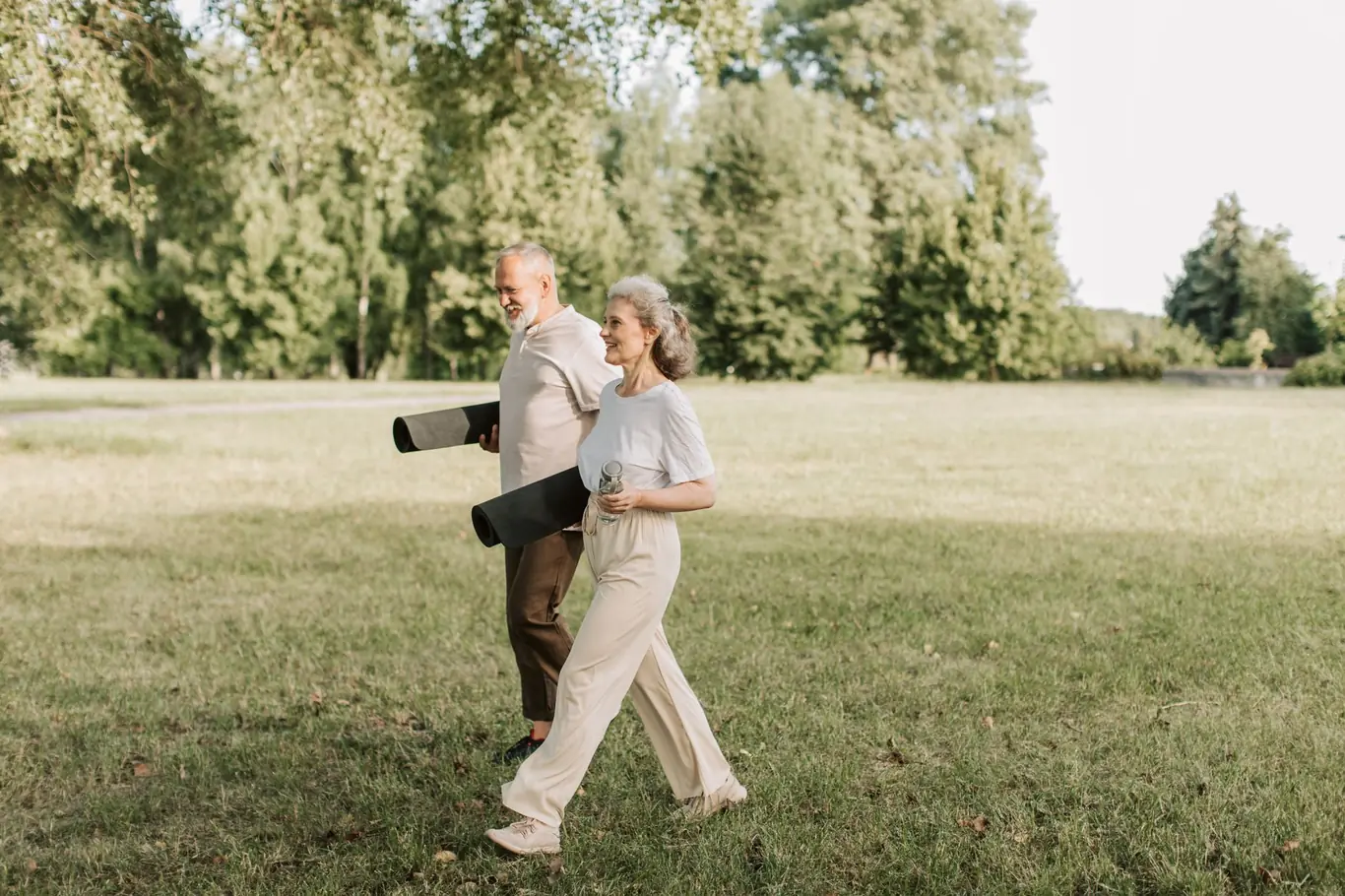
Daily step counts deliver health value that extends well beyond the calories burned figure. Walking at moderate intensity regularly contributes to several measurable outcomes:
- Reduced cardiovascular disease risk - consistent walking interventions have been shown to lower systolic blood pressure by 3-4 mm Hg and improve resting heart rate in controlled study populations (10)
- Improved blood glucose regulation - meta-analytic evidence from 18 studies shows walking interventions reduced HbA1c by approximately 0.50% in adults with type 2 diabetes, with supervised walking achieving up to 0.58% reduction (11)
- Better mood and mental health - anxiety, depression, and fatigue scores all improved significantly in the 12-week step intervention study cited above
- Stronger connective tissue in knees, ankles, and hips from consistent low-impact mechanical loading
- Improved balance and coordination, especially from walking on varied terrain
The broader evidence base for consistent low-impact cardio appears in my treadmill benefits guide, which covers the cardiovascular, metabolic, and musculoskeletal advantages that parallel those of consistent daily walking.
Keeping that moderate-intensity walking effort in the zone 2 heart rate range ensures you are primarily fueling sessions from fat oxidation, and my zone 2 heart rate guide covers how to find and hold that intensity using any heart rate monitor.
For readers looking to build on that aerobic base with structured training that measurably raises cardiovascular capacity, my VO2 max training guide covers the methods with the clearest research support.
How to Reach 10,000 Steps a Day - Practical Starting Points
For anyone currently below 10,000 daily steps, the gap is usually smaller than it feels. Sedentary adults typically log 3,000-5,000 steps on an average day, meaning an additional 5,000-7,000 steps is the real target. These approaches work reliably without adding dedicated workout time:
- Take stairs instead of elevators - adds 200-500 extra steps per roundtrip
- Park at the far end - adds 500-800 steps per errand
- Walk during phone calls - pacing a 30-minute call adds roughly 2,500-3,000 steps
- Add a lunchtime walk - 15-20 minutes at midday adds 1,500-2,000 steps
- Take a post-dinner walk - 10 minutes adds 800-1,000 steps and improves blood glucose response

Adding one or two of these habits consistently is typically enough to bridge the gap from 5,000 to 10,000 steps per day.
Keep Walking - Your 10,000-Step Calorie Summary
For most adults, the calorie burn from 10 000 steps falls in the range of 250 to 600 calories, with body weight as the primary variable and walking pace as a strong secondary factor. A 100 kg person walking briskly on hilly terrain can approach or exceed 600 calories. A 60 kg person on flat ground at a casual pace may fall closer to 250-280 calories.
Three research-grounded takeaways from our analysis:
- Use the MET formula rather than any single app estimate - it accounts for your actual weight and pace rather than population averages.
- Walk at 100 or more steps per minute to reach the moderate-intensity threshold where cardiovascular benefits compound alongside calorie burn.
- Pair your step goal with dietary awareness - evidence shows step goals combined with intentional brisk sessions and calorie awareness drive measurably better fat loss outcomes than steps alone.
For anyone currently below 10,000 daily steps, even 5,000 to 7,500 steps per day represents meaningful health progress. Every additional 1,000 steps adds roughly 33-40 calories to your daily deficit, and those increments compound consistently over weeks and months. For a complementary resistance-based workout that pairs well with a daily walking routine, our overview of what muscles a rowing machine works covers a highly efficient full-body option for cross-training days.
FAQs
Can you lose weight by walking 10,000 steps a day?
Walking 10,000 steps a day can support weight loss by burning roughly 250 to 600 calories for most adults, which contributes to the caloric deficit needed to reduce body fat over time. Research in overweight adults confirmed significant reductions in body weight, BMI, and waist circumference after 12 weeks of consistent 10,000-step days, though combining those steps with intentional brisk-pace sessions and dietary awareness produces the fastest results.
How many steps should you take a day to lose 2 pounds a week?
Losing 2 pounds per week requires a daily caloric deficit of approximately 1,000 calories, which would demand roughly 20,000 to 25,000 steps per day through walking alone for a 70-80 kg adult - a target that is unrealistic for most people without simultaneous dietary changes. A more practical approach is 10,000 to 12,000 intentional steps per day combined with a 500-calorie daily reduction in food intake.
How many steps is a 30-minute walk?
A 30-minute walk covers roughly 3,000 to 4,000 steps at a moderate pace of about 3 mph, or up to 4,500 to 5,000 steps at a brisk pace of 4 mph with a cadence near 130 steps per minute. The exact count varies based on individual stride length, which typically ranges from 0.6 to 0.9 meters per step for adults of average height.
Is 20,000 steps a day good?
Walking 20,000 steps a day is an excellent fitness goal that burns approximately 600 to 1,000 or more calories depending on body weight and pace, comfortably exceeding the 150 minutes of moderate-intensity physical activity per week recommended by major health organizations. Most adults can safely work toward this volume, though it represents 8 to 10 miles of walking and requires gradual progression to avoid overuse stress on the knees, ankles, and hips.
For walkers who want to maximize fat burning rather than raw calorie count, my fat burning heart rate guide explains the moderate intensity range that keeps the body in fat-burning mode throughout the walk.
How many calories does 10 000 steps burn per day?
How many calories 10,000 steps burns per day ranges from roughly 250 to 600 calories, with body weight as the primary variable and walking pace as a strong secondary factor. A 75 kg adult walking at a moderate pace on flat terrain typically burns 330 to 380 calories for 10,000 steps, while the same steps completed at a brisk pace or on hilly terrain can push the estimate 20 to 40 percent higher.
This content is for informational and educational purposes only. It is not a substitute for professional medical advice, diagnosis, or treatment. Always consult your healthcare provider before starting a new fitness program.
References
- Jin X, Carithers T, Loftin M. Comparison and predicted equation of energy expenditure during walking or running among Caucasians, African Americans and Asians. Sports Medicine and Health Science. 2021;3(3):171-176. doi:10.1016/j.smhs.2021.07.001.
- Tucker WJ, Sawyer BJ, Bhammar DM, et al. Treadmill walking economy is not affected by body fat and body mass index in adults. Physiological Reports. 2024;12(10):e16023. doi:10.14814/phy2.16023.
- Tudor-Locke C, Ducharme SW, Aguiar EJ, et al. Walking cadence (steps/min) and intensity in 41 to 60-year-old adults: The CADENCE-adults study. International Journal of Behavioral Nutrition and Physical Activity. 2020;17:137. doi:10.1186/s12966-020-01045-z.
- Das Gupta S, Bobbert MF, Kistemaker DA. The Metabolic Cost of Walking in healthy young and older adults - A Systematic Review and Meta Analysis. Scientific Reports. 2019;9:9956. doi:10.1038/s41598-019-45602-4.
- Herrmann SD, Willis EA, Ainsworth BE, et al. 2024 Adult Compendium of Physical Activities: A third update of the energy costs of human activities. Journal of Sport and Health Science. 2024;13(1):6-12. doi:10.1016/j.jshs.2023.10.010.
- Yuenyongchaiwat K. Effects of 10,000 steps a day on physical and mental health in overweight participants in a community setting: a preliminary study. Brazilian Journal of Physical Therapy. 2016;20(4):367-373. doi:10.1590/bjpt-rbf.2014.0160.
- Chiang T-L, Chen C, Hsu C-H, Lin Y-C, Wu H-J. Is the goal of 12,000 steps per day sufficient for improving body composition and metabolic syndrome? The necessity of combining exercise intensity: a randomized controlled trial. BMC Public Health. 2019;19:1215. doi:10.1186/s12889-019-7554-y.
- Warner A, Vanicek N, Benson A, Myers T, Abt G. Agreement and relationship between measures of absolute and relative intensity during walking: A systematic review with meta-regression. PLoS One. 2022;17(11):e0277031. doi:10.1371/journal.pone.0277031.
- Kim J, Lee HJ, Lee SH, et al. Correlation between cardiopulmonary metabolic energy cost and lower-limb muscle activity during inclined treadmill gait in older adults. BMC Geriatrics. 2021;21:469. doi:10.1186/s12877-021-02401-9.
- Hanson S, Jones A. Is there evidence that walking groups have health benefits? A systematic review and meta-analysis. British Journal of Sports Medicine. 2015;49(11):710-715. doi:10.1136/bjsports-2014-094157.
- Qiu S, Cai X, Schumann U, Velders M, Sun Z, Steinacker JM. Impact of walking on glycemic control and other cardiovascular risk factors in type 2 diabetes: a meta-analysis. PLoS One. 2014;9(10):e109767. doi:10.1371/journal.pone.0109767.