
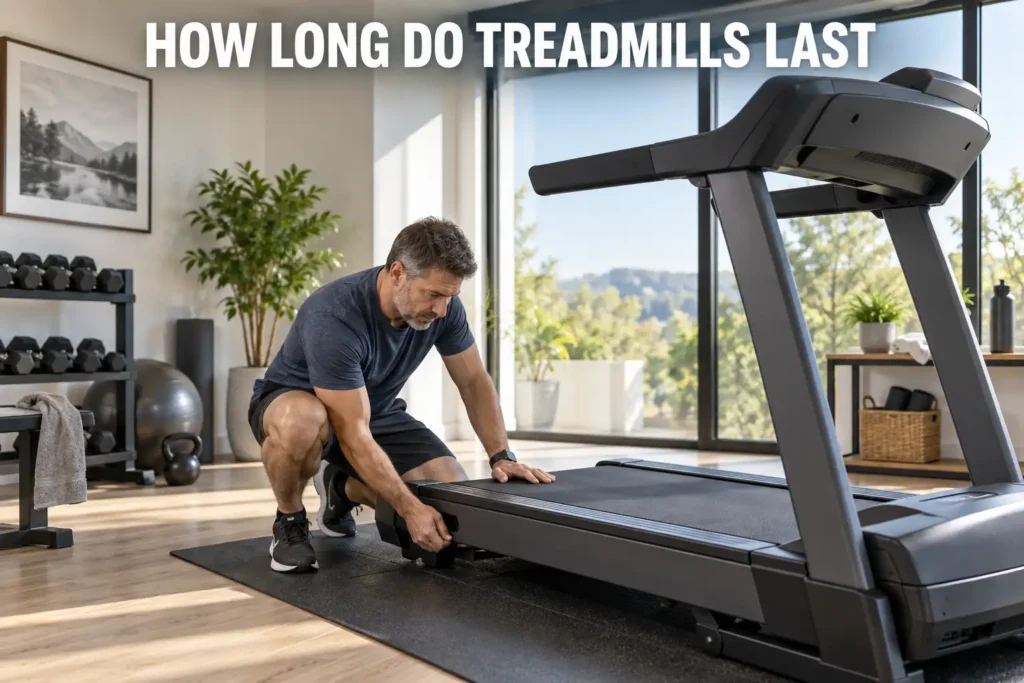
How long do treadmills last depends on factors most buyers never think about until something breaks. The average lifespan of a treadmill for home use falls between 7 and 12 years, but that range tells only part of the story. A budget model under daily use can fail in 18 months. A mid-range machine with consistent maintenance can outlast a decade with no major issues. In this guide, I break down real lifespan expectations by price tier and component, identify what kills treadmills before their time, and give you a clear framework for deciding when to repair versus when to walk away.

How Long Do Treadmills Last - What The Numbers Actually Show
The industry consensus on treadmill lifespan puts the window at 7 to 12 years for home use. That figure comes from manufacturers, independent repair technicians, and commercial gym operators who track equipment replacement cycles. The range masks serious variation depending on build quality, usage intensity, and how consistently the machine is maintained.
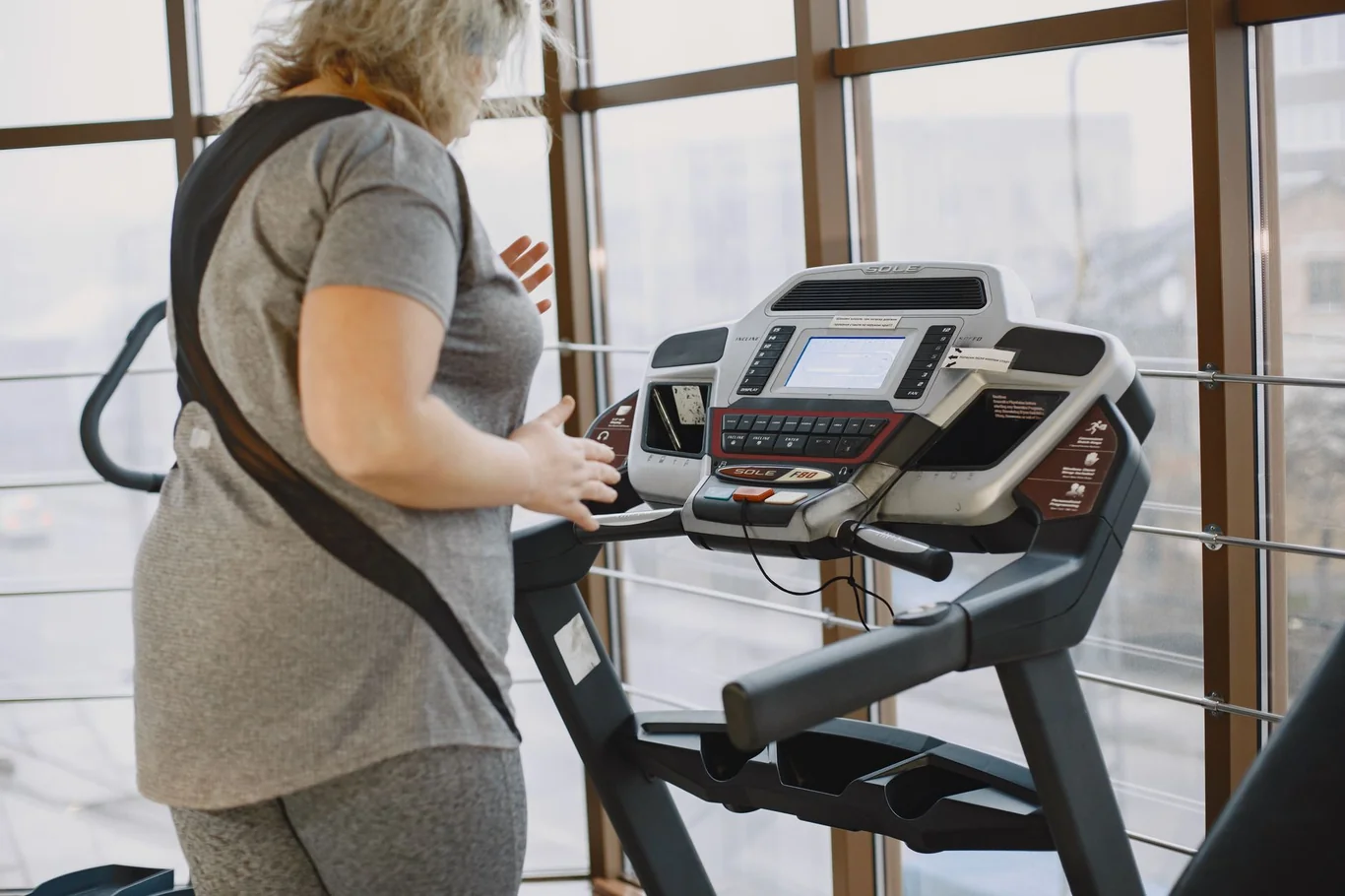
NordicTrack backs its residential treadmills with a lifetime frame warranty and 10-year motor coverage, signaling an expected mechanical lifespan in that window under normal residential use. Sole Fitness offers lifetime frame and lifetime motor coverage across all residential treadmill models, with 5-year parts coverage included. Treadmill reliability at either brand differs fundamentally from what a $400 entry-level machine delivers.
For a curated list ranked by reliability and warranty strength, our guide to the best treadmill for home use covers the models with the strongest durability signals across price tiers.
Commercial Treadmills vs. Home Models - Why The Gap Is So Wide
Commercial treadmills in gyms regularly last 15 to 20 years. They are engineered for continuous use across dozens of daily users, built with thicker decks, high-duty-cycle motors, and cooling systems designed for sustained output. Life Fitness, Precor, and similar commercial brands are built to a scale of durability that home machines are not designed to match.
A typical home treadmill is rated for 2,000 to 5,000 hours. When mapped to a typical residential usage pattern of 30-minute sessions three times per week, that gap explains why how long do treadmills last looks so different in a gym versus a spare bedroom. Home machines face lighter demands but are also built to proportionally lighter specifications.
My guide to treadmill types covers how motorized home machines, commercial machines, and non-motorized alternatives compare on build quality and the maintenance commitments each category requires.
How Pricing Shapes Treadmill Lifespan
Budget machines in the $300 to $600 range typically hold up 2 to 5 years under moderate use, and owners report motor and belt failures far earlier than with mid-range models. The motors are often underpowered for sustained sessions, run hot, and degrade faster than the machine's frame would suggest.
When a budget machine belt gives out ahead of schedule, the treadmill belt replacement process is often the most cost-effective repair before writing off the machine entirely.
Mid-range models ($600 to $1,500) reliably reach the 7 to 10 year mark with basic maintenance. Premium models ($1,500 and above) regularly push 10 to 12 years and beyond when cared for properly. How long does a treadmill last at any price point depends more on maintenance consistency than on brand reputation alone.
Machines in the mid-range tier also tend to be the most common home treadmill without subscription options, since their consoles focus on direct motor and incline control rather than connected content ecosystems.
If you are still in the buying phase and want to understand the price ranges across those tiers before committing, my guide on how much treadmills cost breaks down the budget, mid-range, and premium tiers with realistic estimates for hardware, delivery, and first-year costs.
The single highest-impact maintenance task is belt lubrication — my guide on how to lubricate a treadmill belt covers the correct product, interval, and application method for any home machine.
Price Tier | Typical Price Range | Expected Lifespan |
Budget | $300-$600 | 2-5 years |
Mid-Range | $600-$1,500 | 7-10 years |
Premium | $1,500 and above | 10-12 years or more |
Six Things That Kill a Treadmill Before Its Time
Treadmill reliability is not solely about build quality. Six behavioral and environmental factors account for most premature machine deaths.
Daily Habits That Overstress the Motor and Belt
Skipping belt lubrication. The walking belt and deck generate friction with every stride. Without silicone lubricant applied every three to six months, that friction accelerates wear on both surfaces simultaneously.
Running at or near the weight capacity. Motors and frames rated for 300 pounds under normal use experience disproportionate stress when used consistently near that limit, accelerating motor wear and compressing the deck faster than design specs account for.
Knowing where your model falls in the weight spectrum is also relevant to this calculation; my guide on how heavy a treadmill is by category gives exact weight ranges for budget, mid-range, and heavy-duty machines.
Long sessions on underpowered motors. Entry-level motors (1.5 to 2.0 CHP) are designed for sessions of 30 to 60 minutes before needing a rest period. Extended runs without cooling time cause thermal stress that shortens motor life.
Mechanical Neglect and Environmental Conditions
Ignoring belt alignment. A belt that drifts to one side slips, creates uneven heat, and wears unevenly. Most machines have rear roller adjustment bolts specifically to correct tracking, but many owners never use them.
Dust accumulation in the motor compartment. The enclosed motor housing collects debris that restricts airflow and causes the motor to run hotter than it should over time.
Storage and environmental conditions. Treadmills placed in damp basements, garages with temperature extremes, or high-dust environments age significantly faster than machines in climate-controlled rooms. Humidity corrodes electrical contacts and belt backing; freezing temperatures stiffen belts and motor lubricants. A treadmill cover and a dehumidifier nearby are inexpensive investments for machines stored in garages or unfinished spaces.
Surface choice matters too: my complete guide on running a treadmill on carpet covers how different flooring types affect machine vibration, heat dissipation, and long-term component wear.
Adequate front motor clearance is another protective factor regardless of environment - my treadmill size and clearance guide covers the ventilation requirements and total footprint planning for garage, basement, and indoor setups.
Belt and Deck Wear - The First Components to Go
Treadmill belts typically last 5 to 7 years, or roughly 2,000 to 4,000 miles under regular use. How long does a treadmill deck last is a related question: decks can outlast two belt replacement cycles when well-maintained, though most home decks begin thinning noticeably at 8 to 10 years of moderate use.
Tracking your accumulated mileage precisely, rather than estimating by time, helps you apply this replacement schedule accurately. My breakdown of how many steps in a mile on a treadmill converts step counts to distance by pace and stride length, giving you a practical way to log true mileage from any workout.
When the belt develops fraying at the edges or a worn groove down the center, replacement is overdue. Parts cost $100 to $250 depending on the model.
The best folding treadmills are engineered with reinforced deck boards partly because the folding mechanism introduces additional structural stress on the board over time.
Motor Strain - The Most Expensive Failure to Avoid
Motor failure is the repair scenario owners dread most. Replacement motor parts run $300 to $600, with labor often pushing the total to $700 or more. For a budget machine that cost $400 new, that repair math rarely makes sense. After a motor replacement, cheap treadmills rarely have enough lifespan left to justify the cost.
NordicTrack targets the upper end of residential lifespan expectations, backed by lifetime frame and 10-year motor coverage across the lineup. Sole Fitness covers motors for life on all residential models, with 5 years of parts coverage. Those warranty lengths serve as a reliable proxy for expected component lifespan across brands.
How Long Each Component Lasts
The question of how long a treadmill lasts is really a collection of component-specific questions. Each part has its own replacement timeline, and understanding the staggered schedule helps you plan maintenance before failures turn into full replacements.
Frame: Nearly never fails under residential use. Frames outlast every other component on quality machines.
Belt: How long does a treadmill belt last in regular residential use? Five to seven years, or 2,000 to 4,000 miles. Lubrication extends this range significantly.
Deck: How long does a treadmill deck last depends largely on belt lubrication. Eight to 12 years is typical under regular use. Well-maintained decks can outlast two belt replacement cycles.
Motor: 7 to 12 years on mid-range and premium models. Budget motor ratings are typically shorter. Covered by lifetime warranty on Sole and 10-year coverage on NordicTrack residential models.
Rollers: Front and rear rollers typically last 7 to 10 years. Worn rollers increase belt friction and accelerate belt wear - replacement rollers run $30 to $80 and are often overlooked during routine service.
Drive belt: The internal belt connecting the motor to the rollers lasts 5 to 8 years and is often replaced alongside the walking belt.
Console and electronics: 5 to 10 years depending on component quality. Console failures are common on entry-level machines and difficult to repair economically once the manufacturer discontinues the model.
Component | Expected Lifespan | Notes |
Frame | Rarely fails | Outlasts all other components |
Belt | 5-7 years or 2,000-4,000 miles | Lubrication extends the range |
Deck | 8-12 years | Can outlast two belt replacement cycles |
Motor | 7-12 years | Lifetime warranty on Sole; 10-year on NordicTrack residential |
Rollers | 7-10 years | Replacement rollers run $30-$80 |
Console and Electronics | 5-10 years | Hard to repair economically once discontinued |
What ends most treadmills is the motor or belt reaching end-of-life while the frame and deck are still structurally sound.
The lifespan of an under-desk treadmill follows a different pattern. Under-desk models run at lower speeds (0.5 to 4 mph) and in shorter increments, which puts significantly less thermal stress on the motor. A 2021 meta-analysis of 13 studies confirmed that treadmill desk use substantially increases energy expenditure without requiring high-intensity motor output (1), which suggests the lower-load operating profile can extend motor longevity. Most mid-range under-desk treadmills land in the 5 to 8 year expected lifespan range.
Maintenance That Extends Treadmill Lifetime
Consistent maintenance is the single largest variable in how long a treadmill lasts. A well-maintained mid-range machine routinely outlasts a neglected premium model. The maintenance tasks that matter most take under 30 minutes per year combined, making the return on time investment unusually high.
The Belt Lubrication Schedule Most Owners Skip
Silicone-based treadmill lubricant should be applied to the underside of the belt every three to six months, or every 150 hours of use, whichever comes first. Most manufacturers include a small lubricant bottle with the machine and instructions in the manual. Despite this, owners who follow through consistently are in the minority.
To lubricate: lift the belt edge at the midpoint, apply a thin bead of silicone lubricant along the center of the deck surface, then run the machine at 3 mph for two to three minutes to distribute it evenly. A properly lubricated belt runs cooler, wears slower, and extends deck life at the same time.
In my experience with mid-range treadmills, consistent lubrication is the single habit that most clearly separates machines that reach 10 years from those that stop at 5. The cost is under $15 and 10 minutes twice a year - the highest-return maintenance task on any home gym machine.
Cleaning and Tension Checks That Add Years to Treadmill Lifetime
Dust the motor compartment housing twice a year using a dry cloth or low-pressure compressed air. Never use a vacuum directly on motor components. Wipe the belt surface and frame weekly if you use the machine in dusty conditions or wear outdoor footwear on it.
Belt tension check: grab the belt at the midpoint of one side and lift. You should have 2 to 3 inches of play. More than that signals you need to tighten the rear roller adjustment bolts a quarter-turn at a time. A belt running too loose slips against the motor and generates excess heat.
My guide on belt tension adjustment covers the lift test, the correct play range, and the quarter-turn process for bringing a loose belt back into spec.
Full maintenance schedule:
- Lubricate belt every 3 to 6 months (or every 150 hours of use)
- Wipe deck surface and console weekly
- Check belt tension and tracking monthly
- Clean motor compartment twice per year
- Inspect roller bolts and frame screws annually
- Run a 5-minute warm-up before high-intensity sessions to seat the belt
Walking backwards occasionally adds variety without increasing belt stress. Our guide to walking backwards on a treadmill covers the technique and the specific benefits it delivers alongside standard sessions.
Treadmill Warranty - What It Covers and What It Doesn't
Treadmill warranty terms vary enormously by brand and price tier. The coverage that actually matters is not the frame warranty (frames almost never fail under residential use) but the parts warranty, specifically on the belt, deck, and motor.
Four Warranty Terms That Reveal Durability Expectations
Before purchasing any treadmill, check these four warranty terms specifically:
While you compare coverage, our treadmill lineup is a good next stop before you buy.
- Frame warranty duration (15+ years or lifetime = strong durability signal)
- Motor warranty (5+ years = above average; lifetime = top tier)
- Parts warranty (3+ years = adequate; 5+ years = strong)
- Labor warranty (1+ year = standard; 2+ years = better than average)
How Sole and NordicTrack Warranty Coverage Compare
Brand or Tier | Motor Warranty | Parts Warranty |
Sole Residential | Lifetime | 5 years |
NordicTrack Residential | 10 years | - |
Budget machines | - | 90 days to 1 year |
Sole's warranty on residential treadmills covers the frame and motor for life, with 5 years on parts for mid-range and premium models. That motor coverage is among the strongest in the residential treadmill category. NordicTrack backs its residential lineup with lifetime frame coverage and a 10-year motor warranty. Both brands offer substantially more protection than the 90-day or 1-year parts policies common on budget machines.
The best incline treadmills typically carry stronger warranty coverage because the incline motor and mechanism add an additional failure point that manufacturers must stand behind.
When to Repair Your Treadmill vs. When to Replace It
The repair-versus-replace decision follows a well-established rule in the treadmill service industry: the 50% rule. If the estimated repair cost exceeds 50% of what a comparable new model costs today, replacement is almost always the better financial decision. Apply this threshold consistently regardless of the machine's age.
When I work through repair decisions with treadmill owners, the most common mistake I see is comparing the repair quote against the original purchase price rather than against a comparable new model today. That single substitution turns a borderline repair into an obvious overspend - and misses the real question, which is what it would actually cost to replace the machine's capability right now.
Repair or Replace Based on Machine Age
By machine age:
- Under 5 years old - repair almost always makes sense; most of the machine's lifespan remains
- 5 to 8 years old - repair if the cost is under 50% of replacement value and no other components show wear
- 8 to 10 years old - evaluate carefully; if the repair resolves the primary failure and the motor, belt, and rollers are otherwise sound, repair can still make sense at under 50%
- Over 10 years old - replacement is usually the better investment, especially for motor or deck board failures
Signs Your Treadmill Is Ready for Replacement
Signs it is time to replace your treadmill:
- Motor repair costs more than 50% of a comparable new machine's price
- Replacement parts for your model are discontinued or no longer available
- You have replaced the belt twice and the deck board is noticeably thin
- The frame is cracked or permanently bent
- Console electronics fail with a repair quote above $200
- The machine shakes or vibrates at walking speeds despite tightening all bolts and realigning the belt
Early Warning Signs That Service Is Coming
Early warning signs that service is coming - not replacement, but pre-failure indicators worth catching:
- Belt hesitates or slips under load even at moderate speeds
- Burning or hot-rubber smell during or after use
- Loud grinding or squeaking from the front or rear rollers
- Console displays erratic speed readings or shuts down mid-session
- Motor compartment runs unusually hot after a standard session
Catching these signs early usually means a lubrication, belt, or roller fix rather than a motor or deck replacement.
An often-overlooked consequence of worn belts and degraded deck surfaces is reduced impact absorption, which I cover directly in my guide to treadmills and knee health.
How Long Can a Treadmill Run Continuously - And How Long Should Sessions Be?
How long can a treadmill run continuously depends on the motor's continuous-duty horsepower rating. Entry-level motors (1.5 to 2.0 CHP) are generally engineered for 30 to 60 minutes of continuous use before needing a cooldown period. Mid-range and premium motors (2.5 CHP and above) handle longer sessions without thermal stress under normal residential conditions.
How Long Treadmill Sessions Should Be for Your Health
Standard exercise guidelines recommend at least 150 minutes of moderate-intensity aerobic activity per week for cardiovascular health (2), setting a useful baseline for how long treadmill sessions should be. A 12-week program of moderate-intensity walking at three sessions per week produced measurable improvements in cardiac function, including significant gains in VO2 uptake and left ventricular strain, in a randomized controlled trial of type 2 diabetes patients (3). Even 100 minutes of walking per week produced meaningful reductions in cardiovascular risk over a 13-year follow-up period in a study of coronary artery disease patients (4). And treadmill running itself produces biomechanical outcomes comparable to overground running across most key metrics, validating it as a primary training tool worth protecting through maintenance (5).
Readers deciding between treadmill and bike ownership will find the full cost, maintenance, and training effectiveness comparison in my treadmill vs bike guide.
How long treadmill sessions should be from a machine-health perspective is a separate question from the fitness answer. Spreading sessions across the week is better for motor longevity than clustering long runs. Shorter, more frequent sessions create less thermal accumulation than back-to-back 60-minute efforts on the same day. Smartwatches help track session duration and weekly output against these benchmarks. Our overview of what a smartwatch does explains how to pair wearable data with your treadmill training for more consistent progress.
Getting the Most Miles From Your Machine
The average lifespan of a treadmill reflects a machine that receives reasonable care. Most of the variation between 7 years and 12 years comes down to lubrication consistency, belt tension awareness, and motor load management - not brand luck or build magic. With those three habits in place, a treadmill reliably lands at the upper end of that range.

Before buying any treadmill, I pay closest attention to the motor and parts warranty. Those two numbers reveal more about expected longevity than any marketing claim about durable construction. A Sole or NordicTrack model with lifetime motor coverage is a fundamentally different investment from a budget machine with a 90-day parts policy.
FAQs
How often should you replace a treadmill?
The typical replacement window for a home treadmill is 7 to 12 years under regular use, though how often you should replace yours depends more on repair costs and parts availability than on age alone. When a repair quote exceeds 50% of a comparable new model's price, or when replacement parts for your model are no longer manufactured, buying new is almost always the smarter financial decision.
What is the 3/12/30 rule on a treadmill?
The rule you're likely thinking of is the 12-3-30 workout: walking at 12% incline, 3 mph speed, for 30 minutes. The 12-3-30 is a popular cardio protocol designed to increase calorie burn and cardiovascular load without running, and it has no connection to any treadmill maintenance schedule, lifespan guideline, or durability metric.
Are treadmills worth repairing?
Treadmills are worth repairing when the machine is under 8 years old and the total repair cost is less than 50% of what a comparable new model costs today. When a motor replacement on a 10-year-old budget machine approaches $700 or more in total cost, or when parts for a discontinued model are no longer available, buying new is almost always the better long-term investment.
For owners facing that specific repair-or-replace decision, my step-by-step guide to fixing treadmill motor problems covers how to diagnose the failure before committing to a repair or replacement cost.
Is 20 minutes of treadmill a day enough?
Twenty minutes of daily treadmill use totals 140 minutes per week, which approaches the 150-minute weekly moderate-intensity activity threshold that exercise guidelines consistently recommend for cardiovascular health. Twenty minutes daily is a meaningful and realistic starting point, particularly for beginners, and the research shows that even lower weekly totals around 100 minutes produce measurable cardiovascular benefits over time.
Runners ramping toward higher weekly totals for treadmill marathon preparation should match session frequency to their motor's continuous-duty rating to avoid heat buildup during back-to-back long runs.
How long does a treadmill stress test take?
A medical treadmill stress test, the cardiac diagnostic procedure ordered by a physician, typically involves 10 to 15 minutes of active exercise on a treadmill, with preparation, monitoring, and recovery extending the full appointment to roughly 45 to 60 minutes. This is a clinical cardiology procedure entirely separate from any concept of testing equipment durability or mechanical performance.
This content is for informational and educational purposes only. It is not a substitute for professional medical advice, diagnosis, or treatment. Always consult with your healthcare provider before starting any new fitness program or using fitness technology for health monitoring.
References
- Oye-Somefun A, Azizi Z, Ardern CI, Rotondi MA. A systematic review and meta-analysis of the effect of treadmill desks on energy expenditure, sitting time and cardiometabolic health in adults. BMC Public Health. 2021;21:1240. doi:10.1186/s12889-021-12094-9
- Tonga E, Yates T, Worboys H, Singh SJ, Divall P, Ng GA, Evans RA. A systematic review of physical activity guidelines for adults with cardio-respiratory diseases: stepping towards evidence-based recommendations. Clin Rehabil. 2026;40(7):1441158. doi:10.1177/02692155261441158
- Leischik R, Bank P, Gerlach CE, Sanchis-Gomar F. Walking improves cardiac function: A trial on the effects of walking on left ventricular function in type 2 diabetes patients. J Cardiovasc Dev Dis. 2026;13(3):136. doi:10.3390/jcdd13030136
- Yang Z, Liang Y, He L, Zhou L, et al. Walking as a viable alternative to moderate-to-vigorous physical activity for improving cardiovascular outcomes in coronary artery disease patients. Int J Cardiol Cardiovasc Risk Prev. 2025;34:200452. doi:10.1016/j.ijcrp.2025.200452
- Van Hooren B, Fuller JT, Buckley JD, Miller JR, Sewell K, Rao G, et al. Is motorized treadmill running biomechanically comparable to overground running? A systematic review and meta-analysis of cross-over studies. Sports Med. 2019;50(2):1-37. doi:10.1007/s40279-019-01237-z