
The information in this guide is for educational purposes only. Consult a qualified healthcare provider before beginning any new exercise program, particularly if you have a cardiovascular condition or are recovering from injury.
The question of smart treadmill vs regular treadmill lands in my inbox regularly, and for good reason. The technology gap between these two categories has grown dramatically in recent years, and so has the price gap. I have been working in the fitness industry for over 15 years, and the honest answer is that neither machine is universally better - the right choice depends on how you train, what keeps you consistent, and what you can realistically budget. This guide covers everything you need to make that decision without the marketing noise.

Smart Treadmill vs Regular Treadmill - The Core Differences
Understanding what each category actually delivers is the first step in a smart treadmill vs regular treadmill comparison. The word smart has become loose marketing language in fitness equipment, so I want to be precise about what meaningfully separates these two types of machines.
What Is a Smart Treadmill
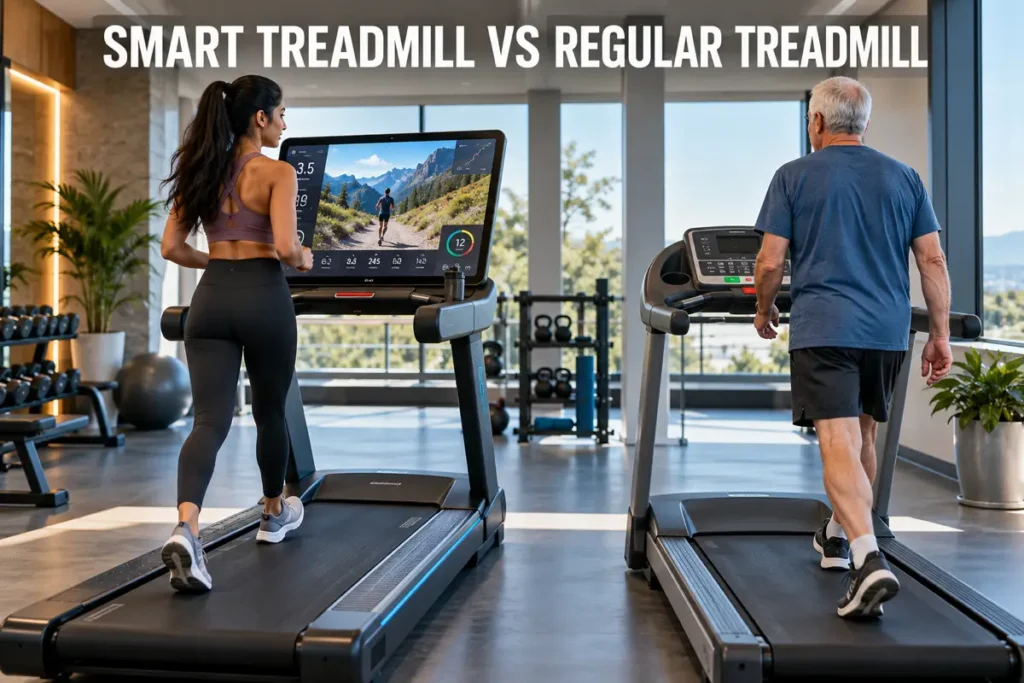
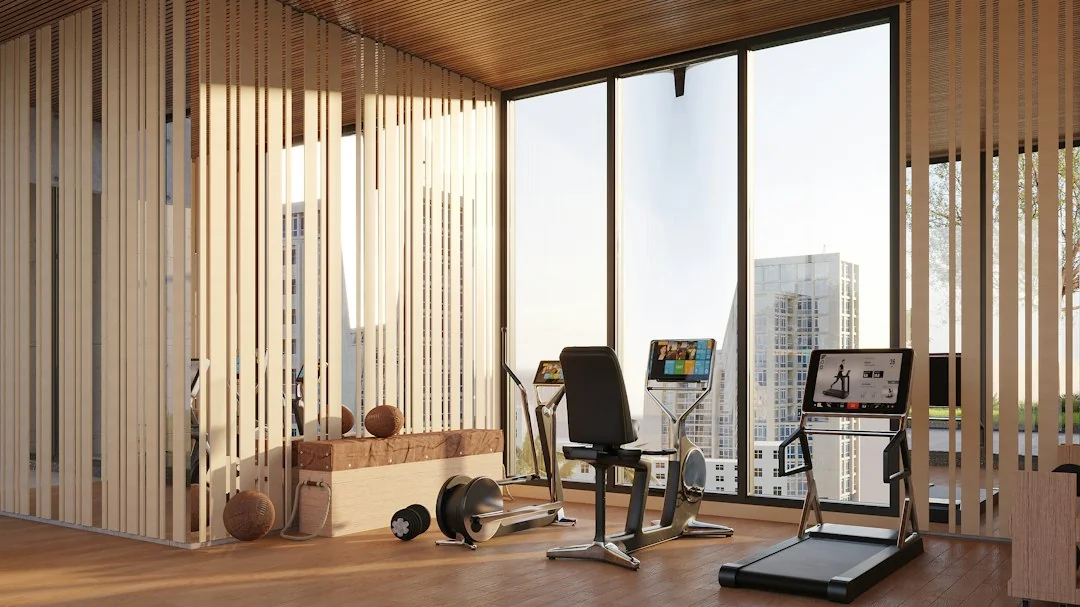
A smart treadmill is a motorized running machine with built-in internet connectivity, typically through Bluetooth or Wi-Fi, paired with an interactive touchscreen display and access to a content platform. The defining features that make a treadmill smart are the ability to stream live or on-demand workout classes, automatically sync performance data to a companion app, and in many cases adjust speed and incline in response to a coach's instructions or a virtual route mapped to real terrain. iFIT is one platform built around this idea, and I cover what iFIT is and which machines it supports separately.
The most widely used platforms currently running on smart treadmills include iFIT (built into NordicTrack and ProForm machines), Peloton (the Tread Flex, Tread Vision, and Tread+ Vision), and Echelon. Nearly all of these require a separate recurring subscription on top of the hardware cost. Subscription pricing and library sizes change frequently, so I always recommend checking the brand's current pricing page before building your budget. In a separate review, I look at the real costs and when Peloton is worth it.
What a Regular Treadmill Offers Instead
A regular treadmill delivers motorized belt movement, manual or preset speed and incline controls, and a basic console showing time, speed, distance, and often heart rate through grip sensors or a paired chest strap. Some mid-range regular models include Bluetooth to sync with third-party apps like Apple Health or Strava, but these machines lack the integrated content ecosystem that defines the smart treadmill category. I describe the different types of treadmills, from manual to curved, in a separate breakdown.
The core appeal of a regular treadmill is that it does the mechanical job reliably, at a lower upfront cost, with fewer ongoing fees and simpler long-term maintenance. In my view, a well-built mid-range regular treadmill delivers most of the physical benefit at a fraction of the long-term ownership cost. My treadmill maintenance guide shows what upkeep a regular machine needs over its life.
For a broader look at the full treadmill landscape - motorized, non-motorized, folding, and commercial - our best smart home gym equipment guide places connected treadmills alongside other categories worth comparing.
Smart Treadmill vs Regular Treadmill - Feature Comparison
Smart treadmills and regular treadmills share the same core mechanical function - a motorized belt that moves at your pace. Where they diverge is in the software layer and everything connected to it. The table below maps the meaningful differences at a glance.
Feature | Smart Treadmill | Regular Treadmill |
Internet connectivity | Built-in Wi-Fi and Bluetooth | Optional Bluetooth only |
Display | Interactive touchscreen (10-32 in.) | Basic LCD console |
Live and on-demand classes | Yes, via content platform | No |
Automatic speed/incline adjustment | Yes, coach or route-linked | Manual only |
Performance data sync | Native app, automatic | Third-party app, manual |
Ongoing subscription | Required for full features | None |
Upfront cost tier | Mid-range to premium | Budget to premium |
Maintenance complexity | Higher (screen, computer, proprietary parts) | Lower (belt, deck, motor) |
Third-party app compatibility | Limited (closed ecosystem) | Open (pairs with any app) |
Folding option available | Some models | Most models |
Smart treadmills and regular treadmills occupy roughly comparable floor footprints when unfolded, though several smart treadmill models are wider to accommodate the extended console arm and rotating display. Measure your available floor space before purchasing, including at least 2 feet behind the belt for safe emergency dismount and 1 foot of clearance on each side. If space is tight, I list folding treadmills for small spaces that still perform.
How Interactive Features Change the Way You Train
The gap between a smart treadmill vs regular treadmill is not just a feature list on paper. Research gives a clearer picture of how interactive media and real-time feedback actually influence effort perception and long-term training consistency.
The Science Behind Entertainment and Effort Perception
One consistent finding in exercise science is that audio and visual stimulation reduces ratings of perceived exertion (RPE) during cardio work. Chow and Etnier found that a combined music-and-video condition significantly lowered RPE during high-intensity treadmill exercise compared to exercising without any stimulation (1). A separate study comparing exergaming with traditional exercise found that college-aged participants reported higher enjoyment during interactive game-based movement, though the treadmill condition produced significantly higher energy expenditure (2).
What this means practically: the live classes, virtual trail routes, and music-synced coaching sessions available on a smart treadmill are not cosmetic add-ons. They measurably lower the psychological cost of a given effort level, which makes it easier to stay on the belt longer and to return the next day. I see this consistently with coaching clients who use guided sessions versus those who train in silence - compliance rates are noticeably higher for the former group.
Data Tracking and Structured Coaching
Another meaningful advantage of smart treadmills is the real-time feedback loop created by data that actually responds to your performance. Automatic speed adjustments, on-screen heart rate zone guidance, and post-workout summaries synced to a mobile app create a training environment that regular treadmills cannot replicate natively. I explain treadmill calorie counter accuracy and how to calibrate your machine in a separate guide.
Key benefits that real-time data tracking delivers during treadmill workouts:
- Heart rate zone visibility keeps effort aligned to your goal whether that is fat oxidation, aerobic base building, or lactate threshold training
- Cadence cues and stride coaching in real time lower the risk of overstriding, which is a common cause of knee and shin pain in new runners
- Pre-built progressive overload plans remove the programming burden from self-coached athletes
- Synced historical data in a dedicated app shows fitness changes across weeks and months, which is genuinely motivating when progress is gradual
- Social features and leaderboards on platforms like Peloton and iFIT add accountability that mirrors the group fitness dynamic without requiring a gym
The accuracy of wrist-based devices during these sessions is a related question. If you are deciding between relying on a machine's built-in sensors versus a smartwatch, our deep-dive into smartwatch heart rate accuracy covers the data behind both approaches.
Smart Treadmill vs Regular Treadmill - Breaking Down the Real Costs
Cost is where the smart treadmill vs regular treadmill decision becomes most personal. The right answer depends almost entirely on your usage pattern, not on the feature list.
Hardware and Upfront Investment
Regular treadmills span a wide upfront range, from lightweight folding models designed for walking or light jogging to heavy-duty commercial-grade machines with powerful motors and full cushioned decks. Smart treadmills start at the mid-range and climb quickly because the touchscreen hardware, platform licensing, and onboard computing add meaningful cost to the build. For machines at different budgets, I rank the best treadmills for home use in my picks.
Typical upfront cost tiers by category:
- Budget regular treadmill - entry-level price, walking and light jogging, basic console, often foldable
- Mid-range regular treadmill - moderate investment, sustained running, motor sufficient for mixed cardio
- Premium regular treadmill - commercial-grade components, heavy-duty frame, designed for daily high-volume use
- Entry smart treadmill - mid-range to premium cost, small screen, access to core platform features
- Mid-range smart treadmill - premium investment, 15-22 inch rotating display, full coaching library
- Premium smart treadmill - high-premium investment, 32-inch 4K display, dual-mode use, full ecosystem integration
Subscriptions and Ongoing Costs
A smart treadmill carries a recurring cost that many buyers underestimate at purchase. Platform subscriptions are typically billed monthly or annually, and skipping the subscription disables the live classes, automatic adjustments, and most of the data features, even though the basic motorized belt continues to work. I cover free apps and no monthly fee options in my breakdown of a treadmill without a subscription.
What a smart treadmill subscription typically bundles together:
- Live and on-demand classes across running, walking, strength, HIIT, and recovery formats
- Instructor-led sessions that auto-adjust machine speed and incline in real time
- Personal performance history and trend tracking inside the companion app
- Virtual outdoor routes and scenic content from real locations
- Monthly challenges, leaderboards, and social sharing features
Regular treadmills carry no subscription cost. A Bluetooth-capable regular model can pair with free or low-cost third-party apps for basic tracking and training history. I frequently recommend this combination to clients who want data visibility without committing to a closed content ecosystem.
Smart Treadmill vs Regular Treadmill - Lifetime Cost Breakdown
The gap in ownership cost between a smart treadmill vs regular treadmill widens significantly once you factor in subscription fees over a multi-year period. I break down how long treadmills last by price tier in a separate article.
Cost Category | Regular Treadmill | Smart Treadmill |
Hardware (upfront) | Budget to premium | Mid-range to premium |
Platform subscription | None | Ongoing monthly or annual fee |
Maintenance over time | Lower - belt, deck, motor only | Higher - screen, computer, proprietary parts |
Third-party app cost | Free to low-cost options | Included in subscription |
Resale value | Moderate (universal design) | Lower (platform-dependent) |
App ecosystem flexibility | High (open to any service) | Low (closed ecosystem) |
For buyers fitting a connected treadmill into a compact setup, our guide to smart home gym options for small spaces shows how to integrate it alongside other equipment without overwhelming the room.
Smart Treadmill vs Regular Treadmill - Who Each Machine Is Built For
The smart treadmill vs regular treadmill decision ultimately comes down to your training personality and consistency patterns. Features do not improve fitness. Showing up consistently does.
Users Who Get the Most from a Smart Treadmill
From my experience coaching clients over many years, the investment in a smart treadmill pays off most clearly for people who match several of the following:
- You have previously paid for a gym membership primarily to attend group running classes or instructor-led cardio sessions
- You need external structure and accountability to stay consistent with a training schedule
- Your training goals require precise heart rate zone management, progressive periodization, or coach-directed programming
- Multiple people in your household will use the same machine, each with different fitness levels and goals
- You want to consolidate guided cardio and cross-training into a single subscription rather than managing separate platforms
When a Regular Treadmill Is the Smarter Buy
A regular treadmill is often the better choice for a different profile of buyer. It wins when:
- Budget is a genuine constraint and a recurring subscription would create ongoing financial pressure
- You already train with a self-directed program - a running plan, a coach, or a structured protocol you follow independently
- The machine will primarily serve walking, rehabilitation, or steady-state low-intensity sessions where coaching adds little value
- You prefer the flexibility to pair with any app or service rather than being locked into one platform
- Durability, repairability, and long-term resale value matter more than content access
- Maintenance simplicity is a priority - smart treadmills have more components that can fail, including touchscreens, onboard computers, and proprietary parts that may require brand-specific service
- Platform longevity concerns you - if the subscription service is discontinued or pricing changes significantly, the machine's primary advantage disappears
My default starting recommendation for budget-conscious clients building their first home setup is a mid-range motorized model with incline capability and basic Bluetooth. For those still deciding between a smart treadmill vs regular treadmill and unsure which direction fits their goals, our guide to the best smart home gym for beginners walks through how to make those first equipment decisions without overspending.
Before You Buy - A Quick Checklist
Before finalizing your smart treadmill vs regular treadmill decision, confirm each of the following:
- Floor space: measure the unfolded footprint plus 2 feet behind the belt and 1 foot on each side
- Wi-Fi signal: smart treadmills need a stable connection at the machine's location for live classes
- Subscription terms: confirm the current monthly cost and which features require the paid tier
- Electronics warranty: verify screen and computer coverage separately from the motor and frame warranty
- Household users: check whether secondary users need individual accounts and what that adds to ongoing cost
What Every Treadmill Does for Your Body - Smart or Regular
Regardless of how the smart treadmill vs regular treadmill comparison resolves for your situation, the cardiovascular and metabolic benefits come from the training itself, not from the platform you access it through. I list the benefits of treadmill training in more detail in a separate article.

Consistent treadmill walking and running supports meaningful improvements in aerobic capacity, resting heart rate, and body composition. These adaptations are driven by training frequency and progressive load, both of which are achievable on a regular treadmill without any connected features. My guide to treadmill weight loss strategies covers the research behind fat loss on the belt.
Incline is one of the most underused tools available on both machine types. Research suggests that increased treadmill incline significantly raises cardiopulmonary metabolic energy cost and lower-limb muscle activation compared to walking at the same speed on a flat surface, based on findings from older adult populations (3). The popular 12-3-30 protocol, which gained widespread attention through social media, uses this principle directly: a study comparing it to self-paced running found that the protocol required significantly more time to reach the same total caloric output as running, with higher fat utilization but lower work rate per minute (4). I recommend incline-based walking as a starting point for clients who want cardiovascular benefit without the joint load of running. I compare incline treadmill versus running in a separate article.
Treadmill Training Outcomes by Protocol - What the Evidence Supports
The type of treadmill matters less than the protocol you follow. The table below summarizes what the research supports for the most common treadmill training approaches. I cover more training approaches in my treadmill workout guide.
Protocol | Machine Requirement | Key Training Outcome | Notes |
Steady-state walking (30 min/day) | Either | Cardiovascular fitness, resting heart rate reduction | Benefits accumulate over weeks of consistent use |
Incline walking (12-3-30 method) | Either | High fat oxidation, low joint impact | Requires more time than running for equivalent caloric output (4) |
Guided HIIT class | Smart treadmill | Reduced RPE via combined audio-visual stimulation | Compliance benefit supported by research (1) |
Progressive interval program | Either | VO2max improvement, running economy | Best paired with structured data tracking |
Rehabilitation or reverse walking | Either | Lower-limb activation shift, anterior knee deload | Regular treadmill preferred for user control |
For an underused technique that works on both machine types, our guide to walking backwards on a treadmill covers how reverse walking shifts muscle activation and reduces anterior knee stress at comparable effort levels.
Making the Right Call for Your Training Setup
A smart treadmill vs regular treadmill is not a decision with one right answer. I use both types with different clients for different reasons, and the outcome always comes down to consistency rather than the machine's feature set.
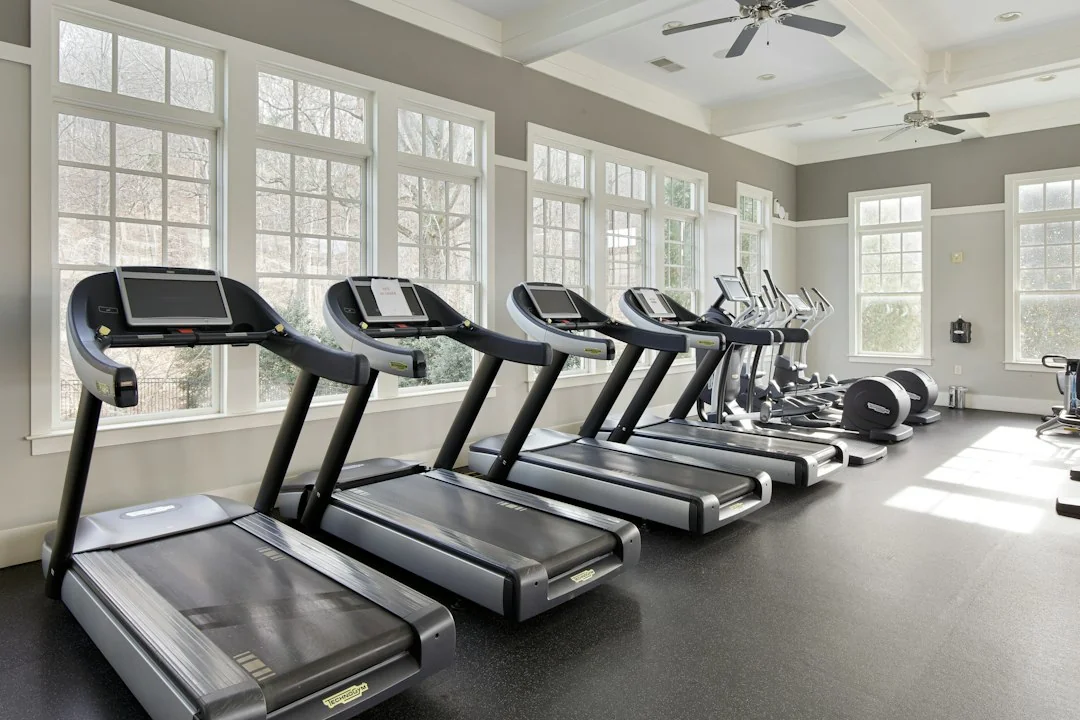
If guided structure and real-time coaching are what keep you on the belt consistently, a smart treadmill is likely worth its premium - combined audio-visual stimulation measurably lowers perceived effort across sessions.
If you already follow a structured program or prefer uncomplicated equipment, a well-built regular treadmill delivers every physical benefit at a lower total cost. Pair it with a free app and a chest strap, and the data gap shrinks considerably. Before you buy, I explain what matters when buying a treadmill.
The simplest self-check: recall the last time you had access to live instructor-led classes. If you used them consistently, a smart treadmill is the better buy; if those classes mostly went unused, a regular treadmill is the safer investment. Once you have decided which features you need, I suggest browsing the treadmills category.
FAQs
Are non-motorized treadmills better?
Non-motorized treadmills offer real advantages for specific training goals and budgets. The self-powered belt design requires greater hamstring and glute activation to drive movement, which increases metabolic cost per mile compared to a motorized machine at equivalent pace.
Which is more accurate, a treadmill or a smartwatch?
A treadmill is generally more accurate for speed and distance measurement than a wrist-based smartwatch during indoor sessions. Smartwatch GPS loses signal indoors and accelerometer-based treadmill mode tends to underperform compared to the machine's direct belt measurement, though calibrated wrist sensors have improved significantly in recent years.
What happens if I walk on the treadmill every day for 30 minutes?
Walking on a treadmill for 30 minutes daily, sustained consistently over several weeks, supports measurable improvements in cardiovascular fitness, resting heart rate, and body composition. The rate and magnitude of those adaptations depend on walking intensity, incline setting, and your starting fitness level.
What is the best smart treadmill?
The best smart treadmill depends on your platform preference, available space, and budget, with the most widely recommended options coming from NordicTrack (running on iFIT), Peloton (the Tread Flex and Tread Vision lines), and ProForm. Checking current model-specific reviews on TechFitnessLab gives you the most up-to-date comparison based on verified performance data.
References
- Chow EC, Etnier JL. Effects of music and video on perceived exertion during high-intensity exercise. J Sport Health Sci. 2017;6(1):81-88. doi:10.1016/j.jshs.2015.12.007.
- McDonough DJ, Pope ZC, Zeng N, et al. Comparison of college students' energy expenditure, physical activity, and enjoyment during exergaming and traditional exercise. J Clin Med. 2018;7(11):433. doi:10.3390/jcm7110433.
- Kim J, Lee HJ, Lee SH, Lee J, et al. Correlation between cardiopulmonary metabolic energy cost and lower-limb muscle activity during inclined treadmill gait in older adults. BMC Geriatr. 2021;21(1):469. doi:10.1186/s12877-021-02401-9.
- Wong M, Davis D, Perez O, et al. An exploratory study comparing the metabolic responses between the 12-3-30 treadmill workout and self-paced treadmill running. Int J Exerc Sci. 2025;18(6):56-64. doi:10.70252/UBIX5911.