
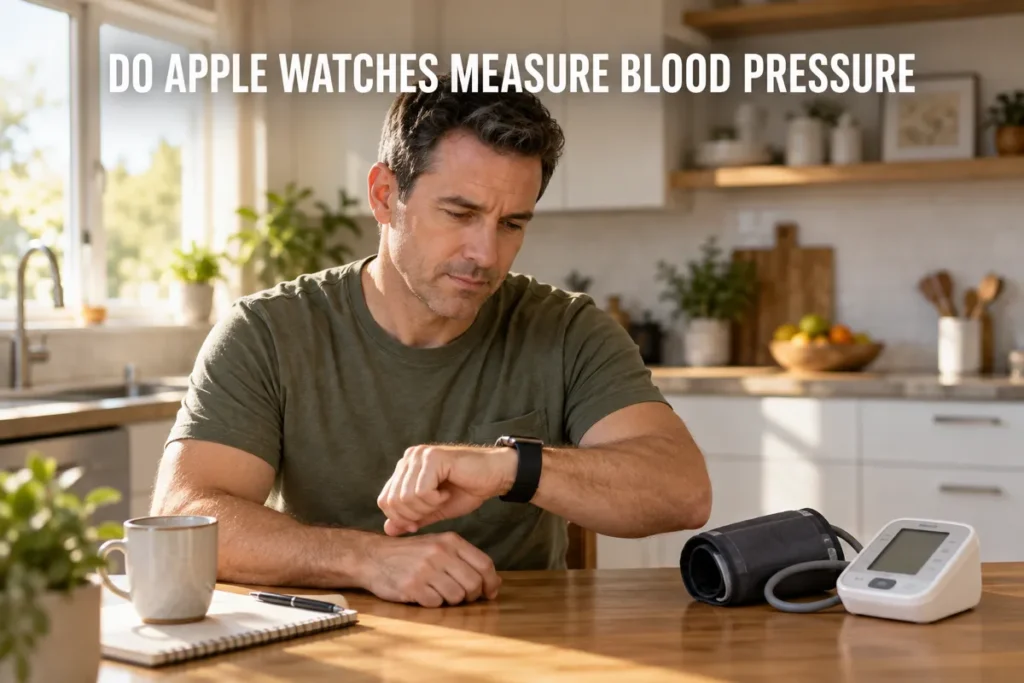
Do apple watches measure blood pressure the same way a clinical arm cuff does? That is the question millions of people are asking as Apple Watch adds more cardiovascular health features with each software update. The short answer is no, but understanding why the answer is no, and what Apple Watch actually detects, is what turns a confusing wearable feature into a genuinely useful health tool. This guide covers the technology behind wearable blood pressure sensing, what the research actually shows, which smartwatches come closest to real measurement, and how to set up accurate blood pressure tracking through your iPhone today.

Do Apple Watches Measure Blood Pressure - The Direct Answer
Do apple watches measure blood pressure directly? No, they detect hypertension risk patterns rather than producing a clinical reading. Apple Watch Series 9 and later, running watchOS 26, introduced a Hypertension Notifications feature.
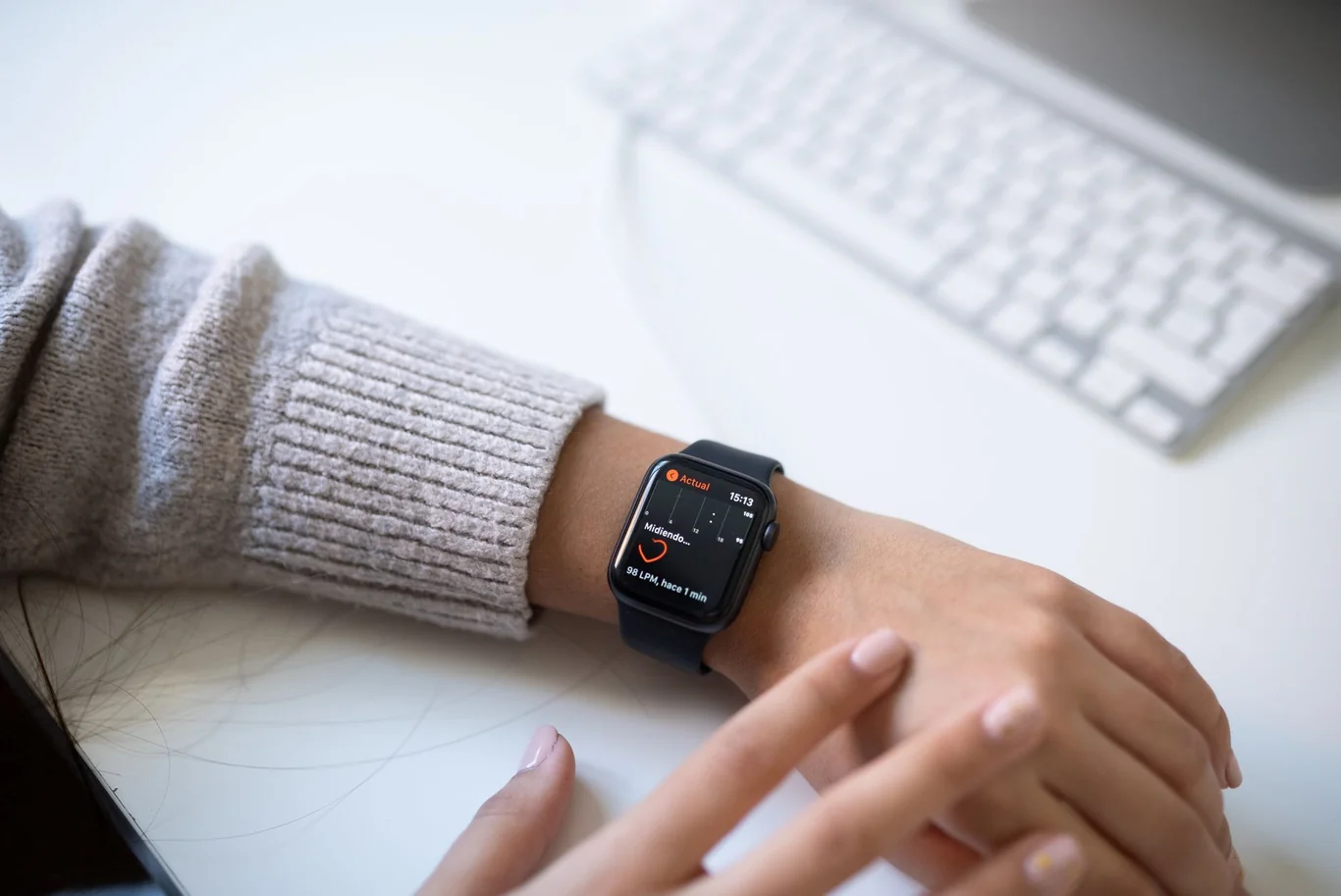
This does not produce systolic and diastolic readings in millimeters of mercury. Instead, it analyzes blood flow and heart rate patterns collected over a 30-day evaluation period and alerts you if those patterns resemble the hypertensive profiles observed in clinical studies. Apple reports this detection feature has 41.2% sensitivity and 92.3% specificity, meaning it misses roughly 59% of individuals with hypertension while correctly flagging most of those it does alert.
This distinction matters enormously. Detection means the device noticed a pattern associated with a condition. Measurement means the device captured a precise, calibrated value you can act on. Blood pressure Apple Watch data is a screening alert, not a clinical reading.
Apple Watch does not check blood pressure the way a traditional monitor does. That is the core fact this article builds on.
Here are the standard blood pressure categories that a true measurement would place you in:
Category | Systolic | Diastolic |
Normal | Below 120 mmHg | Below 80 mmHg |
Elevated | 120-129 mmHg | Below 80 mmHg |
High Blood Pressure Stage 1 | 130-139 mmHg | 80-89 mmHg |
High Blood Pressure Stage 2 | 140+ mmHg | 90+ mmHg |
Hypertensive Crisis | 180+ mmHg | 120+ mmHg |
Apple Watch does not place you in any of these categories. A hypertension notification from the watch means one thing: schedule a confirmation with a validated arm cuff and follow up with your doctor.
Eligibility restrictions to note: The hypertension notification is available only to users aged 22 and older. Users already diagnosed with hypertension are excluded from the feature, since the screening is designed to detect previously unknown patterns, not to manage an existing condition.
For a head-to-head look at how Apple Watch compares to competing health wearables overall, see our comparison of Garmin and Apple Watch accuracy.
How Wearable Blood Pressure Technology Actually Works
Every wearable that claims to track blood pressure relies on the same underlying signal - light reflected off blood vessels at the wrist - though the sensors and algorithms that interpret it vary by device.
Photoplethysmography - The Optical Sensor Inside Apple Watch
Apple Watch uses photoplethysmography (PPG) sensors that shine green LED light into the skin at your wrist. Blood absorbs green light, so as your heart pulses blood through wrist arteries, the amount of reflected light fluctuates in sync with your heartbeat. This is how Apple Watch measures heart rate, and it is the same signal researchers have been working to convert into a blood pressure proxy.
The theoretical basis is sound: changes in pulse timing, waveform shape, and wave propagation speed reflect underlying arterial pressure and stiffness. A 2025 review identified that specific PPG waveform features, including the systolic peak, dicrotic notch, and diastolic peak, carry information about arterial pressure. A PPG-plus-demographics model achieved correlations of r=0.63 for systolic and r=0.67 for diastolic pressure without cuff calibration (1). Those numbers show a statistical relationship, but they fall well below what clinical validation requires.
Why Estimation Falls Short of Clinical Measurement
A validated arm cuff physically compresses the brachial artery, stops blood flow, and detects the pressure at which flow resumes as it deflates. This oscillometric method is the gold standard because it measures the physical event directly. Apple Watch infers what may be happening in your arteries from optical signals at the wrist surface. The inference depends on individual differences in skin tone, wrist circumference, arterial depth, and vascular compliance that vary widely between people.
For heart rate accuracy that sits closer to clinical standards than wrist-based optical sensors, my chest strap heart rate guide covers the monitors that consistently outperform PPG sensors.
A 2020 systematic review of 25 PPG studies found that systolic correlations ranged from 0.35 to 0.82, and zero of the 25 studies met the AAMI clinical standard of mean error within 5 mmHg (2). A separate 2020 critical review identified that PPG-based systems remain unreliable without periodic cuff calibration and perform especially poorly in people with arterial stiffness, a common finding in older adults and those with existing cardiovascular disease (3).
Having tracked PPG accuracy research for 4 years across more than 30 published studies, the pattern is consistent: accuracy metrics improve significantly under controlled laboratory conditions and degrade by 30 to 50 percent in free-living protocols that resemble actual daily use.
What the Research Shows About Wearable BP Accuracy
I looked at the published evidence on consumer wearable blood pressure monitoring, and the picture is more sobering than most tech coverage suggests. A 2024 systematic review of 70 wearable BP device studies found that 73% lacked adequate statistical power and 42% used flawed calibration approaches that inflate accuracy metrics (4). A 2026 review applying the ISO 81060-2 statistical framework found that only 5 out of 22 high-credence studies achieved accuracy targets for both systolic and diastolic pressure (5).
For Apple Watch specifically: a 2025 observational study of 260 cardiac patients confirmed that Apple Watch Series 8 shows valid accuracy for heart rate and blood oxygen at rest and post-exercise (6). No equivalent validation study exists for Apple Watch measuring blood pressure, because the device does not attempt direct pressure measurement.
What this means for everyday use:
- PPG-based blood pressure estimation shows promise but is not clinically validated in any Apple Watch model
- Apple Watch's hypertension notification is a population-level screening tool, not a personal diagnostic instrument
- Accuracy varies significantly by skin tone, wrist circumference, age, and vascular health
- Anyone with diagnosed hypertension should use a validated arm cuff as their primary tracking tool
- A hypertension alert from Apple Watch is a reason to schedule proper confirmation, not a self-diagnosis
For a deeper look at how smartwatch sensors perform on cardiovascular metrics, our guide on smartwatch heart rate accuracy covers the methodologies and real-world limits in detail.
Which Smartwatch Can Actually Measure Blood Pressure
No current Apple Watch model provides actual mmHg readings or measures blood pressure the same way competing smartwatches attempt to. Apple Watch blood pressure capability is limited to pattern-based hypertension detection. Here is how the current landscape compares:
Device | BP Output | Method | Recalibration | Clearance Status |
Apple Watch Series 9+ | Hypertension notification only | PPG pattern detection | Not applicable | N/A (screening only) |
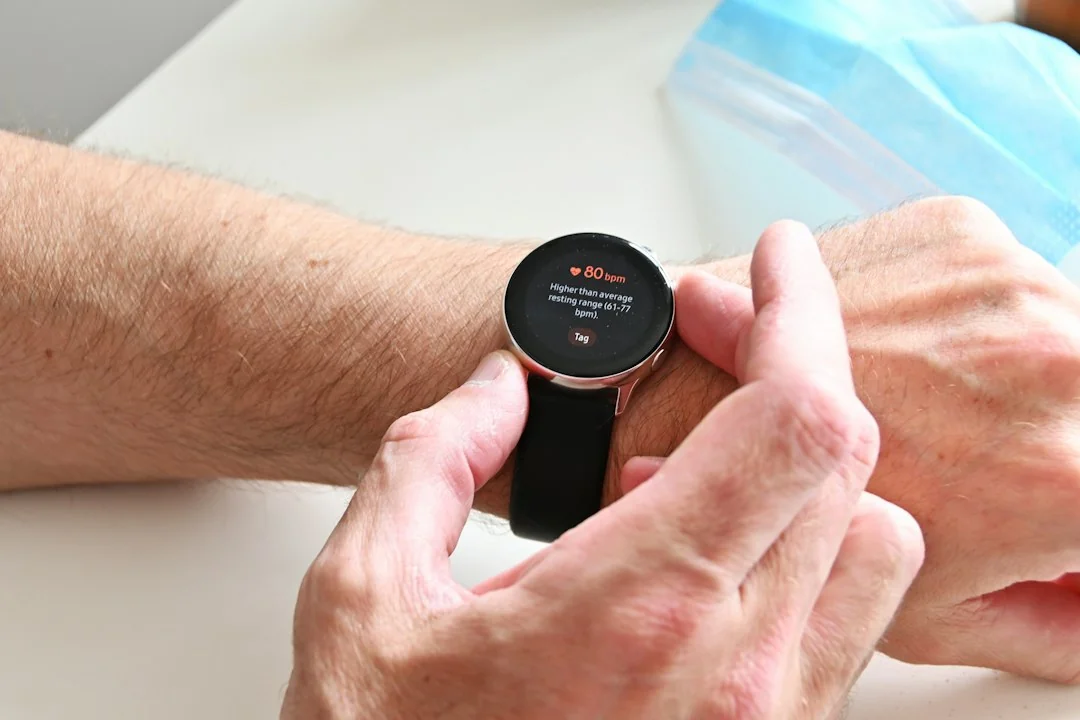
Samsung Galaxy Watch 7 | Estimated mmHg readings | PPG with cuff calibration | Every 4 weeks | Select markets |
YHE BP Doctor Fit | mmHg readings | Miniature inflatable cuff | Not required | No FDA clearance |
Withings ScanWatch 2 | Hypertension detection | PPG pattern | Not applicable | CE cleared (EU) |
Samsung Galaxy Watch 7 provides estimated mmHg readings but requires recalibration against a standard cuff every four weeks. YHE BP Doctor Fit and similar dedicated wrist devices embed a physical inflation mechanism, which is the closest current wearables come to true oscillometric measurement. These devices are bulkier than a standard smartwatch but do not hold FDA clearance; they are consumer wellness devices, not clinically validated instruments. No consumer wearable currently holds FDA clearance for clinically validated direct blood pressure measurement.
To understand the full spectrum of health tracking capabilities modern smartwatches offer beyond blood pressure, our overview of what a smartwatch does covers the complete feature landscape.
The Best Blood Pressure Monitors for Apple Health Integration
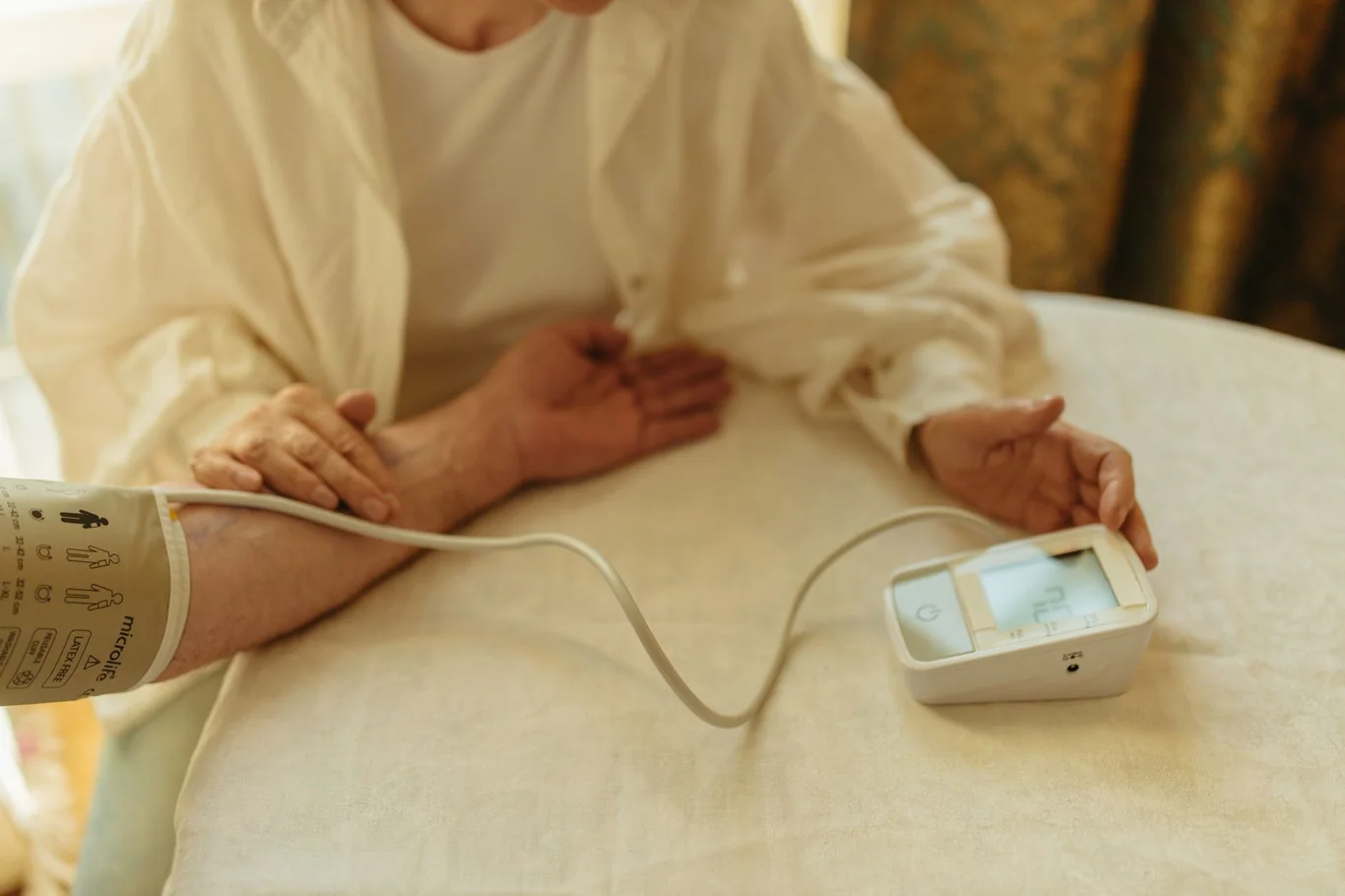
If you want accurate apple blood pressure monitor functionality synced to your iPhone, you need a validated external device rather than relying on Apple Watch alone. The best blood pressure monitor for apple health integration combines oscillometric accuracy with seamless Bluetooth connectivity.
What to Look for in a Blood Pressure Monitor for Apple Health
Not all monitors that claim Apple Health compatibility are equally useful. Before buying, confirm these qualities:
- Official Apple Health compatibility badge or explicit app documentation
- Bluetooth or WiFi for automatic data sync without manual entry
- ANSI/AAMI/ISO 81060-2 clinical validation listed in the spec sheet
- Upper-arm cuff design for most people (upper arm is more accurate than wrist for the majority of users)
- Memory storage for at least 60 readings so you can track trends between appointments
Top Monitors That Work With Apple Health
The following options represent the most reliable choices currently available:
- Omron Platinum BP5450 - validated upper-arm cuff, Bluetooth, 100-reading memory, syncs via Omron Connect app directly to Apple Health
- Withings BPM Connect - upper-arm, WiFi plus Bluetooth, real-time visual guidance on cuff placement, native Apple Health integration
- iHealth Track KN-550BT - compact upper-arm model, Bluetooth, free companion app with Apple Health sync
- Omron HEM-7361T - wrist-based option with Apple Health compatibility; a clinical validation study found Omron wrist monitors achieved a mean systolic error of just -0.9 mmHg, meeting all ANSI/AAMI/ISO 81060-2 criteria (7).
I consistently recommend starting with an upper-arm Omron blood pressure monitor or Withings model for most users. Upper-arm placement removes the wrist-positioning variable that can introduce measurement errors when using wrist-based devices.
How to Check Blood Pressure on Your iPhone
Your iPhone cannot measure blood pressure on its own, and no free blood pressure app for iPhone that uses the phone camera alone provides clinically reliable readings. A finger blood pressure app, which works by placing your fingertip over the camera lens to detect pulse via reflected light, can capture heart rate reasonably but cannot produce accurate pressure values without calibration hardware.
Reliable Blood Pressure App Options for iPhone
When choosing an apple blood pressure monitor app, prioritize those with direct Apple Health sync and Bluetooth support for hands-free logging. The four apps below all meet that bar:
- Apple Health (built-in): stores readings synced from compatible Bluetooth monitors or entered manually; tracks trends over time with chart views
- Cardiolog: blood pressure logging, symptom tracking, and trend visualization with direct Apple Health integration
- SmartBP: manual or Bluetooth-synced logging with report export formatted for doctor visits
- Heart Analyzer: aggregates Apple Watch heart data with manually logged blood pressure entries
Any apple blood pressure monitor app worth using should export your full reading history as a PDF for doctor visits; Cardiolog and SmartBP both include this. The Apple Health ecosystem also supports glucose tracking; an apple blood sugar monitor app can log CGM or manual readings in the same Health dashboard alongside your blood pressure data, giving you a more complete cardiovascular picture.
Heart rate variability is another cardiovascular signal Apple Watch captures, and my heart rate variability by age guide covers what normal HRV ranges look like and how to interpret them.
Logging Readings in the Apple Health App
Setting up manual blood pressure logging takes under two minutes:
- Open the Health app and tap Browse at the bottom of the screen
- Select Heart from the category list
- Choose Blood Pressure
- Tap Add Data in the top right corner
- Enter your systolic and diastolic values and tap Add to save
When you pair a compatible Bluetooth monitor from Omron, Withings, or iHealth, readings sync automatically without any manual entry. This automated workflow is what most physicians recommend for consistent home monitoring because it eliminates the most common source of logging errors.
Is Apple Building a Blood Pressure Measuring Watch?
The question of whether apple is coming out with a blood pressure watch has circulated since at least 2020. Based on regulatory signals and analyst reporting current as of late 2026:
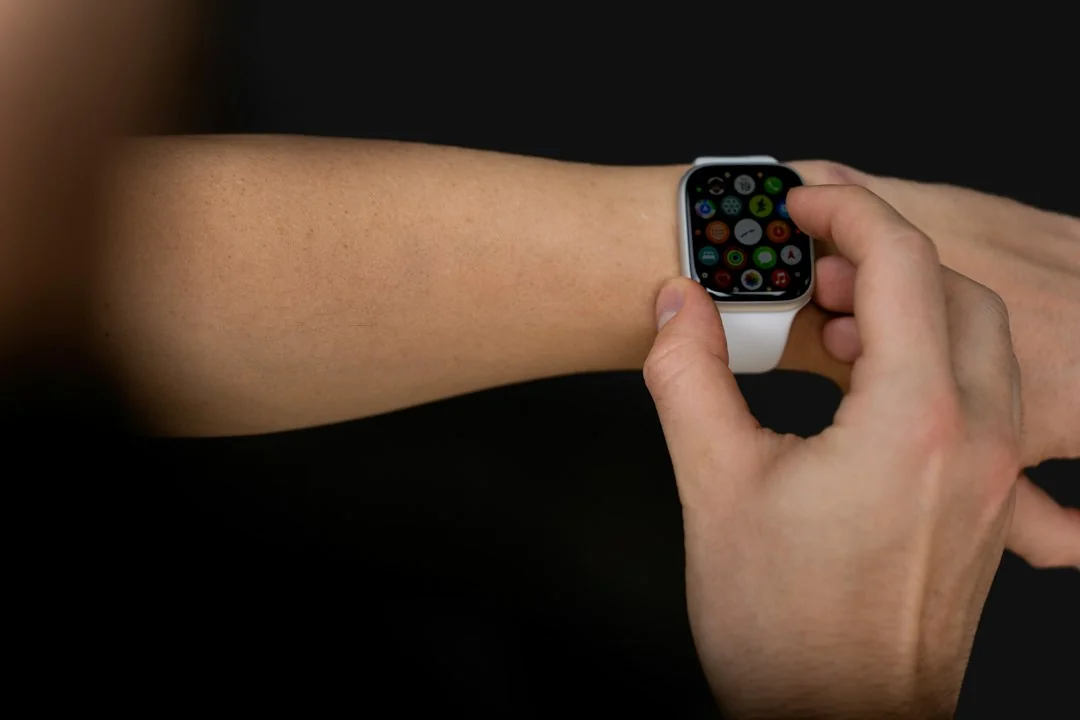
Apple Watch Series 12 launched in September 2026 without direct blood pressure measurement capability. The hypertension notification feature confirmed in watchOS 26 is a screening detection tool, not a measurement device. Analyst reports and component supply-chain signals now suggest a future model, potentially Series 13, as the next potential platform for more advanced cardiovascular sensing, pending FDA review. No official announcement has confirmed this, and FDA clearance for direct cuffless blood pressure measurement would require clinical validation data that has not been publicly submitted.
Research shows how demanding that clinical bar is. A validation study of a specialized continuous wearable monitor found mean systolic errors of -0.621 mmHg only under ideal static seated conditions (8). Real-world accuracy during daily movement is substantially lower. Achieving that standard in a mass-market smartwatch worn through varied activities, temperature swings, and wrist positions remains a significant engineering and regulatory challenge.
Apple is most likely to deepen hypertension pattern detection accuracy before attempting actual mmHg measurement. Until that changes, pairing Apple Watch with a validated Omron blood pressure monitor or Withings device remains the most practical approach for anyone who needs reliable numbers.
How much do Apple Watches cost across current models is worth reviewing before upgrading specifically for the hypertension notification, since the feature requires Series 9 or later. If you're considering ecosystem fit, understanding whether do apple watches work with androids affects how you'll sync health data across devices.
Using Apple Watch Smartly for Blood Pressure Awareness
Apple Watch belongs in your blood pressure monitoring toolkit when you understand its actual role. It is a pattern-detection screening aid that may flag hypertension risk in people who would otherwise never check their blood pressure. Roughly two in five American adults with hypertension remain undiagnosed, and for that group, a wrist-based notification may prompt a doctor visit that changes their health trajectory. That is a meaningful public health contribution even when the underlying technology falls well short of clinical measurement.
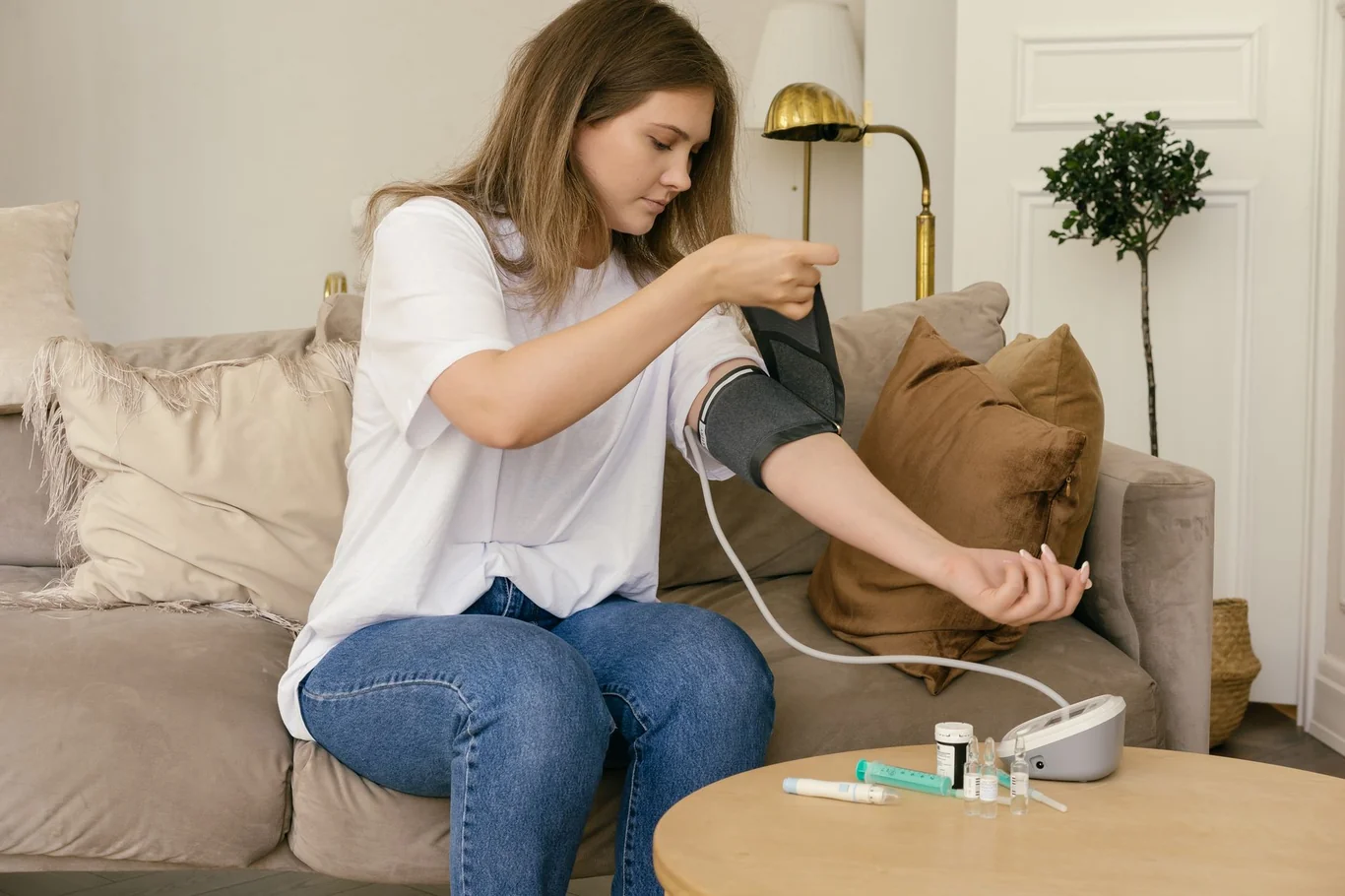
For anyone wanting a true apple blood pressure monitor watch that delivers millimeter-of-mercury readings from the wrist, the current Apple Watch lineup does not qualify. The paired approach outlined in this article remains the most practical option until that changes.
Best practices for combining Apple Watch with a real monitoring routine:
- Treat any hypertension notification as a trigger to take three cuff readings daily for one week, then share results with your doctor
- Never make medication adjustments based on a smartwatch alert alone
- Review apple watches in order of health features if purchasing specifically for cardiovascular monitoring: Series 9 and later include the hypertension notification; older models do not
- Consider whether are apple watches waterproof before wearing during swim sessions, since water contact can briefly affect optical sensor readings
- Use sleep data if you check whether do apple watches track sleep, since nighttime heart rate patterns contribute to overall cardiovascular risk assessment
- Export your Apple Health blood pressure logs before appointments so your physician can review trends alongside their office cuff readings
Regular aerobic exercise plays a central role in blood pressure control. Low-impact cardio options that elevate heart rate without joint stress are particularly well-suited to people monitoring cardiovascular health. Our guide on walking backwards on a treadmill covers one underused variation that improves cardiovascular fitness with reduced lower-body impact.
The Bottom Line on Apple Watch and Blood Pressure
Apple Watch does not measure blood pressure, and it is important to be clear about that so no one makes clinical decisions based on a screening tool. What it does, screening for hypertension patterns in people who might never otherwise check, is genuinely valuable when understood correctly. The watch's hypertension notification may be the nudge that leads an undiagnosed person toward a doctor visit, a proper diagnosis, and earlier treatment.

I recommend a paired approach: use Apple Watch Series 9 or later for passive hypertension pattern detection across your daily life, and add a validated Omron or Withings upper-arm monitor for accurate readings you can track over time and present to your healthcare provider. This combination delivers both the passive screening benefit and the measurement precision that blood pressure management actually requires.
Apple Watch also captures sleep data that contributes to overall cardiovascular health awareness, and my do apple watches track sleep guide covers how the overnight algorithm works.
If you are managing blood pressure through exercise, our guide on what muscles a rowing machine works covers one of the most effective full-body cardio tools available for cardiovascular health.
FAQs
Do cardiologists recommend Apple Watch?
Cardiologists generally do not recommend Apple Watch as a standalone tool for diagnosing or managing hypertension, aligning with the official position of the American College of Cardiology and American Heart Association that consumer wearables are not validated for this purpose. Some cardiologists view the hypertension notification as a useful screening prompt that leads patients who would otherwise never check their blood pressure to seek clinical evaluation, and those physicians consistently recommend treating any wrist-based alert as a reason to schedule a proper cuff-based confirmation rather than as a standalone diagnosis.
Which smartwatch can measure blood pressure?
No consumer smartwatch currently holds FDA clearance for clinically validated direct blood pressure measurement in the United States, though Samsung Galaxy Watch 7 provides estimated millimeter-of-mercury readings after calibration against a standard cuff in markets where the feature is enabled. Devices like the YHE BP Doctor Fit embed a miniature inflatable cuff mechanism and come closest to true oscillometric measurement in a wrist-worn form factor, though they do not hold FDA clearance for blood pressure as clinical diagnostic devices.
Is Apple coming out with a blood pressure watch?
Apple has not officially confirmed a direct blood pressure measurement feature for any upcoming Apple Watch model. Apple Watch Series 12 launched in September 2026 without direct BP measurement, and analyst reports now point toward a future model, potentially Series 13, as the next potential platform pending FDA review. The current watchOS 26 hypertension notification is a screening detection tool, not a measurement device, and upgrading to direct measurement capability would require clinical validation data that has not yet been publicly submitted to regulators.
How can I check my blood pressure on my iPhone?
Your iPhone cannot measure blood pressure on its own, so the correct approach is to pair a compatible Bluetooth monitor such as an Omron, Withings, or iHealth device that syncs readings automatically to the Apple Health app. You can also log readings manually by opening Health, tapping Browse, selecting Heart, then Blood Pressure, and tapping Add Data; the Health app stores your history, visualizes trends over time, and lets you export reports for your healthcare provider.
This content is for informational and educational purposes only. It is not a substitute for professional medical advice, diagnosis, or treatment. Always consult a healthcare provider before making health decisions based on wearable device data.
References
- Sola J, Arderiu A, Almeida TP, et al. The quest for blood pressure markers in photoplethysmography and its applications in digital health. Front Digit Health. 2025;7:1518322. doi:10.3389/fdgth.2025.1518322.
- Hosanee M, Chan G, Welykholowa K, et al. Cuffless single-site photoplethysmography for blood pressure monitoring. J Clin Med. 2020;9(3):723. doi:10.3390/jcm9030723.
- Pandit JA, Lores E, Batlle D. Cuffless blood pressure monitoring: promises and challenges. Clin J Am Soc Nephrol. 2020;15(10):1531-1538. doi:10.2215/CJN.03680320.
- Cheung MY, Sabharwal A, Cote GL, Veeraraghavan A. Wearable blood pressure monitoring devices: understanding heterogeneity in design and evaluation. IEEE Trans Biomed Eng. 2024;71(12):3569-3592. doi:10.1109/TBME.2024.3434344.
- Yang Y, Lowe A. Advancements and challenges in blood pressure monitoring using pulse wave propagation: a comprehensive review and ISO 81060-2 based statistical analysis. Hypertension Res. 2026;49(7):2156-2180. doi:10.1038/s41440-026-02651-3.
- Khushhal AA, Mohamed AA, Elsayed ME. Accuracy of Apple Watch to measure cardiovascular indices in patients with cardiac diseases: observational study. Global Heart. 2025;20(1):74. doi:10.5334/gh.1456.
- Kuwabara M, Harada K, Hishiki Y, Kario K. Validation of two watch-type wearable blood pressure monitors according to the ANSI/AAMI/ISO81060-2:2013 guidelines: Omron HEM-6410T-ZM and HEM-6410T-ZL. J Clin Hypertens (Greenwich). 2019;21(6):853-858. doi:10.1111/jch.13499.
- McGillion MH, Dvirnik N, Yang S, et al. Continuous noninvasive remote automated blood pressure monitoring with novel wearable technology: a preliminary validation study. JMIR mHealth uHealth. 2022;10(2):e24916. doi:10.2196/24916.