
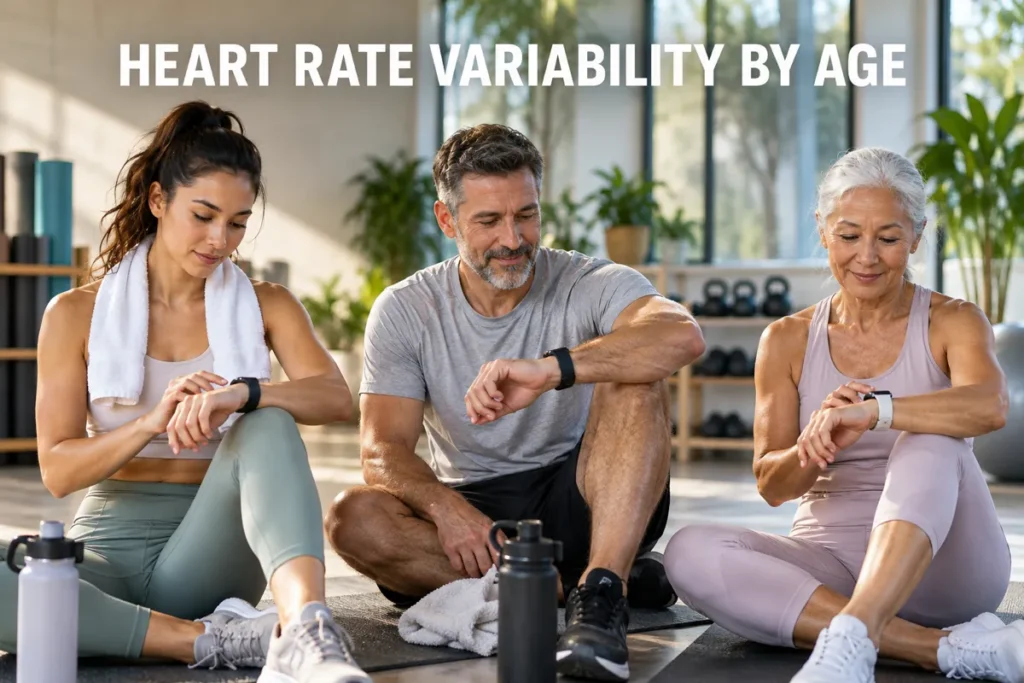
Heart rate variability by age is a commonly misunderstood metric among smartwatch users. Your Garmin flashes a "Low" HRV status, your Fitbit shows a number that seems alarming, and suddenly you are convinced something is wrong. The reality is far more nuanced. HRV declines with age as a normal part of how the autonomic nervous system changes, and what counts as healthy at 30 looks very different at 55. In this guide, I cover what heart rate variability actually measures, what the research says about normal ranges by age and gender, how each major wearable interprets this data, and what realistically moves the needle.

Heart Rate Variability by Age - What It Actually Measures
Understanding heart rate variability by age starts with knowing what the metric captures. HRV measures the variation in time between consecutive heartbeats, expressed in milliseconds. A heart beating at 60 bpm does not fire exactly once per second. Sometimes it fires after 950 ms, sometimes after 1,050 ms. That beat-to-beat variation is what HRV quantifies, and it reflects how well your autonomic nervous system is adapting to moment-to-moment demands.
Higher HRV generally signals that your parasympathetic ("rest and digest") system is active and responsive - a sign of good recovery and cardiovascular adaptability. Lower HRV suggests your body is under stress, fatigued, or still recovering from exertion. For a detailed look at how wearable sensors capture this data in practice, our comparison of Garmin and Apple Watch heart rate accuracy covers the device-level differences.
What HRV Measures and How Devices Calculate It
Most wearables report HRV using one of two primary metrics. RMSSD (root mean square of successive differences) reflects short-term parasympathetic activity - essentially how reactive your recovery system is from moment to moment. Garmin, Fitbit, Oura, and WHOOP all favor RMSSD because it is stable, reproducible during overnight sleep windows, and strongly tied to recovery state.
Apple Watch reports SDNN (standard deviation of normal-to-normal intervals), which captures a broader autonomic picture over a longer window. This is why your Apple Watch HRV number will typically look different from your Garmin's reading - they are measuring related but distinct aspects of autonomic function. Neither is wrong; they simply answer slightly different questions.
HRV Reference Ranges by Age Group
The most useful way to think about a heart rate variability chart by age is as a percentile range, not a single target. Research confirms that heart rate variability by age declines substantially across decades. A 2020 population study across five age groups found SDNN dropped from an average of 43.1 ms in adults in their 20s to 23.5 ms in those in their 60s, with pNN50 falling from 38.7% to 13.9% over that span (1). A separate study of 249 healthy adults from a tertiary care center provides more granular reference values across three broad age groups (<30, 30-59, 60+) (2):
Age Group | SDNN (ms) | RMSSD (ms) |
Under 30 | 48 ± 18 | 47 ± 26 |
30-59 | 37 ± 19 | 34 ± 24 |
60+ | 31 ± 27 | 26 ± 36 |
These values apply to healthy adults measured at rest under standardized conditions. Individual scores vary considerably based on fitness level, sleep quality, and measurement timing.
For how Apple Watch monitors sleep overnight and what the data actually captures, my do apple watches track sleep guide covers the algorithm, accuracy limits, and setup.
A good heart rate variability chart gives you a reference band, not a single target number. A heart rate variability of 35 ms RMSSD may fall below average for a fit 28-year-old but sit squarely within a healthy reference range for a 52-year-old. When evaluating heart rate variability by age data, I pay close attention to the fitness tier above the median - fit adults in their 50s who exercise regularly often show RMSSD values matching sedentary adults a decade younger, which tells me lifestyle factors carry as much weight as the birth year column. Your personal baseline and week-over-week trend matter more than any single absolute number.
VO2max follows the same logic, and my VO2max reference ranges by age guide frames scores in context rather than as fixed performance targets.
Gender Differences in HRV by Age
A complete heart rate variability chart by age and gender shows that younger women tend to score higher than male peers of the same age. Hormonal factors - particularly estrogen's influence on autonomic regulation - enhance parasympathetic activity in women during their reproductive years. This advantage narrows significantly after menopause, and by the 60s, gender differences in HRV become minimal based on population research (1).
A fitness watch that captures HRV trends over weeks helps contextualize those hormonal and age-related shifts, and my top fitness watch guide covers the models with the most consistent nightly HRV logging.
A heart rate variability chart female will show meaningfully higher RMSSD in the under-40 range compared to a male equivalent. A few practical points on gender-specific HRV interpretation:
- Women under 40 often track higher absolute RMSSD than male peers with equivalent fitness levels
- Menstrual cycle phase affects readings - the luteal phase typically shows lower HRV
- Post-menopausal women experience a HRV decline pattern that mirrors the male trajectory
When reviewing a heart rate variability chart by age female against published norms, the most important adjustment is accounting for reproductive life stage, not just calendar age.
A tracker that maintains a reliable personal baseline through those hormonal shifts is the practical solution, and my top fitness tracker options guide covers the wearables that handle variable HRV data without generating false low readings.
What Your Tracker’s HRV Reading Actually Means
Each heart rate variability fitness tracker interprets and displays HRV data differently. This creates genuine confusion when users compare readings across devices or look up charts that do not match what their wrist shows. The device variation is real - differences in sensor type, measurement timing, and calculation algorithms all affect the output you see. If you have wondered how accurate smart watches are for heart rate data in general, the answer varies significantly by metric and device type. Our full review of how accurate smartwatches are for heart rate covers the validation evidence across brands.
Garmin HRV Status - The Four-Tier System Explained
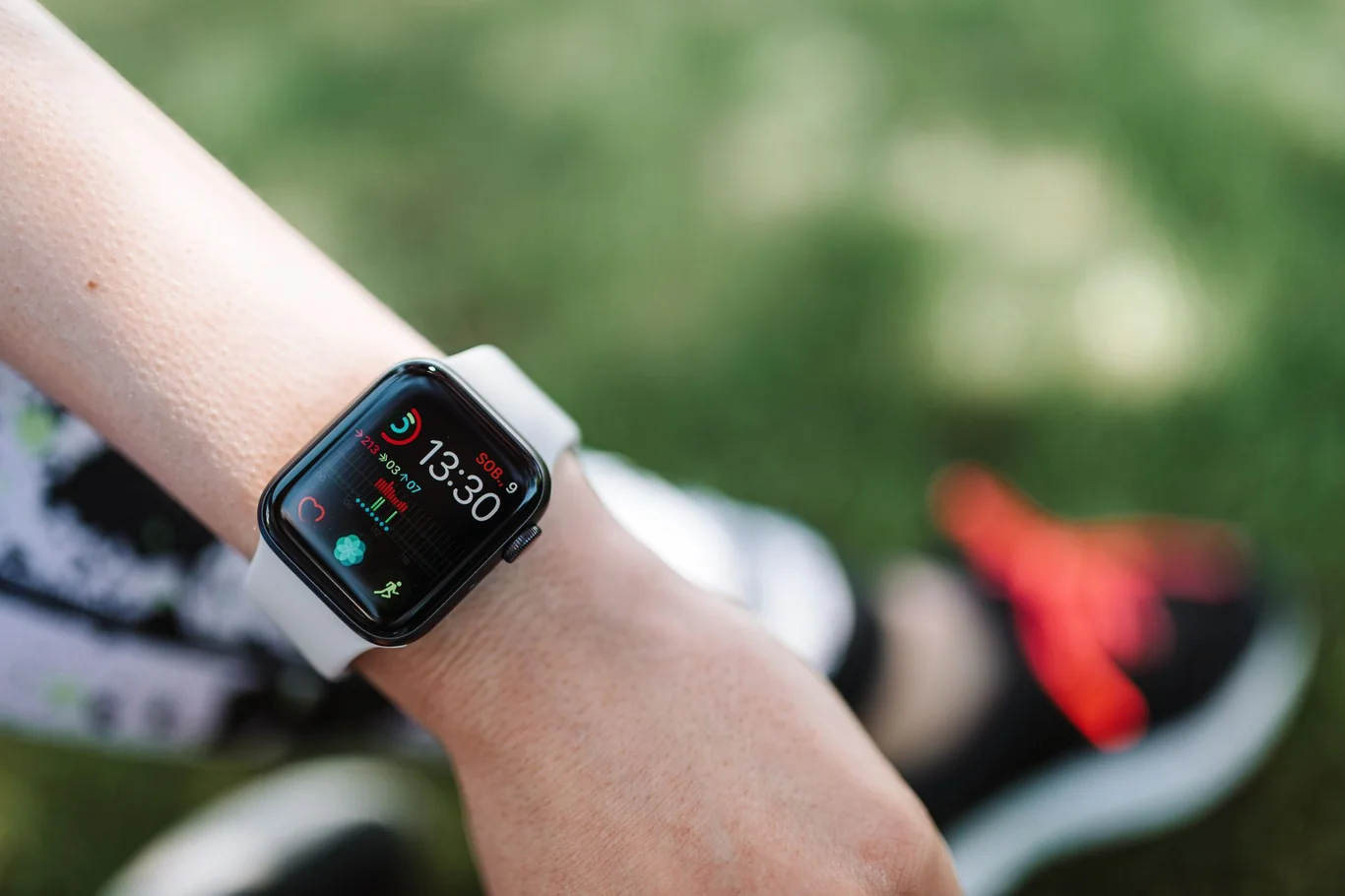
Garmin HRV status is the most detailed consumer implementation of HRV interpretation available on a mainstream wearable. Rather than showing a raw RMSSD number, Garmin calculates a 7-day rolling average and compares it to your personal 3-week baseline. It then assigns one of four statuses:
Status | What It Means | What to Do |
Balanced | HRV is within your personal normal range | Train normally; maintain current recovery habits |
Unbalanced | HRV is slightly outside your normal range | Consider adding a recovery day; monitor sleep quality |
Low | HRV has dropped meaningfully below your baseline | Reduce training intensity; prioritize sleep and stress management |
Poor | HRV is consistently very low; autonomic function is suppressed | Rest completely; investigate underlying cause (illness, overtraining, alcohol) |
The critical point about Garmin's system is that "Low" is relative to your personal baseline, not a population average. A 60-year-old with a "Balanced" status may have an absolute RMSSD of 26 ms - lower than a 25-year-old showing "Low" status at 35 ms. The tier reflects your body's deviation from its own normal, which is the right way to use this data. Understanding the HRV status on Garmin requires accepting that personalized trending beats raw-number comparisons every time.
Fitbit handles this comparison differently across its tiers, and my Fitbit models guide covers how each current device tracks and displays stress and HRV data.
Heart Rate Variability on Fitbit
Heart rate variability on Fitbit works differently from Garmin's tier system. Fitbit Charge 6 and Sense 2 models display a raw nightly RMSSD value in the Fitbit app, with no status tiers or contextual labels. This leaves many users staring at a number with no guidance on what to do with it.
Apple Watch handles this comparison more intuitively across its generations, and my Apple Watch generations guide maps what each series added to its health tracking package.
Runners who rely on HRV data to manage training load benefit from a device that provides trend context rather than just a number, and my top running fitness tracker guide covers the options with the most actionable HRV reporting.
Fitbit's approach gives you the raw data to compare against the age-reference table above, but it places the burden of interpretation on you. Three things to know:
- Single-night readings fluctuate 20-30% even in perfectly healthy adults - look at your 7-day average
- Fitbit HRV tracks reasonably well with RMSSD measures from reference devices in most research
- The Fitbit app shows a historical trend chart, which is more useful than any individual reading
Apple Watch HRV - SDNN vs. RMSSD
Apple Watch HRV uses SDNN rather than RMSSD, creating a meaningful data comparison issue for users who check heart rate variability across platforms. SDNN captures the full autonomic picture over a broader window, while RMSSD gives a sharper, specifically parasympathetic snapshot.
For buyers weighing the Apple Watch as their primary HRV tracking device, my guide to how much Apple Watch costs covers every current model and what each configuration delivers.
Research confirms that Apple Watch Series 9 and Ultra 2 systematically underestimate HRV by an average of 8.31 ms compared to clinical reference standards (95% CI: -11.04 to -5.59 ms), with a mean absolute percentage error of 28.88% (3). This algorithmic bias - not the breadth of SDNN measurement - is why Apple Watch numbers tend to read lower than Garmin or Oura readings for the same person on the same night. Apple Watch is still reliable for detecting directional change even if the absolute value does not match a Garmin reading. For more context on what your wearable is actually doing behind the scenes, what a smartwatch does breaks down sensor technology in plain terms.
Heart Rate Variability During Sleep - Why Overnight Readings Matter
Sleep is when most devices capture your most reliable HRV data. Heart rate variability during sleep peaks in deep sleep stages, when the parasympathetic system dominates and your body performs its deepest repair work. Overnight measurements eliminate the noise that daytime movement, meals, and stress introduce, giving you a cleaner view of your recovery baseline.
A device that holds charge through the full night is a prerequisite for consistent overnight data, and my guide on smartwatch battery endurance covers which trackers reliably meet that threshold.
Blood pressure is the cardiovascular metric wrist-worn devices handle least reliably, and my guide to Apple Watch and blood pressure covers where Apple Watch sits on that spectrum.
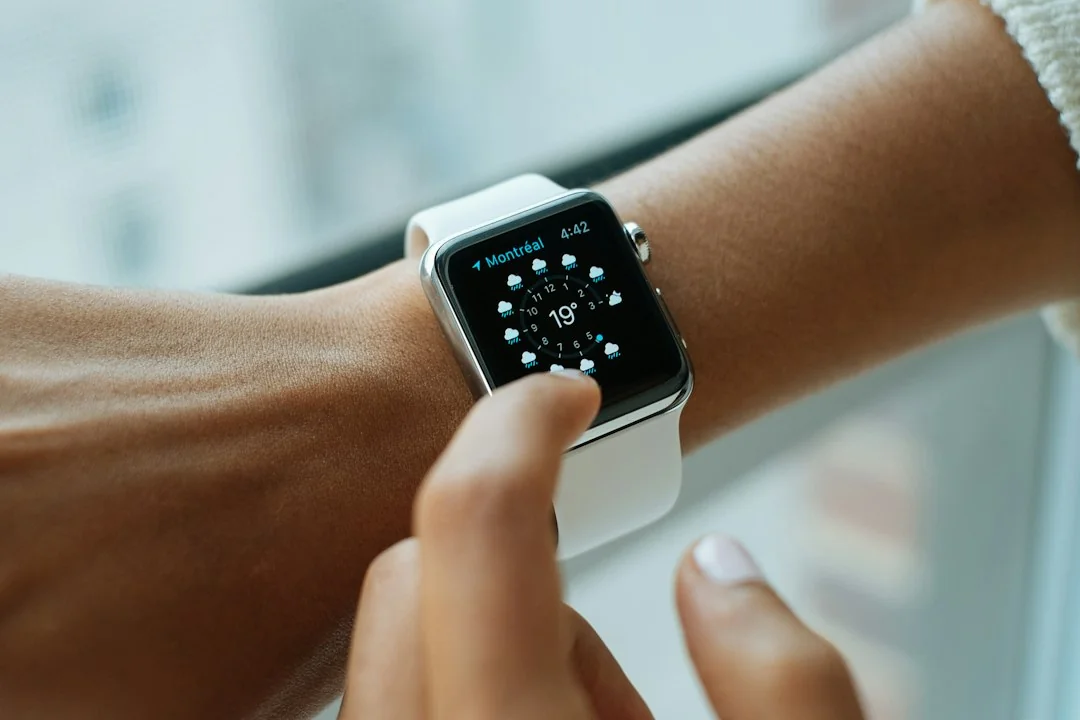
Research confirms that sleep deprivation significantly suppresses RMSSD - the parasympathetic HRV marker - while increasing the LF/HF ratio, a sign of sympathetic nervous system dominance (4). In practical terms: one bad night of sleep will lower your HRV reading within 24 hours, sometimes more sharply than an intense workout.
Building the aerobic base that keeps resting HRV elevated takes consistent structured training over months, and my guide on improving aerobic capacity explains how to structure that progression without accumulating the fatigue that suppresses HRV.
A sleeping heart rate variability chart for a healthy adult shows HRV peaking in early-morning deep sleep windows - which is why overnight measurement produces more reliable data than daytime spot checks. Accuracy varies across devices for overnight HRV measurement. I gave significant weight to Oura's accuracy advantage when evaluating sleep-based HRV options - independent testing found Oura Ring Gen 4 most closely matched ECG gold-standard with a 5.96% error rate, while Garmin Fenix 6 showed a 10.52% error rate across 536 recorded nights (5). A few things worth knowing about overnight measurement:
- Lying position produces higher HRV than sitting or standing - good, since sleep measurement captures this
- Wrist-based optical sensors introduce more motion artifact than a chest strap heart rate monitor for active sleepers
- Measuring at the same time each morning (or using a full overnight window) reduces day-to-day variability
Factors That Affect Heart Rate Variability by Age
Heart rate variability low readings often reflect controllable lifestyle factors, not just the passage of time. A comprehensive review of HRV influencing factors identified three key domains of influence (6):

Physiological factors (less controllable):
- Age - the primary driver of long-term HRV decline. This reflects real biological changes: baroreceptor sensitivity decreases, the sinus node ages, and arterial stiffening reduces the autonomic system's responsiveness to beat-to-beat demands.
- Biological sex - women tend higher before menopause
- Genetics - HRV heritability estimated at 50-60% (6)
- Cardiovascular fitness level - the most modifiable factor in this category
Lifestyle factors (highly controllable):
- Sleep quality and duration - inadequate sleep drops HRV within one night
- Alcohol consumption - even moderate drinking measurably suppresses HRV
- Caffeine timing - late-day consumption shifts HRV lower overnight
- Smoking - causes chronic suppression of parasympathetic activity
- Intense exercise - creates a temporary 24-48 hour dip post-hard session
Environmental and measurement factors:
- Body posture during measurement (lying gives higher HRV than seated)
- Time of day (HRV is highest in early morning before activity)
- Ambient temperature (optimal at 20-25 degrees C)
The interaction between age and lifestyle is the most practically useful insight here. Heart rate variability by age declines across the population, but fit 60-year-olds routinely outperform sedentary 40-year-olds on HRV measures. Understanding normal heart rate and age is related context that can help frame where your baseline sits.
How to Improve Heart Rate Variability at Any Age
HRV is not fixed by your birth year. Research consistently shows that lifestyle interventions produce meaningful heart rate variability improvements across all age groups.
Zone 2 training is the most research-backed cardio stimulus for long-term HRV improvement, and my zone 2 heart rate guide covers how to identify and sustain that intensity using wearable data.

Exercise training is the most evidence-backed lever. A meta-analysis of 16 randomized controlled trials found that regular exercise significantly improved SDNN (standardized mean difference of 0.58), RMSSD (SMD 0.84), and parasympathetic HF power (SMD 0.89) in healthy adults between ages 19 and 68 (7). Moderate-intensity aerobic training produced the most reliable gains. Zone 2 heart rate training - sustained effort where you can hold a conversation - is particularly effective because it builds aerobic base without suppressing HRV the way high-intensity intervals do. Low-impact options like walking, including walking backwards on a treadmill for technique variation, keep training stress manageable during recovery periods.
Sleep optimization has immediate, measurable effects. One poor night of sleep is enough to drop your RMSSD reading. Consistent sleep timing, seven to nine hours of duration, a cool bedroom environment, and limiting alcohol all support higher HRV within days.
Monitoring the metabolic patterns that support recovery quality is one practical lever, and my top calorie tracker guide covers the most accurate options for tracking both intake and expenditure alongside HRV trends.
Stress-reduction techniques produce clinically meaningful gains as well. HRV biofeedback improved short-term SDNN by an average of 6.43 ms (p=0.01) and 24-hour SDNN by 10.92 ms (p=0.004) in meta-analyzed research (8). Yoga showed notable improvements in 24-hour autonomic function as well.
Here is a practical starting protocol for raising your heart rate variability by age baseline:
- Add 30 minutes of moderate cardio (walking, cycling, rowing) four days per week - consistency beats intensity for HRV
- Set a fixed sleep and wake time, including weekends - autonomic recovery is routine-dependent
- Eliminate alcohol for three weeks and track your reading daily - most people see a clear signal shift
- Try five minutes of slow paced breathing (five seconds inhale, five seconds exhale) before bed
- Measure at the same time each morning before caffeine or activity to reduce day-to-day noise
If you want to understand how your cardiovascular baseline fits into the broader picture, learning how to calculate max heart rate gives you the aerobic context alongside your HRV trend.
Understanding where your VO2 max sits relative to your age group adds another dimension to that aerobic picture, and my VO2 max by age guide covers the published norms across decades.
Using a Heart Rate Variability Calculator
A heart rate variability calculator estimates your HRV score from beat-to-beat interval data, but it cannot replace an overnight wearable for meaningful baseline tracking. Most calculator tools ask you to enter R-R intervals manually from an ECG or chest strap reading. You cannot calculate HRV from your average resting heart rate alone - this is one of the most common misconceptions users bring to the metric.
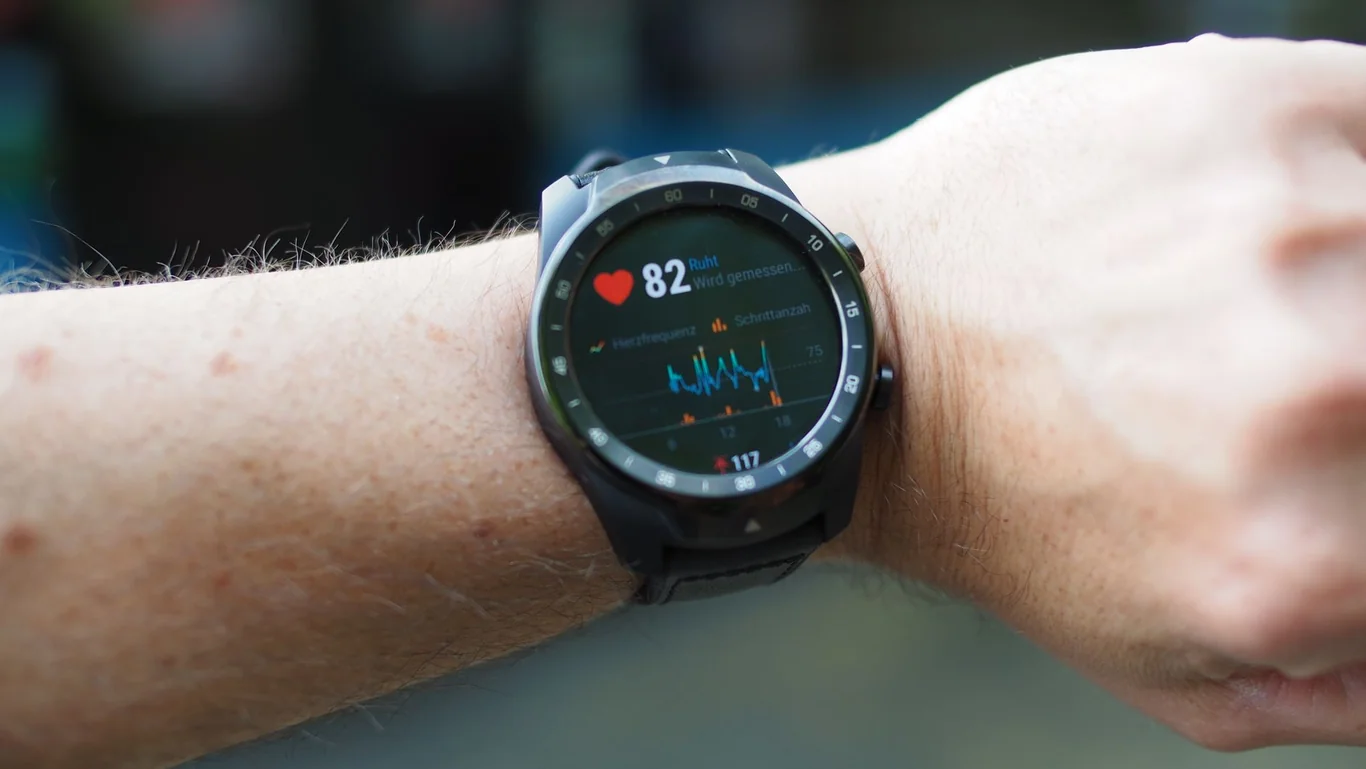
The reason matters mechanically: HRV requires beat-to-beat precision at the millisecond level. Your average resting heart rate tells you nothing about the variation between beats. A perfectly metronomic 60 bpm would produce an HRV score near zero. It is the irregularity in the beat timing that the metric captures, not the rate itself.
For accurate HRV outside a wearable, a chest strap heart rate monitor paired with a compatible HRV app (such as Polar H10) gives you the closest consumer approximation of ECG data. Knowing how to check heart rate on iPhone via the Health app can also surface whatever HRV data your wearable is passing to Apple Health without needing a separate app.
Normal heart rate when running also responds to the same autonomic fitness improvements that raise HRV, so tracking both metrics gives you a more complete picture of cardiovascular adaptation.
What HRV Means for Your Long-Term Health
Heart rate variability meaning extends well beyond recovery tracking for athletes. Evidence consistently links lower long-term HRV to elevated cardiovascular risk in clinical population research. Cardiologists increasingly view HRV as one marker of autonomic nervous system health - but they are clear that a consumer wearable reading is not a diagnostic tool.

What physicians emphasize is the trend over months, not a snapshot. If your heart rate variability by age score has declined substantially over six months without an obvious cause - no increased training load, no illness, no major life stress - that warrants a conversation with a doctor. For most healthy adults using a heart rate variability fitness tracker, the metric is most useful for day-to-day recovery decisions and long-term fitness trend monitoring. Tracking your target heart rate for fat burning alongside HRV gives you a more complete metabolic picture of how your training load is affecting your body.
A rowing machine - see what muscles a rowing machine works - is a full-body aerobic tool that builds cardiovascular fitness without creating the high-impact stress that tanks HRV for 48 hours post-session. Matching your exercise modality to your HRV status is the practical payoff of tracking the metric.
Cycling delivers the same HRV-positive aerobic stimulus with a seated position that suits recovery-day protocols, and my top exercise bike guide covers the machines best suited for consistent zone-based training.
Understanding Your Heart Rate Variability by Age Score
Heart rate variability by age gives you one of the most direct windows into your recovery state and autonomic fitness - but only when used with proper context. Your score alone means nothing without knowing your personal baseline, your age group, your fitness level, and the device measuring it. A Garmin HRV status of "Balanced" at 57 is a meaningful positive signal. A Fitbit RMSSD of 27 ms for a healthy 62-year-old sits within published reference ranges.
I use HRV data primarily to catch recovery deficits before they compound into injuries. When my score drops and holds low for three consecutive days, I check sleep quality, training load, and alcohol intake before deciding to push hard again. That targeted application - using the data to make one decision at a time - is where the metric earns its value, regardless of your age or device. For broader cardiovascular context alongside your HRV, learning how to calculate max heart rate gives you the aerobic frame your HRV numbers need.
FAQs
What is a bad heart rate variability?
A bad heart rate variability is one that sits consistently below your personal baseline for several weeks without a clear cause, particularly if the decline is sustained and paired with fatigue or reduced performance. There is no universal threshold - a RMSSD of 22 ms is within range for a healthy 65-year-old but would warrant investigation in a fit 30-year-old who was previously averaging 55 ms.
Why is my HRV so low when I’m healthy?
The reason your HRV appears low even when you feel healthy is often a combination of measurement context and age-related norms - a reading that looks low compared to charts online may be entirely appropriate for your age, device type, and personal baseline. Single-day HRV fluctuations of 20-30% are normal in healthy adults; focus on your 7-day rolling average rather than reacting to any individual morning reading.
Is an HRV of 20 bad?
An HRV of 20 ms RMSSD is at the lower end of typical adult ranges, but whether it is a concern depends on your age and personal baseline - for adults over 60, RMSSD values in the 20-30 ms range fall within published reference ranges for healthy individuals according to Singhal et al. (2). Younger adults with a reading of 20 ms should first check whether poor sleep, high stress, alcohol consumption, or intense recent training is suppressing the score before assuming a health problem.
What do cardiologists say about HRV?
What cardiologists say about HRV is that it is a useful marker of autonomic nervous system health, and lower long-term HRV is associated with elevated cardiovascular risk in population studies - but a single consumer wearable reading is not diagnostic and should not be treated as one. Cardiologists value sustained HRV trends measured over months and interpreted alongside other clinical data, not as a standalone number from an optical wrist sensor.
How to calculate HRV from heart rate?
You cannot calculate HRV from average heart rate - HRV requires beat-to-beat interval data measured in milliseconds, which a basic heart rate number does not capture. To get a valid HRV reading, you need a device that records the precise timing of each heartbeat: a chest strap heart rate monitor paired with an HRV-capable app, or a wrist-based wearable with an optical sensor designed for HRV measurement such as Garmin, Fitbit, Apple Watch, or Oura Ring.
For Apple Watch users who train in the pool, its 50-meter water resistance allows continuous HRV monitoring through swim sessions, and my guide on Apple Watch water resistance ratings covers what each model's certification actually protects against.
Medical Disclaimer: This content is for informational and educational purposes only. It is not a substitute for professional medical advice, diagnosis, or treatment. Always consult your healthcare provider before starting a new fitness program or using wearable technology for health monitoring.
References
- Choi J, Cha W, Park MG. Declining trends of heart rate variability according to aging in healthy Asian adults. Front Aging Neurosci. 2020;12:610626. doi:10.3389/fnagi.2020.610626.
- Singhal A, Das AM, Kumar Y VAR, et al. Normative Heart Rate Variability Parameters Across Age and Gender in Healthy Adults from an Apex Tertiary Care Centre in Southern India. Ann Neurosci. 2026;Online ahead of print. doi:10.1177/09727531261454450.
- O'Grady B, Lambe R, Baldwin M, Acheson T, Doherty C. The validity of Apple Watch Series 9 and Ultra 2 for serial measurements of heart rate variability and resting heart rate. Sensors (Basel). 2024;24(19):6220. doi:10.3390/s24196220.
- Zhang S, Niu X, Ma J, Wei X, Zhang J, Du W. Effects of sleep deprivation on heart rate variability: a systematic review and meta-analysis. Front Neurol. 2025;16:1556784. doi:10.3389/fneur.2025.1556784.
- Dial MB, Hollander ME, Vatne EA, Emerson AM, Edwards NA, Hagen JA. Validation of nocturnal resting heart rate and heart rate variability in consumer wearables. Physiol Rep. 2025;13(16):e70527. doi:10.14814/phy2.70527.
- Damoun N, Amekran Y, Taiek N, El Hangouche AJ. Heart rate variability measurement and influencing factors: Towards the standardization of methodology. Global Cardiol Sci Pract. 2024;2024(4):e202435. doi:10.21542/gcsp.2024.35.
- Amekran Y, El hangouche AJ. Effects of exercise training on heart rate variability in healthy adults: a systematic review and meta-analysis of randomized controlled trials. Cureus. 2024;16(6):e62465. doi:10.7759/cureus.62465.
- El-Malahi O, Mohajeri D, Bäuerle A, et al. The effect of stress-reducing interventions on heart rate variability in cardiovascular disease: a systematic review and meta-analysis. Life (Basel). 2024;14(6):749. doi:10.3390/life14060749.