
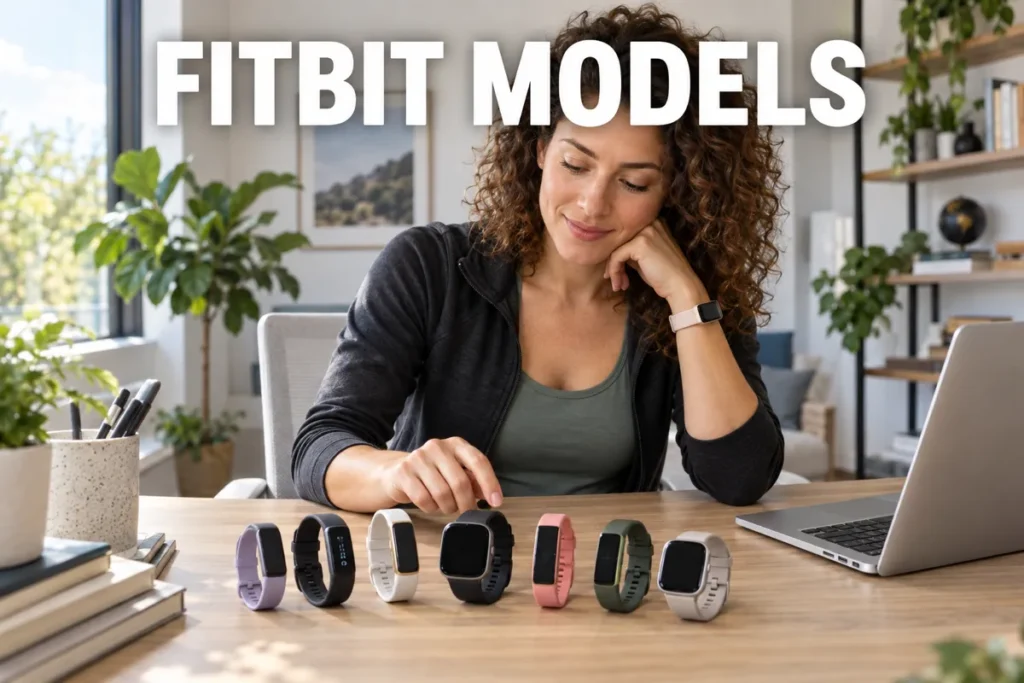
Fitbit models now span everything from a screenless wristband tracker you charge once a week to a full smartwatch that screens for irregular heart rhythms. That range is genuinely useful, but it also makes buying decisions confusing. Steps, heart rate zones, sleep stages, blood oxygen, ECG readings - not every Fitbit tracks all of these, and the differences between fitbits add up quickly. Choosing the wrong device means paying for sensors you'll ignore or missing the metric that actually matters to you. This guide breaks down every current Fitbit model, what each one tracks, how they differ, and how to match the device to your goals before you commit. I've mapped each model's sensor depth against common fitness use cases to make that comparison as direct as possible.

Fitbit Models at a Glance - The 2026 Active Lineup
Fitbit models as of 2026 cover five distinct devices for adult fitness tracking. All current models now sync via Google Health (migrated May 2026). Here is a direct comparison across all fitbit models currently in active production:
Model | Type | GPS | ECG | cEDA | Battery |
Fitbit Inspire 3 | Fitness Band | Phone-only | No | No | Up to 10 days |
Fitbit Charge 6 | Fitness Band | Built-in | Yes | No | Up to 7 days |
Fitbit Versa 4 | Smartwatch | Built-in | No | No | Up to 6 days |
Fitbit Sense 2 | Smartwatch | Built-in | Yes | Yes | Up to 6 days |
Fitbit Air | Screenless | No | No | No | Up to 7 days |
A sixth device, the Fitbit Ace LTE, is available as a kids and family tracker with LTE connectivity and parental controls - it runs on a separate child ecosystem rather than Google Health and is not part of the adult fitness lineup.
For a detailed look at how Fitbit sensors capture each metric day to day, the guide on what a Fitbit tracks breaks down the full tracking picture across steps, heart rate, and sleep.
Discontinued Fitbit Models Worth Knowing
Not all different fitbit models you find listed online are still supported or sold new. Fitbit Luxe, Fitbit Charge 5, Fitbit Versa 3, the original Fitbit Sense, Fitbit Ionic, Fitbit Alta HR, and Fitbit Blaze are all discontinued. The Fitbit Ionic was recalled in 2022 and is no longer supported in any form. Legacy devices like Fitbit Charge 3 and Fitbit Versa 2 may still sync, but receive no software updates or new feature support. If you own one of these discontinued models, a current device gives you full Google Health integration and active development.
What Each Fitbit Model Tracks - Feature Breakdown
The core fitbit differences center on three things: sensor depth, screen type, and GPS capability. Every current device tracks steps, heart rate, and sleep stages. What separates them is which additional health sensors each model includes and how it processes that data. I give the most weight to GPS availability and sensor depth when advising new buyers - those two variables determine how useful the data actually is for changing behavior over time.
For a direct comparison of how Fitbit's sleep tracking stacks up against other dedicated trackers, my best fitness tracker for sleep guide covers accuracy and feature depth across the field.
For buyers who plan to use their Fitbit near water, my guide on are Fitbits waterproof explains which models carry the 5 ATM swim rating, what activities are safe, and how water resistance degrades over time with regular use.
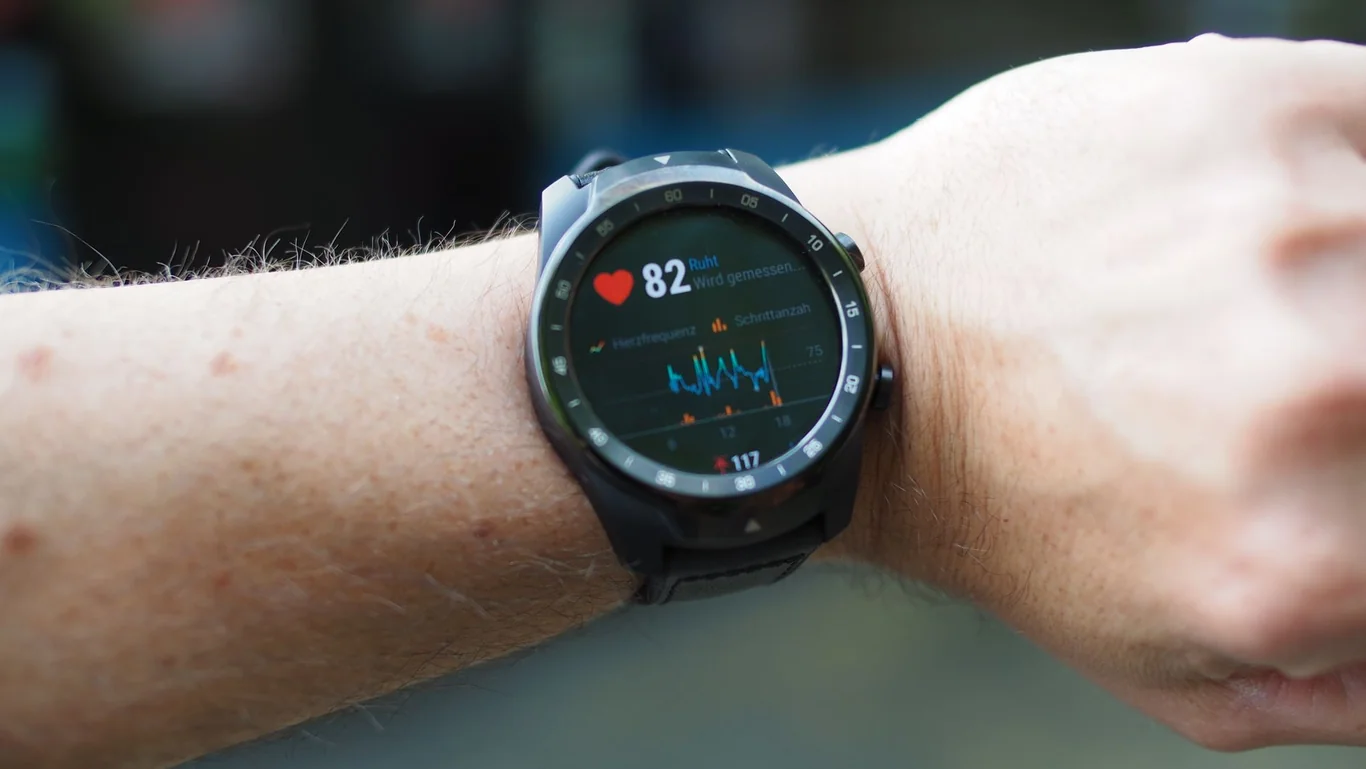
Fitbit Inspire 3 - Essential Fitbit Tracking for Everyday Users
The Inspire 3 covers the core metrics that most users check regularly:
- 24/7 optical heart rate monitoring via PPG sensor
- Sleep stages - light, deep, REM, and wake tracking overnight
- Blood oxygen (SpO2) estimation via overnight measurement
- Stress management score derived from heart rate variability
- Active Zone Minutes - time spent in fat burn, cardio, and peak heart rate zones
- Menstrual cycle tracking through Google Health app integration
The Inspire 3 has no built-in GPS. Outdoor runs and walks log distance using your phone's GPS when you carry it with you. Fitbit tracking at this level covers daily steps, resting heart rate trends, and sleep patterns accurately - which covers most health-monitoring goals for everyday users. It is the most accessible entry point into the Fitbit ecosystem.
Fitbit Charge 6 - The Most Complete Fitness Band
The Charge 6 builds meaningfully on the Inspire 3. Built-in GPS (no phone needed for distance and pace), an ECG app for single-lead heart rhythm assessments, Google Wallet, and YouTube Music controls are the headline additions.
Key Charge 6 tracking features include:
- Built-in GPS for accurate pace, distance, and route logging without a phone
- ECG app - generates a single-lead atrial fibrillation screening reading in about 30 seconds
- Cardio Load metric for tracking cumulative weekly exercise strain
- Daily Readiness Score (requires Google Health Premium subscription)
- SpO2 overnight monitoring and continuous stress tracking
- Workout auto-detection across 40+ exercise types
I'd weight the built-in GPS as the single most important upgrade from the Inspire 3 for anyone who runs or cycles outdoors. Distance logs no longer depend on your phone's location data, which matters most for accuracy when you train without your phone.
Fitbit Versa 4 - Smartwatch Features Without the Advanced Sensors
The Versa 4 operates in smartwatch territory. A larger, full-color touchscreen, Android and iOS notifications, Amazon Alexa voice commands, Google Maps, and Google Wallet are all standard. Fitness tracking matches the Charge 6 - GPS, SpO2, sleep stages, Cardio Load - but without the ECG sensor. Battery runs slightly shorter than the slimmer band options. For users who want notification management, app interactions, and full-featured workout tracking in one device, the Versa 4 is the entry point into Fitbit's smartwatch tier.
Fitbit Sense 2 - Advanced Health Monitoring
The Sense 2 adds one sensor not found on any other current fitbit model: a continuous electrodermal activity (cEDA) sensor that measures skin conductance passively throughout the day as a real-time stress signal. It also includes the ECG app - the same single-lead atrial fibrillation screening also present on the Charge 6.
Everything in the Versa 4 - GPS, smart features, Google ecosystem integration - is also present in the Sense 2. The cEDA sensor is exclusive to the Sense 2 among current fitbit models; buyers who want the most complete physiological picture should treat it as the decisive differentiator. I'd flag the continuous stress monitoring layer as most valuable for users actively managing recovery patterns or tracking autonomic stress responses - not just those who occasionally check their heart rate.
For context on a health metric neither Fitbit nor most wearables handle reliably yet, my guide to Apple Watch and blood pressure covers where wearable detection currently stands.
The key spec difference that makes the cEDA practical: passive readings trigger every 2 minutes throughout the day, while the Charge 6's spot-check EDA requires a dedicated 2-3 minute session per reading. That difference - 720 automatic data points across a 12-hour day versus manual on-demand readings - is what separates stress trend monitoring from single-moment snapshots.
Heart rate variability is the underlying signal behind much of that stress data, and my heart rate variability by age guide covers what normal HRV ranges look like and how to interpret the numbers.
Fitbit Air - Screenless, Battery-First Tracking
The Fitbit Air, launched in May 2026, makes a deliberate trade-off. There is no display. All data flows directly to Google Health on your phone. The battery lasts up to 7 days - longer than most smartwatch options but still requiring weekly charging. Core fitbit tracking includes steps, heart rate, and sleep. For users who find daily charging friction enough to break the habit of wearing a tracker, the Air offers a simplified form factor rather than a fundamental battery breakthrough. It is the right choice for passive health data collection, not for active workout monitoring.
Types of Fitbits - Bands, Smartwatches, and Screenless Trackers
Fitbit types break into three distinct categories that signal different use priorities. Understanding which category fits your daily habits eliminates options faster than spec-by-spec comparison.

Fitbit Fitness Bands
Fitness bands suit users who want health tracking in a slim, lightweight profile. The Charge 6 leads this tier with GPS and ECG; the Inspire 3 covers the essentials without either at a lower entry cost. Both charge on a weekly cadence.
Fitbit Smartwatch Options
Smartwatches serve users who want notification management, app interactions, and voice assistant access alongside workout tracking. The Sense 2 delivers the most health sensors in this tier; the Versa 4 focuses on smartwatch utility without the cEDA and relies on Amazon Alexa rather than Google Assistant.
Screenless Fitbit Trackers
Screenless trackers - currently the Fitbit Air - suit users who wear a traditional watch and want passive health data running underneath without a second screen on their wrist. The Fitbit Ace LTE serves a separate kids and family category with parental controls and safe zone alerts, outside the adult fitness tier.
For a deeper look at what separates smartwatch functionality from basic tracking, our guide to what a smartwatch does covers the practical feature set most wearers actually rely on day to day.
What Is the Latest Fitbit Model and What Changed in 2026
The latest fitbit model as of September 2026 is the Fitbit Air, which launched in May 2026. The Charge 6 remains the most recent flagship fitness band.
The bigger 2026 change is software, not hardware. Google officially migrated all Fitbit users from the Fitbit app to Google Health in May 2026, bundling subscriptions under Google Health Premium. Google Health Premium includes features previously split across different tiers: Daily Readiness Score, advanced sleep analysis with breakdown by stage, an AI Health Coach function, and guided wellness programs.
The Daily Readiness Score is the most actively used gated feature - it requires Premium to unlock on the Charge 6, Versa 4, and Sense 2. For casual users who primarily track steps and sleep duration, Premium is optional; for users who rely on recovery-guided training, it is essential. All current fitbit models now sync exclusively through Google Health, and user account data transferred automatically during the transition.
What Fitbit Models Are Coming Next
Google confirmed new Fitbit hardware in late 2025. A Fitbit Charge 7 appeared in Pixel 11 marketing images in August 2026, though Google has not confirmed a release date or spec sheet. If you are purchasing a new fitness band now and are within a few weeks of a potential product announcement, waiting to see the Charge 7 may be worth considering. No confirmed details on the next smartwatch-tier fitbit model are public at this time.
For users comparing Fitbit against competing wearable platforms, our accuracy breakdown of major smartwatch ecosystems covers how the leading platforms compare on health tracking precision.
Are Fitbits Good - What the Research Shows
How accurately fitbits measure your health data varies by metric. The research gives a nuanced answer that breaks differently depending on what you are tracking.
For a full breakdown of how Fitbit, Garmin, and Apple Watch compare on step, heart rate, and sleep accuracy across peer-reviewed studies, my guide on the most accurate fitness watch covers what the science actually shows for each metric.
Step Count Accuracy
Step count holds up reasonably well in controlled conditions. A systematic review by Feehan et al. covering 67 studies found Fitbit devices came within ±3% error on step counts in 46% of controlled tests (1). A broader analysis by Fuller et al. reviewing 1,838 comparisons across 158 publications found step counts within ±3% error in 45.2% of laboratory tests; in free-living conditions, the pooled data showed a slight overestimation of around 5% (2). Consumer wearables estimate steps from wrist accelerometer data - they interpret movement patterns rather than individual footfalls, which explains the variability across conditions.
Heart Rate Monitoring Accuracy
Heart rate monitoring performs well at rest and moderately during activity. Helmer et al. tested the Fitbit Sense against ECG in 112 postoperative patients and found a mean absolute error of 2.31 bpm with a correlation of r=0.95 - 92% of readings fell within 5 bpm of the ECG reference standard (3). A meta-analysis by Chevance et al. covering 52 studies found a mean heart rate bias of -2.99 bpm across fitbit models (4). Heart rate accuracy decreases during high-intensity exercise because arm movement interferes with the optical PPG sensor signal - this limitation applies to all wrist-based optical monitors, not just Fitbit.
Sleep Stage Tracking Accuracy
Sleep tracking accuracy is moderate. Robbins et al. validated the Fitbit Sense 2 against polysomnography (the clinical gold standard for sleep measurement) in 35 healthy adults and found sleep-wake detection sensitivity at or above 95%, but overall sleep-stage agreement fell in the moderate range (5). Kainec et al. evaluated Fitbit Inspire HR and Versa 2 alongside three other devices and found total sleep time estimates within 5-14% error, while wake detection showed 59-139% variability across all devices tested (6). Fitbit sleep data is useful for tracking duration and stage trends over time; it is not a clinical sleep study.
Calorie Burn Estimates
Calorie burn estimates are the weakest metric across all fitbit models. Both Feehan et al. and the Chevance et al. meta-analysis found high variability and systematic underestimation in energy expenditure. Only 4% of calorie burn estimates in Feehan's review fell within ±3% error.
In our editorial review of customer feedback across fitbit models, the most consistent complaint centers on calorie overestimation during low-intensity activity like walking - users who use calorie figures for dietary decisions tend to be disappointed. Treat calorie data as a directional guide rather than a precise measurement.
I weight the Feehan 2018 step accuracy data more heavily than the calorie data specifically because the gap is so large - 46% of step count tests fell within 3% error versus only 4% of calorie tests at that same threshold. Buyers using their Fitbit primarily for step tracking are working with approximately 11 times more reliable data than those using it for calorie burn estimates.
For how Fitbit compares to other wearable types for step precision, my most accurate step counter guide covers the research across smartwatches, clip-ons, and phone apps.
Metric | Accuracy Summary | Key Sources |
Steps | Within ±3% in ~46% of controlled tests; ~5% overestimation in free-living conditions | Feehan et al. 2018, Fuller et al. 2020 |
Heart Rate | Mean bias -2.99 bpm; 92% of readings within 5 bpm of ECG reference | Chevance et al. 2022, Helmer et al. 2022 |
Sleep Stages | 95% sleep-wake sensitivity; overall stage agreement moderate | Robbins et al. 2024, Kainec et al. 2024 |
Calorie Burn | Only 4% of estimates within ±3% error; high variability and underestimation | Feehan et al. 2018, Chevance et al. 2022 |
Wearables and Real Behavior Change
Despite tracking imperfections, wearing a Fitbit drives real health behavior change. A meta-analysis of 35 randomized controlled trials involving 2,858 participants found that wearable tracker interventions increased daily steps by an average of 2,123 steps per day (95% CI: 1,605-2,641) and reduced systolic blood pressure by 3.79 mmHg versus control groups (7). The behavioral feedback loop - seeing your data and acting on it - drives those results, not measurement precision alone.
For users pairing Fitbit with varied training, understanding what different equipment recruits can contextualize your heart rate and calorie data better. Our guide to what muscles a rowing machine works covers the major muscle groups active in rowing sessions that push Active Zone Minutes significantly higher.
How to Identify Your Fitbit Model
If you own an older device and are not sure which fitbit model you have, three methods work reliably.
Identifying by Physical Appearance
By device appearance:
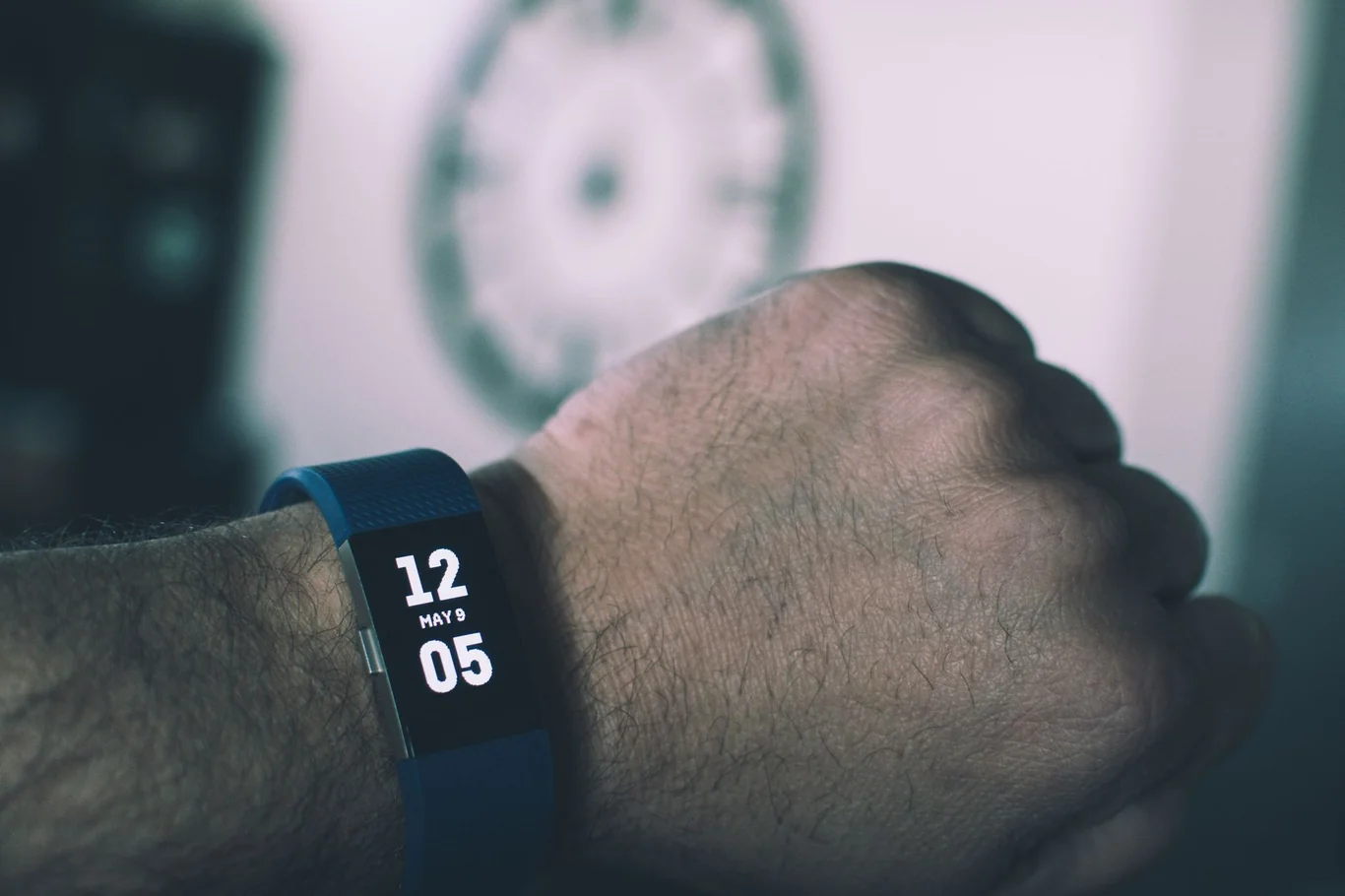
- Fitbit Charge 6: Narrow rectangular AMOLED screen with a visible physical scroll button on the left side
- Fitbit Sense 2: Square face with flat crown buttons on both sides, no side scroll button
- Fitbit Versa 4: Nearly identical square shape to Sense 2 but lacks the ECG sensor port on the back
- Fitbit Inspire 3: Taller, narrower display than the Charge 6 with a single side button
- Fitbit Air: No display - small oval form factor worn on the wrist
Identifying Through the Google Health App
Through the Google Health app:
- Open the Google Health app on your phone
- Tap your profile icon in the top right corner
- Select "Devices" - your synced tracker name appears here with the exact model
Identifying by Serial Number
Via the serial number: The serial number is printed on the back of the band near the charging contacts. Enter it on Fitbit's official support pages to retrieve the full model name and manufacture date. For older Fitbit devices like Charge 3 or Alta HR, the legacy Fitbit app stored the model name under Account > Fitbit Devices. If you no longer have that app, the serial number method is the fastest identification path.
Active users who incorporate movement variety - including treadmill walking variations like walking backwards on a treadmill - will find that newer fitbit models log those movement patterns more accurately than legacy devices from 2018-2019, thanks to improved accelerometer calibration.
Choosing the Right Fitbit Model for Your Goals
Across all fitbit models, the clearest filter is the specific metric you actually monitor every day.
If you're comparing Fitbit against other brands, my best fitness tracker guide ranks the top options across all major wearable categories.
- Steps, sleep, and basic heart rate - Fitbit Inspire 3 handles all of these efficiently, with a 10-day battery and slim profile that suits first-time tracker users
- Running and cycling with GPS accuracy - Fitbit Charge 6 is the best fitness band option; no phone required for pace and distance data
- Stress monitoring and heart rhythm screening - Fitbit Sense 2 is the purpose-built choice, with cEDA adding a passive stress layer no other current model offers
- Smartwatch features alongside fitness tracking - Fitbit Versa 4 provides the full Google ecosystem with notifications and GPS, without the advanced health sensors
- Minimal charging friction - Fitbit Air reduces daily management for users who want passive step and sleep tracking without a screen
I'd point most first-time buyers toward the Charge 6 or Inspire 3 depending on budget and GPS need. Both fitbit models cover the metrics that drive real behavior change and perform reliably across the daily use cases that research actually measures. If you're torn between the Sense 2 and Charge 6 and don't actively review your body response patterns daily, the Sense 2's cEDA sensor adds cost without adding practical value for most buyers - the Charge 6 is the better pick in that case. For a detailed look at how wearable accuracy stacks up, our analysis of how accurate smart watches are for heart rate provides context on what the measurements actually mean. The Franssen 2020 meta-analysis showing 2,123 additional daily steps from wearable interventions is the number I return to most when comparing fitbit models - it suggests the act of wearing any device consistently matters more than which specific model you choose.
FAQs
Are Fitbit accounts going away in 2026?
Fitbit accounts are not going away in 2026 - they were migrated into Google Health as part of Google's May 2026 platform consolidation. All historical Fitbit health data transferred automatically during the transition, and the core tracking features remain available without interruption through the Google Health app.
How do I identify my Fitbit model?
The fastest way to identify your Fitbit model is to open the Google Health app, tap your profile icon, and select "Devices" - your synced tracker appears by full model name. If your device is not currently synced, the serial number printed on the back of the band near the charging contacts can be entered at Fitbit's official support pages to retrieve the exact model details.
Are Fitbit devices being discontinued?
Several Fitbit devices have been discontinued - including Fitbit Luxe, Charge 5, Versa 3, the original Sense, Fitbit Ionic (recalled 2022), Alta HR, and Blaze - but the lineup has not been cancelled as a product category. As of 2026, five adult fitbit models remain in active production: Inspire 3, Charge 6, Versa 4, Sense 2, and Fitbit Air, all of which sync through Google Health.
What model is my old Fitbit?
Your old Fitbit model can be identified by the serial number printed on the back of the device near the charging contacts - entering it at Fitbit's official support pages returns the exact model name and manufacture date. If the device still syncs, the model name also appears under "Devices" in the Google Health app on your phone.
This content is for informational and educational purposes only. It is not a substitute for professional medical advice, diagnosis, or treatment. Always consult with your healthcare provider before starting any new fitness program or using fitness technology for health monitoring.
References
- Feehan LM, Geldman J, Sayre EC, et al. Accuracy of Fitbit devices: systematic review and narrative syntheses of quantitative data. JMIR mHealth and uHealth. 2018;6(8):e10527. doi:10.2196/10527.
- Fuller D, Colwell E, Low J, et al. Reliability and validity of commercially available wearable devices for measuring steps, energy expenditure, and heart rate: Systematic review. JMIR mHealth and uHealth. 2020;8(9):e18694. doi:10.2196/18694.
- Helmer P, Hottenrott S, Rodemers P, et al. Accuracy and systematic biases of heart rate measurements by consumer-grade fitness trackers in postoperative patients: Prospective clinical trial. J Med Internet Res. 2022;24(12):e42359. doi:10.2196/42359.
- Chevance G, Golaszewski NM, Tipton E, et al. Accuracy and precision of energy expenditure, heart rate, and steps measured by combined-sensing Fitbits against reference measures: Systematic review and meta-analysis. JMIR mHealth and uHealth. 2022;10(4):e35626. doi:10.2196/35626.
- Robbins R, Weaver MD, Sullivan JP, et al. Accuracy of three commercial wearable devices for sleep tracking in healthy adults. Sensors (Basel). 2024;24(20):6532. doi:10.3390/s24206532.
- Kainec KA, Caccavaro J, Barnes M, et al. Evaluating accuracy in five commercial sleep-tracking devices compared to research-grade actigraphy and polysomnography. Sensors. 2024;24(2):635. doi:10.3390/s24020635.
- Franssen WMA, Franssen GHLM, Spaas J, et al. Can consumer wearable activity tracker-based interventions improve physical activity and cardiometabolic health in patients with chronic diseases? A systematic review and meta-analysis of randomised controlled trials. Int J Behav Nutr Phys Act. 2020;17:57. doi:10.1186/s12966-020-00955-2.