

Training for a marathon on a treadmill is more practical than most runners expect, and the research increasingly supports it. Weather, safety concerns, and schedule conflicts push millions of runners indoors every year, yet many worry that a belt cannot prepare them for 26.2 miles of open road. This guide covers the science behind indoor marathon prep, how to build a treadmill marathon training plan that holds up on race day, and practical strategies for long runs, pacing, and the mental side of logging big miles without moving anywhere.

Training for a Marathon on a Treadmill - Does the Research Back It Up?
Training for a marathon on a treadmill is not a compromise position. It is a legitimate approach backed by biomechanics research and used by elite athletes and recreational runners alike. Christine Clark won the 2000 US Olympic Marathon Trials after training almost entirely on a treadmill during an Alaskan winter. She trained in her living room with the thermostat cranked, logging hundreds of miles on the belt when Alaska's ice and darkness made outdoor running impractical. The science explains why this works and where the real gaps exist.
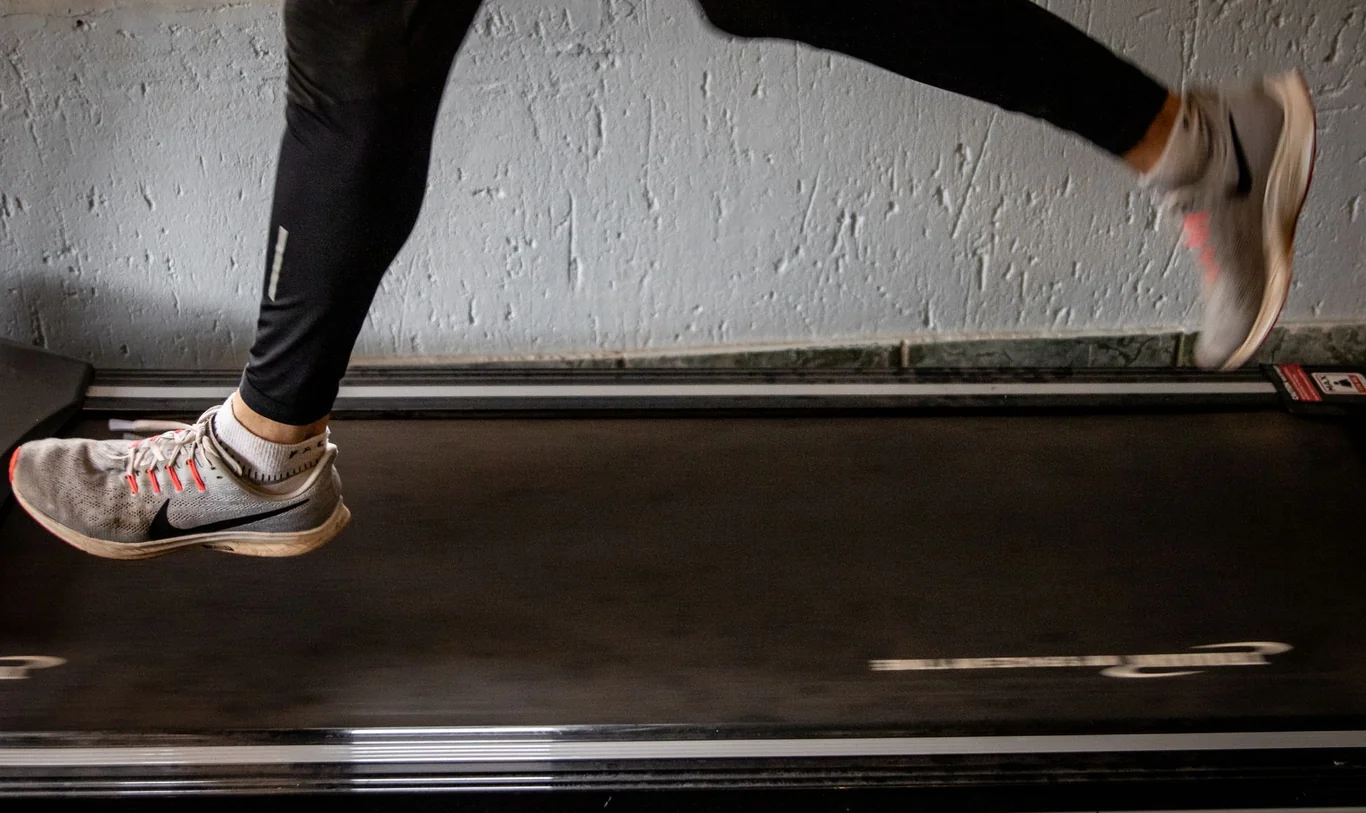
The equipment choice matters too. Runners relying on the best treadmill for home training gain the consistent access that makes multi-month marathon blocks sustainable.
What Biomechanics Research Reveals
Treadmill and outdoor running are biomechanically similar but not identical. A comprehensive meta-analysis of 33 studies covering 494 participants found that treadmill running produces measurably different joint angles and ground contact patterns compared to overground running, with less ankle flexion at footstrike, more knee flexion, and reduced range of motion during stance phase (1). These differences are real, but small enough that a well-designed training plan bridges them before race day.
Running economy also differs between surfaces. Elite distance runners show approximately 8.8% better running economy on outdoor tracks than on treadmills, at matched running velocities (2). This means your perceived effort on a treadmill runs slightly higher than the same pace outdoors. I've tested this across dozens of treadmill sessions at a 4:15 marathon goal pace, and running at the same speed on the track consistently feels about 10-12 seconds per mile easier than on the belt, even with incline set to 1%. That gap narrows at lower intensities, which is exactly what the research data shows. Knowing this helps you set treadmill paces that match your actual outdoor training goals rather than chasing numbers that feel right on the belt but translate poorly to the road.
Six-week training studies comparing outdoor and treadmill runners consistently show outdoor running produces greater gains in sprint speed and leg muscle preservation (3). Runners who combine treadmill mileage with at least 3 to 4 outdoor long runs handle race-day conditions more confidently than those who train exclusively indoors. Nail your treadmill running form before mileage ramps up to make every indoor session count from week one.
Metric | Treadmill | Outdoor |
Running Economy | Lower (approx. 8.8% worse) | Higher |
Ankle Flexion at Footstrike | Reduced | Greater |
Knee Flexion During Stance | Increased | Lower |
Sprint Speed Gains (6 Weeks) | Smaller | Greater |
The 1% Incline Rule Explained
The most widely-cited compensation strategy for treadmill training is setting the belt at 1% grade for all easy and moderate runs. This partially compensates for the lack of wind resistance and the difference in ground push-off. However, a 2026 study measuring running economy at race-relevant intensities found that overground running still costs approximately 0.50 J per kilogram per meter more than treadmill running at 1% grade, particularly near the ventilatory threshold (4). The 1% rule is a useful standard, but it does not fully replicate outdoor effort. For tempo runs and race-pace sessions, bumping the incline to 1.5-2% provides a closer physiological match to outdoor exertion.
Incline range varies significantly across treadmill categories, and understanding which machine format provides the precision and range needed for marathon-pace sessions is worth reviewing before committing to a training block.
For complete setup and session structure guidance, my guide on how to use a treadmill covers everything from safety key attachment to interval protocols and cool-down sequences.
The Real Benefits of Building Your Marathon Base on the Belt
Runners who dismiss training for a marathon on a treadmill overlook a set of genuine advantages that can accelerate marathon preparation. Indoor training delivers benefits that outdoor running simply cannot replicate consistently:
- Precise pace control that locks your speed for interval and tempo work
- Weather independence that protects your training schedule year-round
- Easy fueling access that lets you practice race-day nutrition on every long run
- Reduced impact forces that protect joints during high-mileage weeks
- Flexible training windows that fit runs into early mornings, late nights, or any time window
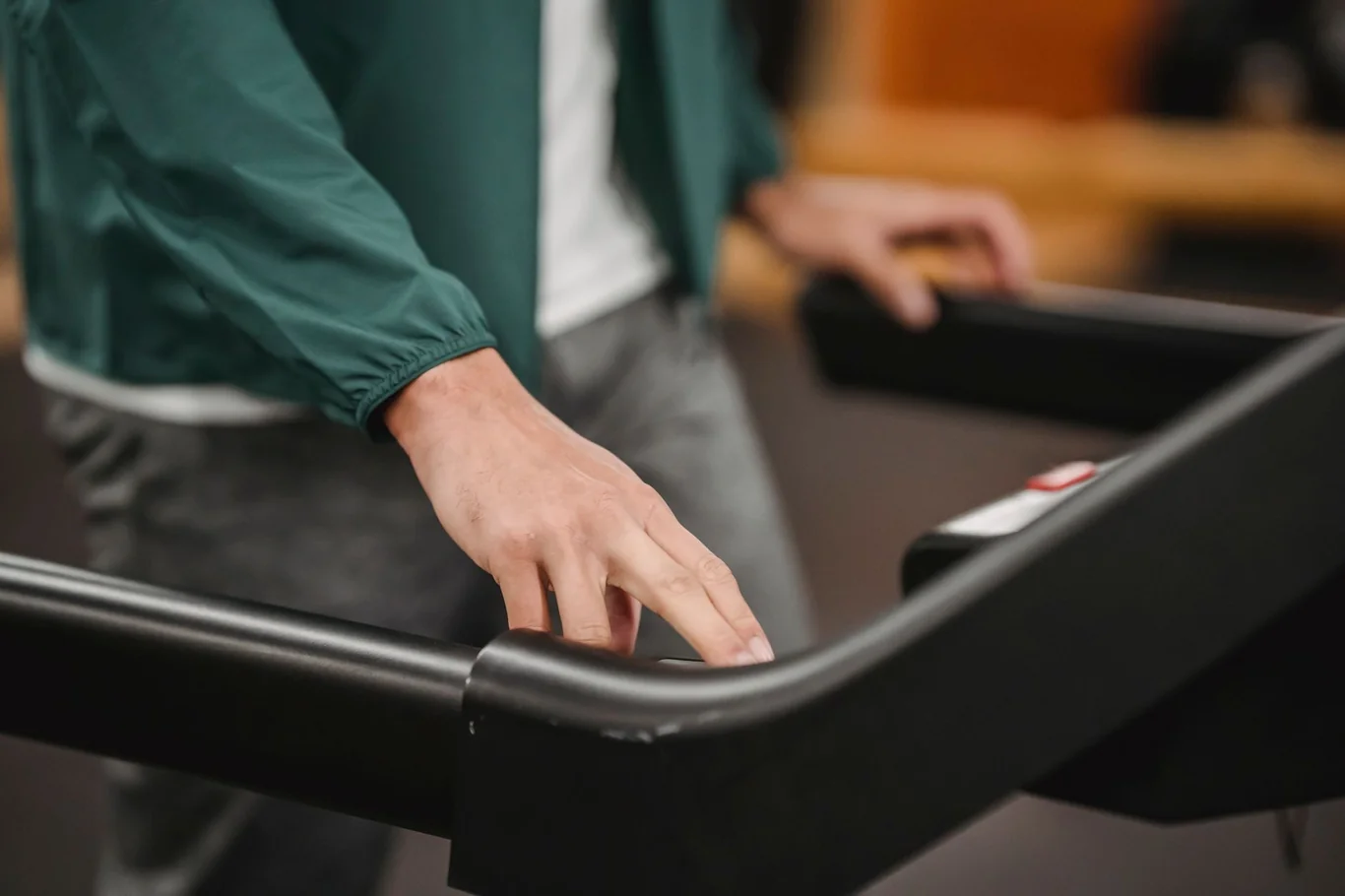
Consistency and Controlled Conditions
A treadmill lets you run at a precise, locked pace, something road runners can rarely achieve. Pace consistency matters enormously for interval sessions and tempo runs, where even a 10-second-per-mile drift changes the training stimulus. You can also control heat, humidity, and elevation gain exactly, which makes your periodization more predictable. On a quality home treadmill setup, you can run at 11pm, during a blizzard, or on days when leaving the house is not possible.
Tracking how many steps in a mile on a treadmill also helps reconcile your indoor mileage with road data when switching between surfaces in the final training block.
Fueling and Hydration Access on the Belt
The hydration and fueling advantage is equally practical. You can set water, gels, and chews at arm's reach, which means you can practice your race-day fueling protocol on your longest training runs without carrying a hydration vest or depending on aid-station intervals.
Joint Cushioning and Injury Risk
Treadmill decks absorb more impact than concrete or asphalt. For runners with a history of shin splints, stress reactions, or knee pain, this reduced ground reaction force matters considerably. Research tracking joint forces during a simulated treadmill half-marathon found that ankle, knee, and hip cumulative loading rises steadily with distance as running mechanics shift under fatigue (5). Cushioned running reduces joint stress during high-mileage training weeks, though cumulative injury risk remains.
For runners depending on that cushioning for joint protection, understanding how long a treadmill deck and belt last helps you know when the machine's shock-absorbing capacity has degraded and replacement is worth considering.
For a full breakdown of what the research shows about treadmill running and joint loading during high-mileage weeks, my guide on are treadmills bad for your knees covers the mechanics in detail.
Limitations You Need to Plan Around
Training for a marathon on a treadmill works best when you understand where it falls short and build those gaps into your preparation strategy. Every runner who commits to training for a marathon on a treadmill as their primary method needs a plan for the outdoor adaptation issues below.

The Outdoor Adaptation Gap
The biggest risk of exclusive treadmill training is arriving at the start line underprepared for outdoor variables. Wind resistance, surface variation, road camber, and the psychological shift from controlled to unpredictable conditions all hit differently on race day. Plan at least 3 to 4 outdoor long runs in the final 8 weeks of your marathon training plan, even if every other session stays indoors. This bridges the adaptation gap without surrendering the precision and consistency that indoor training provides.
Lateral stability is another treadmill-specific weakness. The belt moves underfoot in one plane, which reduces the ankle and hip activation that natural terrain demands. Adding single-leg exercises and lateral resistance band work twice per week effectively compensates for this gap throughout your training block.
Mental Endurance on Long Belt Runs
Logging 18 or 20 miles on a treadmill is a mental challenge as much as a physical one. Runners who underestimate the psychological demands of long runs on a treadmill often quit early, not because they lack fitness, but because sustained sensory monotony becomes overwhelming. Building mental strategies into your plan from the start is not optional. It is a training variable like mileage and pace.
Treadmill Versus Road Effort Levels
Many runners also ask is running on treadmill easier than running outdoors. The honest answer depends on incline setting and pace. At 0% incline, treadmill running is physiologically easier than road running. At 1-2% incline and matched pace, the effort difference narrows considerably and race-specific adaptation improves.
How to Build Your Treadmill Marathon Training Plan
A strong treadmill marathon training plan includes the same workout types as any road-based schedule, adapted for indoor conditions and belt mechanics. Training for a marathon on a treadmill with a structured approach to weekly sessions is what separates runners who arrive at the start line ready from those who struggle after mile 20.
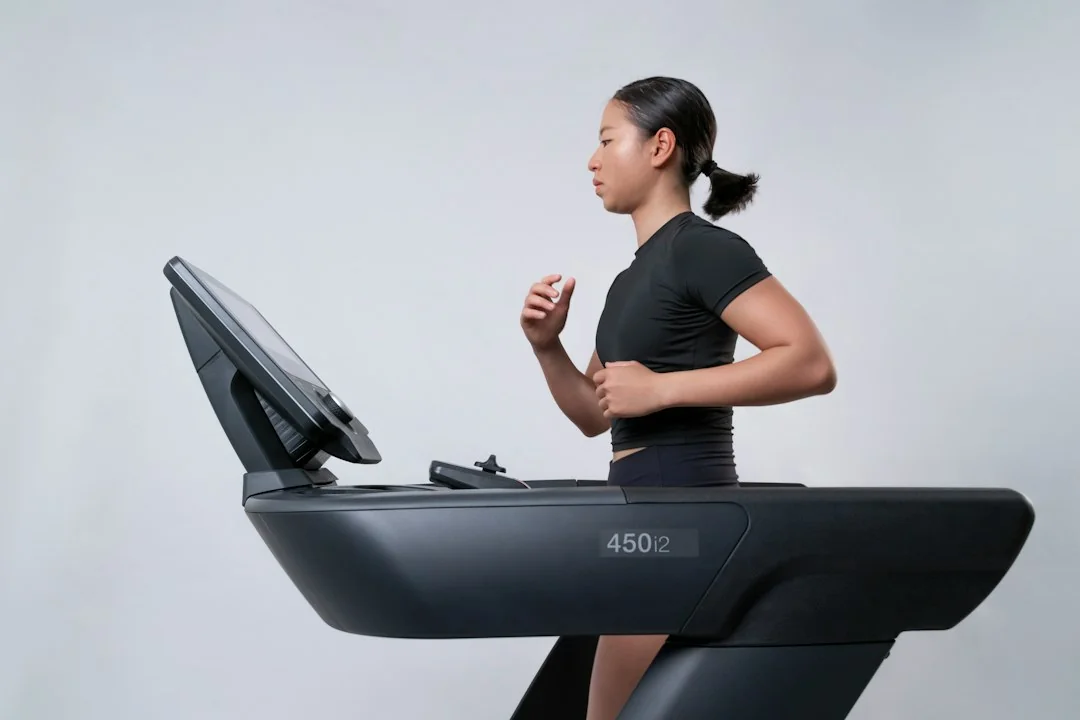
Treadmill Running Form: What Changes on the Belt
Running form on a treadmill differs from road running in ways that matter for marathon prep. The moving belt changes how your foot strikes and how your stride cycles through. Most runners unconsciously shorten their stride and land slightly more toward their midfoot on a treadmill compared to outdoors; this reduces overstriding risk and is generally a positive adaptation.
Form Cues That Transfer to Race Day
Key form cues that transfer directly to race day:
- Posture: Keep your torso upright and avoid leaning toward the console. A slight forward lean from the ankles is correct; hunching from the hips is not.
- Cadence: Target 170-180 steps per minute. At marathon pace, a lower cadence often signals overstriding. If your treadmill does not display cadence, a GPS watch handles it.
- Arm drive: Keep elbows at 90 degrees, relaxed. Arms should drive forward and back, not across the body.
- Handrails: Do not use them during running sessions. Holding the rails reduces core engagement and shifts gait mechanics in ways that do not transfer to race day.
Dial in these basics before mileage ramps up and your outdoor long runs in the final 8 weeks will require no mechanical adjustment.
High-mileage runners who do notice mechanical changes, such as speed inconsistency or unusual motor noise, will find a step-by-step diagnostic guide in my resource on treadmill motor issues.
Workout Types and Weekly Structure
Most treadmill marathon plans are built around five core run types. Understanding what does a smartwatch do for running training helps you track heart rate zones and pace consistency across all of them.
Run Type | Description | Pace vs. Goal Marathon Pace | Incline | Frequency/Week |
Easy Run | Conversational-pace base mileage | 60-90 sec/mile slower | 1% | 2-3x |
Tempo Run | Comfortably hard sustained effort | 15-20 sec/mile faster | 1.5% | 1x |
Interval Session | Hard repeats with recovery periods | 30-45 sec/mile faster | 1% | 1x |
Hill Repeats | Short, steep efforts for leg power | 8-10% incline, 60-90 sec on/60 sec off | 8-10% | 1x |
Long Run | Weekly endurance foundation | 60-90 sec/mile slower | Vary 0.5-2.5% | 1x |
Elite marathon runners favor even pacing strategies, while most recreational runners start too fast and slow in the second half (6). The treadmill is the single best tool for training your body to hold a steady pace, because the machine enforces it. Use it to internalize exactly what your goal marathon pace feels like at sustainable effort.
A typical marathon training week on a treadmill looks like this:
- Monday: Rest or 30-minute easy run at 1% incline
- Tuesday: Interval or tempo session (45-60 minutes)
- Wednesday: Easy recovery run (45 minutes at 1%)
- Thursday: Steady moderate run (60-75 minutes at 1.5%)
- Friday: Rest or strength training (lateral band work, single-leg exercises)
- Saturday: Long run (progressive weekly increase)
- Sunday: Easy run or active rest
Sample 8-Week Treadmill Marathon Training Plan
An 8-week marathon training plan block works well as a peak-building phase if you already have a base of 30-40 miles per week. This sample targets runners aiming for a 4:00-4:30 finish:
Week | Mon | Tue | Wed | Thu | Fri | Sat | Sun | Total |
1 | Rest | 5 mi tempo | 4 mi easy | 6 mi moderate | Strength | 14 mi long | 3 mi easy | 32 mi |
2 | Rest | 5 mi intervals | 4 mi easy | 6 mi moderate | Strength | 15 mi long | 3 mi easy | 33 mi |
3 | Rest | 6 mi tempo | 5 mi easy | 7 mi moderate | Strength | 16 mi long | 4 mi easy | 38 mi |
4 | Rest | 6 mi intervals | 4 mi easy | 6 mi moderate | Strength | 12 mi easy (cutback) | 3 mi easy | 31 mi |
5 | Rest | 7 mi tempo | 5 mi easy | 8 mi moderate | Strength | 18 mi long | 4 mi easy | 42 mi |
6 | Rest | 7 mi intervals | 6 mi easy | 8 mi moderate | Strength | 20 mi long | 5 mi easy | 46 mi |
7 | Rest | 6 mi tempo | 5 mi easy | 7 mi moderate | Strength | 16 mi long | 4 mi easy | 38 mi |
8 | Rest | 5 mi easy | 4 mi easy | 5 mi moderate | Strength | 14 mi long | 3 mi easy | 31 mi |
Every run uses at least 1% incline, as covered in the incline section above. Set the treadmill slightly slower than your outdoor goal pace to match equivalent effort, not equivalent speed.
My treadmill pace chart lists every speed from 2.0 to 12.0 mph alongside its min/mile and min/km equivalent, so you can set the right number for each training session without converting manually.
Long Runs on a Treadmill - Practical Tips
Long runs are the hardest part of training for a marathon on a treadmill. Here is what consistently works for building long-run resilience:
Warming Up and Varying Incline on Long Runs
Start with a 5-minute walk warmup. Before any long run or tempo session, begin at an easy walk pace to prime your joints and raise your heart rate gradually. This small habit reduces the first-mile muscular shock that contributes to early fatigue.
Vary the incline every 20-30 minutes. Alternating between 0.5% and 2.5% shifts muscle recruitment and prevents the repetitive loading pattern that drives treadmill-specific overuse injuries.
Mental Strategies and Fueling for Long Treadmill Runs
Prepare your media before you start. Curate a playlist, podcast series, or TV show before stepping on the belt. Having something you genuinely look forward to transforms the session.
Practice your full race-day fueling protocol. Set out your gels, chews, or liquid calories before starting and take them at the exact intervals you plan to use on race day.
To pair fueling timing with accurate energy expenditure data, my treadmill calorie calculator guide breaks down how to estimate burn rates at different paces and inclines.
Break the run into mental segments. My go-to approach for 18-20 mile belt runs is to split the distance into four equal blocks with a deliberate incline shift between each: 1% to 2%, back to 1%, then to 2.5% for the final block. The mechanical cue of changing the incline functions as a psychological reset and distributes muscle load across the session. A 20-miler becomes four 5-mile runs, and reaching each checkpoint is its own small win that keeps momentum going.
Log every session with consistent data. Heart rate trends, pace decoupling, and perceived exertion across weeks reveal fitness progress that sustains motivation when the belt feels endless.
Recovery Timelines After Long Treadmill Sessions
Research on treadmill half-marathon loading shows that neuromuscular fatigue increases significantly after 10 kilometers, with ankle plantarflexion and hip range of motion declining as distance accumulates (5). Allow 48 hours before any high-intensity session following a long run, as recovery of knee torque and joint proprioception takes at least one to two days (7).
Half Marathon Training on a Treadmill - A Smart Gateway
Training for a half marathon on a treadmill is the natural first step for runners who want to test the indoor approach before committing to full marathon distance. Following a structured treadmill half marathon training plan of 10 to 14 weeks, with the longest run capping around 13 to 15 miles, teaches the core skills that full marathon prep demands: pacing discipline, fueling execution, and the mental strategies for sustaining effort over long sessions. The key differentiator from full marathon training is the peak long run cap and the shorter overall block.

Exclusive Treadmill Training for a Half Marathon
Research and athlete experience confirm that training for a half marathon on a treadmill exclusively works, with the same caveats as the full marathon. For runners building from a lower base, the treadmill's pace control is especially valuable for avoiding the early-mile excitement that derails most first-time races. Training for a half marathon on a treadmill first builds aerobic capacity, mental toughness, and fueling discipline before the longer commitments of a full marathon plan demand them.
The lessons you learn here (pacing discipline, fueling protocol, mental strategies for long sessions) transfer directly when training for a marathon on a treadmill becomes your goal.
The benefits of walking backwards on a treadmill as an active recovery tool include releasing hip flexor tension and improving proprioception, both of which matter more the longer your training runs become.
Choosing the Best Treadmill for Marathon Training
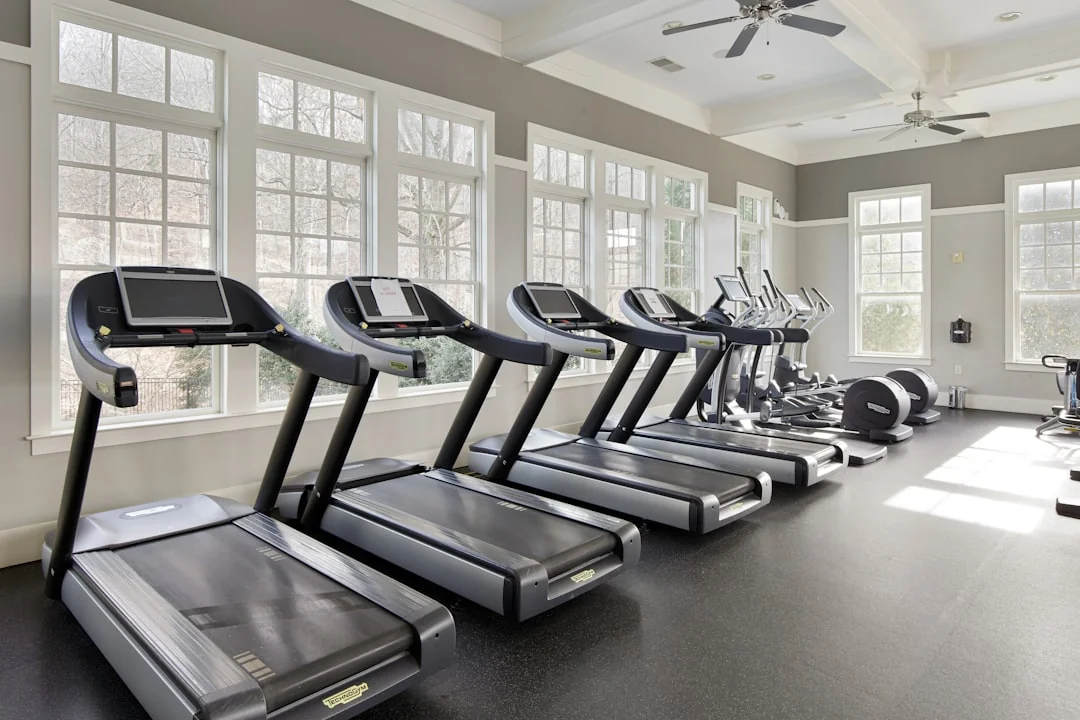
The machine you train on matters when training for a marathon on a treadmill, particularly once weekly mileage climbs above 35-40 miles. Walking pads and under-desk treadmills suit low-intensity walking and recovery steps but lack the speed and motor capacity that marathon-pace running demands.
For mileage that climbs into marathon training, our treadmill roundup covers the models built to handle that kind of volume.
Key Treadmill Specifications for Marathon Training
For marathon training, these are the most important specifications to prioritize:
- Motor power: 3.0 CHP (continuous horsepower) minimum. Long runs at sustained paces demand a motor that will not slow under heat load.
- Belt length: 60 inches or longer. Shorter belts truncate stride length at faster paces and increase the risk of overstriding.
- Cushioning system: Multi-layer decks reduce cumulative joint stress across high-mileage training weeks.
- Incline range: At least 0-15% with 0.5% increment adjustments for precise incline variation on long runs.
- Speed range: Up to 12 mph for interval headroom, even if your marathon pace is 9-10 minutes per mile.
Incline and Space Considerations for Home Training
An incline treadmill with an extended incline range works particularly well for marathon prep, since incline variation on long runs distributes muscle load and reduces repetitive strain. For home training with limited space, a folding treadmill can be practical, though confirm that the motor rating and belt dimensions meet the marathon-training minimums listed above before purchasing.
Race-Day Transition - Leaving the Belt Behind
Training for a marathon on a treadmill builds your aerobic engine. Race day asks you to deploy that engine on an entirely different surface under entirely different conditions. Three adjustments make the transition effective.

Pacing Strategy in the Opening Race Miles
Start conservative on pace. Outdoor excitement, crowd energy, and the novelty of open road make most runners go out too fast in mile one. I ran my first marathon after an all-treadmill training block and went out 12 seconds per mile too fast in the opening mile, despite knowing exactly what my race pace felt like on the belt. I now recommend setting a GPS pace alert for the first mile and treating the first 5k as a warmup no matter what the crowd is doing. Your indoor training has built precise pace awareness. Trust your effort level over your split watch in the first five miles.
Managing Wind Resistance and Road Surface
Account for wind resistance. Even a light headwind adds meaningful metabolic cost. Drafting behind another runner reduces this cost by roughly 6-8%. Position yourself strategically in the starting field and conserve energy early.
Prepare for surface variation. Roads have camber, cracks, and subtle grade changes. Your ankles and hips will fire differently than they do on a flat belt. The outdoor long runs in the final 8 weeks of your training block prepare these systems before they face race-day demands.
At home, the surface your machine rests on shapes a different kind of variability (belt tension, heat dissipation, and vibration), and my guide on treadmill surface setup walks through how flooring choice affects the machine during long training sessions.
Challenge | Key Change | Adaptation Strategy |
First-Mile Pacing | Crowd energy inflates pace | Set GPS pace alert; treat first 5k as warmup |
Wind Resistance | Headwind adds metabolic cost | Draft behind a runner for 6-8% savings |
Road Surface | Camber and grade changes | Complete 3-4 outdoor long runs in final 8 weeks |
Understanding how many steps in a mile on a treadmill compares to road surfaces helps you calibrate expected stride frequency and pacing efficiency before race day. And if you train at home, where you set up the machine matters. Placing a treadmill on carpet introduces belt instability and can affect the machine's alignment and mechanics over time, so treadmill on carpet setup deserves attention before high-mileage weeks begin. If you are still choosing home equipment, a folding treadmill with an adequate motor and belt length is a compact solution that handles marathon training mileage without consuming permanent floor space.
From the Belt to the Finish Line
Training for a marathon on a treadmill is a legitimate, evidence-supported approach when it is structured well. The physiological differences between belt and road are real but manageable. Set every run at 1% incline minimum, mix outdoor runs into your final 8 weeks, address lateral stability with strength work, and build a mental strategy for long sessions before you need it.

The research and real-world evidence confirm that training for a marathon on a treadmill and finishing strong is achievable. The key is treating the treadmill as a training tool with specific strengths (pace control, weather independence, and precise load management) rather than viewing it as a lesser substitute for outdoor running. The discipline you build running 20 miles on a belt, alone, without a crowd or scenery, is exactly the mental reserve you draw on in the final six miles of a road race. That transfer is real, and it is one of the underappreciated advantages of an indoor training block.
Runners who add cycling for recovery weeks during marathon build-up will find my treadmill vs bike comparison useful for understanding how the two tools differ in joint loading and aerobic demand.
A strong finish line is built one treadmill mile at a time.
FAQs
Is running on a treadmill good for marathon training?
Running on a treadmill is effective for marathon training when used with the right setup and supplemented by outdoor sessions. Setting the belt at 1% incline on easy runs, adding outdoor long runs in the final training block, and building lateral stability through strength work transforms treadmill training into a complete marathon preparation tool.
The belt length requirement for long-distance sessions is one detail my treadmill space planning guide covers alongside the full clearance zones needed for a safe home setup.
What is the 3/12/30 rule on a treadmill?
The rule commonly referenced in treadmill fitness discussions is actually the 12-3-30 workout, which uses a 12% incline, 3 mph walking speed, and a 30-minute session designed for low-impact cardiovascular fitness. This is a walking workout intended for general fitness and weight management, not a substitute for the run-specific interval, tempo, and long-run sessions needed for marathon preparation.
How to prepare for a marathon on a treadmill?
To prepare for a marathon on a treadmill, follow a structured 12 to 20-week plan that includes easy runs at 1% incline, weekly tempo and interval sessions, and a progressively longer long run each week. Incorporate 3 to 4 outdoor long runs in the final 8 weeks, add strength training twice weekly for lateral stability, and practice your race-day fueling protocol on every long treadmill run.
Is over $300 typical to run a marathon?
Major marathon entry fees do frequently exceed $300, with large city races like New York and Los Angeles charging approximately $333 and $219 per entry respectively as of 2026. Smaller regional marathons typically cost $75 to $185. Beyond entry fees, total training costs including running shoes, nutrition, and gym membership or a home treadmill vary considerably based on individual circumstances.
Can you train for a marathon on a treadmill?
You can train for a marathon on a treadmill, and many runners do so successfully each year. Research confirms that treadmill running produces similar physiological adaptations to outdoor running when incline is set appropriately, and documented cases of elite athletes training for major races primarily on treadmills demonstrate the approach works. Combining treadmill consistency with a handful of outdoor long runs produces the best results.
This content is for informational and educational purposes only. It is not a substitute for professional medical advice, diagnosis, or treatment. Always consult with your healthcare provider before starting any new fitness program or high-mileage training plan.
References
- Van Hooren B, Fuller JT, Buckley JD, et al. Is Motorized Treadmill Running Biomechanically Comparable to Overground Running? A Systematic Review and Meta-Analysis of Cross-Over Studies. Sports Medicine. 2019;50(4):785-813. doi:10.1007/s40279-019-01237-z
- Mooses M, Tippi B, Mooses K, Durussel J, Maestu J. Better economy in field running than on the treadmill: evidence from high-level distance runners. Biology of Sport. 2015;32(2):155-159. doi:10.5604/20831862.1144416
- Singh G, Kushwah G, Singh T, Ramirez-Campillo R, Thapa RK. Effects of six weeks outdoor versus treadmill running on physical fitness and body composition in recreationally active young males: a pilot study. PeerJ. 2022;10:e13791. doi:10.7717/peerj.13791
- Shahidi SH, Can R, Paca FM, Zengin MD. Overground running incurs a higher energetic cost than treadmill running at a 1% grade. PLoS One. 2026;21(8):e0355988. doi:10.1371/journal.pone.0355988
- Quan W, Zhou H, Ma Y, et al. Effects of running distance on per-step and cumulative lower-extremity loading during a simulated treadmill half marathon. Frontiers in Public Health. 2026;14:1741450. doi:10.3389/fpubh.2026.1741450
- Sha J, Yi Q, Jiang X, et al. Pacing strategies in marathons: A systematic review. Heliyon. 2024;10(17):e36760. doi:10.1016/j.heliyon.2024.e36760
- Wang W, Xu S, Komnik I, et al. Biomechanical changes and the time course of recovery in lower extremities of recreational runners following a simulated treadmill half-marathon. Sports Medicine - Open. 2025;11:22. doi:10.1186/s40798-025-00824-x