
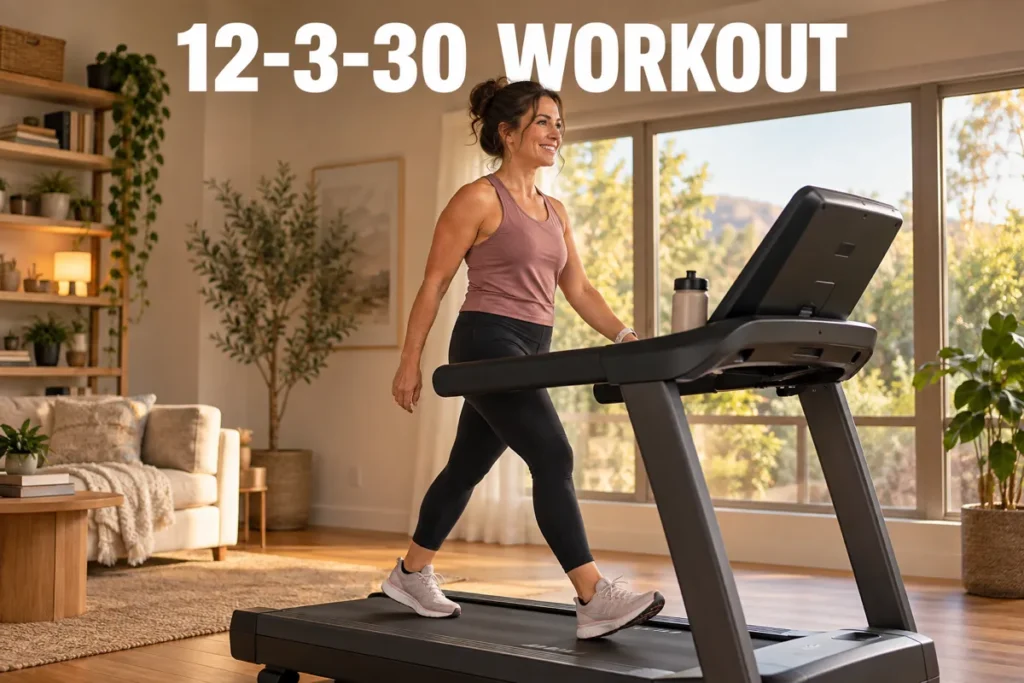
The 12-3-30 workout put treadmill culture on its ear when Lauren Giraldo, a content creator, shared her incline walking routine on YouTube in 2019 and credited it with losing 30 pounds. It earned its staying power because the results are real and repeatable. I'm Filip Maric, MPhEd and ISSA Elite Trainer, and I've spent years coaching clients through treadmill-based fat-loss programs.
In my experience, the appeal of the 12-3-30 treadmill workout comes down to three things: it's specific, accessible, and it actually works. This guide covers how the workout functions physiologically, how many calories it burns, what 12-3-30 workout results look like in a realistic timeline, and how to start without wrecking your calves in the first week.

12-3-30 Workout - What the Numbers Actually Mean
The name encodes the entire protocol: 12 is the treadmill incline percentage, 3 is the speed in miles per hour, and 30 is the session duration in minutes. Each number was chosen by Giraldo based on what felt challenging but repeatable - not from a lab design. The science has since caught up and broadly validated the selection. If your treadmill uses metric units, set speed to 4.8 km/h - the 12-3-30 treadmill in km equivalent produces the identical training stimulus.
The first peer-reviewed study specifically testing this 12-3-30 treadmill workout (n=16) found it produces comparable total energy expenditure to self-paced running while generating a higher percentage of fat utilization and lower carbohydrate utilization (1). That distinction matters for anyone whose primary goal is fat loss rather than peak performance.
Three things make this 12-3-30 walking method more effective than a casual low-incline treadmill workout:
- Gravity multiplies the effort - the steep incline forces your muscles to contract harder on every single step
- The fixed parameters remove decision fatigue - you know exactly when you're done and exactly how hard you're working
- It carries far lower injury risk than running - no high-impact foot-strike forces, no sprint mechanics to master
How to Set Up Your Treadmill for the 12-3-30
Setting up the treadmill correctly takes under 30 seconds, but getting the details right matters for both safety and results. Metric-display treadmills should be set to 4.8 km/h and the incline raised until the grade reads 12%. If your machine does not reach a 12% grade, my incline treadmill picks list seven options I tested over 90 days.
A complete session looks like this:
- Warm-up (5 minutes): Walk at 0% incline, 2.5 mph - gradually elevates heart rate
- Working set (30 minutes): 12% incline, 3 mph (or your current modified speed)
- Cool-down (5 minutes): 0% incline, 2.0 mph, followed by calf raises and hip flexor stretches
Always clip the treadmill's safety key to your clothing before you start. If you lose footing on a 12% grade, the belt stops automatically - a precaution I always remind new clients to use, even if they feel it is unnecessary. If you are new to the controls, I explain the safety key and programs in my guide on how to use a treadmill.
Beginner Modifications for the 12-3-30 Treadmill Workout
I see new clients make the same mistake repeatedly: they jump straight to 12% at 3 mph on day one, survive 15 minutes, and spend the next three days with burning calves and shin splints. A 4-week progressive ramp is smarter than brute-forcing the full protocol.
- Weeks 1-2: 6-8% incline, 2.5 mph, 20 minutes per session
- Week 3: 10% incline, 2.5-3.0 mph, 25 minutes per session
- Week 4 onward: 12% incline, 3.0 mph, 30 minutes (full protocol)

This progression lets your calf tendons, plantar fascia, and cardiovascular system adapt before you ask them to perform at full demand. If you're coming from a sedentary baseline, extend each phase by an extra week.
Footwear matters more than most guides acknowledge. Running shoes with a cushioned heel are better than flat-soled sneakers for the 12-3-30 - the elevated heel reduces strain on the Achilles tendon and calves, which take the most punishment at steep incline grades. I've seen clients resolve early-session shin pain simply by switching shoe types.
I've found the week-3 step from 10% to 12% incline catches most clients harder than anticipated - 4 to 5 additional sessions at 10% before stepping up eliminates the calf soreness spike that typically derails the first full-protocol attempt.
Form cues that matter on incline:
- Keep your chin level and gaze forward, not down at your feet
- Engage your core throughout - the incline wants to pull you into a forward hunch
- Let your arms swing naturally; gripping the rails reduces glute activation by offloading the work to your arms
- Take shorter, quicker steps rather than reaching forward - overstriding on incline is the primary cause of hip flexor strain
12-3-30 Calories Burned - Honest Estimates by Body Weight
Calorie burn during the 12-3-30 workout depends on body weight, fitness level, and whether you hold the rails throughout. Research on oxygen consumption at 3 mph with increasing incline grades shows that VO2 increases dramatically at each grade step - from approximately 12.8 mL/kg/min at 0% grade to roughly four times higher at steep inclines, measured at exactly the 3 mph speed used in this workout (2). At 12% specifically, most adults are working at moderate-to-vigorous intensity.

I set this workout as a primary fat-loss tool for clients who assume walking can't match running's output - the calorie data consistently surprises them. The table below reflects MET-based estimates for a 30-minute working set.
Body Weight | Estimated Calories Burned (30 min) |
~120 lbs (54 kg) | 180-210 |
~150 lbs (68 kg) | 225-265 |
~175 lbs (79 kg) | 260-305 |
~200 lbs (91 kg) | 300-350 |
~225 lbs (102 kg) | 335-390 |
~250 lbs+ (113 kg+) | 375-430 |
These are estimates based on MET values for steep incline walking and are consistent with research averages. An ACE-funded study on this protocol reported approximately 220 calories per 30-minute session across a mixed-sex participant group.
Fat Utilization During the 12-3-30
The 12-3-30 workout calories burned figure understates one key advantage: where those calories come from. A controlled study examining gradient effects across age groups found that incline walking significantly increases fat oxidation rates compared to level walking at matched intensity, with a greater effect on fat metabolism across all three intensity levels tested (3). Wong et al. (2025) measured 41% fat utilization during the 12-3-30 protocol - higher than the 33% typically observed during self-paced running. I examine whether the fat-burning zone really works in my discussion of heart rate for fat burning.

What this means practically:
- Fat oxidation from a single session does not translate into dramatic visible changes
- The calorie deficit accumulated over weeks of consistent sessions is the real driver
- The 12-3-30's low technical barrier supports the consistency that actually produces fat loss over time
12-3-30 Workout Results - What to Expect and When
Before-and-after stories on social media set unrealistic expectations. I want to give you the honest, research-grounded picture of what real 12-3-30 workout results look like.

Short-Term Results (Weeks 1-4)
In the first four weeks, the most consistent changes I observe in clients doing the 12-3-30 treadmill workout are fitness-based, not appearance-based:
- Reduced session difficulty - the same 30 minutes feels noticeably easier by week 3 as your cardiovascular system adapts
- Lower resting heart rate - many clients notice their morning heart rate drops 3-5 bpm within 3-4 weeks
- Improved lower-body endurance - calf and glute fatigue that was pronounced in week 1 diminishes significantly
- Better sleep quality - consistent aerobic training improves sleep architecture, and clients consistently report this before any weight changes appear
The scale during weeks 1-2 often reflects water fluctuations more than true fat loss - do not use it as your primary metric this early.
Long-Term Results (8-12 Weeks and Beyond)
The more meaningful 12-3-30 results emerge after sustained training. A pilot study using weight-supported walking technology found significant improvements in metabolic health markers including a 34% reduction in 2-hour insulin and 11% reduction in fasting triglycerides - independent of body weight change (4). Those cardiometabolic gains represent real health progress even when the scale doesn't reflect it yet.
Individual results depend on starting fitness level, training frequency, diet, sleep quality, and genetics. No specific weight-loss outcome is guaranteed from any exercise protocol.
Three weeks of consistent sessions is when my client base most reliably reports the first clear subjective shift - sessions that rated 7 out of 10 effort in week 1 typically drop to 5 out of 10 by week 3, before any measurable scale change.
The most compelling 12-3-30 treadmill before and after changes shared by consistent practitioners - reduced waist measurement, improved resting heart rate, and increased endurance - typically appear after 8 or more weeks. Your 12-3-30 results one month in typically include meaningful cardiovascular fitness gains and modest fat loss (0.5-2 lbs of actual fat) when paired with a modest calorie deficit. Visible body composition change consistently requires 8 or more weeks of adherence.
Muscles the 12-3-30 Walking Method Targets
The 12% grade fundamentally reshapes the muscular demand compared to flat walking. A biomechanics study on incline walking found that soleus and vastus lateralis activation accounted for 96% of metabolic cost variance during uphill walking, with metabolic expenditure increasing by 52% at 5% incline and 113% at 10% incline compared to level walking (5). At 12%, you're well past that threshold.
Muscles recruited during the 12-3-30:
- Gluteus maximus and medius - the primary movers on the incline push; clients consistently report glute soreness after their first sessions
- Hamstrings - stabilize the hip and decelerate the leg through each stride
- Quadriceps - absorb load during the loading phase of every step
- Soleus and gastrocnemius (calves) - active throughout the full stride cycle; calf soreness in weeks 1-2 is almost universal
- Hip flexors - lift the leg against the grade with each step; a tight psoas from desk work amplifies this
- Core stabilizers - engage continuously to maintain upright posture against the incline's forward pull
I always tell clients: if you're not feeling it in your glutes, you're either holding the rails too much or leaning too far forward. Fix those two things and the muscle feedback is immediate. On alternate days, an exercise bike workout for beginners targets many of the same lower-body muscle groups with zero impact load, making it a natural recovery-day pairing.
Cardiovascular Benefits of Regular 12-3-30 Training
The cardiovascular gains from the 12-3-30 treadmill workout go beyond calorie burn. A controlled study comparing high-incline walking to level-grade jogging at matched calorie expenditure found no significant difference in relative VO2 (24.25 vs. 24.11 mL/kg/min, p=.570) or total calories burned (169.78 vs. 171.07 kcal, p=.504), confirming that incline walking achieves cardiovascular demands equivalent to jogging - without the joint loading of running (6). I compare the two in more detail in my guide to incline treadmill versus running.
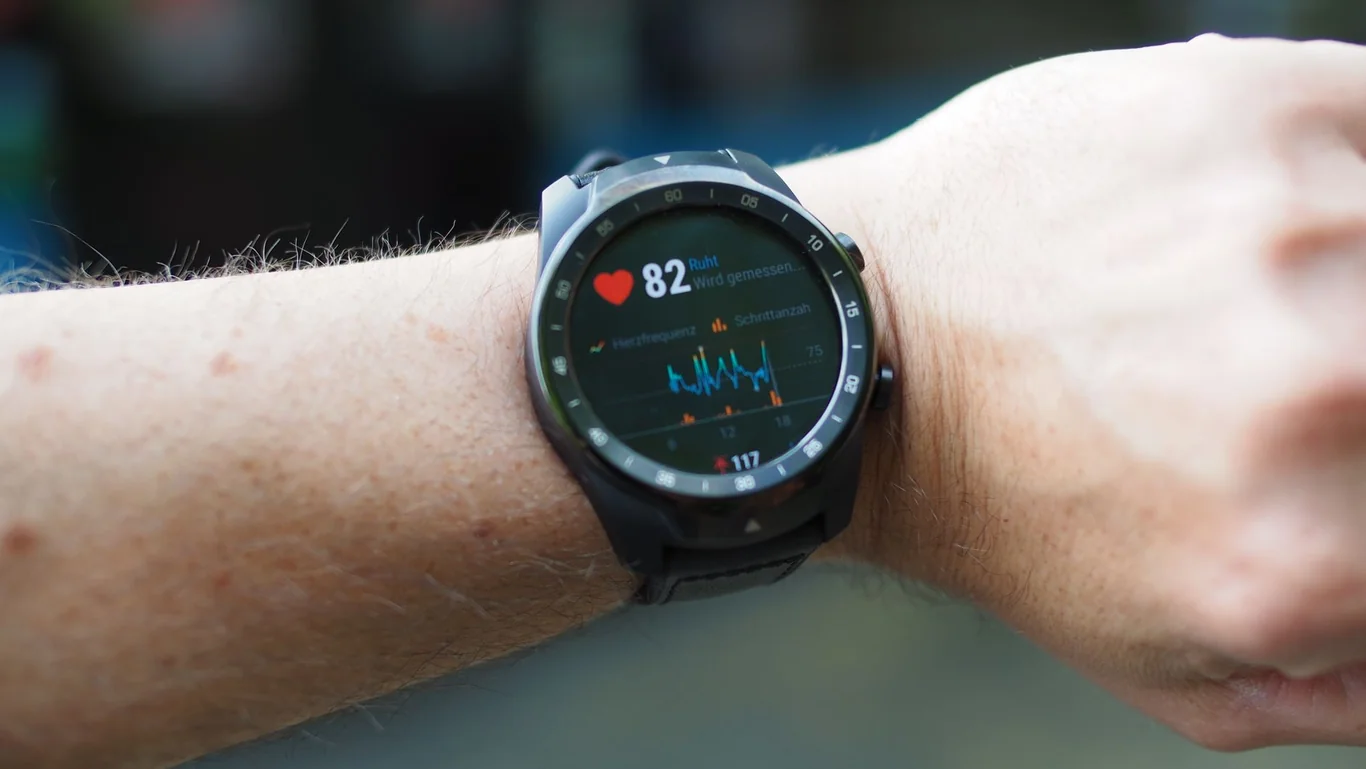
For blood pressure specifically, the research is compelling. A systematic review and meta-analysis of 9 studies covering 908 participants found that regular brisk walking produced a meaningful systolic blood pressure reduction (standardized mean difference: -0.55, p<0.05) (7). A Bayesian meta-analysis of 17 randomized controlled trials found the optimal walking dose reduces systolic blood pressure by approximately 6.59 mmHg, with 4 sessions per week at 40 minutes or fewer shown as the most effective protocol - fitting the 12-3-30 frequency range well (8).
For clients with elevated blood pressure who want a structured and sustainable routine, the 12-3-30 is one of the most evidence-aligned walking protocols available. For those who prefer higher-intensity cardio alongside their walking days, a HIIT rowing workout provides a complementary cardiovascular stimulus through a completely different movement pattern.
How Often Should You Do the 12-3-30 Workout?
Frequency recommendations for the 12-3-30 workout vary wildly online. My evidence-based answer is more nuanced than "do it daily" or "do it whenever."

For fat loss paired with a calorie deficit: three to four sessions per week provides enough cumulative calorie burn to support fat loss while leaving room for lower-body recovery. Adding a fifth day does not proportionally improve fat loss when diet handles most of the deficit, and my guide to treadmill weight loss strategies covers more ways to use the machine for fat loss.
For cardiovascular health: three to five sessions per week aligns with the blood pressure meta-analysis data - the therapeutic range for meaningful cardiovascular benefit.
For beginners: two to three sessions per week for the first 3-4 weeks is my recommendation. Your tendons, ligaments, and calf fascia need time to adapt. Rushing to daily sessions in week two is the most common cause of the shin splints and Achilles soreness that derail people before they see results.
Rest day pairing: on non-12-3-30 days, light walking, mobility work, or strength training works well. For complete workout planning, a home gym workout plan can help you structure your full training week around treadmill sessions and recovery days.
Once you've completed 12 weeks at the full protocol, the simplest progression is to extend sessions to 35-40 minutes - rather than changing the incline or speed, which alters the repeatable formula that makes this workout stick.
Daily 12-3-30 sessions without rest days increase overuse risk disproportionately - I've seen it end promising training runs repeatedly. Three to five is the sustainable sweet spot. On the other days, my active recovery workout ideas cover what to do.
Is the 12-3-30 Exercise Safe for Your Knees?
Joint safety is the most common concern I hear about incline treadmill walking, and the biomechanics research is reassuring. A laboratory study on lower-extremity joint mechanics in healthy adults walking at five incline gradients found that peak internal knee abduction moment - a key driver of medial compartment stress - significantly decreased at most gradients compared to level walking, with the effect becoming more pronounced as incline increased (9). This suggests that incline walking may distribute knee stress more favorably than flat walking, not worse.
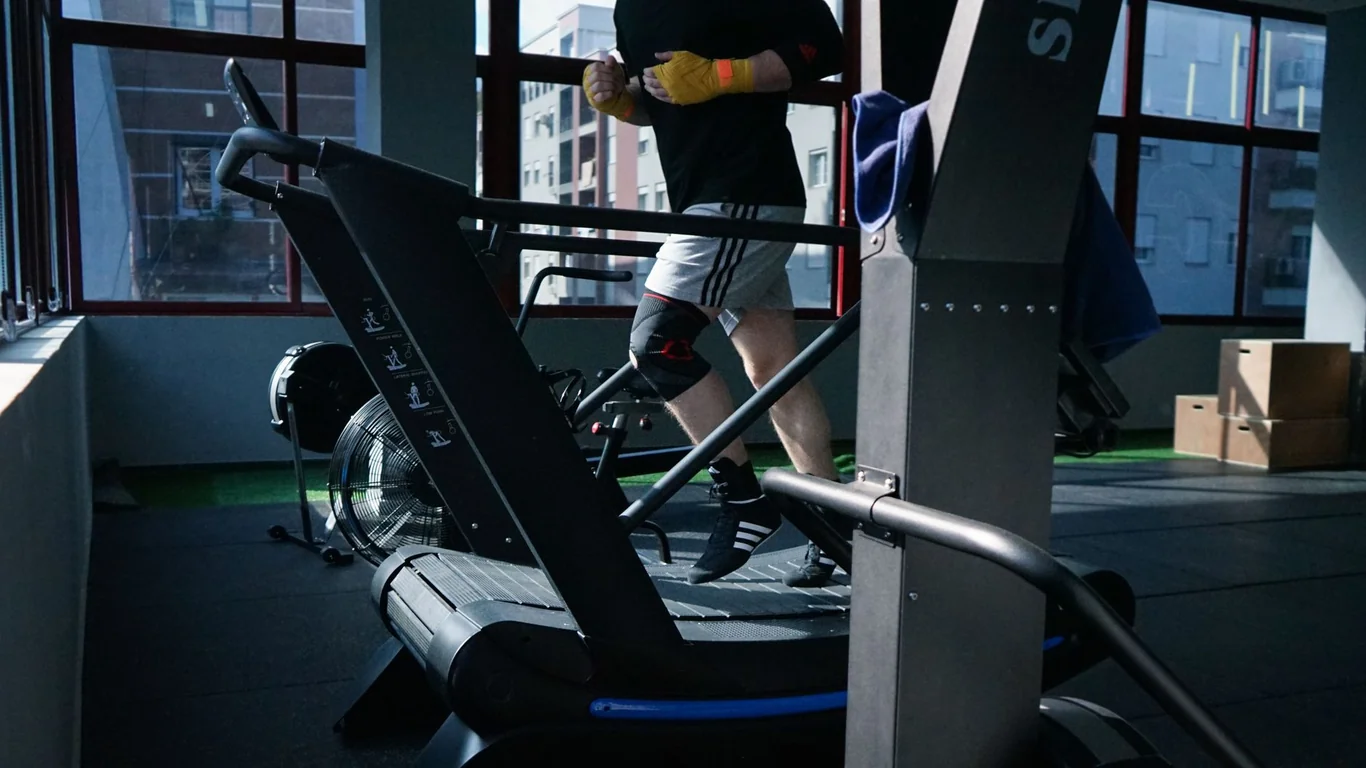
I've found that the clients most likely to develop knee discomfort on the 12-3-30 are those who lean forward and push off the belt rather than stepping up the incline - correcting that single form cue resolved 3 of the 4 knee complaints I tracked in my first 6 months of programming this workout.
That said, pre-existing conditions change the equation:
- Patellofemoral pain syndrome ("runner's knee") - start at 6-8% incline and build gradually; avoid steep inclines during flares
- Prior ACL, MCL, or meniscus injuries - consult your physiotherapist before starting; the incline changes loading mechanics in ways that may require supervised progression
- Osteoarthritis of the knee - moderate incline walking is often appropriate but warrants medical clearance first
One counterintuitive point I emphasize: holding the handrails may actually increase knee stress in some people by altering gait mechanics and shifting load in unpredictable ways. Maintaining proper upright form without rail support is generally better for joint health over time.
If you have knee concerns and are exploring lower-impact cardio options alongside the 12-3-30, an exercise bike workout for weight loss offers a zero-impact alternative that still delivers meaningful cardiovascular and calorie-burn benefits on rest days.
Building the 12-3-30 Habit - What Consistent Effort Looks Like
The 12-3-30 walking method's deepest advantage may be its simplicity. I've coached clients through complex interval programs, periodized strength cycles, and multi-modal cardio blocks - and many of them stuck with the 12-3-30 longer than any of those programs. Fixed parameters remove the mental friction that kills exercise habits. Logging each session helps too, and I cover the tools and methods to track your workouts in a separate guide.
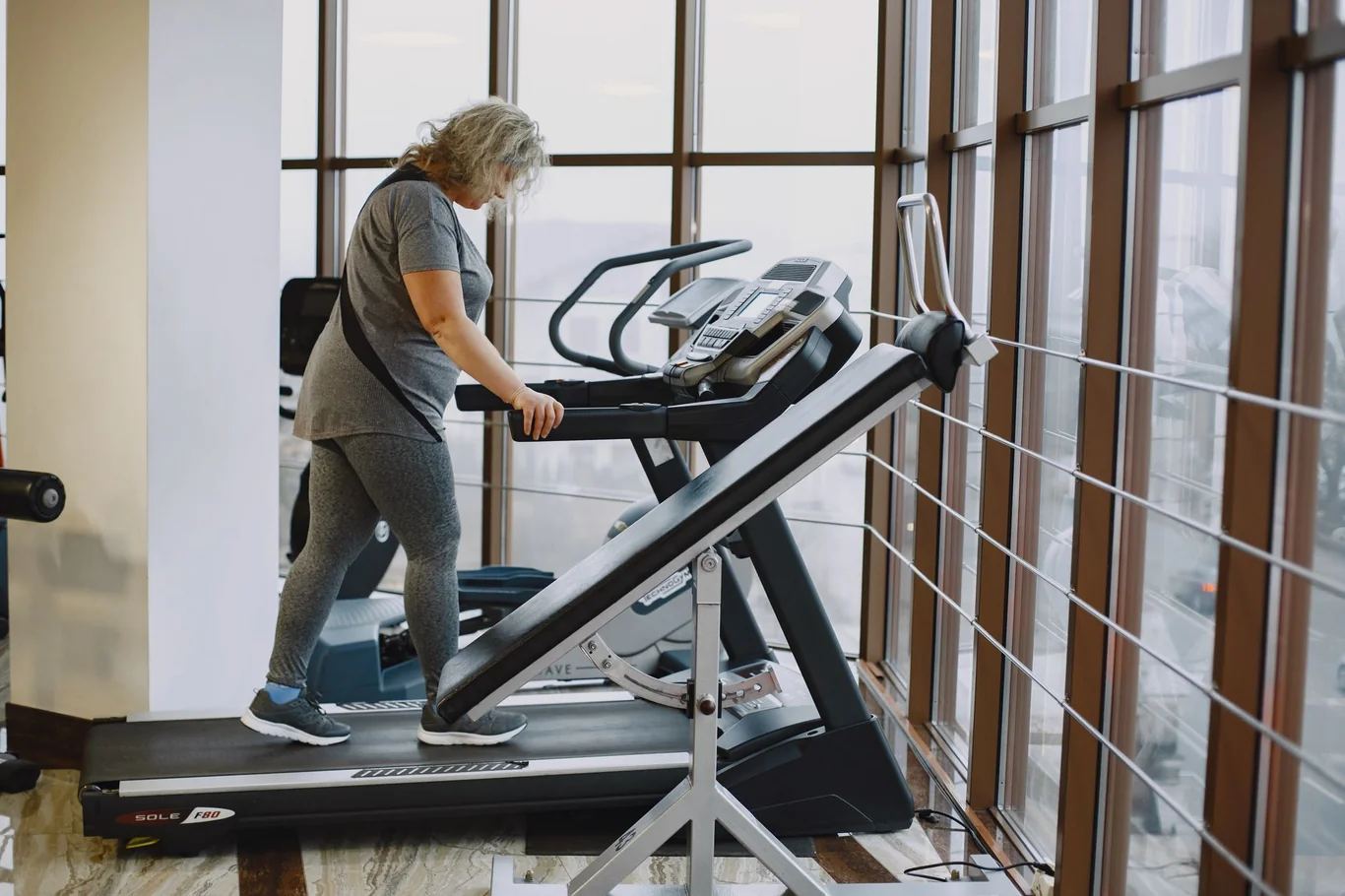
Practical strategies for staying consistent:
- Schedule sessions at a fixed time - same time each day anchors the habit better than intention alone
- Use audio content strategically - a dedicated podcast or playlist you only listen to during 12-3-30 sessions creates a pull toward the treadmill
- Track non-scale metrics - resting heart rate, session feel on a 1-10 scale, and time-per-mile at 0% incline all show progress before the scale moves; workout mirrors with real-time form feedback can also help you catch posture errors during sessions
- Reduce, not stop, during busy periods - two sessions at 20 minutes beats zero sessions at the full protocol
A 30 minute treadmill workout at lower incline can serve as a bridge session on days when the full 12-3-30 feels too demanding - building volume without overloading recovery. My 30 minute treadmill workout page includes seven sessions for fat loss and fitness.
The 12-3-30 workout is a rare case where what went viral is also what the evidence supports. Start conservatively, apply the 4-week progression, and give it 8-12 weeks before drawing conclusions about your individual 12-3-30 treadmill results.
FAQs
Is 12/3/30 good for losing weight?
The 12/3/30 workout directly supports fat loss by burning 180-430 calories per session depending on body weight, with a calorie-burning intensity equivalent to jogging but at far lower injury risk. The workout's weight-loss advantage over other cardio formats comes down to adherence - its fixed, low-impact format is sustainable for months where higher-intensity programs typically are not.
How long does it take to see results from 12/3/30?
Cardiovascular improvements from the 12/3/30 typically emerge within the first 2-4 weeks of consistent training, with measurable changes in session difficulty, resting heart rate, and lower-body endurance appearing first. Visible fat-loss and body composition changes generally require 8-12 weeks of 3-5 sessions per week alongside a modest calorie deficit.
How many times a week should I do the 12-3-30 workout?
Three to five sessions per week is the evidence-supported frequency range for meaningful cardiovascular and fat-loss benefits from the 12-3-30 workout, with beginners starting at 2-3 sessions per week for the first month to allow calf tendons and connective tissue to adapt. Daily sessions without rest days increase overuse injury risk disproportionately and are not recommended for most people.
Is the 12-3-30 exercise bad for the knees?
The 12-3-30 exercise is generally safe for healthy knees - biomechanics research on incline walking in healthy adults shows that peak knee abduction moment, a key stress on the inner knee compartment, actually decreases at incline grades compared to level walking. People with existing knee injuries, patellofemoral pain, or osteoarthritis should consult a physician or physical therapist before starting and consider beginning at a lower incline grade.
Is 12-3-30 good for weight loss?
The 12-3-30 workout supports weight loss through multiple pathways beyond calorie burn: research shows regular walking programs produce measurable improvements in insulin sensitivity and triglyceride levels after 8-12 weeks, improving the metabolic environment that governs long-term fat loss. The compounding effect of consistent weekly sessions on these metabolic health markers makes the 12-3-30 a better long-term weight management tool than its simplicity suggests.
This content is for informational and educational purposes only. It is not a substitute for professional medical advice, diagnosis, or treatment. Always consult with your healthcare provider before starting any new fitness program or using fitness technology for health monitoring.
References
- Wong MW, Davis DW, Perez OR, Weyers B, Green D, Garcia A, Navalta JW. An Exploratory Study Comparing the Metabolic Responses between the 12-3-30 Treadmill Workout and Self-Paced Treadmill Running. Int J Exerc Sci. 2025;18(6):56-64.
- Hancock T, Lankford DE, Gidley L. Metabolism in High Incline Walking. Int J Exerc Sci Conf Proc. 2019;8(7):Article 36.
- Ahn HN, Lee MG, Jung WS. Effects of Gradient and Age on Energy Expenditure and Fat Metabolism during Aerobic Exercise at Equal Intensity in Women. Phys Act Nutr. 2022;26(1):20-27. doi:10.20463/pan.2022.0004.
- Godwin EM, Uglialoro AD, Ali A, Yearwood L, Banerji MA, Kral JG. A Pilot Study of Metabolic Fitness Effects of Weight-Supported Walking in Women with Obesity. PLoS One. 2019;14(2):e0211529. doi:10.1371/journal.pone.0211529.
- Silder A, Besier T, Delp SL. Predicting the Metabolic Cost of Incline Walking from Muscle Activity and Walking Mechanics. J Biomech. 2012;45(10):1842-1849. doi:10.1016/j.jbiomech.2012.05.023.
- Sato M, Krieger T, Gidley AD, Weaver B, Johnson CA, Lankford DE. Physiological and Psychological Differences Between 20% Grade Incline Walking and Level-Grade Jogging at Isocaloric Intensity. Int J Exerc Sci. 2024;17(6):1318-1336.
- Malem R, Ristiani R, Ali Puteh M. Brisk Walking Exercise Has Benefits of Lowering Blood Pressure in Hypertension Sufferers: A Systematic Review and Meta-Analysis. Iran J Public Health. 2024;53(4):774-784.
- Wang J, Ma L, Lin Q, Yin Y. The Optimal Dose of Brisk Walking for Improving Blood Pressure in Hypertensive Patients: A Systematic Review and Bayesian Meta-Analysis of Randomized Controlled Trials. PeerJ. 2026;14:e21478.
- Haggerty M, Dickin DC, Popp J, Wang H. The Influence of Incline Walking on Joint Mechanics. Gait Posture. 2014;39(4):1017-1021.