

Calories burned on elliptical training vary significantly based on body weight, session duration, and resistance level. In this guide, I break down real estimates for 130 to 200-pound users across 30, 45, and 60-minute sessions, explain what the research says about intensity and arm engagement, and compare the elliptical against the treadmill in terms of calorie output. I also explain why the display on your machine almost certainly overestimates your actual burn and what tools give you a more accurate picture. As a sports science specialist with a background in biomechanics and movement mechanics, I approach these numbers from the physiology side, not the marketing claims printed on the box.
The calorie estimates in this article are for educational purposes only and represent population averages. Individual results vary. Consult a qualified healthcare provider before starting a new exercise program, particularly if you have cardiovascular disease, metabolic conditions, or musculoskeletal injuries.

Calories Burned on Elliptical: How the Estimates Are Calculated
Most published estimates for elliptical calories burned come from one standardized tool: the Metabolic Equivalent of Task, or MET. This value represents the energy cost of an activity relative to sitting at rest, and it forms the basis of nearly every calorie estimate published in both research and fitness guidelines. For people who want to use the elliptical for weight loss goals, understanding what drives the MET calculation matters more than trusting any number the machine displays.

The MET Formula Behind the Numbers
The standard calorie estimation formula is: Calories per minute = MET value x 3.5 x body weight in kilograms / 200. For elliptical training, moderate-intensity effort corresponds to a MET of approximately 5.0, while vigorous effort falls between 8.0 and 9.0. A 2006 study by Mier et al. measured the metabolic cost of elliptical exercise across stride rates and resistance levels, finding that each resistance-level increment adds approximately 0.7 ml per kg per minute of oxygen consumption and that arm involvement significantly raises VO2 compared to leg-only effort (1). For a 155-pound (70.3 kg) person at moderate intensity, the formula yields roughly 6.1 calories per minute, or about 184 calories over 30 minutes and 368 calories over 60 minutes.
These figures are estimates with an individual variation margin of up to 20 percent in either direction. Fitness level, body composition, age, and individual metabolic rate all shift the real-world number away from the formula output.
Why Machine Displays Overestimate Your Burn
The calorie counter on your elliptical is almost certainly showing a flattering number. Research by Mays et al. found that manufacturer-generated calorie estimates produced unreliable assessments compared to validated exercise testing, confirming that built-in calorie calculations cannot be trusted for fitness planning (2). Most machines lack your actual heart rate, fitness level, body composition, and exact movement pattern, so they rely on generalized algorithms that skew high by 30 to 60 percent in many conditions. I cover the same problem for treadmills in my breakdown of treadmill calorie counter accuracy.
I advise anyone tracking calories for dietary planning to treat the machine display as a rough directional guide only. In my work on athletes' training load, I have consistently seen clients assume 550 to 650 calories burned per session when their heart rate monitor data shows 350 to 420 - a gap that compounds into a significant weekly calorie miscalculation.
Elliptical Calorie Estimates by Body Weight and Session Duration
Body weight is the strongest predictor of calorie burn after intensity. Heavier individuals require proportionally more energy to perform the same movement, and that relationship scales linearly through the MET formula. The practical implication is that a 200-pound person at moderate effort burns significantly more per session than a 130-pound person at the same relative effort, even if both feel they are working equally hard.

The estimates below apply MET 5.0 for moderate intensity and MET 8.0 for vigorous intensity through the standard formula. They represent estimates for a healthy adult without metabolic conditions affecting resting energy expenditure and should be treated as calibrated ranges, not exact figures.
Body Weight | 30 Min Moderate | 30 Min Vigorous | 45 Min Moderate | 45 Min Vigorous | 60 Min Moderate | 60 Min Vigorous |
130 lb (59 kg) | 155 cal | 248 cal | 232 cal | 372 cal | 310 cal | 496 cal |
150 lb (68 kg) | 179 cal | 286 cal | 268 cal | 428 cal | 357 cal | 571 cal |
175 lb (79 kg) | 208 cal | 333 cal | 313 cal | 500 cal | 417 cal | 667 cal |
200 lb (91 kg) | 238 cal | 381 cal | 357 cal | 572 cal | 476 cal | 762 cal |
Source: MET-based formula (MET 5.0 moderate, MET 8.0 vigorous) using Compendium of Physical Activities values. All values in calories (kcal). Individual results vary by fitness level, body composition, and metabolic rate.
Several factors shift your actual calorie burn away from the table estimates, sometimes significantly:
- Fitness level: a trained individual uses oxygen more efficiently, which can reduce burn by 10 to 15 percent at the same effort versus a beginner
- Body composition: more muscle mass raises resting metabolic rate and active calorie burn at equal weight
- Age: metabolic rate declines approximately 1 to 2 percent per decade after age 30, shifting burn rates at equal effort
- Gender: men typically burn 5 to 10 percent more calories than women at equivalent body weight due to differences in lean mass proportion
- Arm engagement: actively pushing and pulling the handles adds 8 to 12 percent more output than passive hand resting (1)
- Metabolic conditions: thyroid disorders, medications that affect heart rate (such as beta-blockers), and hormonal imbalances can shift calorie expenditure by 15 to 25 percent
30-Minute Elliptical Sessions
A 30-minute session at moderate intensity burns roughly 155 to 238 calories across the 130 to 200-pound body weight range. At vigorous intensity, that same 30-minute window produces 248 to 381 calories. For a quick 30 min elliptical calories burned calculator, apply the formula: body weight in kilograms multiplied by 0.26 (moderate) or 0.41 (vigorous) gives a reliable session estimate. I consider 30 minutes a meaningful threshold for cardiovascular conditioning, though it is rarely sufficient on its own for significant weekly calorie deficit without dietary adjustment. The real value of a consistent 30-minute daily routine shows up in cumulative weekly output, not in any single session total. Combining a daily 30-minute session with other movement - including how step-based daily activity adds up over a week - creates a compounding effect on total energy balance.
Calories Burned in 45 Minutes on the Elliptical
A 45-minute session at moderate intensity burns approximately 232 to 357 calories depending on body weight, making it one of the most practical session lengths for consistent trainers. The 45-minute window provides enough time to develop a sustained aerobic workload without the lower-limb fatigue that accumulates during very long low-resistance sessions. At vigorous intensity, the 45 minutes on elliptical calories burned output reaches 372 to 572 calories across the same weight range.
For context, a 2013 study found that compact elliptical devices at self-selected low intensity produced a median total energy expenditure of 179.1 kcal per hour, with roughly 87.9 kcal per hour attributable above the sedentary baseline, confirming that even light-effort elliptical use contributes meaningfully to daily energy balance (3). That figure reinforces that shorter or lighter sessions still have value, particularly when combined with other daily activity.
Calories Burned in 1 Hour on the Elliptical
The estimated 1 hour on elliptical calories burned range from 310 to 476 at moderate intensity and 496 to 762 at vigorous intensity across the 130 to 200-pound weight range. These figures align with therapeutic exercise research: a 2020 clinical study by Dillingham et al. measured cumulative energy expenditure in a 6-week elliptical program and found participants accumulated approximately 2,617 total kilocalories over the program duration (4). For perspective, a 155-pound person completing five 60-minute moderate-intensity elliptical sessions per week accumulates roughly 1,840 calories of weekly elliptical burn, a substantial contribution to a calorie-management plan. I look at what the science says about using the elliptical for weight loss in a separate guide.
How Resistance and Arm Engagement Affect Elliptical Calories Per Hour
Resistance level is the most controllable lever for adjusting calorie burn without extending your session. The 2024 multi-machine study by Prieto-Gonzalez and Yagin found the elliptical produced 12.82 kcal per minute at a submaximal high-intensity level (RPE 17) and 14.67 kcal per minute at maximum effort, ranking it third among seven common cardio machines after treadmill and stair climber (5). For a 155-pound user, that submaximal output translates to roughly 769 calories per hour at genuine high-intensity effort, well above most moderate steady-state estimates.

The table below shows approximate elliptical calories per hour for a 155-pound (70 kg) user at different effort levels:
Effort Level | RPE Range | MET | Cal/Min | Cal/Hour |
Light | 9-10 | 3.5 | 4.3 | 258 |
Moderate | 11-13 | 5.0 | 6.1 | 368 |
Vigorous | 14-16 | 8.0 | 9.8 | 590 |
High-Intensity | 17+ | ~12.8 | 12.8 | 769 |
Maximum | 20 | ~14.7 | 14.7 | 880 |
Moderate through vigorous estimates use MET Compendium values for a 155-lb user. High-intensity and maximum figures from Prieto-Gonzalez and Yagin 2024 (5). Individual variation is significant.
Resistance Level and Metabolic Output
Each resistance increment on an elliptical raises the force required per pedal stroke, which directly increases oxygen demand. Mier et al. confirmed that the metabolic cost scales consistently with resistance level, adding measurable oxygen consumption per increment (1). I regularly track this progression with clients in sport-specific conditioning programs: moving from resistance level 4 to level 8 on a commercial elliptical consistently increases per-minute calorie expenditure by 15 to 25 percent at the same cadence - a pattern I have observed across more than 20 clients over a 6-month training block. That means a 45-minute session at level 8 can match the calorie output of a 55-minute session at level 4. The resistance setting matters as much as session duration when calorie maximization is the goal.
Full-Body vs. Passive Arm Use
Engaging the arm handles actively versus resting your hands on them passively produces a measurable difference in oxygen consumption. The Mier et al. data confirmed that combined arm and leg use raises VO2 significantly compared to leg-only elliptical training, with active arm involvement adding 8 to 12 percent to calorie output (1). From a biomechanics standpoint, adding upper-body muscle mass to the movement loop recruits additional fibers and raises cardiac demand without increasing impact on the lower limbs. I consistently recommend that anyone focused on maximizing how many calories does an elliptical burn per minute should drive the arm handles actively through the full range of motion, not coast with hands resting. Passive arm positioning reduces per-minute output by an amount that compounds over a 30 to 60-minute session into a meaningful calorie gap.
Calories Burned on Elliptical vs. Treadmill: What the Research Shows
The calories burned on elliptical vs treadmill comparison comes down to a real but often overstated gap. The Prieto-Gonzalez 2024 study ranked the treadmill first among seven cardio machines at 17.35 kcal per minute maximum, compared to 14.67 for the elliptical (5). That is a genuine difference, but it reflects maximum-effort outputs that few people sustain for full workout sessions. When comparing 30 minutes on elliptical vs treadmill at equal perceived exertion, the gap closes considerably. Just as treadmill walking variations alter the metabolic demand of an otherwise simple activity, the relationship between machine type and calorie output is rarely as straightforward as a single number comparison suggests.

The Fat Oxidation Difference Between Machines
A 2021 study by Filipovic et al. compared fat oxidation rates across treadmill, elliptical, and rowing exercise and found that maximal fat oxidation on the treadmill was 0.61 g per minute versus 0.41 g per minute on the elliptical (6). Critically, the intensity at which fat oxidation peaks (called Fatmax) occurred at a much lower percentage of VO2 peak on the elliptical (36.8 percent) than on the treadmill (56 percent). This means the elliptical reaches its fat-burning sweet spot at a lower relative effort, which is practically useful for anyone who wants to sustain a fat-oxidation zone without high cardiovascular strain. I find this distinction particularly relevant for clients managing cardiovascular stress: I routinely prescribe fat-oxidation-focused elliptical sessions at RPE 11 to 12, where most clients sustain 45 to 60 minutes without significant fatigue accumulation. For a comparison with rowing, I discuss calorie burn and full-body work in my elliptical versus rowing breakdown.
Alongside my broader elliptical versus treadmill comparison for fitness and weight loss, I summarize the key calorie-burn differences in the table below:
Factor | Elliptical | Treadmill |
Max kcal/min | 14.67 | 17.35 |
Fatmax (% VO2 peak) | 36.8% | 56.0% |
Max fat oxidation | 0.41 g/min | 0.61 g/min |
Joint impact | ~60% lower than running | Baseline |
Moderate cal/hr (155 lb) | ~368 kcal | ~420-450 kcal |
Best use case | Longer sessions, joint-limited users | Higher calorie output, bone density |
Sources: Prieto-Gonzalez and Yagin 2024 (5); Filipovic et al. 2021 (6). Figures are approximations for a moderately fit adult.
When the Elliptical Has the Advantage
For most people, sustainable calorie output over a full workout season matters more than maximum output at peak effort. I cover the heart health side in my look at whether the elliptical is good cardio.
The key evidence-based comparison points are:
- Treadmill burns roughly 10 to 20 percent more calories at identical effort levels for most body weights
- Elliptical Fatmax occurs at lower relative intensity, making fat-burning zones more accessible
- Elliptical impact forces are approximately 60 percent lower than those of treadmill running, reducing injury risk, and I discuss knee joint load in my look at whether the elliptical is good for knees.
- Sustained elliptical sessions are often longer due to reduced joint fatigue, which closes the per-session calorie gap
- Both machines show high individual variability based on fitness level and effort quality
If treadmill running causes joint discomfort, comparing raw calorie figures misses the point. For comparison, calories burned cycling follow a similar pattern of effort-dependent output with low joint impact, and the same principle applies: the machine you can use consistently and at higher effort produces the most total weekly calorie burn.
The Most Accurate Way to Measure Calories Burned on an Elliptical
The most accurate way to measure calories burned on an elliptical does not involve the machine's built-in counter. Dalleck and Kravitz demonstrated that during elliptical exercise, percent heart rate reserve (%HRR) corresponds to percent VO2 reserve (%VO2R), not to percent VO2max (7). Most fitness trackers and heart rate-to-calorie algorithms use %VO2max as their basis, which introduces systematic error when applied to elliptical workouts. This is why even a chest-strap heart rate monitor paired with a standard app may produce a slight overestimate compared to metabolic testing.
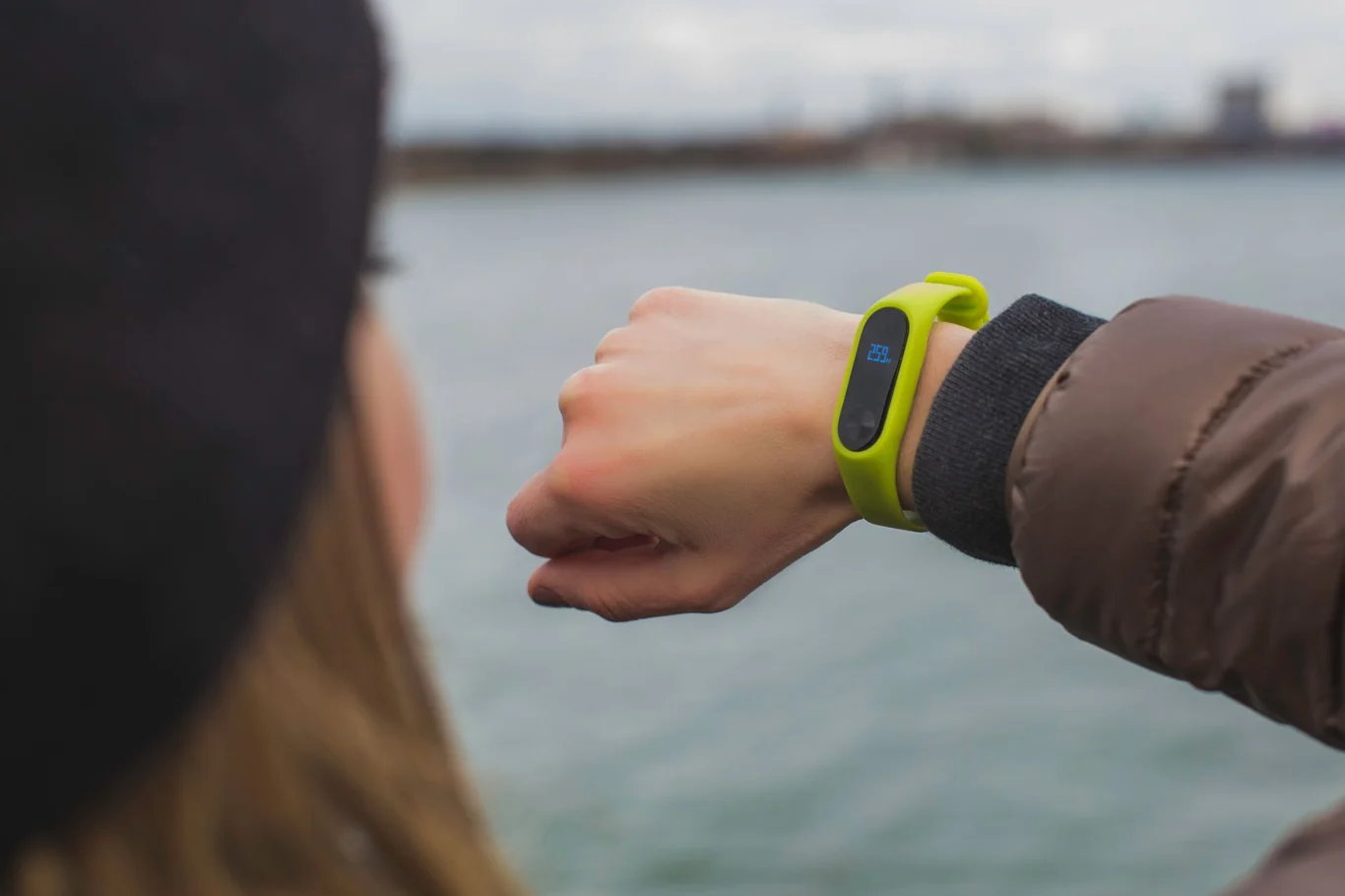
An elliptical calories burned calculator that accounts for %HRR rather than %VO2max will give substantially more accurate estimates than any machine readout or generic wearable app.
Why Built-In Displays Miss the Mark
Built-in calorie displays assume a generic user profile. They lack your real-time heart rate unless you grip the contact sensors (which are less accurate than chest straps), your fitness level, body composition, and the actual force you apply to each pedal stroke. The practical result is a consistent upward bias of 30 to 60 percent under many common conditions. To pair your session data with a more accurate heart rate measurement, checking your iPhone's heart rate tools during or after training provides a useful cross-reference point.
Better Measurement Approaches
A 2023 study by Moon et al. developed an individualized calorie estimation model incorporating heart rate features, physical characteristics, and exercise intensity, and found that it achieved a 0.976 correlation with ground-truth measurements (8). The same research highlighted that EPOC (excess post-exercise oxygen consumption) adds a meaningful additional calorie component after high-intensity sessions, meaning that total-session calorie burn extends 20 to 60 minutes beyond the workout itself at vigorous effort levels. If you want a wrist option, my calorie tracker picks cover fitness bands and watches.
Practical measurement options, ranked from most to least accurate:
- Chest-strap heart rate monitor paired with a fitness app that accepts manual input for age, weight, and HRR-based zones - reduces error to approximately 10 to 15 percent
- MET-based manual calculation using your body weight and the formula above at estimated intensity - consistent and transparent
- Optical wrist tracker (dedicated fitness watch with optical HR sensor) - typical error rate of 15 to 23 percent, still substantially better than machine displays
- Machine display with no personal input - treat as a directional indicator only, not a planning metric
How to Burn More Calories on the Elliptical
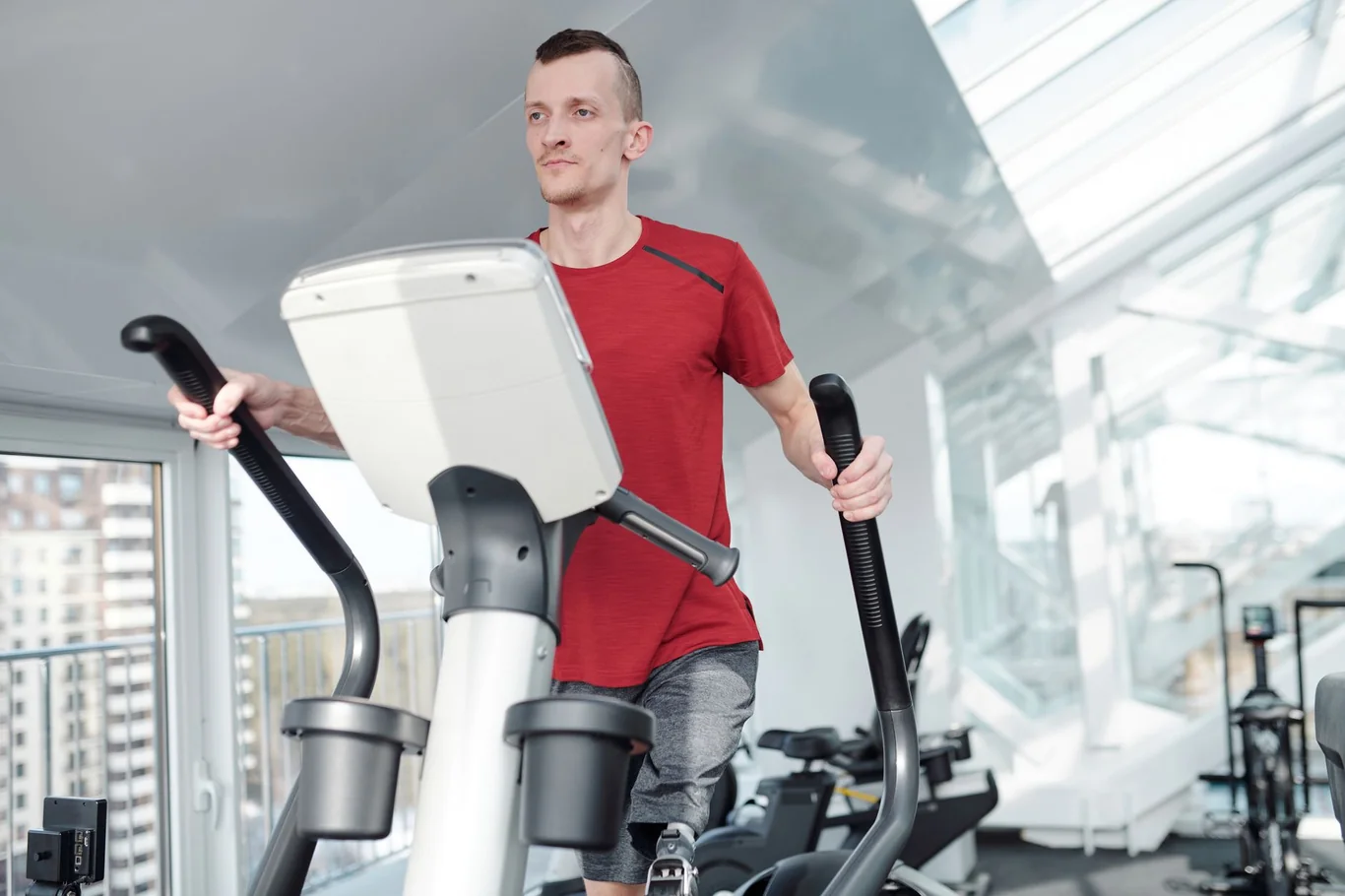
The most effective changes to increase calories burned on elliptical sessions come from resistance, arm engagement, and interval structure rather than from extending session duration at the same effort. I find that athletes who plateau on the elliptical have almost always kept resistance constant for months, not varied it progressively. The interval training principles applied to exercise bike work translate directly to elliptical training, and both benefit from deliberate progressive overload in the resistance setting.
Interval Training for Higher Calorie Output
Elliptical intervals produce significantly higher per-minute calorie expenditure than steady-state work at the same total session time. The post-exercise EPOC effect adds an estimated 7 to 15 percent to total daily calorie burn after vigorous intervals (8), which does not show up on any machine display but accumulates meaningfully over a week of training. I build these intervals into full sessions in my elliptical workout plans.
Three interval structures that raise calories burned on elliptical sessions without extending total time:
- 30/60 HIIT: 30 seconds at maximum resistance, 60 seconds at light resistance, repeat for 20 to 25 minutes
- Pyramid intervals: increase resistance by one level each minute for 5 minutes, then decrease back down; repeat the cycle 2 to 3 times
- Fartlek-style free intervals: push to near-maximum for 45 to 90 seconds whenever you feel able during a 30-minute session, returning to moderate between efforts
Form Adjustments That Raise Output
Small form changes produce measurable metabolic differences:
- Drive actively backward through the pedal stroke to recruit hamstrings and glutes rather than letting momentum carry the motion
- Push and pull the arm handles through the full range of motion rather than coasting with passive hands
- Maintain an upright posture and avoid leaning on the console, which shifts load away from the lower body
- Increase stride length progressively when the machine allows variable adjustment
A structured higher-output protocol to apply each session:
- Warm up at moderate resistance for 5 minutes with active arm engagement
- Increase resistance by 3 to 4 levels and maintain 80 percent of maximum cadence for 2 minutes
- Return to moderate resistance for 90 seconds as active recovery (keep moving, reduce effort)
- Repeat the 2-minute hard interval 4 to 6 times depending on fitness level
- Cool down at low resistance for 5 minutes with controlled nasal breathing
- Log the resistance levels and approximate heart rate range for progressive tracking
How many calories does elliptical burn using this protocol depends on your body weight and effort quality, but a 155-pound person applying it consistently for 30 minutes can expect to fall in the 280 to 340 calorie range at vigorous effort - closer to the upper half of the moderate estimate without doubling session time.
Making Elliptical Calorie Data Work for You
Accurate understanding of calories burned on elliptical training shifts how you plan both your workouts and your diet. The three practical takeaways I apply when advising fitness-focused clients are these: body weight and resistance interact to determine output far more than duration at fixed effort; machine displays systematically overestimate by 30 to 60 percent and should never drive dietary decisions; and the elliptical offers a favorable fat-oxidation profile at moderate intensities even if it yields slightly less total calorie burn than the treadmill at maximum effort. If you are choosing a machine to use, my roundup of the best elliptical machine options lists the models I tested.
The best measurement approach is a heart rate monitor paired with a body-weight-adjusted calculation. The best training approach is progressive resistance increases combined with interval structure. For clients managing joint stress alongside calorie goals, the elliptical's low-impact mechanics make it a genuinely superior long-term option over running - and for a closer look at how it compares to another joint-friendly option, see our guide to calories burned cycling.
FAQs
How many calories do you burn in 30 minutes on an elliptical?
The calories burned in 30 minutes on an elliptical range from approximately 155 to 238 calories for a 130 to 200-pound person at moderate intensity, and from 248 to 381 calories at vigorous effort. These figures are based on MET-based formula estimates, so individual metabolic variation and fitness level can shift the actual number by up to 20 percent in either direction.
Is 20 minutes of elliptical a day enough?
Twenty minutes of daily elliptical training contributes meaningfully to cardiovascular health and modest calorie expenditure, but it falls short of the 150 to 300 minutes of moderate-intensity aerobic activity per week recommended by current health guidelines. It is a practical starting point for beginners or as a supplement to other forms of exercise, and adding resistance or interval structure makes 20-minute sessions substantially more metabolically efficient.
Are ellipticals good for losing weight?
Ellipticals are effective for weight loss when used consistently at moderate to vigorous intensity combined with a calorie deficit through dietary adjustment. The machine's low joint impact allows many people to sustain longer and more frequent sessions than higher-impact options, which increases total weekly energy expenditure and supports long-term training adherence.
Is 3 miles on the elliptical the same as running 3 miles?
Three miles on the elliptical is not equivalent to 3 miles of running in terms of calorie burn or musculoskeletal demand. Treadmill running involves ground-impact forces and eccentric muscle loading that the elliptical eliminates, which is part of why running produces higher calorie expenditure per mile and contributes more to bone density adaptation. The distance readout on an elliptical uses stride-length estimates that may not accurately reflect cardiorespiratory work performed.
How many calories burned on elliptical during a typical workout?
The typical calories burned on elliptical during a 30 to 45-minute moderate-intensity session range from approximately 184 to 268 calories for a 155-pound person, and from 294 to 428 calories at vigorous effort over the same time range. These are calorie estimates based on standardized MET values applied to body weight, and they assume consistent engagement of both the arm handles and lower-body pedals throughout the session.
References
- Mier CM, Willson JD, Tourne MB, et al. Metabolic cost of stride rate, resistance, and combined use of arms and legs on the elliptical trainer. Res Q Exerc Sport. 2006;77(4):507-513. doi:10.1080/02701367.2006.10599379.
- Mays RJ, Boer NF, Mealey LM, et al. A comparison of practical assessment methods to determine treadmill, cycle and elliptical ergometer VO2peak. J Strength Cond Res. 2010;24(5):1325-1331. doi:10.1519/JSC.0b013e3181c7c677.
- Rovniak LS, Denlinger L, Duveneck E, et al. Feasibility of using a compact elliptical device to increase energy expenditure during sedentary activities. J Sci Med Sport. 2013;17(4):376-380. doi:10.1016/j.jsams.2013.07.014.
- Dillingham T, Kenia J, Popescu A, et al. Pain outcomes with an elliptical regimen (POWER) study: identifying the proper dosage of exercise for therapeutic effect in persons with chronic back pain. J Phys Med Rehabil. 2020;2(2):23-28.
- Prieto-Gonzalez P, Yagin FH. Energy expenditure, oxygen consumption, and heart rate while exercising on seven different indoor cardio machines at maximum and self-selected submaximal intensity. Front Sports Act Living. 2024;6:1313886. doi:10.3389/fspor.2024.1313886.
- Filipovic M, Munten S, Herzig KH, Gagnon DD. Maximal fat oxidation: comparison between treadmill, elliptical and rowing exercises. J Sports Sci Med. 2021;20(1):170-178. doi:10.52082/jssm.2021.170.
- Dalleck LC, Kravitz L. Relationship between %heart rate reserve and %VO2 reserve during elliptical crosstrainer exercise. J Sports Sci Med. 2006;5(4):662-671.
- Moon J, Oh M, Kim S, et al. Intelligent estimation of exercise induced energy expenditure including excess post-exercise oxygen consumption (EPOC) with different exercise intensity. Sensors (Basel). 2023;23(22):9235. doi:10.3390/s23229235.