
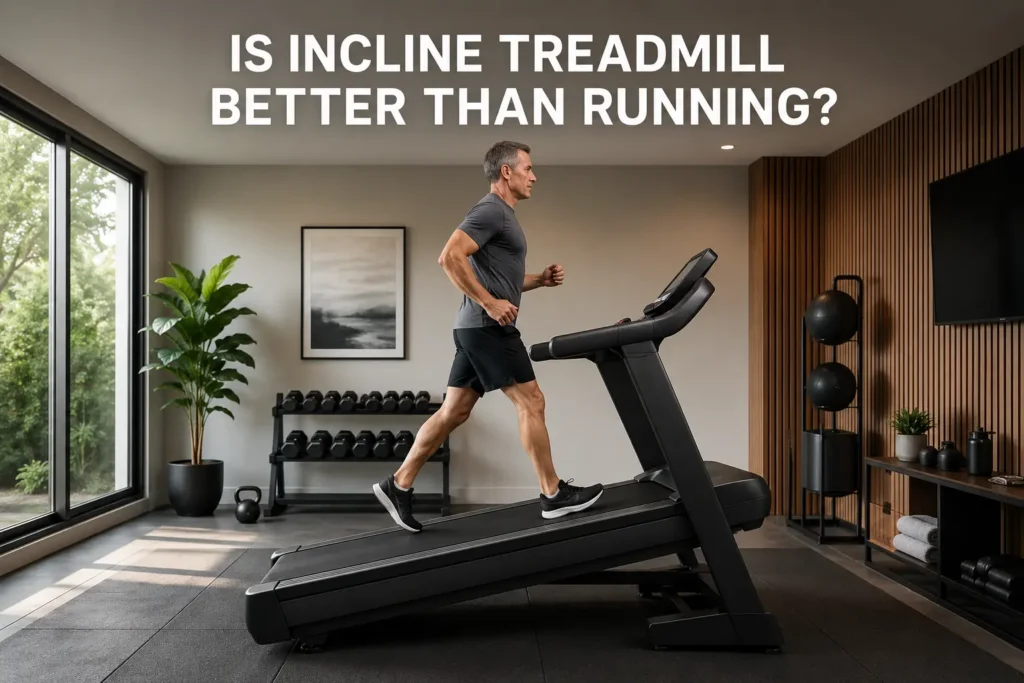
Whether an incline treadmill is better than running really depends on what you're optimizing for. Running builds aerobic capacity faster and burns more calories per minute. But incline walking delivers higher fat utilization, dramatically lower joint stress, and a level of daily sustainability that most runners cannot match. In this guide, you'll get a science-backed breakdown of both approaches across calorie burn, fat loss, cardiovascular health, and muscle activation. By the end, you'll know exactly which choice fits your training goals and your body.

Is Incline Treadmill Better Than Running - The Direct Answer
People frequently ask whether running or incline walking is better, and the real answer comes down to what you value more: speed of results or sustainability. Running burns roughly 11-12 calories per minute for a 155-pound person at a moderate pace (6 mph). Incline walking at a 10-12% grade and 3 mph burns approximately 8-10 calories per minute for the same person.
If you want to compare specific models before deciding which approach fits your setup, our full treadmill lineup lists specs for every machine we carry.
Over a 30-minute session, that gap is real.
But incline walking can be sustained for 45-60 minutes daily, 5+ days per week, while most people attempting daily running accumulate enough impact stress to require rest days or risk recurring injury. Flat running actually requires less cardiovascular output than steep incline walking at equivalent heart-rate targets. The incline forces the same cardiovascular response with far less joint impact.
For readers who do want to include running alongside incline sessions, my breakdown of how to run on a treadmill correctly covers form, cadence, and session structure for managing impact without sacrificing training output.
Research confirms the practical equivalence at matched intensity. A 2024 study published in the International Journal of Exercise Science found that when 20% incline walking and level-grade jogging were matched for caloric expenditure, both produced statistically equivalent oxygen uptake, heart rate, and respiratory exchange ratio (1). The cardiovascular system's response was virtually identical - meaning you can achieve the same training stimulus with far less impact on your joints.
If you're building your training around incline work, our guide to the best incline treadmill covers machines specifically designed for sustained steep-grade training at home.
Does Running or Incline Walking Burn More Calories
Running burns more calories per minute, and that's not debatable. But the full calorie picture rewards a closer look. A 2025 exploratory study in the International Journal of Exercise Science compared the 12-3-30 method (12% incline, 3 mph, 30 minutes) against self-paced running at matched energy expenditure. Incline walking required a longer duration to match running's calorie total, but it burned a significantly higher percentage of those calories from fat stores - 40.56% vs. 33.12% (2). Running burned calories faster; incline walking burned more of them from fat.
Activity | Approx. Calories / 30 min (155 lb) | Fat % of Calories Burned |
Flat walking (3.5 mph) | ~120 cal | ~55-65% |
Incline walking (10-12%, 3 mph) | ~240-290 cal | ~40-55% |
Running (6 mph) | ~330 cal | ~33% |
Incline walking closes roughly half the calorie gap between flat walking and running. For anyone who cannot sustain running, that represents a meaningful upgrade in output without additional joint loading - and a fat oxidation profile that rewards longer, more consistent training sessions.
Accurate calorie tracking during incline sessions helps you assess real progress. A dedicated wearable that accounts for elevated heart rate during incline work will give you far more accurate calorie data than the treadmill display alone.
Is Incline Walking Better for Fat Loss and Belly Fat
The answer to whether incline walking is better for fat loss versus running depends on how you measure fat loss. If you mean fat burned per minute, running wins at equal session length. If you mean total fat burned per week across consistent training, incline walking frequently wins because it permits higher training frequency without breakdown.
Research confirms that consistent moderate-intensity walking at 50-70% VO2 max, performed 5 days per week for 12+ weeks, creates the sustained caloric deficit needed for meaningful fat loss and body composition change (3). The intervention works not because walking is more powerful than running in isolation, but because five consistent weekly sessions maintain the deficit across months.
On the specific question of whether incline walking is better than running for belly fat loss: there is no such thing as spot reduction. Incline walking vs running for belly fat really comes down to which method you can perform most consistently over time. I consistently see this misconception in fitness because people want a targeted belly fat solution, but the science points to total body caloric deficit as the only proven pathway. Belly fat decreases as overall body fat decreases.
Key fat-loss advantages of incline walking:
- Higher fat oxidation rate per session compared to flat walking
- 5-day-per-week training is realistic without accumulating injury risk
- Significant glute, hamstring, and soleus activation that supports lean muscle retention
- Lower cortisol response than high-intensity running, which may support hormonal fat-loss conditions
Also worth exploring: our guide that covers benefits of walking backwards on a treadmill covers a research-backed variation that significantly increases calorie burn while reducing knee joint compression compared to forward walking.
Is Walking Better Than Running for Cardio Health
Is walking better than running for cardio is a question worth separating into two parts: short-term cardiovascular adaptation and long-term cardiovascular protection.
For short-term adaptation, running produces faster gains in VO2 max and aerobic capacity. The higher intensity demands greater cardiovascular output, which drives quicker improvement over 6-12 weeks.
For long-term cardiovascular protection, walking's evidence base is exceptionally strong. A systematic review of 21 observational studies found that faster walking paces produced a significant reduction in cardiovascular disease risk compared to slower paces, with the benefit dose-dependent across walking duration, distance, and energy expenditure (4). More walking time consistently produced better cardiovascular outcomes.
Incline walking elevates heart rate enough to deliver genuine cardiovascular training. At a 2% incline, heart rate rises approximately 10% above flat-walking baseline. At 10-12% incline and 3 mph, most individuals sustain their aerobic training zone (65-75% of max HR) throughout the entire session - the same intensity range that drives the cardiovascular adaptations documented in running studies.
If you are deciding between adding running or sticking with incline walking, my analysis of whether treadmill running is easier than outdoor running covers how belt assistance, surface differences, and wind resistance affect actual training load.
I find that people underestimate how demanding incline walking actually is on the cardiovascular system. The first time most beginners set a treadmill to 12% incline and hold 3 mph for 20 minutes, they're genuinely surprised by the heart-rate response. This is not light activity. For most adults, it places them firmly in zone 2-3 cardiovascular training - the exact zone associated with the strongest long-term cardiovascular health outcomes.
For a closer look at how treadmill-based cardio produces these outcomes across different workout types, my guide on the benefits of treadmill training covers the cardiovascular, metabolic, and joint health effects documented in the research.
Is Incline Walking Better Than Regular Walking
Incline walking is better than regular walking and by a margin larger than most people expect.
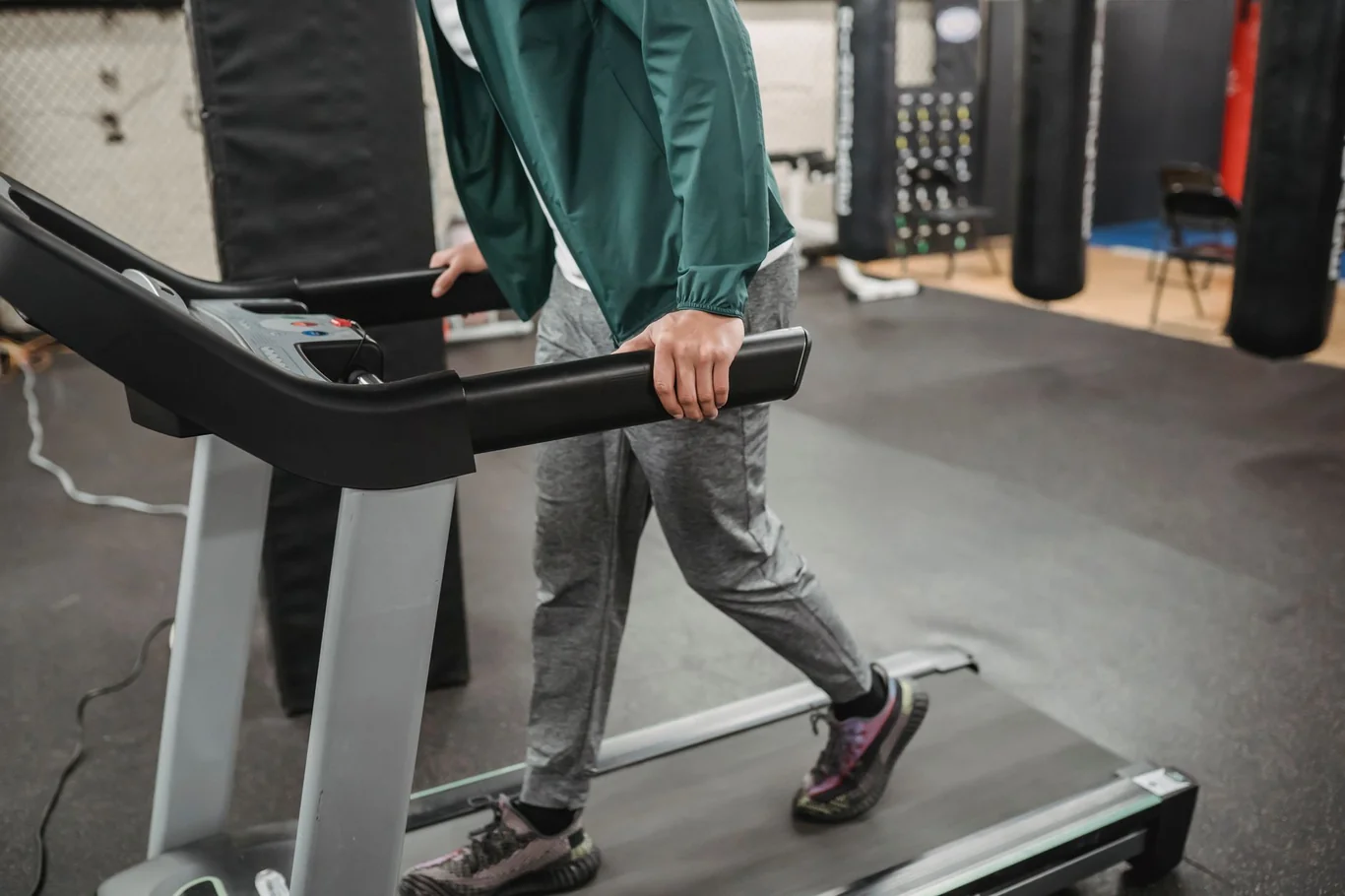
Research on inclined treadmill gait in older adults (mean age 75.3 years) confirmed that metabolic energy cost increases significantly at each incremental degree of incline, with soleus, vastus medialis, gastrocnemius, and rectus femoris activation all showing positive correlation with energy expenditure (5). These are muscles that flat walking significantly underloads.
A separate study examining treadmill type and incline interactions found that steeper incline grades produce markedly different muscle activation profiles in the lateral gastrocnemius, soleus, and biceps femoris, with higher inclines consistently demanding greater muscular output than low-grade or flat walking conditions (6).
The muscular demand changes substantially at grades above 8-10%.
Feature | Flat Walking | Incline Walking (10-12%) |
Calorie burn | Baseline | 60-100% higher |
Joint impact | Low | Low (same) |
Cardiovascular intensity | Moderate | High |
Glute/hamstring activation | Moderate | Significantly higher |
Sustainable daily frequency | High | High |
The critical detail: joint impact stays identical to flat walking while every performance metric improves significantly. I'd describe this as the most efficient trade-off in cardio training - you get dramatically more output for zero additional joint cost. This is why incline walking is so valuable for people managing joint sensitivity who still want genuine cardiovascular challenge.
For those evaluating home equipment, our guide to the best folding treadmill covers space-efficient machines with solid incline ranges for home training.
Is Incline Walking Better Than Running for Weight Loss - Who It's Right For
For many people, the answer is yes. Incline walking is truly better than running when it comes to weight loss, and It’s not because incline walking burns more calories per minute, but because it produces better results when training frequency and long-term adherence are factored in.
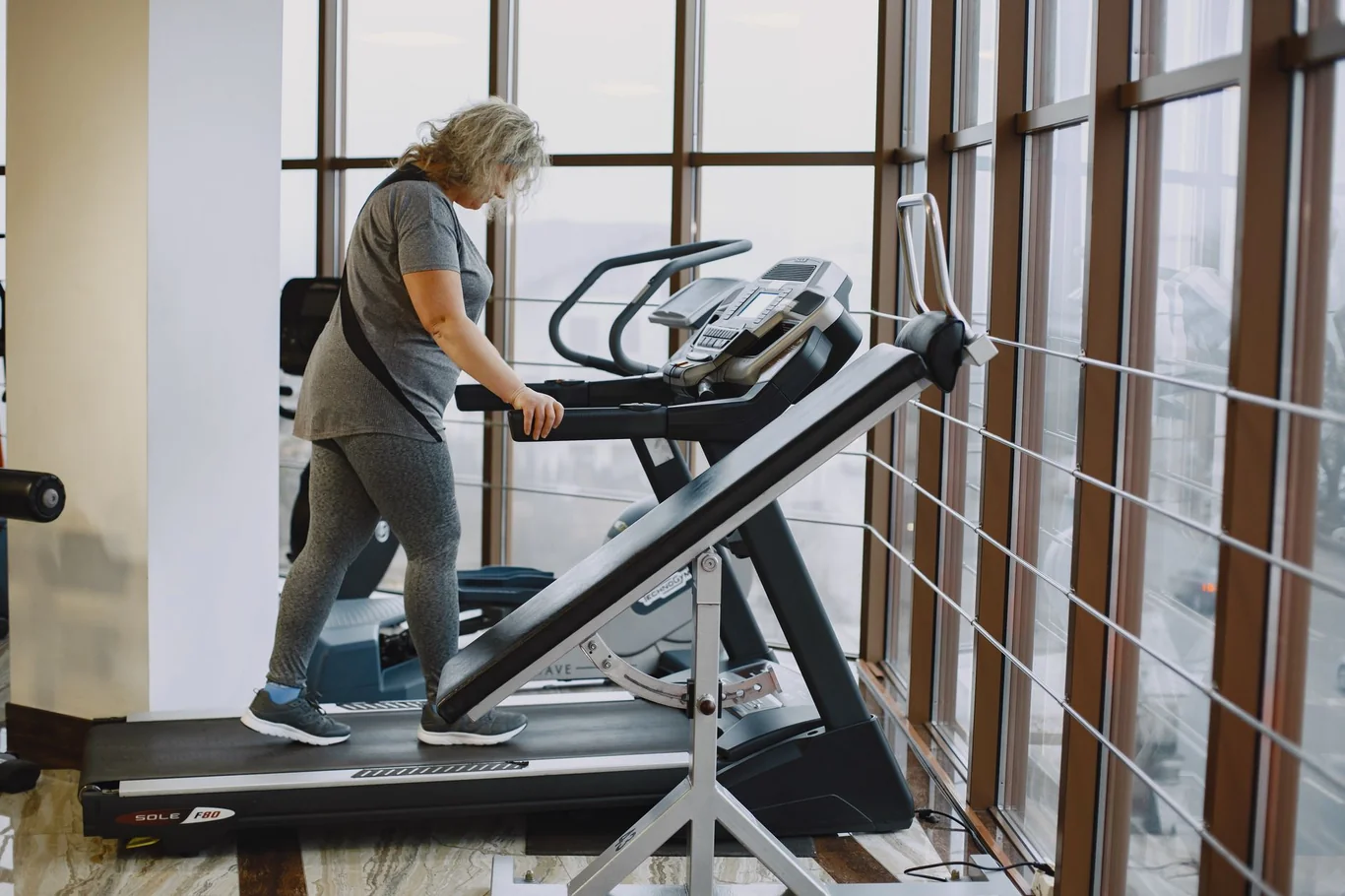
Choose incline walking if you:
- Have existing knee, hip, or ankle pain that worsens with impact loading
- Are a beginner establishing an exercise habit for the first time
- Are over 55 and want a joint-protective cardiovascular method
- Are recovering from injury and need to maintain fitness without running stress
- Want to train 5+ days per week without accumulating recovery debt
Choose running if you:
- Have no joint limitations and genuinely enjoy the activity
- Are training for a running-specific event
- Have limited time and want maximum calorie burn per minute
- Are specifically targeting VO2 max improvement
The research on long-term outcomes is instructive. A large prospective cohort study following over 47,000 participants for 6.2 years found that running produced 90% greater weight loss per MET-hour compared to walking among the heaviest participants (7). That is a meaningful difference - but the advantage only materializes for runners who maintain frequency over months and years without injury-related interruptions.
Why walking is better than running for weight loss for many individuals comes down to one factor: adherence. Whether walking or running is better for weight loss on a treadmill ultimately depends on which method you can perform 4-5 days per week across a full year. I place significant weight on this reality when helping anyone choose between these methods.
I've seen too many people choose running because of the calorie-per-minute advantage, then abandon it after 6 weeks due to knee pain or injury fatigue. Incline walking at a 10- 12% grade, performed 5 days per week, is genuinely more effective for most people's real-world fat loss outcomes - not because of superior physiology, but because of superior adherence.
For walking-focused users who want a compact daily option, our best under-desk treadmill guide covers low-profile machines suited to regular step accumulation alongside dedicated incline sessions.
How to Structure Your Incline Treadmill Workout for Best Results
Getting real results from incline walking requires more than adjusting the incline setting. Here's a structured approach grounded in the evidence.

Beginner protocol - weeks 1-4:
- Set treadmill incline to 5-8%
- Walk at a pace of 2.8-3.2 mph
- Maintain each session for 20-25 minutes
- Train 4-5 days per week consistently
Intermediate progression - weeks 5-12:
- Increase incline to 10-12%
- Walk at 3.0-3.5 mph
- Extend sessions to 30-45 minutes
- Add one optional 20-minute run per week if desired
Signs you're ready to add incline running to your routine:
- You can complete 30 minutes at 10% incline at 3 mph without stopping
- No joint pain appears after sessions
- Your resting heart rate has been declining over 4-6 weeks
- You want to improve running-specific performance or test your aerobic ceiling
Research confirms this progressive approach works. A 30-minute, 5-day-per-week protocol at 50-70% VO2 max - the same intensity that incline walking at 10-12% grade and 3 mph places most adults within - produced measurable fat loss without requiring any running at all (3). Our treadmill weight loss guide covers structured protocols for both walking and running-based programs if you want to pair these methods across a training week.
I place significant weight on the structural side of workout programming when recommending incline walking. The general concept is easy to understand; the specific protocol - exact incline, pace, duration - is what separates meaningful results from aimless treadmill time. Progress incrementally and track your sessions from week one.
For a complete session-by-session framework, my structured treadmill workout guide covers the specific protocols, weekly volumes, and progression formats that produce results across both flat and incline training.
When you eventually need to move or store your equipment, our guide to disassembling a treadmill walks through the process safely and efficiently.
Incline Walking Is a Real Training Method
Incline treadmill walking is a legitimate, evidence-backed training approach with strong support for cardiovascular health, fat oxidation, and sustainable physical conditioning across a broad population.
For a full overview of the fitness applications this covers, my guide on what a treadmill is good for breaks down every use case from recovery walks to sprint intervals, with notes on which formats produce the strongest results by goal type.

Running burns more calories per minute. Incline walking burns a higher percentage from fat stores, protects joints, and supports training frequency that most runners cannot sustain. For anyone managing joint issues, building from a beginner baseline, or preferring a lower-impact daily practice, incline walking is the more practical long-term path to real fitness results.
If you are ready to invest in a machine for this, my guide on what to look for in a treadmill covers incline range, motor size, belt dimensions, and the specifications that matter for daily incline training over the long term.
The research is consistent: both methods work. For most fitness goals, a combination of incline walking and running across a training week captures the advantages of each. Use incline walking on recovery or higher-frequency days; use running on performance days when your body is ready for it. I find this hybrid approach consistently produces better outcomes than committing exclusively to either method.
For a ranked list of the machines that handle both formats reliably, my top treadmill for home use guide covers the models that deliver on incline range, motor durability, and long-term usability across different budgets.
FAQs
Is it better to run or walk on an incline on a treadmill?
The better option depends on your goals and physical condition: incline walking at 10-12% grade and 3 mph delivers genuine cardiovascular challenge, a higher fat oxidation rate, and dramatically lower joint stress compared to running. For most people, especially those managing joint issues or building an exercise habit from the ground up, incline walking on a treadmill is the more sustainable and practical choice that produces real long-term results.
Is it better to run for 30 minutes or walk for 60 minutes?
Running for 30 minutes burns more total calories than flat walking for 60 minutes, since running typically burns calories at roughly twice the rate of walking at the same body weight. However, 60 minutes of incline walking at a challenging grade closes much of that gap while delivering a higher proportion of fat as fuel and posing far less risk of injury or accumulated joint stress.
Is 20 minutes of walking on an incline on the treadmill good enough?
Twenty minutes of incline treadmill walking at 10-12% grade is a meaningful cardiovascular and metabolic workout, particularly for beginners or those returning to exercise after injury. As fitness improves, extending sessions to 30-45 minutes at that incline significantly amplifies the calorie burn, fat oxidation, and cardiovascular benefit - 20 minutes is an excellent starting point to build from progressively.
Can I lose belly fat by incline walking?
Incline walking can support belly fat reduction as part of a consistent training and nutrition plan, because it creates the sustained caloric deficit that drives overall fat loss - and abdominal fat decreases as overall body fat decreases. Research confirms that moderate-intensity treadmill walking performed 5 days per week for 12 weeks can produce significant reductions in visceral fat thickness and waist circumference in overweight participants (3). Spot reduction of belly fat through any single exercise is not possible, but incline walking is one of the most effective sustainable methods for reducing overall body fat.
Is incline walking better than running for fat loss?
Incline walking is better than running for fat loss for individuals who cannot sustain regular running due to joint limitations, fitness level, or injury - because the ability to train 5 days per week consistently outweighs a higher calorie burn per session that comes at the cost of frequent rest days. Research shows incline walking burns a higher percentage of calories from fat stores compared to running (40.56% vs. 33.12% fat utilization at matched caloric expenditure) (2), and the lower injury risk supports the training frequency that actually drives body composition change over weeks and months.
References
- Sato M, Krieger T, Gidley AD, Weaver B, Johnson CA, Lankford DE. Physiological and Psychological Differences Between 20% Grade Incline Walking and Level-Grade Jogging at Isocaloric Intensity. Int J Exerc Sci. 2024;17(6):1318-1336. Published 2024 Dec 1. doi:10.70252/CWWL1447
- Wong MWH, Davis DW, Perez OR, et al. An Exploratory Study Comparing the Metabolic Responses between the 12-3-30 Treadmill Workout and Self-Paced Treadmill Running. Int J Exerc Sci. 2025;18(6):56-64. Published 2025 Jan 1. doi:10.70252/UBIX5911
- Göçer E, Ardıç F, Akkaya N, Herek D. Efficacy of moderate-intensity walking provided feedback by ECE PEDO on abdominal fat in overweight and obese women: A randomized, exercise study. Turk J Phys Med Rehabil. 2017;63(4):340-347. Published 2017 Nov 29. doi:10.5606/tftrd.2017.1956
- Boone-Heinonen J, Evenson KR, Taber DR, Gordon-Larsen P. Walking for prevention of cardiovascular disease in men and women: a systematic review of observational studies. Obes Rev. 2009;10(2):204-217. doi:10.1111/j.1467-789X.2008.00533.x
- Kim J, Lee HJ, Lee SH, et al. Correlation between cardiopulmonary metabolic energy cost and lower-limb muscle activity during inclined treadmill gait in older adults. BMC Geriatr. 2021;21(1):469. Published 2021 Aug 23. doi:10.1186/s12877-021-02401-9
- Kundu R, Krieger T, Sanchez R, Lankford DE. The Interaction of Treadmill Type and Incline Slope on Biomechanics and Muscle Activation During Human Locomotion. Int J Exerc Sci. 2024;17(1):1478-1492. Published 2024 Dec 1. doi:10.70252/GMWV8349
- Williams PT. Greater weight loss from running than walking during a 6.2-yr prospective follow-up. Med Sci Sports Exerc. 2013;45(4):706-713. doi:10.1249/MSS.0b013e31827b0d0a