
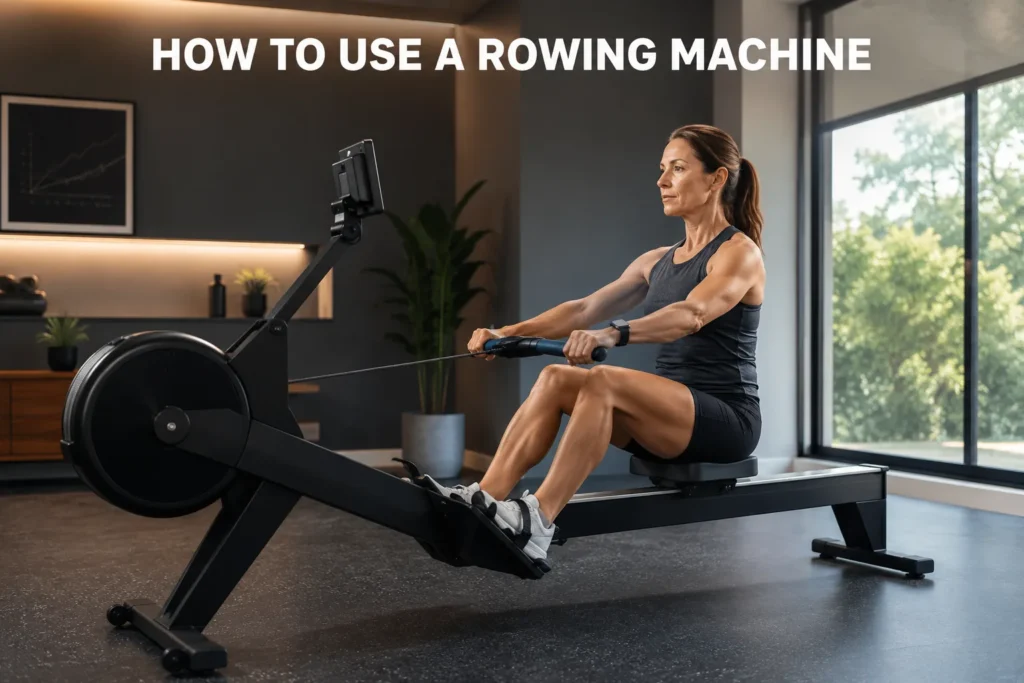
Learning how to use a rowing machine correctly separates a productive workout from a painful one. Most beginners make the same mistake: they pull with their arms first and wonder why their shoulders ache within minutes. Rowing is 65-75% legs, and once that clicks, the entire movement transforms. In this guide, you will learn the four-phase stroke sequence, how to set up the machine properly, the most common mistakes that cause injury, a four-week beginner plan, and what the science shows about rowing's full-body benefits. I have reviewed the research on this exercise extensively, and the evidence for rowing as a cardio and strength tool is genuinely strong.

How to Use a Rowing Machine - The Four-Phase Stroke Explained
Every stroke on a rowing exercise machine follows the same four-phase sequence: catch, drive, finish, and recovery. Getting this sequence right matters more than how fast you row or how high you set the resistance. The order of the drive is legs first, then back, then arms. On the recovery, you reverse it: arms forward, torso hinges, then knees bend. Scrambling that sequence is what causes lower back strain and inefficient workouts. A systematic review of rowing biomechanics found that the rate of force application during the drive phase is one of the primary distinguishing features between skilled and unskilled rowers (1).
If you experience significant back discomfort during any cardio session, our guide on best exercise bike for back problems covers low-impact alternatives while you build rowing-specific strength.
The Catch - Your Starting Position
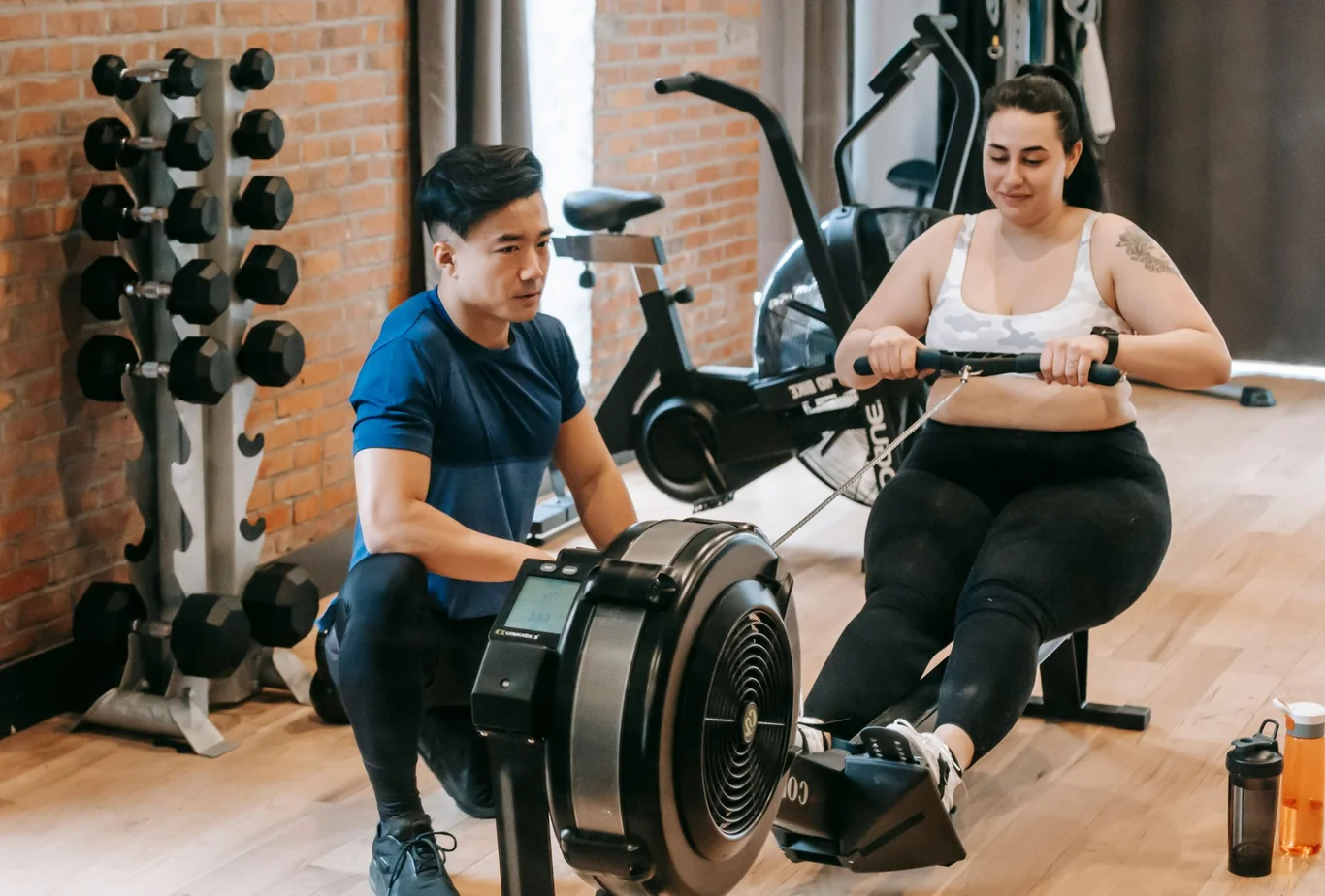
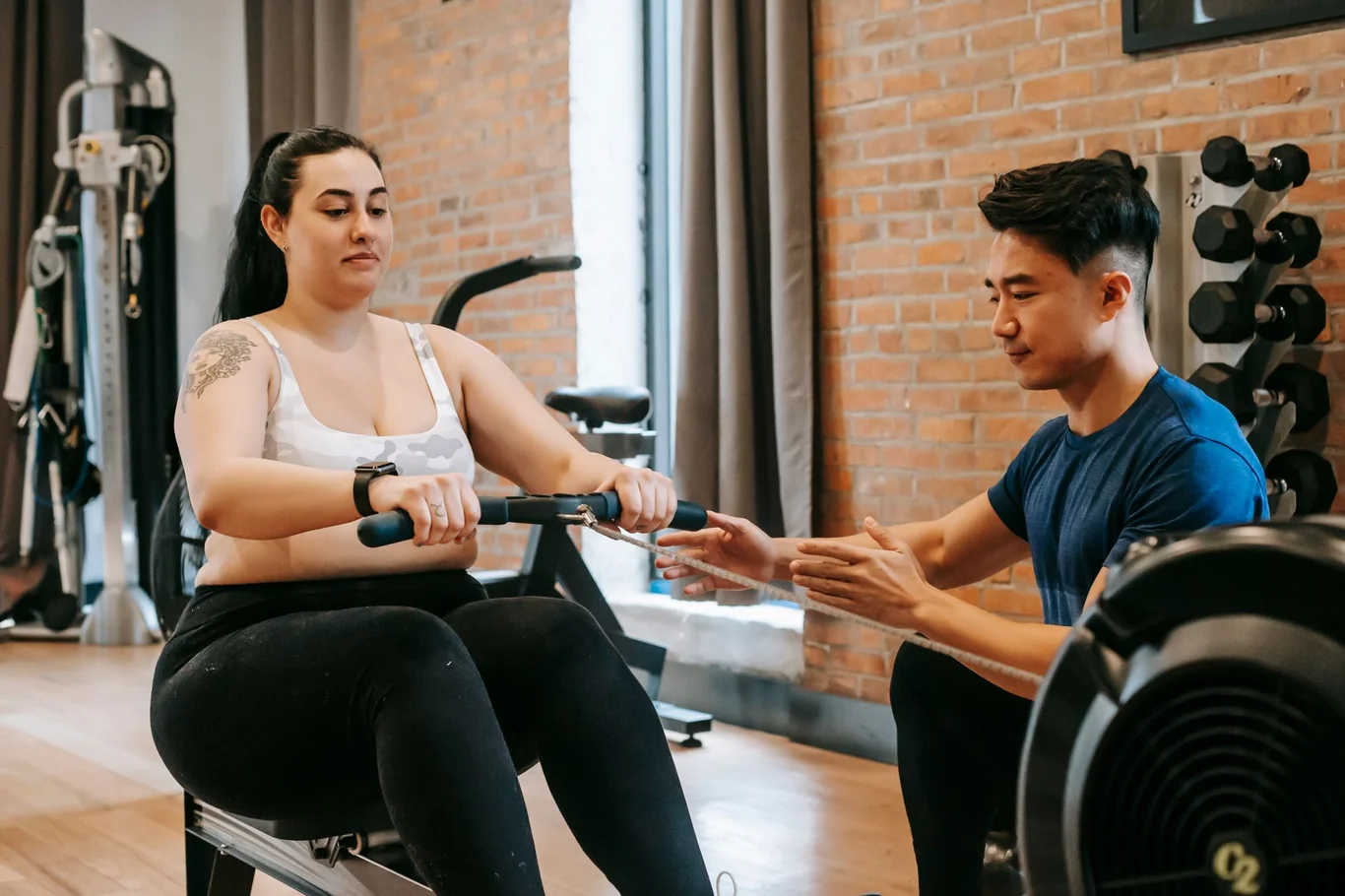
The catch is where each stroke begins. Sit tall on the seat with shins vertical, feet strapped in firmly, and arms extended forward toward the flywheel. Your knees should sit directly above your ankles, not splayed out to the sides. Your back holds a neutral, slightly forward lean from the hips, and your grip on the handle should be relaxed enough that your fingers do most of the holding, not your palm.
Our rowing machines page lists current models if you want to practice this catch position on one at home.
- Shins vertical to the floor
- Arms fully extended, elbows soft
- Core engaged, spine neutral
- Shoulders relaxed and down
- Head neutral, eyes forward
The Drive - Generating Power Correctly
Push through your feet and extend your legs first. Only after your legs are roughly 70% extended do you begin to hinge your back slightly past vertical, then draw your arms into your lower chest. Think of power moving in a wave from your feet upward. Rushing your arms into the pull before your legs finish is the single most common form error, and it is exactly how rowers end up sore in their shoulders instead of their legs and back.
The Finish - Completing the Stroke
At the end of the drive, your legs are fully extended, your torso leans slightly past vertical (roughly 11 o'clock), and your hands draw in to your lower ribs. Your wrists should be flat, not bent upward. Hold this controlled position for one moment before beginning the recovery. Leaning back excessively past 1 o'clock places unnecessary compressive load on your lumbar spine.
The Recovery - Returning with Control
The recovery is the reversal: arms extend first, torso hinges forward from the hips, and then your knees bend as you glide forward on the seat. The handle must pass over your knees before your knees begin to rise.
Many beginners rush this phase, which compresses their stroke length and compounds spinal load over time.
- Extend arms until the handle passes your knees
- Hinge your torso forward from the hips
- Allow your knees to bend as you glide forward
- Arrive at the catch position with control and readiness
Setting Up a Rowing Machine - Footrests, Damper, and Adjustment
Before the first stroke, two minutes of proper setup prevents most early-stage form problems. For households sharing the machine between users of different heights, footrest adjustment matters more than it does for solo setups, and my guide to the best multi-user rowing machines covers the models with the most accessible adjustment range.
- Foot straps: Position the strap across the widest part of your foot, across the ball of the foot. Set the footplate lower rather than higher: a lower foot position increases quad and glute engagement. A higher setting shifts work toward the calves, which is less efficient for full-body power output.
- Damper setting: The Concept2 RowErg is one of the most widely used Concept 2 rowing machines in gyms and home settings. Its damper dial (numbered 1-10) controls how much air enters the flywheel housing. A higher damper is not a harder workout. It creates a heavier, slower feel that favors brute strength over coordinated technique. The optimal range for most rowers, including competitive athletes, is 3 to 5. Think of it like a bicycle gear: a controlled setting lets you maintain rhythm and proper form far longer than a maxed-out setting does.
- Monitor metrics: Before you begin, note your stroke rate (SPM) and split time (time per 500 meters). Beginners should target 18-22 SPM with a controlled, sustainable split rather than chasing speed.
Our Concept2 RowErg Model E Tall Legs page covers an air-resistance Model E with a 20-inch seat.
For maintenance considerations if you keep multiple cardio machines at home, our how to disassemble a treadmill guide covers the general principles of breaking down and reassembling large fitness equipment safely.
Setting | What It Controls | Recommended Starting Point |
Footplate height | Leg muscle emphasis | Lower position (1-2) |
Damper | Air resistance feel | 3-5 for most rowers |
Stroke rate (SPM) | Rowing cadence | 18-22 SPM for beginners |
Split time | Pace per 500m | Controlled, not rushed |
Common Rowing Machine Mistakes - And How to Fix Them
Most rowing injuries and plateaus trace back to the same handful of errors. Here are the most consistent problems in the research and beginner feedback, along with practical fixes.
Mistake | What Happens | Fix |
Pulling with arms first | Shoulder and upper back fatigue; inefficient power | Drive with legs first; arms pull last |
Rushing the recovery | Shortened stroke; compressed spinal load | Slow the slide; arms then torso then legs |
Over-gripping the handle | Forearm fatigue, wrist strain, blisters | Hold with three fingers; relax your palm |
Excessive layback | Lumbar compression; lower back pain | Stop your back at 11 o'clock; no further |
Holding your breath | Early cardiovascular fatigue; power loss | Exhale on the drive; inhale on recovery |
High damper setting | Forced, jerky stroke; timing breakdown | Lower damper to 3-5; prioritize rhythm |
Lower back pain during rowing is almost always a technique problem, not a structural limitation. Rounding the spine under load and collapsing the torso during the recovery are the two most common culprits. To understand why low-impact cardio protects your joints over time, our treadmill benefits article covers the comparable cardiovascular case for walking and incline training alongside rowing.
Rowing Machine Workout for Beginners - A 4-Week Starter Plan
Rowing machine workouts for beginners do not need to be long to be effective. Research on rowing ergometer performance protocols shows that even short bouts at moderate-to-high intensity produce meaningful cardiovascular and muscular stress (2). Longer sessions are not better when you are still building form. The first two weeks focus on stroke sequencing and breathing; the second two weeks introduce structured intervals. Our guide to the best beginner rowing machine covers machines with the footplate stability and resistance consistency that make those early weeks easier to manage.
Week | Session Structure | Primary Goal | SPM Target |
1 | 2 x 5 min, rest 2 min between | Stroke sequencing and awareness | 18-20 |
2 | 3 x 5 min, rest 90 sec between | Consistency and breathing rhythm | 18-22 |
3 | 2 x 10 min, rest 2 min between | Building aerobic base | 20-24 |
4 | 1 x 20 min steady OR 4 x 4 min intervals | Fitness development | 22-26 |
Before each session, complete this warm-up sequence:
- 10 leg swings per side (forward and back)
- 10 hip circles per side
- 20 slow air squats, pausing at the bottom
- 5 minutes of easy rowing at 16-18 SPM with full attention on sequencing
After each session, complete this cool-down:
- Seated hamstring stretch, 30 seconds per side
- Hip flexor lunge stretch, 30 seconds per side
- Thoracic rotation, 10 reps per side
- Wrist circles and finger extensions to counteract grip tension
These steps are especially important for preventing the hip flexor tightness and lower back soreness that many beginners report after their first several sessions. They add only five minutes to your workout and prevent the stiffness that makes people skip their next session. For those building this habit on a limited budget, our top budget rowing machine guide covers reliable entry-level options that hold up to daily training.
Rowing Machine Benefits - What the Research Shows
The science on rowing as a training tool is more robust than most people realize. Below is what peer-reviewed evidence shows about this exercise.
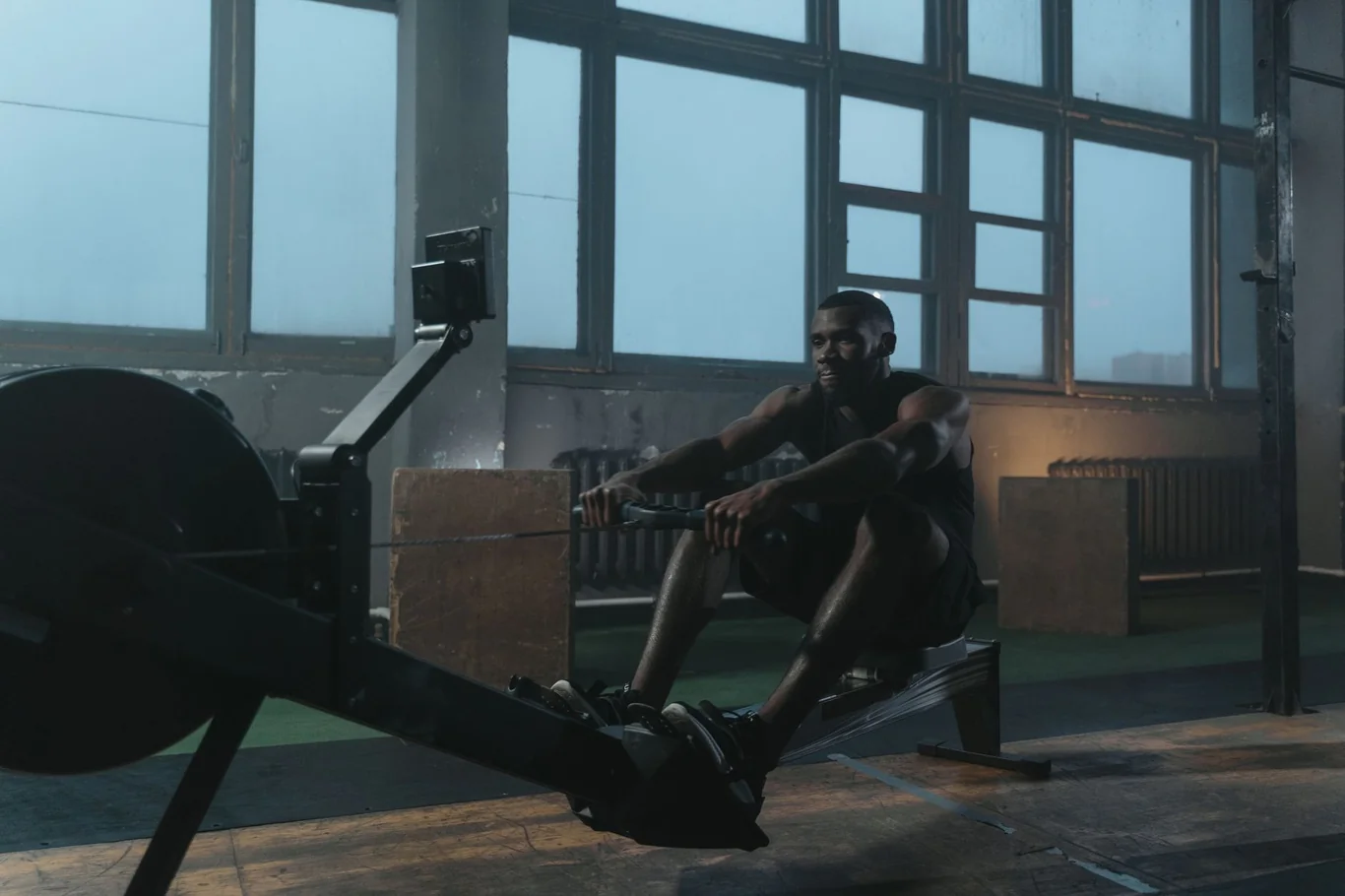
Cardiovascular performance: Rowing produces greater increases in stroke volume and cardiac output than cycling at the same relative intensity, making it a particularly efficient method for building aerobic capacity (3). For rowers building an aerobic base, those cardiac adaptations accumulate meaningfully within weeks of consistent training. For home users who want quiet training while building that aerobic base, our guide to the top magnetic rowing machine covers the best low-noise options for consistent home sessions.
Fat metabolism: A controlled study comparing rowing to cycling found that rowing produces approximately 45% higher fat oxidation rates at matched oxygen consumption levels, attributed to the larger total muscle mass recruited during the rowing stroke (4). For those approaching rowing as a tool for is a rowing machine good for weight loss, this metabolic advantage is clinically meaningful.
Caloric expenditure: Applied rowing physiology research reports caloric expenditure of up to 36 kcal per minute during high-intensity ergometer rowing, with energy split roughly 70-75% aerobic and 25-30% anaerobic during maximal efforts (5). Even at moderate intensity, rowing consistently burns more calories per minute than most steady-state cardio options.
Strength and functional fitness: A randomized controlled trial found that 12 weeks of computer-aided rowing exercise produced significantly greater improvements in hip and knee muscle strength and functional fitness scores compared to conventional resistance training in older adults with mild knee osteoarthritis (6). Rowing's full-body engagement makes it a practical dual-purpose strength and cardio tool.
For a deeper look at the machine behind these results, my post on erg machine fundamentals covers how the flywheel, drag factor, and performance monitor work together to measure and record every pull.
For guidance on reading and acting on the wearable data these sessions generate, my fitness tracker usage guide walks through setup, syncing, and the metrics worth reviewing each week.
Accessibility across populations: Rowing is viable even for people with significant physical limitations. A 12-week rowing intervention in individuals with spinal cord injury improved peak oxygen consumption and vascular function, suggesting that rowing offers cardiorespiratory benefits even for populations who cannot use most conventional cardio equipment (7).
Muscles worked: The muscles a rowing machine works span nearly every major group in the body. Legs drive 65-75% of total power output.
For guidance on the resistance setting that best channels this leg-dominant power into productive training output, my post on rowing machine resistance breakdown covers how drag factor, damper setting, and resistance type interact with stroke feel and performance data.
- Legs: quadriceps, hamstrings, glutes (primary power source)
- Back: latissimus dorsi, rhomboids, erector spinae
- Core: transverse abdominis, obliques, lower back stabilizers
- Arms and shoulders: biceps, forearms, rear deltoids
This full-body engagement is why arm-dominant rowing is both inefficient and injury-prone - the arms simply lack the capacity to generate the power that the legs can. Our guide to the best rowing machine covers the top options that deliver this full-body return most effectively across resistance types and price points.
Our guide on what muscles a rowing machine works covers the anatomical breakdown in greater detail, including which muscles activate during each phase of the stroke. And for those exploring low-impact alternatives, the benefits of walking backwards on treadmill article examines how reverse walking activates similar posterior chain muscles with virtually no joint load.
The results from consistent rowing before and after 8-12 weeks typically include improved resting heart rate, increased cardiovascular endurance, and noticeable leg and back strength gains. Our guide to rowing machine benefits expands on these outcomes with the full research timeline and realistic expectations for each phase of training.
Where to Start if This Is Your First Session
Row for five minutes at 18 SPM with full attention on sequencing: legs, back, arms on the drive; arms, back, legs on the recovery. Feel the seat slide and notice whether your arms rush forward before the handle clears your knees. That five-minute awareness session will reveal more about your form than any longer workout you could do today. Buyers still selecting a machine can find size-specific guidance in my guide to the top compact rowers, which identifies the models with the shortest footrail and smallest footprint that still support full-length stroke development.
I have gone through the research on this exercise category thoroughly, and our team's position is consistent with what the evidence shows: rowing is among the most time-efficient cardio tools available, provided you invest the first few weeks in technique rather than distance. Build the stroke first. For the anatomical detail behind why that foundation matters, our breakdown of what muscles a rowing machine works covers each major group across the full four-phase stroke.
The fitness comes on its own from there.
FAQs
Can I use a rowing machine with osteoporosis?
Using a rowing machine with osteoporosis depends on the severity of your condition and your spine's current health. The forward-hinging motion under load can place compressive forces on the thoracic vertebrae, so anyone with a diagnosed osteoporosis should consult their healthcare provider before beginning rowing and should use conservative damper settings with minimal layback angle.
How long should a beginner do on a rowing machine?
A beginner should start with 5-10 minutes on a rowing machine and focus entirely on stroke sequencing before adding duration. Adding roughly 5 minutes per week over 4-6 weeks builds both technique and aerobic capacity without overwhelming the postural muscles that keep your lower back protected during the stroke.
Is rowing good for high BP?
Rowing is generally associated with improved cardiovascular health and reductions in resting heart rate in regular practitioners, which may support blood pressure management over time. Anyone with diagnosed hypertension should work with their physician to establish safe training intensity thresholds before beginning a rowing program, as maximal rowing effort produces a significant acute cardiovascular response.
Is rowing ok for rotator cuff injury?
Rowing with a rotator cuff injury is generally not recommended without medical clearance, as the pull phase places load on the shoulder complex including the rotator cuff tendons. A physiotherapist can advise whether modified rowing with lighter resistance and a shortened range of motion is appropriate during rehabilitation, or whether it should be avoided entirely until the injury resolves.
How to use rowing machine?
To use a rowing machine, strap your feet in securely, set the damper between 3 and 5, and begin each stroke by pushing with your legs, then swinging your back slightly past vertical, then pulling your arms to your lower ribs. The recovery reverses the sequence: arms extend, torso hinges forward, then knees bend as you glide back to the catch. Aim for 18-22 strokes per minute as a beginner and prioritize smooth sequencing over speed or distance.
References:
- Legge N, Draper C, Slattery K, O'Meara D, Watsford M. On-water rowing biomechanical assessment: a systematic scoping review. Sports Med Open. 2024;10(1):72. doi:10.1186/s40798-024-00726-2
- Borges I, Veiga S, Gonzalez-Frutos P. The evaluation of physical performance in rowing ergometer: a systematic review. J Funct Morphol Kinesiol. 2025;10(4):437. doi:10.3390/jfmk10040437
- Horn P, Ostadal P, Ostadal B. Rowing increases stroke volume and cardiac output to a greater extent than cycling. Physiol Res. 2015;64(2):203-207. doi:10.33549/physiolres.932885
- Egan B, Ashley DT, Kennedy E, O'Connor PL, O'Gorman DJ. Higher rate of fat oxidation during rowing compared with cycling ergometer exercise across a range of exercise intensities. Scand J Med Sci Sports. 2016;26(6):630-637. doi:10.1111/sms.12495
- Hagerman FC. Applied physiology of rowing. Sports Med. 1984;1(4):303-326. doi:10.2165/00007256-198401040-00004
- Lin PL, Yu LF, Kuo SF, Wang XM, Lu LH, Lin CH. Effects of computer-aided rowing exercise systems on improving muscle strength and function in older adults with mild knee osteoarthritis: a randomized controlled clinical trial. BMC Geriatr. 2022;22(1):809. doi:10.1186/s12877-022-03505-8
- Hansen RK, Samani A, Laessoe U, Handberg A, Mellergaard M, Figlewski K, Thijssen DH, Gliemann L, Larsen RG. Rowing exercise increases cardiorespiratory fitness and brachial artery diameter but not traditional cardiometabolic risk factors in spinal cord-injured humans. Eur J Appl Physiol. 2023;123(6):1241-1255. doi:10.1007/s00421-023-05171-x