
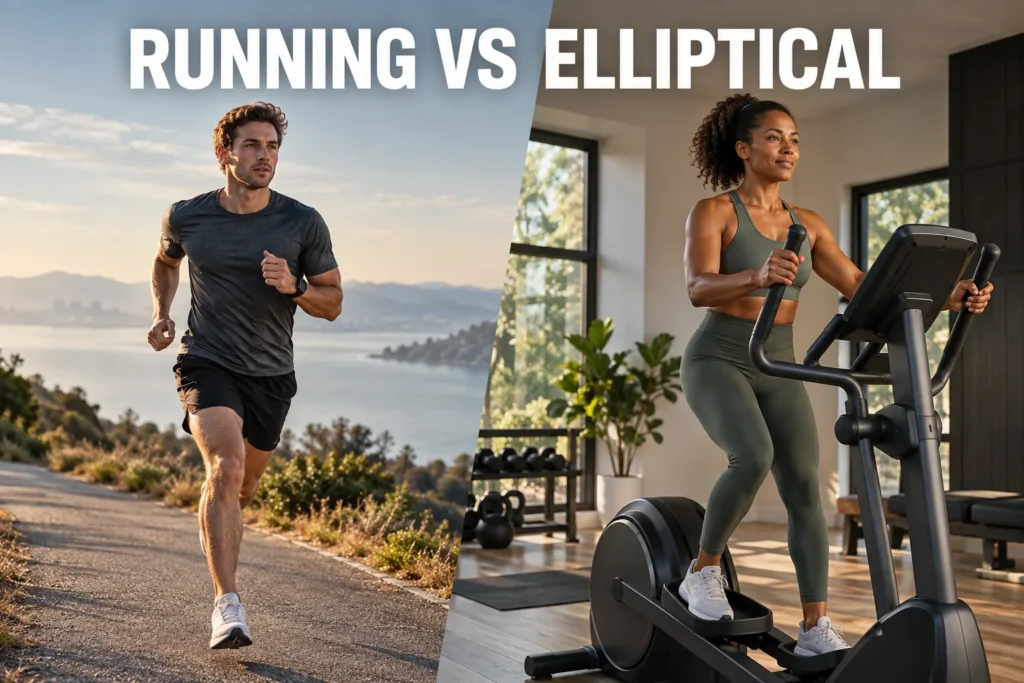
Running vs elliptical comes down to one trade-off: running burns roughly 15% more calories per minute than the elliptical at matched effort, but it also generates two to three times the joint loading force per stride. If you have stood between both machines and wondered which one is actually worth your time, that calorie-versus-impact trade-off is the actual question your body is asking.
I have used all three machines in my own training for years, and as a strength and conditioning coach I have kept athletes' aerobic base intact through lower-leg injuries by swapping road miles for elliptical sessions, so this guide reflects what I have seen work as well as what the research shows. It compares running and the elliptical head to head and brings the Stairmaster into the conversation, since it competes for the same cardio slot in most gyms. I cover calorie expenditure, joint loading, and muscle engagement, then tell you honestly who each option suits and where I think the elliptical gets oversold.

Running vs Elliptical: Key Differences at a Glance
Running vs elliptical training differ in four core ways: impact force on your joints, calorie burn ceiling, which muscles are recruited, and how the movement pattern transfers to real-world activity. The Stairmaster adds a third data point that belongs in any honest running vs elliptical comparison.
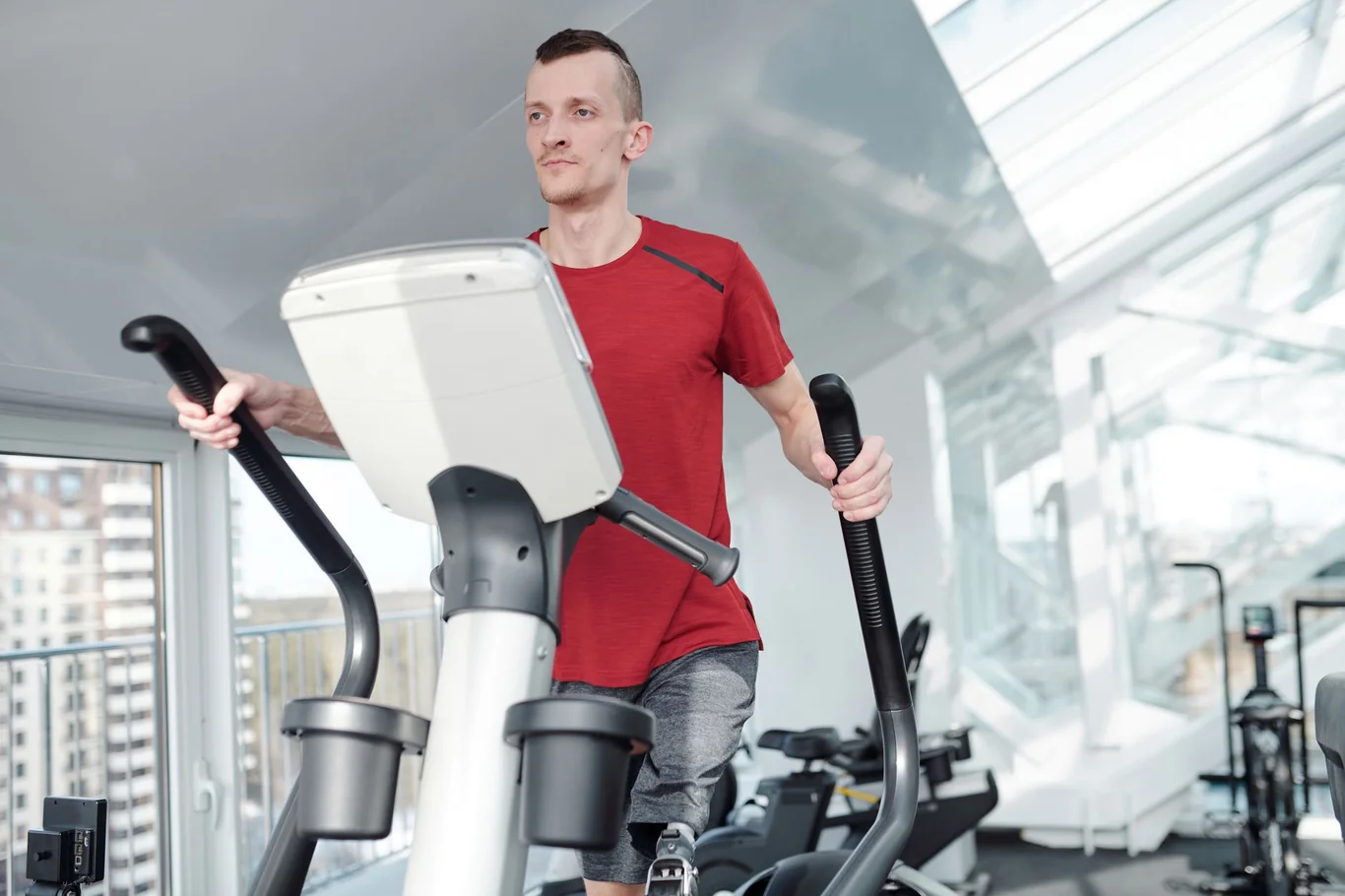
The table below gives you the headline summary across all three options.
Factor | Running | Elliptical | Stairmaster |
Joint impact | High - roughly 1.5 to 3x body weight per stride | Low - feet maintain pedal contact throughout | Moderate - step motion, no flight phase |
Calorie burn per 30 min (155 lb / 70 kg) | 290-370 cal | 255-320 cal | 225-280 cal |
Primary muscles | Quads, hamstrings, calves, glutes | Quads, hamstrings, glutes, arms, chest (handles) | Glutes, quads, hamstrings, calves |
Full-body involvement | No | Yes (with handles) | No |
Bone density stimulus | Yes - driven by impact loading | Minimal | Minimal |
Best for | Race prep, bone health, general fitness | Low-impact cardio, recovery, cross-training | Posterior chain strength + cardio |
These are estimates for moderate-to-vigorous intensity at the stated body weight. Actual values depend on speed, resistance setting, and individual metabolic rate.
These distinctions matter differently depending on your goal. A runner training for a 10K, a person managing knee osteoarthritis, and someone chasing fat loss each reach a different answer from the same comparison. The goal of this guide is to help you find yours.
Calorie Burn: Running, Elliptical, and Stairmaster Compared
Calorie burn is the first number most people want when evaluating running vs elliptical, and the honest answer is: it depends heavily on your body weight, the intensity you maintain, and your resistance settings. No single flat figure applies to everyone.
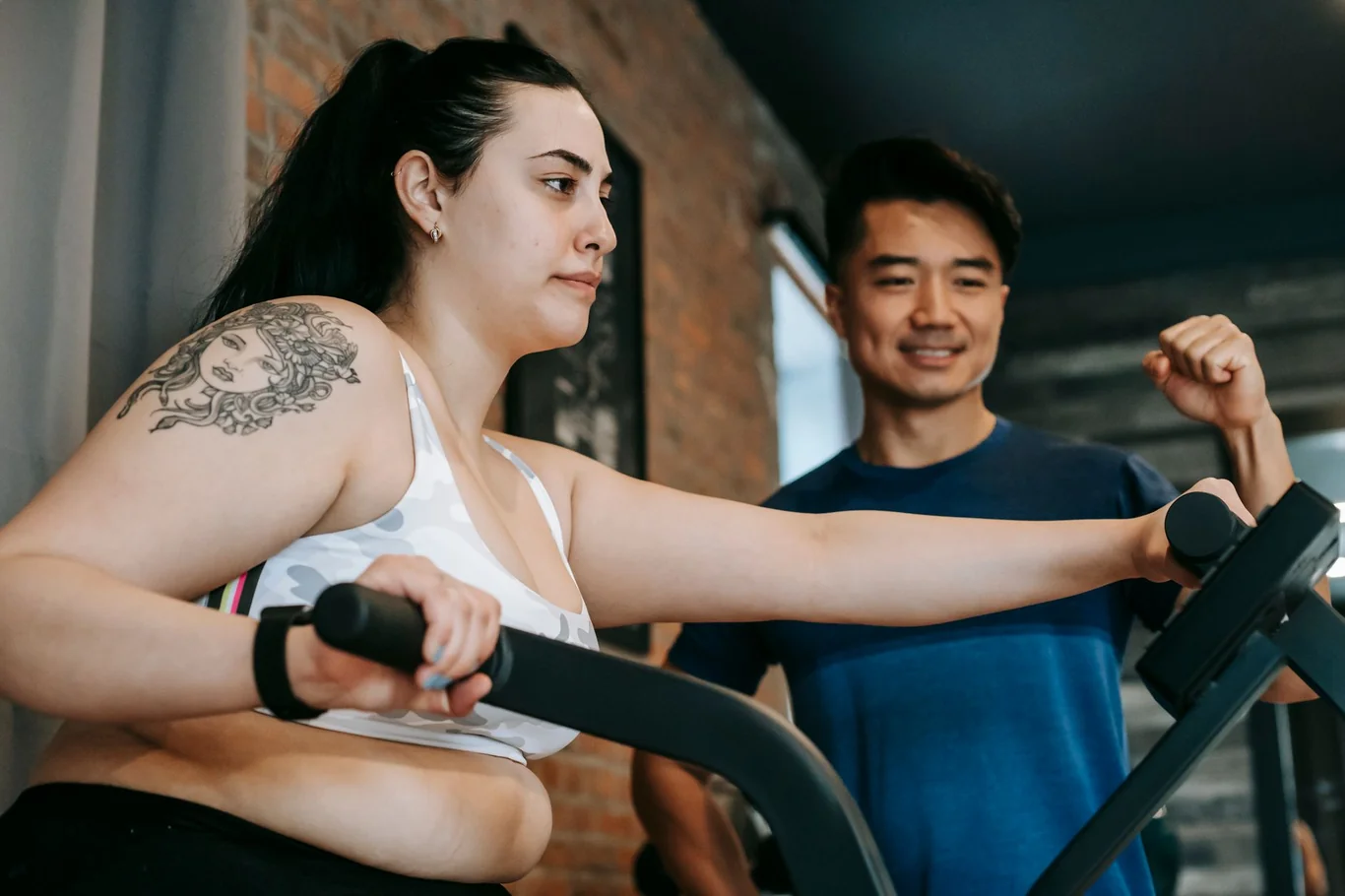
A 2024 study measuring energy expenditure across seven indoor cardio machines at matched effort levels found the following averages at high perceived exertion (RPE 17) (1):
- Treadmill running: approximately 15.18 kcal/min
- Stairmaster (stair climber): approximately 13.35 kcal/min
- Elliptical trainer: approximately 12.82 kcal/min
The gap between running and the elliptical is roughly 15% at equivalent intensity. Over a 30-minute session, that translates to approximately 70 fewer calories on the elliptical, which is a meaningful but not insurmountable difference once you factor in total weekly volume.
How Body Weight and Resistance Shift the Numbers
Individual variables move calorie burn significantly. Heavier users burn more on every machine. Higher elliptical resistance settings substantially close the calorie gap with running. A 185 lb person on a high-resistance elliptical can match the calorie output of a lighter person running at a moderate pace, which makes the treadmill vs elliptical comparison for weight loss a genuinely close call once resistance is dialed in.
The table below shows estimated 30-minute calorie ranges at moderate-to-vigorous intensity across three body weights. Treat these as working estimates, not precise targets, since individual metabolic rate, fitness level, and machine resistance all shift the actual numbers.
Machine | 130 lb (59 kg) | 155 lb (70 kg) | 185 lb (84 kg) |
Running (5.5-6 mph / 9-10 km/h) | 255-295 cal | 290-370 cal | 365-445 cal |
Elliptical (moderate resistance) | 215-265 cal | 255-320 cal | 315-390 cal |
Stairmaster (moderate pace) | 195-235 cal | 225-280 cal | 285-355 cal |
Source: (1), extrapolated to 30-minute ranges by body weight; actual values vary with resistance, pace, and individual metabolism.
The elliptical is good for weight loss, provided the intensity is genuine. An elliptical workout at low resistance and easy pace will not produce meaningful fat loss, but the same limitation applies to a slow jog. When I coach someone through a fat-loss phase, the first thing I check is whether their elliptical resistance ever moves beyond the easiest settings.
Why Elliptical Calorie Displays Often Overestimate
Elliptical machines estimate calorie burn from speed and resistance formulas, not from your actual metabolic output. These figures often run higher than measured values, which means you may be burning less than the display suggests. Heart rate gives a far more reliable picture of actual output. On the elliptical I prefer a chest strap, because constant arm movement on the handles can make a wrist sensor lag, and the accuracy gap between a chest strap and wrist tracker is worth knowing before you trust either number.
Beyond total calorie burn, research comparing treadmill and elliptical at matched effort found that maximal fat oxidation was significantly higher on the treadmill (0.61 g/min) compared to the elliptical (0.41 g/min), and the intensity at which fat burn peaked also differed (2). This does not make the elliptical a poor fat-loss tool, but it confirms that running vs elliptical are not metabolically identical even when calorie totals appear close.
Joint Impact: What the Research Shows
Joint impact is where the running vs elliptical comparison becomes most decisive for anyone managing pain, working around an injury, or trying to stay active for the long term. Running generates ground reaction forces of roughly 1.5 to 3 times body weight per stride. Over a 30-minute run, that force accumulates across several thousand footfalls. For people with existing knee issues, shin splints, or stress fractures from previous running, that cumulative load is a real concern. Overuse injuries including stress fractures and IT band syndrome are more common in runners than in low-impact alternatives, precisely because of this repetitive loading.
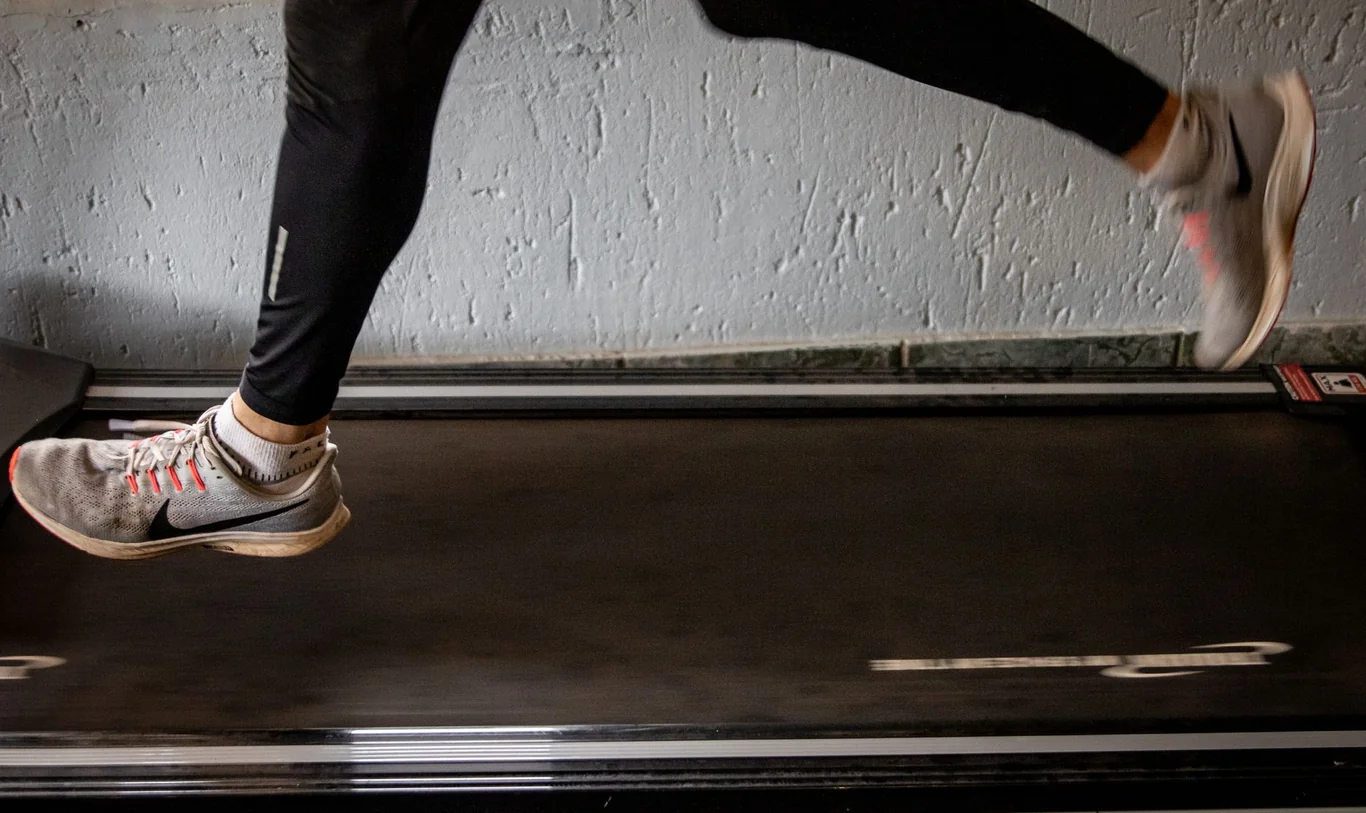
The elliptical removes the flight phase that creates peak impact. Your feet maintain contact with the pedals throughout the full stride, which fundamentally changes the load on your knees, hips, and ankles.
Ground Reaction Forces Across Running, Elliptical, and Stairmaster
Biomechanical research on knee joint loading during elliptical training found lower compressive forces and extension torques on the elliptical compared to overground walking (3). This evidence comes primarily from studies including post-surgical and amputee populations, which limits direct generalization to healthy runners. Even so, the underlying mechanism, that removing the flight phase reduces peak loading, is consistent across healthy and clinical populations. The elliptical meaningfully reduces knee joint stress compared to running while still producing a comparable cardiovascular output.
The Stairmaster sits between the two for joint loading. The stepping motion removes the high-impact landing of running, but the repeated single-leg stance still loads the knee with your body weight on each step. For most healthy adults this is manageable and may support knee stability over time. For those with active knee osteoarthritis or post-operative restrictions, the elliptical is the more appropriate option.
If joint health concerns are the primary driver behind your running vs elliptical decision, discussing your specific limitations with a clinician before committing to a training plan is the right approach. This guide covers general patterns from the research, not medical guidance for individual conditions.
Elliptical as a Rehabilitation and Low-Impact Option
The clinical evidence for the elliptical extends beyond general fitness. A randomized controlled trial with patients recovering from total hip arthroplasty found that incorporating elliptical training improved walking speed, strength, and functional balance more than a walking-only protocol (4). That makes an elliptical machine for seniors and post-surgical patients a genuinely effective rehabilitation tool, well beyond a gentler way to do cardio.
I gave more weight to this research because it addresses something many guides miss: the elliptical is actively therapeutic for people with joint concerns. The absence of impact does not mean the absence of stimulus. It still drives real cardiovascular improvement, meaningful muscle activation, and functional gains in populations who cannot tolerate running's loading demands.
If the elliptical still aggravates your joints, a stationary bike is the next step down in load, because the seat carries your body weight. In my experience the stationary bike vs elliptical decision usually comes down to one question: do you want upper-body work in the same session, or maximum joint relief?
Muscle Engagement: What Each Activity Recruits
The running vs elliptical comparison extends into muscle recruitment patterns that affect how your body adapts over time. Each option targets the lower body, but with meaningful differences in how muscles fire and coordinate. The table below maps the primary muscles each activity engages and at what relative intensity.
Muscle Group | Running | Elliptical | Stairmaster |
Quadriceps | High | High - greater EMG activation than treadmill walking (5) | High |
Hamstrings | High | Moderate-High | Moderate |
Glutes | High | Moderate-High | High - primary driver per step |
Calves | High | Moderate | Moderate |
Hip flexors | High | Moderate | Low |
Upper body (chest, back, shoulders) | Minimal | Moderate (with handles) | Minimal |
Core | Moderate | Moderate | Moderate-High (stability) |
Running primarily recruits:
- Quadriceps (knee extension and landing absorption)
- Hamstrings (hip extension and deceleration)
- Calves (push-off force at toe-off)
- Glutes (hip extension and pelvic stabilization)
- Hip flexors (leg recovery phase)
The upper body contributes through arm swing, but arm and shoulder muscles are not meaningfully loaded. That lower-body focus is the main reason I suggest pairing running with a machine that gives the upper body some share of the work.
The elliptical follows a similar lower-body pattern with two key differences. First, the handles allow pushing and pulling motions that engage the chest, back, and shoulders simultaneously. Second, surface EMG research found that elliptical training produced greater quadriceps activation and higher quadriceps-to-hamstring coactivation than treadmill walking, stationary cycling, and overground walking (5). The elliptical uses a distinct lower-body recruitment pattern that may actually demand more from the quads than running.
Stairmaster narrows the focus considerably:
- Glutes (primary driver of each step)
- Quadriceps (knee extension per step)
- Hamstrings and calves (secondary stabilizers)
- Core (anti-rotation during single-leg stance)
Upper body involvement is minimal. This concentrated lower-body load makes the stair stepper vs elliptical distinction meaningful for people training for glute and posterior chain strength alongside cardiovascular fitness.
The handles are the elliptical's biggest advantage over running for muscle coverage, but only if you actually use them. Most people I watch in gyms rest their hands on the handles instead of pushing and pulling, which turns a full-body machine back into a lower-body one. Driving the handles through the whole stride is one of the elliptical machine benefits that running cannot offer.
Elliptical vs Stairmaster: A Closer Look
The elliptical vs stairmaster comparison comes up constantly in gyms because both machines occupy a similar perceived role: moderate-impact cardio that is easier on joints than running. That broad similarity hides meaningful differences that matter for training outcomes.

Cardiovascular Output: Which Demands More?
At matched intensity levels, the Stairmaster produces a slightly higher cardiovascular demand than the elliptical. The same 2024 study cited earlier ranked the stair climber second and the elliptical third across seven machines in energy expenditure per minute (1). At submaximal intensities the gap is roughly 5-10%, which most users can close by raising elliptical resistance.
Beyond the workout itself, large-scale research found an inverse association between habitual stair climbing and atherosclerotic cardiovascular disease incidence in a prospective cohort of over 7,000 adults followed for nearly 17 years, and the association was strongest in age-adjusted analyses (6). Regular stair-climbing activity carries long-term cardiovascular protection benefits that go beyond what you feel during a single session. The stair climber vs elliptical choice carries a habit-transfer dimension: the Stairmaster builds capacity that applies directly to a daily movement most people do.
Lower-Body Strength: Where Stairmaster Leads
The stair climber vs elliptical difference is clearest in lower-body strength development. Each step on the Stairmaster requires more hip extension force per repetition than a comparable elliptical stride, particularly at controlled speeds where momentum cannot do the work. This makes the Stairmaster more effective for building glute and posterior chain muscular endurance.
For total-body cardiovascular conditioning, the elliptical machine vs Stairmaster comparison shifts back toward the elliptical because of arm-handle involvement. Someone training full-body cardio gets a more complete stimulus from the elliptical; someone specifically developing lower body power benefits more from the Stairmaster. The elliptical vs stairmaster question ultimately comes down to whether you value breadth or specificity in a single session.
Running vs Elliptical for Weight Loss
When the goal is specifically running vs elliptical for weight loss, the calorie numbers give running a slight per-minute edge. But total weekly energy output drives fat loss, and that depends more on what you will actually sustain week after week than which machine burns approximately 15% more in a single session.
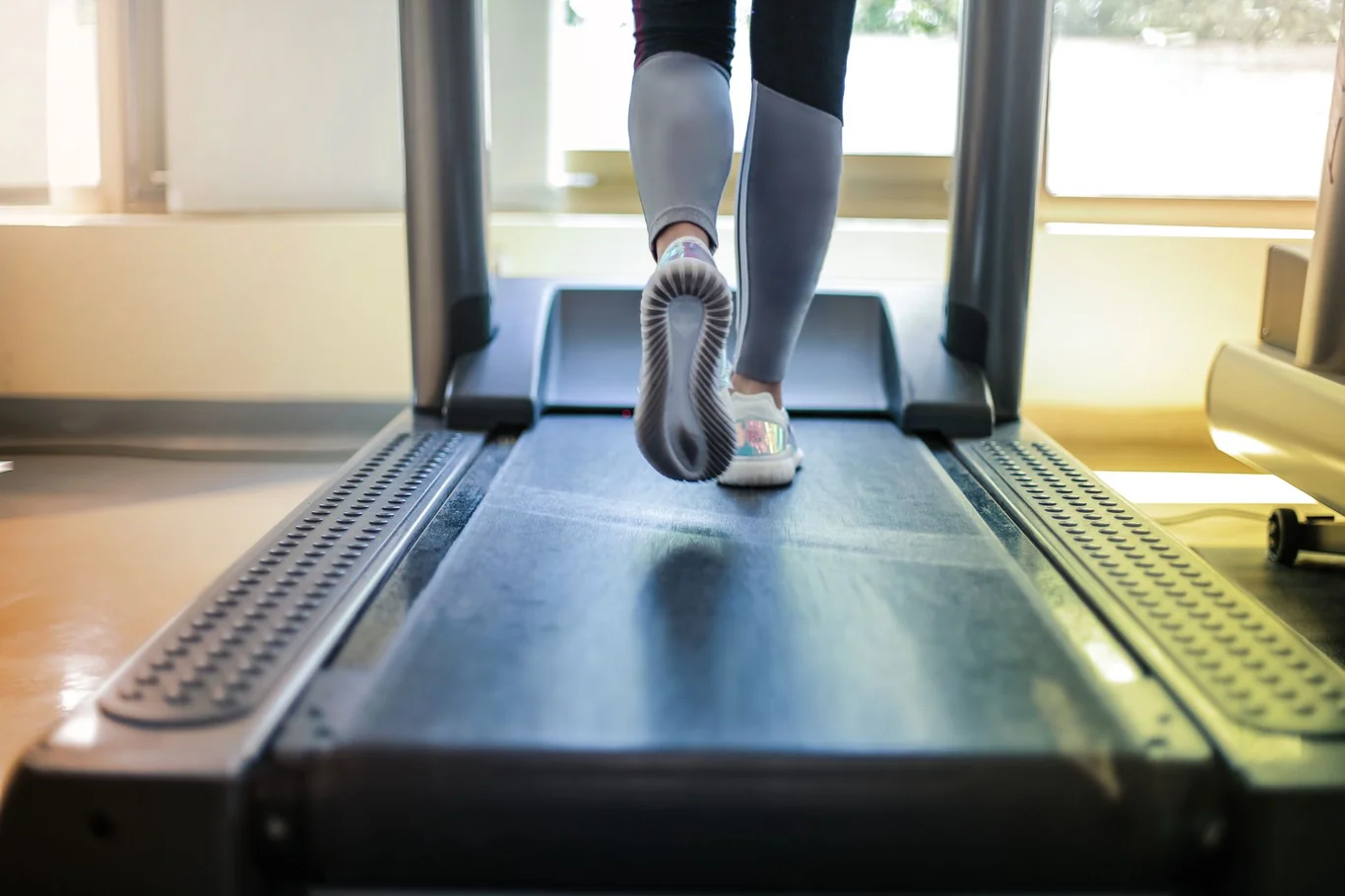
Several practical factors shape which option produces better long-term weight loss:
- Session length: Lower perceived exertion on the elliptical often allows longer sessions. More minutes at moderate intensity can offset a per-minute calorie gap with running.
- Injury tolerance: People cutting sessions short due to knee or hip pain lose far more calories than the running-elliptical difference. Completing sessions consistently matters more than which machine you do them on.
- Recovery demand: Running's impact increases recovery requirements. Adding elliptical on recovery days increases total weekly cardio volume without adding to joint stress.
- Resistance settings: Higher elliptical resistance meaningfully increases calorie burn, narrowing the gap with running. Choosing treadmill or elliptical for weight loss becomes a close call once resistance is set appropriately.
What I see with clients matches the research: both machines produce meaningful weight loss results when intensity is genuinely elevated and sessions are sustained over weeks. An elliptical for weight loss at moderate-to-vigorous effort and appropriate resistance outperforms sporadic or pain-interrupted running every time.
Elliptical for Running Training: Does Cross-Training Work?
Running on the elliptical as a supplement or injury-period substitute for road miles is a widely used strategy, and it has real merit. The cardiovascular stimulus transfers because your heart and lungs respond to output demand regardless of whether that demand comes from road footfalls or pedal strokes.
What does not transfer as cleanly is the running-specific neuromuscular pattern. Running requires muscles to absorb impact, push off against a fixed surface, and cycle through a free-flight phase. The elliptical's guided, mechanically constrained motion changes how muscles fire and coordinate. Using the elliptical exclusively during an injury break may preserve aerobic capacity, but some running-specific muscle conditioning will still decay over time. When I move injured runners onto the elliptical, I still plan a gradual return to running, because the first sessions back often feel awkward while the impact pattern returns. A 34-year-old half-marathoner I coached through a shin stress reaction held her easy-run heart rate on the elliptical for six weeks, and her first two runs back still felt clumsy for the opening 15 minutes.
The most effective way to use the elliptical in running training is to treat it as a strategic tool rather than a complete replacement:
- Maintain cadence at 85-90 RPM on the elliptical to approximate running stride rate and preserve some neuromuscular specificity
- Reserve full running replacement for injury recovery periods, not peak training blocks
- Return to at least two road or treadmill sessions per week as soon as the injury allows
- Stand upright with light hands and minimal handle lean. Those are the basics of how to use an elliptical well, and they keep your legs doing the work so the cardiovascular transfer is substantially better
The elliptical machine vs treadmill trade-off for runners is specifically about impact conditioning. Treadmill running, even at lower speeds, maintains ground contact forces and stride patterns that the elliptical cannot replicate. For a runner equipping a home gym, I usually recommend the treadmill as the main machine; an elliptical machine for home use makes more sense when joint relief matters more than race specificity, which is the real dividing line in any treadmill vs elliptical decision. If the elliptical wins, stride length is the first spec I check for runners, which is why I lean toward long-stride designs such as the Sunny Silent Long Stride Elliptical.
Who Should Choose Each Option
The running vs elliptical decision ultimately comes down to your current situation, your injury history, and what you are training for. Here is a breakdown of who each option genuinely suits.
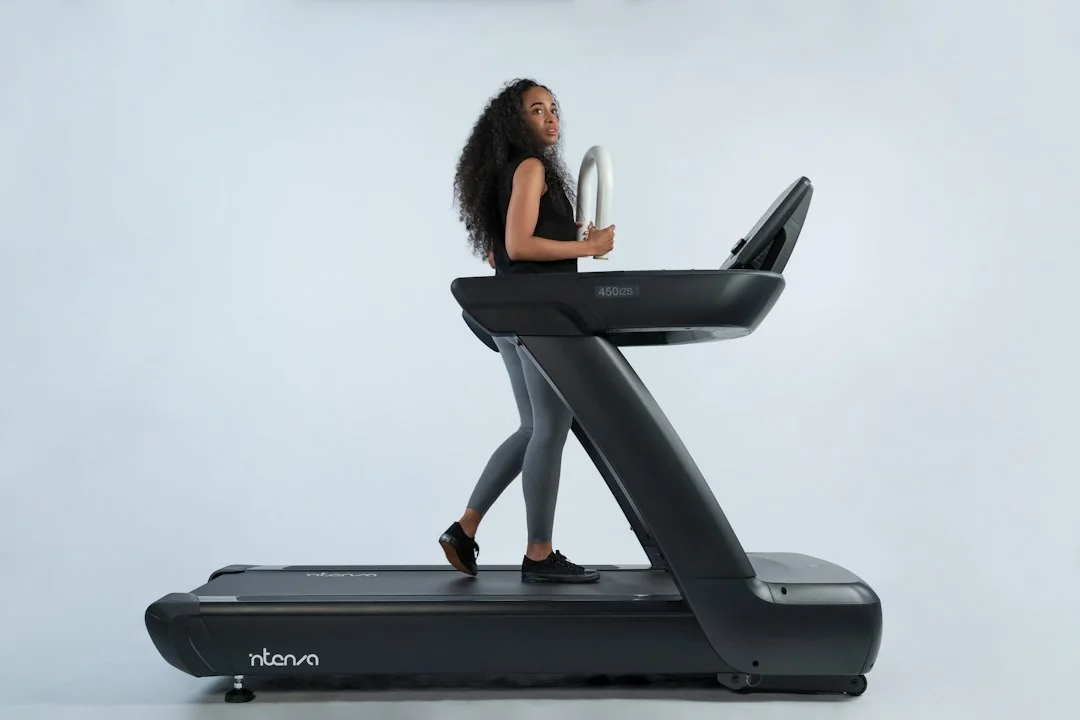
Running is the better choice if you:
- Are training for a race or event that requires running-specific fitness and form
- Have no significant joint issues and want to maximize calorie burn per session
- Want to build bone mineral density, which impact-based loading uniquely drives
- Prefer training outdoors or with zero equipment
- Have an established aerobic base and can run 20+ minutes without joint discomfort
The elliptical works better if you:
- Are managing knee, hip, or ankle pain that running consistently aggravates
- Are recovering from a lower-body injury or post-operative period
- Want upper-body involvement built into your cardio sessions
- Prefer longer, more sustainable sessions with lower perceived difficulty
- Are newer to cardio training and need a lower-barrier entry point to consistent output
The Stairmaster suits you if you:
- Want concentrated glute and posterior chain development alongside cardiovascular work
- Prefer shorter, more intense sessions over longer moderate-effort cardio
- Are not managing active knee issues that make the step motion uncomfortable
- Value the habit-transfer benefit of stair-climbing fitness to daily activities
One factor the calorie data cannot capture is workout enjoyment and adherence. The activity you actually continue doing produces better long-term outcomes than the theoretically superior option you abandon after a few weeks. If running feels tedious and elliptical sessions feel sustainable, the elliptical wins the long-term comparison regardless of the per-minute calorie gap.
I recommend that most people in reasonable health treat these three as complementary rather than competing. Running two to three times per week covers specificity and bone stimulus. Elliptical sessions on off-days fill remaining cardio volume with lower recovery cost, adding total weekly output without the compounding impact stress of daily running. Conditioning tennis players at elite academies, Carlos Alcaraz among them, taught me to treat the legs as having a weekly impact budget, and every hard session on court or road spends part of it.
When you split training between road runs and the elliptical, heart rate is the simplest way to keep effort honest across both. Knowing your normal heart rate when running gives you a baseline to match on the machine, so an easy day stays easy and a hard session actually reaches the intended effort.
Making Your Cardio Choice
The running vs elliptical debate does not have a single right answer, but it does have a right answer for your situation. No single machine wins every comparison, but the right combination covers what each misses.
Running leads on calorie burn, bone health, and event-specific preparation. The elliptical leads on joint protection, full-body involvement, and session sustainability. The Stairmaster occupies a lower-body strength niche that neither fully covers. My recommendation is to stop treating this as an either-or choice: run for specificity and bone stimulus, use the elliptical for high-volume low-impact sessions, and drop in a Stairmaster session for posterior chain work. If you are choosing a machine for those low-impact sessions, I would start with the top-rated elliptical machines and filter by stride length before price.
If joint health is your primary concern, the elliptical is your most effective primary tool, and the cardiovascular evidence is strong enough that I would not treat it as a compromise. If you are buying one for home, entry-level machines and gym-grade trainers sit far apart on elliptical cost, so set a budget first and compare features within it. Browsing home elliptical trainers side by side shows that spread quickly.
A practical tip from my own training: swap some of your runs for elliptical sessions of the same length at the same heart rate, and note how your legs feel the next morning. That tells you more about the right mix for your body than any calorie chart, and you can build from there with a structured elliptical workout plan.
FAQs
Can an elliptical be as effective as running?
An elliptical can be as effective as running for cardiovascular fitness when you match the intensity level, with research showing comparable heart rate and oxygen consumption between the two at the same perceived effort. The main differences are that running provides a greater stimulus for bone mineral density and better specificity for those training for running events, while the elliptical delivers comparable cardiovascular development with significantly less joint loading.
Is 3 miles on the elliptical the same as running 3 miles?
Three miles on the elliptical is not equivalent to running 3 miles in terms of calorie burn, joint impact, or neuromuscular demand, though it produces a similar cardiovascular challenge. Running burns roughly 15% more calories per minute at the same effort, generates substantially higher joint forces per stride, and trains the running-specific muscle coordination pattern that the guided elliptical motion does not fully replicate.
Is it better to walk for 1 hour or run for 30 minutes?
Walking for one hour and running for 30 minutes produce a comparable total calorie burn, with running burning slightly more due to its higher energy cost per minute. Running also builds greater cardiovascular fitness and bone density faster, but walking is lower-impact and accessible for a wider range of fitness levels and joint conditions, making it the more sustainable option for many.
How long on an elliptical equals 10,000 steps?
Reaching a 10,000-step equivalent on the elliptical typically takes around 30 to 40 minutes at moderate intensity for most adults, though the exact figure depends on your stride length, resistance setting, and the machine's step-counting algorithm. Elliptical machines count strides rather than footfalls, and a single elliptical stride corresponds to roughly 1.5 to 2 ground contacts, so the conversion is not a direct one-to-one equivalent.
Is the elliptical good for weight loss?
The elliptical is effective for weight loss when used consistently at moderate-to-vigorous intensity, with most adults burning 255-390 calories per 30-minute session depending on body weight and resistance level. Sustained use over weeks and months drives meaningful fat loss, and the elliptical's low-impact nature makes it easier to maintain the session frequency that long-term weight loss requires compared to higher-impact alternatives.
This content is for informational and educational purposes only. It is not a substitute for professional medical advice, diagnosis, or treatment. Always consult your healthcare provider before starting any new fitness program, especially if you are managing a joint condition or recovering from injury. We are always looking for expert inputs to make our content even better and more useful.
References
- Prieto-Gonzalez P, Yagin FH. Energy expenditure, oxygen consumption, and heart rate while exercising on seven different indoor cardio machines at maximum and self-selected submaximal intensity. Frontiers in Sports and Active Living. 2024;6:1313886. doi: 10.3389/fspor.2024.1313886.
- Filipovic M, Munten S, Herzig KH, Gagnon DD. Maximal fat oxidation: comparison between treadmill, elliptical and rowing exercises. Journal of Sports Science & Medicine. 2021;20(1):170-178. doi: 10.52082/jssm.2021.170.
- Orekhov G, Robinson AM, Hazelwood SJ, Klisch SM. Knee joint biomechanics in transtibial amputees in gait, cycling, and elliptical training. PLoS One. 2019;14(12):e0226060. doi: 10.1371/journal.pone.0226060.
- Hasebe Y, Akasaka K, Otsudo T, Hall T, Yamamoto M. Effects of incorporating elliptical trainer exercise during rehabilitation on physical function and self-reported outcomes after total hip arthroplasty: a randomized controlled trial. Journal of Physical Therapy Science. 2022;34(3):230-235. doi: 10.1589/jpts.34.230.
- Prosser LA, Stanley CJ, Norman TL, Park HS, Damiano DL. Comparison of elliptical training, stationary cycling, treadmill walking and overground walking. Gait Posture. 2011;33(2):244-250. doi: 10.1016/j.gaitpost.2010.11.013.
- Arafa A, Kashima R, Kokubo Y. Stair climbing and the incidence of atherosclerotic cardiovascular disease: a population-based prospective cohort study. Environmental Health and Preventive Medicine. 2023;28:60. doi: 10.1265/ehpm.23-00166.